A garden is a place of relaxation. It's impossible to imagine it without flowers. Beautiful flowerbeds significantly transform and beautify it. But you can create them yourself, without hiring a landscape designer. There are countless ideas. Flowerbeds can come in a wide variety of shapes. Craftsmen create tall, miniature, and tiered ones. This article will discuss the possibilities and options available.
Content
Materials for making stone flower beds
When choosing a stone, you need to take into account a number of nuances.
Natural stone
In the garden, the ideal option is natural stone.
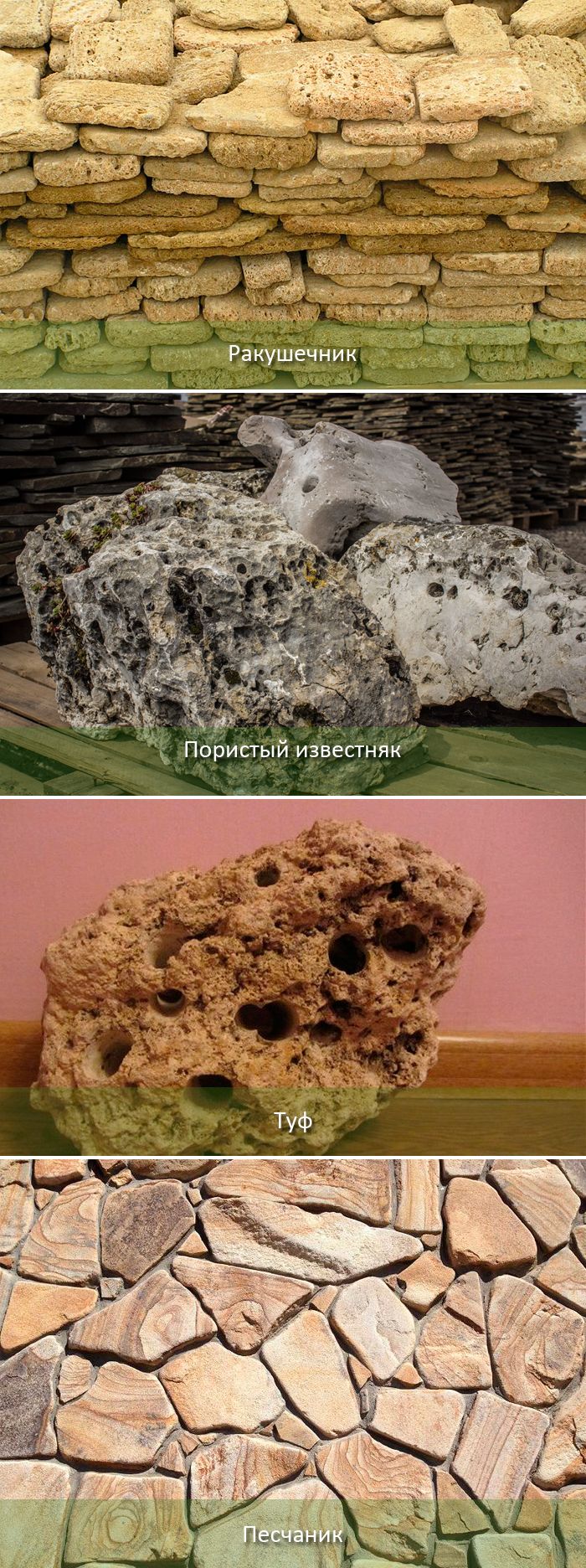
It looks natural and blends beautifully with any plants and trees. However, when choosing a material, it's important to be aware of its impact on the soil. For example, shell rock acidifies the soil and makes it unsuitable for some plants.
What stones are best for a flower bed?
- A porous limestone that pairs well with moss. It comes in a variety of colors, from cream, yellowish, to pink.
- Tufa is a good choice for plant growth. It's often used for terraces or areas near water bodies.
- Sandstone is very beautiful, there are many shades, but it is not durable.
You can also make a flower bed from:
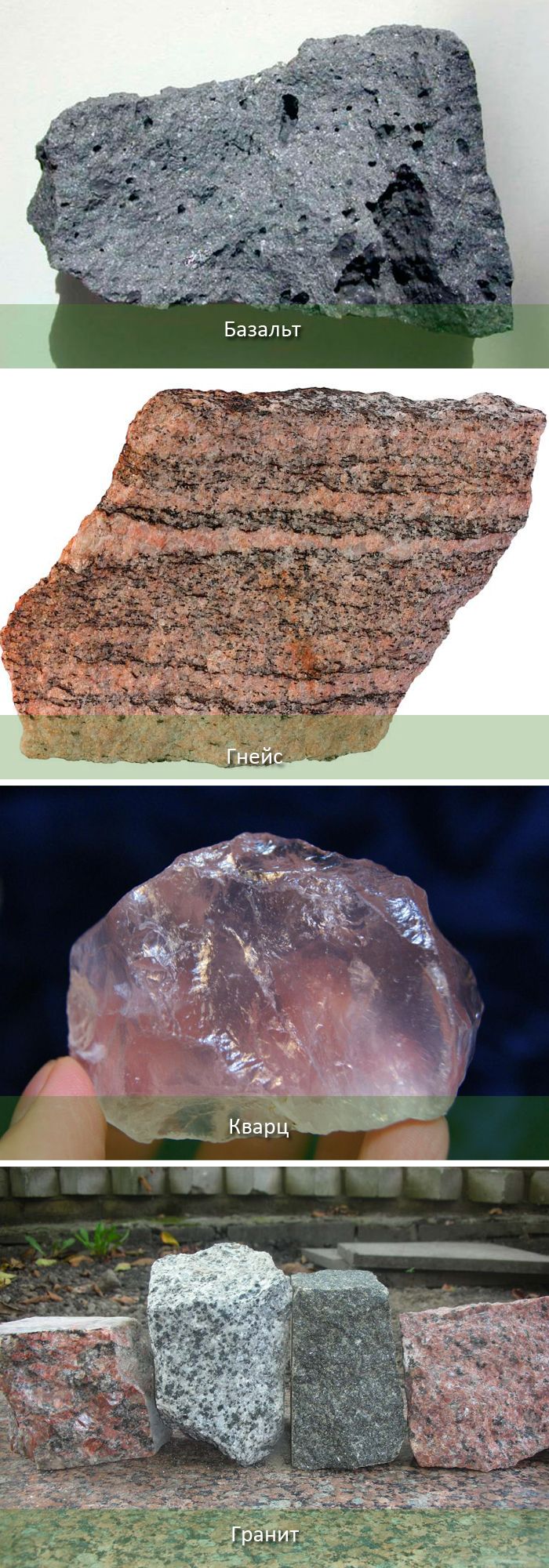
- Basalt. It looks very interesting.
- Gneiss is a stone slab of green, purple and blue colours.
- Quartz is a bright, transparent mineral that comes in a variety of colors.
- Granite is a durable material that can withstand any temperature.
Granite is ideal for alpine slides.
Flower beds are also laid out using small gravel pebbles. They can be used to decorate individual sections of the flowerbed.
Artificial stone
At your dacha, you can plant flowers not only in natural stone beds but also in artificial ones. If you make your own, it imitates natural stone.
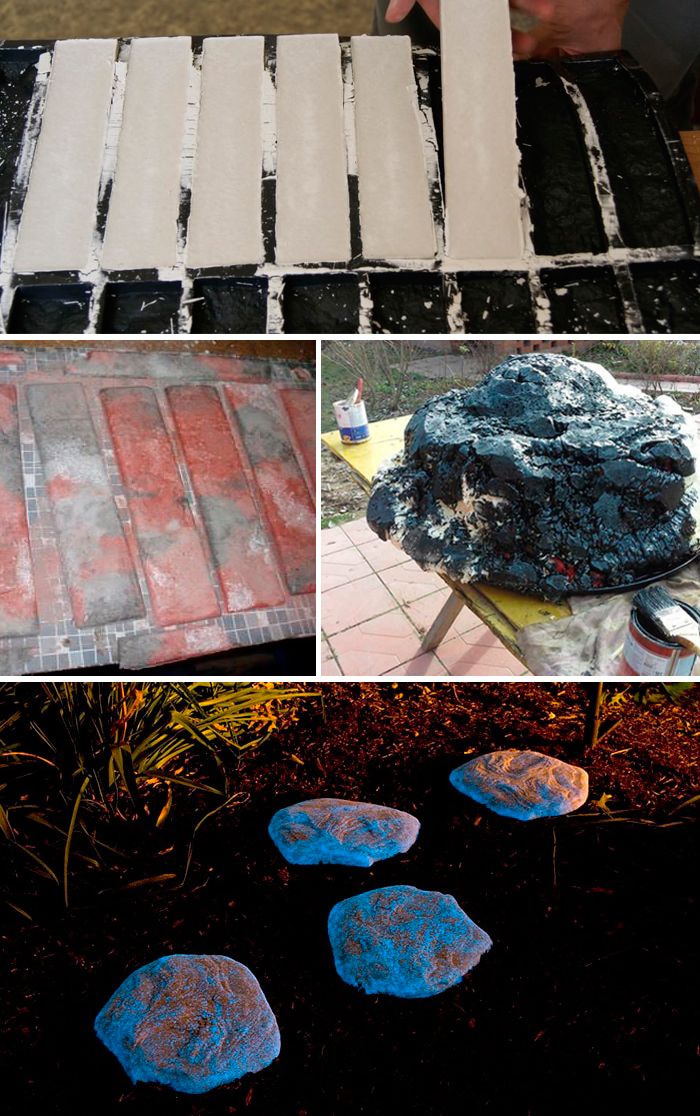
The advantage of these products is that the stones can be made to be uniform in size and color. They are also easy to work with when creating interior joints in flower beds. The disadvantage is that they wear out quickly, unlike natural stones.
Types of stone flower beds you can create yourself
The most common ideas for flower beds for a summer house are as follows.
Rockery
It is created on a flat surface. Small and large stones are placed, one at a time or in groups. Large quantities of small stones or gravel are added for decoration.
Terraced slope
It resembles a mountain landscape in appearance. Typically, crushed quartz, granite, and, of course, sandstone or limestone are used. The stones are worn down by precipitation—wind and rain—and become picturesque.
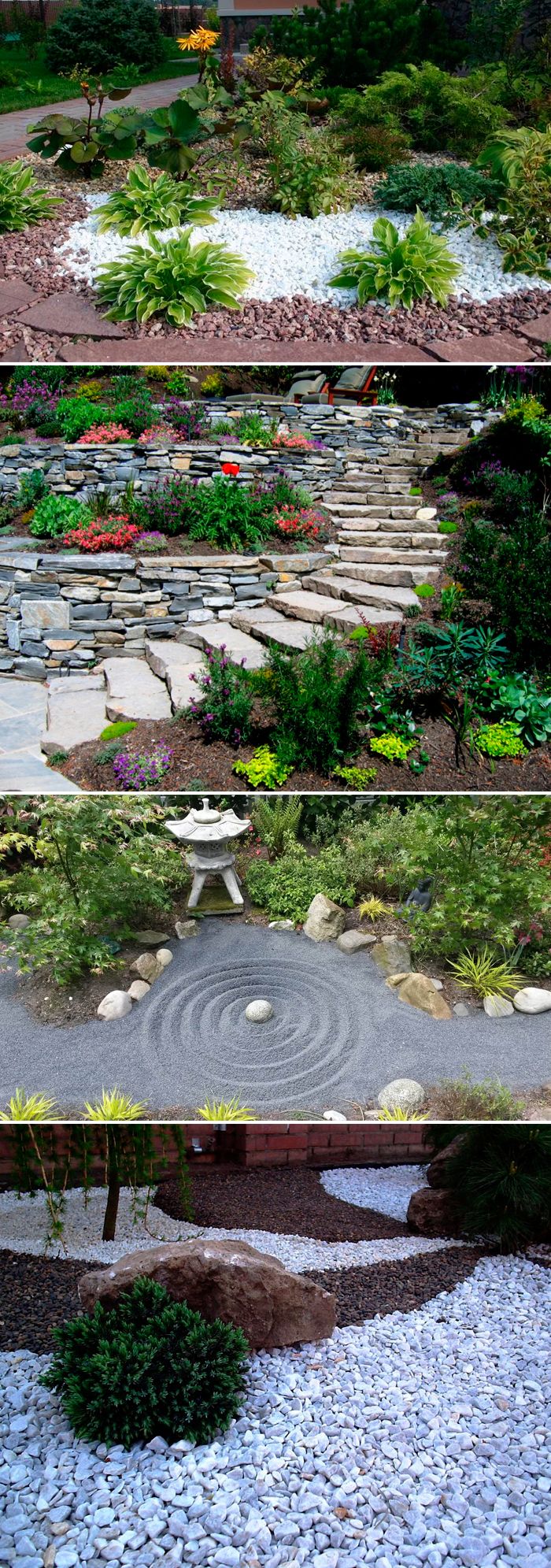
Japanese Garden
Stones of various sizes are used for this type of garden. Small plants and moss are planted in this type of garden, and the surface is decorated with pebbles. A Japanese garden can be enclosed with a fence or hedge.
Alpine slide
The most popular type of flowerbed imitates a mountain slope. It features randomly arranged stones that form a hill and are surrounded by a variety of plants.
Let's take a closer look at how to create such a masterpiece:
- First, draw a rough outline of your flowerbed on paper. Think about where you want to place it and what plants you'll put there.
- If the flowerbed isn't very high, you can get by without cement. However, if you want to raise it, use a cement base.
- Many flower beds will require drainage of sand and gravel. This is added to the hole along the edges of the flower bed. This will prevent excess water from stagnating.
Border
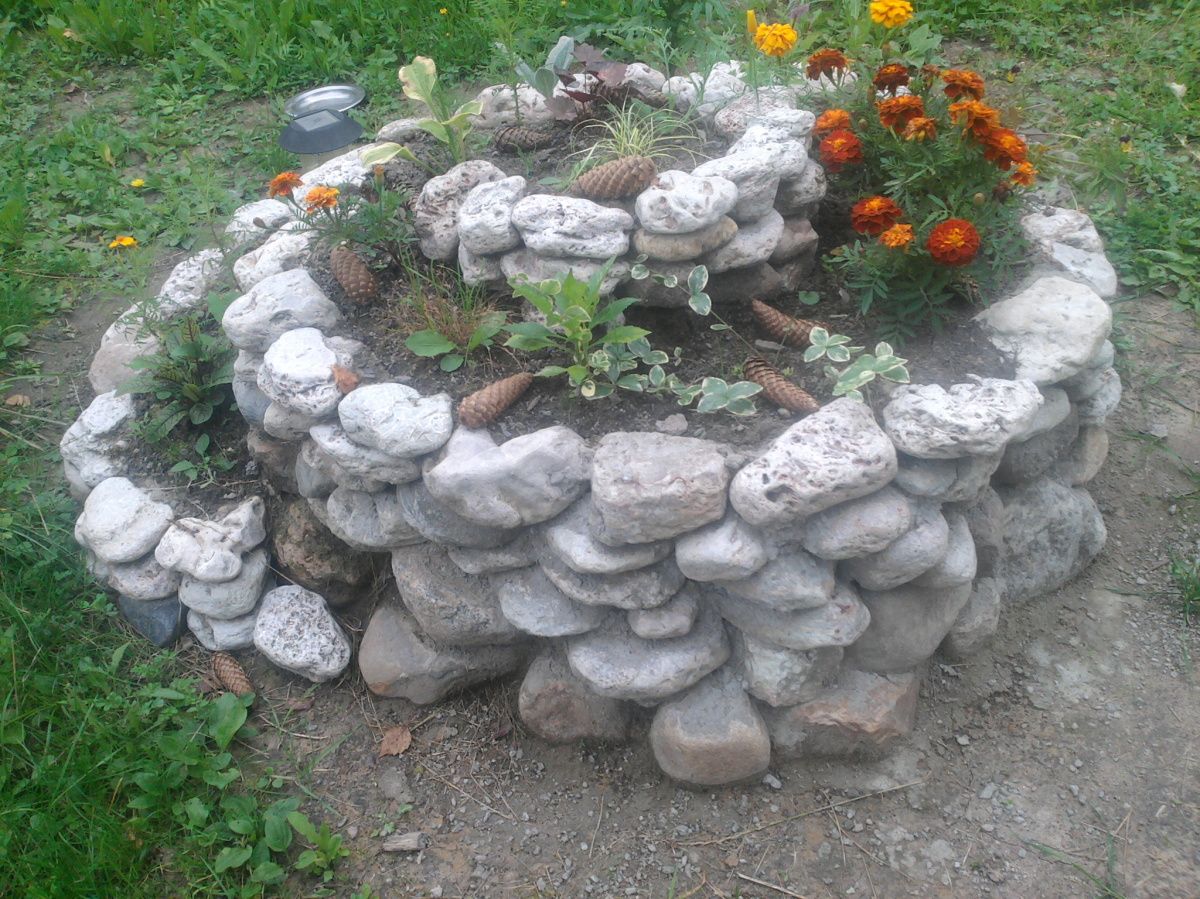
This flowerbed looks simple yet charming. The stones are laid out in a rectangular, circular, or oval shape in one or more rows. They can be secured with concrete or simply pressed into the ground.
When the structure is filled with cement, holes need to be made in the bottom layer to allow excess water to drain.
Gabion
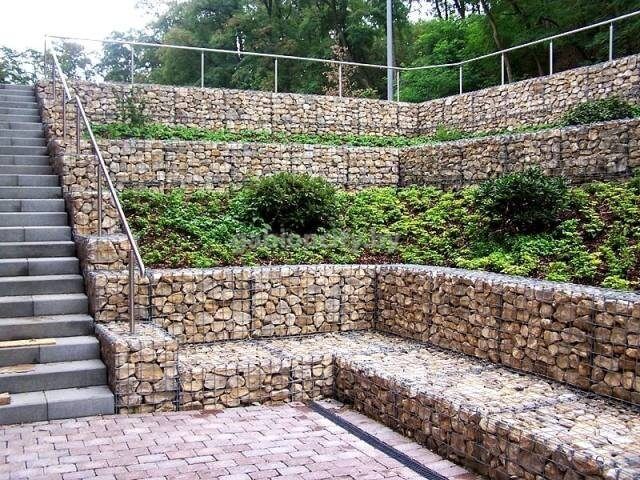
A distinctive feature of this type of flowerbed is the use of a two-layer mesh for the metal frame. Rocks or other material are then placed into the mesh.
Stone Flowerbed: Master Class
A long-lasting and attractive flower bed can be created this way.
- It is necessary to mark its outlines and dig a hole around the perimeter, 20-25 cm deep.
- Place a layer of gravel or small broken bricks on the bottom.
- Then make a thick cement mortar and pour it into the hole.
- Lay the first row of materials and pour concrete on top of them.
- Fasten the next rows with cement.
- Place the stones neatly and tightly.
- Leave the finished flowerbed for a few days until it hardens.
Once it has hardened, you can plant flowers.
Creating a tall flower bed
This type of flowerbed can even be built on a concrete surface. Soil is placed inside, allowing flowers to be planted in it.
The construction principle is the same as for regular flower beds. Only the walls are made high, up to 1 meter. They are always cemented.
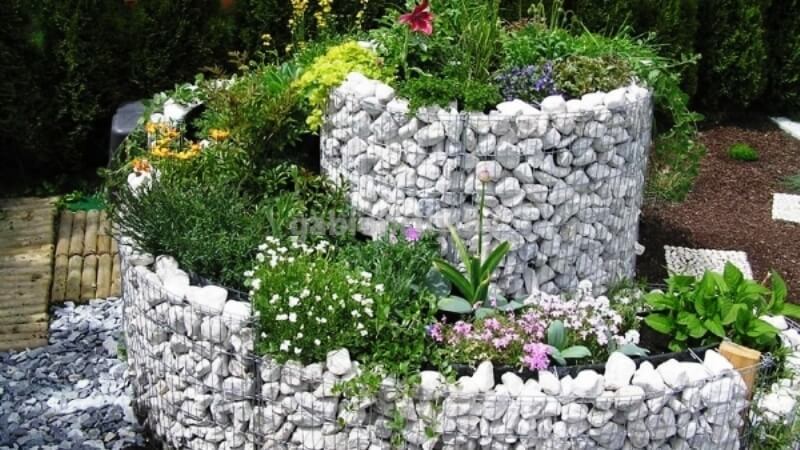
The flowerbed is built on a concrete base, with rubble laid inside. Then comes gravel, sand, and a final layer of soil.
It's important to leave some gaps between the stones to allow excess water to drain. Flowers can be planted.
What plants to choose
You can choose any plants to decorate your flowerbeds. For example, universal options include dwarf conifers (pine, spruce, thuja), willow, barberry, and quince.
You can choose any flowers. Carnations, bellflowers, thyme, and miniature ones look great.
Ideas and placement of stone flower beds in the garden
- Rectangular flower beds look interesting. Durable stones, such as granite, are used for them.
- Round flowerbeds, placed at intervals, create a beautiful Japanese garden. These beds are best planted with small flowers, and a sculpture, vase, or interesting composition can be placed in the center.
- Oval flowerbeds look good in open spaces, while semicircular ones are best suited for use near buildings. (For example, a gabion can be placed against a wall or fence, while an alpine garden can be placed in an open space.)
- Raised flowerbeds in several rows can be made in the shape of curls, baskets, or wells.
In addition to plants, you can place lanterns in rock gardens. Creating a flowerbed in a large rock looks interesting. In short, there are countless ways to use rock beds in the landscape. Choose yours!