Meadow honey mushrooms belong to the family Marasmius oreades. They are also called meadow honey mushrooms, a literal translation of the Latin name Marasmius oreades. Another name for them is the clove mushroom, due to the pleasant, spicy aroma of their fresh flesh, reminiscent of cloves.
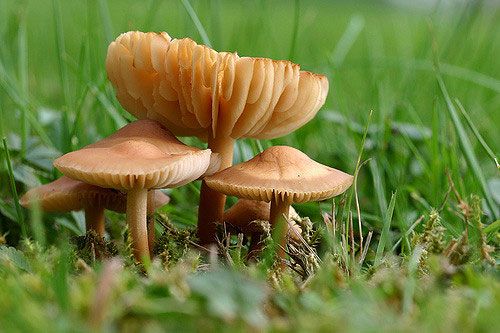
They are called non-rotten mushrooms because they don't rot, but rather dry out on the vine. After becoming wet, the completely dried mushroom begins to release spores. Other synonyms include: marasmius, meadow mushroom, and meadow talker.
Description and characteristics of the mushroom
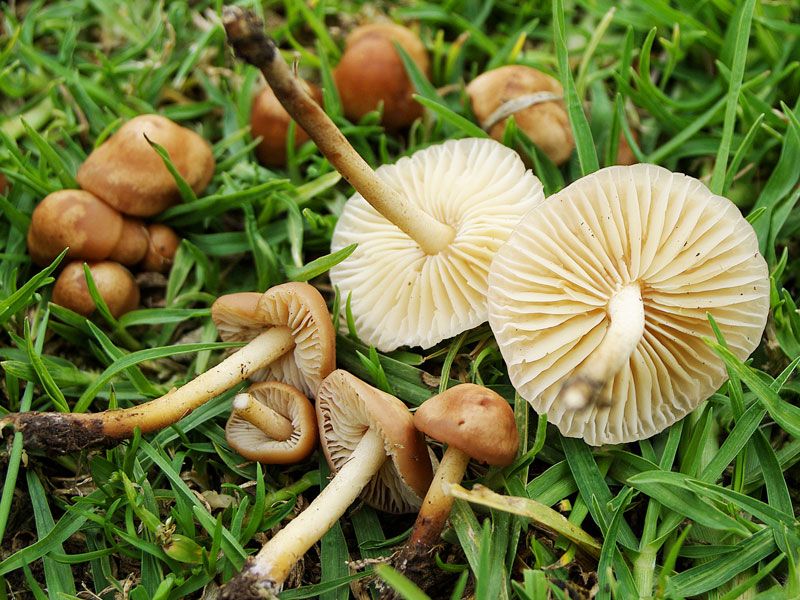
The cap is up to 7 cm in diameter. It is spherical with a tubercle in the center. As it ages, it flattens and even becomes cup-shaped, but the tubercle remains. The cap is light brown with a reddish or yellow tint, the edges are jagged and ribbed, translucent in damp weather, and the skin becomes sticky. These mushrooms are called hygrophanous.
The stem is thin, up to 10 cm tall, the same color as the cap or slightly lighter. It is very tough and therefore not edible. The characteristic ring of honey fungi is absent, as all other honey fungi are members of the Strophariaceae family, while meadow honey fungi are members of the Negniuchnikovye family.
The gills are sparse and wide. They change color depending on the weather: in damp weather, they develop ochre hues, while in dry weather, they become white or cream-colored. In young mushrooms, the gills are firmly attached to the stem, while in mature mushrooms, they detach from it.
The flesh is slightly yellowish and remains unchanged after cutting. The aroma is sweet and spicy, with hints of almond and clove. Meadow mushrooms have the unusual property of glowing in the dark.
Where and how do meadow honey mushrooms grow?
They can be found in Europe, Asia, the Americas, Australia, and North Africa in meadows, gardens, pastures, vegetable plots, forest edges and clearings, among grass, and along roadsides. They grow in rows, arches, or large "fairy circles," from May until October.
Unlike summer, autumn and winter honey mushrooms, meadow mushrooms are not found on stumps; they are field mushrooms and require only the remains of last year's grass to grow.
Top.tomathouse.com warns: dangerous doppelganger
It's hard to mistake the meadow grass for anything else once you've seen it. In some cases, such mistakes don't bode well, but in others, you could end up in the hospital.
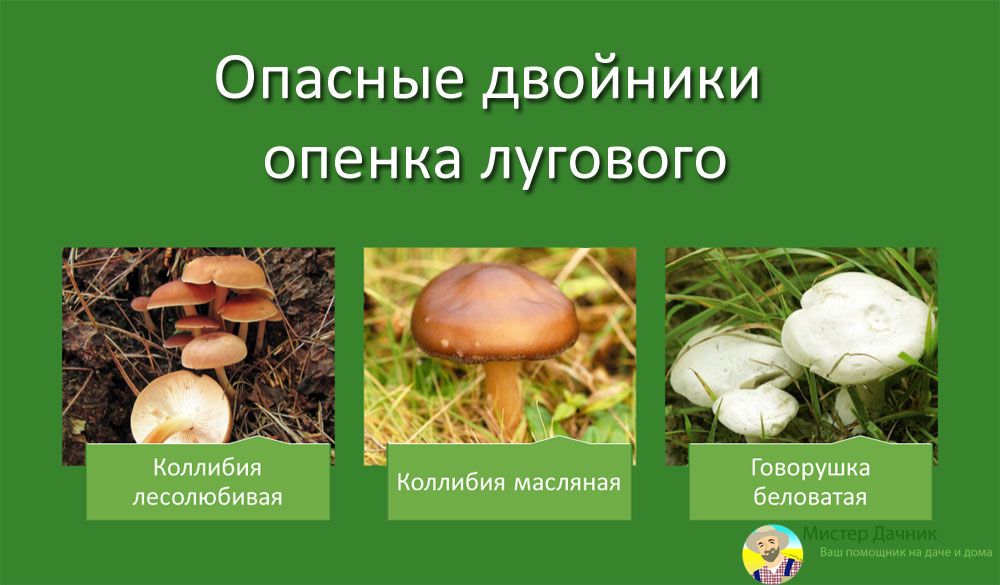
The meadow mushroom is most often confused with the wood-loving Collybia, which belongs to the same family, the Negniuchnikovye. They look similar, and the collybia is also called the spring or forest honey fungus. This is not a serious mistake: this mushroom is conditionally edible and can be eaten after boiling. Its value is modest: the cap is small, and it has no taste or smell.
Another lookalike of the meadow grass is the oil grass. Its cap is slightly larger, but it has the same taste and smell—they are practically nonexistent. Nevertheless, it is eaten more often than the forest grass.
It's easy to distinguish meadow grass from collybia. As you can see from the picture, the latter has no or only a faintly defined tubercle in the center of the cap. Collybia have densely packed gills, with rusty-red spots in older mushrooms, while honey mushrooms are sparse and uniform in color, regardless of age.
It is easy to distinguish them by their smell: if there is no smell or it smells moldy, then it is a collybia, and if spicy notes are felt, then it is a meadow grass.
Another "twin"—the white talker (or whitish talker)—can cause serious problems when consumed instead of meadow mushrooms. Symptoms of poisoning appear after 30-40 minutes, including confusion, dizziness, and sharp abdominal pain.
Only the most inexperienced mushroom pickers can make a mistake, as the talkers, which often grow alongside true honey mushrooms, have white caps. Furthermore, the cap edge is smooth and folded inward.
Among the talkers, some are edible and partially edible, but some are deadly poisonous. There are 250 species in total, and only an experienced mushroom picker can distinguish them. Furthermore, even the most edible ones can cause severe poisoning if consumed with alcohol. They contain substances similar to thiuram. Alcohol consumption can cause weakness, sweating, palpitations, facial flushing, and, in severe cases, can lead to fainting and even death.
Meadow grasses are sometimes confused with fiber grasses, although they are very different, primarily in the color of their gills: they are gray, later turning brown. There are about 100 species of fiber grasses. All are poisonous, affecting the nervous system, and the effects of poisoning manifest quickly.
How to distinguish false from edible?
Simple rules will help you determine whether a honey fungus is edible or false. False ones:
- higher leg;
- the smell is not mushroomy, they smell like earth, mold or chemicals;
- the caps have a poisonous color;
- The plates are grey, brown or greenish.
Beneficial properties
Meadow honey mushrooms, unlike autumn mushrooms, contain a lot of vitamins B1 and C. 100 grams completely covers the daily requirement. They are also rich in vitamins B2 and PP, and also contain folate, phosphorus, magnesium, potassium, iron, and manganese. The calorie content per 100 grams is very low – only 22 kcal, protein – 2.1 g, fat – 1.1 g, and carbohydrates – 0.6 g.
Due to their low calorie content, mushrooms are recommended for inclusion in weight loss diets, as they quickly satiate.
Meadow grass contains marasmic acid and scordonin, powerful antibiotics that effectively suppress Staphylococcus aureus. This property has long been recognized in folk medicine. Meadow grass has been used for bronchitis, pneumonia, and tuberculosis.
They also contain a substance that inhibits the proliferation of cancer cells.
Meadow grass is beneficial for thyroid disorders. In Chinese medicine, it is used for cramps, thrombophlebitis, arthritis, and radiculitis.
Primary processing
After harvesting the honey mushrooms, upon returning home, you should immediately begin their initial processing. Sort the mushrooms, discarding any spoiled, wormy, or insect-eaten ones.
Then they are thoroughly washed, but only if they are not intended to be dried. In this case, dry cleaning is sufficient, removing dirt with a knife and cutting out rotten areas. A toothbrush is also convenient.
When preparing for pickling, the mushrooms should be covered with warm water and left for about 20 minutes. Then, trim off any spoiled parts with a knife.
Methods and recipes for preparation
Meadow honey mushrooms can be used in a variety of dishes. After initial preparation, they should be boiled briefly. Add 1 tablespoon of salt to 2 liters of water. After 20 minutes, add the onion, salt, and spices, and cook for another 40 minutes, then drain in a colander. The mushrooms are now ready for further cooking. They can be fried, made into caviar, pickled, marinated, or frozen for the winter.
If the mushrooms are going to be frozen, then after 20 minutes the water should be drained, boiling water should be added and cooked for another 40 minutes.
To prepare for pickling, boil the mushrooms in the same way as for freezing. The difference is that spices are added to fresh boiling water, and they need to be boiled a little longer – 60-80 minutes. Frozen and dried mushrooms are boiled in salted water for 25 minutes.
Some believe that it's not necessary to boil honey mushrooms for a full hour; a shorter time is sufficient. This will give them a more intense flavor and aroma. You can fry them without boiling them first.
Soup
Meadow mushroom soup is tastier than soup made with other mushrooms, including porcini mushrooms, and the recipe is simple. Boil the mushrooms as usual, then add potatoes, carrots, onions, and spices to the broth and simmer until tender. Sprinkle the soup with fresh herbs.
Drying
Dry mushrooms in a moderately hot oven or oven the same way as any other mushrooms. Dried honey mushrooms are very fragile and crumble into powder. If you knead them with your fingers while drying, they will dry out and not crumble.
Meadow honey mushrooms are exceptionally healthy and tasty, although they are classified as group 4 in terms of nutritional properties.