One variety of meadow lawn is the Moorish lawn. Before purchasing seeds, it's important to understand its characteristics, advantages, and disadvantages. Familiarize yourself with the planting and care requirements to determine whether this lawn is suitable for your garden.
Content
What is a Moorish lawn?
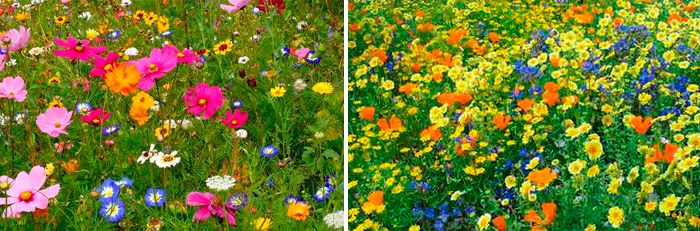
The Moorish lawn, unlike the parterre and other lawns, is easy to maintain. It's a lawn with a variety of wildflowers (up to 40) and grasses. The plants may include seeds of cornflowers, poppies, chamomile, daisies, flax, calendula, and more. Plants of a single color scheme or variegated varieties are used.
There are even varieties of lawn that change their color several times during the season.
Moorish lawn grass mixture can be purchased at almost any specialty store, but be sure to check that it includes flowers suitable for your region.
The pros and cons of a Moorish lawn
It has the following advantages:
- decorativeness and variety of colors;
- high self-healing ability;
- undemanding to the nutritional value of the substrate;
- ease of care;
- lack of difficulty in restoring damaged areas.
This type of lawn also has its disadvantages:
- may cause an allergic reaction;
- flowering attracts insects to the site, including stinging ones;
- poor damage resistance.
As it turns out, the Moorish lawn has many more advantages than disadvantages.
However, the presence of an allergy is a good reason to refuse it.
Composition of mixtures for Moorish lawns
Let's look at the most common and unpretentious flowers for a Moorish lawn.
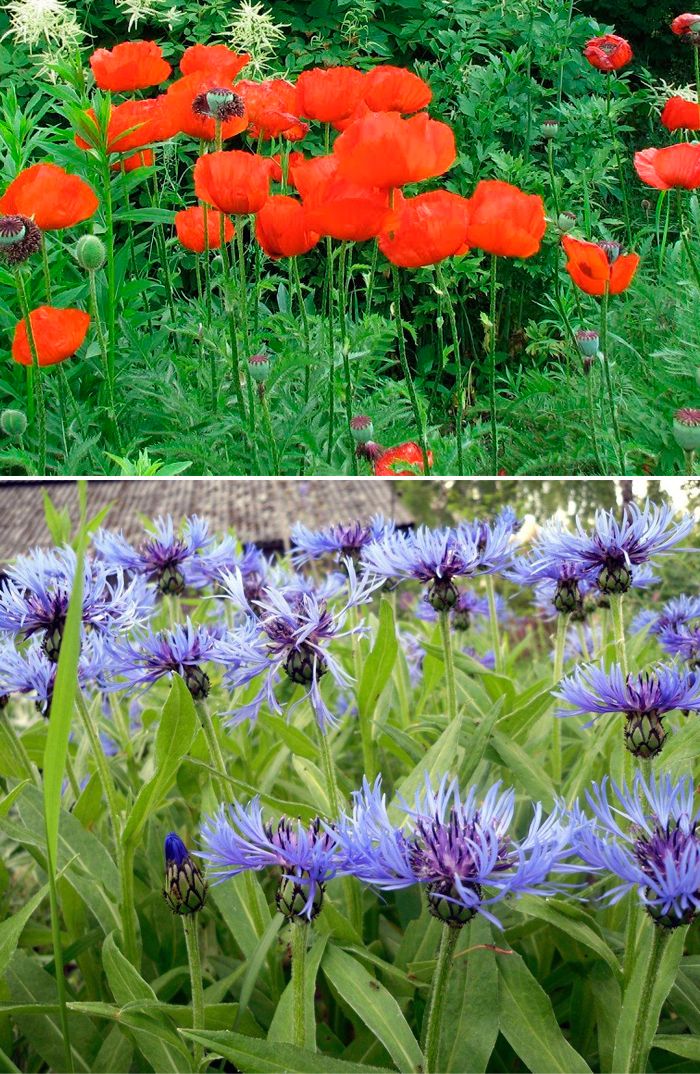
Poppy
This annual or perennial plant blooms in the second ten days of May. It is distinguished by its rather large, bright red buds. The seeds are contained in capsules, which allows for self-seeding.
However, it's important to know that not all poppy varieties can be grown. For example, the oriental poppy, so beloved by gardeners, all varieties of annual poppies, and the common poppy. Therefore, be careful when purchasing lawn mixtures containing poppy.
Cornflower
There are perennial and annual varieties, all capable of self-seeding. Their dazzling blue petals are eye-catching. They are very easy to grow. Flowering lasts from June to September.
Chamomile
It reaches a height of 0.9 m, flowering begins early (at the end of March-April) and continues until frost.
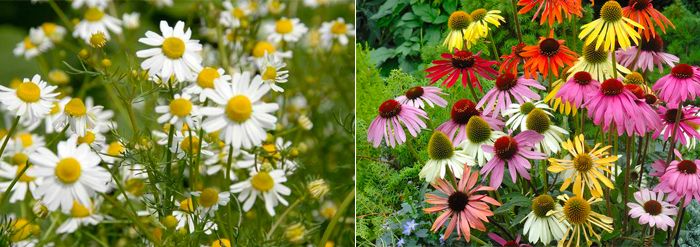
Echinacea
This perennial medicinal plant retains its appeal for a long time, even when cut. Its delicate pink to scarlet inflorescences look beautiful when planted en masse. They bloom in late spring and early summer.
Echinacea pollen can trigger allergies.
Large-flowered flax
It's an annual plant. Its flowers come in shades of sky blue, red, and snow-white. The buds reach 3 cm in circumference.
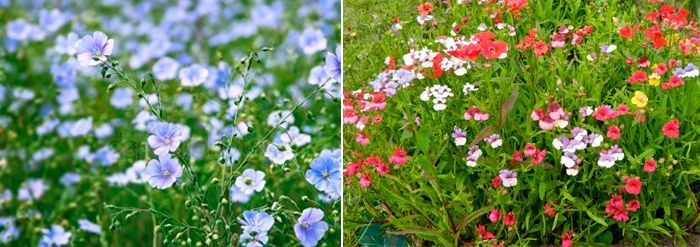
Nemesia
The genus includes about 50 annual and perennial varieties. It blooms from early June to mid-October. The flowers come in lemon, snow-white, scarlet, and purple. It is easy to care for and tolerates low temperatures well.
The mixture can include not only cereal seeds but also bulbous seeds, such as crocus, tulips, or daffodils.
When creating a lawn in the shade of trees, it is recommended to choose snowdrops, trilliums, ipheion, erythronium, lilies, leucojum, arizema, anemone, arum, etc.
A Moorish-style lawn should consist not only of wildflowers but also of a grass mixture. Typically, this includes bluegrass, timothy grass, ryegrass, and bentgrass. The grass-to-flower ratio is 80:20 or 95:5. The proportions of annuals and perennials should be adjusted regularly.
To keep your lawn looking attractive all season long, you need to carefully combine plants that bloom at different times.
The owner of the plot decides which flowers and herbs to choose, based on their taste preferences, lawn requirements, and growing region.
Moorish lawn step by step
You can buy a seed mix at the store or make your own. As mentioned earlier, the key is to keep in mind the grass-to-flower ratio (the recommended ratio is 80:20).
However, if you want to create a variegated lawn, you can choose a 20:70 ratio. Where 20% is grasses, 70% is grass. For 1 square meter, you need 10 g of seeds.
Sowing should be done in early spring. For good flowering and plant development, it's best to create a lawn in a well-lit area. The area shouldn't be too large.
Step-by-step instructions for creating a lawn:
- Clear the area of weeds. If there are too many, apply glyphosate (Roundup) 3-4 times. After 30 days, remove the top 8-10 cm of soil.
- 8-10 days before sowing, dig the soil to a depth of 25 cm. At the same time, add organic matter, peat, and sand. However, it is better to do this in the fall.
- Create a 3° slope to drain excess water. This can be accomplished by properly laying a drainage layer.
- Level and compact the soil. It's best to do this in clear, dry weather.
- Rake to smooth out any bumps.
- Mix seeds with sand at a ratio of 1 to 3 (0.0001 seeds per 100 g of sand). You can seed the lawn evenly or create flower beds by planting the grass first, followed by flowering plants. The soil for seeding should be soft, slightly moist, and level.
- Use a rake to bury the seed material 5 mm into the ground, roll it with a garden roller, and use drip irrigation to prevent strong pressure from washing away the crops.
- To ensure that all seedlings emerge at the same time and are even, cover with lutrasil.
If your lawn is sparse, don't rush to re-seed. Lawn plants emerge at different times. This interval can be as long as a month.
Moorish Lawn Care
The first year of lawn care differs from subsequent years: mow in May, July, and September to a depth of 5-8 cm. Be sure to collect the mown grass.
When does a lawn become mature:
- The first time the lawn should be mowed is at the end of June or beginning of July, after the spring flowers have seeded.
- 2nd - in September-October after the end of the growing season of all plants.
These time periods are approximate; fast-growing grasses may need mowing as early as August. If they're fall-flowering, then in November.
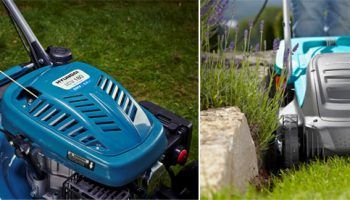
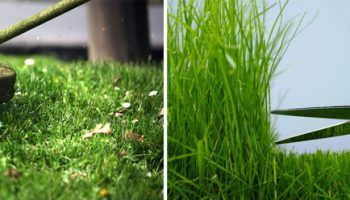
Mowing should be done to a height of 8-10 cm. If the lawn mower is not set to this height, mow with a scythe or trimmer.
After manipulation, plant debris must be collected and destroyed to prevent the development of infections and the appearance of pests.
It's important to remove weeds promptly. This must be done manually, so creating an overly large lawn is not recommended.
2 weeks after sowing, proper watering is very important.
Moisten the soil with sprinklers, in several stages, to avoid damaging emerging seedlings. Natural rainfall is usually sufficient. However, during drought, when the topsoil dries out, periodically mist the lawn with warm water.
Moorish lawn plants thrive without fertilizing. However, if they grow too slowly or their foliage turns yellow, it's a good idea to add a small amount of fertilizer. A comprehensive lawn fertilizer containing several nutrients is ideal. Keep in mind that fertilizing should only be done the following season after planting.
In the first year, fertilizers will only cause harm.
A key aspect of Moorish lawn care is soil aeration (ventilation). This is necessary to improve gas exchange between the soil and atmospheric air.
The procedure involves piercing the soil with a pitchfork, aerator, or other specialized tools. This procedure helps prevent bare spots, prevent root rot, and improve the flow of oxygen, water, and nutrients.
The cost of a Moorish lawn is approximately 400-800 rubles per kilogram. A flowering lawn is suitable for those who don't have much time to care for the plants growing on it. It will fit into any landscape design and will delight with its blooms from early spring to late fall. However, it is not recommended to use this lawn in your home if you have pollen or insect bite allergies, as this may exacerbate your condition.