Poa is a genus of perennial or annual grasses. In the wild, it grows in both hemispheres in regions with cold and temperate climates. Some varieties can be found at high altitudes in tropical regions. The genus includes over 500 species.
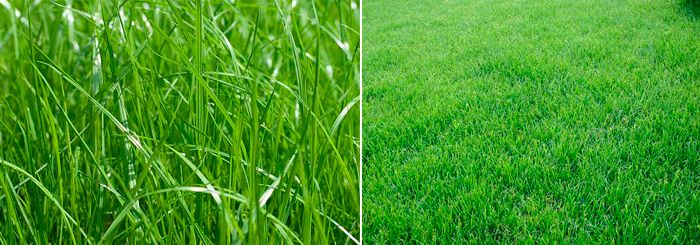
Let's look at the types that are used to create a lawn.
Content
Annual bluegrass
Most varieties are annual, although perennials are occasionally encountered. It forms a turf from 5 to 35 cm in height. It forms small panicles up to 1 cm in length. In its natural habitat, it grows along roadsides and in ditches.
Annual bluegrass is not used in parterre lawns, where it is considered a weed.
It grows well in any soil, spreads quickly over trampled areas, and tolerates low pruning well.
Not suitable for landscaping lawns in southern regions, as the grass begins to turn yellow and fall out in hot weather.
Meadow bluegrass
In the wild, it inhabits North Africa and Eurasia. It prefers mountain, lowland, dry, and floodplain meadows.
Description of meadow bluegrass
This perennial herbaceous plant reaches 0.3-0.8 m in height. Numerous stems are thin, with a smooth surface, forming turf.
The leaf blades are flat, pointed at the ends, and rough on the underside. They are colored a soft green, with prominent veins on the surface.
The spikelets are gathered into spreading panicles. Each panicle bears 3-5 greenish or purple flowers in May-June.
Resistant to adverse weather conditions and sudden temperature changes. Capable of withstanding temperatures down to -35°C.
Uses of meadow bluegrass
It is used to create lawns, including those intended for high loads (for example, sports).
The variety is resistant to trampling and grows quickly after low pruning.
Features of caring for meadow bluegrass
It tolerates drought well. Watering is only necessary during prolonged periods of dry weather during the growing season. It grows in any soil and does not require any soil amendments.
Varieties of meadow bluegrass
Suitable for lawn decoration:
- Andante is a low, dense grass that is resistant to leaf spot.
- Connie forms green, low, dense turf. This variety is resistant to many diseases and trampling.
- Compact – with tapered leaves. Tolerates mechanical stress and drought well. Grows quickly after pruning.
- Balin is distinguished by its resistance to trampling, diseases and pests, and rapid growth.
- Sobra - looks attractive on the lawn, tolerates aggressive environmental influences well.
Seeds of any variety can be purchased in specialized stores.
Bulbous bluegrass
In the wild, it grows in the steppes and semi-deserts of Eurasia and North Africa. It is recognized as one of the best pasture plants.
Description of bulbous bluegrass
The perennial forms dense turfs reaching 10-30 cm in height. The root system is shallow, the stems at the base are thickened, bare and straight.
Numerous foliage of a uniform green color. The leaf blades are narrowed and folded vertically.
The inflorescences are collected in short, compressed panicles. Flowering occurs in late spring to early summer.
The bulbous bluegrass can be called viviparous. After falling, its spikelets take root, transform into bulbs, and give birth to new plants. Sometimes they even germinate while still on the mother plant.
Uses of bulbous bluegrass
It is resistant to trampling and quickly recovers, so it is used to create any type of lawn.
Features of caring for bulbous bluegrass
Can be planted in regions where temperatures do not drop below -25°C. It tolerates drought well. Even without precipitation, it requires only occasional watering.
It grows well in any soil, but prefers light, airy, and well-drained soil. It doesn't require any fertilizer.
Alpine bluegrass
It grows on rocky soils of alpine meadows in the temperate regions of North America and Eurasia.
Description of Alpine bluegrass
It reaches a height of 0.5 m. The straight, slightly thickened stems of this perennial form a dense turf. The rhizome is short and located in the upper soil layers.
The leaves are hairless, thin, pointed at the tips, and vary in length. The leaflets range in color from dark emerald to glaucous.
The inflorescences are gathered in spreading panicles. The spikelets are small and ovoid. Each spikelet contains nine flowers, typically purple. Flowering begins in June–August.
Uses of Alpine bluegrass
Used for borders and rock gardens. Can be grown in containers.
Features of caring for alpine bluegrass
It tolerates temperatures down to -30°C. Natural rainfall is usually sufficient to moisten the soil, but during drought, watering should be done several times a week.
It does well without the addition of nutrient mixtures.
Bluegrass
Forms turfs reaching 20-120 cm. The root system is short and creeping. The foliage is bright green, smooth, and up to 6 mm wide.
Prefers heavy, calcareous soil in damp areas.
It does not tolerate severe frosts, prolonged drought and intensive trampling.
Bluegrass
A perennial that forms soft, loose turf. It reaches 0.3-1 m in height. The leaves are narrow, 1.5-2 mm wide. The inflorescences are collected in 10 cm panicles. Flowering occurs from May to early summer.
It is used for lawns laid in the shade of trees, since the grass does not require much light.
Prefers moist and acidic soil. It doesn't tolerate frequent mowing, which can cause the lawn to thin out.
Thanks to the diversity of bluegrass species, it can be used to create a lawn for any purpose. Grass mixtures containing this plant are available in specialty stores. You can also make your own by mixing the seeds of various lawn plants.