Weed control is an essential step for gardeners who have successfully grown a lawn. Wild plants can push through even dense turf that has developed over several years. Young seedlings suffer the most from the negative impact of weeds. The sooner action is taken, the better the lawn will look.
Content
Weed control measures
To keep your lawn grass in perfect condition, you need to follow these rules:
- Regular mowing is essential for maintaining healthy plantings. This prevents annual weeds from seeding. It's recommended to mow the area at least twice a month.
- Low-growing bindweeds that grow below the cutting level are destroyed by combing the lawn.
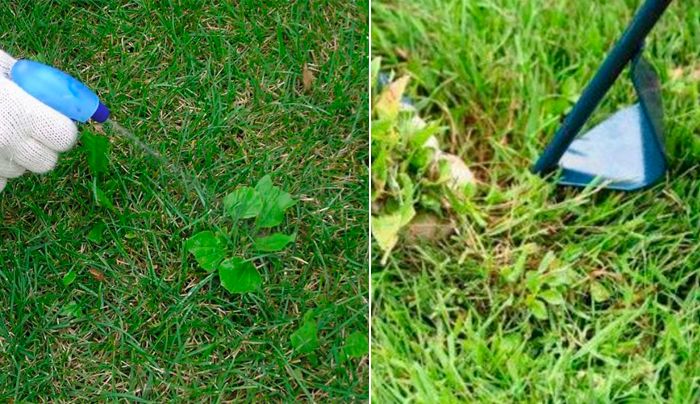
- Perennials with extensive root systems are unlikely to be removed by pruning and combing. In this case, specialized gardening tools will be required. This method is acceptable if the weeds are not numerous.
- Moss that has appeared on the lawn can be removed by aerating the soil, applying fertilizer in a timely manner, and applying lime.
- A large weed population is a compelling reason to use herbicides. They can have a selective or general effect.
Weed control equipment
The most dangerous weeds for lawns include plantain, sow thistle, and dandelion. Mowing their roots releases buds, which stimulate the development of additional branches. These weeds should be removed by hand during the first year after planting. It's best to remove the entire rhizome.
New plants can form from the remaining parts of the root system.
The situation is often complicated by drought or high humidity. In the former case, it will be impossible to completely remove the root, while in the latter case, the weeds will grow too quickly to be eliminated by mechanical tillage. It's best to begin tillage immediately after prolonged rainfall.
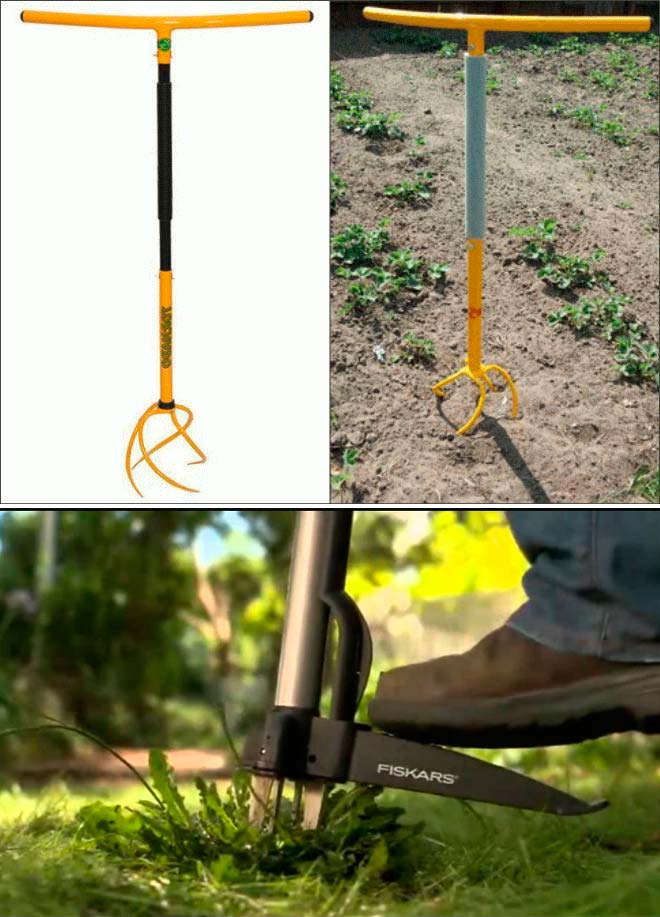
To facilitate the process, you can use special equipment. These include:
- Extractor. This device is 1.1 m long. The procedure is simple. The tip is inserted into the center of the weed and pulled out after twisting;
- A root puller is a trowel used to remove root-bearing weeds. Its narrow section is 30 cm long. To reach the weed, the metal is bent to the desired angle. The only drawback of this tool is the force required to use it.
- A homemade tool can be a good alternative to the latter. A metal angle should be sharpened to the desired angle. The handle should be welded so that the gardener can comfortably use the tool. The holes left by weeding should be immediately filled with prepared soil and seeded with grass seed.
Features of the use of herbicides
Herbicides are necessary when a site is heavily overgrown with weeds. These chemicals are used during the preparation stage and during seeding. Their functions can range from protecting the plantings from weeds to completely eradicating the lawn. When purchasing products in this category, consider the scale of the planned project.
Selective weed control products
Selective herbicides are most often used in the first year after seeding a lawn. Gardeners who choose these formulations should consider their effectiveness when choosing the right product.
Lontrel 300
This herbicide is based on clopyralid. This hormone slows weed growth, leading to their complete destruction. It is effective on both annuals and perennials. It should be applied after mowing, preferably in cool, dry weather. Results will be noticeable within 14 days.
Hacker
A product popular among gardeners. The active ingredient quickly penetrates the plant and inhibits further growth. Weeds begin to die back 7-10 minutes after treatment, while lawn grass remains untouched. An added bonus of Hacker is its environmental safety. It is approved for use in playgrounds, parks, and squares.
Deimos
This product controls a large number (over 100) of broadleaf weeds. Its active ingredient is dimethylamine salt. This herbicide is safe for humans, animals, insects, and cereal crops. Its effect begins two weeks after application. Complete weed control occurs within a month.
Lapis lazuli
The preparation is not suitable for treating soils that differ in:
- high sand content;
- insufficient or high humidity;
- lack of humus;
- the presence of pests.
The herbicide is dangerous, so it is strictly prohibited to spray it in nature conservation areas or near fisheries facilities.
Lazurit is designed to control dicotyledonous annuals. Several treatments are required to achieve positive results. The product does not accumulate in the soil. Weeds die after the herbicide penetrates their leaf blades and root system. This product can be combined with other formulations, resulting in significant cost savings.
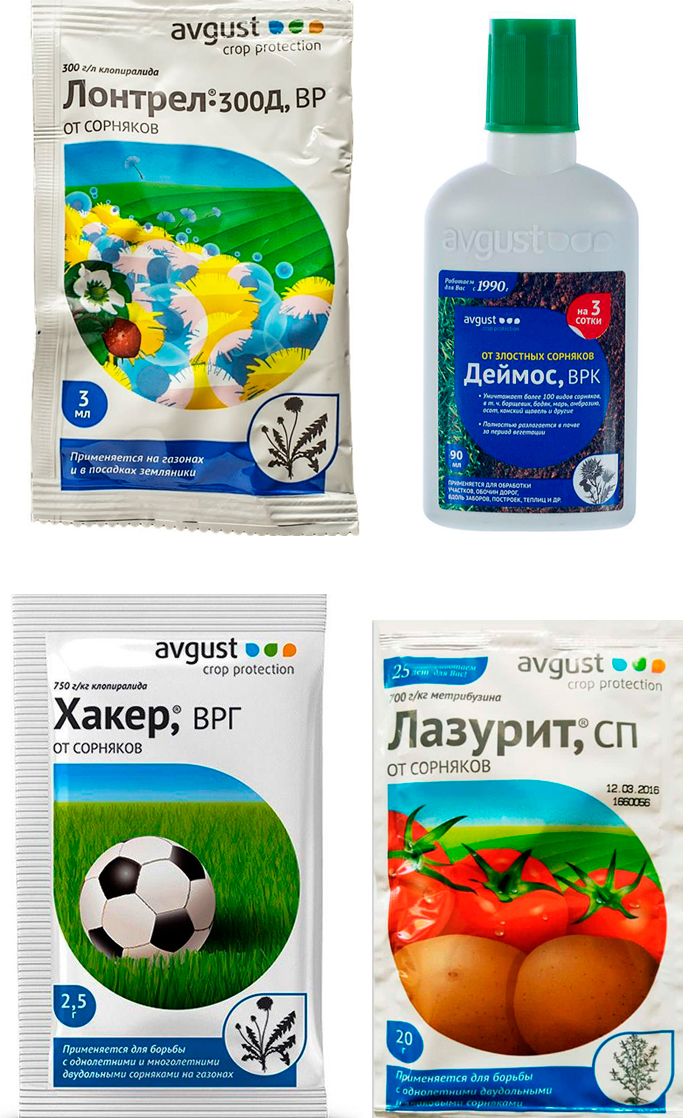
The active ingredient is metribuzin. It slows photosynthesis and disrupts electron transport. Weeds don't become accustomed to the active ingredient, so the product can be used more than 2-3 times. Lazurit has been classified as a hazard class 3 pesticide.
It should be noted that when using selective herbicides, the gardener should not neglect personal protective equipment.
Non-selective herbicides
They are recommended for use only in the most critical cases. Herbicides with a broad-spectrum effect may be useful if:
- the area is being prepared for planting lawn grass mixture;
- there was a need to remove all the plantings.
This category includes products such as Tornado and Diquat. The former contains glyphosate and is available in ampoules, with volumes ranging from 5 to 1000 ml. To prepare the weed control solution, follow the instructions. The product remains in the soil for 8 weeks.
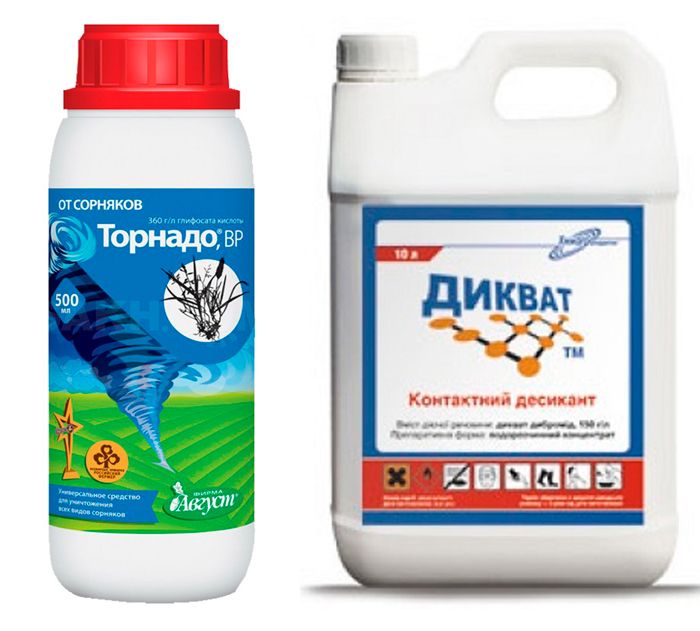
Diquat is based on the active ingredient of the same name. It has no adverse effects on humans. For maximum effectiveness, weeds should be sprayed when the air temperature is no higher than 25°C. Results appear within a week.
More about some drugs and their use in this video.
Folk remedies for weed control
You can treat your lawn for weeds with safer products than herbicides. Mixtures consisting of the following are effective against wild weeds that have "burst" through the turf:
- Salt (2 tablespoons) and vinegar (5 tablespoons). Add these ingredients to 1 liter of hot water. Use the mixture immediately after preparation. Delay may result in the loss of all beneficial properties;
- vinegar and citric acid. They are combined in a 3 to 1 ratio, respectively;
- Rubbing alcohol and salt. The components are used separately. First, the plants are sprinkled with salt, and then watered with the alcohol solution (1 liter of the main ingredient per 10 liters of water).
Experts recommend mechanical tilling during the first year after planting a lawn. Subsequently, this will not be sufficient.
Spraying chemicals over an entire area can have negative consequences. To avoid these, spot treatments are often used.
In any case, gardeners should follow the instructions for use included with the chosen herbicide. Ignoring the above measures risks completely displacing the planted crop.