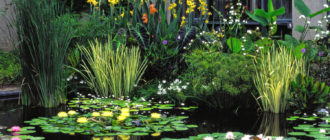
Garden areas are often decorated with water features. This transformation requires significant financial investment. Dry streams are a budget-friendly option for artificial ponds. By decorating an improvised stream with aquatic plants and natural stone, you can create an artful imitation of water. It will look great in any landscape design, regardless of the size of the plot.
The dry stream is a popular garden design element that originated in Japan in Western countries. A stream bed made from natural materials was believed to attract good luck, happiness, and prosperity.
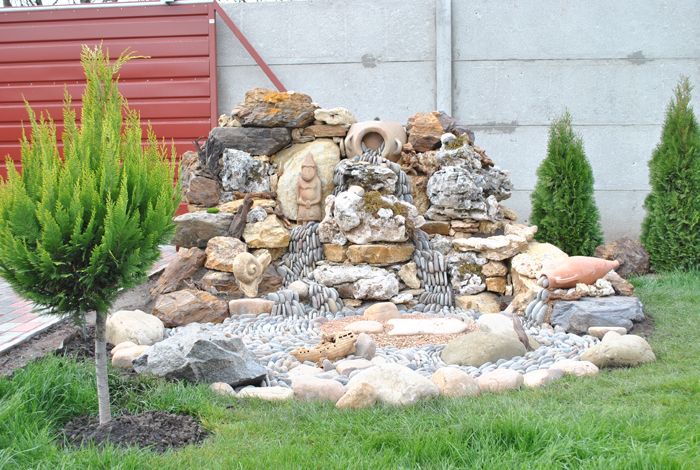
Dry Stream: Design Features and Applications in Landscape Design
A dried-out stream can be imitated using crushed stone, rocks, and sand. The latter is used to draw the outline. Plants are planted along the banks of the reservoir; the choice is unlimited.
The list of advantages of such a structure is quite extensive and includes:
- ease of care;
- minimal costs;
- quick installation (from 1 to 3 days);
- maintaining decorative properties throughout the year;
- absolute safety for household members;
- absence of insects.
Using a dry stream, you can drain water from the drainage system and hide visible defects and communications.
The latter include cables, manhole covers, and pipes. Additional functions of the improvised channel include dividing and visually enlarging the area.
To achieve success, you need to follow these guidelines:
- When developing, it is necessary to take into account the amount of consumables, the terrain and the parameters of the site.
- The dry stream must match the other objects in terms of external design.
- It is advisable to use stones of different types, differing in color and size, as a base.
- To protect plants from the negative effects of heated stones, the riverbed must be regularly moistened.
- The production process should be planned in advance. Beginners can use ready-made projects or consult with specialists. This will help avoid many mistakes.
During rain, the decorative ornament will turn into a full-fledged stream, contemplating which will help you find harmony and peace.
There are no downsides to a dry stream created in accordance with all the rules at the dacha.
What stones are needed for a dry stream?
So, to create a dry stream, you'll need stones and pre-sifted sand. The prepared material should be free of any foreign objects or debris. There's no need to avoid sharp contrast; in this case, it's acceptable. This way, you can achieve not only maximum decorative effect but also originality.
If you choose gneiss, basalt and slate, you will get a dry stream of a gray-blue hue.
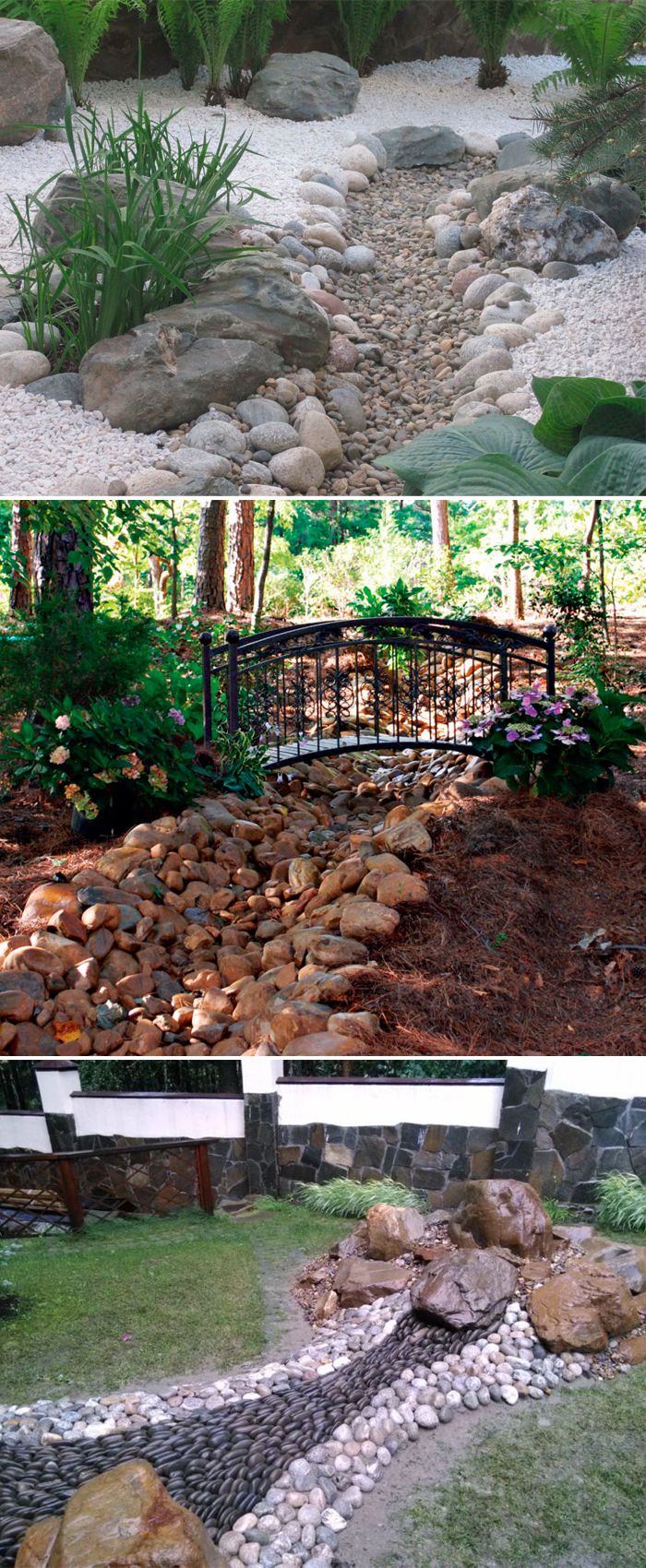
For a mound in brown and reddish tones, you'll need granite, marble, and limestone. You can also add pebbles and cobblestones coated with waterproof, luminous paint.
Dry Creek Ideas
Improvised flows are classified into several types, including:
- meandering – an imitation characterized by frequent changes in the width of the channel;
- Branched – one of the most complex configurations. The stream splits into several streams that then merge;
- A cascade or waterfall is the best option for uneven surfaces. The source is located on a hill, gradually descending to lower levels.
Dry streams can vary in both their appearance and construction methods. Some of the most popular ideas include:
- Sand streams. Pay special attention to the color scheme. The shades should contrast yet complement each other. You can imitate the waves with a rake.
- Combining several sleeves.
To ensure the finished composition creates the desired effect, its design must be approached responsibly. Regardless of which option you choose, the first step is design. If you lack the time, experience, and relevant knowledge, you can turn to professionals.
Step-by-step instructions for creating a dry stream bed
The procedure is quite simple and includes:
- Gathering the necessary information. The gardener should assess the scope of the work: determine the area of the work area, its location, surface type, and soil properties.
- Selecting options. At this stage, you should consider personal preferences, site features, and budget.
- Creating a sketch, budgeting, and planning subsequent steps is one of the most important stages. Mistakes made when committing an idea to paper can lead to wasted time, increased costs, and disappointment when you see the finished composition.
- Acquiring the necessary materials. To frame the dry stream, purchase or collect sand and large stones. This will avoid creating a dissonant effect. For the stream itself, you'll need flat pebbles. These can be pre-painted in various colors. To extend the life of the decorative element, choose waterproof finishes for the stones.
- Transfer the sketch to the ground using string and stakes. Draw the riverbed's contours in sand. Then, check the resulting drawing against the paper image and make adjustments if necessary.
- Preparing the work area. You'll need to remove the topsoil (no more than 15 cm thick) from the designated area, level the bottom, and compact the soil. To prevent plant growth without reducing air permeability, line the future stream with geotextile.
- Laying natural materials. Here, everything depends on your imagination and the type of pre-prepared stones. During the initial preparation, they are always washed, degreased, and dried.
- To give the imitation a more natural look, gardeners often build a bridge over a dry stream.
Decorating a dry stream
The improvised stream is decorated with plants. Planting lobelias, pansies, phlox, and ranunculus is a good solution. These plants, when in bloom, will give the dry stream a beautiful appearance. They are often complemented by meadowsweet, creeping bugleweed, large-leaved brunnera, blue fescue, loosestrife, globeflowers, ornamental onions, and irises. Avoid overdoing the flowers; an overly bright flowerbed will distract from the dry stream, making it a secondary feature.
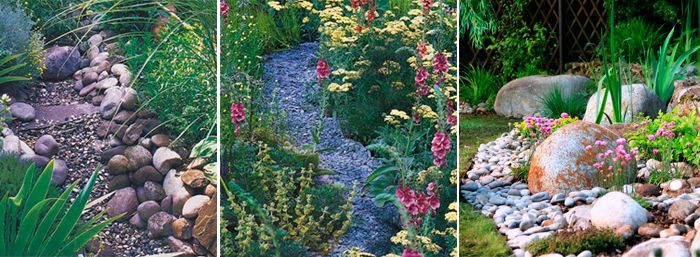
Hostas and ferns are planted in shady areas. The combination of groundcover and spreading plants makes the dry stream more reminiscent of a natural feature. When selecting plants, be sure to consider their comfort. They should not suffer from unfavorable neighbors, low or high acidity, or lack of sunlight and moisture.
Tips for keeping a dry creek bed looking beautiful
Now you know how to create a dry stream without the help of a landscape designer. But to ensure the stream retains its decorative appeal, you need to follow these simple rules:
- After the snow melts, loosen the soil and feed the plants with fertilizer.
- Inspect the dry stream, remove debris, excess sand and soil.
- Remove moss promptly. Otherwise, the riverbed will look untidy.
- Regularly adjust the stream's boundaries. They become blurred due to mechanical stress and weather conditions.