In cases where separate cultivation is impossible, cucumbers and tomatoes can be grown together in the same greenhouse, despite their significantly different needs. To achieve this, it's important to find a "sweet spot" and strive to maintain it.
Content
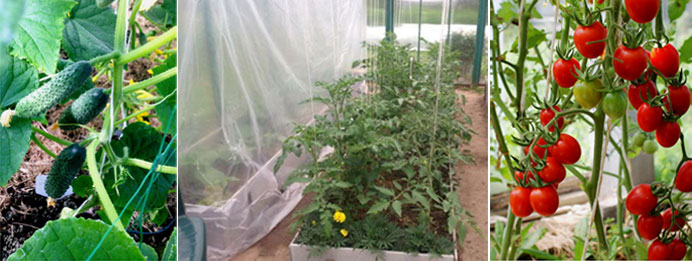
Growing cucumbers and tomatoes in one greenhouse
Growing cucumbers and tomatoes in the same greenhouse is possible if the specific cultivation conditions and conditions for each variety are taken into account. These include:
- fertilizer requirements and application schedule;
- sensitivity to insolation and ventilation;
- maintaining the desired temperature and humidity;
- pollination features.
Needs of cucumbers
Cucumbers require regular watering in the evening (preferably using a sprinkler system). The daily requirement for one plant is approximately 20 liters per square meter. Once the fruit begins to grow, the amount of water applied is increased.
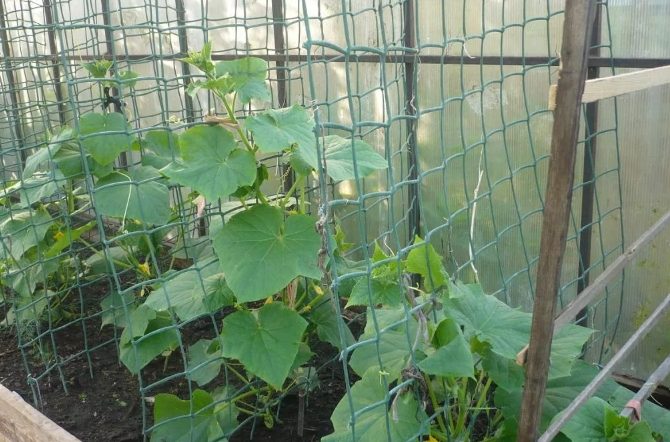
From the moment of planting, throughout the entire growing season, cucumbers are fed with organic and mineral fertilizers with an average frequency of once every 3 weeks.
The optimal physiological parameters for plant ontogenesis are as follows:
- the duration of daylight hours is at least 10-12 hours;
- the desired temperature range for growth of seedlings varies between +25…+28 °C, for adult plants it is +17 °C;
- Soil and air humidity slightly exceeds 85%.
Cucumbers, especially their seedlings, do not like drafts, which must be kept in mind when ventilating.
Tomato needs
Tomatoes require artificial pollination, which should be done on warm, sunny days. Afterward, it's recommended to spray the flowers with warm water to stimulate pollen germination in the pistil. During flowering, tomatoes require regular ventilation. They prefer dry air and water temperatures of 20°C (68°F). Fertilizing is typically done every 5-6 weeks. Tomatoes can be fed with both organic and mineral fertilizers.
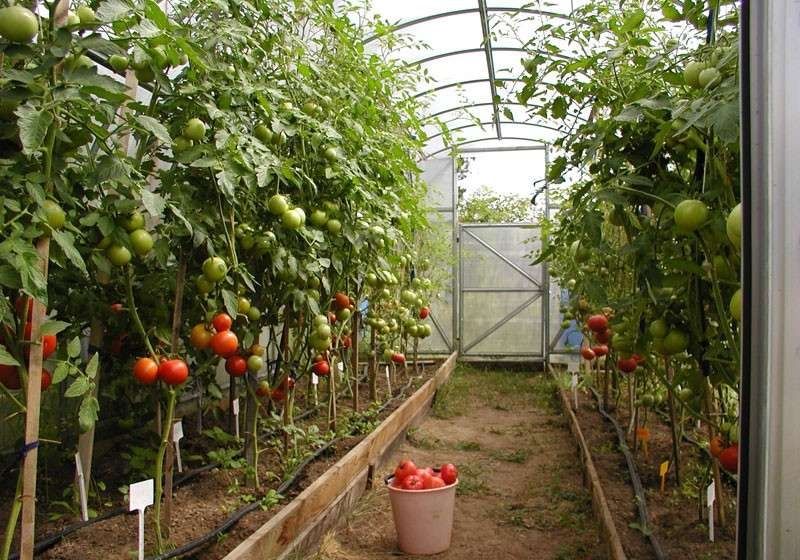
The favorable temperature range for plant growth and fruiting is 20 to 22°C during the day and 16 to 18°C at night. Optimal soil moisture is 75-80%, and watering is once every seven days at a rate of 13-14 liters per square meter.
How to grow cucumbers and tomatoes in one greenhouse
To achieve excellent results when growing cucumbers and tomatoes together, it's important to properly space the seedlings according to a scheme developed by experienced gardeners and follow their advice. Particular attention should be paid to the selection of varieties and their growing conditions.
Compromise conditions
The conditions for reaching a compromise include:
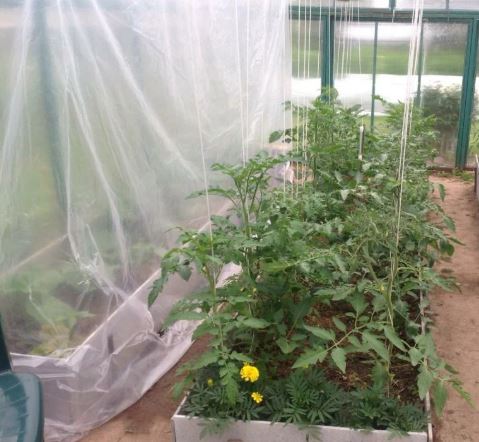
- Applying the zonal principle. Cucumbers are best planted in the northern part of the structure, and tomatoes in the southern part. The zones should be divided:
- a partition made of polymer film in the upper part of the greenhouse – to control the temperature and humidity of the air;
- ground metal or plastic partition - to control the soil moisture in the beds.
- Use of the greenhouse's internal space, taking into account the selection of mutually compatible varieties: tomatoes resistant to fungal diseases and cucumbers resistant to drafts.
- Construction of separate ventilation systems for plants; in the sector:
- When growing tomatoes, it is advisable to construct 2 vents to ensure cross-ventilation;
- To grow cucumbers you will need one window.
When caring for different types of plants at the same time, it is advisable to adhere to the following constants:
- The 24-hour temperature should be within the range of +20…+25 °C.
- The optimal 24-hour air humidity should be 70%.
Varieties of tomatoes and cucumbers for growing in the neighborhood
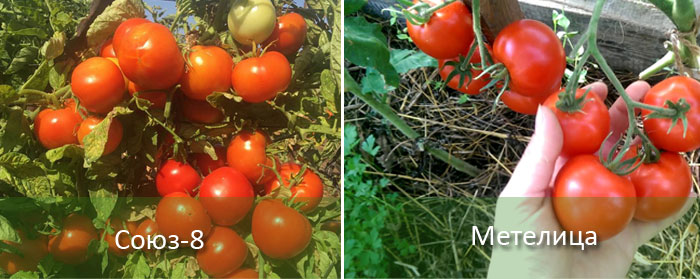
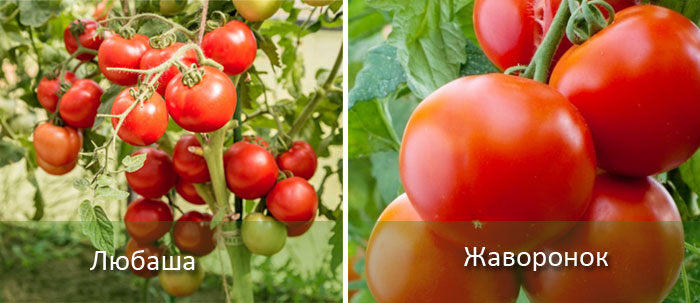
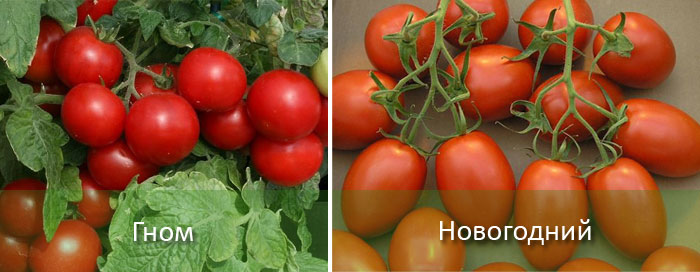
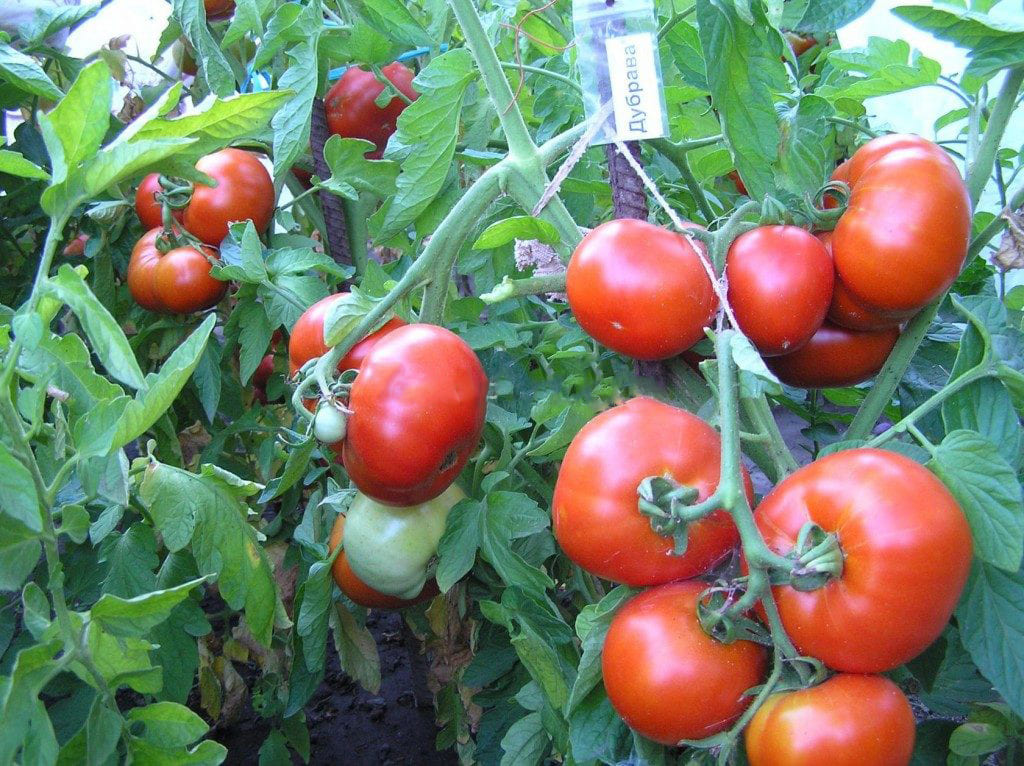
Properly selected varieties are crucial. For tomatoes, consider hybrids that are resistant to high humidity and late blight: 'Gnome,' 'Novogodniy,' 'Lyubasha,' 'Soyuz 8,' 'Zhavoronok,' 'Dubrava,' and 'Metelitsa.'
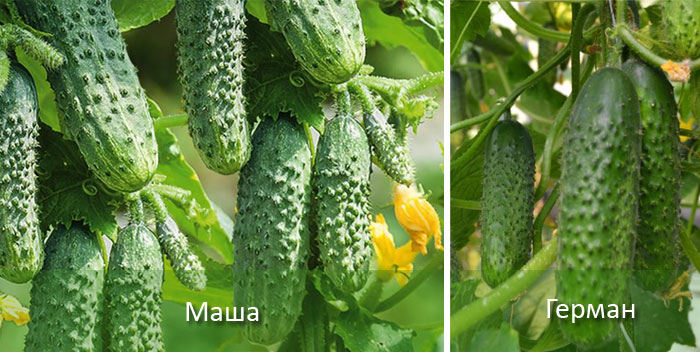


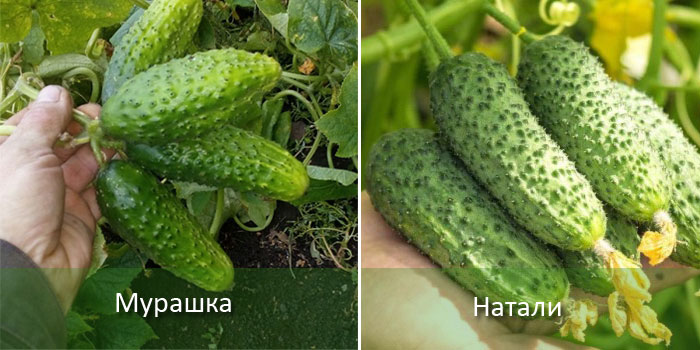
When selecting cucumber varieties, pay attention to their resistance to low temperatures and drafts. The main threats to cucurbits are powdery mildew, anthracnose, and bacterial blight, which can also be transmitted to tomatoes. Gardeners should consider the following hybrids: "Masha," "Benefis," "German F1," "Little Thumb," "Sestritsa Alyonushka," "Murashka," "Zhuravlenok," and "Natalie."
The correct planting pattern for cucumbers and tomatoes
The seedling method is recommended. Before planting, form two beds no more than 90 cm wide. Separate plots should be prepared for each crop, separated from top to bottom by plastic film and a sheet of slate to prevent excessive moisture in the tomato root system. The distance between different plant species should be at least 1 meter. It's best to stagger the seedlings.
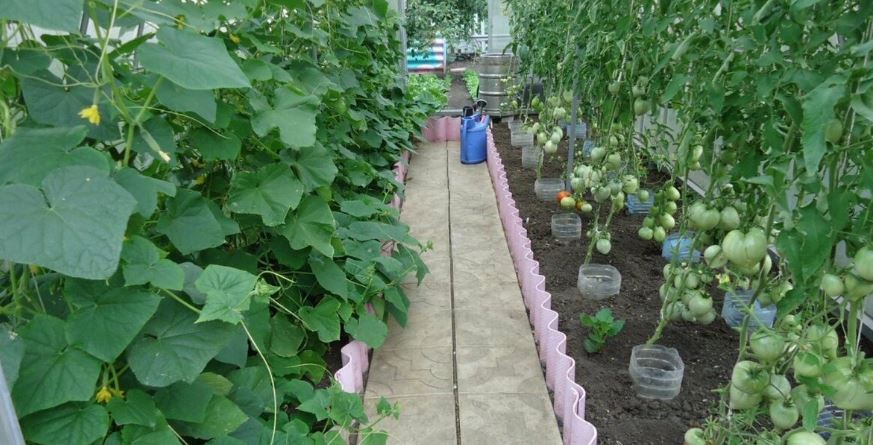
Cucumbers are best grown in the northern part of the greenhouse, protected from drafts. Immediately after planting, they should be fertilized by adding 10 ml of wood ash, 200 ml of compost, and approximately 100 ml of hydrogel to each hole. This increases soil moisture, preventing water migration toward the tomatoes. The distance between cucumber seedlings should be at least 30 cm.
Before planting tomatoes, it's a good idea to create a drainage layer in each hole. Gravel works well, and add 10 ml of superphosphate. The beds can be raised 30-35 cm above the soil level. The distance between tomato seedlings should be at least 40 cm. For taller plants, this distance should be increased to 60 cm. The planting depth of tomatoes should correspond to the depth at which the first leaf emerges.
Proper care of mixed plantings
General requirements include:
- regular treatment of plants with special compounds to combat insect pests and prevent infectious diseases;
- control over:
- temperature and humidity inside the greenhouse;
- frequency of fertilizing the varieties grown.
Cucumbers
Cucumbers are a moisture-loving crop. Allow the water to settle before watering, and use a sprayer to mist the green parts of the plant during irrigation. The optimal humidity level in a greenhouse is 85%, and the air temperature is 22–28°C.
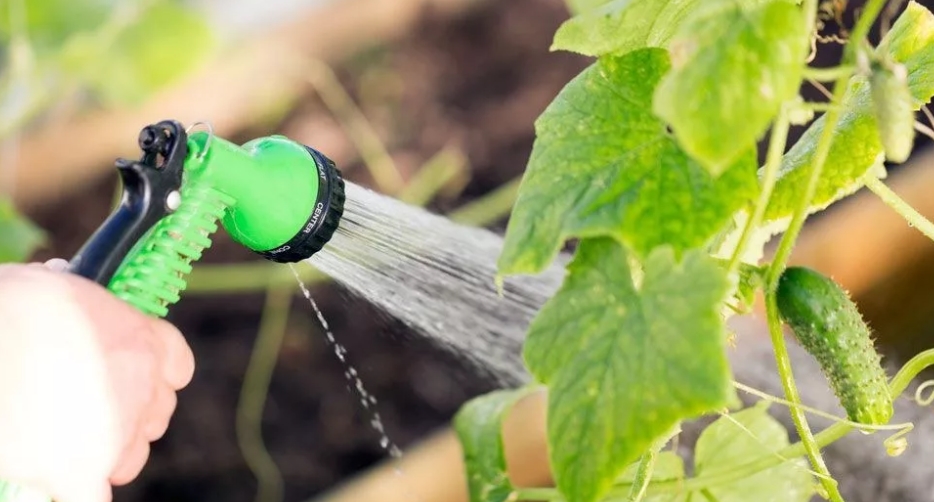
It's important to remember that drafts are harmful to cucumbers. Seedlings should be regularly fertilized and watered frequently, but sparingly. The average number of fertilizing sessions during the growing season is six. After fruiting, the irrigation intensity should be increased. The recommended aisle width is at least 40 cm.
Tomatoes
Tomatoes are best grown in polycarbonate structures. The recommended bed dimensions are 90 x 90 x 40 cm. The spaces between the beds should be at least 60 cm.
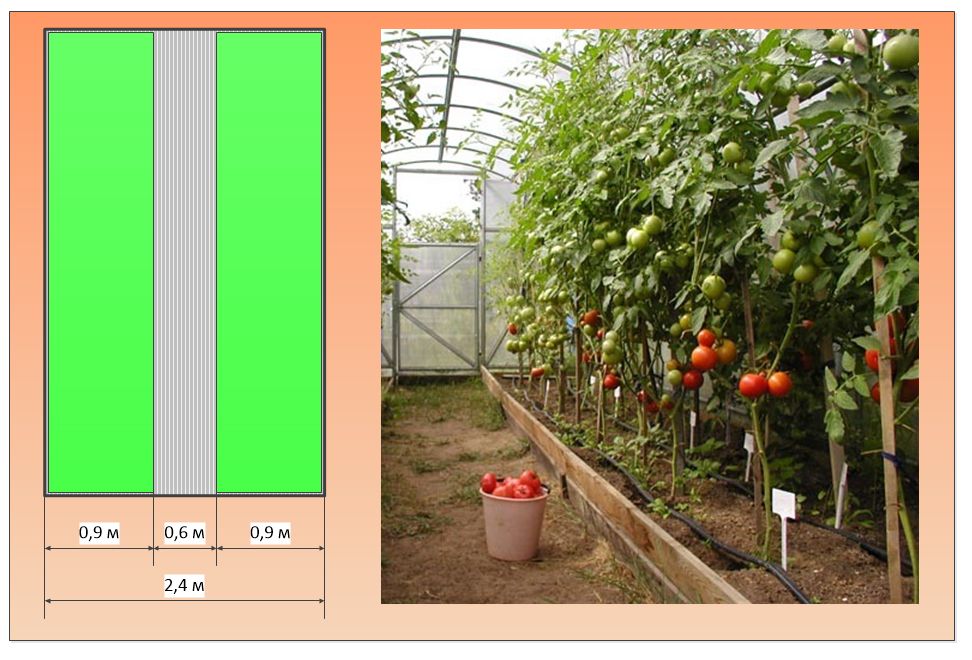
10-14 days after planting the seedlings, be sure to add soil to the holes. During this time, the plant should not be overwatered. As the stems grow, tie them to the trellis.
In addition to watering, tomatoes require regular ventilation (for this purpose, it is recommended to separate the neighboring cucumber crop with plastic film). The average number of fertilizing applications during the growing season is four. Experience shows that the most promising ovary is one consisting of seven clusters with inflorescences. It is recommended to remove any excess side shoots.
Film separation
Polyethylene is stretched from the greenhouse roof to the ground, separating the beds. Each section creates its own microclimate. Tomatoes benefit from regular ventilation.
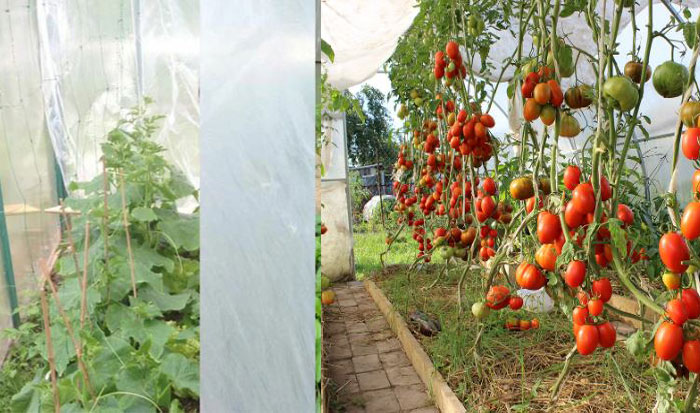
Separate landing
This method involves planting tomatoes on the south side and cucumber seedlings on the north side. Cucurbits thrive in a cooler climate, which reduces moisture evaporation.
Tips from Top.tomathouse.com
Here are some tips from our portal http://top.tomathouse.com. Gardening and plant growing practices show that to increase the yield of cultivated crops, you should:
- ensure that the daily air temperature range is less than +5 degrees;
- orient the greenhouse from north to south, while:
- plant cucumbers on the north side;
- allocate the southern part for tomatoes;
- choose self-pollinating varieties whose flowering periods do not coincide;
- During the day, during flowering, shake the plants to promote self-pollination.