Adding sand to your lawn is as beneficial as mowing, watering, aerating, and scarifying. It promotes better root development and aids regeneration. To achieve effective results, it's important to perform the procedure correctly. Let's explore what this procedure is, when and how it's performed, how to choose sand, and whether there are any contraindications.
Lawn sanding: description and purposes
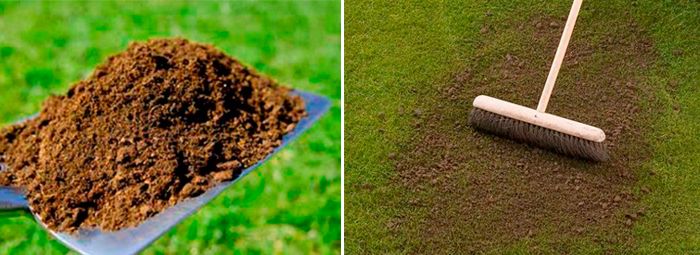
Sanding is covering the soil surface with a thin layer of sand (no more than 5 mm).
Its purpose is to improve the physical and chemical properties of the soil.
It has the following beneficial effects:
- improves permeability and airiness (oxygen, liquid and nutrient mixtures)
- more easily reach the roots of plants);
- softens the top layer on clay soils;
- creates an optimal environment for plant growth;
- prevents liquid stagnation in the substrate due to the porous structure of the sand, as a result, the likelihood of mold and fungal infections is reduced;
- fills voids, levels the surface of the earth;
- makes the top layer of soil more elastic.
Thanks to sanding, the lawn maintains an attractive appearance throughout the season.
Timing of lawn sanding
It's best to do this three times a year. The first sanding is done in late March or early April, after scarification and overseeding. The second is done in the summer. The third is done in September.
If time is short, the procedure should be performed at least once per season, preferably in the second ten days of August to early September or in early fall after aeration (ventilation, oxygenation of the soil) and scarification (removal of plant debris from the soil surface). These procedures make the soil light and loose, allowing sand to easily reach the roots. If the voids after aeration are not filled, the procedure will be ineffective.
Preparing the lawn for sanding
Preparatory activities step by step:
- A couple of days before the main process, water the area and add nutrient mixtures. For example, use the complex fertilizer Rastvorin (20-40 g per 10 liters of water). This will help prevent overwatering, prevent fungus, and reduce stress on the plants from adding sand. It is recommended to perform the process on a cloudy day.
- After two days, dry the surface layers. For larger areas, use garden fans (wind blowers) and dew whips. If the area is small, sweeping can be done manually with a soft-bristled broom.
- Perform verticulation (combing out the felt). This procedure involves removing organic debris to a depth of 25-30 mm. In a small area, this can be done manually: comb the lawn with a garden rake, then perform a final cleaning with a turbine blower and lawn brush. If the area is large, it's advisable to use specialized tools called scarifiers. They cut and remove the felt, and also loosen the soil.
- Sow seeds into bare patches. It's recommended to purchase a specialized spreader to prevent trampling.
- At the last step, add complex mixtures in granules or calcium-containing products.
Sand for sanding the lawn
River sand with a grain size of 500-800 microns is used. It can be mixed with other components that perform their own functions:
- peat and compost enrich the soil with nutrients;
- clay is intended for light sandy substrate, as it improves its structure;
- chalk, ground into powder, is added to normalize the pH in overly acidic soil (this replaces liming of the lawn);
- Dry mineral fertilizers have a positive effect on the development of lawn plants.
Zeolite is also used instead of sand. It is naturally occurring and is extracted from rocks. It has the following advantages:
- improves the structural characteristics of the substrate, promotes better rooting of seedlings and saplings;
- binds water during precipitation and releases it in dry weather;
is an antiseptic, which prevents the occurrence of various infectious lesions; - has a beneficial effect on ion exchange, binds useful substances and releases them into the soil when necessary.
You can prepare a sand mixture specifically designed for lawns. It consists of finely sifted sand, ammonium sulfate, and iron sulfate. The second component can be purchased at a fertilizer store. Iron sulfate is obtained from copper sulfate by drying it over low heat until it turns grayish and grinding it into a powder. It's important to maintain a 5:3:2 ratio.
Sandblasting process
For every 100 square meters, you'll need approximately 300-500 kg of sand, either pure or mixed with other components. Mow and dry the lawn.
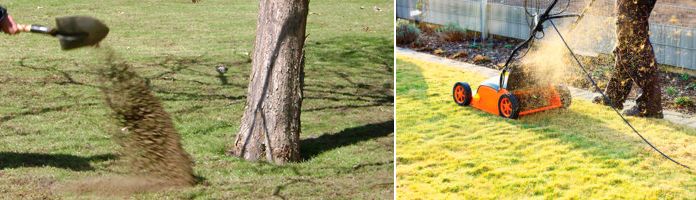
Spread the sand with a shovel and distribute it evenly with a rake. It's advisable to use specialized equipment if the area is large, such as a sand spreader. These are devices with spreading discs and rotary brushes. This technique distributes the sand more evenly.
When sanding is not necessary
Sandblasting is not always advisable. Sometimes, this manipulation can be harmful.
The procedure should not be performed when the lawn is laid on too light, sandy and dry soil or on a hill.
A substrate that's too loose will quickly absorb water after watering, leading to moisture stress. If you add sand to a slope, it will slide, resulting in the lawn having to be re-established.
In summary, we can conclude that sanding is a mandatory procedure that significantly facilitates maintaining the lawn's attractive appearance. It is recommended to perform it at least once a year. However, it's important to keep in mind that this procedure isn't always feasible. In some cases, it will not only be of no benefit, but can actually be harmful.