Rock gardens, which combine the beauty of flowers and stones, are increasingly popular in landscape design. This decorative element originated in Japan, where masters of this art were believed to evoke peace and serenity. Gradually, stones began to be used for decoration throughout the world.
Which style to choose?
The following styles of rock gardens are distinguished.
- Landscape. They imitate the appearance of a rock and the vegetation around it.
- Artistic. They represent a model of an idealized mountainous terrain.
- Collectible. Designed exclusively for growing plants.
To ensure your rock garden brings you joy for a long time, take a closer look at the area and decide on a style.
- If the area is sunny, has drainage and uneven terrain, feel free to choose any style.
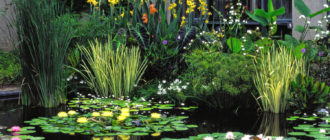
- If the area is too wet, it is best to create a swamp with stone-lined banks and moisture-loving plants.
- You can create any rock garden in a shaded area, but when choosing plants, stick to forest plants that thrive in the shade, such as ferns, asarums, and so on.
- On a completely flat area, create a semblance of a high-mountain meadow or build an artificial hill.
- If you have a steep slope on your property, imitate a mountain range with a stepped descent; cascades with a stream flowing down them look good.
- In a low-lying area, create a ravine-like structure with a rocky hill. This technique creates the illusion of greater height.
Types of rockeries
Let's look at the most popular and spectacular types of rock gardens.
Architectural rock garden
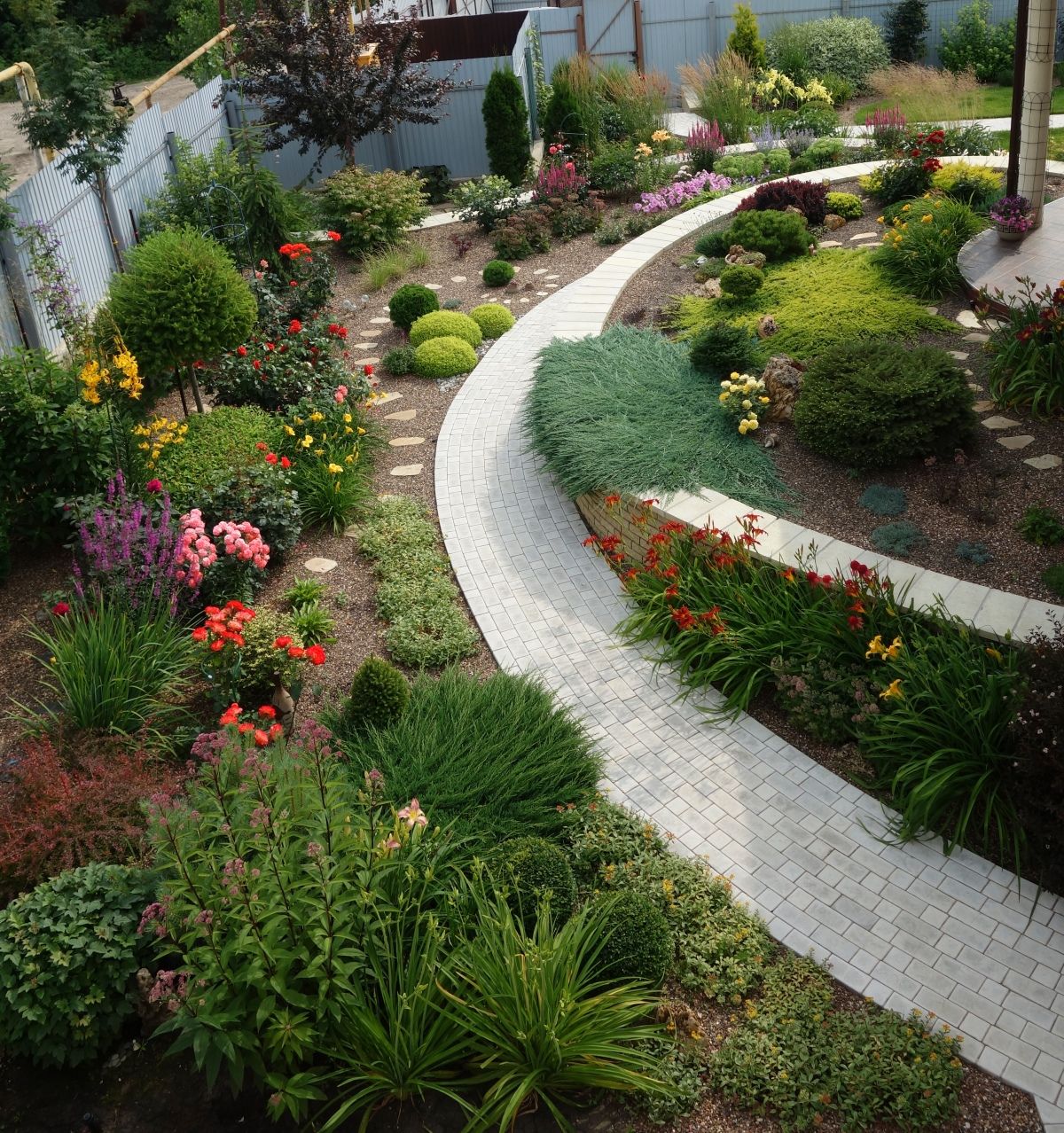
This type is characterized by wide, multi-level terraces, which should be reinforced with retaining walls made of natural stone and connected by stone steps. Conifers and slow-growing shrubs are the best plants to choose. Creating such a rock garden requires a professional approach.
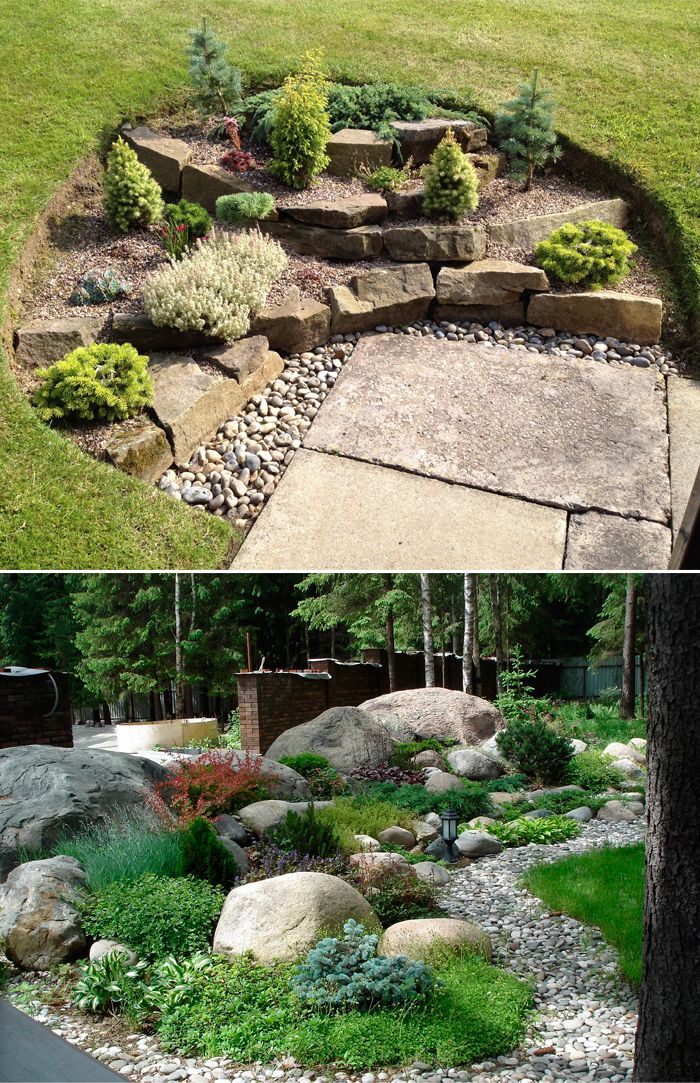
rocky hill
It looks like a low stone hill, which needs to be compositionally connected to the rest of the area, for example, by a paved path. It must have a natural appearance.
Landscape rockery
This is a fairly large stone composition. It can consist of imitation cliffs, gorges, water cascades, rocky slopes, and so on. It requires a lot of space.
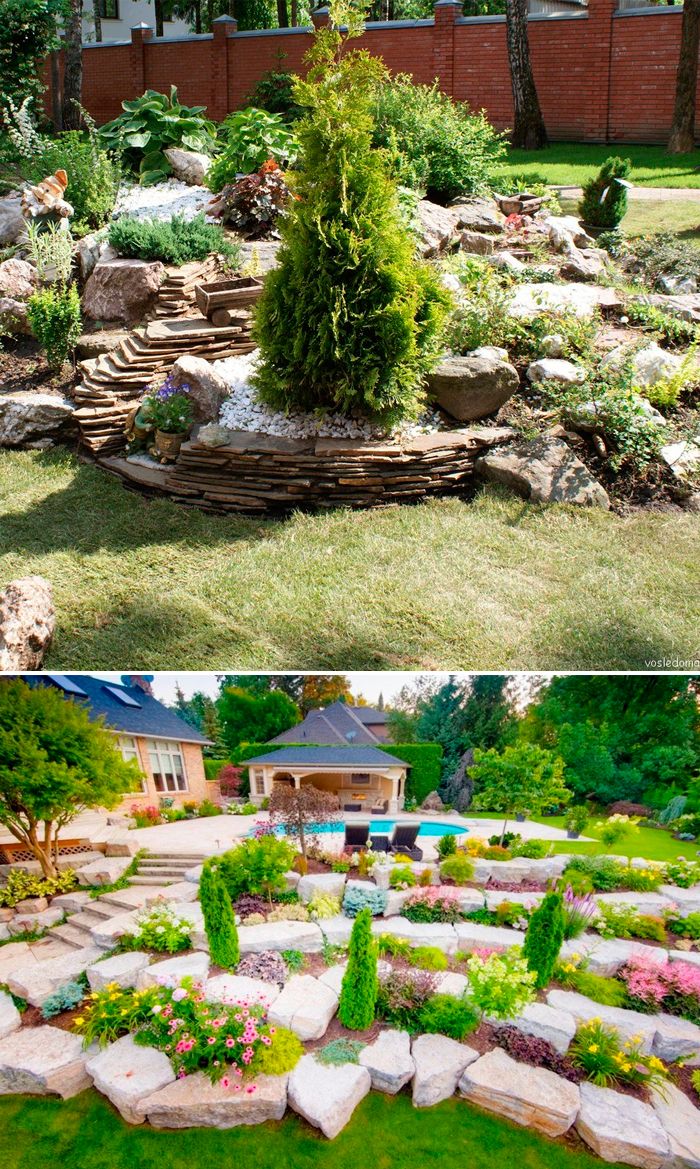
Terraced slope
If you have a natural slope on your property, create elegant terraces anchored by stone retaining walls.
Rocks, cliff
This rockery can be a component of a larger composition, or it can stand alone. It's created from very large, time-worn stones. When laying them, leave crevices for planting.
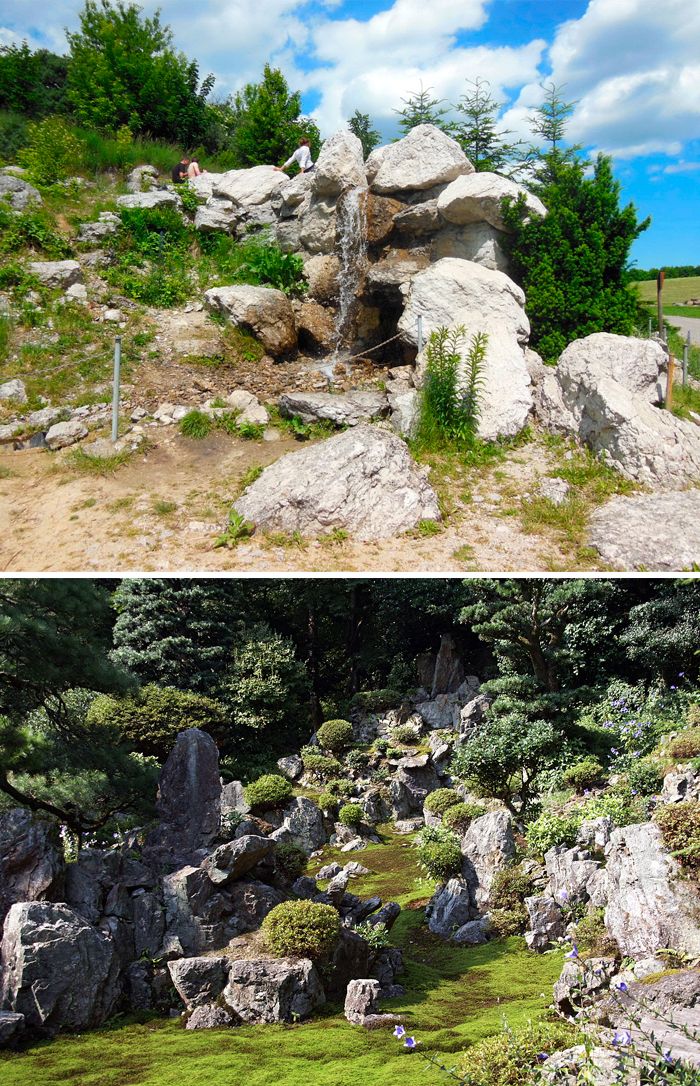
Mountain slope
It looks like a scree slope anchored by dwarf pines. Miniature alpine meadows complete the look.
Mountain valley
To create this landscape, large stones are set asymmetrically into the ground. Paths are laid out in the garden, making them as natural as possible. Dwarf conifers and creeping plants work well in this arrangement.
Alpine lawn
The key features of a site suitable for such a rock garden are drainage and protection from the sun. Plants should only be those native to the high Alps, such as edelweiss, creeping willows, carpet saxifrage, and the like.
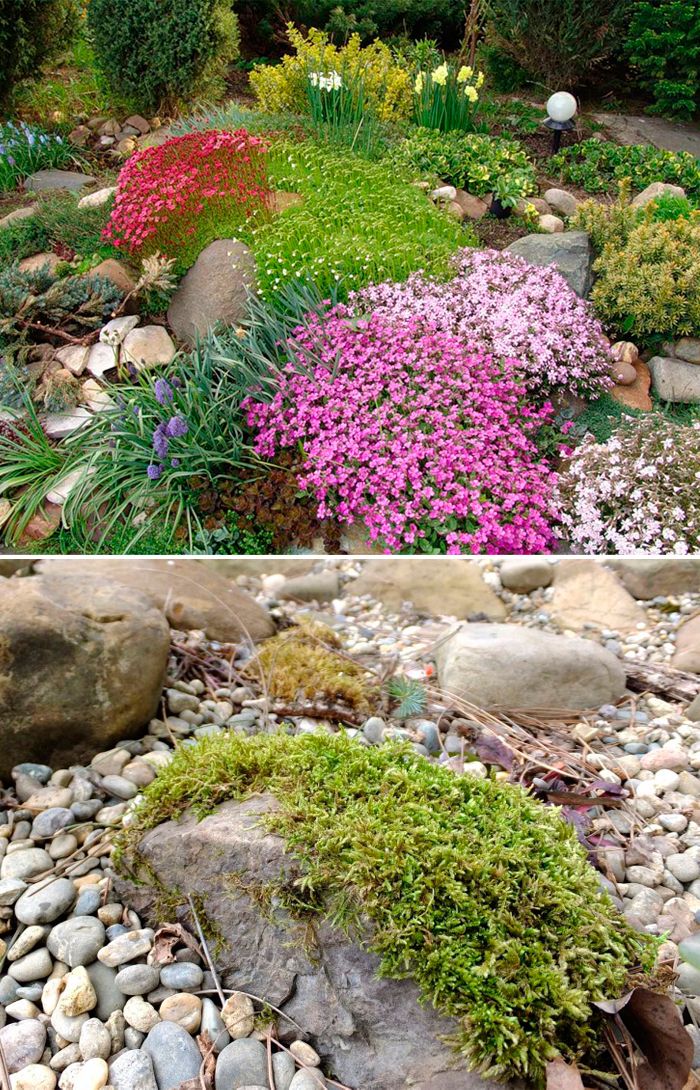
Forest ravine
This type of landscape requires a natural slope. Large stones can be dug into the ground to stabilize the slopes. Shade-loving forest plants will complete the landscape, and moss will look beautiful.
Gorge
It is best to create it between the slopes of hills, which are lined with stones, and in places between them dwarf rock plants are planted.
Wall
Typically, this serves as a slope support. A free-standing stone wall can also be built. Rock plants are planted in the space between them.
Water cascade
For its construction, it's best to use stones from natural bodies of water, which are already processed. The stream bottom should be covered with pebbles, and the pool walls should be lined with clay.
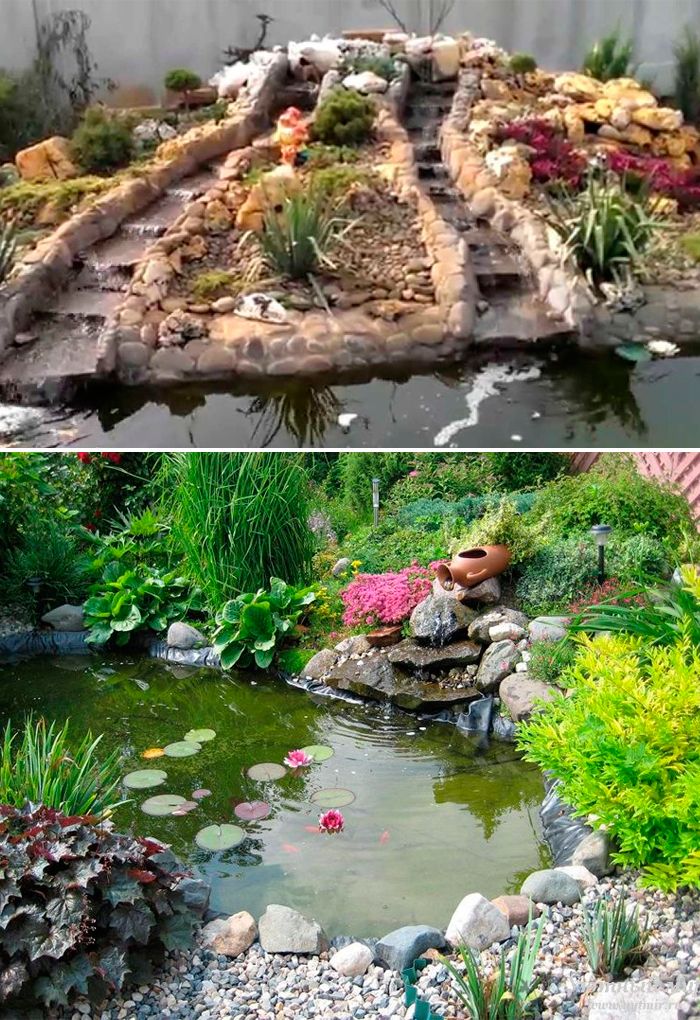
swamp
It fits perfectly in a slightly marshy area. To create it, remove the top layer of soil and pile it up along the edges, forming mounds. Dig granite stones into the banks. Create a path or build wooden bridges to access the swamp.
Mixborder
The beauty of the plants in the border flowerbed will be emphasized by several dug-in stones that will appear to be drowning in the flowers.
Japanese Garden
Creating a rock garden like this requires skill and taste. The rock groups should have a natural tumbled appearance, with moss and lichen covering them. A water feature can be harmoniously integrated into such a rock garden. The choice of plants should be very careful – they should perfectly complement the landscape.
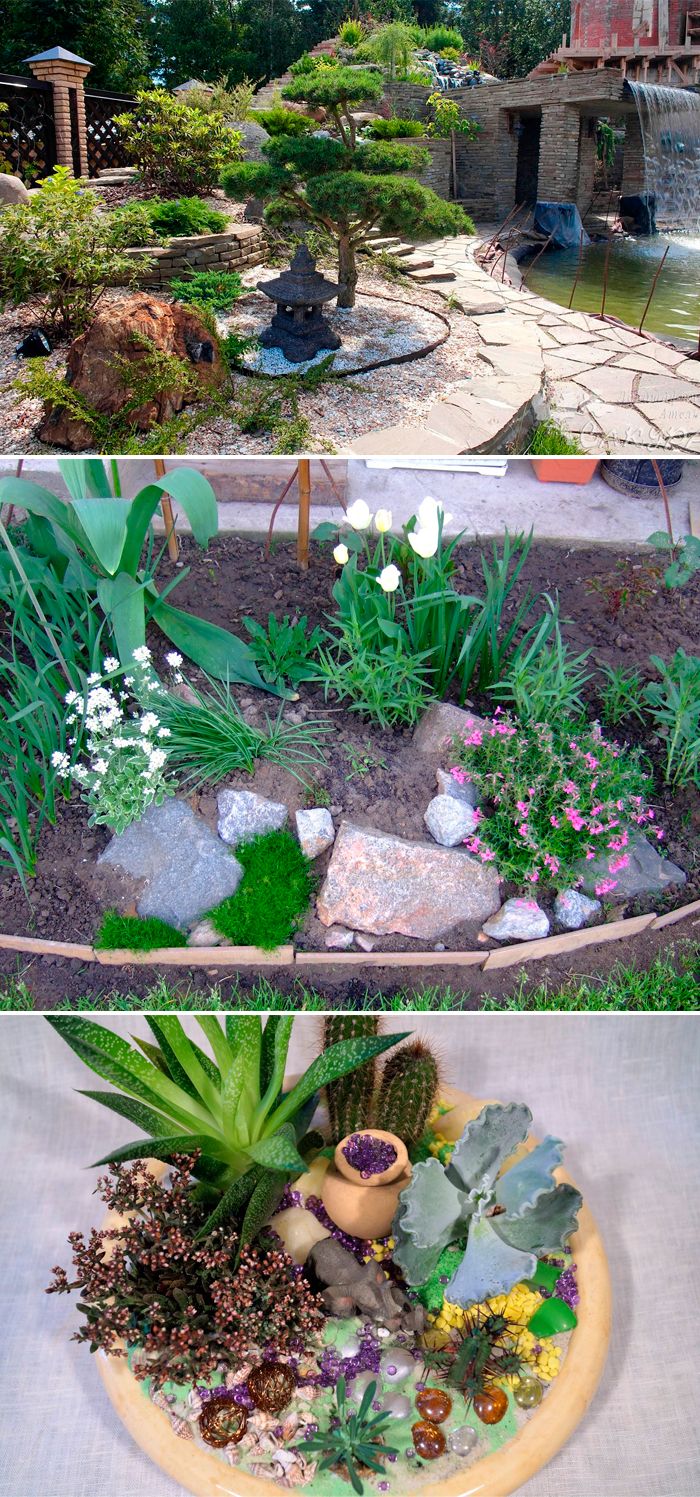
Miniature rock garden
Created on tuff rocks. Super-dwarf plants are planted directly onto the rock. When choosing groundcover, opt for slow-growing ones.
Home rock garden
This rockery can be created in any ceramic container and kept indoors. Succulents are a good choice of plants.
With thoughtful organization and good care, your rock garden will delight you for many years.