Well-tended plants, a beautiful house, and green grass undoubtedly make relaxing at your dacha a pleasant experience. However, adding sculptures can make your stay even more enjoyable. Their appearance adds uniqueness, aesthetic appeal, and a cozy feel. Decorations for your home or dacha can be purchased, custom-made, or handcrafted from a variety of materials.
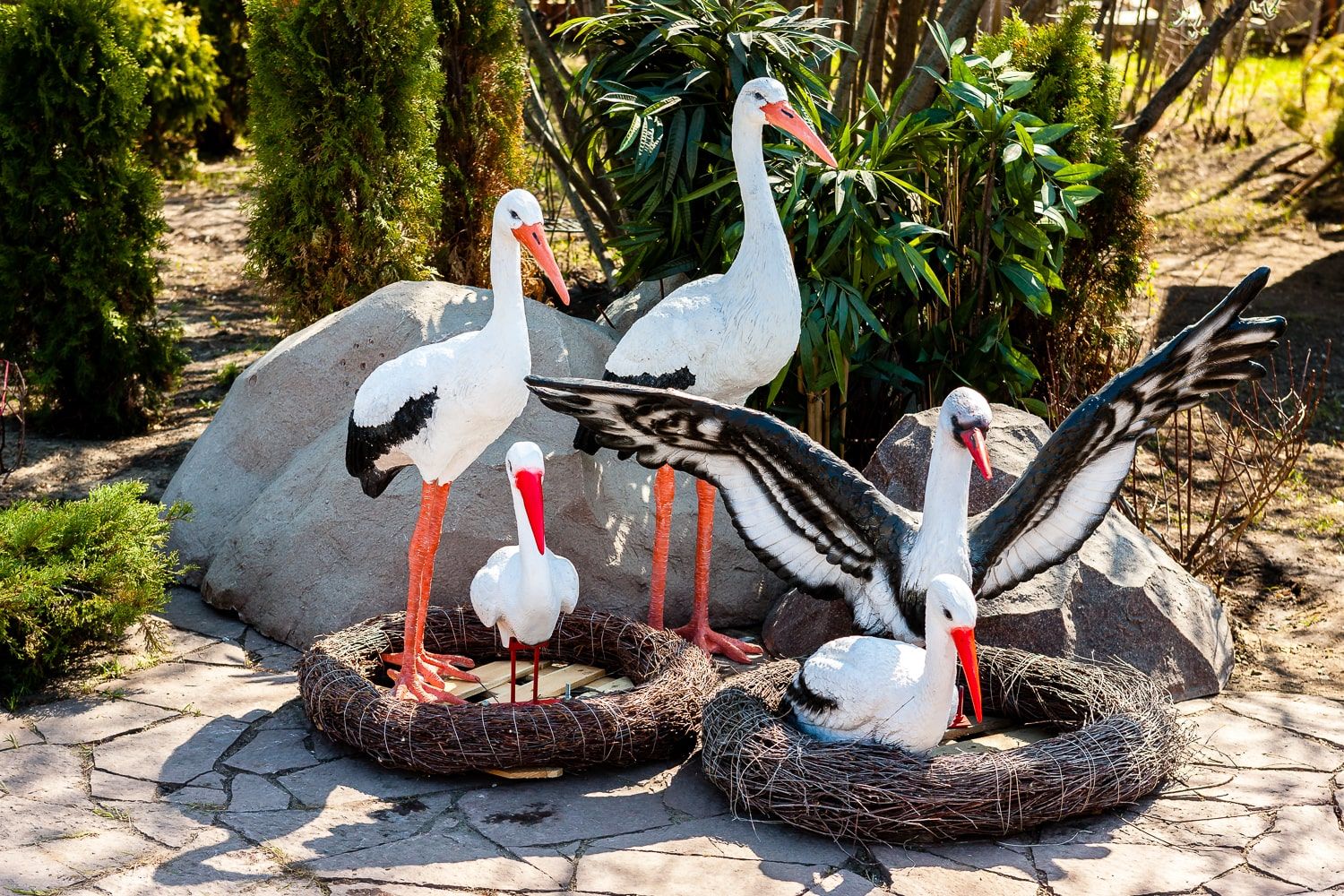
The meaning of sculptural compositions
It's believed that sculptures not only decorate a property but also have the power to influence the surrounding environment and its owners. Before choosing a statue, it's important to understand the implications of its placement:
- small gnomes - good luck, rich harvest;
- animal figures - good health, long life;
- marble sculptures of a person - protection from loneliness;
- Fairy tale heroes - interesting, varied lives with many unforgettable moments;
- The dragon is a symbol of fertility; according to Chinese belief, it is the deity of moisture and rain.
Many people are skeptical about signs, but designers always pay attention to them when designing landscapes.
Materials for making sculptures
The following materials are most often used to produce sculptures:
- tree;
- gypsum;
- concrete or aerated concrete;
- natural and artificial stone;
- metal;
- plants (such figures are called topiary).
Made of wood
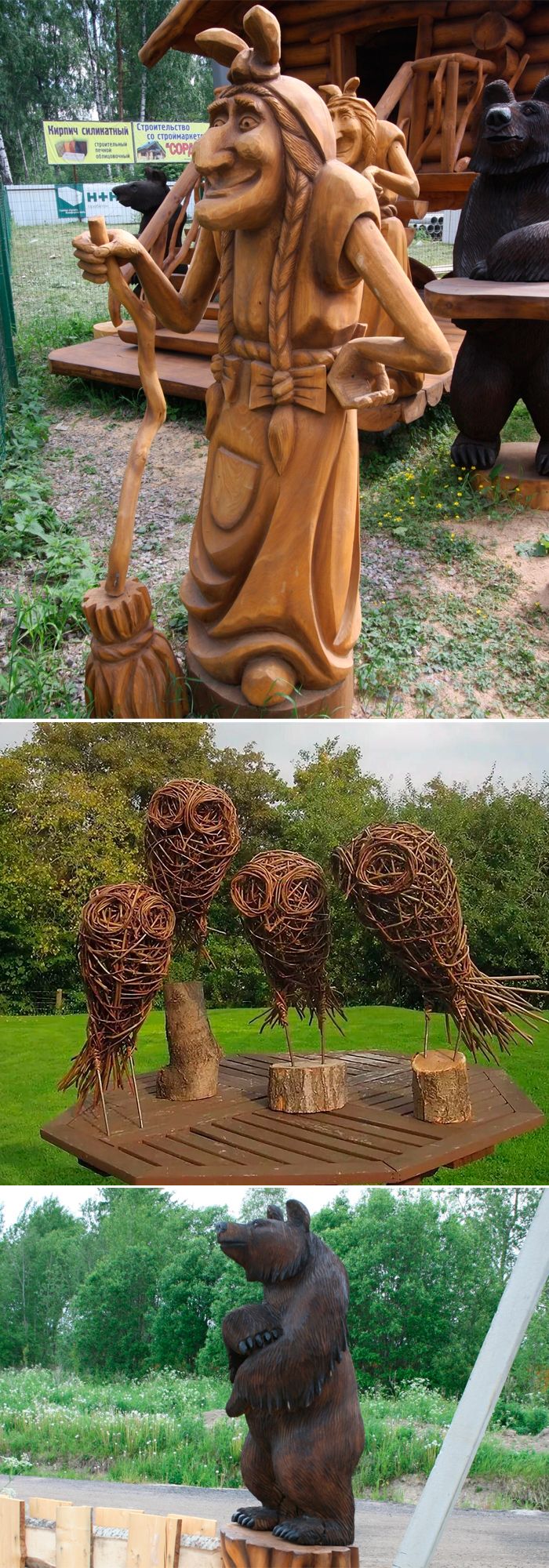
It's easy to make your own items. You can use your imagination and create, for example:
- a product made from scraps of plywood and boards;
- a decorative well or a hut made of planed branches;
- decorations made from stumps, driftwood, and logs, which, with their bizarre shapes, will give you ideas.
The material is environmentally friendly and will fit into any landscape design.
To prevent insect pests from infesting the figure or it from rotting, it must be treated with a special compound for wood.
There's also a downside: sculptures made from this material are designed for summer gardens. They need to be brought indoors for the winter.
Made of plaster and cement
You can make flowerpots and various figures yourself using homemade molds.
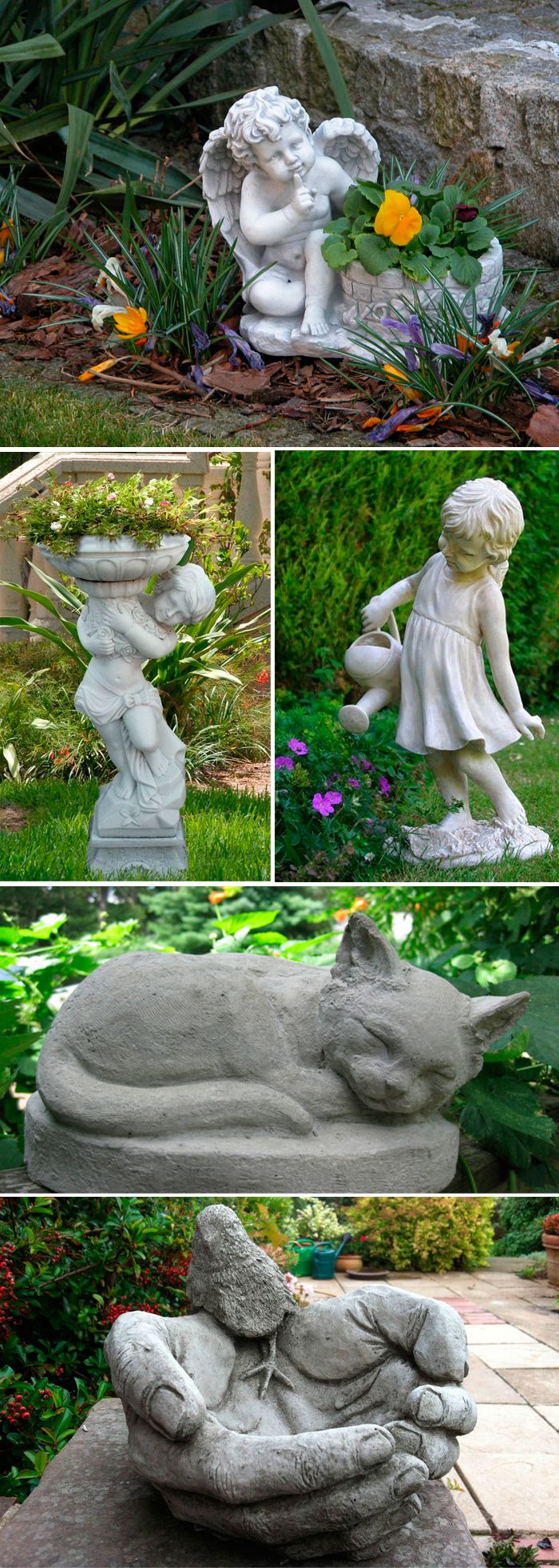
If you have a plaster statue on your property or at someone's place, this is a great opportunity to cast a replica:
- Dissolve the clay in water until it thickens. You can buy it or make your own, dry it, and pass it through a coarse sieve.
- Press the resulting mass into the existing shape, first from the front, then from the back. This will create stencil shapes.
- Place them in the sun to dry. If cracks appear, patch them with plasticine.
- Make a mixture of dry plaster and water. It should have a consistency similar to sour cream.
- Grease the stencils with wax.
- Pour the gypsum solution into the molds and leave to harden for 24 hours at a temperature of +16…+25° C.
- Glue the two parts together with moisture-resistant glue.
- Smooth out any uneven areas where the halves are joined with sandpaper.
- Paint the sculpture with water-resistant paints.
Of course, plaster is a fragile material, but with proper care it will last for many years.
Concrete sculptures come in a variety of shapes. Here's a step-by-step process:
- Build a frame, for example, from wire, pipes, etc.
- Make a solution of cement and sand (3 to 1).
- Apply the concrete solution gradually, allowing the inner layers to dry.
- Decorate the sculpture. For example, you can use decorative elements cast from plaster mortar in silicone baking molds.
If you have no experience making concrete figures, it is recommended to start with the simplest forms.
More experienced sculptors can build a castle using stones for the masonry and broken ceramics and tiles for decoration. Such a structure will enhance the property and cost significantly less than buying one.
Concrete can be left outdoors over the winter if covered with a box. Only the surface layer needs to be renewed occasionally.
Made of stone
Several types of stones can be used to create garden sculptures:
- Marble. Products made from this stone are true works of art. When you look at them, they seem illuminated from within. These sculptures add luxury and elegance to any space.
- Granite. A durable stone that withstands adverse environmental impacts. Sculptures made from this material complement granite benches, steps, fountains, and paths beautifully.
- Sandstone. Figures made from this stone are durable and inexpensive.
- Polystone. An artificial stone with superior properties to natural stone.
Having selected stones of suitable shape, you can paint them and arrange various animals in a flower bed.
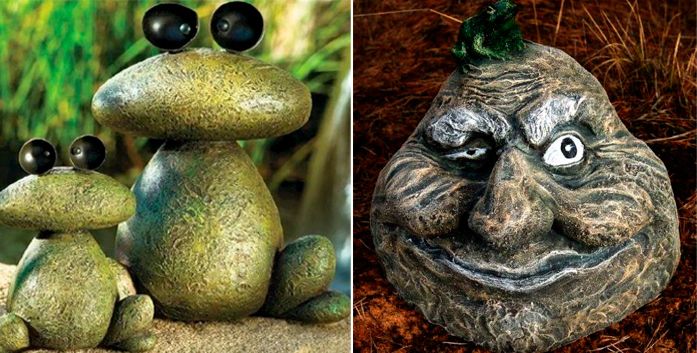
For example, polystone makes wonderful turtles, snails, etc.
Made of metal
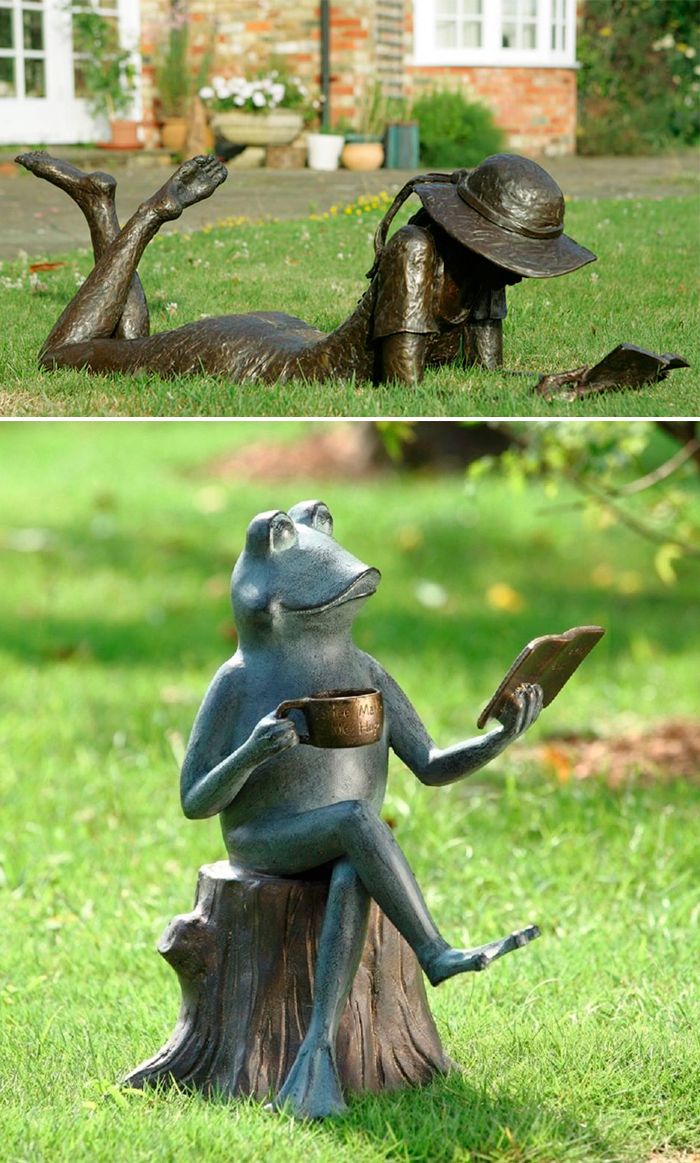
It's a durable, wear-resistant material. Sculptures made from it aren't cheap. Copper and bronze statues blend harmoniously with any building.
Copper is resistant to adverse environmental conditions (ultraviolet rays, rain, etc.) and sudden temperature changes. It does not rust, making it easy to maintain.
Sculptures made from it are often installed not only on private property, but also in park areas and squares.
Plant-based
Topiary is a form of topiary. It's often used for landscaping in Europe. Decorating your property this way requires a great deal of patience (the plant must reach the desired size) and specialized tools.
There are 3 ways to create topiary:
- traditional - pruning a living bush;
- figures grown on peat;
- sculptural compositions made of ivy.
Creating a topiary with your own hands is not easy.
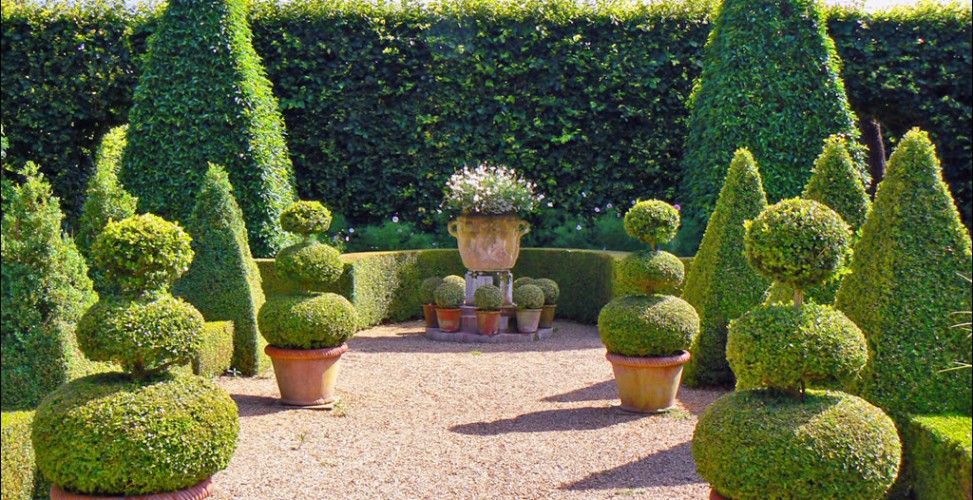
It's important to remember that sculptures require maintenance. They need to be trimmed to keep them from losing their shape and becoming overgrown.
From improvised means
Creative people can use their imagination and create jewelry from any materials at hand. For example, you can use the following materials:
- plastic bottles;
- tires;
- broken dishes;
- branches after tree pruning;
- old furniture;
- tin cans;
- broken bike and stuff.
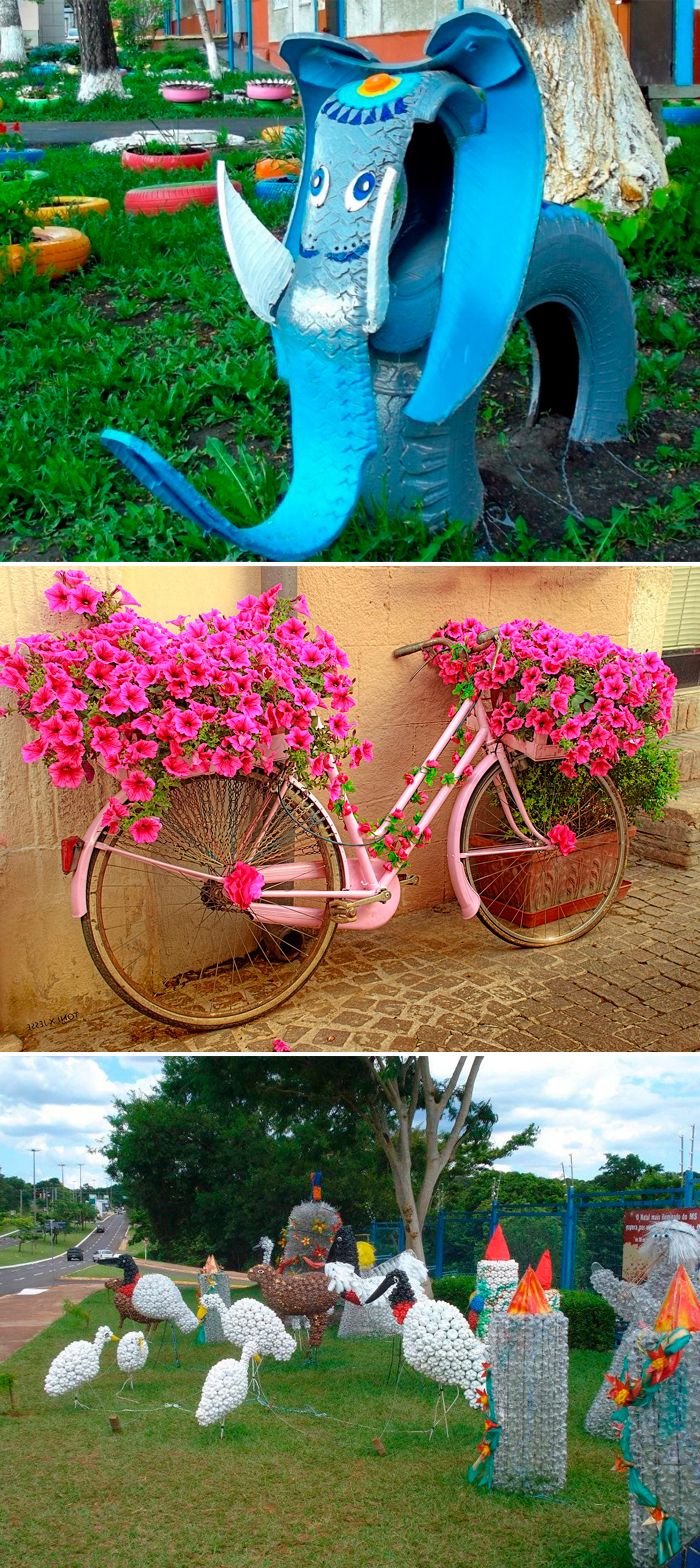
In general, with a rich imagination, you can create a garden decoration from whatever your heart desires. The most important thing when designing is to adhere to the following rules:
- The figures should complement the landscape design. For example, if the landscape is contemporary, antique statues should not be used.
- The location for the sculptures should be chosen in advance. It's recommended to make them out of cardboard and see if they will fit harmoniously into the chosen area.
- Don't overload the area with decorative elements. This will only ruin the appearance.
- A figure doesn't always have to be the main decorative element. Sometimes it's more appropriate to place it at the edge and cover it with plants.
Landscaping is a creative and exciting activity. All you need is free time, patience, and imagination to make your property attractive, memorable, and welcoming.