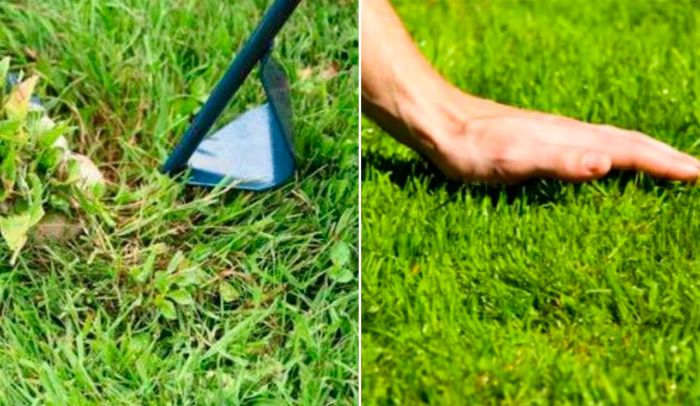
Contrary to popular belief, you can't grow a lawn using regular grass. Even with regular maintenance, such a lawn will remain rough.
Content
The difference between lawn grass and wild grass
Lawn crops differ from wild grasses in their range of beneficial properties.
It includes:
- Rapid shoot growth. Thanks to this quality, seedlings form a dense turf layer within a few weeks of planting;
- Aesthetics. A green lawn in front of a house or in a backyard can become a part of the garden landscape, a place for relaxation, and even a playground;
- Tactile sensations. When touching the lawn, a person will feel the velvety surface of the leaf blades;
- A variety of forms and varieties. Gardeners can choose from a wider range of grass mixtures and monocultures.
When purchasing seed for planting a lawn, you need to consider the following factors:
- Seed quality. When purchasing, make sure the seller can provide the appropriate certificate;
- Climatic conditions. Each crop has its own level of resistance to sudden temperature changes;
- features of the selected site (location, soil properties, groundwater level).
- The list also includes the color of the grass, tolerance to mowing, uniformity of emergence, type of root system, and shelf life of the seeds.
Types of grass mixtures
Grass mixtures are classified into several categories. These include:
- fast. Tillering ensures rapid restoration of bald spots (components of such lawns: annual ryegrass, perennial ryegrass, red fescue, meadow bluegrass);
- Sunny. Plants in this group are resistant to heat and bright light (Corngrass, Festulolium, Meadow Fescue, and Red Fescue);
- Shade. Lawn crops of this type are planted in areas that are in the shade (turf grass, creeping bentgrass, red fescue, common bluegrass);
- Universal. These grasses are undemanding in terms of growing conditions. They are tolerant of heat and shade (meadow bluegrass and red bluegrass, red fescue and sheep fescue, perennial ryegrass).
High-quality seed mixtures contain seeds with high germination rates. Otherwise, bare patches will form on the lawn, requiring reseeding.
Grasses are selected so that their deficiencies are offset by their advantages. If the manufacturer has calculated the formula correctly, the lawn will survive adverse environmental conditions without significant losses.
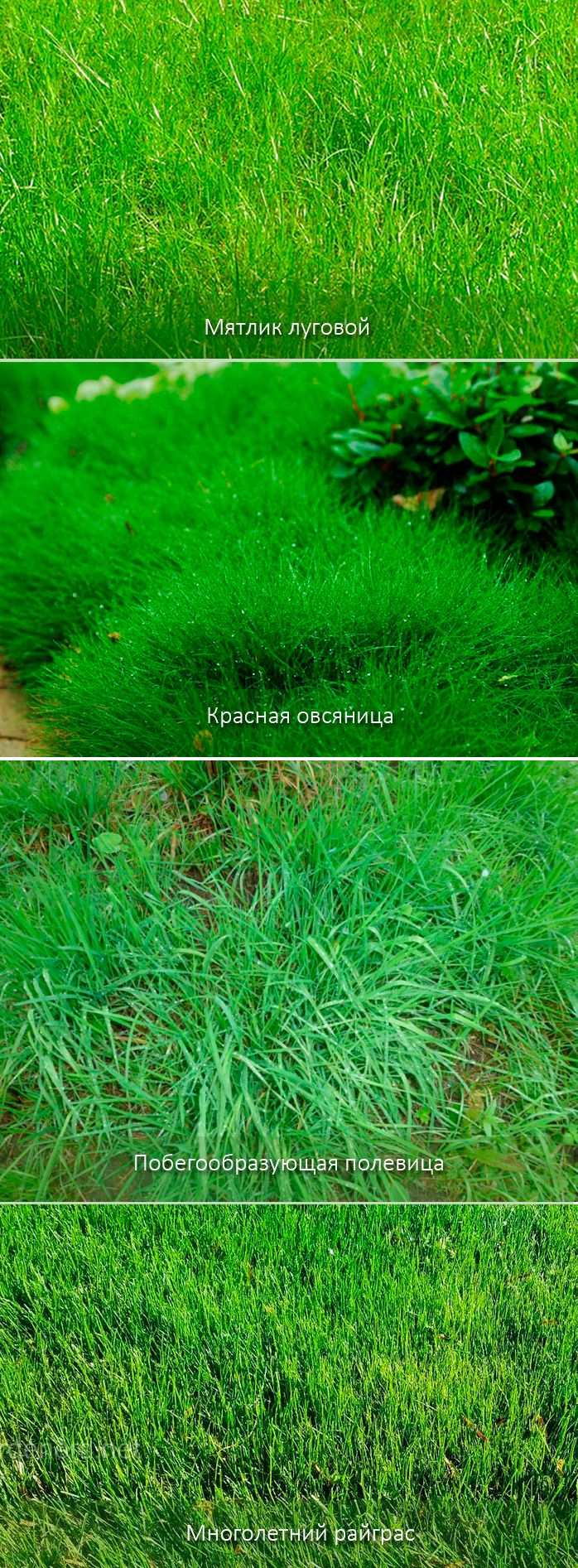
Grass mixtures are most often used to create lawns that won't be subject to heavy foot traffic. Areas designated for sports fields are planted with monocultures. To create a green space in front of a house with a sufficiently dense vegetation level, gardeners should follow the recommended seeding rate during planting. This refers to the number of seeds required per square meter of area.
Grasses for the lawn
There are many varieties of lawn grass. Based on the development of their root systems, they are divided into groups listed in the following table.
| Type | Description | Plants |
| Rhizomes | The root develops outward. Aboveground shoots emerge from nodes that appear on its branches over time. | — Meadow foxtail — Bluegrass — White bentgrass |
| Taproots | The plants are easy to grow and have a decorative appearance. Additional shoots form on the main root. | — Horned lotus - Sainfoin |
| Loose-bush | Shoots emerge from the above-ground portion of the plant. Only one node can be seen in the root system. | — Pasture ryegrass - Timofeevka |
| Flatbush | New shoots, after growing together with old ones, form hummocks. | - Belous — Red fescue |
Another important factor is the intended location for planting the lawn grass.
The upper tier is formed from sun-loving crops, including awnless bromegrass and vetch-leaved sainfoin. The middle tier is formed by semi-high grasses, such as timothy, hybrid clover, or alfalfa. The lower tier will require red fescue and bentgrass.
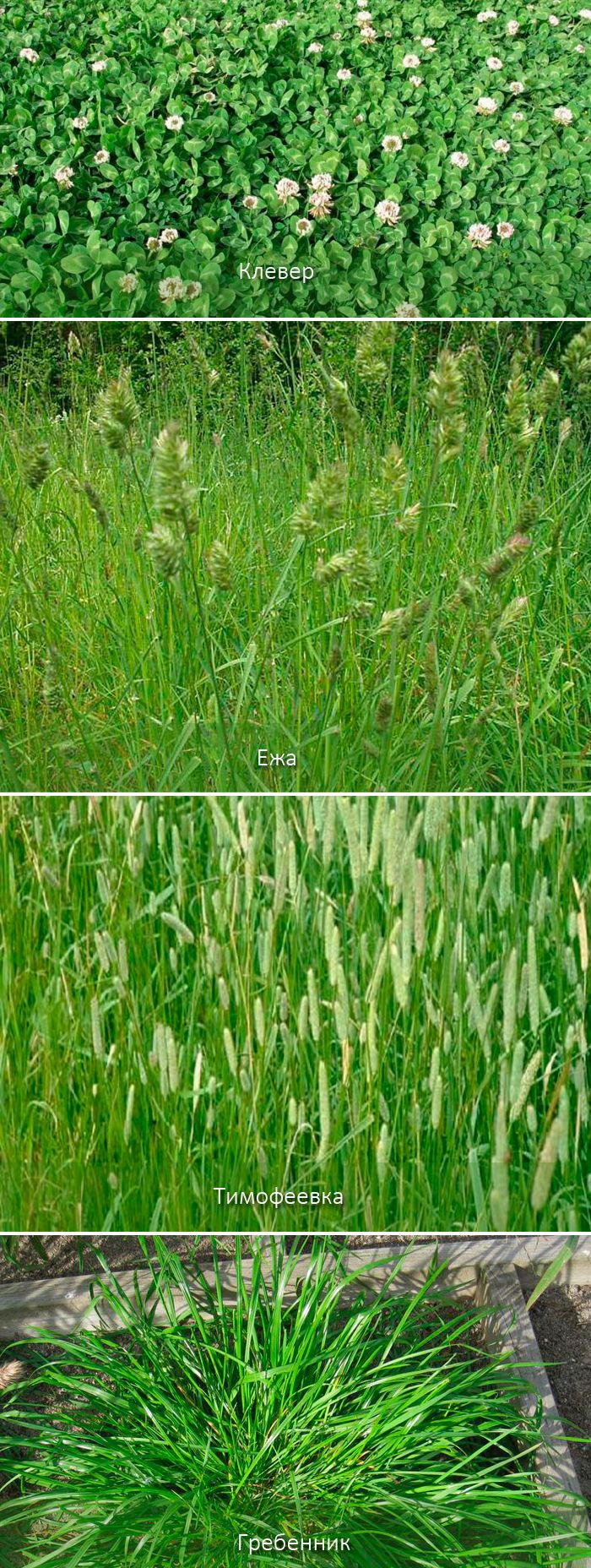
Gardeners should also pay attention to plant lifespan. Lawn grasses can be perennials or annuals. The following are used as monocultures and components of mixtures:
Bluegrass
This early grass is prized for its rich color, high temperature tolerance, and shade tolerance. Regular mowing creates an even ground cover. Its root system is weak, so it should not be planted in areas subject to heavy foot traffic. Its advantages include its low maintenance, rapid growth, and decorative appearance; its disadvantages include slow root establishment. Bluegrass makes a good base for a grass mixture;
White clover
The hybrid is distinguished by its vibrant color. Gardeners who plant this crop in their gardens can mow it low without harming the lawn;
Fescue
Most often, a combination of two varieties (red and sheep's tongue) is chosen. The result is a green carpet that tolerates shade and moisture stress. This type of lawn requires little maintenance;
Small-leaved timothy grass
The plant is characterized by rare hardiness. It tolerates shade, low temperatures, and high humidity;
Pasture ryegrass
Its leaves are a rich color. It is planted when temporary plantings are needed. Ryegrass does not tolerate low temperatures well, so it should only be sown as a monoculture in warmer regions.
bent grass
Creeping bentgrass produces long, light-green shoots. Its characteristic features include intense tillering. Creeping bentgrass tolerates frequent mowing and sudden temperature changes. By planting it in a garden, a gardener will obtain a richly green lawn. Creeping bentgrass is included in grass mixtures for ornamental lawns;
Hedgehog
An easy-to-grow crop with a powerful root system, the seeds of which are often included in grass seed mixtures. It prevents the growth of weeds;
combwort
It is resistant to waterlogging, drought, and frost. Its short shoots form a dense canopy that can be mown low.
Grass mixtures for lawns
To grow a lawn, experienced gardeners recommend using grass-based mixtures. This is due to the following properties of these plants:
- developed root system;
- uniformity of germination;
- decorative appearance;
- tolerance to frequent haircuts;
- the ability to suppress weeds.
Before purchasing a grass mixture, you need to decide on the type and purpose of the future lawn.
If the green area is planned for active recreation and sports, preference should be given to sports-grade turf. These are resistant to trampling and have a dense turf layer.
Mixed grasses are purchased if you want to sow a meadow lawn. Bright flowers and lush greenery will adorn it throughout the season. The area is designed with tall and low-growing plants. Unlike country-style lawns, elite lawns are capricious and demanding of growing conditions. This is offset by their appearance. This landscape design will make the area look more refined and neat.
Lawn grasses grow quite quickly and don't deplete the soil. Within 1-2 months of sowing, a decorative lawn will form in the prepared area. To maintain its attractive appearance, the gardener will need to water and mow the grass regularly.
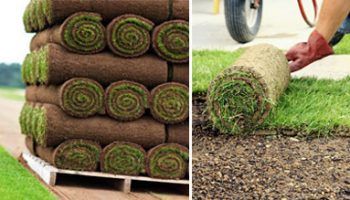
Instead of grass mixtures, you can use strips of rolled turf. This option is considered quick and easy. Its only drawback is the high cost of the material. A gardener will have to fork out a considerable amount of money for a high-quality rolled turf.
Whatever method is chosen, proper cultivation technology is essential. The final result depends not only on the composition of the grass mixture but also on the quality of crop care.