Paving slabs for paths are a modern and practical way to decorate a private property. These ideas for a summer house will help you enhance the property, make it attractive and unique, and create a comfortable atmosphere for relaxation. To ensure long-lasting paving of paths, it's important to carefully select the material and install it.
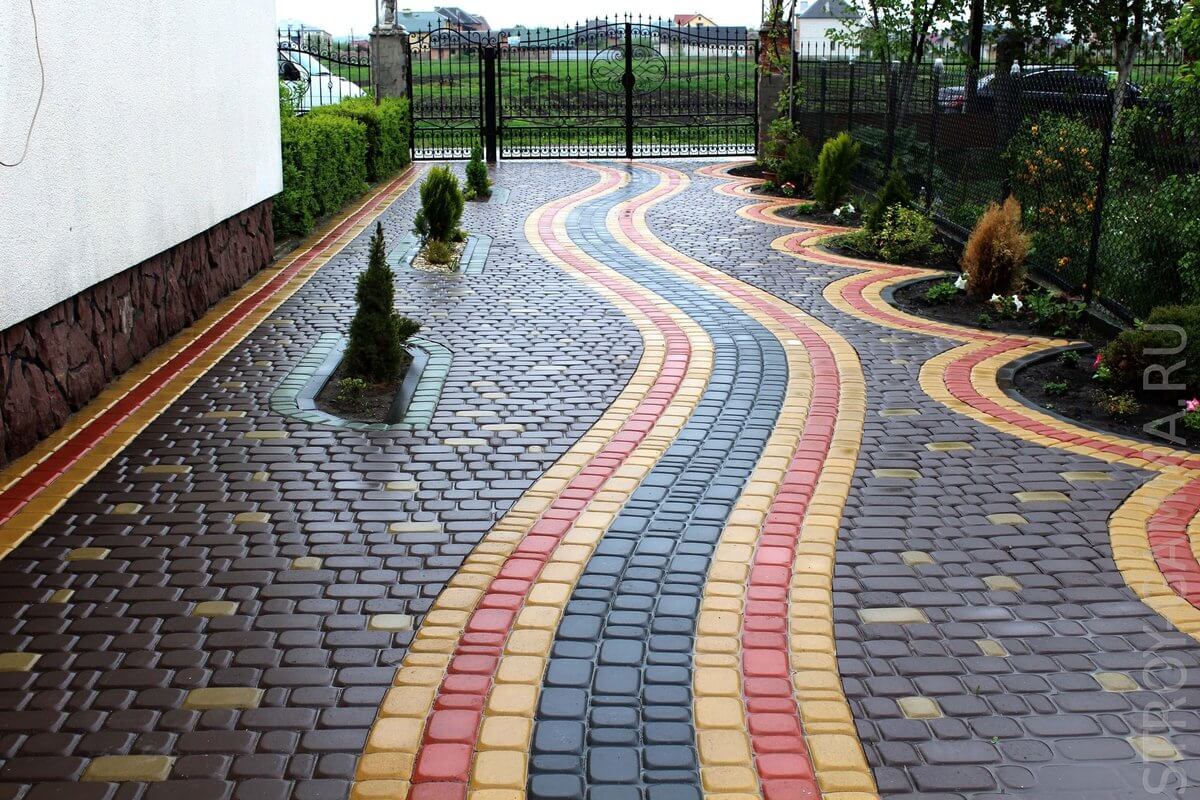
Selecting paving slabs for paths
Tiles must withstand high loads. Therefore, the strength of the material plays a crucial role when choosing the right material. Tiles are divided into vibrocast and vibropressed. If the paths will be used by vehicles, the latter is recommended. The thickness should be at least 45 mm. It's important to note that this type of paving cannot be molded into any desired shape, color, or smooth. However, interesting patterns can be created. Vibropressed tiles are wear-resistant and resistant to low temperatures. Due to their porosity, they have shock-absorbing properties.
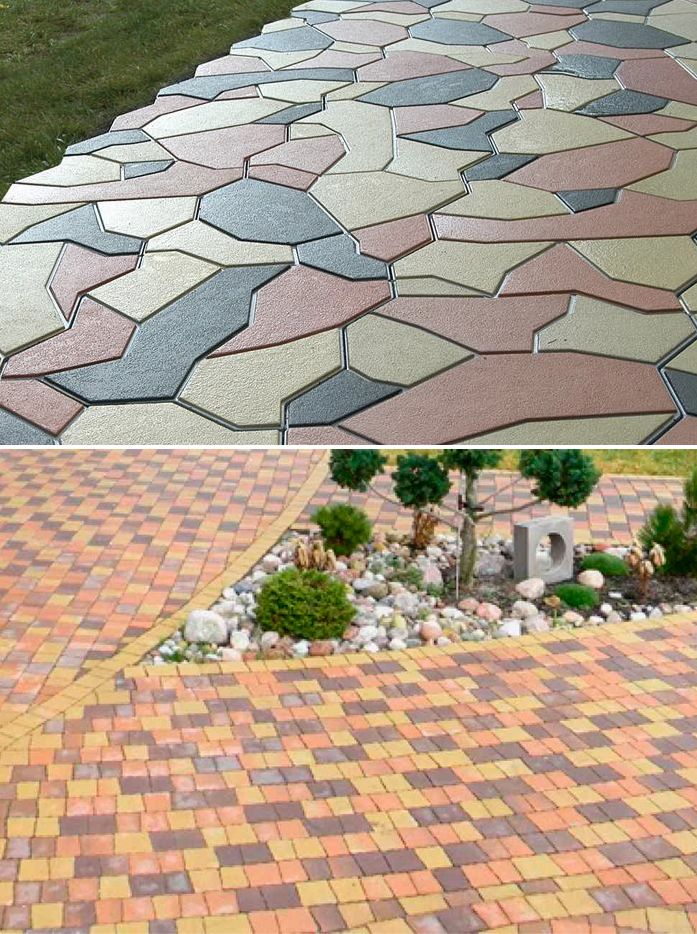
Vibrated cast tiles 3 cm thick are suitable for pedestrian paths. They are less expensive than vibrated pressed tiles. Furthermore, they can be molded into any shape and painted in a variety of colors. However, they are significantly less durable and do not withstand frost well. Their use in northern regions is impractical.
The larger the tile, the stronger it is. A small one might not break under mechanical impact, but it will sink deep into the ground.
When choosing, you also need to pay attention to:
- The manufacturer must have the necessary certificates. This is a guarantee of quality.
- Manufacturing technology.
- Geometric shapes, sizes.
- Appearance and quality. Brightly colored tiles are of poor quality because they contain a lot of dyes. Over time, these dyes wash out, causing the product to lose its appearance. Pores also appear, allowing moisture to penetrate, causing the tiles to deteriorate.
- Weather conditions in the region where the tiles will be installed. The technical characteristics of the material must be appropriate for the climate.
Many people are accustomed to ordering building materials online. It's difficult to judge quality from a picture on a website. Tiles need to be inspected and touched. A resonant sound when two tiles are struck together indicates a good product.
A dull sound when tiles hit each other and yellow stains on the inside indicate low quality.
Cost of paving slabs
The price depends on the manufacturing technology, dyes used, manufacturer, etc. Approximate cost:
| Type | Cost (rubles per square meter) |
| Simple Russian | 300-500 |
| From a foreign manufacturer | 500-600 |
| Elite | 1500 |
Approximate cost for installation:
| Base for tiles | Price (rubles per square meter) |
| From crushed stone and sand | 1000 |
| Concrete | 1200-1300 |
| Border | 300-600 |
| Finished base | 500-700 |
The cheapest option is to make your own tiles using a special mold. However, keep in mind that this will require a fair amount of time.
Laying paving slabs for paths
For installation work, you can contact a specialized company. Approximate prices for services are listed in the table above. Prices may vary depending on the region, the complexity of the work, the company's popularity, etc.
To save money, you can hire private installers. On average, they charge 200-300 rubles per square meter for installation.
If you have some construction experience, you can lay out your own garden paths. You'll need:
- pegs with string;
- shovel and bayonet;
- roulette;
- bolt;
- rubber mallet;
- manual rammer;
- garden wheelbarrow;
- building level;
- water.
Step-by-step process for self-installation:
- Mark out the required area. Place stakes along the path as often as possible and stretch a rope, taking into account any unevenness in the terrain. If there are elevation changes, plan the steps.
- Laying the base (cushion). Clear the surface to a depth of 15 cm. Fill the depressions with crushed stone and sand. Compact it. The base should be wider than the path to accommodate the curb.
- Lay the curbstone, if planned, 24 hours before the main work.
- Lay the covering on a dry mix or cement mortar. Use a rubber mallet to ensure a firm seal.
- Fill the seams with sand or a special dry mixture, watering generously.
It's recommended not to walk on the path for two days after installation. Loads are permitted once the tile surface has fully hardened.
You can not only lay the tiles yourself, but also, using special molds, cast them yourself. This will further reduce the cost of your walkway.
Laying paving slabs depending on the landscape style
To ensure a harmonious fit, paths need to be carefully designed and built in a style consistent with the surrounding design. There are several different paving patterns.
They can be laid in a checkerboard or herringbone pattern. For a more natural feel, a random arrangement is recommended. This pattern would be ideal for country or Provence styles.
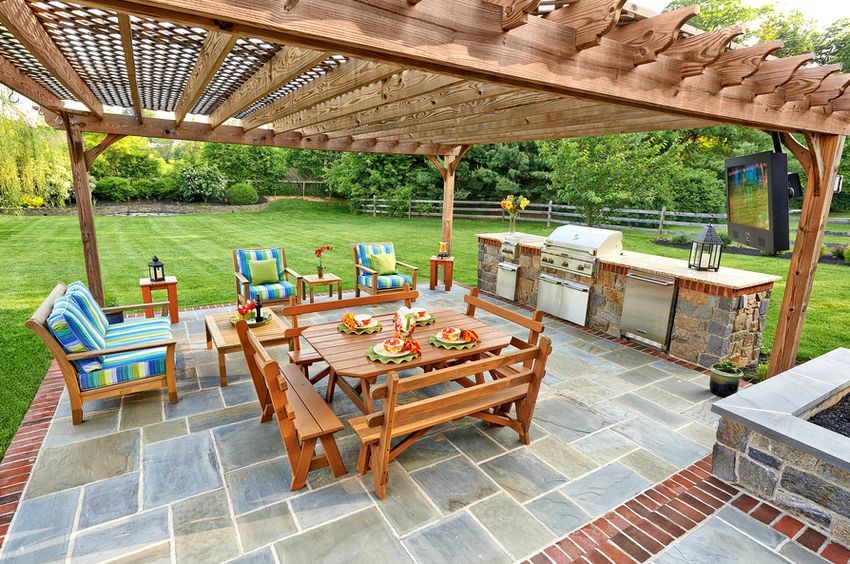
Tiles can be used to decorate various objects. For example, such a path would look natural when combined with pebbles around a pond with a seating area and benches. You can leave gaps between the tiles to allow grass to grow through them, adding a natural touch.
Patterned tiles will look perfect on paths running through alleys and plant arches, adding a magical touch to the landscape.
When choosing a design, keep in mind that artistic installation requires a creative approach and is time-consuming. Therefore, the price for such work will be higher.
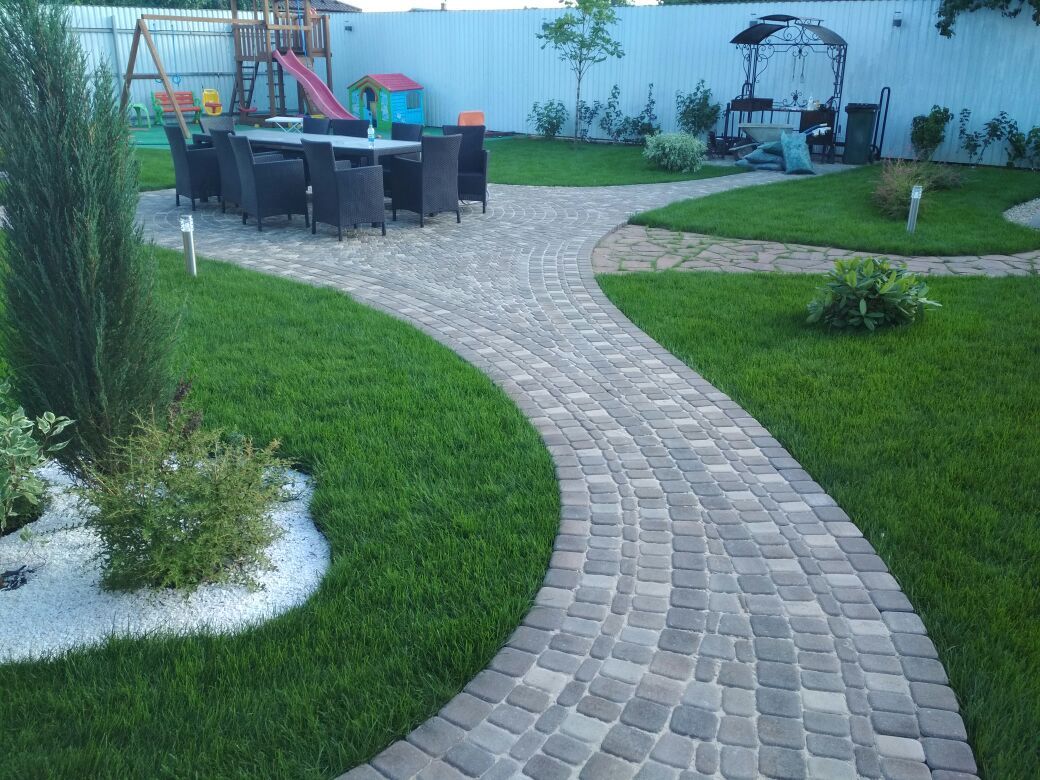
Paths paved with paving slabs will be a practical addition to your property. The advantage of this material is that you can choose the type to suit your budget. With good-quality paving slabs and proper installation, paths can last for decades, maintaining their attractive appearance and performance.