Tomatoes are a source of highly nutritious elements. Some novice gardeners believe that proper tomato care consists of timely weeding, watering, and fertilizing. But to grow a bountiful harvest, this isn't enough.
Content
The influence of agricultural technology on the growth and yield of tomatoes
There are many nuances to caring for these plants, each variety unique. This is especially true for growing conditions—whether in a greenhouse or in the open ground. Here, it's important to select not only the appropriate agricultural practices but also the right seed varieties. Many are suitable only for specific conditions, while there are universal tomatoes suitable for both greenhouses and open ground, as well as for a variety of climates.
Basic conditions for proper agricultural technology when growing tomatoes:
- choosing the right variety when purchasing seeds, corresponding to the region and growing conditions;
- proper preparation of seeds before planting - treatment with disinfectants, growth stimulants;
- creating suitable conditions for seedlings - fertilizing the soil, providing sufficient lighting, optimal temperature conditions, and regular watering;
- choosing a place for a garden bed, cultivating and fertilizing this area;
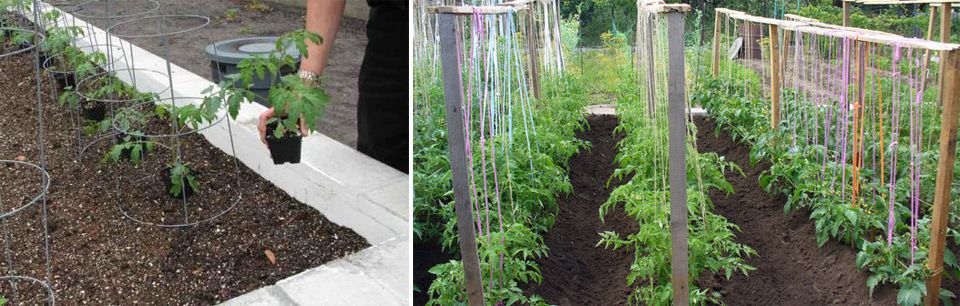
- correct planting of seedlings in a permanent place;
- watering, periodic additional fertilization;
- treatment of bushes from diseases and pests;
- loosening the soil and weeding;
- bush formation, garter, pinching out side-sons - mandatory for tall varieties, desirable for low-growing and medium-growing ones;
- Additional measures include mulching, temporary covering with film during frosts, and planting nearby plants that repel pests.
The Importance of Location in Growing Tomatoes
When choosing a site, keep in mind that tomatoes love full sun and don't tolerate waterlogging. They should be planted on elevated sites with a northwesterly slope.
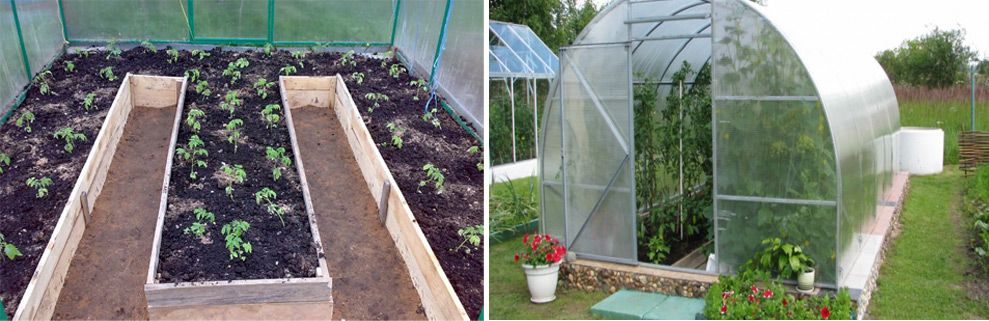
Experts advise against alternating this plant with other nightshade crops and corn. The best predecessors are vegetables such as cucumbers, onions, zucchini, and cabbage. In a greenhouse, tomatoes are planted in rows.
Selecting and preparing soil
Tomatoes can be grown in many types of soil, depending on the amount of preparatory work:
- the soil must be loose and nutritious, so it must be properly processed and sufficient organic and mineral fertilizers must be added;
- the environment should be neutral or slightly acidic; tomatoes do not grow well on acidic soils, so they need to be neutralized with dolomite flour or lime;
- It is important to consider what crops were grown in this bed in the previous season; it will not be possible to grow a good harvest in a too depleted area.
Features of soil preparation:
- In the greenhouse. This begins in the fall, after the harvest. The surface is cleared of plant debris. If necessary, if the soil has been contaminated, the top layer is removed and all surfaces are disinfected with fungicides. Then, new, healthy soil is added and fertilized. It is recommended to sow the bed with green manure (such as mustard) in the fall – this improves and enriches the soil. In the spring, the greenhouse is disinfected again and the beds are fertilized.
- In open ground. In the fall, the bed is cleared of plant debris, dug over, and organic matter is added. In the spring, the bed is dug again and watered with a hot copper sulfate solution for disinfection. Before planting, holes are prepared and fertilizers (organic matter, peat, ash, etc.) are added.
Fertilizing the soil for tomatoes
During the growing season, apply several additional fertilizers. The first one is a week after planting, and subsequent ones are every 2-3 weeks. Additional fertilizer is especially needed during the flowering period.
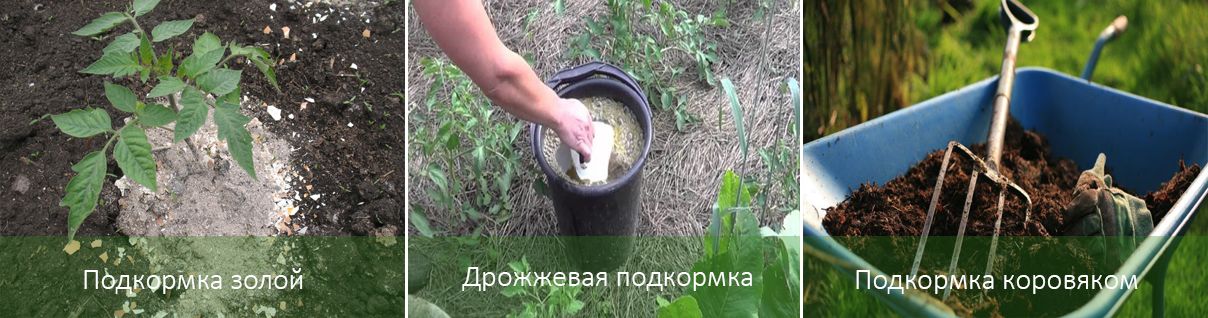
Mineral and organic mixtures are diluted in water and each bush is watered.
Forming a tomato bush
Most tomato varieties grow very vigorously, forming bushes with numerous side shoots. To prevent the plants from wasting energy on side shoots, they are removed, leaving 1-3 main stems.
Every week, new shoots that appear are also pruned. This preserves nutrients for fruit development. Bush pruning is performed both in a greenhouse and in the open ground.
Proper watering
Soil moisture is a decisive factor in watering frequency. To avoid fungal infections, it's not recommended to over-water the soil. Tomatoes tolerate dry periods better than damp conditions. On average, 1-2 waterings per week are required, and 3-4 times per week in hot weather.
Loosening, mulching
The formation of a crust on the soil surface prevents oxygen from reaching the roots. Therefore, it is necessary to periodically loosen the soil around the stems (several times per season), especially when the bushes are just forming. This can damage already overgrown plants.
To retain soil moisture and prevent weed growth, garden beds are mulched with straw, sawdust, paper, and other materials. The layer should be approximately 5-7 cm thick.
Top.tomathouse.com: Secrets to a Rich Tomato Harvest
Every gardener has their own secrets for growing tomatoes, here are some of them:
- Tomatoes are self-pollinating plants (most varieties are). However, unfavorable conditions can make this process difficult. In such cases, shake the plants 1-2 times a week during the flowering period.
- To increase the yield of the second and third clusters, they are sprayed with a low-concentration solution of boric acid during flowering. This improves ovary formation.
- If you add fertilizer (manure with peat) to the soil in the fall, it will rot over the winter and be better prepared for growing a bountiful harvest.
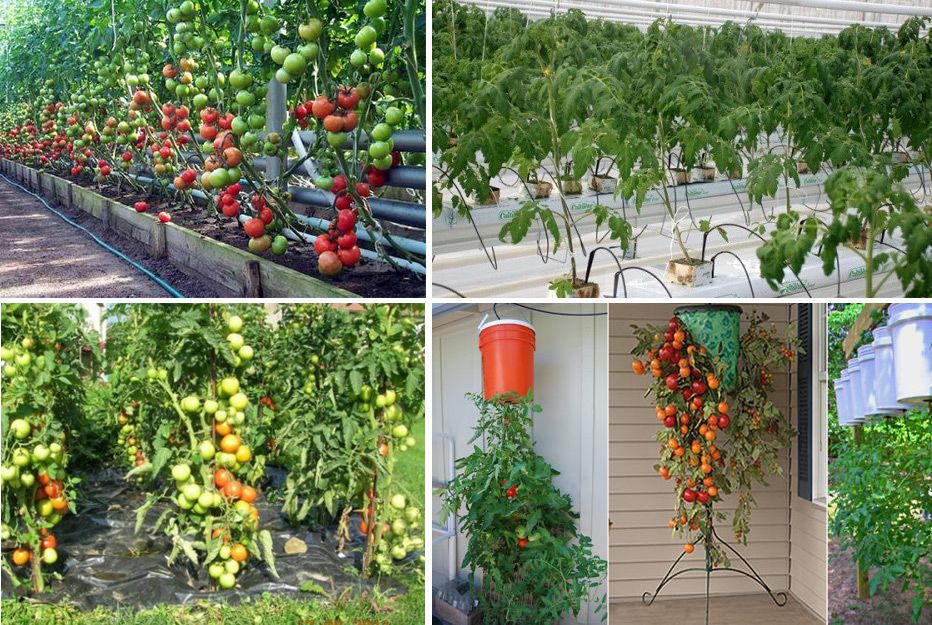
Unconventional ways to grow tomatoes
Gardeners use various methods for growing this vegetable. It's important to remember that not every method described is applicable to all regions of our vast country. In some places, some methods will be unsuitable, as, for example, Siberia is extremely cold, and even summer doesn't guarantee a good harvest. The choice of method isn't limited by the location of the plot where you plan to grow tomatoes. Some people don't have a plot at all due to certain circumstances. However, setting up a suitable area for growing tomatoes will open up more options.
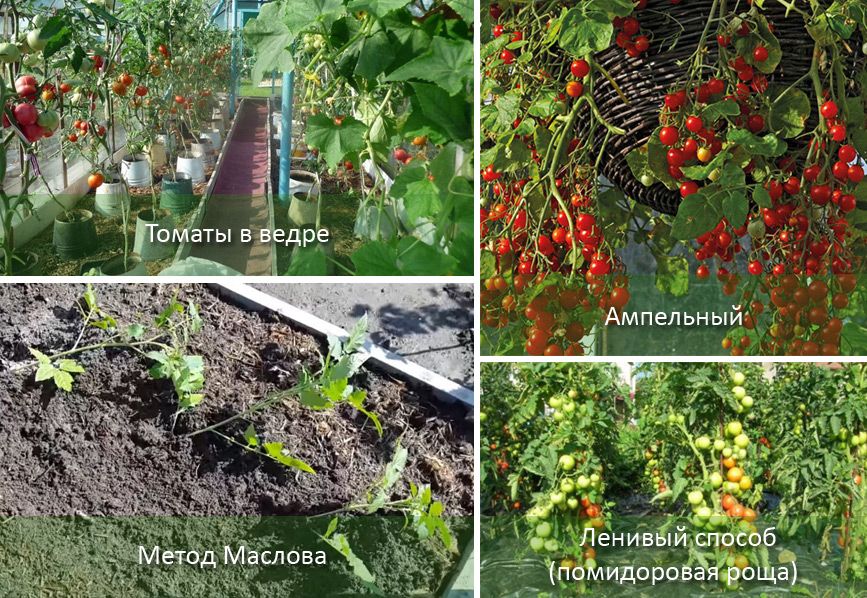
Each method is determined by the characteristics of the growing area and the personal preferences of the gardener.
Lazy (tomato grove)
It's essentially identical to the traditional growing method. However, there are significant differences. In the standard method, plants are planted in rows, spaced widely apart. This ensures that each individual plant has its own space, from which it receives moisture, various nutrients, and fertilizers.
The method in question significantly reduces planting time, as well as energy and time spent on subsequent care. First, dig holes approximately 0.3 m deep and 0.5 m wide. The bottom should be loosened with a pitchfork or any other suitable gardening tool. This is done to facilitate root growth. Next, place a stake, or simply a sturdy stick, exactly in the center. The height should be at least 2 m. Then, the dug holes are filled with fertilizer in layers. First, add a bucket of manure (it's important that it's well-rotted), then a bucket of compost, and then a bucket of sand. The remaining space is filled with the excavated soil.
After all the filling operations have been completed, the "contents" of these holes must be mixed. You can, of course, pre-mix all the ingredients in a separate container, but this will be much more difficult and time-consuming. After this, you need to create a border around the holes using the remaining soil.
You can plant up to five bushes in one hole, but it's important that they be of the same variety. The stems are tied to a stake driven into the center.
This method is also excellent because it allows the plant to access moisture from deeper layers of soil than with conventional planting. Mixed soil with fertilizer will ensure a consistent supply of nutrients for favorable ripening. Most tomato species and varieties are suitable for planting this way.
Maslov's method
Tomato stems have the ability to form a new root system and become independent plants. This method follows the same standard steps, but with one caveat. The seedlings are placed in the soil, stems included, with the plant's roots facing south. Only about four leaves should remain above the soil.
This method accelerates the ripening process, and after a while, the side shoots develop into independent plants, resulting in a larger harvest. Gardening experts recommend a drip irrigation system in conjunction with this method.
On a leash
The key requirement for this method is tall tomato varieties. This method significantly simplifies all harvesting and plant care operations. Twine is used as support, attached to the top of the greenhouse or to the crossbars (if present).
Chinese method
Based on a specific phase of the moon, the constellation Scorpio.
During this time, the planting material is prepared and the seedlings are planted. Then, when the seedlings reach approximately 3 cm in height, they are trimmed, placed in an Epin solution, and replanted in the nutrient substrate, watered with the same solution. Cover with a glass and place in a dark place for 3 days. Care is then given as for regular seedlings.
The advantage of this method is a significant increase in yield, practically doubling it. The stems become thicker and much stronger, and the tomatoes are less susceptible to disease.
Growing in a bucket
Quite popular, it has a number of advantages, but it's not without its drawbacks. It's very space-efficient, as the plant can be moved around. Water and fertilizer consumption are reduced, as they don't dissolve in the soil but are contained within a limited space. At the same time, the yield won't be affected at all.
Another advantage is that you won't have to deal with pests, as they simply won't reach tomatoes grown this way. A questionable drawback is the need for daily watering. Why questionable? Because it's the only one, and it's more than offset by the advantages of this method.
Ampel method
This method uses a specific variety of tomato that produces small, tasty, and juicy fruits. The distinctive feature is that the stems of this variety are thin but not fragile. They are very strong and can grow up to 1 meter in length. The shoots do not break easily, due to the small size and weight of the tomatoes. The yield is significantly smaller than that of regular tomatoes, but a huge advantage is that it can be enjoyed year-round. Furthermore, they are easy to grow indoors. This is an excellent solution for those who don't have a plot of land or, due to busy schedules, cannot afford one, but still want to grow their own. Furthermore, this variety of tomato is very decorative and looks beautiful. A year-round harvest is ensured by the very rapid ripening of new fruits in the same location where they were harvested.
When planting, they require the same care as regular tomatoes. Gardeners recommend placing them in a sunny spot—a balcony is ideal in summer, and a windowsill in winter. They require very frequent watering, at least 2-3 times a day. Organic fertilizer is excellent. They thrive in the same pot with other plants. Some recommend planting sage alongside them. This improves the aroma and flavor of the tomatoes.
There are several varieties of trailing berries. All are early-ripening, undemanding, and sun-loving. The fruits of this species are very sweet, making them a favorite among children.
Upside down
At first glance, this seems like a rather strange, even crazy, method of growing. However, it does exist, and it's clearly gained popularity and recognition among certain gardening circles. The idea is to grow the plant downwards. This is achieved by inserting a small hole in the pot through which the stem is threaded. This has numerous advantages, the most significant being the elimination of the need to tie the plant up and the elimination of the need to bend over to pick ripe fruit. This is especially important for the elderly and those with back problems.
There is also an "upgrade" to this method.
Potted tomatoes are placed in a greenhouse specially designed to fit the size of the plant and the pot. This provides the plant with more favorable conditions for ripening and increases the yield. However, this is not suitable for tomato species and varieties that thrive on sunlight.
Hydroponics
This method is extremely simple and has been very popular since the mid-20th century. It involves placing a pot containing a plant inside another pot containing a nutrient solution. Several holes are made in the bottom of the pot containing the plant to allow the roots access to the nutrient solution. After a period of time, preferably at regular intervals, the pots are removed. This is done to monitor the root system's growth.
Immediately after the plant's roots have emerged through the holes, reduce the volume of the nutrient solution in the second pot to create an air cushion. This ensures the roots are constantly moist and receive the necessary amount of oxygen.
The advantage of this method is the enormous stimulation of root system growth, which results in increased plant growth and, consequently, crop yield.
Most methods not only save time but also yield a larger harvest. This naturally translates into higher profits (for those selling). Even if you don't sell, you can still supply tomatoes to all sorts of relatives and friends; they'll be extremely grateful for real, fresh, and especially free tomatoes.