English roses are a relatively recent breed. They emerged from crossing varieties such as 'Dainty Maid' and 'Belle Isis,' creating a new group of cultivars.
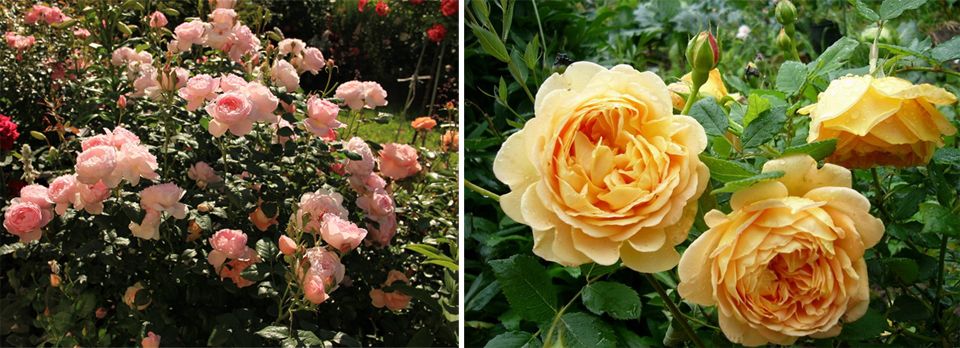
It has absorbed the best qualities of both, resulting in a lush flower, a wonderful aroma, and resistance to virtually all diseases. It's also worth noting that it has greater tolerance to harsh climates than its ancestors.
Content
Pros and cons of English roses
Varieties obtained by crossing others, that is, artificially bred, often possess excellent qualities. This is precisely the case with the David Austin varieties, named after their creator, the English breeder.
Advantages
These roses have a very strong, pleasant fragrance, and their flower shape is more attractive than that of their peers. They are highly resistant to climate conditions, from harsh winters to hot summers. Moreover, unlike other varieties, the flowers form along the entire stem.
Flaws
They are few in number, but their advantages easily outweigh their advantages. When choosing a planting site, partial shade is preferable. This is because this species doesn't respond well to direct sunlight, but tolerates hot temperatures well. A questionable drawback is the flower's height. This is questionable because, while this is more of an advantage for creating a private garden, it's a matter of layout for an apartment.
How to choose the right seedling
When planting any plants, it's important to consider the climate they're intended for and where they'll be grown. The Austin rose variety was developed in the foggy, damp climates of England, so these are the conditions it thrives in. Of the approximately 200 rose varieties native to England, at least a third will thrive in our climate.
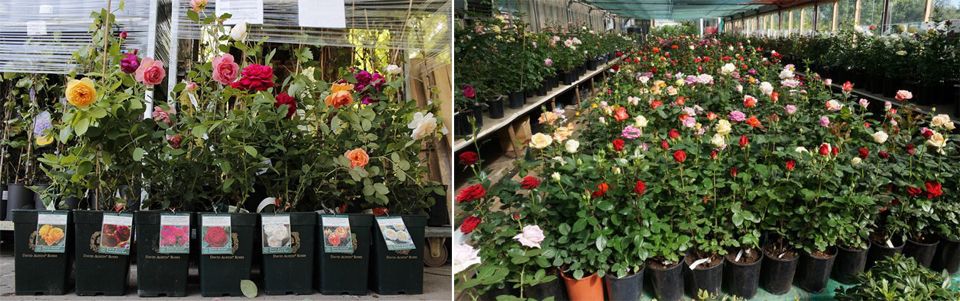
How do you choose the right variety for your local climate? Canada can serve as a model. Their climate is almost identical to Russia's. Therefore, the varieties they grow, we can also successfully grow.
When choosing a seller, pay special attention to their expertise in English varieties. Fraudsters know the value of seeds of this species, buying similar ones for a small price and selling them for much more. Naturally, preference should be given to nurseries that professionally cultivate this beautiful flower. Prices are slightly higher, but this is because sellers there guarantee climate suitability. Buying seedlings from retail outlets located near roads is not recommended. There's an almost 100% chance they will be diseased or may not be the variety the buyer paid for.
Types and varieties of Austin roses
This artificially bred species is one of the few that has not yet been classified. However, experts have determined the precise groups into which it is divided.
Tall
They are distinguished by their tall stems, around 180 cm. For example, the Princess Margaret Crown variety. The buds are cup-shaped. Their color is also far from standard, with a yellowish-orange hue. The aroma is quite subtle, with a hint of fruitiness.
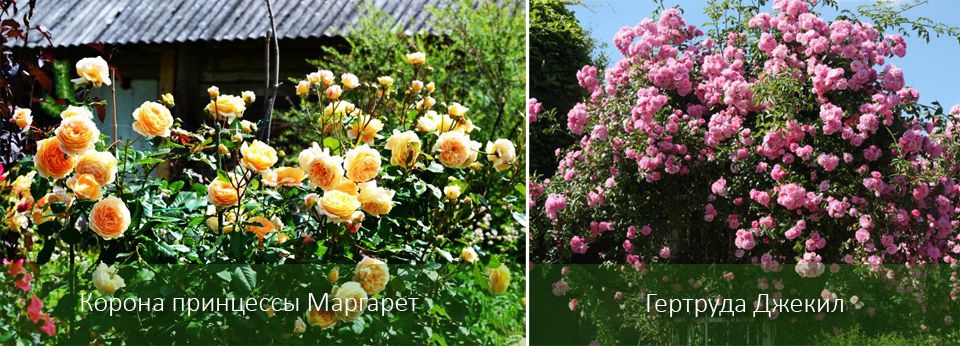
In terms of diseases, tall varieties are resistant to fungi and most of the standard ailments of such plants.
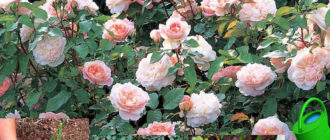
Some varieties, such as Gertrude Jekyll, can easily reach 2 meters in height, with a rosette-shaped flower. The scent is distinctive but pleasant, reminiscent of rose oil. The color is a beautiful pink. It also has moderate resistance to plant diseases. This variety is ideal for growing in a garden or as part of a hedge.
For growing in containers
The 'Anna Boleyn' variety belongs to this division. The flower form is a rosette, shaped like a goblet. The soft pink color exudes a subtle fragrance. It's ideal for those who are sensitive to strong, harsh odors.
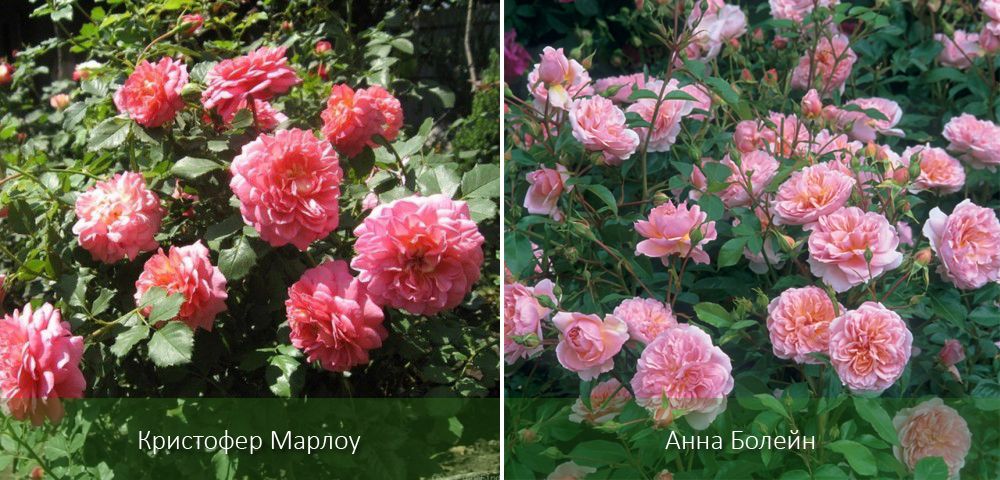
Some varieties resemble rose hips, including Christopher Marlowe. It has a scent similar to rose oil. A distinctive feature is its strong resistance to climate change and sudden changes in weather conditions.
Grace, a beautiful variety with apricot-shaped flowers in a dahlia shape. Like its cousin, it has an oily scent.
Large glasses
Varieties in this group are distinguished by their particularly large flowers, as the name suggests. They have a rich, delicate pink color. The aroma has hints of raspberry, though the scent itself is subtle. They perform well in challenging weather conditions, demonstrating a high level of environmental adaptation. However, some varieties are highly sensitive to low temperatures. One such variety is Delicate Constance Spray. Its light pink color will leave no one indifferent to its flowers.
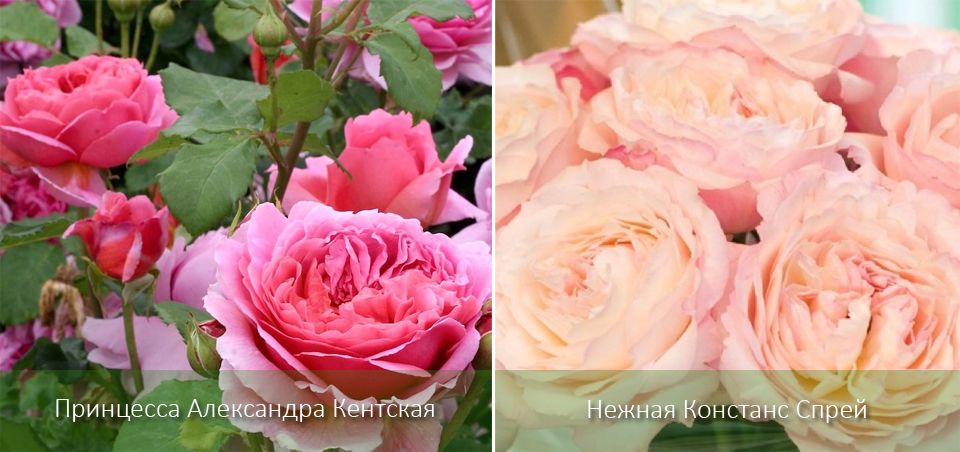
There are even varieties that change their scent depending on the weather. One of these is Princess Alexandra of Kent. The deep pink color and rosehip appearance pair beautifully. The scent changes depending on the flowering time, initially revealing tea notes, then a fruity aroma.
The Abraham Derby rose is a long-blooming rose with large, peach-colored buds. It is winter-hardy and disease-resistant. However, faded flowers do not fall off but rot on the bush, so timely pruning is essential.
The Pat Austin variety is a copper-orange with a shimmer, buds reaching 12 cm, and has a vibrant tea rose fragrance. Staking is necessary, as the stems cannot support the weight of the flowers.
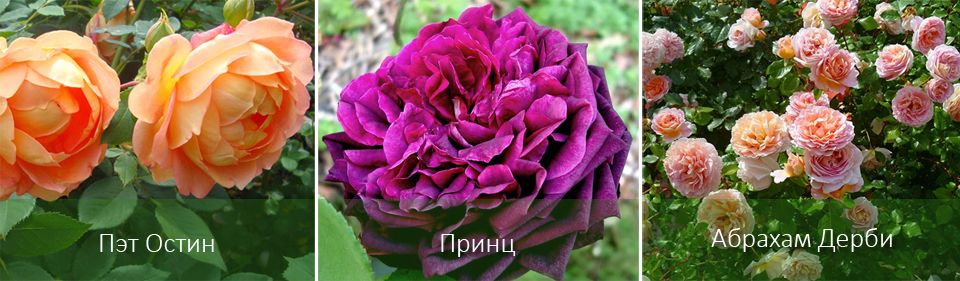
Prince – blooms with a dark red hue that later turns purple. The height of the bush is 60-75 cm, with buds about 8 cm.
The peculiarity of this group is that, in order to grow and reach the stated size, they require at least a couple of years of consistent and proper care, with attention to all the nuances. Otherwise, they may not reach their full potential or simply wither.
Pure colors
As the name suggests, the petal color of these varieties has no hint of gradient or inclusions. Among them are white and red roses, numerous yellow tones, and even orange.
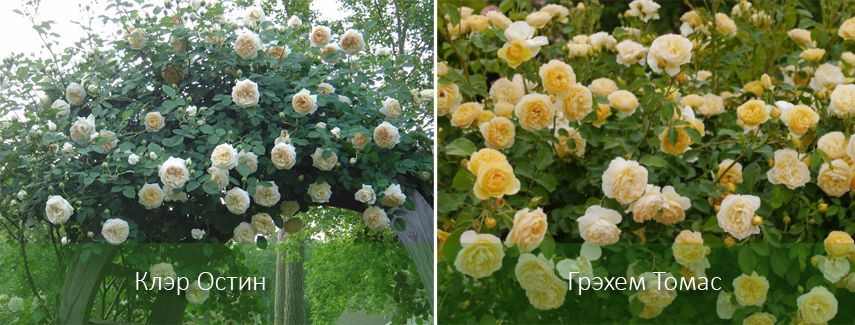
The most popular:
- Graham Thomas has bright yellow cup-shaped flowers that exude a delicate rose scent. The flowers are closely spaced.
- Claire Austin is a beautiful, pure white shade reminiscent of canvas. It has a musky scent and is moderately weather-resistant.
Peculiarities of planting English roses
There are also many nuances to planting. This species was bred for a climate characterized by predominantly semi-darkness. Therefore, to ensure comfortable conditions for the plant, it's necessary to select a shady spot, or, in extreme cases, create one artificially.
English roses don't respond well to direct sunlight; for stable growth, no more than four hours a day in a sunny location is sufficient. To control stem growth, you can choose a brighter location than a semi-dark one. This will slow the growth of the stem, eventually stopping. This method is the simplest and doesn't require any special conditions or fertilizer.
They don't like wind, so the growing area should be artificially shielded from this weather condition. Alternatively, choose a wind-free location from the start. For best growth, it's recommended to plant them at an elevated location, preferably on a hill.
The area where such roses are to be planted must be prepared in a special way.
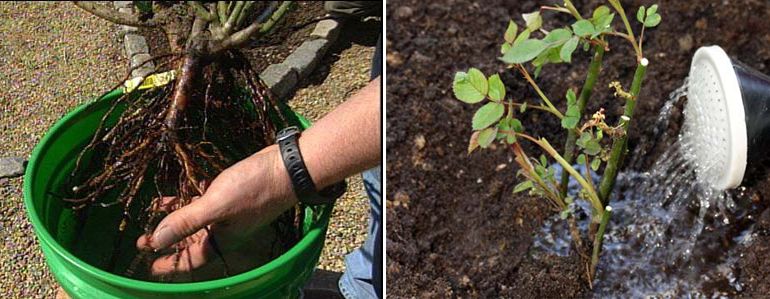
First, the seedlings are soaked in water, where growth-stimulating substances—sort of like "floral anabolics"—must be dissolved. Then a site is selected, taking into account all the nuances of shade, wind, and elevation.
English rose species and varieties are completely intolerant of spring meltwater. In winter, it's essential to prevent snow from falling on these plants. The best option is to choose a location near a gazebo or other roofed structure. It should be positioned so that the shade cast by the roof completely covers the flowers.
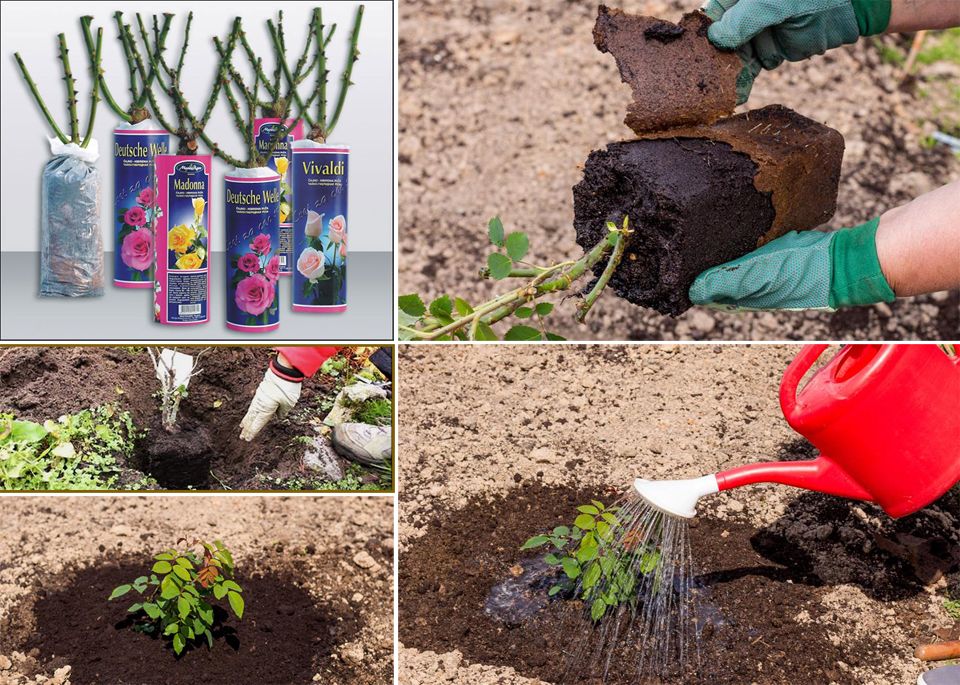
Planting holes are prepared. They must also meet specific requirements.
You need to dig a square, 0.5 meters deep and sideways. Then, pour exactly 10 liters of water into each hole and leave it there for 24 hours. This is because roses prefer moist soil.
After planting, the roses need to be moistened, using at least 45 liters of water per bush. After this, the soil is hilled. In England, where this variety was developed, there is no snowfall as such, and snow is generally rare (at least in the form that Russians are accustomed to seeing). Therefore, with winter approaching, the question arises of preparing winter shelters for roses. The shelter is removed only in the spring, once the temperature reaches 0°C.
Such finicky plants also require fertilizing. However, fertilizers should not be applied immediately after planting. They are only used in the second year of cultivation. The first course is nitrogen, which stimulates the formation of young stems. Subsequent courses contain significant amounts of nitrogenous substances, even phosphorus. These are applied during the active budding phase.
Roses only need to be pruned once a year, in spring or fall. During this process, dry and weak branches must be removed, and the bush's shape must be shaped.
An important feature is that in order to achieve maximum growth from the variety, at least half of the shoots are removed.
Caring for English roses
As for care, a specific approach is also required here.
As soon as the first shoots appear, the soil around the base of the bushes is raked out, loosened, and then covered with sawdust. A layer of pine needles or straw can be used to better retain moisture in the soil.
Bush formation
Pruning is essential. It should begin immediately after planting. A second time should be done before wintering. Then, in the spring, before bud break, shorten the shoots by half their height. If you cut back by a third, the bush will develop too many buds, weakening the plant.
Immediately after the stem has strengthened, almost all shoots are removed, leaving only about 4 pieces.
It's important to understand that each variety requires an individual approach. For example, climbing varieties require pruning to only a fifth of their stem length.
Faded buds, as well as ripe roses, should be removed immediately. This will allow new buds to form as quickly as possible.
Bushes older than a year and a half are recommended to be pruned in mid-spring, just before the buds begin to open. If you delay, the roses will bloom much later. Don't be too picky with weak or broken shoots, especially diseased ones; the health of the entire bush is at stake. Old shoots are removed much less frequently, once every five years, as new growth will take their place.
As for the tool used for pruning, it must be perfectly sharpened. This is necessary to ensure a smooth and precise cut; otherwise, the tool will simply break the plant.
Another important point about cuts is that they must be made at an angle, exactly 5 mm away from the nearest bud. The cut area must be immediately treated with a specialized gardening solution or disinfectant.
Watering
Watering should be done only as the plant dries out; there are no specific guidelines or limits. Different varieties require different amounts of water. Climbing varieties require at least 15 liters, while regular varieties only require 10 liters. It is recommended to water in the evening. There are also recommendations regarding the type of water. Tap water is not suitable, as it contains a high amount of chlorine. It is best to use settled meltwater or rainwater.
Overwatering the leaves can lead to disease. Avoid frequent, shallow watering. Watering should be stopped at the end of August, or much earlier if the summer is rainy. Then comes autumn, when the rainy season will ensure the necessary moisture levels in the soil.
Winter shelter technology
As mentioned earlier, snow on the soil, and consequently severe freezing (temperatures below -10°C), is unacceptable for English rose varieties. To prevent this, it is necessary to construct special structures to allow the plants to survive inclement and cold weather.
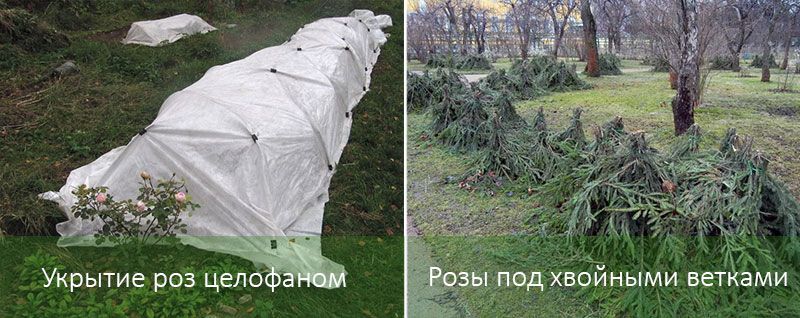
First comes the preparation stage for insulating. This involves allowing the buds to finish blooming on their own, shedding their petals. Picking them too early will prevent full maturation. During cold spells, any remaining leaves on the stems should be removed, and any side stems that have already matured should also be cut off. Only after these steps can you begin insulating.
Hilling begins, followed by the creation of a winter shelter. To do this, stretch some netting around the flowers; if you don't have one, plywood will do. The resulting open bunker is filled with dried leaves, then wood shavings, followed by compost. Climbing varieties are laid on top, secured, and covered with a thick layer of dry leaves (at least 30 cm). Then, plastic film is stretched over the shelter. The shelter is removed only in spring, when the temperature has not dropped below 0°C.
Methods of reproduction
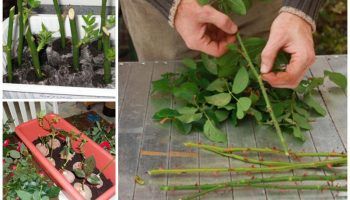
This process is the same as for other rose varieties. Cuttings, layering, and scions are all excellent methods for English rose varieties. However, each method has its advantages and disadvantages, which must be considered if you decide to propagate roses yourself, without outside help. Experts recommend grafting, which is the most effective method.
Diseases and pests of Austin roses
With strict adherence to all the nuances of cultivation, watering, and fertilizing, roses can grow for over 20 years. However, despite a gardener's best efforts, pests and diseases can significantly worsen the situation. These include fungal diseases, which primarily affect plant bushes. This is caused by improper overwintering conditions. Diseases develop on the stems, and even on dead, fallen leaves, the gray fungal color persists for a long time. Spread is possible through the tool used to prune an infected rose.
To prevent the occurrence of diseases and, as a consequence, avoid the death of plants, it is necessary to follow a list of rules:
- Plant only at least 50 cm apart from each other, otherwise diseased roses can easily infect others.
- Spray the leaves strictly in dry weather.
- After trimming, the removed parts must be burned and the instrument disinfected.
The first sign of disease is spots on the bushes, a white coating. Immediate treatment is recommended if symptoms are detected. A 1% Bordeaux mixture applied every 5 days is suitable for this purpose.
Top.tomathouse.com recommends: English roses in the landscape
This type of rose is very beautiful and presentable. Any rose is aesthetically pleasing, but English roses embody the best qualities.
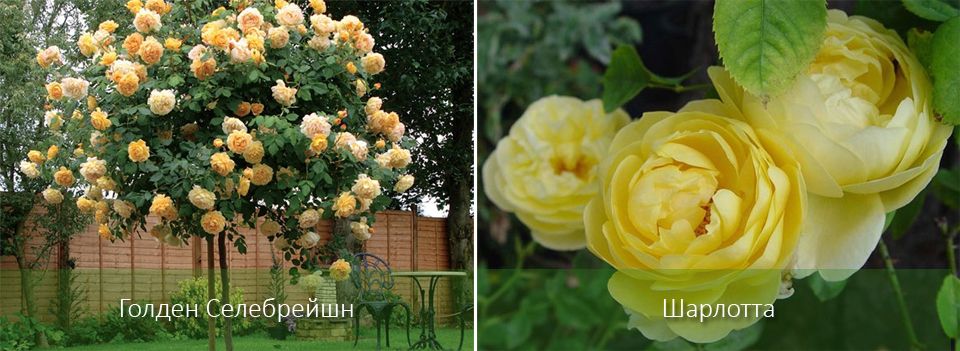
The most commonly used varieties for decoration include:
Golden Celebration
The flowers are large and yellow. They have a pleasant, delicate scent. The bush is medium-sized, reaching no more than 150 cm. It is a fast-growing, spreading variety. Its advantages include high disease resistance and repeat flowering.
Charlotte
It grows tall and has lemon-colored buds. It has a delicate fragrance and moderate disease resistance. It tolerates rain and snow well. It is a repeat bloomer.