The rose is rightfully considered the queen of any garden. Its lush, luxurious buds delight gardeners from May to October. But this riot of color is impossible without proper care and knowledge of rose planting techniques. There's still disagreement on the best time to plant roses outdoors: some believe spring is the only correct method, while others prefer autumn. Each option has its own set of advantages and disadvantages.
Content
- 1 Benefits of planting roses in spring
- 2 Table of rules for planting roses in spring
- 3 Spring Rose Planting Dates for 2024 + Lunar Calendar
- 4 Selecting and preparing rose seedlings before planting
- 5 Choosing a location for planting roses
- 6 Planting different types of roses in spring
- 7 Resuscitation of roses after unsuccessful wintering
- 8 Rose planting tips from gardeners
Benefits of planting roses in spring
- Roses have a better chance of establishing roots in the spring, as they're less susceptible to frost. If you plant flowers early in the fall, they'll thrive; if you plant them late, they might not have time to adapt before the frost. In the spring, there are no such problems; roses adapt easily and gain strength in the spring sunshine.
- In summer, plants actively develop their root system, so by autumn, roses are already strong enough to survive the winter.
- Spring planting allows the shoots to mature, making them less susceptible to frost.
Table of rules for planting roses in spring
To ensure roses delight you with their beauty and lush blooms, it's important to plant them correctly outdoors. Below are the key considerations for spring rose planting.
| Factor | Description |
| Choosing a location |
|
| Light |
|
| Soil |
|
| Distance between bushes |
|
Spring Rose Planting Dates for 2024 + Lunar Calendar
When planting roses, it's important to adhere to precise timing to prevent the plant from being hit by recurrent frosts and to allow the roots enough time to strengthen during the summer months.
By region
The timing of rose planting directly depends on the weather conditions in the region:
- In the south of Russia, rose planting can begin as early as late March or mid-April, choosing areas without direct sunlight.
- In Siberia and the Urals, roses are planted in the first half of May, with preference given to elevated areas of the garden.
- In the middle zone, it is recommended to plant flowers no earlier than mid-May, covering them with a special material for the first time and protecting them from drafts.
When to plant roses according to the 2024 lunar calendar
Many gardeners rely on the lunar calendar when planting. Each month, the Earth's moon cycles from waxing to waning, which is essential to consider when planning gardening.
- New moon – a new month begins, a period of rest begins, which lasts 3 days, nothing can be planted.
- The waxing moon is a period that lasts just over 10 days and is considered the most favorable for planting roses and other cultivated plants.
- The full moon, the peak of the moon's bloom, lasts one day and is not suitable for planting roses. The most you can do in the garden is fertilize the soil and treat the plants for diseases and pests.
- Waning moon – it is not advisable to plant roses during this period, as their growth and rooting will be slow.
The table shows favorable and unfavorable dates for planting roses:
| Month | Favorable days | Unfavorable, prohibited days |
| March | 1-2 (until 16:56), 5-6, 9 (until 12:00), 11 (from 12:00)-15 (until 06:15), 15 (from 06:15)-17 (until 12:41) climbing, 17 (from 12:00) 41m.)-19 (until 22h. 32m.), 22 (from 10h. 42m.)-24 (until 10h. 00m.), | 7-8, 9 (from 12:00 p.m.), 10, 11 (until 12:00),19 (from 22:32) -22 (until 10:42), 24 (from 10:00 a.m.), 25, 26 (until 10:00 a.m.) |
| April | 1-3 (until 12:07 p.m.), 5 (from 2:12 pm)-7 (from 9:20 p.m.), 9 (from 9:20 p.m.)-11 (until 3:57 p.m.), 11 (from 3:57 p.m.)-13 (until 8:44 p.m.) climbing, 13 (from 8:44 p.m.)-16 (until 5:24 a.m.), 18 (from 5:09 p.m.)-21 (until 6:08 a.m.), 21 (from 6:08 a.m.)-22 | 3 (from 12:07 pm) -5 (until 14:12 pm), 7 (from 9:20 p.m.), 8, 9 (until 21:20), 16 (from 05:24)-18 (until 17:09), 23, 24, 30 (from 18:20) |
| May | 2 (from 21:52)-4 (until 23:40), 9 (from 06:22)-11 (until 06:12) climbing, 11 (from 06:12)-13 (until 13:35), 16-22 (until 16:52) | 1-2 (until 21:52), 7 (from 06:22), 8, 9 (until 06:22),13 (from 13:35)-15, 22 (from 16:52), 23, 24 (until 16:22), 28-30 (until 03:32) |
| June | 3-5 (until 15:37), 7 (from 15:37)-9 (until 22:27), 12 (from 08:39)-19 (until 19:32), 30 (from 15:01) | 5 (from 15:37), 6, 7 (until 15:37), 9 (from 22:27)-12 (until 08:39), 21 (from 04:07), 22, 23 (until 04:07), 24 (from 06:14)-26 (until 09:07) |
Selecting and preparing rose seedlings before planting
It's best to buy rose seedlings from reputable producers to ensure you get a healthy, strong plant, rather than wasting your money.
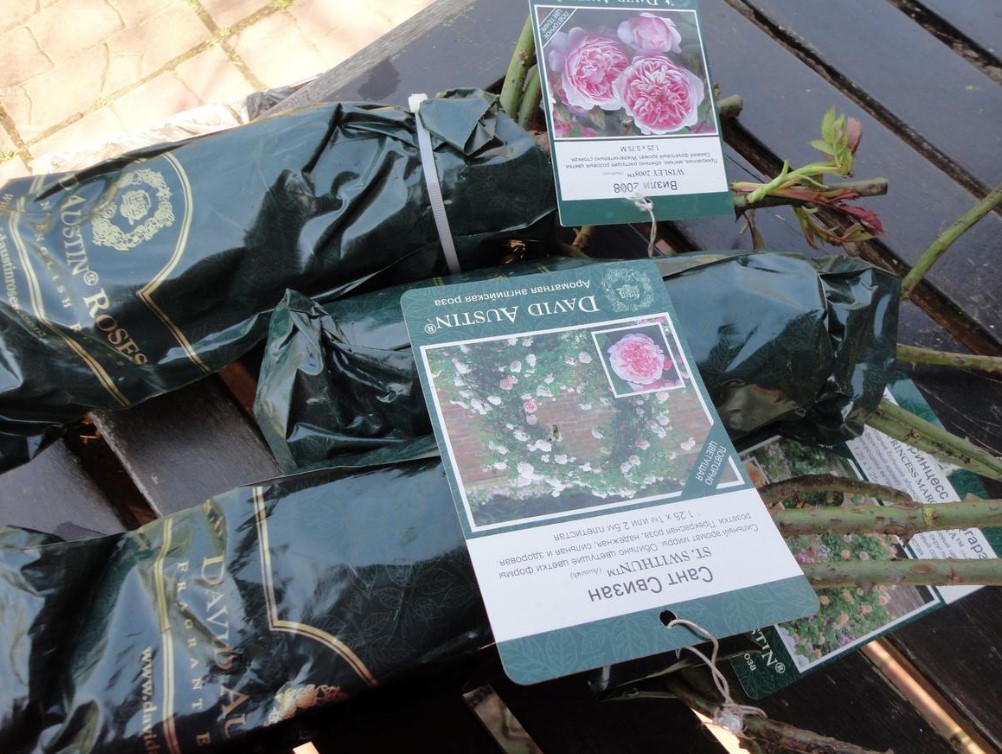
But even high-quality planting material needs to be prepared correctly:
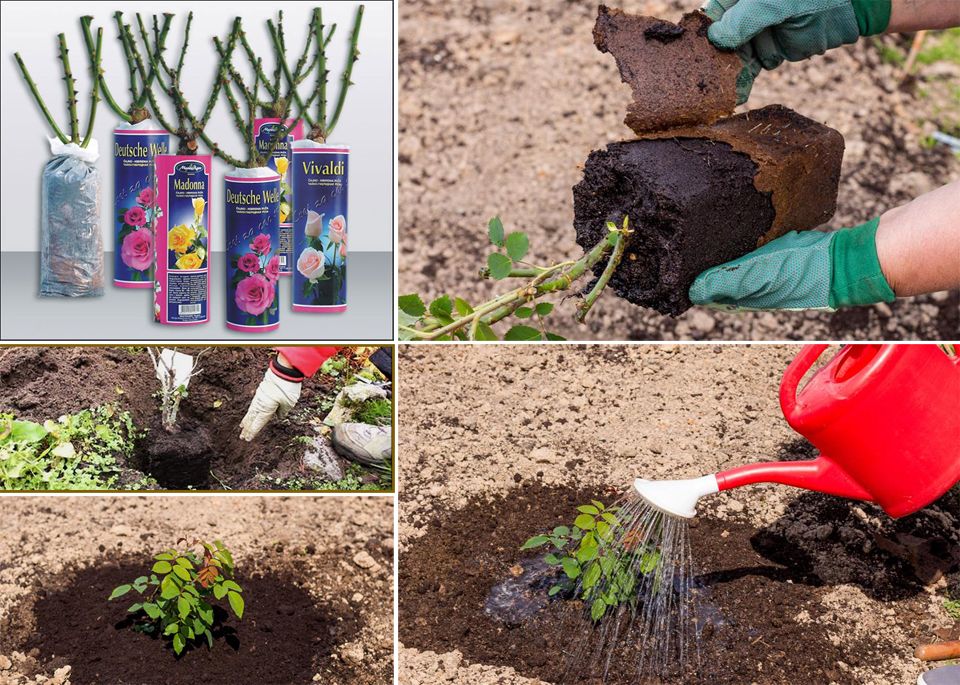
- Roses are removed from their packaging, which is carefully removed from the root ball and shoots. Sometimes, producers place the roots in a special biodegradable material, which is indicated on the packaging upon sale. Removing this material is not necessary.
- The roots are straightened and examined for diseases. If any are detected, they are treated with specialized preparations.
- Dry roots are cut off, healthy ones are shortened by 1-2 cm for better absorption of nutrients.
- The branches, which are tied together, are straightened, and the shoots are cut to a height of no more than 35 cm. Thin or dry stems can also be cut off.
Important! Pruning should be done at a 45-degree angle, above the outer bud.
- 2-3 hours before planting, seedlings can be soaked in any specialized growth stimulant, which is diluted in accordance with individual instructions.
- To disinfect the roots, they are dipped in a weak solution of copper sulfate for 20 minutes.
Some producers coat the shoots with a layer of wax before selling them for protection. This can be removed with a toothpick.
Choosing a location for planting roses
For the normal growth of any plant, including roses, it is important to choose the right location for the plant at the initial stage and create the most comfortable conditions there.
Location
Roses are heat-loving plants. To maximize the blooms, they need at least six hours of sunlight per day. If this isn't enough, don't expect abundant blooms or a beautiful rose bush. However, some varieties prefer partial shade, otherwise their delicate petals will burn in the sun.
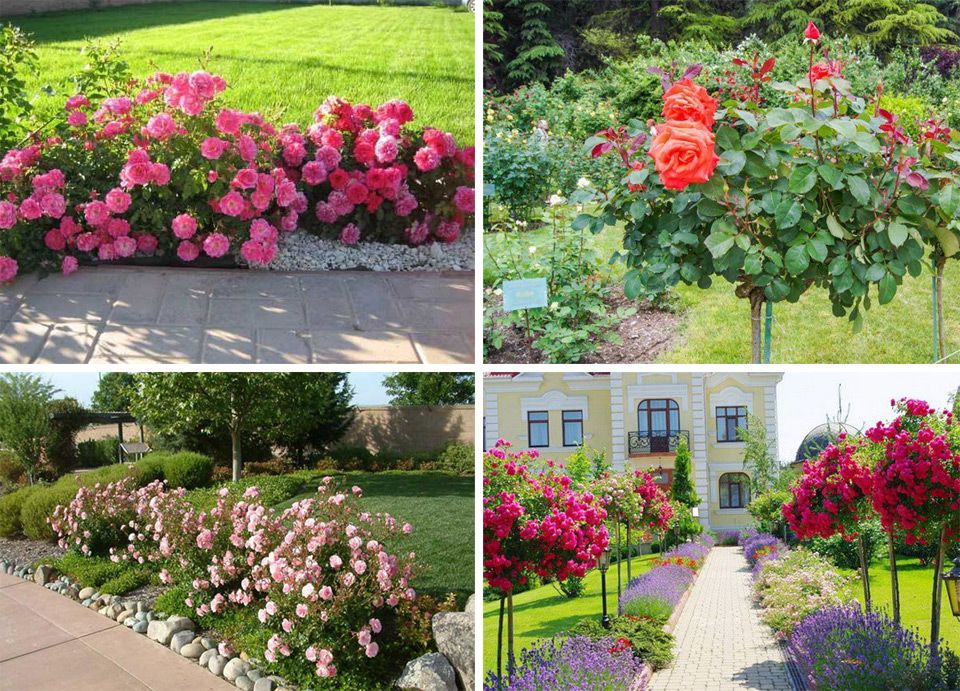
It's recommended to choose the right location for your rose right away, as you won't have to change it for a long time—roses don't tolerate being replanted. The bush draws nutrients from the soil through its rootlets, and when dug up, these roots are invariably damaged by the weight of the soil.
An important factor when planting roses is the available space. Some varieties grow widely, while others are more modest and compact. All these factors must be taken into account when planning the space for roses. The more closely they are planted, the greater the risk of pests and diseases, such as various types of rot.
It's best not to plant a new rose garden on the site of an existing one, nor to use soil previously occupied by strawberries, raspberries, or fruit trees. If replanting is not possible, the existing soil should be replenished to a depth of approximately 50 cm.
Soil
Roses do not tolerate heavy soil with stagnant moisture at the roots, so it is not recommended to plant them in lowlands where water accumulates after rain or snowmelt.

The soil should be light and well-drained. Sand is added to improve aeration, and compost, rotted manure, or peat are added to increase the plant's nutritional value.
Preparing a hole for planting roses
Before planting roses, a separate hole is prepared for each bush.
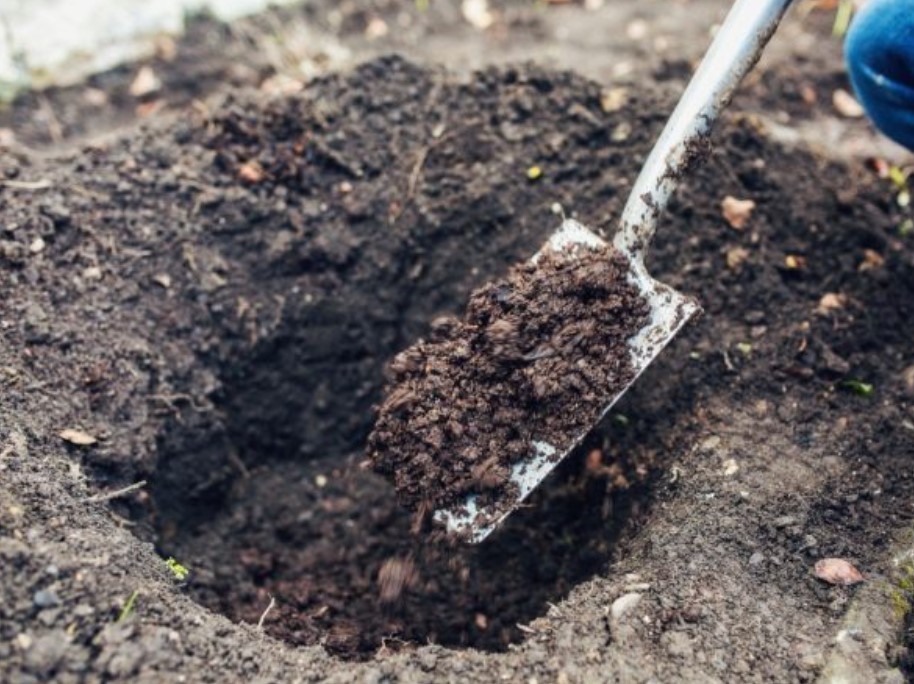
Its diameter should be 50 cm, and the depth should be at least 40 cm. The bottom of the hole is loosened and filled with a nutrient mixture of the following components:
- 2 glasses of ash,
- 1 handful of bone meal,
- 2 tbsp. of any complex fertilizer for flowering plants, for example, Kimira.

If the soil is heavy, the hole depth is increased by another 20 cm and filled with pebbles for drainage and a layer of soil mixture in the following proportions:
- 2 parts garden soil,
- 2 parts leaf soil,
- 1 part compost,
- 1 part sand,
- 1 part peat.
Rules for planting roses in spring
There is a classic scheme for spring planting of roses:
- The root system is placed in a clay solution, which is prepared in the following manner:
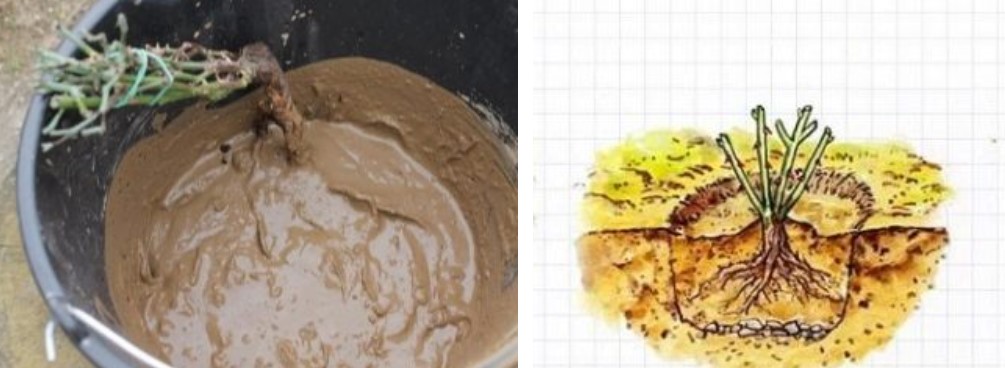
- 10 g of clay slurry is dissolved in a bucket of water.
- Add 5 tablets of Phosphorobacterin.
- Stir until the ingredients are dissolved.
This action will help protect the roots so that harmful bacteria do not get into the microcracks.

- A small elevation is made in the center of the planting hole, the bush is placed on it, and the roots are carefully spread out along the bottom of the hole.
- If the rose is grafted, meaning the bush itself emerges from the main stem, the grafting point is buried 3 cm into the ground. If the shoot grows directly from the roots, such a rose is called a root rose, and the branching point remains slightly above ground.
- After planting, water with warm, settled water, but avoid getting the stems wet to prevent burns.
- After planting, you can trim the stems, choosing the strongest and healthiest ones, leaving 2-3 strong buds on them.
- For 2-3 weeks, new seedlings should be shaded and watered regularly, preventing the soil from drying out completely. After that, watering frequency should be reduced to once a week.
- If the grafting site becomes exposed after planting, it must be covered with soil.
- To improve aeration at the roots, it is necessary to regularly loosen the soil, preferably after watering.
Planting different types of roses in spring
In addition to the classic rules for planting roses, there are individual considerations that depend on the chosen variety. We'll explore these in more detail below.
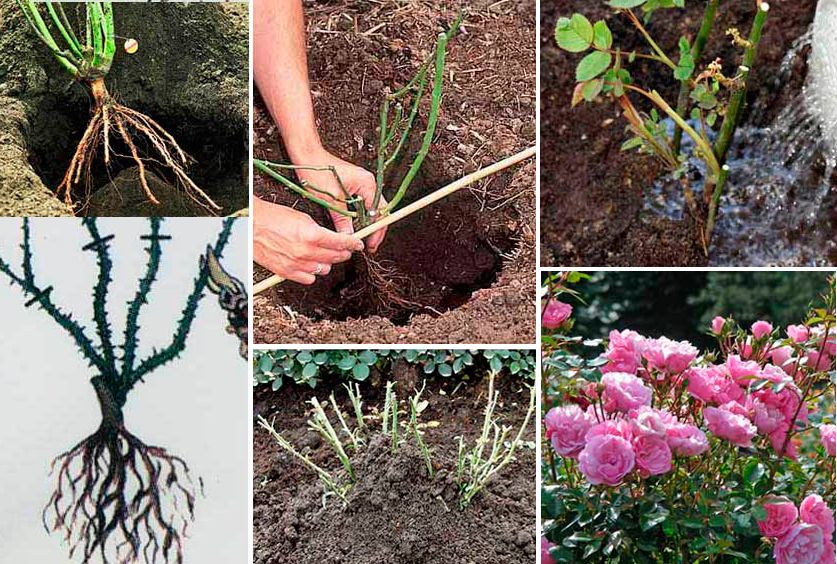
How to plant climbing roses

The main distinguishing feature climbing rose – these are long shoots. Therefore, the plants are initially planted near a pre-selected support. This could be a net, a wall, a column, or an arch. The distance from the support should be between 25 and 30 cm to allow the shoots to breathe and grow well. The grafting site should be slightly deeper than the other shoots, 8-10 cm deep, and the distance between the seedlings should be at least 1 meter.
How to plant floribunda roses
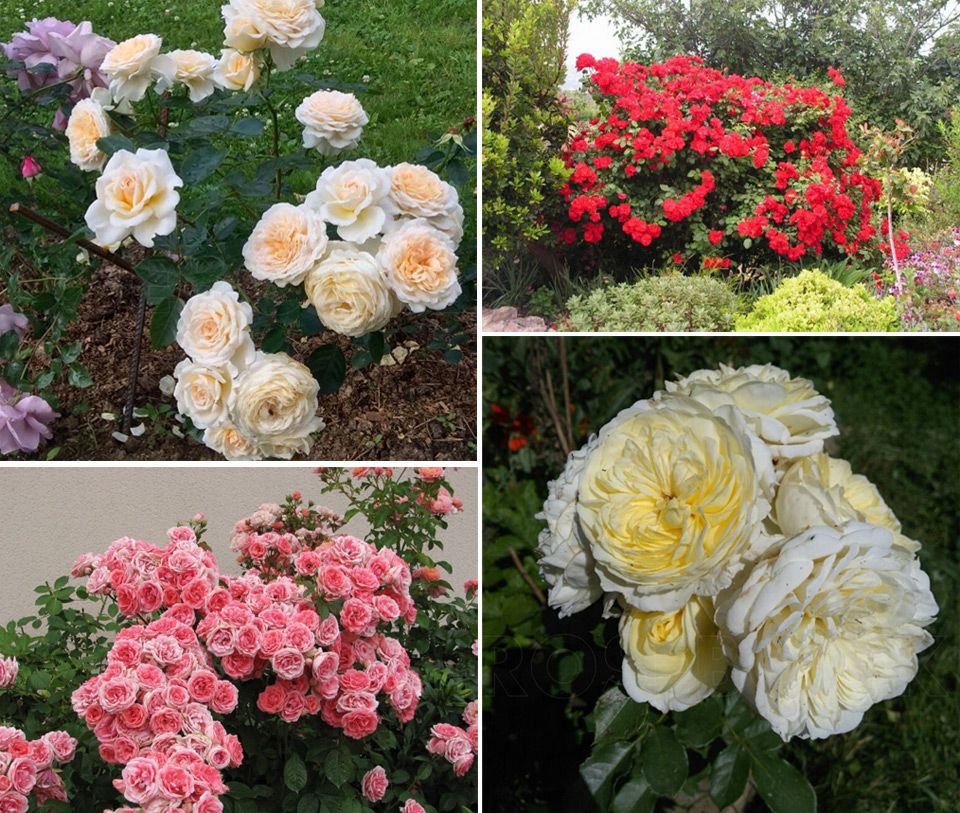
Floribunda roses are quite spreading, so a distance of 30 to 45 cm should be maintained between bushes. If planting in rows, a 90 cm gap should be left between them. For this variety, experts recommend leaving 3-4 additional buds on the shoots.
Read about garden roses here.
How to plant English roses
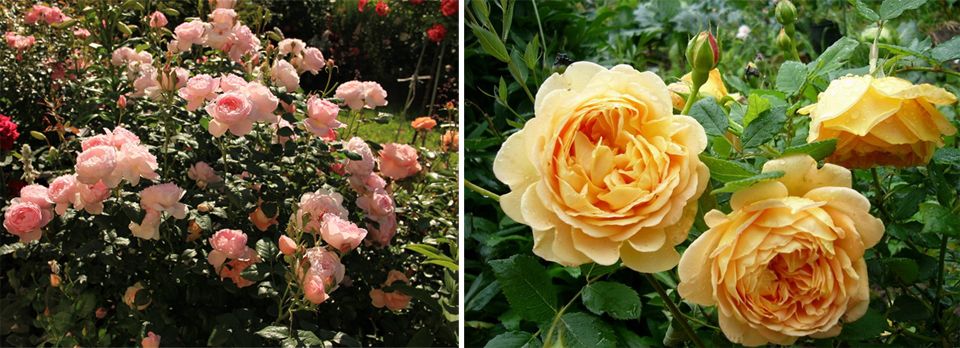
English roses These roses are very popular with gardeners. The grafting site is deepened by 5-6 cm. Each shoot should have 6 to 8 healthy buds. This rose requires a significant distance between bushes – 1.5 to 2 meters.
How to plant park roses
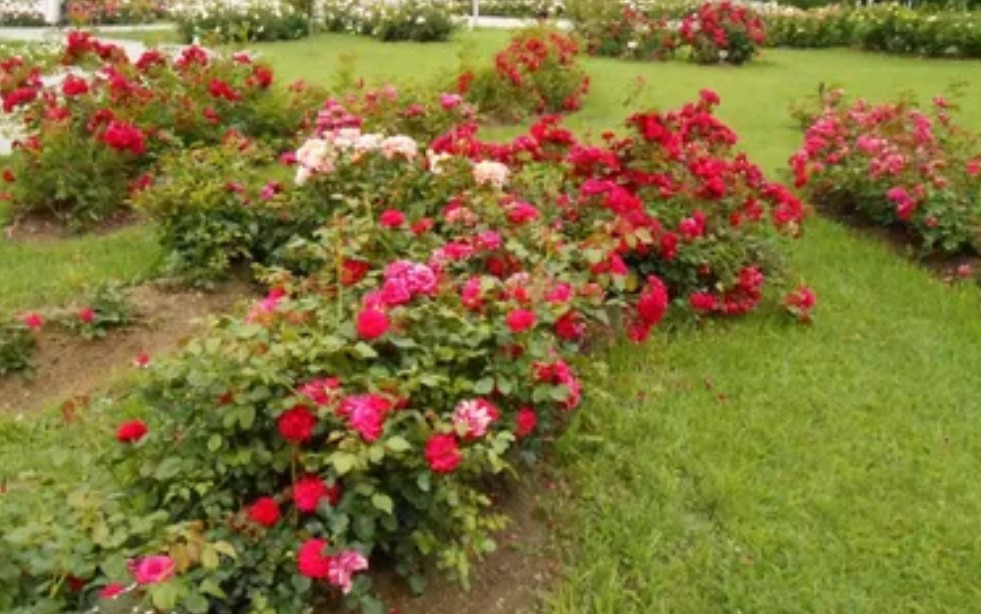
When planting park roses, maintain a distance between bushes equal to half the shoot's length. The grafting site is deepened by 5 cm. At least five healthy buds should remain on each shoot after pruning.
The root system of these roses is very sensitive, so if the flower is in a pot, you need to transfer it into the hole very carefully, trying not to damage the root ball.
Read more about shrub roses in the article Shrub roses: description of species, varieties, and care features
How to plant groundcover roses
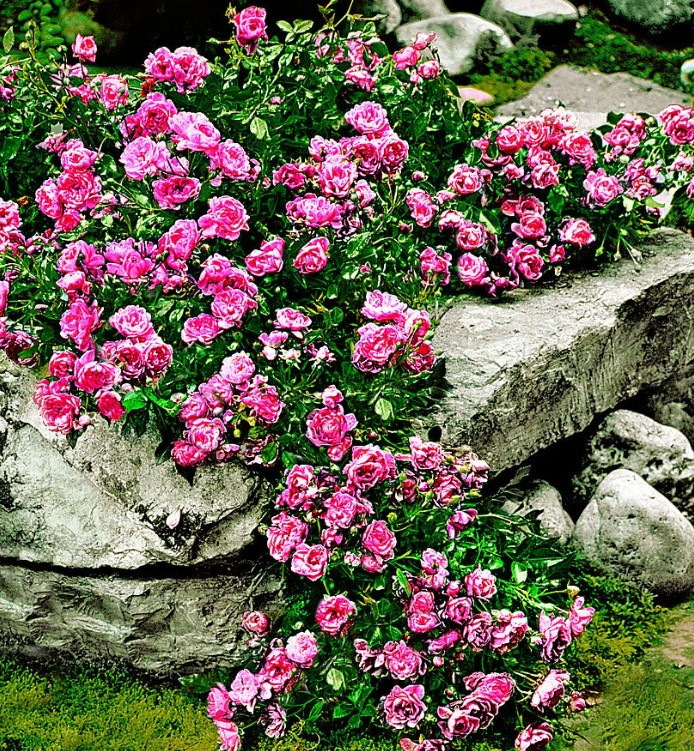
Groundcover roses have trailing shoots, so leave a reasonable distance between bushes, preferably at least 1 meter. Pruning is not necessary; only dead or old shoots are removed. The grafting point is buried 5-6 cm below the main shoot.
How to plant hybrid tea roses
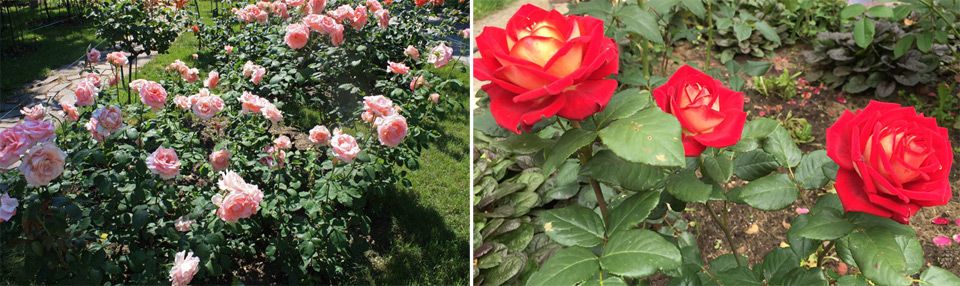
When planting in open ground, space the bushes 30-50 cm apart, and the space between rows should be 65 to 90 cm. The grafting site should be buried 4-5 cm deep. Each shoot should have several healthy, developed buds.
Resuscitation of roses after unsuccessful wintering
Sometimes, after wintering, gardeners discover that rose branches have turned black. But don't rush to prune them; often, these shoots warm up and begin to grow; the plant simply needs time to adapt. If the shoots remain lifeless, resuscitation measures can be taken.
Blackened shoots should be trimmed back to the living tissue. If stumps 3-5 cm high remain after this procedure, no further measures are necessary – the rose will continue to grow and revive, with only a slight delay in flowering. If desired, you can perform the following procedures:
- Dissolve one ampoule of Zircon or Epin in a bucket of warm water. Make a shallow trench around the bush, pour the nutrient solution into it, and cover with soil.
- After a week, treat the bush with magnesium sulfate, diluting it at a rate of 15-20 g per 10 liters of water. Consumption per bush is 5 liters.
Further fertilizing of roses should only begin once new buds begin to appear on the pruned stems. This should not be done earlier, as the diseased plant will not be able to fully absorb nutrients from the soil.
It's better to fertilize roses by spraying rather than watering. Plantafids or Hakafos work best here, with a recommended ratio of 20:20:20.
If there is no living tissue on the shoots, pruning is performed at the root. The rose is dug up to the grafting site and pruned until greenish or white healthy tissue appears. A solution of Epin is diluted according to the instructions described above and applied with a brush to all parts of the rose that remain above ground and in the soil after digging.
Next, take a cut-off section of a five-liter bottle and cover the rose with it. To allow the plant to breathe, make several holes in the sides of the jar. If the weather is very hot, cover the sunny side of the rose to protect it from direct sunlight. After three days, remove the cover and water with magnesium sulfate according to the recipe above.
Once new buds emerge from the soil, the grafting site is buried and fertilized. At this stage, fertilizers with a high nitrogen content are used. It's best to use specialized liquid fertilizers; ammonium nitrate, although containing nitrogen, can be too aggressive at this stage.
Roses that were revived in the spring tend to bloom later than healthy plants. Their immune system is weakened, so they require special attention, monitoring for diseases and pests. Preventative treatments are recommended: every 3 weeks if using chemicals, and every 10 days if using organics.
Rose planting tips from gardeners
Planting times are determined by climate conditions. In temperate climates, roses can be planted in the fall and spring. When planted in the spring, the plants grow quickly, producing new shoots and leaves, often to the detriment of their immature root system. As a result, they are stunted by two weeks and require increased attention.
The best time to plant bare-root roses in the Moscow region is autumn, from September 1 to October 10, before the onset of permanent frosts.
Fall-planted roses require winter protection, but develop more vigorously than spring-planted roses, as within 10 to 12 days of planting, young, small roots form, which have time to harden and turn brown before frost. These plants overwinter well in an air-dry shelter, and in the spring, their roots and aboveground parts actively develop, resulting in a strong, well-developed bush. They bloom simultaneously with the existing bushes.
However, in areas with harsh winters, it is better to plant roses in the spring.
The optimal time for planting roses in spring in central Russia is from April 20 to May 20, when the soil warms up to 8–10 degrees C.
Roses on their own roots are best planted in the spring, after the danger of frost has passed. Planting them in the fall is not advisable, as the plant does not have time to develop a sufficient root system and may die in winter.
Own-rooted greenhouse roses and potted roses are planted only in the spring, after hardening them off outdoors for two weeks in partial shade. Their shoots are pruned before planting, as changes in location and temperature can sometimes cause tender shoots to wilt, and the leaves to turn yellow and fall off.
Fallen leaves should be removed, the plant watered, and the shoots treated with a sodium humate solution. When planting, be careful not to disturb the root ball to avoid damaging the roots. Place the plant in the center of the hole on the soil mixture, ensuring the top of the root ball is level with the soil. Fill the hole with the soil mixture and compact it firmly. Then water generously and be sure to shade the plant from direct sunlight for a week.
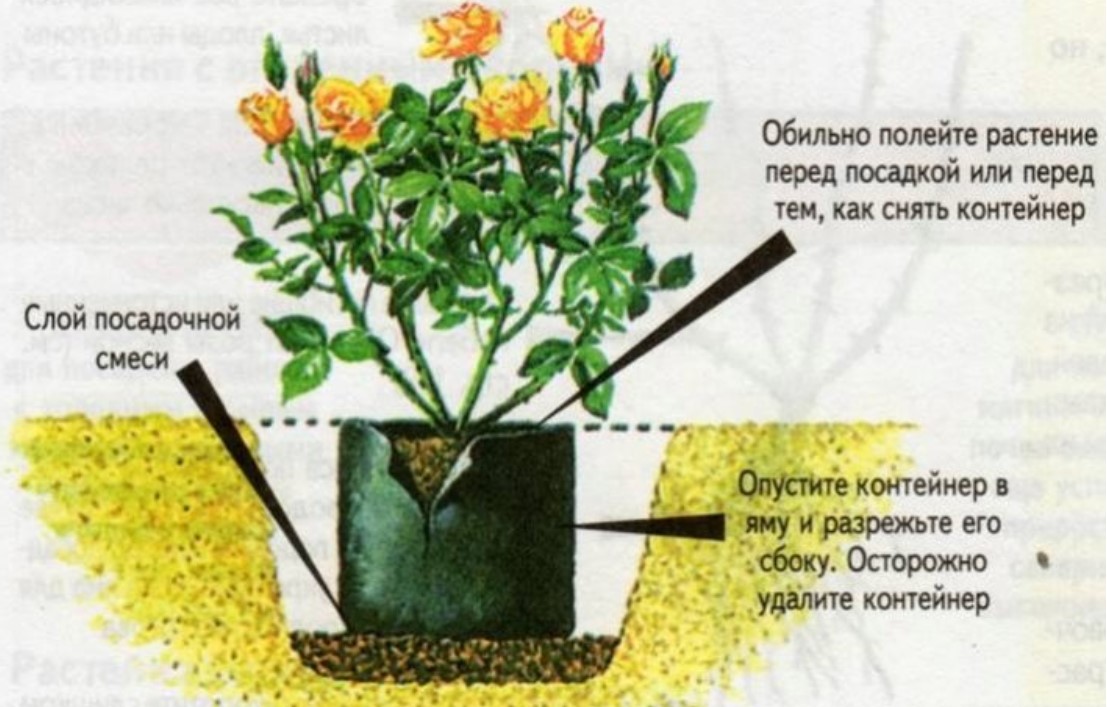
Roses growing in plastic containers and bags can be planted from May to August. Before planting, water the plant thoroughly, add potting soil to the bottom of the hole, place the bag or container containing the rose in, carefully cut the side of the hole, and remove it, being careful not to disturb the root ball. Fill the space between the root ball and the sides of the hole with potting soil. Then water the plant generously.
Spring is just around the corner and many of us have already stocked up on planting material.
BEFORE LANDING
Preparing the soil for planting
Roses are easy to grow. Carefully prepare the soil for planting 2-3 weeks in advance to allow it to compact. Clear the soil of weed roots, stones, and other debris. Scatter mineral and organic fertilizers over the surface, then loosen the soil to a depth of 40-50 cm.
Selection of fertilizers
Mineral fertilizers:
You can use complex mineral fertilizers. They contain three components vital for plant growth: NITROGEN (nitrogen-N), PHOSPHORUS (phosphoric acid-P), and POTASSIUM (potassium-K). Always follow the dosages recommended on the packaging to avoid burning your plants.
Organic fertilizers:
Dry or granulated cow manure, compost, bone meal, and seaweed are all fertilizers that don't provide a complete and balanced nitrogen-phosphorus-potassium complex. Therefore, they should not be used alone, but only in combination with mineral fertilizers. Some manufacturers offer universal complex fertilizers that include mineral and organic components and are very easy to use.
Avoid direct contact of organic fertilizers with plant roots, again due to the risk of burning. Potassium-phosphorus fertilizers are preferred in the fall, and nitrogen-based fertilizers in the spring.
Soil improvement
It is often useful to improve the structure of the soil with some additives when loosening and digging.
— Loamy soils are impermeable, heavy, sticky when wet, and harden when dry. Coarse sand, peat, compost, and slaked lime should be added, provided the soil is not limed.
— Sandy loam soils dry out quickly and are permeable, meaning they don't retain fertilizer. It's a good idea to add humus from compost, black peat, and manure.
— Limestone soils are depleted of micronutrients, dry out in summer, become soggy in the rain, and cause yellowing of many plant species. 200 to 300 g of sulfur per square meter of soil with the addition of peat or compost.
— Peat soils are acidic, often waterlogged, and rich in poorly absorbed minerals. Use slaked garden lime, and provide drainage (coarse sand) as needed.
Planting roses
It is advisable to plant roses from the beginning of May to mid-October to avoid severe frosts.
Choosing a location
Roses prefer sunny, well-ventilated places.
Distance between rose bushes
It is often difficult to predict in advance what size the future bush will grow.
— For roses with large flowers and cluster roses (with flowers collected in bunches), 40-45 cm between bushes is enough, i.e., you can plant 7-8 bushes per 1 sq.m.
— For Meillandecor® roses (so-called landscape roses), a distance of 40 to 170 cm between bushes is sufficient.
— Climbing roses should be planted at a distance of 2-2.5 m from each other.
— Meillandina® roses are planted at a distance of 20-25 cm, with up to 7-8 bushes per square meter.
— For standard roses, 1 m is enough.
— trailing roses are placed separately – in solitary plantings.
When forming hedges, the distances between plants are kept to a minimum.
How to plant rose bushes?
So, the roses are ready for planting. However, before planting, you should trim the roots and stems of the seedlings to about 20 cm. This is an excellent opportunity to remove broken, damaged, or diseased branches and roots, ensuring a clean and healthy seedling.
How to plant grafted large-flowered roses and cluster roses (with clusters of flowers),
Meillandécor ® and Meillandina ® roses:
We begin to prepare a planting hole of the appropriate depth and width to allow the roots to spread freely and not come into direct contact with fertilizers (manure).
— The grafting point on the stem should be located 2.5 cm below the soil level. Fill the hole to the top and compact the soil around it with your feet.
— Water generously.
— Once the soil settles, mulch the planting by adding soil around the base of the bush. This cover should remain in place until the following spring if planted in the fall, and for at least the next six weeks if planted in the spring.
Standard and trailing roses planting
Prepare a support that reaches the height of the grafted main flowering branches onto the standard tree. Install it before planting to avoid damaging the root system.
Once the plant is planted, tie a straw wicker net around the trunk all the way up to the branches to protect it from frost. Cover the crown of the plant with straw or wood shavings and tie it with waterproof paper or plastic. Leave this covering until the first buds appear.
Planting climbing roses
These roses require support (trellises, columns, arches) along which you can place the growing shoots as they grow. If planting against a wall, maintain a distance of 30 cm from the wall, about 20 cm between each plant, and spread the roots diagonally. It is not recommended to leave the plants uncovered in sunny or windy weather.
Planting roses in pots and containers
Use pots with drainage holes in the bottom, deep enough for root growth (30 cm for Meillandina® roses with a bare root system, 50 cm for other roses, and 15 cm for young seedlings purchased in pots.
When will they bloom?
Roses bloom in the very first year after planting! With the exception of climbing roses, which require a year or two to establish their frame.
And it doesn't matter that roses planted now (in the fall) won't recover in the spring in 99% of cases. Fall planting isn't suitable for our climate. It's exclusively advertised by online "sellers" trying to scam buyers. The roses don't have time to take root.
In central Russia, roses are planted both in the fall and spring. In the south, spring planting is preferred.
I planted them both in spring and fall, depending on when I felt like buying a new beauty. They all thrive if you follow all the planting guidelines. And a little kindness wouldn't hurt. The roses reciprocate.
Perhaps our climate is different, but I planted most of my roses in the fall for the following reasons:
1) I like to see what I'm buying, not a pig in a poke, so buying a rose with autumn flowers at the market is just right for me!
2) The botanical garden where I mostly shop has small spaces, so each variety is represented by only a few specimens. Sales start in the fall, and in the spring, there's usually nothing of interest left; they're all snapped up.
There's practically no loss. Over all these years, about five of my roses have passed away. Again, I'm talking about Volgograd. Perhaps Moscow has its own rules.