
Rose is a variety of perennial shrub belonging to the Rosaceae family. This genus comprises approximately 40 species. Since the mid-20th century, numerous new varieties have been developed through selective breeding based on classic roses, which will enrich any flowerbed.
Content
Garden roses
The bush can be either pyramidal or spreading. Height ranges from 25 to 90 cm, with the stems of this group of climbing roses reaching 8 m.
The bush is formed by two types of shoots: perennial, woody main stems and annual, softer stems covered with leafy petioles. Both types have sharp thorns, the size and number of which depend on the rose variety.
The bud is either located at the very top of the shoot or along its entire length. Flower sizes range from 2 to 18 cm, and three types are distinguished by the number of petals:
- non-terry 5-8;
- semi-double 20;
- terry 70-128 cm.
Some varieties of floribunda or hybrid tea roses have curved petals, while many others are straight. Sometimes, wavy or serrated petals are found.
Roses are beloved for their wealth of solid colors: white, cream, yellow, and red. They also come in multiple colors: the edge or back of the petal is a different shade, and even stripes and streaks are common. Blue is the only color that has yet to be bred.
Many varieties have a strong and pleasant aroma, including citrus, fruity and spicy scents.
The leaves are elongated or rounded, with serrated edges. The surface is matte and glossy, and the color is not only shades of green but also features bronze flecks.
Skeletal roots, covered with bark and 2-3 cm in diameter, extend into the ground. There are also thinner, smaller branches called rhizomes.
The connecting link between the underground part of the plant and the stems with leaves is the root collar, its size in centimeters depends on the depth of the plant in the ground:
- long 10-15;
- average 5-9;
- short 3-4.
Garden rose species
Based on the history of selection, garden roses are divided into ancient and modern, bred after 1867.
Old roses
This group consists of roses that have lost their rosehip appearance through complex hybridization. The flowers are flattened or spherical in shape, with a large number of petals. The color is light, pastel, with pink being the most common shade. The bushes grow tall, with numerous buds. They typically bloom only once per season. The exceptions are everbearing roses and Bourbon roses.
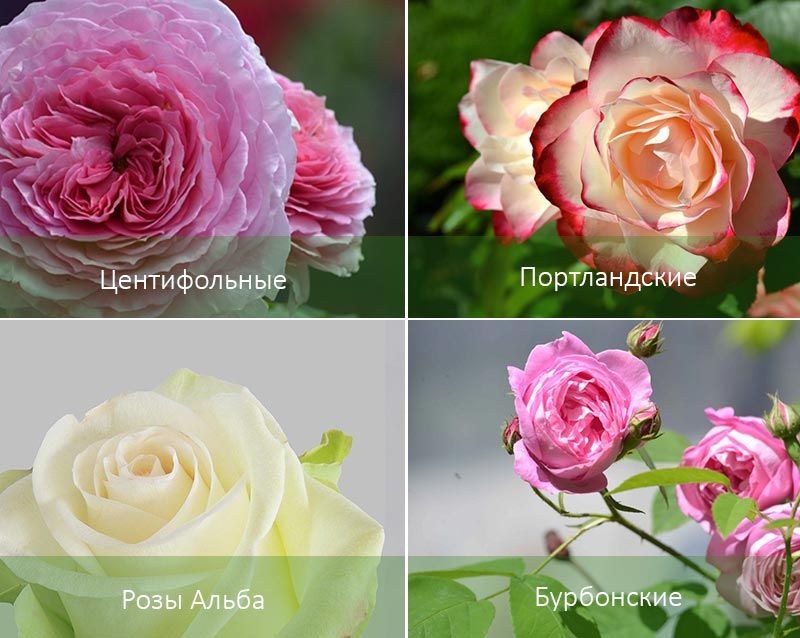
The disadvantages of these roses include poor resistance to low temperatures and rain, and bud and petal shedding. They are also often affected by fungal infections.
| Type/variety | Height (cm) | Color | Peculiarities |
Alba roses:
|
200. | White, cream. | Undemanding to soil, resistant to frost and infections. |
Portland:
|
100-120. | Violet. | Pleasant aroma. Repeated bud formation. |
Bourbon:
|
150. | Orange. The entire range of pink shades. | Autumn flowering. Susceptible to fungal diseases, requiring winter protection. |
Centifolia (hundred-petal):
|
90-140. | From white to coral. | Low-growing, spreading plants. Rarely seen in landscaping. |
Damascus:
|
100-200. | Snow white. Light purple. | The inflorescences are very fragrant. The foliage of the bush is sparse and sparse. |
Gallic:
|
90-180. | Cherry, red. | Long shoots. Large leaves. |
English
This group is often singled out for its versatility. English roses can be trained into compact or sprawling shrubs, standard trees, or hedges. These plants are resilient to adverse conditions and easy to care for. They thrive in shaded areas and require adequate sunlight for 4-5 hours.
The cup-shaped flower, like that of an old rose, is composed of numerous folded petals. Some varieties have up to two hundred. Many bushes are repeat bloomers. They have beautiful, vibrant aromas of myrrh, musk, and citrus.
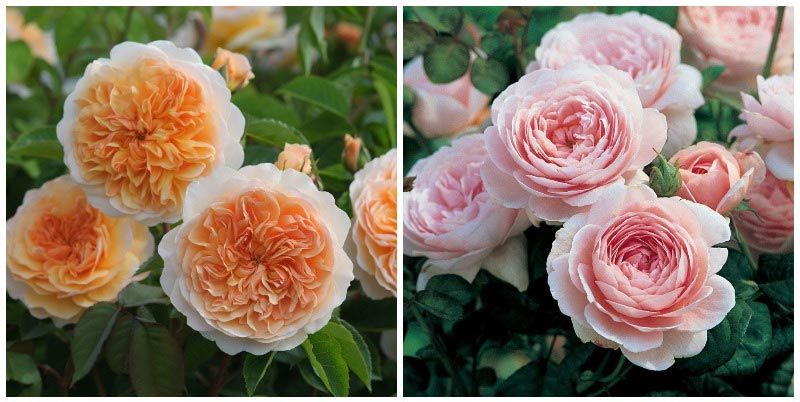
The most popular are 3 varieties:
- Abraham Derby;
- Benjamin Britten;
- William Shakespeare.
Modern roses
All modern garden roses are divided into groups, which should be examined in more detail.
Hybrid tea
Distinguishing features: large, 10-14 cm flowers, gracefully goblet-shaped. Both double (25-35 petals) and densely double (50-60 petals) varieties are available. Flower stalks are long. Bud formation occurs in June-July, followed by a short two-week break, and a second wave of formation continues until autumn. The color range is diverse. Fragrances range from light to intense.
The height of medium-sized bushes is 60-70 cm, and tall ones 80-100 cm. The difference in care is the obligatory covering in the fall.
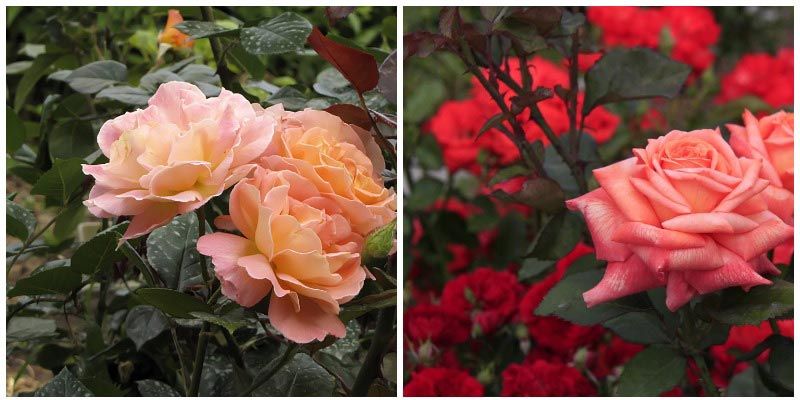
Commonly found varieties of hybrid tea roses:
- Mr. Lincoln;
- Lucky Piece;
- Double Delight;
- Alexander.
Floribunda
This variety is a hybrid created by crossing large-flowered roses. Small buds, gathered in large inflorescences, appear throughout the summer and fall. They are often used in bouquets.
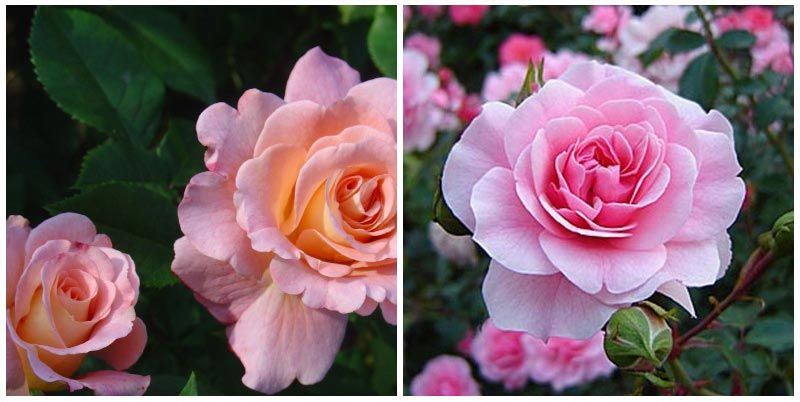
In terms of bush height, there are giants of 80-100 cm, grown as hedges, and low-growing ones of no more than 40-55 cm, allocated to a separate subgroup - patio roses (miniflora), which are usually used to decorate the yard.
They are suitable for forming borders and look impressive when planted in large groups. They tolerate rainy weather well and are resistant to many diseases.
The most fragrant representatives:
- Shocking Blue;
- Fragrand Delight;
- Melody Maker.
Grandiflora
Large-flowered roses, developed by crossing hybrid tea and floribunda roses. Because of their long stems, they are used for cut flowers. They can bloom continuously for several months, making them popular for garden decoration.
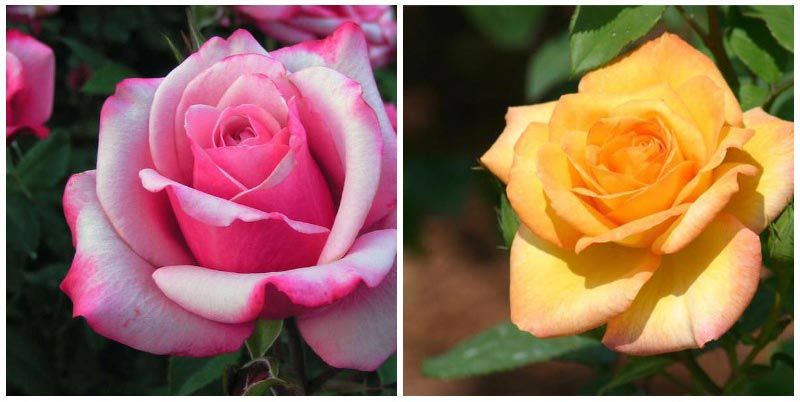
The most prominent representatives are: The Queen Elizabeth Rose and Sonja.
However, in many European countries this group is not officially recognized and its varieties are classified as floribunda roses.
Miniature
These dwarf roses are very similar to polyanthus roses. They are compact, miniature, often spherical bushes, 30 cm tall. The buds are solitary or clustered in inflorescences. Coloration varies, often in rich shades. They are resistant to frost and various infections. Flowering continues throughout the summer.
They are used to decorate balconies and grow in pots and containers. In the garden, they look great in the foreground of flowerbeds, as borders, and paired with dwarf flowers.
Shrubs
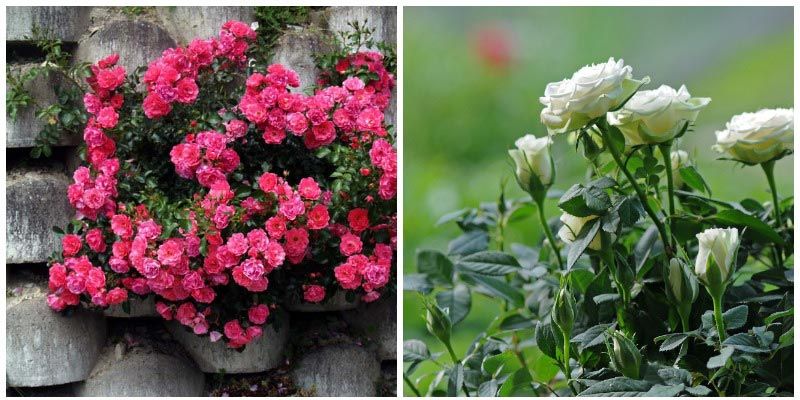
Another name for this plant is semi-climbing. These are large, spreading bushes, 200-250 cm tall. The shoots grow rapidly and require support. The flowers are large, densely double, or sometimes single, similar to rose hips. The fragrance contains notes of tea, musk, and fruit.
Shrub roses include Canadian roses and Austin roses. They are resistant to adverse weather conditions and all kinds of infections. They withstand winters well and are easy to care for.
Polyanthus
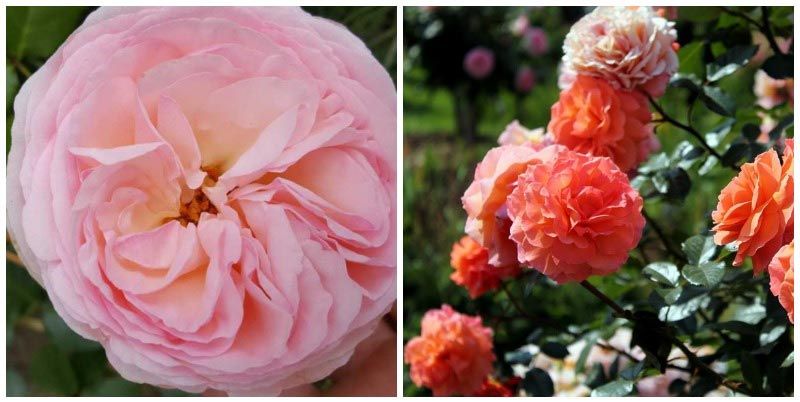
This group originated in France. The inflorescences are located at the ends of the shoots and consist of a large number of small buds, ranging from 20 to 60. The bush is medium-sized, 40-60 cm, compact, and easy to care for.
Polyanthus roses have a number of advantages:
- absence of thorns;
- high vitality, easily restored from the root;
- tolerates cold and pest attacks well;
- flowers remain fresh and neat for a long time, 10-14 days;
- can grow from seeds;
- tolerates excess moisture well;
- feels good in a shaded area.
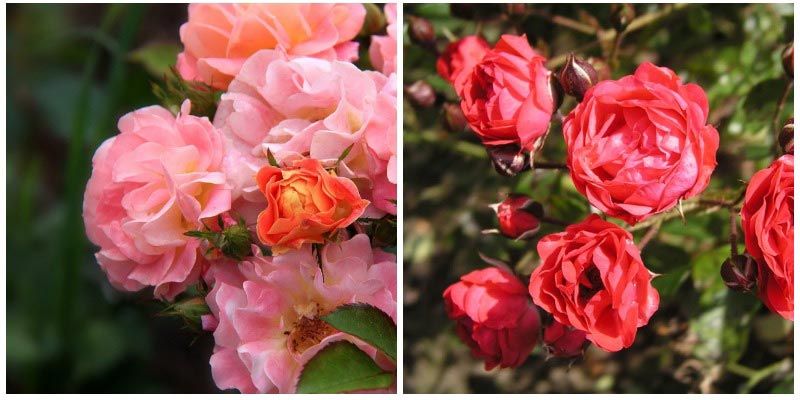
Ramblers
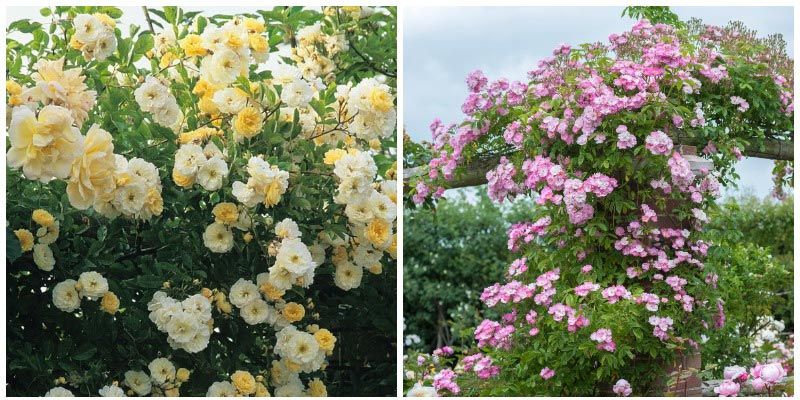
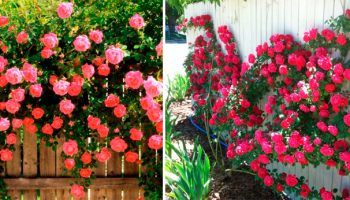
Most varieties in this group are hybrids of the Vishuriana rose. They are characterized by long shoots, ranging from 200 to 1500 cm. The flowers are small, measuring 2-3.5 cm, but are borne in large, densely spaced clusters. They are suitable for decorating fences, creating hedges, and concealing imperfections.
They have a two-year stem development cycle. In the first year, long, bare stems emerge from the ground; in the second year, lateral shoots with buds appear in their middle and upper parts. In subsequent seasons, new shoots emerge from the ground and from the lower parts of the previous year's branches.
Tea
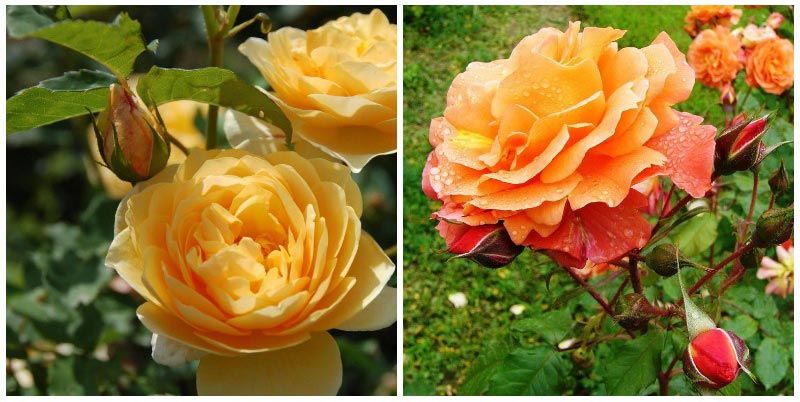
These roses get their name from their distinctive fragrance. The flowers have beautiful shapes and delicately hued petals, with up to 60 petals in total. The buds are large, round, or long and pointed, depending on the variety. They range from low-growing bushes measuring 50 cm to climbing ones reaching 200 cm.
The main disadvantage of this species is its poor resistance to frost.
Examples of varieties:
- Parade;
- Gloirede Dijon.
Groundcover
These creeping plants with small flowers and long stems owe their origin to the Rugosa rose and the Vihua rose. This crossbreeding has resulted in several varieties of groundcover flowers:
- Small 45 cm and medium from 50 cm.
- Large 100 cm and tall over 110 cm with drooping shoots.
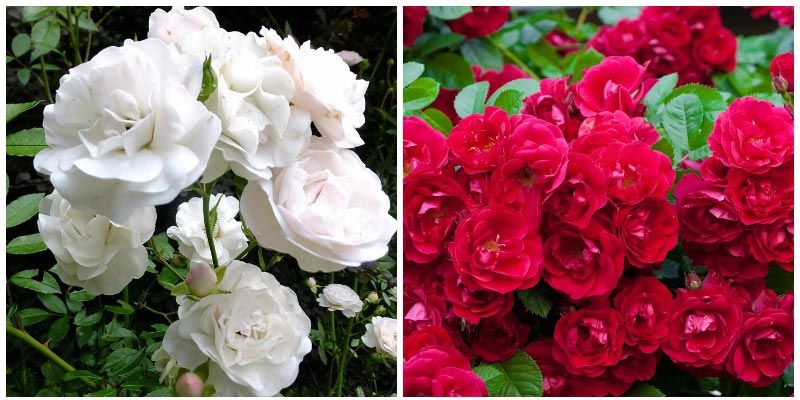
Frost-hardy, some only require light cover, while many overwinter under a layer of snow. They are easy to care for and thrive.
Park
Park roses are tall shrubs, growing up to 150 cm, with dense foliage. Many varieties are frost-resistant and ideal for cold climates. They bloom early, in early June.
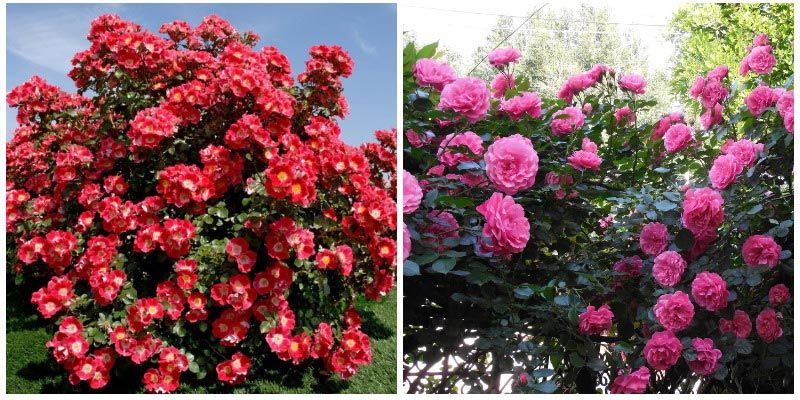
Garden roses – basic rules for growing and caring for them
Every plant has its own preferences, and rose care also requires its own unique care. One of the keys to successful cultivation is the correct planting location. Roses prefer bright areas protected from drafts and gusts of wind. Bushes should not be exposed to excessive sunlight, especially dark-colored varieties, which easily fade.
The optimal temperature is +18…+25 °C; at higher temperatures, the plant’s leaves will get burned and the flowers will dry out.
Next, you need to properly prune, water, and feed the plant; these basic growing rules will be discussed below.
Soil and mulching
The best soil is humus-rich, loose, and well-drained. A lack of oxygen will negatively impact root development. The soil should be slightly acidic, with a pH of 6.0-6.5; for colder climates, an alkaline pH of 7.0 is preferable. To increase the acidity, add peat or organic matter, such as manure.
An unsuitable type of soil is marshy and too wet; excess moisture leads to root rot and death.
Groundcover plants or lawn can be planted between rose bushes; these will provide excellent mulch, loosening the soil. Wood shavings or sawdust can be used.
Reproduction
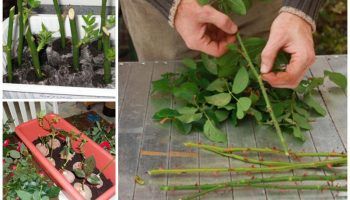
Bushes are propagated vegetatively. For climbing and large species, rooting is the best method. To do this, select a flexible, strong shoot and make an 8-cm-long cut. The stem is then secured to the ground with stakes and covered with soil. The stem can be separated and replanted the following season.
Another option is to use cuttings. To do this, select strong, undamaged stems in spring or early summer and cut them into 15-20 cm long pieces. The top cut should be at a right angle, and the bottom cut at a 45-degree angle. Leaf blades are removed or shortened. The prepared seedlings can be placed in a hole dug in the open ground, covered at an angle with loose soil. Cover the top with a plastic or glass jar.
The following spring, rooted cuttings can be transplanted into a flowerbed with prepared loose soil.
Shaping and pruning
Depending on the tasks facing the gardener, there are 5 types of pruning:
- formative;
- sanitary;
- for flowering;
- thinning;
- rejuvenating.
A bush planted in spring will begin actively growing shoots within 2-3 weeks of acclimation. From this point on, the plant can be shaped. Stems that are too large should be pinched off at the top. This should be done after the fourth leaf appears. This helps achieve symmetry in the bush. Shape adjustments should continue until August, allowing the rose to bloom. The first pruning is always done in the spring, even if the rose was planted in the fall.
Sanitary pruning is performed after the bushes unfurl in spring, summer, and before the dormant period. All frozen and poorly developing stems are cut off. However, in the fall, it's important to leave the shoots long; this will help protect them from freezing temperatures.
Some bushes may begin to sprout small-leafed shoots at the graft site; these are wild shoots. These should be cut off at the base of the root collar, clearing away any soil.
Remove faded flowers to maintain a neat appearance. Cut them off above the second or third leaf and a developed bud, leaving a distance of 0.5-0.8 cm. Do not trim dried flower stalks in late summer. Removing them can encourage new shoots to grow, which will be poorly prepared for winter.
Summer pruning is done to remove all weak and overgrown shoots, which create a dense bush. A plant with many thin branches becomes easy prey for pests. Blind shoots without buds should also be trimmed back, leaving 4-5 pairs of leaves.
Rejuvenation treatments are essential for mature bushes to prolong their life in the garden. Plants need to be pruned heavily, but this should be done in several stages to allow the bush time to adapt before fall. It's also necessary to dig up and trim away any dead stems.
Watering
A mature rose requires a fair amount of water. However, its water requirements vary at different stages of growth. The greatest water requirements occur during shoot development, leaf emergence, and after the first flowering. One plant requires 15-20 liters, and in hot weather, watering should be increased to twice a week. Insufficient moisture will severely affect the stems and, especially, the flowers, causing them to appear pale and underdeveloped.
The water should be warm, as roses' root systems don't tolerate cold. It's recommended to pour the settled water from a watering can in a thin stream at the base of the plant, being careful not to splash it on the leaves. Avoid overwatering the soil in hot weather, and avoid using a hose.
Starting in September, watering should be reduced. Excessive amounts of water during this period stimulate plants to grow new shoots, which fail to properly prepare for winter and die. Therefore, many gardeners completely stop watering the soil during this period. However, if the weather is dry and there is no rain, the deficit should be replenished with 10-12 liters of water per plant once a week. This will help the roots store water for the winter.
Top dressing
To ensure proper plant growth and development, alternate organic and mineral fertilizers. Apply them to well-moistened soil, 10-15 cm from the root collar. After applying the fertilizer, water again.
Young and mature rose bushes require different feeding methods. In the first year of planting, apply fertilizer in small amounts 2-3 times per season. More frequent applications (5-6 times) can be done in the second year of the rose's life.
- Well-rotted manure can also be mixed with peat in a 2:1 ratio. It decomposes slowly, constantly enriching the soil.
- Bird droppings: a fast-acting fertilizer rich in nitrogen. Best used in liquid form at a ratio of 1:10. A bucket of solution is enough for 2-3 bushes.
- Wood ash. Makes the soil alkaline.
- Compost from rotted parts of other plants.
The main nutritional chemical elements for roses are presented in the table:
|
Element |
Benefit | Deadline for submission |
| Nitrogen | Growth of stems and foliage. | May-August. |
| Phosphorus (superphosphate) | Ripening of strong shoots. | June-September. |
| Potassium sulfate | Formation of a large number of buds, proper preparation of plants for winter. | From early summer to October. |
| Calcium | Neutralization of acidic soils. | As needed. |
| Microelements: magnesium, boron, iron and manganese | Strengthens immunity, protects against diseases, and is a general tonic. | During the growing season. |
Plants should receive the greatest amount of nutrients in the spring, during active growth and budding. To avoid misapplying the correct amount of fertilizer, apply it in five stages according to the following schedule:
| Fertilizing period | Superphosphate (g) | Ammonium nitrate (g) | Potassium salt (g) |
| Spring pruning, bud break | 25-30. | Not included. | |
| Shoot growth | 25-30. | 10-15. | 10-15. |
| Formation of buds | 30-40. | 15-20. | |
| End of the first flowering | 10-15. | 15-20. | |
| Completion of the second wave of flower stalk formation | 40-50. | Not used at this stage. | |
The suggested substances are given per bucket of water.
Diseases and pests
Growing roses requires timely disease and pest prevention. Inspections should be carried out at least once or twice every 7 days. This will allow for early detection of problems and prevent the rose's death.
All damaged areas should be removed, they should not be composted, but rather disposed of or burned.
If sanitary pruning doesn't help, use fungicides, such as Abiga-Peak, Topaz, or Skor. Alternatively, try folk remedies. The following table will help you determine the cause of your plant's illness and find the appropriate treatment:
| Disease/pest | Signs | Elimination |
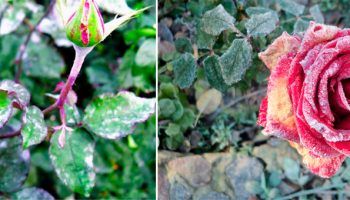
| Powdery mildew | White coating on young shoots. Curled leaves. | Conduct preventive measures, disinfect new plants, and treat them with preparations containing copper. |
| Rust | Bright orange spots near the buds. | |
| Gray mold | Mold, buds do not open and wither. | Dry the soil and remove any affected parts of the plant. Spray with a solution of 300 g of soap and 30 g of copper sulfate per 9 liters of water. |
| Black spot | Dark brown circles. | Choose disease-resistant rose varieties. Dispose of dead parts. Use fungicides (Profit, Bordeaux mixture, Fundazol). |
| Shoot burn | Red streaks and frost cracks encircling the stems. | Dry roses before covering them for the winter. Paint damaged areas with water-based paint containing copper oxychloride: 20 g per 0.5 l. |
| Caterpillars | Holes and torn edges on foliage. | Harvest by hand. Sprinkle mustard powder around the bush to repel pests. |
| Sawfly | Damaged shoots dry out. | Treat not only the affected parts, but also the soil around the rose with insecticides, for example, Iskra, Intavir. |
| Thrips | Twisting and wilting of young parts of the bush. | |
| Rose aphid | Apply garlic solution: 200 g per liter, leave for 5 days, dilute with water at the rate of 1/4 of the resulting liquid per 10 liters. | |
| Spider mite | Cobweb on the lower surface of the leaf blade. | Wash the leaves and treat with Fitoverm. |
All diseases affect the decorative appearance of flowers and their winter hardiness.
Preparing for winter
Covering roses is an important and crucial process, as preparation begins even before the cold weather sets in. Beginning in the second half of August, gardeners should focus on halting growth. To achieve this, reduce watering and fertilizing, and stretch plastic sheeting over the bushes during rain. Actively growing shoots are pinched back.
When temperatures drop to 0°C, roses stop growing and begin to accumulate nutrients. This natural hardening occurs, so don't close the plants too early.
The final stage of preparation begins in early November. Remove any remaining leaves and trim the bushes to a height of 40-45 cm. Then, fill the bushes with insulating material: dry sawdust, preferably pine, at a rate of 3 buckets per bush. You can also use peat mixed with sand, pine branches, or simply earth them up with a layer of soil.
Sometimes homemade greenhouses 50-60 cm high made of metal or pipes and roofing felt are used. However, this type of bush insulation is not suitable for damp areas.
Roses are uniquely beautiful shrubs, available in a variety of shapes, varieties, and colors. With proper care and careful adherence to recommendations, even a novice gardener can create a variety of garden arrangements with these plants.
What is the maximum height of garden roses?