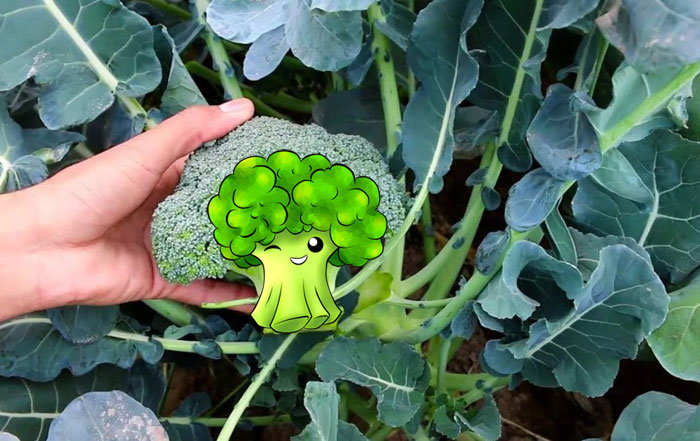
Not everyone in our country knows this vegetable. It was known as far back as ancient Rome. Today, it's a popular vegetable in many European countries. Broccoli is interesting because it doesn't form heads. It has a tall, sturdy stem, on which numerous small buds form. These are eaten. This cabbage contains many vitamins, especially vitamin C. Interestingly, the darker the color of the head, the higher its vitamin content. It's also rich in potassium and magnesium, and twice as much iron as white cabbage. It's no wonder that descriptions of its growth often appear in cookery publications, where you can learn all about broccoli.
Choosing Broccoli Varieties
| Variety | Ripening time | Brief description, features | Planting dates |
| Jung F1 | 2 months | The green head is small in size, weighing 300 g. It likes humid, cool weather. | Mid-May. |
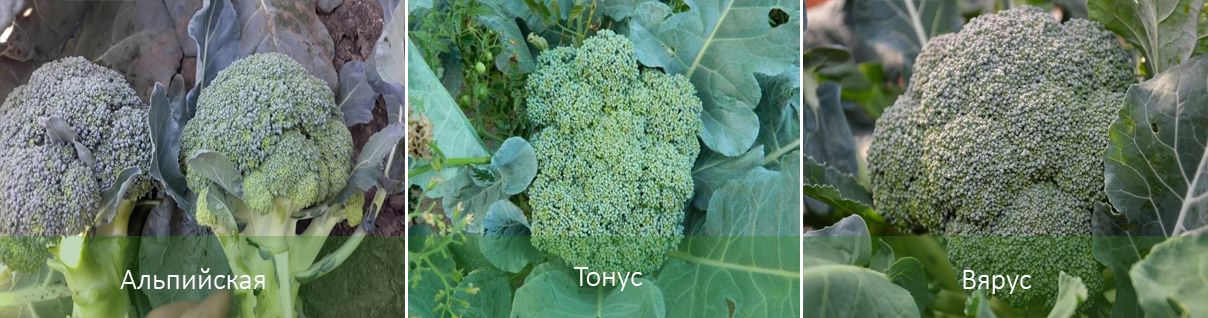
| Tone | 70-75 days | Dark green, medium-dense inflorescences, rapid regrowth of new heads after cutting. Requires frequent cutting. Characterized by rapid ripening. | March 15 to April 15 (depending on weather conditions). |
| Vyarus | The heads are dense, the color is bluish-green, the heads weigh up to 150 g. Resistant to adverse weather conditions, characterized by rapid ripening. | ||
| Corvette | Flat, dense heads weighing 250-350 g, gray-green in color. Late-ripening variety. | ||
| Curly head | The main head weighs 500 g. The variety is mid-season, disease-free, and tolerates frosts down to -6. | In mid-April. | |
| Broccoli F1 | 68 days | Large malachite-colored head, early variety. | Mid-May |
Methods for planting broccoli in open ground
Broccoli can be grown from seedlings or by sowing in open ground. Each planting method has its advantages. In northern regions, growing broccoli from seedlings is more advantageous for an early harvest. Sowing begins 35-40 days before planting in open ground. Early seedlings planted in March can be grown in a greenhouse for three weeks after germination, and then planted outdoors as soon as warm weather sets in. Those sown in April can be transplanted directly into the garden.
Seed preparation
To obtain a high-quality harvest, it's essential to select only pure-variety seeds. Properly prepared, they will germinate, sprout, and yield a high yield.
Before sowing, each seed should be sorted, selecting the largest ones for planting. Place the selected seeds in warm salted water for a few minutes. Discard any that float to the surface. Use the ones that sink to the bottom. After soaking in warm water, place them in cold water for 1 minute to harden them, rinse with water, and dry. To prevent infection, all seeds should be treated with solutions such as boric acid, potassium permanganate, and aloe vera juice before planting. Place them in the prepared solutions for 8 to 12 hours.
Broccoli seedlings
Gardeners have fallen in love with broccoli, and many are interested in how to grow its seedlings. Growing is possible in small boxes, pots, and 7-cm-high peat pellets. When reusing old boxes, treat them with a saturated solution of potassium permanganate. If the container is new, simply rinse it with boiling water.
Place drainage at the bottom of the seedling container. Place a layer of mixed peat, sand, and garden soil on top of this. Place 1-2 seeds in shallow holes. Do not bury them too deeply. Place the seedling containers in a well-lit, warm spot. Broccoli seedlings require plenty of light; if they don't get enough sunlight, provide supplemental lighting. Cover the containers with plastic or glass until the seedlings emerge. Watering should be moderate and regular, as broccoli does not tolerate either very wet or dry soil. Waterlogged soil can cause blacklegs, which can kill the plant. If growth is poor, fertilize the seedlings with a solution of potassium chloride or saltpeter. If the weather is sunny, the containers can be taken outside during the day and brought indoors at night.
The exact time for planting seeds depends on weather conditions. It's important to remember that seedlings should be planted outdoors on the 39th day.
Therefore, seedlings can be sown several times, starting in the second half of March and ending in the second half of April. This will hopefully prevent unfavorable weather conditions from damaging the plants, and by adding new plants to the soil every 10 days, you can harvest a fresh crop of broccoli throughout the season.
To ensure better root development and to avoid damage to the seedlings when planted in open ground, it is best to grow broccoli in peat pots or tablets.
Planting broccoli seedlings in open ground
In areas where April is characterized by spring frosts and the soil warms up to 15°C by the time seedlings are planted, they can be planted outdoors. If spring arrives late with frequent nighttime temperature drops, it's best to wait until late March to plant. Before sowing, it's important to properly prepare the soil. It should be structured, loose, and rich in nutrients. It's best to use soil where potatoes were grown. You can add peat, preferably frozen and weathered, a little sand, and a mixture of charcoal and humus to the bed, and loosen the soil thoroughly.
On the fortieth day, the seedlings are transplanted to their permanent location in the ground. This is best done in the afternoon. Water the seedlings generously before planting. Space them 50-60 cm between rows and 45-50 cm between plants. Dig a hole 10-12 cm deep and carefully pick up the plant, being careful to preserve the root ball and avoid damaging the roots. Firmly compact the soil around the plant to form a ring of soil around the stem, which will retain water during watering. If the plant was grown in a clay pot or peat pellet, simply place it in the prepared hole and cover with soil. After planting, be sure to water the seedlings generously. After the water has drained, mulch with dry sand to help retain moisture. Cabbage is a very delicate plant, so at first it can be protected from the sun with paper caps or insulating film if the weather is cool.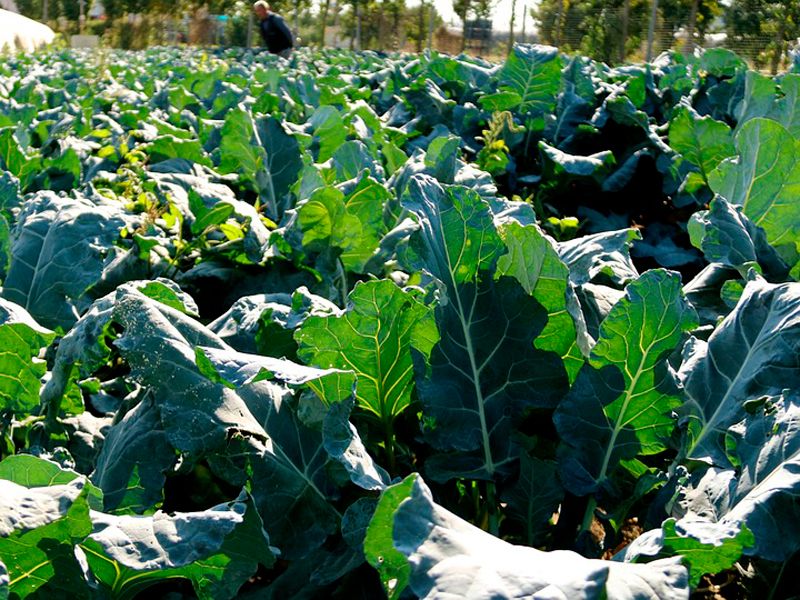
Growing broccoli without seedlings
Broccoli seeds can be planted directly in the garden bed. For this type of planting, choose early and mid-season varieties. Seeds are sown in open ground in late April. It's important to note that if the soil isn't warm enough, the seeds won't germinate. Once the soil warms to 5°C or above, the first shoots will appear immediately.
Broccoli thrives on good care, sun, and warmth, so it's best planted in the sunniest spot in the garden. It's best grown in a spot where legumes or grains were previously grown, and can be planted after potatoes, squash, onions, and cucumbers.
The planting bed should be prepared in the fall. First, remove all weeds. Sprinkle the area with lime and ash, then dig the soil deeply and leave it in relatively large clumps for the winter. This will promote better snow retention and moisture accumulation. Wet soil freezes more deeply in winter, killing many insect pests. In the spring, before planting the seeds, add compost to the soil and dig it to a depth of 20 cm.
Broccoli seeds are planted two per hole, 7 cm apart. Immediately after planting, water and cover the bed with a light- and moisture-permeable insulating material. On warm days, the bed can be removed to prevent the seedlings from stretching. Once the first leaves appear, the seedlings can be thinned, and thinned again after two weeks. Growing broccoli outdoors is even beneficial, as it promotes the development of more vigorous plants with strong roots. Monitor the broccoli's growth to ensure harvesting is done promptly. Only the green heads are harvested for consumption.
Features of caring for broccoli in open ground
Further care will include watering, fertilizing, loosening the soil, and hilling. It's important to remember that broccoli thrives in moisture, so it should be watered at least once every two days. It's best to do this in the evening. Broccoli can grow without regular watering, but the heads will become smaller. Fertilize with cow manure or bird droppings every 10 days. After each fertilizing, gently loosen the soil around the roots and hill the plant.
Protection from pests and diseases
Broccoli, like other plants, is susceptible to pests. Growing celery near broccoli will help combat flea beetles. Dill will help control cabbage aphids, and peppermint will keep cabbage whites out.
| Pests | Manifestation | Means of control | ||
| Folk | Chemicals | Biological insecticides | ||
| Caterpillars, slugs | They eat the leaves | To get rid of slugs, spread burdock leaves; spraying with salt solutions, onion infusion, infusion of tomato or potato stems; Sprinkle tobacco dust or lime around the neck. |
Actellic; Decis; Aktara; Rovikurt; Fitoverm; Spark; Karate; Karbofos. |
Lepidocide; Baktofit; Bitoxybacillin; Neem Oil; Pyrethrum. |
| Cruciferous bugs, flea beetles, cabbage aphids, whiteflies. | They eat the underside of the leaf. | |||
| Cabbage fly, mole crickets, cabbage moth. | They lay eggs on the root collar and lower part of the stem. | |||
In addition to containing numerous beneficial minerals, doctors claim that this cabbage improves heart, stomach, intestinal, and nervous system function. It has a wide variety of culinary uses. It's safe to say that broccoli is a productive and easy-to-grow crop with a delicious taste and a wealth of health benefits.