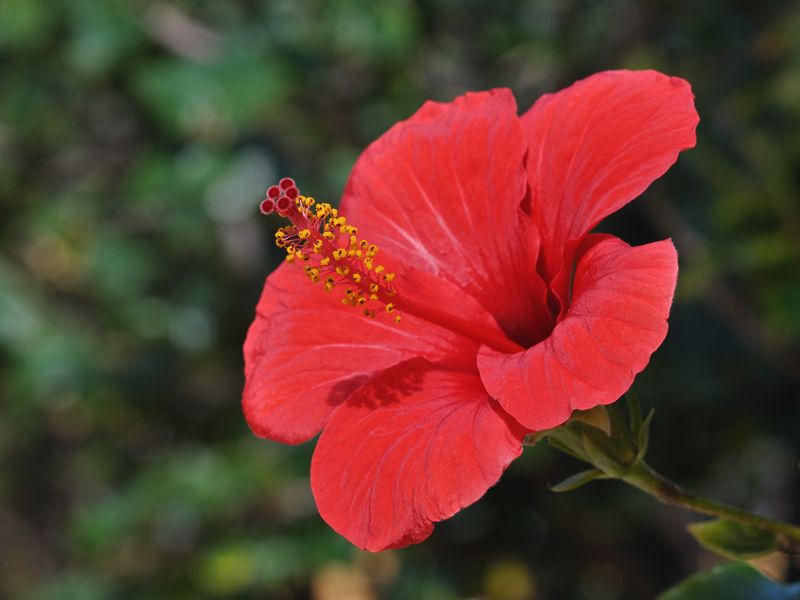
Hibiscus rosa-sinensis, also known as the Chinese rose, belongs to the Malvaceae family. This plant has many varieties to satisfy even the most discerning gardeners. Furthermore, the Chinese rose has many varieties for both indoor and outdoor use.
Content
Types and varieties of hibiscus
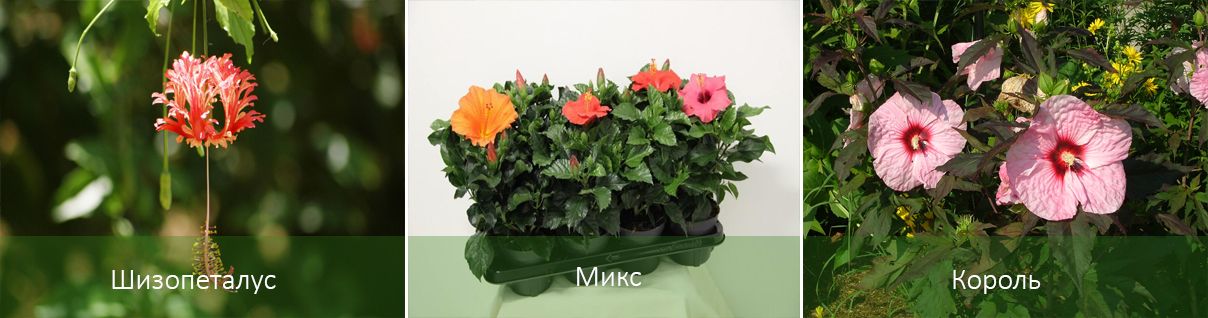
| View | Variety |
| Initial |
|
| Frost-resistant |
|
| Indoor |
|
Growing Hibiscus
The China rose is easy to grow, but requires careful watering and good lighting. With a little extra care and time—pruning and regularly spraying—you can create a stunningly beautiful miniature tree for your apartment.
The centerpiece of the hibiscus is its flowers. They are richly colored and quite large, although they only bloom for two or three days. The China rose will require a large pot, as the plant is quite large.
Temperature, lighting
It's best to maintain a room temperature of 21 to 26°C in summer and 15 to 20°C in winter. During the cold season, there's no need to lower it significantly, as the plant will easily survive the winter in a warm environment, but will thrive better in a cooler room.
Although hibiscus loves full sun, it shouldn't be left in direct sunlight for long periods of time, as this can cause sunburn, which will eventually cause the leaves to wilt and fall off. It's best to choose a location with filtered light. In summer, move it to a balcony or loggia. However, it doesn't tolerate drafts or strong winds, and it requires ample watering in the spring and summer (reducing the amount in winter can help). Mist the leaves daily, morning and evening.
Soil, fertilizers
The plant isn't particularly picky about soil; a mixture of regular soil, coarse sand, and humus is sufficient. Stir the mixture and plant the hibiscus in a pot, adding foam balls or other drainage media.
Repotting won't be necessary anytime soon: only when the China rose has established itself and is actively growing. With each subsequent relocation, the plant will need a larger pot, or better yet, a flowerpot.
In spring, you can fertilize with special mineral fertilizers containing copper and iron chelate. Hibiscus benefits from misting with minerals and growth solutions added to the water.
Top.tomathouse.com recommends: conditions for indoor hibiscus
Depending on the time of year, there are simple rules for caring for a Chinese rose at home.
| Spring |
|
| Summer |
|
| Autumn |
|
| Winter |
|
Diseases of Chinese rose (hibiscus)
A China rose doesn't require much effort to maintain its health, but it does require proper care. If the plant has too many green leaves, it may fail to bloom. This could be due to too much nitrogen fertilizer, insufficient light, or underwatering.
When leaves turn yellow, it's a safe bet the plant isn't getting enough sunlight. Red roses are also susceptible to pests and larvae. These are most commonly spider mites and aphids, which appear in the fall and winter due to damp or dry soil, drafts, and inadequate care. Pest control is simple: spray with insecticides and wipe with soapy water.
Choosing an effective method of reproduction
The choice of propagation method depends on the type of hibiscus and the time of year.
Optimal time
The plant should be propagated when it:
- Absolutely great.
- The branch has bent towards the ground, which makes it possible to divide by layering.
- It has grown so much that you can cut off one cutting.
Hibiscus is propagated in spring and summer. If the flower is affected by pests or is sick, then division should be postponed until the plant recovers.
Hibiscus is propagated by the following methods:
Cuttings
It can be used year-round, but spring and summer are best. Before pruning, the mother plant should be watered generously and trimmed. Along with any dead or wilted shoots, remove the cuttings (branches with thick green stems and two internodes). Remove all the leaves from this shoot and root the flower.
Layers
It's no more difficult than the first method. To divide the bush, choose regular, air, or vertical layering, the former being best. Cover the selected branch with soil, leaving the top exposed. Roots will soon begin to grow in the soil-covered area. Before propagation, prepare the soil: it should be well-moistened, highly breathable, and well-drained. The branch should be bent down, cleared of leaves, and placed in a dug hole in the pot, securing it with wire if necessary to prevent it from straightening back. This method is suitable for spring. In the fall, the shoot can be separated from the mother plant and placed in a separate pot.
Seeds
This is the least common and most difficult method. Moreover, all the hibiscus's varietal characteristics are lost. The procedure is as follows:
- soak seeds in water with growth stimulants;
- place them in a wet gauze cloth and then in a plastic bag for three days until roots appear;
- plant in a pot with soil and humus;
- do not plant the seeds too deep and cover the pot with a bag for a thermal effect, remove everything after 2 weeks;
- Water moderately and after 3 months transplant the young hibiscus into a larger container.
Dividing the bush
This is used in spring and summer. The pruning shears, knife, and trowel must be treated with disinfectant and the bush dug up. Next, clear the root system of soil, being careful not to damage it. Using the treated knife, cut off 2-3 stems with roots. Then, plant each separated shoot in its own pot filled with soil and humus. Water the new plants frequently but sparingly.
How to root
There are only two ways to root a Chinese rose.
In the soil:
- Before planting in the ground, you need to wait until the cuttings produce their own roots, place them in a small glass with soil and sand, after dipping each shoot in a solution of heteroauxin.
- After planting, lightly compact the soil at the base; the cutting will take root after a month.
- Build a small greenhouse around the plant in the form of a bag or a piece of glass so that it remains warm and humid inside.
In water:
- Use a dark glass and pour warm water into it.
- Add a few tablets of activated carbon and a growth stimulator.
- Place the glass in a well-lit place, but away from direct sunlight.
- Planting in a pot should be carried out only after the plant has produced two or three leaves and the roots have reached 5-7 centimeters in length.
Possible problems and difficulties after division
New shoots need to be watered daily, maintaining high humidity and moderate temperatures. If a young red rose isn't properly cared for, it will quickly drop its leaves and begin to wilt. To prevent spider mites and aphids, it's best to wash the plant with soapy water and wipe it with a damp cloth in the shower. If the leaves turn yellow, adjust your mineral fertilizers—add nitrogen and iron and reduce chlorine and calcium.
Aftercare for young hibiscus
Once the cutting is transplanted into its container, care for it the same way you would for a mature plant. Be sure to remove any weeds and loosen the soil around the roots.
In summer, add additional mineral fertilizer to the soil, and in autumn, add potassium fertilizer. Water as the soil dries out.
Why is hibiscus called the flower of death?
Although hibiscus appears to be an ordinary and harmless plant, it has been nicknamed the "flower of death." This eerie name derives from ancient European superstitions.
- Early flowering of the Chinese rose meant that someone in the family would die suddenly; to avoid this fate, the plant was burned.
- The flower was not placed in the bedroom, as it was believed that it would take away the health of the apartment's owners.
- The shedding of leaves meant that one of the family members would fall ill and it was necessary to see a doctor.
- There is a belief that hibiscus drives men away from the house, so young girls are advised not to keep the flower in the house.
- There is a superstition that the Chinese rose is used to make a "crown of celibacy" and that it destroys strong married couples, bringing discord and quarrels into the family.
If you ignore the superstitions, hibiscus is a wonderful home decoration. It's easy to care for, produces stunningly beautiful, large flowers in a variety of colors, and emits a subtle, delicate, slightly tart aroma.