The mid-season tomato variety Midas is not listed in the registry, but is one of the favorite yellow tomatoes among gardeners due to its unpretentiousness and high yield.
Content
- 1 Table with characteristics of the Midas tomato variety
- 2 The history of the Midas tomato variety
- 3 A detailed description of the Midas tomato variety
- 4 Advantages and disadvantages of the Midas tomato variety
- 5 Growing the Midas tomato variety
- 6 Resistance of the Midas tomato variety to diseases and pests and prevention
- 7 Harvesting, using and storing the Midas tomato variety
- 8 Comparison of the Midas tomato variety with other varieties in the table
- 9 Gardeners' reviews of the Midas tomato variety
Table with characteristics of the Midas tomato variety
| Characteristic | Description |
| Description | An indeterminate hybrid tomato variety with a mid-season ripening period. Can be grown in a greenhouse or outdoors. |
| Ripening period | 105-115 days |
| Fruit weight | 60-100 g |
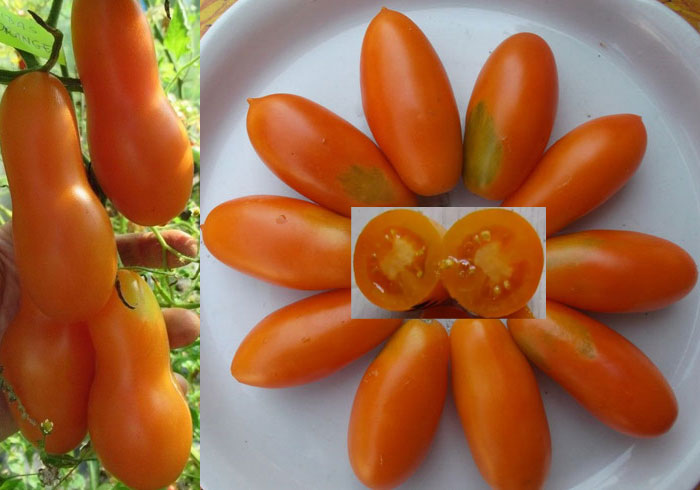
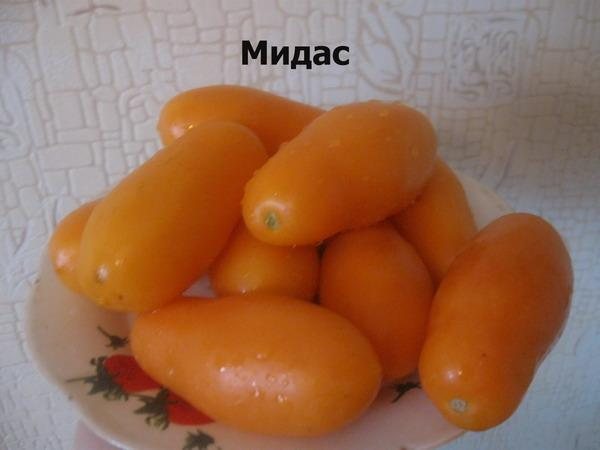
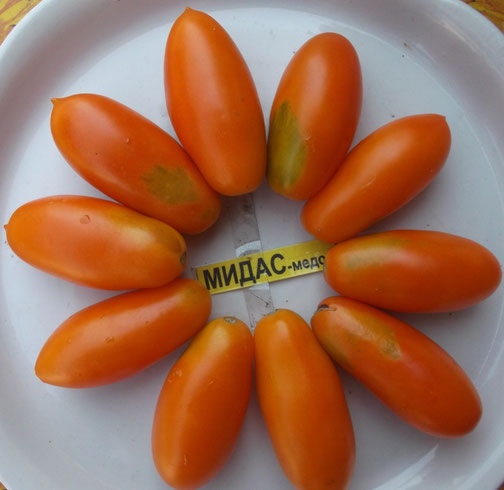
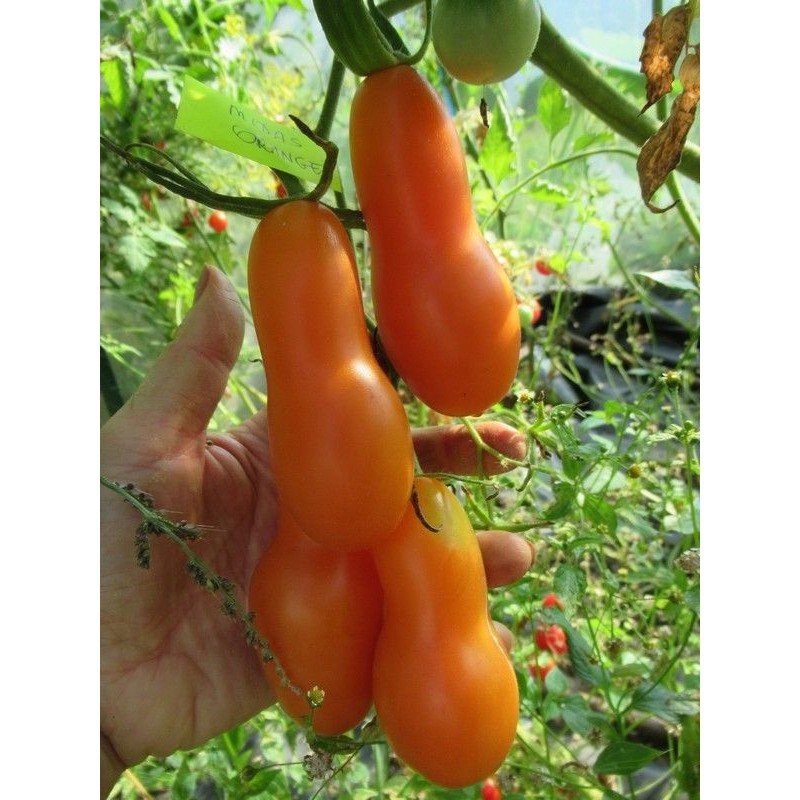
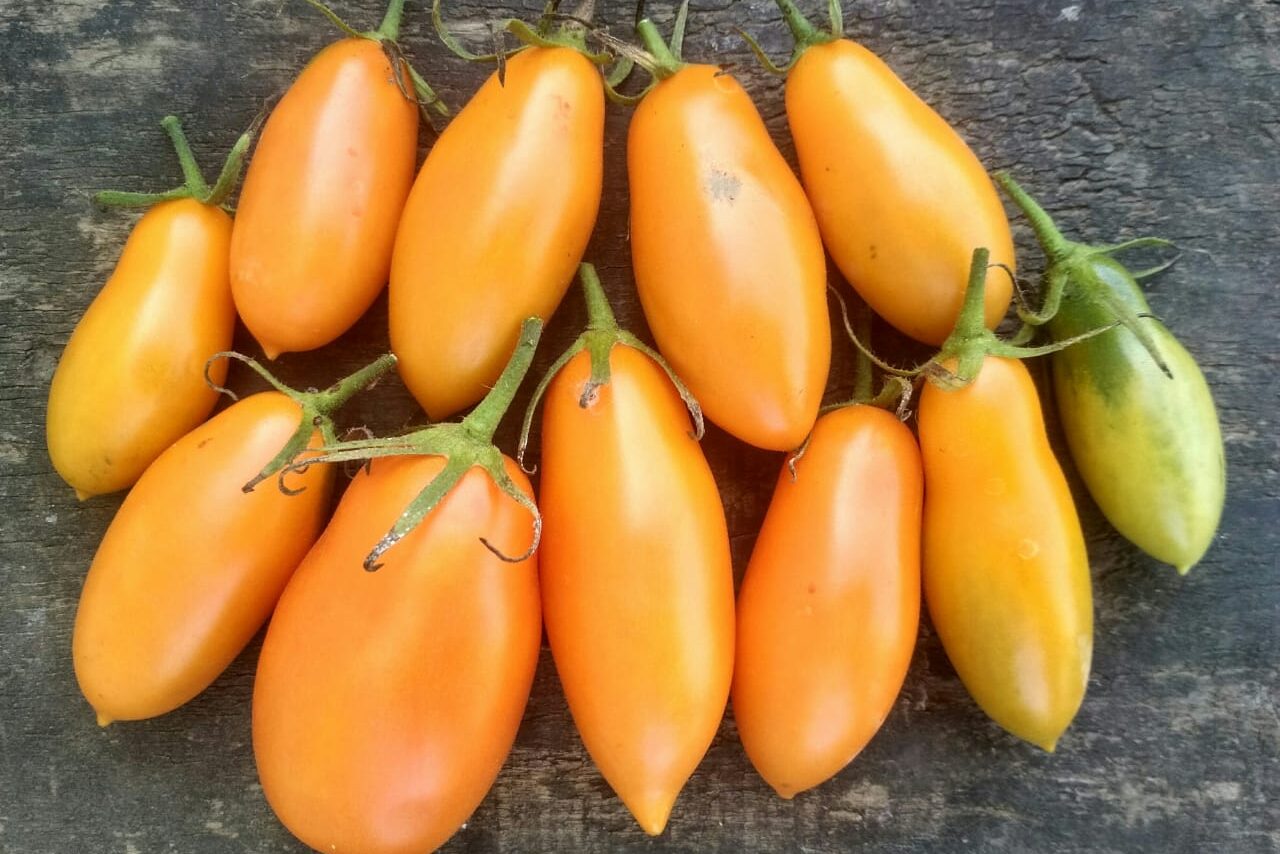
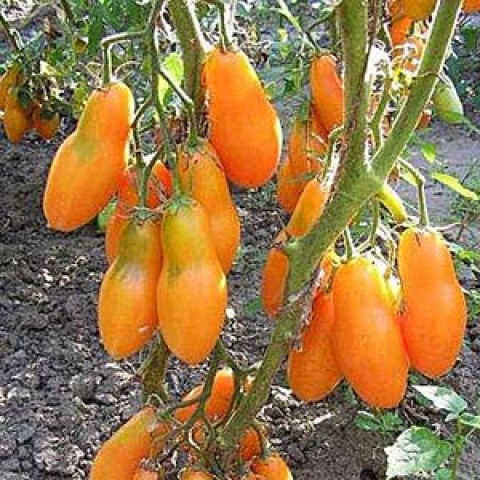
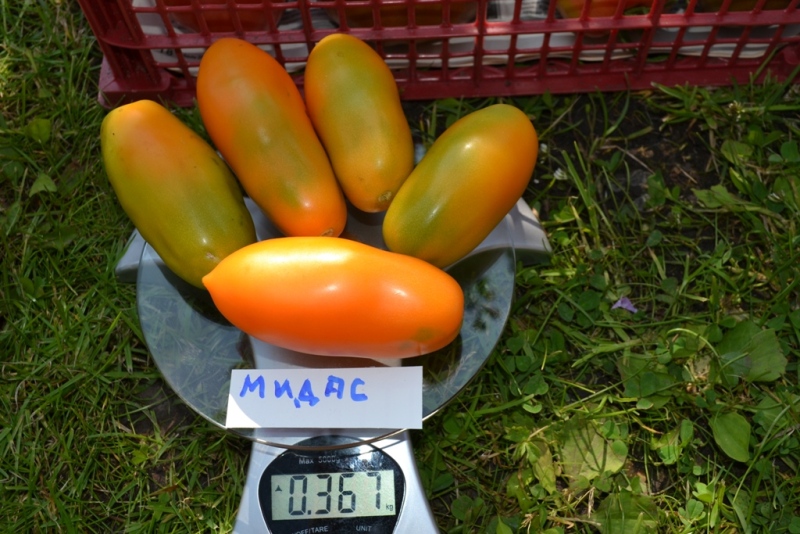
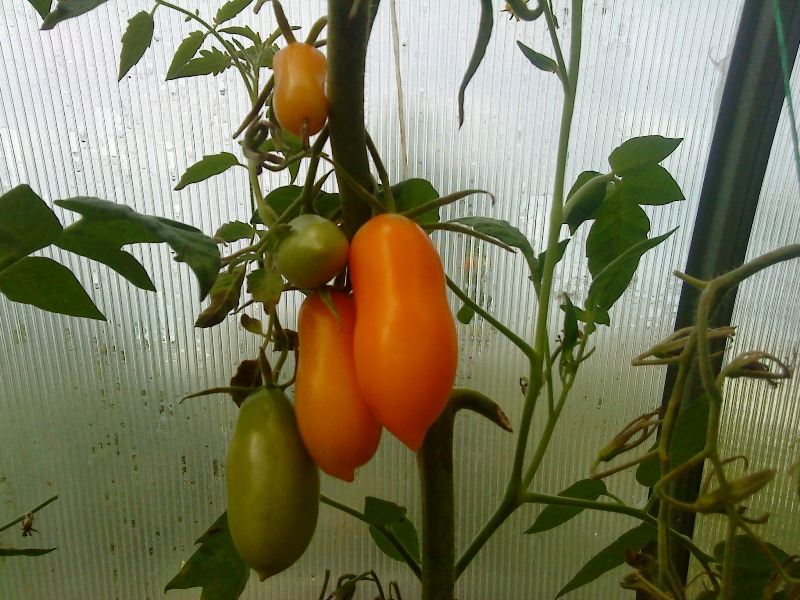
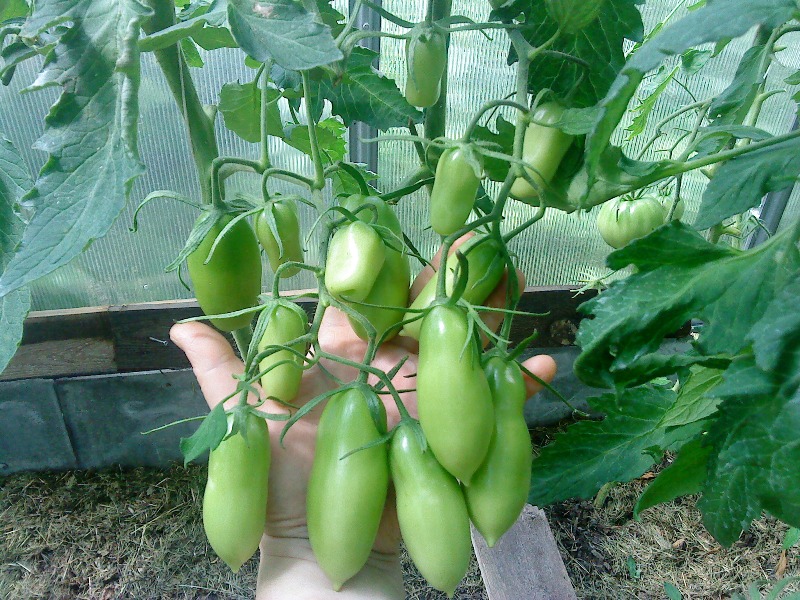
| Description of the fruit | The fruits are elongated, with a pointed tip. They resemble peppers in appearance. The color is yellow-orange, and the flesh is juicy. Each cluster produces up to 10 fruits at a time. |
| Productivity | 7-15 kg per square meter |
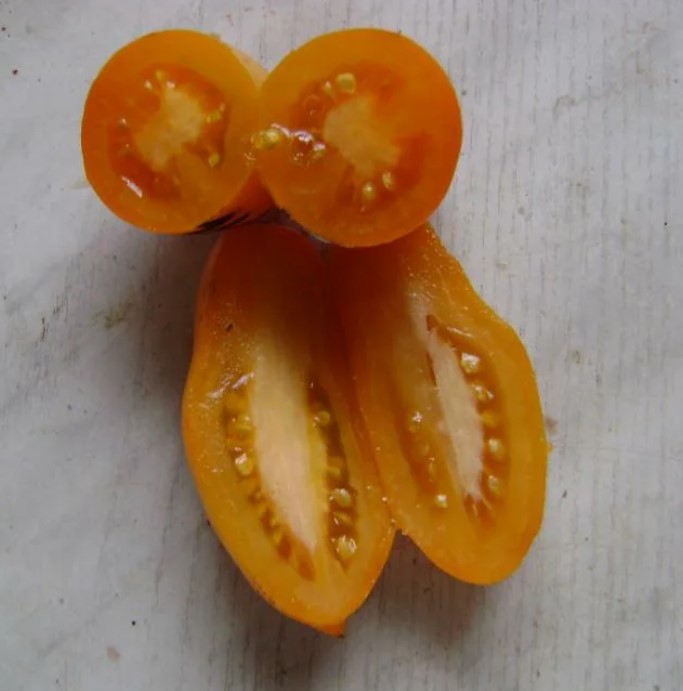
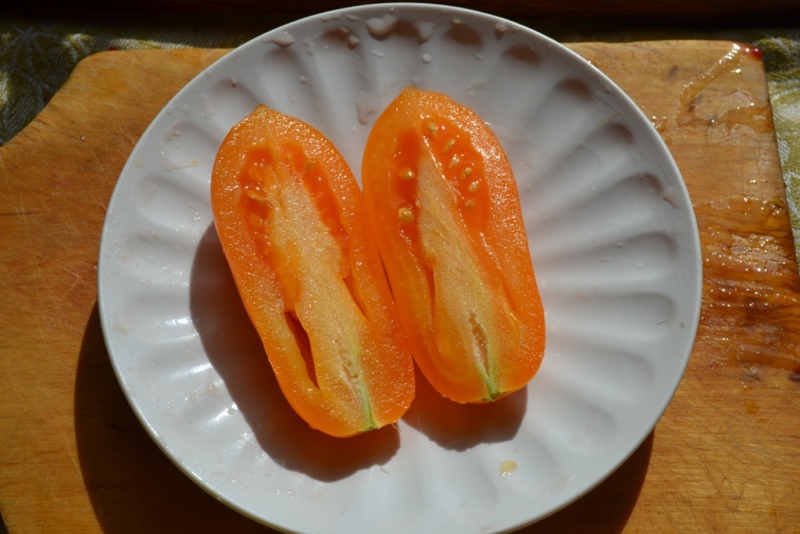
| Taste | Sweet tomatoes, with virtually no voids inside. |
| Usage | Suitable for fresh eating, whole-fruit canning, and drying. |
| Preferred growing regions | All regions |
| Disease resistance | Resistant to fusarium, cladosporiosis, verticillium wilt, root rot, TMV and blossom end rot. |
| Agricultural technology | The bushes grow up to 2 m in height, so they require staking. They form 2-3 shoots. They do not cross-pollinate with other varieties. |
| Not included | |
| Country of origin | Amateur selection. |
Photo gallery of the Midas tomato variety
The history of the Midas tomato variety
The Midas tomato variety is generally considered to be a Polish-bred variety. It was developed by a family of amateur agronomists and named after the Phrygian king Midas, who turned everything he touched into gold. It's no coincidence that the tomato's bright yellow color, reminiscent of the precious metal, is responsible. However, today, Midas tomatoes are produced by breeding associations across the world, and the most common seeds sold are from the company Sedek.
A detailed description of the Midas tomato variety
With proper care, the Midas tomato can delight gardeners with an excellent harvest.
Characteristics of the bush
Midas tomato shoots grow up to 200 cm in a greenhouse and up to 150 cm in the open ground, so they need to be tied up. The bush is formed into 2-3 stems, and side shoots are removed. The foliage is medium, the leaves are small, but as fruit set, they should be removed from the lower tiers of the bush, but no more than 1-2 at a time.
Fruit characteristics
Midas tomatoes ripen in clusters, each holding up to 10 fruits at a time. Tomato weight ranges from 60 to 100 g, but with proper greenhouse care, they can reach 300 g.
The flesh is very sweet and juicy, with few empty spaces inside. There are no more than five seed chambers. The tomatoes are yellow-orange in color, have firm skin, and are elongated in shape with a pointed tip. There is no green spot near the stem.
Ripening time
The Midas tomato is considered mid-season. Ripening occurs 100-115 days after the first shoots emerge.
Productivity
The Midas tomato is a very productive variety. In greenhouse conditions, it can yield up to 15 kg per square meter. The manufacturer claims that with proper cultivation practices, each bunch can weigh up to 1.5 kg.
Advantages and disadvantages of the Midas tomato variety
The Midas tomato variety has a number of advantages and disadvantages, which are listed in the table.
| Advantages | Flaws |
|
|
Growing the Midas tomato variety
The Midas tomato is quite unpretentious in cultivation and does not require special agricultural technology.
Sowing seeds and growing seedlings
Seed sowing begins 55-70 days before planting the seedlings outdoors. To improve germination, soak the seedlings in a stimulating solution, such as Agat or Kornevin.
Experienced gardeners recommend germinating seeds before planting.
It's best to buy specialized soil, which already contains all the necessary nutrients. However, if necessary, you can easily prepare it yourself by mixing equal parts of soil, peat, humus, and sand.
The soil mixture is poured into a pre-selected container. Peat pellets or regular containers can be used.
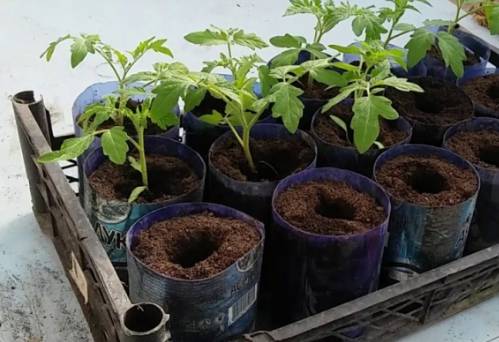
Fill the box 2/3 full with soil, then make furrows about 1 cm deep and 2.5 cm apart. Place the seeds in these furrows at 2 cm intervals, then cover with soil and water with a spray bottle.
Cover the container with glass or film and place it in a warm place. As soon as the first shoots begin to emerge, remove the cover and move the seedlings to a cooler location with a temperature of 20°C. At this stage, provide additional lighting to ensure the seedlings become strong and do not stretch.
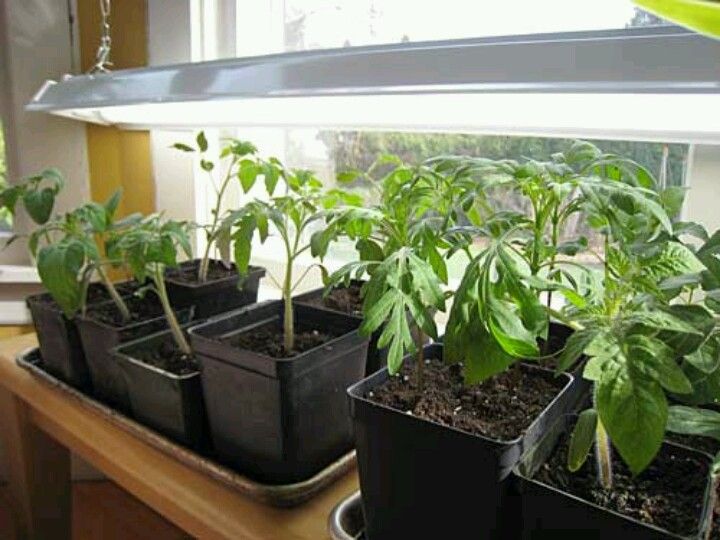
After two true leaves appear, the seedlings are transplanted into separate containers.
Planting in the ground
You can begin replanting tomatoes only when the soil temperature warms up to +12 °C and the threat of night frosts has passed.
In central Russia, tomatoes are planted in early June.
Holes are prepared for each bush. They are dug 60 cm apart in a staggered pattern. A path about 70 cm wide is left between rows.
It is recommended to plant no more than 4 bushes per square meter. All bushes require support, as the shoots reach 2 m in height. Bushes are trained into 2-3 shoots.
After planting, watering is carried out, and the surface of the bed is mulched with straw or tree bark.
Care
Mandatory care procedures for the Midas tomato include pinching, tying, and shaping the bush.
The first watering is done 14 days after repotting. Thereafter, it is done once every 7 days; in very hot weather, the frequency can be increased. Each plant should be watered with 7-10 liters of sun-settled water.
It's recommended to fertilize the plants three times per season. For this purpose, it's best to use specialized complex fertilizers, such as Senor Tomato. Organic lovers can use a mullein solution or a weed infusion.
Resistance of the Midas tomato variety to diseases and pests and prevention
The Midas tomato has a strong immune system and is virtually immune to tomato diseases. It is resistant to fusarium, cladosporiosis, verticillium wilt, root rot, TMV, and blossom-end rot. Late blight may occur if watering is not properly administered.
To prevent diseases, treat the bushes three times per season with a solution of phytosporin or Bordeaux mixture. At the first sign of aphids, infested areas can be treated with a soapy solution; in severe infestations, only specialized products will help. Treatment should be stopped at least 14 days before harvest.
Harvesting, using and storing the Midas tomato variety
Tomatoes ripen 105-115 days after germination. Tomatoes can be picked from the vine while still green; they will ripen at home.
Midas tomato fruits tolerate transportation well and can be stored for a long time.
Tomatoes can be used in salads or eaten fresh. They are also suitable for whole-fruit canning and drying.
Comparison of the Midas tomato variety with other varieties in the table
Please note! How can you easily convert centners/ha to kg/sq.m? Simply divide by 100! For example, the Abakansky Pink tomato yields 400 centners of marketable fruit per hectare. This equals 4 kg per square meter. It's that simple! Also, keep in mind that typically no more than 3-4 plants are planted per square meter. This way, you can calculate the yield per bush. In the case of the Abakansky Pink, it's about 1 kg.
| Variety | Ripening period (number of days from full germination to ripening)
Yield of commercial fruits |
Brief description | Fetus |
| Midas | 105-115 days
700-1000 c/ha |
A mid-season indeterminate variety for open ground and greenhouses. Suitable for salads, canning, and drying. | Pear-shaped, smooth, orange, 60-80 g. Good taste. |
| Goldfish | about 120 days
870 c/ha |
A mid-season indeterminate variety for open ground and greenhouses. Requires staking and training. Suitable for salads and whole-fruit canning. | Cylindrical, smooth, orange, 90 g. Good flavor. The fruit has a high carotene content. |
| Fox | 100-120 days 910 c/ha |
A mid-early determinate variety for open ground and greenhouses. Requires staking and training. Suitable for salads and whole-fruit canning. Resistant to temperature fluctuations. | Obovate, smooth, medium density, orange, 110-130 g. Excellent taste. |
| De Barao orange | 110-130 days
1000-1200 c/ha |
Grows well in open ground. In cooler regions, it can be planted in unheated greenhouses. This indeterminate, late-ripening variety grows up to 200 cm. It requires staking and training. It is suitable for salads and all types of canning. | The fruits are small, ovoid, with smooth, glossy skin. The flesh and skin are orange, weighing 120 g. The flavor is excellent. |
| Minusinsk glasses | 110-112 days
Up to 1200 c/ha |
A mid-season indeterminate variety for greenhouses. Suitable for salads, canning, and processing into tomato products. | Oval, smooth, orange, pink or red, up to 400 g. Good taste. |
| Newbie | 114-127 days
417-508 c/ha, maximum 551 c/ha. |
A mid-early determinate variety for open ground. Suitable for salads, pickling, marinating, and canning. | Oval, smooth, orange-red, 73-102 g. Taste is good to excellent. |
| Orange Fountain | 100-105 days 500-550 c/ha (greenhouse and under film) |
An early-ripening indeterminate variety for greenhouses. Suitable for salads. | Cylindrical, medium density, slightly ribbed, orange, 11-18 g. Good taste. |
| Orange miracle | 100 days
900-1100 c/ha |
An early-ripening indeterminate variety for open ground and greenhouses. Suitable for salads. | Pear-shaped, smooth, orange, 150 g. Good taste. |
| Abakan pink | 120 days or more
400 c/ha |
A late-ripening determinate variety for open ground and greenhouses. Requires staking and training. Suitable for salads and processing into tomato products. | Flat-round, slightly ribbed, medium density and pink in color, 200-500 g. Good taste. |
| Easter Egg | 100-103 days
2000 c/ha |
A mid-early indeterminate variety for open ground and greenhouses. Suitable for salads and canning. | Plum-shaped, slightly ribbed, two-colored red-orange, up to 60 g. The taste is good and excellent. |
| Goose egg | about 100 days 700-800 c/ha |
A mid-season indeterminate variety for open ground and greenhouses. Requires staking and shaping. Suitable for salads and pickling. | Ovoid, large, orange-red, 200-300 g. Good to excellent taste. |
| Flame | 90-95 days
1410 c/ha |
An early-ripening determinate variety for greenhouses. Requires training into three stems. Suitable for salads. | Elliptical, dense, orange, 50 g. Good taste. |
| The Golden Fleece | 98 days
600 c/ha (greenhouse and under film) |
An early-ripening determinate variety for open ground and greenhouses. Suitable for salads and whole-fruit canning. | Ovoid, smooth, medium density, yellow, 90-100 g. Good taste. |
| The Swan Princess | 95-105 days
Up to 1500 c/ha |
An early-ripening indeterminate variety for open ground and greenhouses. Requires staking and training into 2-3 stems. Suitable for salads, pickling, and processing into tomato products. | Ovoid or elongated, smooth, red, 150-240 g. Good taste. |
| Easter Egg | 100-103 days 2000 c/ha |
A mid-early indeterminate variety for open ground and greenhouses. Suitable for salads and canning. | Plum-shaped, slightly ribbed, two-colored red-orange, up to 60 g. The taste is good and excellent. |
| Siberian miracle | 110-115 days
The yield of commercial fruits under film covers is 10 kg/sq.m. |
A mid-season indeterminate variety for open ground and greenhouses. Requires staking and shaping. Suitable for salads. | Ovoid, smooth, medium density, red, 150-200 g. Good taste. |
Gardeners' reviews of the Midas tomato variety
Gardeners note the excellent yield of tomatoes, as well as their sweet taste, which children really like.
A variety from the Sedek company. They list it as late-ripening, but mine turned out mid-season, perhaps thanks to the unusually warm June this year. The bush is very tall, over 2 m, with long internodes, few leaves, slender, and productive, with two stems. Good for canning and drying. The fruits are orange, like "rackets," as they say here, weighing 60-100 g.