The Abakansky Pink tomato is a favorite among lovers of juicy, delicious salad tomatoes. This variety is considered a national favorite. Two varieties with similar characteristics are registered: Abakansky and Abakansky Pink. They produce large fruits with tender, pinkish flesh. These varieties are known for their high yields, strong immunity, and ease of cultivation.
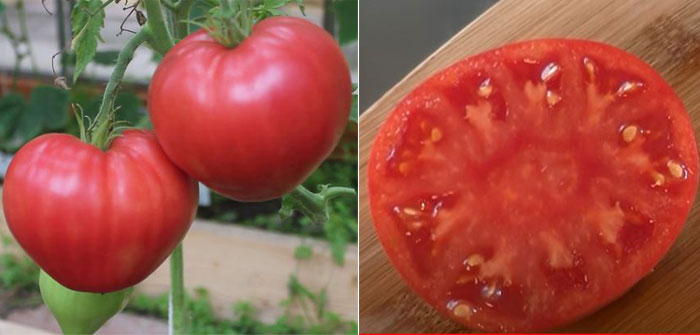
Below, we'll examine the characteristics of both, explain how they differ, and explain where all this confusion comes from.
Content
- 1 A table with characteristics of the Abakansky Pink and Abakansky tomato varieties from Top.tomathouse.com
- 2 Photo gallery of tomato varieties Abakansky and Abakansky pink
- 3 The origin of the tomato varieties Abakansky Pink and Abakansky
- 4 Detailed description of the tomato variety Abakansky Pink and Abakansky
- 5 Advantages and disadvantages of Abakan tomato varieties
- 6 Planting Abakan tomato varieties
- 7 Caring for Abakan tomato varieties
- 8 Disease and pest resistance and control
- 9 Storage of Abakan tomato varieties
- 10 Use of Abakan tomatoes
- 11 Comparison of Abakan tomatoes with other varieties in the table
- 12 Real reviews from gardeners and horticulturists about the Abakansky Pink tomato variety
- 13 Advice from Top.tomathouse.com
A table with characteristics of the Abakansky Pink and Abakansky tomato varieties from Top.tomathouse.com
| Characteristic | Abakan pink | Abakansky |
| Description | Late-ripening, determinate, large-fruited variety, ideal for growing in open ground in regions with a warm climate; in the middle zone, it is intended for greenhouse planting. | Mid-early, determinate, large-fruited, suitable for growing in open ground in regions with a temperate climate; in the middle zone it is grown under cover or in greenhouse conditions. |
| Ripening period | 120 days or more | 110-120 days |
| Description of fruits | Flat-round, slightly ribbed, medium density, large, juicy, tasty. | Heart-shaped, slightly ribbed, loose |
| Fruit weight | 200-500 g | 150-200 g |
| Number of fruits per bunch | 5-6 or more | |
| Productivity | Up to 400 c/ha | Up to 600 c/ha |
| Usage | Used for summer salads, suitable for processing to make paste, ketchup, adjika, and juice. | |
| Preferred growing regions | For all regions. | Zoned for all regions, it even shows good results in Altai and Siberia, taking into account cultivation in closed beds. |
| Disease resistance | It has excellent immunity and is extremely rarely susceptible to late blight and whitefly attacks. | |
| Agricultural technology | Due to its determinacy, shoot growth is genetically limited. It can be grown both outdoors and in a greenhouse, with the bushes doubling in height in the latter case. It forms two stems and requires staking. | |
| 2007 | 2008 | |
| Originator | JSC "LANS COMPANY", Moscow | LLC Agrofirm "Demetra-Sibir", Barnaul |
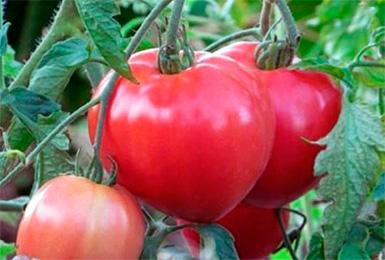
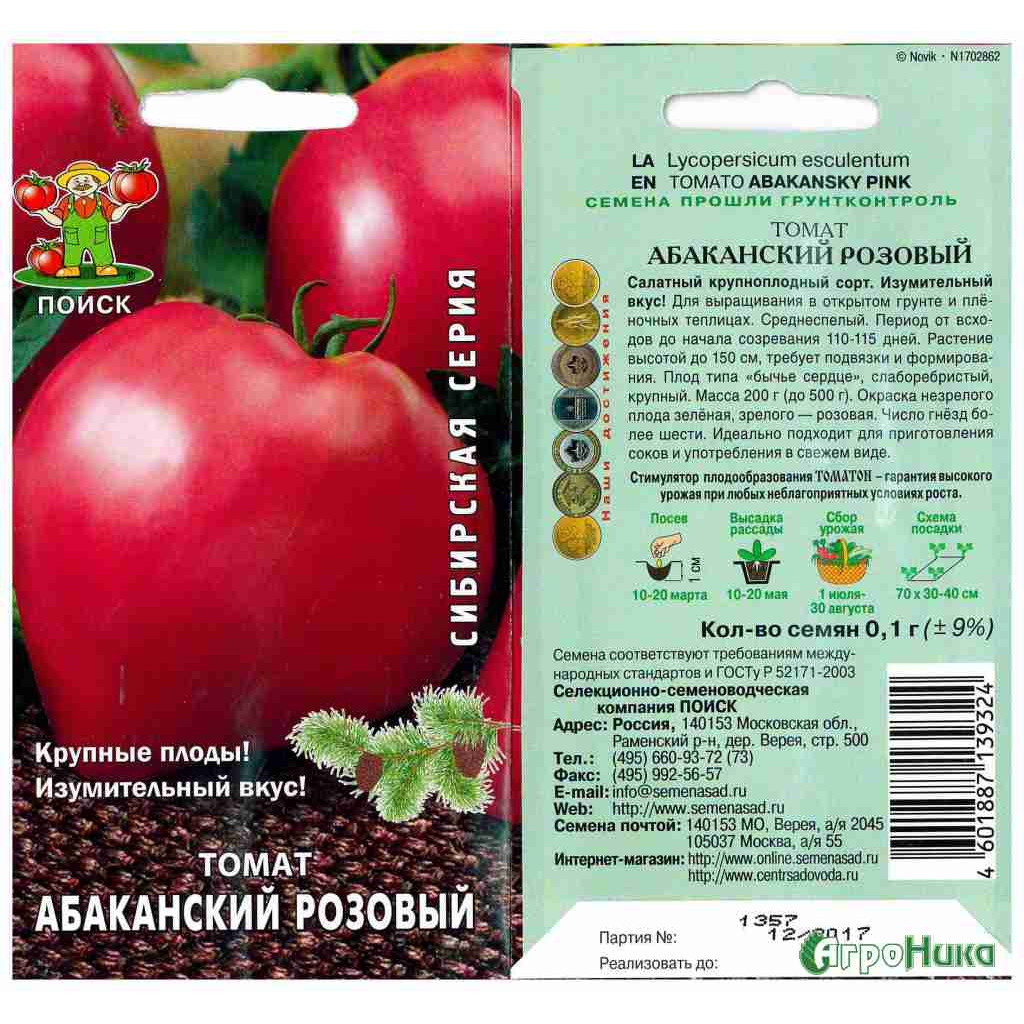
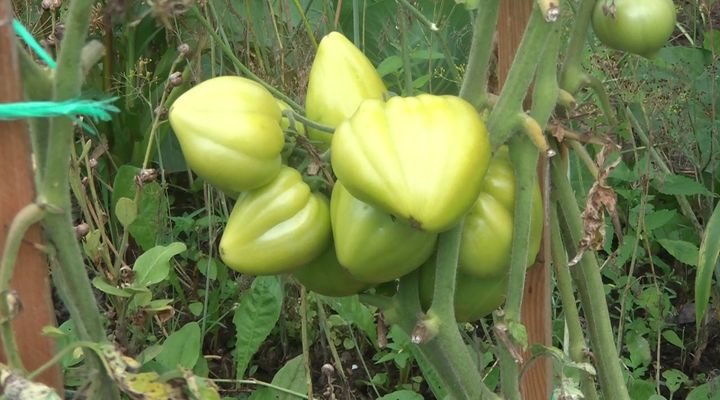
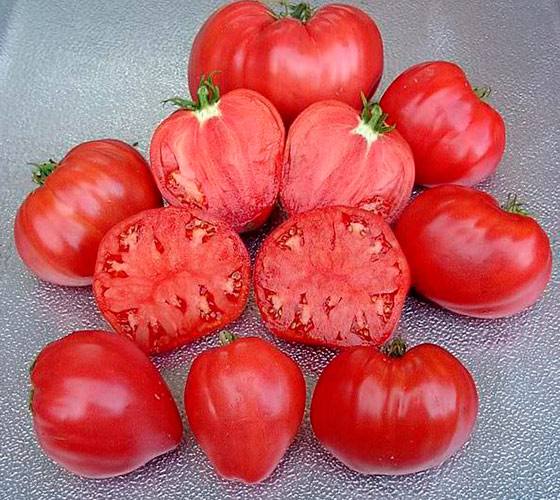
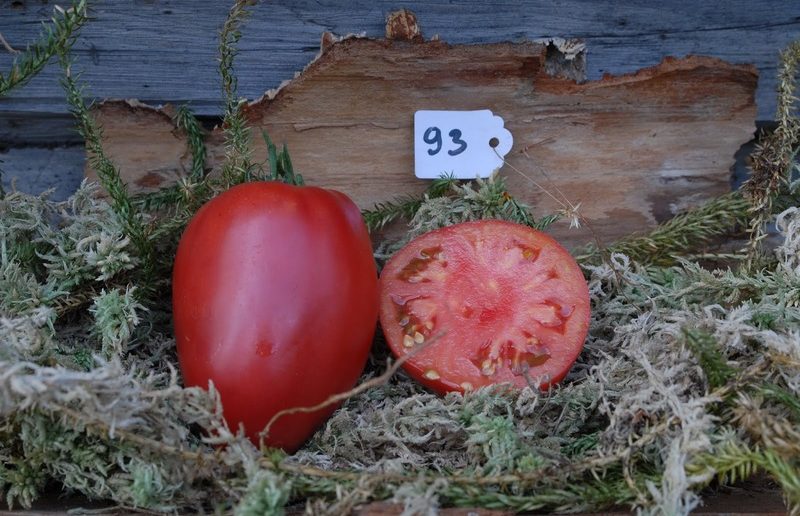
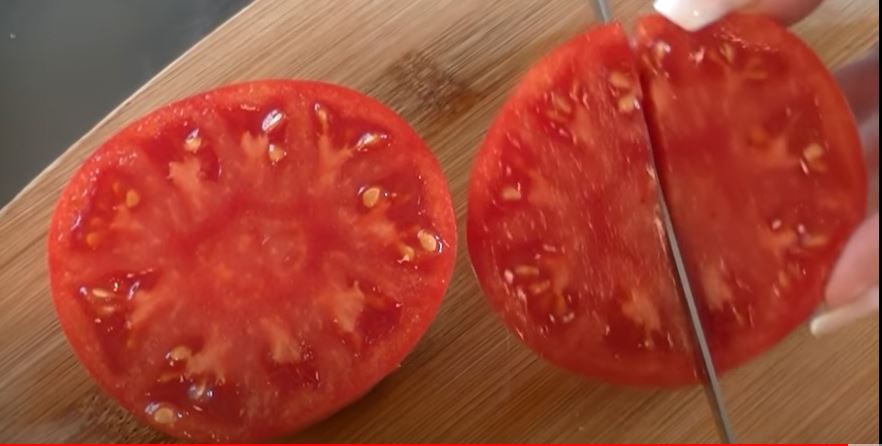
Photo gallery of tomato varieties Abakansky and Abakansky pink
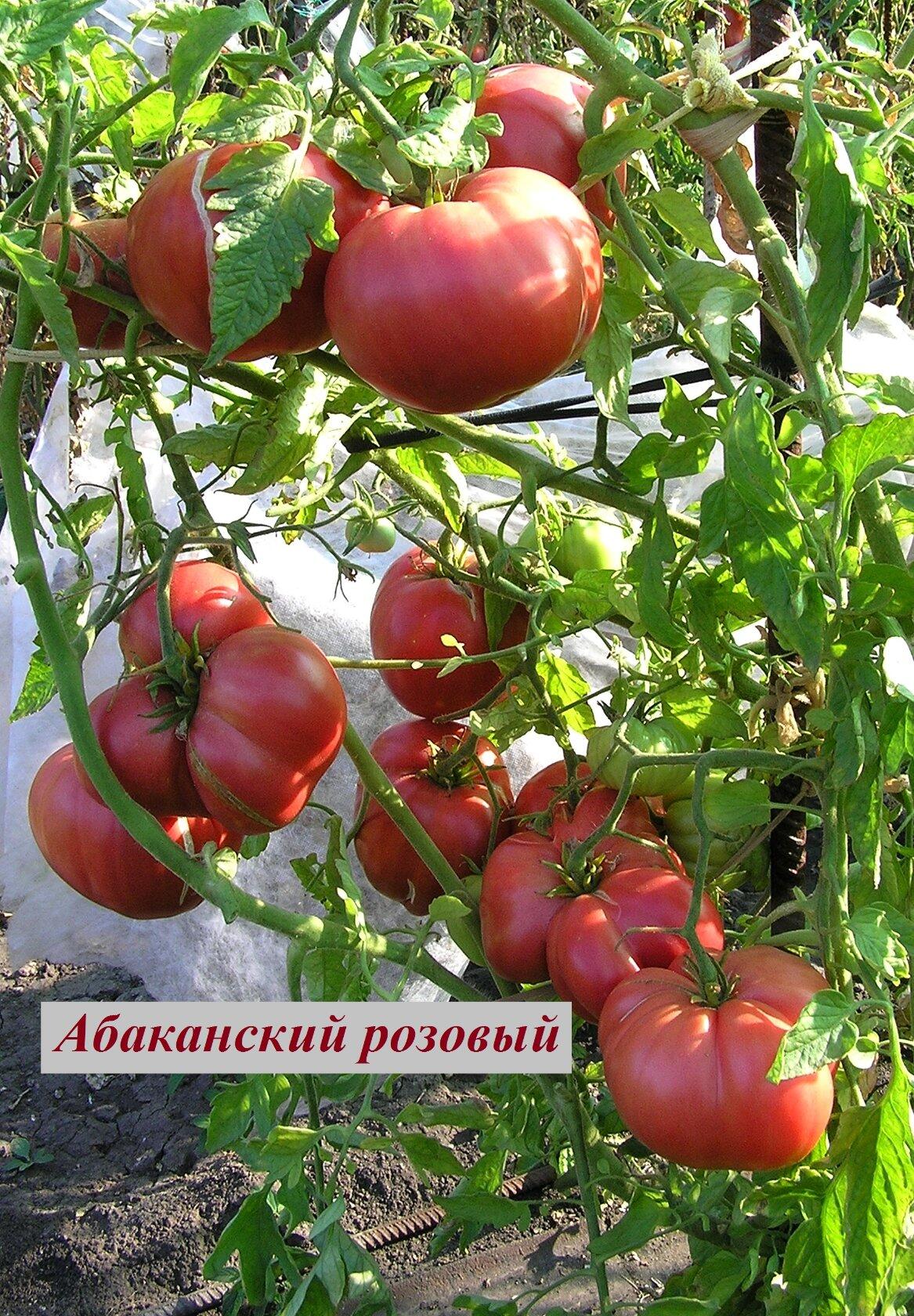
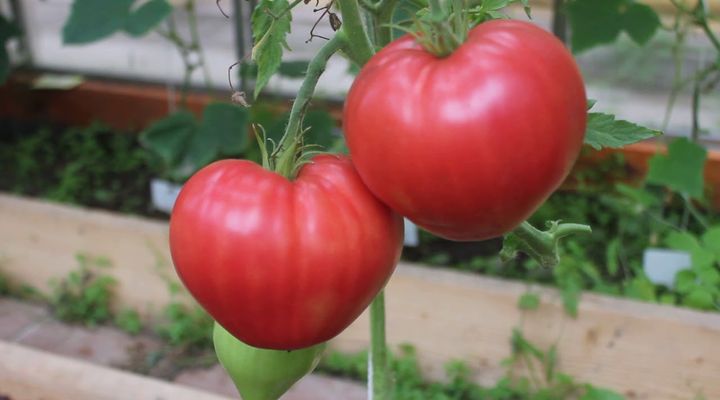
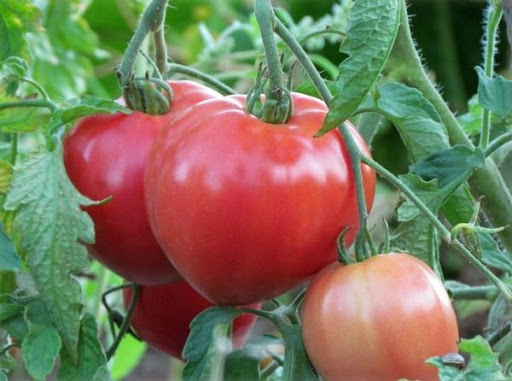
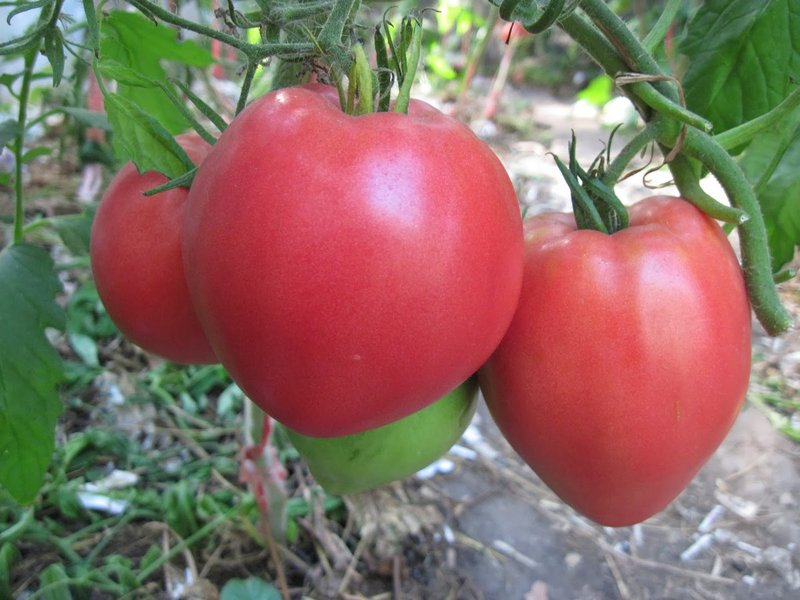
The origin of the tomato varieties Abakansky Pink and Abakansky
The people of Abakan are certain that a variety with similar characteristics has been cultivated for over forty years. In 2005, the Moscow-based Lance Company applied to register the variety. In 2007, it was entered as Abakansky Pink. In the same year, Demetra-Sibir Agrofirm LLC submitted an application with very similar varietal characteristics, and the variety was registered under the name Abakansky.
It's very difficult to find reviews, articles, or even seeds of the Abakan variety. If the seeds are from the Siberian series, then even if they're labeled "Abakansky Pink," they're more likely just "Abakansky."
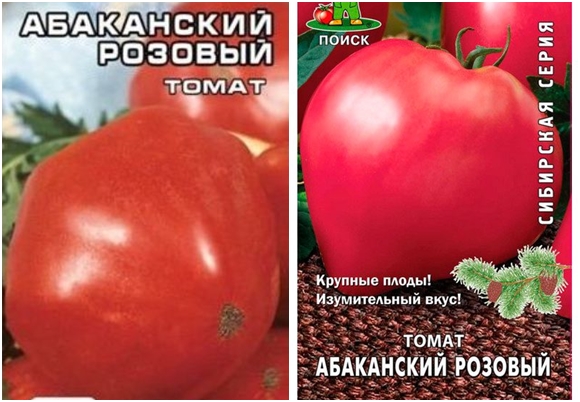
Now the seeds of this variety have appeared Abakan red From the Siberian Garden, which is not registered in the registry. It is marketed as a mid-season variety for growing in cool climates, both outdoors and indoors. The bush grows up to 180 cm. Fruit forms in any weather, 4-5 per cluster. The fleshy tomatoes with dense red skin and a heart-shaped shape reach 500-700 g. The flesh is also red, juicy, aromatic, and delicious.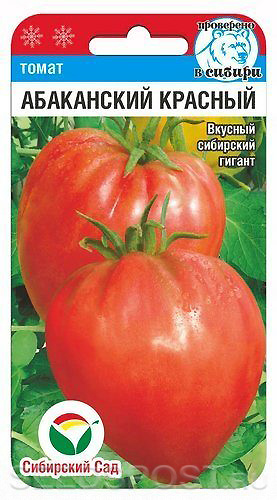
Detailed description of the tomato variety Abakansky Pink and Abakansky
Tomato characteristics depend on growing conditions: greenhouses grow taller than open-field tomatoes. Consequently, yields may be slightly higher with this growing method.
Bushes
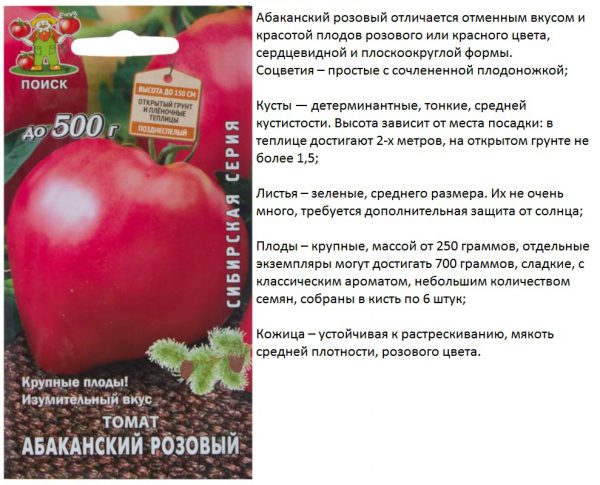
These varieties are determinate, with shoots growing up to 150-170 cm in greenhouses. Abakansky grows even taller, as it's marketed as a mid-early variety and has more time to mature. In the open ground, the shoots reach up to 80 cm. The leaves are medium-sized, but few develop on the bushes. This allows the fruit to receive more light, but also requires additional protection from the scorching sun, especially when grown outdoors in warmer regions.
The shoots must be tied to a pre-designed support, and the bush is formed into two, sometimes three stems.
Ripening period
The fruit ripens in 110-125 days. The Abakan Pink variety can develop even longer. One is considered late-ripening, the other mid-season.
Based on ripening time, tomatoes are typically categorized as very early, early, mid-early, late, and very late. However, the registry provides a different classification: ultra-early, early, mid-early, mid-season, mid-late, and late. It's also worth noting that the days from full germination to ripening listed in the registry often diverge from the classification itself. For example, the Agata variety is listed as early ripening, but it also specifies that ripening occurs 98-113 days after full germination. Meanwhile, the Adelina variety, also classified as mid-season, ripens in fewer days, namely 82-109. Therefore, we can conclude that the variety type isn't particularly important, although we will include it. It's more important to look at the days from full germination to ripening. Also keep in mind that this number of days depends, among other things, on growing conditions and may differ.
Conditional terms: very early - 75-95 days, early - 95-115, mid-early - 110-120, late - 120-130, very late - 130-150 and more.
Fruit
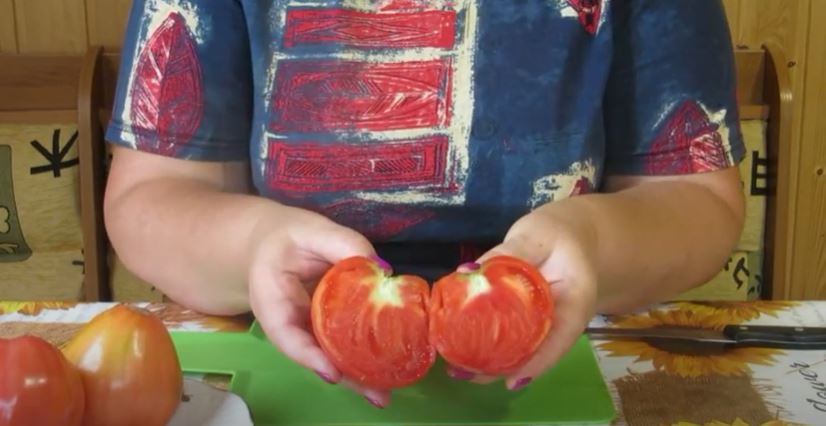
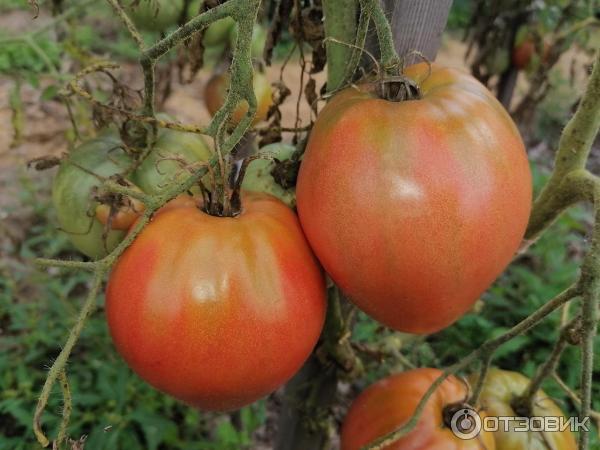
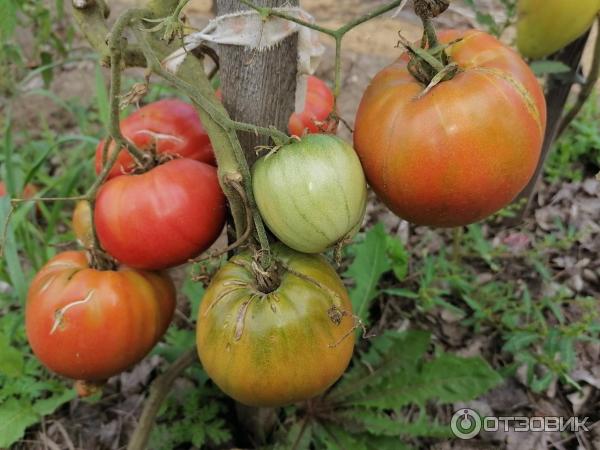
A single cluster produces 5-6 tomatoes at a time (the Abakansky variety may produce more). These tomatoes are initially green, but turn pink as they ripen, sometimes with a slightly reddish skin, especially in the Abakansky Pink variety. The fruits of the two varieties differ slightly: slightly flattened and round, while the other is heart-shaped (see above). The flesh is medium-firm, with at least six seed chambers and relatively few seeds. Each tomato averages 200 g. Flavor quality depends on growing conditions: the more sun, the more sugar will be concentrated in the flesh.
Productivity
Each cluster of the Abakansky Pink tomato produces up to 5-6 tomatoes weighing 300 to 500 g. A single bush can yield up to 4 kg of fruit. The Abakansky variety produces slightly smaller fruits, but yields up to 6 kg when grown properly.
For which regions are Abakan tomato varieties suitable?
Tomatoes exhibited their best varietal characteristics in regions with a temperate climate. The Abakansky variety was developed in the Altai Mountains, where breeders aimed to regionalize this folk variety for the conditions of Siberia and the Urals. Therefore, the Abakansky tomato can be successfully grown in these regions, provided the beds are covered with plastic or in greenhouses.
Advantages and disadvantages of Abakan tomato varieties
Abakan tomatoes have a number of practically identical advantages and disadvantages.
| Advantages | Flaws |
|
|
Planting Abakan tomato varieties
Abakan tomatoes can be grown outdoors if weather conditions permit and the region enjoys sunny, warm summers. However, it's best to plant them, and this is most often done, in greenhouses. In Altai and Siberia, the beds in the greenhouses are additionally covered with plastic during cold spells. However, the Abakan variety can be planted a little later, as it's a mid-season variety.
Sowing seeds and growing seedlings
These tomato varieties are grown from seedlings. They are sown in late February or early March. The exact timing depends on the growing region and its weather conditions. Allow 55-60 days for the plants to form.
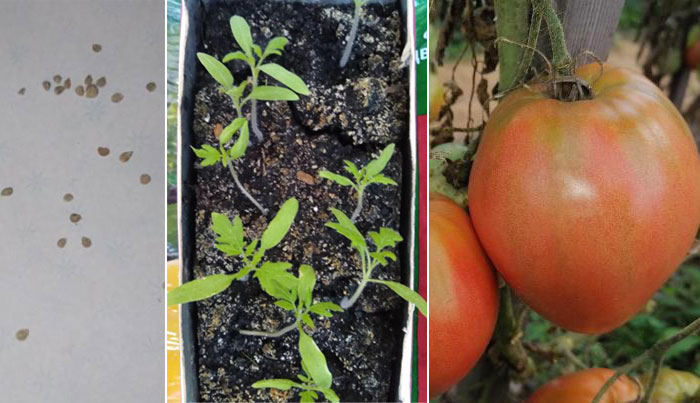
Seeds must be pre-treated. If using your own seed, check for germination. To do this, dissolve a tablespoon of salt in a container with 500 ml of water, then soak the seeds in it for 5 minutes. Discard any seeds that float to the surface of the water—they're empty.
After this, we wash the seeds and soak them in a solution that stimulates growth:
- Epin. More effective in cold climates, it is prepared by mixing 1-2 drops with 100 ml of water. Soak the seeds for 4-6 hours at a temperature of 20°C.
- Silk. The contents of one ampoule are dissolved in 100 ml of water; the holding time is 2 hours.
- After all treatments, the seeds need to be dried.
Some gardeners prefer to use folk remedies to prepare solutions:
- Aloe juice and water in equal quantities. Steeping time: 24 hours.
- Fill a jar with water and spray it with the same sprayer used in the aquarium. This method is called "bubbling." The seeds should be placed in a cheesecloth bag and immersed in the water for 12 to 18 hours. Sometimes germination begins in the container, in which case the seeds should be removed immediately and planted.
Planting seedlings in the ground
Seedlings are planted outdoors when they reach 60 days of age. Weather conditions determine this timeframe in different regions. In the temperate zone, tomatoes can be planted in a greenhouse in April, in plastic-covered beds in May, and in open ground in early June. For the Abakansky district, the timing can be shifted by two weeks.
The soil for tomatoes is prepared in advance. The necessary fertilizers are added in the fall, and the soil is dug again in the spring. If deacidification of the soil is necessary, this is done with ash or dolomite flour.
Crop rotation is crucial. Tomatoes don't tolerate nightshade plants and shouldn't be planted in beds previously occupied by these crops.
The holes are dug 40 cm apart. No more than four plants can be planted per square meter in a greenhouse, and no more than three in open ground.
For transplantation, it is better to choose the evening time, when solar activity is minimal.

If the shoots have grown large enough, they are placed into the hole at a slight angle, with the stems buried. Finally, the bed is watered and mulched.
Caring for Abakan tomato varieties
For these varieties, proper shaping and tying to supports is crucial; without this, the shoots will break under the weight of the fruit. Furthermore, if the bush is not properly trained, the plantings will become too dense, impairing aeration and increasing the risk of disease.
Watering
Good tomato growth and yield directly depend on proper irrigation. In a greenhouse, plants are watered approximately every five days. In open ground, watering is adjusted according to precipitation. It's crucial that the water isn't freezing cold, but rather preheated by the sun.
Watering is carried out at the root; drops of moisture should not fall on the leaves and ovaries.
Initially, water consumption is about 4 liters per square meter. But it gradually increases, reaching 10 liters by the time fruiting begins.
Top dressing
It is recommended to feed tomatoes 3 times per season, with an additional 2 sprayings.
- The first application of nitrogen-containing fertilizer is done 10 days after planting the seedlings in the soil. You can use an infusion of bird droppings or weeds.
- Tomatoes are fed a second time before flowering, and a third time during fruit formation. During this time, plants require phosphorus and potassium, so urea, potassium magnesium sulfate, superphosphate, and other fertilizers can be used.
Spraying with a solution of boric acid or iodine is advisable. However, some gardeners prefer specialized products.
Disease and pest resistance and control
Abakansky Pink and Abakansky varieties are characterized by strong immunity, which allows them to successfully cope with many diseases. However, if growing conditions are not met, the risk of infection increases.
If the watering regimen is not followed, the weather is cool and rainy, and humidity is high, late blight may occur. At the first sign of infection, it is recommended to treat the plants with a 2% copper sulfate solution. If the affected area is extensive, remove the bushes.
If wireworms or mole crickets have been previously observed on the site, or if there is a potato plantation nearby where the Colorado potato beetle lives, it is better to treat the bushes with insecticides in advance.
Storage of Abakan tomato varieties
The fruits of these varieties don't have a long shelf life. They can be picked green and will ripen within a week on the windowsill, but they won't keep for long. They need to be processed first.
Use of Abakan tomatoes
Tomatoes are widely used to make tomato paste, adjika, and juice with pulp. They are also excellent in salads. However, canning tomatoes is impossible due to their thin skin and large size.
Comparison of Abakan tomatoes with other varieties in the table
Please note! How can you easily convert centners/ha to kg/sq.m? Simply divide by 100! For example, the Abakansky Pink tomato yields 400 centners of marketable fruit per hectare. This equals 4 kg per square meter. It's that simple! Also, keep in mind that typically no more than 3-4 plants are planted per square meter. This way, you can calculate the yield per bush. In the case of the Abakansky Pink, it's about 1 kg.
| Variety | Ripening period (number of days from full germination to ripening)
Yield of commercial fruits |
Brief description | Fetus |
| Abakansky | 110-120 days 600 c/ha |
Mid-early, determinate, large-fruited, suitable for growing in open ground in regions with a temperate climate; in the middle zone it is grown under cover or in greenhouse conditions.Requires staking and shaping. Suitable for salads and processing into tomato products. | Heart-shaped, slightly ribbed, loose, pink in color, 150-200 g. Good taste. |
| Abakan pink | 120 days or more
400 c/ha |
A late-ripening determinate variety for open ground and greenhouses. Requires staking and training. Suitable for salads and processing into tomato products. | Flat-round, slightly ribbed, medium density and pink in color, 200-500 g. Good taste. |
| Abakan red
|
110-115 days
600 c/ha |
A mid-season variety for growing in cool climates, both indoors and outdoors. Requires staking and training. Suitable for salads and processing into tomato products. | Heart-shaped, with dense skin, red, 500-700 g. Pleasant, aromatic taste. |
| Bull's heart (red color) | 120-125 days 300-400 c/ha Important! There are other colors besides red, see the article (hover over the variety name to jump). |
A late-to-mid-late determinate variety for open ground and greenhouses. Requires staking and shaping. Suitable for salads. | Heart-shaped, smooth, fleshy, red, 108-225 g. Excellent taste. |
| Big Dipper | 100-110 days
1150-1450 c/ha |
An early-ripening indeterminate variety for open ground and greenhouses. Requires staking and shaping. Suitable for salads. | Flat-round, slightly ribbed, medium density, pink, 210-260 g. Good taste. |
| Wild rose | 110-115 days
600 c/ha |
An early-ripening indeterminate variety for open ground and greenhouses. Requires staking and training. Suitable for salads. Heat- and salinity-tolerant. | Round, smooth, pink, 300-350 g. Excellent taste. |
| Katya is pink | 80-85 days 1600-1800 c/ha |
An early-ripening determinate variety for open ground. Suitable for salads. Marketability: 84-90%. | Flat-round, medium density, smooth, pink, 120-130 g. Good taste. |
| Favorite holiday | 105-110 days
750 c/ha |
An early-ripening determinate variety for open ground. Suitable for salads. | Heart-shaped, slightly ribbed, medium density, pink, 350 g. Good taste. |
| Mikado Pink | 90-95 days
500-600 c/ha |
A mid-early indeterminate variety for greenhouses. Suitable for salads. | Flat-round, large, ribbed, medium density, pink, 300-360 g. Excellent taste. |
| Pink Bush | 90-100 days
227-480 c/ha |
An early-ripening determinate variety for open ground. Suitable for salads. Marketability: 95%. | Round to flat-round, slightly ribbed, medium density, pink, 110-150 g. Excellent taste. |
| Pot-bellied house | about 100 days 820-920 c/ha (greenhouse and under film) |
An early-ripening indeterminate variety for open ground and greenhouses. Requires staking and shaping. Suitable for salads. | Pear-shaped, ribbed, medium density, red, 200-260 g. Good taste. |
| Pink honey | 111-115 days
380 c/ha (open ground) |
A mid-season determinate variety for open ground and greenhouses. Suitable for salads. Marketability is 96%, and the yield of ripe marketable fruits is 90%. | Round, ribbed, pink, 160-200 g. Excellent taste. |
| Pink elephant | 112 days
620-820 c/ha |
A mid-season semi-determinate variety for greenhouses. Suitable for salads, canning, and processing into tomato products. | Flat-round, fleshy, medium- to strongly ribbed, notched to smooth top, pink, 280 g. Excellent taste. |
| Pink spam | 99 days
2560 c/ha |
An early-ripening indeterminate variety for greenhouses. Suitable for salads and canning. | Heart-shaped, firm, smooth, pink, 190 g. Excellent taste. |
| Pink flamingo | 110-115 days 234-349 c/ha |
A mid-season determinate variety for open ground. Suitable for salads and processing into tomato products. Marketability: 68-87%. | Round, slightly ribbed, medium density, pink, 75-110 g. Excellent taste. |
| The Pink King | 100-112 days
680 c/ha (greenhouse and under film) |
A mid-season indeterminate variety for open ground and greenhouses. Requires staking and shaping. Suitable for salads. | Flat-round, ribbed, medium density, pink, 200-300 g. Excellent taste. |
Real reviews from gardeners and horticulturists about the Abakansky Pink tomato variety
Judging by reviews, the Abakansky Pink, or rather Red, variety is very similar in characteristics to the Bull's Heart tomato. They boast excellent yields, large, tasty fruits, and strong immunity. However, store-bought seeds can produce tomatoes that don't quite match the description.
User Siniza60, Russia, Korolev, August 5, 2019
Hello again everyone! Today I'll share with you another tomato variety I grew for the first time this year.
I must say that it was these tomatoes that ended up in my greenhouse with the cucumbers, it just so happened..., and I can tell you that the proximity to the cucumbers, and I also have peppers growing in this greenhouse, went quite well.
Tomatoes from the Siberian collection, 20 pieces in a package, cost mere pennies (in comparison with tomatoes from the Partner agricultural firm).
Germination was okay, not 100%, but quite good... I planted 15 seeds, and when I was planting the tomatoes in the ground, I only had five. I can't remember why now; maybe I removed the weak ones when transplanting...
March 27
June 3
The plants took root well and thrived. I only fed them once during the entire growing season—with a special fertilizer for tomatoes and peppers.
July 25
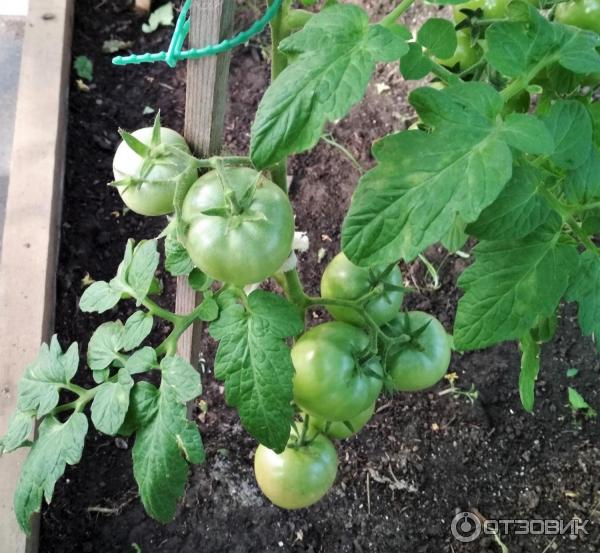
This is what the bushes looked like on July 25th, a little over 1.5 meters tall.
And so on August 3rd.
Because of the cold summer, tomatoes turn red very poorly.
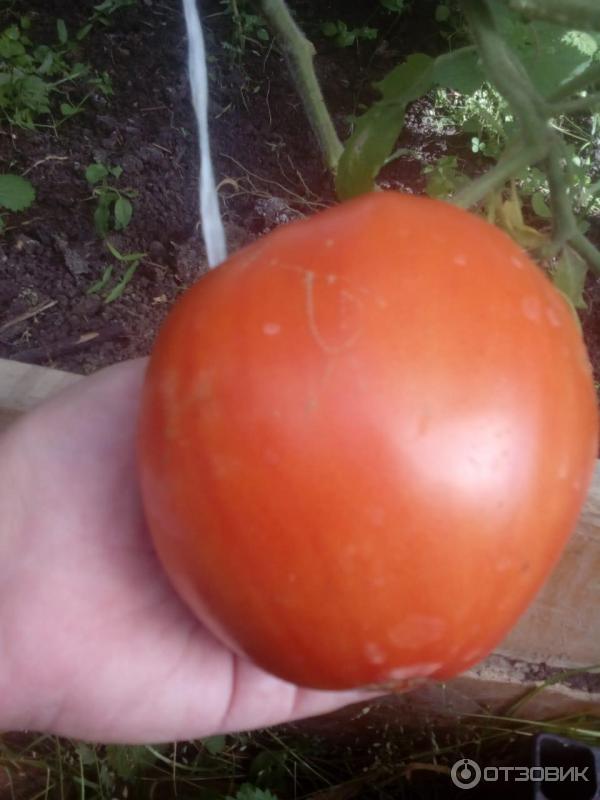
I took the first ones like this.
Compared to the picture, the spot is much larger, but it doesn’t bother me in any way.
The tomatoes are very sweet and fleshy, even when unripe…
I will recommend it and plant it myself, especially since I have some seeds left.
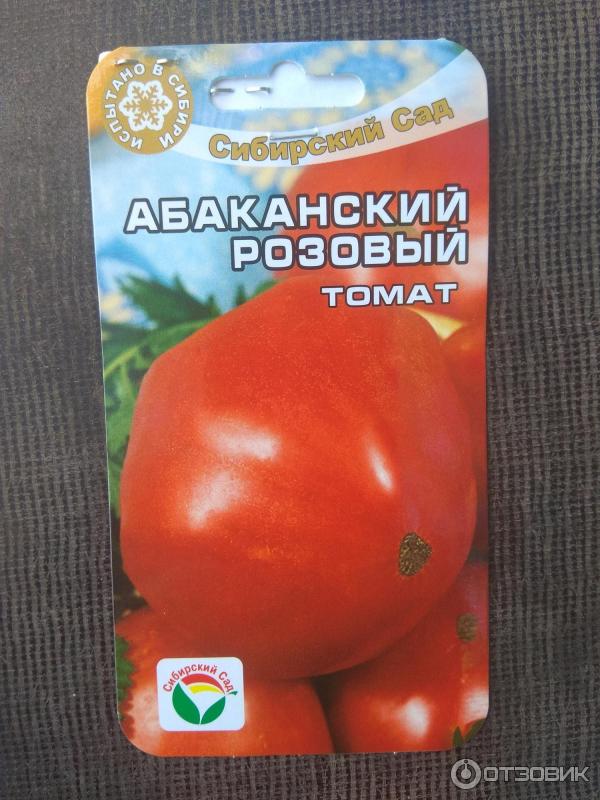
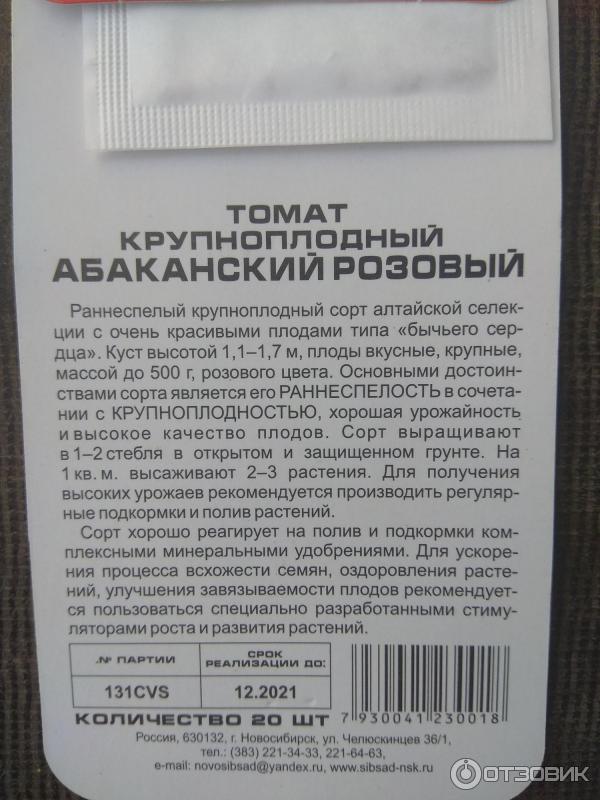
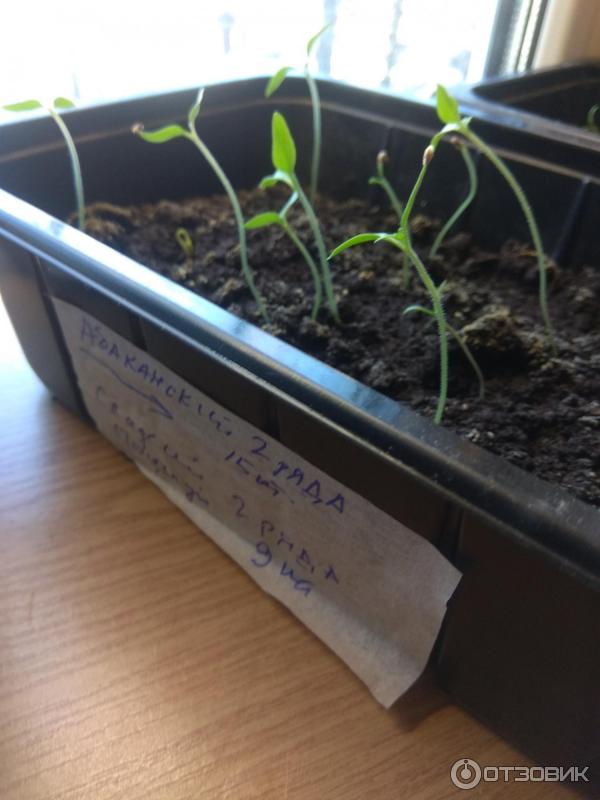
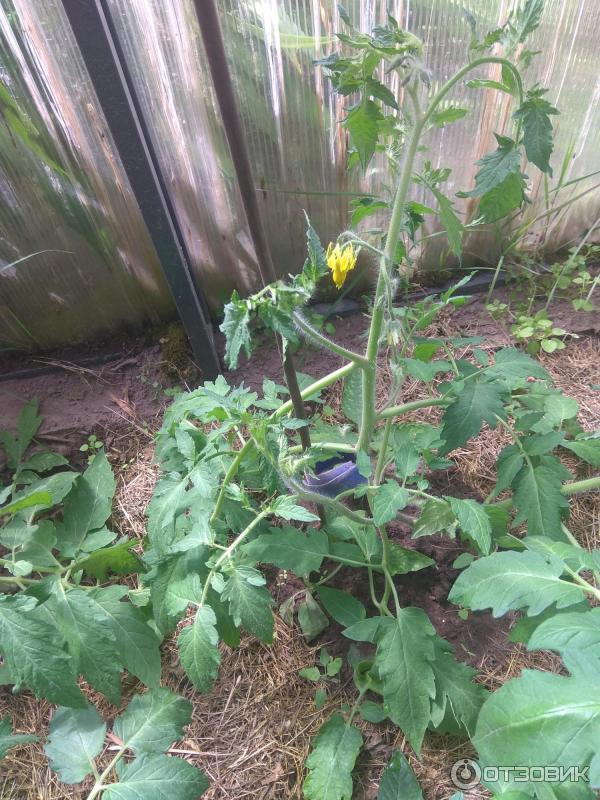
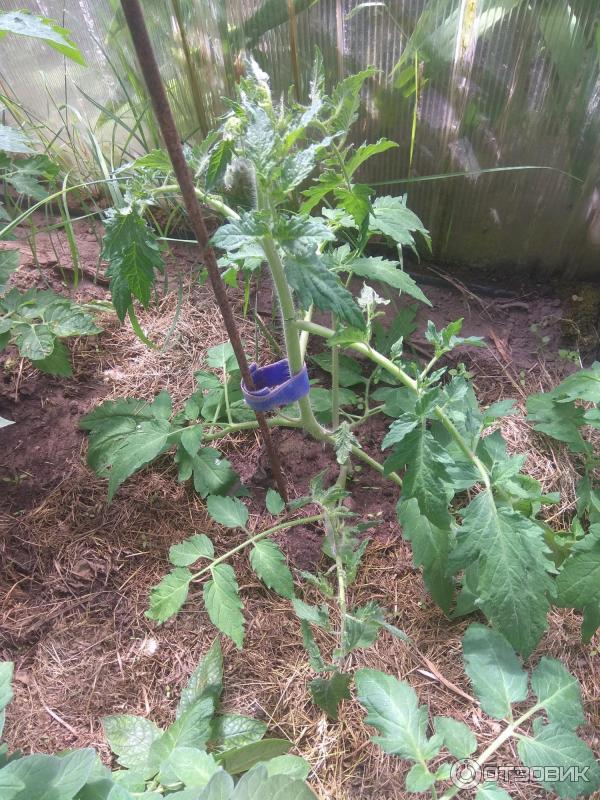
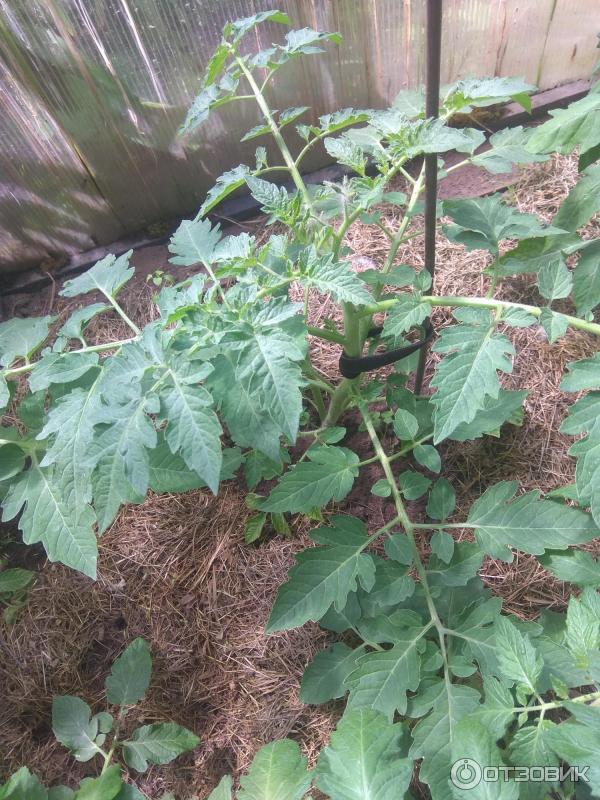
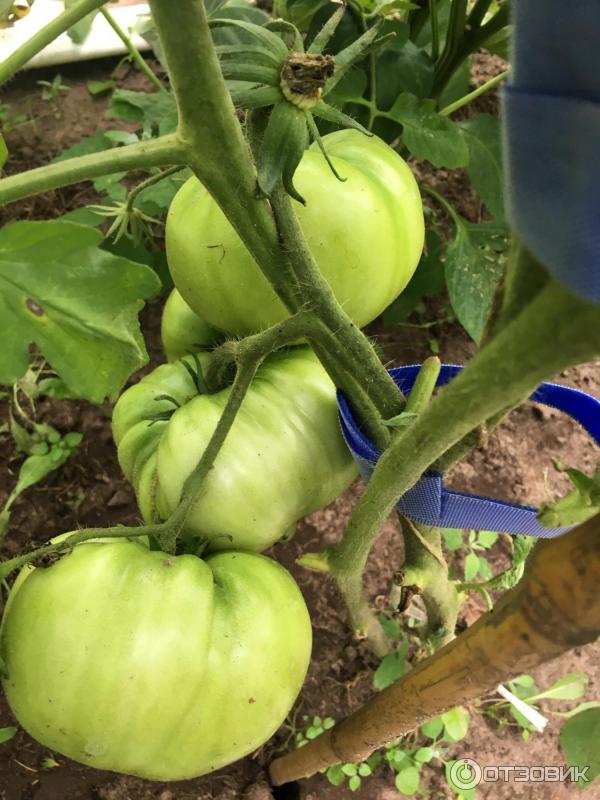
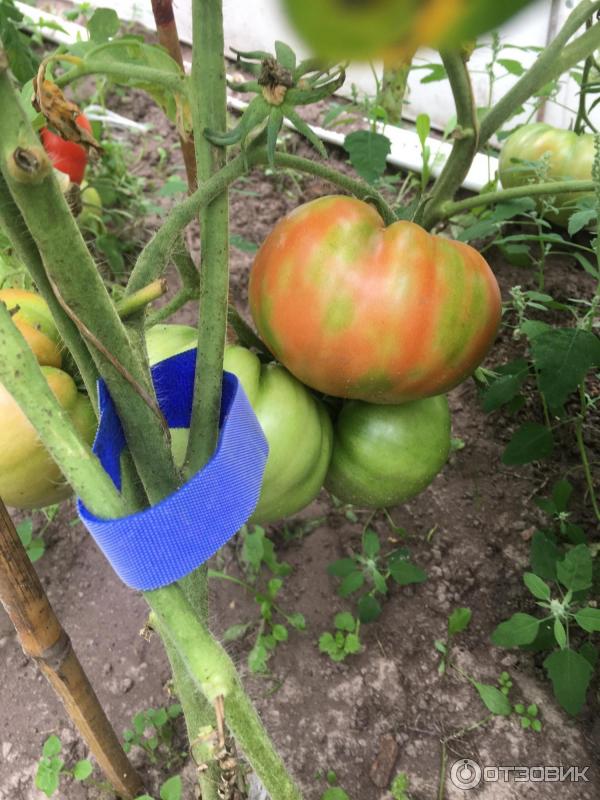
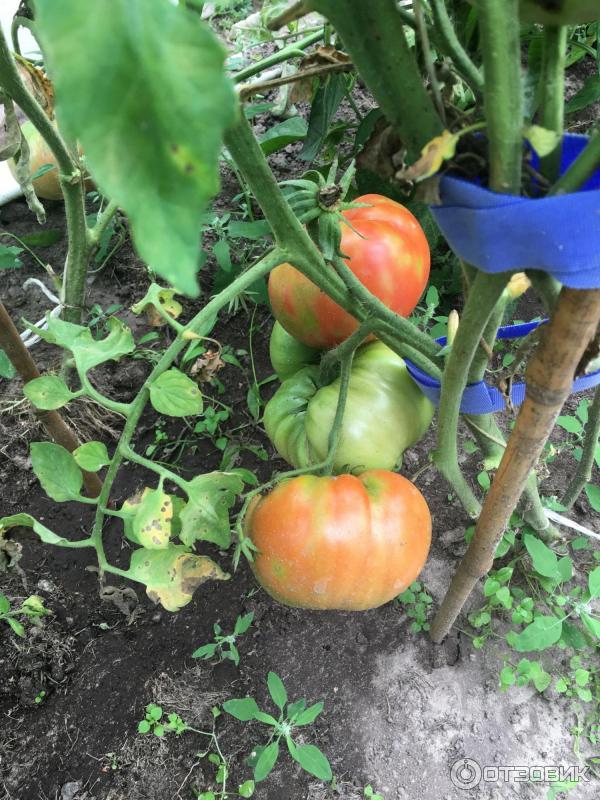
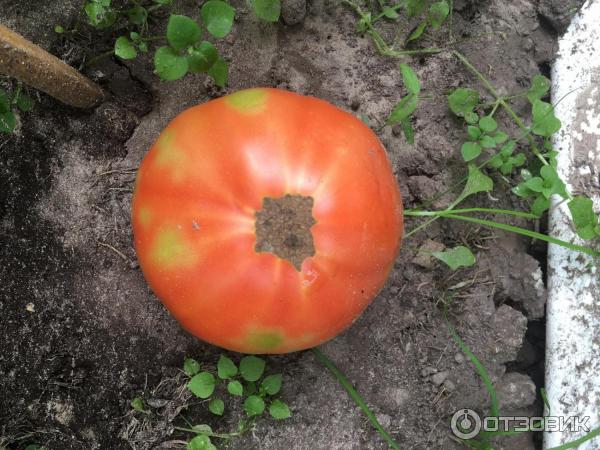
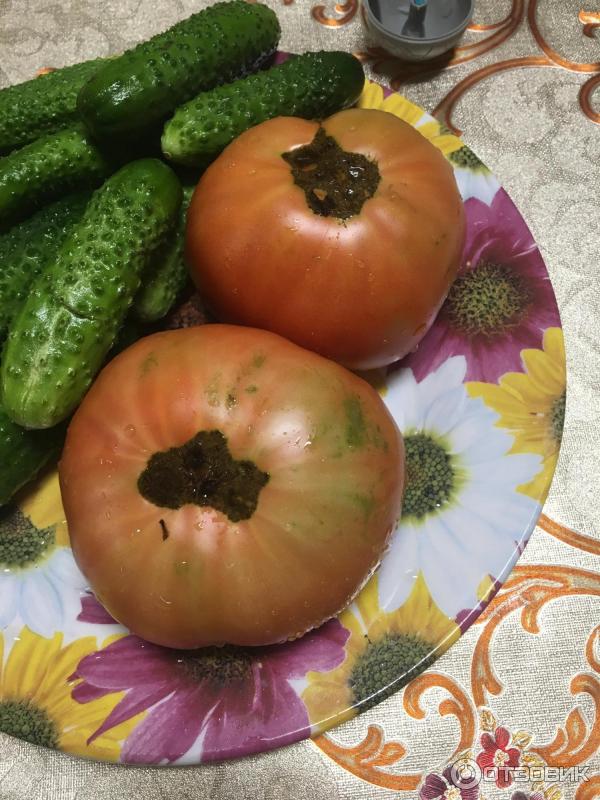
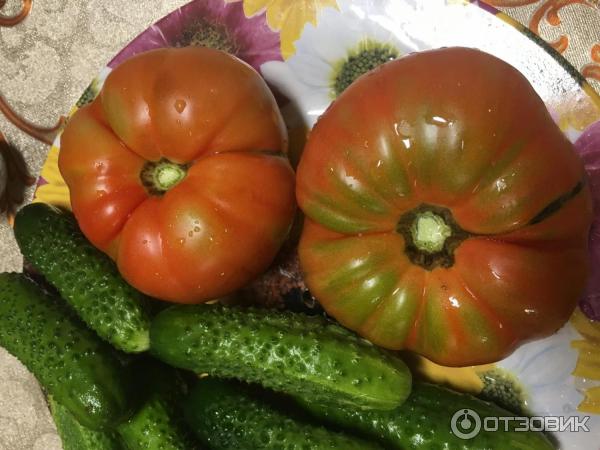
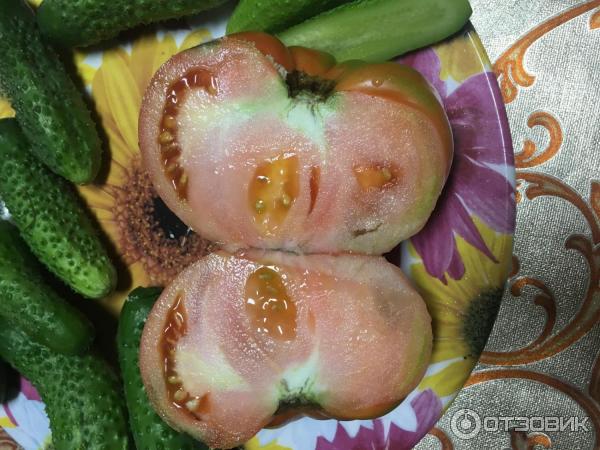
We grew Abakan Pink. It didn't do well. But perhaps it wasn't suited to our conditions—it's open-air in Siberia. Maybe it would perform differently in a greenhouse.
I have bought tomato seeds "Abakansky Pink" from the "Sibirsky Sad" brand several times, and they have never let me down.
Germination was always good. The seedlings tolerated transplanting well.
The bushes grow quite tall, over a meter high. They need to be tied to high stakes.
Tomatoes of this variety grow large. I haven't been able to pick ripe tomatoes from the vines every year; they're usually green. But I don't have a greenhouse and the soil is poor. However, even in these conditions, with favorable weather, the tomatoes ripened on the vines; this is an early-ripening variety.
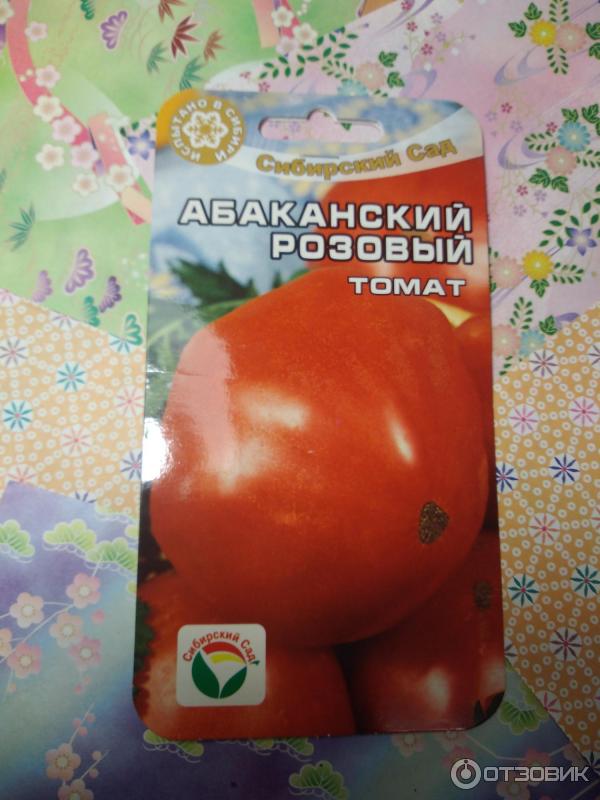
I liked the taste of the tomatoes—they were plump and sweet. Ripe tomatoes look exactly like the ones pictured on the packaging.
With the onset of autumn, tomato plants are attacked by late blight. This is why, at the end of August, unripe tomatoes sometimes have to be picked. However, they ripen beautifully in boxes and store well.
This year, I bought seeds of the Abakansky Pink variety again. I ordered them from the online store "7 Seeds": an online store offering everything for the garden and vegetable garden—a gardener's paradise. User-friendly interface, large selection, fast delivery.
The packaging is colorful.
The variety's properties are described in detail. I didn't weigh the tomatoes I grew, but they were quite large.
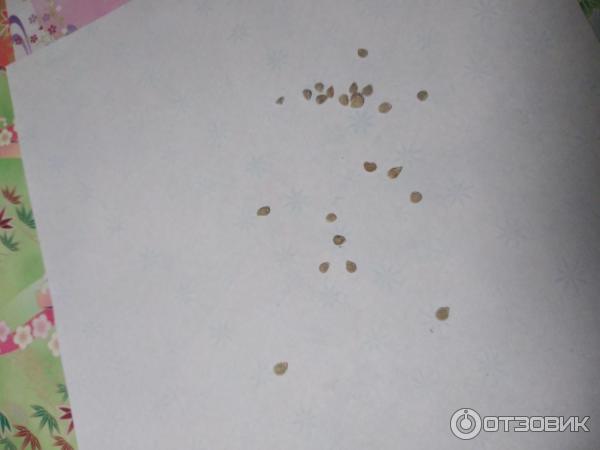
The seeds are packed in a paper bag.
The package contained 22 seeds, not 20. This surprised me, as Siberian Garden usually packages exactly the number of seeds indicated on the package.
This year, I was very disappointed with the "Siberian Garden" tomato seeds. Previously, the germination rate of these tomatoes was 100%, but this year, many varieties showed only 50% germination.
Fortunately, this doesn't apply to the "Abakansky Rozov" variety. Almost all of its seeds germinated, 9 out of 10.
The seedlings emerged quickly and uniformly. Sowing was done on March 17th using dry seeds.
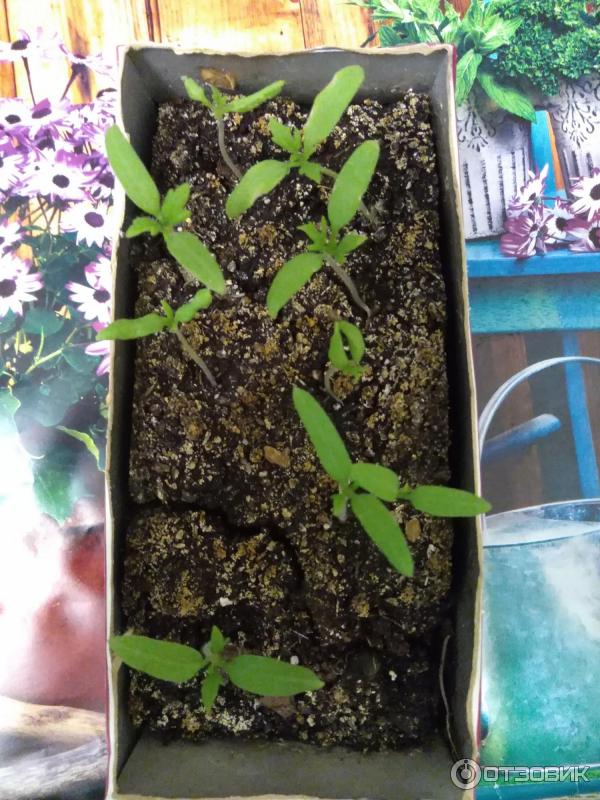
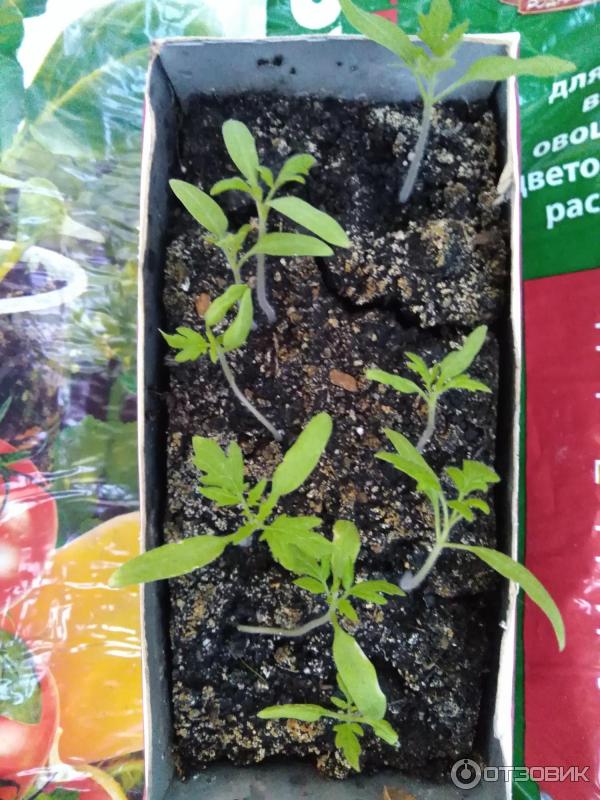
This is what the sprouts look like on April 6th.
This photo was taken 4 days later, on April 10th. The plants are developing quickly.
I hope that the weather will be favorable for growing tomatoes this year.
I can recommend the "Abakansky Pink" variety from "Sibirsky Sad".


User Lyobov, Russia, Novosibirsk, November 3, 2019
Good day to the readers of this review!
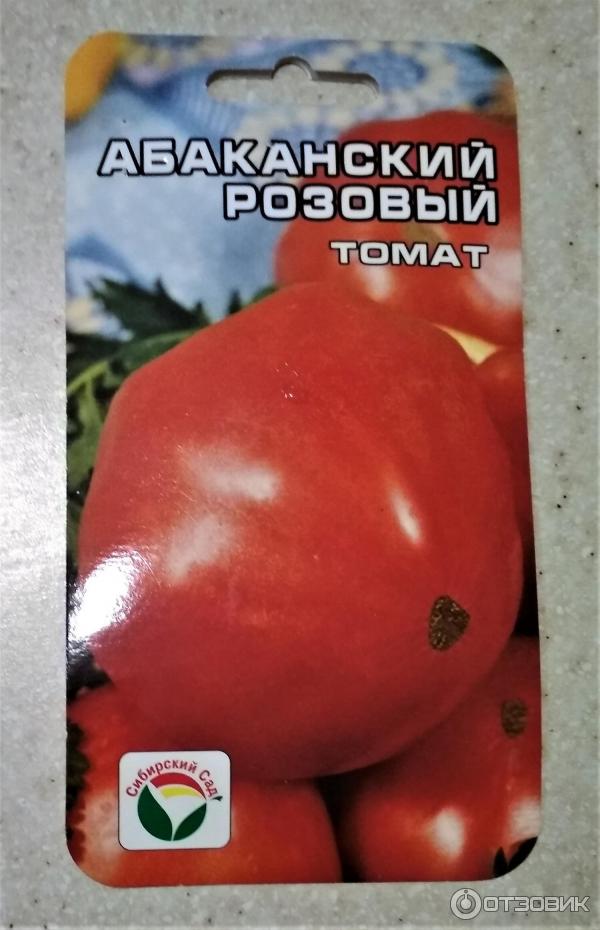
I've seen several rave reviews online about the Abakansky Pink tomato variety. Since I appreciate large, productive tomatoes, I wanted to grow some myself. I didn't have to look far for seeds, and here they are, a new addition to my collection, packaged like this, from the Siberian Garden brand.
I read the information on the back beforehand to make sure it met my needs. I was quite satisfied with all the characteristics, especially its early maturity and fruit quality. I'm familiar with the growing conditions, and I didn't notice anything new or unusual.
Shortly after purchasing it, I was unable to find a place for it in the garden, and only this year, looking at the expiration date, I decided to definitely try it out.
I sowed seedlings in March, after treating the seeds with potassium permanganate and the germination stimulant EPIN Plant Growth Regulator. The plants developed loops on the fifth day, and the storage period didn't affect germination. Based on my many years of experience, I believe manufacturers intentionally understate the expiration date to boost sales. Even those that have been stored for ten years have germinated well.
I planted seedlings in the greenhouse, hoping for a large harvest and a long-lasting crop. What grew was unclear. Was it definitely a wrong variety or poor-quality seeds? The plant was short, no more than sixty centimeters tall. The fruits were very small, but they were pink. That's how meager the harvest was. That's all that grew until fall; they only turned pink later. I couldn't find any more photos; the variety wasn't stellar, and I didn't take any, even when ripe. A huge disappointment. It's always a waste of space, especially in a greenhouse, where every meter counts, even for quality tomatoes.

User nechaevatu, Russia, Perm Krai, March 8, 2020
The most delicious tomato! One of my favorites!
I recently discovered the Abakan Pink from Sibsad and have only been growing it for two seasons.
The bush and fruit are very similar to the Cardinal variety I described or the classic Bull's Heart. The taste is excellent; the tomato is fleshy and sweet, just begging to be added to a salad!
The summer of 2018 was hot, and many varieties dropped their second and some even their third clusters. The Abakan Pink set all of them! And even in September, we continued to enjoy its sweet fruits straight from the bush. The yield was excellent; we definitely got a bucketful from each bush!
Now this wonderful tomato will delight me and my family every year.
Abakan Pink Tomato. Since I'm heavily involved in agronomy, I have to acquire new varieties every year and test them for their stated characteristics. Abakan Pink has proven itself to be an excellent variety. It's an indeterminate, tall-growing variety. The clusters are simple and produce 2 to 5 fruits. The fruits are shaped like a bull's heart. When cut, you can see almost the pulp, with only a small amount of liquid where the seeds are stored. The skin is thin and delicate, not suitable for transportation, only for immediate consumption. Fruit weight ranges from 150 to 500 grams, but averages 350-400. This variety is productive, and you can harvest 2 buckets or more of tomatoes from a single meter. Suitable for lovers of salads, tomato paste, ketchup, and juices. Ripe tomatoes don't keep for long, and why bother? They're meant to be eaten!
I recommend all gardeners to try this tomato variety!
Advice from Top.tomathouse.com
If you've managed to grow the Abakansky variety from store-bought seeds, which produces large, heart-shaped, fleshy pink fruits, try to save your own seeds. We recommend using these seeds in the future, as store-bought varieties are often mixed up.