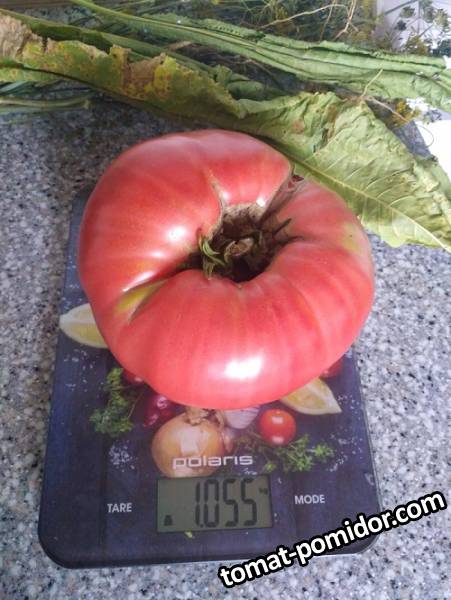
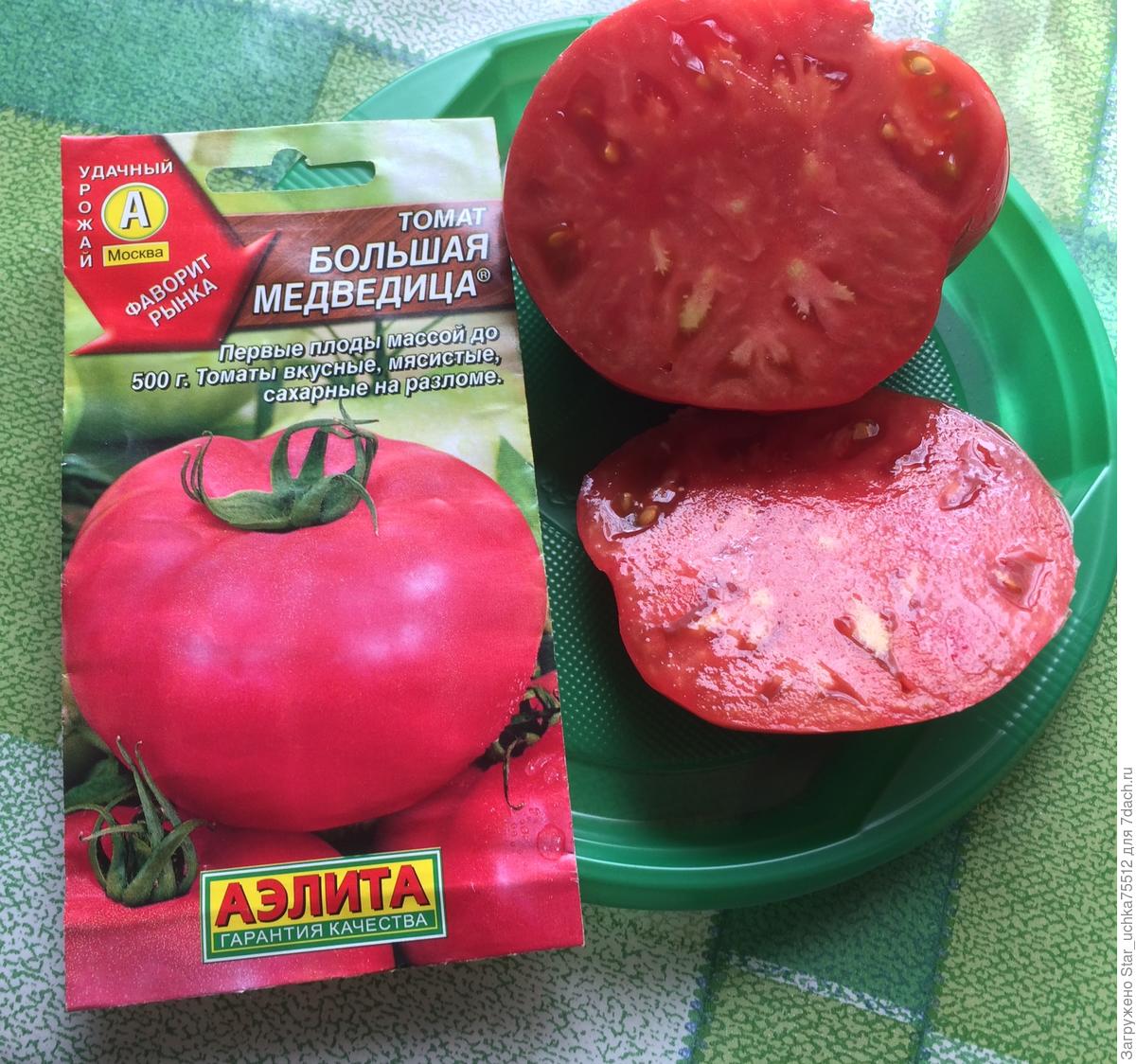
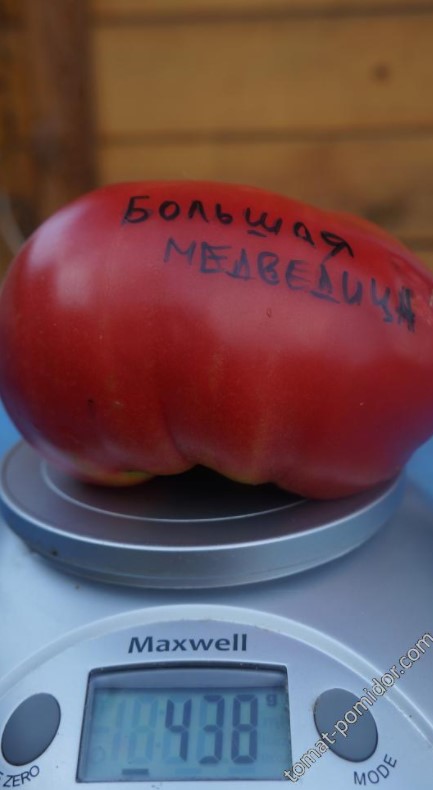
The Ursa Major tomato surpasses many others in its characteristics. One Ursa Major tomato is enough to prepare a meal for the whole family. Its fruit weighs up to 500-800 g.
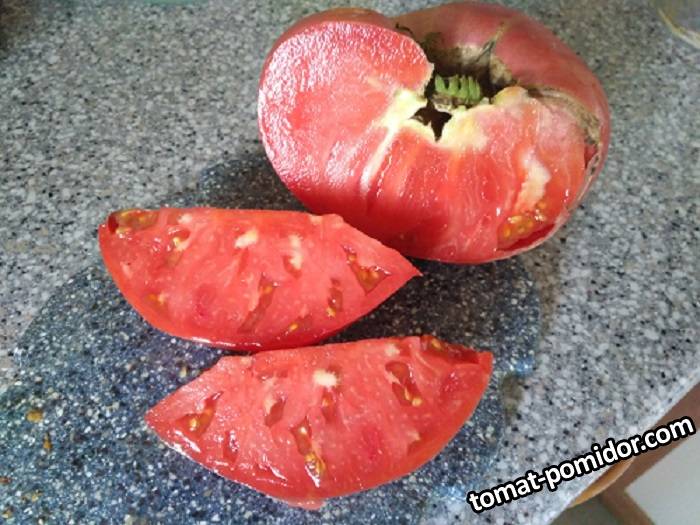
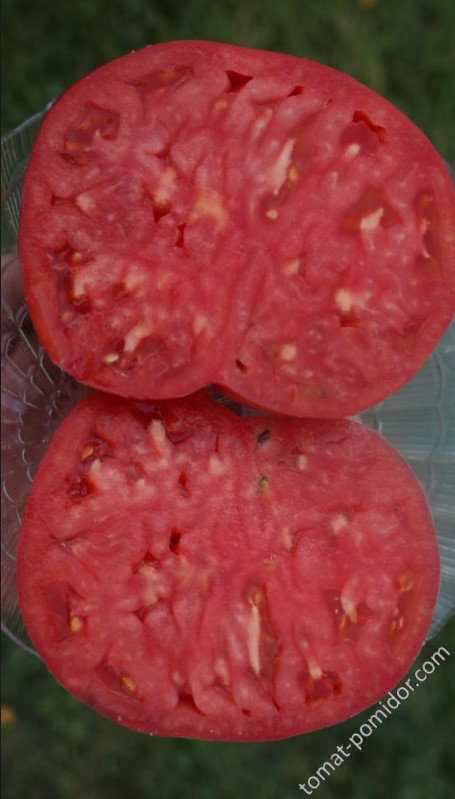
Record-breaking specimens weighing up to 1.5 kg have been recorded. The fruits are round, more elongated in width, and slightly ribbed. When cut, they are fleshy, the flesh is smooth, a soft pink color, and contains few seeds.
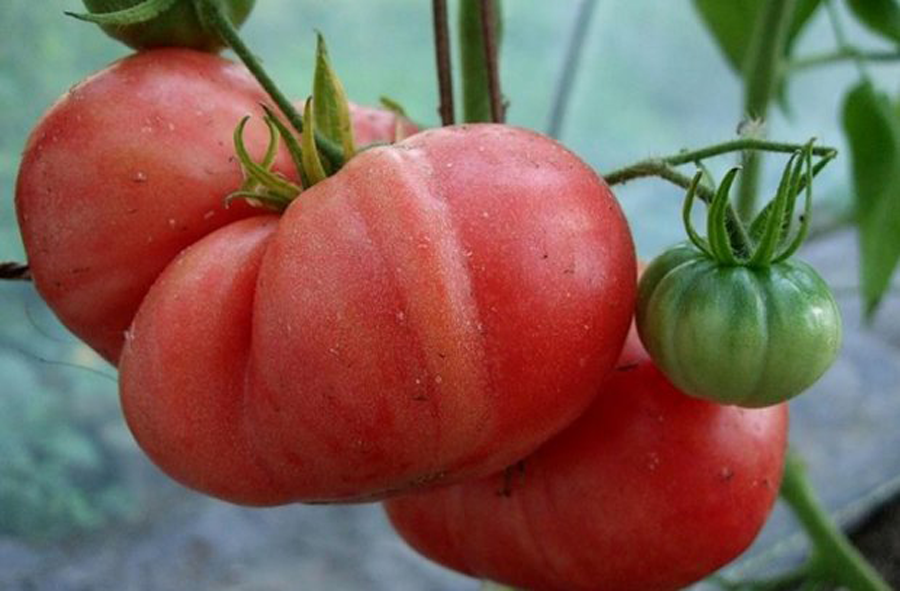
Table of characteristics of the tomato variety Ursa Major
| Characteristic | Description |
| Description | An indeterminate tomato variety with early ripening periods |
| Ripening period | 100-110 days |
| Fruit weight | 210-260 g |
| Description of the fruit | Flat-round, slightly ribbed, medium density, pink. |
| Productivity | 1150-1450 c/ha |
| Usage | Widely used for making sauces, ketchups, and pastes. Also used in salads. |
| Preferred growing regions | All regions of the country. |
| Disease resistance | It has excellent immunity and is rarely even susceptible to late blight. |
| Agricultural technology | Suitable for both greenhouse and outdoor cultivation, it requires staking and training. |
| 2013 | |
| Country of origin | Russia, LLC 'AGROFIRMA AELITA. |
Photo gallery of the Big Dipper tomato variety
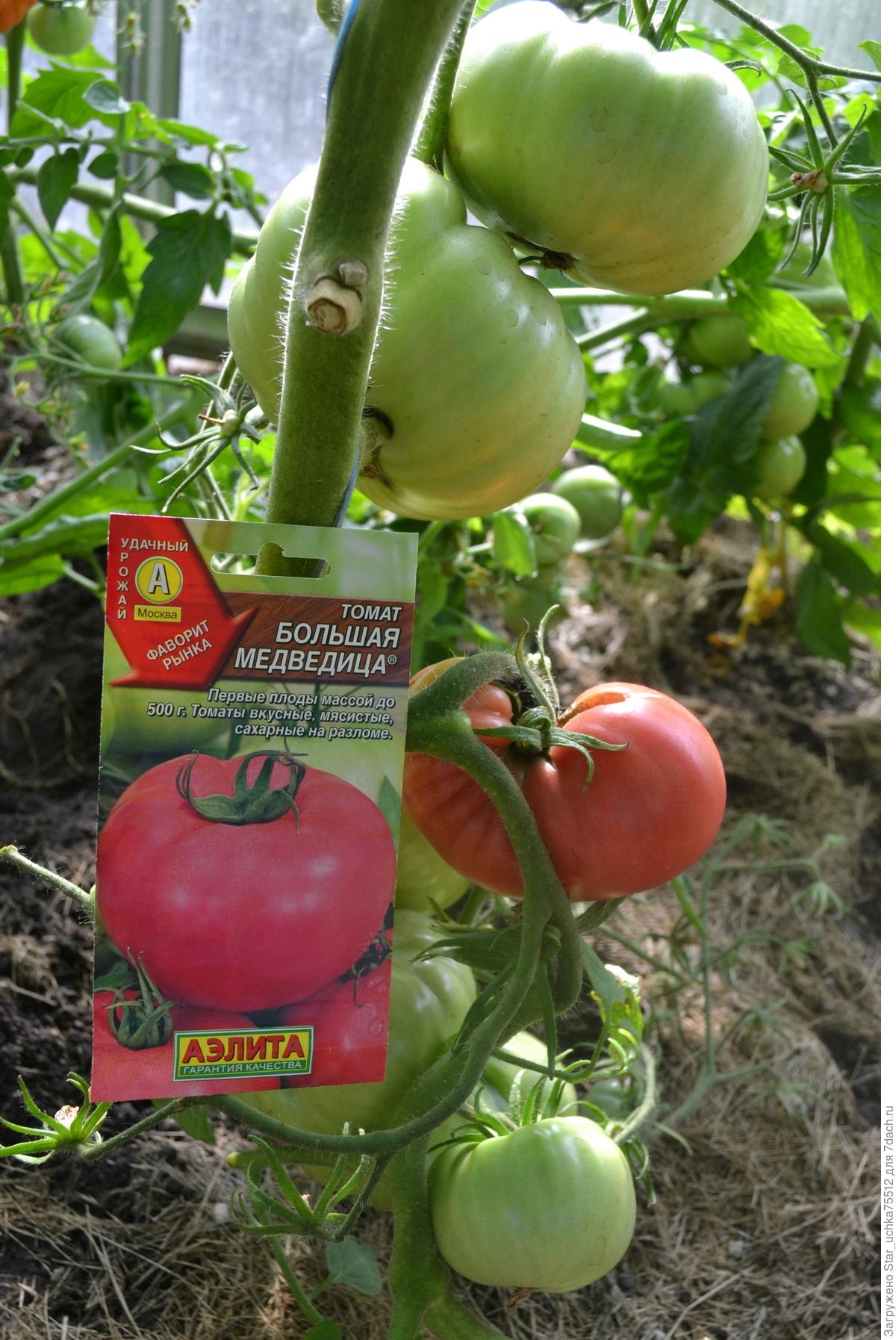
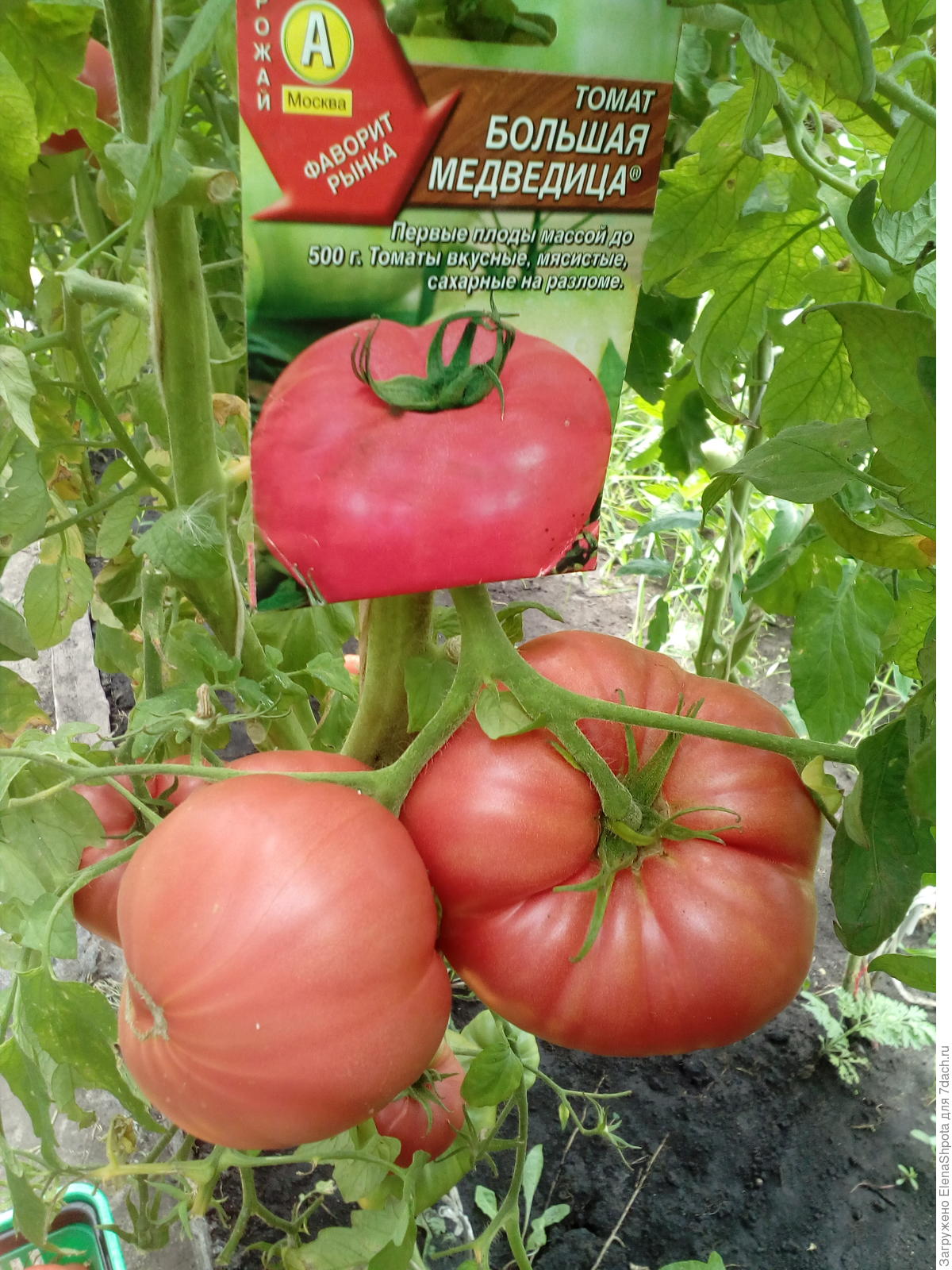
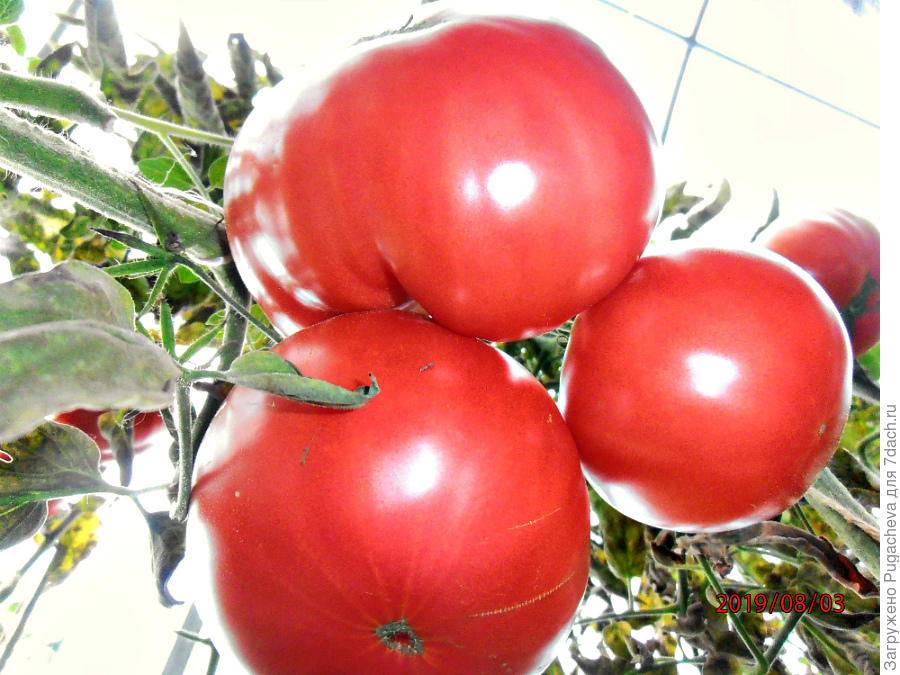
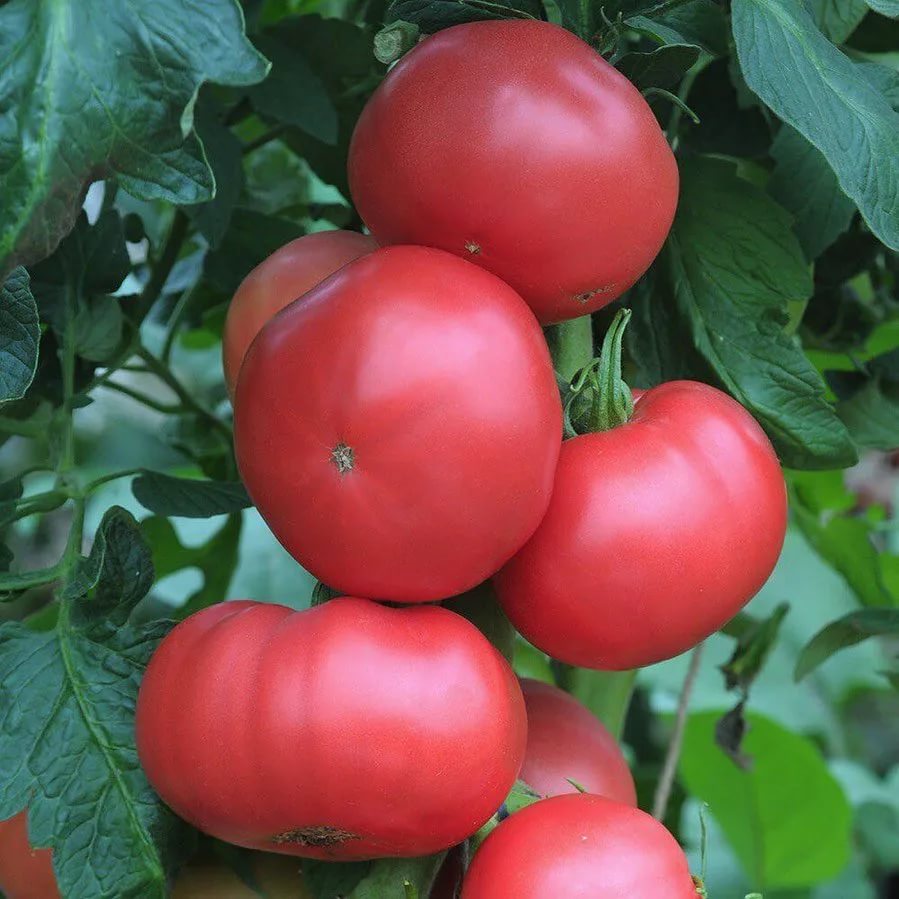
Description of the tomato variety Ursa Major
This variety is universal, suitable for greenhouses, grows well in open ground, and has proven itself in Samara, the Moscow region, the Urals, and other regions of Russia.
It has unlimited stem growth and, accordingly, high yield potential. Bushes reach 2 meters in a greenhouse, and up to 1.5 meters outdoors. Stem development ends only at the end of the growing season.
Height growth can be stopped by pinching. The Big Dipper tomato is a high yielder. From 1 m2 You can get up to 15 kg of tomatoes with proper care and favorable natural conditions.
This variety is early maturing. Fruit grown under film can be harvested as early as July, approximately 100 days after germination.
In open ground, the Big Dipper is grown as a mid-early tomato; it begins to bear fruit a little later.
Pros and cons of the Big Dipper tomato variety
| Pros | Cons |
|
|
Caring for Big Dipper tomato seedlings
Ursa Major seedlings are less demanding in terms of care than other varieties.
For sowing, use regular store-bought vegetable soil or prepare your own from previously stored garden soil and compost. If you use soil from the area where the tomatoes will be grown in the future, the seedlings will thrive in this familiar soil.
The soil is pre-heated to kill insects, animals, fungi, and bacteria. Before planting, the substrate is thoroughly moistened.
The seeds require no additional preparation. Once three full leaves have formed, they must be pricked out; otherwise, the seedlings will be weak and stretch out too much. This may slow growth somewhat, but the time and effort will be worth it in the long run, producing high-quality planting material.
It's important to germinate more seeds than you plan to plant, in case some plants die. The first sorting should be done during transplanting, discarding weak or underdeveloped seedlings. Similarly, when planting in the ground, select the strongest and most developed plants.
Caring for seedlings involves regular watering. Moisten the soil as gently as possible using a spray bottle or a syringe.
Approximately 10-14 days before planting outdoors, the seedling trays are placed on a balcony or terrace to harden off. The time spent outdoors is gradually increased, reaching several hours.
Planting the Big Dipper tomato variety in open ground
The rules for landing the Big Dipper are simple:
- At 1 m2 3-4 bushes are planted.
- The holes are made at a distance of 50 cm in a checkerboard pattern.
- Add a handful of wood ash and the same amount of humus to each hole, and water it thoroughly so that the roots of the seedling are immersed in water.
- After filling with soil, press it down firmly to form a small depression, and water generously again. The water should stand in the hole.
- This variety doesn't like dense planting. Therefore, side shoots are pinched throughout the growing season. Otherwise, yield will drop and the risk of disease will increase.
- When pruning, form two branches from the trunk. The bushes are carefully secured to the supports using thick twine.
- During flowering and fruit formation, plants are sprayed with the stimulant Zavyaz.
- For feeding, use fertilizers containing phosphorus and potassium.
The Big Dipper tomato has earned numerous positive reviews and boasts excellent characteristics. Gardeners, having tried it once, grow it every year in their gardens.
Valued for its high yield, beautiful fruit appearance, and delicate flavor, this sweet-tasting variety is equally good in salads, appetizers, and hot dishes.
Because of their particularly large size, the fruits are not used whole for canning. However, tomato juice with pulp from Ursa Major fruits is thick and delicious. It is preserved for the winter and stored at home.
Comparison of the tomato variety Big Dipper with other varieties in the table
Please note! How can you easily convert centners/ha to kg/sq.m? Simply divide by 100! For example, the Abakansky Pink tomato yields 400 centners of marketable fruit per hectare. This equals 4 kg per square meter. It's that simple! Also, keep in mind that typically no more than 3-4 plants are planted per square meter. This way, you can calculate the yield per bush. In the case of the Abakansky Pink, it's about 1 kg.
| Variety | Ripening period (number of days from full germination to ripening)
Yield of commercial fruits |
Brief description | Fetus |
| Big Dipper | 100-110 days
1150-1450 c/ha |
An early-ripening indeterminate variety for open ground and greenhouses. Requires staking and shaping. Suitable for salads. | Flat-round, slightly ribbed, medium density, pink, 210-260 g. Good taste. |
| Mom's Raspberry Heart | 112-120 days
1200-1500 c/ha |
A mid-season indeterminate variety for greenhouses and open ground. Suitable for salads and canning. | Heart-shaped, ribbed, pink, 300-600 g (up to 1200 g). Excellent taste. |
| Amethyst jewel | 110-120 days
It is not known exactly, according to some sources it is more than 1000 c/ha |
A mid-season, tall, indeterminate variety for open ground and greenhouses. Suitable for salads and canning. | Flat-round, dense, fleshy, pink from the top and purple from the shoulders, 150-300 g. Excellent taste. |
| Amur tiger pink | 105-110 days 900 c/ha |
An early-ripening indeterminate variety for open ground and greenhouses. Suitable for salads. | Flat-round, large, slightly ribbed, medium-density. Unripe fruit is dark green with a dark spot and stripes; ripe fruit is pink with green stripes. Weight: 250-350 g. Good flavor. |
| Raspberry Giant | 105-110 days
590 c/ha |
An early-ripening determinate variety for open ground and plastic greenhouses. Requires staking and training. Suitable for salads. | Round, slightly ribbed, medium density, raspberry, 200-300 g. Excellent taste. |
| St. Andrew's surprise | about 120 days
800 c/ha |
A late-ripening indeterminate variety for greenhouses (can be grown outdoors in the south). Suitable for salads, juices, and tomato paste. Seedlings tolerate low light conditions well. | Flat-round, smooth, medium density, pink, 150-230 g. Excellent taste. |
| Grandma's secret | 100-115 days
1690 c/ha |
A mid-season indeterminate variety for open ground and greenhouses. Requires staking and shaping. Suitable for salads. | Flat-round, ribbed, dense, pink, 354 g. Excellent taste. |
| Raspberry Strongman | 112-116 days 880-900 c/ha |
A mid-season indeterminate variety for open ground and greenhouses. Suitable for canning. | Pear-shaped, large, smooth, medium density, raspberry, 150-190 g. Good taste. |
| Crimson Elephant | 110-120 days
650 c/ha |
An early-ripening determinate variety for greenhouses. Suitable for salads. | Round, slightly ribbed, medium-dense, pink, 150-200 g. Excellent taste. |
| Katya is pink | 80-85 days
1600-1800 c/ha |
An early-ripening determinate variety for open ground. Suitable for salads. Marketability: 84-90%. | Flat-round, medium density, smooth, pink, 120-130 g. Good taste. |
| Abakansky | 110-120 days
600 c/ha |
Mid-early, determinate, large-fruited, suitable for growing in open ground in regions with a temperate climate; in the middle zone it is grown under cover or in greenhouse conditions.Requires staking and shaping. Suitable for salads and processing into tomato products. | Heart-shaped, slightly ribbed, loose, pink in color, 150-200 g. Good taste. |
| Abakan pink | 120 days or more 400 c/ha |
A late-ripening determinate variety for open ground and greenhouses. Requires staking and training. Suitable for salads and processing into tomato products. | Flat-round, slightly ribbed, medium density and pink in color, 200-500 g. Good taste. |
| Abakan red
|
110-115 days
600 c/ha |
A mid-season variety for growing in cool climates, both indoors and outdoors. Requires staking and training. Suitable for salads and processing into tomato products. | Heart-shaped, with dense skin, red, 500-700 g. Pleasant, aromatic taste. |
| Mikado Sibiriko | 90-95 days
800 c/ha |
An early indeterminate variety from Siberian breeders. For salads, juice, and pasta. | Heart-shaped, ribbed, pinkish, 400-600 g. Excellent taste. |
| The Beauty of Siberia | 95-110 days 580 c/ha |
A mid-season indeterminate variety for open ground and polycarbonate greenhouses. | Heart-shaped, medium-ribbed, pink, 300-400 g, salad-colored. Excellent flavor. |
| Bull's heart (red) | 120-125 days
300-400 c/ha Important! There are other colors besides red, see the article (hover over the variety name to jump). |
A late-to-mid-late determinate variety for open ground and greenhouses. Requires staking and shaping. Suitable for salads. | Heart-shaped, smooth, fleshy, red, 108-225 g. Excellent taste. |
| Budenovka | 111 days
930 c/ha |
A mid-early indeterminate variety for greenhouses. Suitable for salads. | Heart-shaped, strongly ribbed, red, 150-350 g. Good taste. |
| Potato raspberry | 100-105 days up to 1800 c/ha |
A mid-season, indeterminate, standard variety for open ground and greenhouses. Requires staking and training. Suitable for salads, canning, and processing into tomato products. | Flattened-round, raspberry, 700-800 g. Excellent taste, sugary, rich. |
| Ox heart | 111-115 days
630-690 c/ha |
A late-ripening indeterminate variety for open ground and greenhouses. Requires staking and shaping. Suitable for salads. Grows best in southern Russia. | Heart-shaped, medium-ribbed, pink-raspberry, 150-300 g. Good taste. |
| King of Siberia | 110-120 days
900-1115 c/ha |
A mid-season indeterminate variety for greenhouses. Requires shaping and support. Suitable for salads and canning. | Heart-shaped, slightly ribbed, orange, 400-800 g. Good to excellent taste. |
Gardeners' reviews of the Big Dipper tomato variety
Description from the package:
Quote
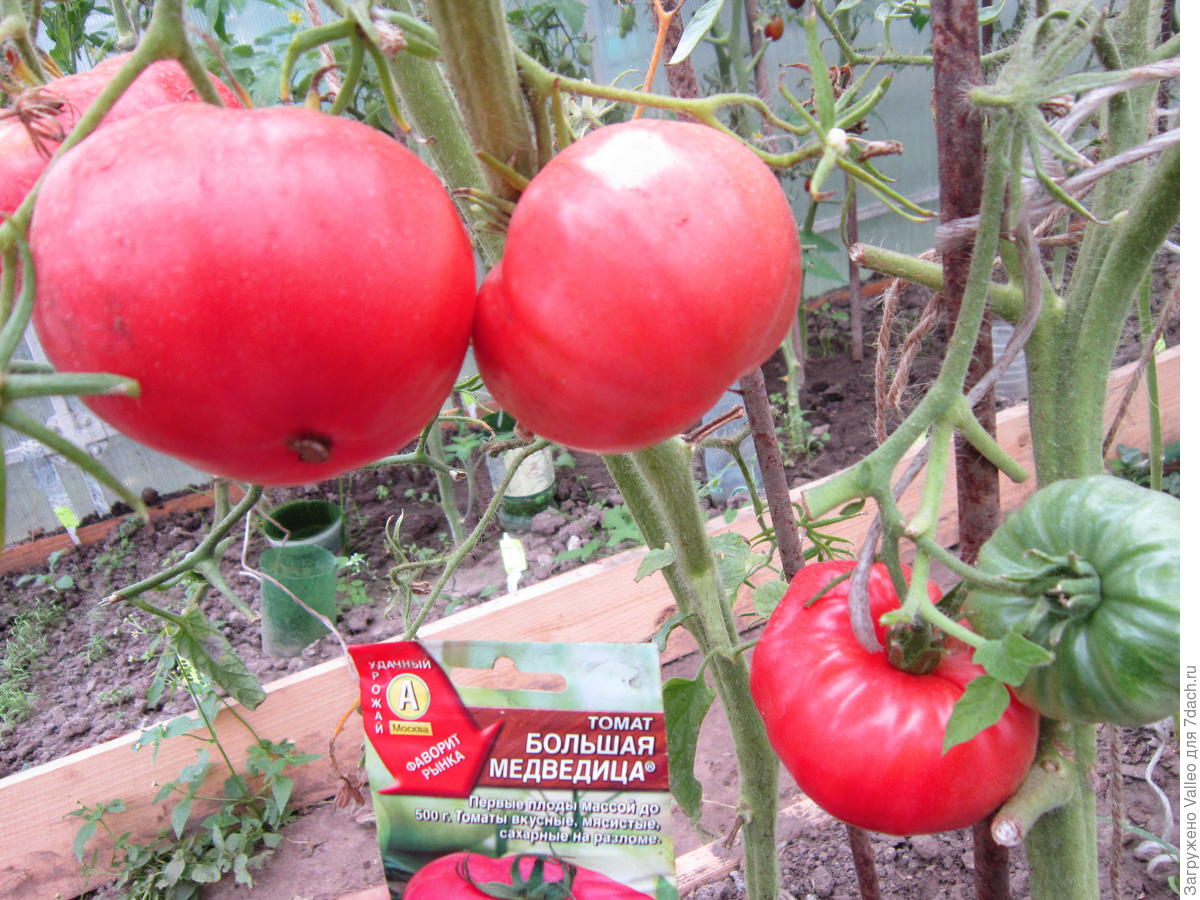
One of the largest-fruited early varieties—the first tomatoes weigh a full pound. Suitable for fresh consumption. A salad from one fruit can feed a whole family. This indeterminate variety grows 150-200 cm tall. The first inflorescence appears above the 6th-9th leaf, with subsequent inflorescences occurring 1-2 leaves apart. Approximately 100-110 days after germination, the plants begin to ripen delicious tomatoes—round, flat, with shiny pink skin and pink, granular, sugary flesh. The fruits are large, weighing 210-260 grams (up to 500 g), with more than 6 chambers, dense and fleshy. Yields are high, 12-15 kg/m3. Sowing. Grown from seedlings, with mandatory picking at the stage of 1-2 true leaves. Seedlings are planted at 60-65 days of age, spacing 3-4 per 1 m. Plants are tied and trained into 1-2 stems. Removal of side shoots (stepchildren) is mandatory.Indeterminate. It was over 2 meters tall in the greenhouse. It had two trunks.
A delicious, juicy, beautiful tomato. Prolific. Good for salads, juice, and canning.
ByUser: KsenaZ, July 27, 2019
Nadya, it's like all the pink ones, sweet. I don't eat sour ones either.
Galya, most likely a low-seeded one. I don't remember exactly, but I looked at the number of seeds I collected. Not a lot.
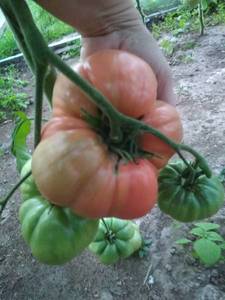
My Big Dipper. A very tasty tomato, about 1.8 m tall. Seeds from Kulik. The yield was average, but I'll tame it for its flavor.