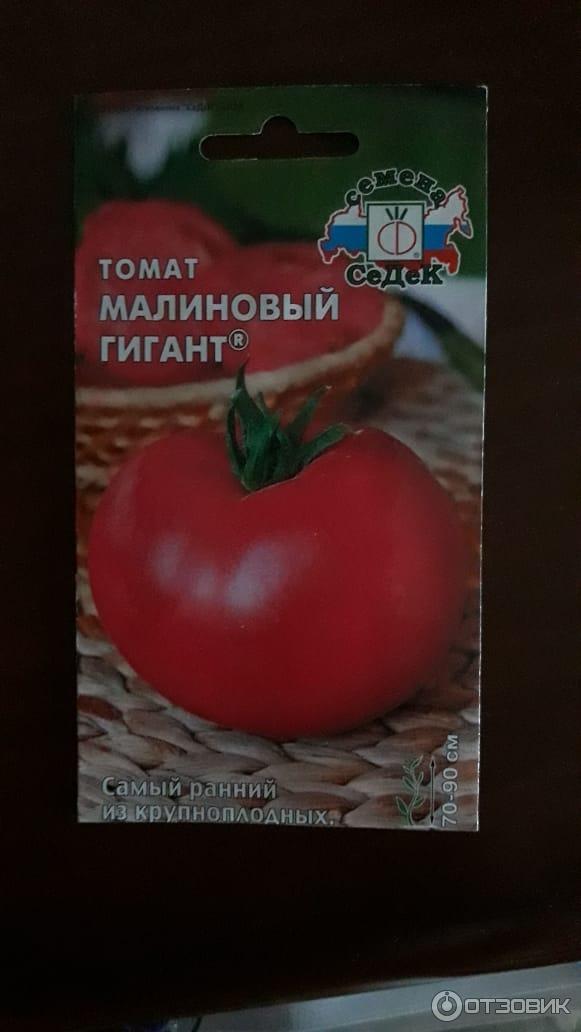
The Raspberry Giant tomato was bred for greenhouse and outdoor cultivation in various regions of our country. Its large fruits, pleasant flavor, and excellent yield have made it one of the most popular tomatoes.
Content
- 1 Table with characteristics of the Raspberry Giant tomato variety
- 2 Photo gallery of the Raspberry Giant tomato variety
- 3 The origin of the Raspberry Giant tomato variety
- 4 A detailed description of the Raspberry Giant tomato variety
- 5 Advantages and disadvantages of the Raspberry Giant tomato variety
- 6 Planting the Raspberry Giant tomato variety
- 7 Planting and caring for the Raspberry Giant tomato variety in open ground
- 8 Planting and caring for the Raspberry Giant tomato variety in a greenhouse
- 9 Disease and pest resistance of the Raspberry Giant tomato variety + control methods
- 10 Using Raspberry Giant Tomatoes
- 11 Comparison of the Raspberry Giant tomato variety with other varieties in the table
- 12 Real reviews from gardeners about the Raspberry Giant tomato variety
Table with characteristics of the Raspberry Giant tomato variety
| Characteristic | Description |
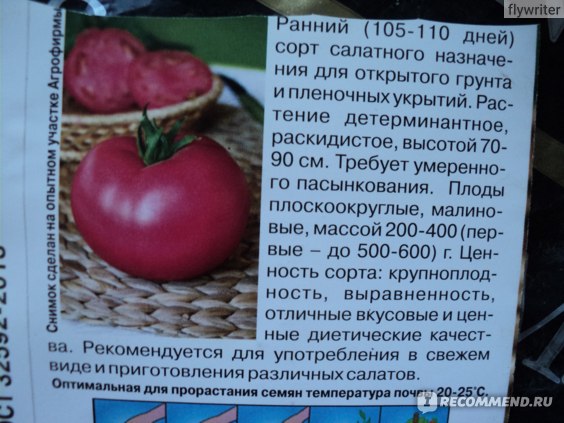
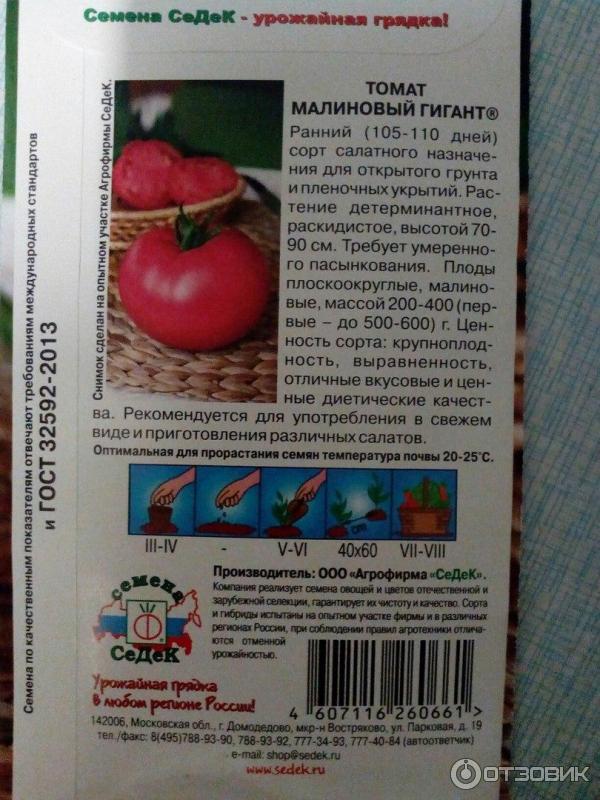
| Description of the variety | An early-ripening, determinate tomato variety that can be grown in greenhouses and open ground. |
| Ripening period | 105-110 days |
| Fruit weight | 200-300 g |
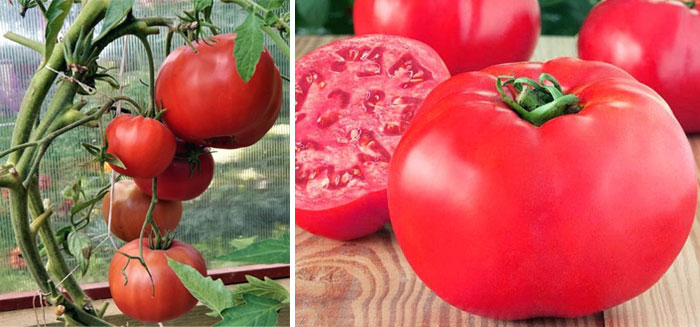
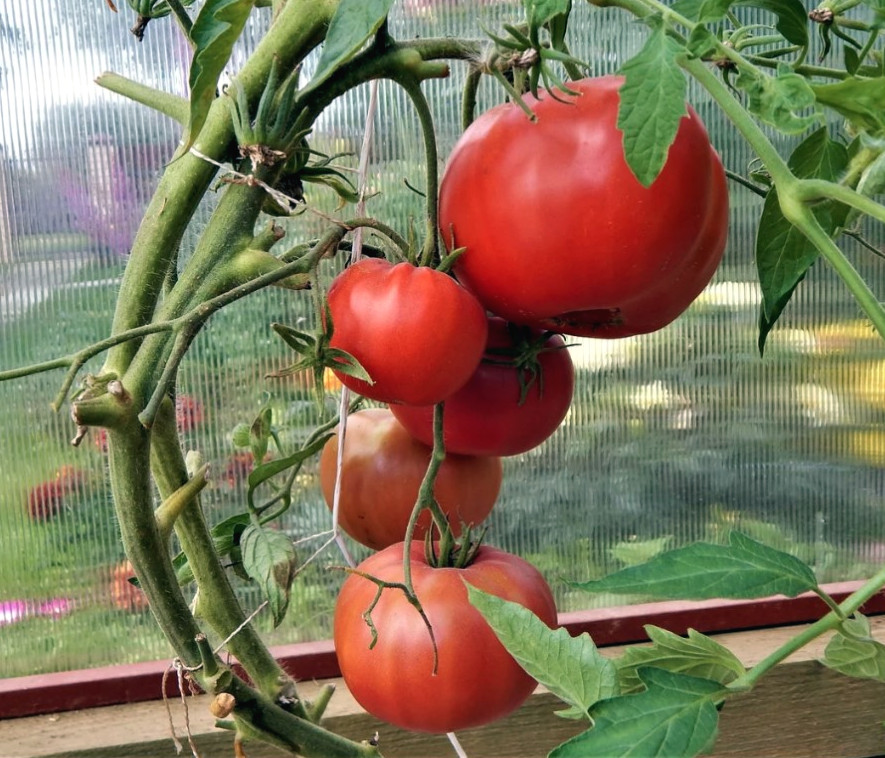
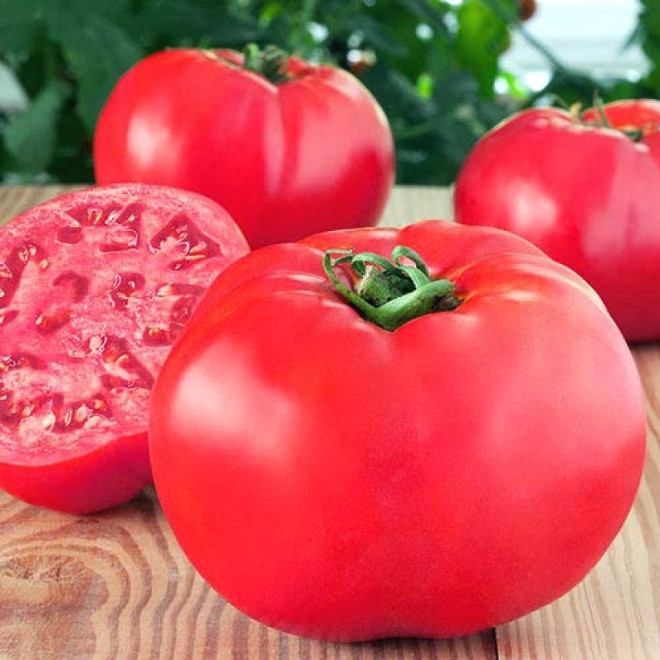
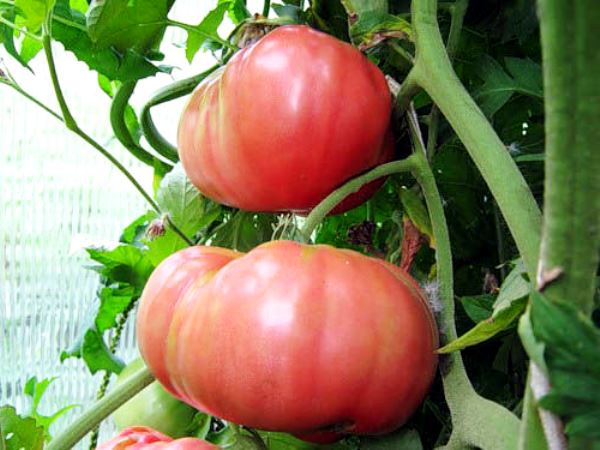
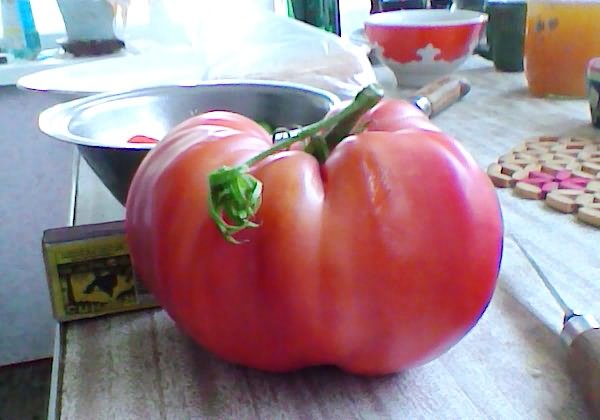
| Description of the fruit | The tomatoes are large, round, slightly ribbed, and medium-dense. When cut, you can see that the flesh is divided into 4-5 seed chambers. The color is raspberry. |
| Productivity | Up to 590 c/ha |
| Usage | Used in salads and suitable for processing into juices, pastes, ketchups, and adjika. Not suitable for whole-fruit canning. |
| Preferred growing regions | Suitable for growing in different regions, including the Northern and Ural regions. |
| Disease resistance | The variety has excellent immunity, which successfully resists most classic tomato diseases. |
| Agricultural technology | The bushes need to be tied up and shaped. |
| 2007 | |
| Originator | Agrofirm SeDek LLC |
Photo gallery of the Raspberry Giant tomato variety
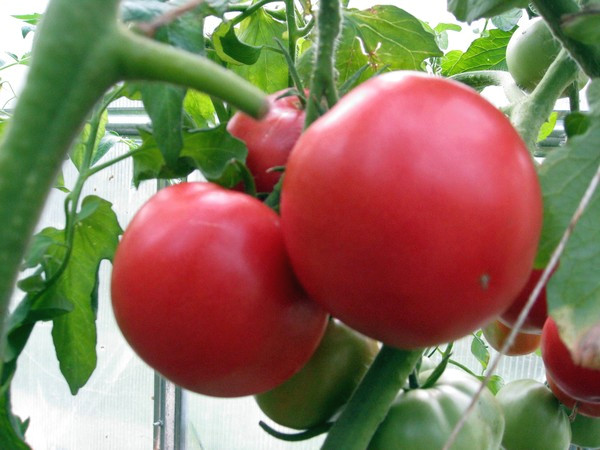
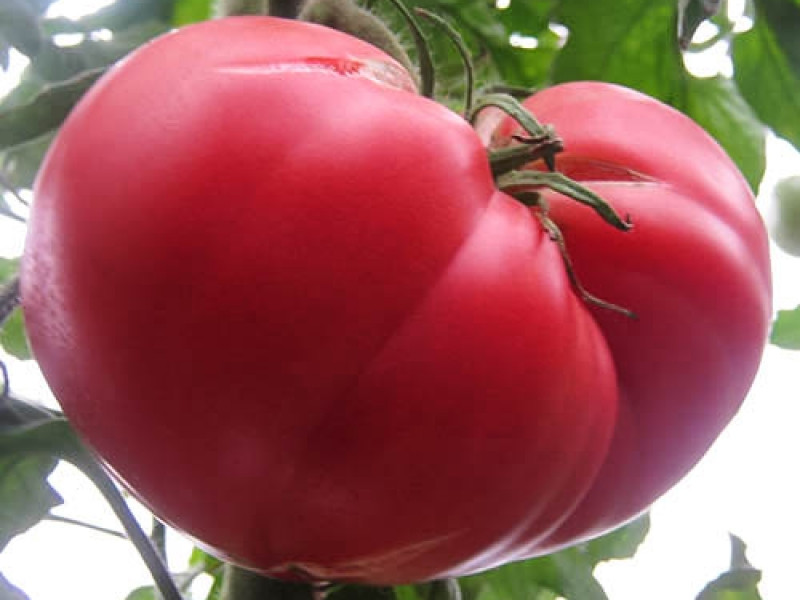
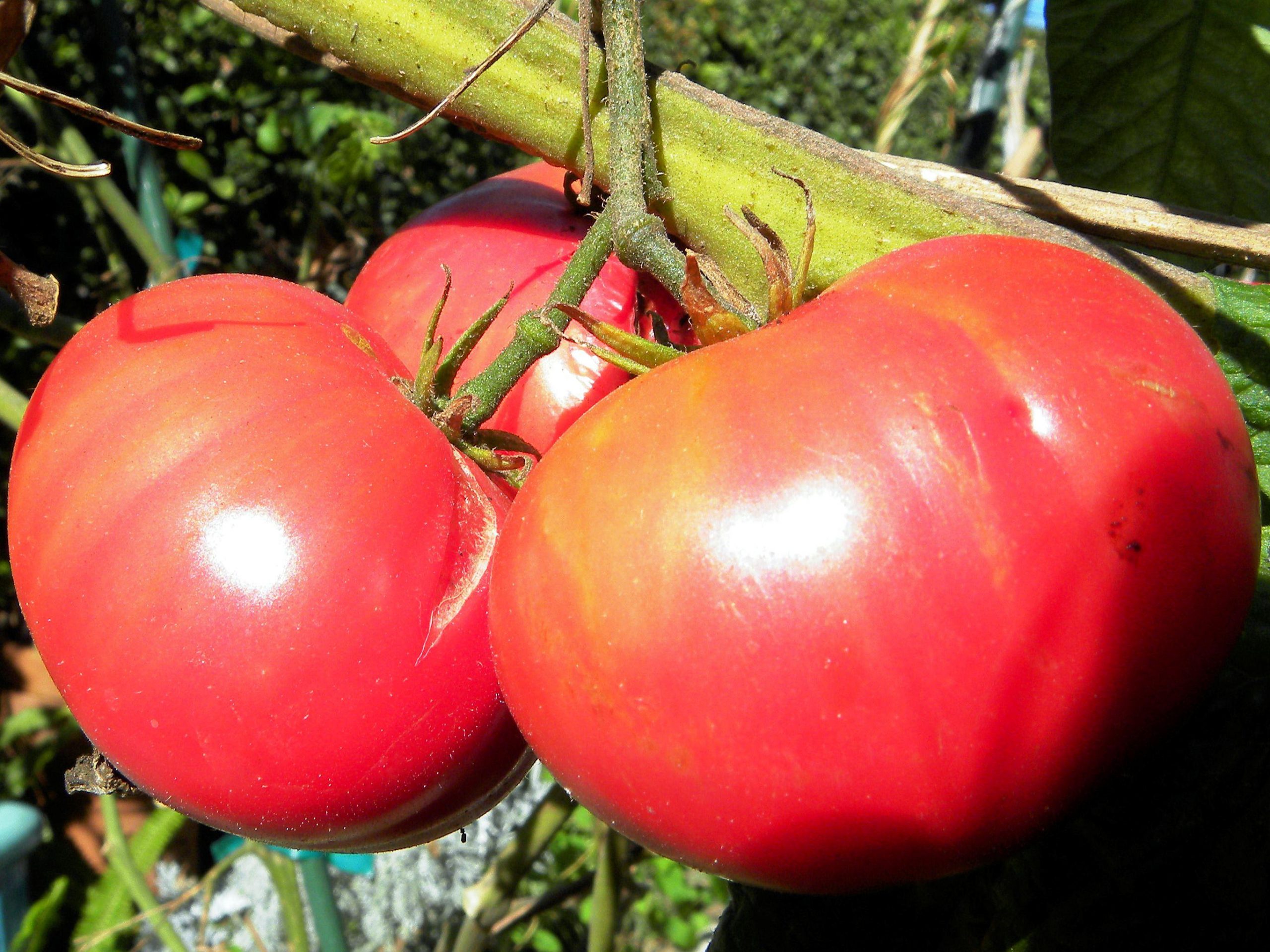
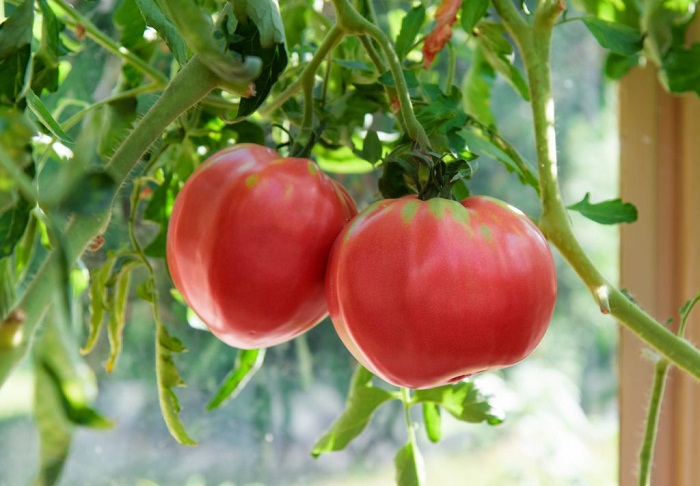
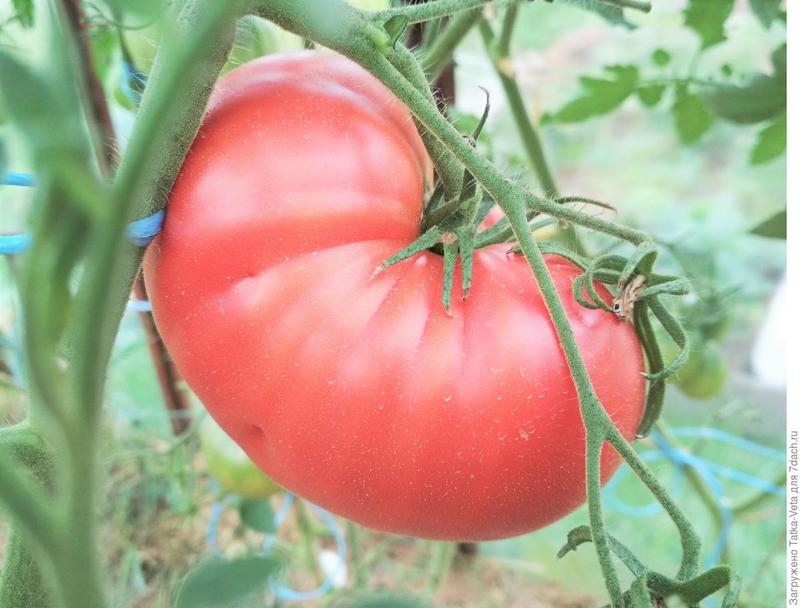
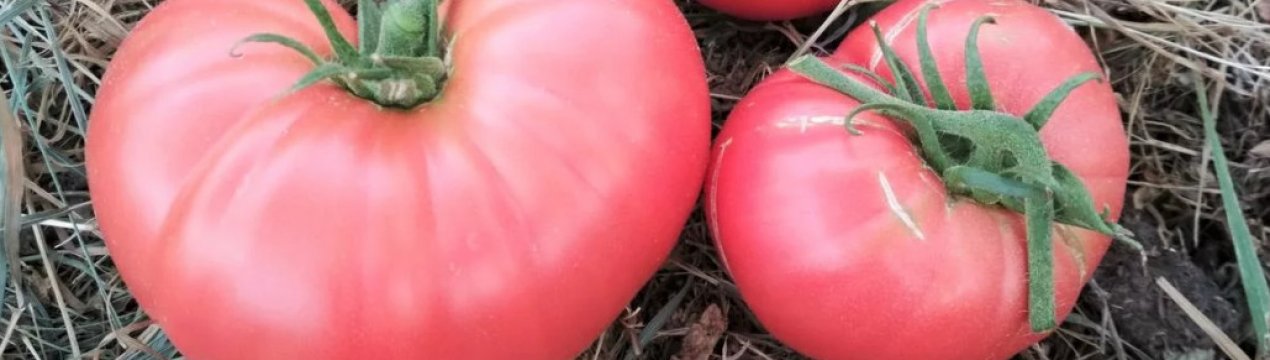
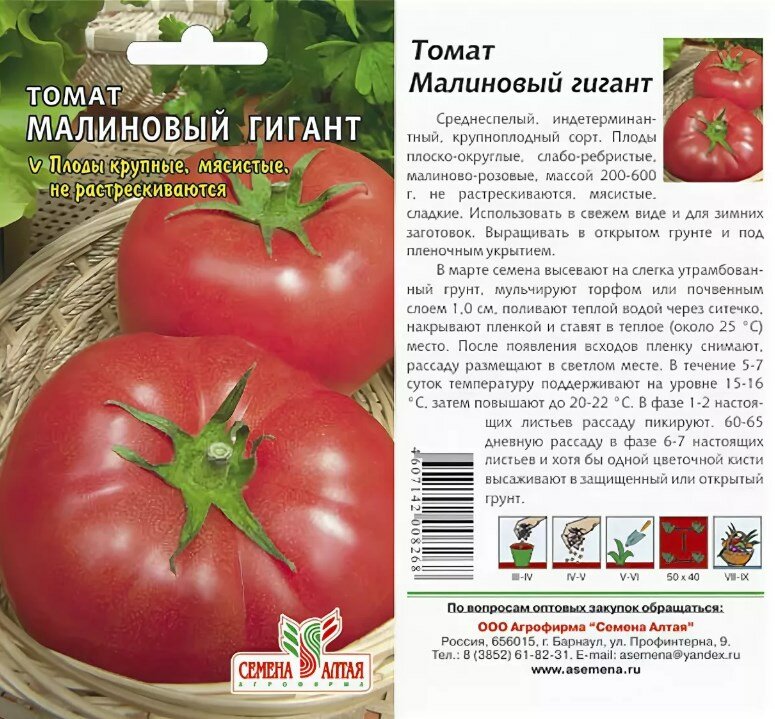
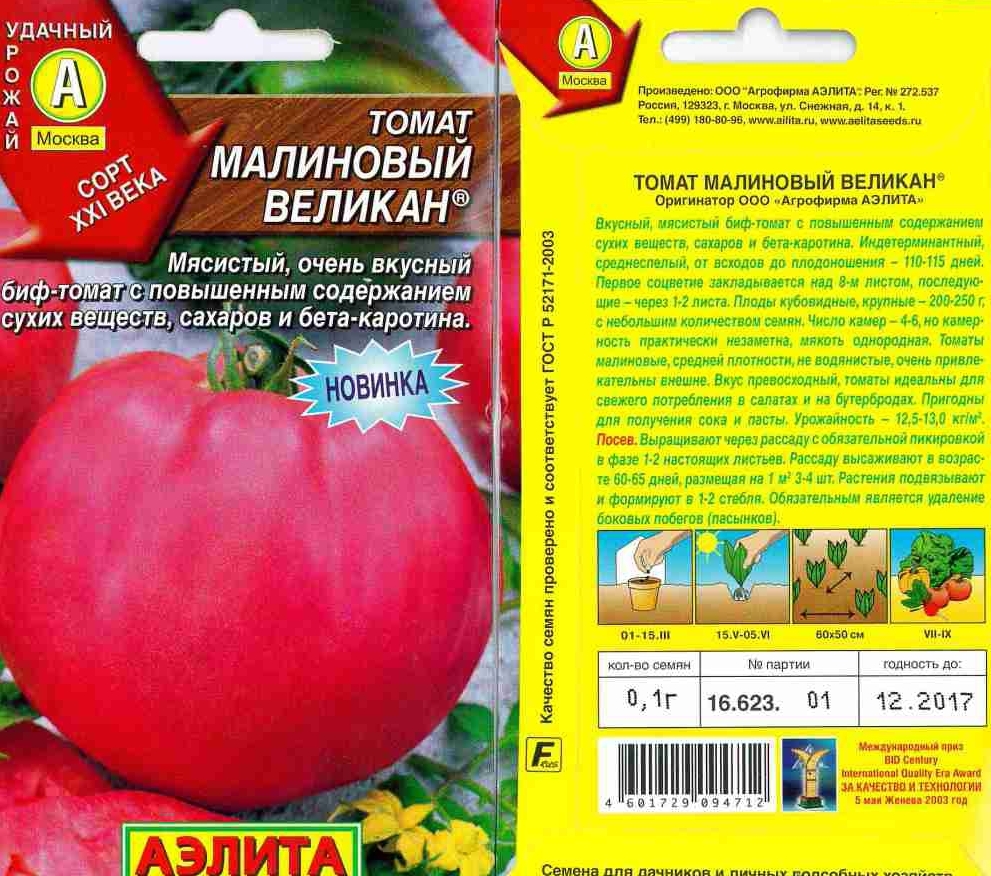
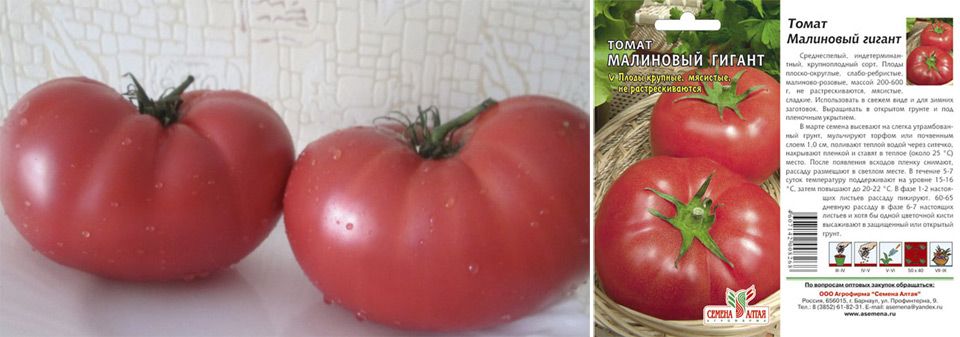
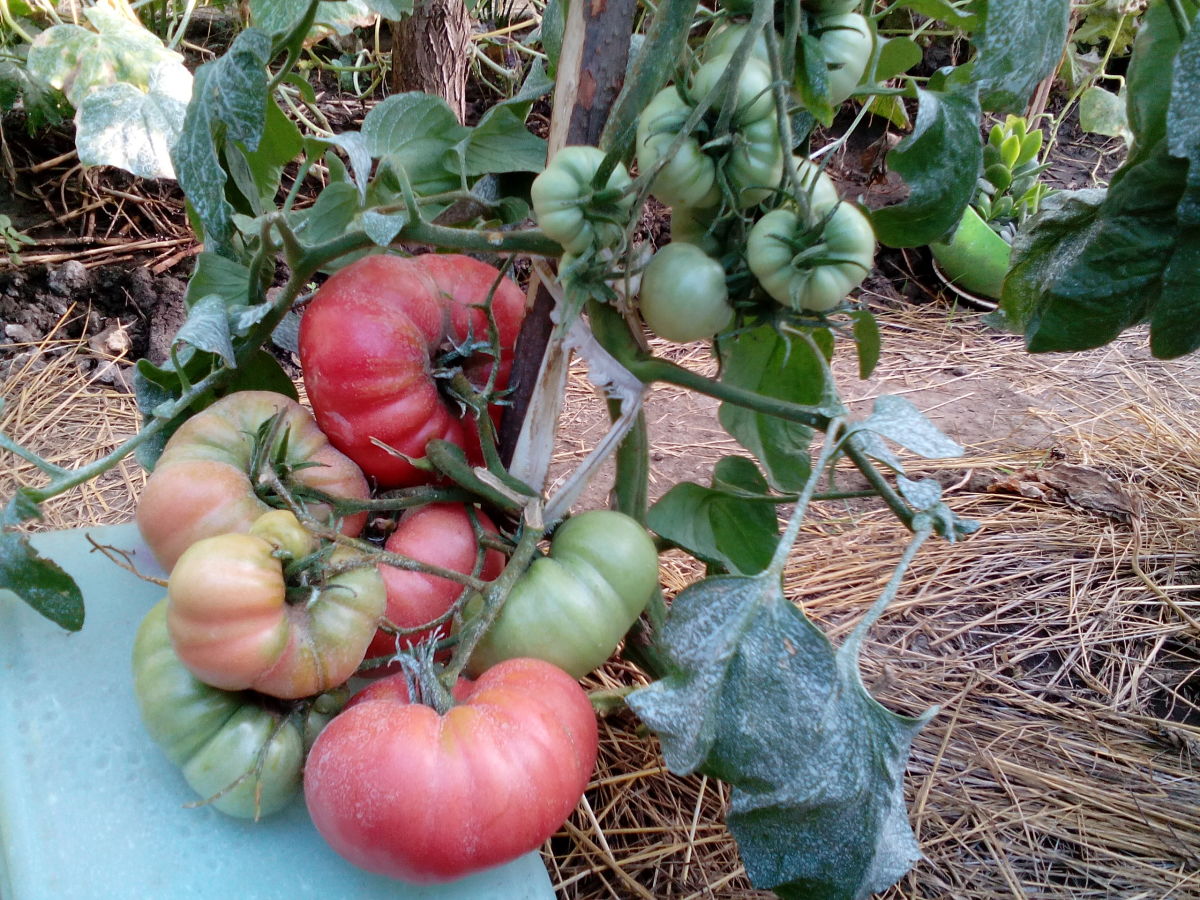
Below, we've collected photos of the Raspberry Giant tomato variety so you can better understand its characteristics and appearance:
The origin of the Raspberry Giant tomato variety
The Raspberry Giant variety was developed by specialists from the SeDek agricultural firm.
Their initial goal was to create a variety with excellent fruit taste, good yield, and large-sized tomatoes with minimal maintenance.
Thus, the Raspberry Giant was born, named for its size and the corresponding color of its skin and flesh. In 2007, it was officially recognized and added to the register.
A detailed description of the Raspberry Giant tomato variety
The main distinguishing feature of the variety is its not very tall bushes with a large number of large, unevenly shaped, raspberry-colored fruits.
Bushes
This variety is determinate, but shoots can reach 1 meter in length. Therefore, they definitely require staking and reliable support. The tomatoes aren't giants, but they are very large, and many of them form on the branches; without support, they could break off.
The average height of the bush is 60-70 cm and requires pruning. This is usually done with two stems. Quite a few leaves are produced, and these are gradually removed from the lower parts of the shoots.
The first flower cluster begins to form above the 9th leaf.
When planting tomatoes in open ground, the ovaries may react negatively to sudden changes in weather conditions and fall off.
The root system is well developed, so it is not recommended to thicken the plantings when placing them in a permanent bed.
Fruit
The fruits of the Raspberry Giant variety are impressively large. On average, they weigh between 200 and 300 grams, but there have been cases of tomatoes weighing 400 grams or more.
The tomatoes are irregularly shaped, round-oval, and ribbed. Their color is crimson. The skin doesn't crack, and the tomatoes don't fall off despite their impressive weight. However, their ripening is uneven, with some fruits having to be picked late in the season before they're ripe.
The crop tolerates transportation well without losing its marketability.
Tomatoes contain a large amount of nutrients and are suitable for baby and dietary nutrition.
Productivity
This variety boasts a high yield, reaching 590 centners per hectare. A single bush produces up to 12 tomato clusters at a time. With proper care, each square meter can yield 6 to 12 kg of fruit.
Ripening time
The originator labeled the Raspberry Giant tomato as early-ripening, but gardeners consider it a mid-season variety due to its very slow ripening time. Harvesting is possible 105-110 days after germination.
Advantages and disadvantages of the Raspberry Giant tomato variety
The Raspberry Giant has advantages and disadvantages, which are described in the table below.
| Advantages | Flaws |
|
|
Planting the Raspberry Giant tomato variety
It's recommended to grow the Raspberry Giant tomato using seedlings. This allows for harvesting even earlier than the manufacturer's stated dates. However, many gardeners in southern regions plant sprouted seeds directly into the ground.
Features of choosing seeds of the Raspberry Giant variety
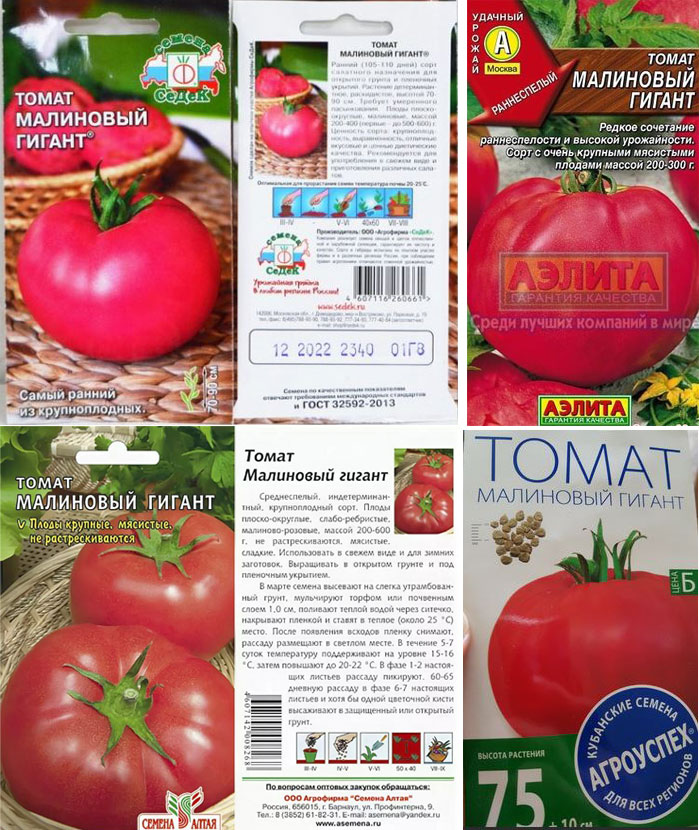
Raspberry Giant tomato seeds are sold by the manufacturer SeDek, and they meet all the parameters and characteristics described above. However, today, you can find numerous packets of seeds labeled by other companies, such as Aelita, Semena Altaya, Agrouspekh, and Flos, which also offer Raspberry Giant tomatoes and even add a "1" to the name, indicating the variety is a hybrid.
But it's worth remembering that this is nothing more than a marketing ploy. Some novice gardeners are convinced that hybrids are a better version of traditional vegetables. But in reality, this isn't always the case. And in the case of the Raspberry Giant, the situation is downright surprising: a hybrid of the Raspberry Giant has appeared on the market. But the official producer doesn't even know about it.
Therefore, when choosing seeds, be sure to look for indications that they are produced by the SeDek agricultural firm. Otherwise, you risk losing your harvest and receiving tomatoes of unknown origin and likely not of the highest quality.
Seedless and seedling methods for growing the Raspberry Giant tomato variety
The manufacturer has classified this tomato variety as suitable for greenhouse or outdoor cultivation. This factor directly depends on the region; in unfavorable conditions, greenhouse cultivation is recommended. However, its robust root system prevents the tomato plants from being planted too close together, and the relatively short shoot growth significantly reduces the potential yield and the profitability of greenhouse cultivation.
In southern regions, gardeners don't grow seedlings; the Raspberry Giant can be planted directly into the ground at the right air and soil temperatures.
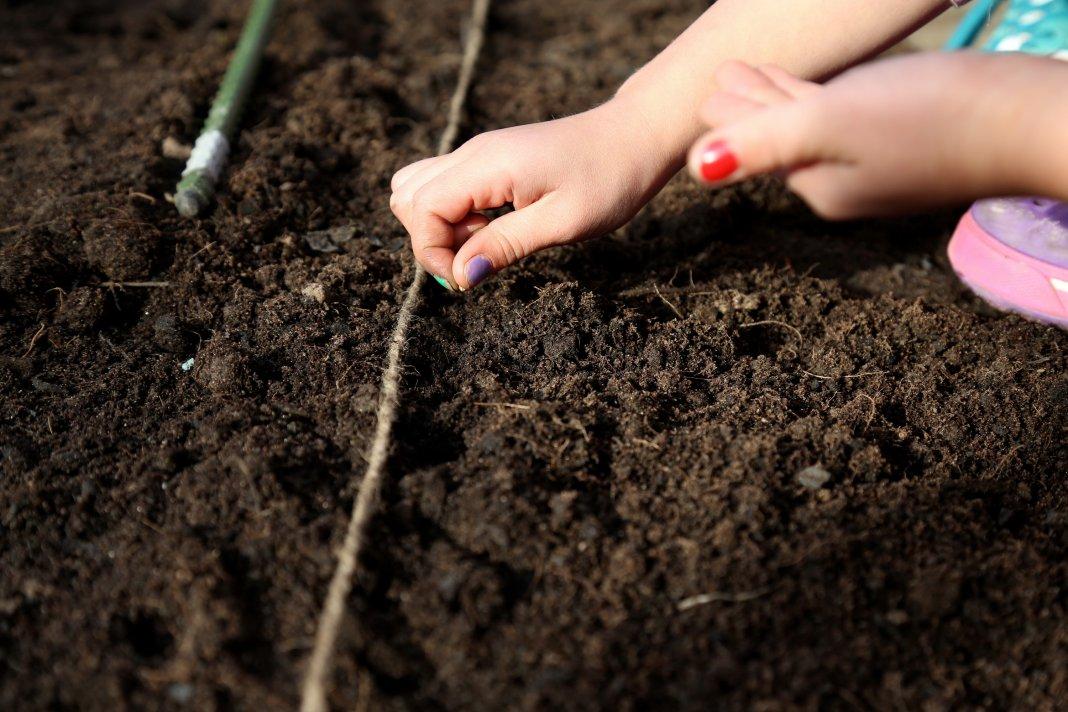
In the northern and central regions, the soil warms up late, not earlier than mid-May, so seedlings are essential.
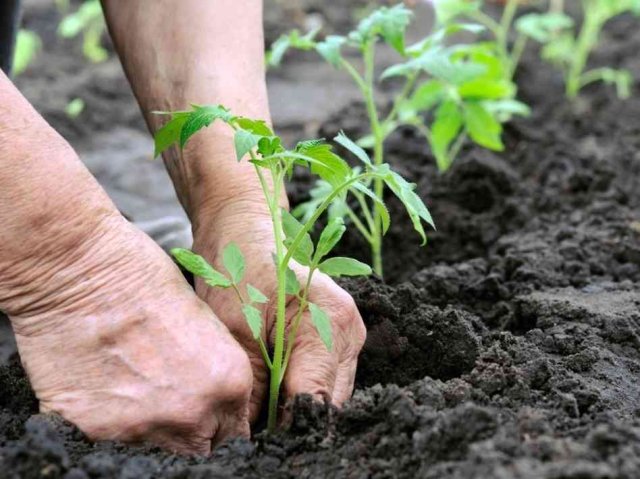
To prevent mature bushes from competing for water and nutrients, seeds or seedlings should be planted 50 cm apart or further.
Seed preparation
Regardless of where the seeds will be planted (in open ground or in cups), they must undergo preliminary preparation.
First, a calibration is performed, during which large and strong seeds are selected. Substandard seeds are also found in purchased varieties, so it's best to weed them out beforehand.
A common method among gardeners is to test seeds with water. This involves pouring the liquid (some recipes add salt) into a glass and then pouring the seeds in. If the seeds float to the surface, they're bad. However, experienced gardeners have recently begun to question this method:
- Firstly, if the manufacturer has pre-treated the seeds with growth stimulants or other beneficial preparations, they will dissolve completely in water.
- Secondly, modern technology allows for the seeds to be dried to the maximum possible degree. Consequently, they contain very little moisture. The dry material always floats on the surface. However, this doesn't mean such seeds are unviable.
Therefore, it is better not to conduct such experiments with store-bought seeds, but to leave this experience for your own seeds.
To ensure faster germination, it is recommended to pre-treat all seed material with special agents, such as Kornevin, Epin, Rostok, and others.
Sowing seeds of the Raspberry Giant tomato variety for seedlings
When preparing for seedling cultivation, it's important to allow approximately two months from sowing before planting tomatoes in the ground. The exact start date is determined individually in each region based on weather conditions.
It's best to use ready-made soil; the manufacturer has already perfectly balanced and fertilized it. However, if you can't buy seedling soil, you can mix equal parts humus, sand, and garden soil, water it with a weak solution of potassium permanganate, and use it for seedlings.
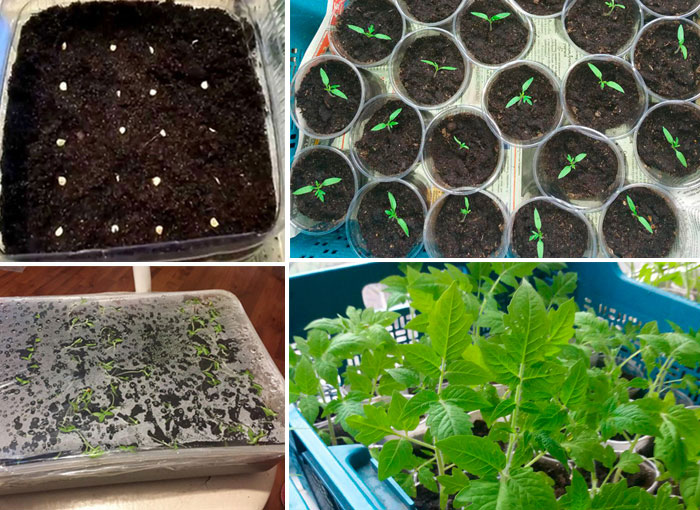
Fill the selected container 2/3 full with soil, making furrows along the top 2-3 cm apart. Plant the seeds in these furrows at a depth of 1.5 cm. Water the container (some gardeners add a layer of snow to distribute the moisture evenly), and place a glass or thick film cover over the container. Remove the cover when the seedlings emerge. However, it's best to do this gradually, over 2-3 days, increasing the amount of time the seedlings are exposed to air. Until then, periodically ventilate the greenhouse and remove any accumulated condensation.
Until the seedlings appear, the container should be kept in a warm place; as soon as the tomatoes are left without cover, the boxes are taken out into a room with a temperature of +16…+18 °C.
You can transplant into separate containers after 2-4 true leaves appear.
Planting and caring for the Raspberry Giant tomato variety in open ground
It takes about two months from sowing tomatoes to planting them outdoors. There's no need to rush – tomatoes don't grow well in cold soil, and they can only be planted outdoors once the temperature inside the bed has risen to 14–16°C.
Tomatoes are planted in holes at a distance of 50 cm from each other so that they do not compete with each other for water and nutrients.
Experienced gardeners recommend adding a little phosphorus-containing fertilizer to each hole.
The raspberry giant requires staking and support. It's best to use stakes and pieces of fabric for staking, rather than wire, which can damage the stem.
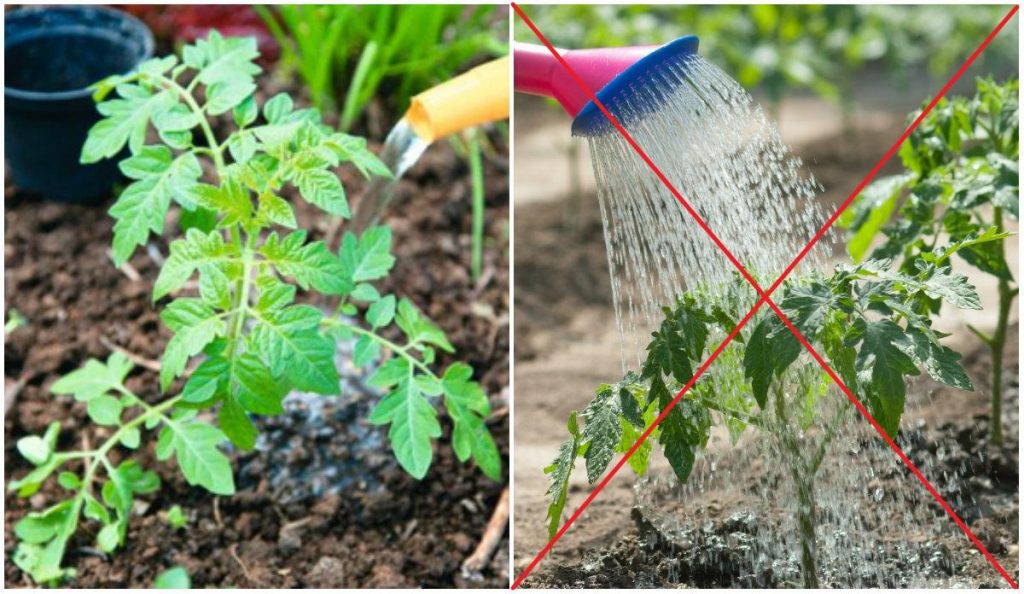
Watering should be done in a manner that prevents water from dripping onto the leaves and stems. A drip irrigation system can be installed to evenly distribute the water between the plants.
Fertilizing is recommended 2-3 times per season. However, it's important to remember that fertilizing and treating should be avoided 3-4 weeks before harvest.
There are a lot of leaves growing on the bushes, so that they do not draw the plants' energy, all the lower leaves down to the first ovary must be removed.
Periodically, it is necessary to loosen the soil and remove weeds, which attract pests and can cause diseases.
Planting and caring for the Raspberry Giant tomato variety in a greenhouse
Tomatoes are planted in a greenhouse earlier than in open ground. In temperate climates, this process begins in mid-April, while in regions with harsher climates, it's not until mid-May. To help the soil warm up faster, it's recommended to cover it with black plastic about a week before planting.
The holes should be prepared in advance; there should be no more than three per square meter. It's also important to consider the greenhouse support in advance and select a suitable structure.
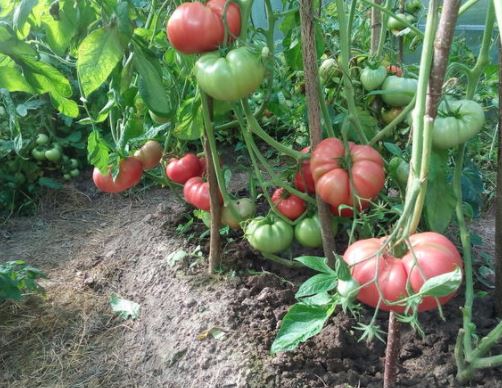
The first watering should be done approximately seven days after transplanting. It's not advisable to manipulate the tomatoes before this time, as the plants need time to adapt to their new location. After this time, water as needed, but avoid overwatering the soil, as this can lead to various diseases.
Nutrients are used up more quickly in a greenhouse, so the plants will definitely need additional fertilizer. However, this should be adjusted based on the current soil conditions. Three weeks after planting, you can add the first fertilizers, such as nitrophoska or a mullein solution (1:10). After another two weeks, you can feed the tomatoes with potassium or phosphorus fertilizers.
Disease and pest resistance of the Raspberry Giant tomato variety + control methods
The Raspberry Giant variety has strong immunity to many diseases. Its early ripening period allows it to ripen before late blight becomes active.
To prevent pests, you can sprinkle the surface of the bed with ground eggshells or dry wood ash, and treat the bushes with garlic infusion.
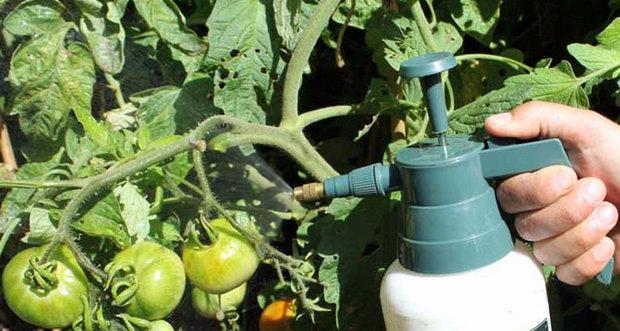
An excellent preventative measure is spraying plants with boric acid (1 teaspoon per 10 liters of water) or solutions of Epin and Oxyhumate (diluted according to the instructions).
Using Raspberry Giant Tomatoes
The Raspberry Giant tomato is quite large, making it unsuitable for whole-fruit canning. However, its juicy, firm flesh makes an excellent ingredient for making pastes, juices, adjika, and other preserves that use processed tomatoes.
The variety is considered a salad variety; the tomatoes are very tasty and make a wonderful addition to various salads, as well as first and second courses.
Furthermore, the pulp contains a large number of nutrients that remain even after freezing or cooking. The fruits are free of allergens, making them suitable for dietary or children's menus.
Comparison of the Raspberry Giant tomato variety with other varieties in the table
Please note! How can you easily convert centners/ha to kg/sq.m? Simply divide by 100! For example, the Abakansky Pink tomato yields 400 centners of marketable fruit per hectare. This equals 4 kg per square meter. It's that simple! Also, keep in mind that typically no more than 3-4 plants are planted per square meter. This way, you can calculate the yield per bush. In the case of the Abakansky Pink, it's about 1 kg.
| Variety | Ripening period (number of days from full germination to ripening)
Yield of commercial fruits |
Brief description | Fetus |
| Raspberry Giant | 105-110 days
590 c/ha |
An early-ripening determinate variety for open ground and plastic greenhouses. Requires staking and training. Suitable for salads. | Round, slightly ribbed, medium density, raspberry, 200-300 g. Excellent taste. |
| Raspberry Viscount | 95-105 days
500-600 c/ha |
A mid-season determinate variety for greenhouses. Suitable for salads. | Flat-round, large, slightly ribbed, medium density, raspberry, 220-260 g. Excellent taste. |
| Raspberry Empire | 95-110 days
2000 c/ha |
An early-ripening indeterminate variety for greenhouses. Suitable for salads and pickling. | Heart-shaped, medium density, medium-ribbed, raspberry, 150-200 g. Excellent taste. |
| Raspberry wine | 105 days
1200-1400 c/ha (greenhouse and under film) |
An early-ripening determinate variety for open ground and greenhouses. Requires staking and shaping. Suitable for salads. | Round, large, smooth, medium density, raspberry, 350 g. Excellent taste. |
| Raspberry Farmer | 85-90 days
1000 c/ha |
An early-ripening determinate variety for greenhouses. Suitable for salads. | Round, dense, slightly ribbed, raspberry, 50-60 g. Good taste. |
| Crimson Dawn | 110-115 days
790 c/ha |
A mid-season indeterminate variety for open ground and greenhouses. Requires staking and shaping. Suitable for salads. | Heart-shaped, loose, ribbed, raspberry, 350-400 g. Good taste. |
| Raspberry Strongman | 112-116 days
880-900 c/ha |
A mid-season indeterminate variety for open ground and greenhouses. Suitable for canning. | Pear-shaped, large, smooth, medium density, raspberry, 150-190 g. Good taste. |
| Raspberry Fountain | 100-105 days
520-610 c/ha (greenhouse and under film) |
An early-ripening determinate variety for greenhouses. Suitable for salads. | Elliptical, medium density, slightly ribbed, raspberry, 20-27 g. Good taste. |
| Potato crimson | 100-105 days
up to 1800 c/ha |
A mid-season, indeterminate, standard variety for open ground and greenhouses. Requires staking and training. Suitable for salads, canning, and processing into tomato products. | Flattened-round, raspberry, 700-800 g. Excellent taste, sugary, rich. |
| Honey | 105-115 days
800 c/ha (greenhouse and under film) |
A mid-season indeterminate variety for open ground and greenhouses. Requires staking and shaping. Suitable for salads. | Flat-round, smooth, soft, raspberry, 300-400 g. Excellent taste. |
| Petrusha the gardener | 111-115 days
640 c/ha (open ground) |
A mid-season, determinate, standard variety for open ground. Suitable for salads. | Cylindrical with a pointed top, smooth, medium density, raspberry, 150-180 g. Good taste. |
| Pink miracle | 70-90 days (in a greenhouse and in open ground)
230 c/ha |
An ultra-early determinate variety for open ground and greenhouses. Requires staking and shaping. Suitable for salads. | Round, smooth, medium density, raspberry, 100 g. Excellent taste. |
Real reviews from gardeners about the Raspberry Giant tomato variety
Gardeners love the Raspberry Giant variety for its ease of use, early ripening, and excellent yield, which has a pleasant taste and is the perfect complement to any dish.
By flywriter, July 24, 2018
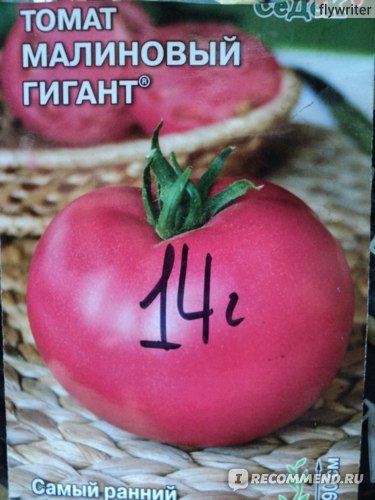
This year, I planted the seedlings myself, and when I saw Sedek's "Raspberry Giant" tomato seeds in the store, I simply couldn't resist. The promise of "the earliest of the large-fruited varieties" completely captivated my fresh-vegetable-starved soul. A pack of seeds cost 14 rubles, and there were 30-31 seeds in it.
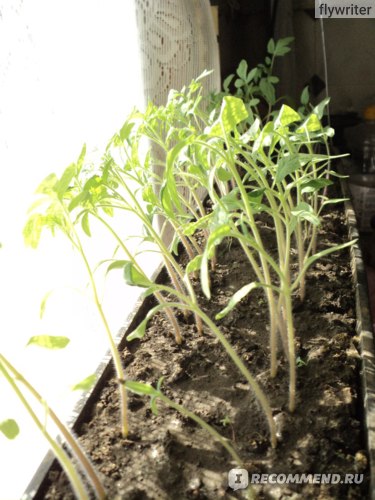
I planted it on February 26th. The variety showed a good germination rate (about 25 seeds out of 30). However, they didn't sprout quite evenly.
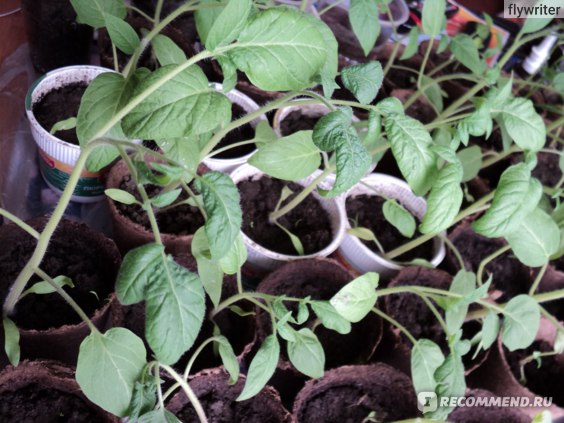
In this photo, the variety being described is in the row furthest from the window.And this is after the dive:
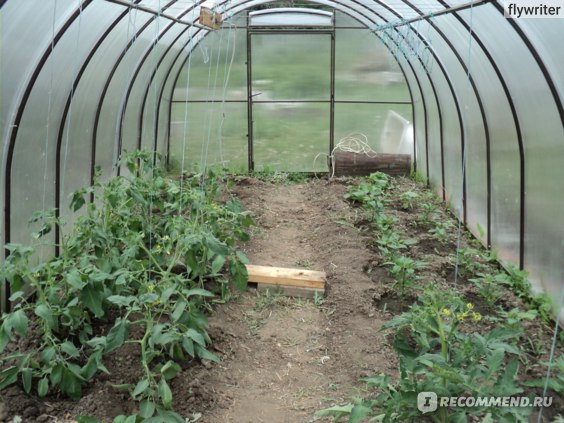
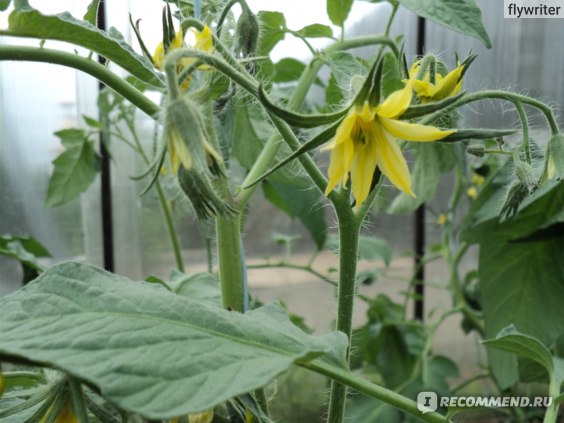
The leaves of this variety are unusual, reminiscent of potato leaves)))I planted it in the greenhouse on April 14th.
In the greenhouse during flowering (bed on the left):
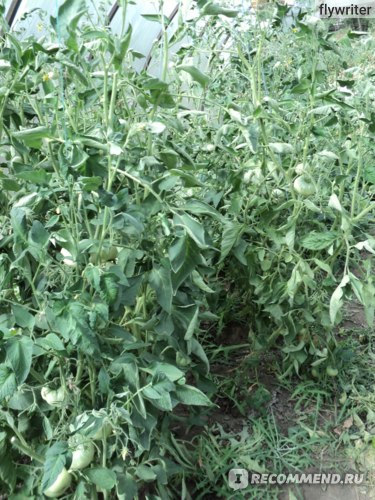
Since this variety is determinate, it doesn't require shaping into a single stem, and there's no need to pinch out any side shoots. However, I did so anyway, as the bed had become incredibly dense.
Now the tomatoes are already ripening, and I am gradually forming the leaf apparatus (pinching off the leaves).
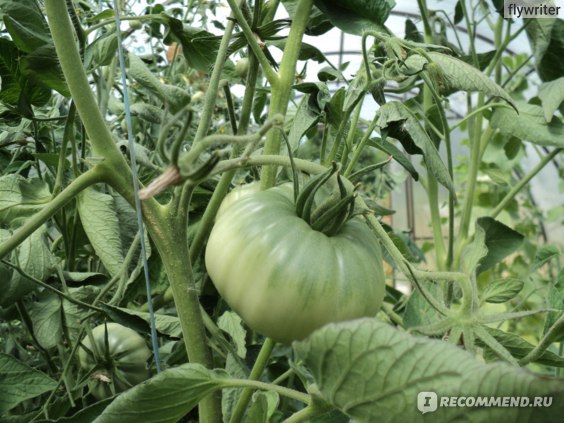
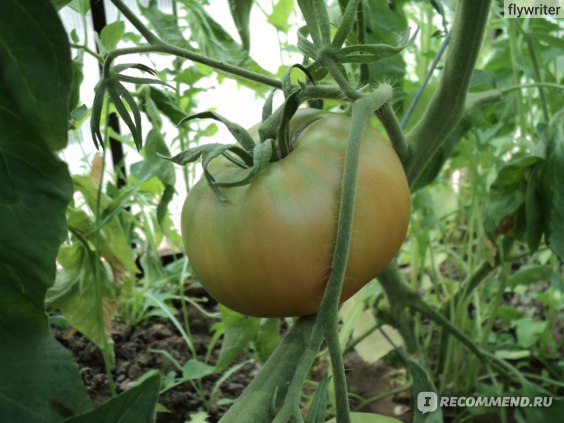
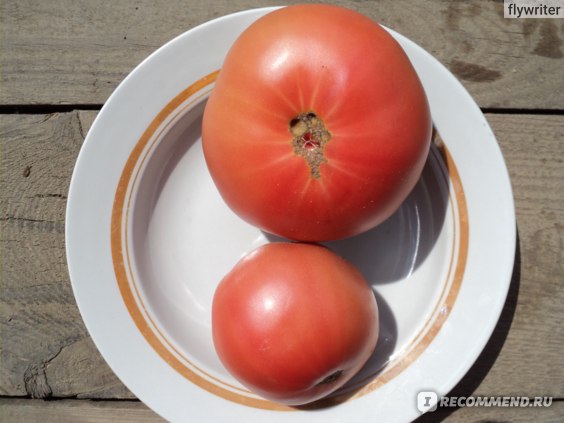
These are the fruits I grew and picked on July 15th:
Thus, from planting to the first fruits, 140 days passed (while the promised 110 days).
Really big, sweet and meaty.
One thing I want to note: the variety is susceptible to late blight.
Many fruits are infected, which is expressed by black rot on the lower part of the fruit.
Advantages:
Sweet, tasty, large
Flaws
Susceptible to late blight
Takes longer to mature than stated.
User Degaev, Russia, Tula, August 4, 2018
From past experience, I've concluded that pink tomato varieties ripen better and are sweeter in flavor than regular ones. That's why we chose the "Raspberry Giant." And also because it ripens early.
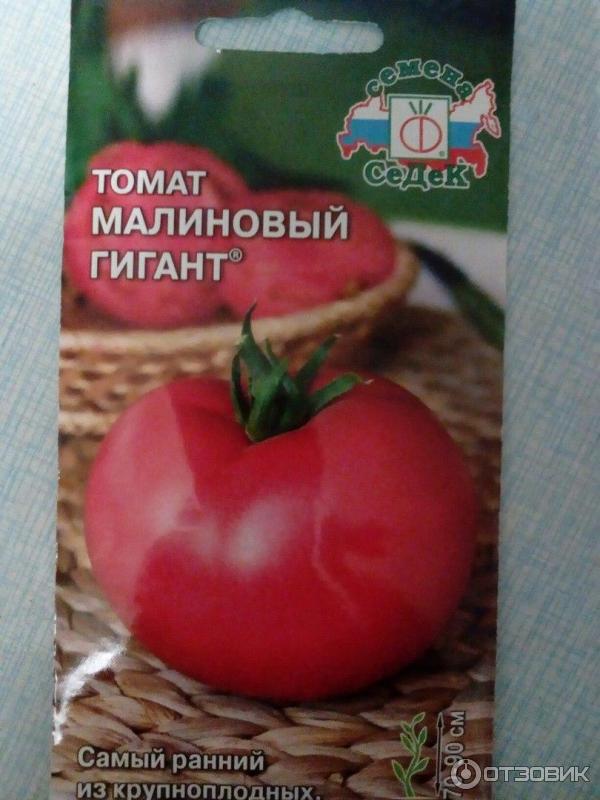
The packaging says this variety is the earliest of the large-fruited varieties. I disagree. "Raspberry Giant" began ripening at the same time as this mid-season variety.
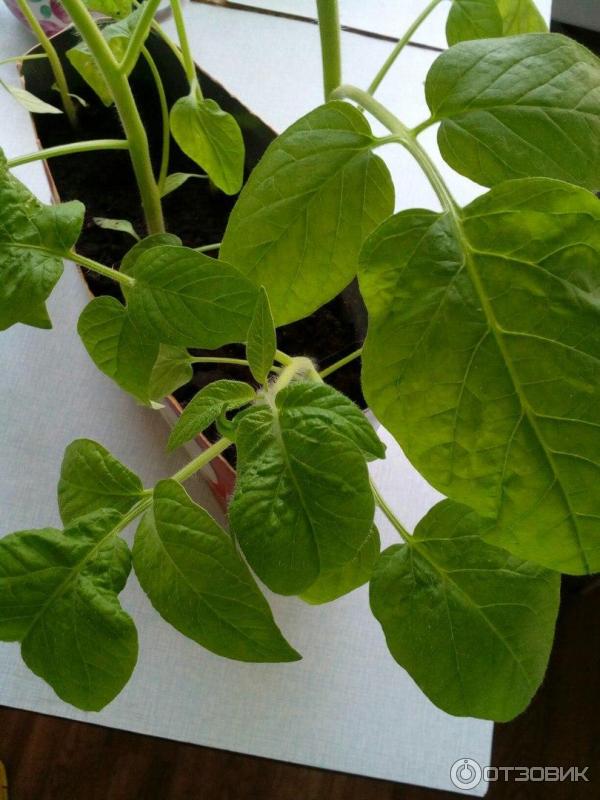
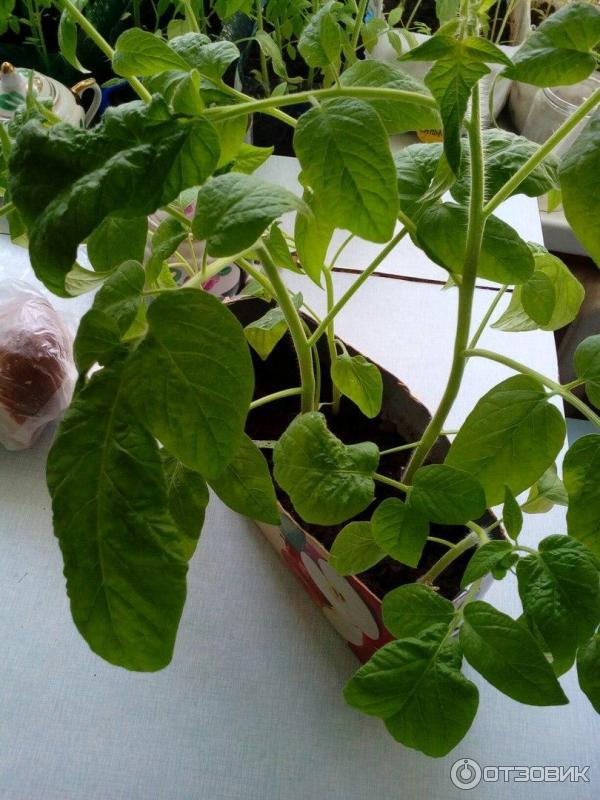
There are 0.1g of seeds in a package, which is about 30-35. I sowed about ten. When the seedlings started growing, their leaves didn't look like regular tomato leaves. I was surprised and thought, "Oh my god, what the hell did that actually grow?" But I quickly calmed down because the leaves smelled like tomatoes.
The leaves are huge, truly gigantic!
Due to its long branches and large leaves, the plant appears spreading, and its height is approximately one meter.It was necessary to remove side shoots and trim leaves frequently.
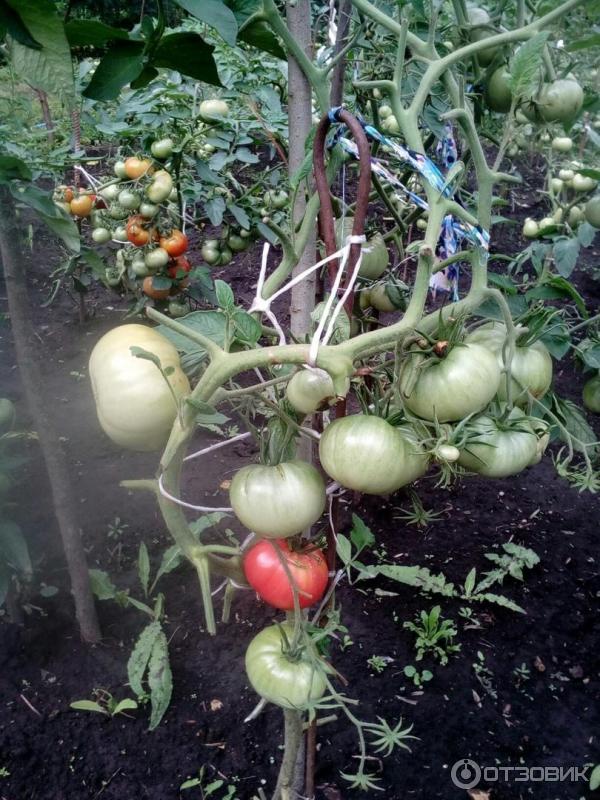
And here's the first tomato ripened. True, it's not exactly gigantic. But the grower says the first fruits will weigh 200-400 grams, and the following ones will be larger.
That's right. The fruit above it is larger. There are quite a few fruits on one bush, they weigh a fair amount, and the bush is sagging under the weight, even though I tied it up in time.
It's not a giant, but it's definitely crimson. Its color is clearly different from the red tomatoes of another variety, pictured above on the left.
I couldn't wait to taste test the "giant".
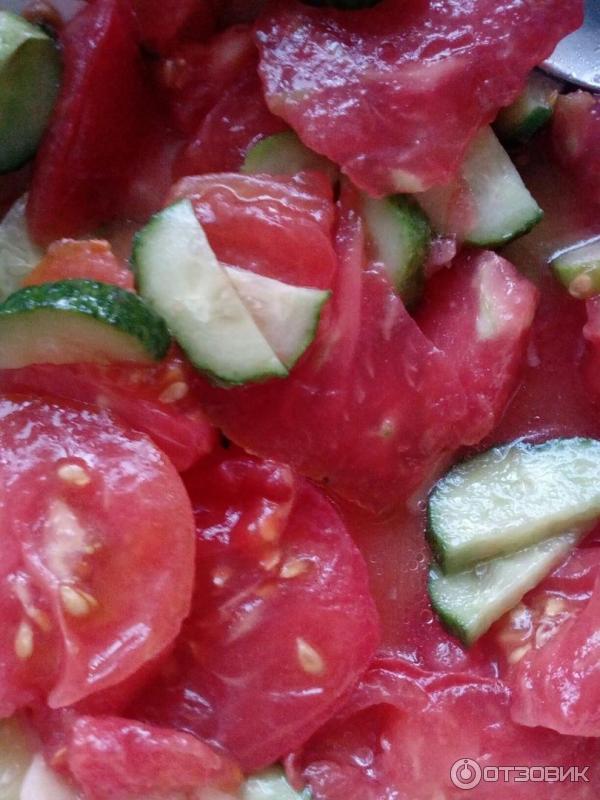
I liked the "Raspberry Giant." Sweet! Delicious! Not runny, sugary, with a few grains.
Incomparable in salad!
I say YES to this variety! I recommend it!
User Lely678, Russia, Samara, December 22, 2017
Hello, dear friends and readers of my review of the wonderful tomato from the SeDeK agricultural firm, "Raspberry Giant."
The seeds of this variety were developed by the wonderful breeders of this agricultural company, for which I say to them "A HUGE THANK YOU!"
Soon, preparations for the summer cottage season will begin across our country. My fellow gardeners and I are already selecting the best vegetable seeds for planting in our gardens.
I usually plant several varieties of tomatoes: some for salads, homemade ketchups, and sauces, and others for canning.
This spring, my neighbor shared her surplus seedlings with me. She said the variety was called "Raspberry Giant," but she and her husband called it "potato tops." The tomato leaves really do look a lot like potato leaves.
The bushes grow about a meter tall and require staking. Fruits form on clusters of 4-8. The seedlings were grown both in a greenhouse and outdoors. The outdoor tomatoes were free of late blight. The harvest from them was expected about twelve days later than from the greenhouse ones.
The tomatoes, Senor, delighted us with both their size and taste. Large, up to 680 grams, fleshy (practically seedless), and sweet. Delicious, just like when you were a kid, picking them from a bush in your grandmother's garden, wiping them on yourself, and… oh, how satisfying. We ate them until October.
In total, we collected a large, heaping bucket from each bush. Which is a very good result.
I highly recommend you also buy SeDeK "Raspberry Giant" tomato seeds. This variety has become a permanent fixture in my garden. I give it a solid A+.
User algam, Russia, November 27, 2017
I've been planting this variety for three years now and am generally very pleased. The plant is compact, growing just over a meter tall in the greenhouse. This tomato is primarily for salads. It's not suitable for whole canning, as the skin is quite thin and the size is large.
The lower cluster contains two to five fruits. The higher you grow, the smaller the fruits become. I train them into a single stem. The lower cluster contains two to three large tomatoes. I don't use more than three clusters of four to five medium tomatoes, otherwise the lower fruits won't be large. A salad tomato should be large enough to easily slice into rings. The variety is quite resistant to late blight. This tomato has unusual leaves, more like potato leaves. It ripens earlier than all pink tomatoes.
They say it can be grown outdoors, too. But I believe large pink tomatoes are only suited to greenhouses. Suitable varieties are best for outdoor cultivation in the Moscow region. This tomato has a sweet flavor. The skin is soft. I recommend it to all lovers of pink salad tomatoes!
User kamelia55, Russia, Volgograd, March 26, 2018
I've planted the Raspberry Giant variety several times already. It's generally taken root in my garden. I'll note right away what attracted me most to this variety. First, it ripens early. Second, it has large fruits (not gigantic, but large), and I'm a fan of large-fruited tomatoes, as I've noted many times. I also know from personal experience that most early tomatoes are small (so-called cherry tomatoes). Third, the bushes are medium-height, 60-70 cm, and don't even need staking. The foliage is massive and dense, similar to potato tomatoes. The fruits are sweet, the skin is thin, and they're not suitable for canning, but that's not necessary, as early tomatoes are needed for their vitamins and for enjoying in a delicious salad.
Good day! Another very good tomato variety. Last year, I bought Sedok "Raspberry Giant" tomato seeds. The seeds are good, moderately dry. Before planting, soak the seeds for 2-3 hours for better germination. I plant them in boxes 5 by 5 cm apart. It's best to plant the seeds in mid-March. Once 3-4 leaves appear, I transplant them. The seedlings are planted in late May. The bushes are lush and spacious, with 10-15 fruits per vine. The ripening period is late July - early August. The tomato is moderately large, raspberry-colored, with smooth, firm skin and a fleshy, juicy, fragrant, and delicious interior. Suitable for preserves, tomato juice, and eating!
User ek9345, Russia, Yekaterinburg, May 15, 2020
I usually grow low-growing tomatoes because I want to achieve results in a "risky farming" zone. Taller tomatoes require greenhouse cultivation. It's possible to grow tomatoes outdoors under cover only, so I cover them multiple times. The Shuttle tomato meets my needs, but I wanted something more "southern."
I spent a long time choosing seeds, reading reviews, and settled on “Raspberry Giant”.
What happened in the end... The sprouts sprouted later than all the others, and there were four varieties of seeds, by about 10 days. I thought they wouldn't sprout at all. I can't say why they took so long to germinate.
I planted them in cups, again, a week later than other varieties, at the stage of two true leaves.
Of the nine seedlings, one died within the first two days, and four more died within ten days. That leaves four left. But they're so frail that you just want to hug them and feel sorry for them...
These transplanted tomatoes now have four true leaves each, and the other seedlings are already in the ground and have developed buds. So I seriously doubt it's worth bothering with them at all. Then again, any experience is experience.
I probably won't bother with these seeds again; time will tell how they perform. I'll probably keep two for experimentation. But the overall impression is negative.
I recommend it, but only with the caveat that you are ready to see the same results as me.