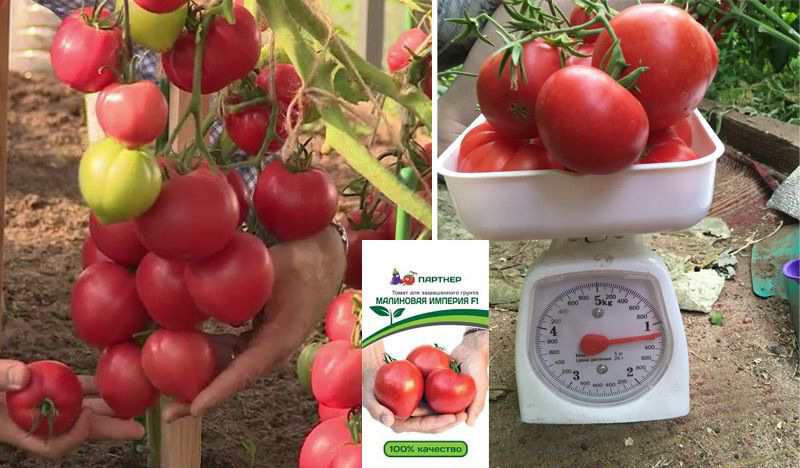
Tomato Raspberry Empire F1 is a relatively new hybrid variety characterized by excellent yield and fast ripening time.
Content
- 1 Table of characteristics of the tomato variety Raspberry Empire F1 (classic)
- 2 Photo gallery of the tomato variety Raspberry Empire F1
- 3 The origin of the tomato variety Raspberry Empire F1
- 4 A detailed description of the classic tomato variety Raspberry Empire F1
- 5 Advantages and disadvantages of the tomato variety Raspberry Empire F1
- 6 Growing the Raspberry Empire F1 tomato variety
- 7 Resistance of the tomato variety Malinovaya Imperiya F1 to diseases and pests
- 8 Harvesting, using and storing the tomato variety Raspberry Empire F1
- 9 Comparison of the tomato variety Malinovaya Imperiya F1 with other varieties in the table
- 10 Gardeners' reviews of the Raspberry Empire tomato variety
Table of characteristics of the tomato variety Raspberry Empire F1 (classic)
| Characteristic | Description |
| Description | An indeterminate hybrid tomato variety that grows well both in a greenhouse and in an open garden bed. |
| Ripening period | 95-105 days |
| Fruit weight | 140-160 g |
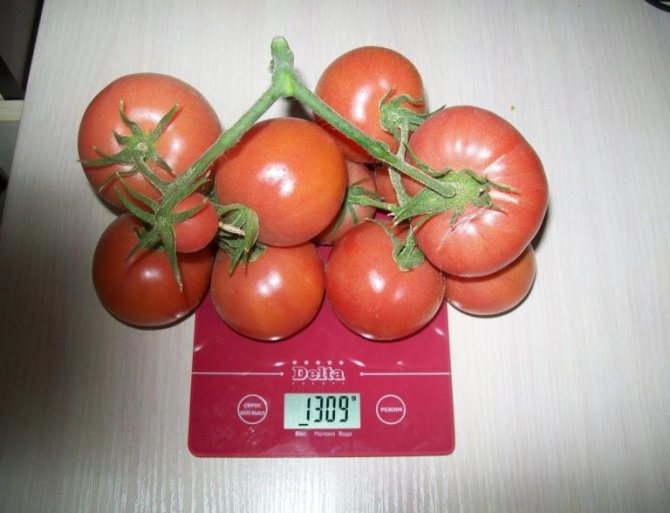
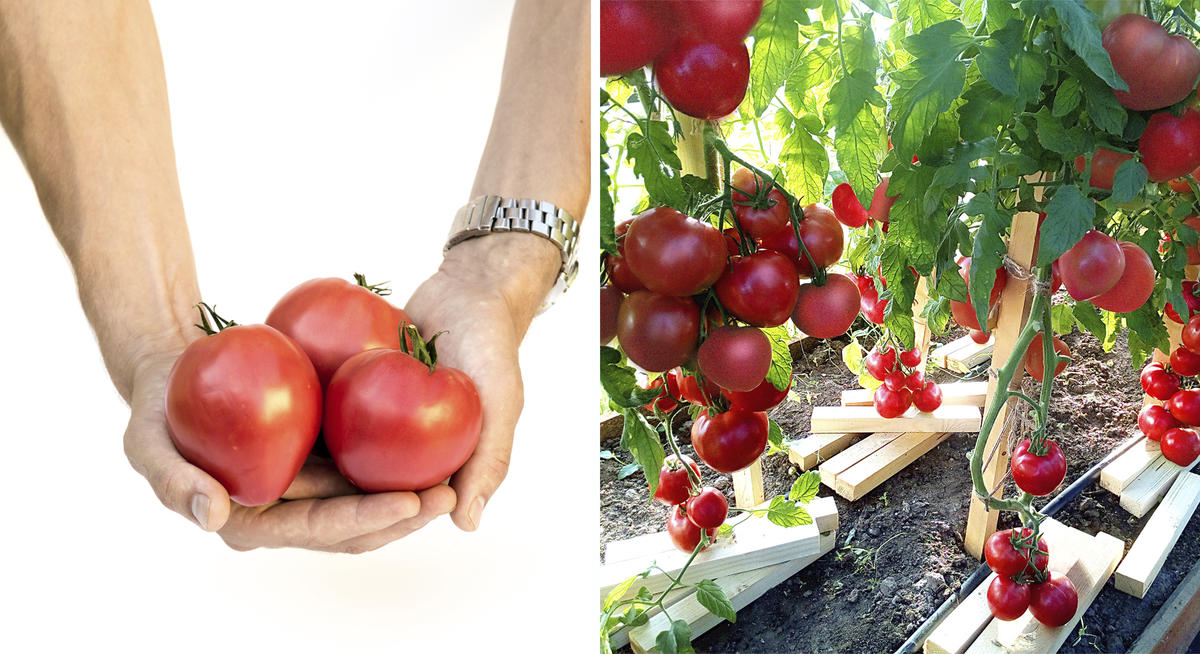
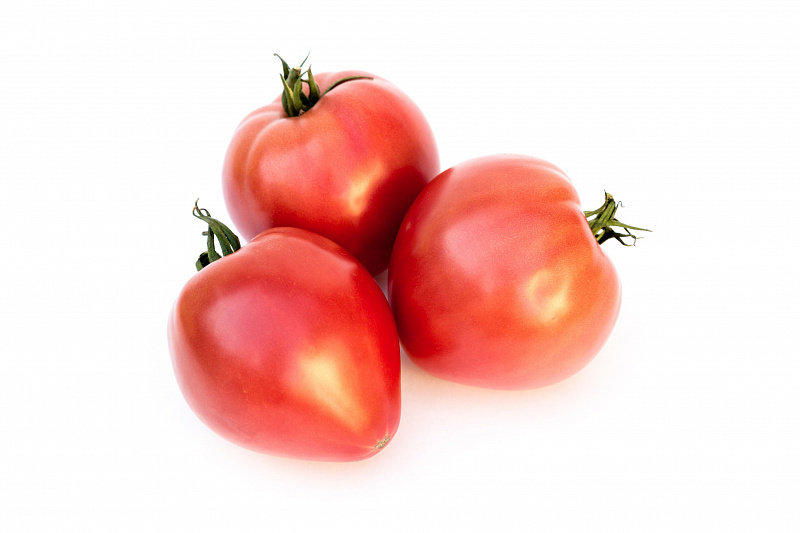
| Description of the fruit | The fruits are round-heart-shaped, medium-sized, pink-raspberry in color, with a thin but dense skin. |
| Productivity | Up to 5-6 kg per bush |
| Usage | Tomatoes are suitable for eating fresh and can be used in home canning. |
| Preferred growing regions | It grows well in all regions of the country, as it is undemanding regarding light and soil composition. In regions with harsh climates, it should be planted in greenhouses. |
| Disease resistance | Tomatoes have a strong immune system and are practically immune to common diseases. |
| Agricultural technology | Bushes should be trained into 1-2 shoots, which require support and tying. The root system is extensive, so a maximum of 2 bushes per meter is allowed. |
| 2017 | |
| Originator | Agrofirm "Partner" |
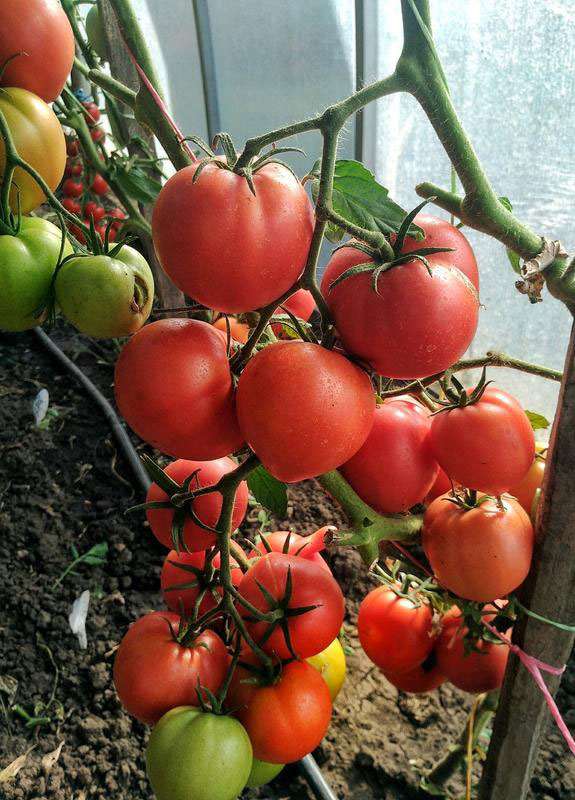
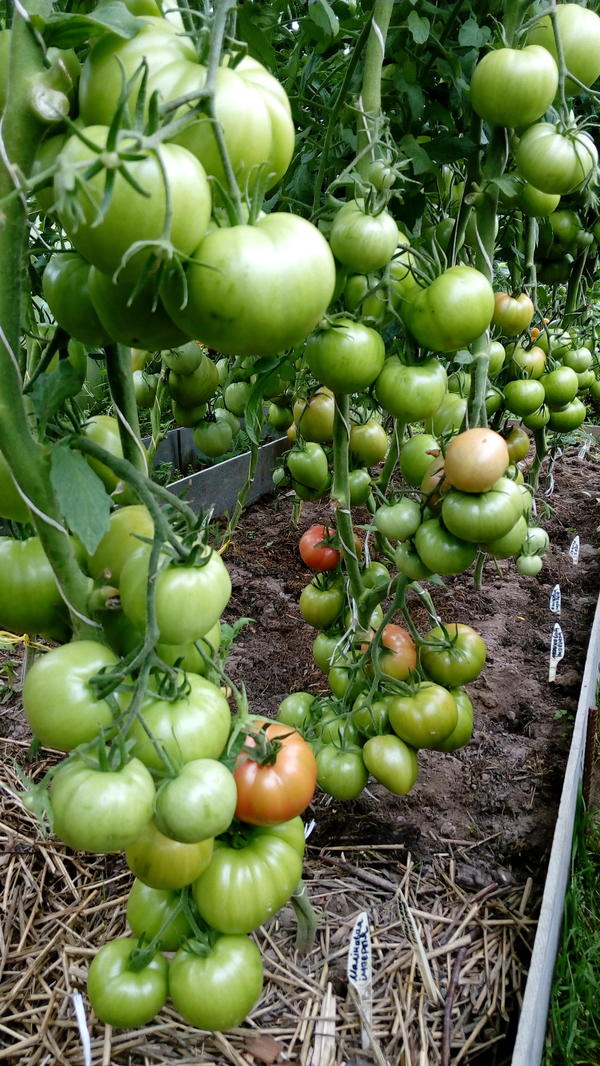
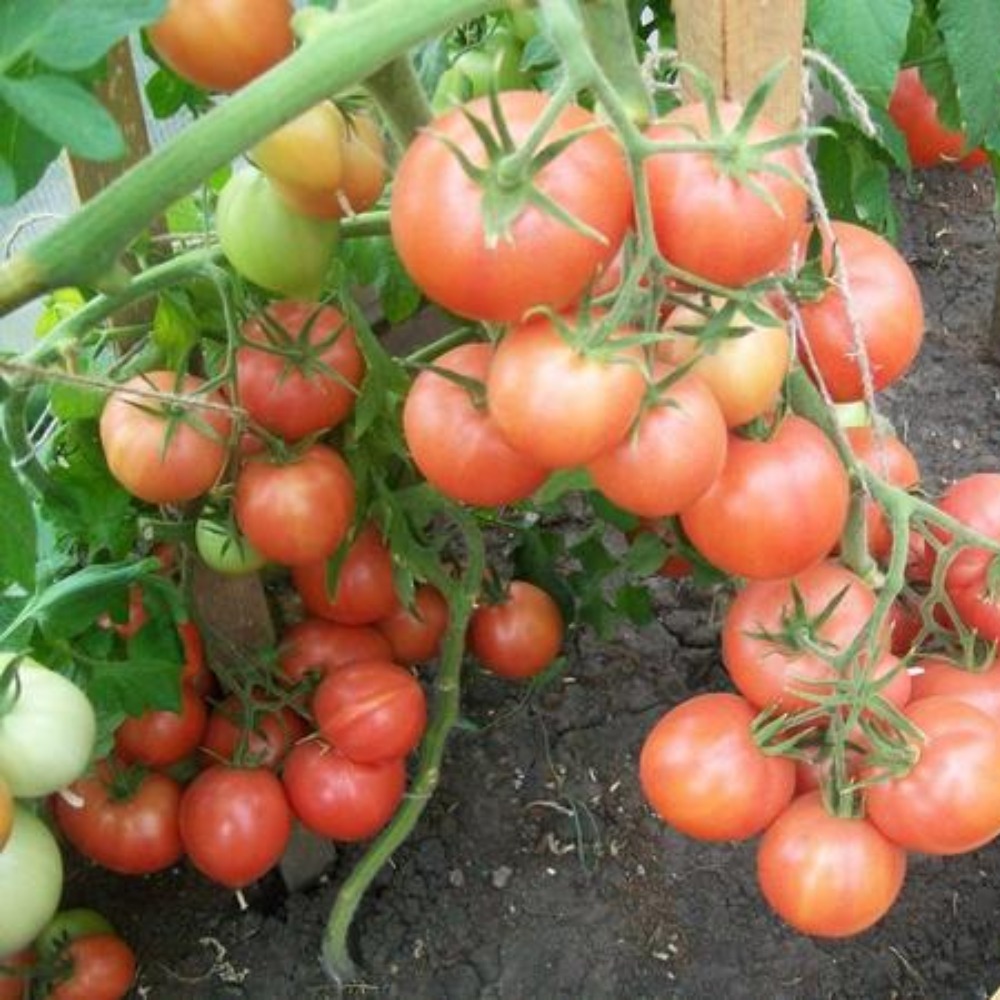
Photo gallery of the tomato variety Raspberry Empire F1
The origin of the tomato variety Raspberry Empire F1
Breeders at the Partner agricultural firm are actively developing new tomato varieties. Raspberry Empire was conceived as a variety with a fast ripening time, excellent yield, and ease of cultivation. Thanks to its characteristics and the diligence of its developers, the tomato was included in the register in 2017.
Read about other developments of the agricultural firm "Partner" in the articlePartner tomatoes: a catalog with photos and descriptions.
A detailed description of the classic tomato variety Raspberry Empire F1
Let's look at a more detailed description of the variety.
Bushes
The shoots of the Raspberry Empire tomato are strong and tall. The bush forms one or two stems, which must be tied. The leaves are medium-sized, curling slightly during the day and straightening out in the evening. Side shoots grow very quickly and are removed weekly.
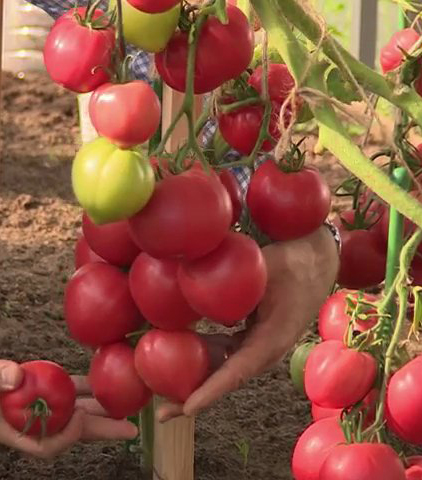
The first ovary appears above the 8th leaf, and subsequent ovaries form at intervals of 1-2 leaves. Each cluster produces 5 to 8 tomatoes.
Fruit
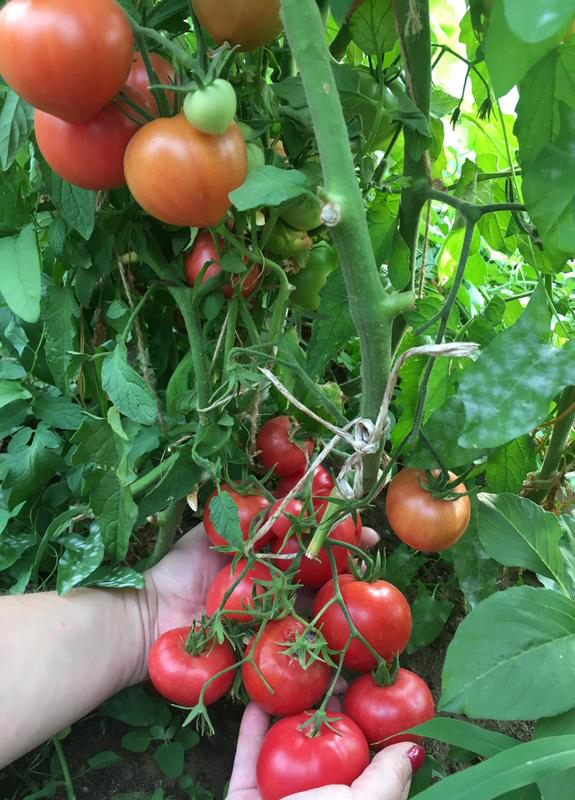
Raspberry Empire tomatoes are round-heart-shaped. They weigh between 140 and 160 grams. The skin is very strong but thin, preventing the fruits from cracking on the vine. The tomatoes are pinkish-raspberry in color, with no light spot near the stem.
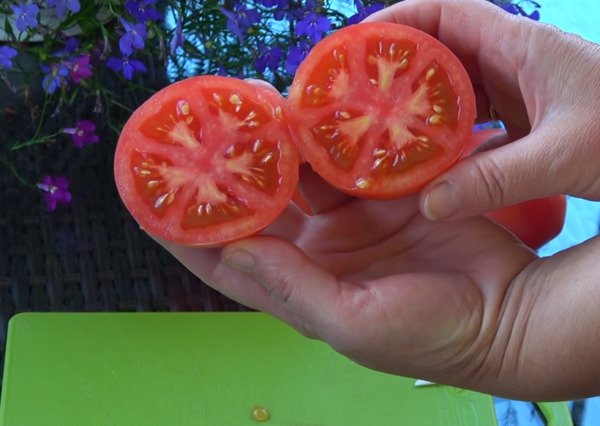
The pulp is sweet and sour, meaty, but not very juicy, so the tomato is considered unsuitable for juice production. There are no more than three seed chambers.
Productivity
The yield of the Raspberry Empire tomato depends on the cultivation method. In a greenhouse, it can reach 5-6 kg per plant, while in open ground, this figure is unlikely to reach 4 kg. Overall, with proper care, 14 to 20 kg of tomatoes can be harvested from one square meter.
Ripening time
The Raspberry Empire variety is an early-ripening tomato; no more than 105 days pass from the moment the seedlings emerge until the first harvest of the season.
Advantages and disadvantages of the tomato variety Raspberry Empire F1
The Raspberry Empire tomato variety has a number of advantages and disadvantages.
| Advantages | Flaws |
|
|
Growing the Raspberry Empire F1 tomato variety
The Raspberry Empire tomato is grown using the classic method typical for most hybrid tomatoes.
Sowing seeds and growing seedlings
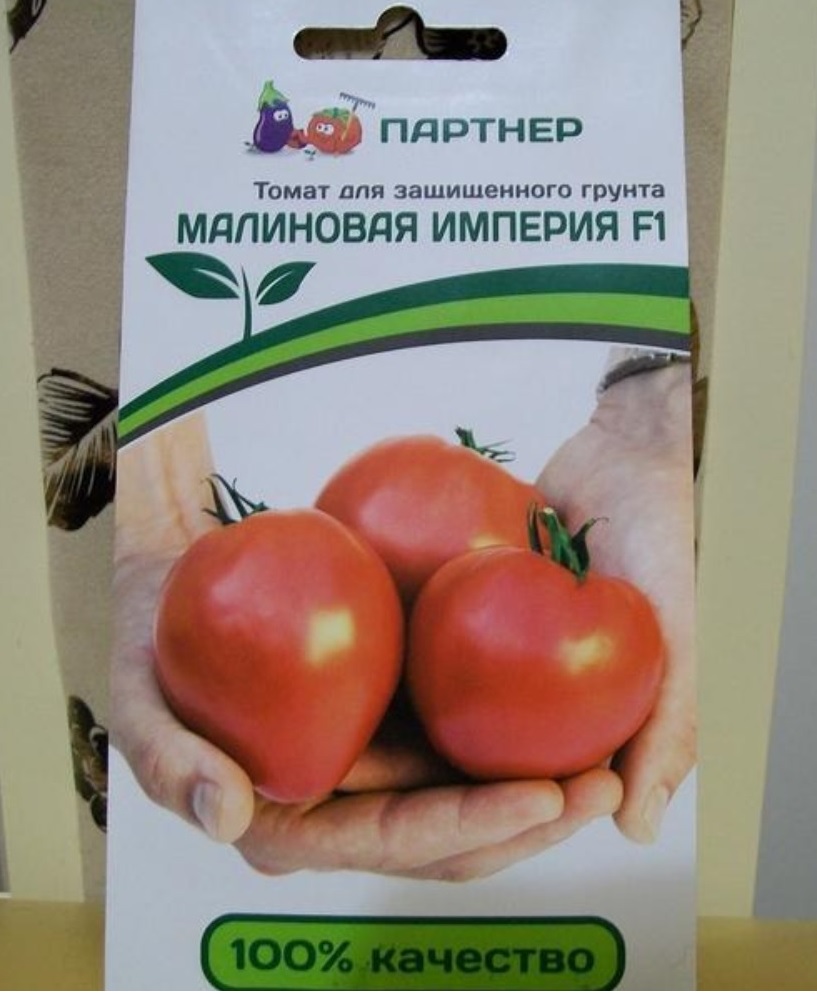
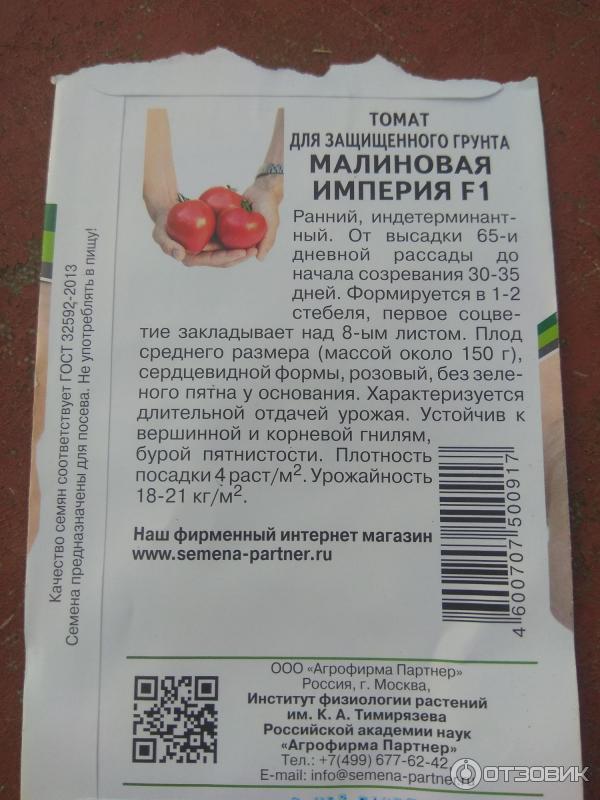
The Raspberry Empire tomato is a hybrid variety. Its seeds are not suitable for germination and can only be purchased from the official grower.
All planting material is usually pre-treated, as indicated by the label on the packaging. Home treatment is not required for these seeds.
Experienced gardeners note that sprouted seeds are more adaptable and have stronger immunity than those planted dry in the ground.
To germinate, the seeds are placed in a damp cloth and left in a warm place until the first sprouts appear.
After this, you can begin planting the seeds. This is done as follows:
- Prepare the planting box. It can be plastic or wooden—it doesn't matter. But if it's used every season, it's important to disinfect it with a weak solution of potassium permanganate.
- Fill the box 2/3 full with potting soil. It's best to buy ready-made potting soil, but you can also mix equal parts of garden soil, sand, peat, and humus.
- Furrows are made 1.5 cm deep, spaced 2 cm apart. Seeds are placed in these furrows at intervals of 1.5-2 cm, then lightly covered with soil.
- Water the plant using a spray bottle or syringe, then cover the container with film or glass and place it in a warm place.
Once most of the sprouts emerge from the soil, the cover can be removed. At this stage, the seedlings should be moved to a cooler location with temperatures between 20 and 22 degrees Celsius.
Once two full-fledged leaves emerge, transplant the seedlings into cups. For the Raspberry Empire variety, it's best to use separate containers, as the root system develops very quickly.
Many gardeners recommend hardening off seedlings 10-14 days before transplanting them into the ground. To do this, they are first taken outside for an hour, then left there for progressively longer periods.
Planting in the ground
The soil in the garden bed is prepared in advance and dug over in the fall. At this stage, fertilizers and other nutrients are added.
In spring, the bed is dug over again. Raspberry Empire tomatoes can be planted in fairly well-warmed soil, with the temperature not dropping below 12 degrees Celsius. In an open bed, it's permissible to initially cover the plants to protect them from frost.
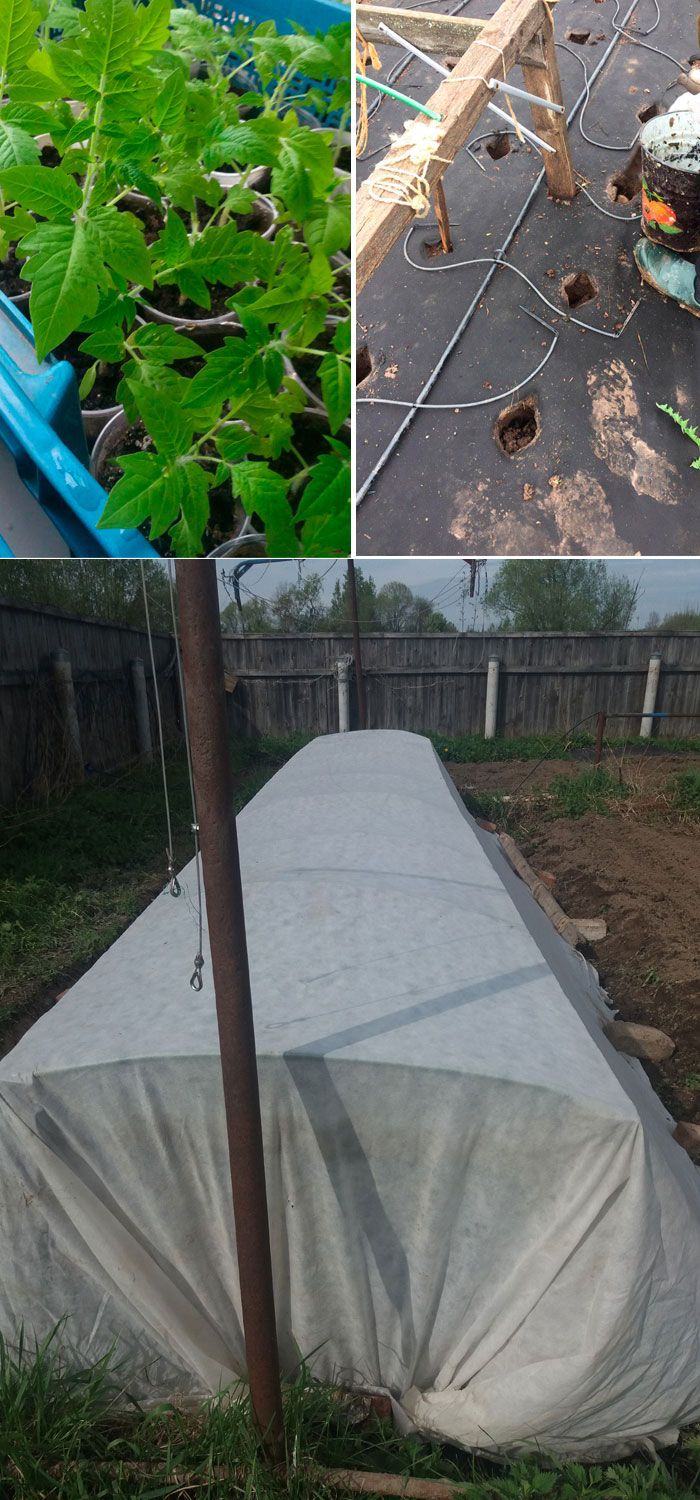
Tomatoes are planted in staggered holes. The Raspberry Empire tomato has a very extensive root system, so the plants should not be planted too close together. The distance between holes should be at least 60 cm. A distance of 70 cm between rows is best.
Each plant is planted in its own hole, along with a lump of soil around its roots. Afterward, the bed surface is watered and mulched.
Care, watering and fertilizing
After transplanting tomatoes, it is necessary to think about a system for tying them up, since tall bushes will not be able to grow without support.
As the green mass forms, all side shoots and extra shoots are removed; the bush must be formed into 1-2 stems.
During fruit set, all leaves are removed from the lower tier of shoots, but no more than five at a time. This allows the plant to focus its energy on fruit formation.
The first watering is done 10 days after planting. Each plant requires about 5 liters of water. Thereafter, water 1-3 times a week, depending on weather conditions.
The Raspberry Empire tomato thrives on fertilizer; without it, the harvest won't be as bountiful as every gardener would like. The first application can be made two weeks after transplanting the seedlings into the garden bed. The interval between applications is 10-14 days. The first two applications should consist of organic matter or ammonium nitrate. Their effect will be aimed at the formation of vegetative mass. The next two to three applications can be made with superphosphates (40 g) and potassium sulfate (25 g), diluted in 10 liters of water.
Resistance of the tomato variety Malinovaya Imperiya F1 to diseases and pests
The Raspberry Empire tomato variety has a strong immune system and is virtually disease-free, even avoiding late blight. However, spraying is necessary for prevention. Bordeaux mixture, Fitosporin, and Confidor Extra are effective.
If signs of fungal diseases appear, spray the plantings with fungicides, repeating the treatment every 10 days. Products such as Ordan, Hom, Ridomil Gold, and others can be used.
If signs of insect pests appear on your bushes, Actellic, Karate, Biotlin, and other products can help combat them.
It is important to remember that any impact on the crops must be stopped 2 weeks before the start of harvesting.
Harvesting, using and storing the tomato variety Raspberry Empire F1
The first harvest begins in early July. From germination to harvest, tomatoes take 95 to 105 days.
Harvested tomatoes can be stored in a cool place for no more than a week, after which they begin to spoil.
The Raspberry Empire tomato is considered a salad variety and is eaten fresh. Smaller varieties can be canned.
Comparison of the tomato variety Malinovaya Imperiya F1 with other varieties in the table
Please note! How can you easily convert centners/ha to kg/sq.m? Simply divide by 100! For example, the Abakansky Pink tomato yields 400 centners of marketable fruit per hectare. This equals 4 kg per square meter. It's that simple! Also, keep in mind that typically no more than 3-4 plants are planted per square meter. This way, you can calculate the yield per bush. In the case of the Abakansky Pink, it's about 1 kg.
| Variety | Ripening period (number of days from full germination to ripening)
Yield of commercial fruits |
Brief description | Fetus |
| Raspberry Empire | 95-110 days
2000 c/ha |
An early-ripening indeterminate variety for greenhouses. Suitable for salads and pickling. | Round-heart-shaped, medium density, medium-ribbed, raspberry, 150-200 g. Excellent taste. |
| Raspberry Liana | 85-90 days 700 c/ha |
An early (ultra-early) determinate standard variety for open ground and greenhouses. Suitable for salads, canning, and processing into tomato products. | Round, smooth, raspberry-pink, 65-90 g. Good taste. |
| Dad | 90-105 days
200 c/ha |
An early-ripening indeterminate variety for open ground and greenhouses. Requires staking and shaping. Suitable for salads. | Heart-shaped, slightly ribbed, medium density, fleshy, raspberry, 200 g. Good taste. |
| nobleman | 103-117 days
107-587 c/ha, maximum 780 c/ha (Omsk region) |
A mid-season determinate variety for open ground. Suitable for salads. 95% marketability. | Heart-shaped, medium-ribbed, raspberry, 131-250 g. Good to excellent taste. |
| Raspberry ringing | 115-120 days
450 c/ha |
An early-ripening determinate variety for open ground and greenhouses. Requires staking and shaping. Suitable for salads. | Round, smooth, medium density, pink, 150 g. Excellent taste. |
| Raspberry Viscount | 95-105 days 500-600 c/ha |
A mid-season determinate variety for greenhouses. Suitable for salads. | Flat-round, large, slightly ribbed, medium density, raspberry, 220-260 g. Excellent taste. |
| Raspberry Giant | 105-110 days
590 c/ha |
An early-ripening determinate variety for open ground and plastic greenhouses. Requires staking and training. Suitable for salads. | Round, slightly ribbed, medium density, raspberry, 200-300 g. Excellent taste. |
| Minusinsk balls | 110-122 days
Up to 1500 c/ha subject to agricultural practices |
A mid-season indeterminate variety for greenhouses. Requires staking and training into single or double stems. Suitable for salads and processing into tomato products. | Round-heart-shaped, ribbed, pinkish-red, 150-250 g. Excellent taste. |
| Raspberry Farmer | 85-90 days
1000 c/ha |
An early-ripening determinate variety for greenhouses. Suitable for salads. | Round, dense, slightly ribbed, raspberry, 50-60 g. Good taste. |
| Crimson Dawn | 110-115 days 790 c/ha |
A mid-season indeterminate variety for open ground and greenhouses. Requires staking and shaping. Suitable for salads. | Heart-shaped, loose, ribbed, raspberry, 350-400 g. Good taste. |
| Raspberry Strongman | 112-116 days
880-900 c/ha |
A mid-season indeterminate variety for open ground and greenhouses. Suitable for canning. | Pear-shaped, large, smooth, medium density, raspberry, 150-190 g. Good taste. |
| Crimson Elephant | 110-120 days
650 c/ha |
An early-ripening determinate variety for greenhouses. Suitable for salads. | Round, slightly ribbed, medium-dense, pink, 150-200 g. Excellent taste. |
| Abakan pink | 120 days or more
400 c/ha |
A late-ripening determinate variety for open ground and greenhouses. Requires staking and training. Suitable for salads and processing into tomato products. | Flat-round, slightly ribbed, medium density and pink in color, 200-500 g. Good taste. |
| Mom's Raspberry Heart | 112-120 days
1200-1500 c/ha |
A mid-season indeterminate variety for greenhouses and open ground. Suitable for salads and canning. | Heart-shaped, ribbed, pink, 300-600 g (up to 1200 g). Excellent taste. |
Gardeners' reviews of the Raspberry Empire tomato variety
Gardeners note the excellent yield of the Raspberry Empire tomato variety and its strong immunity. Thanks to its early ripening, it's resistant even to late blight.
Hello again everyone!!
Well, summer is over, and with it the summer cottage season is coming to an end.
Today I will tell you about another tomato variety, “Raspberry Empire”, from the Partner agricultural firm.
To be honest, I didn't want to write about this variety at all; the seeds are expensive, 100 rubles, and at first they didn't live up to my expectations at all.The seed germination rate was actually 100%, so there are no complaints about the manufacturer in this regard.
But look at the description: it's an early variety!!! If you do the math, we usually sow tall tomato seeds in March, which means, according to the manufacturer's description, we should get our first fruits in June!!!The seedlings were planted in the same greenhouse “Kremlevskaya” that I advertised,
https://otzovik.com/review_6736993.html
It was growing well, but the tomatoes only appeared at the end of July - beginning of August!!!!
Wow, these are early!!
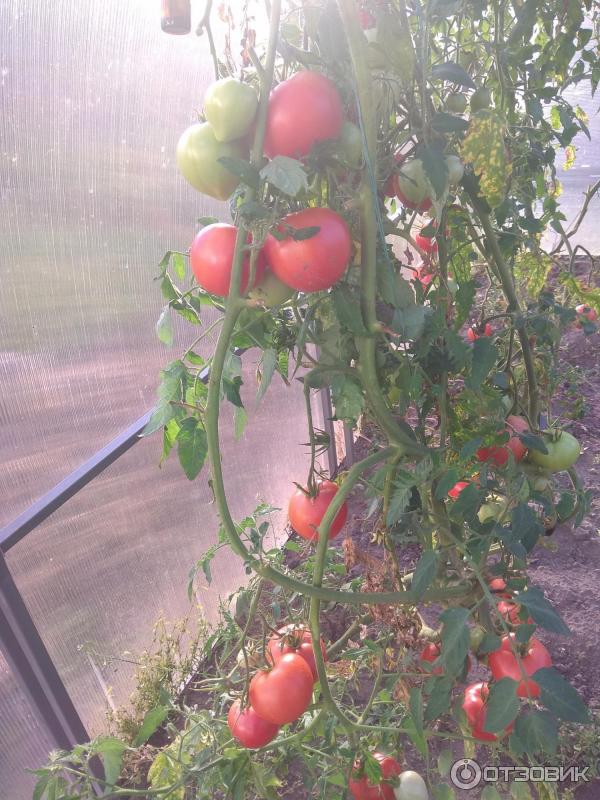
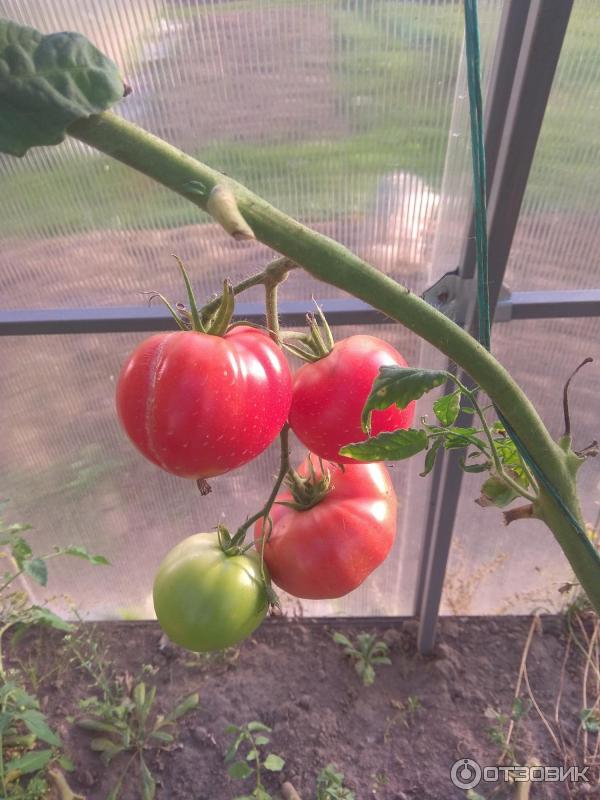
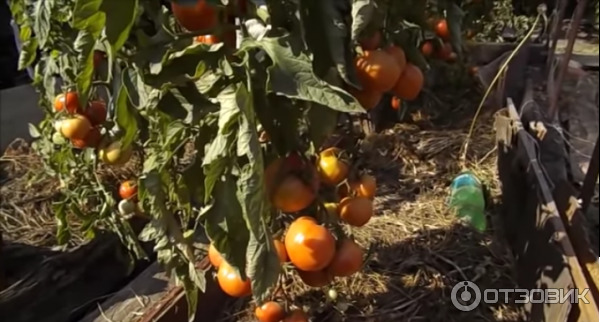
The tomatoes are absolutely gorgeous! There are a lot on the bush; I took the photos after I'd already picked some of them.
Large and sweet, but definitely not for pickling.
I probably won't plant them anymore, but only because they turned out to be quite late, and I might not get a harvest.
For those who live in rural areas and can “wait…” I highly recommend it.Addendum to the review: 2019 - I planted this variety again
Despite my mixed feelings about the Partner agricultural firm, primarily due to their pricing policy, I must say that I will definitely be planting this variety.
There are a lot of tomatoes on the bush, all large and “flawless”.
I recommend it.
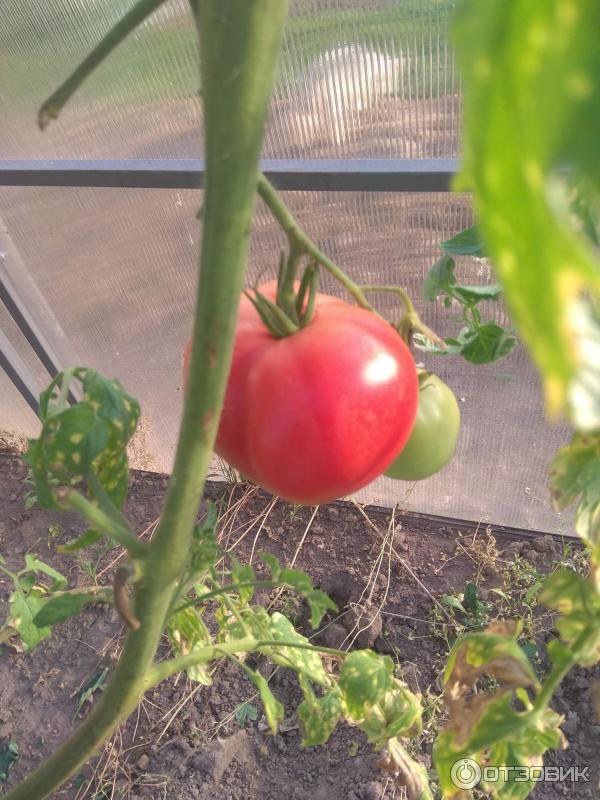
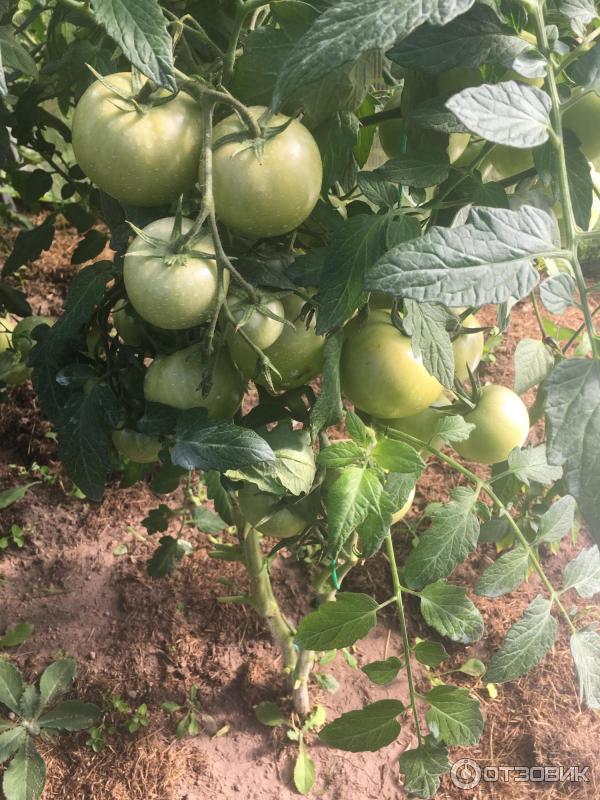
I have mixed feelings about the Partner agricultural company. On the one hand, the planting material is high-quality, and all the stated characteristics are accurate. On the other hand, the seed prices are clearly inflated; for every variety or hybrid, you can find cheaper alternatives from other companies.
But the Raspberry Empire tomato hybrid stands apart. At least, I can't think of a variety that matches its characteristics.
Let's start with the pros:
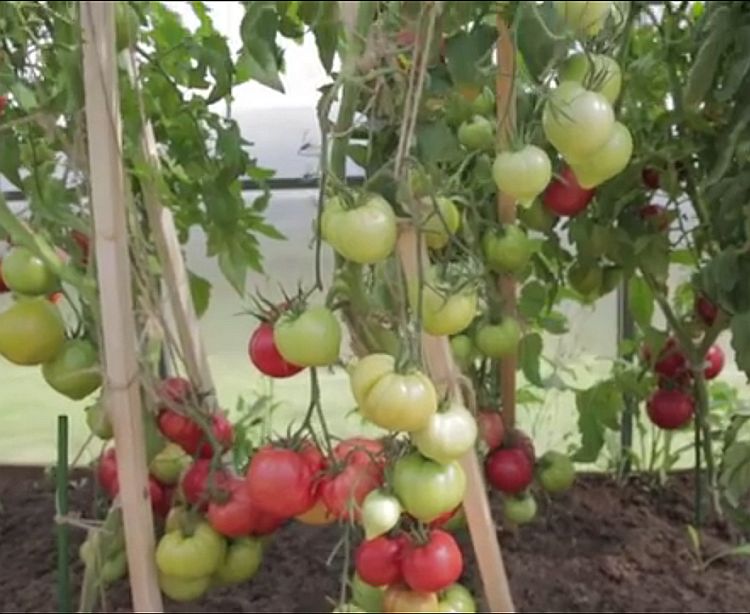
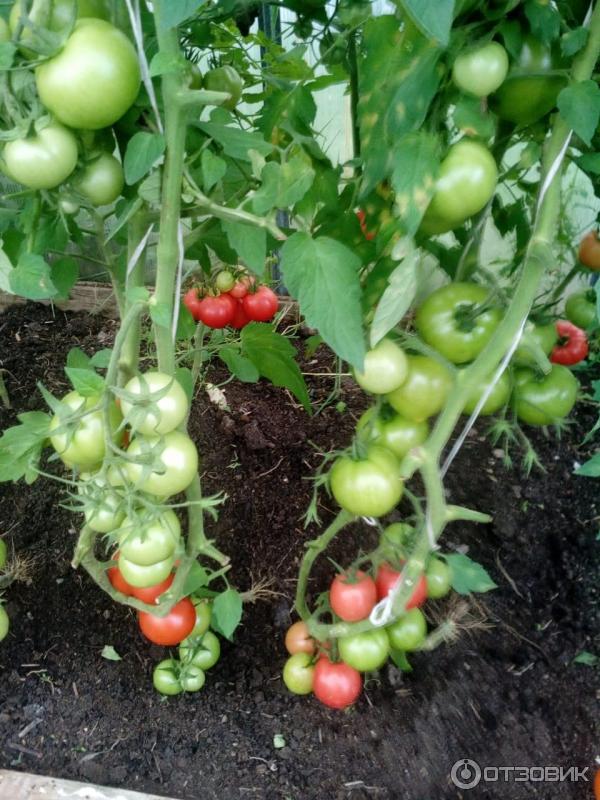
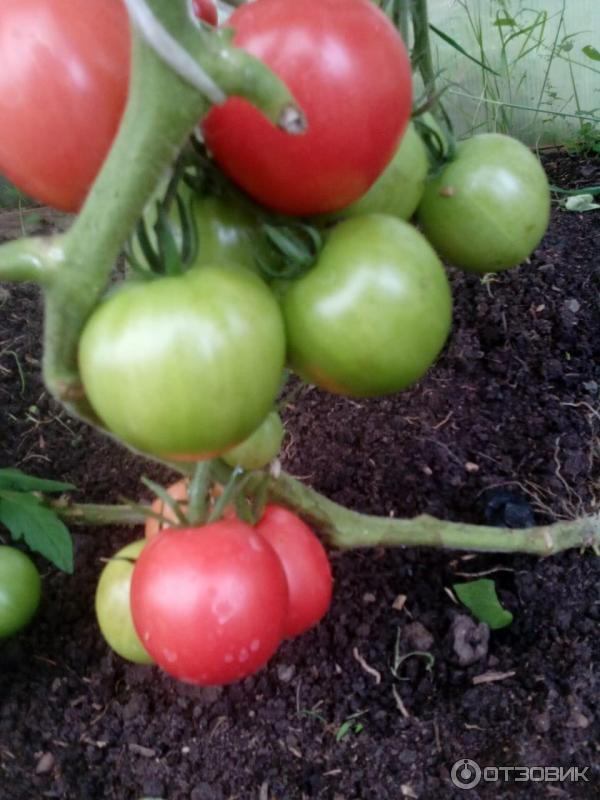
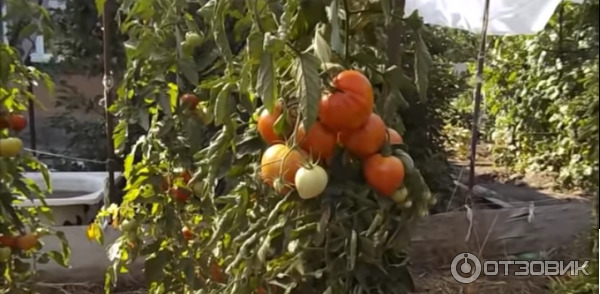
1. The yield is excellent. The bush is dormant, from the ground to the very top. The height in the greenhouse is about 2 meters.In the photo, the Raspberry Empire is on the right.
2. The fruits are a gorgeous pink-raspberry color with a beautiful tapering tip. A real eye-catcher. Unfortunately, the tip isn't visible in the photo, but I assure you—it's there!
3. The flavor is quite good for a hybrid, especially if it's left ripe on the vine for a few days. Fragrant, juicy, and thin-skinned, it's a real treat to eat.
4. Another positive quality of the Raspberry Empire tomato is its early maturity. It begins bearing fruit in mid-July. This is quite early for Perm, considering it was planted in the greenhouse around the twenties of May.
5. The bush isn't sprawling, rarely pruned, and reaches just above the greenhouse ceiling. It didn't require any special care. I think even a beginner could easily manage its cultivation.
6. Seed germination was excellent. Of the four seeds sown, exactly four sprouted.Now the cons:
1. The fruits are small, about 100 grams. I like large tomatoes, or at a pinch, about 150-200 grams. Although this could be because I added a lot of organic matter to the bed in the spring.
2. The leaves are infected with cladosporiosis. There are many hybrids that successfully avoid this disease.
3. Very expensive seeds, one seed costs 10 rubles.As you can see, the pros still outweigh the cons, so we'll be retesting. They won't stop getting cladosporiosis, but I hope the tomato size will reach its 150-gram mark.
Overall, I really liked the Raspberry Empire tomato. I'd recommend it to anyone who loves delicious and beautiful tomatoes.
Hello my dear friends.
My mom and I love to tinker in her garden during the summer. We plant potatoes, cucumbers, watermelons, melons, and many other vegetables. Today, I'd like to tell you about the Partner "Raspberry Empire" tomatoes we grew.
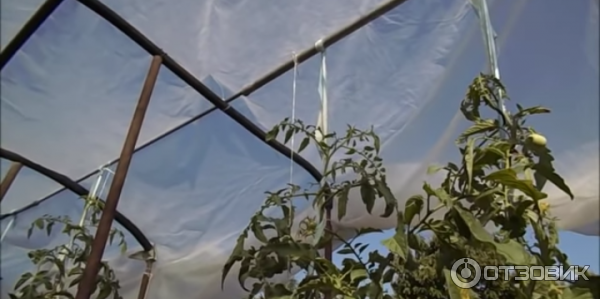
The summer was very hot, so we covered our greenhouse with film to prevent the tomatoes from simply boiling in such heat.
In this photo you can even see how the leaves are starting to wither.
The stems were very long, so they even had to be tied up by the tips.
The tomatoes themselves are very fleshy, as my mother calls them, large and very tasty.
Up to 10 tomatoes grow on one branch.
This variety is perfect for salads and winter preserves.
I recommend purchasing these seeds, as I was simply delighted with them.
I also bought "Partner" seeds: tomatoes named "Raspberry Empire," "Banana Legs," "Verochka," and two others. My friend and I planted them, but only a few sprouted, and then they died. My friend and I only had "Verochka" and an eggplant named "Almaz." These seeds are disgusting!!! Everyone I know who bought "Partner" seeds was disgusted!!! It's a scam!
After the failures of 2017, I firmly decided to plant hybrids!
I spent half the winter scouring the internet in search of a tasty hybrid. I came across a YouTube video called "Harvest Garden," where a sweet girl was praising this variety. My eye lit up, so I bought it. Price: 120 rubles/10 seeds.I planted them in a pot in early March. They all sprouted, but due to lack of sun, only three plants continued to grow. Keep in mind that all Partner hybrids are dependent on light!
I planted them in the greenhouse in early May. I trained them with three trunks! I need to feed them because there are so many tomatoes. They grow in clusters. The tomatoes are heart-shaped. They're easy to grow and will do with whatever you give them without getting too fat. They're simply wonderful!!! They haven't had any illnesses! They bore fruit until the frost! Even though they're a hybrid, the fruits range in weight from 50 to 500 grams. The only downside is the taste; I can't give them a 5 closer than a 4. The skin is thin. They're not suitable for whole-fruit canning, but otherwise, they're priceless!!! I highly recommend them! These are the best from Parter! I'll be planting more!