The Raspberry Viscount tomato is easy to grow, making it a popular choice among gardeners. Furthermore, it produces an excellent harvest and is virtually immune to common tomato diseases. More detailed characteristics are provided in the article.
Content
- 1 Table with characteristics of the Raspberry Viscount tomato variety
- 2 Photo gallery of the Raspberry Viscount tomato variety:
- 3 The origin of the Raspberry Viscount tomato variety
- 4 A detailed description of the Raspberry Viscount tomato variety
- 5 Bushes
- 6 Advantages and disadvantages of the Raspberry Viscount tomato variety
- 7 Planting Features of the Raspberry Viscount tomato variety
- 8 Care, watering and fertilizing of the Raspberry Viscount tomato variety
- 9 Resistance of the Raspberry Viscount tomato variety to diseases and pests
- 10 Harvesting, using and storing the Raspberry Viscount tomato variety
- 11 Comparison of the Raspberry Viscount tomato variety with other varieties in the table
- 12 Real reviews from gardeners about the Raspberry Viscount tomato variety
Table with characteristics of the Raspberry Viscount tomato variety
| Characteristic | Description |
| Description | A mid-season determinate tomato that can be grown in a greenhouse or in open ground (according to the register for film greenhouses). |
| Ripening period | 95-105 days |
| Fruit weight | 200-260 g |
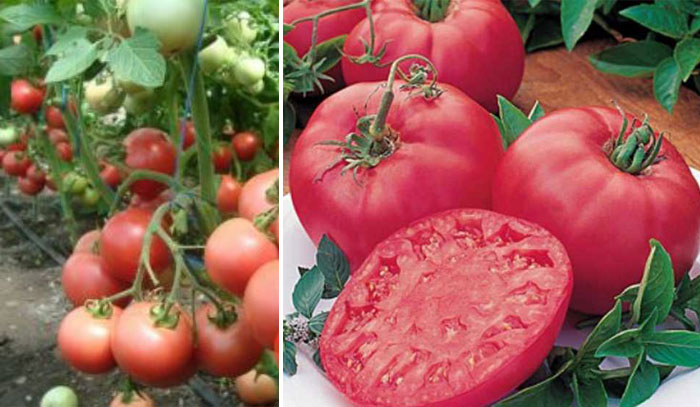
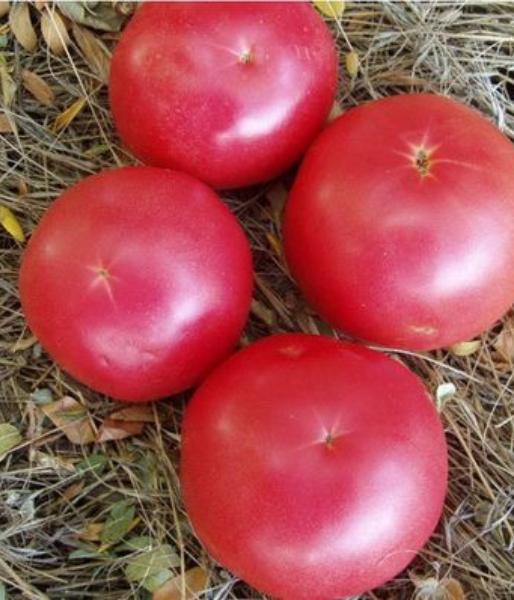
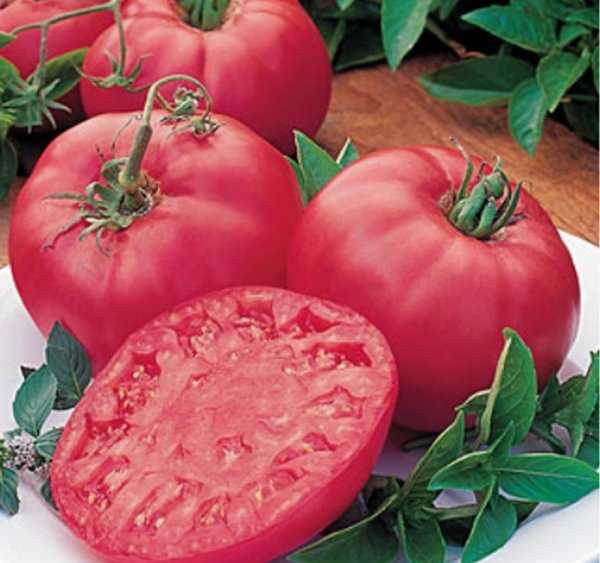
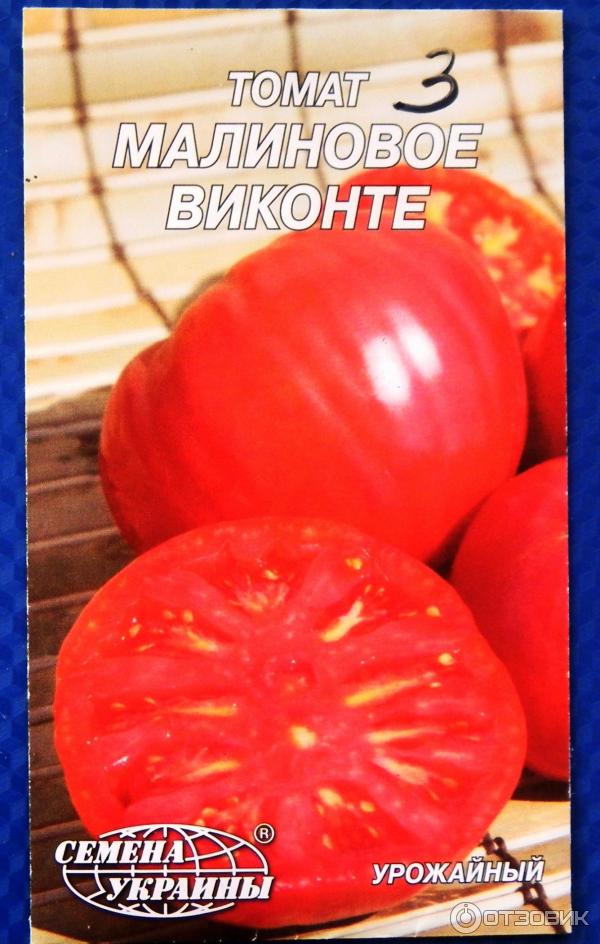
| Description of the fruit | The tomatoes are dark crimson in color, flat-round, large, slightly ribbed, and of medium density. |
| Productivity | 500-600 c/ha |
| Usage | Salad variety (for fresh eating). Tomatoes are used for processing into sauces, pastes, and juices. Excellent flavor. |
| Preferred growing regions | It can be grown in different regions of the country, but the method depends on weather conditions. |
| Disease resistance | It is characterized by strong immunity and is practically not susceptible to late blight. |
| Agricultural technology | The bushes are compact, but due to the heavy fruits they need to be tied up. |
| 2015 | |
| Originator | LLC 'BREEDING FIRM GAVRISH' |
Photo gallery of the Raspberry Viscount tomato variety:
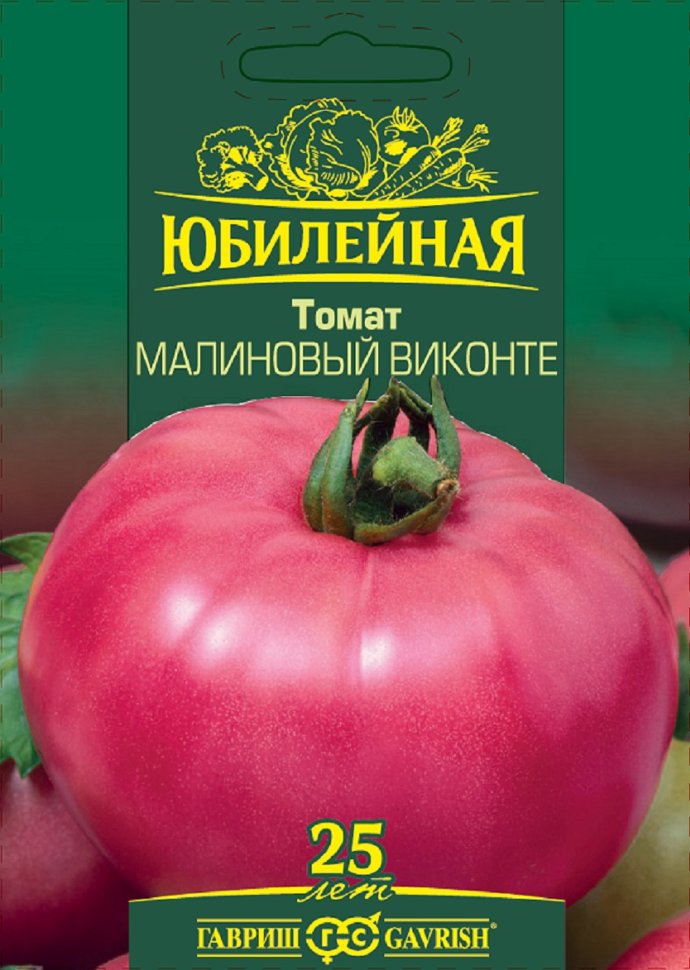
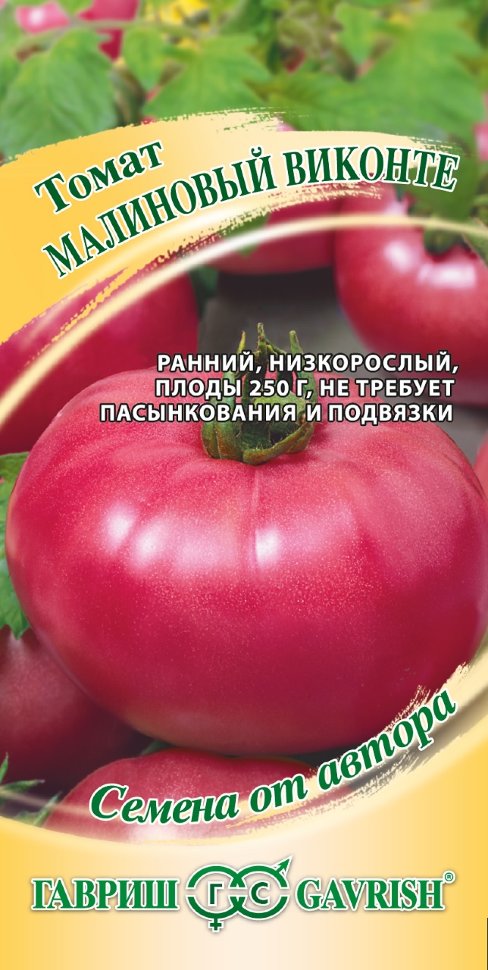
The origin of the Raspberry Viscount tomato variety
The Raspberry Viscount was developed by breeders at Gavrish, a company that distributes seeds throughout the country and neighboring countries. A patent was filed in 2013, but the tomato received official recognition only in 2015.
A detailed description of the Raspberry Viscount tomato variety
Raspberry Viscount is a productive, mid-season variety with excellent immunity and delicious fruit. Let's take a closer look at its characteristics.
Bushes
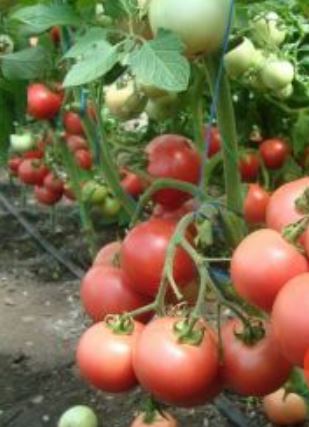
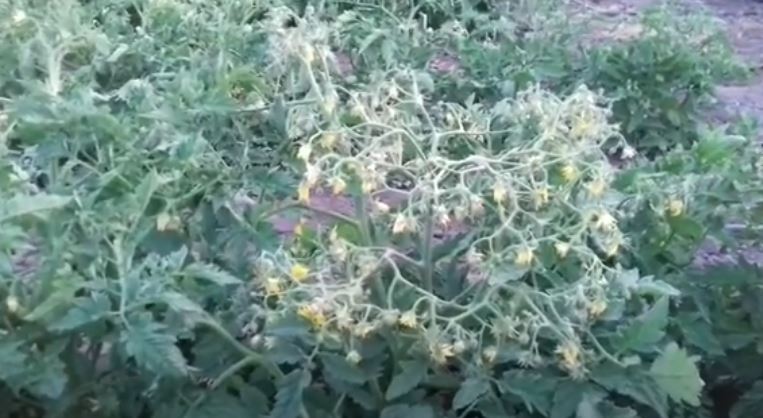
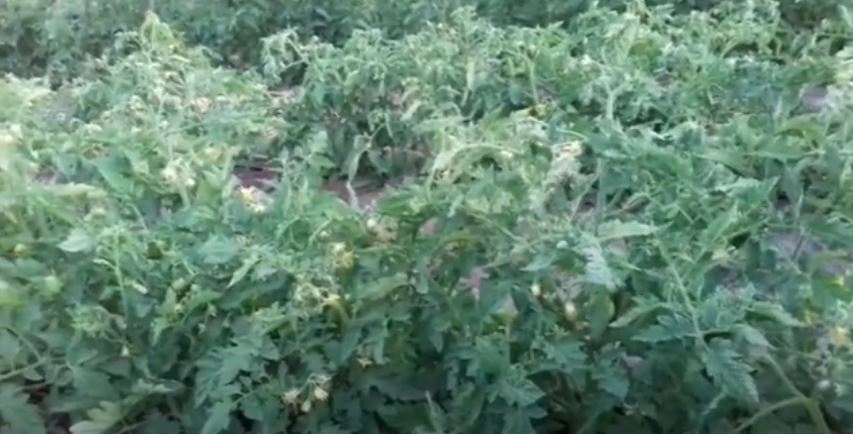
This determinate variety produces very compact bushes. Shoots grow to an average height of 55 cm. Foliage is medium, with wide, dark green leaf blades.
Despite the relatively short stems, they produce a large number of fruits, so the tomato plant definitely requires staking. The bush does not require pinching.
Fruit
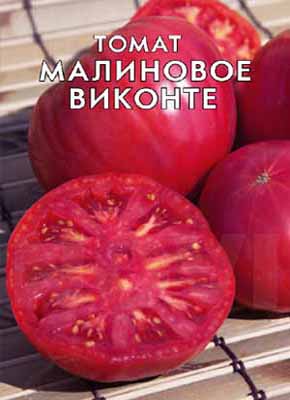
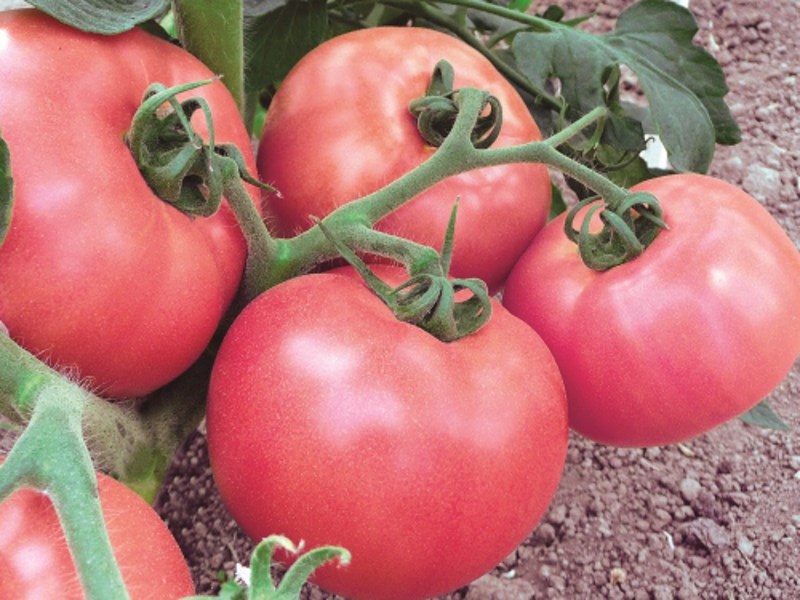
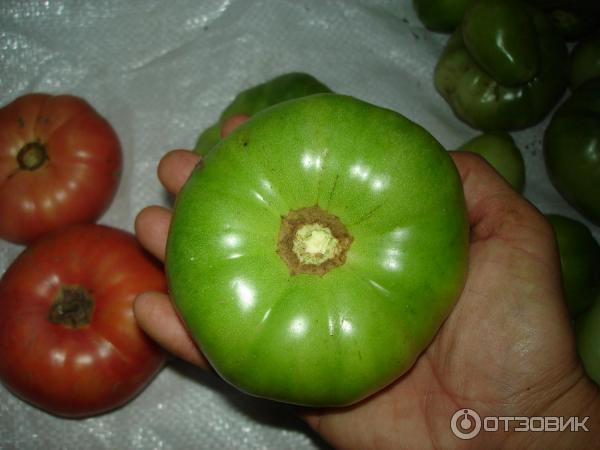
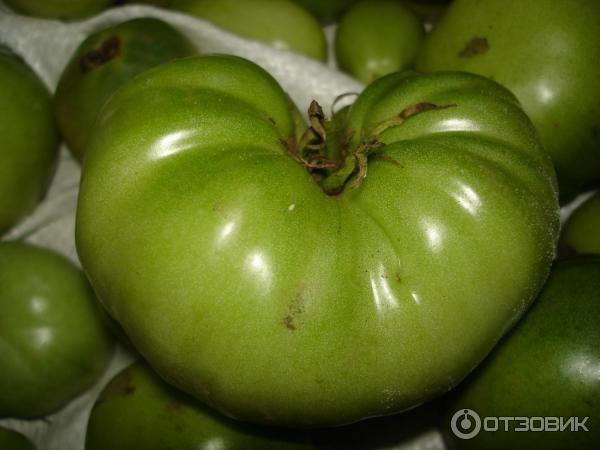
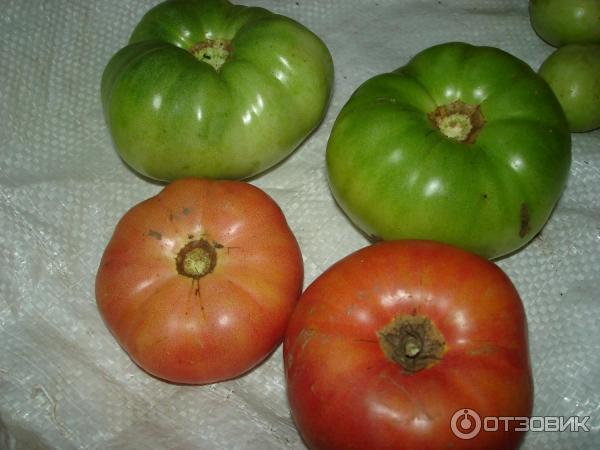
The fruits of the Raspberry Viscount are flattened and slightly flattened. The ribbing is subtle.
The tomatoes are burgundy in color, with thin but firm skin. They ripen evenly, weighing between 200 and 260 grams, even when still green. Under favorable conditions, individual tomatoes can reach 450 grams.
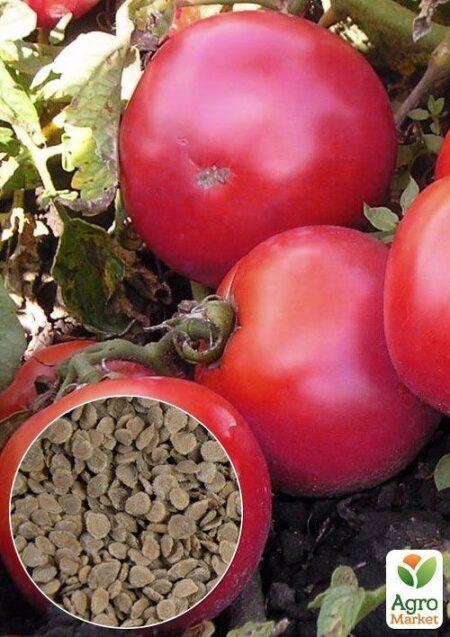
The pulp is very juicy, with a sweet and sour taste, and a dry matter content of 4.5%. It contains 8 to 10 partitions; the seeds are not very large, but there are enough of them inside for harvesting.
Productivity
This variety is characterized by good yields, with up to 6 kg of tomatoes harvested per square meter with proper care. This means the average yield is 500-600 c/ha.
Ripening time
Raspberry Viscount is a mid-season variety, with fruits ripening in 95-105 days from germination. However, in southern regions, it is considered an earlier variety, with fruits reaching maturity in 90 days.
Advantages and disadvantages of the Raspberry Viscount tomato variety
The Raspberry Viscount has its own advantages and disadvantages, which are listed in the table below.
| Advantages | Flaws |
|
|
Planting Features of the Raspberry Viscount tomato variety
Raspberry Viscount is suitable for all regions, the only difference being the growing methods: in the south, tomatoes can be planted in open ground, while in cooler regions, a greenhouse is essential.
Sowing seeds and growing seedlings of the Raspberry Viscount tomato variety
Raspberry Viscount is best planted using seedlings. From sowing to transplanting the tomatoes to their permanent beds typically takes 55 to 60 days. The exact start date depends on the region; in the south, sowing occurs in February to early March, and in the north, in April.
The Raspberry Viscount has about 10 internal partitions, so its seeds are quite mature and can be collected for planting. In this case, they will need to be disinfected by soaking them for 20 minutes in a weak solution of potassium permanganate. Many gardeners prefer additional treatment, for example, with an Epin solution.
If you plan to use store-bought seeds, information about their pre-sale preparation should be indicated on the packaging. If the tomatoes have been processed, there is no need to disinfect or soak them additionally.
All tomatoes prefer well-drained soil, and the Raspberry Viscount is no exception. The easiest way is to use a ready-made soil mix, which is available in specialty stores. However, if this isn't available, you can mix equal parts garden soil, humus, and river sand for the seedlings. To regulate moisture levels, experienced gardeners recommend adding a small amount of vermiculite (no more than 15% of the total volume).
It's best to plant seeds after they've sprouted. To do this, place them in a damp cloth for a couple of days and then store them in a warm place. Be careful not to let the cloth dry out.
There are many planting options—paper rolls, cups, peat pellets, and the like. But many gardeners prefer to use a traditional seed tray. It's half-filled with soil, and furrows up to 10 mm deep are dug into the soil. The seeds are placed in the tray, sprinkled with soil, and sprayed. The tray is then covered with glass or plastic and placed in a well-lit area with a temperature of 24 to 26°C.
Make sure condensation doesn't accumulate inside! To prevent this, ventilate your "mini-greenhouse" periodically.
Once the sprouts are large enough to support the cover with their crowns, you can gradually remove it. It's best not to do this abruptly, to avoid stressing the seedlings.
Next, the open box with the tomatoes is moved to a cooler room with a temperature of 22°C. At this stage, it's important to provide the seedlings with good lighting to prevent the shoots from stretching for the sun and to strengthen them. A special grow light will help increase the length of daylight.
Plants should be sprayed as needed, but it is absolutely necessary to avoid stagnant moisture at the roots, as this can lead to rot.
As soon as 3 full-fledged leaves grow on the shoots, it is time to transplant them into separate containers.
Planting the Raspberry Viscount tomato variety in the ground
Seedlings can be planted in 55-60 days. The exact start date varies by region. Gardeners in southern regions can plant seedlings in open beds, while those in the central and northern regions are advised to use plastic covers and greenhouses.
You need to prepare the soil for planting in the fall, then in the spring, when you dig it up again, the work will be easier, and you won’t have to apply fertilizers.
Dig holes 40-50 cm apart and 25 cm deep. The holes should be wide enough to accommodate the soil from the cup, including the roots. After planting the tomatoes, it's best to mulch the surface of the bed to prevent root burn and retain moisture.
The optimal distance between rows is 60-70 cm.
Care, watering and fertilizing of the Raspberry Viscount tomato variety
After transplanting tomatoes, they are given 10 days to adapt - during this time there is no need to apply any fertilizer.
Water as needed, increasing the frequency and volume as the tomatoes grow. Avoid allowing moisture to stagnate around the roots, as this increases the risk of rot. However, long gaps between waterings can also lead to problems: tomatoes on the vine may begin to crack.
To strengthen the immune system and increase crop yields, experienced gardeners recommend using a solution of mullein (500 ml per 10 liters of water) or weeds.
During the period of active fruit formation, plants require potassium and phosphorus, so at this stage it is most effective to use specialized complex fertilizers.
Despite the relatively short shoots (about 55 cm), they require tying up to prevent the stems from cracking under the weight of the fruit.
The Raspberry Viscount variety does not require pinching.
Resistance of the Raspberry Viscount tomato variety to diseases and pests
The Raspberry Viscount tomato boasts a strong immune system, allowing it to withstand viral and fungal diseases. It's one of the few varieties virtually immune to late blight, as the crop often ripens before it becomes active.
But this doesn't mean plants don't need preventative care. Be sure to treat your plants with Bordeaux mixture and Fitosporin solution, which provide protection against adverse environmental factors.
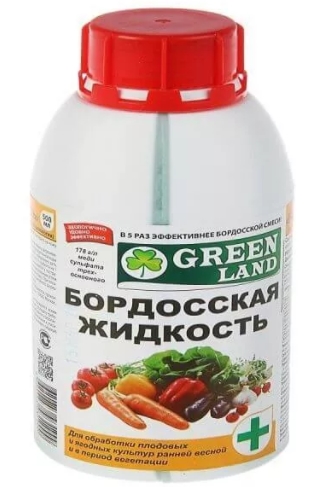
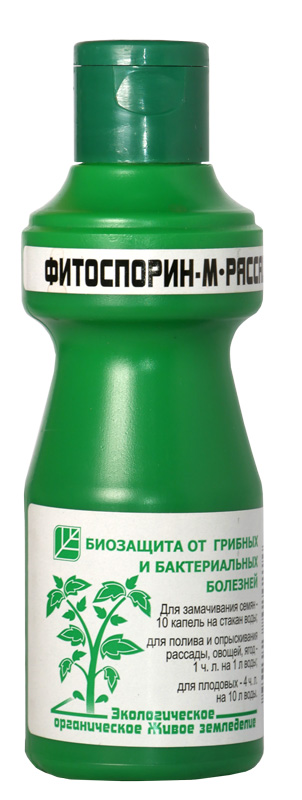
Proper care, watering, and maintaining humidity levels will help strengthen the immune system and reduce the risk of disease.
Harvesting, using and storing the Raspberry Viscount tomato variety
The Raspberry Viscount harvest ripens within 95-105 days from germination. In greenhouses, this occurs slightly earlier, and in open beds, slightly later.
It is permissible to harvest tomatoes at the stage of technical maturity; they will reach the required condition at home.
The skin of the fruit is thin, so they won't keep for long. In the refrigerator, tomatoes will keep for about two weeks without losing their flavor.
This variety is marketed as a salad variety. Indeed, these tomatoes will enhance any dish with their juicy flesh and pleasant flavor. Only small tomatoes are suitable for whole-fruit canning. Even then, removing the tomatoes from the jar is quite difficult—the skin tears. Therefore, it's best to use the fruits for processing into sauces, juices, pastes, and ketchup. Tomatoes of this variety are often dried and cured.
Comparison of the Raspberry Viscount tomato variety with other varieties in the table
Please note! How can you easily convert centners/ha to kg/sq.m? Simply divide by 100! For example, the Abakansky Pink tomato yields 400 centners of marketable fruit per hectare. This equals 4 kg per square meter. It's that simple! Also, keep in mind that typically no more than 3-4 plants are planted per square meter. This way, you can calculate the yield per bush. In the case of the Abakansky Pink, it's about 1 kg.
| Variety | Ripening period (number of days from full germination to ripening)
Yield of commercial fruits |
Brief description | Fetus |
| Raspberry Viscount | 95-105 days
500-600 c/ha |
A mid-season determinate variety for greenhouses. Suitable for salads. | Flat-round, large, slightly ribbed, medium density, raspberry, 220-260 g. Excellent taste. |
| Raspberry Giant | 105-110 days
590 c/ha |
An early-ripening determinate variety for open ground and plastic greenhouses. Requires staking and training. Suitable for salads. | Round, slightly ribbed, medium density, raspberry, 200-300 g. Excellent taste. |
| Raspberry wine | 105 days
1200-1400 c/ha (greenhouse and under film) |
An early-ripening determinate variety for open ground and greenhouses. Requires staking and shaping. Suitable for salads. | Round, large, smooth, medium density, raspberry, 350 g. Excellent taste. |
| Raspberry Farmer | 85-90 days 1000 c/ha |
An early-ripening determinate variety for greenhouses. Suitable for salads. | Round, dense, slightly ribbed, raspberry, 50-60 g. Good taste. |
| Crimson Dawn | 110-115 days
790 c/ha |
A mid-season indeterminate variety for open ground and greenhouses. Requires staking and shaping. Suitable for salads. | Heart-shaped, loose, ribbed, raspberry, 350-400 g. Good taste. |
| Raspberry Strongman | 112-116 days
880-900 c/ha |
A mid-season indeterminate variety for open ground and greenhouses. Suitable for canning. | Pear-shaped, large, smooth, medium density, raspberry, 150-190 g. Good taste. |
| Crimson Elephant | 110-120 days
650 c/ha |
An early-ripening determinate variety for greenhouses. Suitable for salads. | Round, slightly ribbed, medium-dense, pink, 150-200 g. Excellent taste. |
| Abakan pink | 120 days or more 400 c/ha |
A late-ripening determinate variety for open ground and greenhouses. Requires staking and training. Suitable for salads and processing into tomato products. | Flat-round, slightly ribbed, medium density and pink in color, 200-500 g. Good taste. |
| Agatha Plus | 98-113 days
301-798 c/ha |
An early-to-mid-early determinate variety for open ground. Suitable for salads. | Round, smooth, medium density, red, 128-190 g.
The taste is good and excellent. |
| Manych | 92-97 days
610 c/ha |
Early maturing determinate variety for greenhouses. Suitable for salads. | Flat-round, slightly ribbed, dense, red, 200 g. Good taste. |
| Bear's paw | 110-115 days 710 c/ha |
A mid-season determinate variety for open ground. Requires staking and shaping. Suitable for salads. Marketability: 93.0% (Altai Krai). Heat-resistant. | Flat-round, smooth, fleshy, red, 115-300 g (up to 500 g). Excellent taste. |
| Michurinsky | 90-95 days
800-1000 c/ha |
An early-ripening determinate variety for open ground and greenhouses. Suitable for salads, canning, and processing into tomato products (ketchup and sauce). | Round, smooth, red, 80-100 g. The taste is good and excellent. |
| Potato raspberry | 100-105 days
up to 1800 c/ha |
A mid-season, indeterminate, standard variety for open ground and greenhouses. Requires staking and training. Suitable for salads, canning, and processing into tomato products. | Flattened-round, raspberry, 700-800 g. Excellent taste, sugary, rich. |
| Perseus | 108-115 days
600-800 c/ha |
A mid-season determinate variety for open ground and greenhouses. Suitable for salads and canning. | Flat-round, smooth, red, 110-180 g. Good taste. |
| Petrusha the gardener | 111-115 days
640 c/ha (open ground) |
A mid-season, determinate, standard variety for open ground. Suitable for salads. | Cylindrical with a pointed top, smooth, medium density, raspberry, 150-180 g. Good taste. |
| Pink miracle | 70-90 days (in a greenhouse and in open ground)
230 c/ha |
An ultra-early determinate variety for open ground and greenhouses. Requires staking and shaping. Suitable for salads. | Round, smooth, medium density, raspberry, 100 g. Excellent taste. |
Real reviews from gardeners about the Raspberry Viscount tomato variety
The Raspberry Viscount variety has gained widespread popularity among gardeners for its low maintenance and high yield. Consumers note that the tomatoes ripen evenly, with all the fruits being of a uniform size. The juicy flesh makes the perfect tomato juice. A drawback is the deep stem, which is difficult to remove without damaging the flesh.
These tomatoes with a strange name were recommended to me by a seed seller three years ago. I wasn't expecting anything unusual, but now I never part with them, not even for a single season; I'm so taken with these gorgeous tomatoes.
It all started when I sowed a packet of Raspberry Viscount seeds in a greenhouse specially equipped for tomato seedlings. I bought only one because it was expensive, and there weren't many seeds in a packet (I don't remember exactly how many). I placed the paper packet next to it to mark the varieties.
The seeds germinated quickly, and the seedlings later were noticeably different from other varieties. They had thicker stems, were very strong, and not very tall. Since they had grown stronger than all the others, I transplanted them into open ground earlier. There, they all took root successfully and began growing vigorously.
The Malinovoye Viscounte variety is short, yet it consistently produces several ovaries at a time. I'd even say that with regular harvesting (every 2-3 days), I was regularly picking several tomatoes from a single bush. I should also note that each fruit grows quite large, averaging 200-300 grams, and this is without any special care or conditions.
The fruits themselves are pink (they belong to the pink variety), not smooth, but rather ribbed. They're not easy to pick from the branches; it's best to pluck them with the green stem, which, incidentally, needs to be removed somehow later, and it's not very easy to break off. But these are minor details.
The tomatoes have a neat appearance, each one a perfect match, and I really admire them when I pick them. They generally stay the same size throughout the season, don't get smaller, and are already quite hefty even when they're still green.
The taste is excellent; these tomatoes are more suited for salads, with a sweet flavor and very tender flesh. The skin is very thin. They produce a lot of delicious tomato juice (they're very juicy), so I use them for preserves that specifically require the juice or pulp. I tried pickling a few, but they barely fit in the jar (I selected the smallest ones), and then it's simply impossible to get them out whole. Not only are they large, but they're also very tender, but they're so delicious...
And, of course, in the summer, in season, salads, salads, salads... these tomatoes are simply incredibly tasty when fresh, you can eat them without salads, just like that.
And since last year, I've been collecting seeds myself from the tomato varieties I like, and I always save the Raspberry Viscount for future use. A single tomato can yield a ton of seeds, which, if planted later, will completely replicate the characteristics of the parent plant. Now, instead of buying them, I collect and save them.
I love everything about these tomatoes, but I'll add a "spoon of iodine to the barrel of honey"—I've already mentioned that the stem is quite difficult to remove and penetrates deep into the tomato. And because the tomatoes aren't smooth but have "ridges" at the top, it's not very easy to cut or carve, requiring a lot of pulp to be removed. However, the inside of the tomato is completely soft, with absolutely no hard core (which is now found in many varieties).
I definitely recommend it! It's an excellent variety, early ripening, and disease-resistant (never had any problems, and they're immune to late blight). Those minor flaws may just seem that way to me, but they're no reason to give up on these excellent-tasting tomatoes.
Hi all
Here I show new seeds several times.
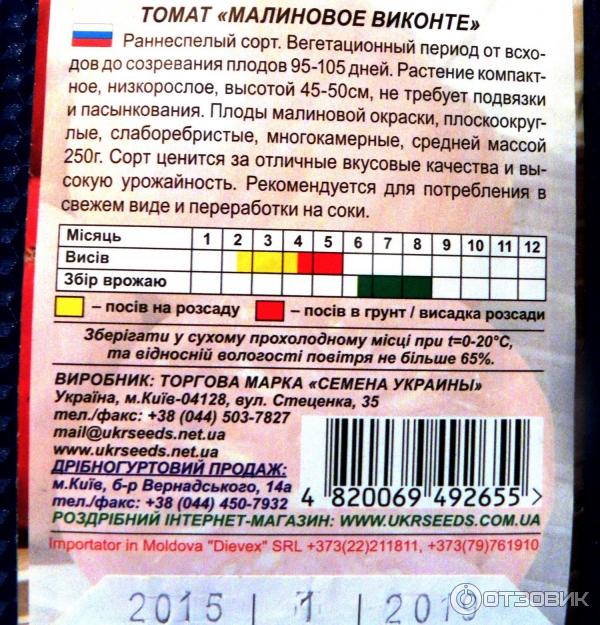
Today I'll tell you about the tomato seeds of the Raspberry Viscount variety.
This is an early variety of tomatoes.
We have been growing these tomatoes for three years.
An early-ripening variety. Grown from seedlings.
We plant it in a container at the beginning of March.
We plant in open ground at the end of April.These products are manufactured and sold to customers by the Seeds of Ukraine trademark.
The variety has proven itself to be very productive. Its excellent qualities are why we fell in love with it.
These tomatoes don't require any special agricultural techniques, everything is as usual.
This variety is excellent for making tomato juice.
We are pleased with this variety and recommend everyone to have this wonderful variety in their garden.
Tested and recommended for you
This is not the first time we've talked about tomatoes.
I'm saying again and again that they are useful and that you can't do without them in your garden.
Tomato Seeds Search "Banana Yellow"
Tomato seeds "Bull's Heart"Tomato seeds "Black Icicle"
We've touched on this topic so many times. I thought we'd never talk about tomatoes again, but today we bought another packet of seeds. I wouldn't have bought them just like that, but that neighbor from the dacha again. How he praised them. You should have heard them.
I heard them too, but I had enough of my own before.A little about the variety. This early-ripening tomato variety has become popular with gardeners and homesteaders for its flavor and high yield. Its growing season lasts 100 days. That's good.
The plant is compact, no more than half a meter in height (40-55 cm).
We never stake or tie them down. The plant itself holds up the entire crop without any assistance.
The next advantage is that they don’t need to be side-sonned.
The fruits of this variety are good for salads and for making tomato juice for future use.After February 20th, we plant tomatoes as seedlings, but no later than March 10th.
Yes, take a look at the lunar calendar for 2017, it has already been published.
Planting in open ground should be done in late April, or early May at the latest. And also on a favorable day.
You will see everything else for yourself when you enjoy the huge harvest.
Well, that's all for today.Peace and goodness to you

An interesting new variety with large, tasty pink fruits. Last year, I grew it in a regular garden bed outdoors. The results exceeded all expectations. Despite its short stature, the "Raspberry Viscount" tomato proved very productive. I also appreciated its ease of care. The bushes grow compactly and don't require staking or removing side shoots. This saves a lot of time. I sowed the seeds in late March. I planted them in the garden beds in early May under double plastic cover. At the end of May, I removed one cover. In mid-June, I uncovered them completely, gradually acclimating them to the outdoors. The first ripe fruit appeared in mid-July. The whole family tried them and were very pleased. The fruits of the "Raspberry Viscount" tomato turned out to be tasty and juicy.
In summer, there's nothing better than relaxing outdoors at your dacha with your family, enjoying chicken wings or shashlik. A trip to the countryside, even with such delicious treats, wouldn't be complete without a fresh vegetable salad.
The best vegetables grow naturally in their own garden beds. After much deliberation, I decided to plant a variety of vegetables at my dacha. Tomatoes were no exception. Hundreds of varieties are available in specialty stores. I fell in love with the Gavrish *Raspberry Viscount* tomato. For a good harvest, I bought four packs of seeds, as I have a large family. I first sowed the seeds in a greenhouse to prevent the leaves from turning black from night frosts. After germination, stem development, and a strong root system, I planted them in regular soil and in the wild. Growth was normal, but don't forget to water them at least every two days. I harvested the first fruits just 1.5 months after planting. A large harvest was achieved within 2-2.5 months. The tomatoes themselves are a bit unusual—they aren't bright red (they're pink), and the tomatoes are large and juicy. Frankly, they're not suitable for canning. A great option for salads or tomato juice for the winter. They can also be used in canned borscht dressings. I grew enough for everyone and for various needs; I didn't know what it was like to buy tomatoes over the summer.
A super-tasty tomato, it doesn't crack and is very productive. Plus, the seeds germinate well, and the fruit is a rich red color throughout. It produces excellent juice. Overall, I really liked these seeds and am happy with my choice.
I recommend it to everyone: [cut by moderator]