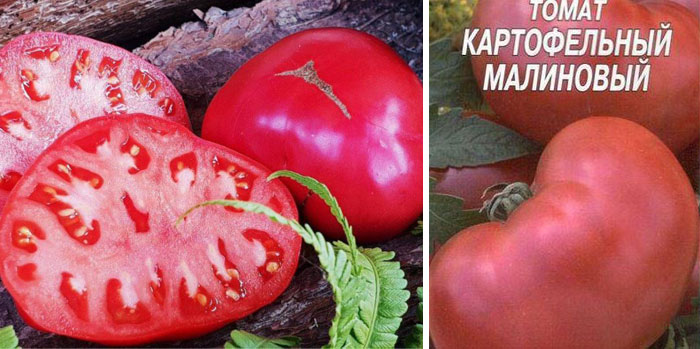
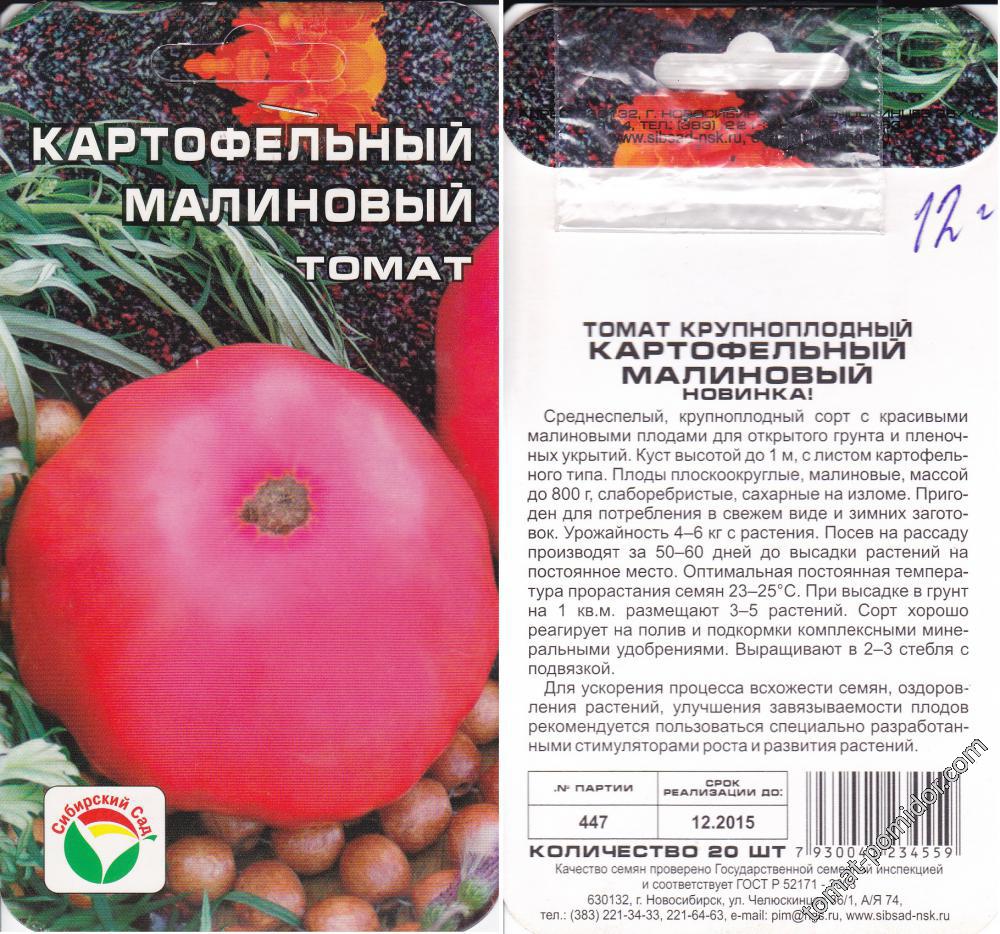
The Raspberry Potato Tomato is an interesting variety that produces excellent yields, and the bushes look very similar to potato tops.
Content
- 1 Table with characteristics of the tomato variety Potato Raspberry Tomato
- 2 Photo gallery of the tomato variety Potato Raspberry
- 3 The origin of the tomato variety Potato Raspberry Tomato
- 4 A detailed description of the tomato variety Potato Raspberry Tomato
- 5 Advantages and disadvantages of the Potato Raspberry tomato variety
- 6 Planting Features of the Raspberry Potato Tomato Variety
- 7 Caring for the Potato Raspberry tomato variety, watering and fertilizing
- 8 Resistance of the tomato variety Potato Raspberry to diseases and pests
- 9 Harvesting, using and storing the Potato Raspberry tomato variety
- 10 Comparison of the Potato Raspberry tomato variety with other varieties in the table
- 11 Real reviews from gardeners about the Potato Raspberry tomato variety
Table with characteristics of the tomato variety Potato Raspberry Tomato
| Characteristic | Description |
| Description | An indeterminate standard variety with bushes up to 1.2 m, large fruits and excellent yield. |
| Ripening period | 100-105 days. |
| Fruit weight | 400-800 g |
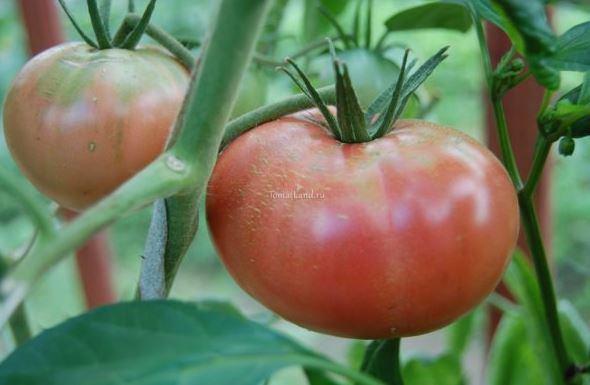
| Description of the fruit | The fruits are large, slightly flattened, ribbed, and raspberry-colored. |
| Productivity | From 1800 c/ha |
| Usage | Not suitable for whole-fruit canning, but widely used in processed preserves. Eaten fresh, it makes a wonderful addition to any dish. |
| Preferred growing regions | Suitable for all regions, provided grown in a greenhouse. In the south, it can be grown in open ground. |
| Disease resistance | It is resistant to cancer, viral diseases, and late blight, but if care rules are not followed, it can be affected by brown rot. |
| Agricultural technology | It bears fruit well not only in greenhouses but also in open ground. Seedlings need 60 days to germinate. Bushes require support and are trained into 2-3 stems. |
| Not included | |
| Country of origin | Russia |
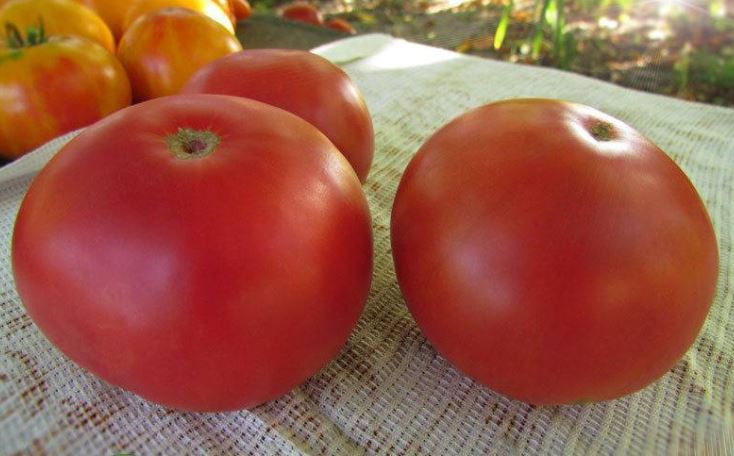
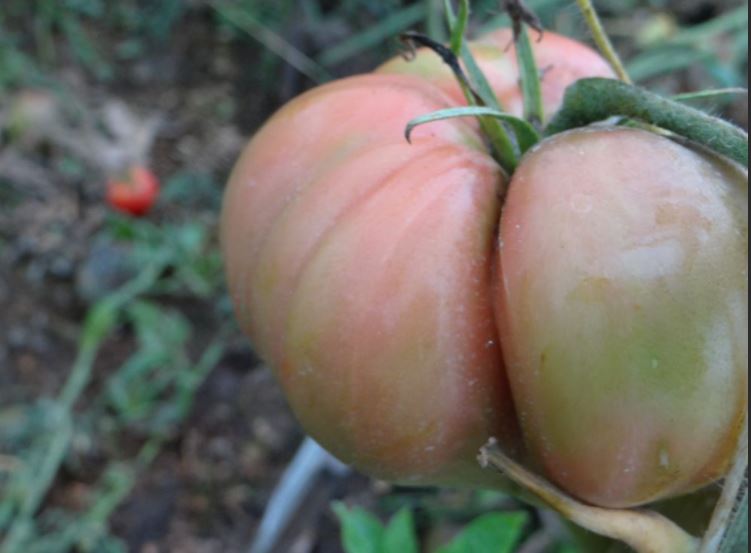
Photo gallery of the tomato variety Potato Raspberry
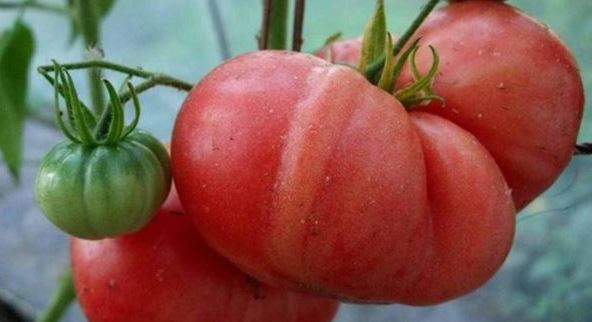
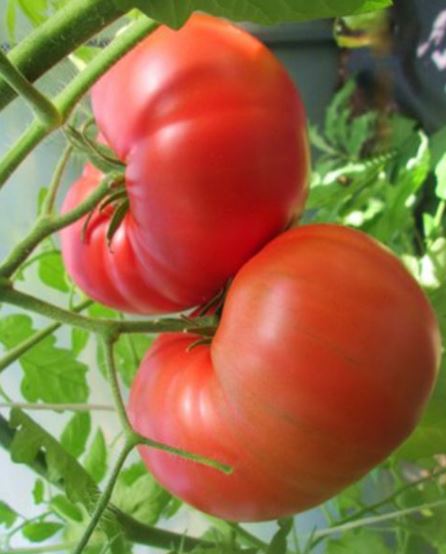
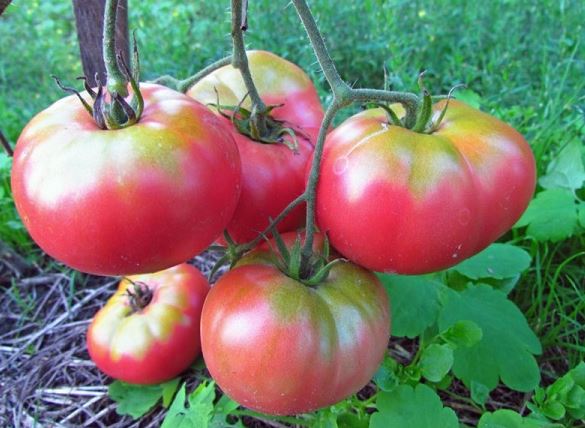
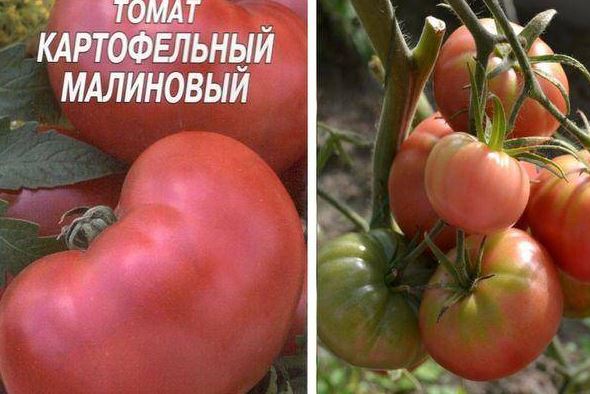
The origin of the tomato variety Potato Raspberry Tomato
The raspberry potato tomato was developed by breeders at the Siberian Garden agricultural firm almost 20 years ago. It is reported that the variety was registered as early as 2000, but it is impossible to find it there. It is entirely possible that a patent application was never filed or never reviewed. Nevertheless, this variety has long been popular among gardeners.
A detailed description of the tomato variety Potato Raspberry Tomato
The raspberry potato tomato is an indeterminate variety that requires support, tying and shaping.
Bushes
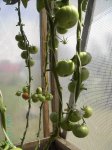
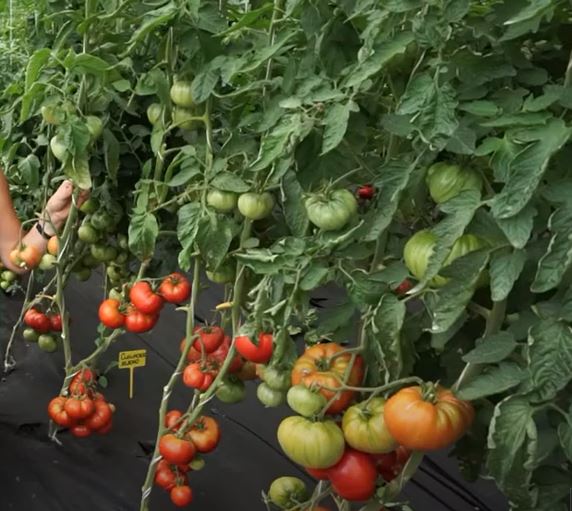
The shoots are indeterminate, grow up to 100-120 cm in length and definitely require strong support, as they will have to support a very impressive harvest.
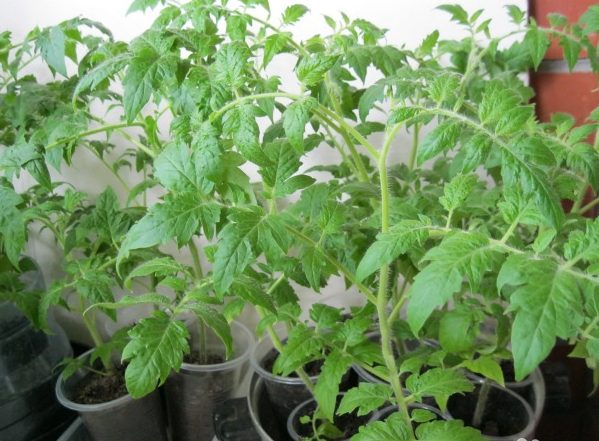
The tomato got its name due to its striking resemblance to potatoes – the tops of these plants are practically indistinguishable in appearance, especially the leaf blades.
During the growth process, bushes need to be formed; this is done in 2-3 shoots.
Fruit
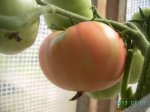
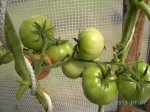
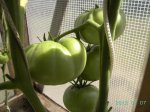
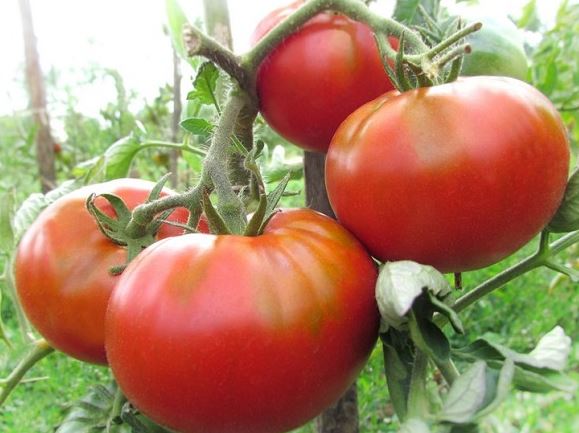
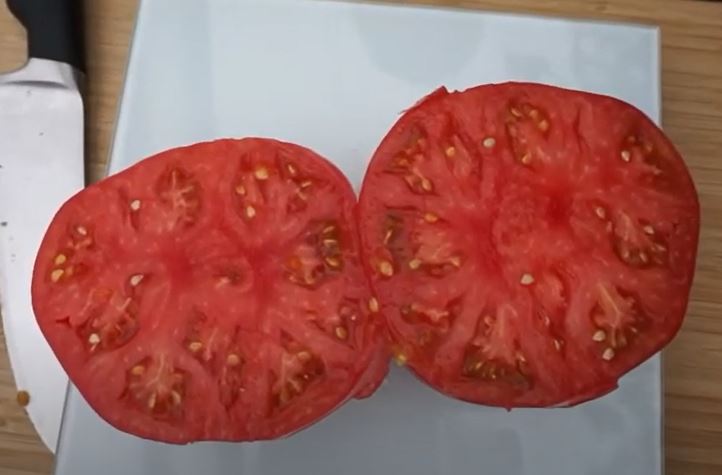
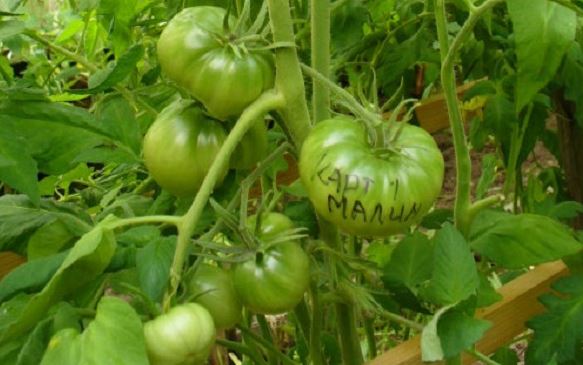
The fruits are very large, weighing between 400 and 800 grams, but can be slightly larger with proper care. The tomatoes are borne in clusters, averaging 3-6 in each. They are round but strongly flattened, with moderate ribbing.
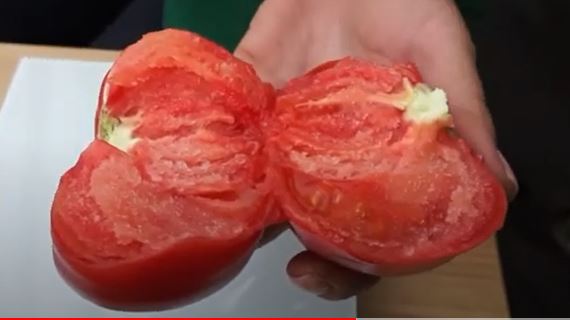
The flesh is reddish-crimson, sweet, and contains few seeds. The skin is quite thin, which often leads to cracking when overripe and reduces shelf life.
The tomatoes have a very pleasant taste, sweet, juicy, and the dry matter content does not exceed 4%.
Productivity
This variety is considered high-yielding, with a single bush yielding up to 6 kg of ripe tomatoes. Considering that no more than 3-4 bushes are typically planted per square meter, the yield is colossal – up to 1,800 c/ha.
Ripening time
Tomatoes ripen relatively early; harvesting can begin in just 105 days.
Advantages and disadvantages of the Potato Raspberry tomato variety
Potato raspberry tomato has advantages and disadvantages as described in the table below.
| Advantages | Flaws |
|
|
Planting Features of the Raspberry Potato Tomato Variety
The Raspberry Potato Tomato grows well in different regions, but it produces an excellent harvest provided it is grown and cared for properly.
Sowing seeds and growing seedlings of the Potato Raspberry tomato variety
Tomatoes are grown primarily using seedlings, so it takes about 60 days for seeds to germinate and seedlings to develop.
Each region determines the start date individually, as in Siberia, tomatoes can only be planted in June, while southern gardeners can easily begin transplanting vegetables into the greenhouse as early as April or May.
Seeds are sold in specialty stores. Typically, the higher the price, the more preparatory procedures they have undergone before sale. All information is provided on the product packaging. If you see that the manufacturer has disinfected the seeds and treated them with a specialized growth stimulant, you won't need to prepare them at home before planting.
If you're using your own seeds, you'll need to disinfect them, for example, with a weak solution of potassium permanganate. To speed up germination, you can treat them with Epin.
Next comes germination. Alternatively, the seeds, pre-treated by the manufacturer, are planted dry in the soil. However, experienced gardeners believe that germination significantly accelerates germination and strengthens the plant's immunity.
Place the seeds in a damp cloth and store in a warm place with a temperature of 24 to 26 degrees Celsius. The first tomato tips will appear on the second day.
This means that you can start planting them.
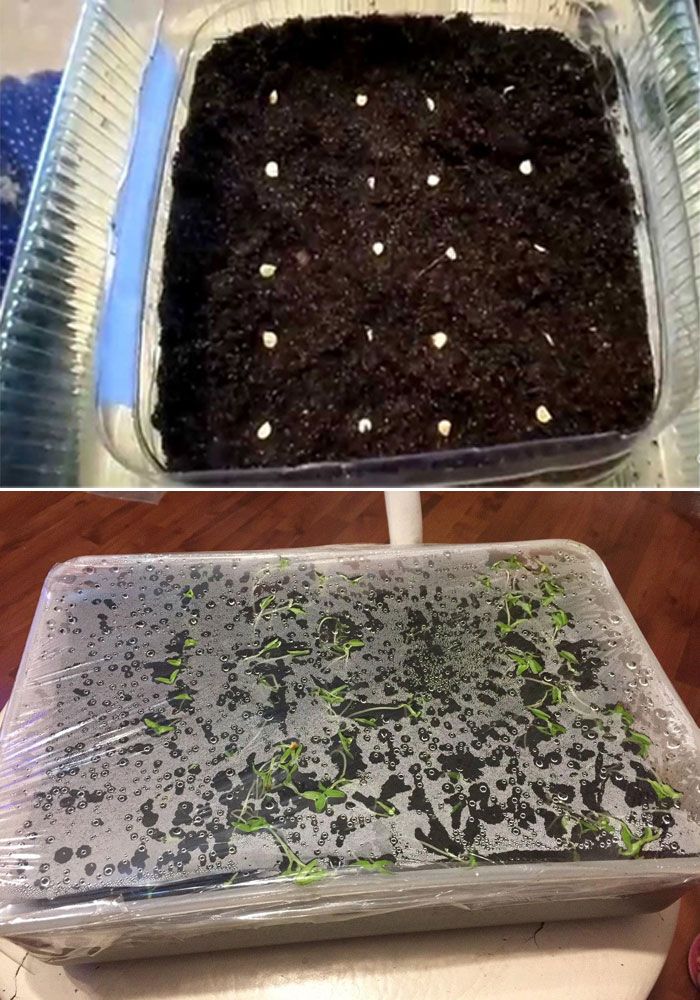
The selected container is filled with soil, prepared in advance using equal parts of soil, humus, and sand. Furrows 10-15 mm deep are made in the soil. The seeds are placed in these furrows. Watering is done with warm water from a spray bottle. Some gardeners prefer to cover the soil with a layer of snow and then place the seeds on top. The snow melts and draws the seeds into the soil. In this case, additional watering is not required.
To create greenhouse-like conditions, the seedlings must be covered with glass or film until germination occurs. The space must be periodically ventilated to prevent condensation from accumulating inside the greenhouse.
Uncovering should be done gradually to avoid stressing the seedlings. Next, the seedlings are moved to a room with a cooler temperature but equally good lighting. Even in sunny regions, supplemental lighting with a phytolamp is usually required.
Planting the Potato Raspberry tomato variety in the ground
Planting in a permanent bed depends on the region and weather conditions. For the Potato Raspberry Tomato, it's crucial that the soil warms up to 15 degrees Celsius, and that no overnight frosts are forecast.
The soil is prepared in advance. It is dug over once in the fall with fertilizer, and again in the spring. Mustard can be sown in the greenhouse two weeks beforehand, and mown a few days before transplanting the seedlings.
It is recommended to plant 3-4 plants per square meter so as not to overcrowd the plantings and make caring for them more difficult.
The holes are spaced 50 cm apart. The row spacing is 70 cm.
The bushes require support, as they often reach a height of 120 cm. Some gardeners construct separate supports for large clusters.
It is best to transfer tomatoes to the garden bed in the afternoon, when solar activity is minimal.
Caring for the Potato Raspberry tomato variety, watering and fertilizing
The raspberry potato tomato isn't particularly demanding in terms of care. However, it doesn't tolerate extreme temperatures or cold well.
Watering should be moderate, done in the evening with warm, settled water. To retain moisture in the bed, mulch it after transplanting the seedlings.
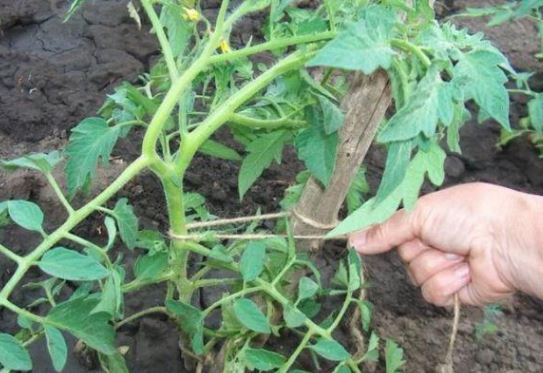
The bush is formed into 2-3 shoots; the lower leaves can be removed as the ovaries develop. Additional supports are installed under the clusters, as the stems may not be able to support their considerable weight.
The first fertilizers are recommended to be applied 10-14 days after planting. The amount depends on the soil quality. It's advisable to alternate root and foliar feeding, using organic and mineral fertilizers.
During the initial stages, you can support the bushes with nitrogen, but it's important not to overdo it, otherwise only stems and leaves will form, not tomatoes. A mixture of 20 g phosphorus, 12 g nitrogen, 8 g potassium, and 5 liters of water is suitable. The application rate is 500 ml per bush.
During the emergence of ovaries, you can prepare another mixture by adding 0.5 tbsp of potassium sulfate, a glass of manure and mullein to 5 liters of water.
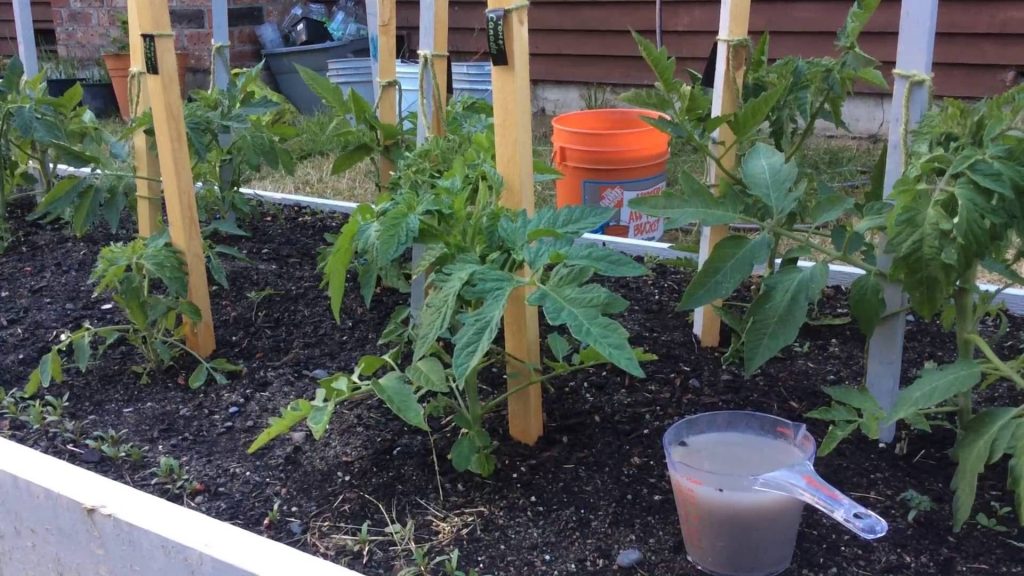
Root feeding is carried out early in the morning or in the evening, and spraying is carried out only early in the morning.
Resistance of the tomato variety Potato Raspberry to diseases and pests
Despite its relatively strong immunity, the Potato Raspberry variety can be susceptible to brown rot. This is most often caused by improper cultivation practices or excess nitrogen in the soil. Infected fruits are removed from the bush, and the plantings themselves are treated with Hom.
To reduce the risk of late blight, spray with Fitosporin or Bordeaux mixture.
To prevent slugs from appearing, you can sprinkle ground eggshells on top of the garden bed, and the Zubr preparation will help deal with aphids.
Harvesting, using and storing the Potato Raspberry tomato variety
Tomatoes are harvested after approximately 100 days, although this period may vary by a few days depending on the region. Tomato skins are delicate, so it's best not to allow them to become overripe, as this will cause the fruits to crack on the vine.
Tomatoes also cannot be stored for long, so they need to be processed first.
The Potato Raspberry Tomato harvest is eaten fresh and added to various dishes. However, the tomatoes are too large for whole-fruit canning. However, they make excellent juices, pastes, and sauces.
Comparison of the Potato Raspberry tomato variety with other varieties in the table
Please note! How can you easily convert centners/ha to kg/sq.m? Simply divide by 100! For example, the Abakansky Pink tomato yields 400 centners of marketable fruit per hectare. This equals 4 kg per square meter. It's that simple! Also, keep in mind that typically no more than 3-4 plants are planted per square meter. This way, you can calculate the yield per bush. In the case of the Abakansky Pink, it's about 1 kg.
| Variety | Ripening period (number of days from full germination to ripening)
Yield of commercial fruits |
Brief description | Fetus |
| Potato raspberry | 100-105 days
up to 1800 c/ha |
A mid-season, indeterminate, standard variety for open ground and greenhouses. Requires staking and training. Suitable for salads, canning, and processing into tomato products. | Flattened-round, raspberry, 700-800 g. Excellent taste, sugary, rich. |
| Abakan pink | 120 days or more 400 c/ha |
A late-ripening determinate variety for open ground and greenhouses. Requires staking and training. Suitable for salads and processing into tomato products. | Flat-round, slightly ribbed, medium density and pink in color, 200-500 g. Good taste. |
| Mikado Pink | 90-95 days
500-600 c/ha |
A mid-early indeterminate variety for greenhouses. Suitable for salads. | Flat-round, large, ribbed, medium density, pink, 300-360 g. Excellent taste. |
| Dad | 90-105 days
200 c/ha |
An early-ripening indeterminate variety for open ground and greenhouses. Requires staking and shaping. Suitable for salads. | Heart-shaped, slightly ribbed, medium density, fleshy, raspberry, 200 g. Good taste. |
| Cardinal | 120 days
720-840 c/ha |
A mid-season semi-determinate variety for greenhouses. Requires staking and training. Suitable for salads, canning, and processing into tomato products. Marketability is 97%. | Heart-shaped, medium-ribbed, pink with a raspberry hue, matte, 442 g. Excellent taste. |
| Mom's Raspberry Heart | 112-120 days 1200-1500 c/ha |
A mid-season indeterminate variety for greenhouses and open ground. Suitable for salads and canning. | Heart-shaped, ribbed, pink, 300-600 g (up to 1200 g). Excellent taste. |
| Raspberry Paradise | 90-95 days
1000-1200 c/ha (greenhouse and under film) |
A mid-season determinate variety for open ground and greenhouses. Requires staking and shaping. Suitable for salads. | Round, large, smooth, medium density, raspberry, 500 g. Excellent taste. |
| Crimson Dawn | 110-115 days
790 c/ha |
A mid-season indeterminate variety for open ground and greenhouses. Requires staking and shaping. Suitable for salads. | Heart-shaped, loose, ribbed, raspberry, 350-400 g. Good taste. |
| Raspberry Strongman | 112-116 days
880-900 c/ha |
A mid-season indeterminate variety for open ground and greenhouses. Suitable for canning. | Pear-shaped, large, smooth, medium density, raspberry, 150-190 g. Good taste. |
| Crimson Elephant | 110-120 days
650 c/ha |
An early-ripening determinate variety for greenhouses. Suitable for salads. | Round, slightly ribbed, medium-dense, pink, 150-200 g. Excellent taste. |
| Honey | 105-115 days
800 c/ha (greenhouse and under film) |
A mid-season indeterminate variety for open ground and greenhouses. Requires staking and shaping. Suitable for salads. | Flat-round, smooth, soft, raspberry, 300-400 g. Excellent taste. |
| Minusinsk bulls | 110-118 days
1200 c/ha |
A mid-season indeterminate variety for open ground and greenhouses. Suitable for salads, canning, and processing into tomato products. | Heart-shaped, elongated, with a spout, ribbed, raspberry-pink, 200-250 g (up to 400 g). The taste is good to excellent. |
| Minusinsk home | 110-120 days
Up to 1500 c/ha |
An early-ripening indeterminate variety for greenhouses. Requires staking and shaping into 1-2 stems. Suitable for processing into tomato products and canning. | Heart-shaped, slightly ribbed, raspberry, 350-500 g. Excellent taste. |
| Pot-bellied house | about 100 days
820-920 c/ha (greenhouse and under film) |
An early-ripening indeterminate variety for open ground and greenhouses. Requires staking and shaping. Suitable for salads. | Pear-shaped, ribbed, medium density, red, 200-260 g. Good taste. |
| Siberian heart | 92-110 days
1000-1200 c/ha |
An early-ripening indeterminate variety for open ground and greenhouses. Requires staking and training. Suitable for salads and processing into tomato products. | Heart-shaped, smooth, glossy pink, 350-400 g (up to 600 g). Good taste. |
| Ox heart | 111-115 days
630-690 c/ha |
A late-ripening indeterminate variety for open ground and greenhouses. Requires staking and shaping. Suitable for salads. Grows best in southern Russia. | Heart-shaped, medium-ribbed, pink-raspberry, 150-300 g. Good taste. |
Real reviews from gardeners about the Potato Raspberry tomato variety
The Potato Raspberry Tomato variety has received numerous positive reviews. Gardeners note its increased yield and excellent taste.
An early-ripening, indeterminate variety from Sibsad. The seeds were sent by Marina from Kirov. The fruits are round and flat-round, medium in size, with good cluster formation. It ripened very early and yielded a generous harvest. Delicious.
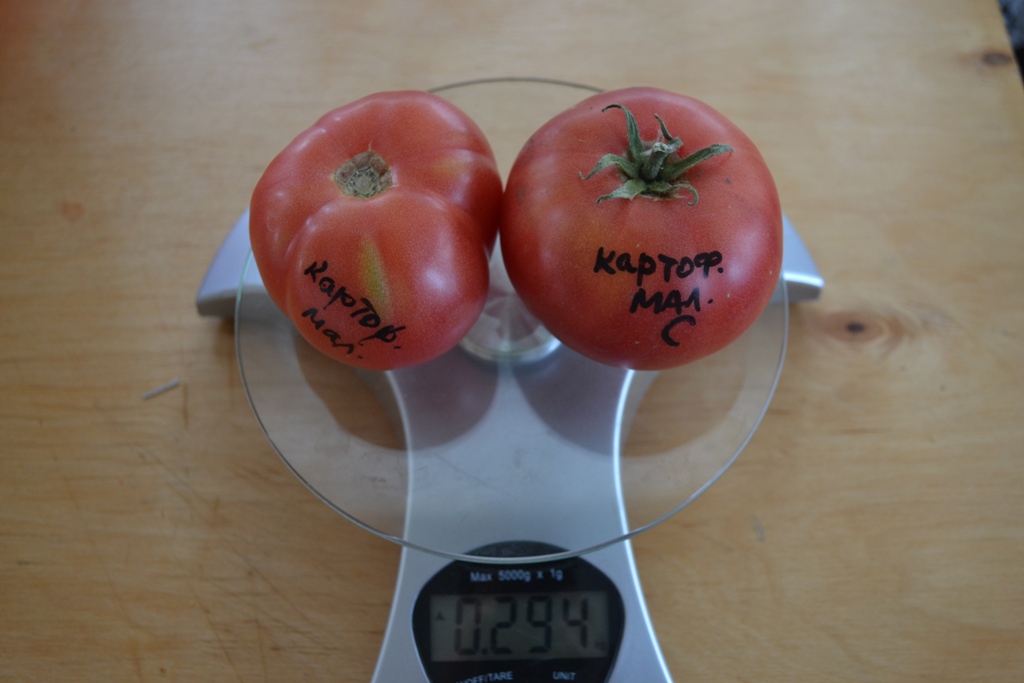
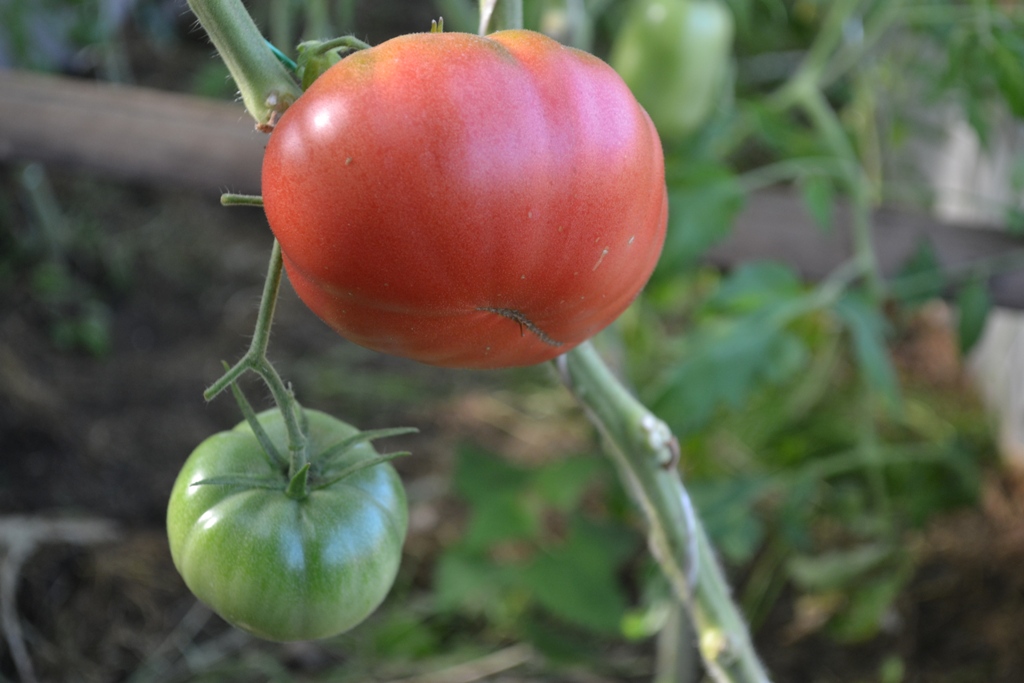
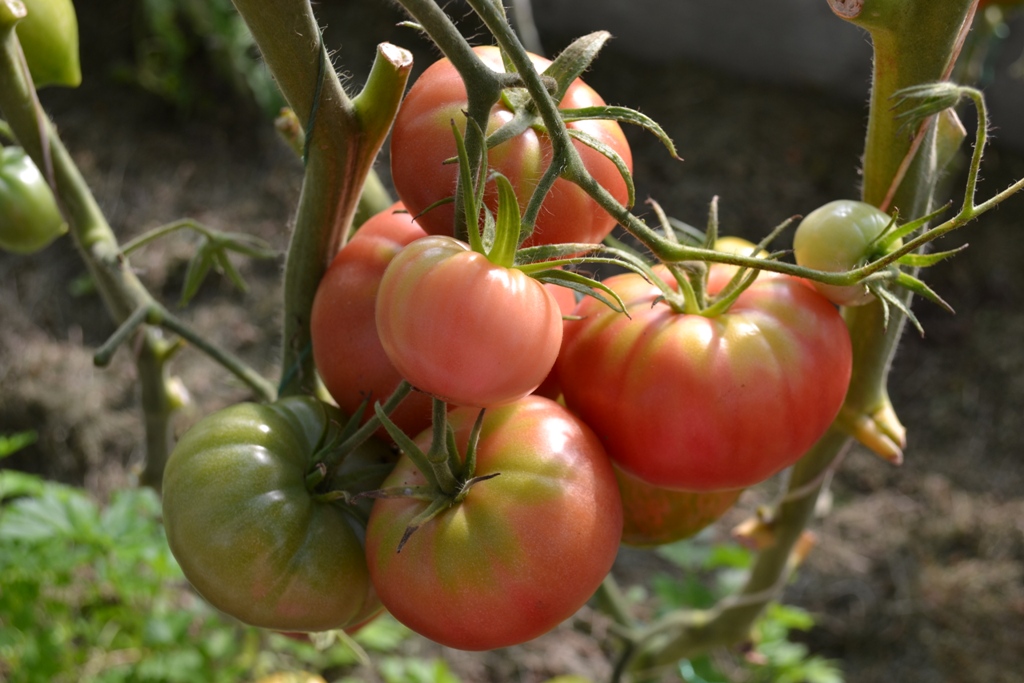
This is my Potato Raspberry, also from Marinochka in Kirov. It has potato-like leaves. The fruits are delicious, with a hint of sweetness.
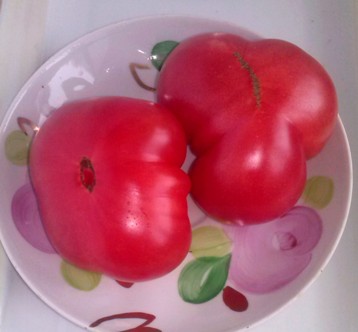
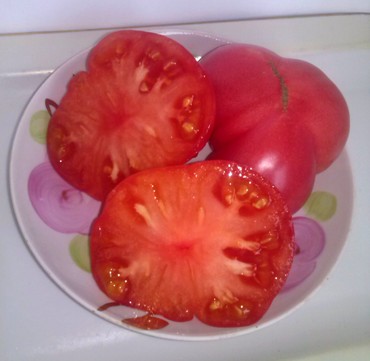
Tanya, I'm not sure if this variety is the same as my Krymsky, the one with the potato leaf. They're also a deep pink, all about the same size in the cluster, with fairly firm flesh and sweet. This year, of course, due to the abundance of rain, they died quickly, but they ripened in the garden bed—I grew them outdoors. I should compare them. I sent them to you.
I planted this from SibSad, which grew in the open ground during a cold summer—maybe that's why the flavor was so ordinary, even though Lyubimy Prazdnik (Favorite Holiday) was sweet nearby. Otherwise, it's productive and not picky. I won't be repeating it.
I'd like to identify this tomato—tall, potato-like leaf, large-fruited, productive, pink, flat-round, with sugary, grainy flesh, not many seeds, sweet. It was one of the first to ripen. It didn't seem very juicy to me. I call it "From Maria Sergeevna"—after the owner. Can anyone identify it?
Reply from Itess, BlagoveshchenskSib. Garden has a tomato called "Potato Raspberry." I haven't planted it yet, just bought some seeds. It looks very similar, according to the description.