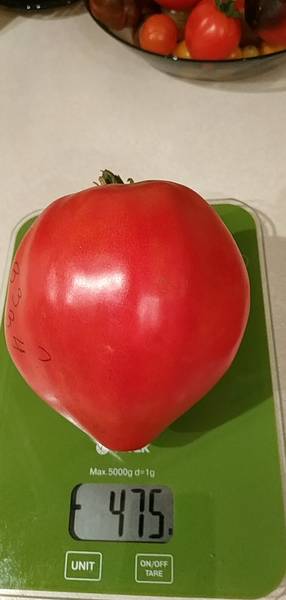
Another representative of the Minusinsk folk selection is the Minusinsk Bychki tomato. Its fruits are characterized by a universal size, pleasant taste, and a yield that will impress any gardener.
Content
- 1 Table with characteristics of the Minusinsk Bychki tomato variety
- 2 Photo gallery of the Minusinsk Bulls tomato variety
- 3 The origin of the Minusinsk Bychki tomato variety
- 4 A detailed description of the Minusinsk Bychki tomato variety
- 5 Advantages and disadvantages of the Minusinsk Bulls tomato variety
- 6 Planting Tips for the Minusinsk Bulls Tomato Variety
- 7 Care, watering and fertilizing of the Minusinsk Bulls tomato variety
- 8 Resistance of the Minusinsk Bulls tomato variety to diseases and pests
- 9 Harvesting, use and storage of the Minusinsk Bychki tomato variety
- 10 Comparison of the Minusinskie Bychki tomato variety with other varieties in the table
- 11 Real reviews from gardeners about the Minusinsk Bychki tomato variety
Table with characteristics of the Minusinsk Bychki tomato variety
| Characteristic | Description |
| Description of the variety | Characterized by indeterminate shoots, it can be grown in a greenhouse or in open ground. |
| Ripening period | 110-118 days |
| Fruit weight | 200-400 g |
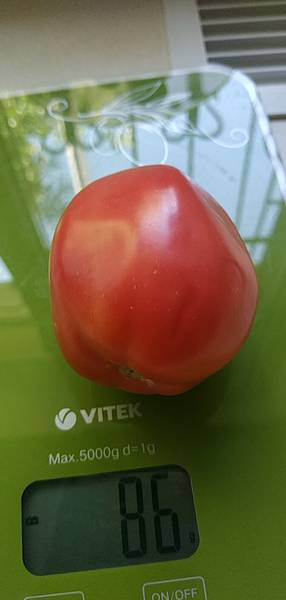
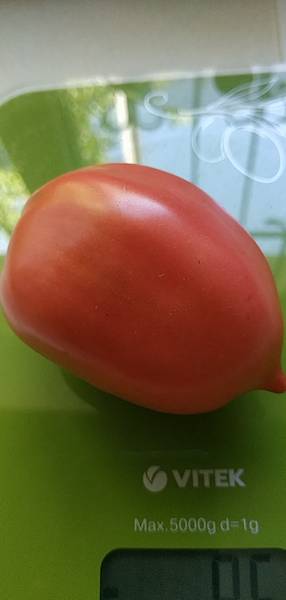
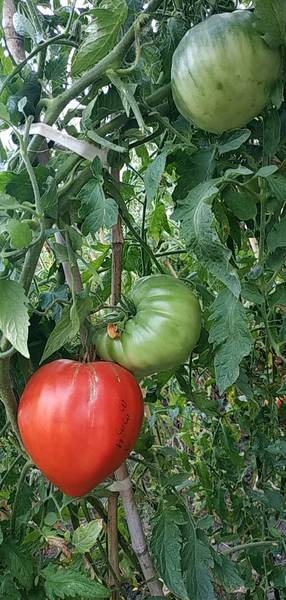
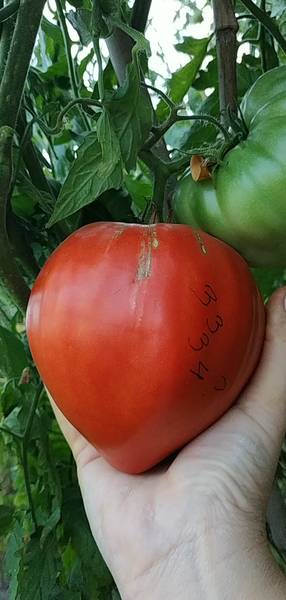
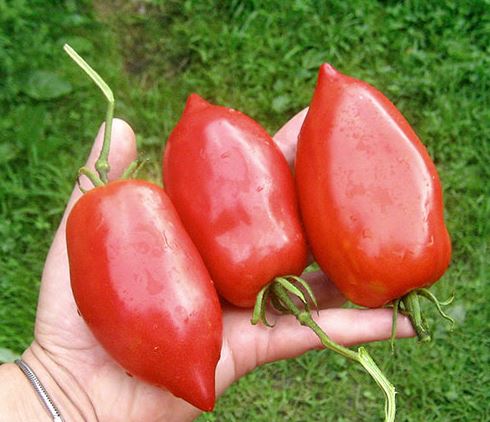
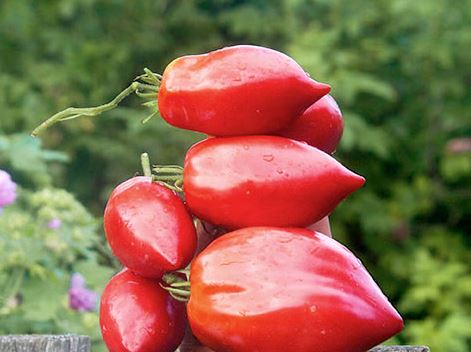
| Description of the fruit | The fruits are shaped like an elongated heart. They are moderately ribbed and pinkish-crimson in color. |
| Productivity | Up to 1200 c/ha |
| Usage | The fruits have a versatile purpose. Smaller tomatoes can be used for barrel pickling, while larger ones are processed into ketchup, paste, adjika, and juice. They are also excellent for eating fresh. |
| Preferred growing regions | Zoned for different regions, it is mainly planted in greenhouses, but in the south it also grows in open ground. |
| Disease resistance | High resistance to viruses and other common tomato diseases. Moderate resistance to late blight, which often appears when growing conditions are improper. |
| Agricultural technology | Tall stems must be tied up, and the bush is formed into 1-2 shoots. |
| Not included | |
| Country of origin | Russia, Minusinsk (Krasnoyarsk Krai), folk selection |
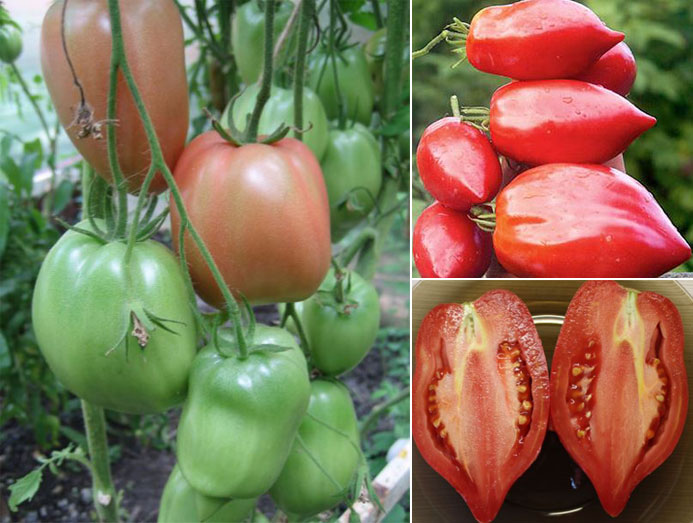
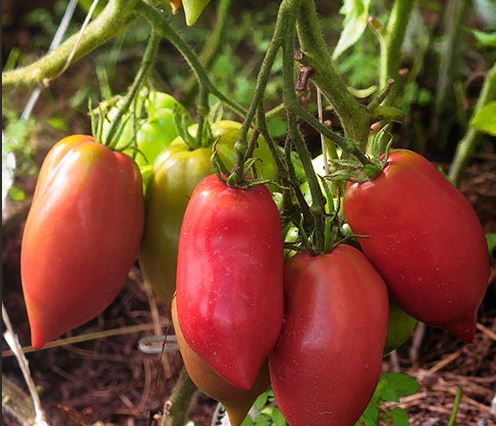
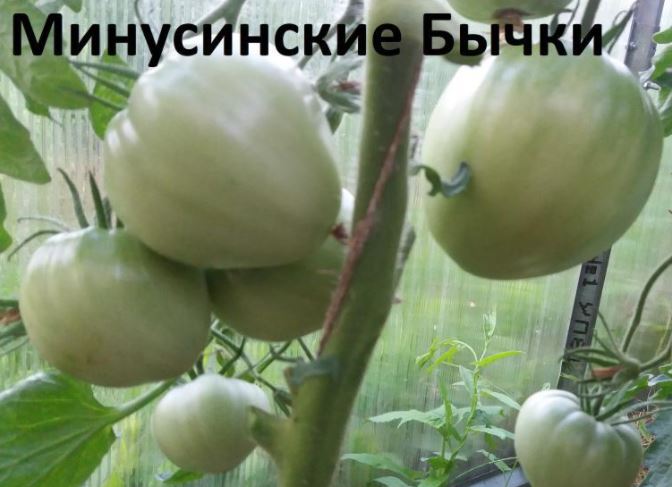
Photo gallery of the Minusinsk Bulls tomato variety
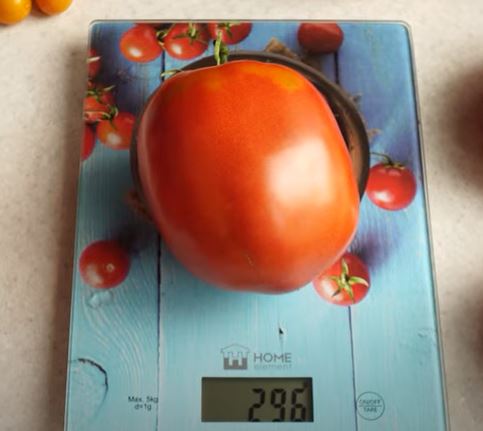
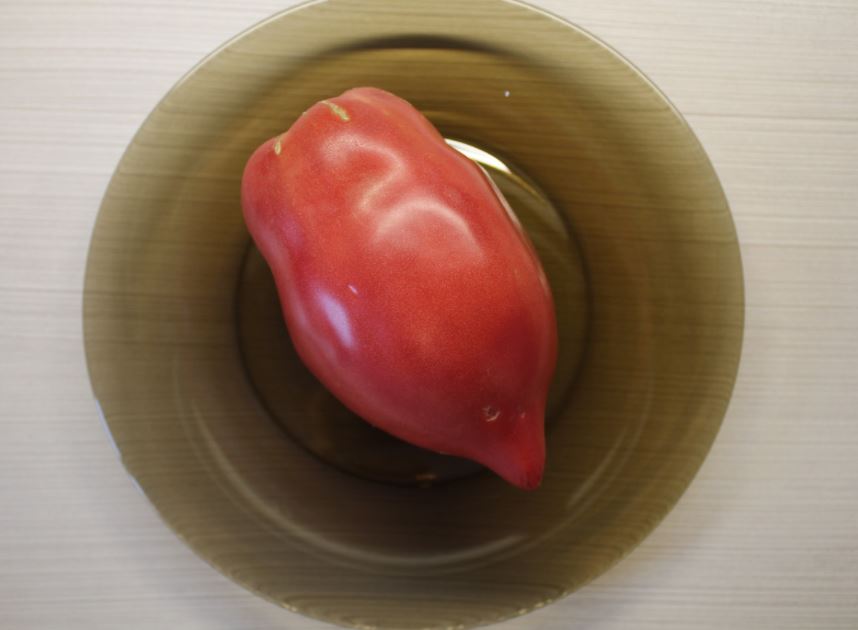
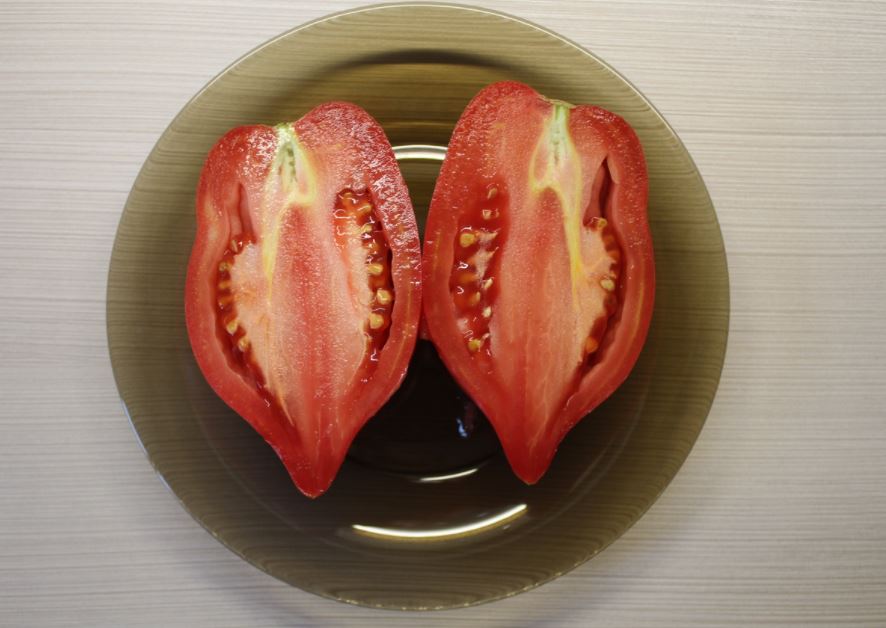
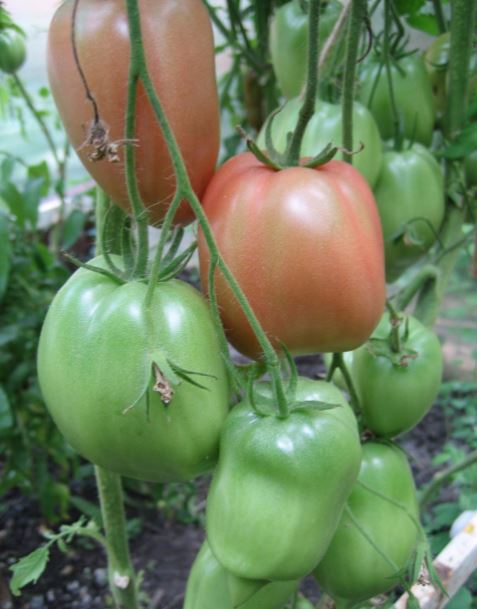
The origin of the Minusinsk Bychki tomato variety
The city of Minusinsk is renowned as a center of northern folk breeding. Thanks to the efforts of local specialists, a large number of new and highly successful tomato varieties have been developed. Among them is the Minusinskie Bychki variety. It has gained popularity not only among residents of this cold region but also among southern gardeners. This variety is often confused with the Minusinsky Bull's Heart due to the distinctive shape of the fruit, but in fact, they are two different tomatoes.
The tomato has not yet been entered into the register, but this does not prevent it from being successfully grown throughout the country.
A detailed description of the Minusinsk Bychki tomato variety
Minusinsk bulls are considered unpretentious tomatoes with tasty fruits for general use.
Bushes
Indeterminate shoots grow up to 2-2.5 meters, so they must be tied up from the very beginning. As they grow, the bush will need to be shaped. This is done with 1-2 stems.
The foliage is average; many gardeners remove all the leaves from the lower part of the bush as the fruits form.
Fruit
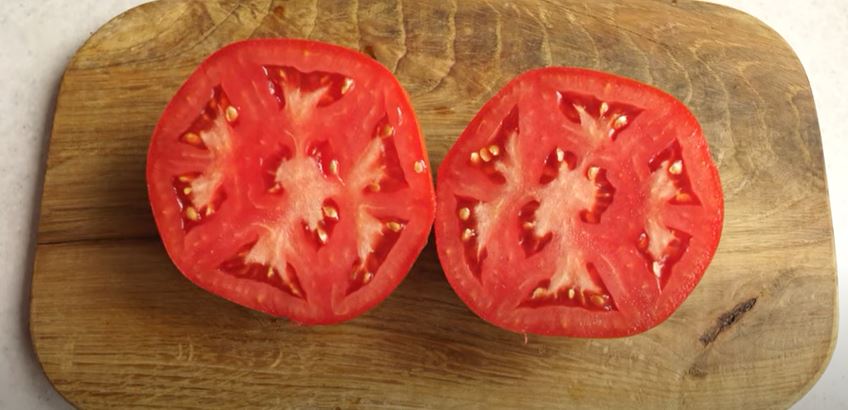
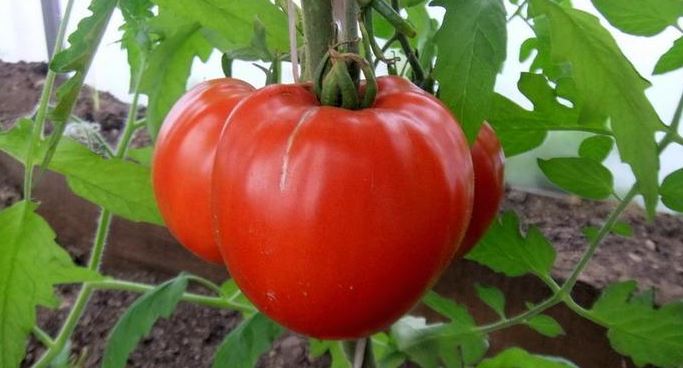
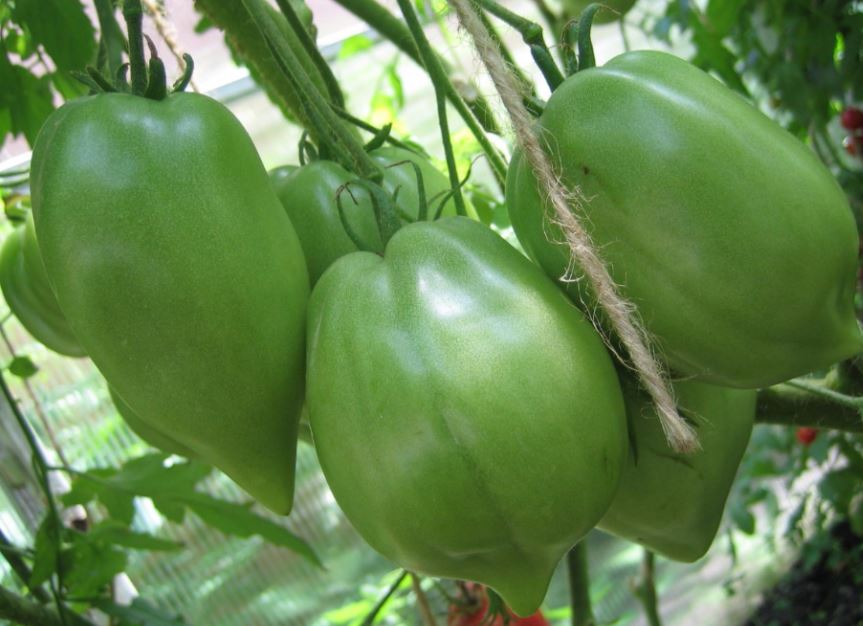
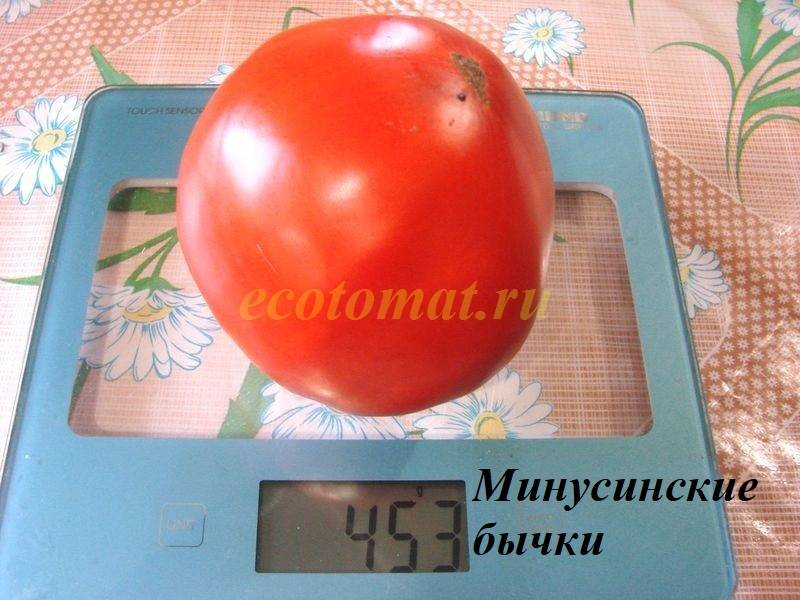
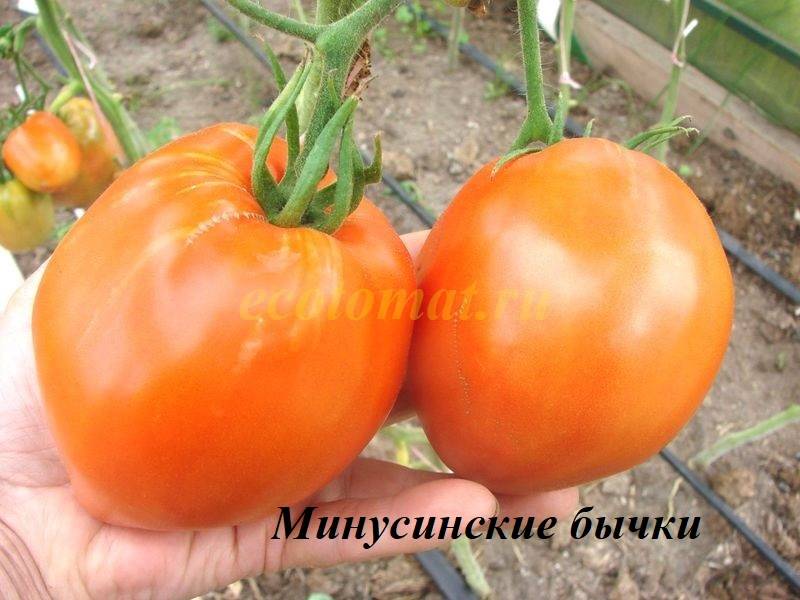
The fruits of the Minusinsk bullhead are elongated, vaguely resembling a cube or heart. The ribbing is moderate. The skin is pinkish-red and fairly dense, preventing the fruit from cracking while ripening on the bush. The flesh is juicy, slightly sweet, and slightly tart.
Depending on where they are grown, Minusinskie Bychki tomatoes can be larger or more elongated, but they always retain a slight heart shape and a small nose at the end of the fruit.
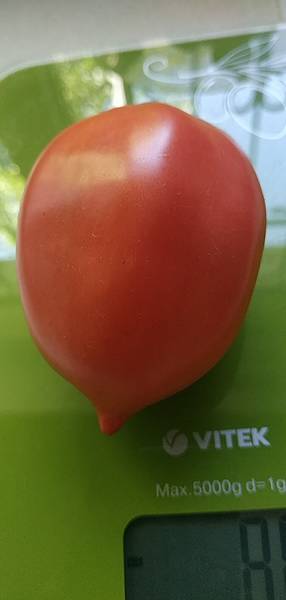
Tomatoes weigh between 200 and 400 grams, with the largest fruits harvested from the lower part of the bush. Ripening occurs uniformly, without a spread out period. Tomatoes can be picked from the bush when they are technically ripe.
Tomatoes of this variety are not a hybrid; they can be used to harvest seeds for subsequent plantings.
Productivity
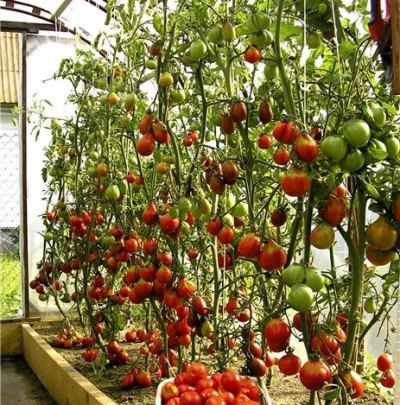
The Minusinskie Bychki variety is characterized by a relatively high yield. With proper care, a single bush can yield up to 5 kg of tomatoes. The average yield reaches 1,200 c/ha.
Ripening time
The Minusinsk Bulls harvest ripens very evenly, with tomatoes beginning to be harvested 110-118 days after germination. In a greenhouse, this period occurs several days earlier than in the open field.
Advantages and disadvantages of the Minusinsk Bulls tomato variety
The Minusinskie Bychki variety has its advantages and disadvantages. They are listed in the table below.
| Advantages | Flaws |
|
|
Planting Tips for the Minusinsk Bulls Tomato Variety
Gardeners recommend growing the Minusinsk Bulls tomato as seedlings, although in warmer regions, direct planting into a prepared bed is permitted, provided the weather conditions are favorable.
Sowing seeds and growing seedlings of the Minusinsk Bychki tomato variety
Seeds are sown approximately 60-65 days before they are planned for planting. This date is typically in the first half of March, but it can vary depending on the growing region.
To ensure the seeds germinate as quickly as possible and maintain a strong immune system, it's recommended to pre-soak them in a specialized solution, such as Kornevin or Zircon. Dilute the solution according to the instructions, and soak for 10-11 hours.
If the producer has processed the seed material himself, then no additional work is required – you can plant it straight away.
A specialized soil mixture containing sand, soil, and humus is best for tomatoes. It can be purchased at the store, or you can mix it yourself. Some gardeners add a small amount of vermiculite to the soil for seedlings.
Fill the selected container halfway with soil. Using a pencil or any other suitable tool, make furrows 2 cm deep. Place the seeds in these furrows, spaced 3-5 cm apart, carefully cover them with soil, and water. Use a gentle spray; a spray bottle is best.
To create greenhouse-like conditions for the seedlings, cover the container with glass or film and place it in a warm location until the first shoots appear and become slightly stronger. Then, remove the cover and move the seedlings to a cooler location with a temperature of 20–22°C.
Watering is carried out as the soil dries out, and for better growth it is recommended to provide tomatoes with an additional source of light.
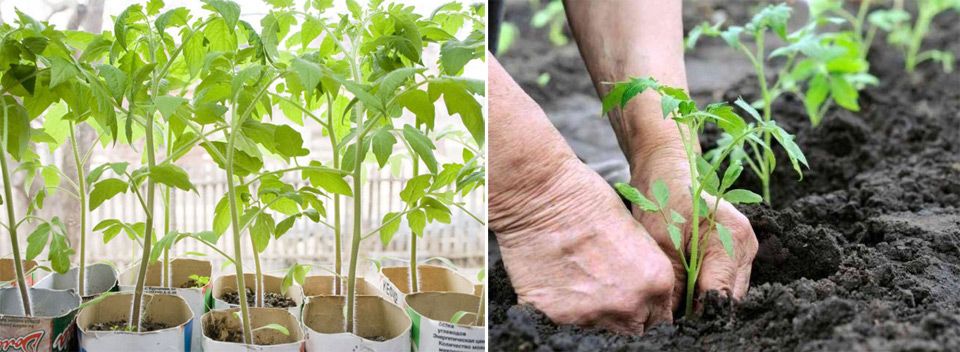
As soon as the shoots become stronger and 3 true leaves form on the stems, the seedlings are transplanted into separate containers.
Planting the Minusinsk Bulls tomato variety in the ground
Planting in the ground is stressful for plants. To minimize this, it is recommended to begin hardening off the seedlings 14 days beforehand. To do this, place them outside or on the balcony for an hour, then for the entire day. This will help them adapt to outdoor conditions more quickly after transplanting.
Minusinsk bulls can be planted both in a greenhouse and in open ground, covering them with film at the first stages.
Prepare the bed in the fall, and it's recommended to add all necessary fertilizers at that time. In the spring, the soil is dug again. You can prepare the holes when the soil warms up to 15°C. They should be 20 cm deep. It's recommended to leave about 50-60 cm between the holes to accommodate 3-4 plants per square meter.
The Minusinsk Bulls tomato requires support, as its shoots grow up to 2.5 m. Furthermore, the bush must be trained into 1-2 stems.
Care, watering and fertilizing of the Minusinsk Bulls tomato variety
Watering is crucial when caring for Minusinskie Bychki tomatoes. The first watering should be done 10-14 days after transplanting. During this same period, the first preventative treatment against late blight can be administered.
During the flowering period, water once a week, using about 5 liters per bush. Watering frequency increases significantly during fruit ripening, to every three days. If regular access to the plot is not possible during this period, it's best to consider drip irrigation. If you allow a prolonged drought and then overwater your tomatoes, the fruits may not survive the sudden changes and may crack on the vine.
Fertilizing of plantings is carried out at each stage of their development.
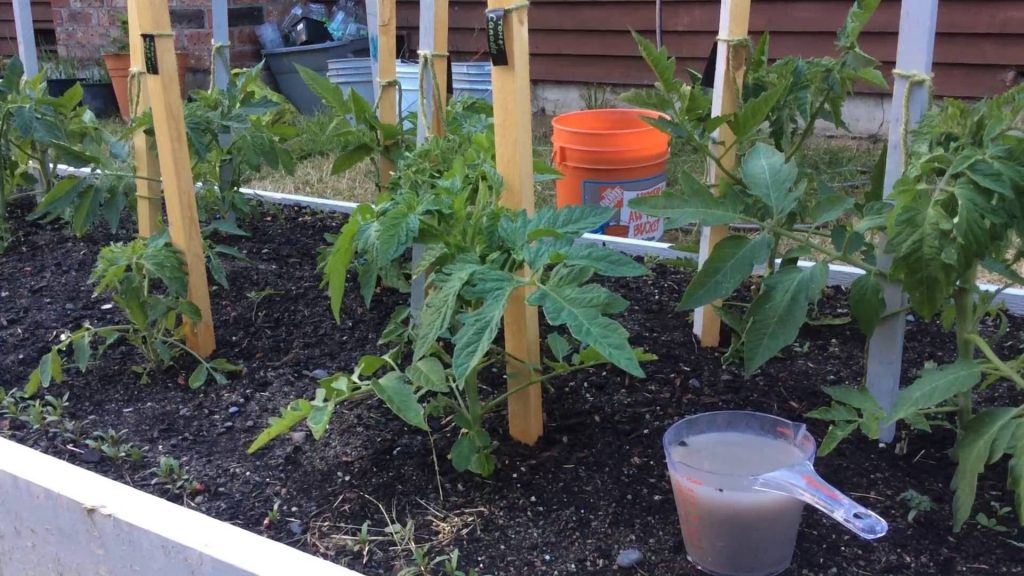
Before flowering begins, you can use the following scheme:
- Ten days after replanting, add a solution of ash, potassium sulfate, or ammonium nitrate to the soil. The most commonly used organic fertilizers are mullein or weed infusion.
Important! Despite the importance of nitrogen, it should not be overused, otherwise tomatoes will develop foliage at the expense of fruit.
- After 10 days, a second feeding is carried out; for this, you can use specialized preparations or calcium nitrate (20 g per 10 liters of water).
- The third fertilizer consists of phosphorus. Nitroammophoska (25 g per 10 l of water) and sodium humate (10 g per 10 l of water) have shown excellent results.
During the flowering period, tomatoes are supported with potassium nitrate or a solution of boric acid (5 g per 10 l).
During the ripening of tomatoes, you can use humate fertilizers, potassium magnesium sulfate or Borofoska.
Important! Root feeding should be done after watering.
Resistance of the Minusinsk Bulls tomato variety to diseases and pests
Minusinsk bull tomatoes can be considered to have a strong immune system. They are rarely attacked by fungi and viruses. However, if optimal humidity levels are not maintained or watering guidelines are not followed, there is a high risk of late blight on the bushes. To prevent this, the bushes are treated with Phytophporin or Bordeaux mixture several times per season. However, if protection fails and the disease does appear, only specialized products can combat it.
Harvesting, use and storage of the Minusinsk Bychki tomato variety
Gardeners begin harvesting 110-118 days after the shoots emerge. Tomatoes are versatile. While whole tomatoes are difficult to fit into a jar, they fit perfectly into pickling barrels without cracking due to their thick skin.
Minusinsk gobies are most often used as ingredients in salads and other dishes. They can also be processed into sauces, paste, ketchup, and juice.
Under suitable conditions, tomatoes can easily be stored for up to three weeks without loss of quality.
Comparison of the Minusinskie Bychki tomato variety with other varieties in the table
Please note! How can you easily convert centners/ha to kg/sq.m? Simply divide by 100! For example, the Abakansky Pink tomato yields 400 centners of marketable fruit per hectare. This equals 4 kg per square meter. It's that simple! Also, keep in mind that typically no more than 3-4 plants are planted per square meter. This way, you can calculate the yield per bush. In the case of the Abakansky Pink, it's about 1 kg.
| Variety | Ripening period (number of days from full germination to ripening)
Yield of commercial fruits |
Brief description | Fetus |
| Minusinsk bulls | 110-118 days 1200 c/ha |
A mid-season indeterminate variety for open ground and greenhouses. Suitable for salads, canning, and processing into tomato products. | Heart-shaped, elongated, with a spout, ribbed, raspberry-pink, 200-250 g (up to 400 g). The taste is good to excellent. |
| Minusinsk glasses | 110-112 days
Up to 1200 c/ha |
A mid-season indeterminate variety for greenhouses. Suitable for salads, canning, and processing into tomato products. | Oval, smooth, orange, pink or red, up to 400 g. Good taste. |
| Minusinsk home | 110-120 days
Up to 1500 c/ha |
An early-ripening indeterminate variety for greenhouses. Requires staking and shaping into 1-2 stems. Suitable for processing into tomato products and canning. | Heart-shaped, slightly ribbed, raspberry, 350-500 g. Excellent taste. |
| Ladies' man | 110 days
1000 c/ha (greenhouse) |
A mid-season indeterminate variety for open ground and greenhouses. Requires staking and training. Suitable for salads, whole-fruit canning, and pickling. | Cylindrical, with a spout, smooth, very dense, resistant to cracking, red, 45-60 g. Excellent taste. |
| De Barao | about 125 days 500-600 c/ha |
A late-ripening indeterminate variety for open ground and greenhouses. Requires staking and training. Suitable for salads and whole-fruit canning. | Ovoid, smooth, red, 30 g. Excellent taste. |
| Königsberg | 115 days
460-2000 c/ha |
A mid-season indeterminate variety for open ground. Requires staking and training. Suitable for salads and processing into tomato products. Marketability: 56% (Novosibirsk Region). Heat-resistant. | Cylindrical, smooth, dense, good keeping quality, red, 155-230 g (up to 300 g). Excellent taste. |
| Male dignity | 110-115 days
900-1200 c/ha |
A mid-season indeterminate variety for open ground and greenhouses. Suitable for salads and canning. | Elongated, smooth, red, 120-250 g. The taste is good and excellent. |
| Mikado Pink | 90-95 days
500-600 c/ha |
A mid-early indeterminate variety for greenhouses. Suitable for salads. | Flat-round, large, ribbed, medium density, pink, 300-360 g. Excellent taste. |
| Mikado Sibiriko | 90-95 days 800 c/ha |
An early indeterminate variety from Siberian breeders. For salads, juice, and pasta. | Heart-shaped, ribbed, pinkish, 400-600 g. Excellent taste. |
| Adelina | 82-109 days
242-447 c/ha, maximum 669 c/ha |
A mid-season determinate variety for open ground. Suitable for salads, whole-fruit canning, and processing into tomato products. Heat- and drought-resistant. | Egg-shaped, smooth, transportable red, 59-83 g. The taste is good to excellent. |
| Sugar giant | 120-130 days
Up to 1800 c/ha |
A mid-late indeterminate variety for greenhouses. Requires staking and training into 1-2 stems. Suitable for salads and processing into tomato products (juice). | Round, slightly elongated, ribbed, pinkish-red, 340-450 g (up to 650-700 g). Good to excellent flavor. |
| Siberian Troika | about 120 days
600 c/ha |
A mid-season determinate variety for open ground. Suitable for salads and canning, including whole-fruit preserves. Heat-resistant. | Cylindrical with a spout, smooth, dense, red, 80-100 g (up to 200 g). Excellent taste. |
| The Swan Princess | 95-105 days Up to 1500 c/ha |
An early-ripening indeterminate variety for open ground and greenhouses. Requires staking and training into 2-3 stems. Suitable for salads, pickling, and processing into tomato products. | Ovoid or elongated, smooth, red, 150-240 g. Good taste. |
| The Lazy Man's Miracle | 800-900 c/ha
85-95 days |
An early-ripening, determinate variety for open ground and greenhouses. Suitable for salads, processing into tomato products, and canning. | Oval, elongated, smooth, red, dense, 60-65 g. Excellent taste. |
| Chukhloma | 111-118 days
790-960 c/ha |
A mid-season indeterminate variety for greenhouses. Requires staking and training. Suitable for salads, processing into tomato products, and whole-fruit canning. | Cylindrical, elongated, pepper-shaped, orange, 110-120 g. Excellent taste. |
Real reviews from gardeners about the Minusinsk Bychki tomato variety
Minusinsk Bulls have received many positive reviews. Gardeners note the uniform ripening of the fruits and their high yield, with the weight of a single tomato often exceeding the manufacturer's stated specifications.
Grown in a greenhouse - indeterminate, regular leaves, fruits are round, heart-shaped, pink, weight from 150 to 400g.
The taste is like most pink hearts, but in my conditions it required potassium…
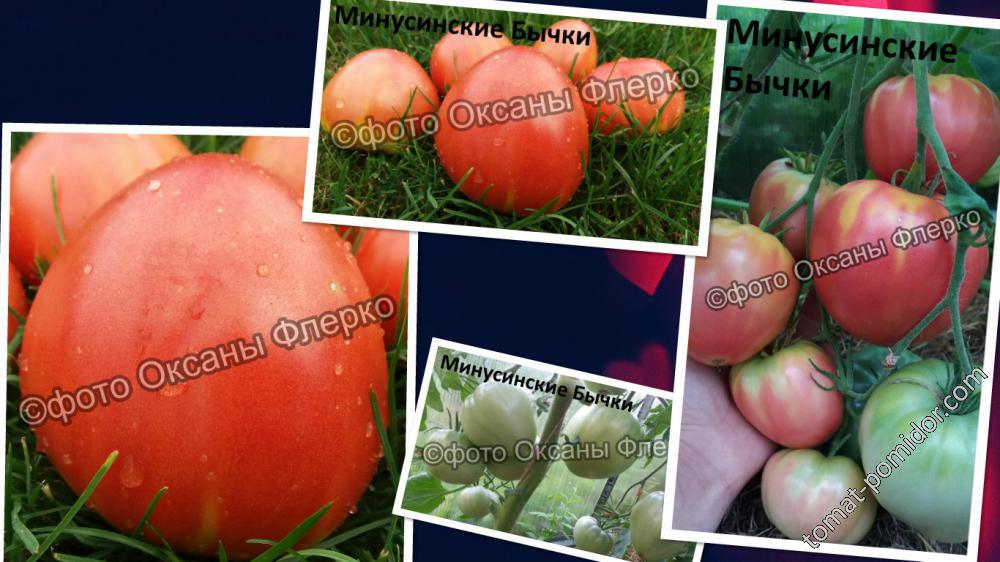
A super variety. Although it wasn't very productive, the fruits grew to be a sight to behold! Large, without veins or green shoulders. And the taste... a dream!
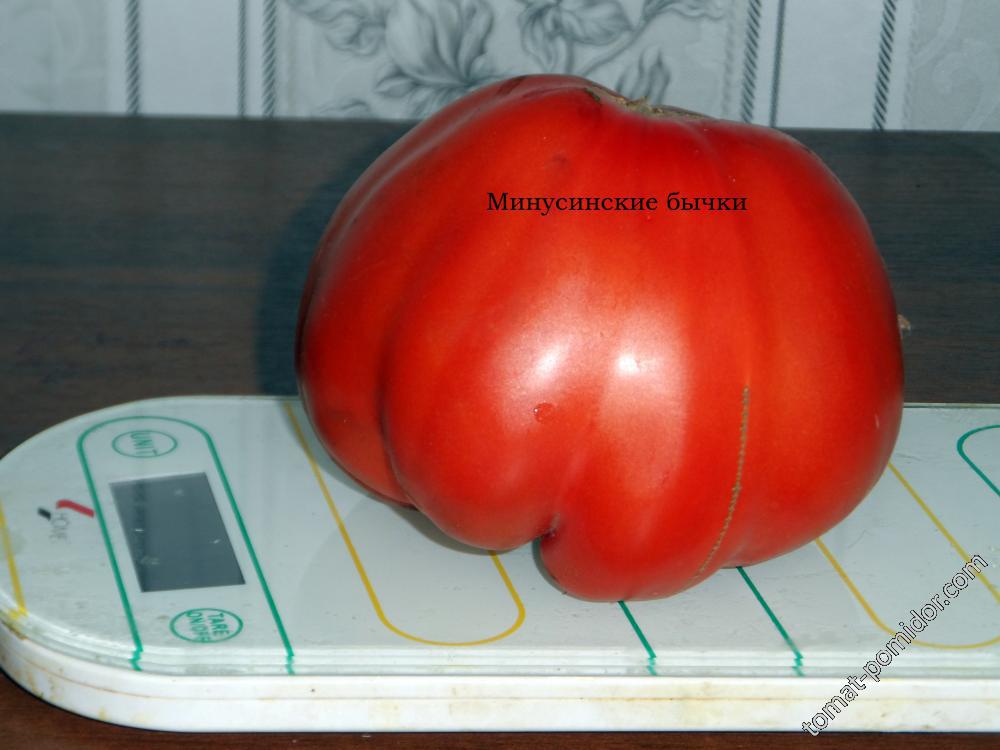
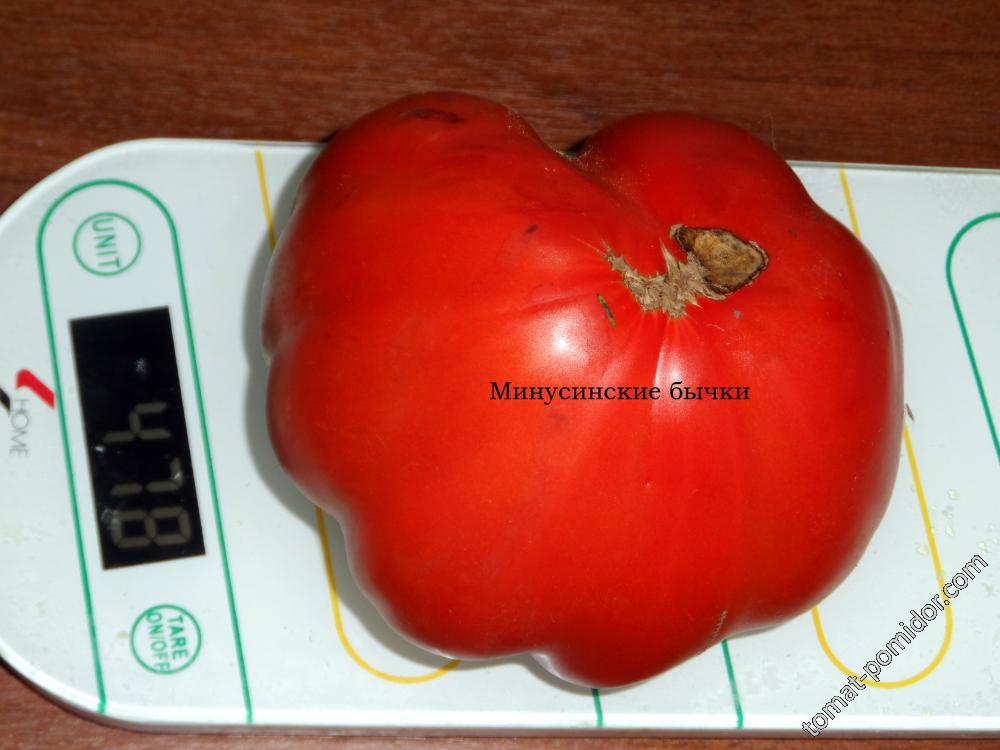
This was my first year growing it. I liked the variety. Productive, large, and sweet.
We were impressed with the variety's yield; the entire bush was simply covered with beautiful clusters of tomatoes. They tasted good too, but we ended up pickling most of them because they were the perfect shape and size. We've now opened the first jar and realized the canning was worth it. They're delicious and meaty.
Please tell me, does anyone know why the shape is different, but the name is the same? I have a cream-shaped one, slightly ribbed with a spout, and there is a similar "version" of Minusinsk bulls on the Internet. Confusion again? I'll add another variety of Minusinsk bullhead; I see a photo of a similar shape here. Huge, red hearts (not particularly productive in the open ground, but the quality of the fruit is… "fairytale." The fruit is large, even, and uncracked). The bush was frail, but by September it had become weak; many others had already dried out, but this one is still green. The leaves are drooping, "weeping." I picked my first fruit on September 9th. It has a wonderful flavor ("butter," "meat," and sweet. Sweetness is usually a problem for me, but not in this case.