
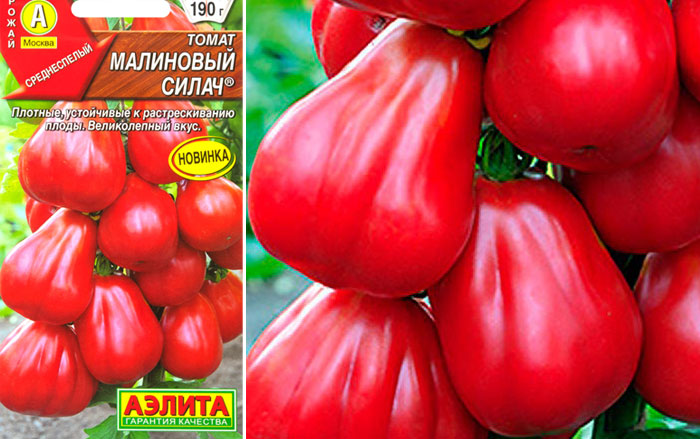
Among pink tomato varieties, large-fruited salad varieties are more common. But Raspberry Strongman is an exception; its yield is ideal for canning. This article provides basic information on the characteristics and care of Raspberry Strongman.
Content
- 1 Table of characteristics of the Raspberry Strongman tomato variety
- 2 Photo gallery of the Raspberry Strongman tomato variety
- 3 The origin of the Raspberry Strongman tomato variety
- 4 A detailed description of the Raspberry Strongman tomato variety
- 5 Advantages and disadvantages of the Raspberry Strongman tomato variety
- 6 Planting Features of the Raspberry Strongman Tomato Variety
- 7 Caring for the Raspberry Strongman tomato variety, watering and fertilizing
- 8 Disease and pest resistance of the Raspberry Strongman tomato variety, including how to control them
- 9 Storage and use of Raspberry Strongman tomatoes
- 10 Comparison of the Raspberry Strongman tomato variety with other varieties in the table
- 11 Gardeners' reviews of the Raspberry Strongman tomato variety
Table of characteristics of the Raspberry Strongman tomato variety
| Characteristic | Description |
| Description | An indeterminate, mid-season variety with pear-shaped fruits suitable for canning. Suitable for growing in plastic greenhouses and open ground. |
| Ripening period | 112-116 days |
| Fruit weight | 150-190 g |
| Description of the fruit | The fruits are large, medium-dense, smooth, and pear-shaped. The color is raspberry. The pulp contains 4 to 6 seed chambers. |
| Productivity | 880-900 c/ha |
| Usage | Tomatoes are suitable for whole-fruit canning, but can also be used as ingredients in salads and to complement any dish. |
| Preferred growing regions | It can be grown in different regions of the country; in the north and middle zones, greenhouse shelter will be required, while in the south, planting in open ground is allowed. |
| Disease resistance | Tomato is resistant to cancer and most viruses, but if care rules are not followed, it can be affected by late blight and other fungi. |
| Agricultural technology | Grown primarily in closed greenhouses, it requires training and support. It tolerates low light and high temperatures. |
| 2015 | |
| Originator | Russia, Agrofirm Aelita LLC |
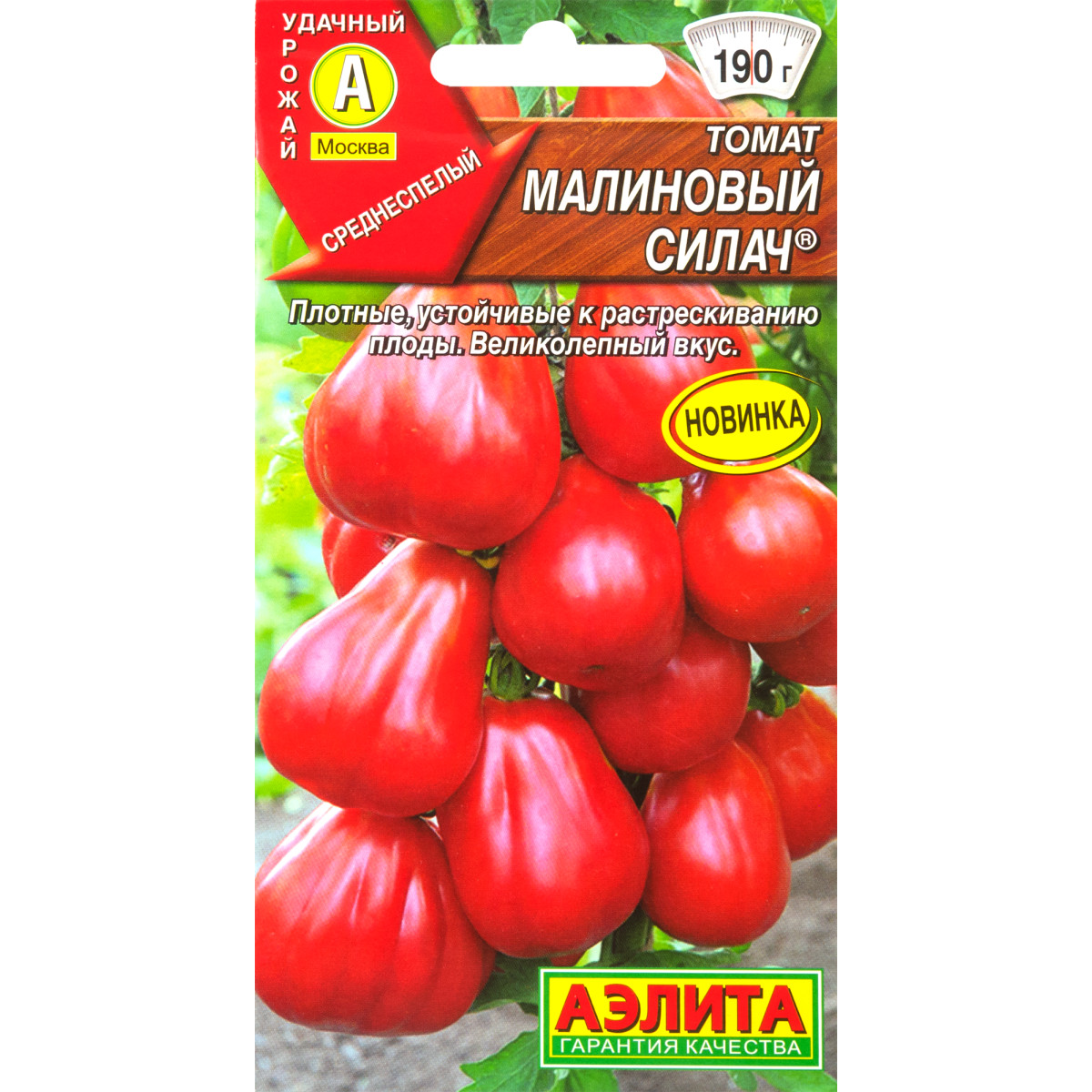
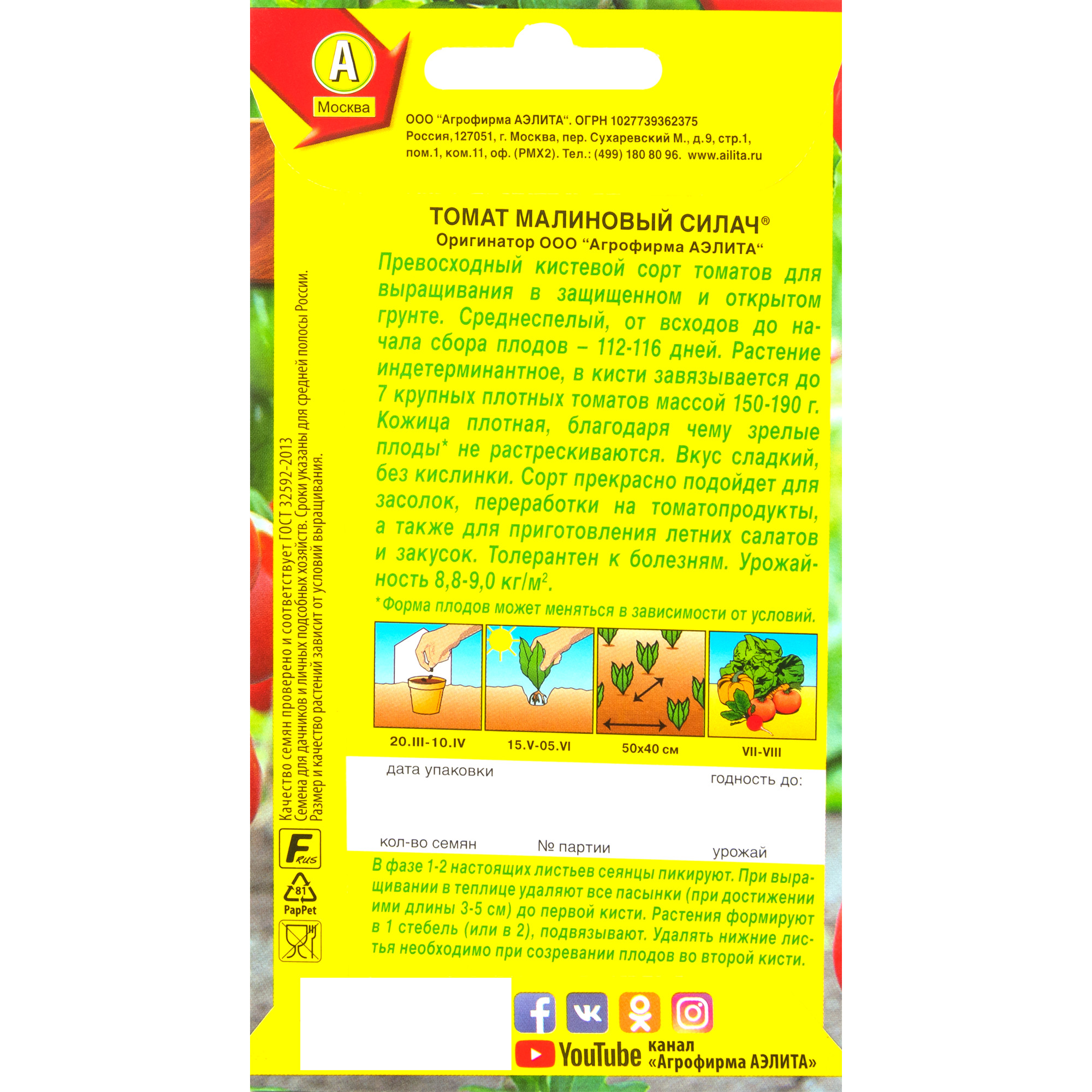
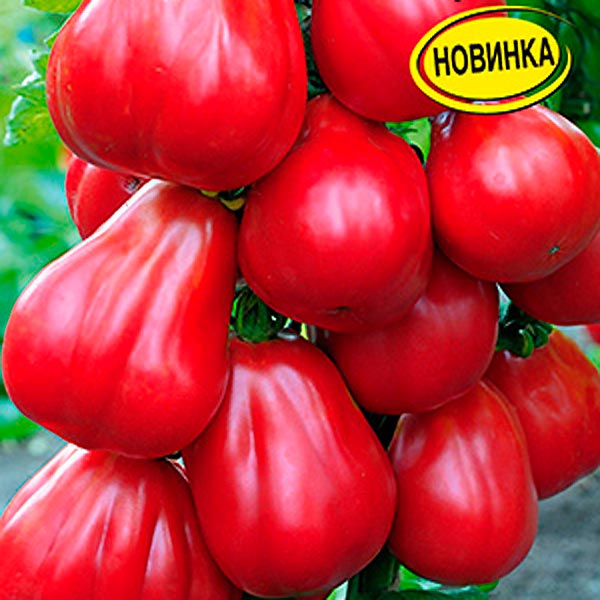
Photo gallery of the Raspberry Strongman tomato variety
The origin of the Raspberry Strongman tomato variety
The Raspberry Strongman tomato was bred by specialists at Aelita specifically for whole-fruit canning. Breeders strived to create the perfect tomato that can be grown on an industrial scale, resists cracking, and has a pleasant flavor. An application for variety protection was submitted in 2013, and in 2015, it was added to the State Register of the Russian Federation.
A detailed description of the Raspberry Strongman tomato variety
The indeterminate tomato variety "Raspberry Strongman" delights gardeners with an excellent harvest of fairly large tomatoes, perfect for canning. It can be planted in both greenhouses and open garden beds, and this has virtually no impact on fruit quality, unlike other varieties.
Bushes
The shoots are indeterminate and need to be tied up and pinched as they grow. The bush is formed into one or two stems; more is not necessary, as the yield will be very good. The plant has medium foliage. Once the second cluster begins to ripen, you can remove all the leaves below the first.
Fruit
The fruits are large, smooth, and pear-shaped. The color is raspberry-red. The flesh is juicy, fleshy, and very sweet without any tartness. Inside are 4-6 small seed chambers. The skin is quite thick, allowing the tomatoes to withstand transportation well and not crack on the vine.
The fruits are collected in clusters, each containing up to 7 tomatoes weighing from 150 to 190 g. The medium weight and neat shape of the tomatoes make the Raspberry Strongman an ideal variety for whole-fruit canning.
Productivity
The yield of the Raspberry Strongman tomato is very good; with proper care, it varies from 880 to 900 c/ha.
Ripening time
Ripening times are average, with 112 to 116 days from germination to harvest. It's important to remember that the originator provides average ripening times, so they may vary slightly in different regions.
Advantages and disadvantages of the Raspberry Strongman tomato variety
The Raspberry Strongman variety has a number of advantages and disadvantages.
| Advantages | Flaws |
|
|
Planting Features of the Raspberry Strongman Tomato Variety
The Raspberry Strongman tomato can be grown with equally good results in closed film greenhouses and in open ground, if the weather conditions in the region allow it.
Sowing seeds and growing seedlings of the Raspberry Strongman tomato variety
The official seed producer is the Aelita agricultural firm, so it's best to purchase planting material only from the original source to avoid disappointing results.
You can check the packaging to see if they've been pre-treated. Typically, all seeds in a packet are already disinfected and soaked in growth stimulants.
But if you're using homemade tomato seeds, be sure to soak them for 20 minutes in a weak solution of potassium permanganate. This will help kill pathogens that could subsequently affect the plant's immunity.
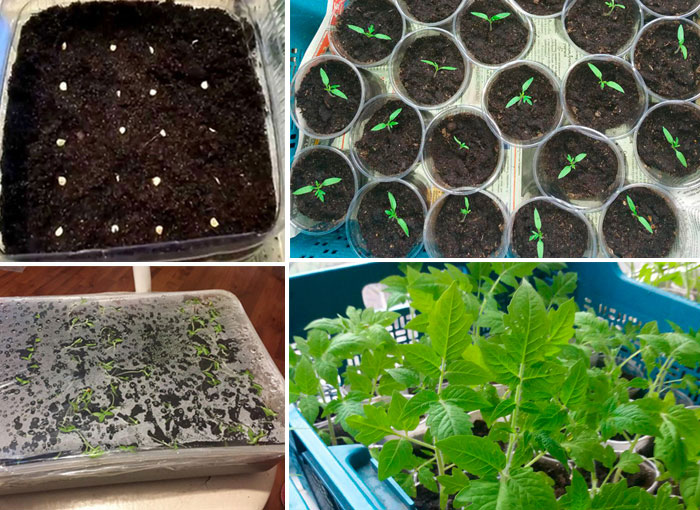
To ensure faster germination, it is recommended to use specialized growth activators, such as Epin.
Experienced gardeners strongly recommend germinating all seeds before planting, even if the source allows for dry planting. Place them in a damp cloth and leave them in a warm place for a couple of days. After 48 hours, the first sprouts will emerge, after which you can begin planting.
The raspberry plant thrives on breathable soil. You can buy it at the store or make your own by mixing equal parts sand, garden soil, and compost. To prevent moisture retention, add 10-15% of the total volume of vermiculite to the soil.
A wooden box, plastic container, or individual cups can be used as a seedling container. If you're using containers from last season, rinse them with a weak solution of potassium permanganate to prevent harmful bacteria from entering the soil.
Fill the selected container halfway with soil. Sow the seeds into prepared furrows 15 mm deep, then cover with a 10 mm layer of soil. Water using a spray bottle, and cover the container with glass or plastic.
The makeshift greenhouse is placed in a well-lit, warm room. Periodically, the cover should be briefly removed to prevent condensation from accumulating inside. It is removed only when most of the seedlings have emerged from the surface. After this, the box is moved to a cooler location.
Pricking out is done after the shoots have developed two true leaves. A couple of weeks before planting, it's recommended to begin hardening off the seedlings by moving them outside or onto a balcony and gradually increasing their time outdoors.
The exact time for sowing seeds is determined depending on the growing region; it is usually carried out in March, taking into account that approximately 60 days must pass before planting.
Planting Raspberry Strongman tomato seedlings in the ground
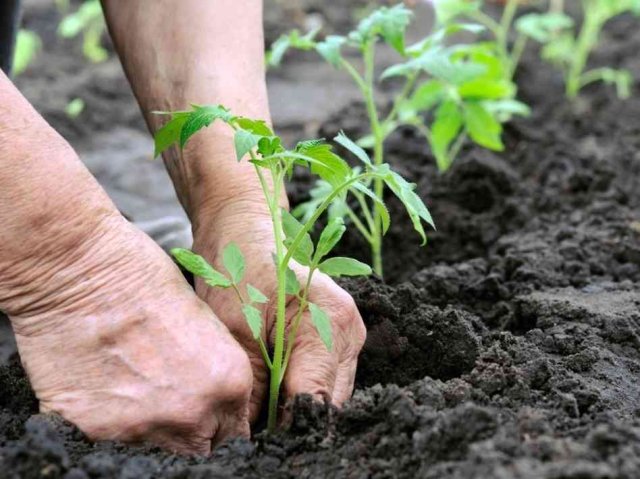
Tomatoes do not tolerate cold soil well, so they can be planted in a garden bed only when the soil warms up to +15 °C and the threat of night frosts has passed.
The soil is dug over, and to improve its fertility, humus can be added at a rate of 10 kg per square meter. The prepared holes should be 20 cm deep and slightly larger than the seedling pot. Some gardeners add a handful of ash and onion peels to the holes. The distance between the holes should be at least 40 cm, and the passage between rows should be 60 cm wide.
Caring for the Raspberry Strongman tomato variety, watering and fertilizing
The first watering is done approximately 7-10 days after planting the seedlings in the soil. At this time, nitrogen-containing fertilizers can be added to stimulate vegetative growth.
After 2 weeks, it is recommended to add potassium-phosphorus fertilizer; it will be extremely beneficial for the formation of ovaries and fruits.
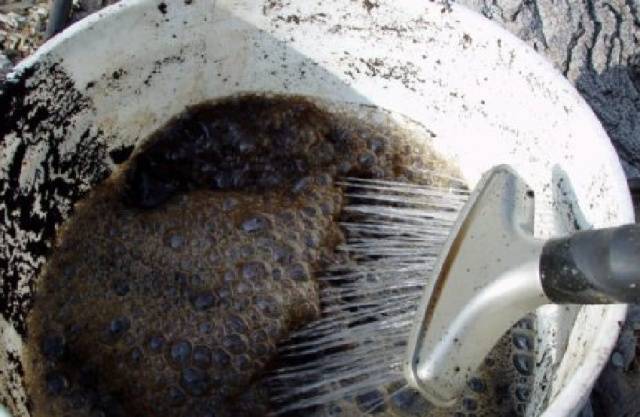
Manure is often used as a nutrient supplement. One bucket is diluted in a 100-liter barrel of water and applied after the main watering, at a rate of two buckets per bush.
Tomatoes should be watered approximately once every 5 days, but you still need to take weather conditions into account.
The main rule when caring for the Raspberry Strongman tomato is proper bush formation, which is carried out with one or two stems.
Disease and pest resistance of the Raspberry Strongman tomato variety, including how to control them
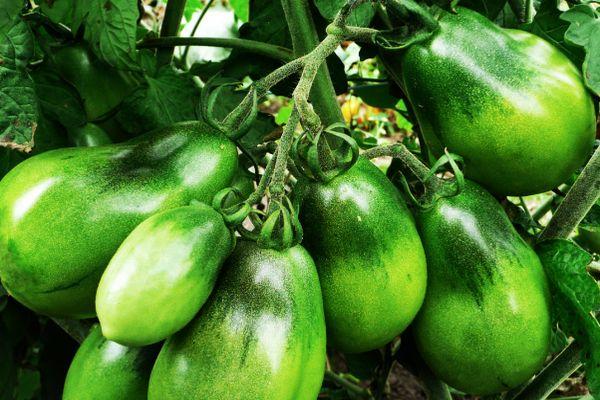
The raspberry plant has a relatively strong immune system, which helps it resist common diseases. However, if weather conditions are unfavorable, or if overwatering or excessive nitrogen fertilizers are used, late blight may occur. As a preventative measure, it is recommended to treat the plantings with a solution of Fitosporin at a rate of 3 teaspoons per 10 liters. After the first treatment, a second treatment is performed at intervals of 7 days.
If the disease has already manifested itself, then more effective remedies will help, for example, Hom, Ordan, Ridomil Gold and others.
Storage and use of Raspberry Strongman tomatoes
Harvesting begins 112-116 days after germination. Raspberry Strongman tomatoes are ideal for canning. Their juicy flesh and sweet flavor complement any dish.
The dense skin holds its shape well and prevents the tomatoes from cracking, thanks to which the harvest has a relatively long shelf life and can be easily transported over long distances.
Comparison of the Raspberry Strongman tomato variety with other varieties in the table
Please note! How can you easily convert centners/ha to kg/sq.m? Simply divide by 100! For example, the Abakansky Pink tomato yields 400 centners of marketable fruit per hectare. This equals 4 kg per square meter. It's that simple! Also, keep in mind that typically no more than 3-4 plants are planted per square meter. This way, you can calculate the yield per bush. In the case of the Abakansky Pink, it's about 1 kg.
| Variety | Ripening period (number of days from full germination to ripening)
Yield of commercial fruits |
Brief description | Fetus |
| Raspberry Strongman | 112-116 days 880-900 c/ha |
A mid-season indeterminate variety for open ground and greenhouses. Suitable for canning. | Pear-shaped, large, smooth, medium density, raspberry, 150-190 g. Good taste. |
| nobleman | 103-117 days
107-587 c/ha, maximum 780 c/ha (Omsk region) |
A mid-season determinate variety for open ground. Suitable for salads. 95% marketability. | Heart-shaped, medium-ribbed, raspberry, 131-250 g. Good to excellent taste. |
| Potato raspberry | 100-105 days
up to 1800 c/ha |
A mid-season, indeterminate, standard variety for open ground and greenhouses. Requires staking and training. Suitable for salads, canning, and processing into tomato products. | Flattened-round, raspberry, 700-800 g. Excellent taste, sugary, rich. |
| Raspberry Empire | 95-110 days
2000 c/ha |
An early-ripening indeterminate variety for greenhouses. Suitable for salads and pickling. | Heart-shaped, medium density, medium-ribbed, raspberry, 150-200 g. Excellent taste. |
| Raspberry wine | 105 days 1200-1400 c/ha (greenhouse and under film) |
An early-ripening determinate variety for open ground and greenhouses. Requires staking and shaping. Suitable for salads. | Round, large, smooth, medium density, raspberry, 350 g. Excellent taste. |
| Mom's Raspberry Heart | 112-120 days
1200-1500 c/ha |
A mid-season indeterminate variety for greenhouses and open ground. Suitable for salads and canning. | Heart-shaped, ribbed, pink, 300-600 g (up to 1200 g). Excellent taste. |
| Raspberry Miracle | 90-95 days
1200-1500 c/ha |
Mid-early determinate variety for open ground and greenhouses. Suitable for salads and processing into tomato products. |
Round, smooth, pink, 350 g. Excellent taste. |
| Raspberry Viscount | 95-105 days
500-600 c/ha |
A mid-season determinate variety for greenhouses. Suitable for salads. | Flat-round, large, slightly ribbed, medium density, raspberry, 220-260 g. Excellent taste. |
| Raspberry Giant | 105-110 days 590 c/ha |
An early-ripening determinate variety for open ground and plastic greenhouses. Requires staking and training. Suitable for salads. | Round, slightly ribbed, medium density, raspberry, 200-300 g. Excellent taste. |
| Raspberry ringing | 115-120 days
450 c/ha |
An early-ripening determinate variety for open ground and greenhouses. Requires staking and shaping. Suitable for salads. | Round, smooth, medium density, pink, 150 g. Excellent taste. |
| Raspberry mousse | 90-95 days
1600-1700 c/ha (open ground), 2000-2200 c/ha (greenhouse and under film) |
An early-ripening determinate variety for open ground and greenhouses. Training into 3-4 stems is recommended. Suitable for salads and processing into tomato products. | Round, large, dense, pink, 200-300 g. Excellent taste. |
| Raspberry Paradise | 90-95 days
1000-1200 c/ha (greenhouse and under film) |
A mid-season determinate variety for open ground and greenhouses. Requires staking and shaping. Suitable for salads. | Round, large, smooth, medium density, raspberry, 500 g. Excellent taste. |
| Crimson Dawn | 110-115 days 790 c/ha |
A mid-season indeterminate variety for open ground and greenhouses. Requires staking and shaping. Suitable for salads. | Heart-shaped, loose, ribbed, raspberry, 350-400 g. Good taste. |
| Pudovic | 112-115 days
1550 c/ha (greenhouse and under film) |
A mid-season indeterminate variety for open ground and greenhouses. Requires staking and shaping. Suitable for salads. | Heart-shaped, ribbed, medium density, raspberry, 290 g. Excellent taste. |
| Pot-bellied house | about 100 days
820-920 c/ha (greenhouse and under film) |
An early-ripening indeterminate variety for open ground and greenhouses. Requires staking and shaping. Suitable for salads. | Pear-shaped, ribbed, medium density, red, 200-260 g. Good taste. |
Gardeners' reviews of the Raspberry Strongman tomato variety
Gardeners note the excellent yield of the Raspberry Strongman variety, as well as the pleasant taste of the fruits, which is not sour.
Dear readers, no one has yet left a review for the Raspberry Strongman tomato variety. Be the first if you know anything interesting about this variety and/or have grown it. You can leave a review directly in the comments below the article; with your permission, we may embed it in the article itself. Thank you very much!
P.S. If you've visited the turbo page, to leave a review, go to the website itself by left-clicking on the logo.
Until anyone leaves a review, we recommend watching a video review of other interesting tomato varieties:


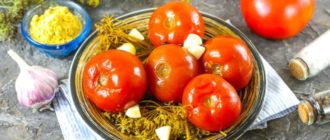



The Raspberry Strongman has shown very good yields in two years (2021-2022) on a plot in the Moscow region (northern Moscow). It requires regular disease treatment. In open ground, it is heavily affected and does not reach its full potential yield. In a greenhouse, it grows beautifully. Ours reached a height of over 2 meters. The flavor is good, but one major drawback is that it is very sensitive to the presence of a complex of minerals in a digestible form. Without additional fertilizer, all the fruits have white shoulders that do not redden even when fully ripe. Because of this, about a quarter of the fruit is wasted. Both years, the seedlings were grown from the same batch of seeds.