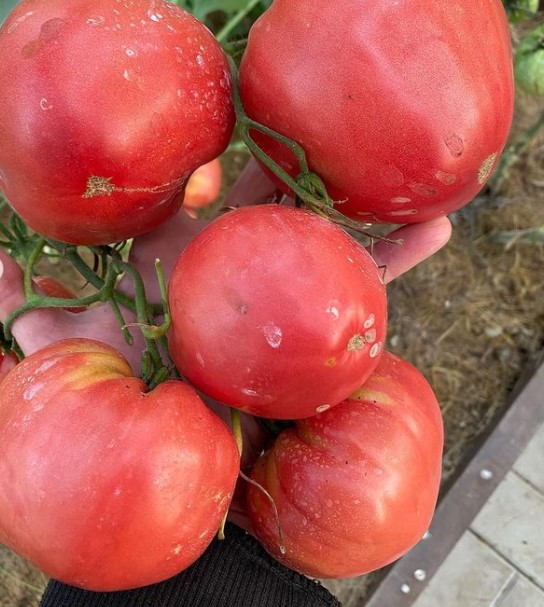
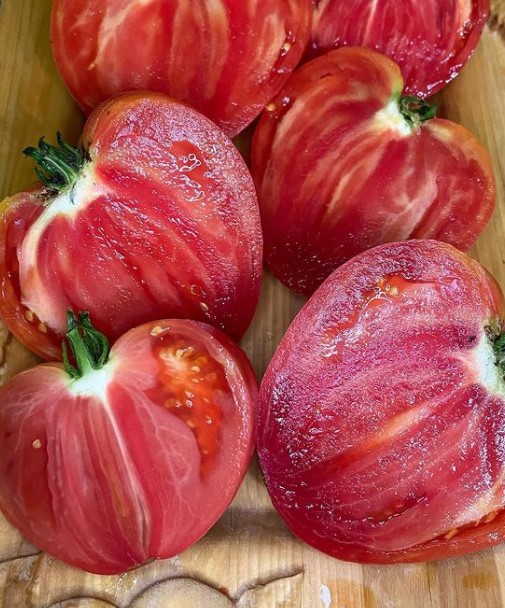
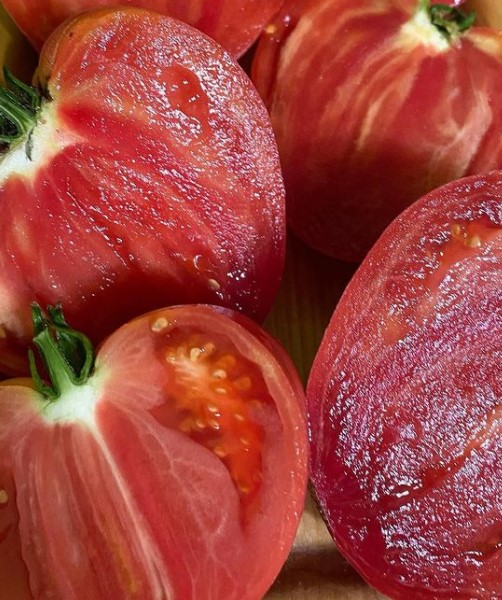
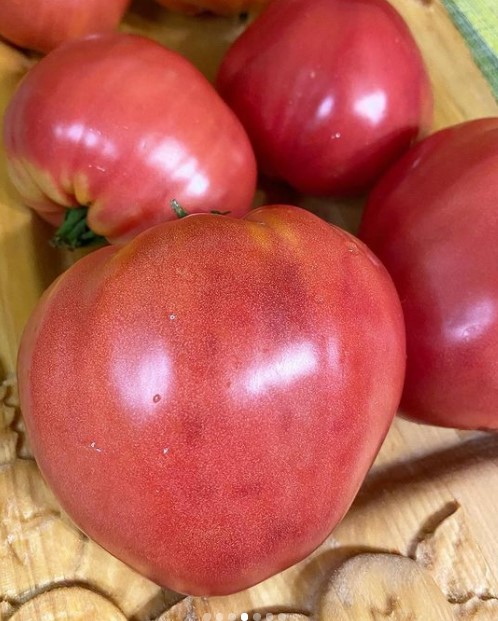
The Raspberry Mom's Heart tomato is a very rare, collectible variety. This is due to its low seed content. The seeds inside are literally a handful, which is considered its main distinguishing feature from many other tomato varieties. It appeared in our country relatively recently, originating in Italy.
Content
- 1 Table of characteristics of the tomato variety Raspberry Mother's Heart
- 2 Photo gallery of the tomato variety Raspberry Mother's Heart
- 3 The history of the Raspberry Mother's Heart tomato variety
- 4 A detailed description of the tomato variety Raspberry Mother's Heart
- 5 Advantages and disadvantages of the Raspberry Mom's Heart tomato variety
- 6 Growing the Raspberry Mom's Heart tomato variety
- 7 Using tomatoes of the Raspberry Mother's Heart tomato variety
- 8 Comparison of the tomato variety Raspberry Mom's Heart with other varieties in the table
- 9 Gardeners' reviews of the Raspberry Mom's Heart tomato variety
Table of characteristics of the tomato variety Raspberry Mother's Heart
| Characteristic | Description |
| Description | Mid-season indeterminate variety for greenhouses and open ground. |
| Ripening period | 112-120 days |
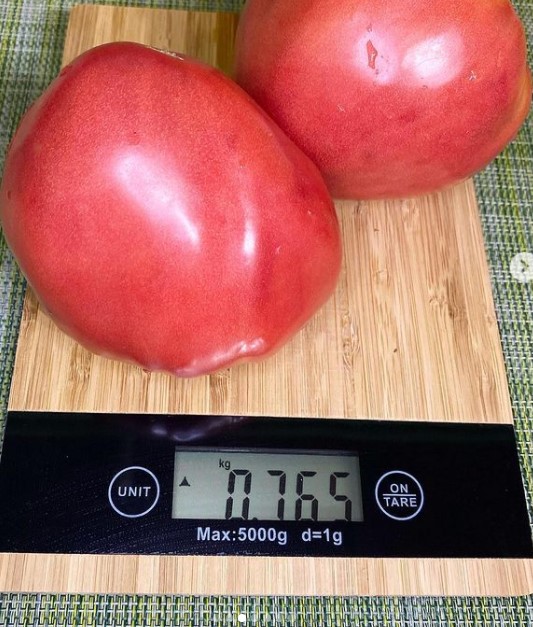
| Fruit weight | 300-600 g (up to 1200 g) |
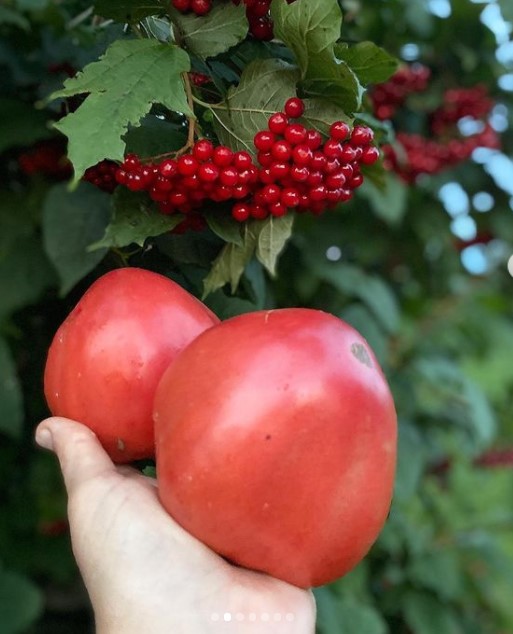
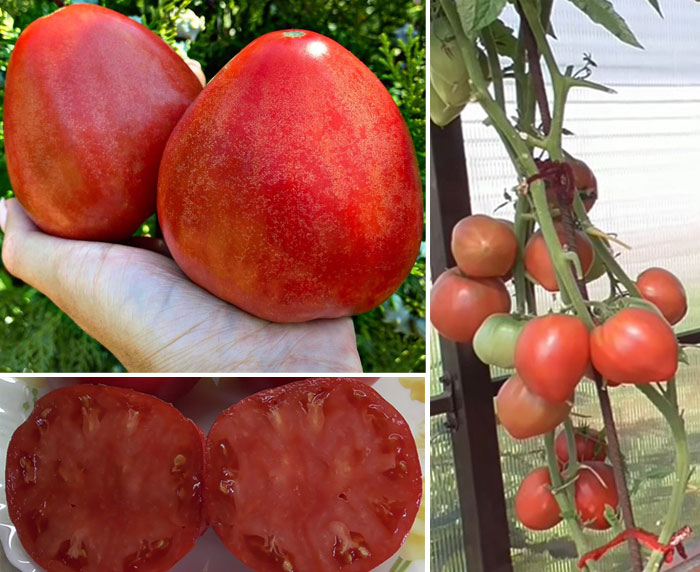
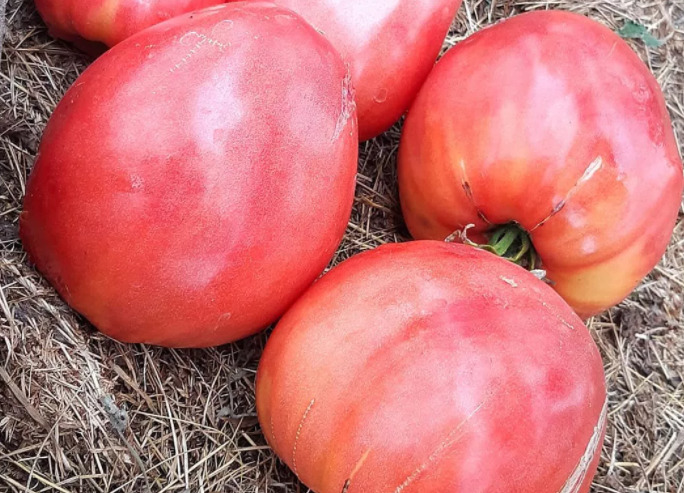
| Description of the fruit | Heart-shaped, ribbed, pink. Taste great |
| Productivity | 1200-1500 c/ha |
| Usage | Suitable for salads and canning (tomato juice, sauces, ketchup, salad dressings). Only small specimens are available whole. |
| Preferred growing regions | It shows good yields in all regions of the country and grows successfully both in the South and in Siberia. |
| Disease resistance | Good, but can be susceptible to late blight if care rules are not followed. |
| Agricultural technology | It is necessary to form no more than 2 stems and tie them to a support. |
| Not included | |
| Country of origin | Italy |
Photo gallery of the tomato variety Raspberry Mother's Heart
The history of the Raspberry Mother's Heart tomato variety
This high-yielding and delicious variety is a recent arrival in our country. It's currently not widely grown. However, in Italy, "Maminovoe Mamino Serdtse" is considered an old family cultivar.
A detailed description of the tomato variety Raspberry Mother's Heart
Let's take a closer look at the main characteristics of the variety.
Bush characteristics
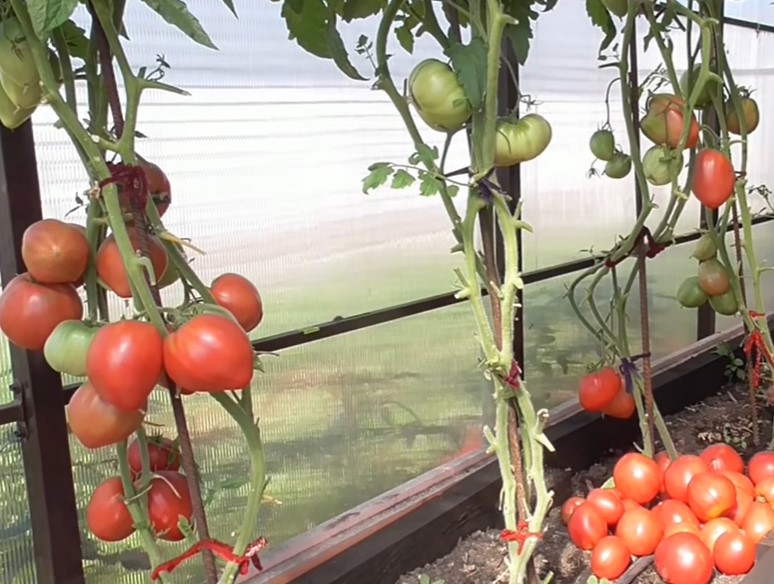
The bushes can reach 180 cm. The leaves are dark emerald, ordinary.
Fruit characteristics
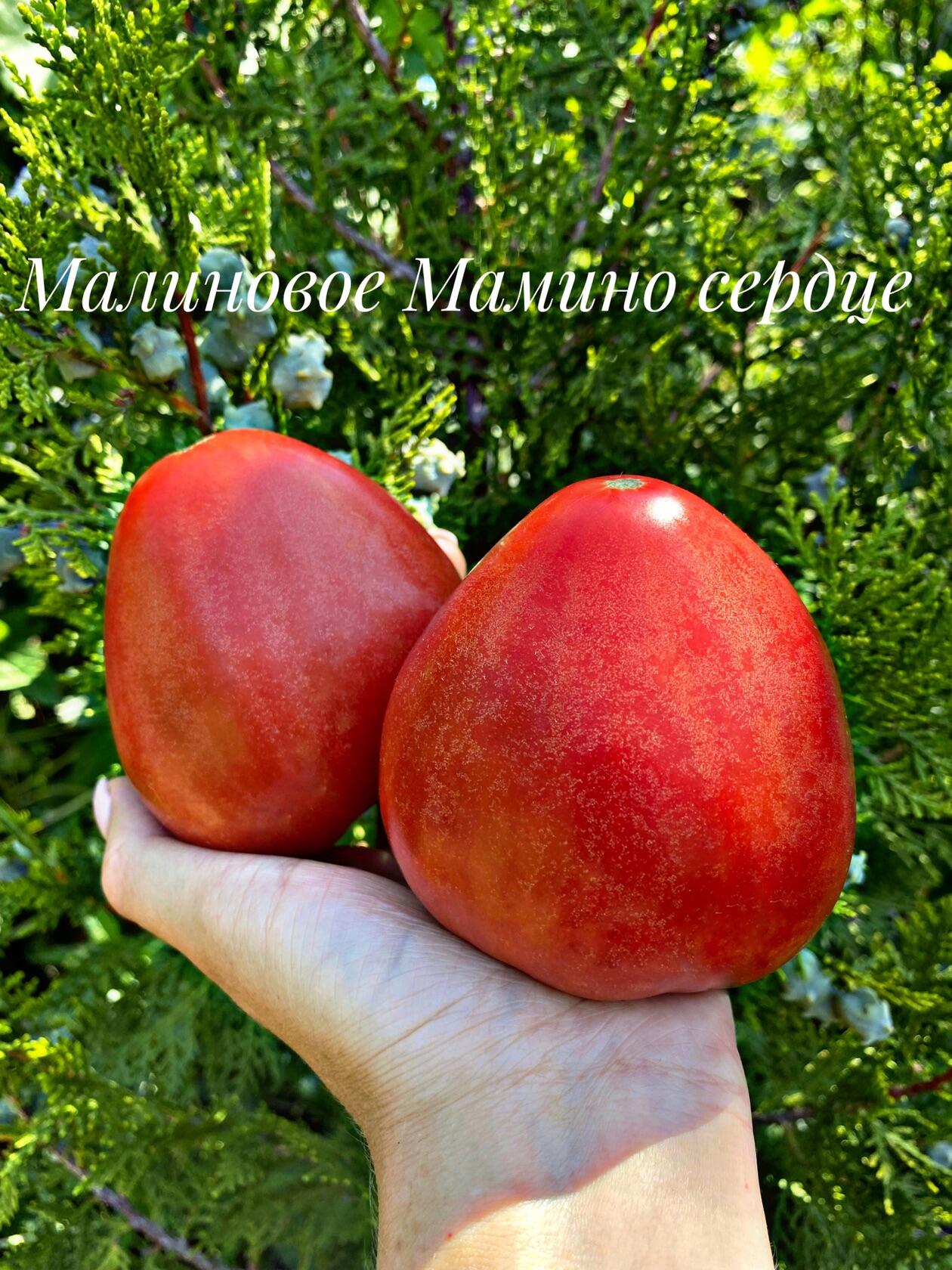
On average, the fruits weigh 300-600 g. Under favorable growing conditions, tomatoes weighing up to 1.2 kg can be harvested from the bushes.
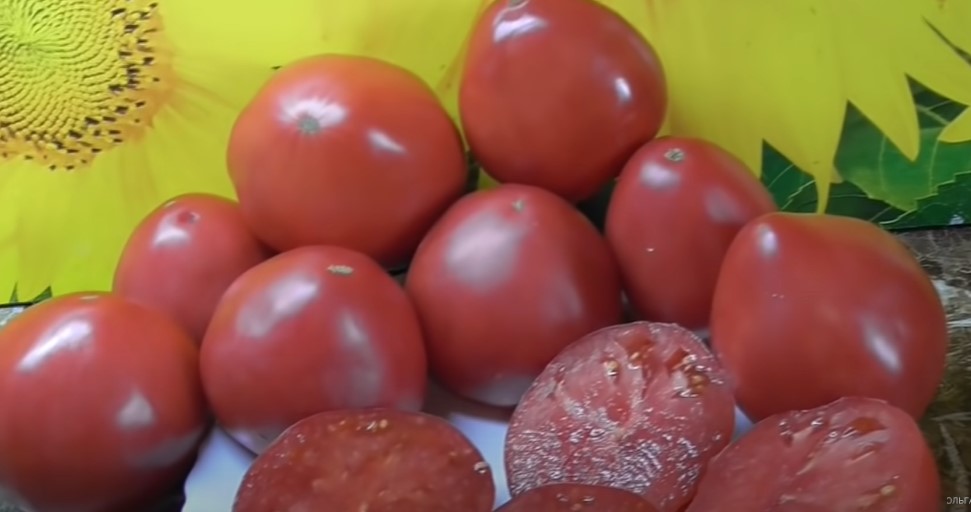
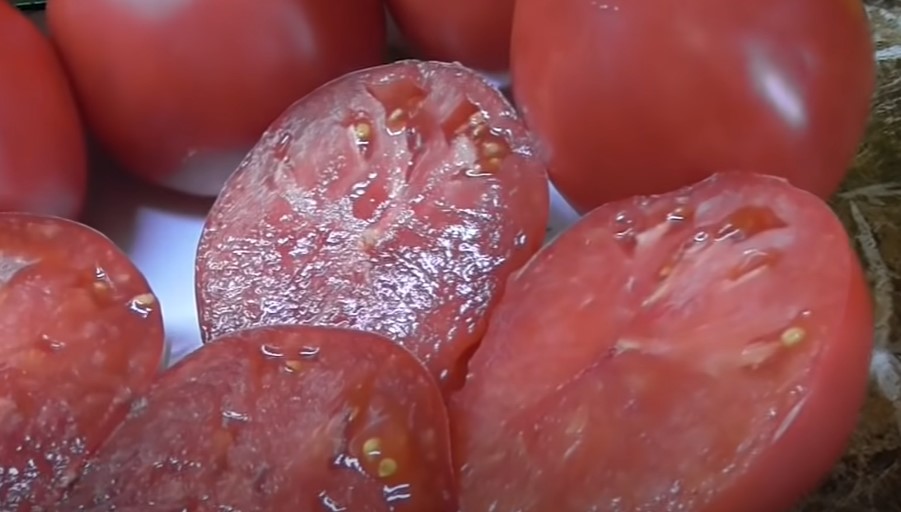
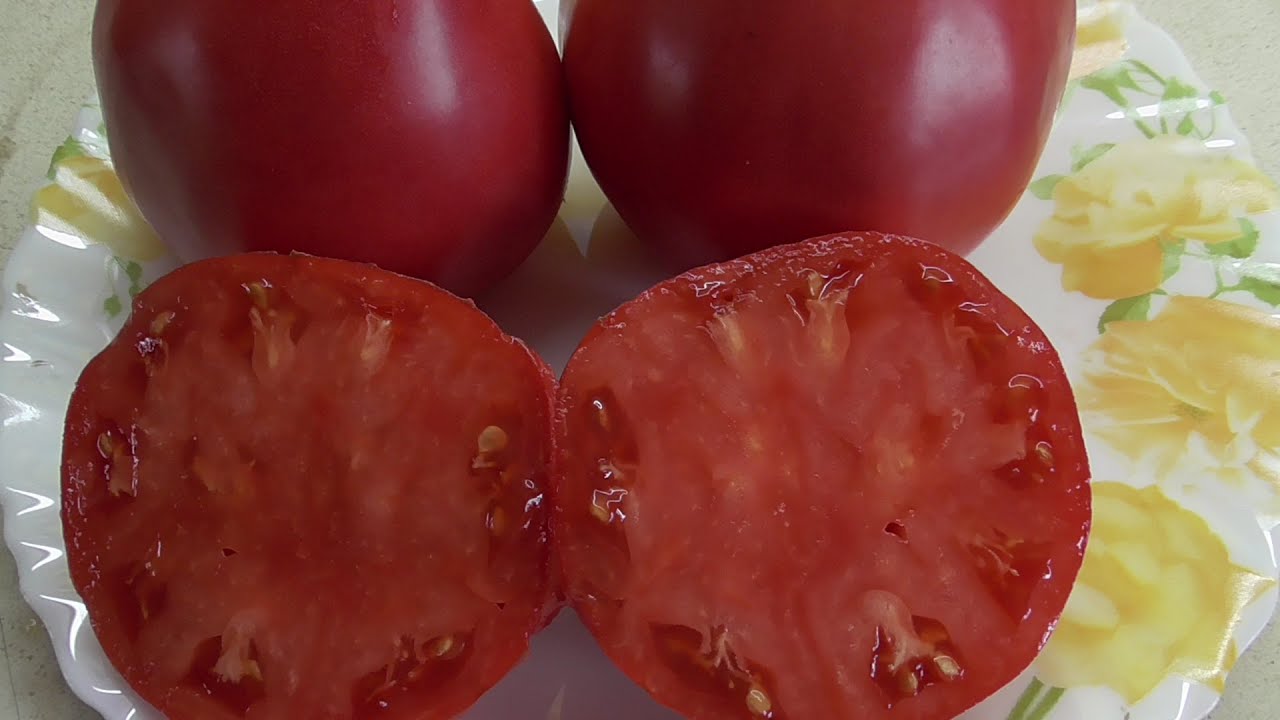
The skin is thin. The flesh is intensely raspberry-colored, sweet, watermelon-like, and very juicy. The flavor is bright, with a pleasant tartness. The seed chambers are small, practically absent. The seeds are present singly, as can be seen in the photo.
Ripening time
This is a mid-early variety. It takes 112-120 days from germination to harvest.
Productivity
Yields are high. 12-15 kg of harvest can be collected from 1 square meter. That's approximately 4-5 kg per bush.
Advantages and disadvantages of the Raspberry Mom's Heart tomato variety
Benefits of tomato:
- high yield rate;
- large-fruited;
- high yield of marketable fruits;
- uniformity, attractive appearance of tomatoes;
- excellent taste characteristics;
- universal purpose of fruits;
- Possibility of cultivation in any region;
- good immunity to many diseases;
- high shelf life and transportability of fruits;
- resistance to cracking;
- high content of nutrients in fruits (compared to red tomatoes);
- ripening without loss of properties when picked green from the bush;
- possibility of use for industrial processing.
The disadvantages include:
- the need for garter during fruiting;
- poor suitability for whole-fruit preservation;
- the need for indoor cultivation in some regions.
Please note! Another drawback is that this variety is relatively new, so seeds are difficult to find in gardening stores and specialized garden centers. They are usually ordered online. Seeds are in short supply, so try to buy them as soon as they go on sale.
Growing the Raspberry Mom's Heart tomato variety
Growing this variety is virtually no different from other pink tomatoes. By following proper cultivation guidelines, you can reap a bountiful and delicious harvest at the end of the season.
Sowing seeds and growing seedlings
Seeds of this variety should be planted in a greenhouse in almost all regions of Russia except the southern ones. It is recommended to purchase seeds only from reputable producers. Otherwise, there is a risk of receiving low-quality products with poor germination. Even if you manage to grow a few bushes, they will be weak and diseased.
Seeds are usually already disinfected at the factory, so there's no need for additional treatment after purchase. To speed up germination, you can soak them in a growth stimulant (such as Epin or Zircon) before planting, following the instructions on the packaging.
If you are using seeds that you have grown yourself or bought from someone, before planting you should soak them for half an hour in a slightly pink solution of potassium permanganate to kill any infectious agents.
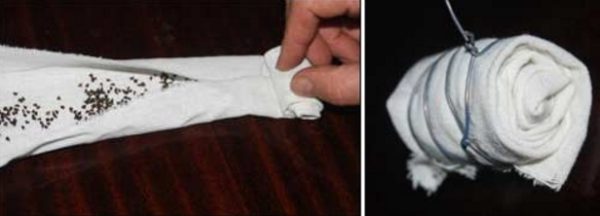
If desired, you can germinate the seeds first. To do this, wrap them in a damp cloth and place them in a warm place for 2 days.
Any soil intended for seedlings is suitable for growing this variety. You can also prepare your own soil mixture by mixing equal parts garden soil, sand, humus, and vermiculite. Then, bake the soil in the oven to disinfect it.
The planting container also needs to be disinfected if it's being used more than once. To do this, rinse it with a light pink solution of potassium permanganate.
Step-by-step planting of seeds for seedlings:
- Fill containers half full with soil.
- Make grooves on top.
- Place the seeds inside to a depth of about 2 cm. Leave a similar distance between adjacent seeds.
- Cover the seeds with soil to a depth of approximately 1 cm.
- Cover the container with plastic wrap and place in a warm place until seedlings appear.
- Once the sprouts emerge, gradually remove the covering. Move the container to a bright location with a temperature of 20–22°C. Periodically remove weak seedlings, leaving only the most viable ones. Water once a week, avoiding dampness.
- When the seedlings reach a height of 10 cm, transplant them into separate containers.
- After 55-65 days, you can begin planting in a permanent location.
Helpful information! After transplanting, you can apply the first fertilizer. Seedlings respond well to an eggshell infusion. Crush 2-3 tablespoons of eggshells and add 1 liter of warm water. Let it steep for about a week. Cloudiness and an unpleasant odor will indicate it's ready. Dilute the infusion with regular water 1:3 and apply it once a week after the main watering.
Planting in the ground
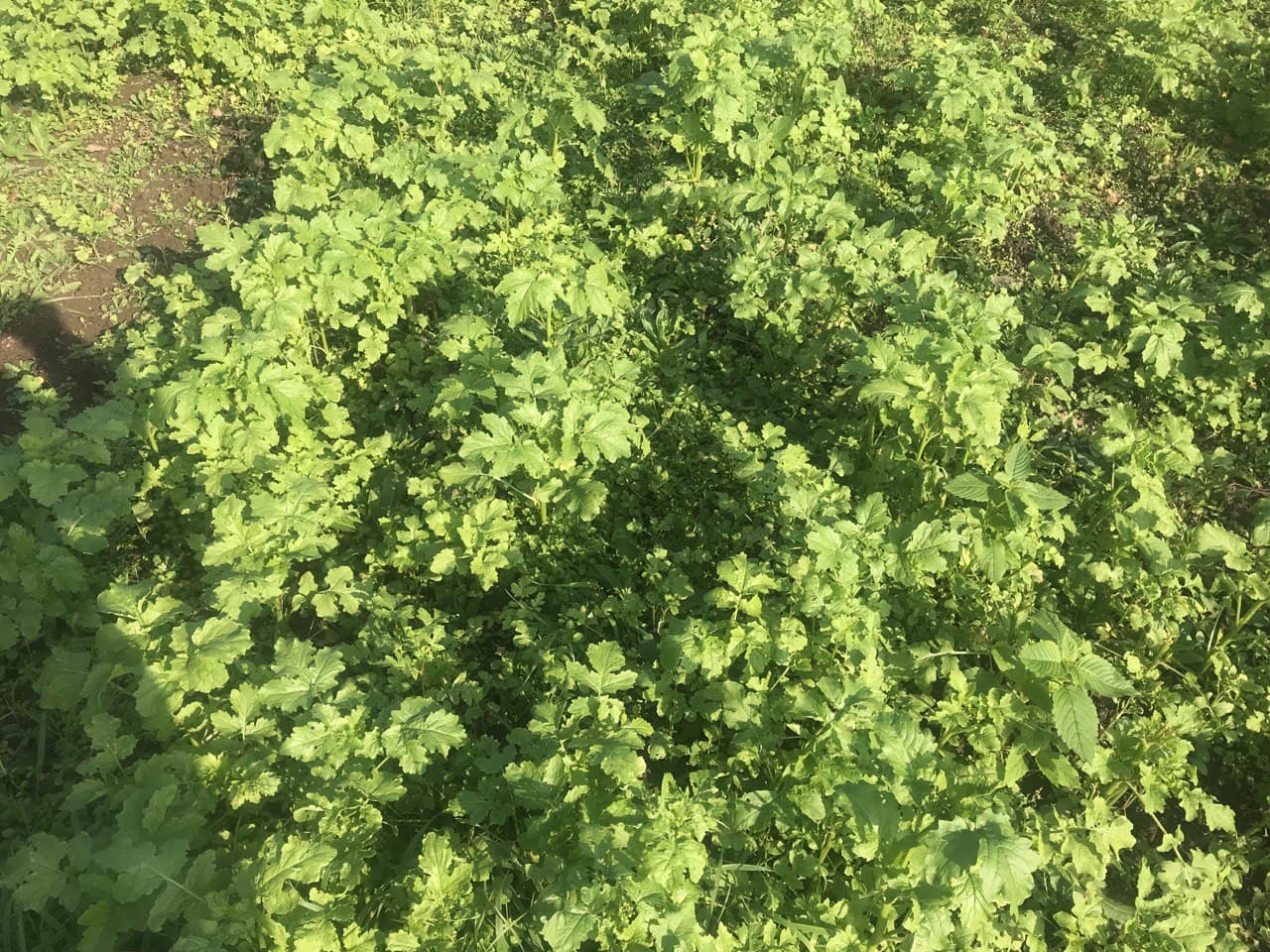
Planting in open ground occurs in late May or early June. The beds should be prepared in the fall, dug over, and fertilized. Dig again in the spring. To improve fertility, add humus (10 liters per square meter). A couple of weeks before planting, the beds can be sown with green manure. This will improve the soil composition.
It's recommended to begin planting in the late afternoon, after the sun has faded. Prepare the holes in advance. They should be about 20 cm deep. No more than three plants can be planted per square meter if training them into two stems. Leave 50 cm between adjacent holes, and 70 cm between rows. After planting, mulch the beds to prevent weed growth and retain soil moisture.
Care Features
Although tomato plants form strong and sturdy bushes, they require staking to support the weight of the large fruits. Lateral shoots should be removed when they reach 5 cm. To avoid crowding, train the plants with a maximum of two stems.
Water twice a week. Each bush requires 7 liters of water. The watering schedule may need to be adjusted during cold and rainy weather. Water should be applied directly to the roots, avoiding any contact with the above-ground parts. Avoid long intervals between waterings, otherwise the fruit will crack on the bushes.
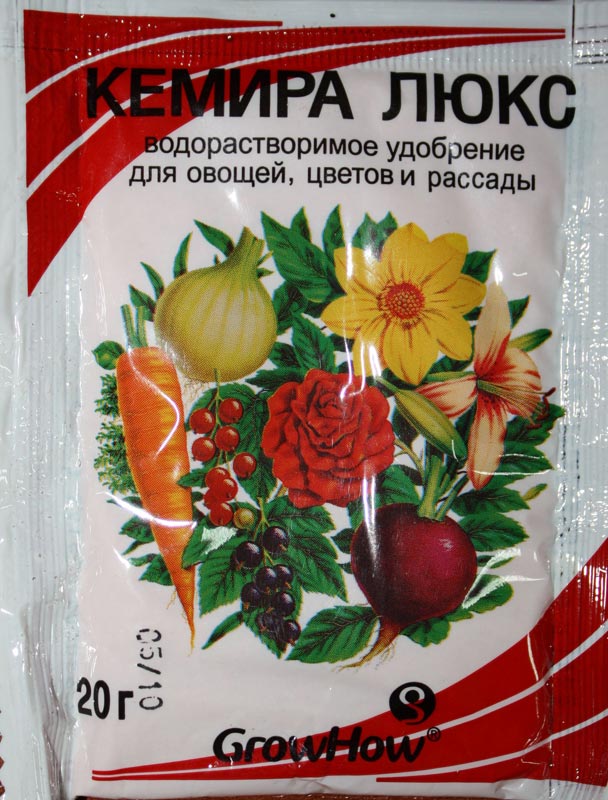
Foliar feeding is applied every two weeks. It is recommended to apply the first fertilizer 1.5 weeks after planting the seedlings. Kemira and Agricola fertilizers are best suited for tomatoes.
You can also prepare your own nutrient solution. For example, dissolve 200 g of yeast in 1 liter of water and let it steep for 3 hours. Use at a concentration of 1 to 10.
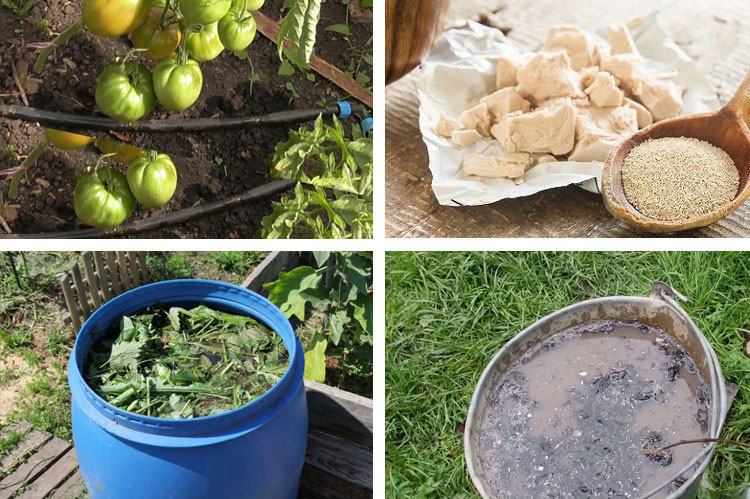
Another equally effective fertilizer is made from weeds. Add chopped weeds and 300 g of yeast to a barrel of water (50 liters). Let the solution sit for 2 days.
Disease prevention
Tomatoes exhibit good resistance to many diseases, but can be infected with late blight. To prevent this, maintain a watering schedule, ventilate the greenhouse daily, avoid over-fertilizing with nitrogen, and don't forget about phosphorus-potassium fertilizers. If infection does occur, use Bordeaux mixture, Quadris, Agat, Ridomil, or Strobi to kill it.
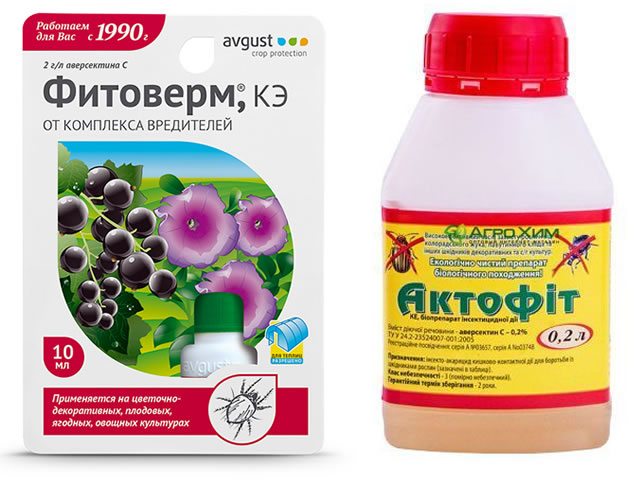
The bushes are also susceptible to aphids and slugs. If the former is present, treatments such as Epin, Aktara, Borneo, and Fitoverm will help. Slugs will have to be collected by hand. To repel pests, you can spray the tomatoes with ammonia (1 tablespoon per 3 liters of water).
Using tomatoes of the Raspberry Mother's Heart tomato variety
This variety has excellent flavor characteristics. It's perfect for eating fresh and in salads. Smaller specimens are good for whole-fruit canning, while larger ones are ideal for making juice and various sauces.
Comparison of the tomato variety Raspberry Mom's Heart with other varieties in the table
Please note! How can you easily convert centners/ha to kg/sq.m? Simply divide by 100! For example, the Abakansky Pink tomato yields 400 centners of marketable fruit per hectare. This equals 4 kg per square meter. It's that simple! Also, keep in mind that typically no more than 3-4 plants are planted per square meter. This way, you can calculate the yield per bush. In the case of the Abakansky Pink, it's about 1 kg.
| Variety | Ripening period (number of days from full germination to ripening)
Yield of commercial fruits |
Brief description | Fetus |
| Mom's Raspberry Heart | 112-120 days
1200-1500 c/ha |
A mid-season indeterminate variety for greenhouses and open ground. Suitable for salads and canning. | Heart-shaped, ribbed, pink, 300-600 g (up to 1200 g). Excellent taste. |
| Raspberry Empire | 95-110 days 2000 c/ha |
An early-ripening indeterminate variety for greenhouses. Suitable for salads and pickling. | Heart-shaped, medium density, medium-ribbed, raspberry, 150-200 g. Excellent taste. |
| Crimson Dawn | 110-115 days
790 c/ha |
A mid-season indeterminate variety for open ground and greenhouses. Requires staking and shaping. Suitable for salads. | Heart-shaped, loose, ribbed, raspberry, 350-400 g. Good taste. |
| Heart of Siberia | 92-110 days
The yield of commercial fruits is 7.9 kg/sq.m. |
An indeterminate, early-ripening, tall tomato variety intended for planting in open ground or greenhouses. | Large, heart-shaped, slightly ribbed, pink tomatoes weighing 300-400 g. An excellent salad variety, ideal for making juices, sauces, ketchup, and other preserves. |
| Pink heart | 110-120 days
610 c/ha |
A mid-season indeterminate variety for open ground and greenhouses. Requires staking and shaping. Suitable for salads. Produces good fruit. | Heart-shaped, slightly ribbed, medium density, resistant to cracking, pink, 200-230 g. Excellent taste. |
| Buffalo heart | 100-117 days Up to 3000 c/ha |
A mid-season determinate variety for greenhouses and open ground. Suitable for salads and processing into tomato products. | Heart-shaped, slightly ribbed, red, raspberry-pink, 500-1000 g. Excellent taste. |
| The Beauty of Siberia | 95-110 days
580 c/ha |
A mid-season indeterminate variety for open ground and polycarbonate greenhouses. | Heart-shaped, medium-ribbed, pink, 300-400 g, salad-colored. Excellent flavor. |
| Alsou | 105-110 days
700 c/ha |
An early-ripening, determinate variety for open ground and greenhouses. Requires staking and shaping. Suitable for salads. | Flat-round, slightly ribbed, medium density, red, 312 g. Good taste. |
| Dad | 90-105 days
200 c/ha |
An early-ripening indeterminate variety for open ground and greenhouses. Requires staking and shaping. Suitable for salads. | Heart-shaped, slightly ribbed, medium density, fleshy, raspberry, 200 g. Good taste. |
| Bull's heart (red) | 120-125 days 300-400 c/ha Important! There are other colors besides red, see the article (hover over the variety name to jump). |
A late-to-mid-late determinate variety for open ground and greenhouses. Requires staking and shaping. Suitable for salads. | Heart-shaped, smooth, fleshy, red, 108-225 g. Excellent taste. |
| nobleman | 103-117 days
107-587 c/ha, maximum 780 c/ha (Omsk region) |
A mid-season determinate variety for open ground. Suitable for salads. 95% marketability. | Heart-shaped, medium-ribbed, raspberry, 131-250 g. Good to excellent taste. |
| Ox heart | 111-115 days
630-690 c/ha |
A late-ripening indeterminate variety for open ground and greenhouses. Requires staking and shaping. Suitable for salads. Grows best in southern Russia. | Heart-shaped, medium-ribbed, pink-raspberry, 150-300 g. Good taste. |
| Chinese pink | about 110 days up to 1500 c/ha (open ground), up to 2000 c/ha (greenhouse) |
A mid-early semi-determinate variety for open ground and greenhouses. Requires staking and training. Suitable for salads and processing into tomato products. | Heart-shaped, fleshy, sweet, pink, 300-350 g. Excellent taste. |
| Abakan pink | 120 days or more
400 c/ha |
A late-ripening determinate variety for open ground and greenhouses. Requires staking and training. Suitable for salads and processing into tomato products. | Flat-round, slightly ribbed, medium density and pink in color, 200-500 g. Good taste. |
| King of Siberia | 110-120 days
900-1115 c/ha |
A mid-season indeterminate variety for greenhouses. Requires shaping and support. Suitable for salads and canning. | Heart-shaped, slightly ribbed, orange, 400-800 g. Good to excellent taste. |
| Mikado Sibiriko | 90-95 days
800 c/ha |
An early indeterminate variety from Siberian breeders. For salads, juice, and pasta. | Heart-shaped, ribbed, pinkish, 400-600 g. Excellent taste. |
| Minusinsk bulls | 110-118 days
1200 c/ha |
A mid-season indeterminate variety for open ground and greenhouses. Suitable for salads, canning, and processing into tomato products. | Heart-shaped, elongated, with a spout, ribbed, raspberry-pink, 200-250 g (up to 400 g). The taste is good to excellent. |
| Minusinsk balls | 110-122 days
Up to 1500 c/ha subject to agricultural practices |
A mid-season indeterminate variety for greenhouses. Requires staking and training into single or double stems. Suitable for salads and processing into tomato products. | Round-heart-shaped, ribbed, pinkish-red, 150-250 g. Excellent taste. |
| Minusinsk home | 110-120 days
Up to 1500 c/ha |
An early-ripening indeterminate variety for greenhouses. Requires staking and shaping into 1-2 stems. Suitable for processing into tomato products and canning. | Heart-shaped, slightly ribbed, raspberry, 350-500 g. Excellent taste. |
| Eagle's beak | 105-115 days
1050-1440 c/ha |
A mid-season indeterminate variety for open ground. Requires staking and training. Suitable for salads. The yield of ripe, marketable fruit is 75%. | Heart-shaped, slightly ribbed, dense, transports well, pink, 228-360 g (up to 600 g). Good taste. |
Gardeners' reviews of the Raspberry Mom's Heart tomato variety
Gardeners' reviews of the variety are extremely positive, noting its high yield, attractive fruit appearance, and unforgettable taste.
RASPBERRY MOM'S HEART
(Mom's Raspberry Oxheart, Italy)
Last year's hit, finished one of the first.
A very rare and very cool variety, along with Mama's Heart????????
This is my second year growing it and I'm very happy!
Mid-season indeterminate variety, 1.8 m.
The leaf is normal.The fruits are very beautiful – broad-shouldered raspberry hearts weighing 300-700g. The skin is delicate and thin.
The flesh is intensely raspberry-colored, sugary, and watermelon-like, and very juicy. The flavor is bright, sweet, and delicately tart.
All photos of this variety #tomatinkaraspberry