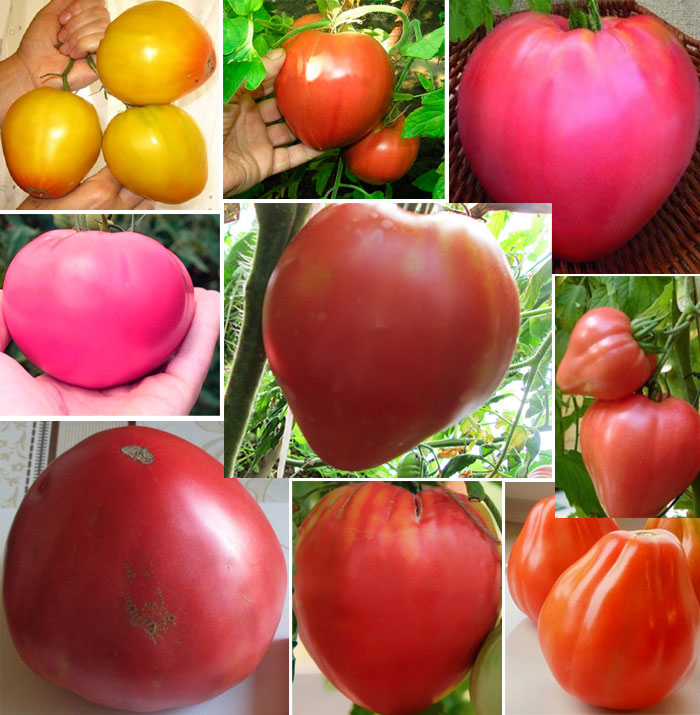
Heart of Siberia is another robust tomato bred in Siberia. It is characterized by early ripening, large, fleshy fruits, and ease of cultivation.
Content
- 1 Table with characteristics of the tomato variety Heart of Siberia
- 2 Photo gallery of the tomato variety Heart of Siberia
- 3 The origin of the Heart of Siberia tomato variety
- 4 A detailed description of the Heart of Siberia tomato variety, its pros and cons
- 5 Advantages and disadvantages of the Heart of Siberia tomato variety
- 6 Growing the Heart of Siberia tomato variety
- 7 Varieties of heart-shaped tomato varieties bred in the Siberian series
- 8 Resistance of the tomato variety Heart of Siberia to diseases and pests
- 9 Collection, use and storage
- 10 Comparison of the tomato variety Heart of Siberia with other varieties in the table
- 11 Gardeners' reviews of heart-shaped tomato varieties from Siberian Selection
- 11.1 Video review of the tomato variety Heart of Siberia
- 11.2 Real reviews from gardeners about the Krasa Sibiri tomato variety
- 11.3 Real reviews from gardeners about the Alsu tomato variety
- 11.4 Real reviews from gardeners about the Velmozha tomato variety
- 11.5 Real reviews from gardeners about the Sensei tomato variety
- 11.6 Real reviews from gardeners about the Eagle's Beak tomato variety
- 11.7 Real reviews from gardeners about the Siberian Heavyweight tomato variety
- 11.8 Real reviews from gardeners about the Abakansky Pink tomato variety
- 11.9 Real reviews from gardeners about the Buffalo Heart tomato variety
- 11.10 Real reviews from gardeners about the Pudovik (Sevryuga) tomato variety
- 11.11 Real reviews from gardeners about the Golden Domes tomato variety
- 11.12 Real reviews from gardeners about the Danko tomato variety
Table with characteristics of the tomato variety Heart of Siberia
| Characteristic | Description |
| Description | An indeterminate, early-ripening, tall tomato variety intended for planting in open ground or greenhouses. |
| Ripening period | 92-110 days |
| Fruit weight | 350-400 g |
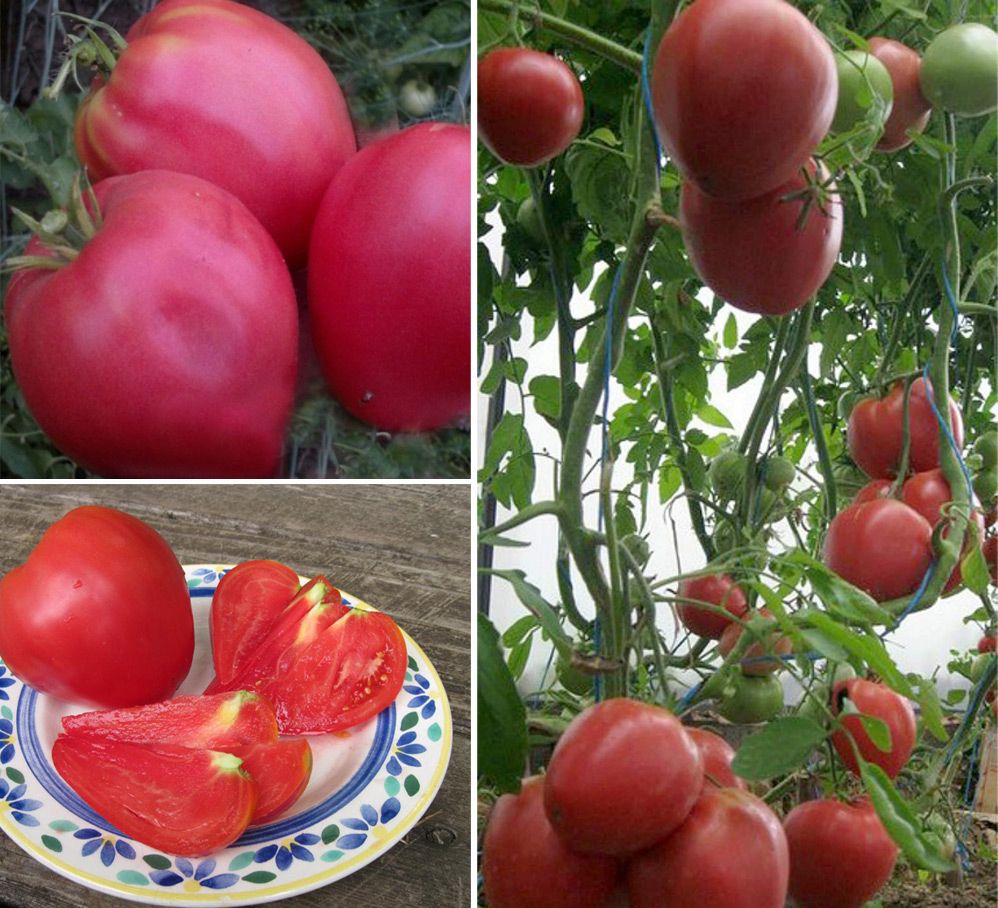
| Description of the fruit | The tomatoes are large and heart-shaped. The color is pink. |
| Productivity | Up to 7.9 kg per sq.m. |
| Usage | An excellent salad variety, ideal for making juices, sauces, ketchup and other preparations |
| Preferred growing regions | All regions of the country. |
| Disease resistance | It has a strong immune system, and early ripening helps to avoid late blight. |
| Agricultural technology | Tall bushes need tying and shaping |
| 2015 | |
| Country of origin | LLC Center Ogorodnik, LLC Agrofirm Search. |
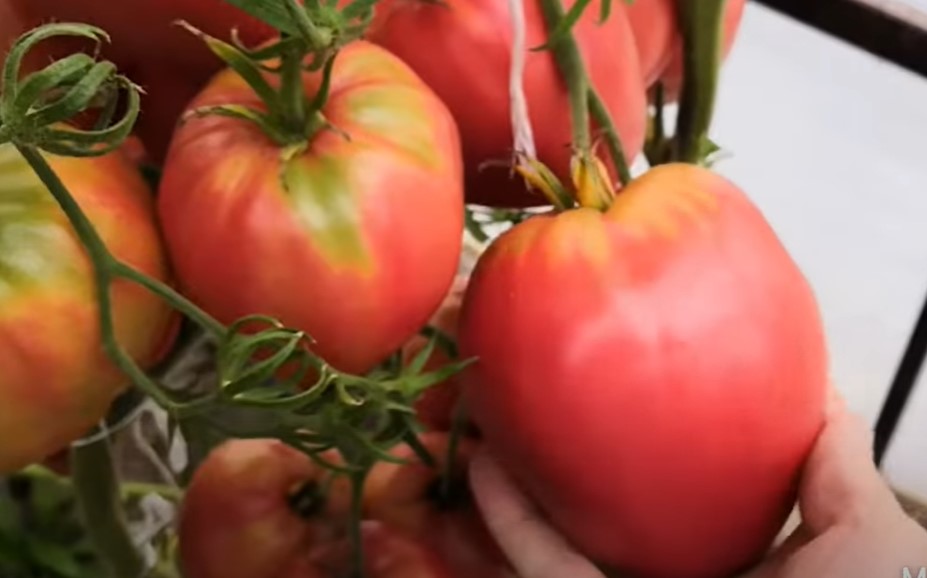
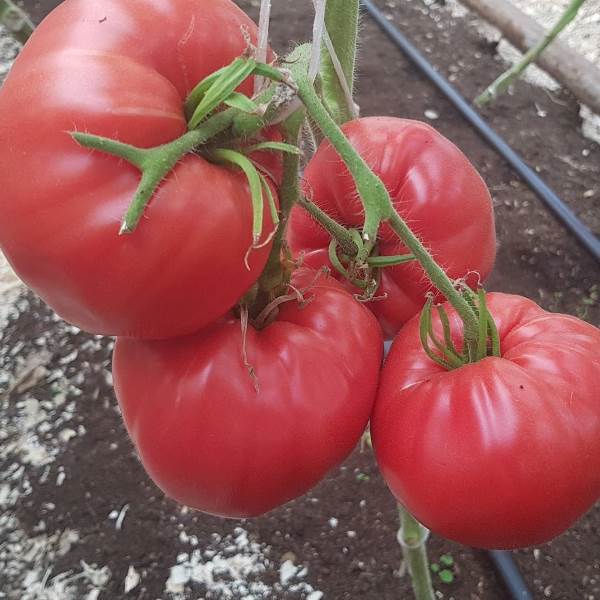
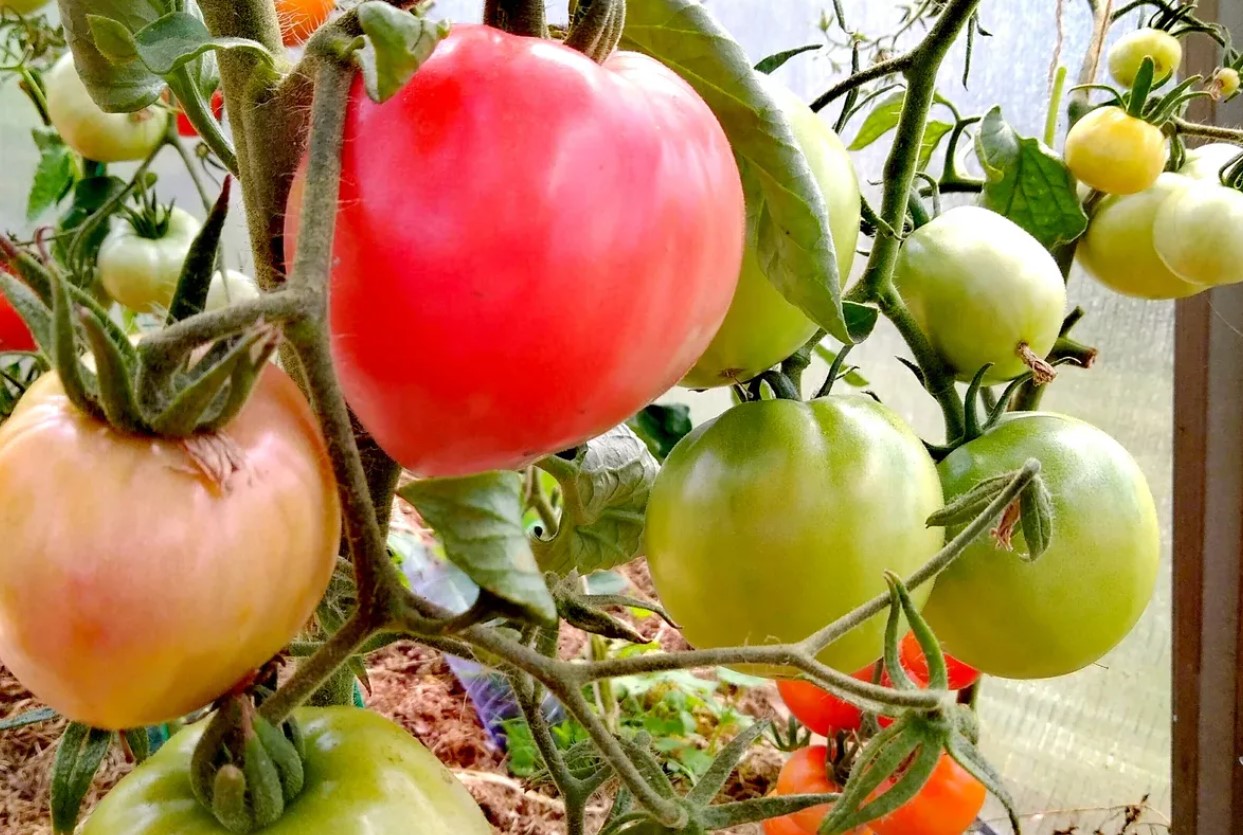
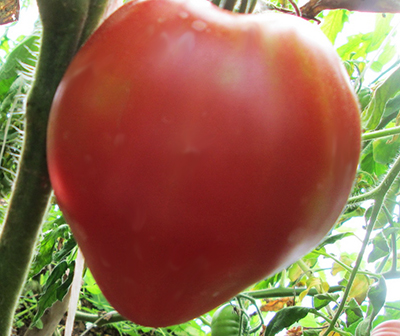
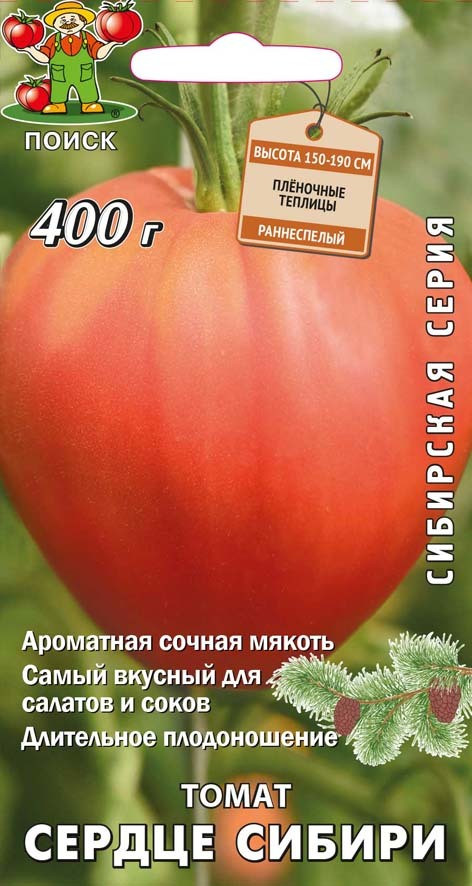
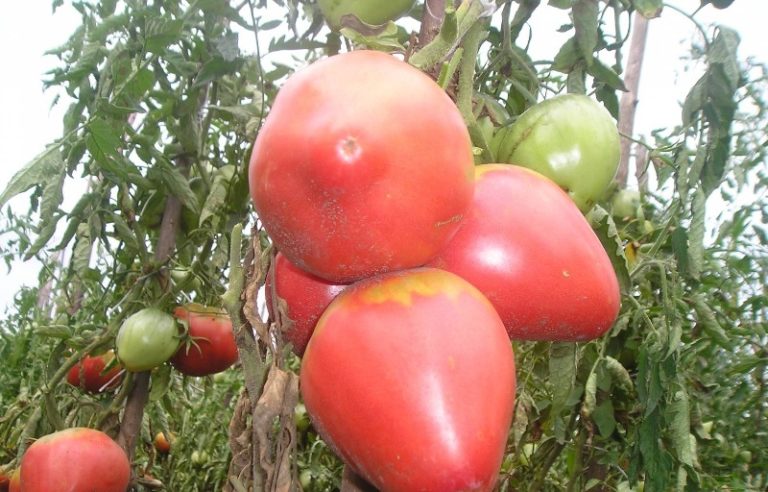
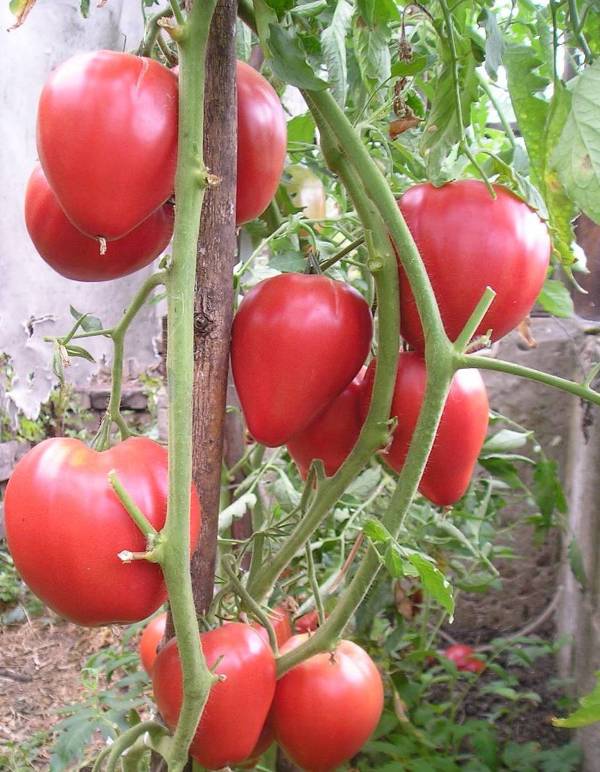
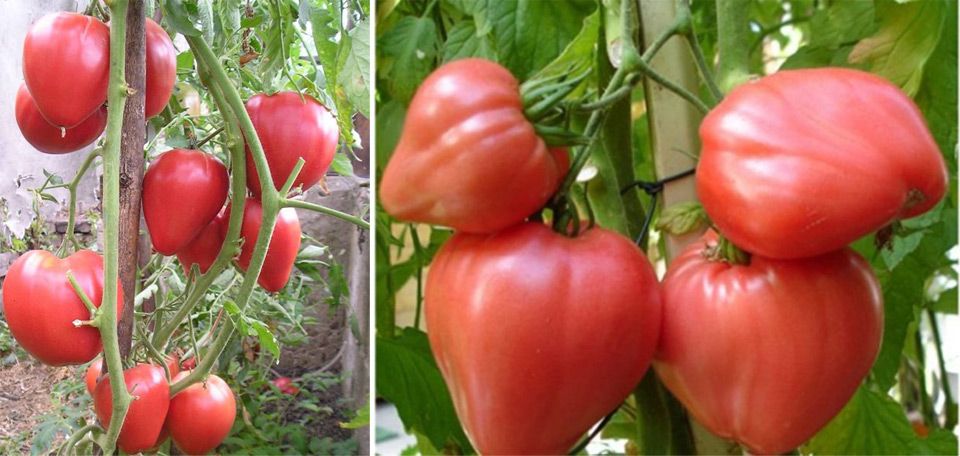
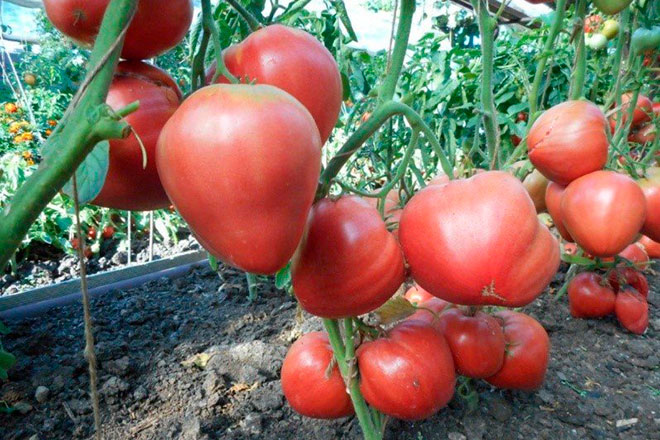
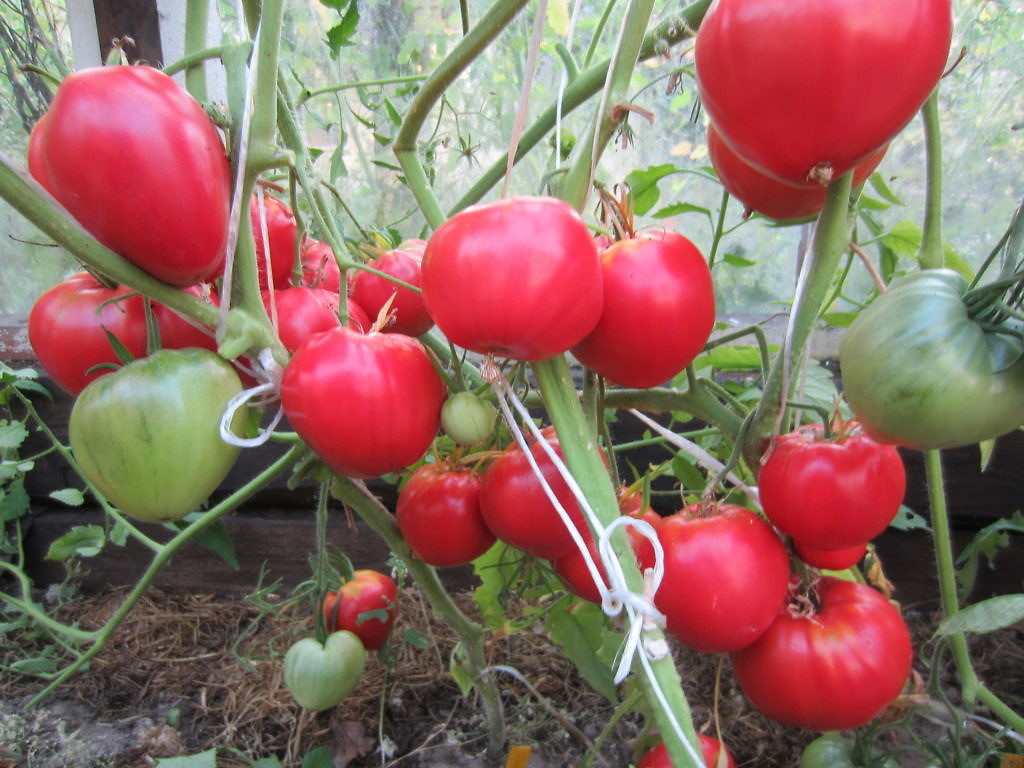
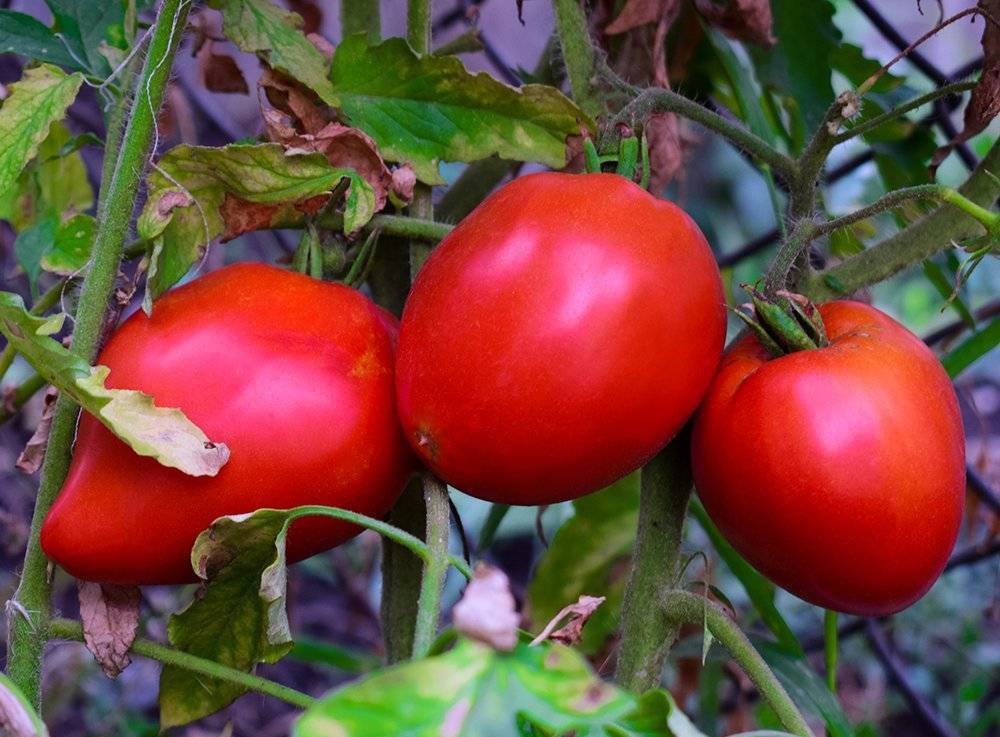
Photo gallery of the tomato variety Heart of Siberia
The origin of the Heart of Siberia tomato variety
Siberian tomatoes are rightfully considered the crown jewel of Russian breeding. They were developed over many years by breeders from various agricultural firms. In some cases, these specialists collaborated to refine and perfect certain tomato varieties. One such variety is Serdtse Sibiri (Heart of Siberia). This variety was developed thanks to the efforts of scientists from Center Ogorodnik LLC and Agrofirma Poisk LLC. Official recognition and inclusion in the register occurred in 2015.
A detailed description of the Heart of Siberia tomato variety, its pros and cons
The Heart of Siberia variety is characterized by large fruits, tall bushes and excellent yield.
Bushes
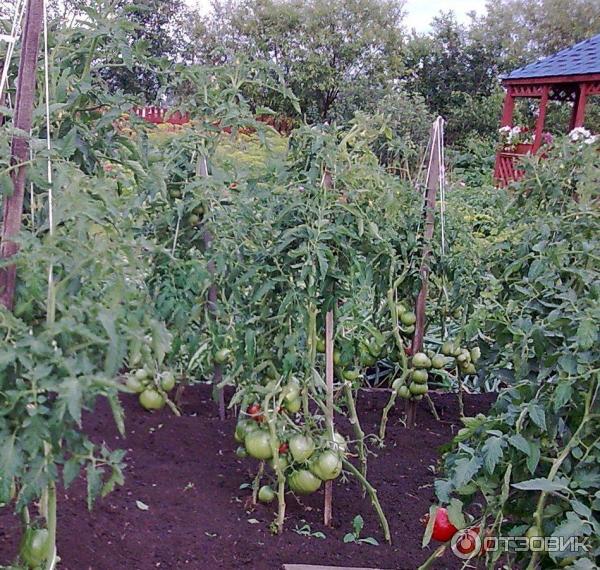
Indeterminate shoots grow to 180-190 cm. The stems are dense, and the leaves are large and dark green. These should be removed from the lower part of the bush at the base of the bed as the tomatoes ripen.
When growing, the shoots will need to be tied up and provided with secure support. They are formed into 1-2 stems. The denser the planting, the smaller the tomatoes will be.
Fruit
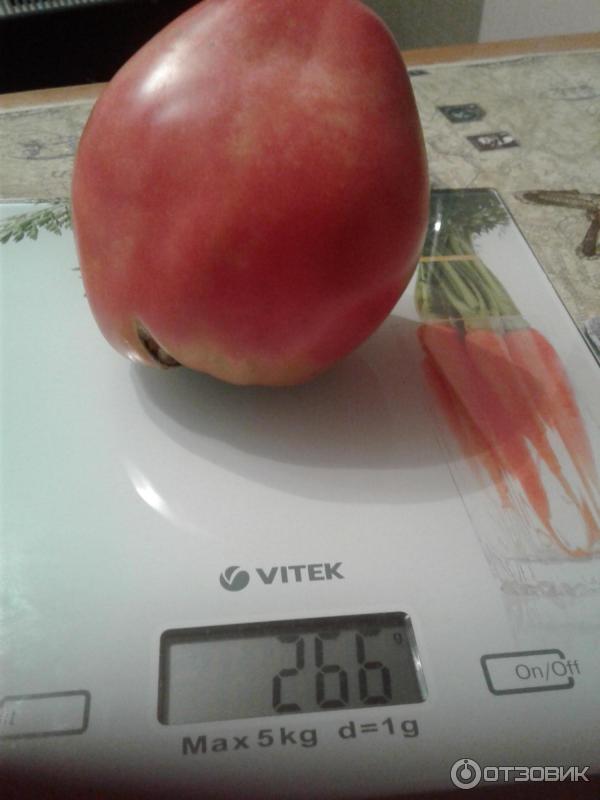
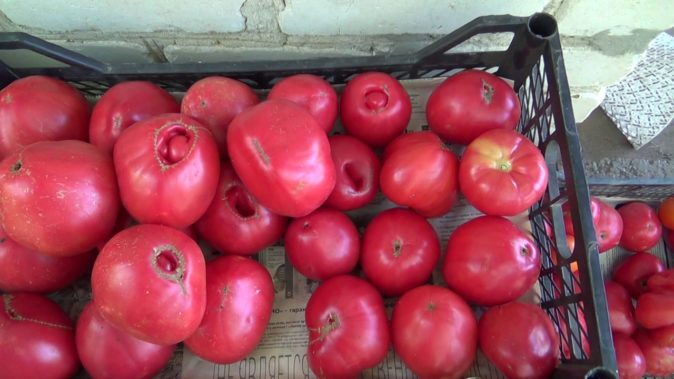
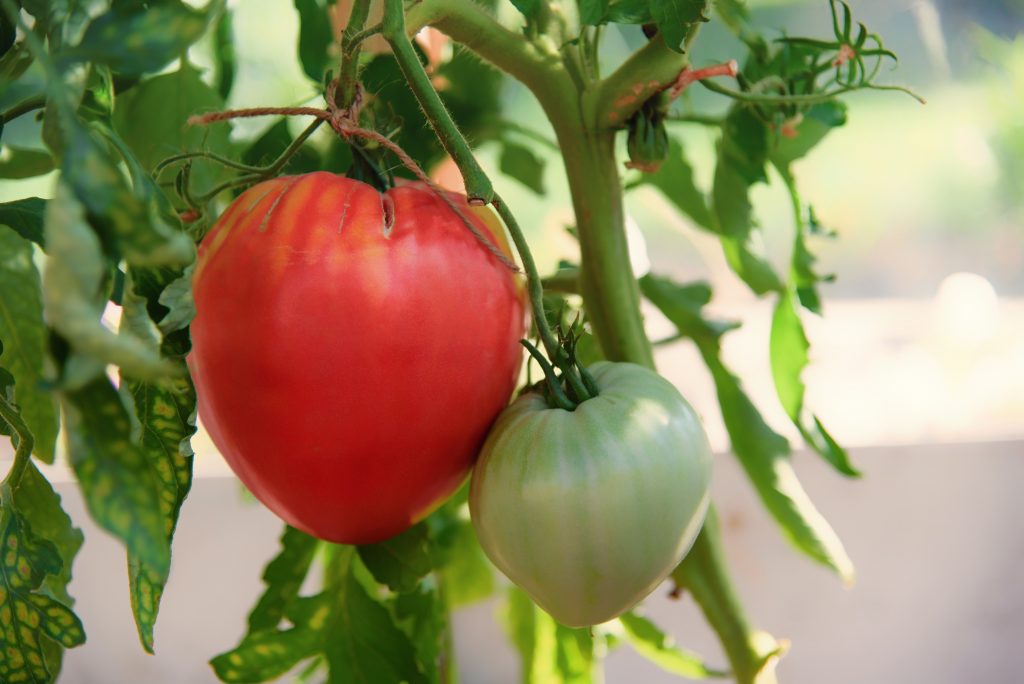
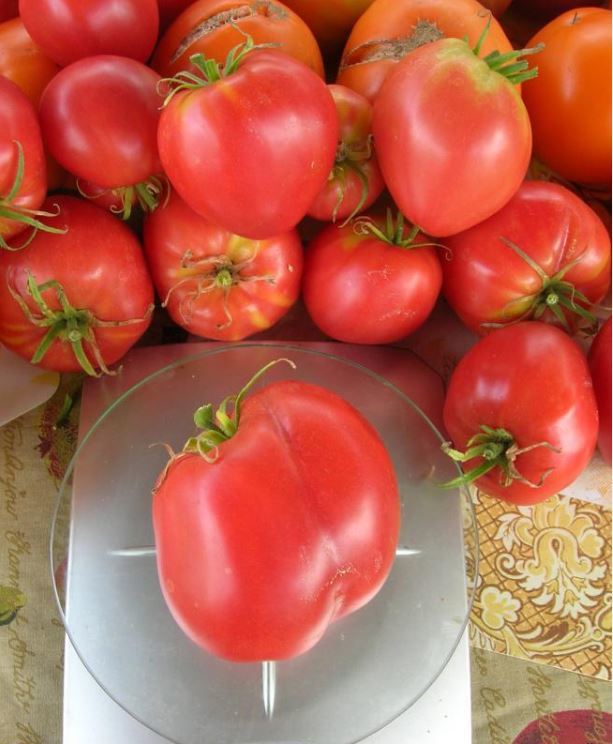
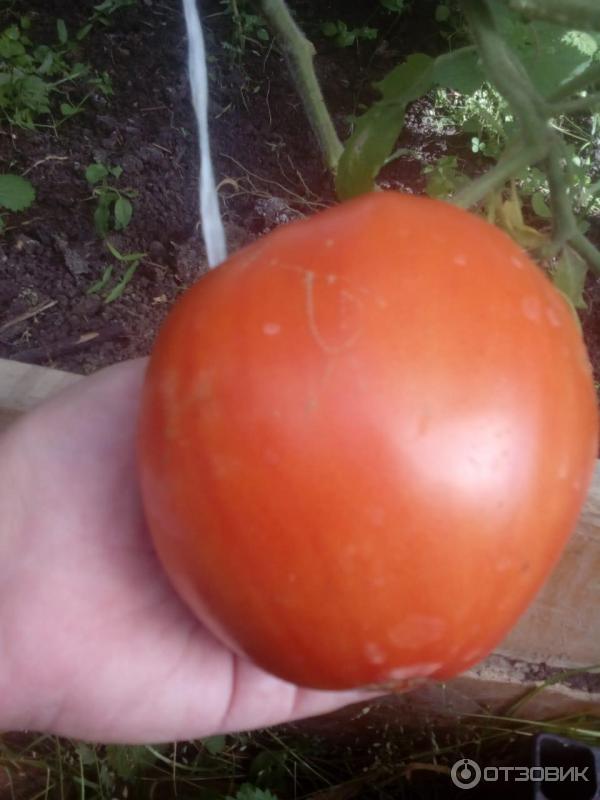
The variety's fruits are heart-shaped and impressively large. On average, a tomato weighs between 350 and 400 grams, but lower-tier tomatoes often reach 600 grams or more.
The color depends on the variety and can be red, crimson, pink, or yellowish-orange. Ribbing is virtually absent, and the surface is smooth and even.
The skin is quite dense, it holds its shape well and prevents the harvest from cracking on the bushes.
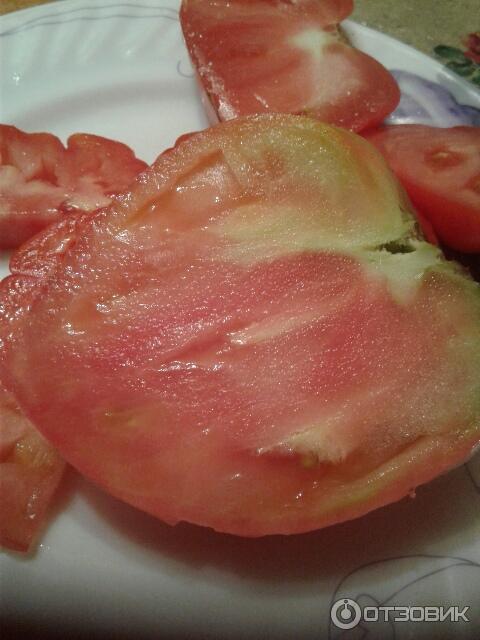
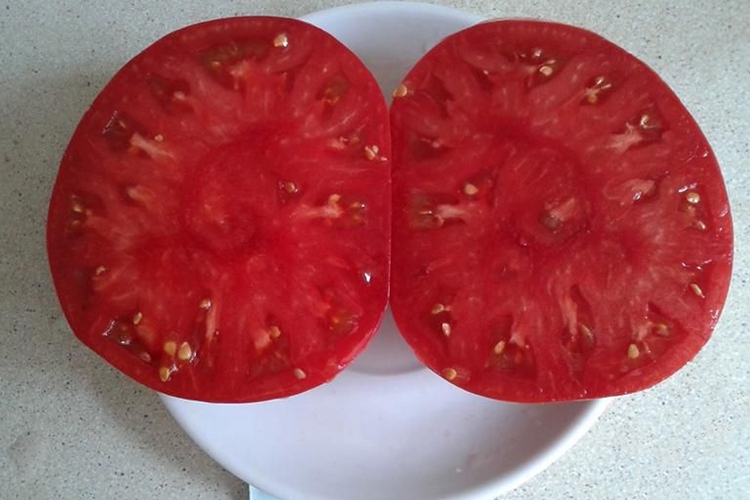
The pulp is juicy, sweetish, and aromatic.
Productivity
The Heart of Siberia variety can be called productive; each bush can yield about 6-7 kg of tomatoes.
Ripening time
Heart of Siberia is an early tomato that ripens in 95-105 days from emergence.
Advantages and disadvantages of the Heart of Siberia tomato variety
The table below lists the main advantages and minor disadvantages of the Heart of Siberia variety.
| Advantages | Flaws |
|
|
Growing the Heart of Siberia tomato variety
The Heart of Siberia tomato is a relatively easy-to-grow variety. With proper care, it will reward gardeners with an excellent harvest. The key is to follow basic cultivation guidelines: watering, loosening the soil, and fertilizing.
Sowing seeds and growing seedlings
Seeds are sown 60-65 days before tomato plants are planted outdoors. The exact time for growing seedlings indoors depends on the region and local weather conditions.
Recently, counterfeit planting material has become increasingly common in stores, especially online. Therefore, it's best to buy seeds from reputable sellers to avoid disappointment in your harvest.
Siberian Heart seeds usually don't undergo any additional preparation, so you'll need to do it yourself at home:
Soak the seeds in a weak solution of potassium permanganate, remove after 20 minutes, rinse and dry;
Treat with any growth stimulant (Epin, Zircon, Fitosporin and others)
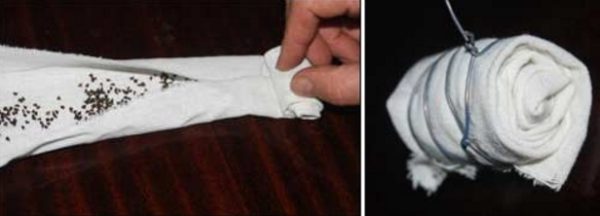
Wrap the seeds in a damp cloth and place them in a warm place to germinate for 48 hours. Many gardeners still prefer to plant tomatoes dry, but years of experience have proven that sprouted seeds have a 1.5 times higher germination rate than regular seeds.
The chosen soil should be breathable. You can purchase balanced soil for tomato and pepper seedlings, or you can mix equal parts of garden soil, peat moss, humus, and sand. If you prepare your own mixture, you'll need to soak it in a disinfectant solution or bake it in the oven to kill pathogens.
Planting can be done in a wooden or plastic box, or you can use modern methods: peat tablets, cups, coconut substrate, etc.
Fill the container halfway with soil (approximately 5 cm). You can then make furrows or spread the seeds over the surface and sprinkle more soil on top. The key is to ensure the layer doesn't exceed 15 mm.
After sowing, water the soil. To prevent the seeds from being washed away by the stream of water, it's best to water the soil with a spray bottle or syringe.
At the final stage, the container is covered with glass, plastic or film and placed in a warm place.
As soon as the sprouts have grown strong and stretched out enough, the cover can be removed from the box, and the tomatoes can be placed in a cooler place with a temperature no higher than +22 °C.
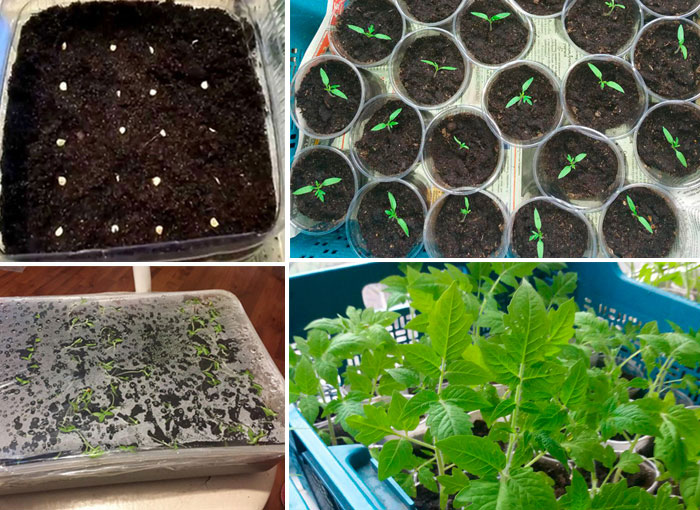
As the soil dries out, water it, but the liquid should not stagnate near the roots.
After 2-3 true leaves appear on the shoots, the seedlings are transplanted into small separate containers.
Planting in the ground
Before transplanting tomatoes, they begin hardening them off approximately 7-5 days in advance. All seedlings are placed on the veranda, balcony, or outside for 1-2 hours, and then for the entire day.
The comfortable garden bed temperature for the Heart of Siberia is +14°C. Any lower, and the seedlings will remain in the ground without developing, which will adversely affect the harvest.
The soil in the garden bed is prepared in the fall. The necessary fertilizers are added and the soil is dug. Some gardeners plant green manure. This can be done either at the end of the season or with the onset of spring.

Good predecessors for tomatoes would be cucumbers, cabbage, greens or legumes.
A few days before planting the tomatoes, the bed is dug again and holes are made. They should be about 25 cm deep and spaced at least 35 cm apart. It's recommended to leave a row spacing of 60-65 cm.
After planting, cover the bed surface with a layer of mulch. In open ground, it is recommended to cover seedlings with plastic film for the first few days after transplanting.
Care, watering and fertilizing
The Heart of Siberia doesn't require any special care; with standard agricultural practices, tomatoes grow strong and healthy.
A successful harvest depends largely on proper irrigation. Tomatoes don't tolerate stagnant water around the roots, but drought also leads to a decline in crop quality.
Initially, tomatoes should be watered 1-2 times a week at a rate of 1-2 liters per plant. However, be mindful of the weather: in hot weather, watering frequency increases.
As soon as buds begin to actively form, watering is increased to 5 liters per plant. During fruiting, some gardeners water tomatoes daily, or even twice a day if necessary. This should be done in the evening, and it's best to use settled water.
Fertilizers are an equally important component of proper care and a bountiful harvest. Tomatoes respond well to a mullein solution prepared from 500 ml of the solution to 10 liters of water. If the soil acidity allows, a small amount of ash can be scattered over the bed after planting. Specialized complex fertilizers, available at any gardening store, are very effective.
To prevent the appearance of pests, as well as to facilitate absorption by the roots, loosening and weeding of plantings is carried out.
Varieties of heart-shaped tomato varieties bred in the Siberian series
Now let's look at other Siberian-bred varieties that also have a heart shape.
The Beauty of Siberia
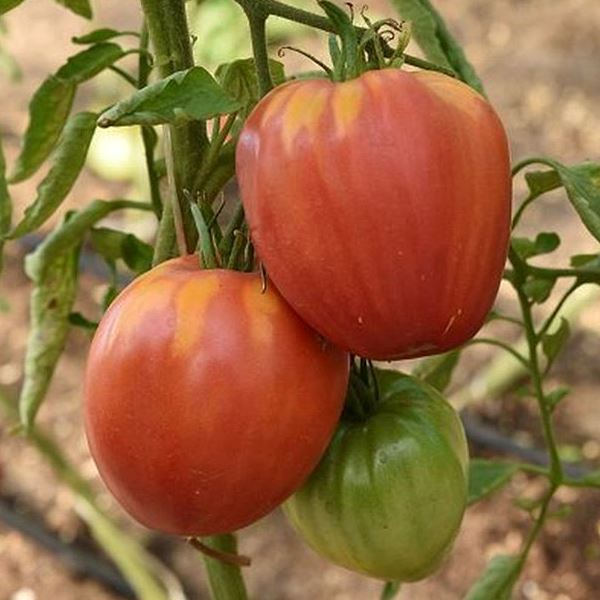
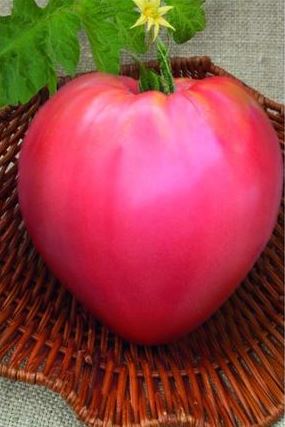
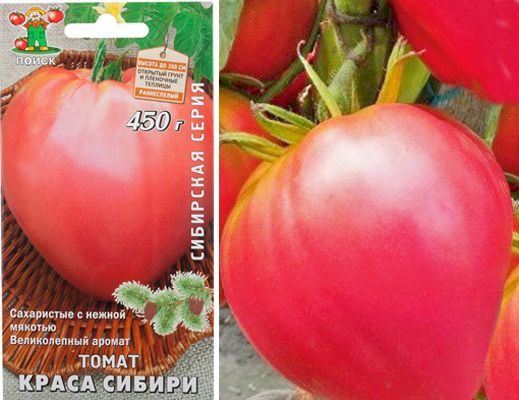
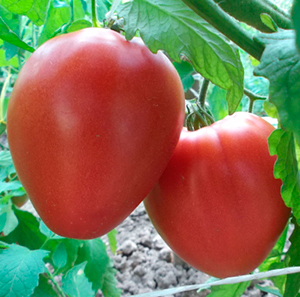
An early variety, primarily intended for greenhouse cultivation. The shoots are tall, up to 150 cm, so they require staking. The fruits are large, reddish-pink, and can weigh up to 450 g. The flesh is sweet, aromatic, and very juicy. This variety was added to the register in 2015.
| Characteristic | Description |
| Description |
A mid-season indeterminate variety for open ground and polycarbonate greenhouses. |
| Ripening period | 95-110 days. |
| Fetus | Heart shaped, medium ribbed, pink. |
| Weight | 300-400 g. |
| Taste | Great. |
| Productivity | 5.8 kg/sq. m. |
| Application | Salad. |
| Marketability, Shelf life | Good.. |
| Disease resistance | To most diseases of nightshades. |
| Agricultural technology |
|
| Recommended regions for planting | Northern; Northwestern; Central; Volga-Vyatka; Central Black Earth Region; North Caucasian; Middle and Lower Volga region; Ural; West Siberian; East Siberian; Far East. |
| 2015 |
Photo gallery of the Krasa Sibiri tomato variety
Important! Further, if the table indicates a zone suitable for growing any or various — this means that the variety is suitable for the Northern, Northwestern, Central, Volga-Vyatka, Central Black Earth, North Caucasian, Middle Volga, Lower Volga, Ural, West Siberian, East Siberian and Far Eastern regions.
Alsou
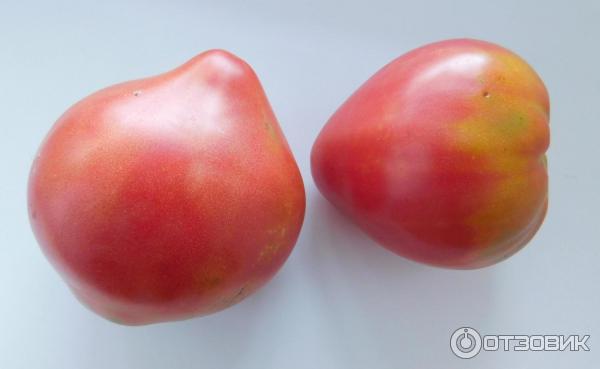
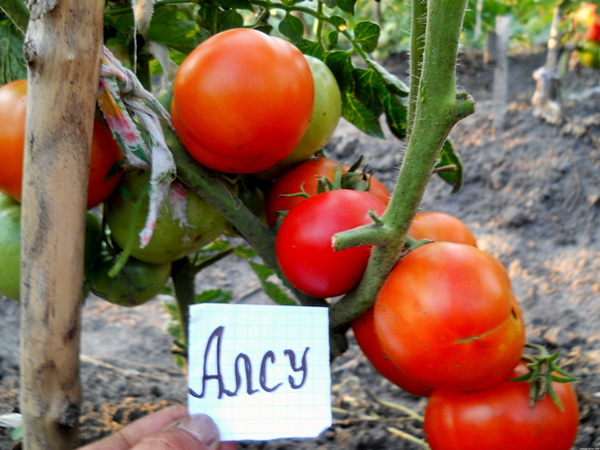
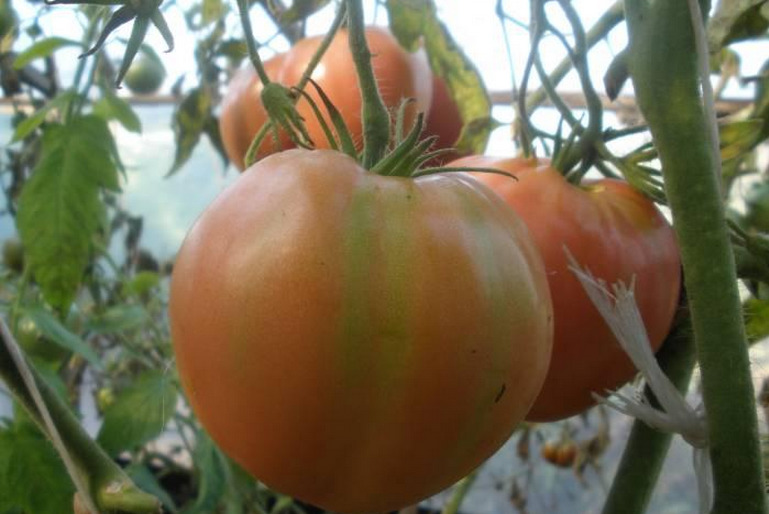
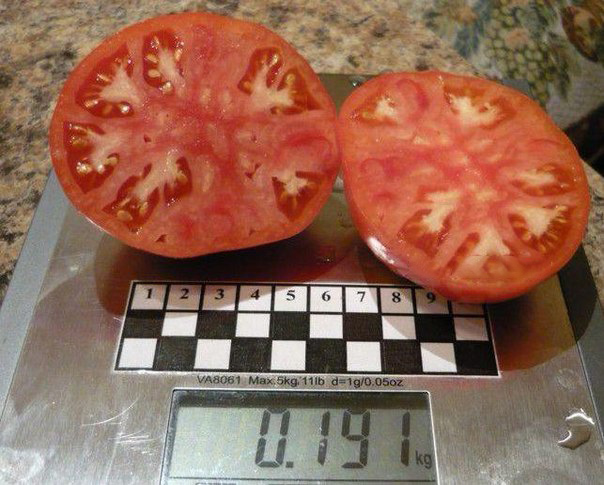
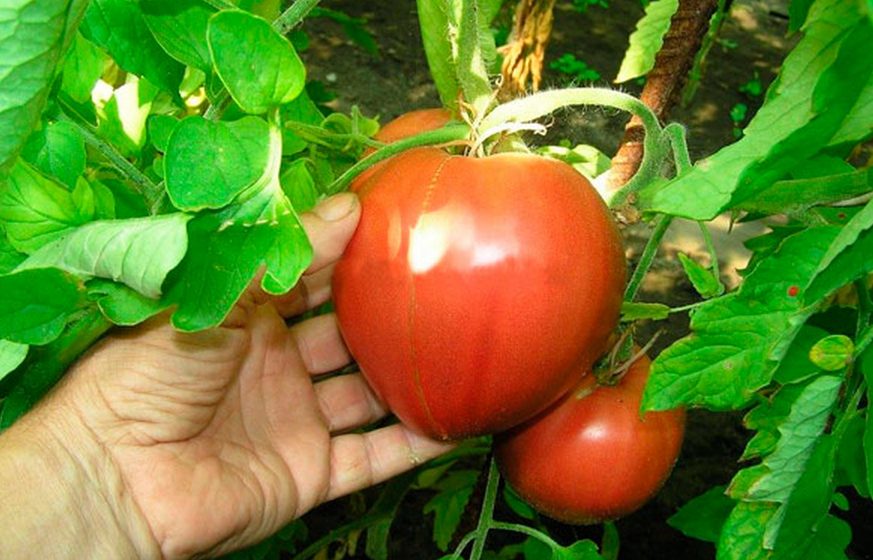
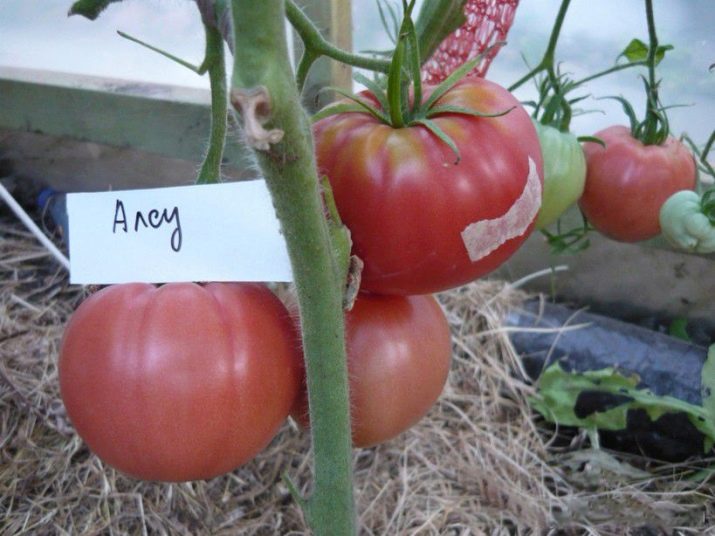
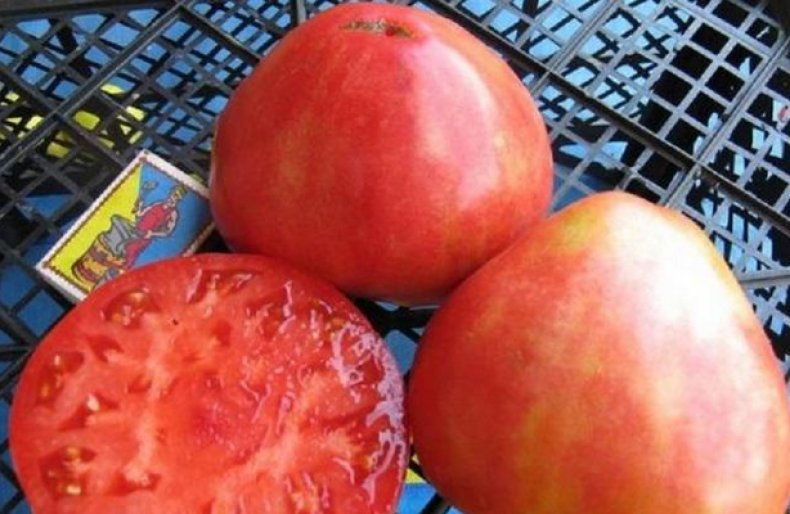
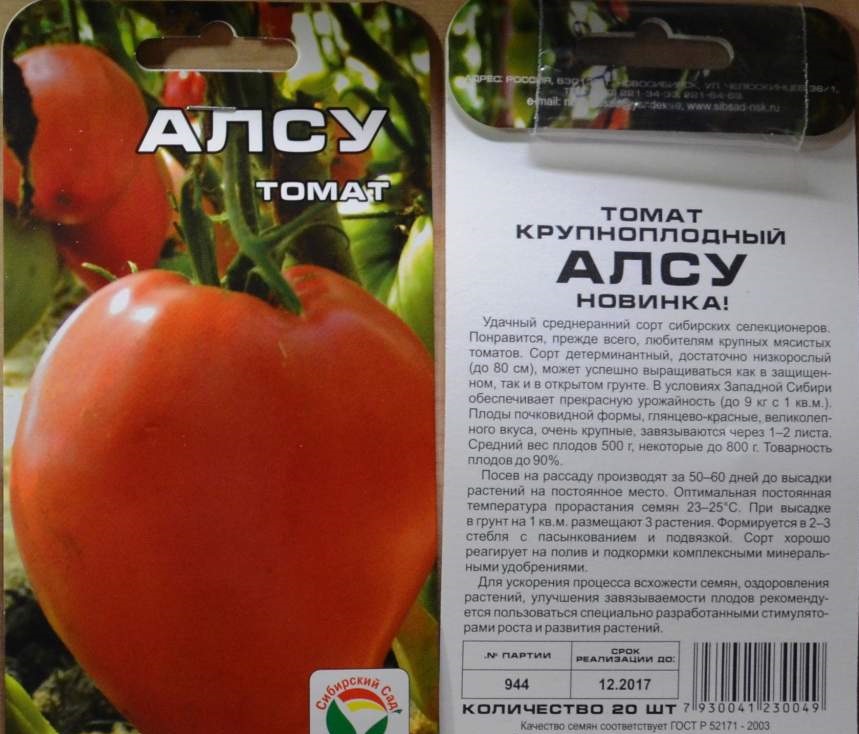
A low-growing tomato variety with shoots no taller than 1 meter. The fruits are large and scarlet, weighing up to 500 g. The flesh is juicy, with a subtle tartness. The skin is thick, allowing the tomatoes to be stored and transported for long periods without losing quality. This variety was added to the register in 2008.
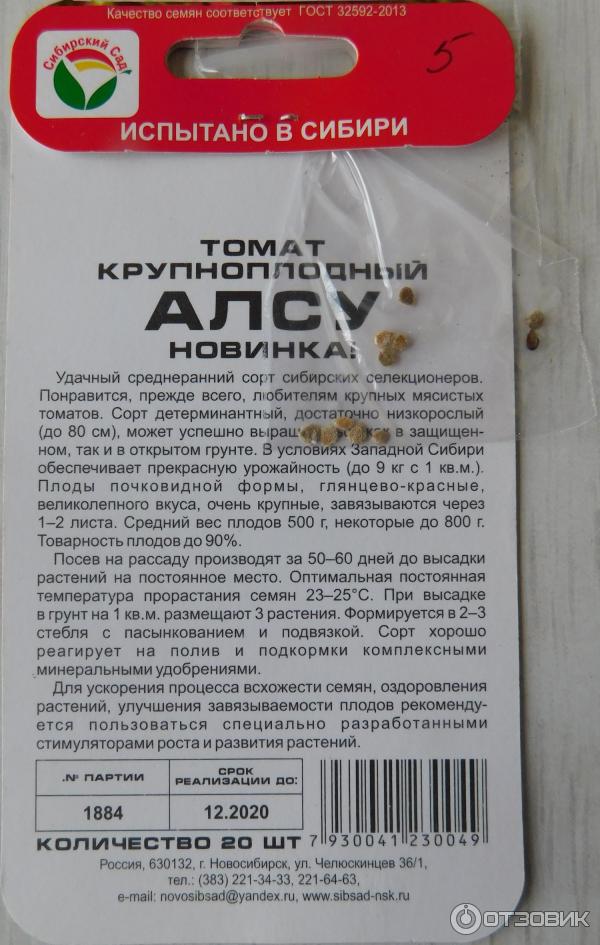
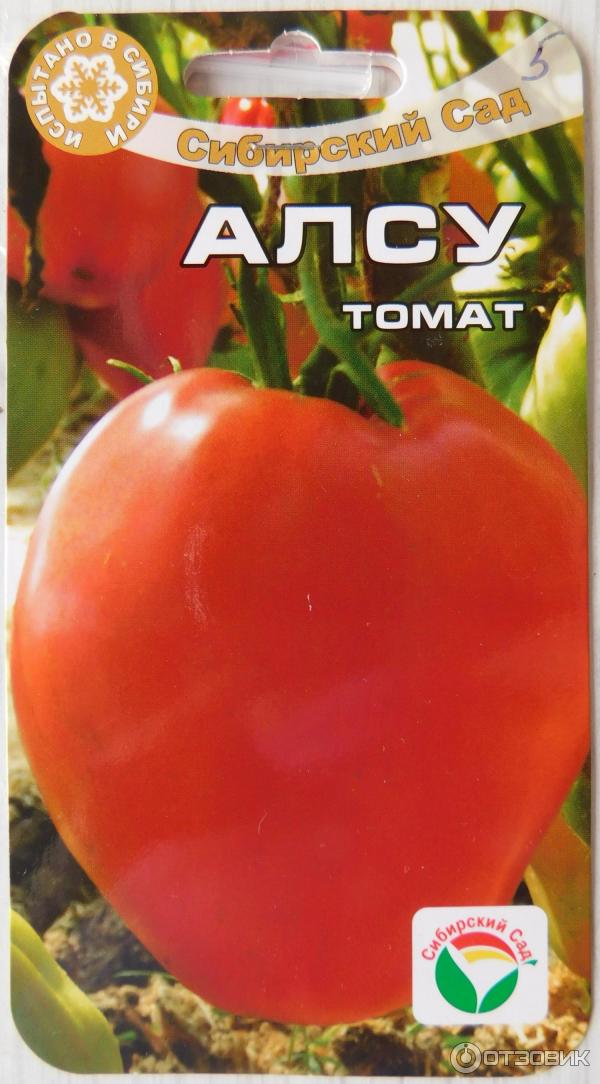
Characteristics of the Alsu tomato, grown from tomato seeds from the Siberian Garden company
| Characteristic | Description |
| Description |
An early variety that produces determinate bushes. Suitable for garden beds and greenhouses in private farms. |
| Ripening period | 80-100 days. |
| Fetus | Flat-round, with slight ribbing, scarlet. |
| Weight | 312 g. |
| Taste | Sweet, with a slight sourness. |
| Productivity | 700 c/ha |
| Application | Salad. |
| Marketability, Shelf life | Excellent. |
| Disease resistance | Good. |
| Agricultural technology |
|
| Recommended regions for planting | Various, including northern ones. |
| 2008 | |
| Originator | DEDERKO VLADIMIR NIKOLAEVICH. |
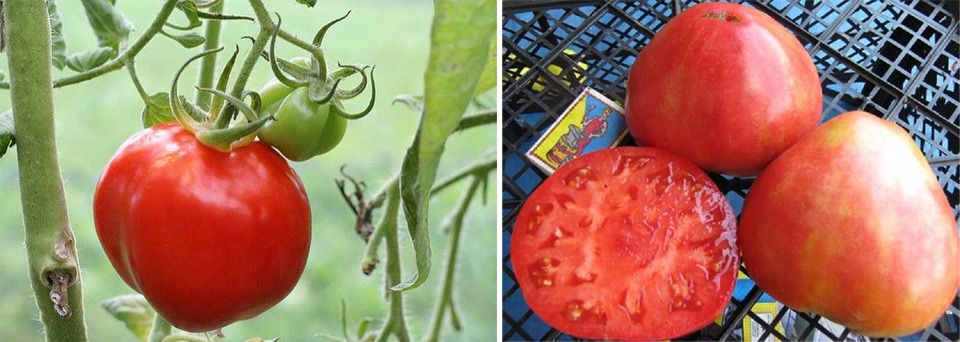
Photo gallery of the tomato variety Alsu
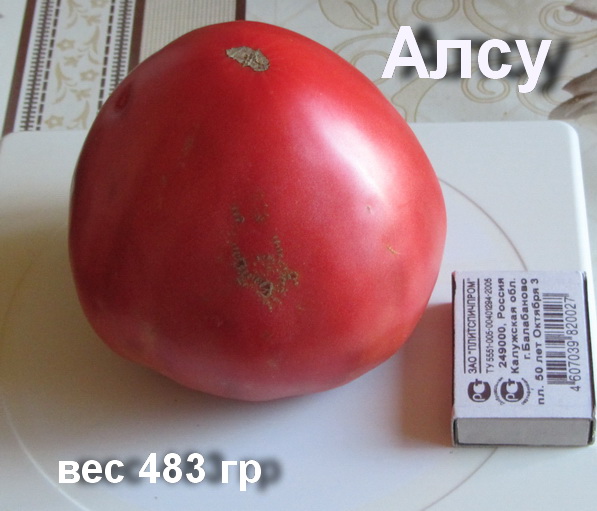
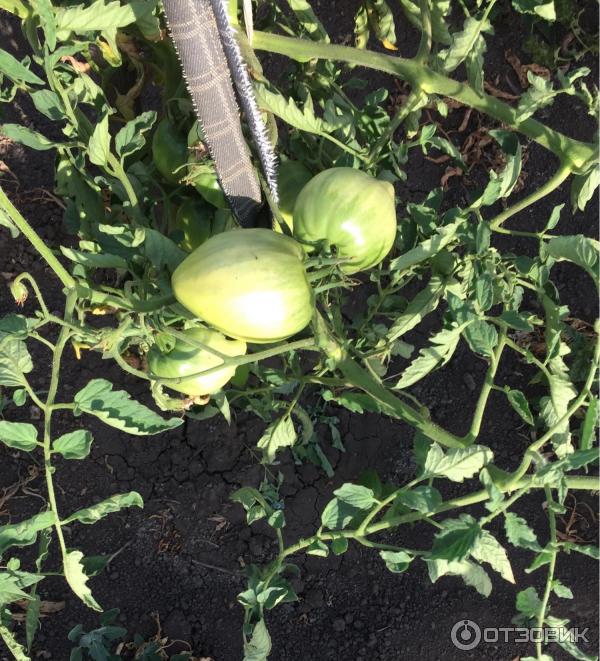
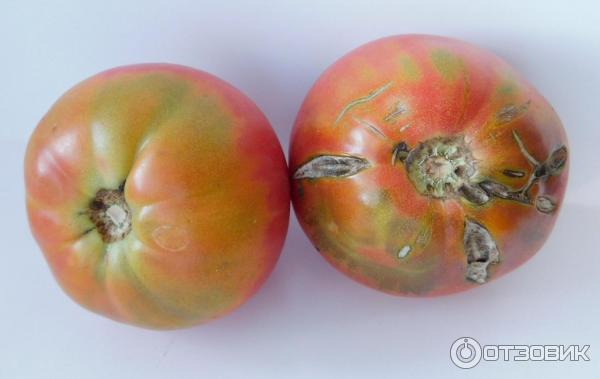
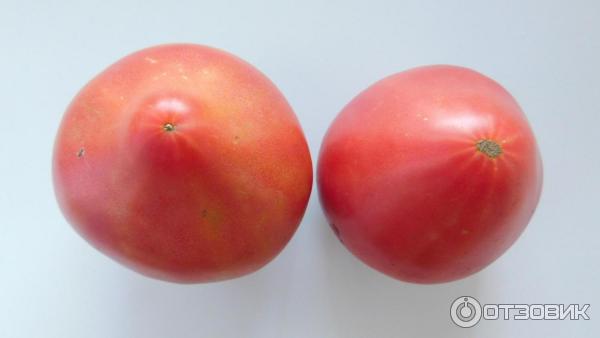
nobleman
A mid-season salad variety, the height of determinate shoots does not exceed 62 cm. The tomatoes are medium-sized, raspberry-colored, and have a moderately ribbed surface. Fruit weight ranges from 150 to 250 g. The variety was registered in 2005.
| Characteristic | Description |
| Description |
A mid-season, low-growing variety (54-62 cm) of determinate type. Suitable for growing in private gardens. |
| Ripening period | 103-117 days. |
| Fetus | Delicious, heart-shaped, medium-ribbed, strawberry-like. |
| Weight | 130-250 g |
| Taste | Good and excellent. |
| Productivity | Maximum 780 c/ha. |
| Application | Salad. |
| Marketability, Shelf life | 95%, Average. |
| Disease resistance | High. |
| Agricultural technology | Standard. |
| Recommended regions for planting | Ural; West Siberian; Far East; East Siberian. |
| 2005 | |
| Originator | Selection of the Federal State Budgetary Scientific Institution "Federal Research Center Institute of Cytology and Genetics of the Siberian Branch of the Russian Academy of Sciences". |
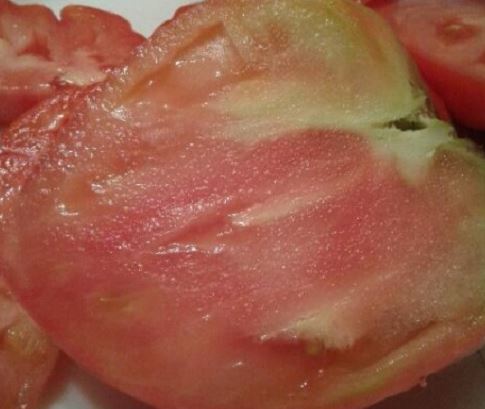
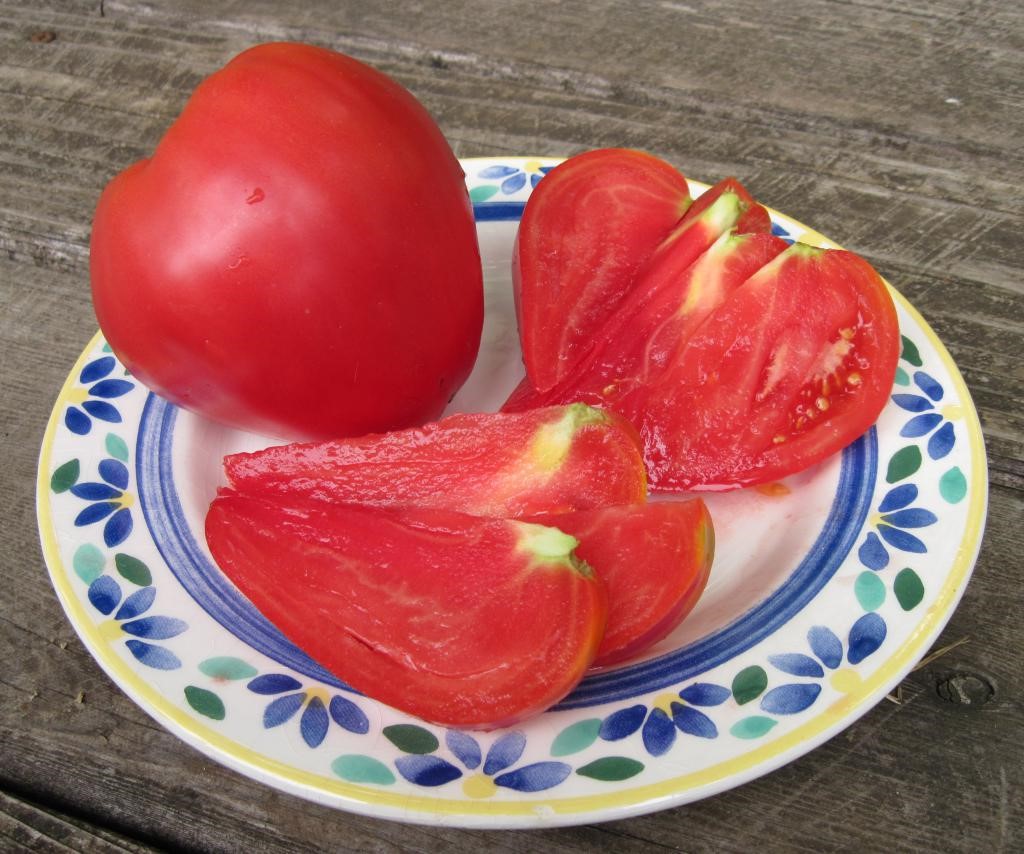
Photo gallery of the tomato variety Velmozha
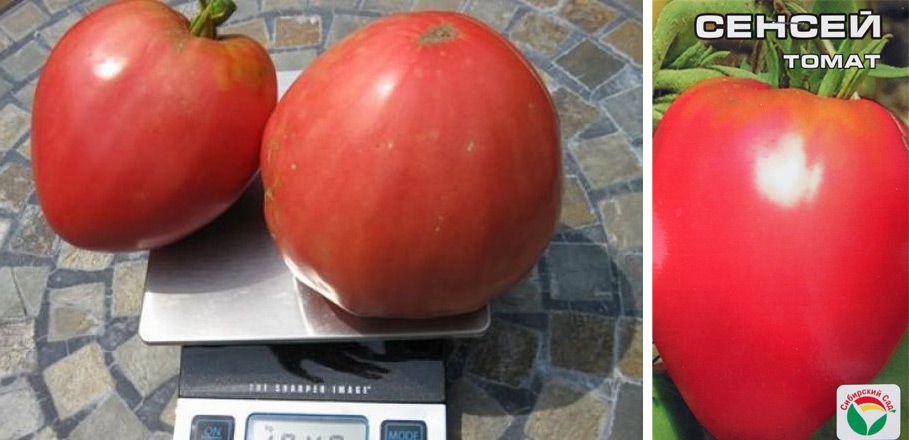
Sensei
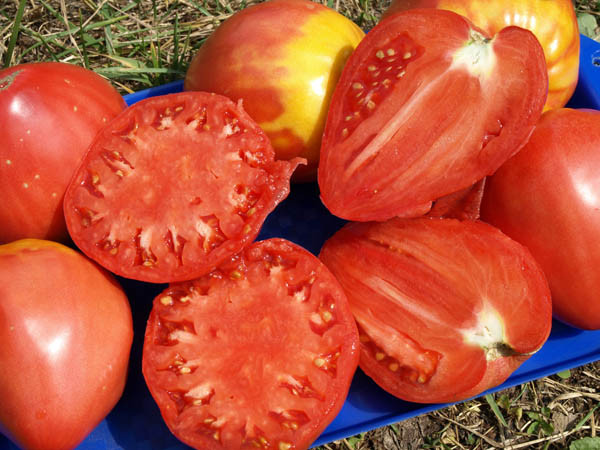
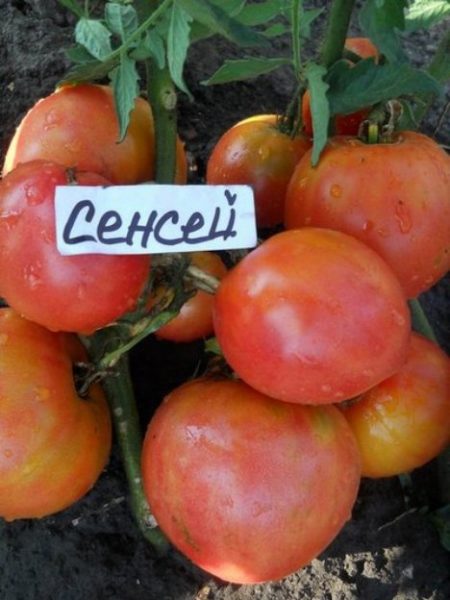
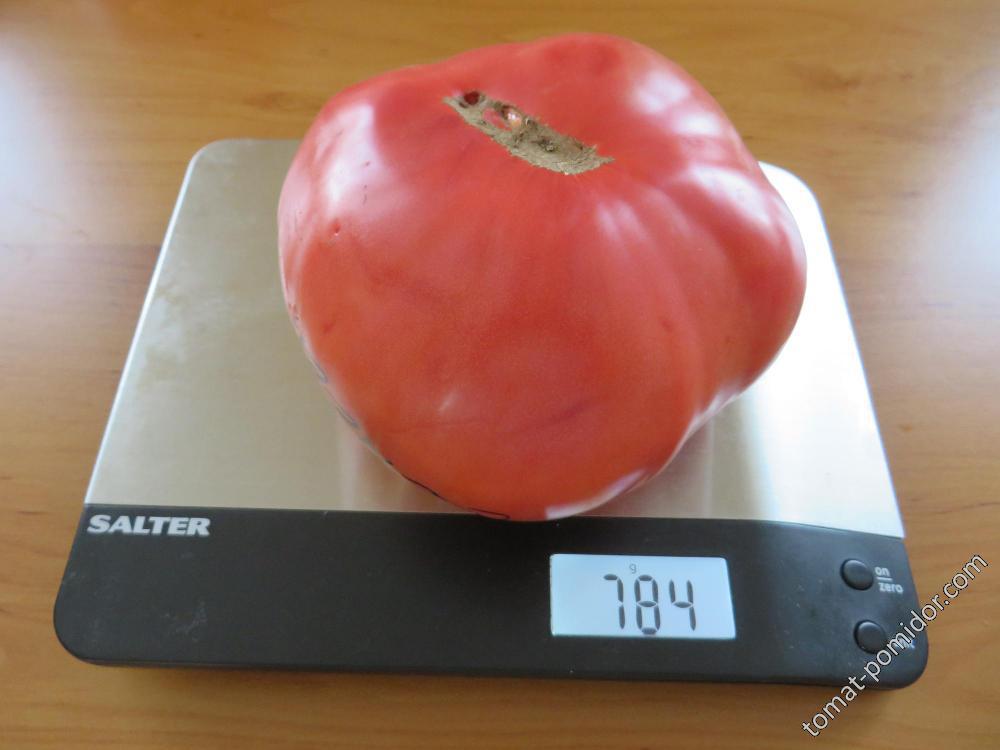
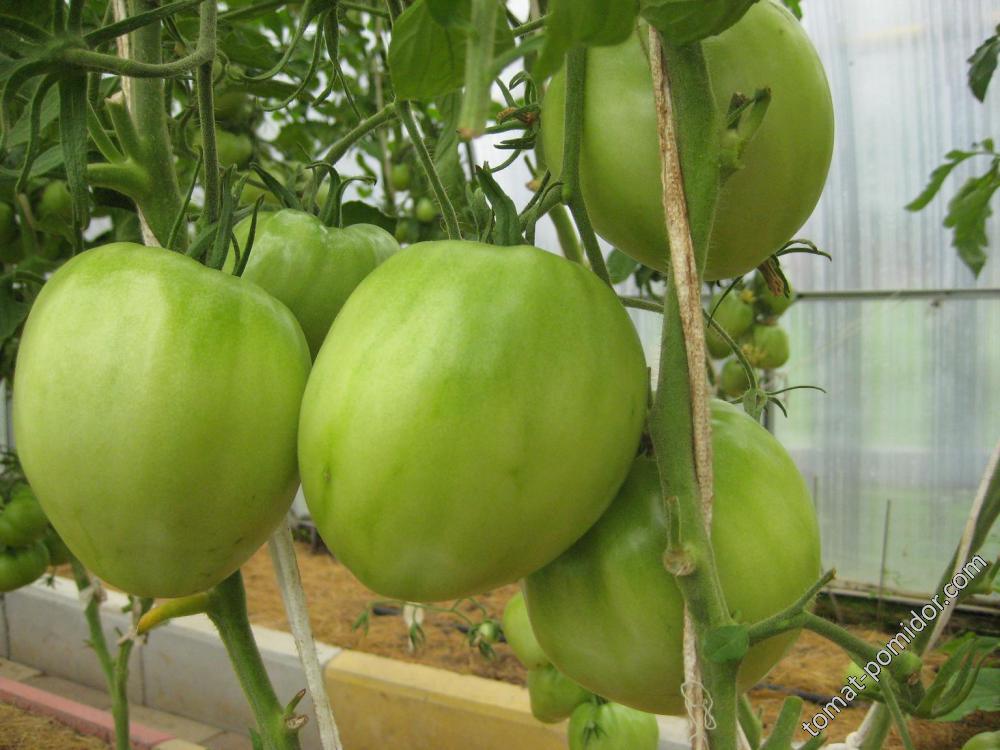
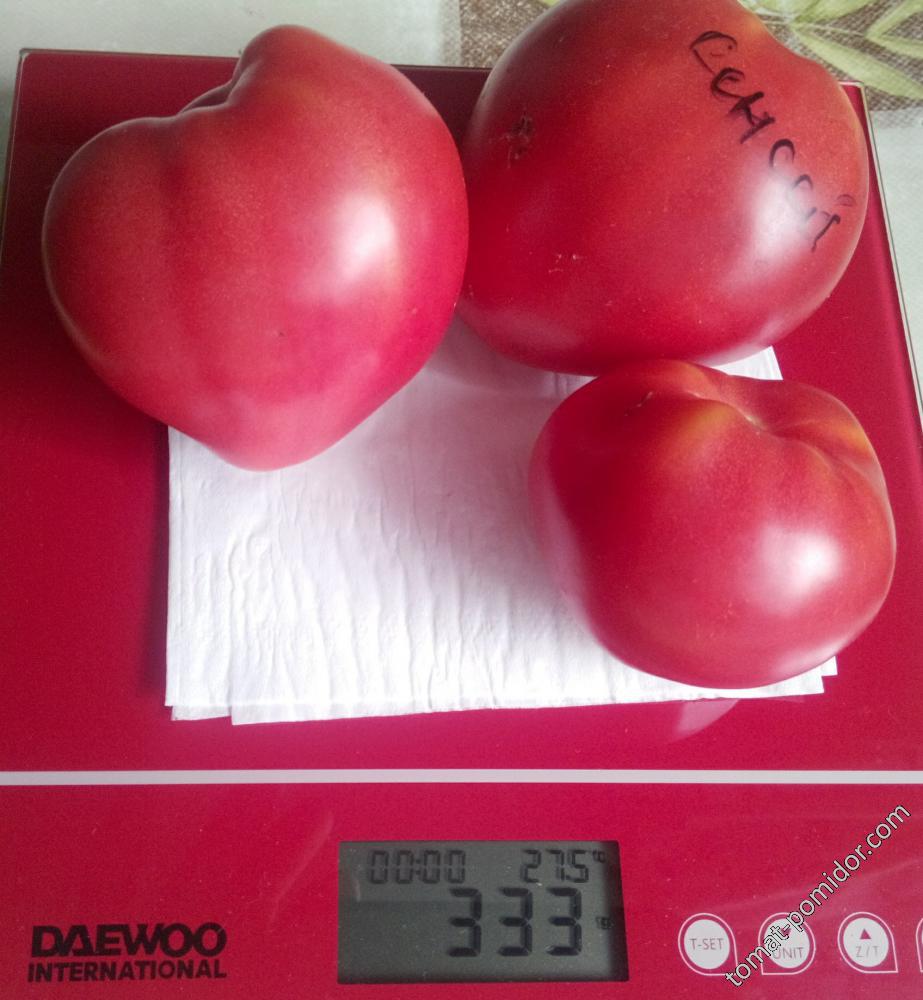
A mid-early tomato variety with tall shoots that require staking. The tomatoes are very large, red, and have a medium-ribbed surface. Fruits often weigh over 1 kg. Recommended for greenhouse cultivation, but in the south, they also produce well in open ground. This variety has not yet been registered.
| Characteristic | Description |
| Description |
A mid-early, medium-sized variety with large fruits. In central Russia and the north, greenhouse planting is recommended. In the south, it can be planted in garden beds. |
| Ripening period | 100-105 days. |
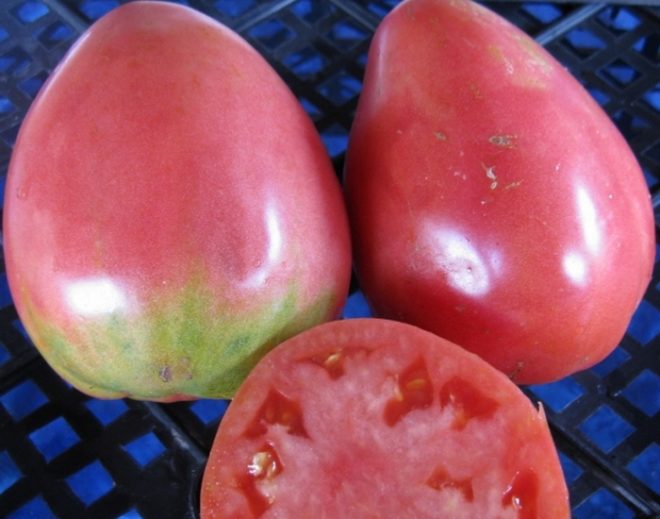
| Fetus | Elongated heart-shaped, smooth, crimson. |
| Weight | 450 g |
| Taste | Sugar. |
| Productivity | 7 kg/sq.m subject to agrotechnical requirements. |
| Application | Salad, for slicing and processing into thick juice. |
| Marketability, Shelf life | Good. |
| Disease resistance | High. |
| Agricultural technology |
|
| Recommended regions for planting | Any |
| Not included. |
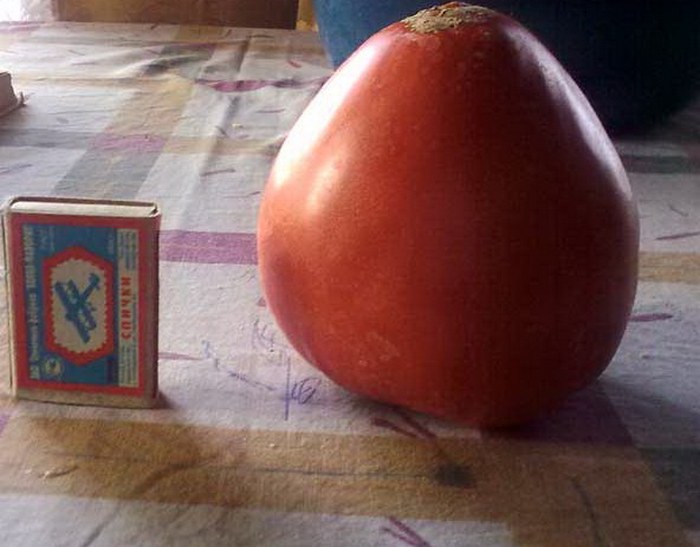
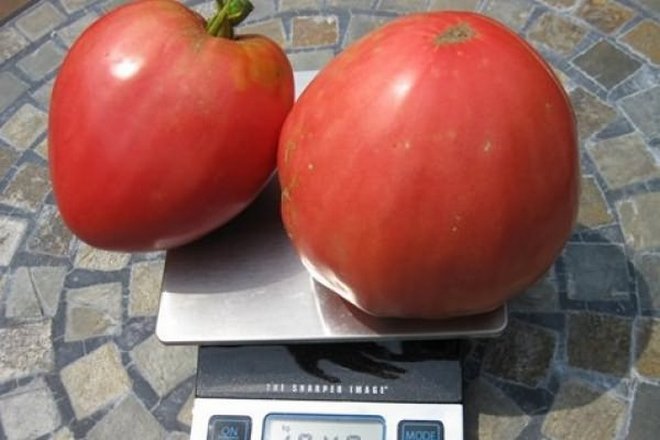
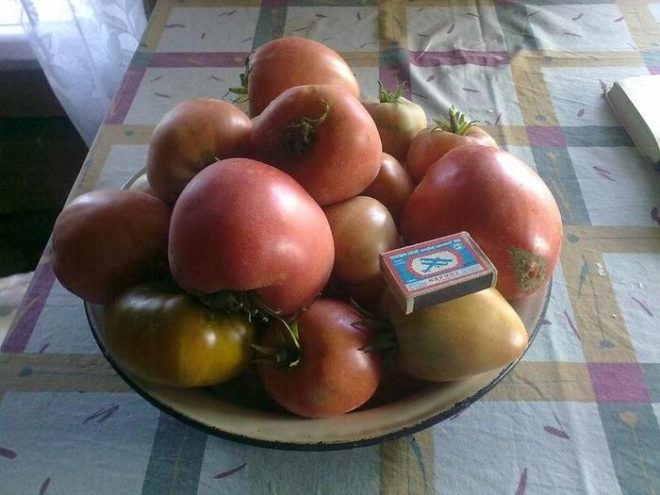
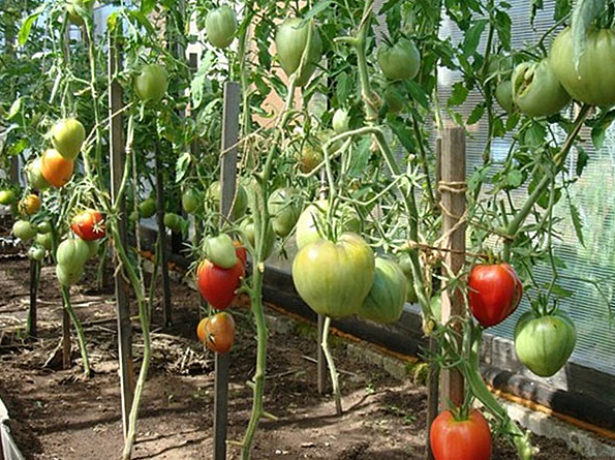
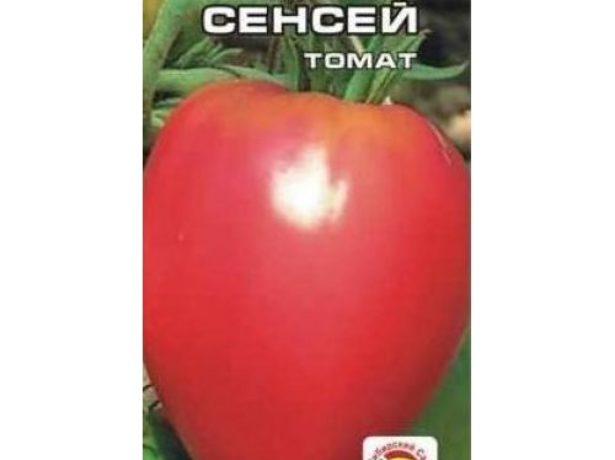
Photo gallery of the tomato variety Sensei
Eagle's beak
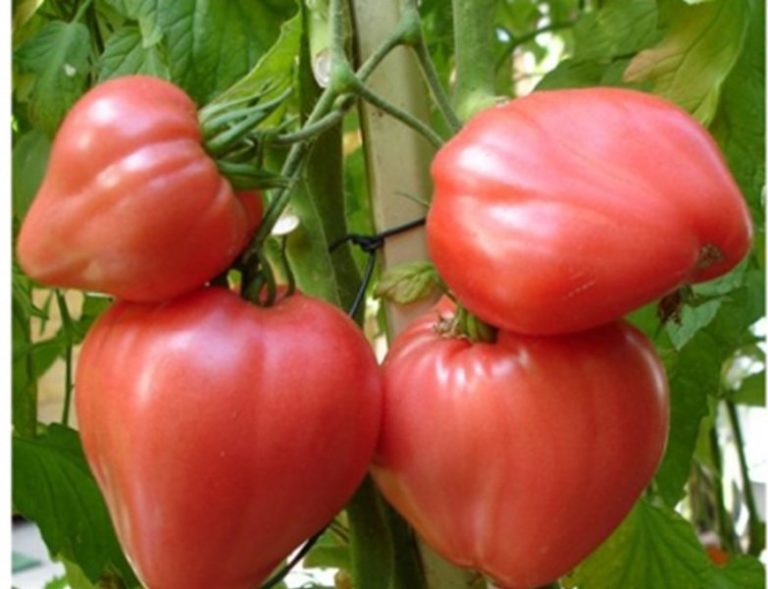
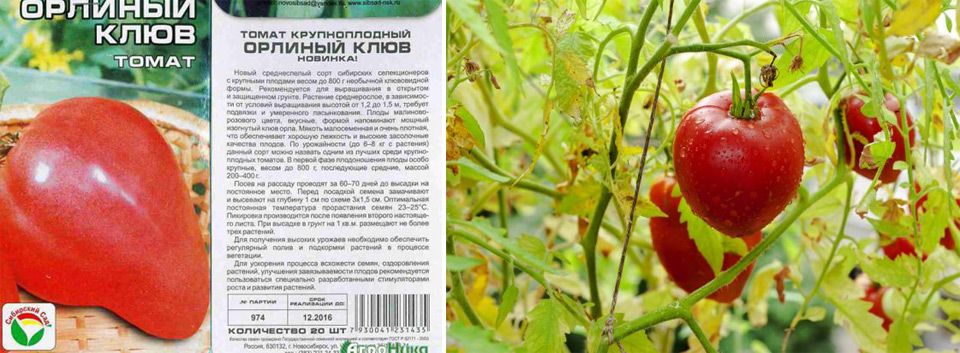
A mid-season, high-yielding indeterminate tomato variety suitable for salads. Suitable for outdoor cultivation. The fruits are fleshy and large, weighing up to 600 g. They require staking and training. Registered in 2005.
| Characteristic | Description |
| Description |
Mid-early indeterminate plant. |
| Ripening period | 100-110 days. |
| Fetus | Beak-shaped with a sharp tip, slightly ribbed, dense, pinkish. |
| Weight | 600 g |
| Taste | Good. |
| Productivity | 10.5-14.4 kg/sq. m. |
| Application | Salad. |
| Marketability, Shelf life | 75%, It is well transported over long distances, maintaining its characteristics. |
| Disease resistance | Good. |
| Agricultural technology |
|
| Recommended regions for planting | Various. |
| 2005 | |
| Originator | DEDERKO VLADIMIR NIKOLAEVICH. |
Photo gallery of the tomato variety Eagle's Beak
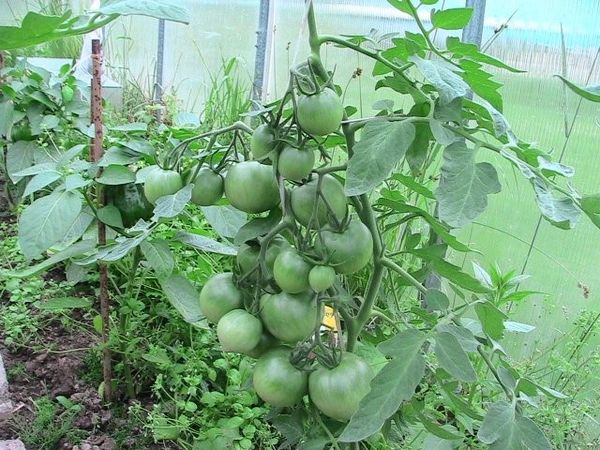
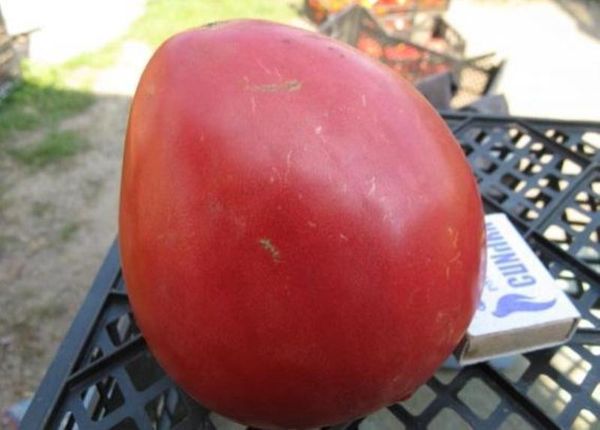
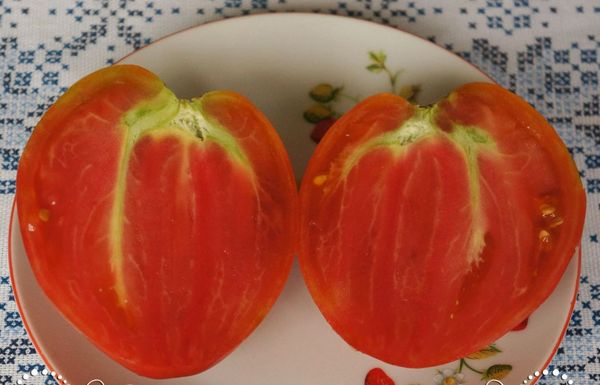
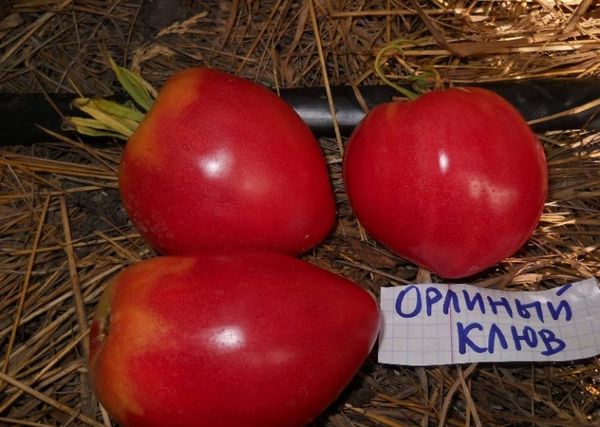
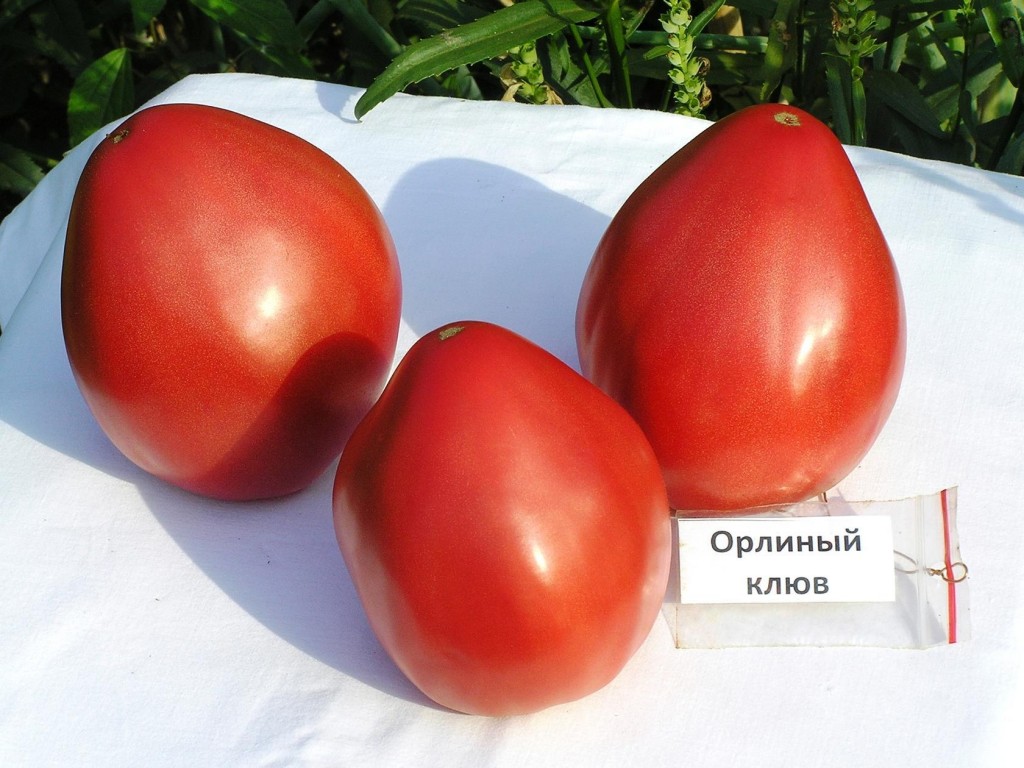
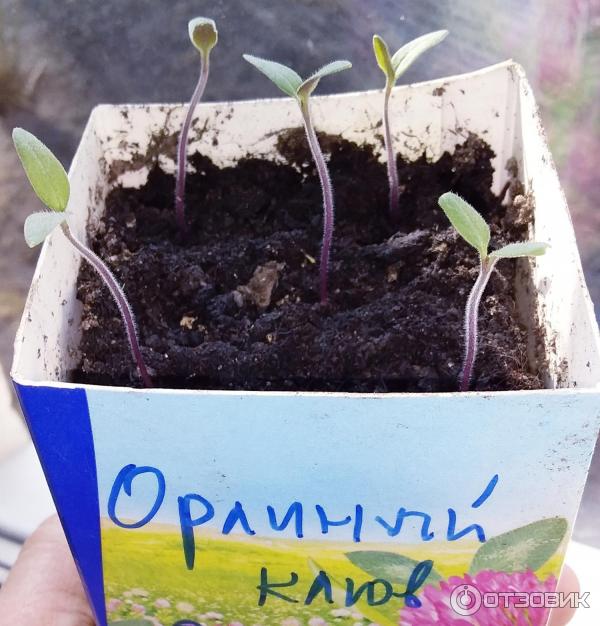
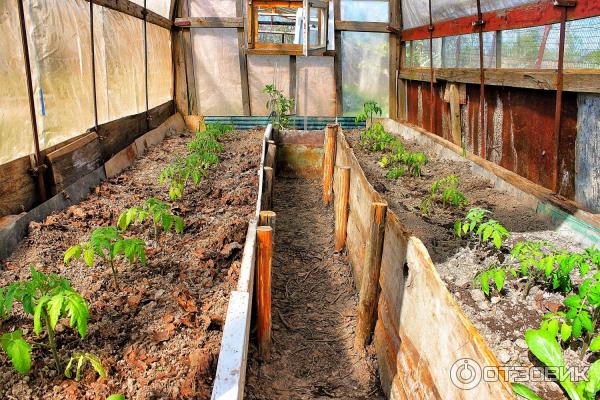
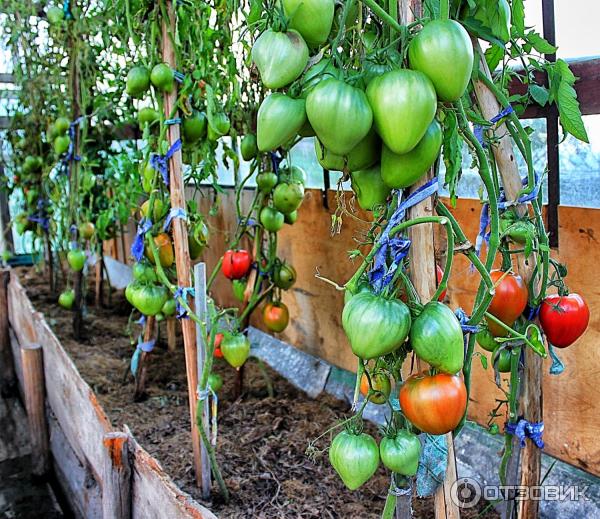
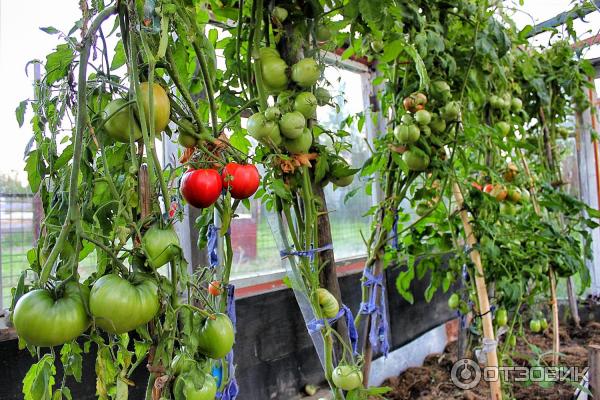
Heavyweight of Siberia
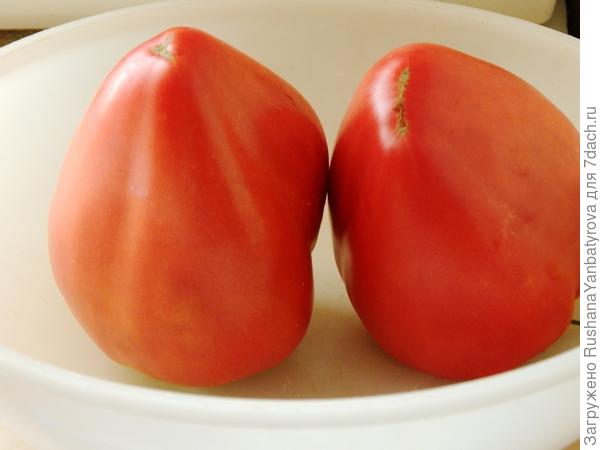
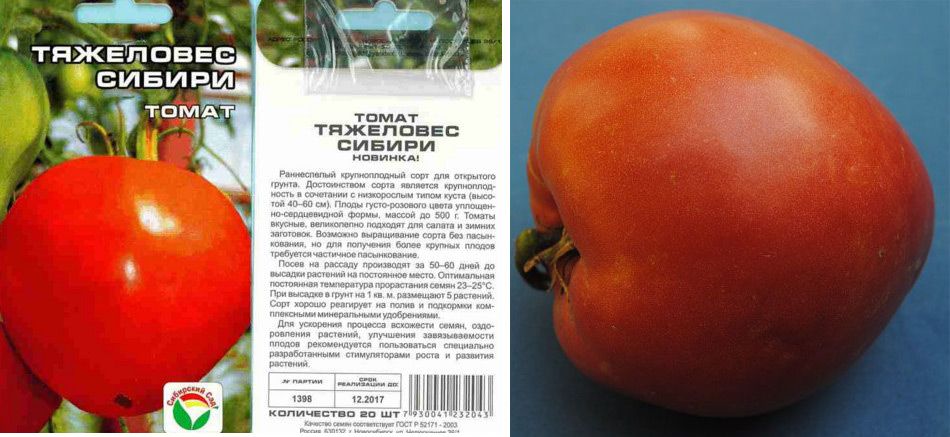
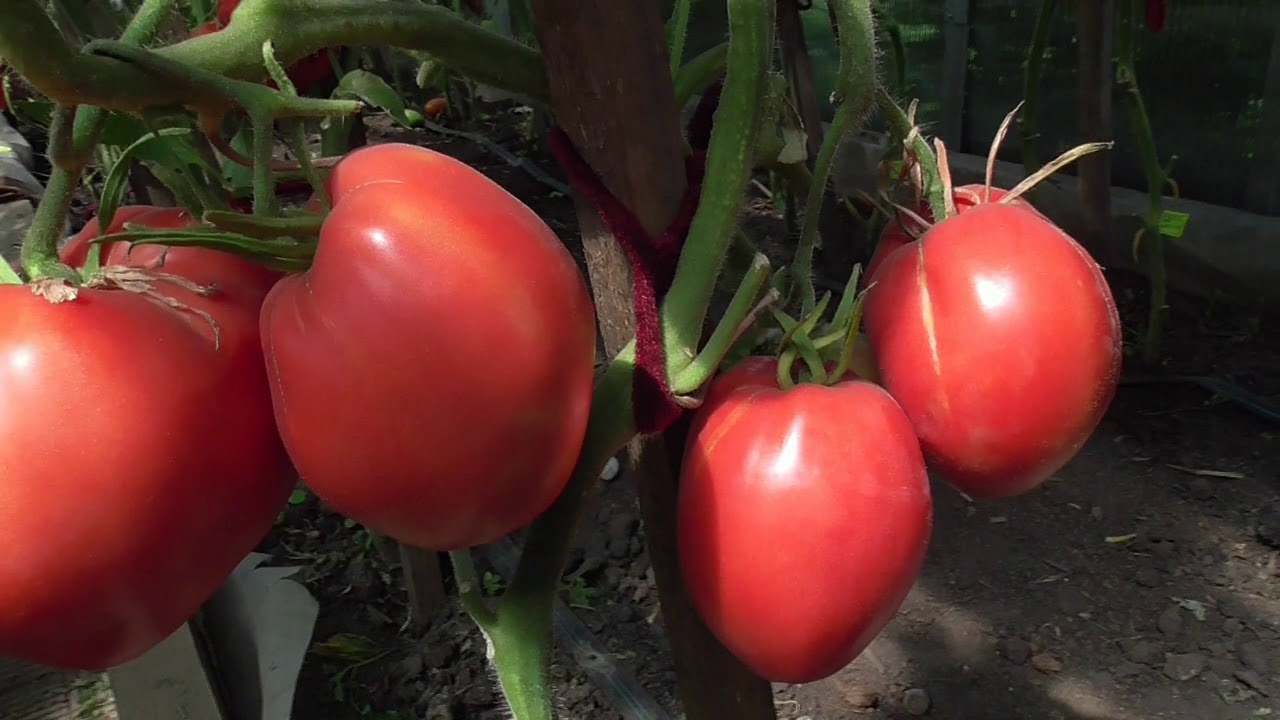
An early-ripening determinate tomato, suitable for growing under plastic cover. The yield is average, with fruits weighing 175 g. The tomatoes are gently ribbed, heart-shaped, and raspberry-colored. The variety was registered in 2007.
Siberian Heavyweight's characteristics in the table:
| Characteristic | Description |
| Description |
Early maturing determinate tomato for growing in garden beds. |
| Ripening period | 75-100 days. |
| Fetus | Heart-shaped, slightly ribbed, crimson. |
| Weight | 173 g. |
| Taste | Great. |
| Productivity | 2.8 kg/sq. m. |
| Application | Salad. |
| Marketability, Shelf life | Good. |
| Disease resistance | Average. |
| Agricultural technology |
|
| Recommended regions for landings |
Any. |
| 2007 | |
| Originator | IP "DEDERKO VLADIMIR NIKOLAEVICH." |
Photo gallery of the tomato variety Heavyweight of Siberia
Abakan pink
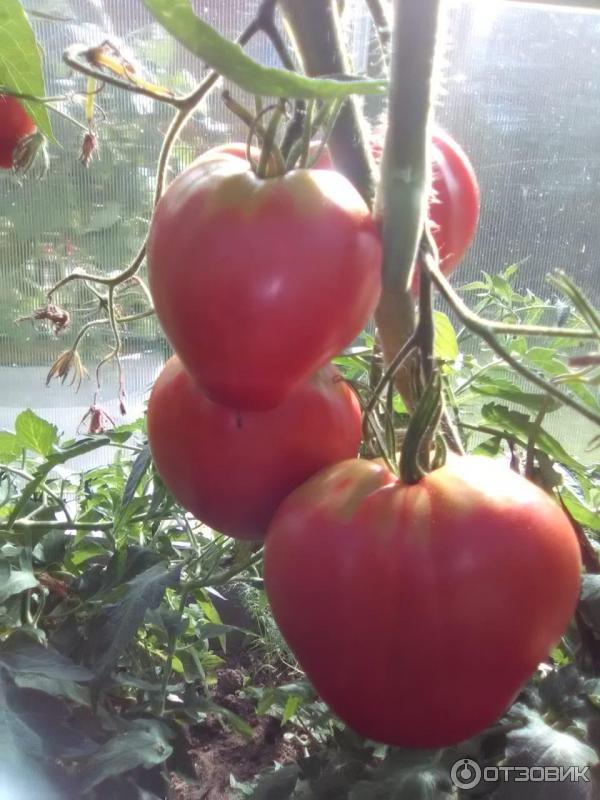
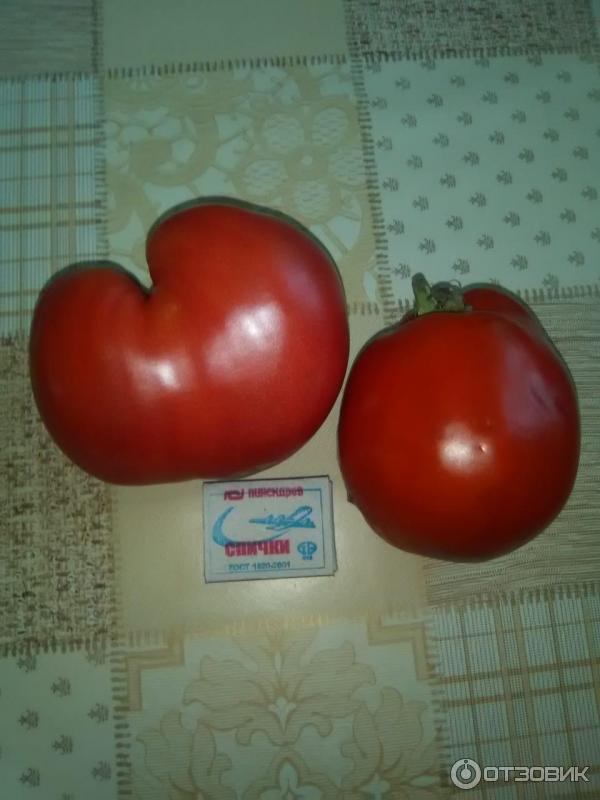
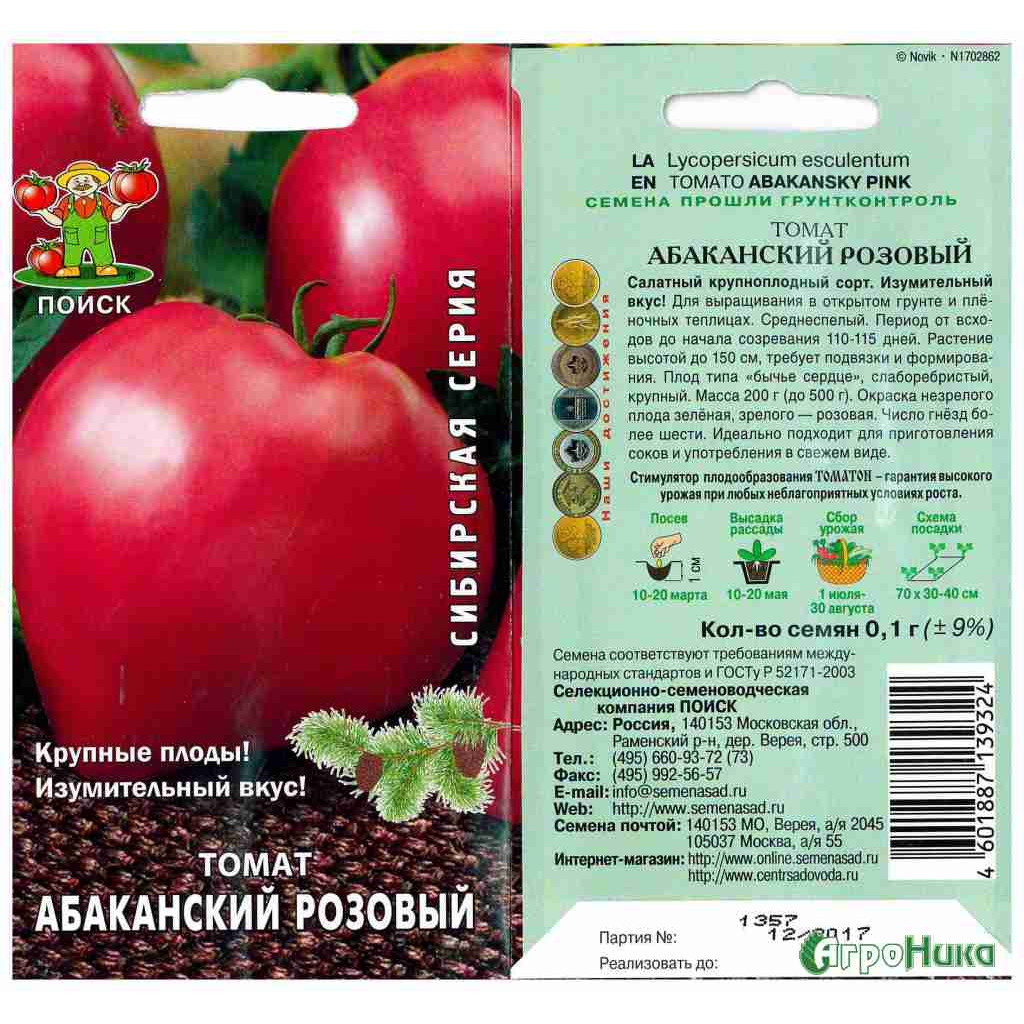
A late-ripening determinate tomato, suitable for both greenhouse and open-field cultivation. The fruits are flat-round, medium-ribbed, and pink in color. The average weight is 200 g, but some specimens can reach 600 g. Registered in 2007.
| Characteristic | Description |
| Description |
Late-ripening determinate variety. |
| Ripening period | 110-125 days. |
| Fetus | Flat-round, with slight ribbing, pink. |
| Weight | 200-500 g |
| Taste | Good. |
| Productivity | 4 kg/sq. m. |
| Application | Salad. |
| Marketability, Shelf life | Good. |
| Disease resistance | Good. |
| Agricultural technology |
|
| Recommended regions for planting | Any. |
| 2007 | |
| Originator | JSC "LANS COMPANY". |
Photo gallery of the Abakansky Pink variety
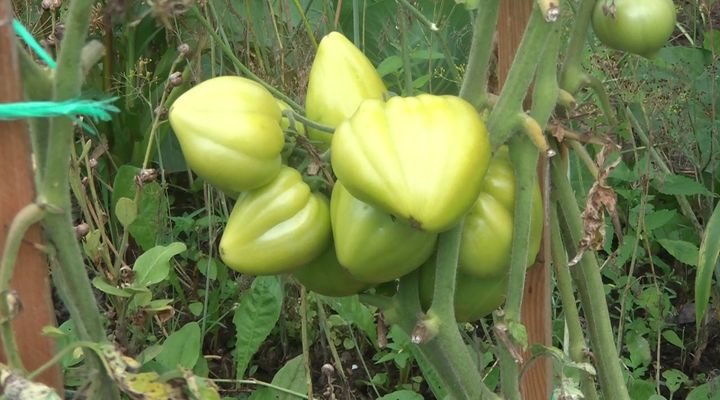
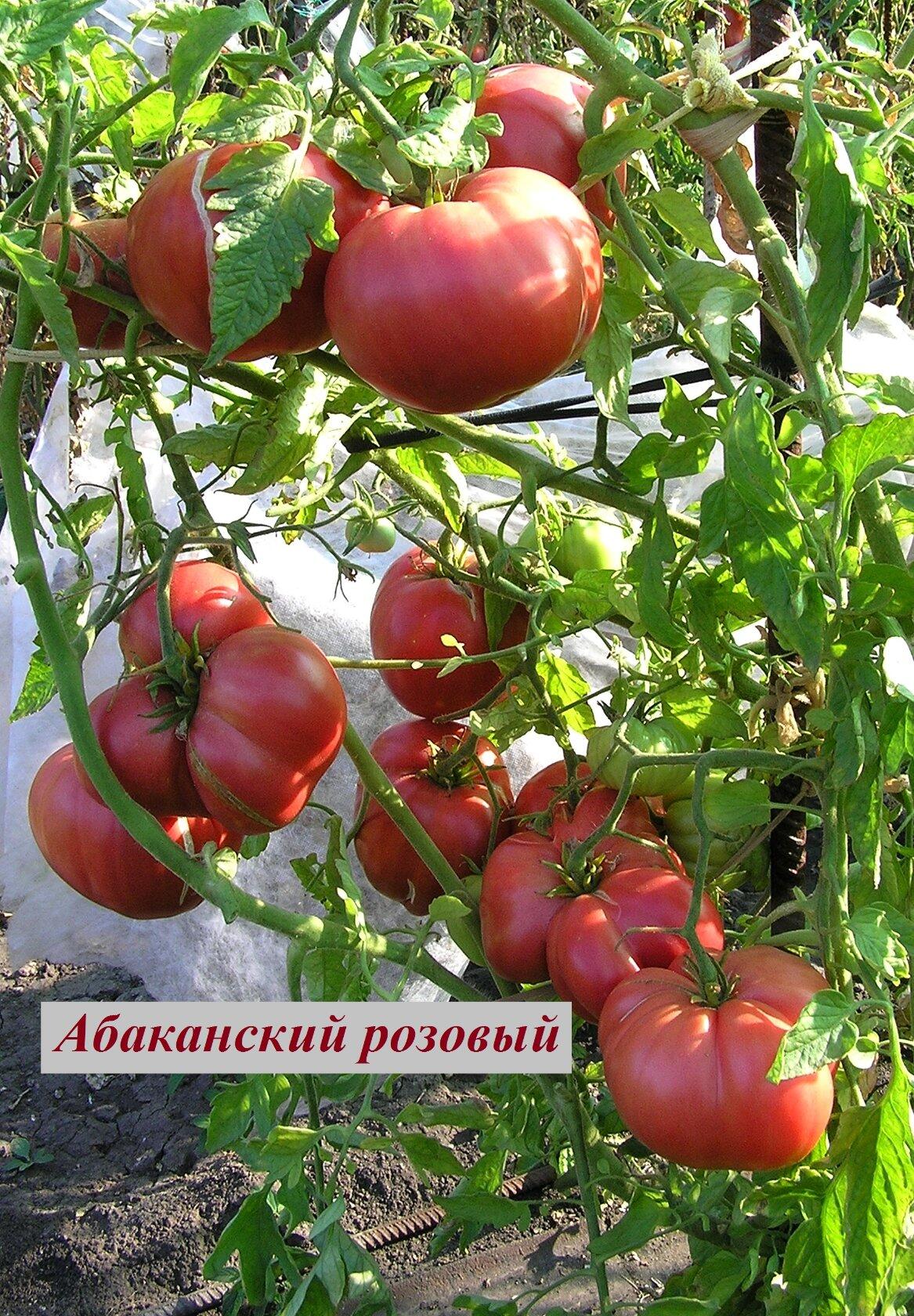
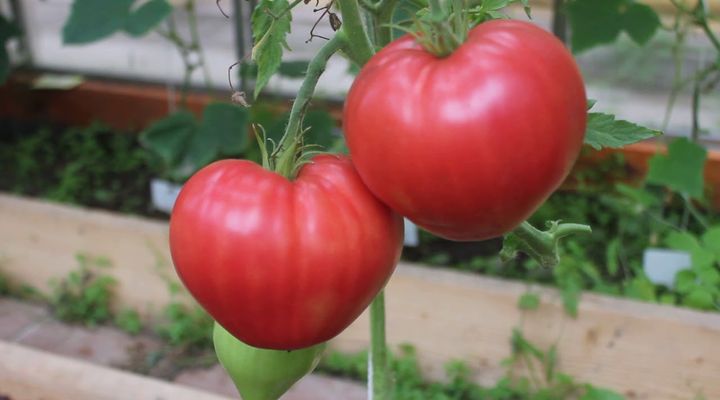
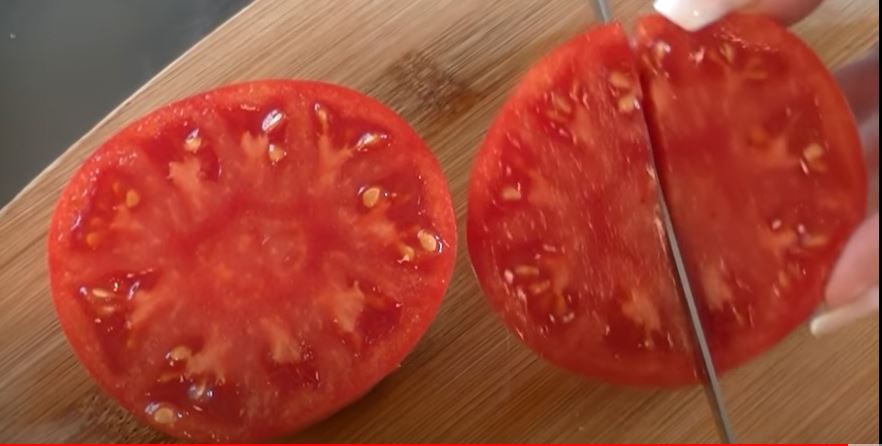
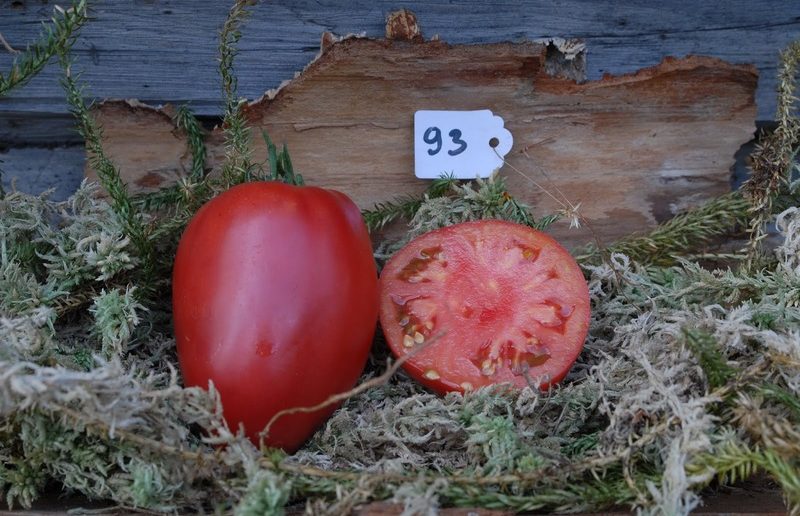
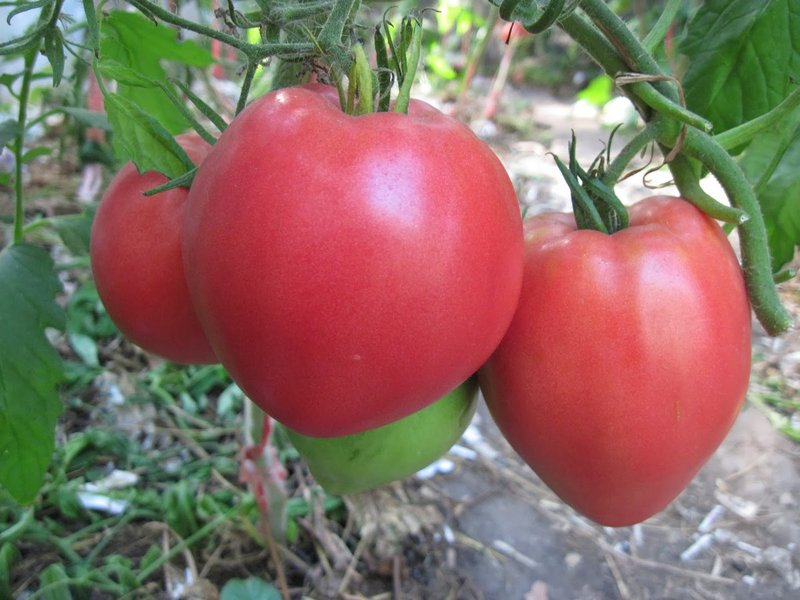
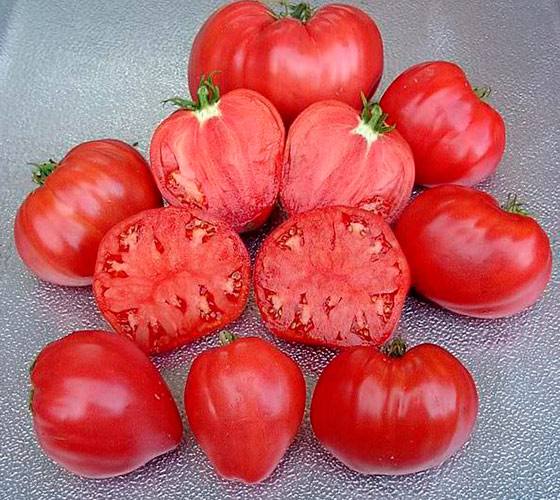
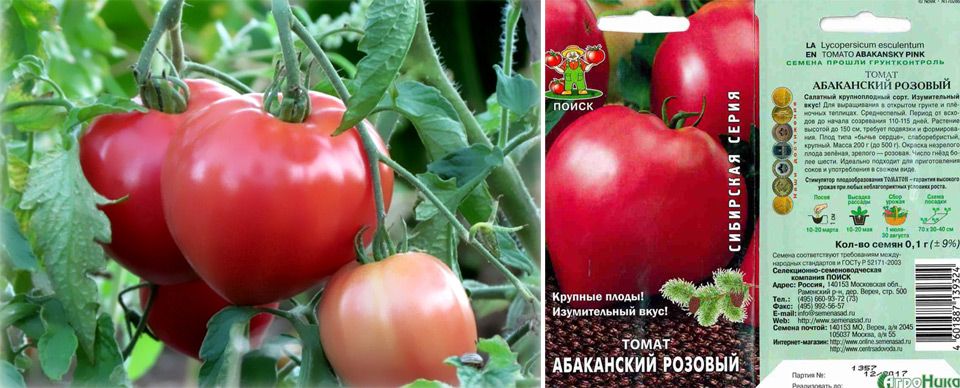
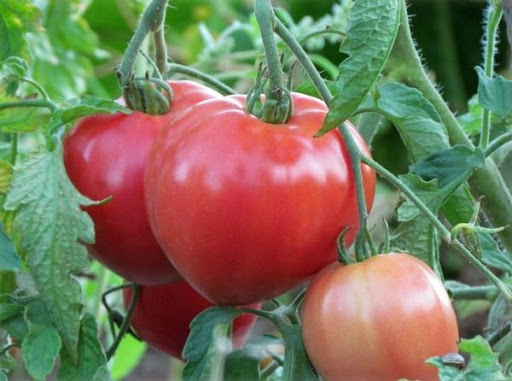
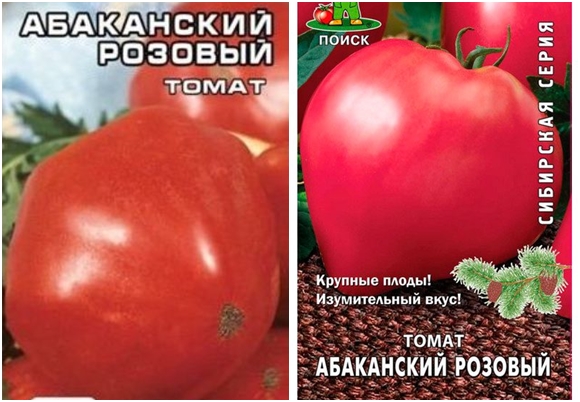
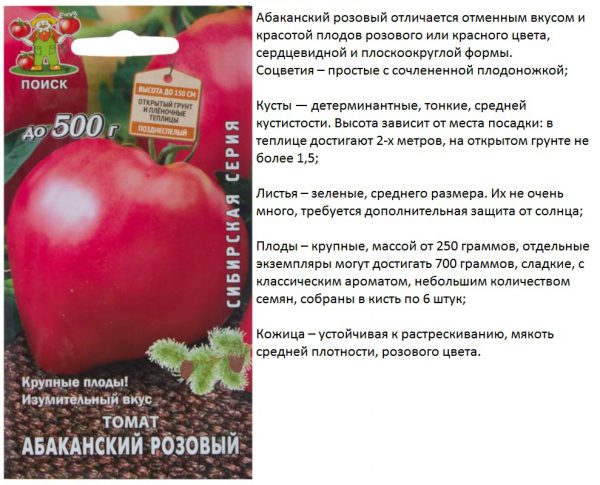
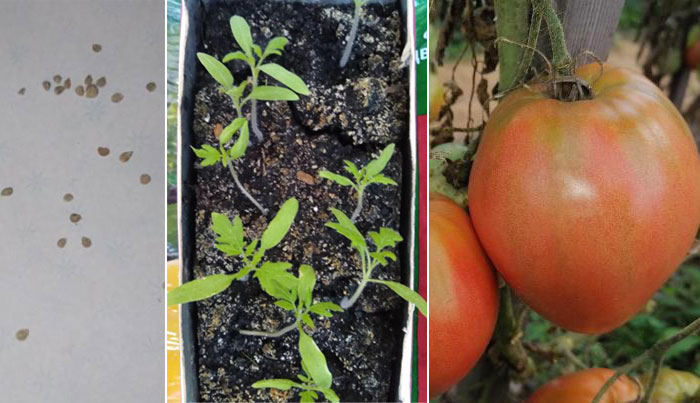
Read more about the Abakansky Pink tomato variety in the articleAbakansky Pink and Red Tomato: Descriptions, Reviews, Confusion, Photos, Comparisons
Buffalo heart
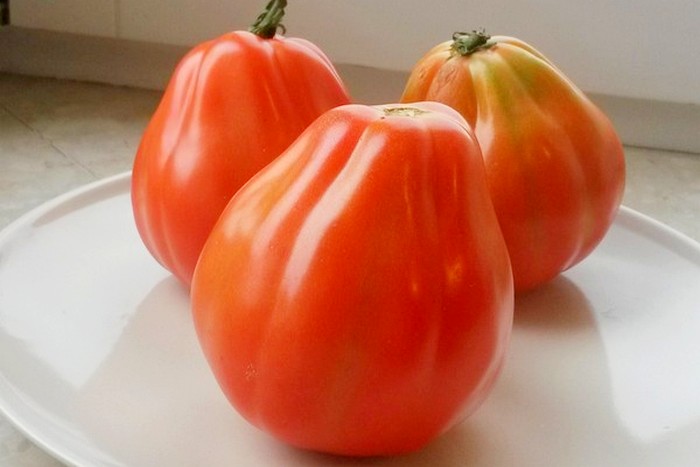
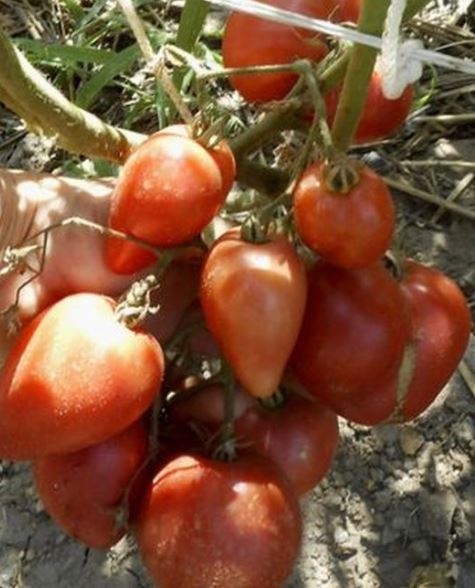
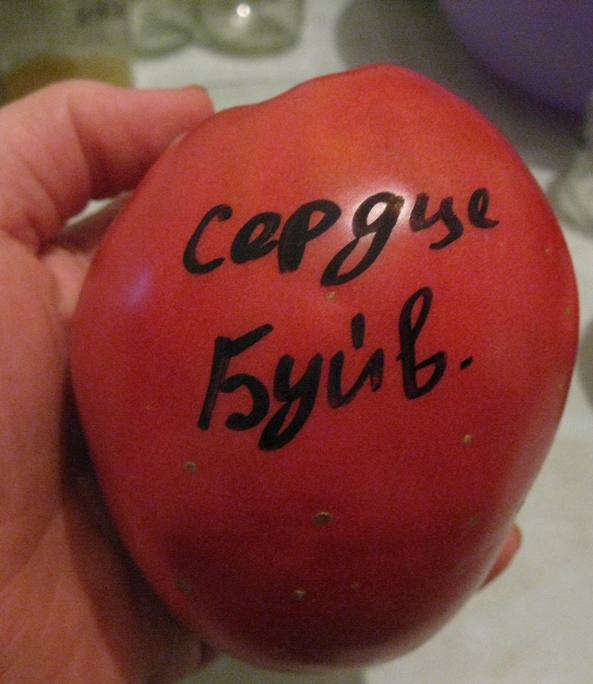
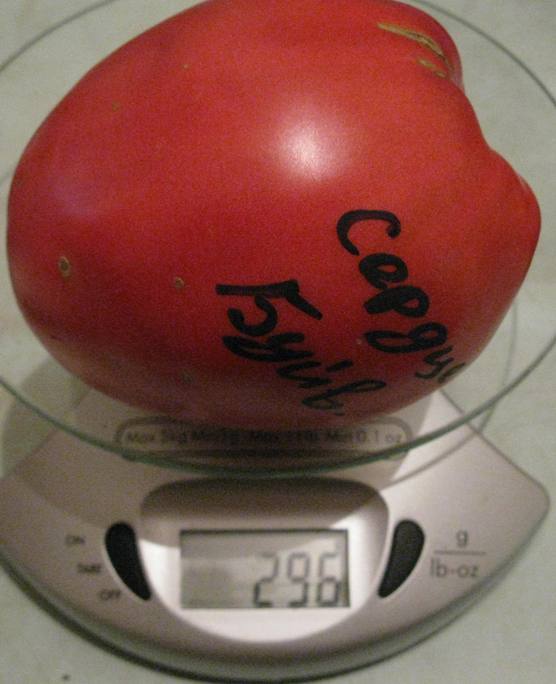
A low-growing variety with a long fruiting period. It can be grown both in greenhouses and outdoors. The fruits are large and red, weighing up to 1 kg. Their shelf life is poor, so long-term storage is not recommended. This variety is not included in the registry.
| Characteristic | Description |
| Description |
A low-growing variety of domestic selection with mid-early ripening period. |
| Ripening period | 115 days. |
| Fetus | Round-heart-shaped, glossy, pink. |
| Weight | 500-1000 g |
| Taste | Sweet with a hint of sourness. |
| Productivity | 10 kg per bush. |
| Application | Salad. |
| Marketability, Shelf life | Good. |
| Disease resistance | According to the official description from the catalogue, it is effective against almost all infections and pests. |
| Agricultural technology |
|
| Recommended regions for planting | Any |
| Not included. |
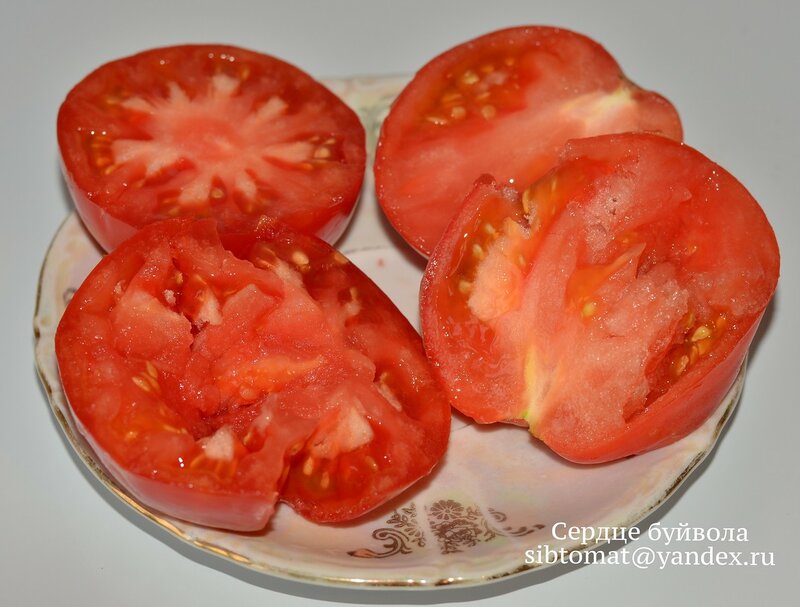
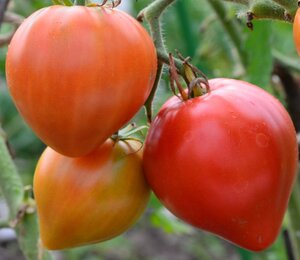
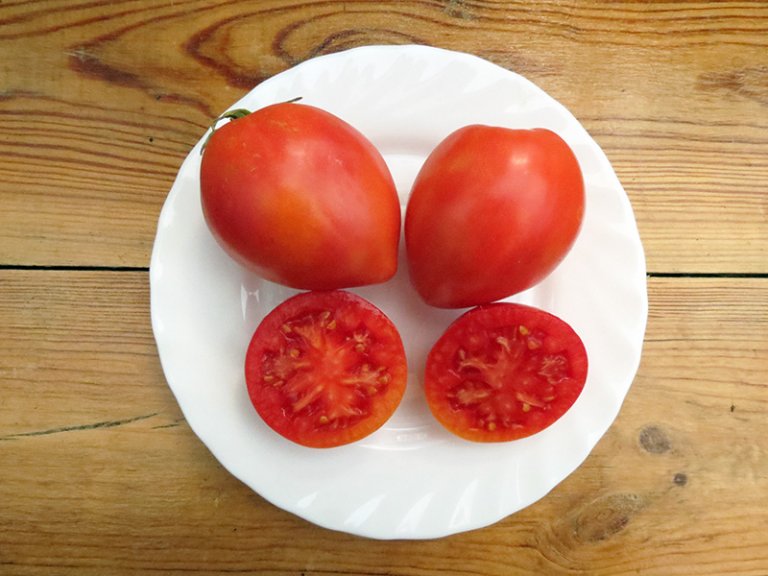
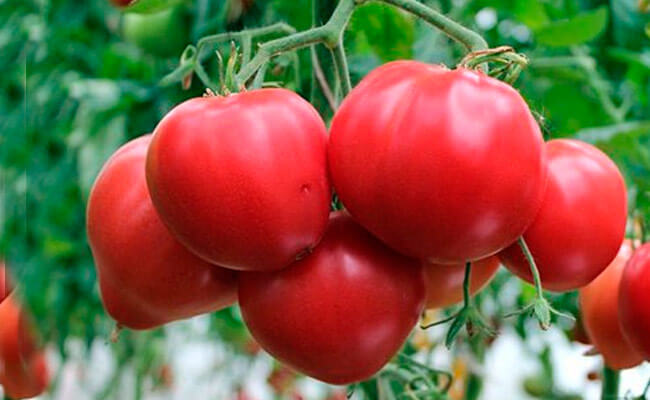
Photo gallery of tomato variety Buffalo Heart
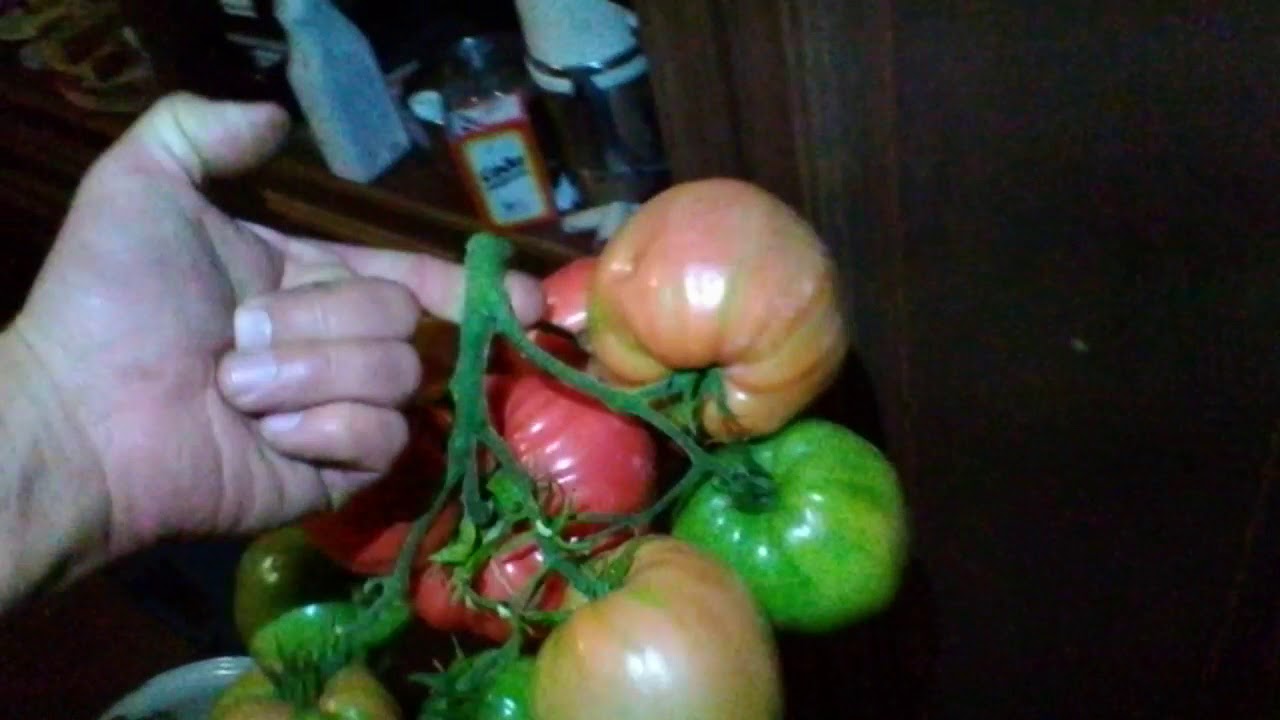
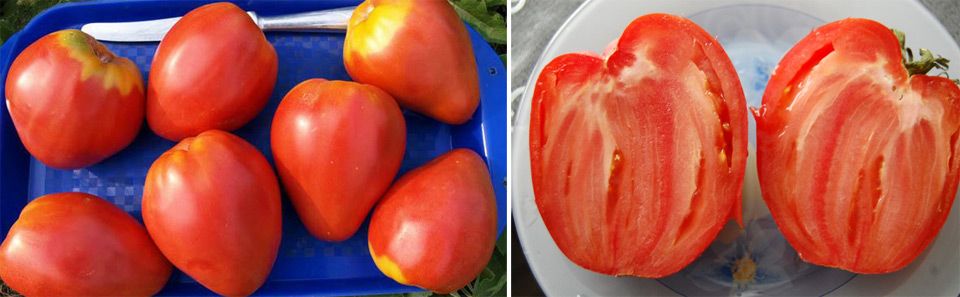
Pudovic (Sevruga)
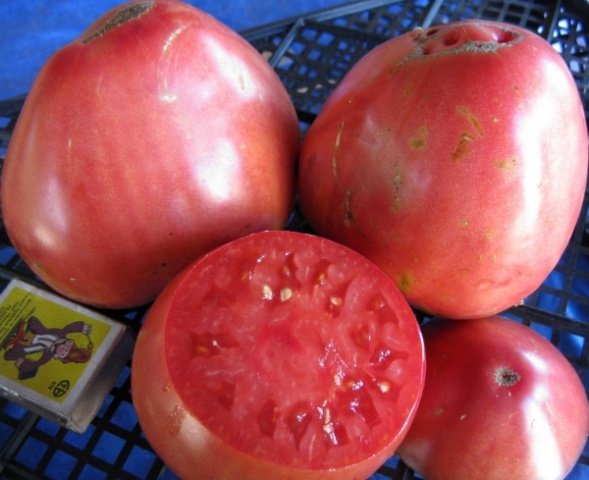
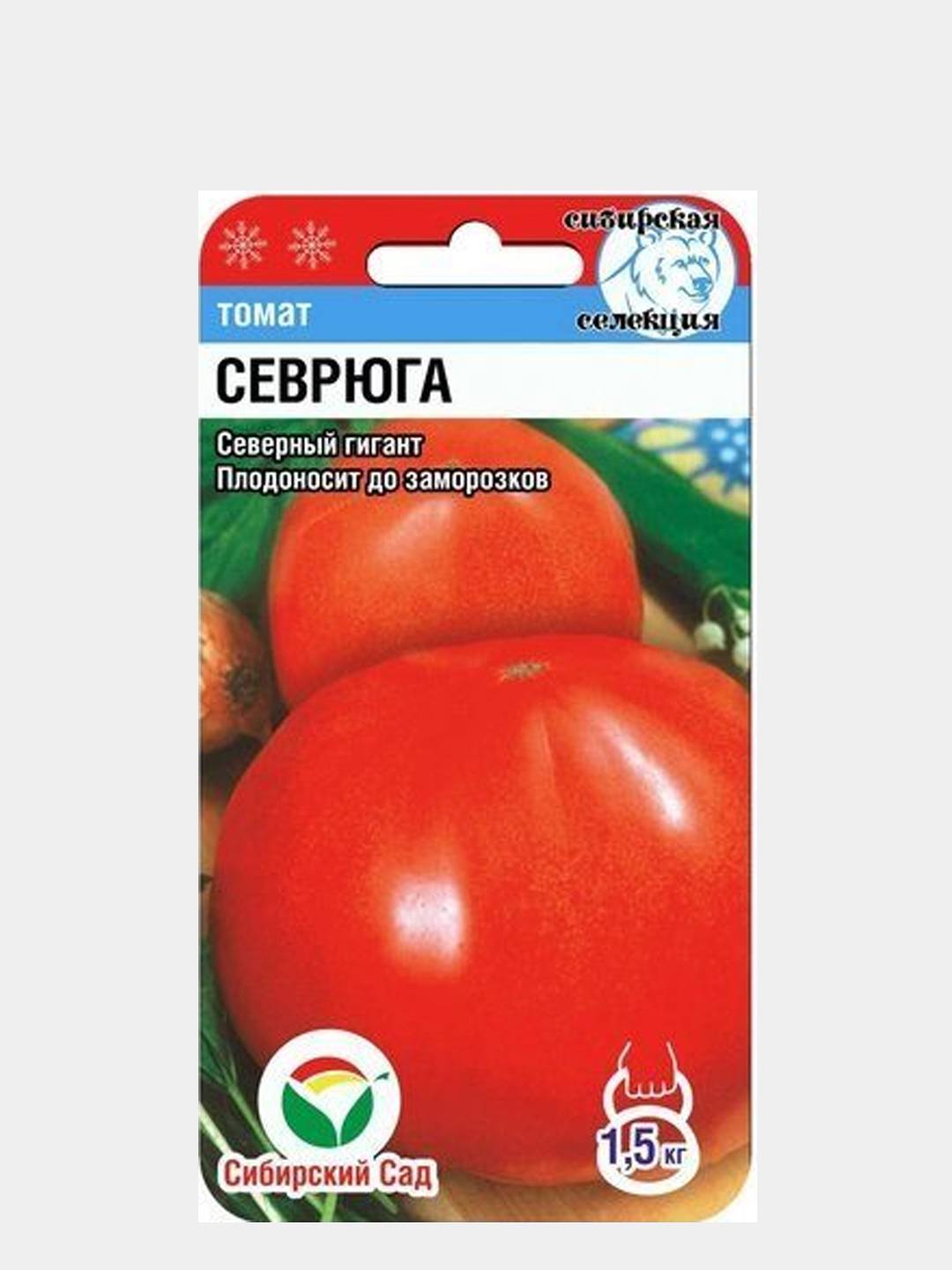
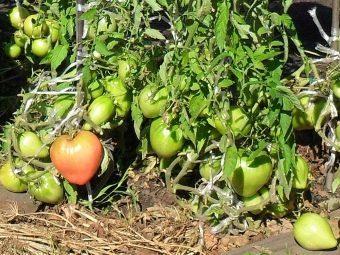
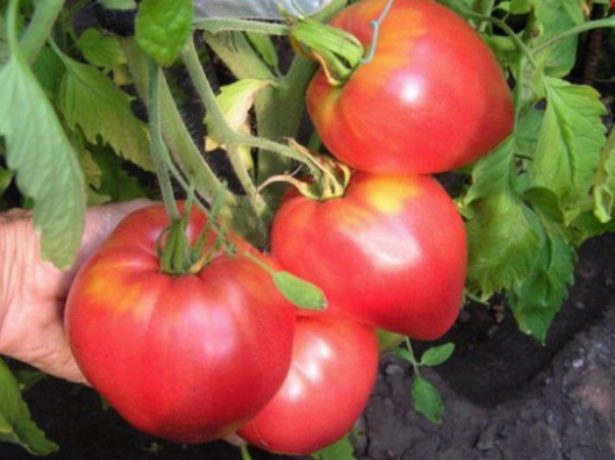
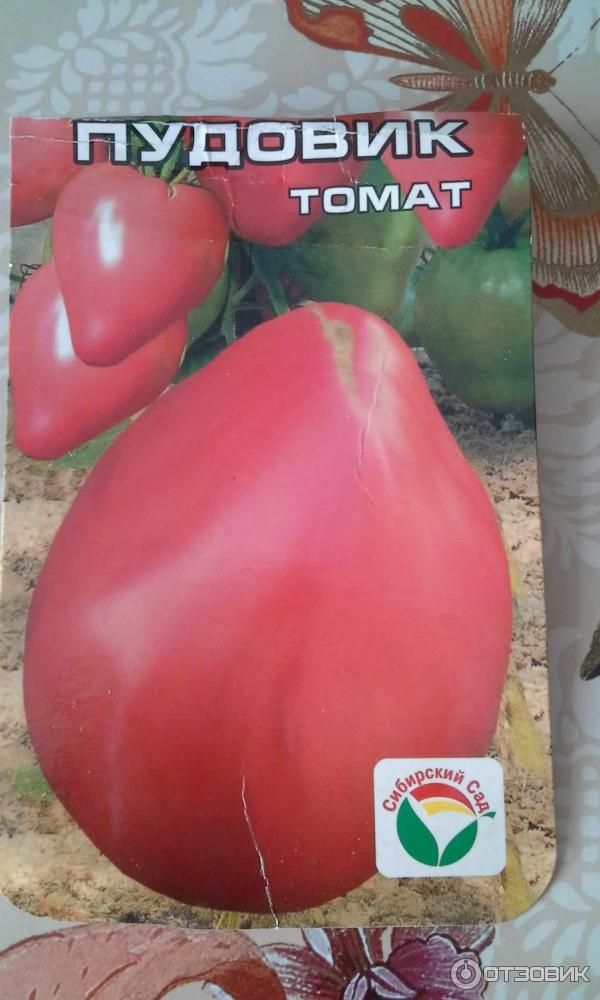
The tomato variety "Pudovik," also known as "Sevryuga," is listed in the registry as an indeterminate variety, but Siberian Garden growers often list the bush as determinate in their seeds. Reviews indicate that it grows to varying sizes depending on conditions, but the fruits are always large and tasty. Ripening time is average and requires staking and shaping. The fruits are reddish-pink in color, weighing between 500 and 900 grams, but often exceeding 1 kg. They have excellent shelf life and transport well.
| Characteristic | Description |
| Description |
Mid-season indeterminate variety. |
| Ripening period | 110 days. |
| Fetus | Heart-shaped, raspberry. |
| Weight | 290 g, up to 1000 g. |
| Taste | Classic tomato. |
| Productivity | Up to 15.5 kg/sq.m. |
| Application | Salad |
| Marketability, Shelf life | Good. |
| Disease resistance | To most diseases of nightshades. |
| Agricultural technology |
|
| Recommended regions for planting | Any. |
| 2007 |
Photo gallery of the tomato variety Pudovik (Sevryuga)
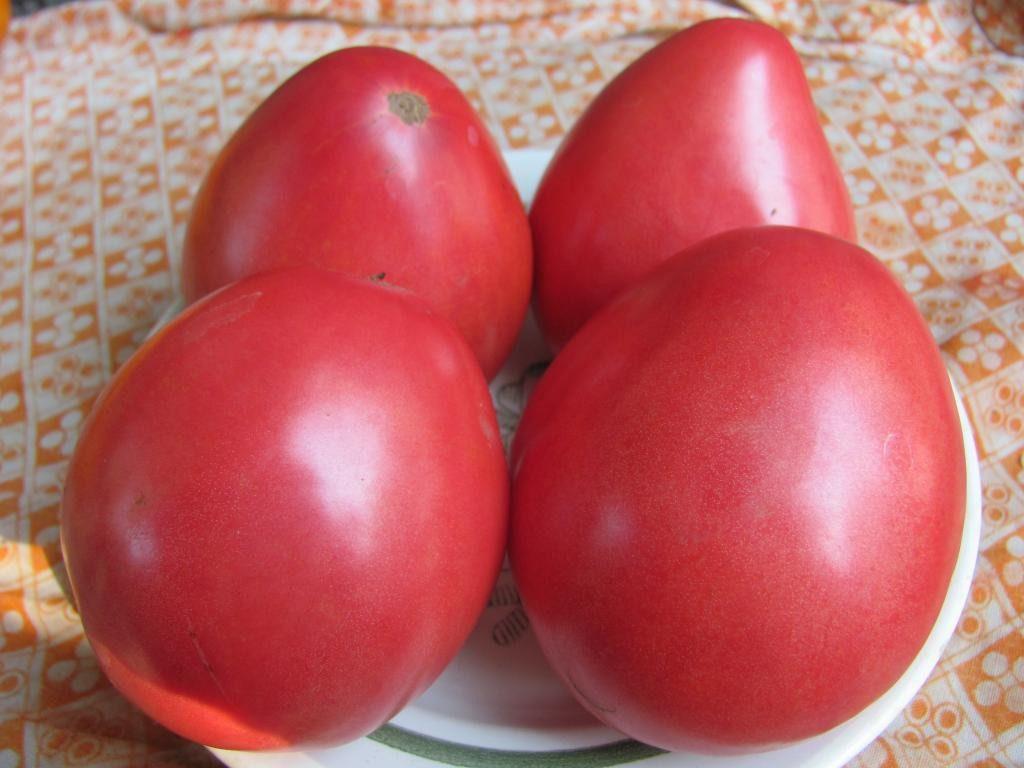
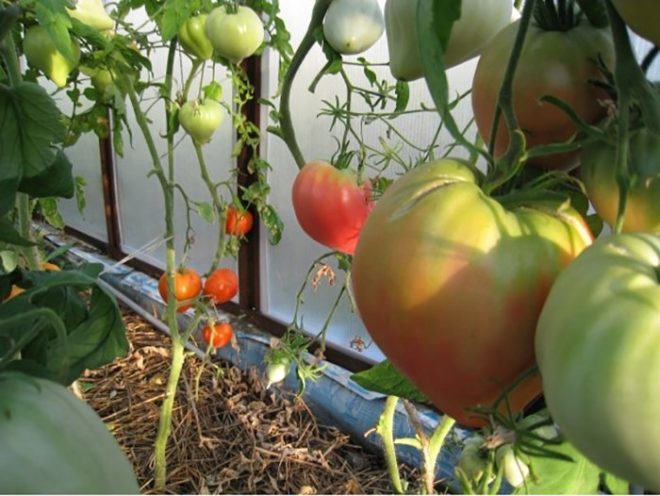
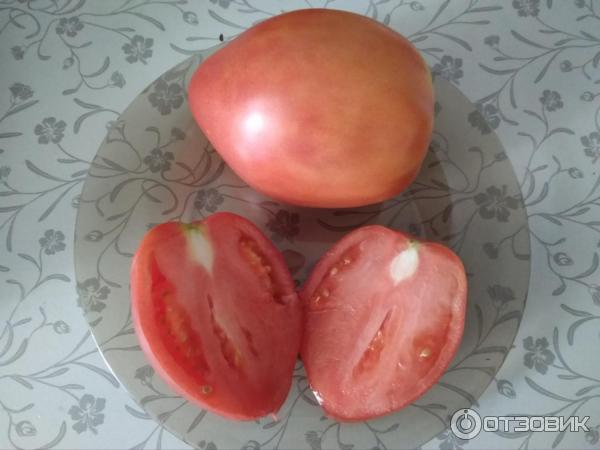
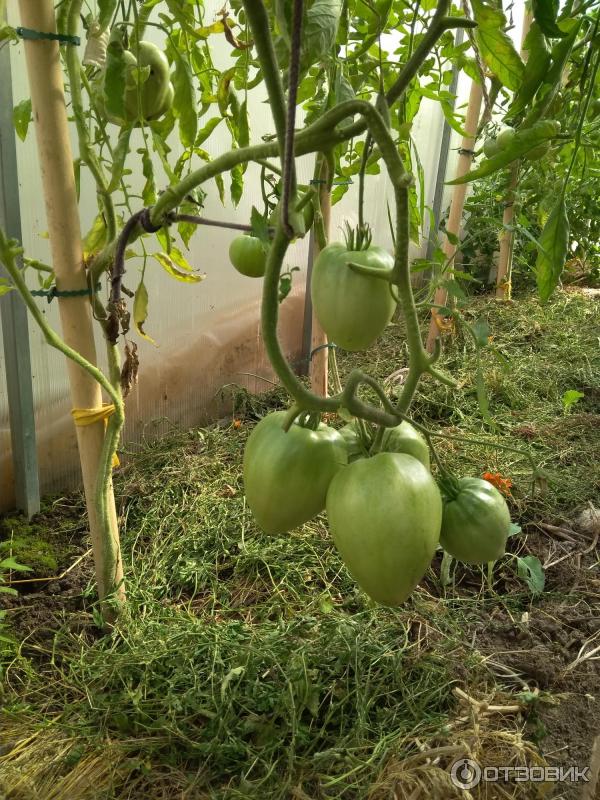
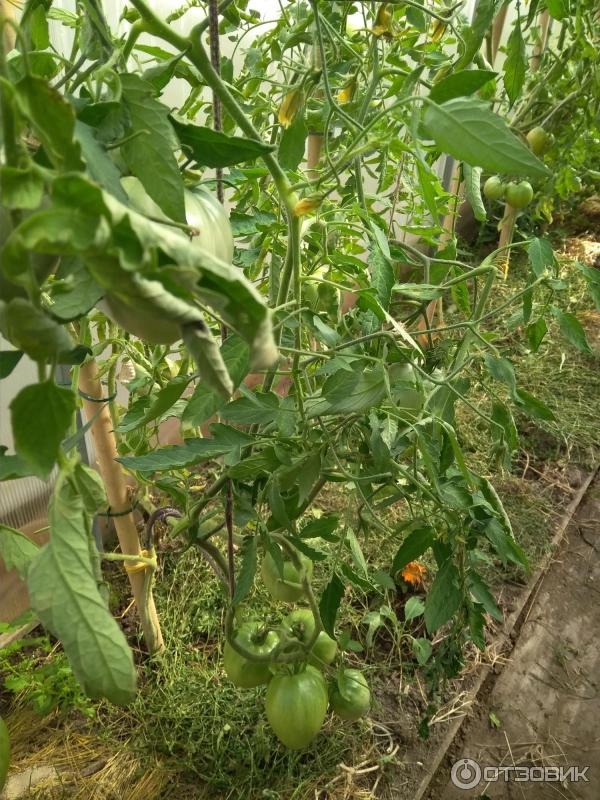
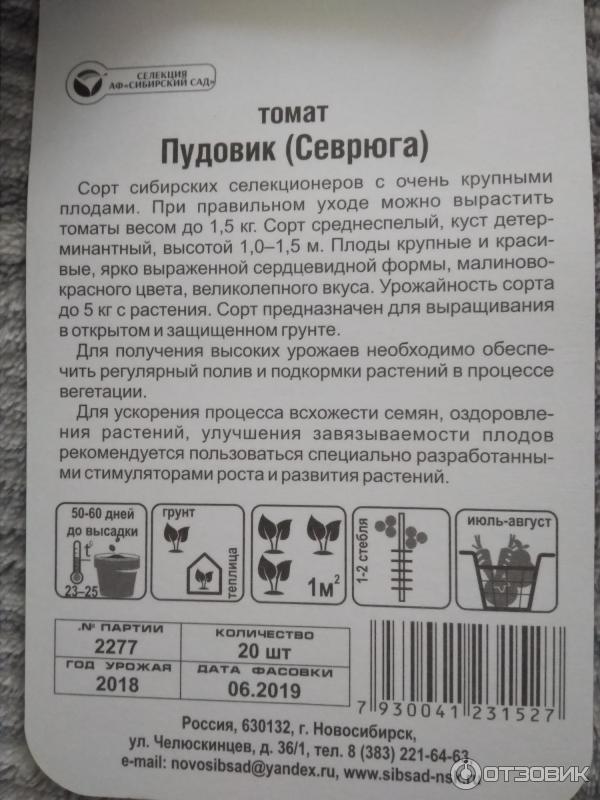
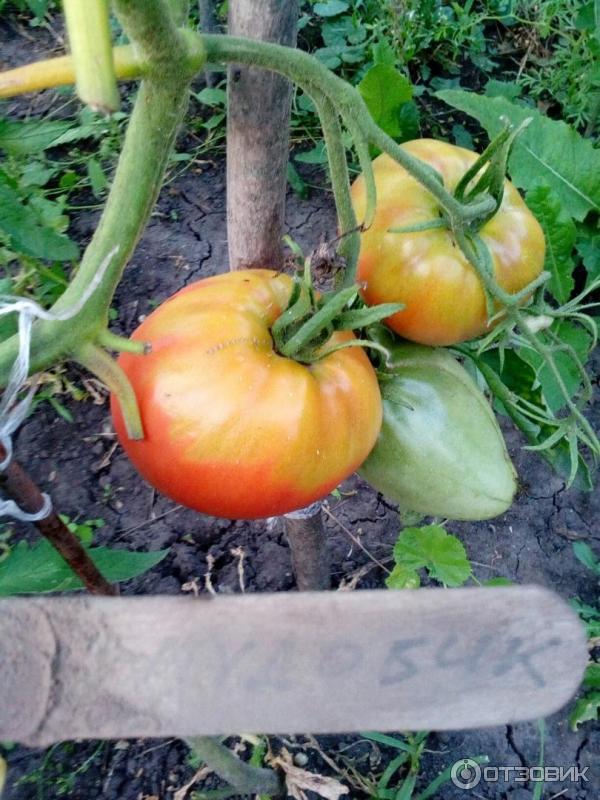
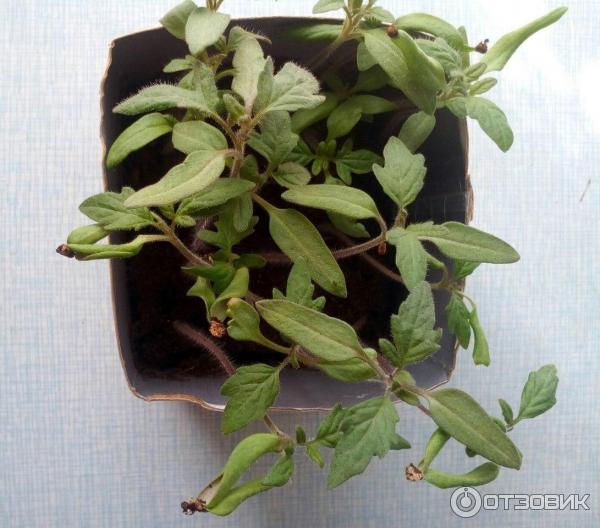
Read about other large tomato varieties in the article Large varieties of tomatoes for greenhouses and open ground.
Golden domes
This mid-season, determinate variety is suitable for outdoor cultivation. It requires shaping and staking. The fruits are flat-round, medium-ribbed, and orange in color. They weigh 200-400 g. The yield is high, and the flavor is excellent. It was added to the register in 2005.
| Characteristic | Description |
| Description |
Mid-season determinate variety. |
| Ripening period | 105-110 days. |
| Fetus | Flat-round, slightly ribbed, orange. |
| Weight | 213-400 BC |
| Taste | Great. |
| Productivity | 10.5-13.6 kg/sq. m. |
| Application | Salad. |
| Marketability, Shelf life | 76%, Good. |
| Disease resistance | High. |
| Agricultural technology |
|
| Recommended regions for planting | Any. |
| 2005 | |
| Originator | DEDERKO VLADIMIR NIKOLAEVICH. |
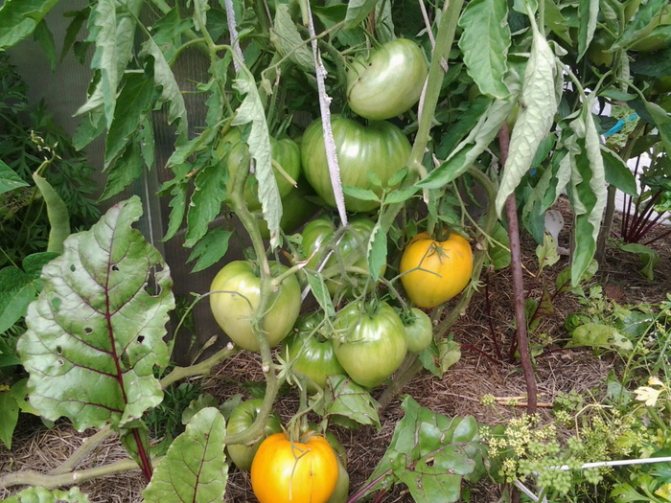
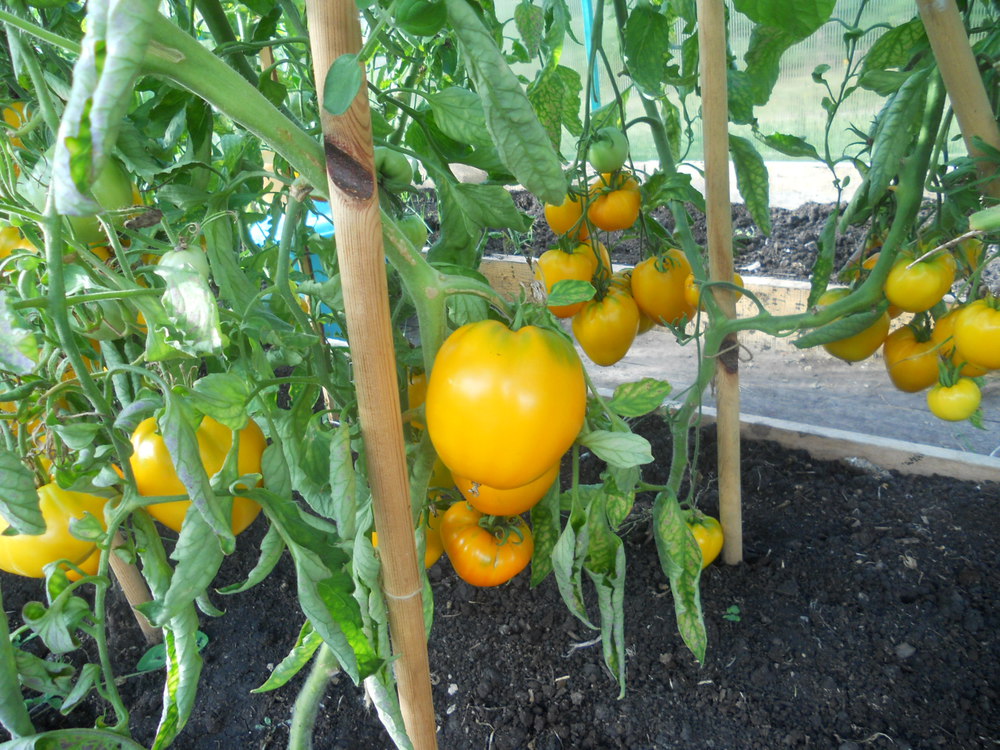
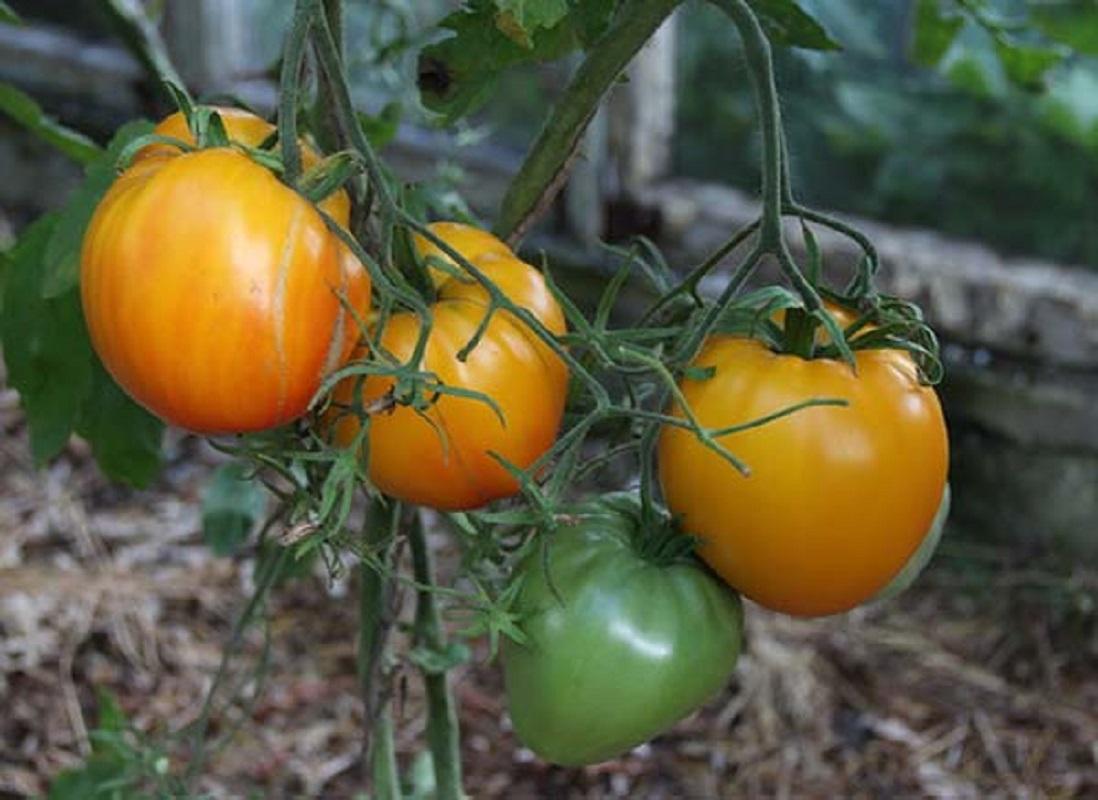
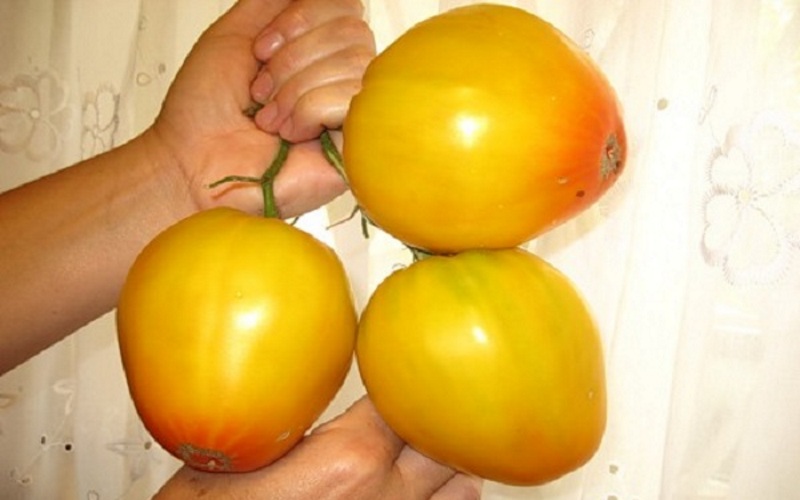
Photo gallery of the Golden Domes tomato variety
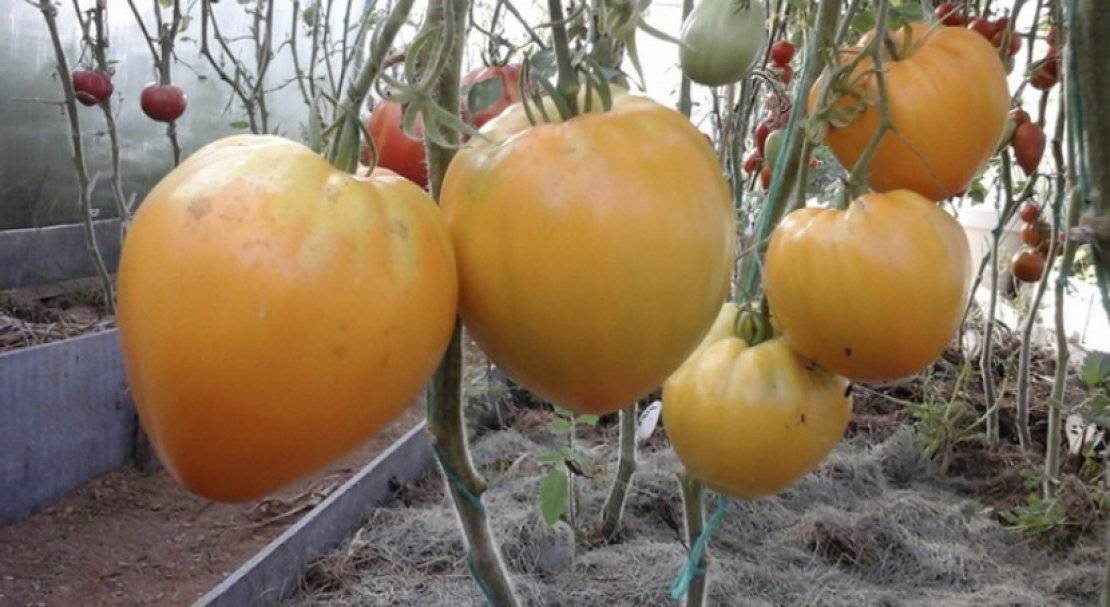
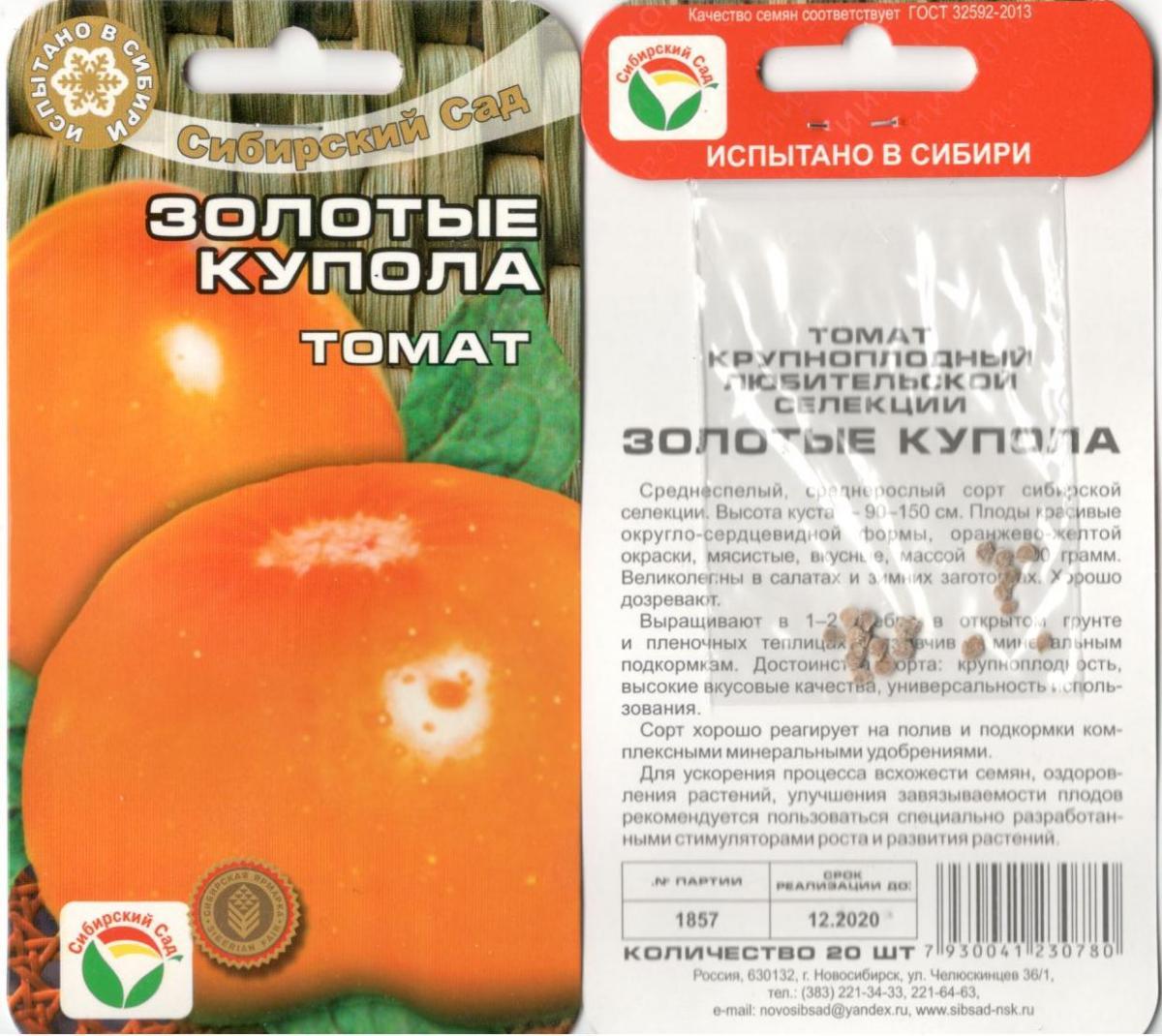
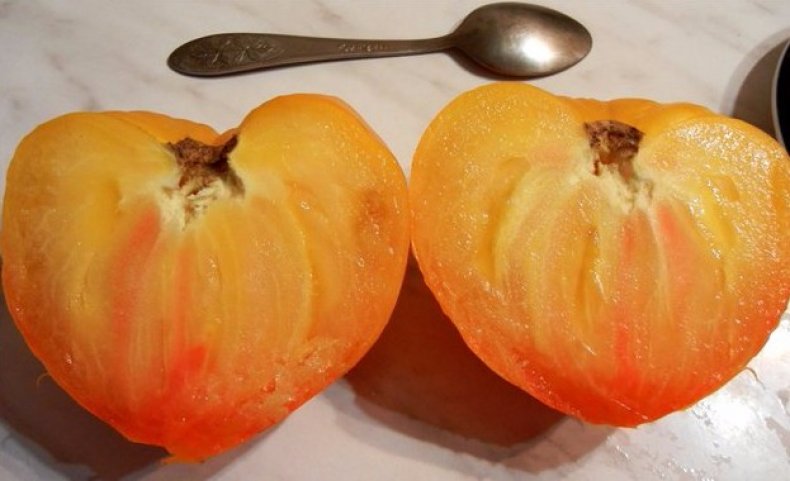
Danko
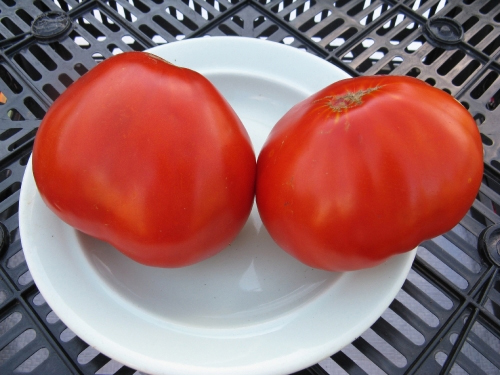
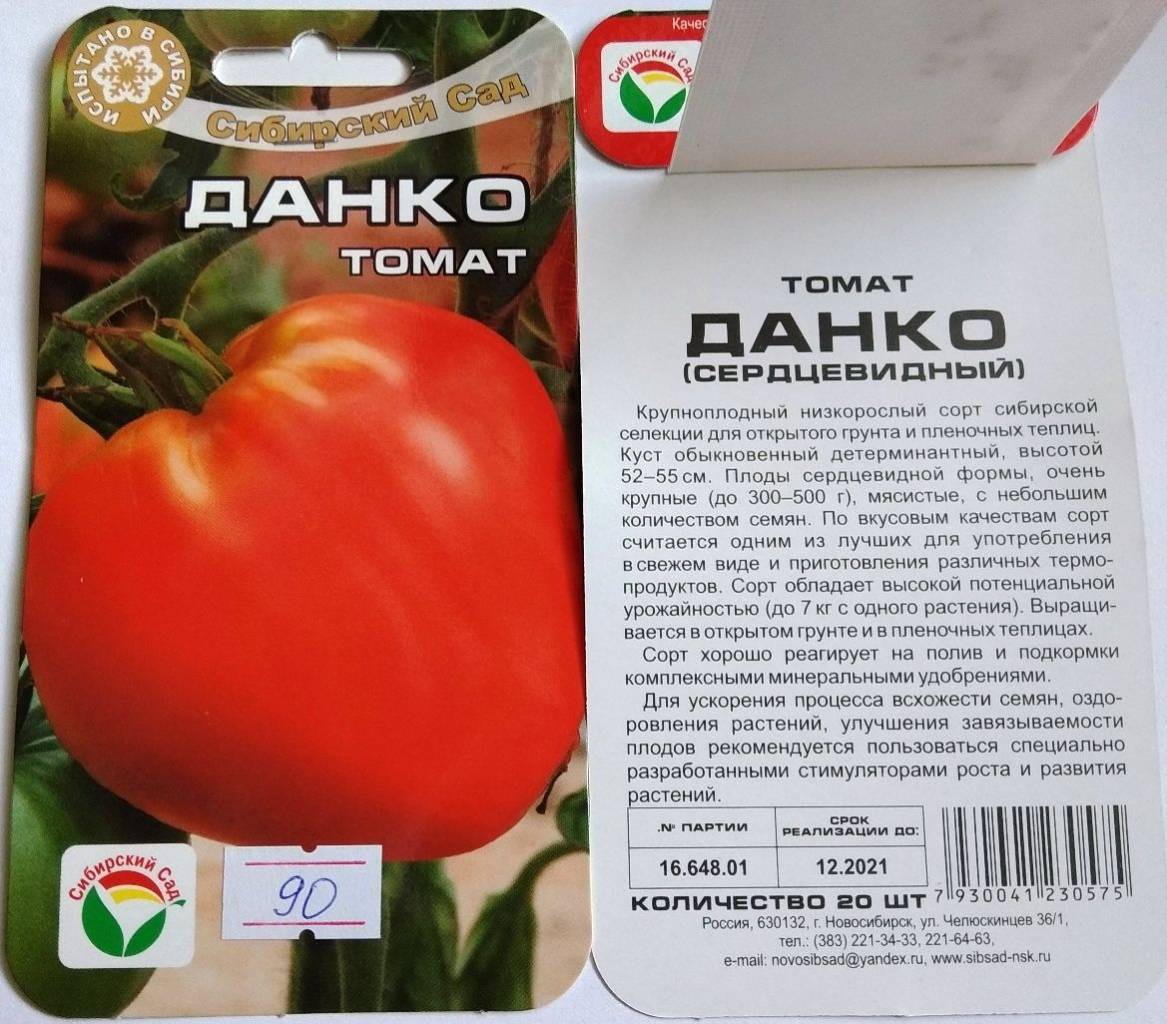
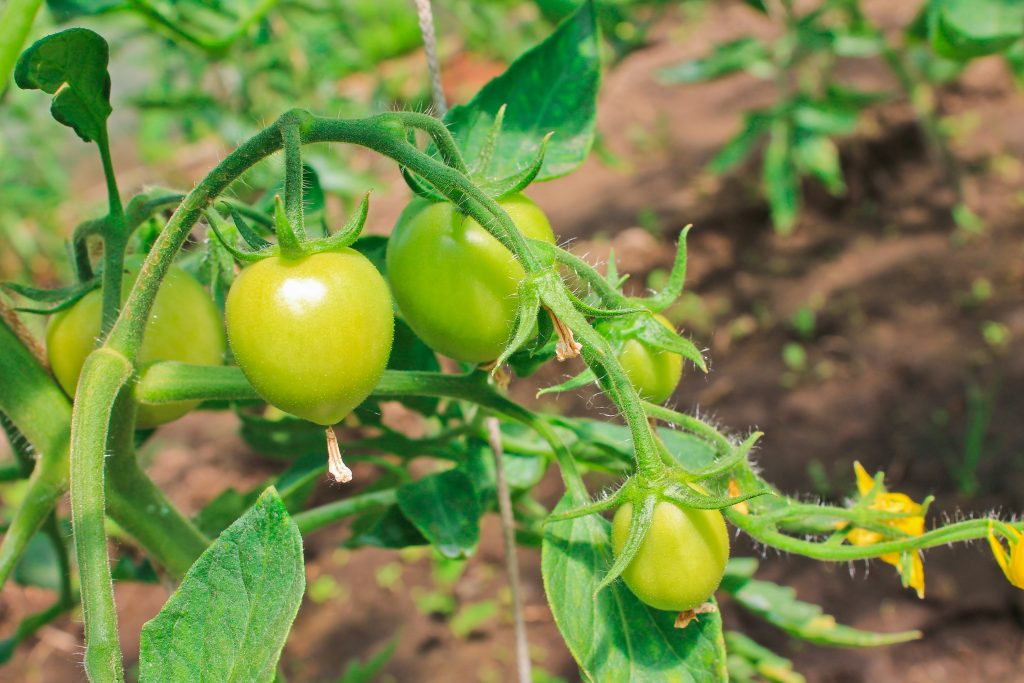
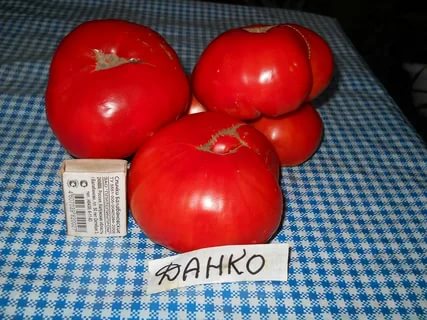
A mid-early determinate tomato, suitable for outdoor cultivation. The bush is compact, up to 55 cm tall, with medium foliage. The fruits are red, weighing from 96 to 170 g, with the lower tomatoes reaching up to 300 g. The yield is average, and the variety tolerates drought well. It was registered in 2000.
| Characteristic | Description |
| Description |
A mid-early determinate variety with sparse foliage and moderate branching. Suitable for planting in open beds. |
| Ripening period | 118 days. |
| Fetus | Heart-shaped, slightly ribbed, red. |
| Weight | Up to 300 g. |
| Taste | Great. |
| Productivity | 3.4 kg/sq. m. |
| Application | Salad. |
| Marketability, Shelf life | 34%, Average. |
| Disease resistance | Average. |
| Agricultural technology | Standard. |
| Recommended regions for planting | Any. |
| 2000 | |
| Originator | Federal State Budgetary Scientific Institution "Federal Research Center Institute of Cytology and Genetics of the Siberian Branch of the Russian Academy of Sciences" |
Photo gallery of the Danko tomato variety
Read about other varieties of Siberian-bred tomatoes in the article.Siberian Tomato Varieties: 38 Varieties with Photos and Descriptions
Resistance of the tomato variety Heart of Siberia to diseases and pests
The "Heart of Siberia" tomato plant has a strong immune system and is resistant to fungal and viral diseases. Early ripening allows the crop to mature before late blight becomes active. However, preventative measures are essential, as poor weather conditions, poor humidity, or, conversely, excessive heat can trigger the disease. To strengthen the tomato plant's immunity, it is recommended to spray it with Bordeaux mixture three times per season. Some gardeners prefer to use Fitosporin, which should be applied every two weeks.
Collection, use and storage
The Heart of Siberia tomato is considered an early variety, ripening in approximately 92-110 days from germination. These tomatoes make a wonderful addition to salads and other dishes. Their juicy flesh lends itself well to rich juices, thick pastes, sauces, and ketchups.
Their thick skin allows tomatoes to be stored for some time without losing their quality. In the refrigerator, tomatoes will last from 3 to 10 days.
The harvest is not suitable for whole-fruit canning, it is too large.
Comparison of the tomato variety Heart of Siberia with other varieties in the table
Please note! How can you easily convert centners/ha to kg/sq.m? Simply divide by 100! For example, the Abakansky Pink tomato yields 400 centners of marketable fruit per hectare. This equals 4 kg per square meter. It's that simple! Also, keep in mind that typically no more than 3-4 plants are planted per square meter. This way, you can calculate the yield per bush. In the case of the Abakansky Pink, it's about 1 kg.
| Variety | Ripening period (number of days from full germination to ripening)
Yield of commercial fruits |
Brief description | Fetus |
| Heart of Siberia | 92-110 days
The yield of commercial fruits is 7.9 kg/sq.m. |
An indeterminate, early-ripening, tall tomato variety intended for planting in open ground or greenhouses. | Large, heart-shaped, slightly ribbed, pink tomatoes weighing 300-400 g. An excellent salad variety, ideal for making juices, sauces, ketchup, and other preserves. |
| Pink heart | 110-120 days
610 c/ha |
A mid-season indeterminate variety for open ground and greenhouses. Requires staking and shaping. Suitable for salads. Produces good fruit. | Heart-shaped, slightly ribbed, medium density, resistant to cracking, pink, 200-230 g. Excellent taste. |
| Buffalo heart | 100-117 days
Up to 3000 c/ha |
A mid-season determinate variety for greenhouses and open ground. Suitable for salads and processing into tomato products. | Heart-shaped, slightly ribbed, red, raspberry-pink, 500-1000 g. Excellent taste. |
| The Beauty of Siberia | 95-110 days
580 c/ha |
A mid-season indeterminate variety for open ground and polycarbonate greenhouses. | Heart-shaped, medium-ribbed, pink, 300-400 g, salad-colored. Excellent flavor. |
| Alsou | 105-110 days
700 c/ha |
An early-ripening, determinate variety for open ground and greenhouses. Requires staking and shaping. Suitable for salads. | Flat-round, slightly ribbed, medium density, red, 312 g. Good taste. |
| Dad | 90-105 days
200 c/ha |
An early-ripening indeterminate variety for open ground and greenhouses. Requires staking and shaping. Suitable for salads. | Heart-shaped, slightly ribbed, medium density, fleshy, raspberry, 200 g. Good taste. |
| Bull's heart (red) | 120-125 days
300-400 c/ha Important! There are other colors besides red, see the article (hover over the variety name to jump). |
A late-to-mid-late determinate variety for open ground and greenhouses. Requires staking and shaping. Suitable for salads. | Heart-shaped, smooth, fleshy, red, 108-225 g. Excellent taste. |
| nobleman | 103-117 days
107-587 c/ha, maximum 780 c/ha (Omsk region) |
A mid-season determinate variety for open ground. Suitable for salads. 95% marketability. | Heart-shaped, medium-ribbed, raspberry, 131-250 g. Good to excellent taste. |
| Ox heart | 111-115 days
630-690 c/ha |
A late-ripening indeterminate variety for open ground and greenhouses. Requires staking and shaping. Suitable for salads. Grows best in southern Russia. | Heart-shaped, medium-ribbed, pink-raspberry, 150-300 g. Good taste. |
| Chinese pink | about 110 days
up to 1500 c/ha (open ground), up to 2000 c/ha (greenhouse) |
A mid-early semi-determinate variety for open ground and greenhouses. Requires staking and training. Suitable for salads and processing into tomato products. | Heart-shaped, fleshy, sweet, pink, 300-350 g. Excellent taste. |
| Abakan pink | 120 days or more
400 c/ha |
A late-ripening determinate variety for open ground and greenhouses. Requires staking and training. Suitable for salads and processing into tomato products. | Flat-round, slightly ribbed, medium density and pink in color, 200-500 g. Good taste. |
| King of Siberia | 110-120 days
900-1115 c/ha |
A mid-season indeterminate variety for greenhouses. Requires shaping and support. Suitable for salads and canning. | Heart-shaped, slightly ribbed, orange, 400-800 g. Good to excellent taste. |
| Mikado Sibiriko | 90-95 days
800 c/ha |
An early indeterminate variety from Siberian breeders. For salads, juice, and pasta. | Heart-shaped, ribbed, pinkish, 400-600 g. Excellent taste. |
| Minusinsk bulls | 110-118 days
1200 c/ha |
A mid-season indeterminate variety for open ground and greenhouses. Suitable for salads, canning, and processing into tomato products. | Heart-shaped, elongated, with a spout, ribbed, raspberry-pink, 200-250 g (up to 400 g). The taste is good to excellent. |
| Minusinsk balls | 110-122 days
Up to 1500 c/ha subject to agricultural practices |
A mid-season indeterminate variety for greenhouses. Requires staking and training into single or double stems. Suitable for salads and processing into tomato products. | Round-heart-shaped, ribbed, pinkish-red, 150-250 g. Excellent taste. |
| Minusinsk home | 110-120 days
Up to 1500 c/ha |
An early-ripening indeterminate variety for greenhouses. Requires staking and shaping into 1-2 stems. Suitable for processing into tomato products and canning. | Heart-shaped, slightly ribbed, raspberry, 350-500 g. Excellent taste. |
| Eagle's beak | 105-115 days
1050-1440 c/ha |
A mid-season indeterminate variety for open ground. Requires staking and training. Suitable for salads. The yield of ripe, marketable fruit is 75%. | Heart-shaped, slightly ribbed, dense, transports well, pink, 228-360 g (up to 600 g). Good taste. |
Gardeners' reviews of heart-shaped tomato varieties from Siberian Selection
Gardeners remark on the excellent flavor of these tomatoes, thanks to their thin skin and sweet flesh. The yield is also impressive, matching the manufacturer's stated specifications.
Video review of the tomato variety Heart of Siberia
Real reviews from gardeners about the Krasa Sibiri tomato variety
User: Spekla » Mon Nov 14, 2016 9:39 pm
Krasa Sibiri (Tomato) is an early-ripening variety for growing outdoors and in greenhouses. The period from germination to the beginning of ripening is 95-110 days. The plant grows up to 200 cm tall and requires staking and shaping. The fruits are fleshy, large, heart-shaped, smooth or slightly ribbed, and average weight is 300-450 g. The first fruits weigh up to 1 kg. The ripe fruit is pink-crimson with a small yellowish spot near the stalk. Excellent taste. The flesh is juicy and aromatic, the skin is tender. Ideal for fresh consumption, juices, and various tomato products. Large fruits with tender, sugary flesh and a wonderful aroma.
User: Valentina M.
Pros: I planted "Beauty of Russia" tomatoes for the first time. They are truly a BEAUTIFUL plant, with sturdy clusters of heavy fruit every other leaf. I grew them in open ground. I covered the seedlings when planting them outside, then removed the cover, and in August, I protected them from cold dew and fog. In early September, I picked the last of the tomatoes. They are large, sweet, and fleshy. They are very good in salads, and the juice is delicious. They've been keeping well on the balcony ever since. I decided to see how long they'll last. Not a single one has contracted late blight yet. I'll DEFINITELY plant more plants next year, about 10.
Disadvantages: The first brush is formed only after the 7th leaf, which is an unaffordable luxury for Siberia - we waste time.
Real reviews from gardeners about the Alsu tomato variety
User: Lilian-Lil, Russia, Chelyabinsk, September 19, 2019
What's summer without a tomato salad? Especially big, juicy, and fleshy ones—mmmmm!!!! For example, a new-to-me variety called "Alsou" is just the thing!
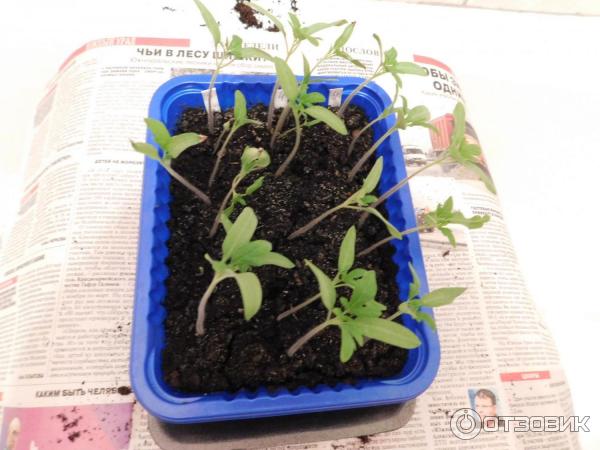
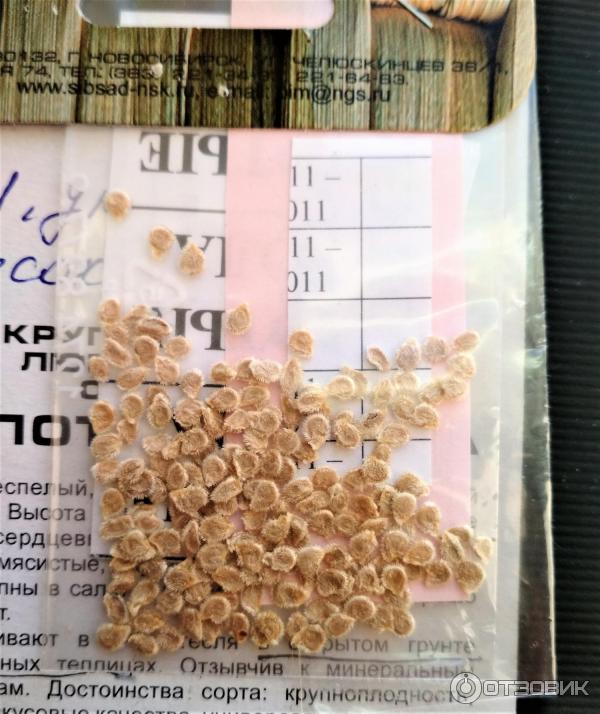
There were 20 seeds in the packet, they sprouted well (far left row in the photo) and there were still some seeds left the following year.
I grew tomatoes in open ground.
Regarding the short stature - well, almost... about 1 meter tall - normal.
In terms of ripening time, it is mid-season, as promised by the manufacturer.
The yield is excellent, there are a lot of fruits and they are mostly large, some for some reason cracked, but this is a problem with most of my tomatoes this year.
They are perfect for salads; the flesh is pink, juicy and very tasty.Next year I will definitely plant the remaining seeds and I recommend all tomato lovers to try growing this variety!
UserOfra, Russia, Tolyatti - away, December 12, 2019
Hi all!
Recently, I've been keeping a notebook where I write down the details of my gardening: what seeds I planted, and what harvest I got.
This year, I was captivated by the "Alsu" tomato seeds from the Siberian Garden company. However, this variety isn't suitable for pickling, as the fruits it produces are too large.For me, a novice gardener, tomatoes used to be divided into two types: pink and red. The former were preferred for their sweetness, while the latter had a slightly sour taste.
So, Alsu tomatoes are one of the first, pink-burgundy and sugary.
I planted the seedlings in March and transplanted them into individual pots in April. Tomatoes are very sun-loving plants, but it's important to keep them from burning on the sunny side of the window.
At the end of May and beginning of June, I began planting my seedlings in the ground. The distance between the bushes should be wider, about 80 centimeters.
When the seedlings begin to grow and bush out, don’t forget to pinch off the new shoots.
Here is a photo of my ripening tomatoes:
I started picking the first fruits already at the beginning of July.
Alsu's tomatoes grew very large and fleshy. My sister bought five for a week—that was enough for her—and in the evenings, she'd cut one into a large salad bowl.
I can’t eat a lot of tomatoes (they raise my blood pressure), so I fed them to my whole family, such was the rich harvest.
But it's impossible to roll them into jars; they won't fit. For that, I used a different variety—"Sanka"
Real reviews from gardeners about the Velmozha tomato variety
User: lars001, Russia, Tula, 07/27/2018
I started growing the tomato "Velmozha" from seeds last year, but it didn't work out last year.
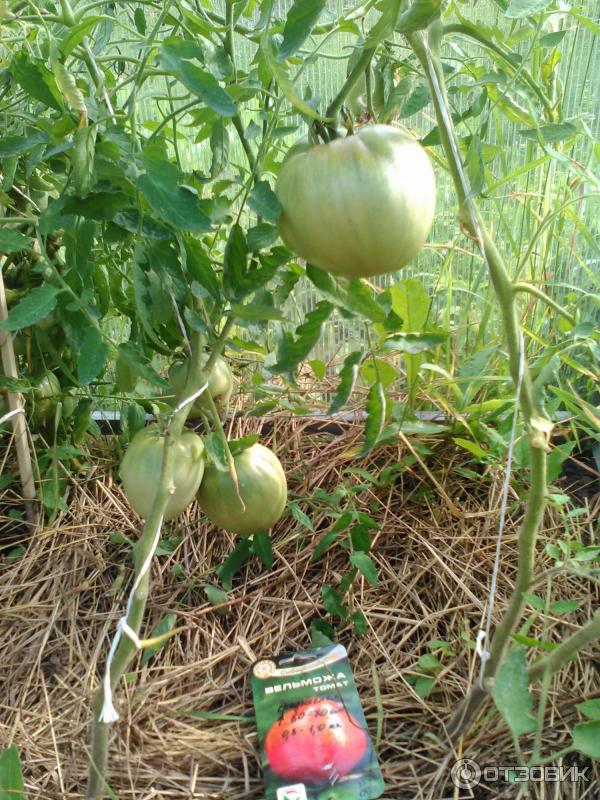
And in this regard, both with the seedlings and with its behavior in the greenhouse, everything is fine.
The seedlings were sown after March 10 and moved to the greenhouse on May 2.
The fruits began to appear a week ago, that is, in the second half of July.
The tomatoes have a normal taste, I wouldn’t say they’re bad, but they don’t stand out compared to my other tomatoes.
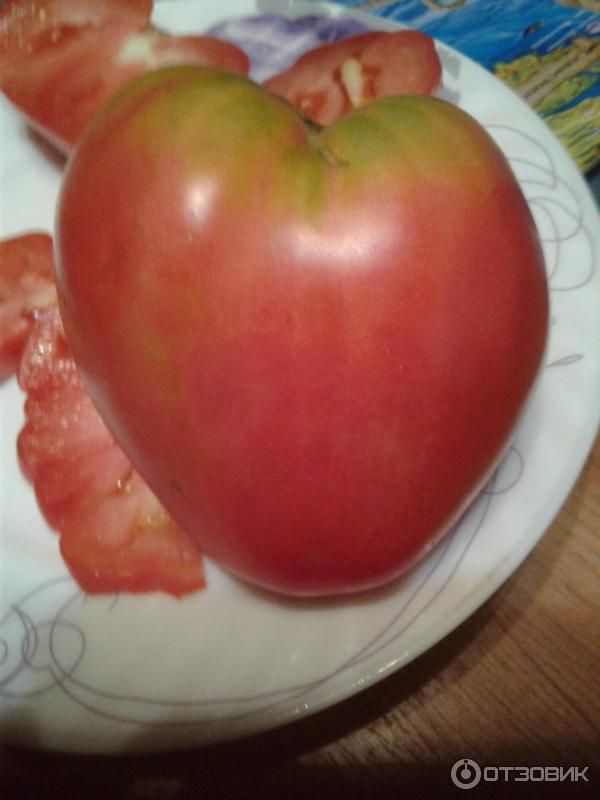
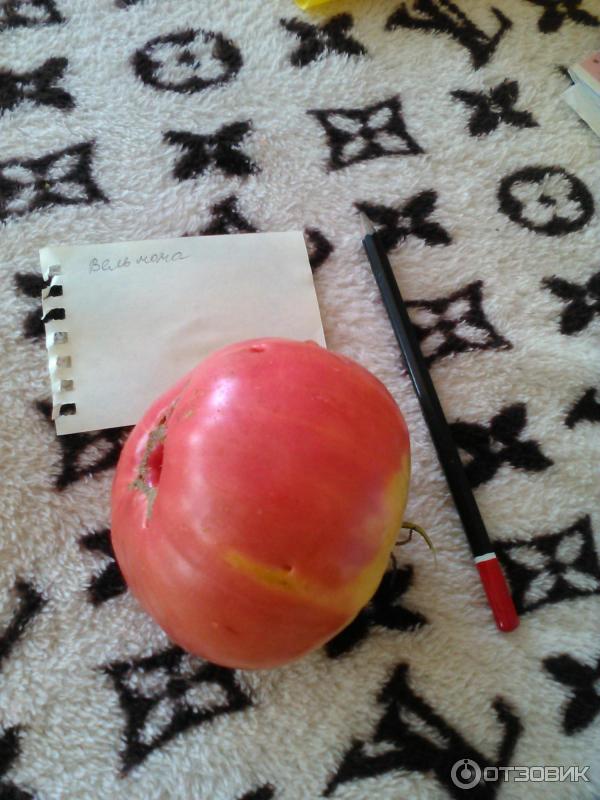
The tomatoes are heart-shaped, but if you use your imagination, you can see the shape of strawberries.
In salads, of course, it's the best.
As you can see in the photo, there are not many seeds, if not almost none.
The bush itself is not tall, the yield is average.
But for his beauty, of course, one can love this “Nobleman”.
User: Olga SN, Russia, Bryansk, March 15, 2018
This variety is also known under the name "budenovka".
I sowed the seeds for seedlings in March and planted them in a greenhouse at the end of April.
The bush turned out to be short and determinate. The branches weren't strong, even frail. And then I made a mistake. I started training it into two trunks, but I should have left at least four. Then the harvest would have been significantly higher. Last summer was still very unfavorable for vulnerable varieties, so my tomato production was limited.
The nobleman was one of the first to ripen, which made me very happy. The inside of the fruit is fleshy, sugary, and delicious, and it's heart-shaped. Large.
When I picked the ripe fruits, the tomato plant began to bloom actively again and managed to produce another harvest.
Regarding diseases, the leaves were affected by spots, but this did not appear on the fruits.
User: Olu78, Russia, Mezhdurechensk, January 12, 2020
I've been growing tomatoes since 2015, in a greenhouse, using seedlings. I live in Kuzbass. Our summers are cold, and not all tomatoes are suitable.
Germination rate is 90%. I select the strongest and most robust seedlings. The seedlings are sturdy with large leaves and don't stretch.
I plant them in a greenhouse and secure them to a support. Later, I tie up the clusters.
This variety is one of the first to ripen.
I grow it in two trunks.
On August 1st, I pick off the tops and all the flowers. The tomatoes that have already set are growing and gaining weight. I harvest them at the end of August and let them ripen at home.
The first fruits are 500g, the last small ones are 200g.
A salad tomato, fleshy, with a tomato flavor without the sourness. The skin is thin.
The fruits do not crack.
Real reviews from gardeners about the Sensei tomato variety
User: IrinaA, Sverdlovsk region, January 8, 2015
Sensei.
It grew in a greenhouse, I raised it in two stems. It was about 1.5 m tall.
A good variety, it set fruit without missing any fruit, which wasn't the case with all my varieties this summer. Mid-season. Tasty, dense.
from a terry flower
User: Plena, MO near Solnechnogorsk, December 21, 2015
Grew under cover, grew up to 1.3 m, the bush is branched, productive, up to 200 g.
The taste is normal.
Real reviews from gardeners about the Eagle's Beak tomato variety
User: Unknown, Russia, Saint Petersburg, March 28, 2021
Hello, reading brethren!
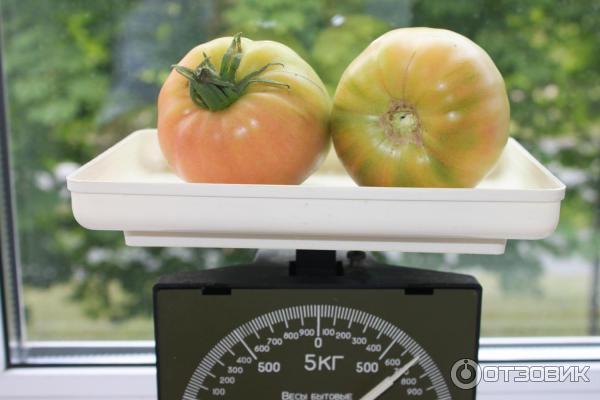
This variety isn't new. A good friend recommended it to me in 2014, and I've been planting it since 2015. In recent years, I've been using my own seeds. It still has a high rating on tomato growers' forums. And my neighbors in my garden also enjoy it (no boasting).
I'll say, thanks to my suggestion, it's well-deserved popularity. It's certainly worthy of a positive review. The seeds are distinguished by their high and consistent germination rate. For example, of the five seeds I planted this spring, all sprouted.
The seedlings are not spreading, but are powerful and strong, and are clearly distinguished by their desire to surpass their neighbors of other varieties in growth speed.
Although according to the description, an adult bush is no more than 1.2 m, in a greenhouse it sometimes stretches out.
The variety captivates, first of all, with its large fruits.
In terms of ripening time, it is mid-to-mid-early.
Freshly picked tomatoes don't splatter and are full of flavor. They're a delight in salads.
They can't really be called sour. More like sweet and sour.
Although the taste qualities are, as they say, “up to par”, there are varieties (for example, black ones) that I can rate higher in this regard.
Fully ripened, aged fruits cannot be considered 100% fleshy. They are good for juicing.
The skin seems a little thick, but it does not spoil the overall impression.
Overall, the hero of the review, in my opinion, deserves high marks.
May you have rich harvests!
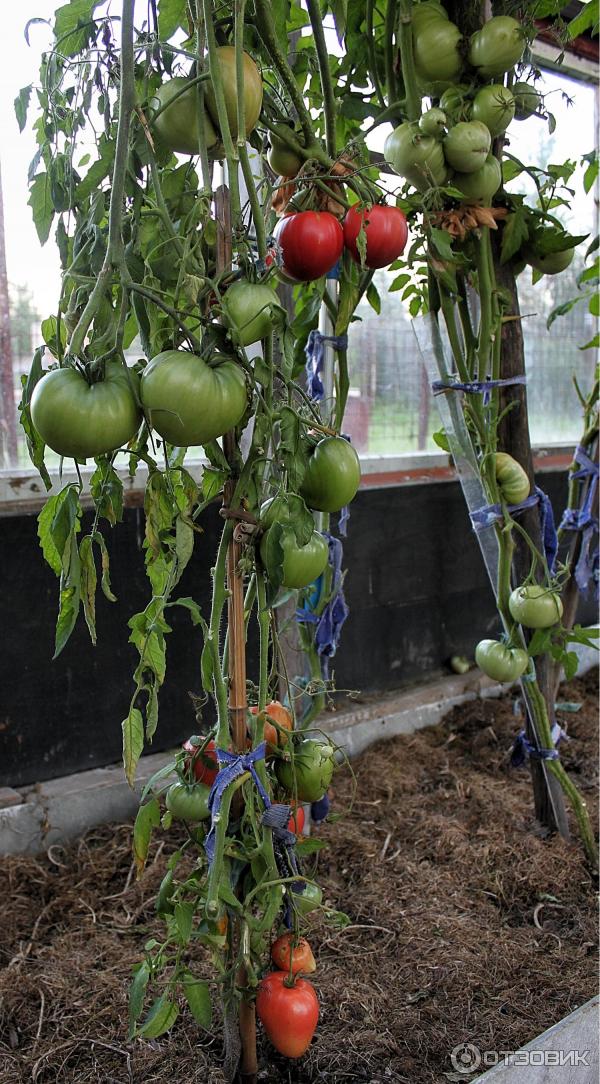
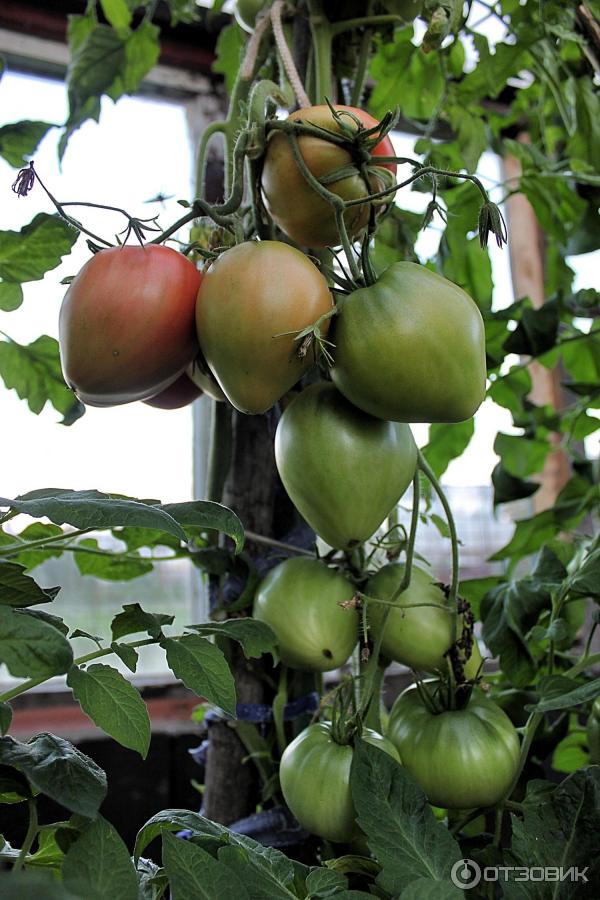
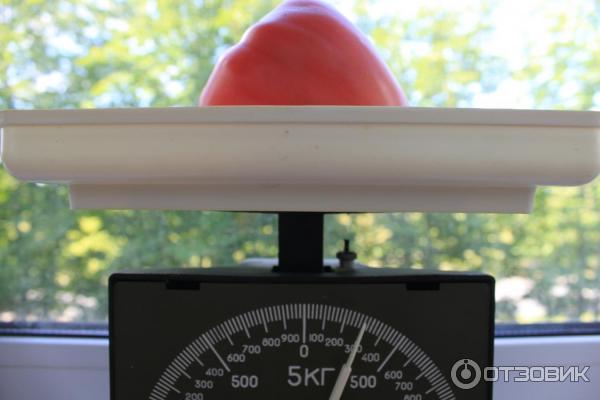
Userь: Olu78, Russia, Mezhdurechensk, 01/29/2020
I live in Siberia. Summer is short, but I really want to enjoy my harvest.
I've been buying seeds from Siberian Garden for a long time. They're mostly tomato and pepper seeds.
The most beloved is Velmozha, but it ripens early. It's no longer tasty as autumn approaches.
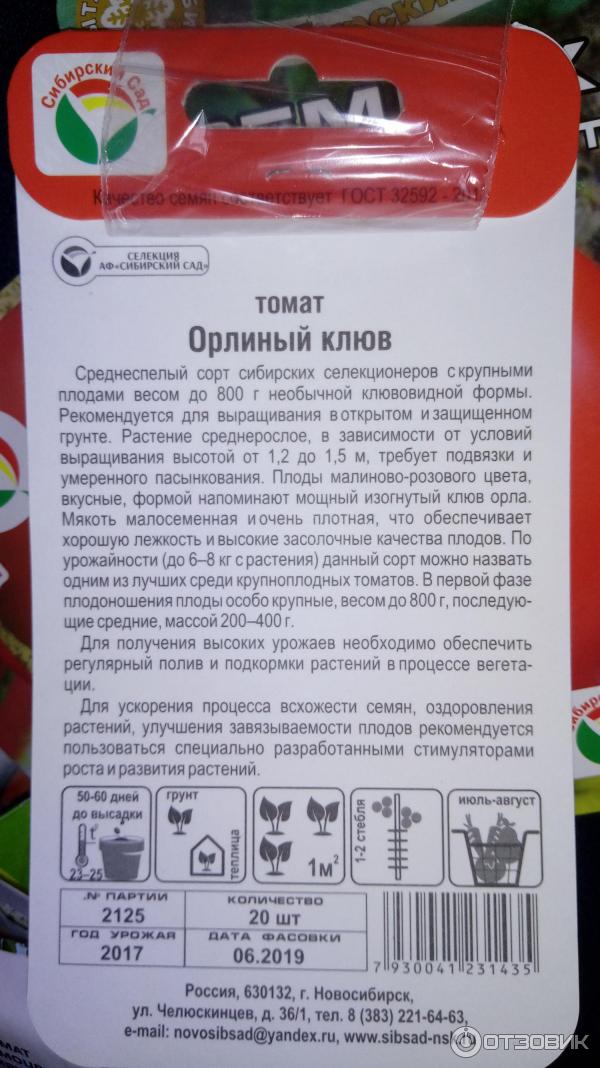
This year, I discovered the mid-season variety, Orliny Beak. Its shape is similar to the familiar late-season variety, Bychye Serdtse (Bull's Heart). However, Orliny Beak ripens faster and is more disease-resistant. It is recommended to train it into two trunks.
To ensure larger fruits, I remove all small ovaries and flowers on August 1st. I also remove the tops and regularly remove any side shoots.
This variety is good for salads, juices and sauces.
UserBlue Flax, Russia, Mezhdurechensk, July 25, 2019
I've read a lot of good things about the Eagle's Beak variety. This year, I bought some seeds and decided to give it a try.
I liked this variety: it's easy to grow, the bush is compact, sparsely foliated, and productive. The pulp is almost seedless. It was one of the first to ripen. It's grown in a greenhouse.
Real reviews from gardeners about the Siberian Heavyweight tomato variety
User: Sanych234, Russia, St. Petersburg, 02.13.2020
The seeds were purchased in November 2018 and planted in March 2019. The package contains 10 seeds, with a 100% germination rate. The plant length indicated on the package as 40-60 cm is actually 100-120 cm. Ripening occurs in mid-July.
There are few seeds, and the flesh is watermelon-like, very sweet—meaty and sugary, as they say. In the greenhouse, it bears fruit until the end of August. And that's only because the Leningrad region isn't particularly well-suited to growing anything except potatoes.
The fruits weigh approximately 500-600 grams. In a warmer, more favorable summer, I think we could expect a more interesting crop. Overall, expectations for this variety are very favorable. We've already purchased two packages for the 2020 season, and we'll continue growing this variety.
User: Olu78, Russia, Mezhdurechensk, January 14, 2020
I've been growing this variety for five years now. It's the earliest variety for the Siberian summer.
A salad variety with a thin skin, fleshy, and slightly tart flavor. The flavor isn't perfect, but it's perfect for first tomatoes.
The seedlings are 70% germination, so I select the strongest plants. I leave five plants per plant. This is enough, as they don't need to be stored. The seedlings are strong and easy to care for.
The plant height in the greenhouse is 1.2 meters, the first fruits weigh up to 500 grams, the rest 350 grams. There are few leaves on the bush. I train it into 2-3 stems.
I fertilize with tea made from fermented grass and a solution of potassium permanganate.
On August 1st, I remove all small fruits (those less than 3 cm in diameter) and flowers. The remaining ones have time to gain weight and fill out to 300 grams.
Real reviews from gardeners about the Abakansky Pink tomato variety
Lemika, Russia, April 6, 2019
I have bought tomato seeds "Abakansky Pink" from the "Sibirsky Sad" brand several times, and they have never let me down.
Germination was always good. The seedlings tolerated transplanting well.
The bushes grow quite tall, over a meter high. They need to be tied to high stakes.
Tomatoes of this variety grow large. I haven't been able to pick ripe tomatoes from the vines every year; they're usually green. But I don't have a greenhouse and the soil is poor. However, even in these conditions, with favorable weather, the tomatoes ripened on the vines; this is an early-ripening variety.
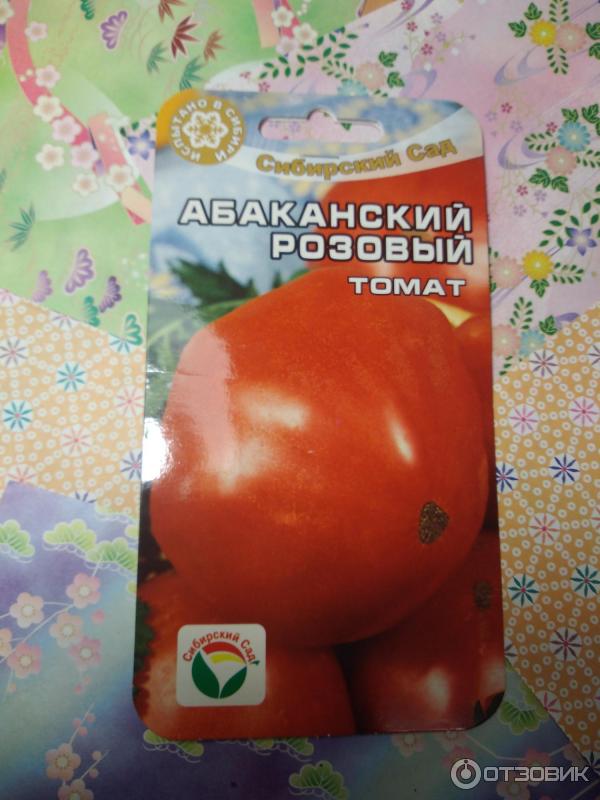
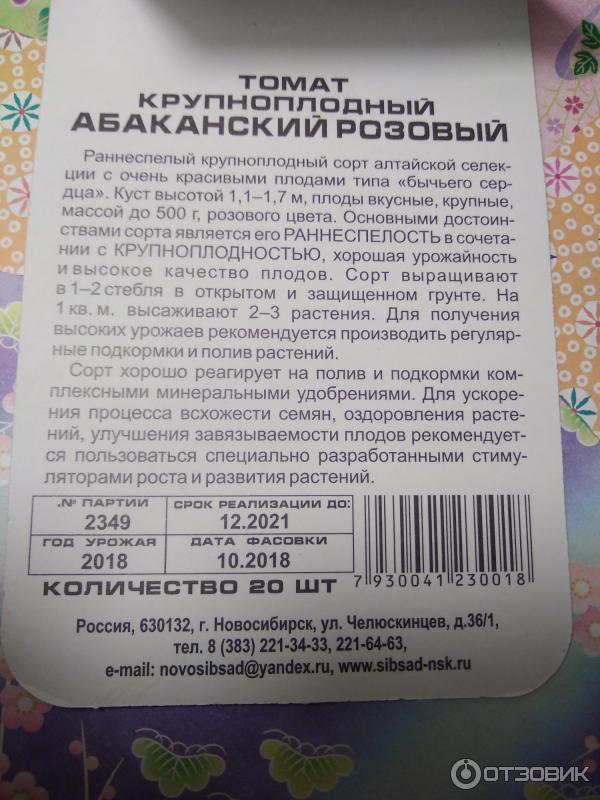
I liked the taste of the tomatoes—they were plump and sweet. Ripe tomatoes look exactly like the ones pictured on the packaging.
With the onset of autumn, tomato plants are attacked by late blight. This is why, at the end of August, unripe tomatoes sometimes have to be picked. However, they ripen beautifully in boxes and store well.
The packaging is colorful.
The variety's properties are described in detail. I didn't weigh the tomatoes I grew, but they were quite large.
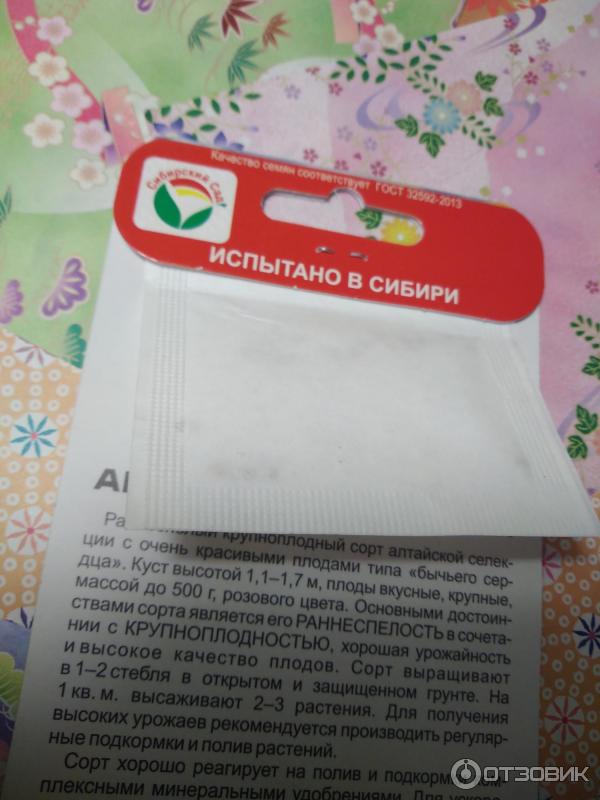
The seeds are packed in a paper bag.
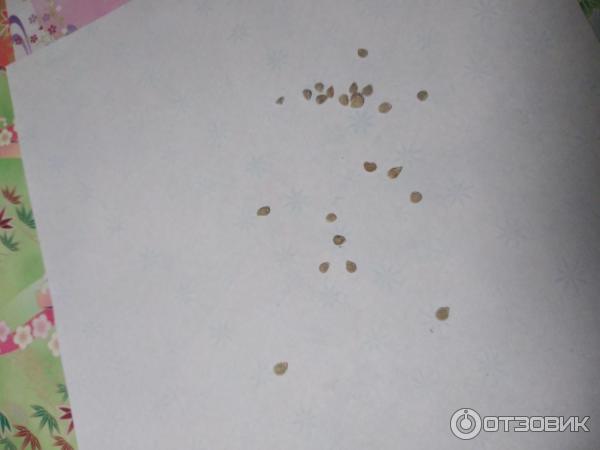
The package contained 22 seeds, not 20. This surprised me, as Siberian Garden usually packages exactly the number of seeds indicated on the package.
This year, I was very disappointed with the "Siberian Garden" tomato seeds. Previously, the germination rate of these tomatoes was 100%, but this year, many varieties showed only 50% germination.
Fortunately, this doesn't apply to the "Abakansky Rozov" variety. Almost all of its seeds germinated, 9 out of 10.
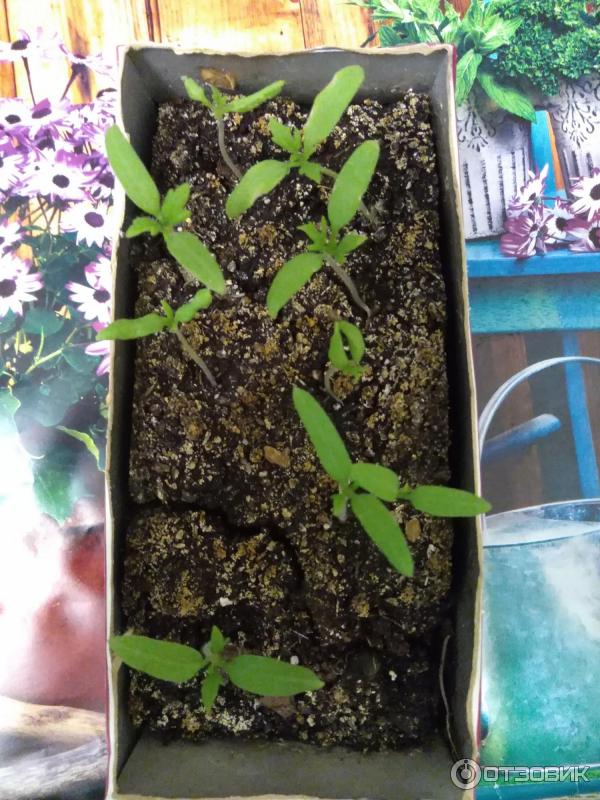
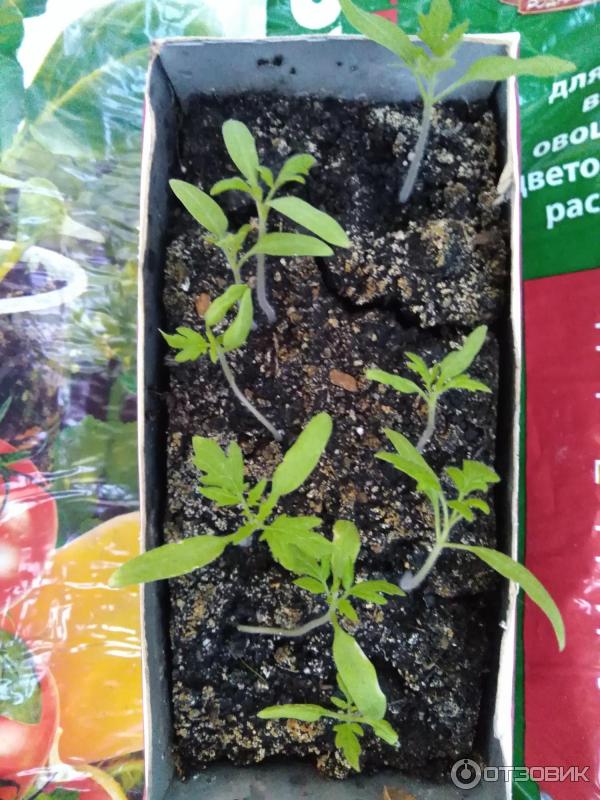
The seedlings emerged quickly and uniformly. Sowing was done on March 17th using dry seeds.
This is what the sprouts look like on April 6th.
This photo was taken 4 days later, on April 10th. The plants are developing quickly.
I hope that the weather will be favorable for growing tomatoes this year.
I can recommend the "Abakansky Pink" variety from "Sibirsky Sad".
Lyobov, Russia, Novosibirsk, November 3, 2019
Good day to the readers of this review!
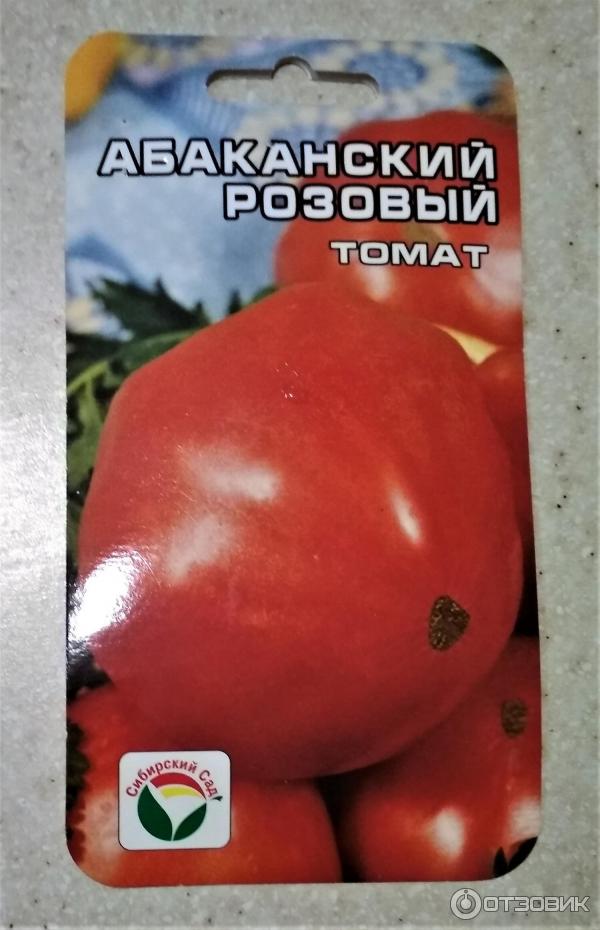
I've seen several rave reviews online about the Abakansky Pink tomato variety. Since I appreciate large, productive tomatoes, I wanted to grow some myself. I didn't have to look far for seeds, and here they are, a new addition to my collection, packaged like this, from the Siberian Garden brand.
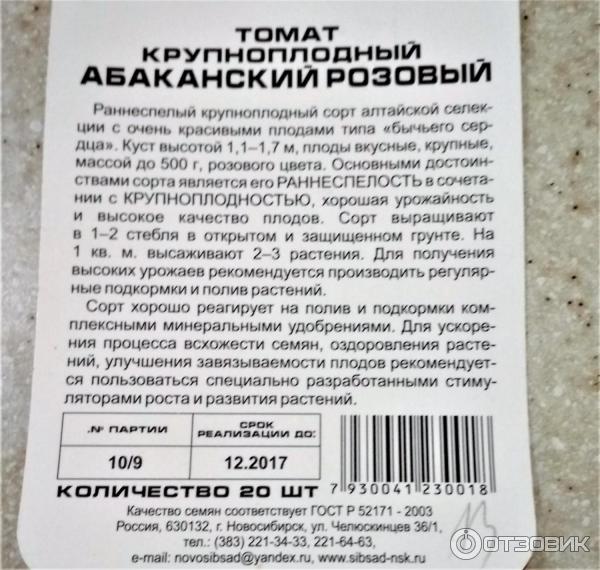
I read the information on the back beforehand to make sure it met my needs. I was quite satisfied with all the characteristics, especially its early maturity and fruit quality. I'm familiar with the growing conditions, and I didn't notice anything new or unusual.
Shortly after purchasing it, I was unable to find a place for it in the garden, and only this year, looking at the expiration date, I decided to definitely try it out.
I sowed seedlings in March, after treating the seeds with potassium permanganate and the germination stimulant EPIN Plant Growth Regulator. The plants developed loops on the fifth day, and the storage period didn't affect germination. Based on my many years of experience, I believe manufacturers intentionally understate the expiration date to boost sales. Even those that have been stored for ten years have germinated well.
I planted seedlings in the greenhouse, hoping for a large harvest and a long-lasting crop. What grew was unclear. Was it definitely a wrong variety or poor-quality seeds? The plant was short, no more than sixty centimeters tall. The fruits were very small, but they were pink. That's how meager the harvest was. That's all that grew until fall; they only turned pink later. I couldn't find any more photos; the variety wasn't stellar, and I didn't take any, even when ripe. A huge disappointment. It's always a waste of space, especially in a greenhouse, where every meter counts, even for quality tomatoes.
nechaevatu, Russia, Perm Krai, March 8, 2020
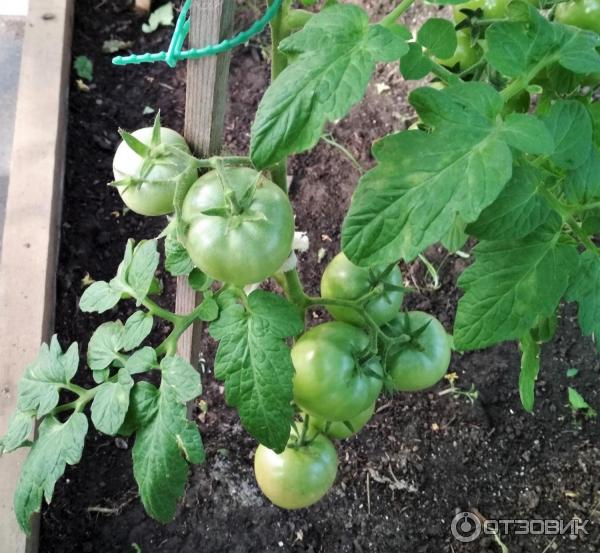
The most delicious tomato! One of my favorites!
I recently discovered the Abakan Pink from Sibsad and have only been growing it for two seasons.
The bush and fruit are very similar to the Cardinal variety I described or the classic Bull's Heart. The taste is excellent; the tomato is fleshy and sweet, just begging to be added to a salad!
The summer of 2018 was hot, and many varieties dropped their second and some even their third clusters. The Abakan Pink set all of them! And even in September, we continued to enjoy its sweet fruits straight from the bush. The yield was excellent; we definitely got a bucketful from each bush!
Now this wonderful tomato will delight me and my family every year.
Real reviews from gardeners about the Buffalo Heart tomato variety
UserFirefly Plus, October 18, 2013
An excellent variety. Seeds from SibSad. Very fleshy and very sweet tomatoes. Grew in a greenhouse, trained into two trunks. The bush is 1.8 m (6'8") tall and taller, sparsely foliated and somewhat frail, like many "hearts." It produces well, especially in late July, when it begins to produce with incredible vigor. But since there are only 2-5 fruits per cluster and the internodes are rather long, the yield is average. But the taste is mmm :niam: . I'm forgiving and definitely keeping it.
User: Iriska Basya, October 18, 2013
I also planted Buffalo Heart for the first time this year. I was very, very pleased with the yield. The taste is excellent, like all pink-fruited ones. We've been planting Pudovik and Sensei for a long time. But this one is simply something. :hey:The average tomatoes are 250-300 grams each, but there are a lot of them... Next year, I'll plant mostly this one among the pink hearts. And it was the first of my large-fruited ones to ripen.
User: gggalina, Vegetableist, February 20, 2015
My Buffalo Heart from Sibsad. Determinate, closer to early than mid-season. Earlier than Velmozha, Danko, and EM-Champion. Perfectly heart-shaped, with tasty, fleshy fruits!
It grew in the open air and was about 70 cm tall. But like many other plants, it will likely reach 1.5 meters when planted in a greenhouse.
User: Lana_s_Kavkaza, November 14, 2015
It will be a deuce in the open ground, and an indeterminate in the closed ground. Mine grew and grew until the end of the season. And there were plenty of fruits—juicy, fleshy, and delicious. I planted them from my own seeds, originally from Sibsad.
Real reviews from gardeners about the Pudovik (Sevryuga) tomato variety
nechaevatu, Russia, Perm Krai, January 30, 2016
Siberian Garden has many tomato varieties similar in appearance and taste. For example, varieties like Pink Honey, Cardinal, Mazarini, and Alsu have heart-shaped pink fruits, very large (up to 800 grams), fleshy, and sweet.
These tomatoes have another twin brother - the Pudovik variety, another name for it is Sevryuga.
All of the varieties listed are excellent! The yields are very high. They differ mainly in bush height and growing conditions.
Pudovik is a mid-sized, semi-young plant in terms of growth. In a greenhouse, it reaches 170 centimeters in height, while in open ground it's slightly lower. The bush is loose and spreading, requiring pinching and staking.
In favorable summers, the yield in open beds is significantly higher. In rainy and cold weather, it's advisable to construct a light shelter from covering material, otherwise you risk losing your harvest.Another piece of advice: do not overfeed or overwater the Sevruga, as its fruits are prone to cracking.
Otherwise, the variety is wonderful. The first harvest is a bucket of large, delicious tomatoes from three or four bushes! And there are also second and third harvests!
Regarding the quality of the seed, I must admit that the first batch of seeds I bought turned out to be faulty. Therefore, this variety has only recently become a regular part of my garden.
Despite the initial failure, I still recommend it to all tomato lovers. It's just as good in the garden as it is on the table!
If you are interested in unpretentious, high-yielding hybrids, I can recommend the Bohemia tomato from Gavrish.
Lapochka22, Russia, Yoshkar-Ola, January 29, 2021
For all lovers of Bull's Heart tomatoes, I recommend trying tomatoes from the Siberian garden "Pudovik".
The manufacturer promises that with proper care, you can grow fruits weighing up to 1.5 kilograms, but our maximum weight of a single tomato was 920 grams, and we couldn't handle more.
The instructions clearly indicate all the steps, when and how to sow.
The height of the bush is approximately 1.5 meters.
Each branch grows a cluster of tomatoes, but the branches can't support the weight of the fruit and can break off. So, the tomatoes have to be harvested as they grow, rather than waiting for them to reach 1.5 kilograms. We also tied up the branches, which are too thin for such fruit.
Standard care: watering, weeding, fertilizing, pinching out side shoots.
The yield is long-lasting and abundant. We harvested a very good crop from each bush. We didn't count them, of course, but we tried to track the yield itself.
Five points out of five.The fruits are large.
The skin is easy to peel.
The flesh is soft, but not crumbly, as is the case with many large tomatoes.
Moderately sweet, just the way I like it.
They're perfect for appetizer salads; just peel them, chop them up, and serve with sour cream. Mmm... delicious!)))
I also used these tomatoes for preserves without any problems—the smaller ones for pickling, and the larger ones for ketchup and borscht, which is very convenient because I peel the tomatoes for borscht and don't like having chopped-up skins floating around in the soup.
I recommend the Pudovic tomatoes; they are one of those that we will plant every year.
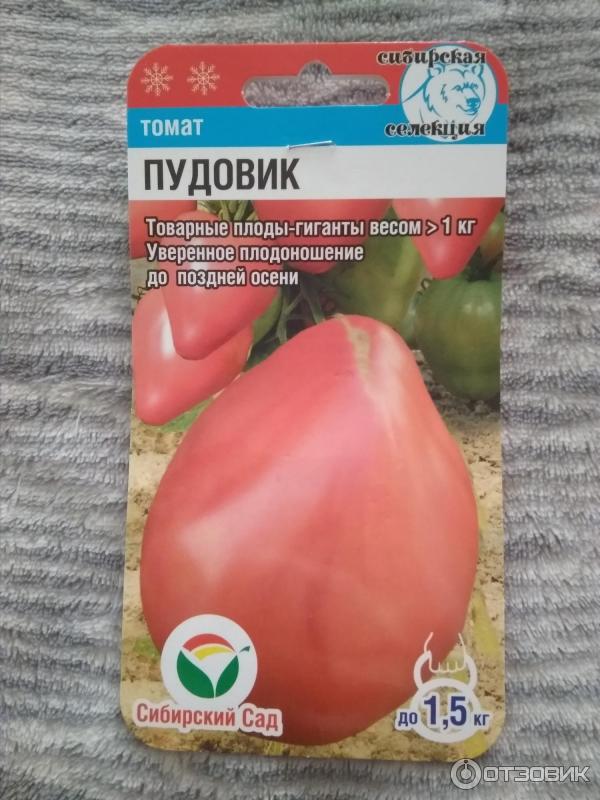
Degaev, Russia, Tula, August 3, 2018
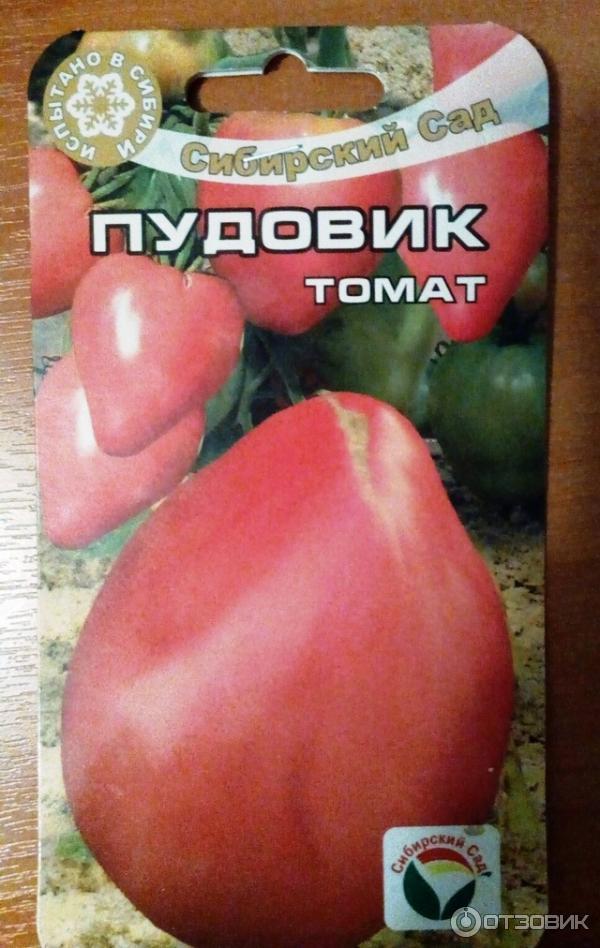
Two years ago, we grew some amazing tomatoes, huge and sweet. The variety was called "Sugar Pudovichok."
This year I couldn’t find this particular variety and bought just “Pudovik” from the same company “Siberian Garden”.
Its second name is "Sevryuga"
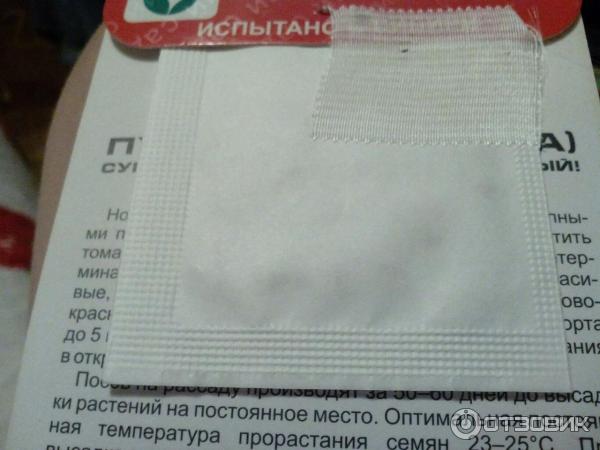
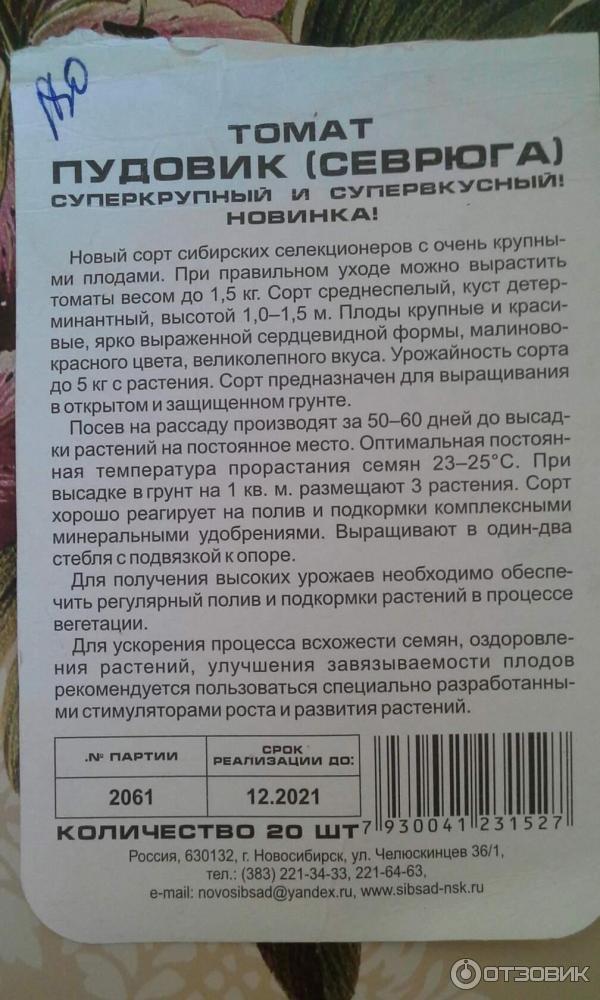
There are 20 seeds in total. They're in a small packet at the back of the package. I'm not a big fan of this arrangement. I didn't sow all the seeds, so I had to tape the rest to the same packet to avoid mixing them up with other seeds.
I think it's much more convenient when this little packet of seeds is inside another packet. Oh well, the main thing is that the tomatoes are tasty...
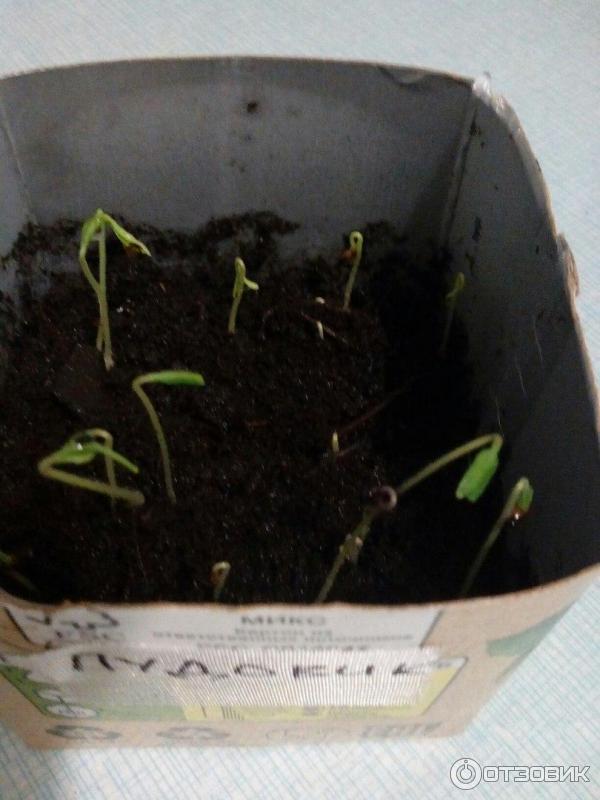
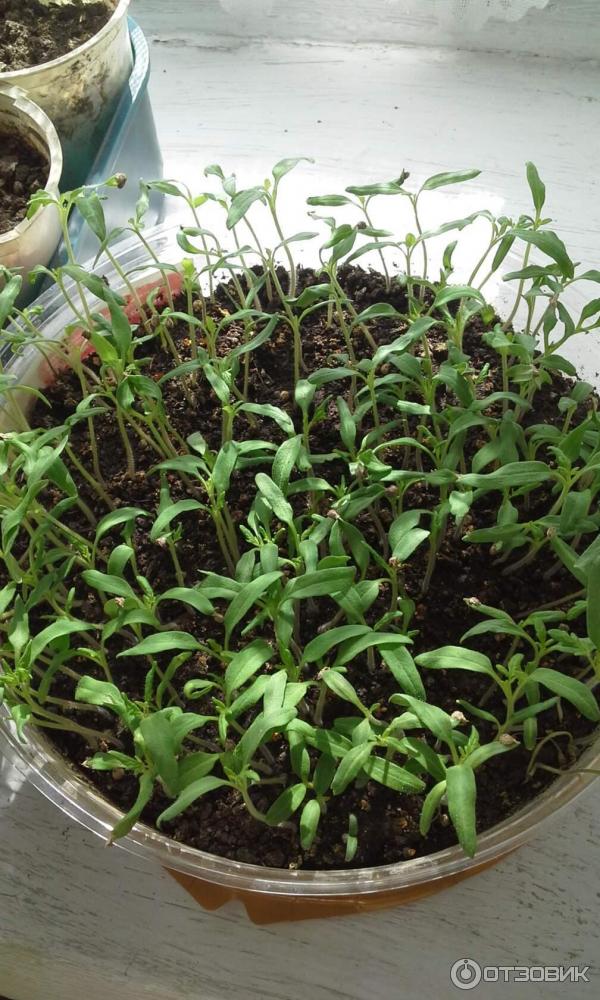
I sowed the seeds, covered them with plastic wrap, and put them in the refrigerator. Four days later, I looked, and the sprouts were already like this.
After two weeks, Pudovik grew up like this
The seedlings weren't particularly tall or strong. Last year's "Sugar" plant, still on the windowsill at home, stood out from the other seedlings with its enormous height. And then, at the dacha, we couldn't keep up with the props, each one higher than the other.
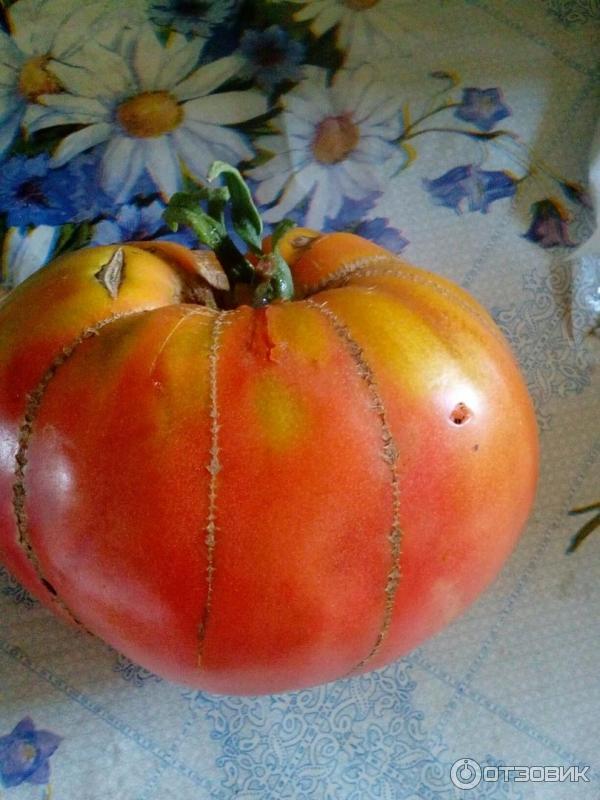
And this little pudovik grew at the dacha to about 80 cm.Here are the first fruits ripening at the end of July. They are shaped like a "bull's heart," also with a spout at the bottom.
Large fruits appear to be divided into striped segments.
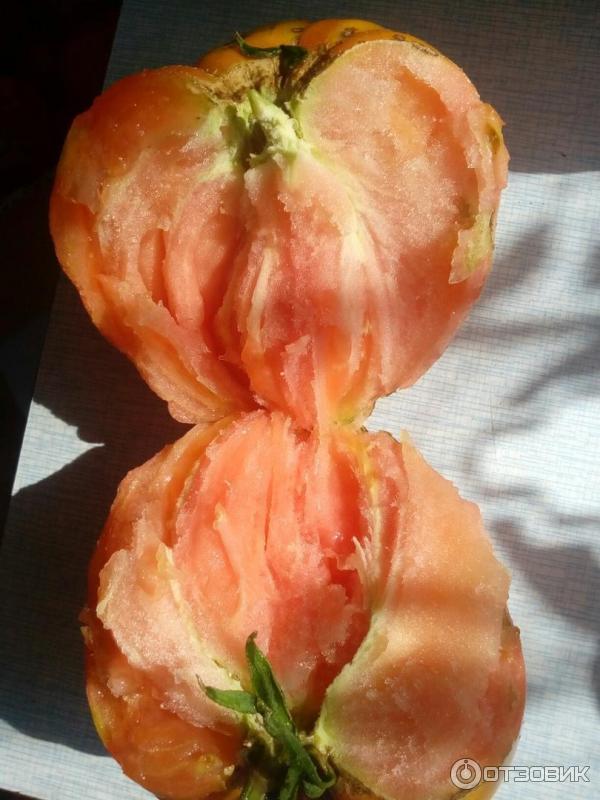
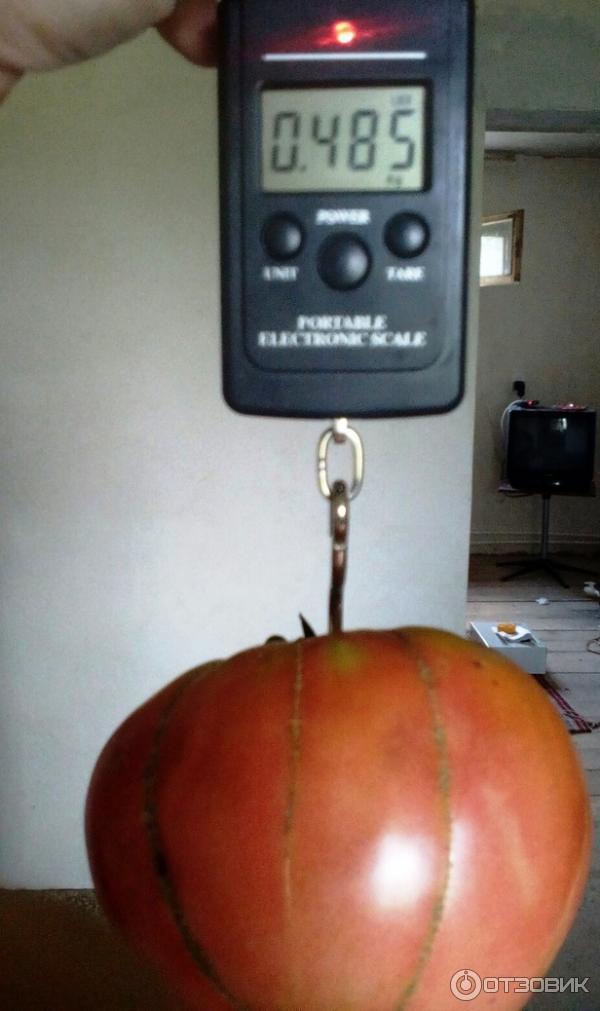
Here is one tomato, not the biggest one, I weighed, almost half a kilo.
The manufacturer says that with proper care, you can grow tomatoes weighing up to one and a half kilograms. Ugh, maybe I'm not caring for them right...
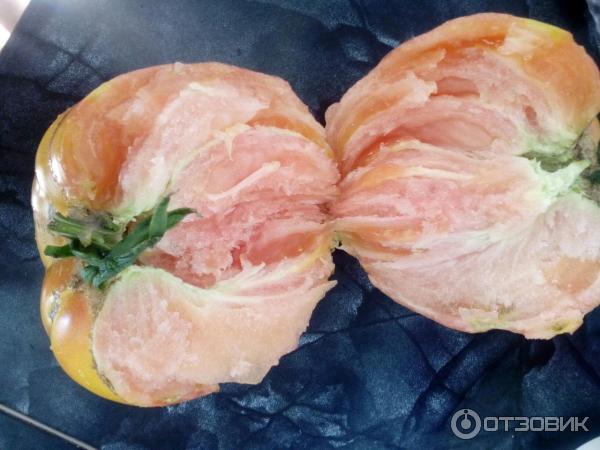
And here I broke it...
Meaty, sugary, practically seedless. I chopped it up for a salad, delicious! One tomato was enough for a salad for three.
I really like this variety of tomatoes. Of course, you can't pickle such huge tomatoes. But I do pickle dessert (sliced) tomatoes. "Pudovik" is perfect for them; it turns out very tasty.
I'll definitely be planting "Pudovik" next year. I hope the summer holds up!

Gala1015, Kazakhstan, Zyryanovsk, 03.29.2020
Good afternoon, dear friends and readers!
Let me tell you about the wonderful taste of the Pudovik (Sevryuga) tomato.
Last year I already grew this new variety from Siberian breeders.
You know, I was so pleased that I sowed it for seedlings again this year.
I love large varieties of tomatoes; there are a lot of them.
Every year I try to learn about new large varieties and if I like a tomato, I grow it.
I mostly grow my own seeds, but sometimes if I see a good variety, I buy tomatoes from grandmothers at the market and plant the seeds.
I bought this variety of tomato in our store "Our Garden" last year and collected the seeds.
These tomatoes grew to about a meter tall. I planted two tomato roots per hole.
My friend advised me to do this because I had a lot of seedlings.I'm convinced that it's convenient to plant two at a time, you just need a strong peg and that's it.
I was delighted with this variety. The tomatoes are delicious, sweet, and meaty.They are heart-shaped with a beautiful raspberry color.
Three times during the summer I fertilized with diluted, infused mullein.
A friend of mine keeps a cow on her farm, and she supplies it and me with fertilizer.
Tomatoes respond well to fertilization.
At the beginning I watered it rarely, but as it grew, I watered it once a week and depending on the weather.
So I will try again to grow a good harvest.
Honestly, I'm lucky when it comes to growing tomatoes. They always turn out well, and there's enough for everything. I even often take the extras to the market.
I would recommend planting it to those who love gardening and vegetable gardening.
Thank you for your attention to my review!
Olu78, Russia, Mezhdurechensk, January 14, 2020
This variety has been a permanent fixture in my greenhouse for a long time.
25 rubles for 20 seeds. I keep 10 roots from the seedlings—the strongest ones.
I fertilize the seedlings with liquid fertilizer and once with calcium nitrate. They grow vigorously. I always harden them off two weeks before planting them in the high-rise building. I don't have a balcony, so I move them to an unheated greenhouse, place them in the aisles, and cover them with a double layer of acrylic. If there are severe night frosts, I place the seedlings on the ground under the acrylic.
I always plant the plants lying down in trenches (leaving only the top above the ground), water them generously, and cover them with acrylic sheets or newspaper bags for two weeks. Then, in cloudy weather, I remove the newspapers and acrylic sheets, and tie them up again after another week.
After a month, I begin removing the bottom leaves (once a week) one at a time. On August 1st, I pick off all the flowers. All the fruits that have formed fill out and ripen at home.
Real reviews from gardeners about the Golden Domes tomato variety
ZlataPolinskaya, Russia, Barnaul, October 13, 2018
Every year I plant about 10 tomato varieties in my garden, including 6-7 regular ones and 3-4 new ones. The "Golden Domes" variety from the Siberian Garden is on the list of regulars. Let me explain why.
1. Good (100%) seed germination
2. The variety is zoned for our Siberian conditions.
3. Excellent taste and appearance of the fruit
4. Early maturityThe "Golden Domes" variety is an amateur selection, not a hebride.
I plant tomato seeds in boxes after March 10th, and the seedlings appear quickly and evenly.
After picking, the plants “live” on the windowsills until the end of April – beginning of May, then I transplant them to a permanent location in the greenhouse and only some of them are transferred to open ground in June.
Tomatoes don't require much care—watering, weeding, and pinching out side shoots. The bush grows up to 1.5 meters tall indoors, and slightly lower outdoors. I like that the plant can self-cultivate, meaning it stops growing once it reaches a certain height and produces several clusters. The leaves are drooping and sparse, allowing the tomatoes to be easily seen.
I try to grow it in one stem, tying it to a trellis is a must.
Surprisingly, the first ripe fruits on the "Golden Domes" appear earlier than on early-ripening varieties, although it is characterized as mid-season and belongs to the large-fruited "giants".
As the name suggests, the fruit is dome-shaped, flattened and rounded. Several fruits are produced on a single cluster. Small fruits are almost never seen, regardless of ripening time, but the first cluster produces the largest ones. Large fruits weigh up to 400-450 grams.
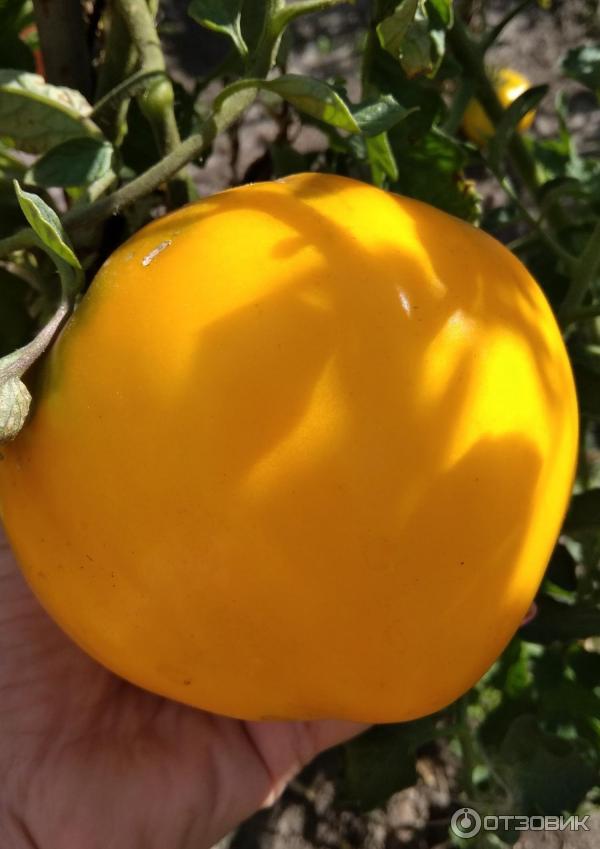
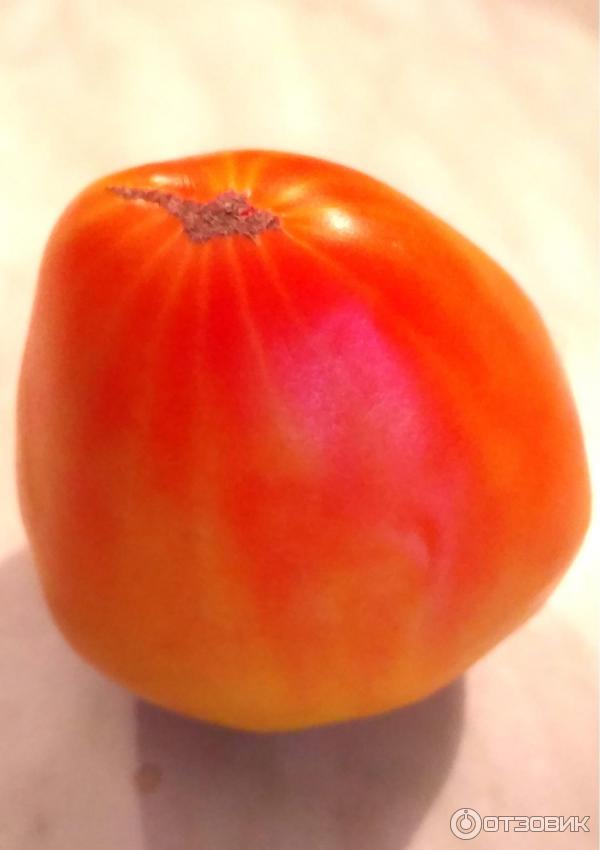
They are yellow in color, and when ripe, they take on a bright orange hue. The fruits are smooth, beautiful, and I would even say noble, true to their name. I've never seen any ugly or misshapen ones. The seed chambers are small, almost seedless.
But the most important advantage of this variety is, of course, its taste. The flesh is juicy, tender, and sweet, with a subtle tartness that's barely perceptible. These tomatoes are best eaten fresh, either in salads or simply enjoyed as they are! These tomatoes are not suitable for long-term storage.
Perhaps other companies also sell these tomato seeds, but I always find seeds from "Sibirsky Sad" in Novosibirsk. I'm happy with the seeds, and the yield is even greater, so I can confidently recommend them.
Lyobov, Russia, Novosibirsk, March 14, 2020
Good day to the readers of my review!
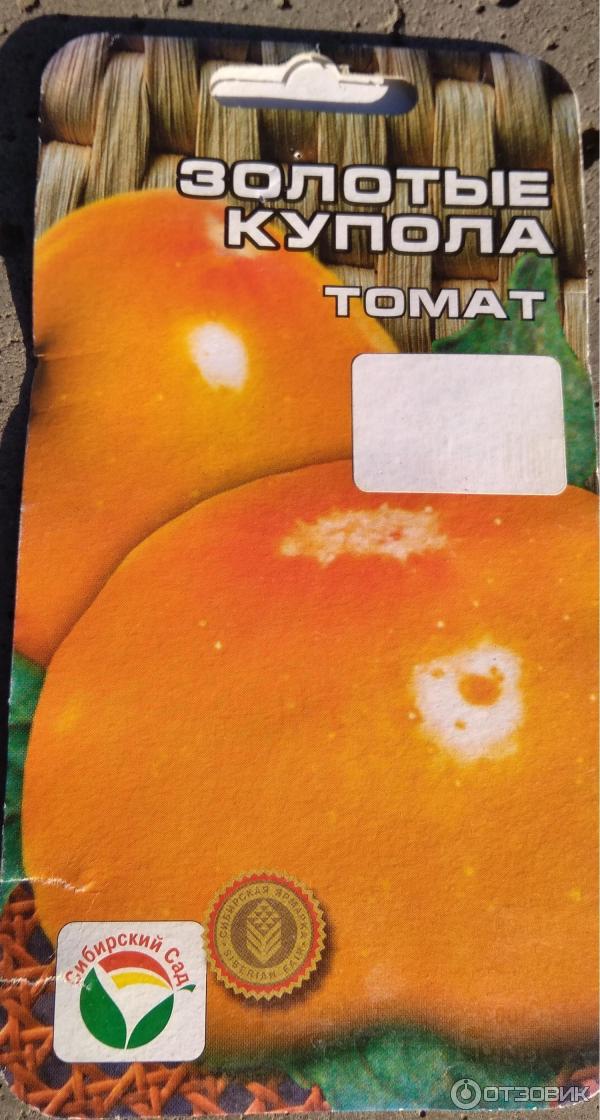
A few years ago, I read about a Siberian variety called "Golden Domes" in a gardening magazine. They were described so enticingly, with beautiful photographs, that of course I really wanted to grow some myself. My attempts to find seeds were only successful a year later. I saw these beautiful packets in the Siberian Garden store. I was overjoyed, and of course I snatched one up.
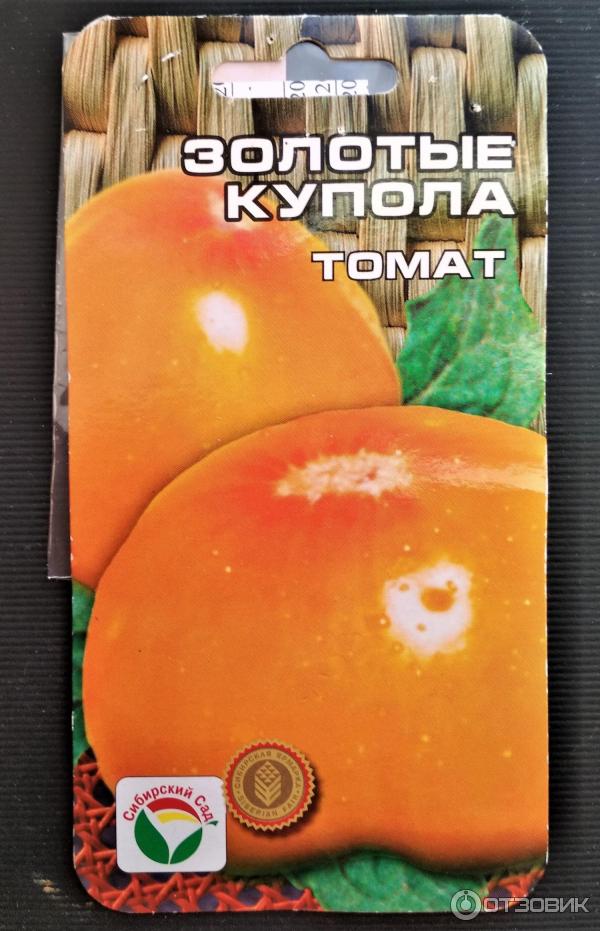
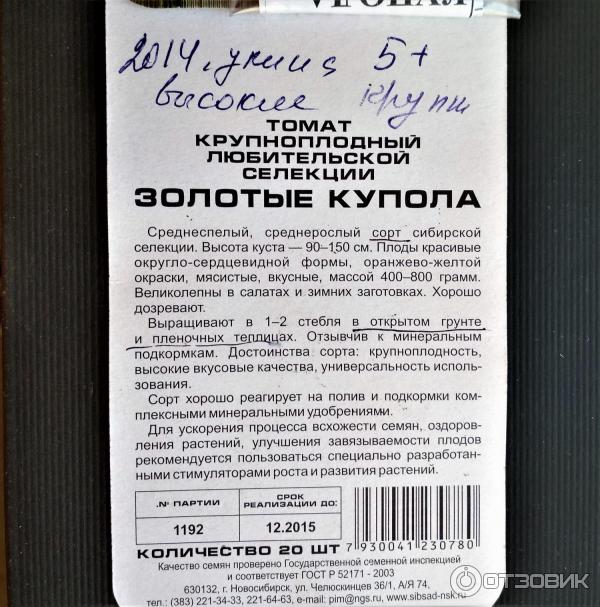
On the back is a description, growing recommendations, and other information. Judging by the inscription, I started growing it back in 2014.
After the first year of growing, I took the seeds and now I use my own.
I grew the seedlings as usual, sowing them in mid-March. Seed germination was good, aided by pre-treatment with a growth stimulant.
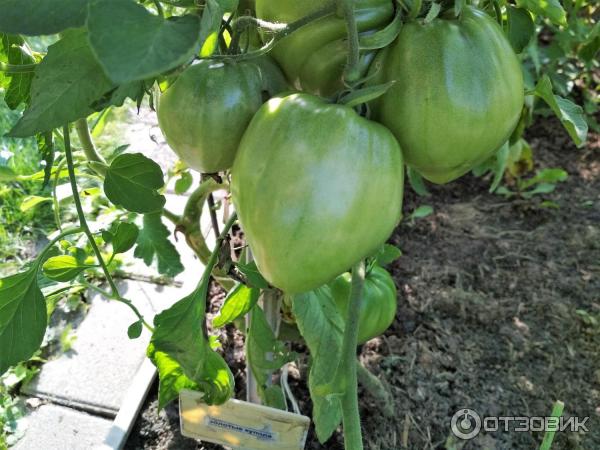
I prepared a spot for them outside. In the open ground, the plants reached a height of 150 centimeters. The bush had good foliage, removing lower leaves and excess side shoots. I tied it to a support, as the large, numerous fruits could topple it.
Four or five tomatoes were tied to a bunch.
The photo shows mid-July, there are no ripe ones yet, it really is mid-season.
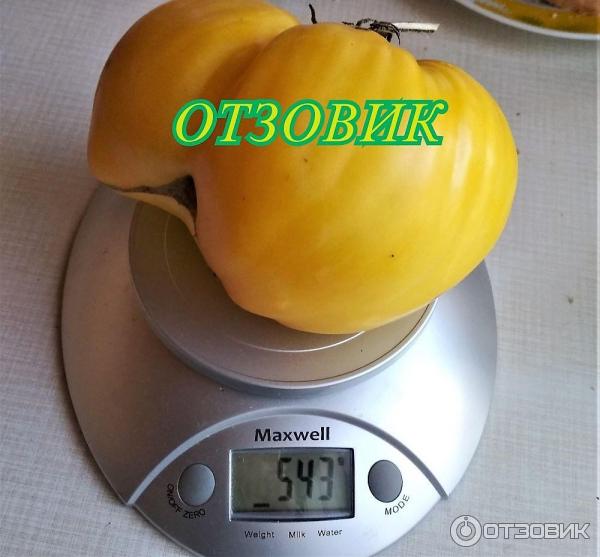
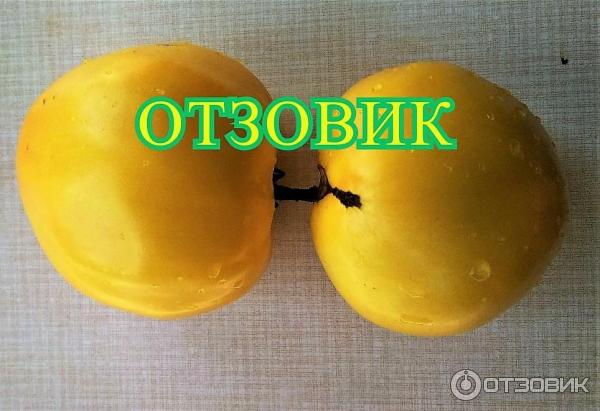
Last year I was surprised by unusual-looking tomatoes. In the photo below, two fruits of different sizes have grown together at the sides.
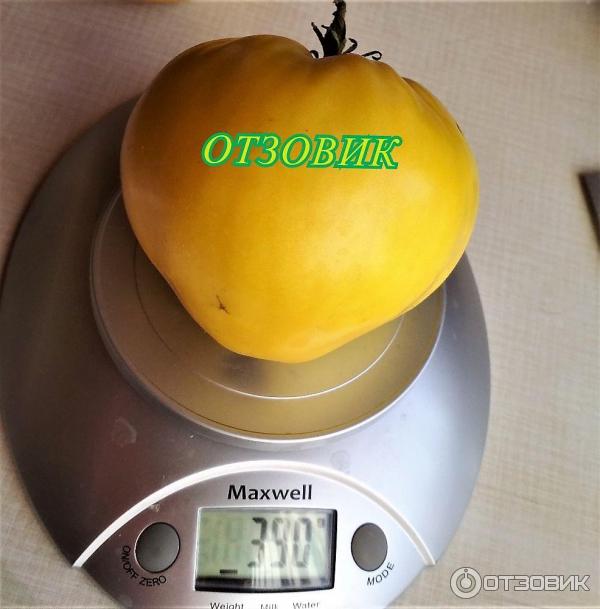
The weight is excellent, 543 grams; I love large ones. I cut one up and fed the family.
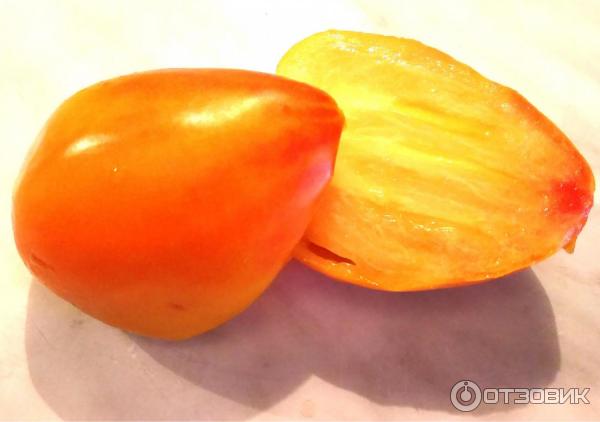
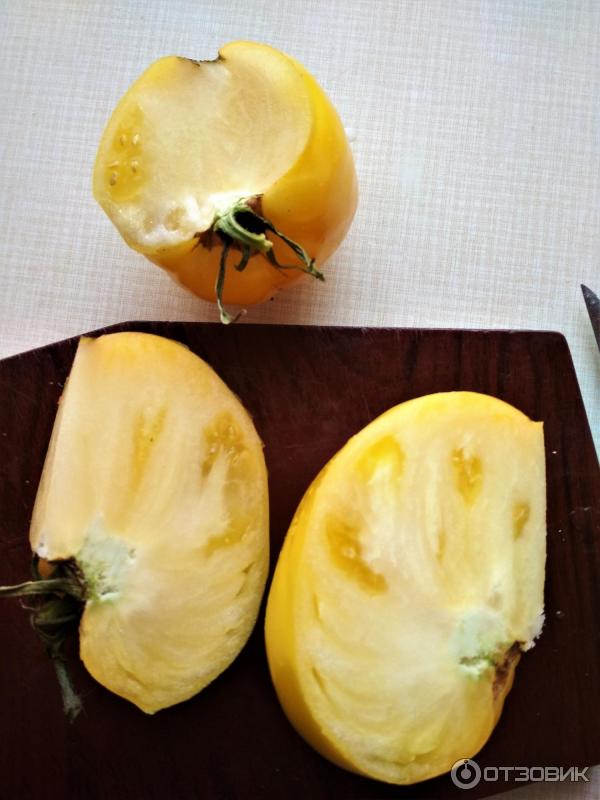
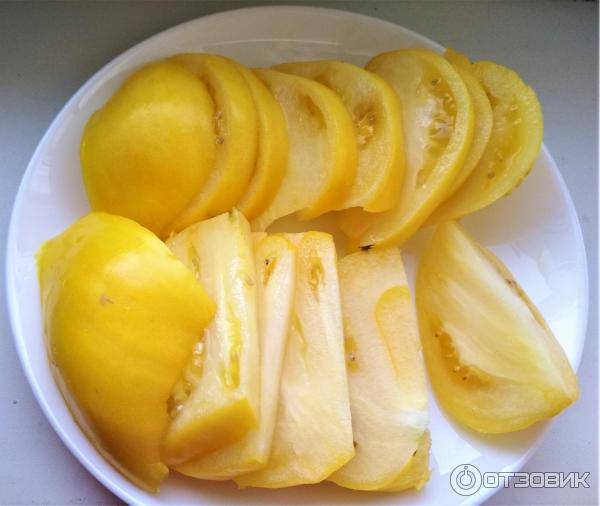
I cut it into pieces. The flesh is meaty, the taste is sweet with a slight sourness, and there are few seeds.
Most of them were large and heart-shaped. There were a lot of tomatoes, and the later ones were smaller in size than the first ones, but still quite heavy.
This is what happened: two tomato plants have grown together at the stems. Perhaps the hail damage caused this, as in previous seasons, all the tomatoes were straight.
They slice well, and despite the juicy flesh, the liquid doesn't leak out when sliced. They look great on the table as an appetizer.
The first ones were a hit fresh, and by September I started processing them for preserves, including canning them in jelly. Even ripe ones, they keep well for 1.5 weeks. After that, they become soft and require use.
I picked the remaining ones in September, some of them still green. When they ripened at room temperature, the flavor remained unchanged, and there were no spoiled ones.
A big advantage of this variety is that it does not crack regardless of the amount of excess watering.
An excellent, resilient variety, hardened by Siberia! I recommend it.
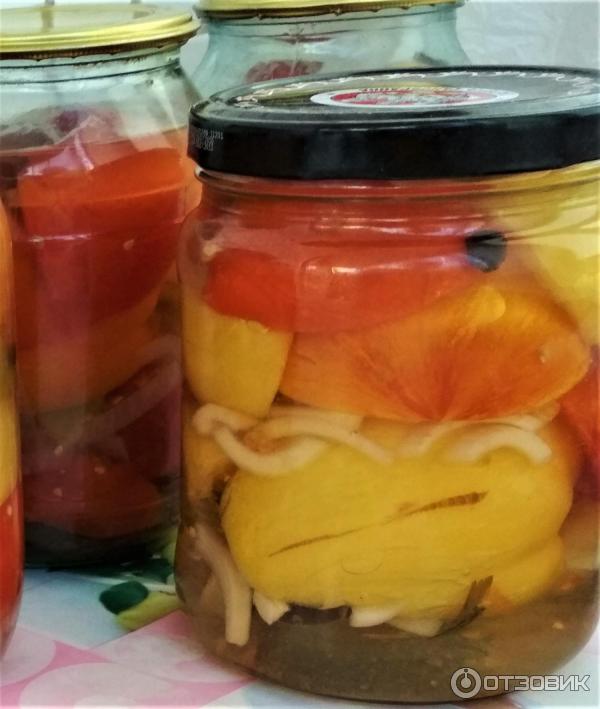
Lilian-Lil, Russia, Chelyabinsk, July 12, 2019
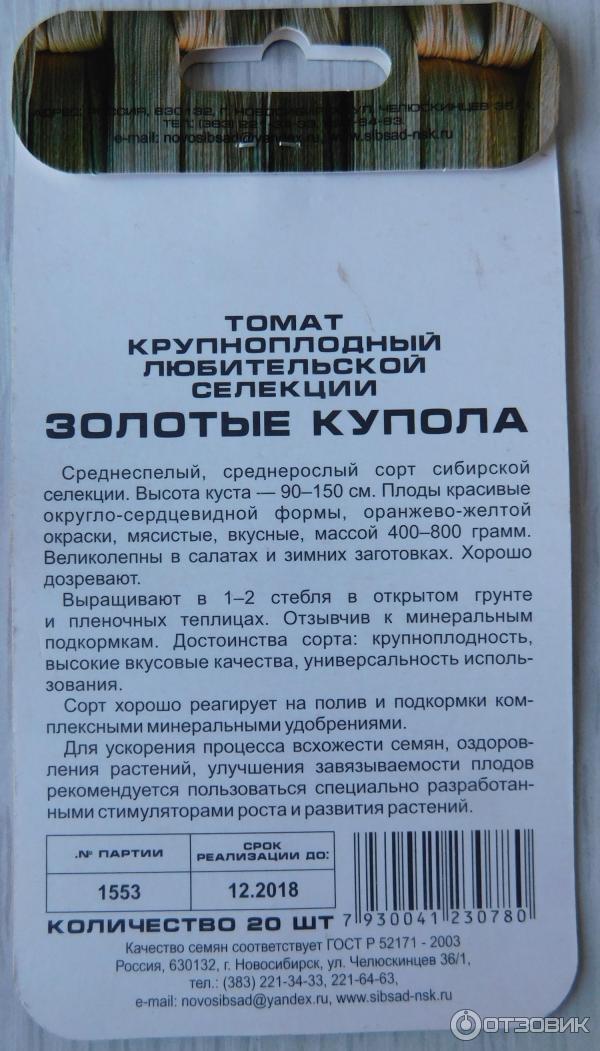
I was going through my seed packets and found an empty one from last year. I didn't plant this variety of tomato this year because I wanted to try something new and there wasn't enough room in the garden for everything I wanted, but I absolutely must tell you about the "Golden Domes" from Siberian Garden!
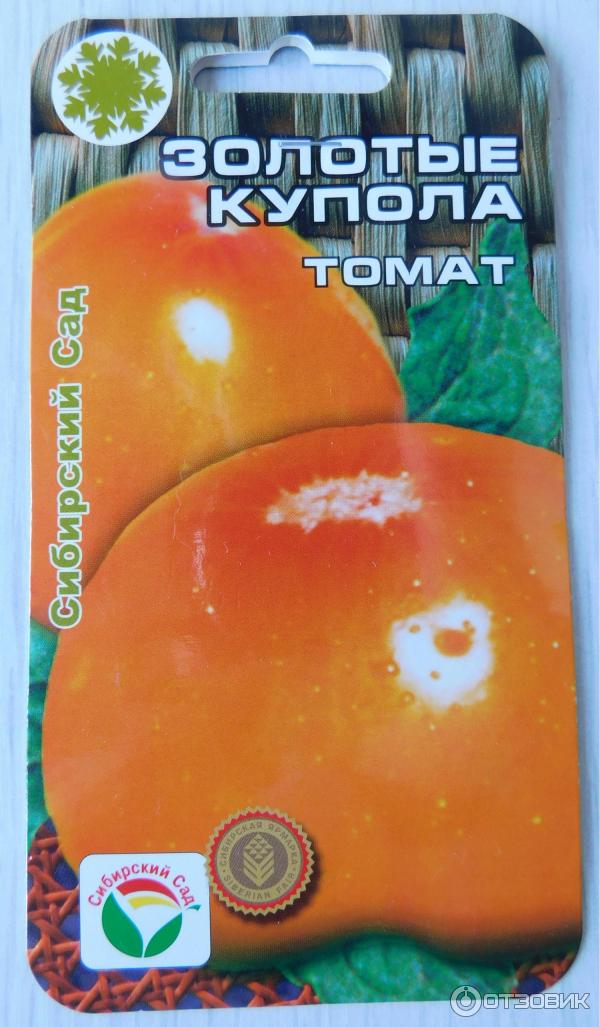
In my other tomato reviews, I've often had to talk about discrepancies between expectations (as described by the manufacturer) and reality, but that won't be the case here: the information on the package is completely true! The tomatoes are large, beautiful, and incredibly tasty: I picked one, chopped it into a salad, and was full! It's a shame I won't have any photos of myself this year, but even the photo on the package is absolutely accurate and can be trusted.
Regarding growing: germination is excellent, care is simple. I'm never short of time for the garden, but even without special attention, I get a good harvest. I didn't use any stimulants, as recommended on the packaging.
I haven't tried canning tomatoes because they disappear in a flash in salads. I think they'd be better suited for preserves if they're processed, as whole tomatoes are large and pickling them whole is unlikely.
Real reviews from gardeners about the Danko tomato variety
Medinilla, Russia, Kostroma, October 6, 2017
Good day everyone!
Tomatoes—there are so many varieties I want to try. I go to the store and my eyes are dazzled by the abundance of photos on the display. After purchasing a polycarbonate greenhouse in 2016, I started trying new tall tomato varieties. This year, I chose another variety from Siberian Garden: Danko. I really love heart-shaped varieties, and this one is just that.
I grew the seedlings myself on an east-facing window, without additional lighting. I sowed all the greenhouse varieties in early March. The seeds germinated well, and there were no problems growing the seedlings. I planted them in the greenhouse on May 1st. Since I wanted to try as many varieties as possible, I mainly grew two plants of each variety in the greenhouse. The plants grew short, about 1 meter tall. They bloomed beautifully, with clusters of 10-15 tomatoes. I completely forgot that this variety is determinate (with a limited growth point), so I pinched one plant when removing side shoots. It ended up with two trunks, and the second plant with four trunks, but I came to my senses in time. The bushes of this variety look rather frail, not very dense with their own foliage. They definitely need to be tied to a support. Due to the large number of tomatoes in the bunch, the weight was not large, from 100 g to 200 g. I think that if you want to get larger tomatoes, then the number in the bunch should be standardized.
The variety turned out to be productive and ripened late. The fruits are red-orange. Due to the cold and damp summer, many undeveloped ovaries formed. Under the stalk, a small green pea, 3-4 mm in size, has died. These are popularly known as "navels." But interestingly, after the ripe fruits were picked, these "navels" began to develop and by autumn had grown into full-fledged tomatoes.
I really liked the taste; it's meaty, sweet, and juicy at the same time. When you cut it, it's sugary, like a small watermelon. Getting the seeds out of it turned out to be a challenge; it has very few seeds.
I've come to the conclusion that Danko should be planted outside, not in a greenhouse. It's a very easy-to-grow variety, and not very tall. I'll definitely try it next year.
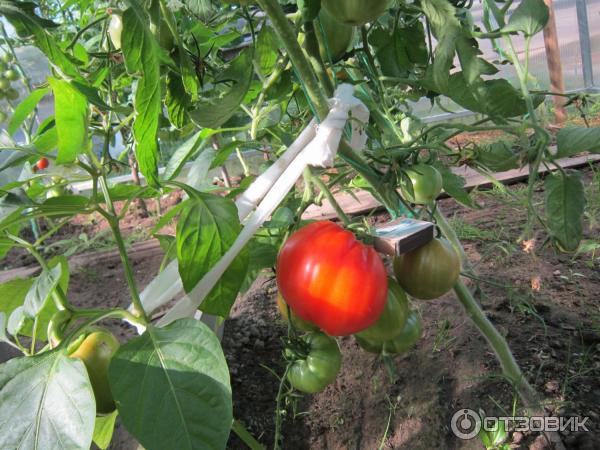
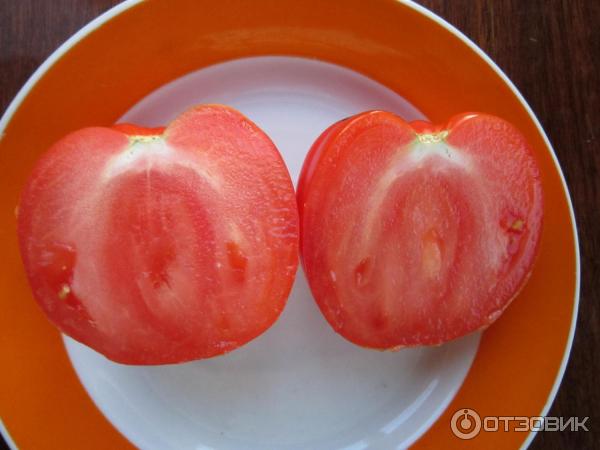
Drosera, Yekaterinburg, January 18, 2013
Determinate, large-fruited, red, heart-shaped, and delicious. Like many Siberian garden varieties, the bush appears frail. A good tomato summer in the open ground can yield a decent harvest.
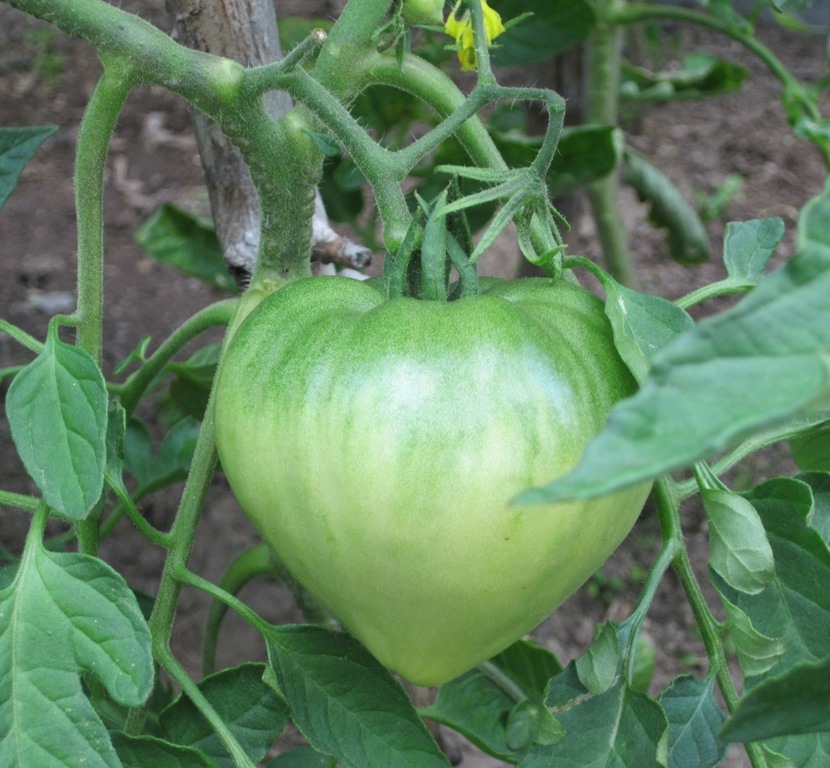
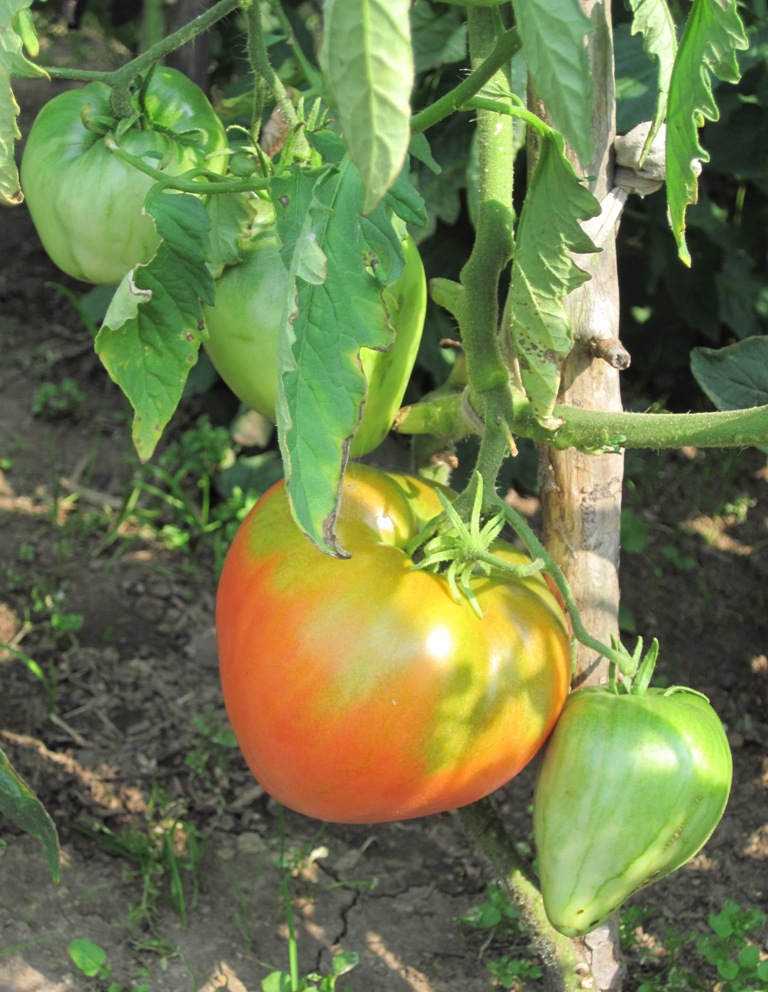
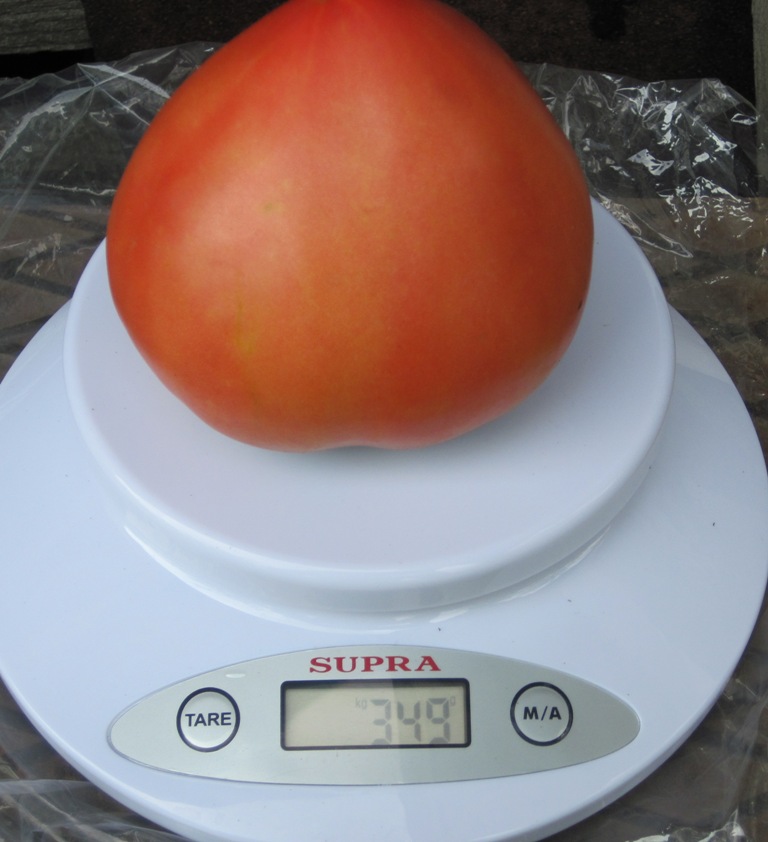
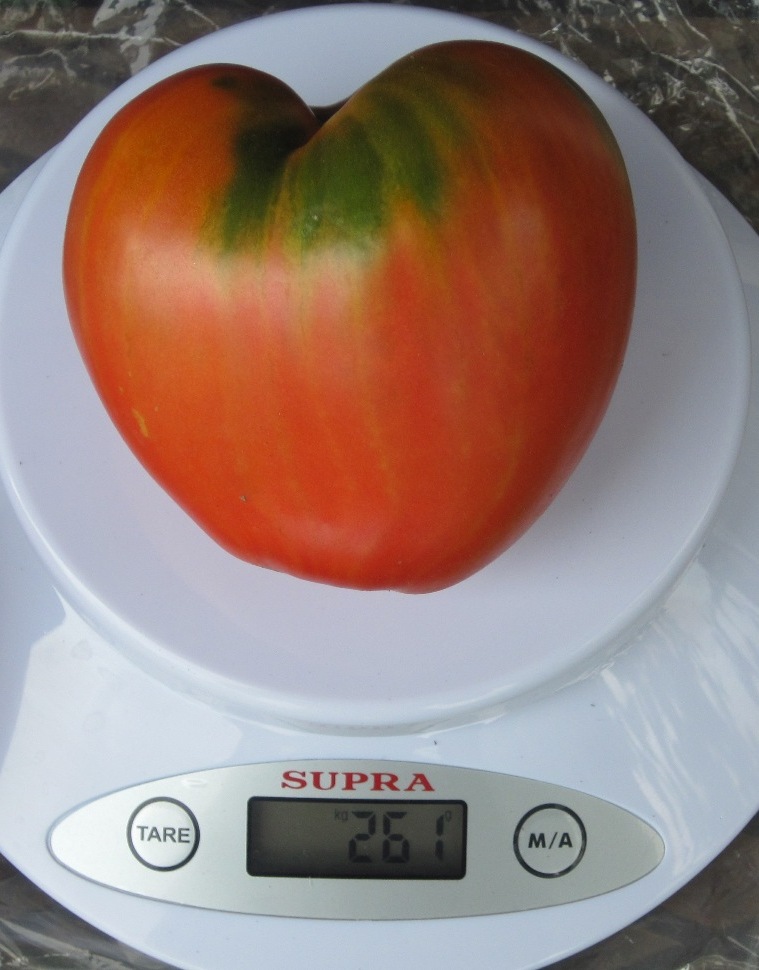
Medinilla, August 14, 2017
Last year, I grew two plants in a greenhouse for the first time. They reached 70-80 cm in height and were productive. The tomatoes were large, very tasty, and sweet. There were few seeds.
Galina Mikhailovna, Dacha 40 km from Nizhny Novgorod, November 15, 2014
One of my favorite varieties. In a greenhouse, Danko grows up to 1.8 m. This year, a friend's grew to the roof of her greenhouse, and the fruits were very large along the entire length of the trunk. It produces few seeds. It's fleshy and sweet.
Podmoskvichka, Serpukhov district, February 28, 2019
I planted Danko from Sibsad in the open ground. The resulting fruits were tall, not very productive, and not at all early. But the taste was amazing: fleshy yet juicy, not at all bland like many other 'hearts.' I'll definitely try them again this year.