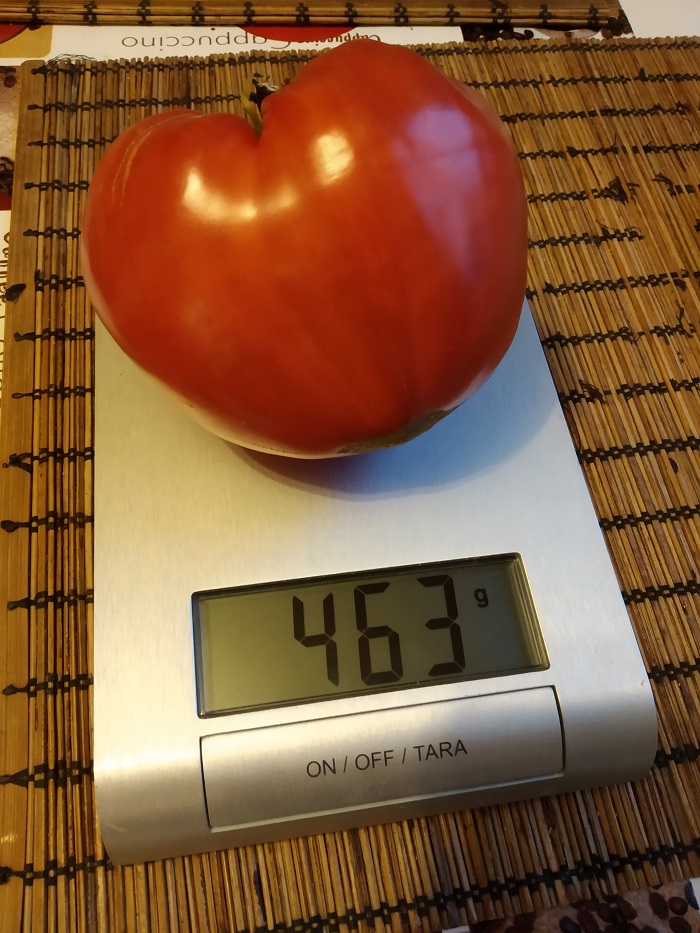
The Bull's Heart tomato is beloved by gardeners for its enormous fruits, which boast excellent flavor. Many new varieties have been developed based on this variety, which was added to the register in 2003, but care requirements are virtually identical. More detailed information is provided in the article below.
Content
- 1 Table with characteristics of the Bull's Heart tomato variety
- 2 12 varieties of Bull's Heart tomato with descriptions in the table + photos
- 3 Three more varieties of Bull's Heart not listed
- 4 A detailed description of the Bull's Heart tomato variety (original red)
- 5 Advantages and disadvantages of the Bull's Heart tomato
- 6 Growing seedlings of the Bull's Heart tomato variety
- 7 Planting Bull's Heart tomato seedlings in a greenhouse and open ground
- 8 Features of caring for Bull's Heart tomato varieties
- 9 Pests and diseases of the Bull's Heart tomato variety
- 10 Growing Bull's Heart Tomato at Home
- 11 Comparison of Bull's Heart tomato varieties with other varieties in the table
- 12 Real reviews from gardeners about the Bull's Heart tomato variety
Table with characteristics of the Bull's Heart tomato variety
| Bull's heart (red) | |
| Ripening time | 115-120 days (mid-late-late ripening) |
| Plant type | Determinant |
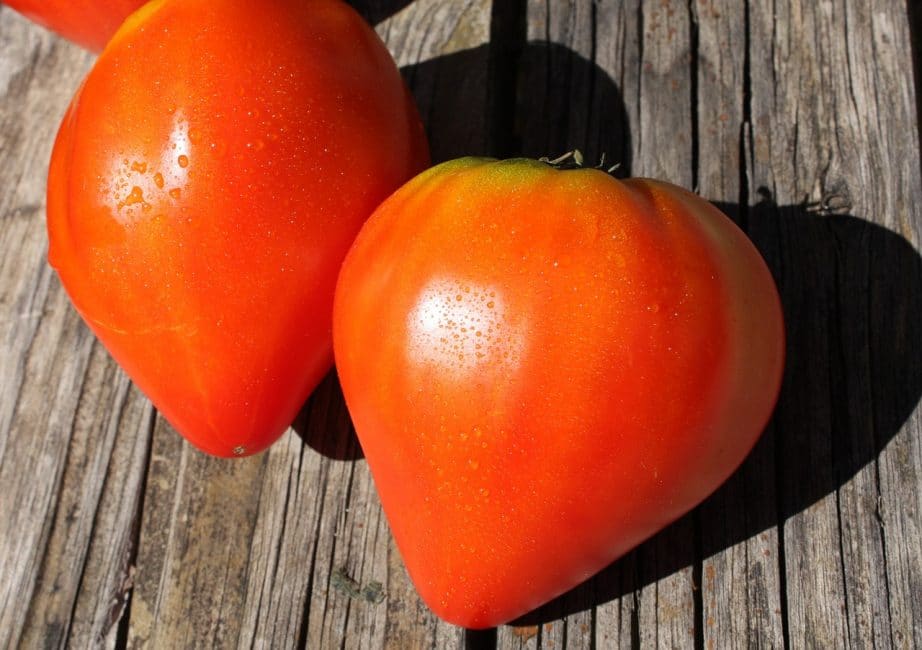
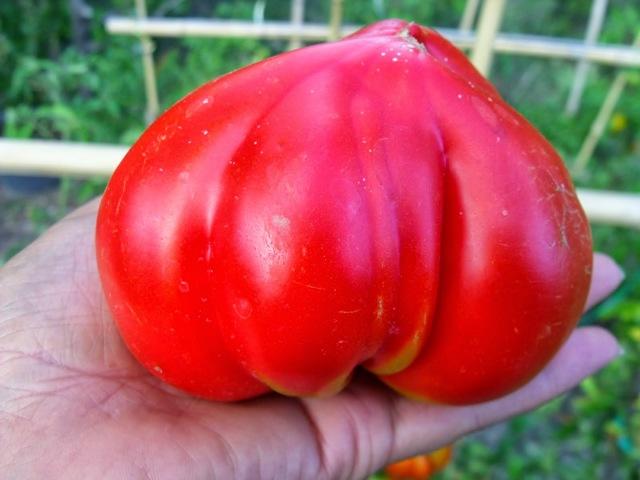
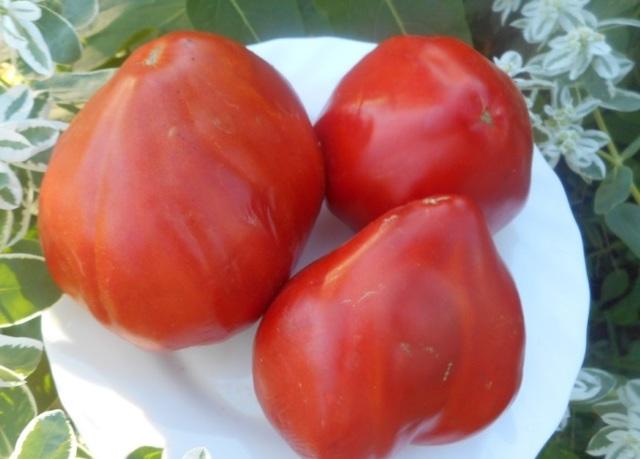
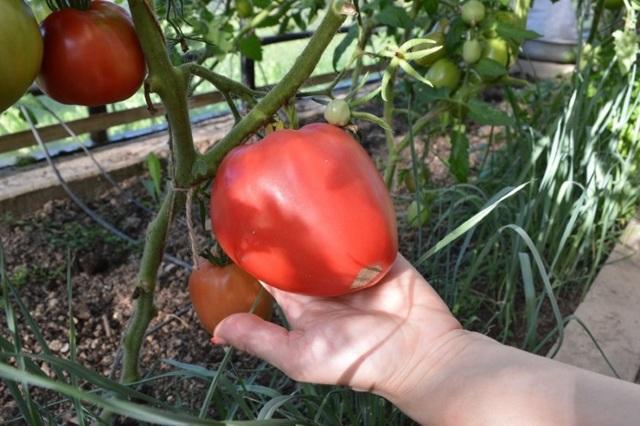
| Description of the fruit | Heart-shaped, fleshy, dense, large, with a thick, thin skin. |
| Fruit weight | 108-225 g |
| The taste of the fruit | Great |
| Application | Salad |
| Productivity | Up to 4 kg per 1 sq. m |
| Growing and care | Suitable for open ground, greenhouses, hotbeds. |
| Growing regions | Northern, Northwestern, Central, Volga-Vyatka, Central Black Earth Region, North Caucasian, Middle Volga, Lower Volga, Ural, West Siberian, East Siberian, Far Eastern |
| 2003 | |
| Originator | LLC 'AGROFIRM SEARCH' |
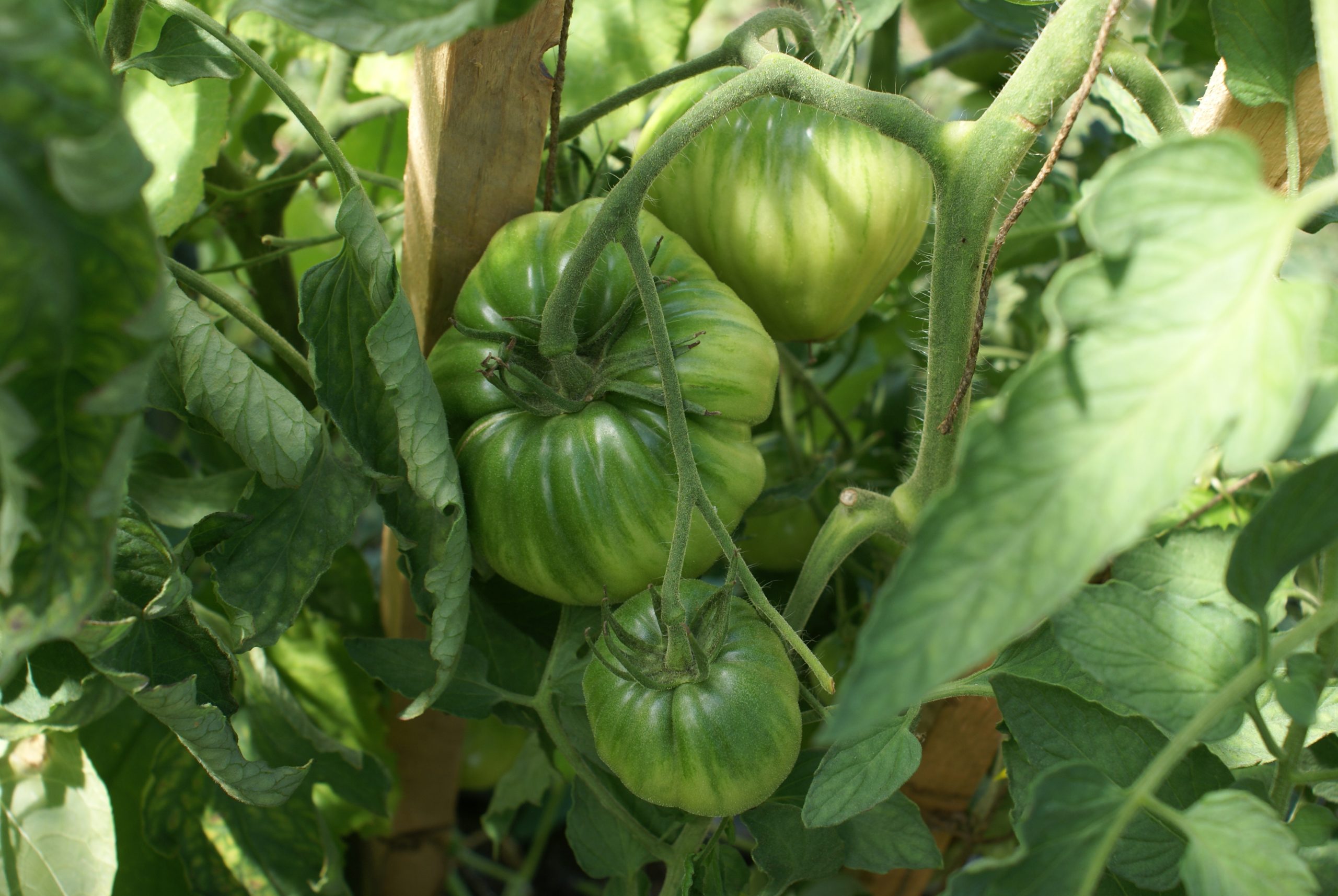
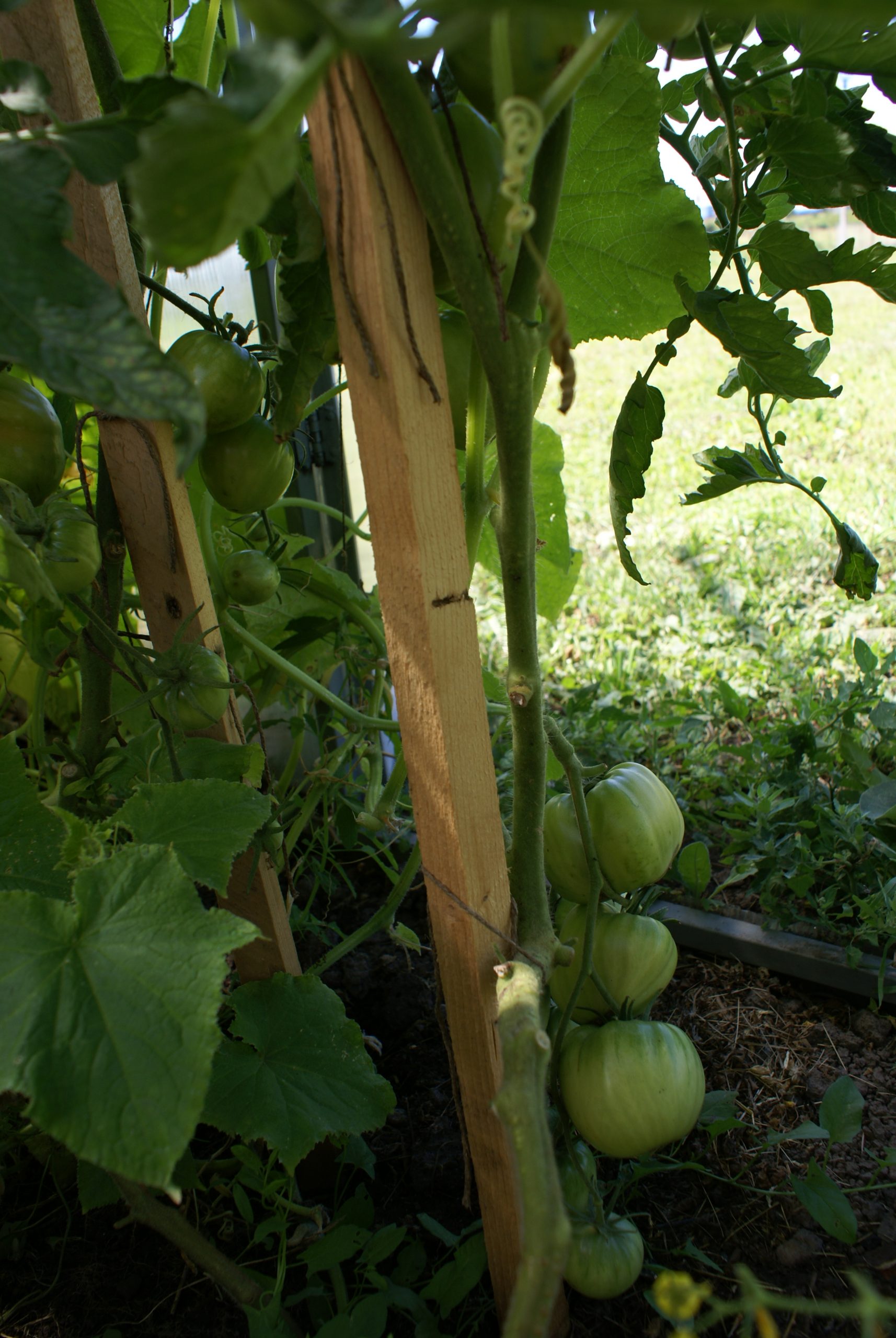
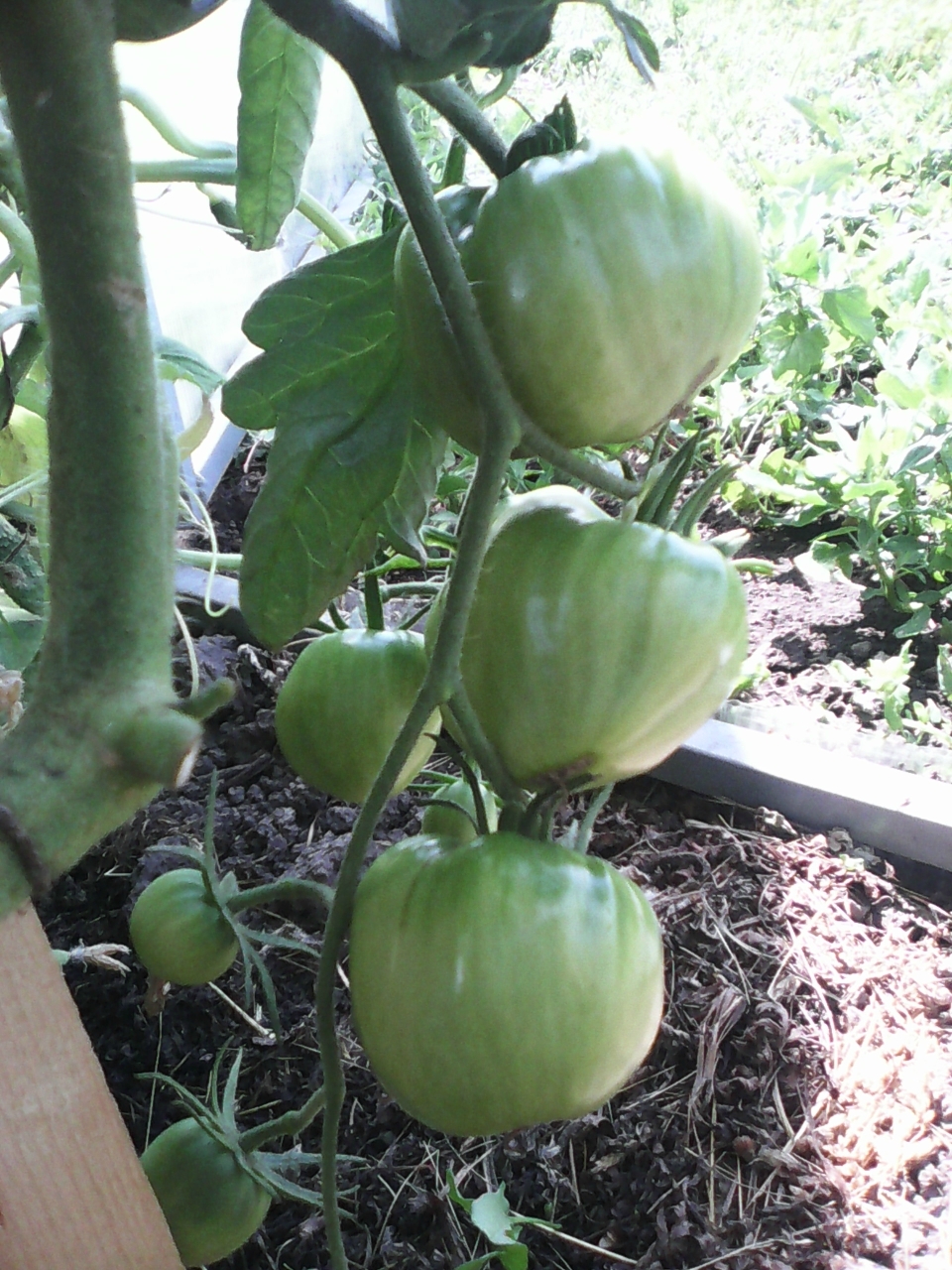
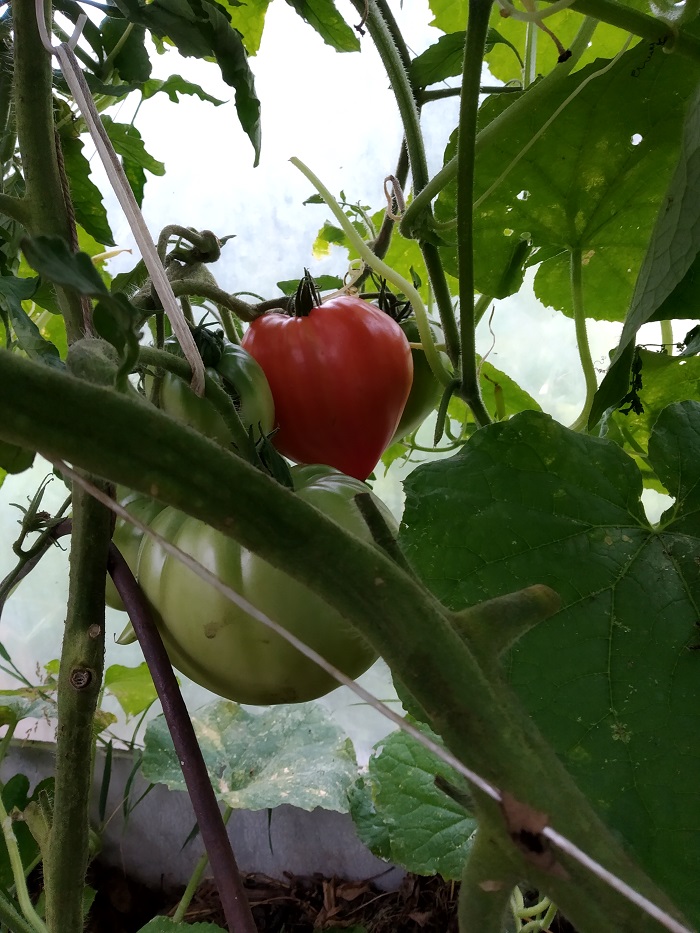
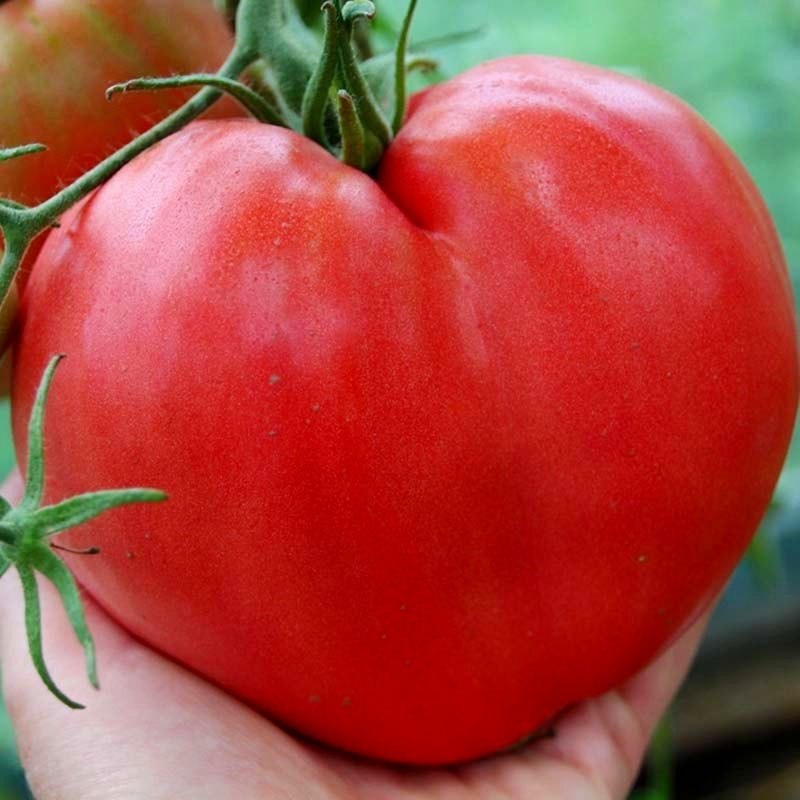
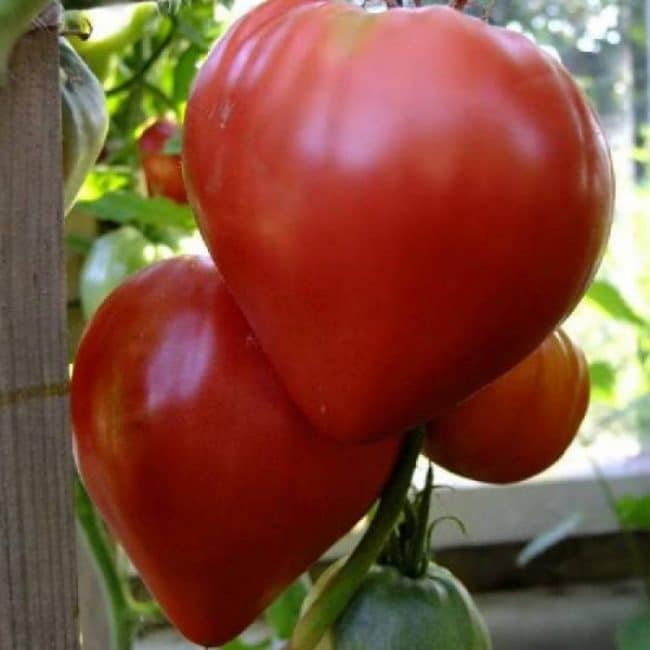
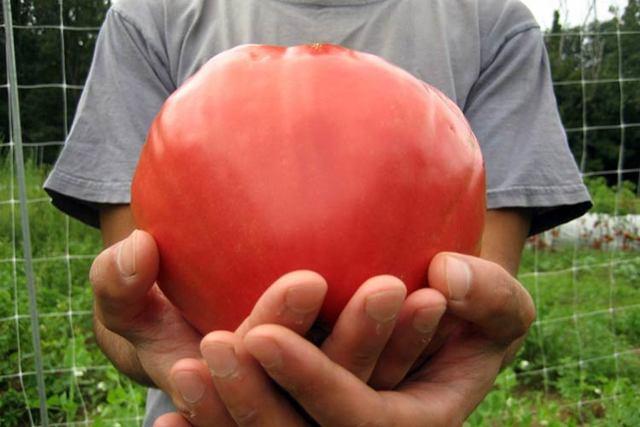
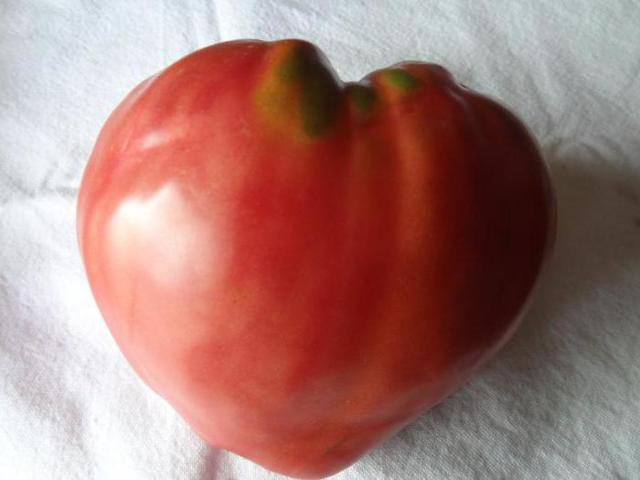
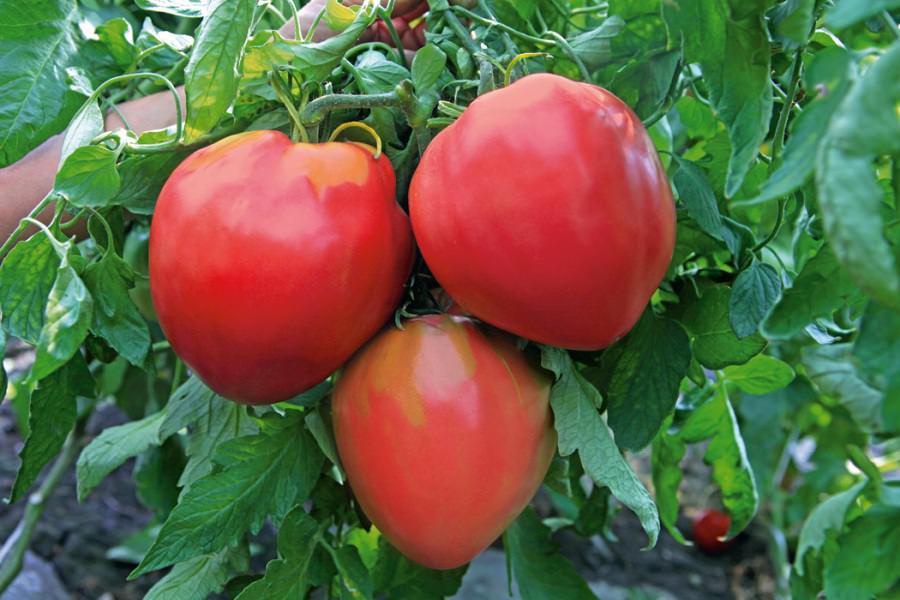
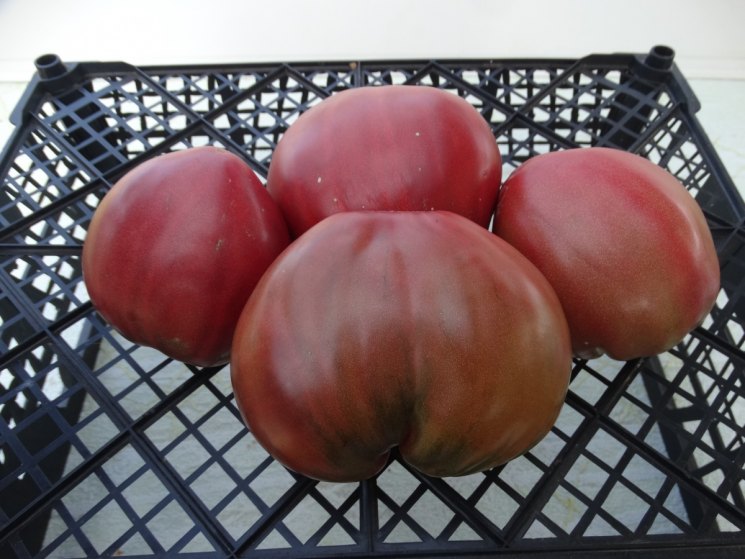
Photo gallery of the tomato variety Bull's Heart Red:
12 varieties of Bull's Heart tomato with descriptions in the table + photos
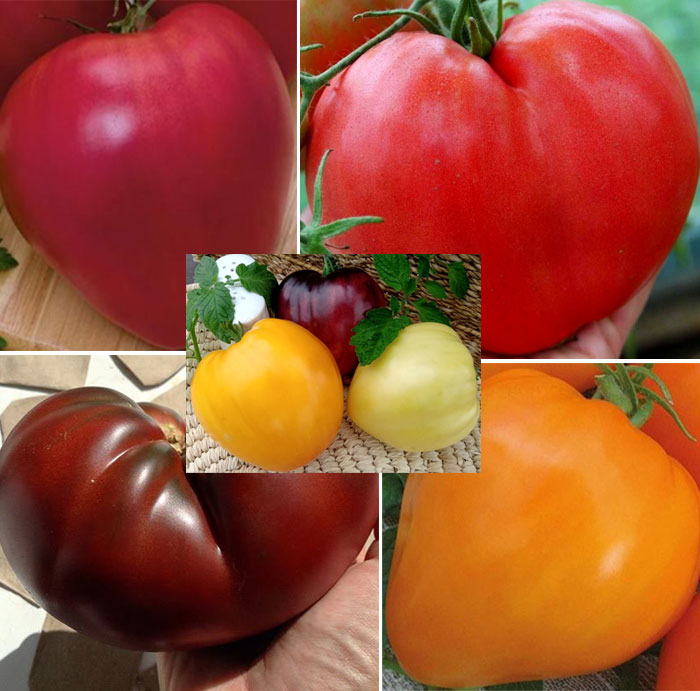
Numerous hybrids have been developed from the Bull's Heart tomato. Characteristics and descriptions of these varieties are provided in the tables below.
Important! If the table indicates a suitable growing zone, all regions — this means that the variety is suitable for the Northern, Northwestern, Central, Volga-Vyatka, Central Black Earth, North Caucasian, Middle Volga, Lower Volga, Ural, West Siberian, East Siberian and Far Eastern regions.
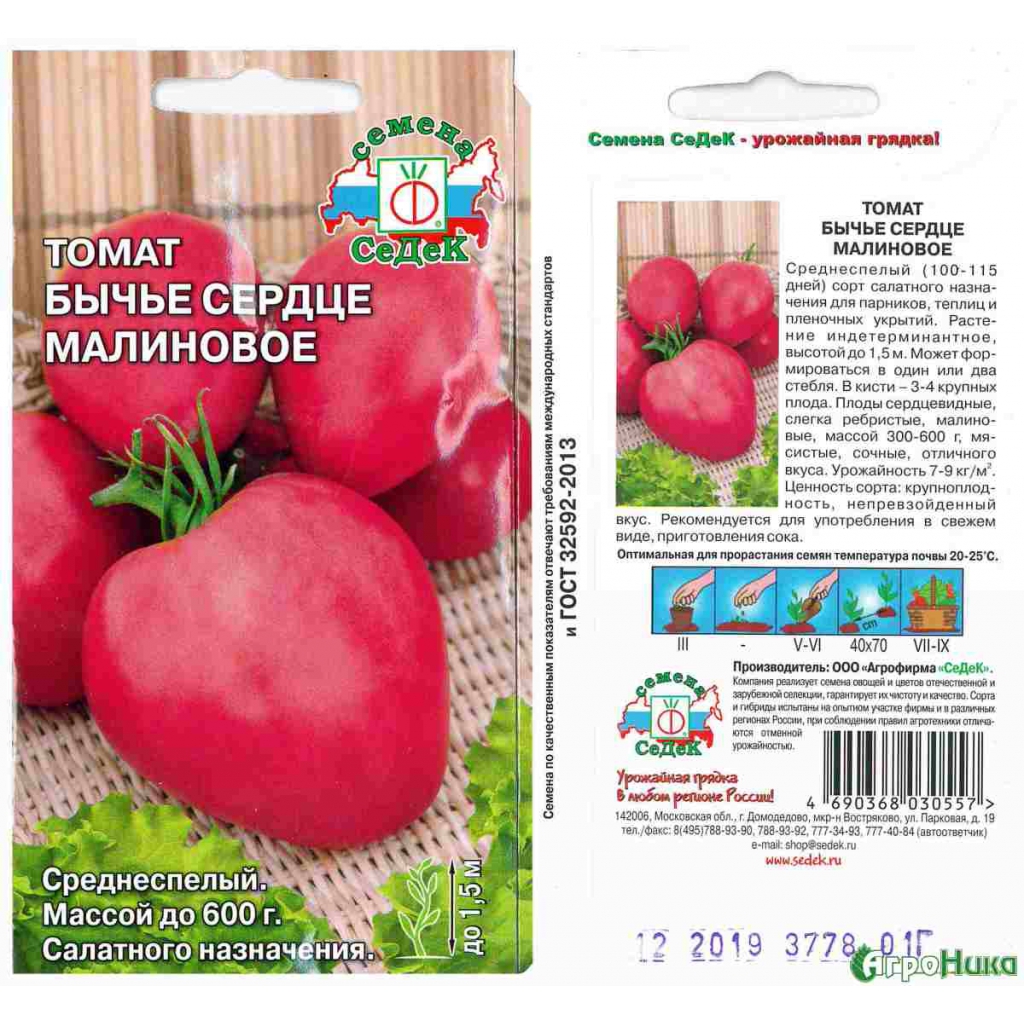
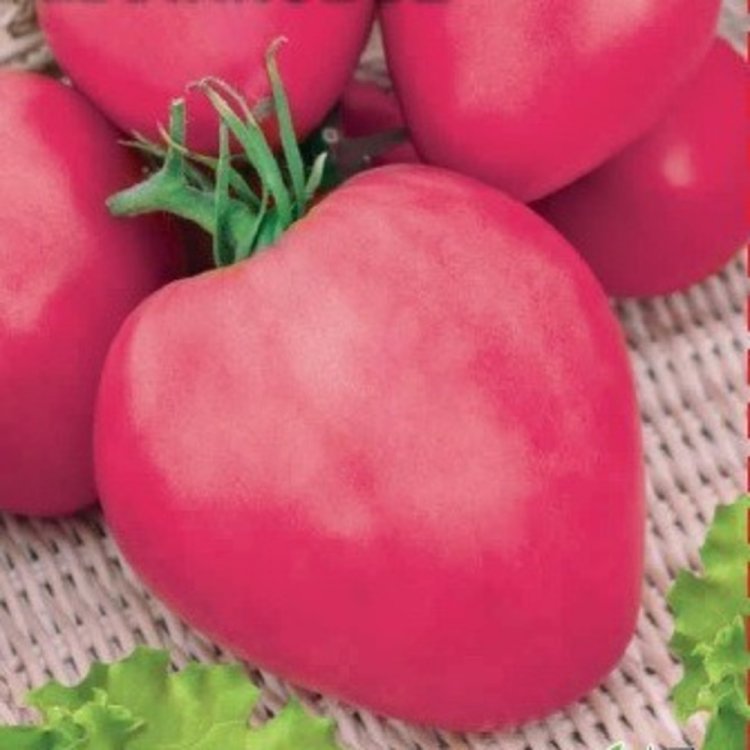
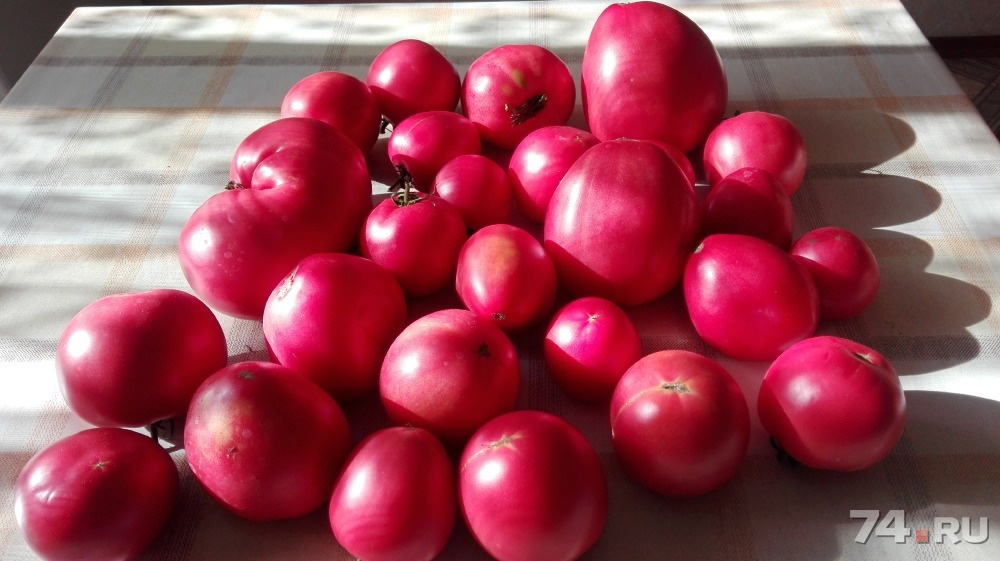
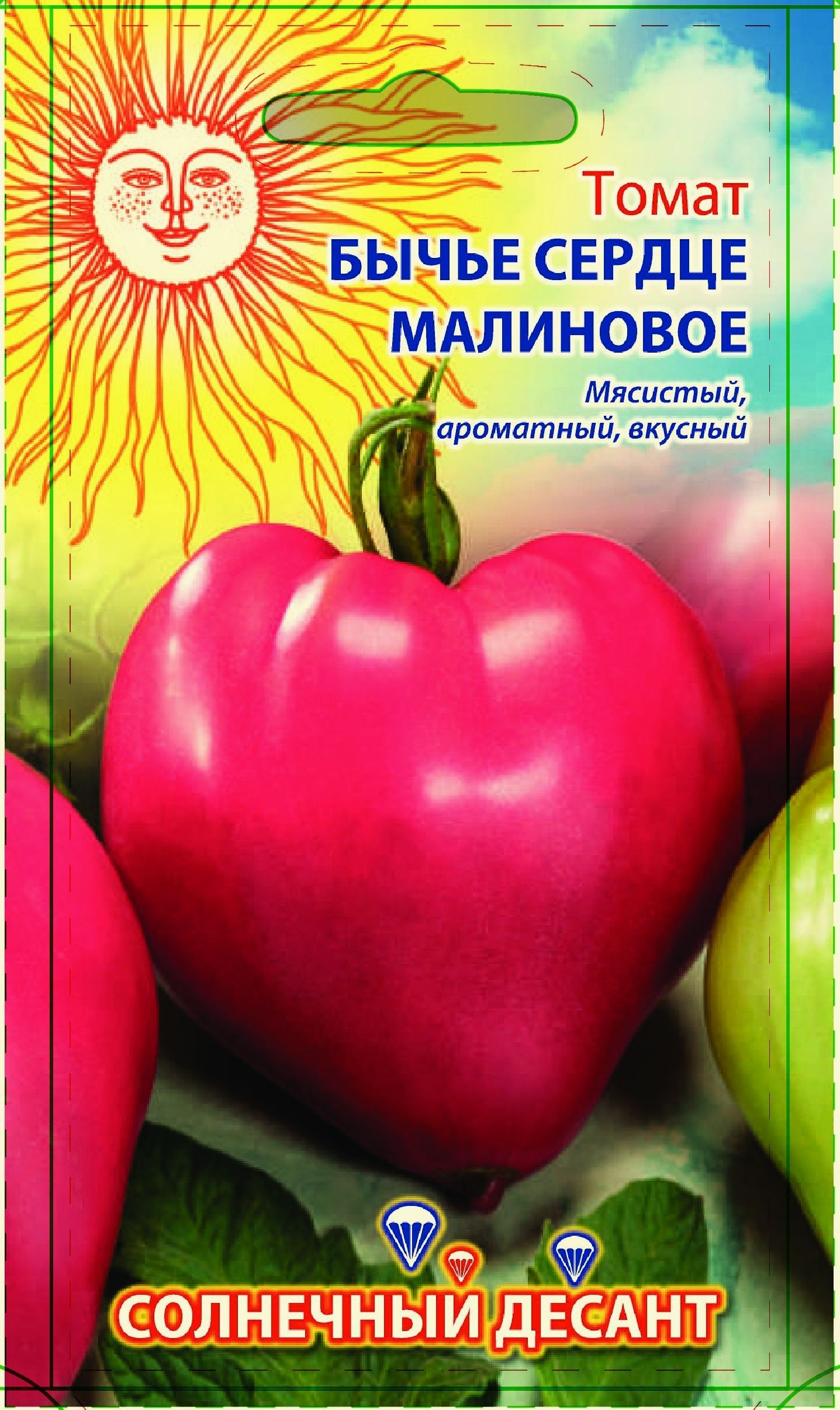
Bull's Heart Raspberry
| Ripening time | 115-127 days (mid-season) |
| Plant type | Indeterminate |
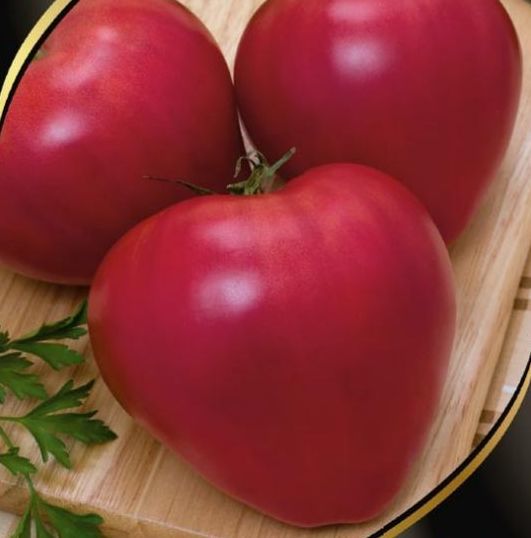
| Description of the fruit | Heart-shaped, very large, smooth, medium density, raspberry. |
| Fruit weight | 350-500 g |
| Taste | Great |
| Application | Salad |
| Productivity | Up to 6 kg per 1 sq. m |
| Growing and care | Suitable for open ground, greenhouses, hotbeds. |
| Growing regions | All regions |
| 2011 | |
| Originator | LLC NPP 'AGROVNEDRENIE' |
Photo gallery of the tomato variety Bull's Heart Raspberry:
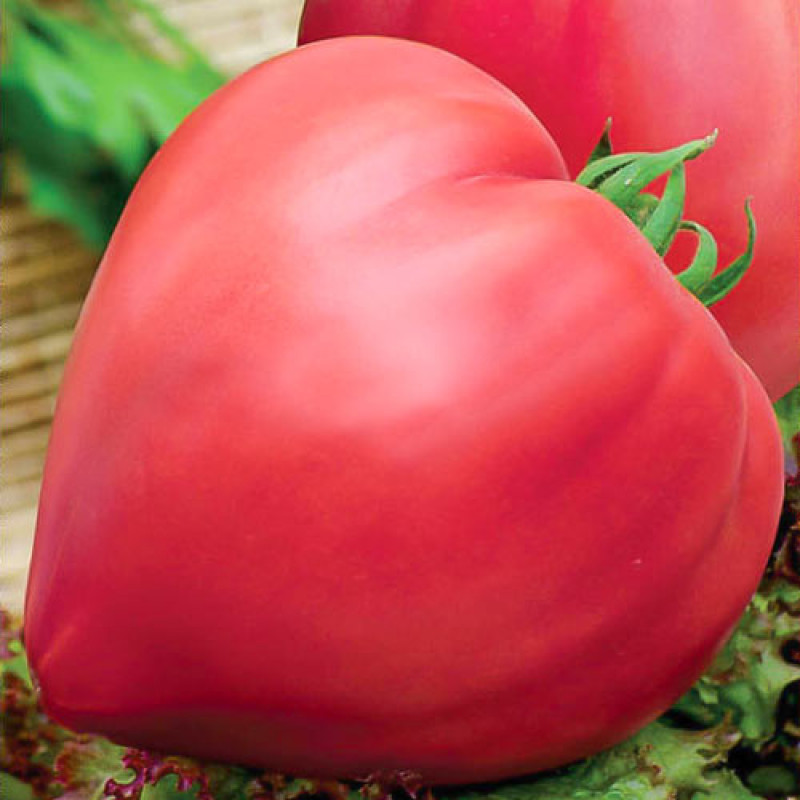
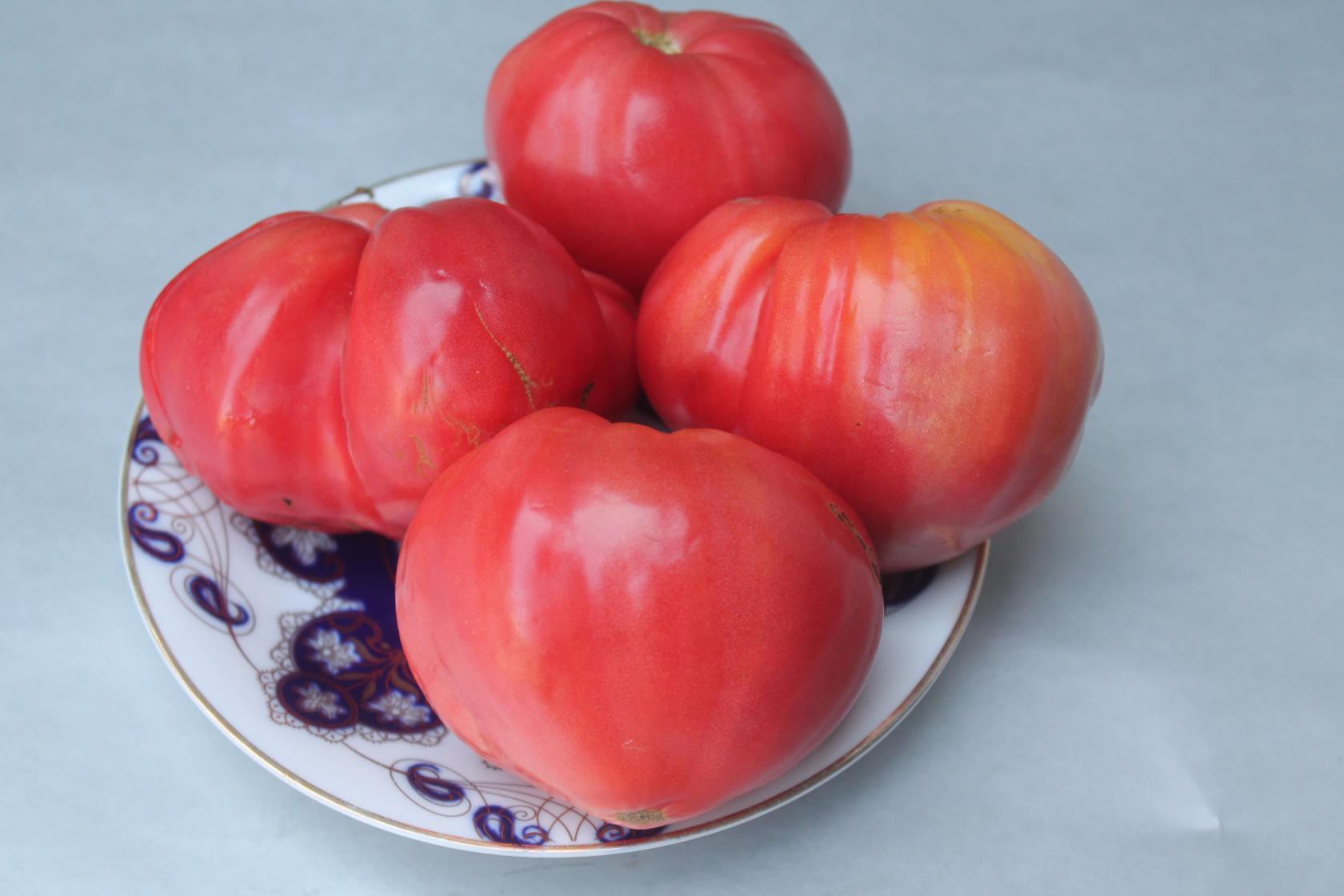
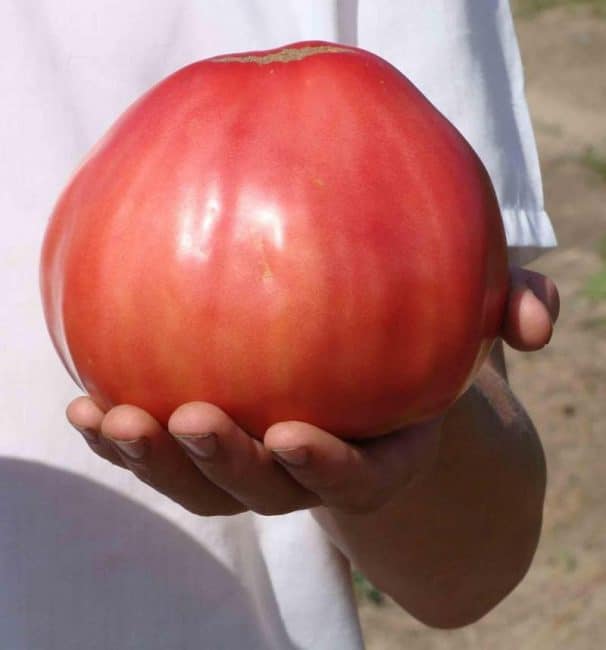
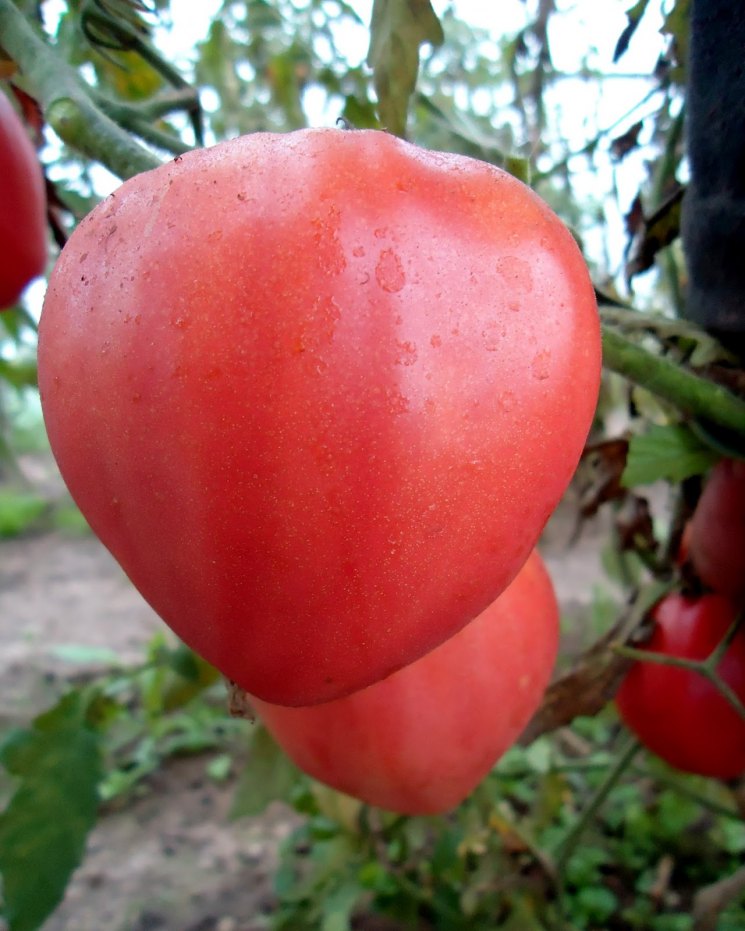
Bull's Heart Pink
| Ripening time | 115 days (mid-season) |
| Plant type | Determinant |
| Description of the fruit | Heart-shaped, slightly ribbed, medium density, pink. |
| Fruit weight | 250-350 g |
| Taste | Good |
| Application | Salad |
| Productivity | 7.5-8 kg per 1 sq. m |
| Growing and care | Suitable for open ground, greenhouses, hotbeds, resistant to drought and pests. |
| Growing regions | All regions |
| 2012 | |
| Originator | LLC 'AGROFIRMA AELITA' |
Photo gallery of the tomato variety Bull's Heart Pink:
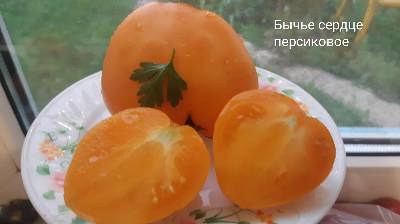
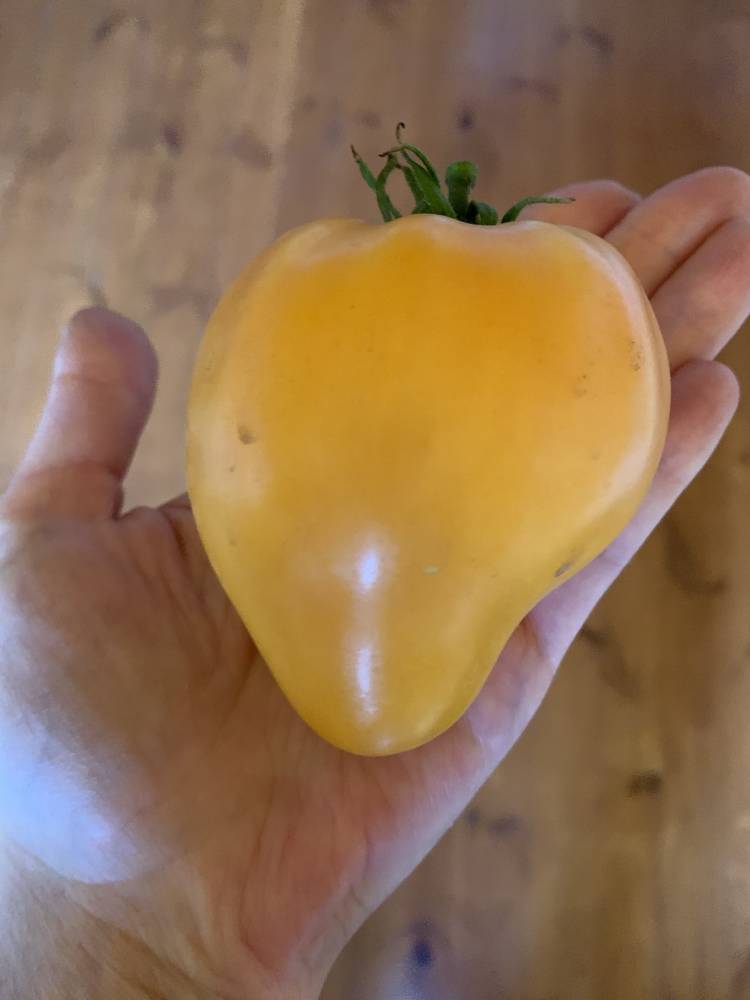
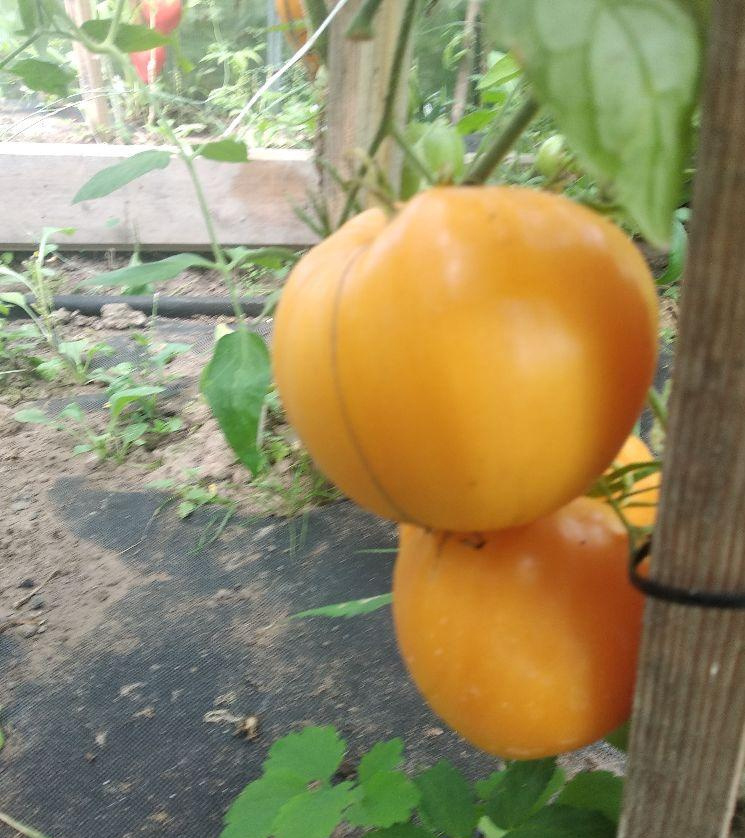
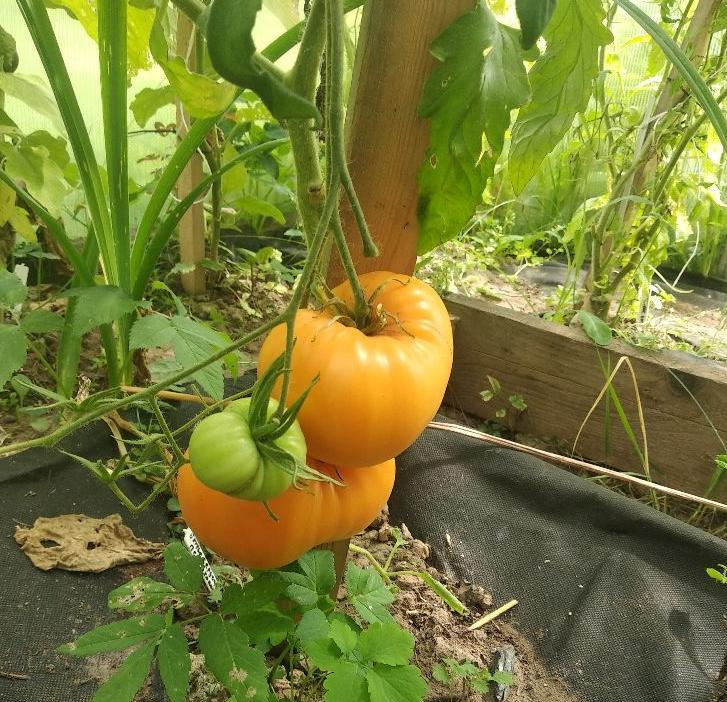
Bull's Heart Peach
| Ripening time | 102-110 days (early ripening) |
| Plant type | Indeterminate |
| Description of the fruit | Heart-shaped, fleshy, medium-dense, medium-ribbed, with a small number of seeds, creamy. |
| Fruit weight | 200-300 g |
| Taste | Excellent (sweet with a slight sourness) |
| Application | Salad |
| Productivity | 7.8-8.5 kg per 1 sq. m |
| Growing and care | Suitable for greenhouses and hotbeds, it is necessary to remove the lower leaves and side shoots. |
| Growing regions | All regions |
| 2017 | |
| Originator | LLC 'BREEDING FIRM GAVRISH' |
Photo gallery of the Bull's Heart Peach tomato variety:

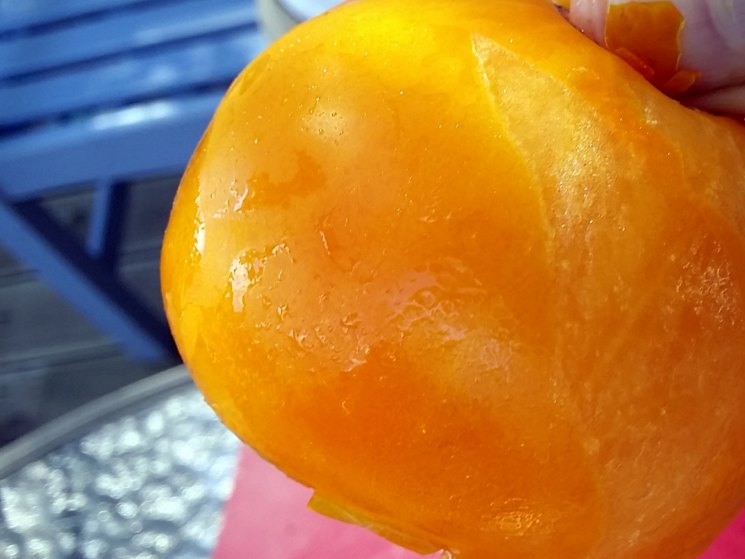
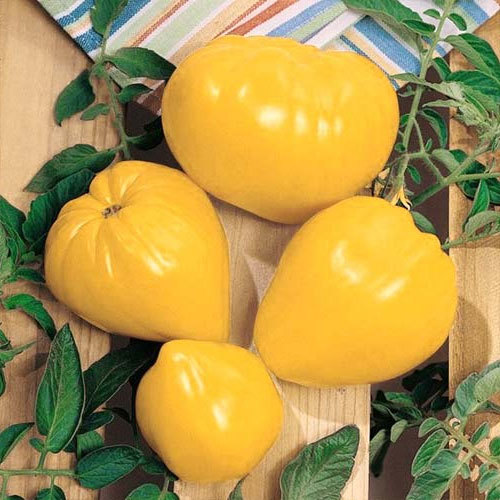
Bull's Heart of Gold
| Ripening time | 130 days (late ripening) |
| Plant type | Indeterminate |
| Description of the fruit | Round, dense, smooth, with minimal ribbing, yellow. |
| Fruit weight | 240-280 g |
| Taste | Excellent (sweet with a slight sourness) |
| Application | Salad |
| Productivity | Up to 13.6 kg per 1 sq. m |
| Growing and care | Suitable for open ground, greenhouses, hotbeds. |
| Growing regions | All regions |
| 2017 | |
| Originator | LLC 'AGROFIRM 'SEDEK' |
Photo gallery of the tomato variety Bull's Heart Golden:
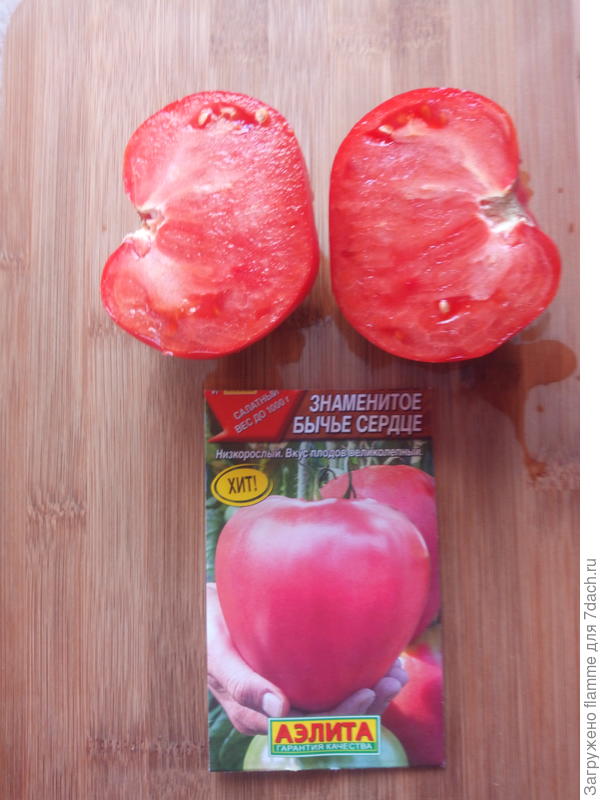
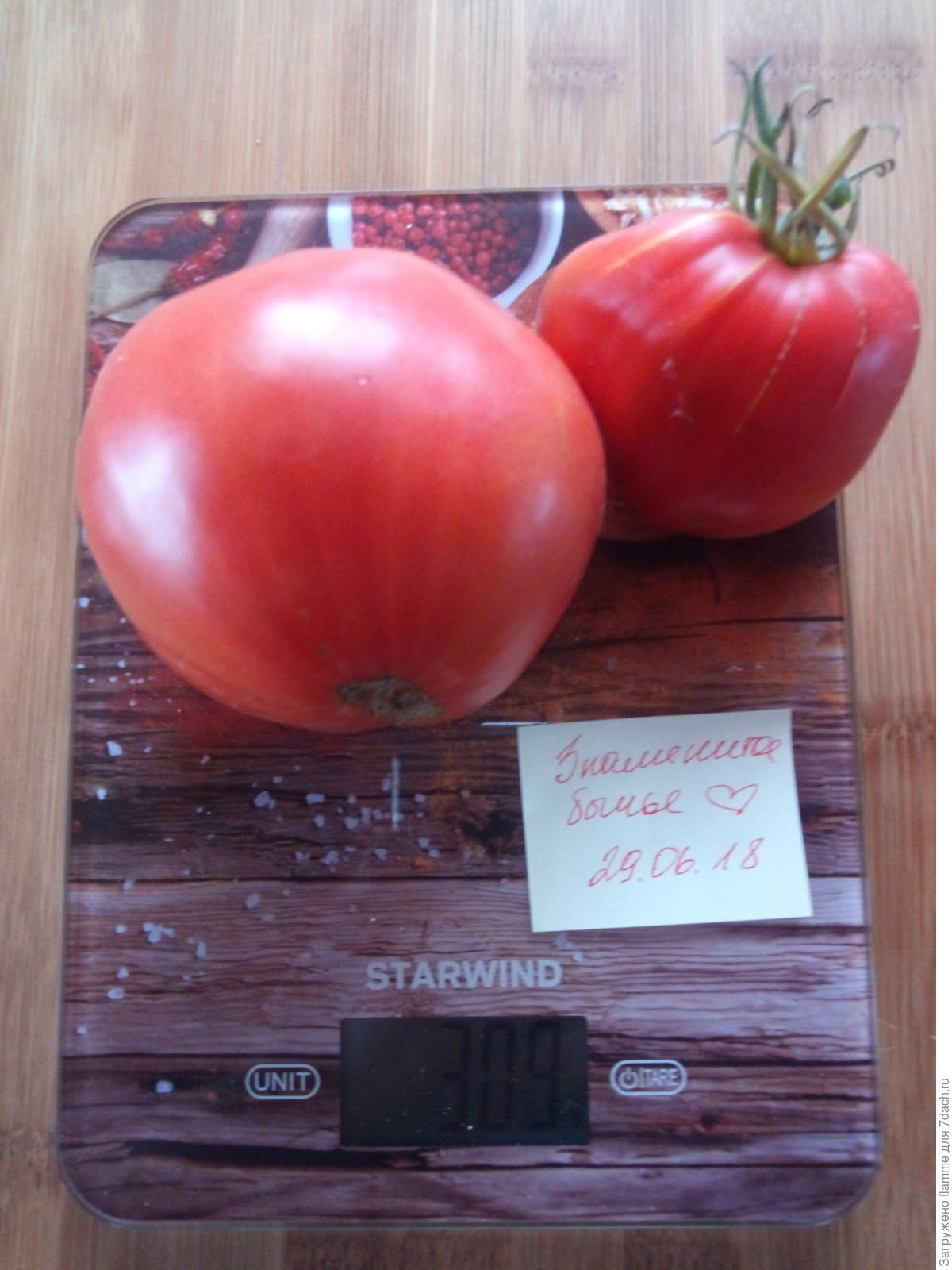
Bull's Heart Famous
| Ripening time | 95 days (early maturing) |
| Plant type | Determinant |
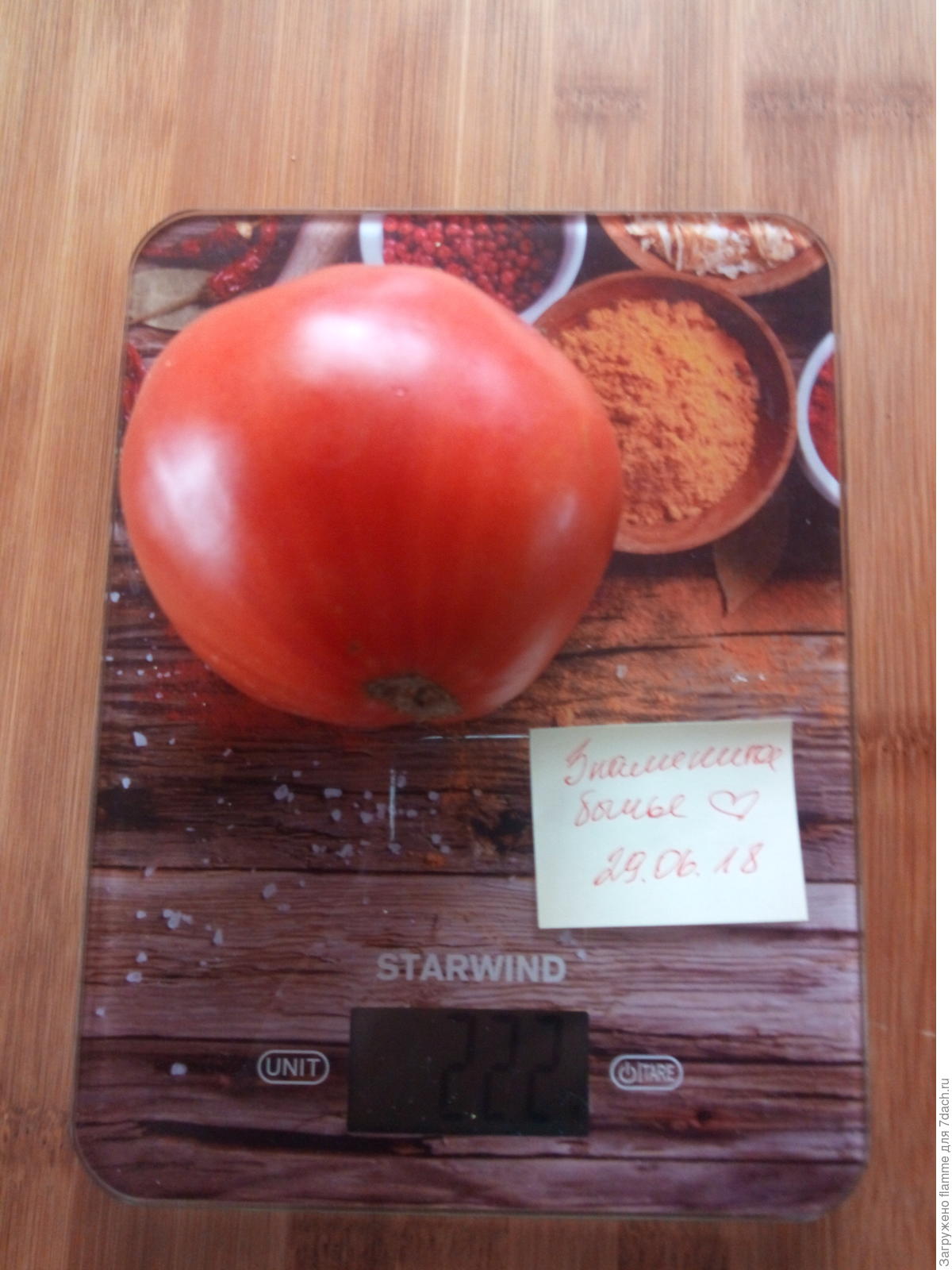
| Description of the fruit | Heart-shaped, medium density, slightly ribbed, raspberry. |
| Fruit weight | 250-300 g |
| Taste | Great |
| Application | Salad |
| Productivity | 5.9-6.7 kg per 1 sq. m |
| Growing and care | Suitable for open ground, greenhouses, hotbeds, drought-resistant. |
| Growing regions | All regions |
| 2018 | |
| Originator | LLC 'AGROFIRMA AELITA' |
Photo gallery of the tomato variety Bull's Heart Famous:
Bull's Heart Compact
| Ripening time | 95-100 days (early maturing) |
| Plant type | Indeterminate |
| Description of the fruit | Heart-shaped, dense, slightly ribbed, red. |
| Fruit weight | 160-200 g |
| Taste | Great |
| Application | Salad |
| Productivity | 6-6.7 kg per 1 sq. m |
| Growing and care | Suitable for open ground, greenhouses, hotbeds, resistant to drought and pests. |
| Growing regions | All regions |
| 2018 | |
| Originator | LLC 'AGROFIRMA AELITA' |
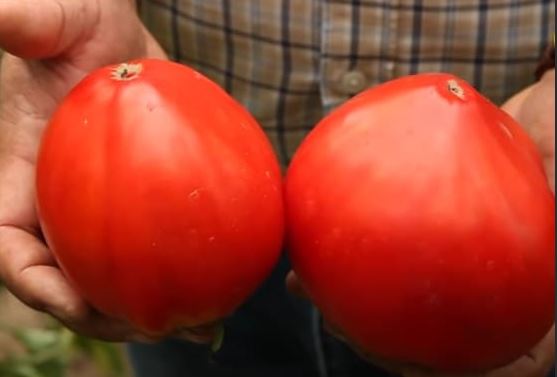
Photo gallery of the tomato variety Bull's Heart Compact:

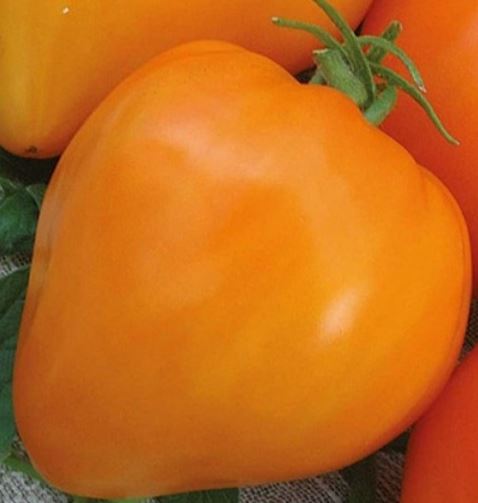
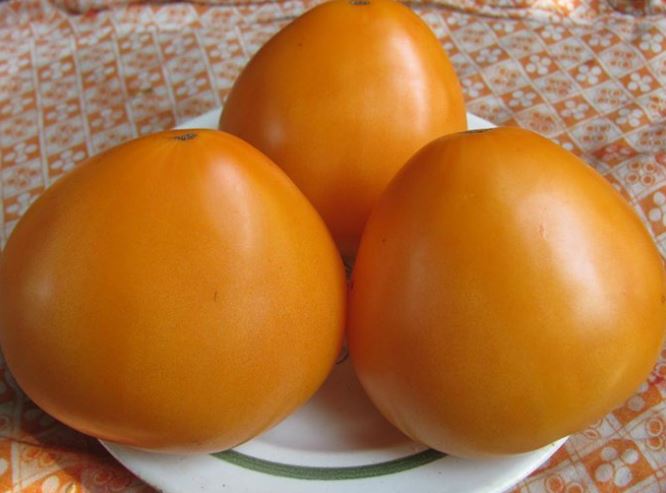
Bull's Heart Orange
| Ripening time | 110-120 days (mid-season) |
| Plant type | Indeterminate |
| Description of the fruit | Heart-shaped, dense, medium-ribbed, orange. |
| Fruit weight | 300-350 g |
| The taste of the fruit | Good |
| Application | Salad |
| Productivity | Up to 11 kg per 1 sq. m |
| Growing and care | Suitable for open ground, greenhouses, hotbeds, tolerates high temperatures and drought well, prone to late blight. |
| Growing regions | All regions |
| 2018 | |
| Originator | LLC 'AGROFIRMA AELITA' |
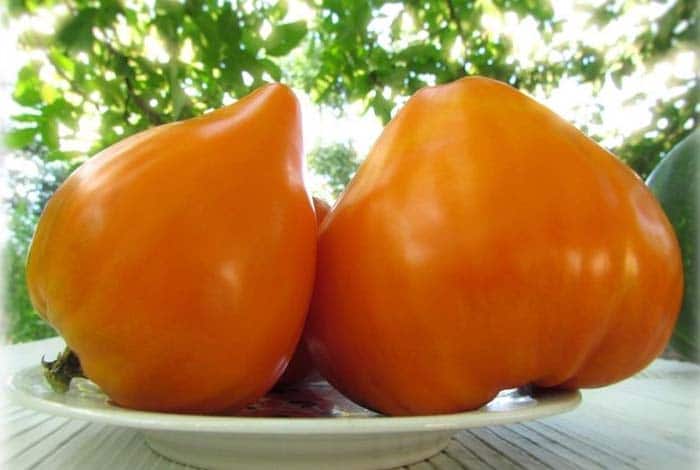
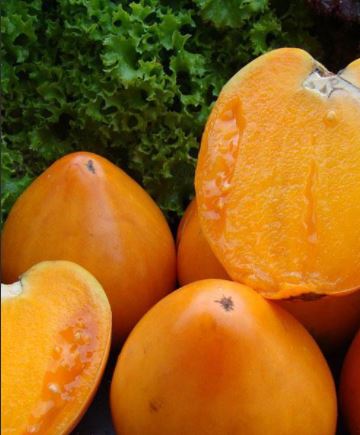
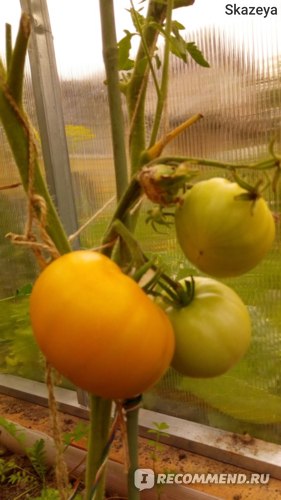
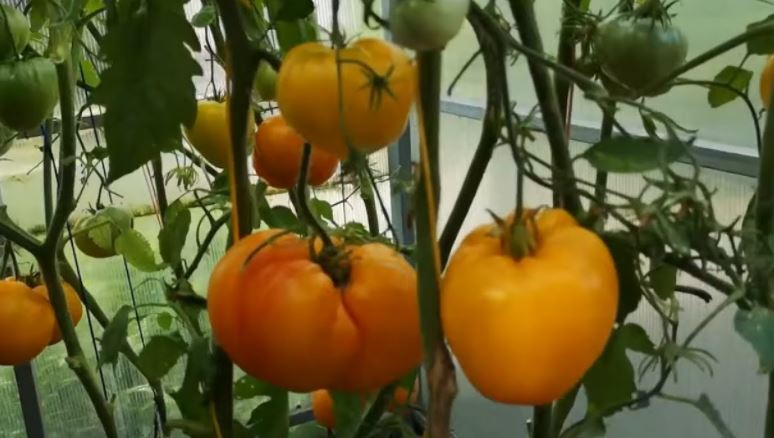
Photo gallery of the tomato variety Bull's Heart Orange:
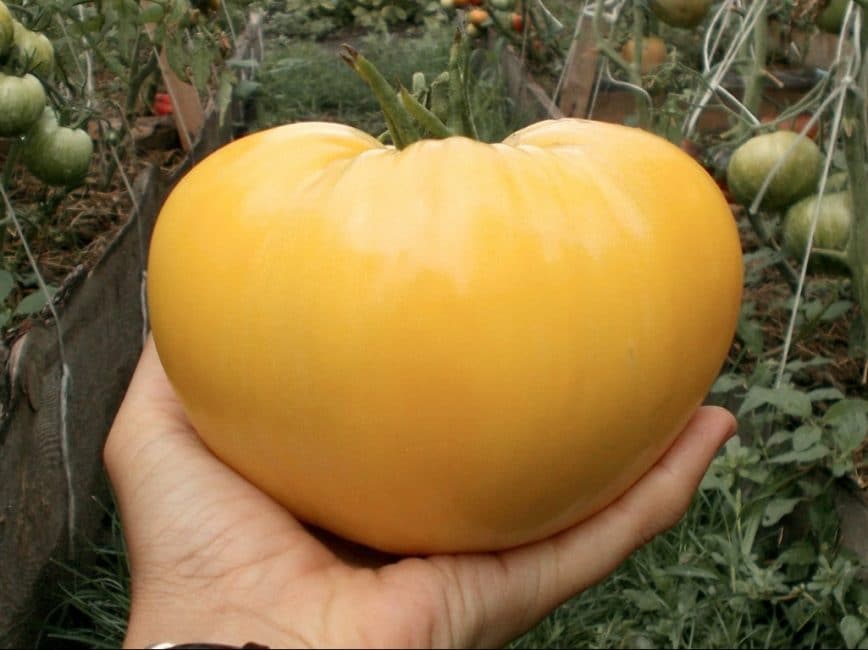
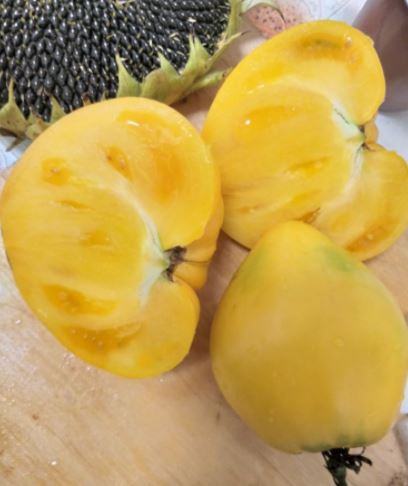
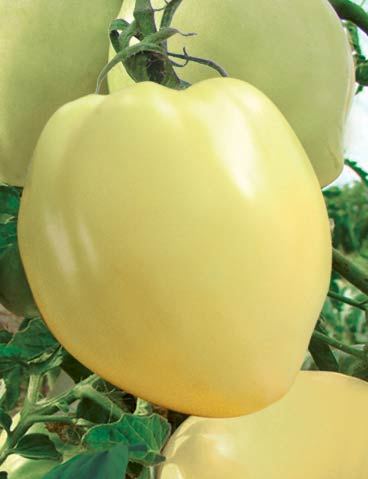
Creamy Bull's Heart
| Ripening time | 110-117 days (mid-season) |
| Plant type | Indeterminate |
| Description of the fruit | Heart-shaped, medium density, slightly ribbed, creamy. |
| Fruit weight | 350-400 g |
| The taste of the fruit | Excellent (sweet with a slight sourness) |
| Application | Salad |
| Productivity | 10.6-12.8 kg per 1 sq. m |
| Growing and care | Suitable for open ground, greenhouses, hotbeds, prone to cladosporiosis. |
| Growing regions | All regions |
| 2018 | |
| Originator | LLC 'BREEDING FIRM GAVRISH' |
Photo gallery of the tomato variety Bull's Heart Cream:

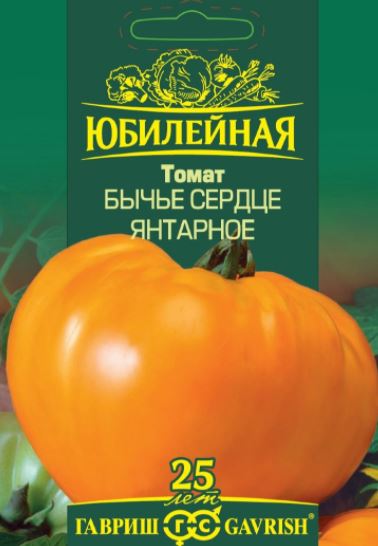
Bull's Heart Amber
| Ripening time | 100-117 days (mid-season) |
| Plant type | Indeterminate |
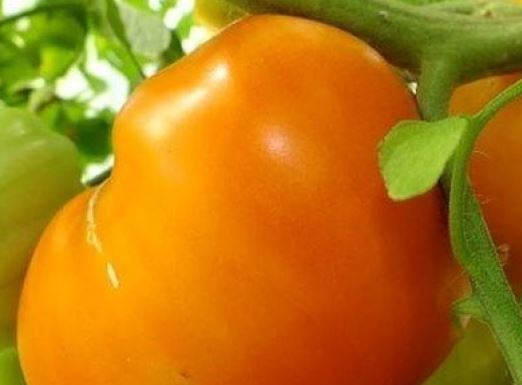
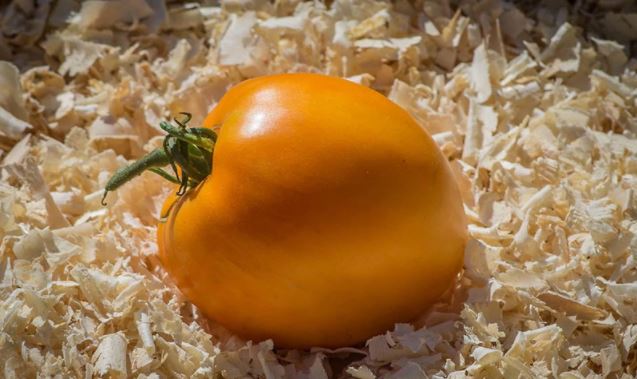
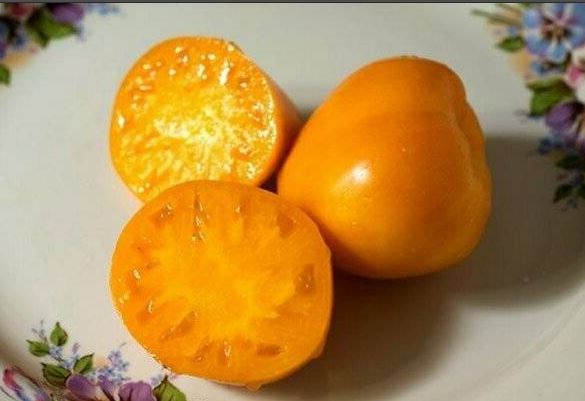
| Description of the fruit | Round, medium density, slightly ribbed, orange. |
| Fruit weight | 350-400 g |
| The taste of the fruit | Excellent (sweet with a slight sourness) |
| Application | Salad |
| Productivity | 10-12 kg per 1 sq. m |
| Growing and care | Suitable for greenhouses and hotbeds. |
| Growing regions | All regions |
| 2018 | |
| Originator | LLC 'BREEDING FIRM GAVRISH' |
Photo gallery of the tomato variety Bull's Heart Amber:
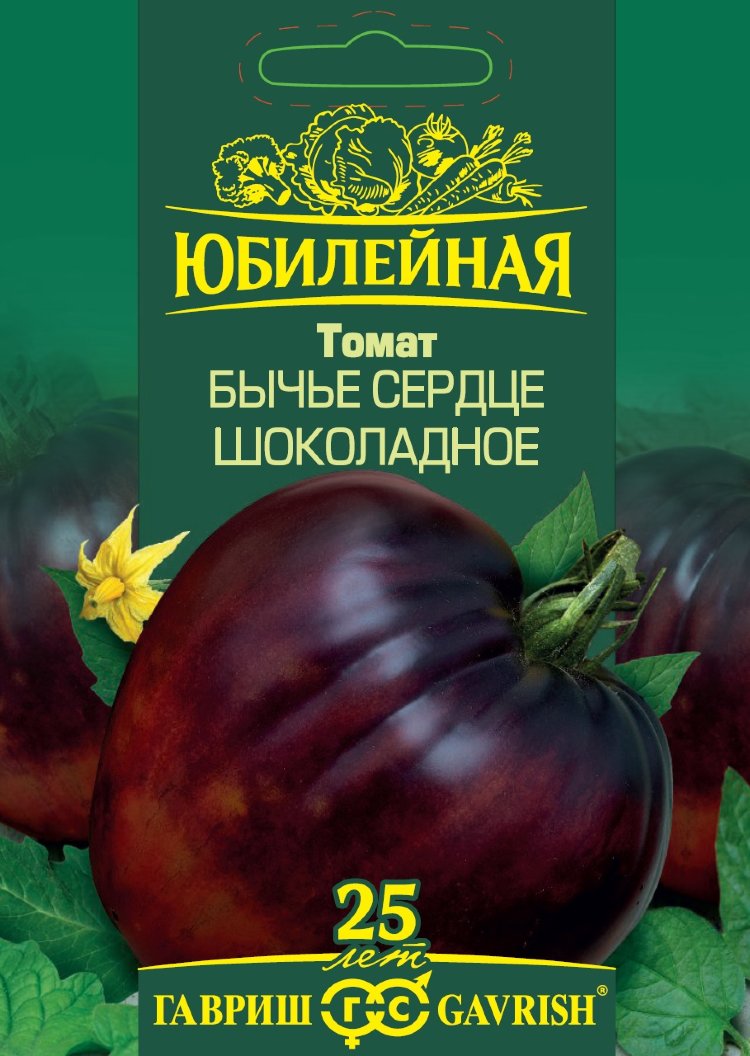
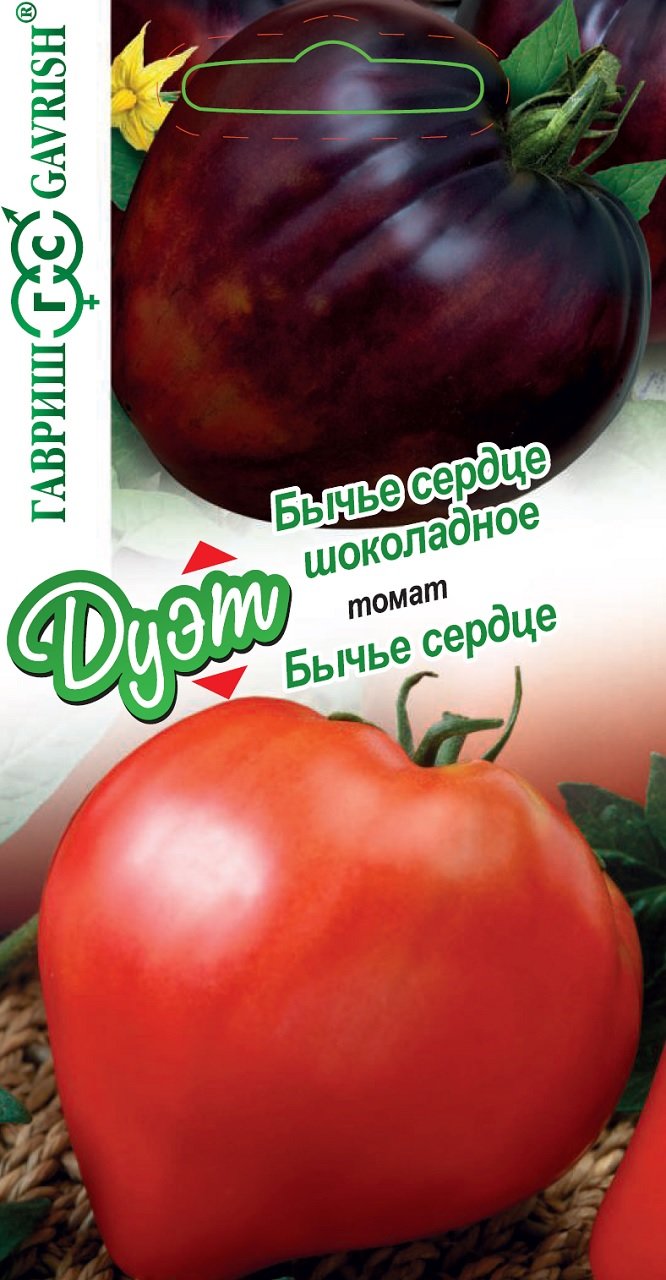
Bull's Heart Chocolate
| Ripening time | 102-110 days (mid-season) |
| Plant type | Indeterminate |
| Description of the fruit | Round, dense, slightly ribbed, brown. |
| Fruit weight | 240-280 g |
| Taste | Great |
| Application | Salad |
| Productivity | 12.9-13.1 kg per 1 sq. m |
| Growing and care | Suitable for open ground, greenhouses, hotbeds, tolerates temperature fluctuations well, but is characterized by very rapid shoot growth. |
| Growing regions | All regions |
| 2018 | |
| Originator | LLC 'AGROFIRMA AELITA' |
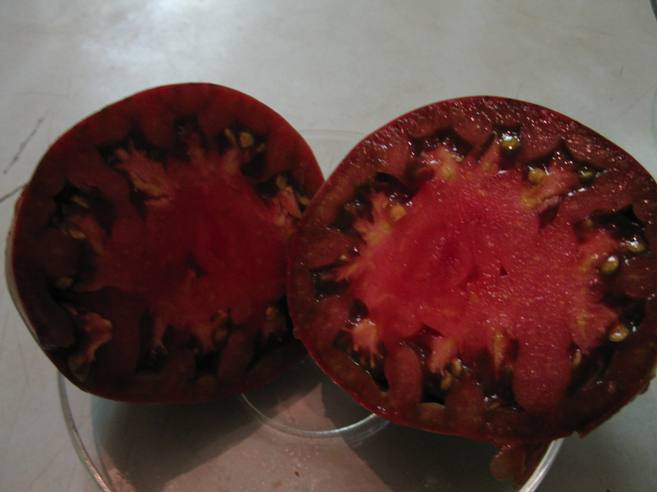
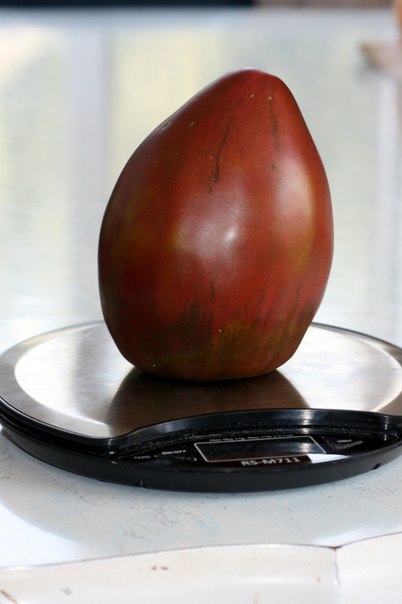
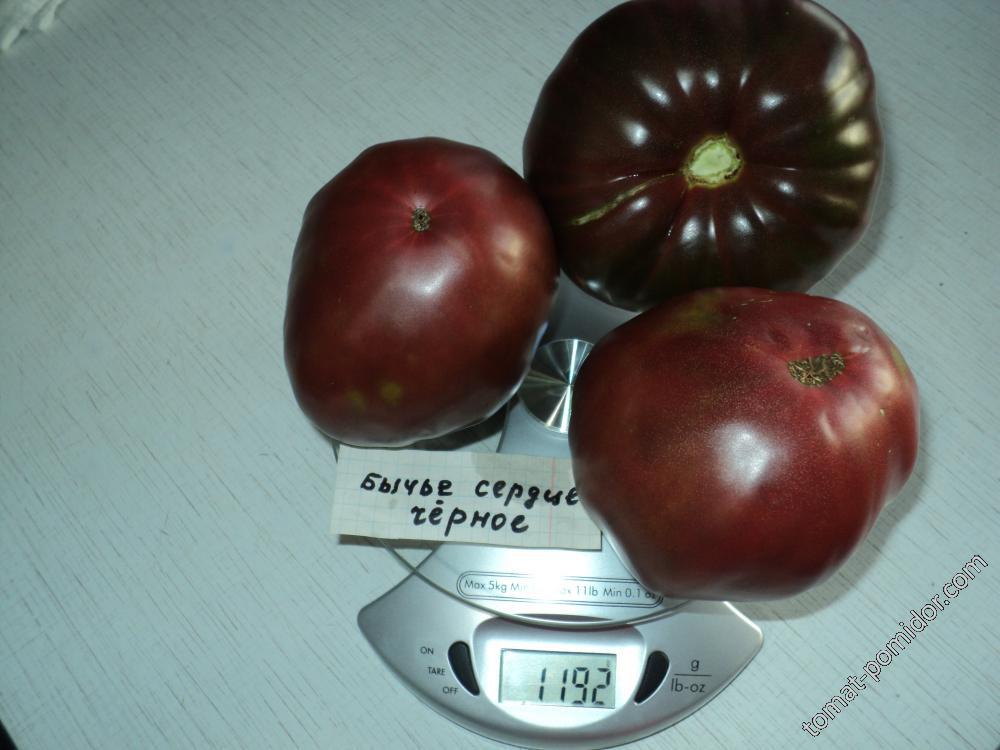
Photo gallery of the Bull's Heart Chocolate tomato variety:
Bull's Heart Black
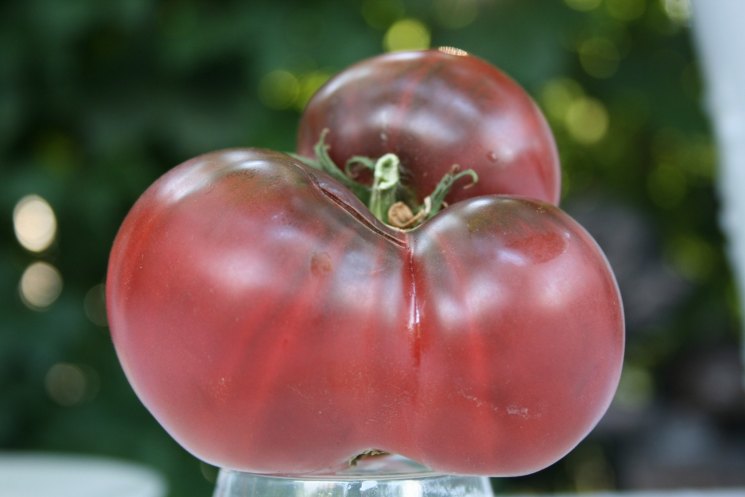
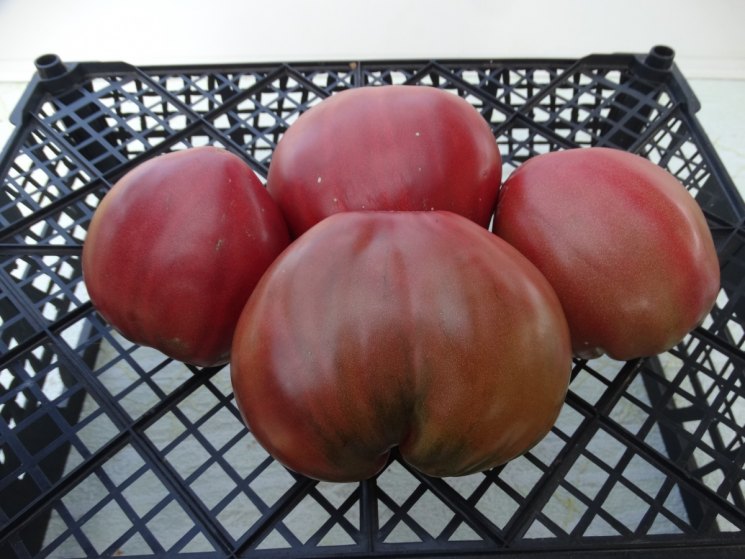
| Ripening time | 110-120 days (early ripening) |
| Plant type | Indeterminate |
| Description of the fruit | Heart-shaped, dense, slightly ribbed, purple-red. |
| Fruit weight | 350-400 g |
| Taste | Great |
| Application | Salad |
| Productivity | 12.9-13 kg per 1 sq. m |
| Growing and care | Suitable for open ground, greenhouses, hotbeds. |
| Growing regions | All regions |
| 2018 | |
| Originator | LLC 'AGROFIRMA AELITA' |
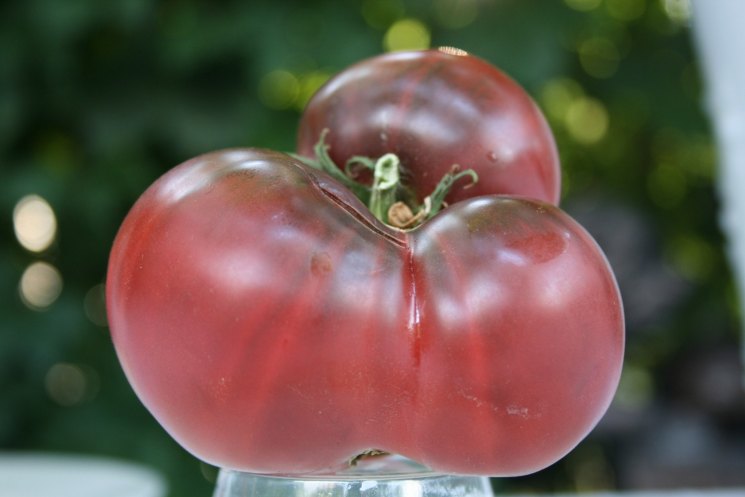
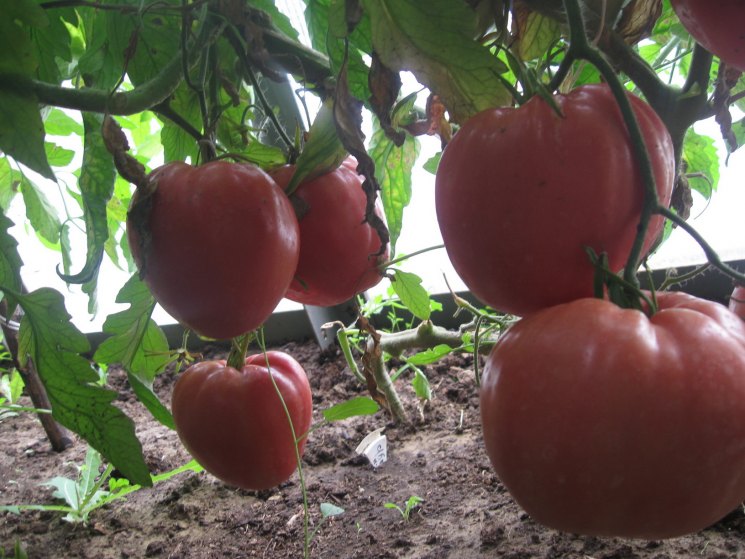
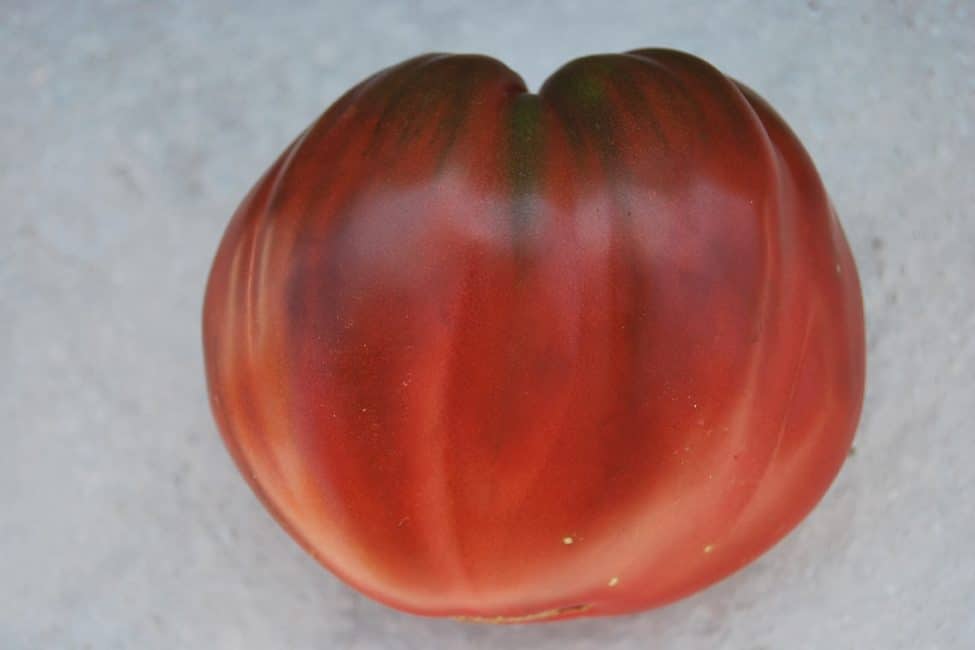
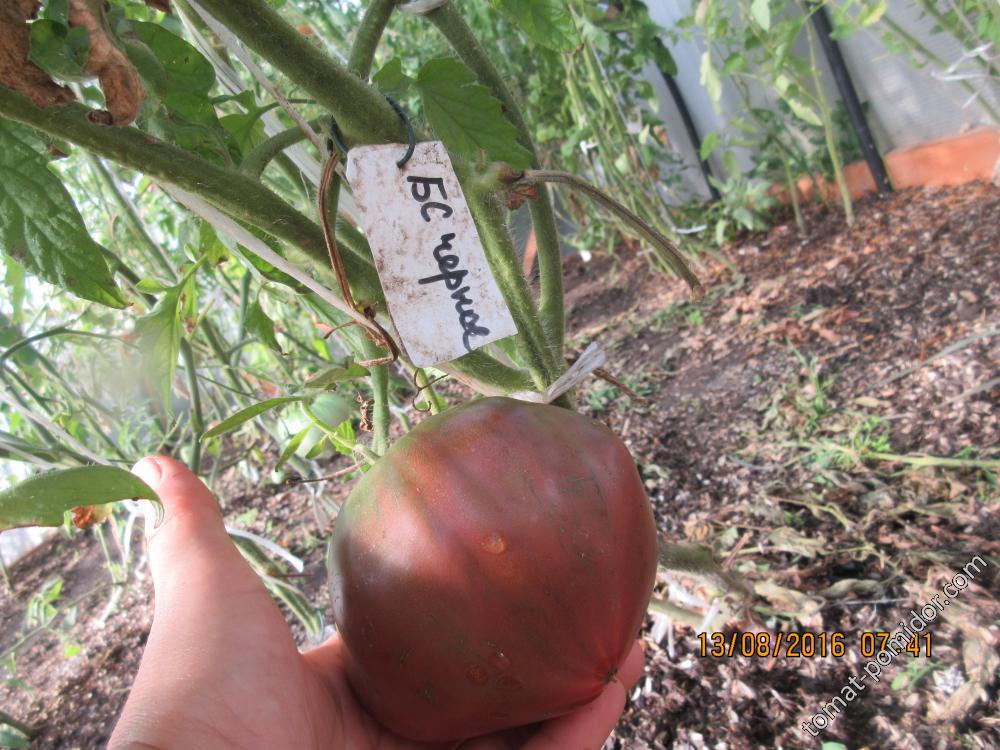
Photo gallery of the tomato variety Bull's Heart Black:
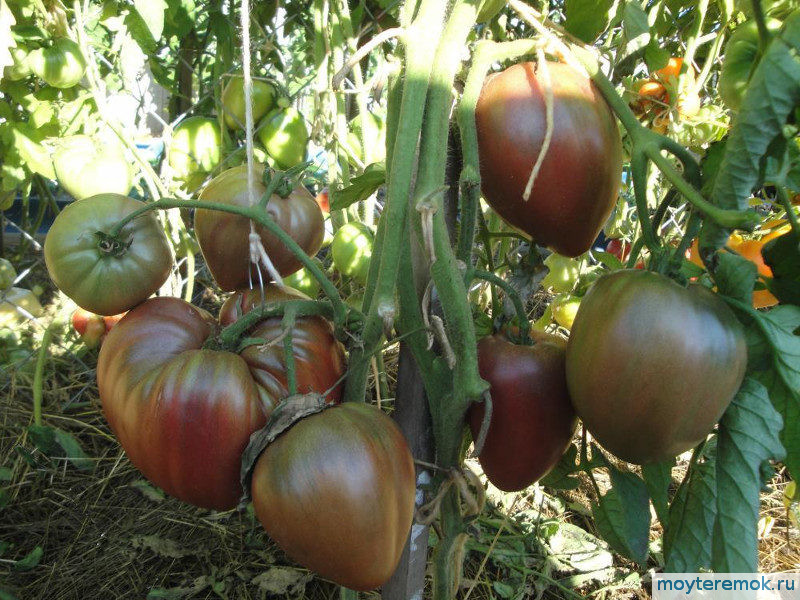
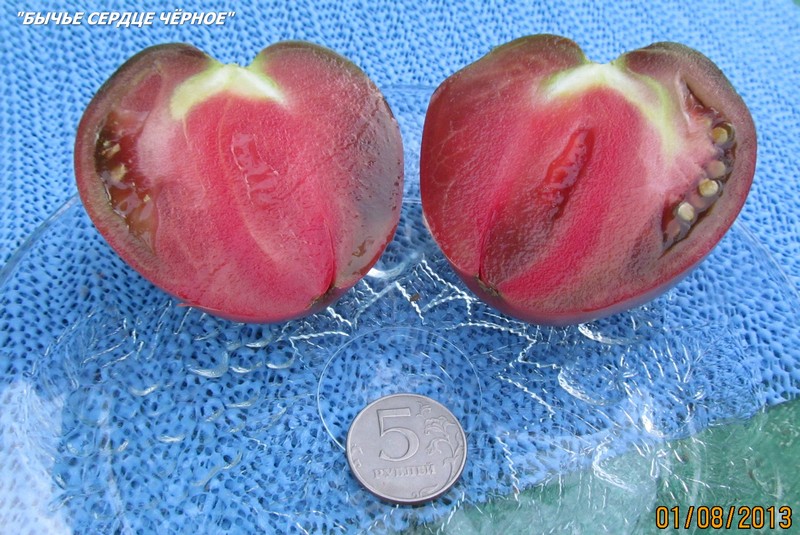
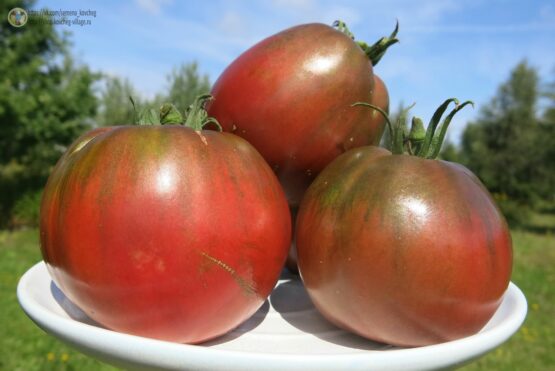
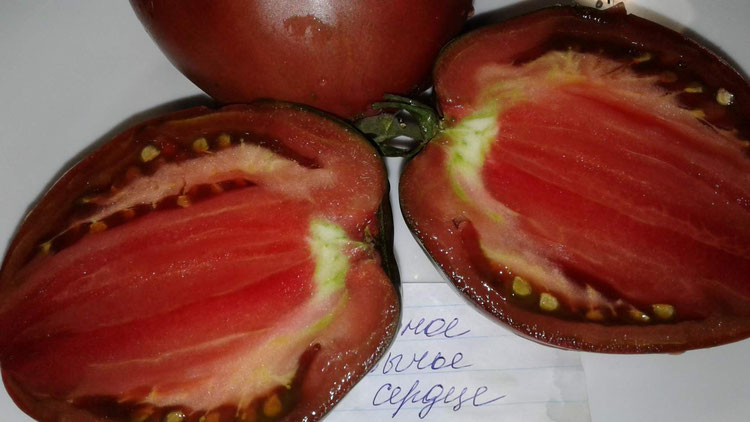
Three more varieties of Bull's Heart not listed
Gardening forums mention other varieties: Abakansky, Minusinsky, English, and Beloye, but these varieties are not registered in the registry. We've compiled information about these Bull's Heart varieties from real reviews and seed producers.
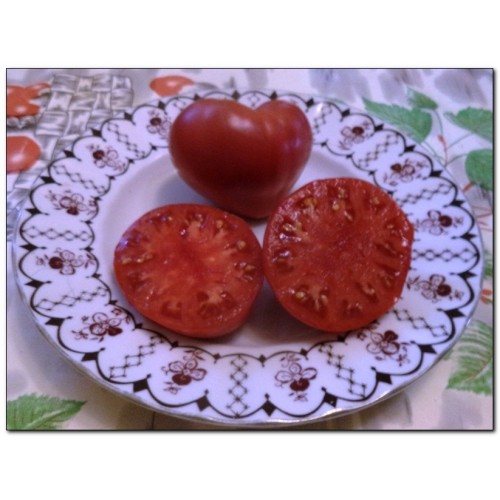
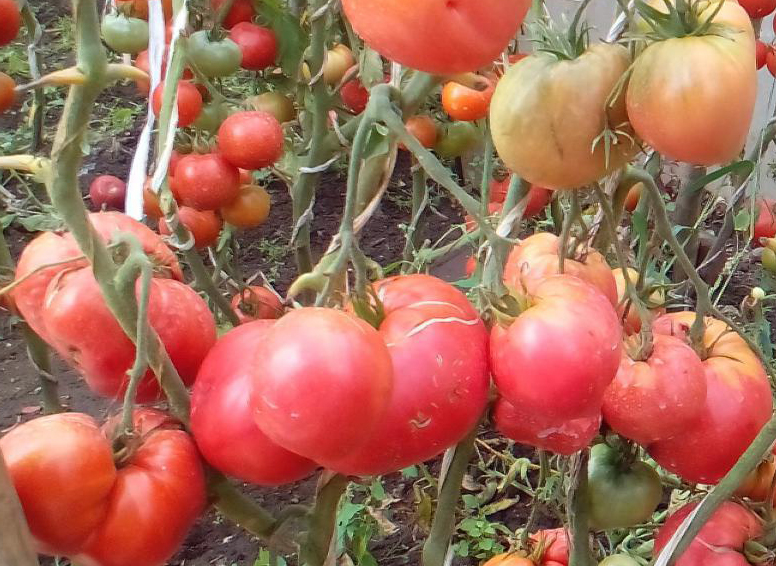
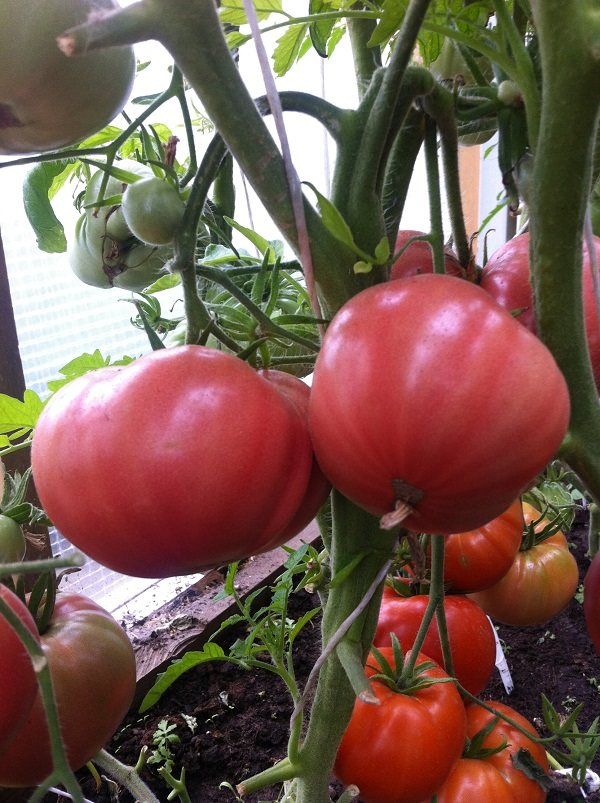
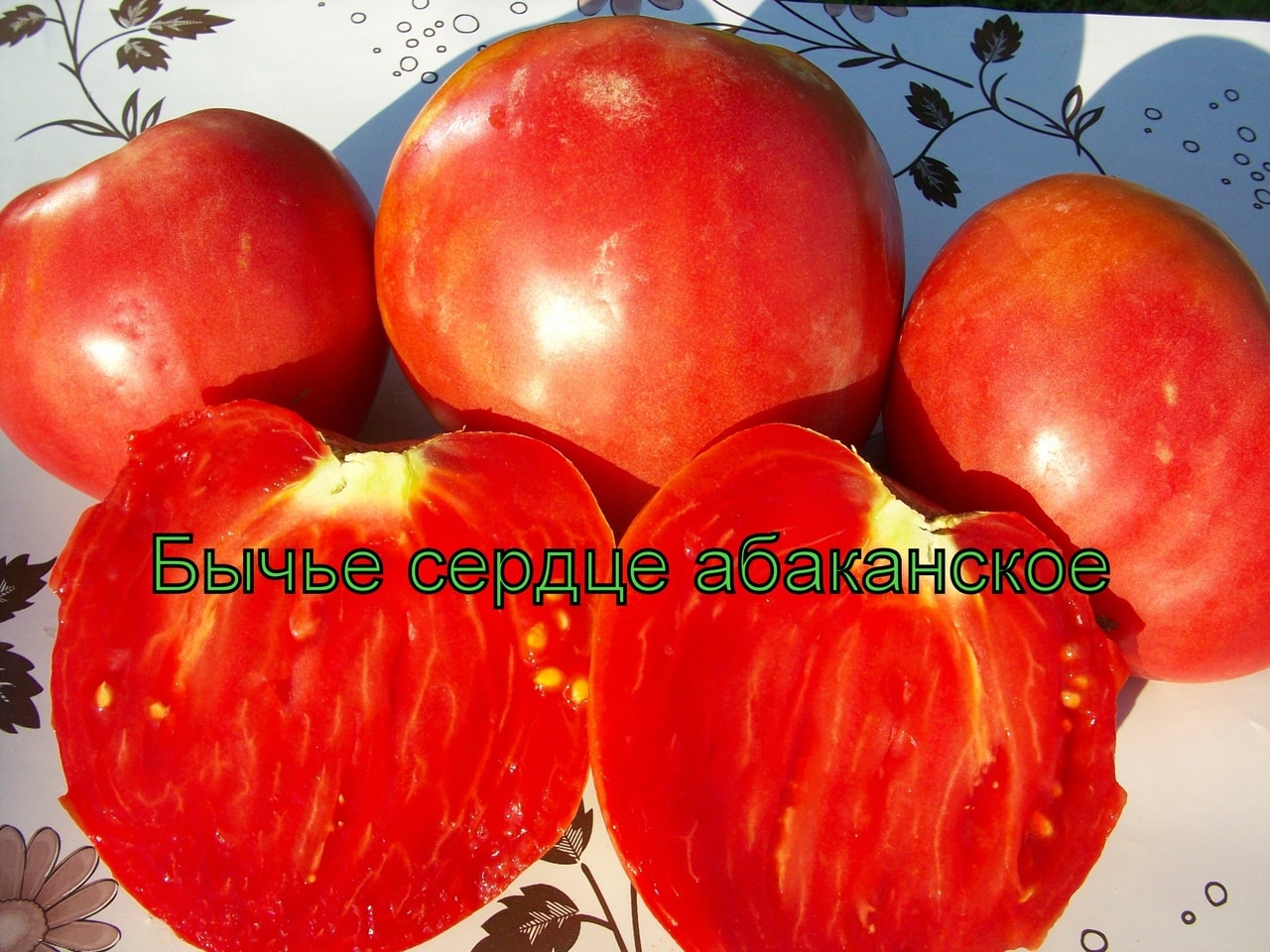
Abakan Bull's Heart
An indeterminate variety with early ripening. Harvesting begins 100 days after sowing.
The bushes are tall and require sturdy support, pinching, and shaping into a single stem. They are grown primarily in greenhouses.
The fruits are heart-shaped, smooth, and pink. Their weight ranges from 300 to 600 g, but with proper care and favorable conditions, they can reach 1 kg.
One plant can yield about 5 kg of harvest.
Tomatoes are used for eating fresh, as well as for processing into juice, ketchup, adjika and other sauces.
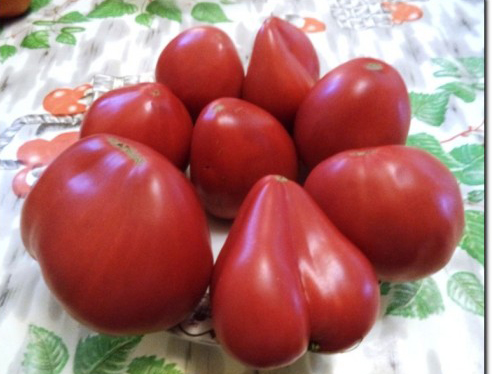
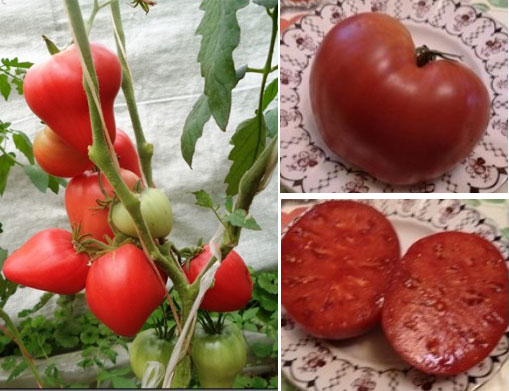
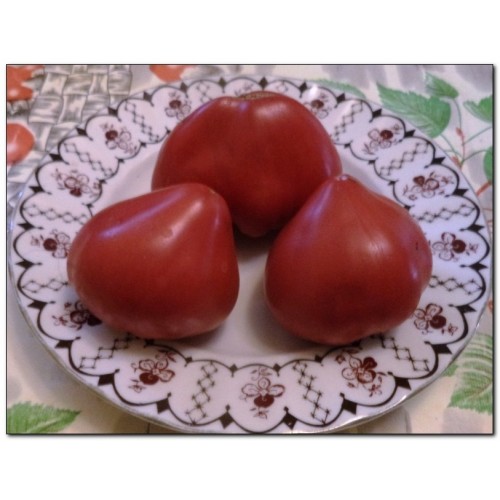
Photo gallery of the Abakan Bull's Heart tomato variety:
English Ox Heart
An indeterminate variety with medium ripening times, from sowing to harvesting takes from 105 to 110 days.
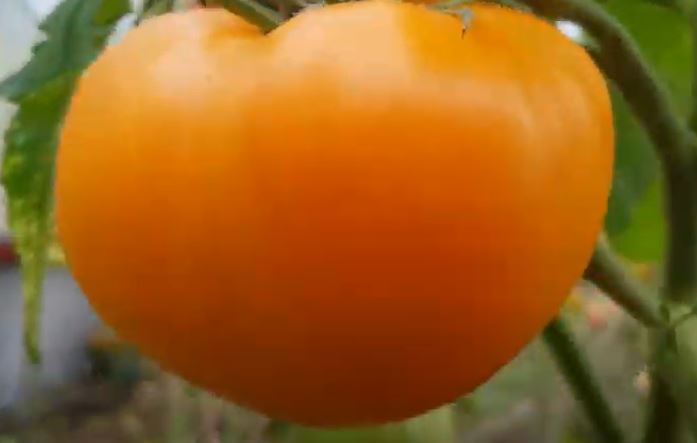
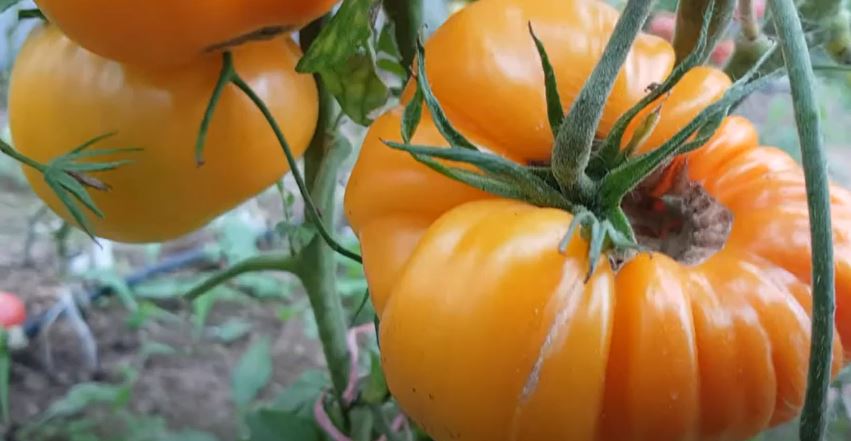
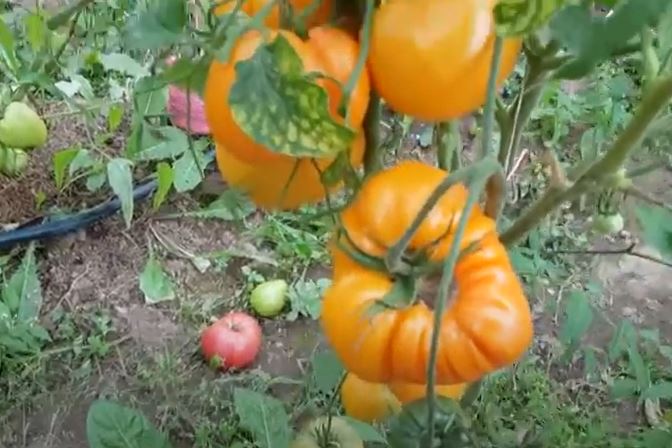
The fruits are heart-shaped, orange, and quite large. Their weight varies from 400 to 600 g.
The bushes are vigorous and moderately spreading, with shoots growing to 140-180 cm and requiring staking. They are trained into 1-2 stems.
Tomatoes have a distinct flavor and are ideal for baby food because they do not contain any allergens.
The yield reaches 12 kg per bush.
This variety is used for fresh eating, as well as for processing into various sauces and vegetable mixtures.
The variety was originally zoned for northern regions, but is successfully grown throughout the country.
Photo gallery of the English Bull's Heart tomato variety:
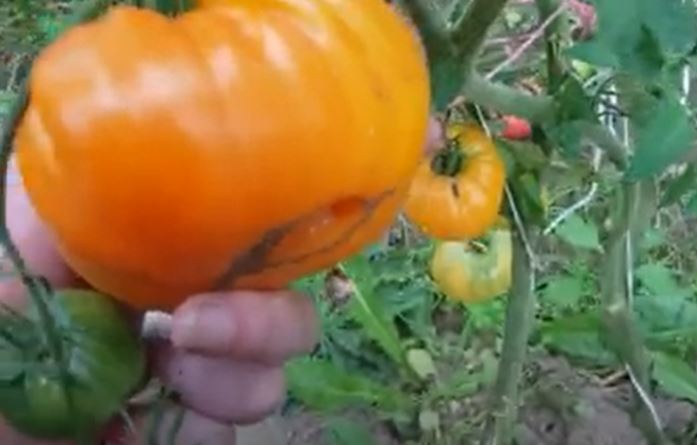
Minusinsk Bull's Heart
The variety is mid-season, the ripening period is 115-120 days.
It can be grown both in greenhouses and open ground. It is characterized by strong immunity and ease of cultivation.
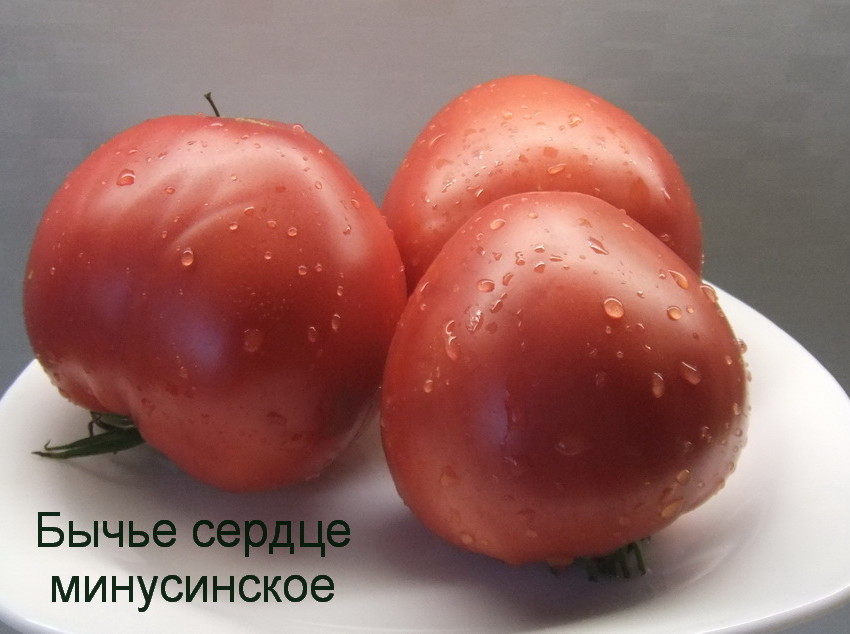
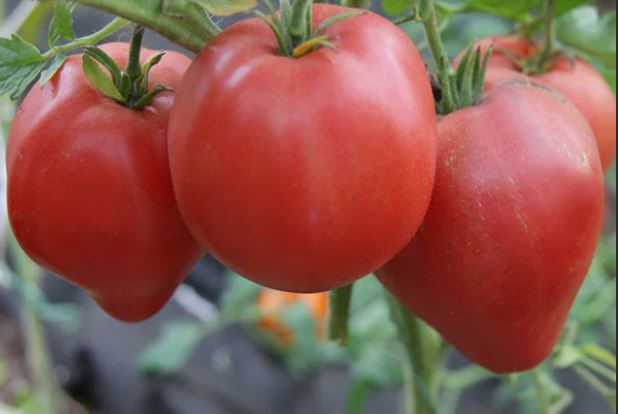
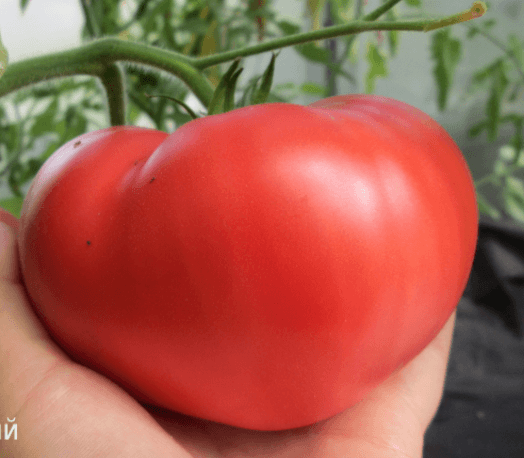
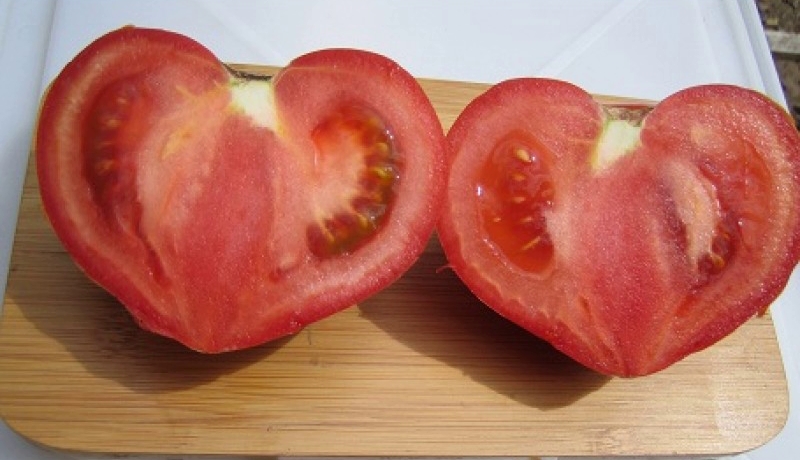
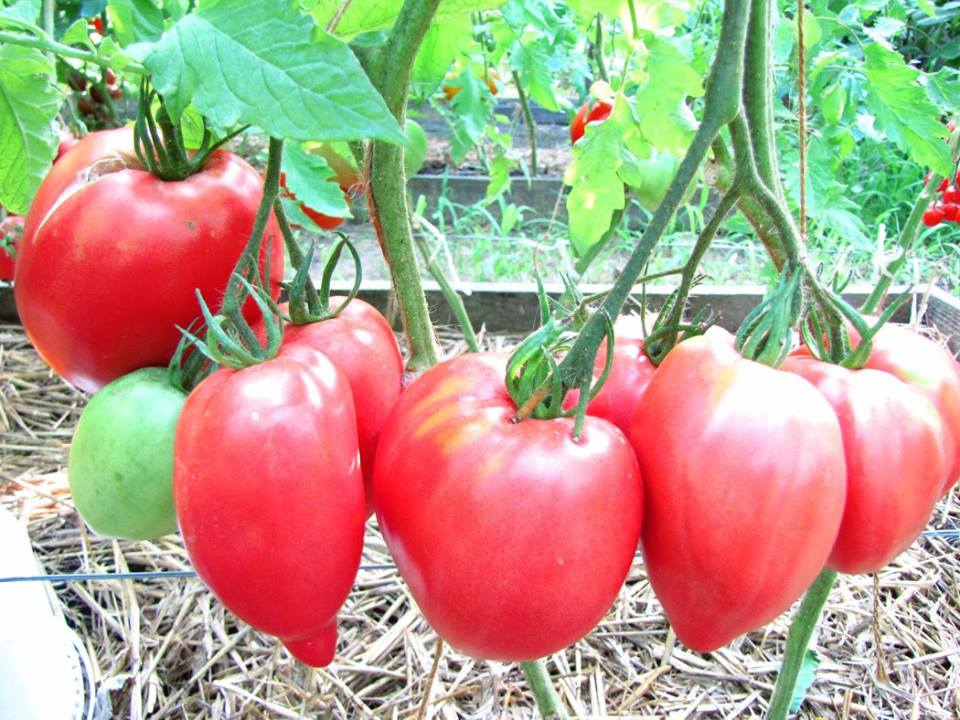
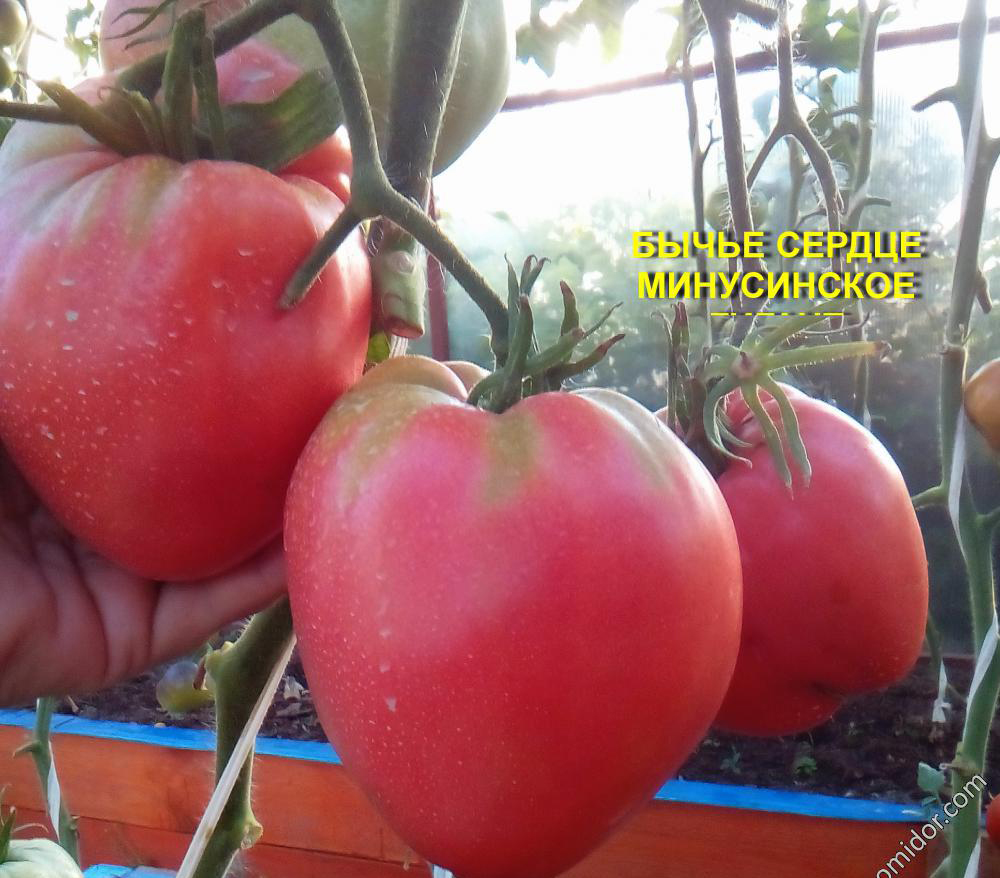
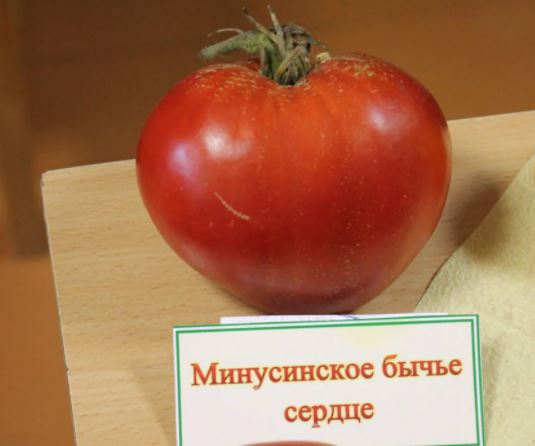
The tomatoes are a perfect, heart-shaped, red color. They weigh 300-500 g.
The pulp is fleshy and very pleasant to taste.
The shoots are tall, growing up to 170-180 cm, and require staking. The plant develops into 1-2 stems.
The yield is relatively low; 10 to 15 kg of tomatoes can be harvested from one square meter.
Tomatoes are used to prepare salads and other dishes, as well as for processing into juice, ketchup, adjika, and tomato paste.
Photo gallery of the Minusinsky Bull's Heart tomato variety:
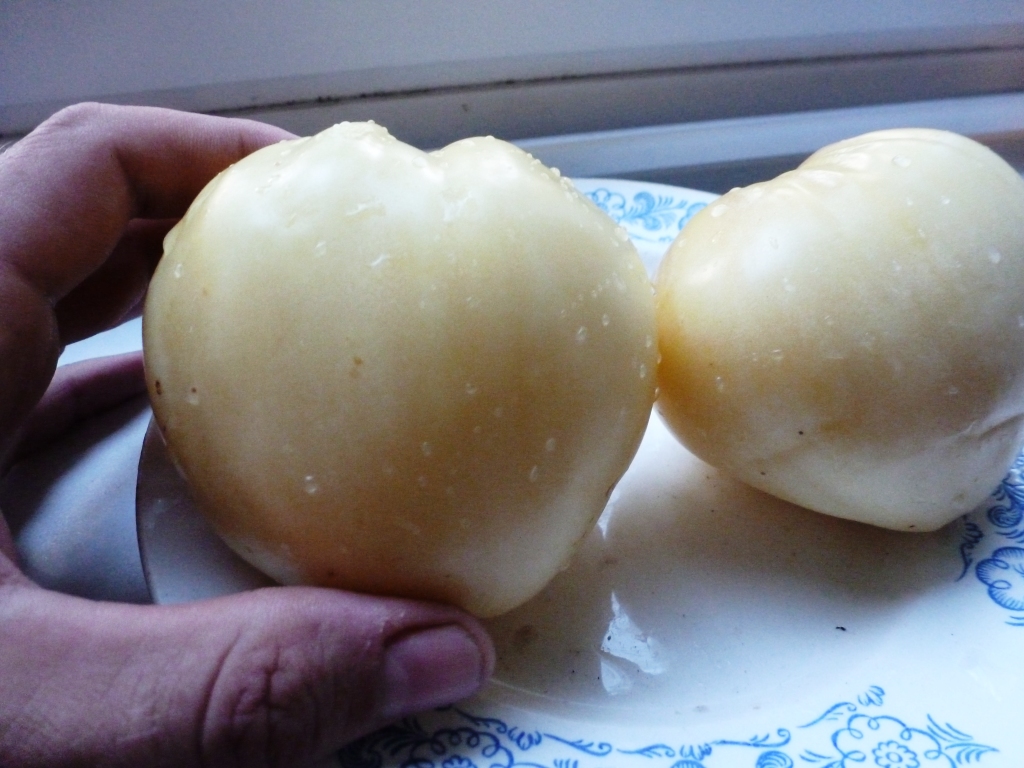
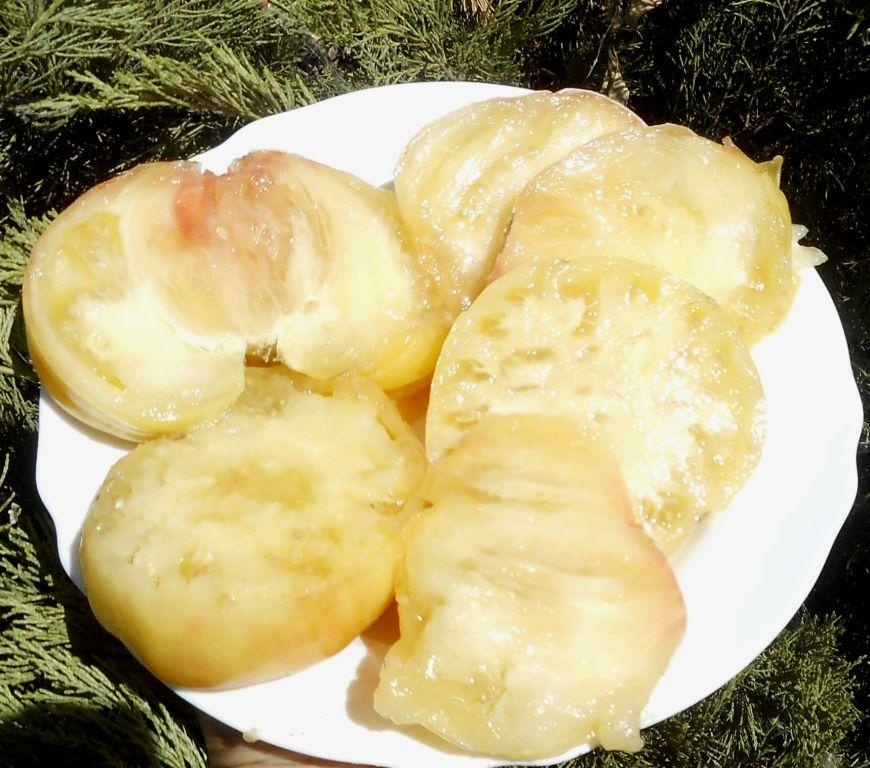
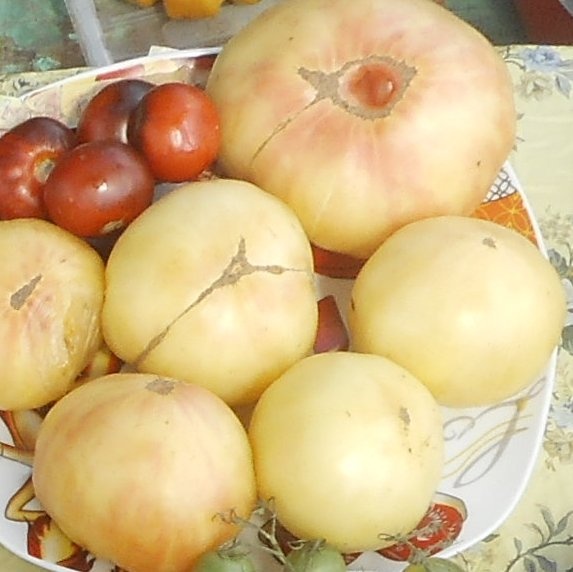
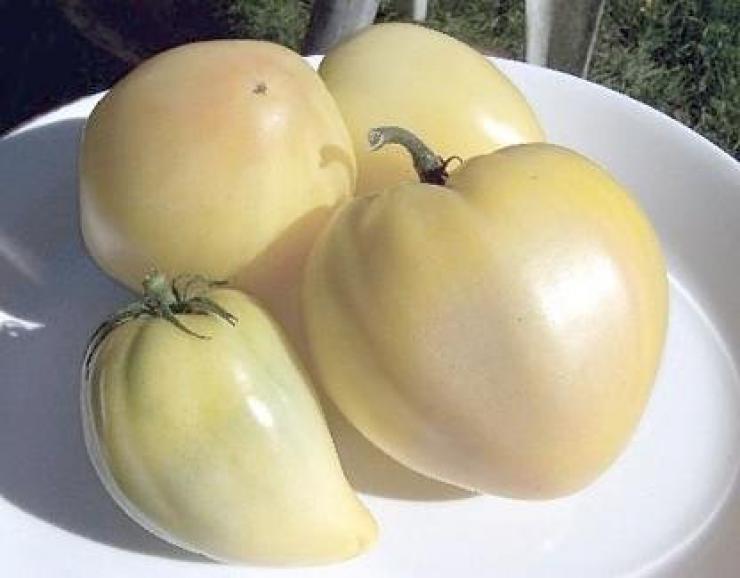
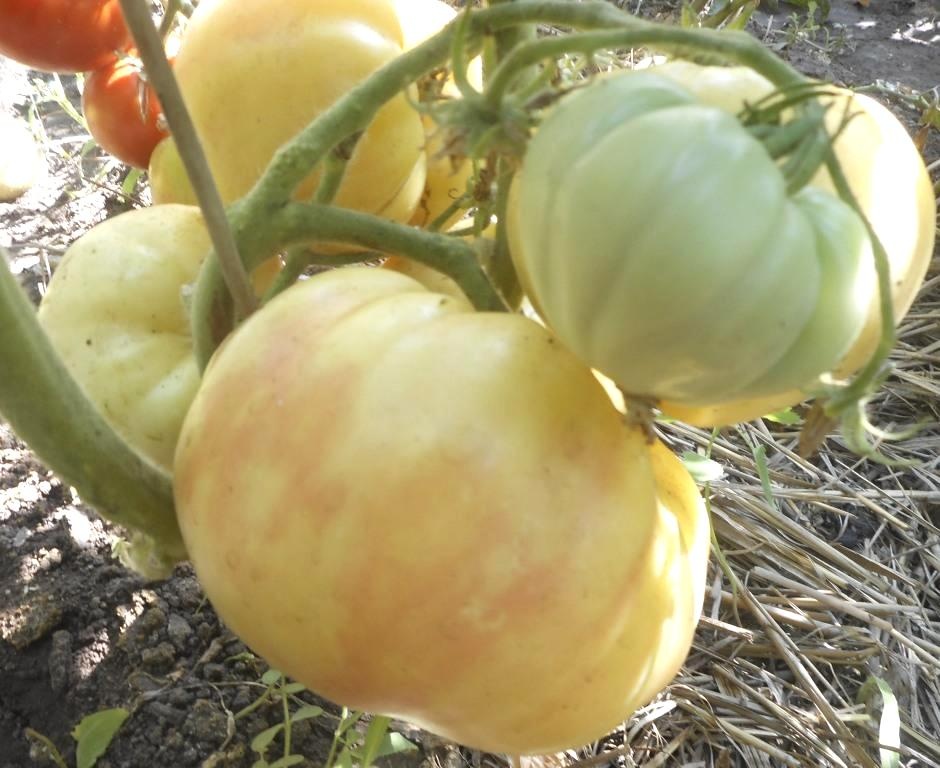
Bull's Heart White
An indeterminate variety with early ripening (90 to 100 days). The bushes are vigorous, with shoots growing up to 150 cm, requiring staking. Up to five clusters form on the central stem, each holding five tomatoes.
The yield is high, up to 5 kg of fruit per bush.
The variety's main characteristic is its light-yellow fruits, which have a completely uneventful flavor. They weigh an average of 250 g, but with proper care and favorable conditions, they can reach 600-800 g.
Tomatoes are used for fresh eating or vegetable preparations, where chopped vegetables are used.
Grows and bears fruit well in greenhouse conditions.
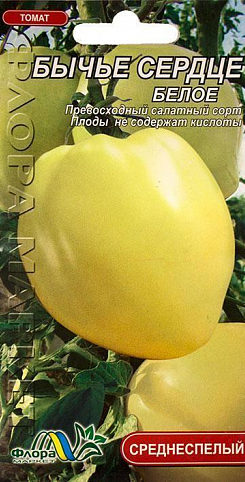
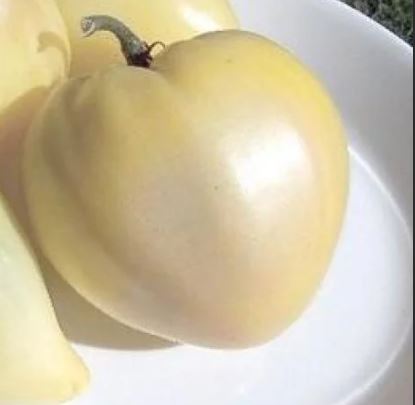
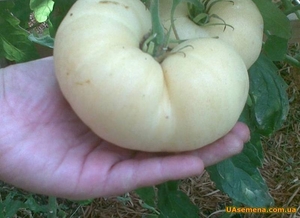
Photo gallery of the tomato variety Bull's Heart White:

We recommend an article about this, How to build a polycarbonate greenhouse yourself.
A detailed description of the Bull's Heart tomato variety (original red)
This variety was added to the State Register of the Russian Federation in 2003. However, the originator did not establish clear boundaries between growing regions. Suitable conditions can be created both in open beds in warm regions and in greenhouses in regions with less favorable climates.
The fruits ripen in 120-130 days, so the variety is considered late or mid-late.
The bushes are vigorous and have few leaves, allowing the fruit to receive more light. The shoots are determinate, their growth being limited by a genetically determined threshold. In a greenhouse, they grow up to 200 cm, and in the open ground, up to 180 cm.
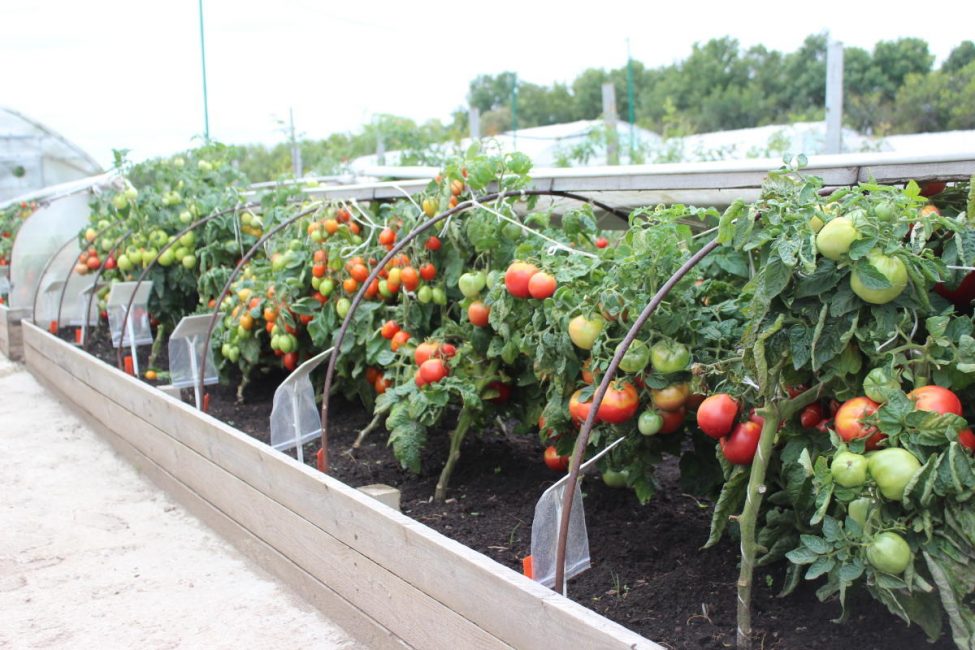
The plant requires training and good support to prevent the stems from breaking under the weight of the fruit. Inflorescences (flowers, fruits, and seeds) begin to emerge above the eighth leaf; without support, the tomatoes will begin to bend toward the ground. If the fruit touches the soil, they are inevitably at risk of rotting.
The fruits are large, weighing up to 225 g. Their heart-shaped form gives the variety its name. The fruits are distinguished by their fleshy flesh with a small number of seed chambers. With proper care, this tomato can grow to a giant weighing 800 g. A vine can bear quite a few fruits, with 5 to 7 clusters developing at a time. The higher the tomatoes are from the ground, the smaller the fruits will be. The flavor is sweet with a subtle tartness. Due to the high dry matter content, the flesh is hardly considered super-juicy.
The average yield per plant in a greenhouse is 8-12 kg, while in open ground it is significantly lower, at 3-4 kg. However, this can vary depending on weather conditions and growing conditions.
You can collect the seeds yourself; this variety is not a hybrid. However, to maintain the yield, it is recommended to purchase seeds every four years to replant.
Immunity to diseases is relatively high, but plantings require regular treatment against late blight, to which they are prone.
Despite their thin skin, tomatoes transport well. In the refrigerator, the harvest will easily last for two weeks without losing its quality.
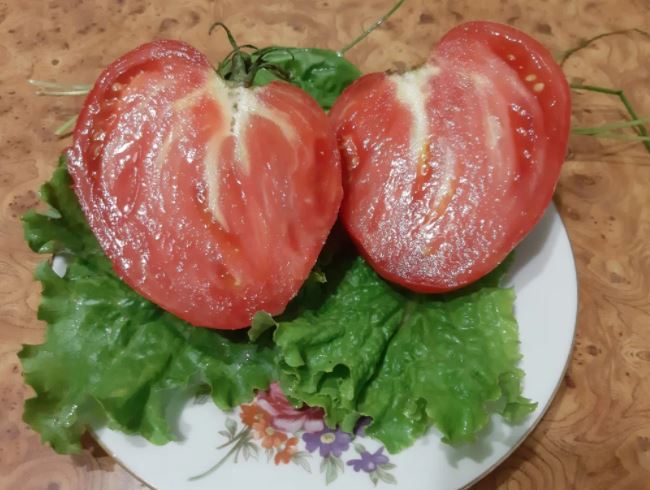
Because of their impressive size, tomatoes have limited uses. They're not easy to pickle or marinate. However, they're ideal for making juice and tomato paste, and they're also a great salad ingredient.
Also read: 62 Best Varieties of Dwarf Tomatoes.
Advantages and disadvantages of the Bull's Heart tomato
The Bull's Heart variety has a number of advantages and disadvantages.
| Advantages | Flaws |
|
|
Growing seedlings of the Bull's Heart tomato variety
The bull's heart tomato is characterized by a relatively late ripening period, so it is grown exclusively from seedlings. The seeds are first germinated indoors, and only then are the mature plants planted in the garden. If the seeds are planted directly in open ground, the tomatoes simply won't grow.
You can buy seeds at any specialty store, but Bull's Heart is not a hybrid variety. This means you can extract the seeds yourself from the fruits. However, they will still need to be replenished every 4-5 years. Sow early, as early as early March. All planting material undergoes preliminary preparation.

First, determine the viability of the seeds. Dissolve 10 grams of regular table salt in a half-liter jar of water. Pour the seeds in and let them sit for about 10 minutes, no more. Those containing embryos will sink to the bottom. Light, empty seeds will float to the surface. These should be discarded.
Fill another glass with plain water; experienced gardeners prefer melted water. Immerse the seeds in it and leave them for another 12 hours to activate all the processes inside the seed coat.
To strengthen the immune system and speed up the process of sprouting, you can replace water with any suitable growth stimulant (Immunocytophyte, Epin, potassium humate, Emistim-M and others).
The final step in the preparatory phase is disinfection. This is done using a weak solution of potassium permanganate. The soaking time is 5-6 hours. Alternatively, you can use solutions such as Zineb, Alirin-B, or Fitosporin. Soak the seeds in these solutions for 15-20 minutes, then rinse with water.
After all these steps, place the seeds in a damp cloth, place the cloth on a saucer, and place the saucer in a warm place. The first sprouts will appear in about 2-4 days. Now you can begin planting. If you don't germinate the seeds but place them directly in the soil, the sprouts will appear 4 days later.
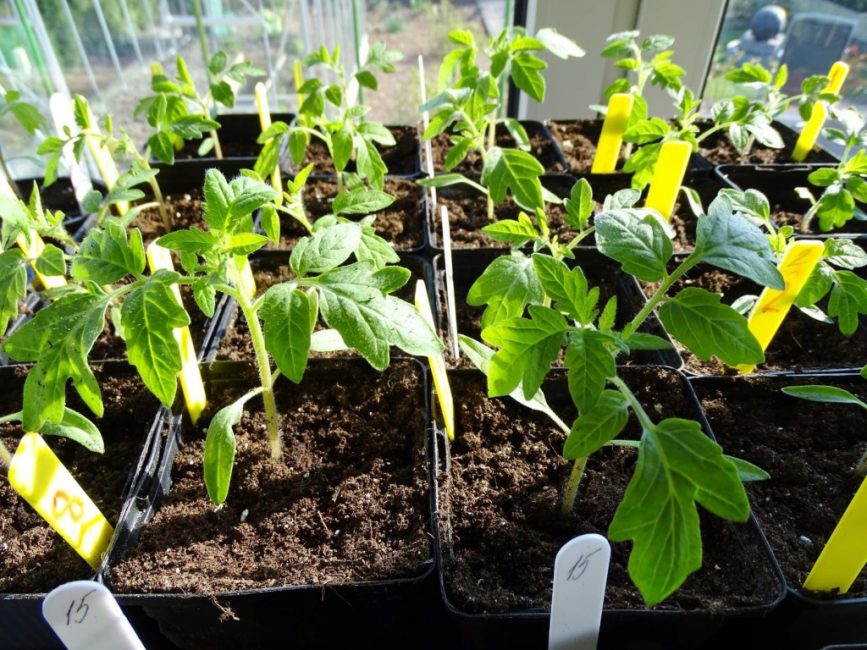
For soil, it's best to use a specialized substrate for nightshades, which is available in gardening stores. For those preparing it themselves, it's important to know that Ox's Heart prefers nutritious soil, so it should contain 2 parts humus and 1 part peat. Sand (1 part) can be added for looseness. The soil should be disinfected beforehand using any known method (boiling water, potassium permanganate, oven-baked, etc.).
It's best to choose containers that are wide enough but not too deep. The seedlings will eventually need to be pricked out.
Procedure:
- The soil is poured into the containers to a height of 5 cm, then watered and leveled.
- Rows are made on the surface at a distance of 8 cm from each other.
- In each row, seeds are planted at intervals of 5 cm.
- The seeds are covered with a 1.5 cm layer of soil on top.
- Cover the container with plastic wrap or glass and place it in a room with a temperature of 25°C. If the seedlings will be placed near a windowsill, be sure to place a piece of foam under the container to prevent the soil from cooling.
- Every day the film must be removed and the plantings aired, otherwise condensation will begin to form inside.
- After the seedlings emerge, the cover is removed and the seedlings are transferred to a cooler place with a temperature of +15…+18 °C.
- Additionally, tomatoes are illuminated with a special lamp so that the length of daylight is at least 12 hours.
- When the stem has two fully developed leaves, you can begin transplanting. This occurs three weeks after germination. Water the seedlings 30 minutes before transplanting. Then, remove each seedling, along with its root ball, from its container and transplant it into a separate container filled with prepared soil. Unlike most other crops, tomatoes tolerate this procedure well.
- After a week, you can give your tomatoes their first feeding with any complex fertilizer. Repeat after 10-14 days.
- Water sparingly, but frequently. Drying of the top layer of soil is an indicator.
- Two weeks before planting, it's recommended to begin hardening off the seedlings. To do this, place the tomatoes outdoors for three hours at a time, then increase this time to 12 hours. Three days before planting, the seedlings can be left indoors entirely. Ensure the air temperature does not drop below 10°C.
Planting Bull's Heart tomato seedlings in a greenhouse and open ground
The Bull's Heart tomato is planted in the garden 60 days after sowing. By this time, the shoots typically reach a height of 25 cm and have 5 to 8 leaves.
In central regions, seedlings are planted in greenhouses in early May, and in open ground in late May or early June. In southern regions, these dates shift earlier by 10-15 days.
The bed should be open but slightly shaded. Ox's heart does not tolerate direct sunlight or dense shade. Therefore, many gardeners construct a special shelter made of light-colored material.
Garden areas where groundwater is too close to the surface are absolutely unsuitable for tomatoes. If there's no other choice and the entire garden is a mass of quicksand, you'll have to build raised beds and ridges (at least 50 cm deep).
The Bull's Heart tomato is distinguished by its dense, tall shoots, which also boast an impressive root system. Therefore, planting them too close together is not recommended, as they will compete for light, moisture, and nutrients. The optimal number of plants per square meter is two in a greenhouse and three in the open ground.
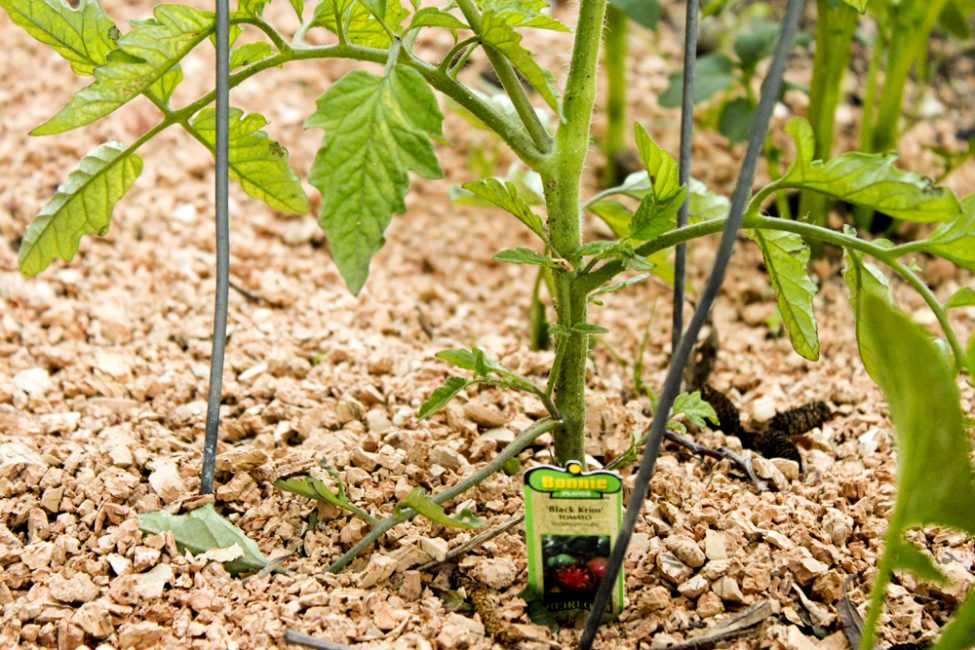
The seedlings are placed in the holes so that only the top leaves remain above the surface of the bed, as roots will continue to grow from the stems. The roots should be hidden in the soil.
After digging, lightly compact the soil to form a hole. This hole will help retain moisture in the bed for the first few days.
Features of caring for Bull's Heart tomato varieties
Proper care of the Bull's Heart tomato allows you to obtain the maximum yield of tasty and large fruits.
Watering
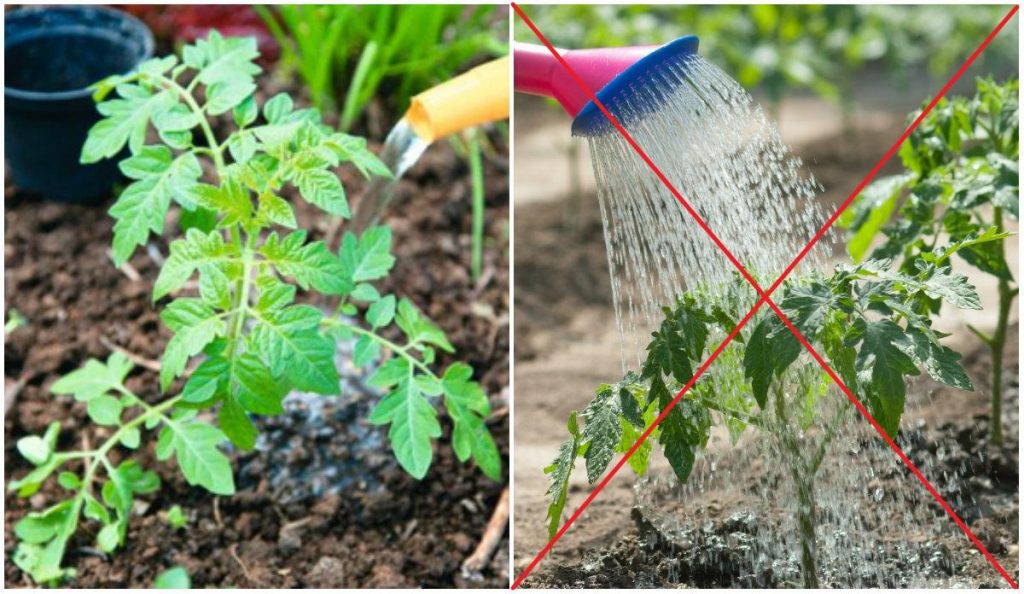
Sprinkler irrigation is absolutely not suitable for tomatoes; if the bush gets wet, the buds will fall off and the leaves will deteriorate. Drip irrigation is best for this variety. You can make your own using a hose, pipes, plastic bottles, and a barrel of water. Alternatively, you can purchase and install a specialized system.
If this is not possible, then watering should be done at the roots every 4-5 days.
During the initial stages of growth, 5-7 liters of water per plant is sufficient. During the flowering stage, this amount increases to 10-12 liters. Watering should be done early in the morning or in the evening after sunlight has decreased.
Tomatoes require 65% air humidity, so after each watering, the greenhouse should be ventilated and the barrels of water inside should be covered to prevent moisture from evaporating.
The optimal temperature inside a greenhouse for tomatoes is 22 to 25°C during the day and 16 to 20°C at night. This can be maintained by opening windows and doors equipped with a special regulator.
A month before harvesting, watering is reduced to a minimum, otherwise the fruits will be watery and tasteless.
Although the Bull's Heart tomato is considered a moisture-tolerant variety, it's best to avoid prolonged periods of water deprivation. Watering after such a shortage can cause the fruits to crack. To retain moisture in the soil, you can cover the bed with a layer of mulch.
Top dressing
It is recommended to fertilize the Bull's Heart tomato every two weeks.
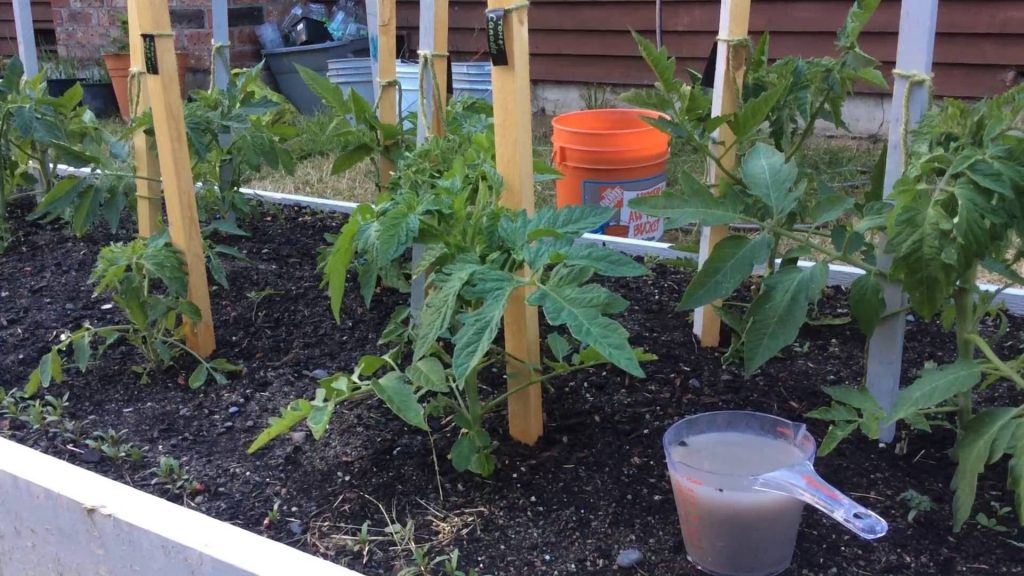
The first time, this is done 20 days after planting the tomatoes. At this stage, it's important for the plants to gain green mass, so nitrogen-containing fertilizers are added to the soil. Tomatoes will need this supplement during the first month in the garden. 15 grams of the solution is diluted in 10 liters of water, and after watering, 2-3 liters of the solution are added under each plant.
Now we move on to other types of fertilizer. Nitrogen has done its job—it stimulated green growth—but it will continue to harm the crops. Therefore, it should be abandoned in favor of complex fertilizers and organic matter (weed infusion, manure, or litter).
Experienced gardeners spray the ovaries forming on the bushes with a solution of boric acid, adding 2 g per 1 liter of water.
In a greenhouse, there is no need to apply fertilizer so frequently, because there is no rain that would wash nutrients out of the soil.
Bush formation
For the normal growth of the Bull's Heart tomato, bush formation is one of the main conditions. The maximum allowable number of stems is 2. Some gardeners prefer to train the bush with a single stem. The bushes must be pinch.
Furthermore, the shoots need good support, otherwise they won't support the weight of the fruit and will break. Trellis mesh or regular heavy wire can be used for tying.
The variety does not have many tops, so they can only be removed from the lower part of the bush, if such a need arises.
Pests and diseases of the Bull's Heart tomato variety
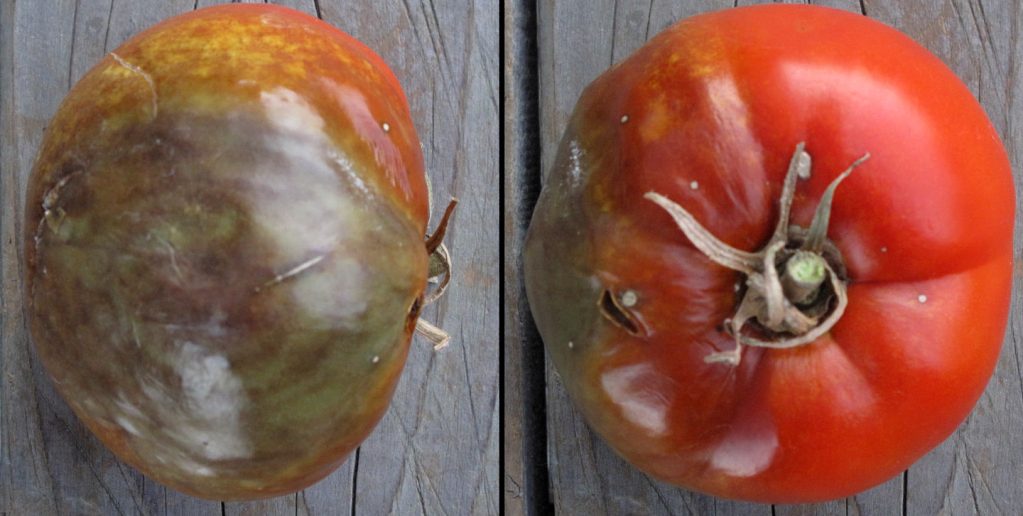
The Bull's Heart tomato has a strong immune system, but if watering rules are not followed, combined with cool temperatures or high humidity, it can be susceptible to late blight.
As a preventative measure it is necessary:
- Process seeds.
- Conduct soil disinfection.
- Ventilate the greenhouse regularly.
- Do not overwater the plantings.
- Follow crop rotation rules, do not plant tomatoes after nightshade crops.
- Treat plantings with antifungal agents twice per season.
- If the affected area is large, the bushes must be removed and burned.
Growing Bull's Heart Tomato at Home
Only superdeterminate trailing or standard varieties grow well indoors. Bull's Heart is neither. In addition to its tall shoots, its root system is quite robust, so it will be cramped in a limited container, preventing the fruit from ripening. Therefore, growing Bull's Heart indoors is practically impossible; other tomato varieties are better.
Seed harvesting
Bull's Heart tomato varieties, unless they are hybrids, are suitable for seed production. Seeds are easy to obtain at home, but remember that it is recommended to replant the planting material at least once every 4-5 years, otherwise the varietal characteristics will deteriorate and the fruits will become smaller.
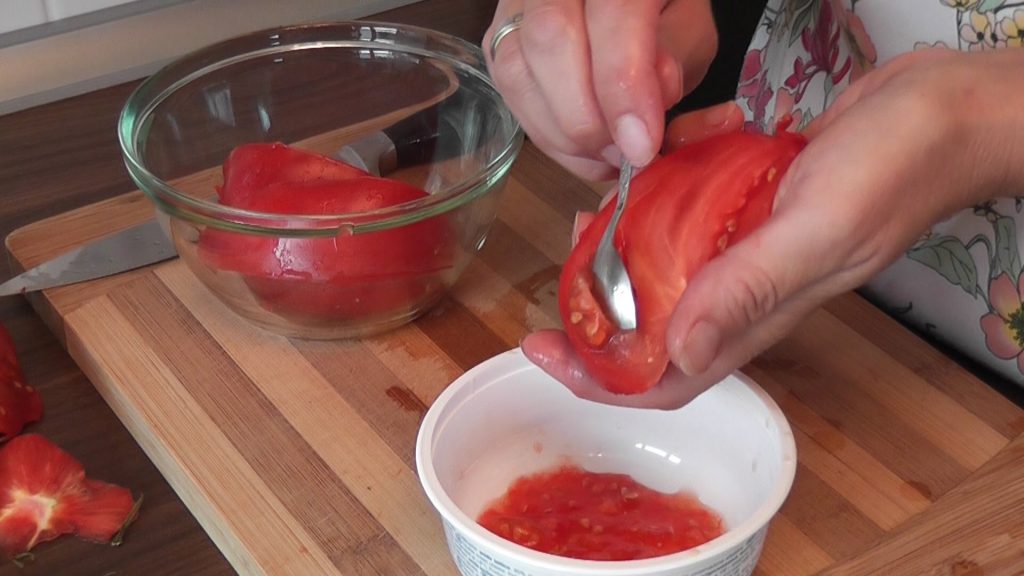
Stages of obtaining seeds:
- The largest fruit from the second from the bottom cluster is selected, which must be completely ripe.
- The tomato is picked and left on the windowsill for several days.
- The pulp is cut and all the seeds are removed from the seed chambers.
- They are dried and placed in paper bags.
Comparison of Bull's Heart tomato varieties with other varieties in the table
Please note! How can you easily convert centners/ha to kg/sq.m? Simply divide by 100! For example, the Abakansky Pink tomato yields 400 centners of marketable fruit per hectare. This equals 4 kg per square meter. It's that simple! Also, keep in mind that typically no more than 3-4 plants are planted per square meter. This way, you can calculate the yield per bush. In the case of the Abakansky Pink, it's about 1 kg.
| Variety | Ripening period (number of days from full germination to ripening)
Yield of commercial fruits |
Brief description | Fetus |
| Bull's heart (red) | 120-125 days
300-400 c/ha Important! There are other colors besides red, see the article. |
A late-to-mid-late determinate variety for open ground and greenhouses. Requires staking and shaping. Suitable for salads. | Heart-shaped, smooth, fleshy, red, 108-225 g. Excellent taste. |
| Abakansky | 110-120 days
600 c/ha |
Mid-early, determinate, large-fruited, suitable for growing in open ground in regions with a temperate climate; in the middle zone it is grown under cover or in greenhouse conditions.Requires staking and shaping. Suitable for salads and processing into tomato products. | Heart-shaped, slightly ribbed, loose, pink in color, 150-200 g. Good taste. |
| Dad | 90-105 days
200 c/ha |
An early-ripening indeterminate variety for open ground and greenhouses. Requires staking and shaping. Suitable for salads. | Heart-shaped, slightly ribbed, medium density, fleshy, raspberry, 200 g. Good taste. |
| Budenovka | 111 days
930 c/ha |
A mid-early indeterminate variety for greenhouses. Suitable for salads. | Heart-shaped, strongly ribbed, red, 150-350 g. Good taste. |
| nobleman | 103-117 days
107-587 c/ha, maximum 780 c/ha (Omsk region) |
A mid-season determinate variety for open ground. Suitable for salads. 95% marketability. | Heart-shaped, medium-ribbed, raspberry, 131-250 g. Good to excellent taste. |
| Ox heart | 111-115 days
630-690 c/ha |
A late-ripening indeterminate variety for open ground and greenhouses. Requires staking and shaping. Suitable for salads. Grows best in southern Russia. | Heart-shaped, medium-ribbed, pink-raspberry, 150-300 g. Good taste. |
| Heart of Gold | 93-95 days
up to 700 c/ha |
An early-ripening, determinate variety for open ground cultivation. Suitable for salads, whole-fruit canning, and processing into tomato products (dietary juices). | Heart-shaped, slightly ribbed, orange, 90-107 g. Good flavor. The fruits contain increased amounts of carotene. |
| Crimson Dawn | 110-115 days
790 c/ha |
A mid-season indeterminate variety for open ground and greenhouses. Requires staking and shaping. Suitable for salads. | Heart-shaped, loose, ribbed, raspberry, 350-400 g. Good taste. |
| Minusinsk bulls | 110-118 days
1200 c/ha |
A mid-season indeterminate variety for open ground and greenhouses. Suitable for salads, canning, and processing into tomato products. | Heart-shaped, ribbed, raspberry-pink, 200-250 g (up to 400 g). Good to excellent flavor. |
| Orange Heart | 125-135 days
620 c/ha |
A mid-season indeterminate variety for open ground and greenhouses. Requires staking and training. Suitable for salads. Long-lasting flavor and shelf life. | Heart-shaped, slightly ribbed, medium density, orange, 120-125 g. Excellent taste. |
| Eagle's Heart | 111-115 days
880-1360 c/ha |
A mid-season determinate variety for open ground. Requires staking and shaping. Suitable for salads. Yield of ripe, marketable fruit is 76% (Novosibirsk Region). Resistant to adverse weather conditions. | Heart-shaped, slightly ribbed, fleshy, raspberry-colored, 177-400 g. Good taste. |
| Eagle's beak | 105-115 days
1050-1440 c/ha |
A mid-season indeterminate variety for open ground. Requires staking and training. Suitable for salads. The yield of ripe, marketable fruit is 75%. | Heart-shaped, slightly ribbed, dense, transports well, pink, 228-360 g (up to 600 g). Good taste. |
| Pink heart | 110-120 days
610 c/ha |
A mid-season indeterminate variety for open ground and greenhouses. Requires staking and shaping. Suitable for salads. Produces good fruit. | Heart-shaped, slightly ribbed, medium density, resistant to cracking, pink, 200-230 g. Excellent taste. |
| Em Champion | 110-115 days
680-1000 c/ha |
A mid-season, determinate, standard variety for open ground. Suitable for salads. Yield of ripe, marketable fruit is 68% (Novosibirsk Region). | Heart-shaped, smooth, red, 126-134 g. The taste is good and excellent. |
Real reviews from gardeners about the Bull's Heart tomato variety
Gardeners note the Bull's Heart tomato's exceptionally pleasant flavor, as well as its excellent yield. This variety is ideal for salads and certain preserves where fleshiness is important (tomato paste, juice with pulp). However, due to its large size, these tomatoes are not suitable for canning.
On the forums:
User Skazeya, January 17, 2018
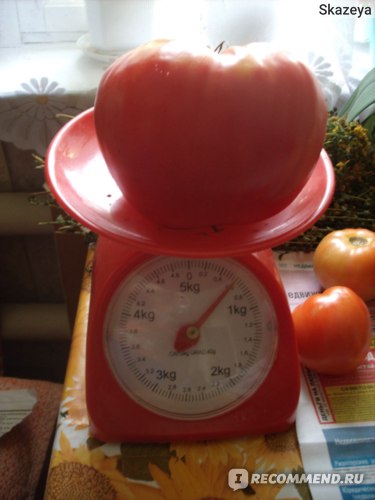
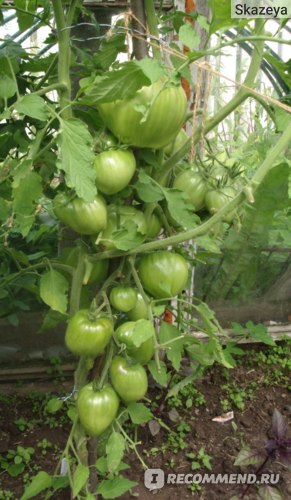
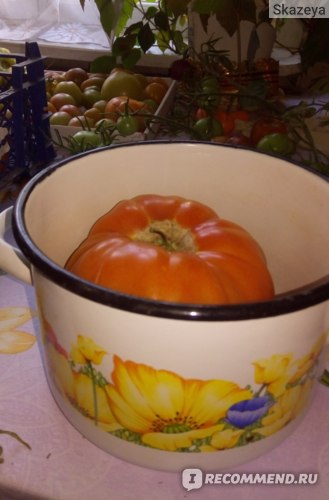
Pink, orange, red - equally beautiful.
Bull's Heart is my favorite tomato variety. I love it for its early ripening and its delicious, fleshy fruits.
The seedlings always take root quickly and grow. I appreciate it for its limited foliage. Its bushes don't shade their neighbors, and I don't have to pluck excess leaves often. But it produces many large fruits.
I most often plant the pink variety Bull's Heart. But the red one has turned out pretty well, too.
This year I tried growing orange ox heart. It has a sweet taste and dietary qualities. It's recommended for people with high stomach acidity.
I use beef heart fresh (it usually ripens earlier than other varieties), in preserves – lecho, winter salads.In the Moscow region, it's best to grow these tomatoes in a greenhouse. I have a Zarya polycarbonate greenhouse (manufactured by the Reliable Greenhouse Factory).
For lovers of smaller tomatoes, I recommend the wonderful Chio-chio-san variety.
User elen4343, Russia, Moscow, February 4, 2020
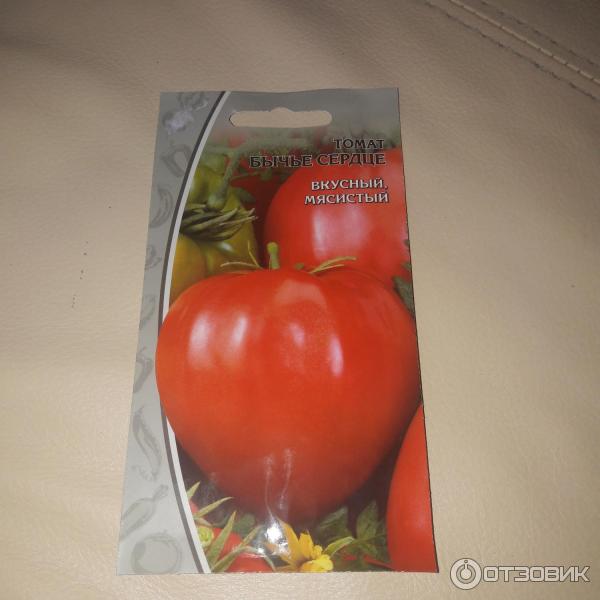
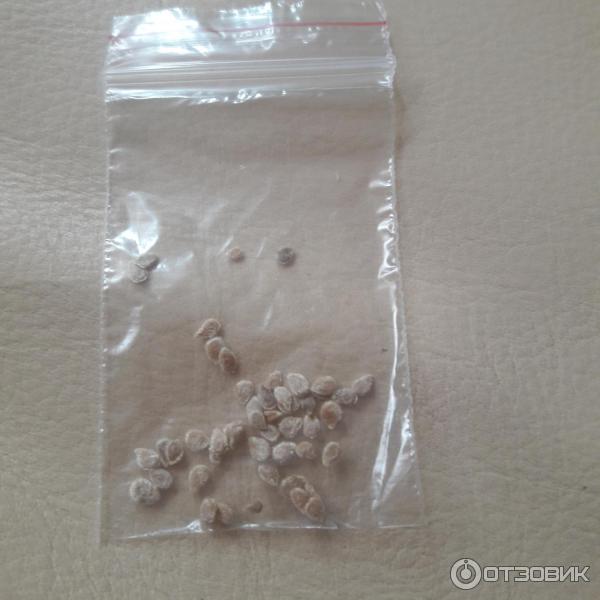
Growing "Bull's Heart" tomatoes isn't a "plant it and it grows" kind of thing. This tomato demands respect.Let's start with the seeds. It's worth noting that the quantity per packet is usually no more than 40-45. I'm talking about the manufacturer, Nizhny Novgorod-based Seed Production Company LLC.
Why their products? Because I grow tomatoes in the Middle Volga region. There's a concept called zoned seeds.Continuing to describe the "bull's heart," it's worth noting that the seeds are very tiny, even smaller than those of most tomatoes. Anyone who's tasted the wonderful fruits of these tomatoes will surely notice that there are very, very few seeds in the so-called axils. The tomato's flavor is slightly sweet, and its "meatiness" is unmatched. Therefore, the fruits are used for eating and in salads.
I'm a big fan of this variety and have been growing it for a long time. I still can't claim to know all the intricacies. Sowing time is coming soon. Let's start preparing the soil! Special respect to those who managed to stock up on it in the fall.
This year, according to the lunar calendar, the favorable time is February 8th to 12th. It might be a bit early to sow. But! The stronger and larger your seedlings, the better they will cope with the stress of planting outdoors, even in a greenhouse.
I think my little tips will be useful for beginners. I intend to share my observations and experience so that everyone can achieve excellent results by the end of the summer.
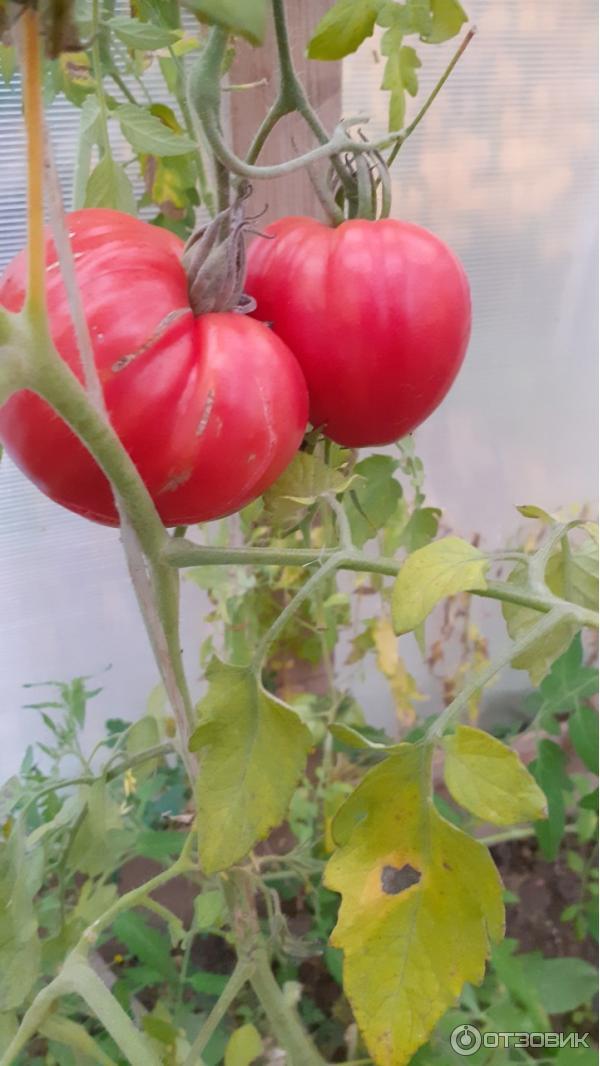
Photos of last season's harvest:
User Diego74, Russia, Uysky District, March 16, 2019
Hello dear readers!
The planting season is approaching, and I'm slowly sorting through photos from the last harvest. I'll try to write up all the reviews of the seeds and what came out of them.
In this review, I will present to you the tomato variety "Bull's Heart Red" from the Gavrish company.
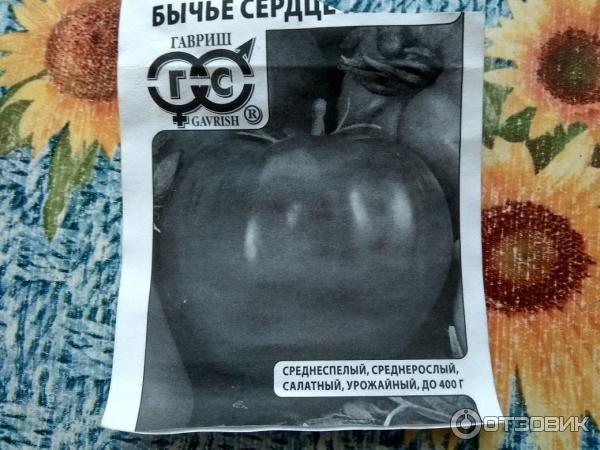
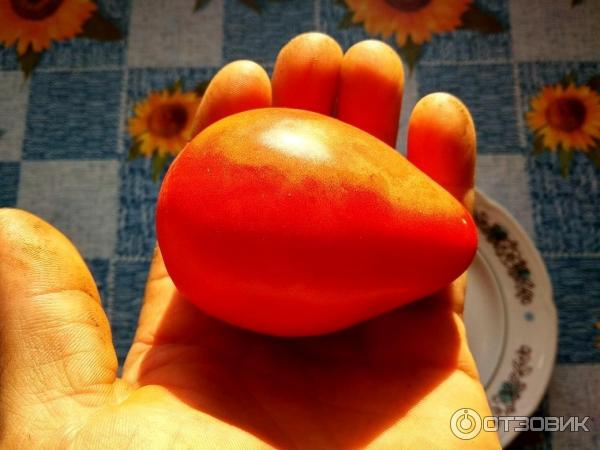
This variety attracted me with its large fruits and shape. Pay attention to the shape when you read the review; the fruit resembles a Victoria berry.
I'm sure you're as interested in its large tomatoes as I am. If so, read on and decide whether it's worth planting.
Package:
The seed packet is very simple, made of printer-grade paper. Black lettering and images on a white background. The tomatoes are clearly large, but the color is unclear.
At the bottom of the package are some characteristics of the variety.
The packaging should be stored in a dry place; it will not protect against moisture.
Seed weight: 0.1 grams.
About the variety "Bull's Heart Red"A high-yielding variety. From germination to fruiting takes 130 days. The plant is medium-sized and has few leaves. Recommended for plastic greenhouses and open ground. Ripe fruits are tasty, juicy, and heart-shaped. Ripe fruits are red, and the variety is very large, with average fruit weights ranging from 200 to 400 grams.
Sowing seeds for seedlings:
For sowing, I prefer large seedling boxes, which are sold at all hardware stores and elsewhere. Even grocery stores sell planting materials and containers. I plant the seeds according to the planting instructions, 1-2 millimeters deep. At optimal temperatures, the seeds germinate quickly and produce their first shoots. Mine appear within 7-10 days.
My planting time is usually mid- to late March, depending on the variety, early or late. If you follow the instructions on the package, small tomatoes will appear by early May, and they'll be indoors for the rest of the month.
Picking and transplanting to a permanent location:
After two or three true leaves appear, I transplant the seedlings into individual cups. The best and least expensive option is cardboard milk cartons or empty sour cream cups.
Transplanting to a permanent location, whether in open ground or a greenhouse, depends on the region. It's important to ensure there will be no more night frosts, otherwise the seedlings will freeze.
Care:
After repotting, water the plants regularly with warm water until they recover. Then, water as needed, but increase watering during flowering and fruit set. Tomatoes will appreciate regular weeding, fertilizing, and soil loosening.
What has grown:
Ripe tomatoes are exactly as they appear on the package. The shape is accurate, but I'm not sure what the color should be.
I loved my tomato harvest. Each fruit was neat, smooth, and bright red.
As for the taste, it's excellent, with juicy flesh, but not as meaty as other large varieties. This variety is slightly firm, which allows it to be stored longer and doesn't bruise. It's suitable for slicing at the table; not all tomatoes are soft and fleshy.
I couldn't find the original photo, so I added what I had.
Purpose of the variety:Suitable for fresh consumption, slicing, cooking various dishes, and freezing for winter.
Conclusion:
An excellent variety with a rich harvest of berry-like tomatoes. The delicious, juicy flesh will leave no one indifferent. The Red Bull's Heart variety lived up to all my expectations; the tomatoes truly grew exactly as pictured on the package.
I have previously planted more than one variety called Bull's Heart, and it has never let me down. Apparently, it was successfully bred by breeders, and is not picky about soil or weather conditions.
Thank you for your attention!!!

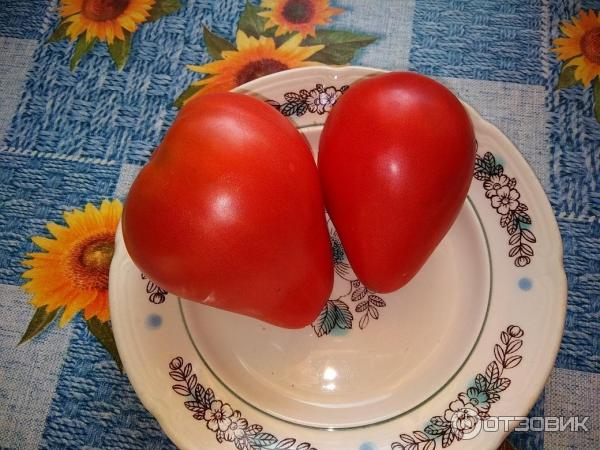
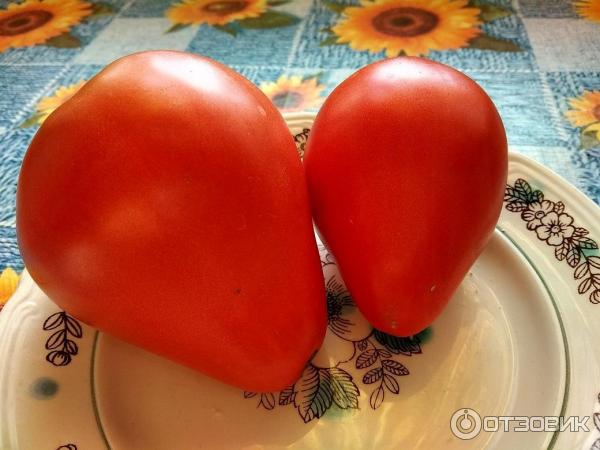
User llerrem, Russia, Abakan, August 31, 2020 The "Bull's Heart" tomato variety is well-known! I'd like to share my review of it. The tomatoes are tall and heavily foliated. The clusters are simple, holding 3-6 fruits. The fruits weigh from 200 to 800 grams. The average fruit is 350-450 grams. Last year, I grew a tomato that weighed 1,400 grams. This year, the largest tomato of this variety was 1,250 grams. This variety is very productive. The fruits are very fleshy and practically seedless. The skin is very thin, making them virtually impossible to transport. I was sending green tomatoes from Abakan to Adler, and by the time they arrived, they had turned red. I also sent them to Moscow. The tomatoes are very sweet, and everyone I know who comes to visit loves them. I've been told they're used in pickling, but I haven't tried it. If anyone has tried it, let me know in the comments! They're delicious fresh, though! I recommend them to anyone who enjoys fresh tomatoes!
User Foxi1502, December 11, 2019 Would you like to admire my 800g tomatoes? You are welcome!!! There is no person who has not heard of the most popular variety “Bull’s Heart”. Everyone has their own taste preferences: some people like tomatoes with a slight sourness, others like them sweet and sour, but I like honey and sugary ones. My favorite was and remains the “Bull’s Heart” tomato. For your information: this is not a hybrid, so you can harvest the seeds yourself. But this time I bought ready-made seeds from a trusted company. My "Bull's Heart" seeds from Aelita. I've bought their seeds many times, and they've never had a mistake, and the germination rate is always excellent. ????ABOUT THE TOMATO "BULL'S HEART". The name itself suggests that the tomatoes should be large-fruited and shaped like a bull's heart. I'll explain a little later. ????GROWING TOMATOES IN A GREENHOUSE. I sowed tomato seeds in small containers, and the seedlings grew in them until transplanting. At three weeks old, I transplanted them into separate containers. I grew the seedlings in individual cups. What I like about this growing method is that transplanting the seedlings to their permanent location doesn't damage their root system and keeps the plant growing. I use a two-stemmed system. This means I leave one side shoot on each plant in addition to the main stem. I remove all the extra side shoots so they don't draw nutrients away from the plant and so all the energy goes into growing and filling the remaining fruit. The bushes grew to almost two meters. "Bull's Heart" is an ideal variety for greenhouse growing. The tomatoes ripen quickly and turn red right on the vine. The taste is incomparable, sweet, without a single sourness, fleshy, so juicy that they melt in your mouth. Now I'll explain why. I DIDN'T LIKE GROWING BULL'S HEART IN OPEN GROUND. This variety is tall and requires support, otherwise the bush will not be able to support the tomatoes and will break. Forming a bush in open ground is not convenient; it is necessary to place several supports for each bush. Keeping track of side shoots in open ground is difficult. Despite all your diligence, the bush ends up overloaded with fruit, which hinders the plant's growth. The fruit is numerous, but small, and doesn't turn red on the bush. They have to be picked green and unripe. As they ripen, the tomatoes become unappealing; some shrivel from being left for too long, and the flavor becomes mediocre: lacking juiciness and sweetness. Therefore, I came to the following conclusion: if you grow the “Bull’s Heart” variety, then only in greenhouses. I recommend this to you too! Thank you for your attention!
User Dusya, March 28, 2005 I grew Bull's Heart two seasons ago. Indeed, the fruits become much smaller after the 2nd bunch. Of course, the tomatoes are excellent, but the yield is low. I switched to a similar variety to Bull's Heart—Cardinal from Gisok. It's also large, crimson, and heart-shaped; the breeders call it an improved Bull's Heart. I liked the variety; this year I will plant both my own seeds and store-bought ones, and see if they lose their qualities when propagated by seed. In my observations, uneven watering or untimely heavy rains are the main cause of cracking. Drip irrigation and a greenhouse are probably the best ways to avoid this problem. I grow everything outdoors, so if it rains, the pink tomatoes suffer. User koliri, September 19, 2012 I've left one bush in the greenhouse for now—Bull's Heart, the only one that has produced real fruit—a ribbed heart the size of a man's palm. My father grew them like that, not the smooth ones. I've kept it for seed—the rest are all off-grade. I watered it for the last time in early August. It's just turned red now. So, the little rascal cracked, and why? User prog1, September 20, 2012 Humidity can cause cracking. I've noticed that if the weather is "pretty rainy" (though it might not rain), especially delicate tomatoes get caught and cracks can appear. P.S. The BS isn't exactly a loud noise... User Sedoy, September 21, 2012 I gave up on this variety a long time ago due to the low yield. The taste is excellent. It sheds its flowers profusely, and you have to harvest, it's scary to say, every single tomato per plant. Sincerely… User koliri, September 21, 2012 There are new varieties, more interesting, I agree. But in terms of yield and taste... I don't think I agree. Regarding the taste: sugary, crumbly, almost seedless when cut, the fruit weighs 500 grams. The flowers haven't fallen off, the inflorescences are strong and abundant, but I left five of the first fruits on the bush; I mercilessly picked the rest, afraid they wouldn't ripen—the seedlings are late, from April 14th. I'll plant a couple of bushes from my seeds. The fruits, by the way, aren't red, like in many photos, but scarlet, huge, slightly ribbed, like those at the market when I was a kid. I wish I'd planted them sooner... icon_rolleyes.gif But out of seven seedlings in the seed packet, only two are the right variety; the rest are rubbish. User elena1984, July 31, 2014 This variety needs no introduction; it's excellent in every way! The large, heart-shaped fruits are pink, sweet, and fleshy. The bush grows tall. User Alena Latvia, July 31, 2014 I have three types of BS: red, pink, and English. All three are simply amazing. Thanks to Evgeniy from Tallinn for the excellent tomatoes. English is the earliest and most compact. It doesn't stretch anywhere. Pink Bull's Heart, Estonia (third-fourth cluster), will bear seeds. The stem is neatly pointed. The bush is 1.80 cm tall, with a single trunk and 7 clusters. The fruits are still blooming, all from one bush. The bush is very productive, with 7-10 of these fruits. English Bull's Heart (third-fourth cluster) is a variety without a long "nose" (the second bush has long-nosed fruits). Seed fruits are 9-11 fruits. The bush is 1.40 cm tall, with a single trunk and 7 clusters. Both varieties are early! They begin to produce fruit within a month, starting in early July. They grow as a single trunk! They are planted deep. The English variety is slightly denser, less runny when fully ripe, and produces more fruit, but the fruit itself is slightly smaller. "Ours" has slightly deeper shoulders, but they disappear completely within 1-2 days. Overall, it seems the English variety produces a similar yield, but with a shorter, more robust bush, and a slightly stronger cluster. The Estonian variety has a taller, more flexible bush, and a longer cluster. I'm saving them for seed; I really like them. Now the clusters are bearing fruit at a height of 80 cm to 1 meter. It turns out they can be grown in the open ground, removing the tops. My previous BS variety was much leggier, weaker, and less productive. These are significantly stronger and more productive. User Marina H, July 29, 2015 I really like the BS Black variety: it produced a lot of medium-sized tomatoes on a strong, well-foliated bush. The bush looks good so far, but the tomatoes aren't ripe yet. Planted it for the first time (thanks to Lena). I'm very pleased, one of the best I've had this year. But I didn't like the early BS. The bushes got sick early in our cold and damp climate. User Marincha, November 9, 2019 Seeds from Lena74. This was the very first one to ripen. First, a small one from a bunch, then others followed. Tasty, fleshy, with a thick skin that doesn't get in the way. They stored well, but since they were the first, they were eaten pretty quickly. Fruited vigorously, dropping few flowers. They set fruit until the frost (this year, until October).
User rhenmrj01, Ukraine, Energodar, March 14, 2014 When I bought a summer cottage for myself, I couldn’t decide for a long time which tomato variety would be best to plant there. A neighbor recommended I try the bull's heart variety. And you know, I was very pleased with this tomato. This is a medium-sized tomato. It's convenient because it doesn't require staking. It's resistant to various diseases common to tomatoes, such as blackleg, late blight, and many others. Its shape truly resembles a heart. The fruit is not very large, making it convenient for winter preservation, such as canning. It tastes sweet and sour, with a typical tomato aroma, not very juicy, I would even say a little sugary. I would recommend trying to plant it to beginning gardeners.
User Nastac, Russia, Krasnoyarsk, August 18, 2019 My parents grow this variety of tomato on their plot. I remember it from school, when it first appeared in our garden. We mostly grew small, regular tomatoes. This tomato is distinguished by its flavor—not sour, but fleshy. The fruits are large, some larger than the palm of your hand. They can weigh up to half a kilogram, are red, and several grow on a single branch. The bush reaches a couple of meters in height in a greenhouse, and smaller in a hotbed. They tolerate both heat and cool weather well, and the fruits ripen quickly in a warm place. We usually pick them green and place them in cardboard boxes, sorting them after a while. They also turn red on the bush, but it takes longer. I really like to cut the tomato into pieces and eat it with salt; one tomato is also enough for a salad. The fruits rarely turn black if properly cared for; they are sensitive to moisture. We only water the soil, fertilize, and grow them from seeds from the tomatoes themselves, drying them and packaging them in paper for the winter. The tomato resembles a heart in shape, hence its name.
User nataliaf, Russia, Abakan, March 23, 2015 The Abakan and Minusinsk "Bull's Heart" tomatoes are probably known throughout Russia. Here, they grow tall, reaching over 2 meters. In a greenhouse, they can reach up to 3 meters. I remove the tops when the tomatoes reach about 165 cm in height. I pinch off the side shoots, leaving one or two main stems. The fruits resemble a heart in appearance, cone-shaped, hence the name. Of all the large-fruited varieties, these are the most popular. They are tasty, fleshy, and raspberry-red. In Minusinsk, an annual tomato festival is held, and the winner is chosen for growing the largest and heaviest tomato. Record-breaking tomatoes reach 2-3 kg.
User Svetoki, Russia, Oryol, April 2, 2015 It's hard to remember when Bull's Heart tomatoes first appeared in our gardens. Large, juicy, sweet, downright sugary—that's what every gardener loves. The fruits grow up to 400 grams and are perfect for salads and stuffing, or simply sliced and sprinkled with herbs. This is a popular and very productive variety. From planting to fruiting takes 120-130 days. In my garden, I planted the seedlings in open ground in early June. The seedlings took root well and didn't mind the night frosts. To prevent late blight, I removed diseased leaves and ensured constant ventilation between the bushes. I sprayed the bushes twice with micronutrients. I harvest seeds for the following season from the largest specimens that have ripened on the bushes. However, after 3-4 years, the seeds need to be renewed to ensure a continued harvest and the effort is worth it!
For over 15 years, I've been growing the "Bull's Heart" tomato variety from various seed companies. It's a mid-season tomato (110-115 days from germination to first fruit). I've grown it exclusively in open ground. The plant's stems reach over 1-1.5 meters. I had to pinch out the side shoots. I kept them in 1-2-3 stems. From spring (from planting seedlings) until mid-August (the final harvest), it is necessary to carry out preventive measures to combat fungal diseases (garlic tincture, iodine solution, purchased chemicals). The fruits themselves are large, with juicy flesh. They're perfect for fresh summer salads and winter preserves—juices, salads, lecho, and sauces.
I've bought various seeds, but they're all wrong. These ones really pleased me with their yield last year, even though the weather wasn't great. The tomatoes are late, so I recommend planting them in a greenhouse. A strong garter is needed because the stems are very powerful with large leaves and fruits. Don't forget to fertilize the soil before and after sowing; I love loose soil. Watering twice a week is sufficient. They are susceptible to disease in the late stages of ripening. I use the tomatoes more for salads and ketchup; they are not suitable for pickling because they are very large. The harvest is good, but with proper care, they're not fussy. They're tasty, meaty, and practically seedless.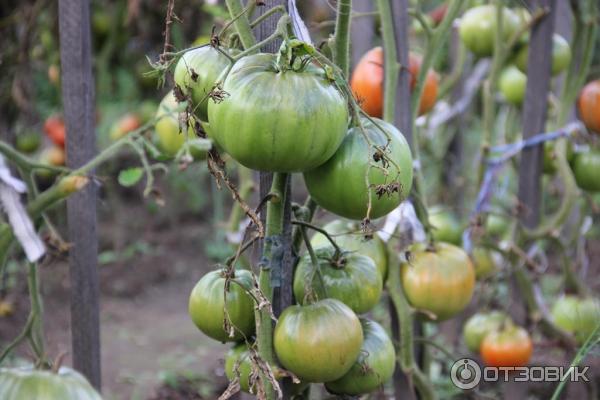
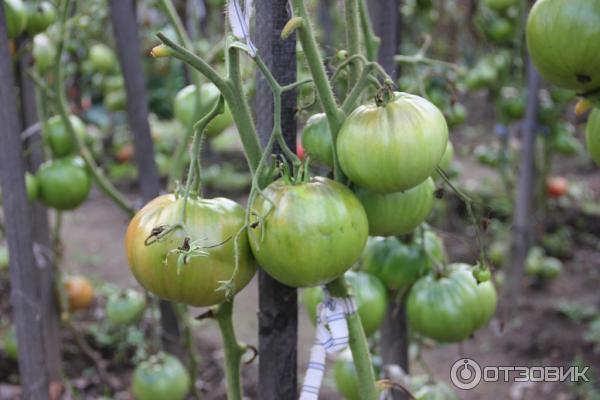
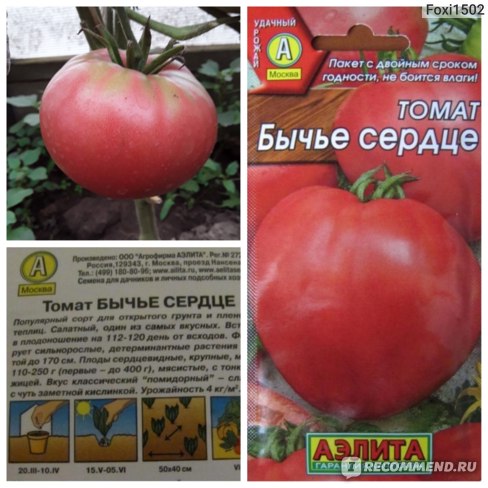
The "Bull's Heart" variety is suitable not only for greenhouses, it can also be grown in open ground, but I didn't like the second growing option.
Why?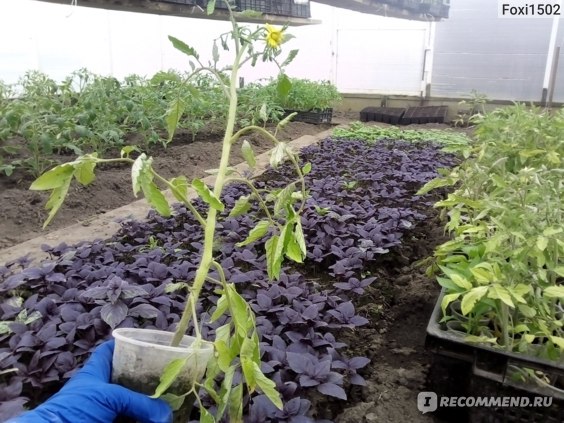
Our greenhouses are very tall, so there is plenty of freedom and will for tomatoes to grow.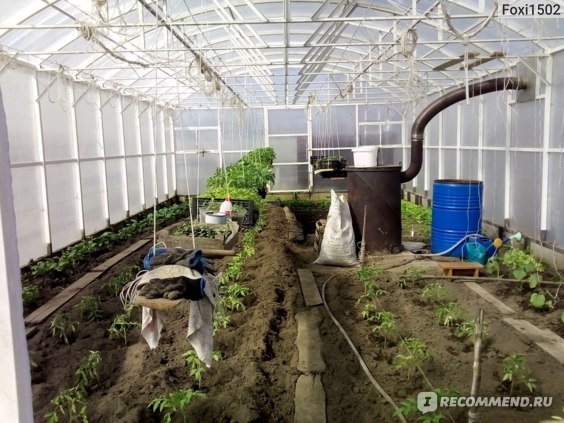
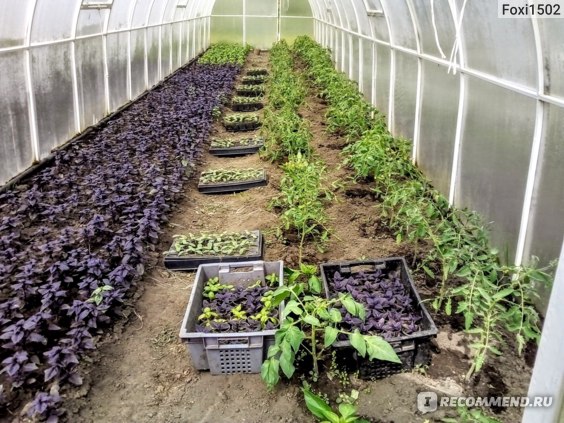
To get large fruits, it is essential to shape them.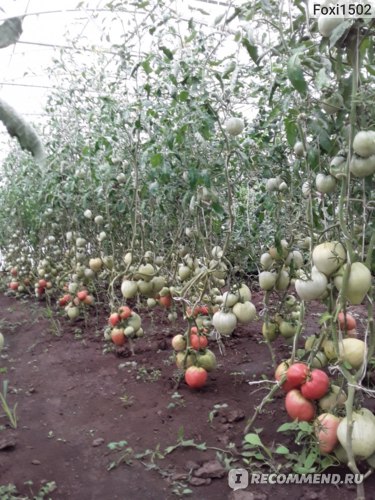
The heaviest tomatoes were on the first, second, and third trusses, so much so that some had to be tied up. The largest tomatoes reached 800 g.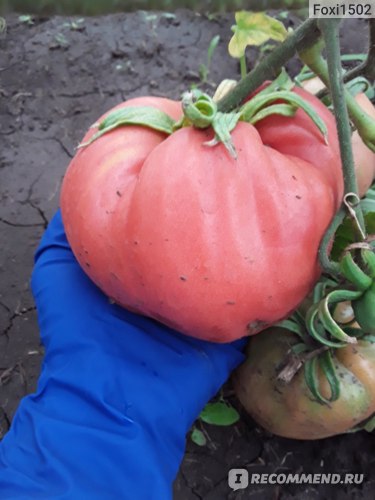
In subsequent brushes, tomatoes became smaller, weighing up to 100-150 g.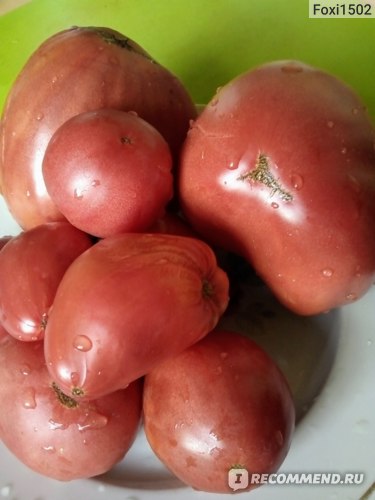
I can't say exactly how many kilograms were collected from one bush. But I can say with certainty that it was at least one large bucket.