Tomatoes require careful care. Conditions, watering, and fertilizing are equally important. Pinching—regularly removing side shoots—is especially important for a bountiful harvest.
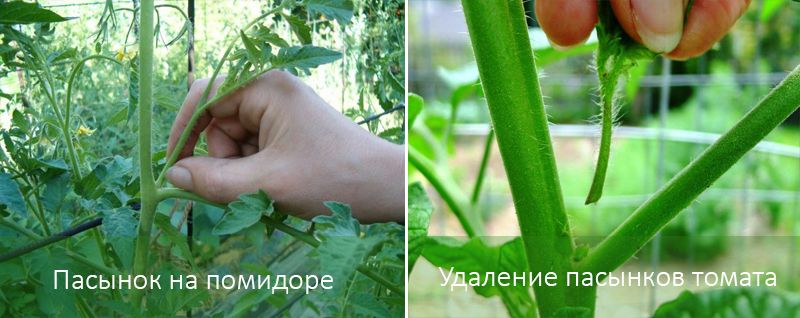
This factor is often neglected by beginners, who allow tomatoes to grow useless tops, depriving themselves of a harvest.
The need to pinch out tomato shoots
In the favorable climate of its historical homeland, Central America, the crop does not require this procedure. Long summers and warm winters allow ripe berries to be harvested year-round. There is no need to limit the number of second-order shoots or higher. All ovaries have time to fill out and ripen fully.
Our country's climate doesn't lend itself well to growing tomatoes as perennials. To ensure fruit size and flavor, their production must be limited. This is the main purpose of side-sonning.
This procedure is mandatory for almost all species and varieties, regardless of whether they are grown in greenhouses or open ground. Side shoots (side shoots) negatively affect the development of the bush:
- They take away the vitality of tomatoes.
- Increases the ripening time of fruits.
- Reduce crop yield.
- Shade the ripening berries. A lack of sunlight degrades the fruit's flavor.
- A dense crown is a breeding ground for disease, and weakened plants are quickly infested with pests.
Removing excess shoots saves gardeners and their dependents from numerous troubles and promotes timely and full ripening of fruits.
The essence of pinching and its types
This agronomic procedure involves regularly removing shoots developing from the leaf axils. This simple procedure requires knowledge of certain rules—when and how often to perform it, how many shoots to remove at a time, and the correct order. It's also important to understand the specifics of this procedure, specific to different tomato species and varieties.
Pinching is aimed at shaping the bush to produce the maximum possible number of ripe, tasty fruits. Based on this principle, four process schemes are distinguished:
- single-stemmed;
- two-stemmed;
- three-stemmed;
- stepped.
Single-stem cultivation means removing all side shoots without exception. The bush grows taller, producing larger tomatoes. It's typically used in greenhouses. This not only increases fruit weight and shortens ripening time, but also reduces the risk of disease by providing good ventilation and simplifying preventative treatments. Outdoor cultivation is suitable for short summers.
In the second case, a strong shoot formed above the first fruit cluster is left. Subsequently, the remaining shoots on both stems are removed. This is for general use.
The third option only yields good results in open beds in southern regions. In limited space, it requires at least 1 square meter of space per plant—an extremely uneconomical use of greenhouse space.
The stepped form is suitable for tall and indeterminate tomatoes grown outdoors. The crown is created in stages.
First, leave a strong axillary shoot at a height of about 1 meter. When a flower cluster forms on it, pinch off the main stem. The second step is to select the next strong shoot on the replacement stem, about a meter from the base. After buds form on the new shoot, pinch off the replacement branch. This process is repeated 2-3 more times, if conditions permit.
Pinching off side shoots also refers to pinching off productive shoots. This restricts branch growth and prevents the formation of fruit clusters that will inevitably fail to ripen. It is also used when the main stem produces few fruits. In this case, the plant produces strong side shoots, producing additional fruit.
Pinch the bushes above the leaf following the top fruit cluster that has formed.
Another component is limiting the number of mature leaves. The tops should not impede air circulation or create dense shade over the ripening tomatoes. When removing obstructing leaves, remember that they participate in the process of photosynthesis.
Pinching out side shoots depending on the variety
The diversity of tomatoes is impressive. To simplify determining the appropriate type of bush training, they are divided into groups: by ripening time; growth rate and duration; fruit size; greenhouse and outdoor varieties.
Early-ripening and standard varieties are usually not pruned. If the planting volume is small but high yields are required, they are grown in 1-2 stems. Mid-season and late-ripening tomatoes are grown in 2-3 stems. The method is determined based on the growing conditions.
Low-growing, or determinate, tomatoes – only when grown in protected soil.
Semi-determinate (medium-sized) tomatoes are formed into 1-2 shoots in greenhouses; in open beds, side shoots are left to increase the yield.
Indeterminate tomatoes (tall and unlimited growth) need to be pinched under any circumstances. They produce fruit only above the seventh leaf. If lower lateral shoots are allowed to grow, there may be no harvest at all. A successful bush shape is 1-2 shoots for greenhouses, and 2-3 for open beds. Pinching the plants as autumn approaches is also essential. In heated greenhouses, these tomatoes can grow without restriction, provided supplemental lighting is provided.
Large-fruited varieties (beefs) are grown with 1-2 stems. Small-fruited tomatoes and cherry tomatoes grown outdoors do not require side shoots; care is taken to ensure that the lower leaves and branches do not touch the ground. If a shoot produces few fruits or has already finished fruiting, it is removed. Indoors, such as greenhouses or indoors, side shoots are pruned according to the general rules, although for this variety, 3 or even 4-stemmed bushes are allowed.
Some tomato varieties quickly produce buds on side shoots. In this case, they are left in place. Once two leaves have formed above the cluster, pinch them off.
Tomato step-sonning technology
By the end of the second week, seedlings planted in the ground are fully established and begin to develop foliage. By this time, the gardener should have fully decided on the growing method—the number of stems to leave.
Main principles
The first time side shoots are removed is after flowering begins, when they reach approximately 5 cm. In this case, the difference between the fruit cluster and the lateral shoot is clearly visible: the beginnings of buds or leaves. If in doubt, pay attention to the origin of the branch. Productive shoots extend from the trunk of the bush.
The shoots located under the lower flowers are always removed. Leaves touching the ground are torn off or shortened to prevent them from becoming a source of disease. No more than three shoots and leaves are removed from each bush at a time.
Frequency: Weekly during active growth. Determinate tomatoes sometimes present surprises to gardeners: during ripening, the tops suddenly begin to grow vigorously, promising flower clusters appear, and new fruits begin to set. The situation is assessed based on timing: when there is sufficient time before the cold weather sets in, the fruits are allowed to ripen to at least the milky stage. If there are no warm days left, the tops are cut off.
Depending on the growing region, from the second half of July to the second half of August, the tops of indeterminate varieties growing in unprotected beds are pinched.
Algorithm for carrying out the procedure
Agronomists do not recommend using cutting tools when removing side shoots, as the remaining cuts are an open door for infections and viruses.
- Work should only be carried out with thoroughly washed hands. Ideally, rinse them after removing each side shoot.
- The best time is the morning hours of a sunny day.
- The stems of the lateral growth are pinched off with fingernails. This will help the fracture heal faster.
- It is essential to leave stumps 2-3 cm high; they serve as protection against the penetration of pathogenic microorganisms and also prevent the growth of new shoots.
- Root shoots must be cut out.
The removed parts are placed in a basket or bag to prevent them from harboring pests or rotting. The scraps are composted or used as the basis for pest-repellent infusions.
If tomato plantings are extensive, you'll need to use a tool—a knife, scissors, or pruning shears. It's essential to keep the tool sharp so you can cut the stems in one stroke. It's also important to keep it clean: disinfect it before and after pruning each plant. A solution of potassium permanganate, hydrogen peroxide, or bleach are used for disinfection.
Agronomists also recommend using this tool for treating greenhouse plants. The rationale is compelling: unevenly broken lateral branches quickly become colonized by harmful microorganisms. Another additional protection is ash sprinkled on freshly cut branches.
Top.tomathouse.com informs: the advantages and disadvantages of pinching out tomato shoots
To appreciate the benefits of this procedure, imagine a lush tomato forest in a garden bed: spreading bushes block sunlight from neighboring plants and lower parts of the plant, the soil is constantly moist, and air movement is impeded. These conditions favor the most dangerous diseases of the crop: late blight, septoria leaf spot, cladosporiosis, and rots (white, gray, brown, and powdery mildew).
Fungal infections deprive gardeners of a significant portion of their harvest and spread unchecked throughout the plot. This is exacerbated in a greenhouse.
Snails and slugs, cutworm caterpillars, and whitefly colonies thrive in the shade of dense plantings.
Even if these misfortunes are miraculously avoided, the harvest still won't bring much joy. The misshapen shape, dull, uneven coloring, and low nutritional value of the fruit are the result of insufficient light and air for the plants as a whole, and of nutrients for the fruit. All the labor and expense associated with growing seedlings, transporting them, and planting them aren't worth the two or three stunted tomatoes trying ruefully to ripen amidst abundant foliage.
But tomatoes, properly and timely processed, are a joy to behold: orderly rows of clean bushes adorned with garlands of plump fruit, ripening on time, sometimes even ahead of schedule. It's easy to water, spray, harvest ripe tomatoes, and even estimate the number of jars needed for future storage.
Pinching out side-sons requires time and attention—that's the only drawback. If you can't get to your dacha often, plant varieties that are less demanding:
- for greenhouse cultivation: Obskie domes, Sanka, Danko, Alaska, Honey plum, Velvet season, Nevsky;
- for open ground: Agatha, Adelina, White filling, Betalux, Gnome, Gina, Gigolo.
These tomatoes have proven themselves in various regions; they are low-growing and ripen early to mid-season. Among the late-ripening varieties, the determinate Malinka and Titan varieties are recommended.
However, all of them require staking and timely removal of lower leaves located close to the soil. Furthermore, tomato varieties suitable for protected soil still need to be trained. Otherwise, their yield will not compensate for the effort.