Hobby gardeners and farmers alike prefer polycarbonate greenhouses, but a number of nuances should be taken into account when constructing them.
Content
- 1 Advantages and disadvantages of polycarbonate greenhouses
- 2 Types of greenhouse designs
- 3 Choosing a location for a greenhouse
- 4 Criteria for choosing polycarbonate for a greenhouse
- 5 Options for constructing a foundation for polycarbonate greenhouses
- 6 Polycarbonate greenhouse frame options
- 7 Features of polycarbonate installation
- 8 Heating a polycarbonate greenhouse
Advantages and disadvantages of polycarbonate greenhouses
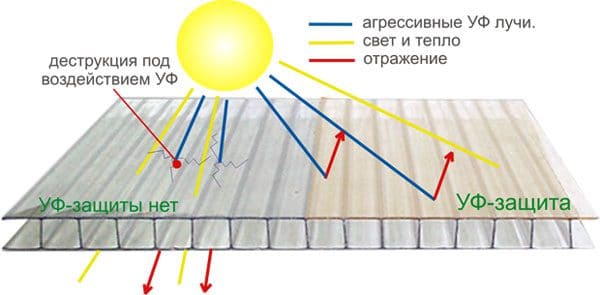
A DIY polycarbonate greenhouse is every gardener's dream. Polycarbonate is durable and can withstand physical stress, which is especially important during the snowy winter months. It also transmits UV rays while dispersing them, which is beneficial for plants.
It has excellent thermal insulation properties, remaining resistant to temperature fluctuations from -50°C to +60°C. The material's advantages also include its ability to be mechanically and thermally processed (changing shape when heated). This, combined with its low cost, makes polycarbonate the material of choice for construction.
Its disadvantages include sensitivity to:
- excess solar radiation, which can accelerate its wear and tear and lead to a decrease in the strength of the structure;
- high temperatures, which becomes a significant obstacle to the installation of stove heating.
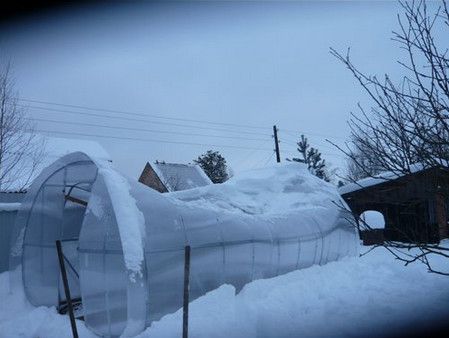
To avoid unpleasant surprises, it should be assumed that high-quality standard sheets with dimensions of 600 x 210 cm weigh approximately 10 kg.
Types of greenhouse designs
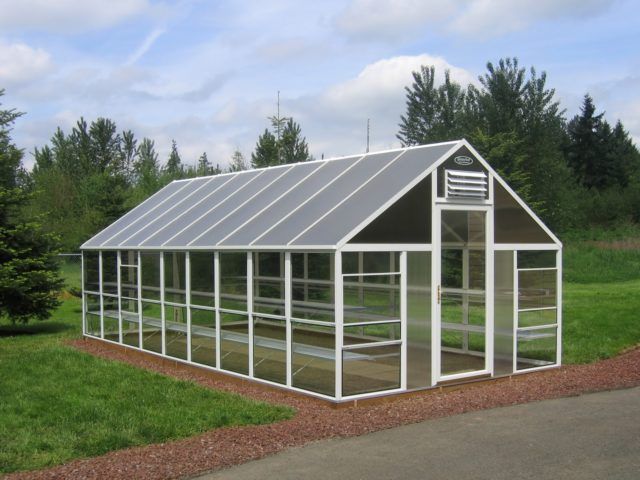
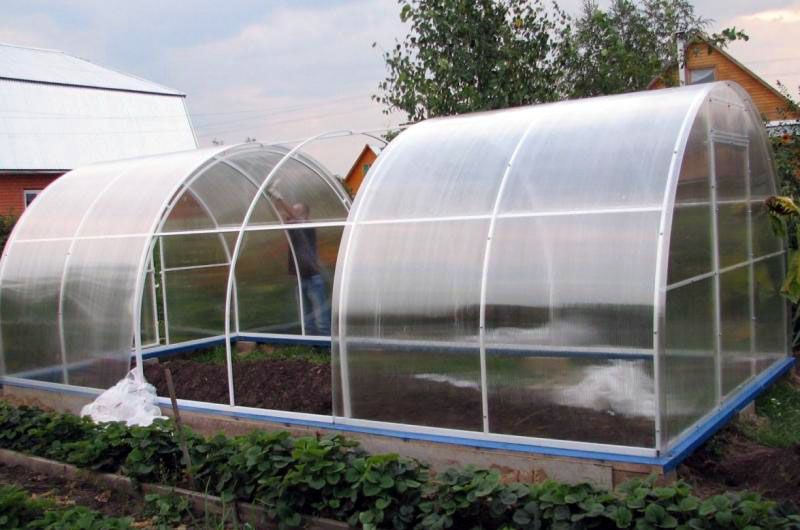
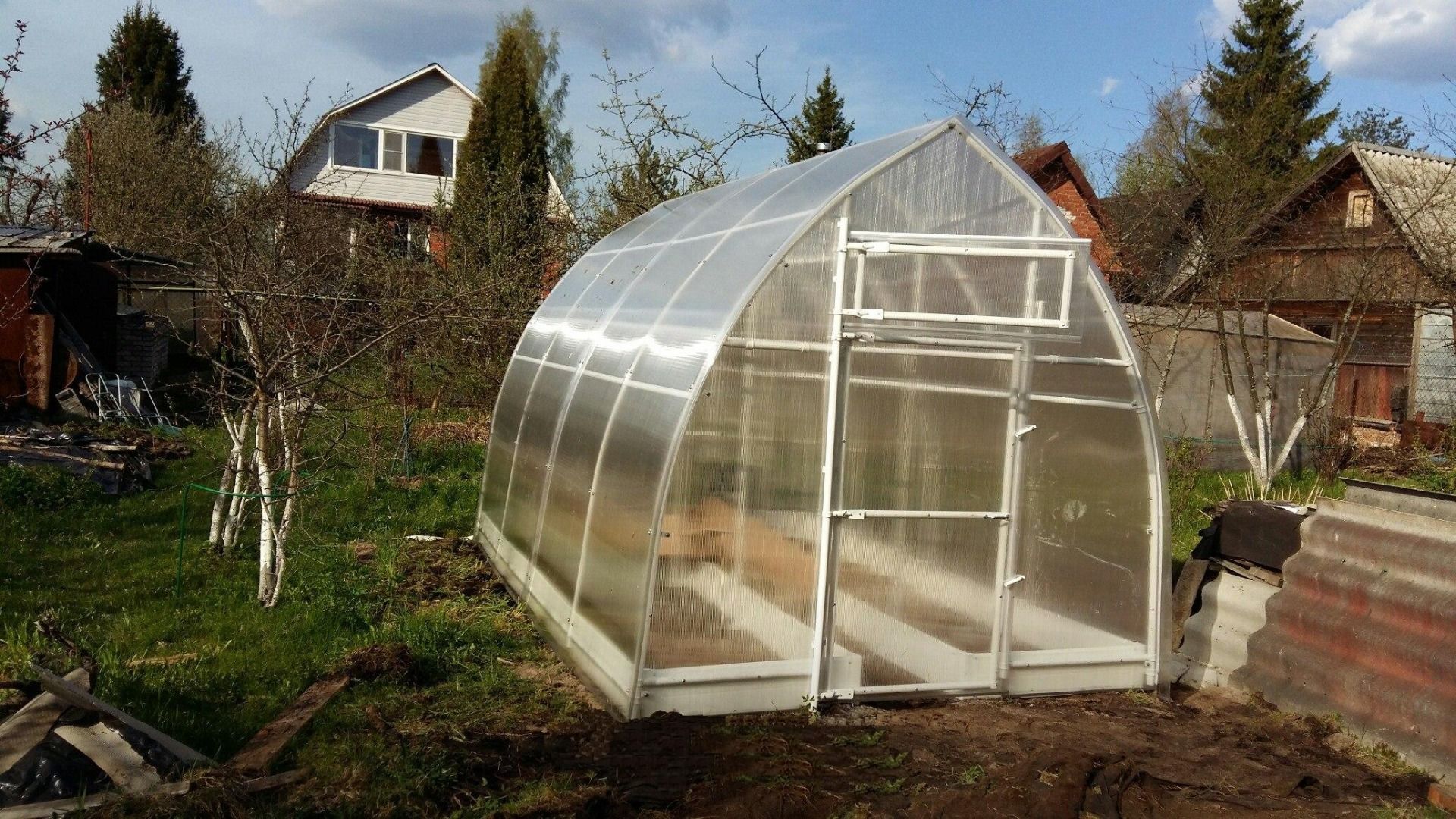
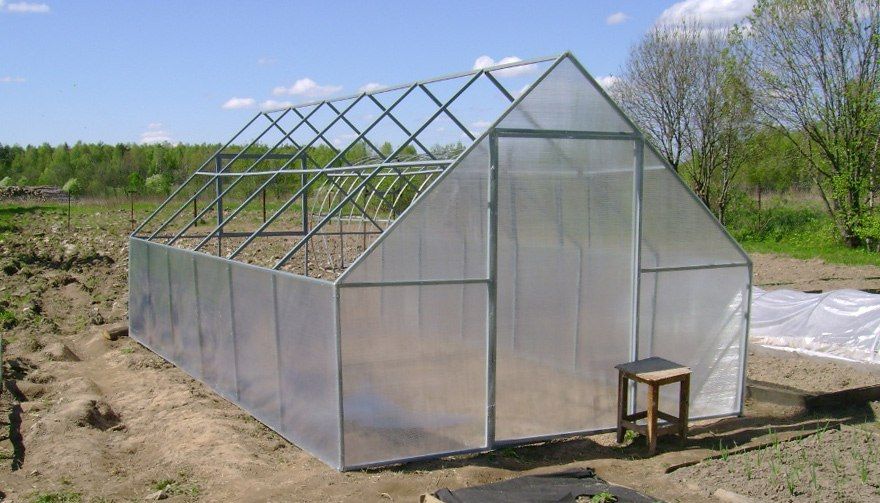
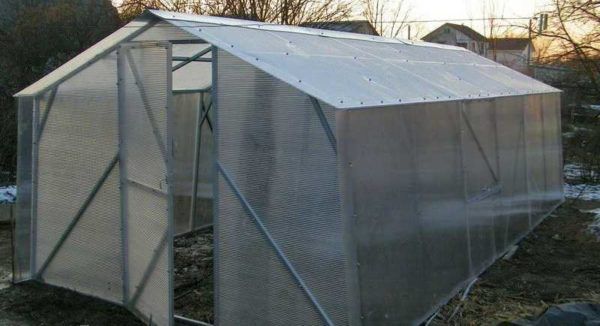
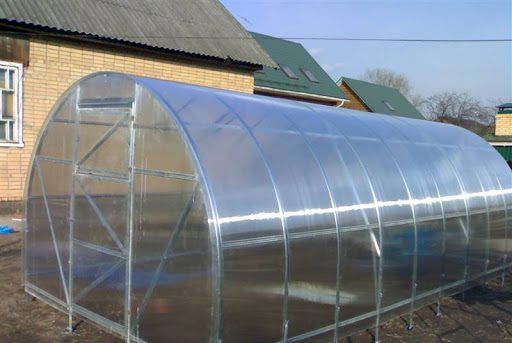
Based on the shape of the structure, four main types of greenhouses can be distinguished: wall-mounted, gable, polygonal and arched.
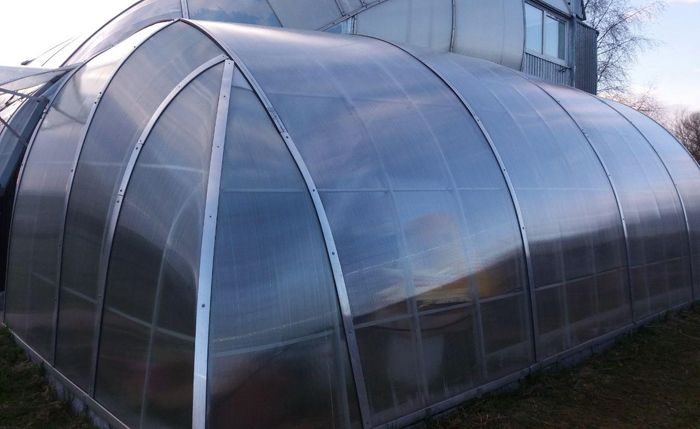
With a wall-mounted greenhouse, a gardener can save on building materials because one of the walls of the structure will be part of a house or other building on a foundation. Often, when designing a house, the location of the greenhouse is included in the plans.
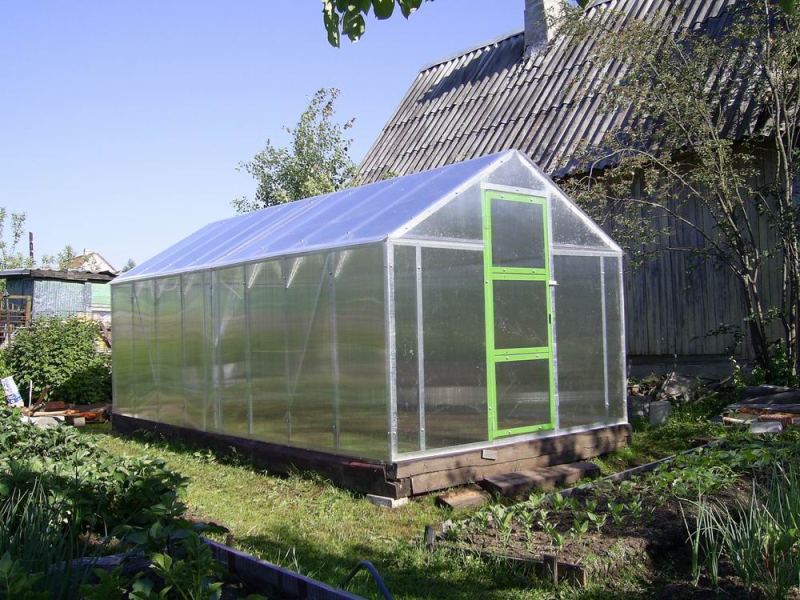
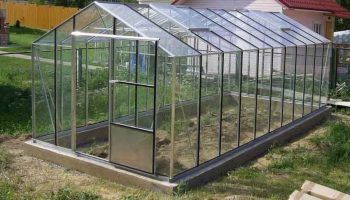
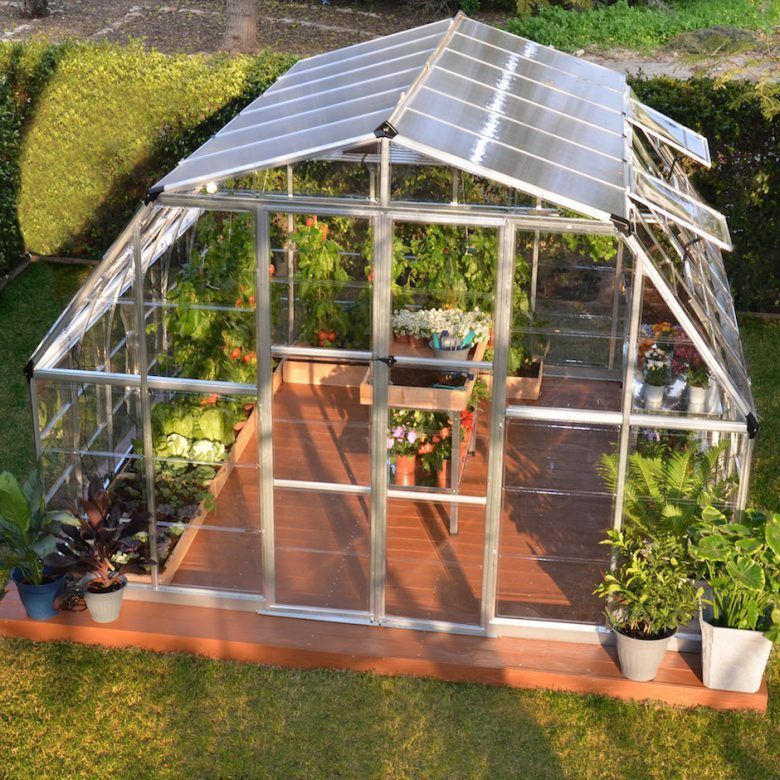
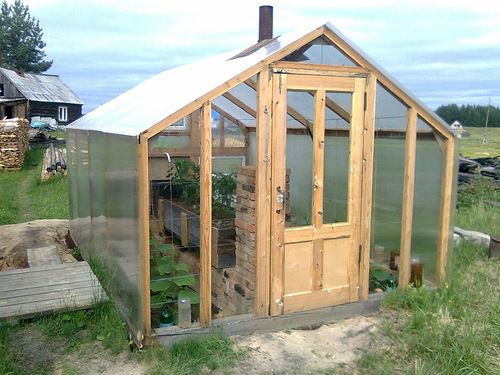
The gable roof is a classic design, featuring vertical walls and two slopes. It's convenient and practical, allowing for efficient use of ceiling space, such as for shelving.
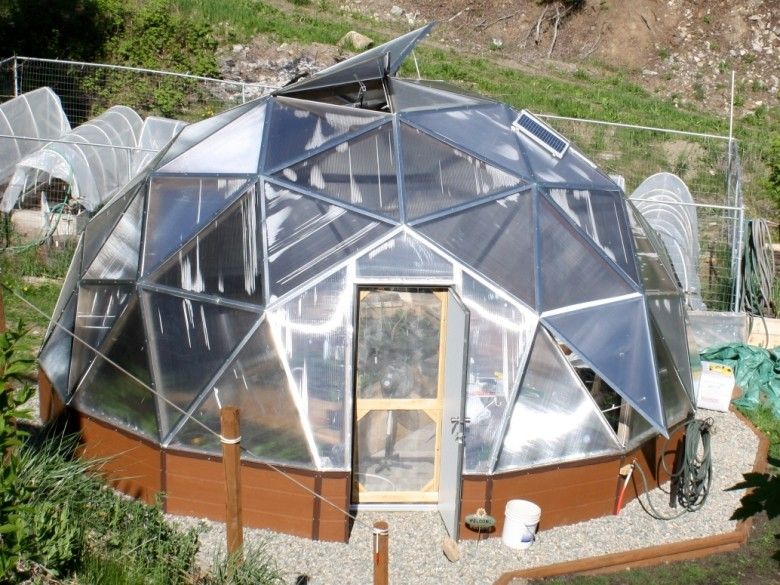
Polygonal structures are aesthetically pleasing and characterized by high light transmittance.
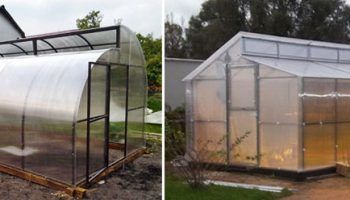
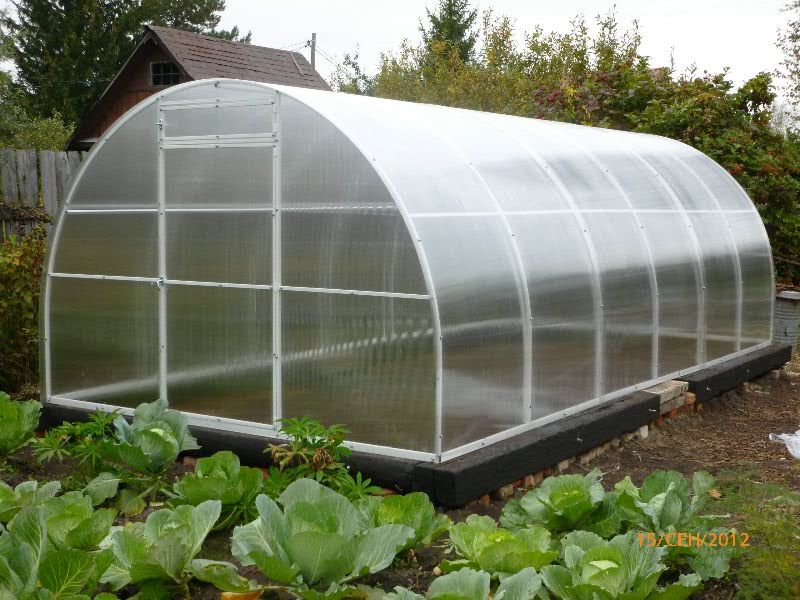
The arched version allows for better heat retention and can withstand heavy loads during snowy winters thanks to its smooth slopes.
Choosing a location for a greenhouse
When deciding where to install a greenhouse, pay attention to the landscape, soil composition, and lighting.
When considering landscaping, consider the groundwater level and the possibility of spring flooding. If the water level rises above 120 cm, consider installing a drainage system.
It's recommended that the soil be dry, so clay soil isn't suitable. It's best if the soil contains a lot of sand. Sand or sandy gravel can be imported if necessary.
Abundant sunlight will help save on heating and artificial lighting. Regarding orientation, it is recommended to adhere to either east-west or north-south directions. The former is considered preferable. If the building is square, any orientation is possible.
It is important that the greenhouse is not shaded by the house or nearby trees.
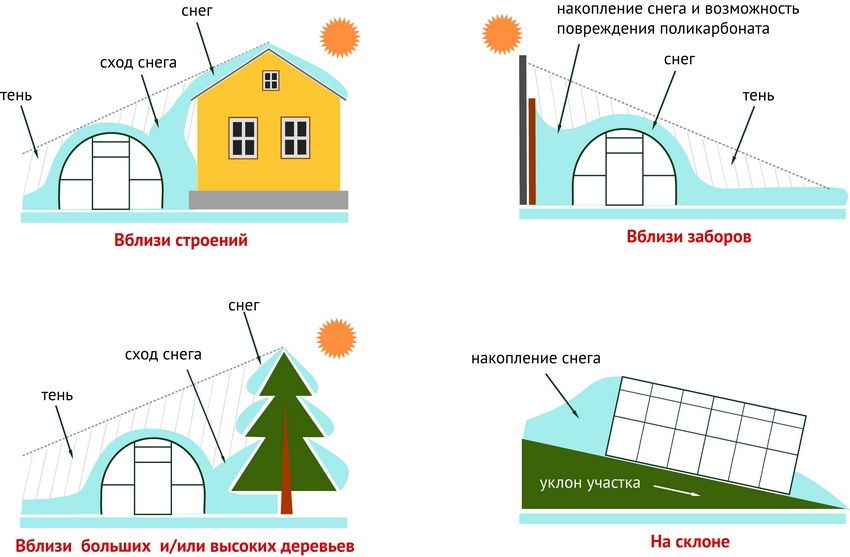
Fallen leaves covering the roof can also negatively impact lighting.
Criteria for choosing polycarbonate for a greenhouse
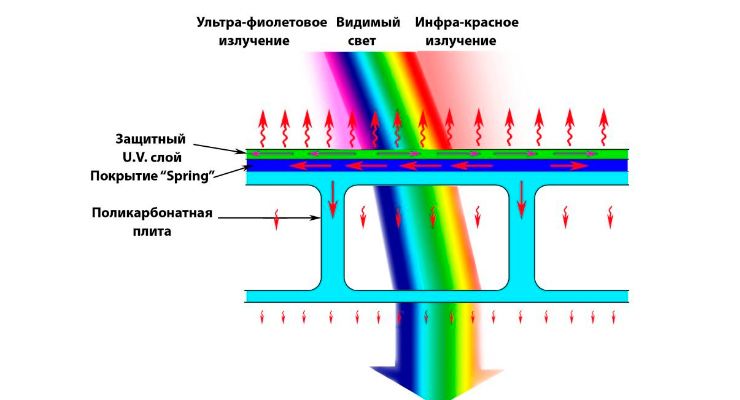
When constructing a structure, several types of polycarbonate are used, each with its own set of advantages and disadvantages:
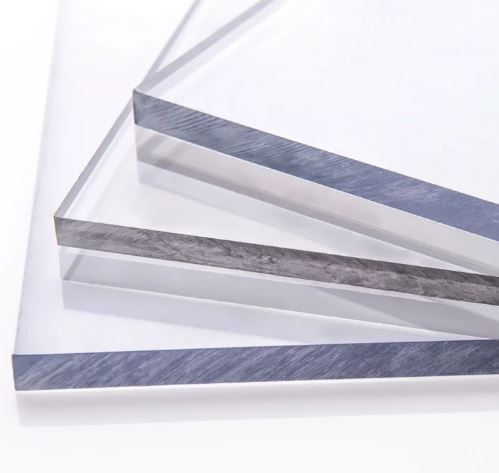
- Monolithic – resembles glass, transmits sunlight very well, is approximately 2-4 times lighter than glass, and is 100-200 times stronger. Thickness varies from 0.75 to 4.0 cm. A significant drawback is the high cost of the material. It is used when there is a high risk of mechanical damage (such as hail). Polycarbonate sheets can have various characteristics, such as being able to withstand heavy loads or blocking ultraviolet radiation.
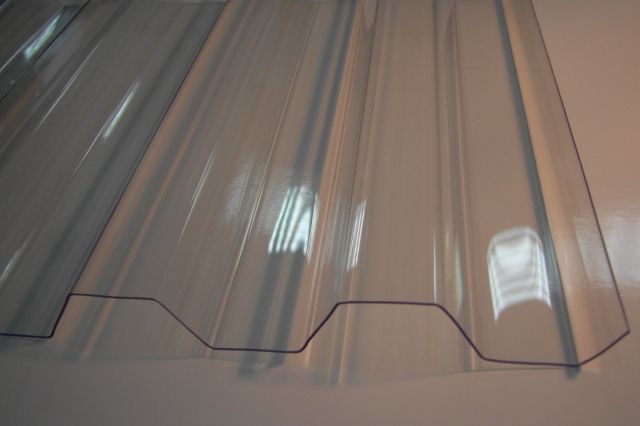
- Fluted – made from a monolithic material using relief molding. The thickness is 0.8-1.2 mm. It is flexible, impact-resistant (withstands hailstones up to 2 cm in diameter), and resistant to low temperatures down to -50°C.
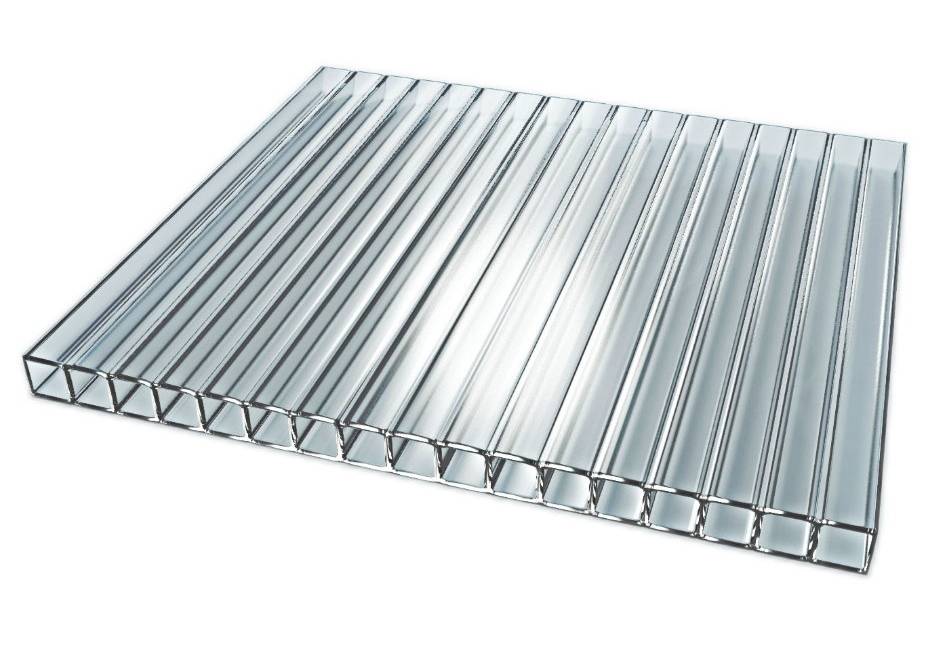
- Cellular – sometimes called cellular or structured – consists of several sheets held together by crossbars. Sheets are available in thicknesses of 0.4, 0.6, 0.8, 1.0, 1.6, 2.0, 2.4, and 3.2 cm. When constructing a greenhouse, it's best to aim for a thickness of 10 mm or more. The material has high thermal insulation properties but is less transparent – approximately 10% less transparent than solid polycarbonate.
Options for constructing a foundation for polycarbonate greenhouses
The purpose of the foundation is to secure the building.
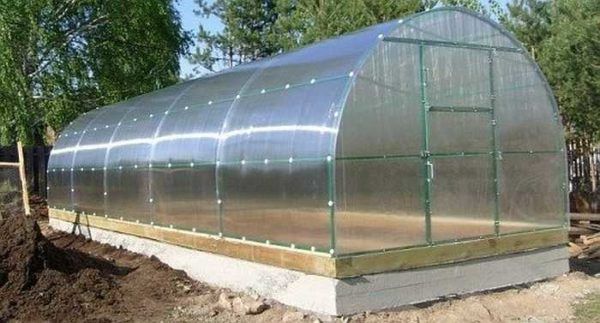
There are several types of it:
Ribbon
The most substantial. Installed at a depth below the ground freezing point.
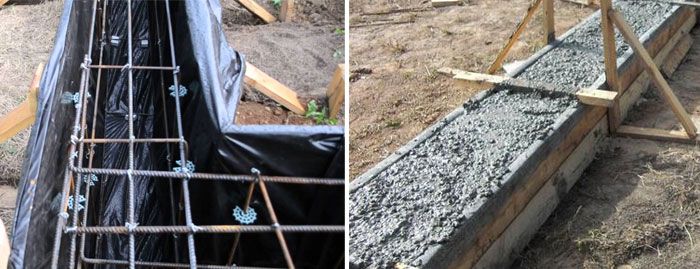
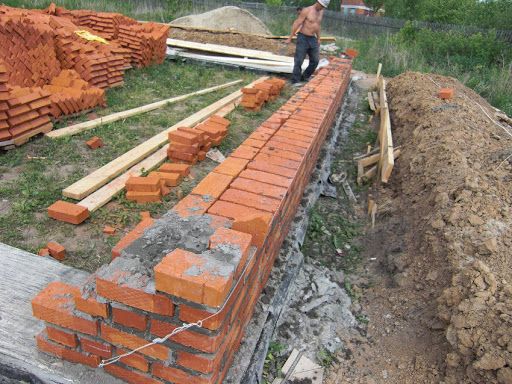
Concrete and brickIt is easy to install. First, a trench is dug 20 cm wide and 25 to 60 cm deep, depending on the soil's susceptibility to heaving. Crushed stone and a layer of sand are used as a "cushion" to compensate for soil movement due to heaving.
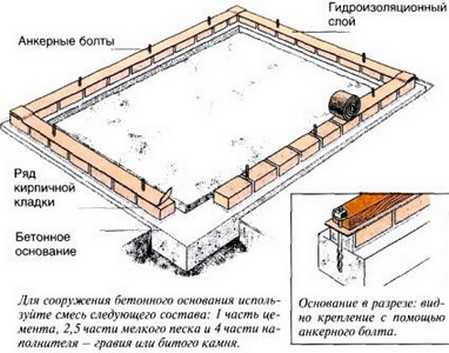
A plastic sheet is placed on the bottom, after which cement mortar is poured. Rebar pieces with a diameter greater than 1.2 cm are installed at the corners and at intervals of 1 meter, extending 15-20 cm above the foundation level. The poured foundation is left to cure for 7-14 days. If necessary, it can be watered. Next, 1-2 rows of bricks are laid.
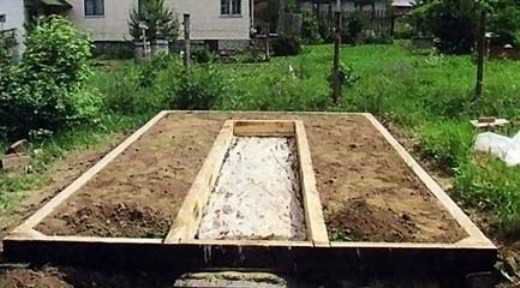
TimberThis is used as a temporary foundation. It is recommended to use treated timber with a cross-section of 10 x 10 cm or more. The trench dimensions should be 7-10 cm wider and deeper than the timber. Before installing the structure, the timber is wrapped with waterproofing material. It is secured with corners driven into both sides. The space between the timber and the trench walls is filled with crushed stone. Then, a frame timber, also covered with a layer of waterproofing, is attached over the installed timber. This type of foundation for a polycarbonate greenhouse can be used in soils with a low groundwater table.
Pile-grillage
It is reliable and easy to install, but is not able to protect against low temperatures.
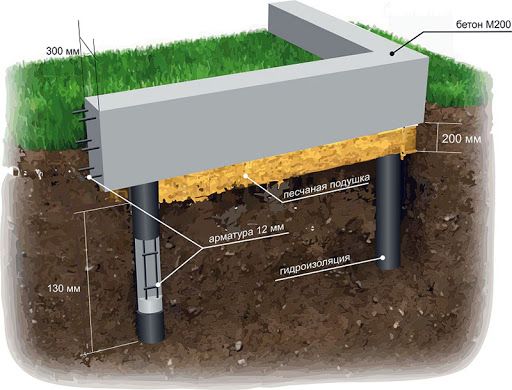
It is based on the installation of reinforcement rods with a diameter of 10-12 mm, representing a single structure, in holes with a diameter of 30-40 cm and a depth exceeding the depth of soil freezing, into which concrete is later poured.
Polycarbonate greenhouse frame options
To make the frame, rectangular (profiled) pipes, metal angles, galvanized profiles, polypropylene pipes and timber beams are used.
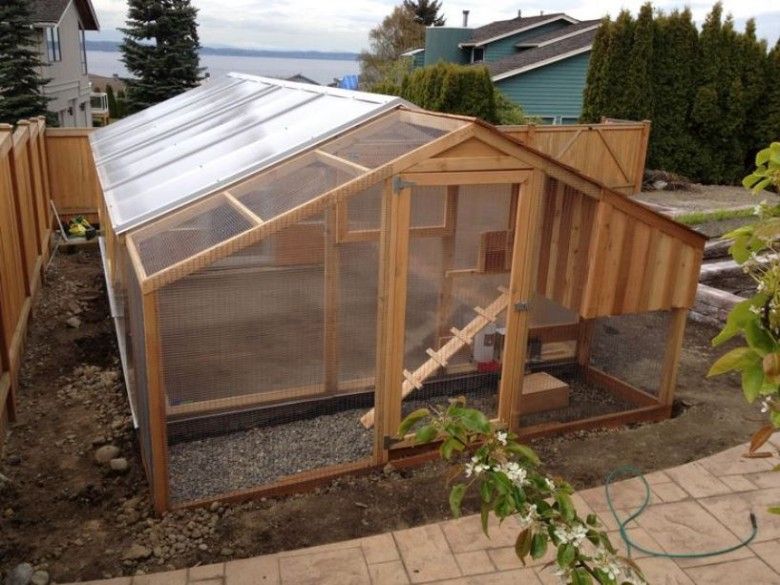
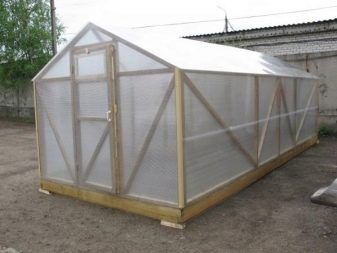
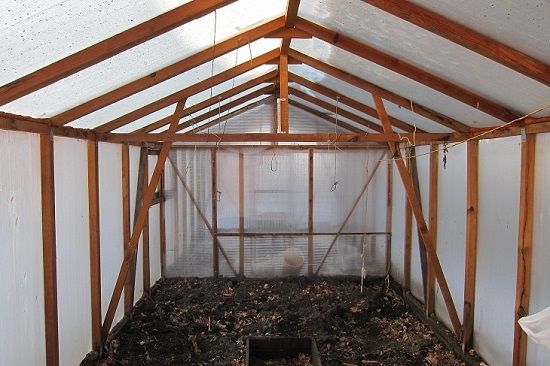
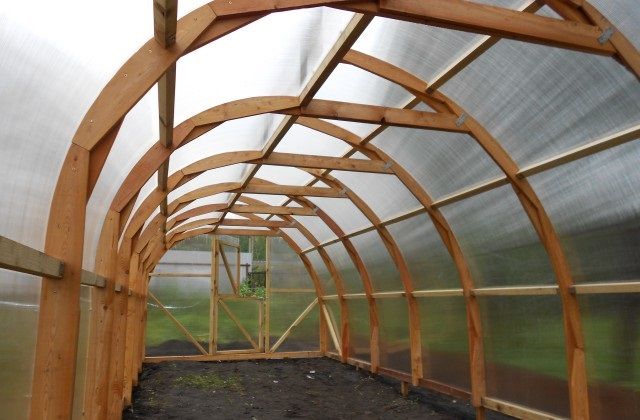
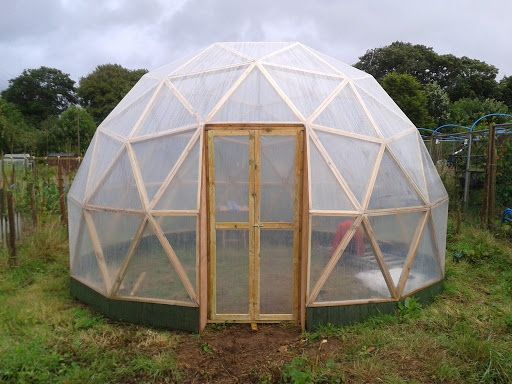
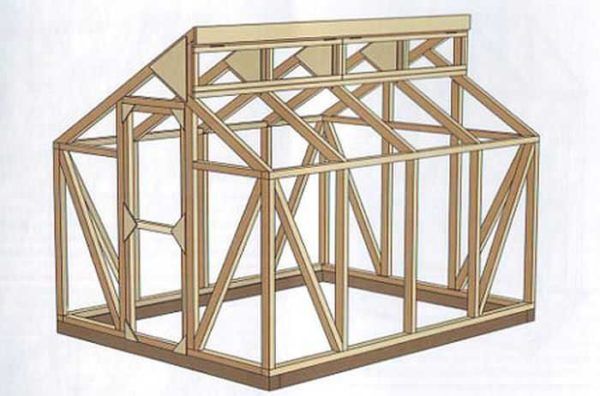
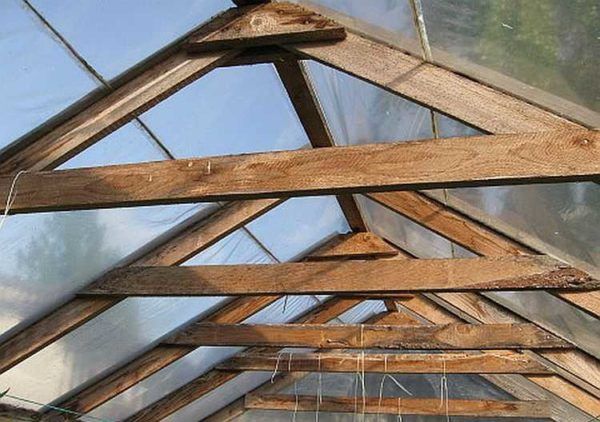
Before installation, the wood must be treated with a preservative. The most common timber dimensions are 5 x 5 cm. For corner posts, 10 x 10 cm. Boards measuring 5 x 2.5 cm or 5 x 1.5 cm can also be used.
Polypropylene pipes are flexible, durable, and resistant to moisture and temperature. They are more wear-resistant than wood, lightweight for easy installation, environmentally friendly, and affordable.
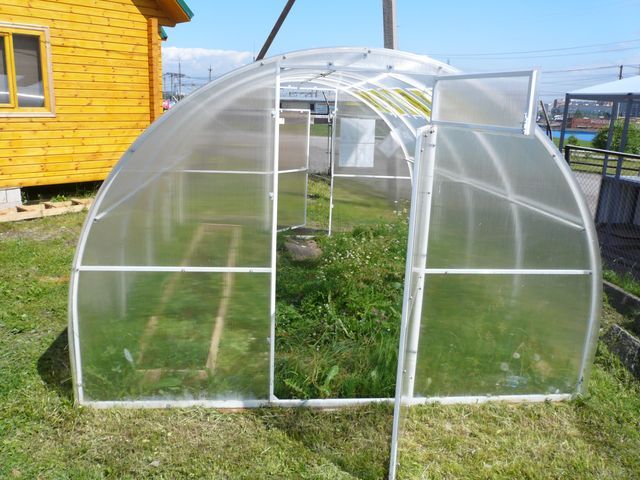
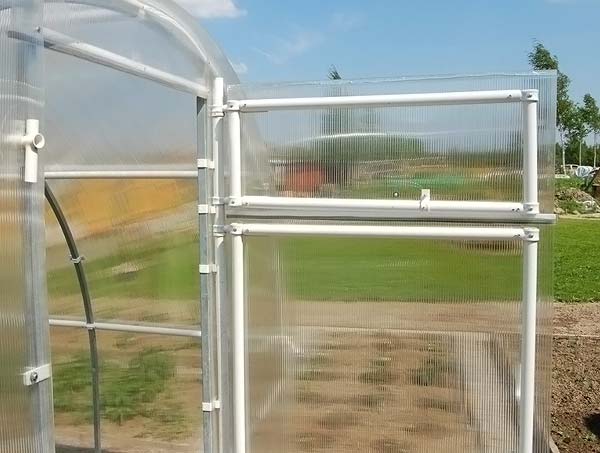
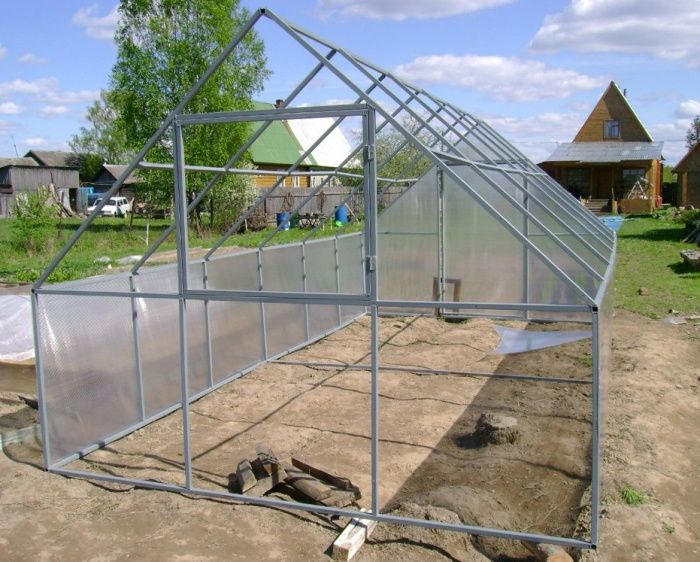
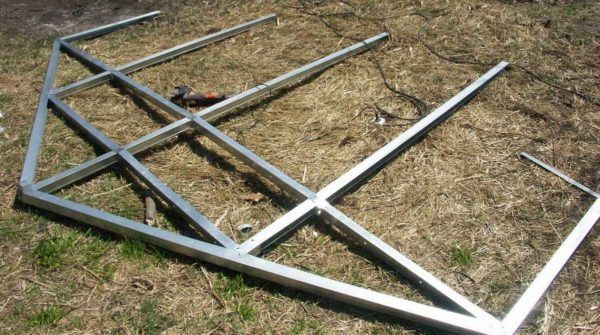
If you have a welding machine, the frame can be easily made from profile pipes. It is recommended to use pipes measuring 2 x 4 cm and 2-3 mm thick.
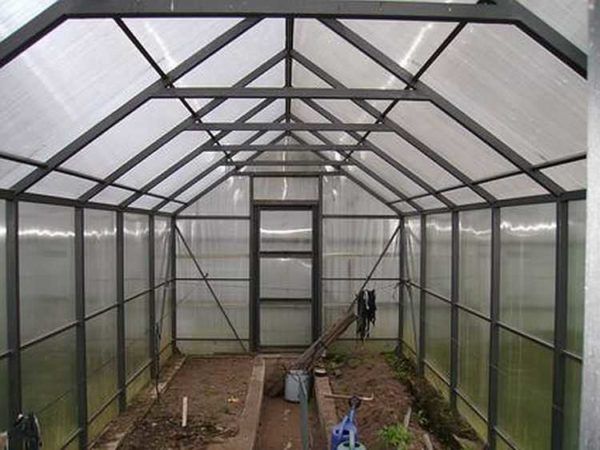
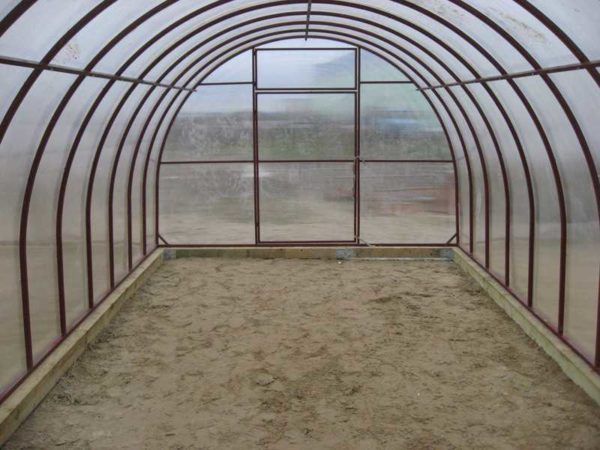
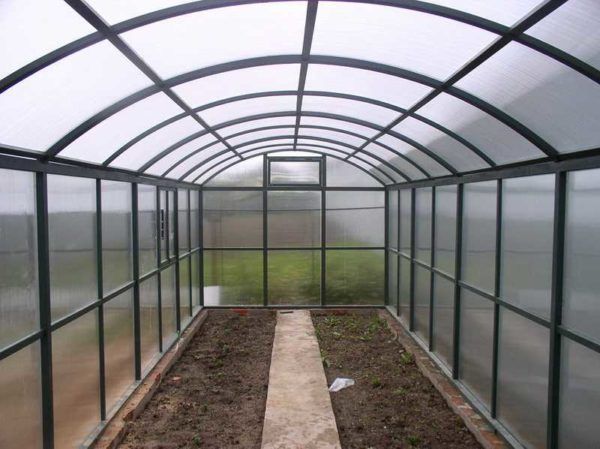
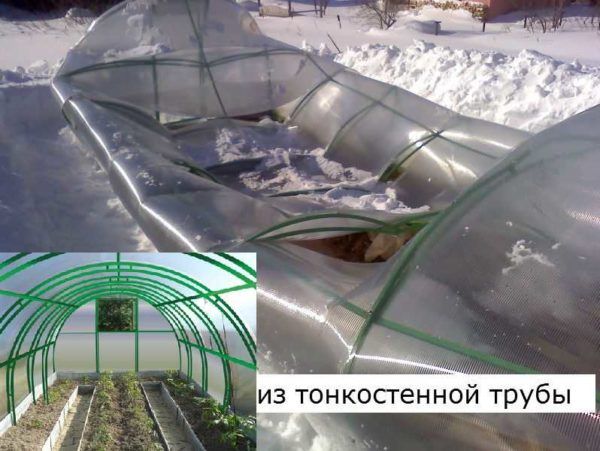
When using steel corners, greenhouses are assembled with gable or mono-pitched roofs. The shelves are 2-3 cm in size and 3 mm or more thick.
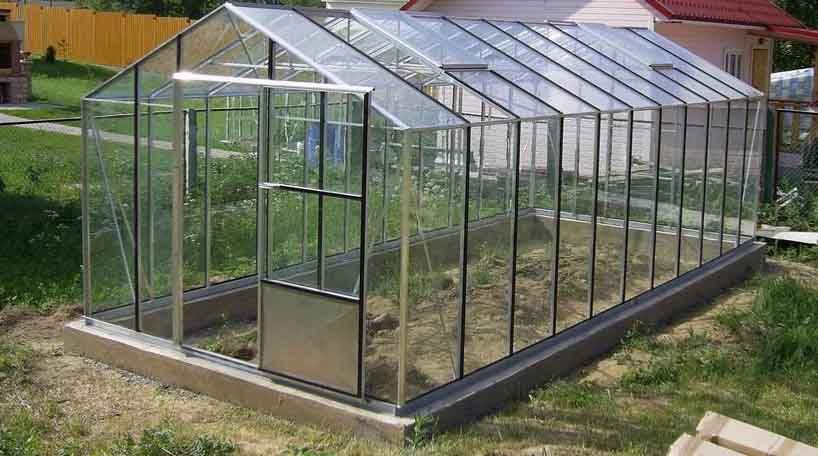
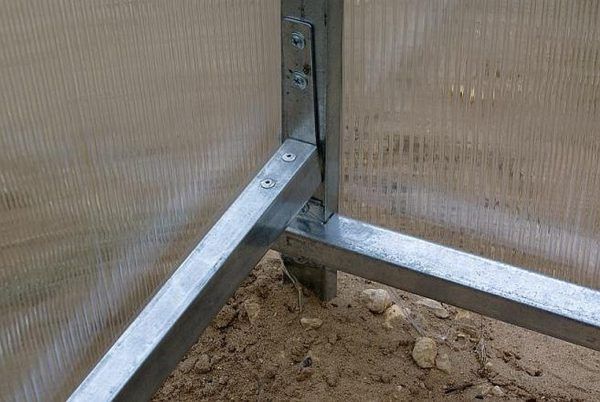
The use of galvanized profiles in frame construction is advisable in regions with little snowfall and uncommon strong winds. The frame is sheathed on one side. The posts are installed by joining two supporting profiles together with self-tapping screws.
Features of polycarbonate installation
Polycarbonate is quite flexible and easy to cut, making it convenient for installation.
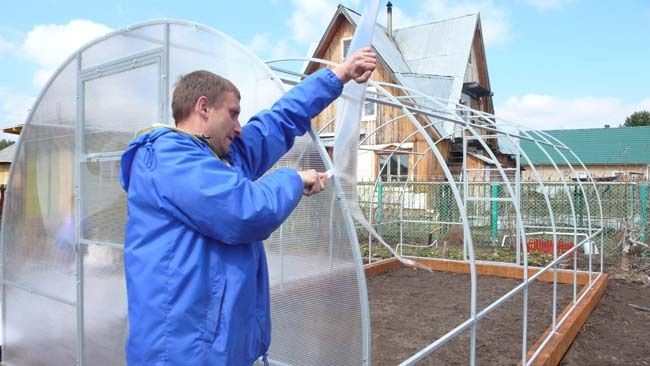
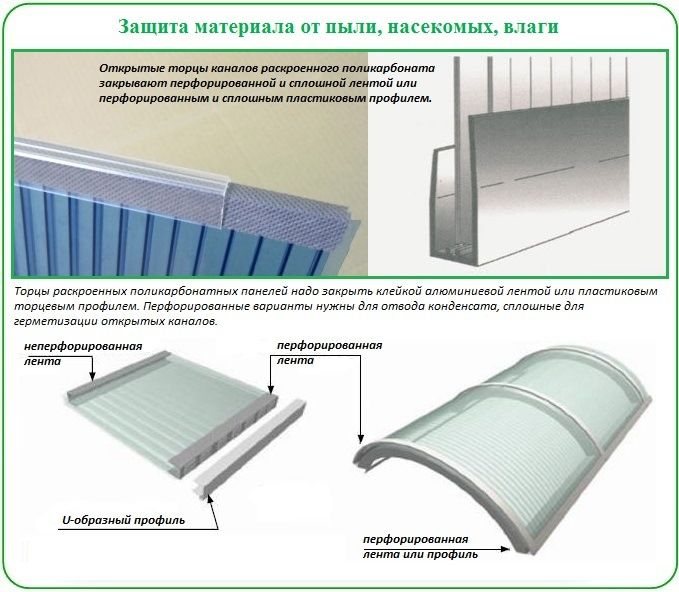
When fastening the material, ensure that no horizontal surfaces appear on the roof to allow condensation to run off the walls. Plastic eyelets and aluminum clamps can be used to secure the sheets.
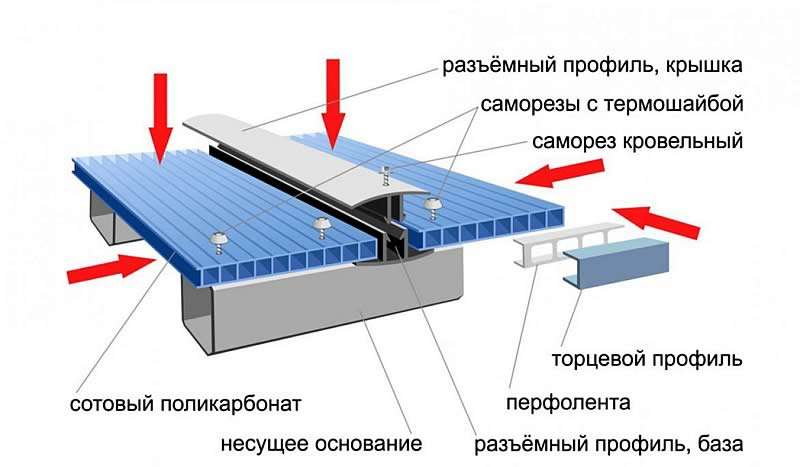
From the manufacturers' point of view, the optimal method is to use profile fastenings, which allow for quick, hermetically sealed, and secure closure of the greenhouse.
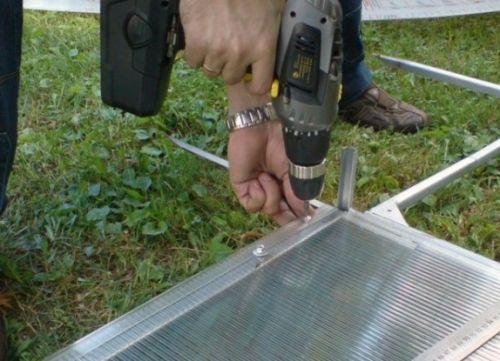
Holes are pre-drilled in the polycarbonate sheet, after which it is attached to the metal frame with self-tapping screws.
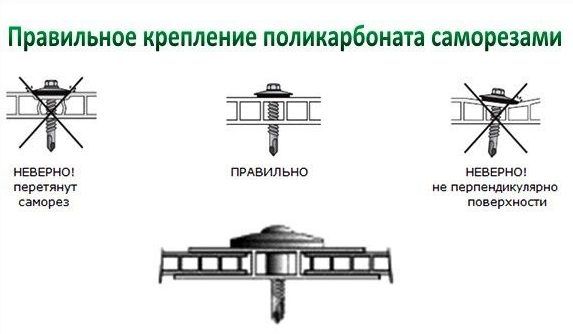
It is desirable that self-tapping screws with thermal washers have a large area.
Heating a polycarbonate greenhouse
Polycarbonate has good heat-retaining properties. Several types of heating are used to create the proper microclimate in a greenhouse:
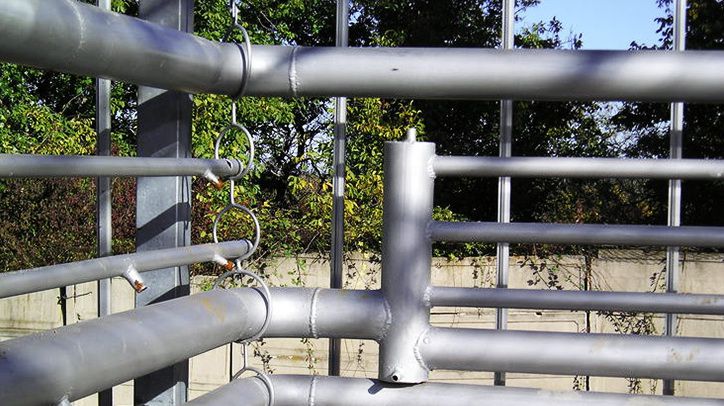
Steam heating involves connecting greenhouse pipes to the home's heating system. To prevent unwanted heat loss, the pipes should be insulated. This type of heating is used if the greenhouse is located less than 10 meters from the house. Pumping equipment is used to improve efficiency.
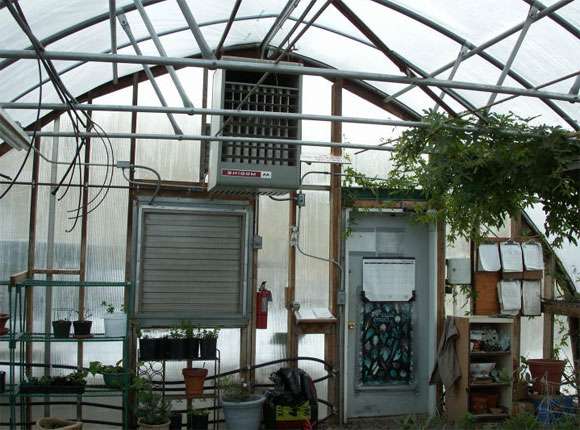
An air-fired boiler is a boiler that heats air. It is characterized by low cost and high efficiency.
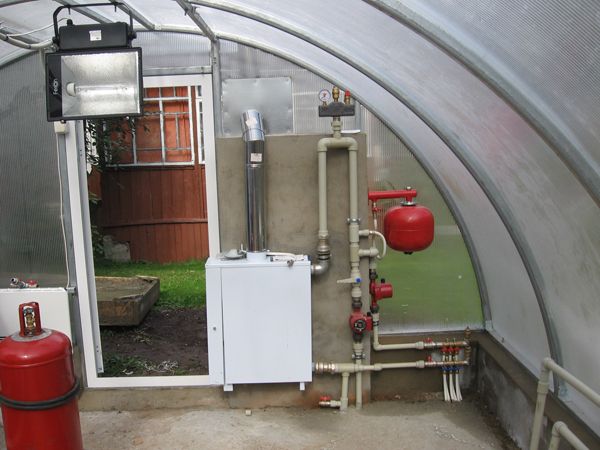
Gas – includes the option of connecting to fixed gas networks and portable cylinders. The main disadvantage of this approach is its high cost.
Electric heating is characterized by its preferential heating of the soil. Infrared lamps and heaters can also be used. Temperature sensors allow the greenhouse to be divided into heating zones.
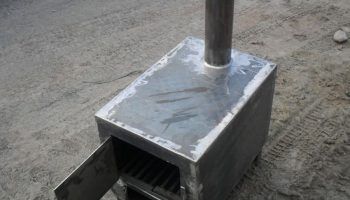
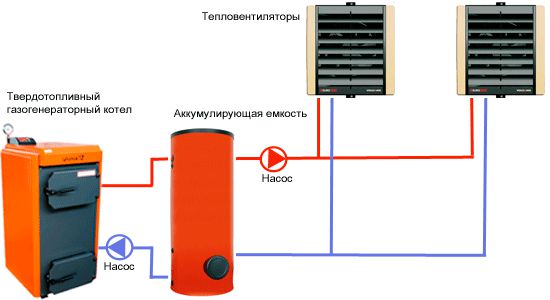
A stove-based system consists of a solid fuel boiler, burning coal or wood, and a flue pipe. Disadvantages include the need for regular cleaning of the flue pipe.
Any of the above heating options is selected based on the tasks that the gardener has set for himself, as well as his capabilities.