Creating and maintaining the right microclimate for growing crops requires proper watering and ventilation. A DIY greenhouse thermostat can significantly simplify this task for gardeners.
Content
What is a thermal actuator, its advantages and disadvantages?
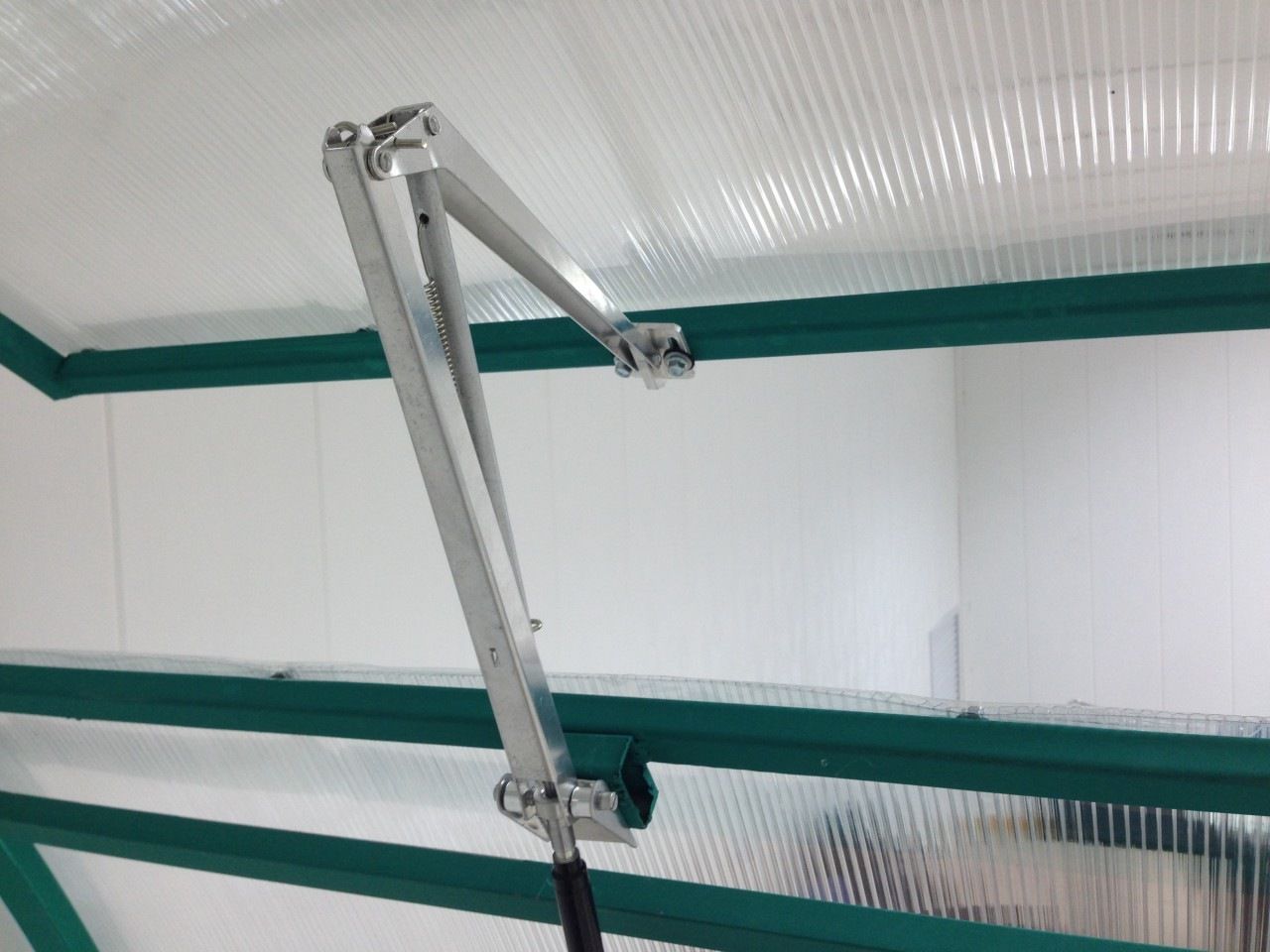
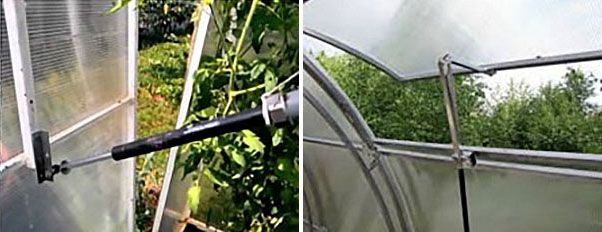
A thermal actuator is a device that allows for the automatic opening and closing of ventilation openings in order to regulate the microclimate.
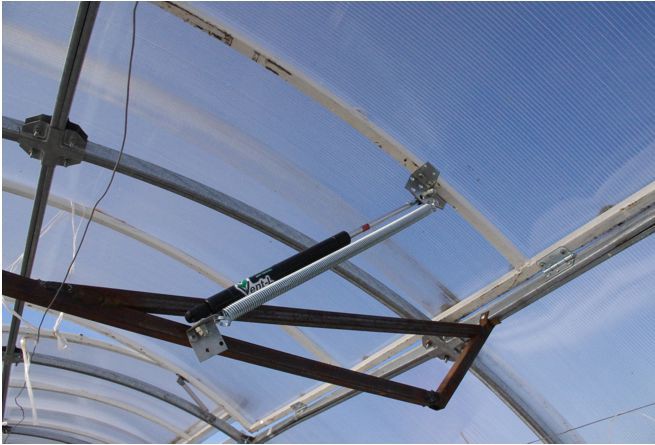
The operating principle of a thermal actuator is based on the use of a liquid in a closed cylinder whose volume can change depending on temperature. This change in volume activates the mechanism. Cyclohexanol is commonly used.
The advantages of thermal drives include:
- the ability to open, close and adjust a wide range of devices: vents, doors, windows, frames;
- reliability;
- ease of operation and no need to produce
- additional settings;
- ease of installation.
Despite the obvious advantages, thermal drives are not without their drawbacks:
- Mounting to glass windows requires more powerful devices due to their relatively high weight;
- When installing the device, it is necessary to take into account the dimensions of the greenhouse.
Experience shows that the best results can be achieved by installing thermal drives in greenhouses made of cellular polycarbonate.
Classification of thermal actuators
Based on the mechanisms of action, the following types of devices are distinguished:
- Electric – the drive is driven by an electric motor. The signal is sent by a controller, which interacts with a temperature sensor. They are characterized by high power and the ability to form intelligent systems that control automatic ventilation. However, they are vulnerable to high humidity. Their comparative cost and the need for an electricity supply limit their use.
- Pneumatic – the working element is heated air, which drives a piston. For the drive to work, the container must be completely sealed. This is difficult to achieve in a makeshift setting.
- Bimetallic heaters – their operation is based on the different coefficients of expansion of the metals used when heated. These models are simple and convenient, but limited in power.
- Hydraulic actuators operate by oscillating the weight of two containers containing moving fluid due to changes in air pressure and temperature fluctuations. These actuators are characterized by significant power and ease of assembly.
DIY Thermal Drive for a Greenhouse: Top 5 Types and Instructions
Depending on the design features of home-made thermal drives, it is customary to distinguish 5 main types.
From a gas shock absorber
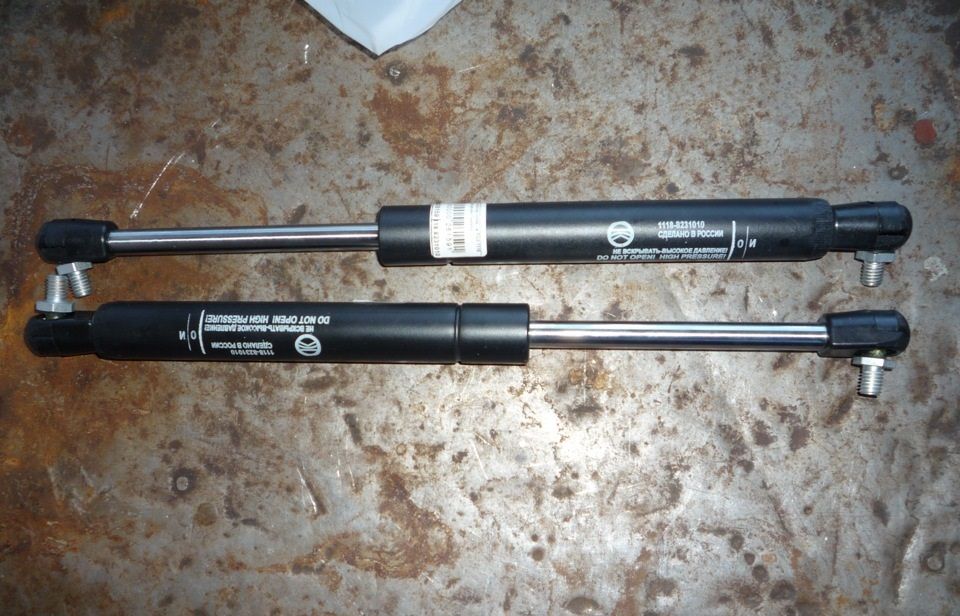
The algorithm of actions will be as follows:
- Threads are applied to two pieces of metal pipe, 95-105 cm long, after which they are connected using a tee in the middle, and standard plumbing plugs are installed on the ends.
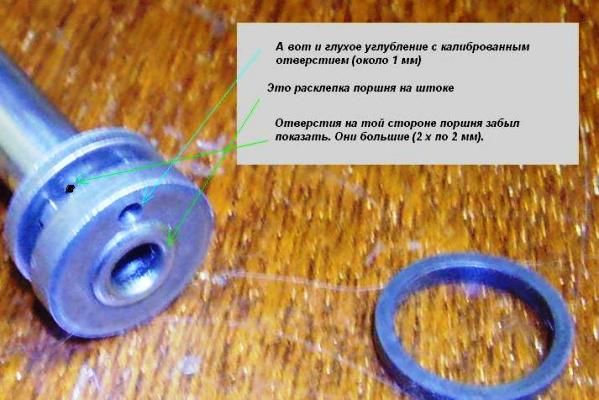
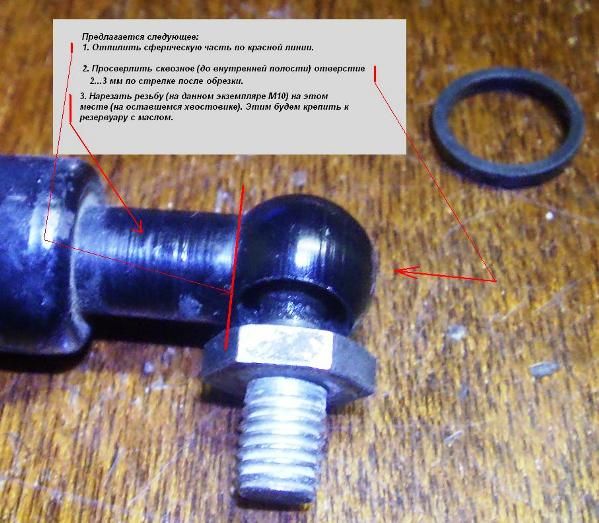
- The stud at the bottom of the car's shock absorber is removed. An 8.5 mm diameter hole is made in the base and threaded.
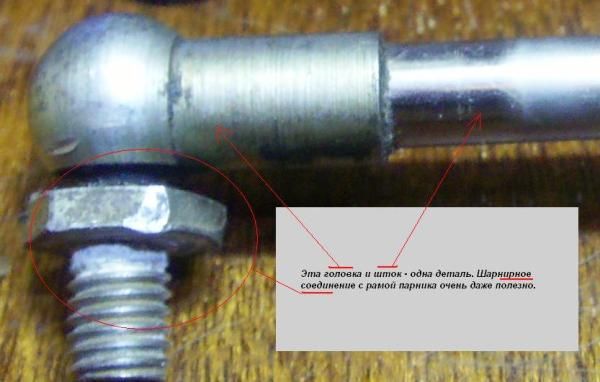
- A nut and bolt are taken for the brake hose, in which a through hole is drilled.
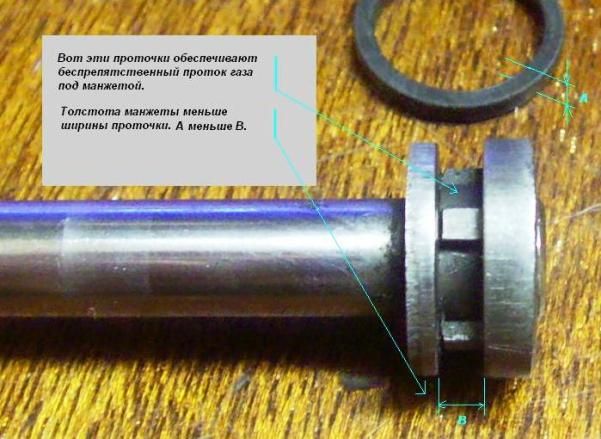
- A 10 mm diameter hole is drilled in the plug, after which a bolt is inserted and a nut is screwed onto it. The protruding portion of the bolt is screwed into the threads on the shock absorber. These structural elements are connected using paronite gaskets.
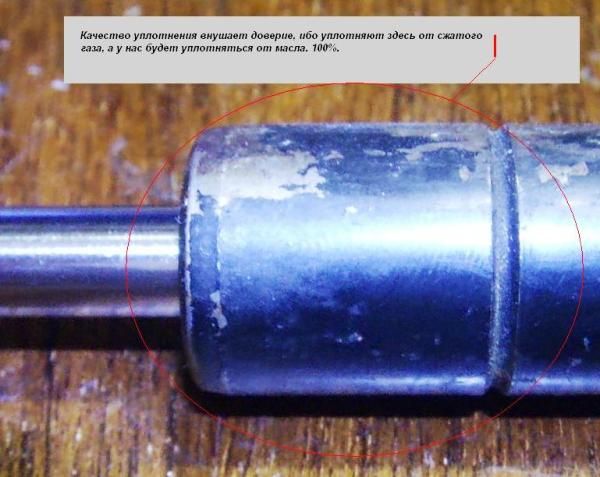
- The plug is connected to the tee.
- A plug is unscrewed from one end of the metal pipe, after which oil is poured in. The piston rod is moved and locked in the lowered position. Air is released from the shock absorber.
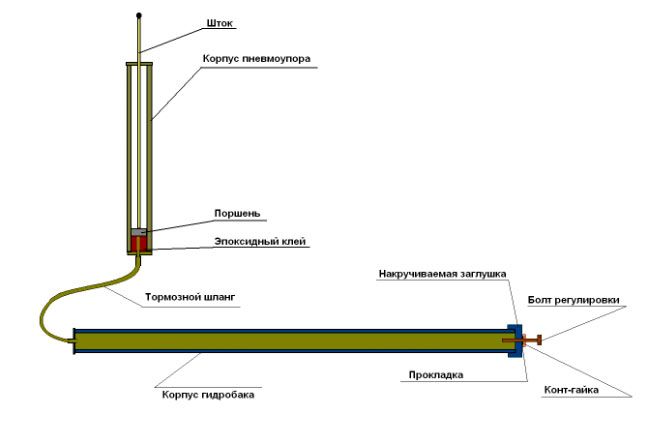
- The plug is screwed in. The device is installed in the greenhouse structure.
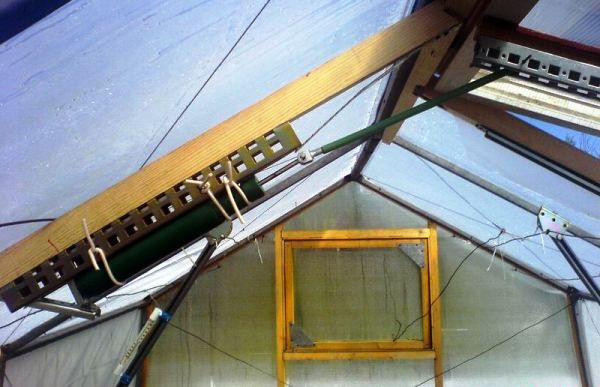
From a car hydraulic cylinder
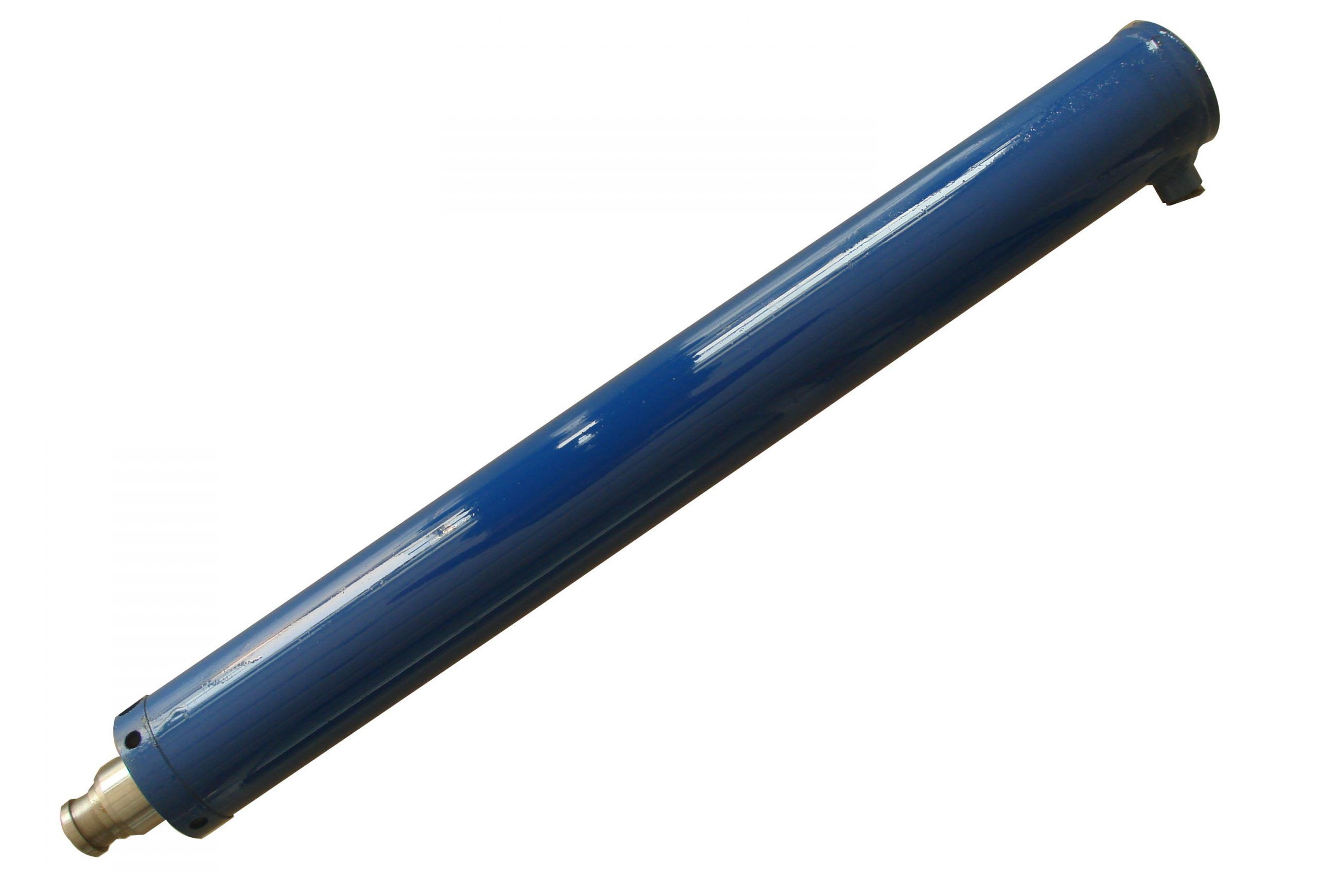
Manufacturing will require the following steps to be performed in sequence:
- It is necessary to release air from the hydraulic cylinder, for which a hole is drilled in it;
- a 10*1.25 thread is made for subsequent connection of the hose (it is recommended to use a long brake hose for the Niva);
- the hose is attached using a bolt with an M6 stud, identical to the stud on the cylinder;
- a receiver is ordered from a turner (or made independently);
- the cylinder is filled with oil (the rod must be completely immersed);
The system is checked for leaks.
Thermal drive from a computer chair
The starting materials used are a cylinder, machine oil, and a piece of metal pipe. The tools required are a vice, an angle grinder, and a welding machine.
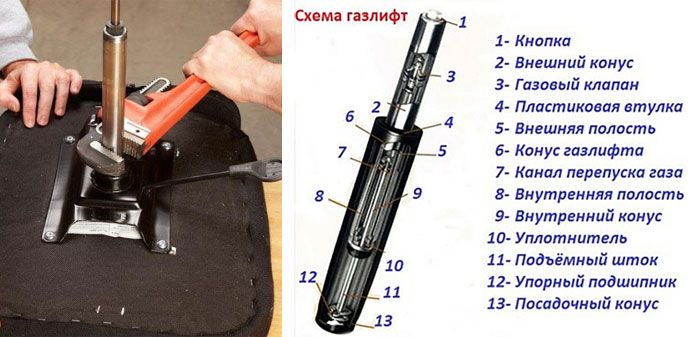
The assembly order is as follows:
- the end of the stem is clamped in a vice and pulled out until the valve pin located inside becomes visible;
- a metal axis with dimensions of 8 x 60 mm is clamped in a vice, on which a cylinder is supported, having released the air from it;
- The cylinder is cut off with a grinder with a taper, after which the rod is carefully pressed out;
- An M8 thread is cut on the rod and the inner cylinder liner is reinstalled (it is important to ensure that no chips remain on the surface of the parts);
- the rod is removed from the cylinder and inserted into the sleeve, after which a nut is screwed onto it to prevent it from falling into the cylinder during operation;
- an aluminum piston is inserted inside, to the outer end of which a pipe is hermetically welded;
- An M8 nut is screwed onto the thread of the rod, after which the rod is connected to the window using a fork;
- The structure is installed in the selected location, and machine oil is poured into the system.
From plastic bottles
This is perhaps the cheapest system.
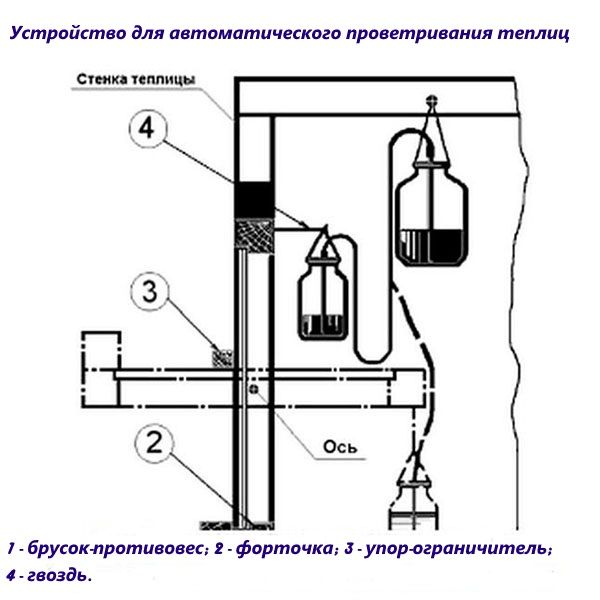
To create it, you need to take two plastic bottles with a capacity of 1 and 5 liters, a piece of polyethylene film, a wooden board, a 100 cm long PVC pipe and 2 pipes.
The manufacturing algorithm is as follows:
- a hole is made in the cap of a 5-liter bottle;
- the pipe is inserted and attached to the PVC pipe (the joints are thoroughly sealed with thermal paste);
- the tube is inserted into a 1 liter bottle;
- a five-liter bottle is wrapped in black film and placed at the top of the greenhouse;
- A liter bottle is placed near the window, and a board is nailed to the window above the bottle.
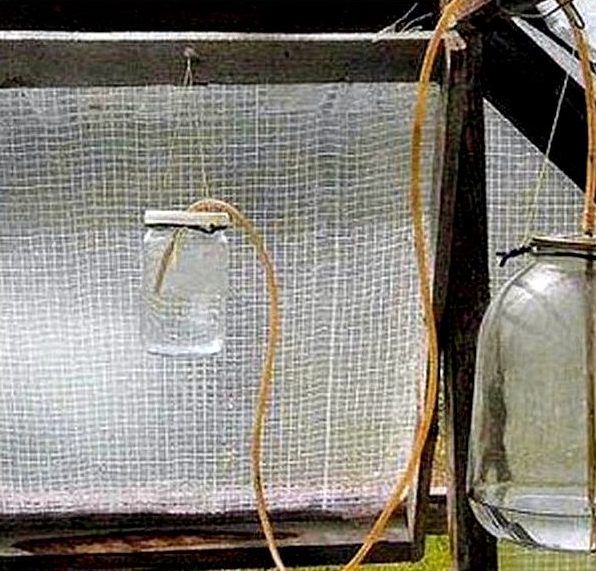
The principle of operation is based on the forced-air action of a large bottle of liquid into a liter bottle. This increases the liquid's mass, causing it to move the board, simultaneously rotating the window.
The same method can be used, but instead of plastic bottles, use two glass jars (3 liters and 800 grams).
From a rubber ball and cylinders
The drive model is also inexpensive. Before starting, you'll need a wooden box, a board, a hose, a ball, and two cylinders.
To create a thermal drive you need:
- connect two cylinders by connecting a hose to them;
- the second end of the hose is fixed to the outlet of the deflated ball, which is placed in a box (the box should be closed);
- a board is attached to the lid, which is connected to the window frame;
- The cylinders are placed at the top of the greenhouse, while the box with the ball is placed at the bottom under the window.
When the balloons heat up, the air mixture expands and fills the deflated balloon. The balloon presses against the lid via a fixed board, causing the window to open.
Installation of thermal drive
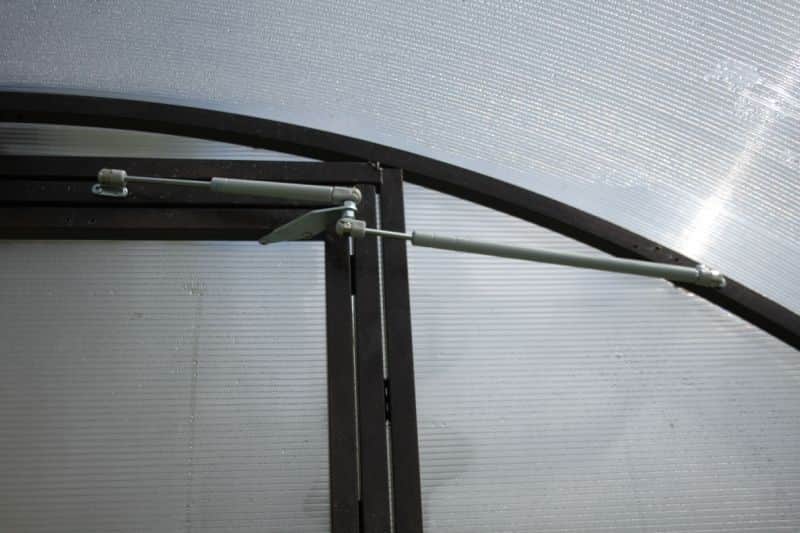
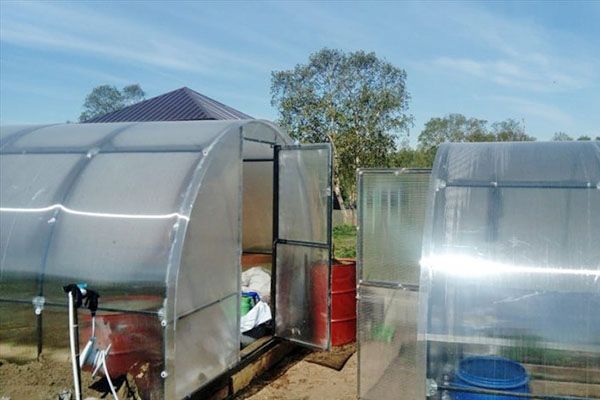
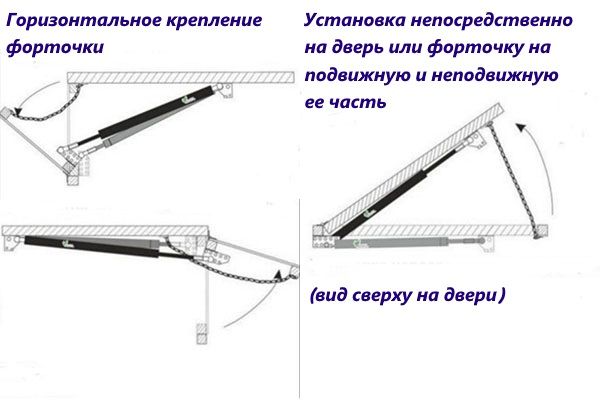
Once the thermal actuator is ready, it can be placed in any suitable location – on the structure of a transom, window, or entrance door.
It has been experimentally established that the number of vents in ideal conditions should not exceed 25% of the greenhouse area with their uniform distribution.
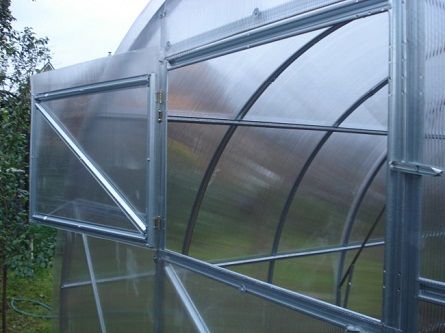
Before installation, you must:
- check the “operability” of the device – the tested load should not exceed 5 kg;
- It is advisable to provide the bracket with the ability to move within 10 cm (the device is secured with screws inside the room with a window that opens outward);
- The fasteners are attached to the thermal drive and to the spring part.
To protect the structure from condensation and corrosion, it is recommended to position the mechanism and spring slightly below the opening rod.
Thermal drive maintenance
To ensure the thermal drive operates for a long time, it is recommended to follow a few simple recommendations:
- the structure requires regular lubrication, since the metal components are in contact with moist air;
- It is not recommended to disassemble the device;
- In cold weather, it is advisable to remove the thermal drive;
- the functioning of the structure must not be impeded by anything, for this reason its fixation is prohibited;
- When opening a window or door with a built-in device, do not apply significant force.
Top 5 models of commercial thermal actuators: description and price
Based on customer feedback, the following options for purchased thermal drives were selected.
| Thermal drive name | Characteristics | Cost, RUB |
|
Dusya Sun
|
Permissible load – up to 7 kg. The window opening range is up to 45 cm. Opening temperature: 25°C, closing temperature: 16°C. The structure is made of 1 mm thick aluminum. Equipped with a return spring. |
64-87 |
|
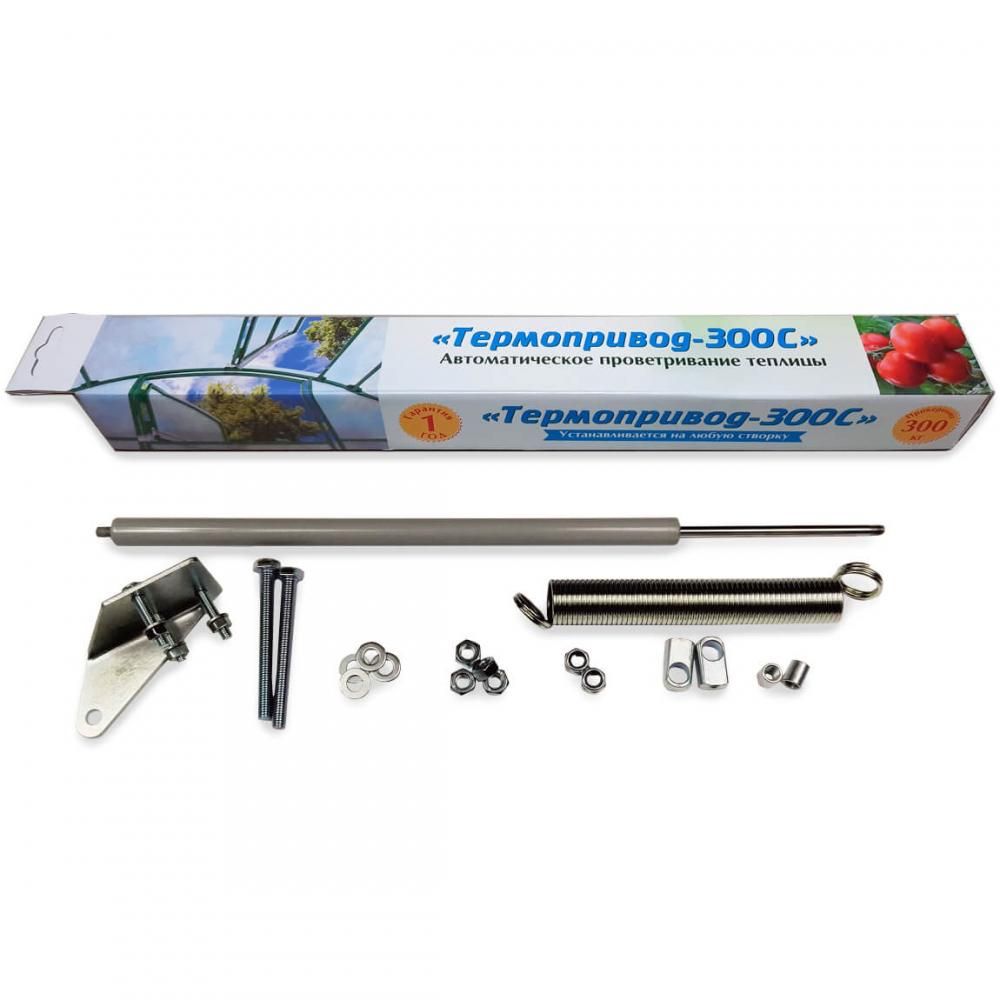
300c
|
Permissible load – 300 kg. Opening temperature: 26°C, closing temperature: 22°C. The stem and hinges are made of 6 mm steel. The stroke of the piston rod is not less than 60 mm. Long service life – at least 100,000 cycles, thanks to the use of a special amorphous liquid and high-quality materials. The drive can be opened manually and the door can be used freely even in winter. |
1150 |
|
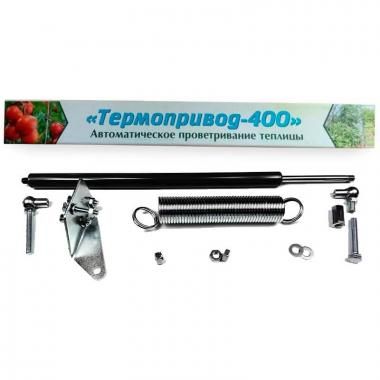
400
|
Permissible load – 400 kg. Opening temperature: 26°C, closing temperature: 22°C. The stem and hinges are made of 8 mm steel. Long service life – at least 100,000 cycles, thanks to the use of a special amorphous liquid and high-quality materials. The drive can be opened manually and the door can be used freely even in winter. |
1350 |
|
Will
|
Permissible load – up to 100 kg. Working stroke of the rod is 10 cm. Opening temperature: 25°C, closing temperature: 16°C. Maximum opening angle – 50°. The structure is galvanized metal. |
1400-1732 |
|
Good
|
Permissible load – up to 7 kg. The window opening range is up to 45 cm. Operating range: up to 50°C. Opening temperature: 24°C, closing temperature: 17°C. The structure is galvanized metal. |
2900-3175 |