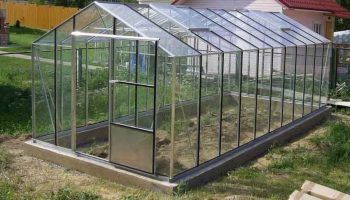
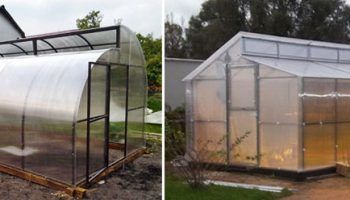
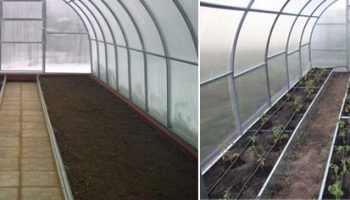
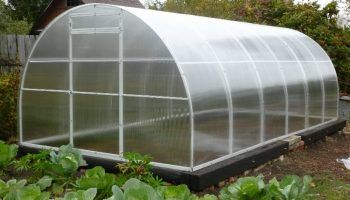
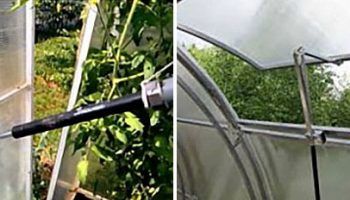
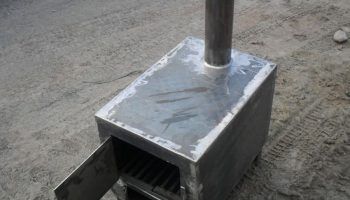
A "smart greenhouse" is a choice for busy people. To save money, gardeners often opt for DIY construction. During construction, monitoring and adjustment of indoor air temperature, soil moisture, and soil conditions are taken into account.
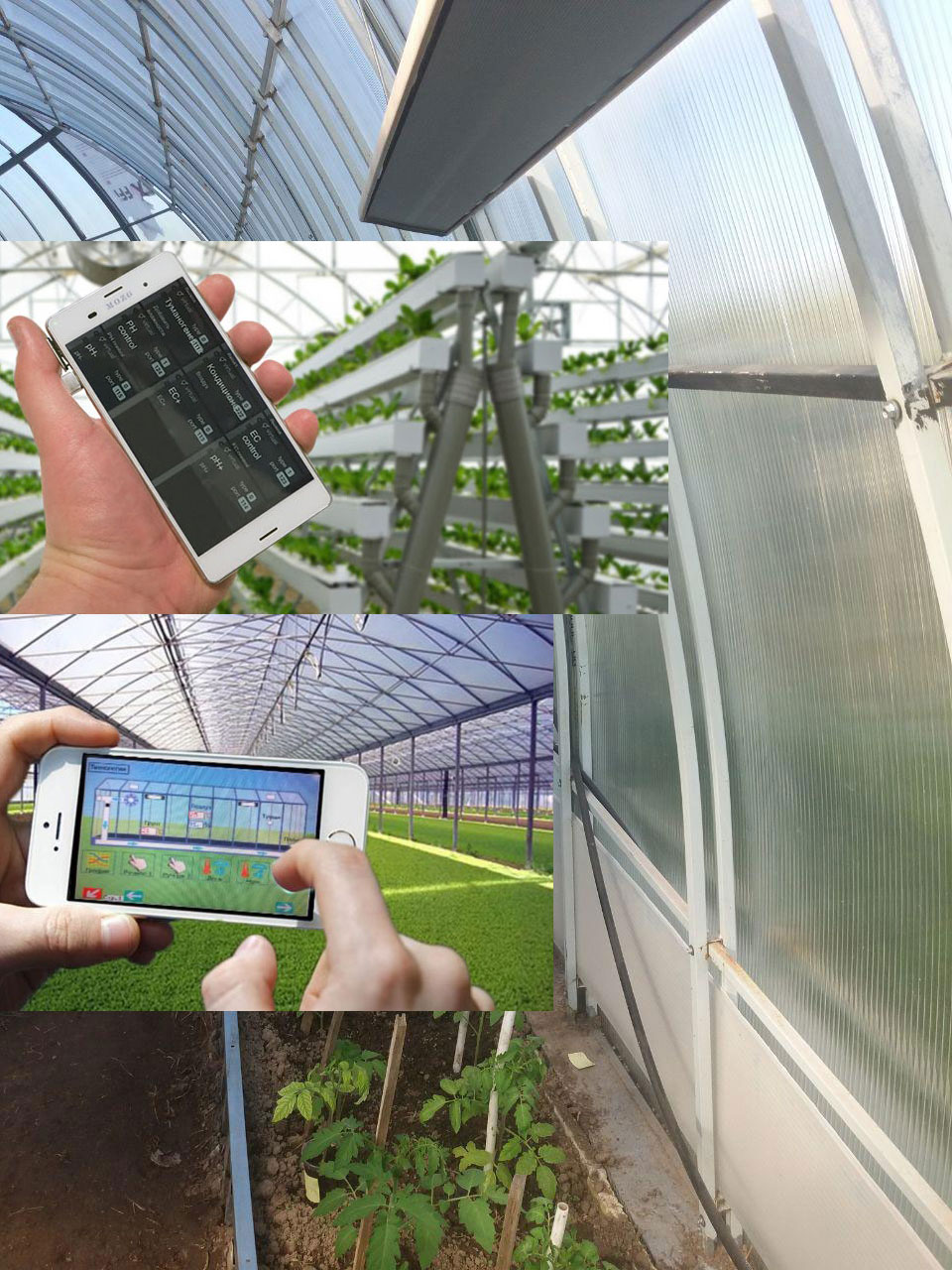
Smart greenhouse and its features
Automating routine processes allows you to save time on their implementation and focus on pinching, replanting, and other things.
Benefits of smart greenhouses
The main advantages include:
- maintaining the required temperature inside the room by controlling the timeliness of heating and ventilation;
- timeliness of drip irrigation;
- restoration (mulching) of soil for a given crop.
Types of smart greenhouses
Depending on the type of energy supply, greenhouses are divided into autonomous and energy-dependent ones.
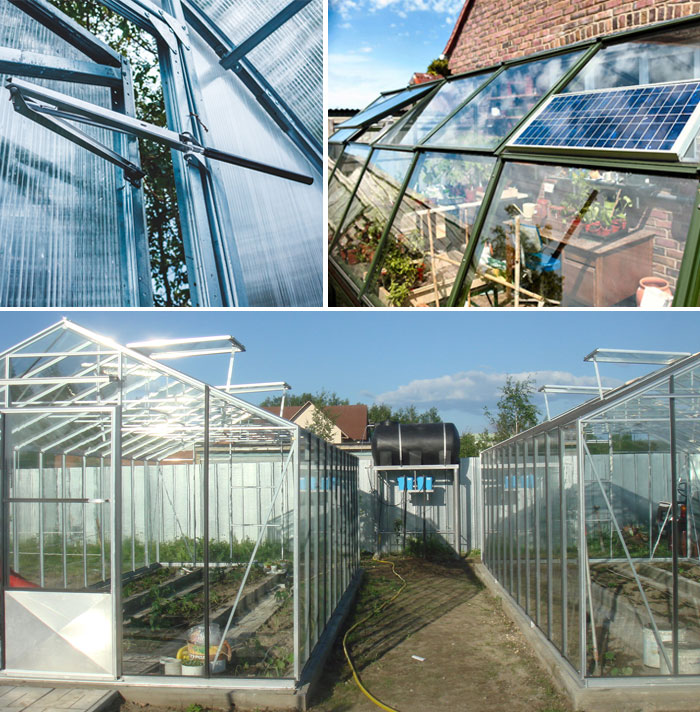
As the name suggests, autonomous structures are independent of electricity supply. They operate using thermal or solar energy. The disadvantages include the equipment requirements.
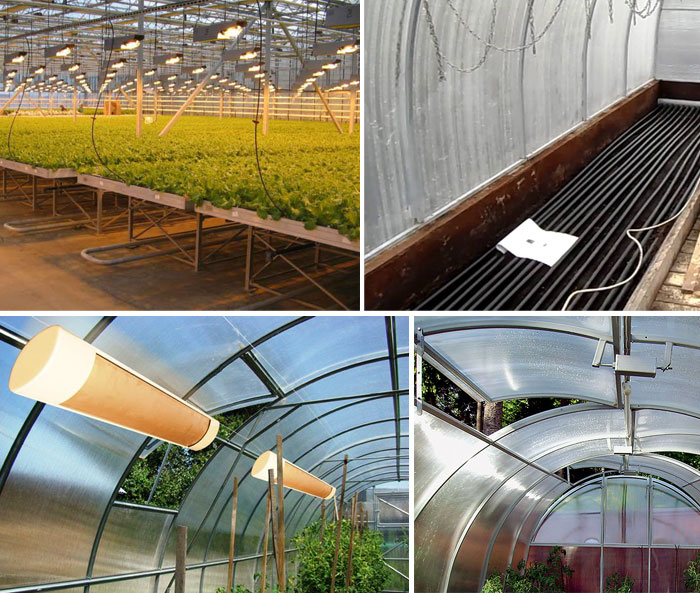
The second type of greenhouse requires electricity to operate. Its advantages include a lower cost compared to stand-alone structures. However, two disadvantages stand out. The first is the electricity bill, which can be high. The second is its dependence on the power grid.
DIY Smart Greenhouse: Step-by-Step Instructions
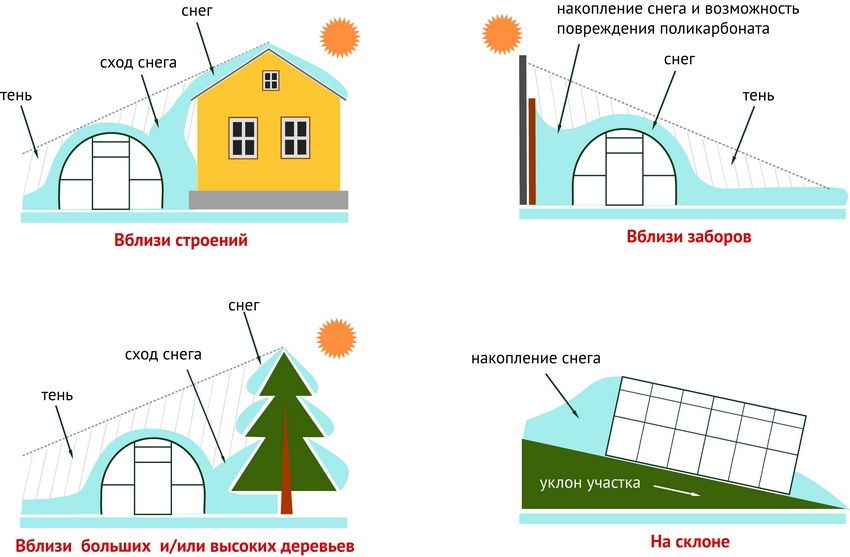
To begin, they decide on a construction site, taking into account insolation, landscape, groundwater level, and wind direction.
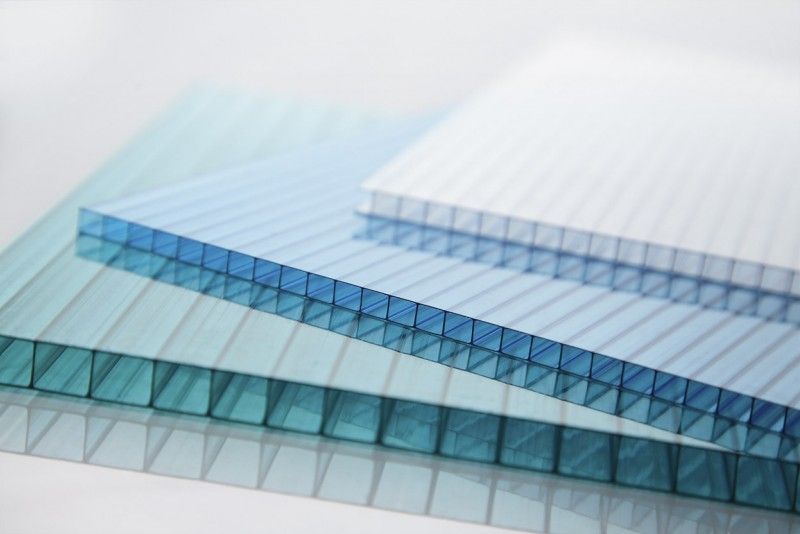
The second consideration is choosing the material based on the greenhouse's intended use. For example, 8 mm of cellular polycarbonate is sufficient for covering a greenhouse intended for use from spring to fall. However, if crops are planned for winter cultivation, it is recommended to increase the thickness to 16 mm, provided that the covering is properly sealed.
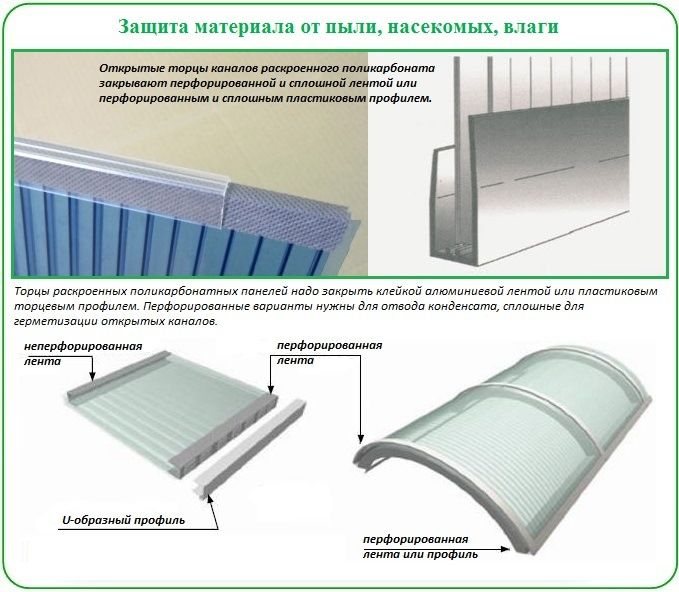
An insulated foundation can help retain heat.
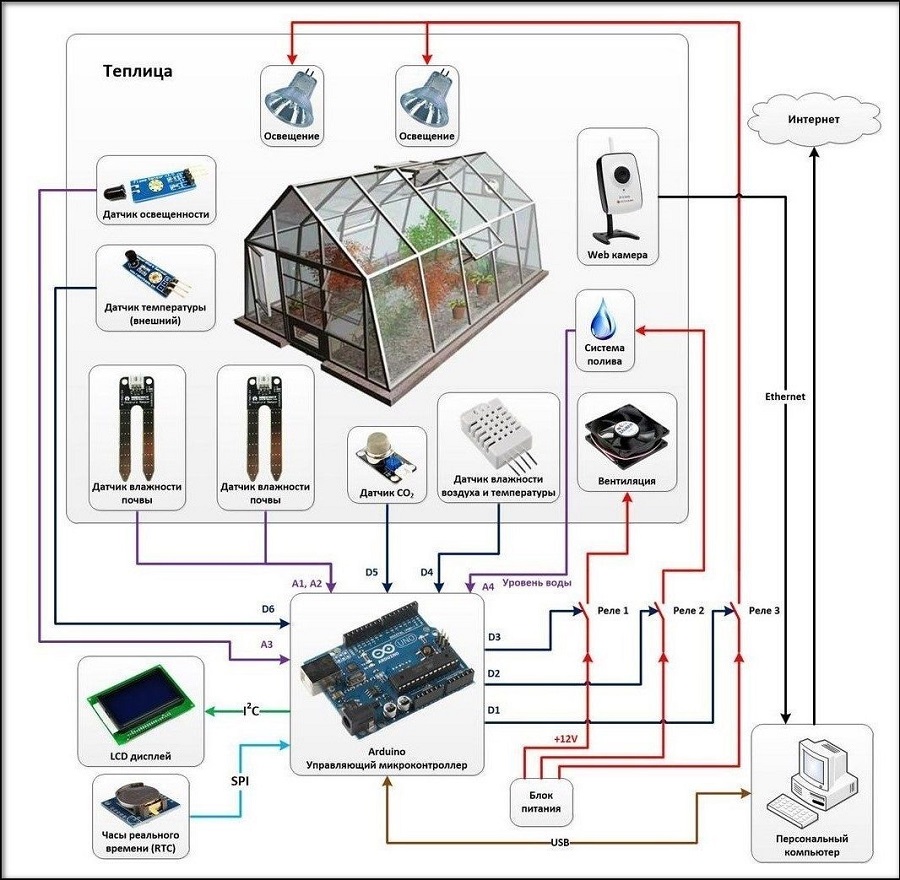
To incorporate intelligence into the design, it will be necessary to install automatic ventilation, automatic irrigation, and soil and air heating systems.
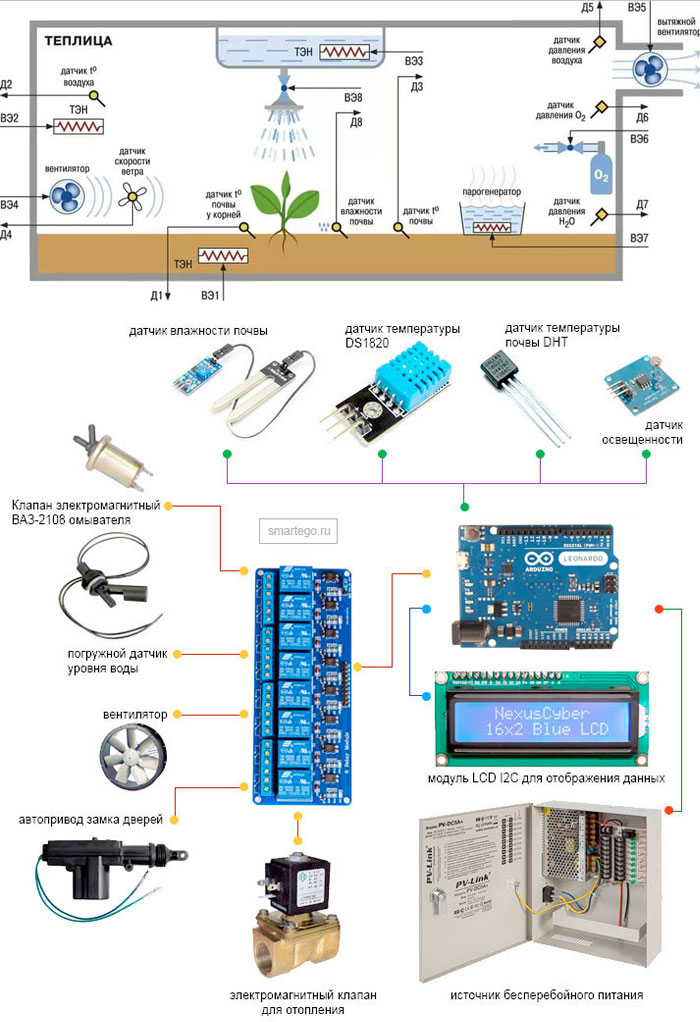
Stage 1. Automatic heating of soil and air
There are two technical options for heating a greenhouse:
- The first, using electricity, includes connecting underfloor heating, convectors and infrared heaters.
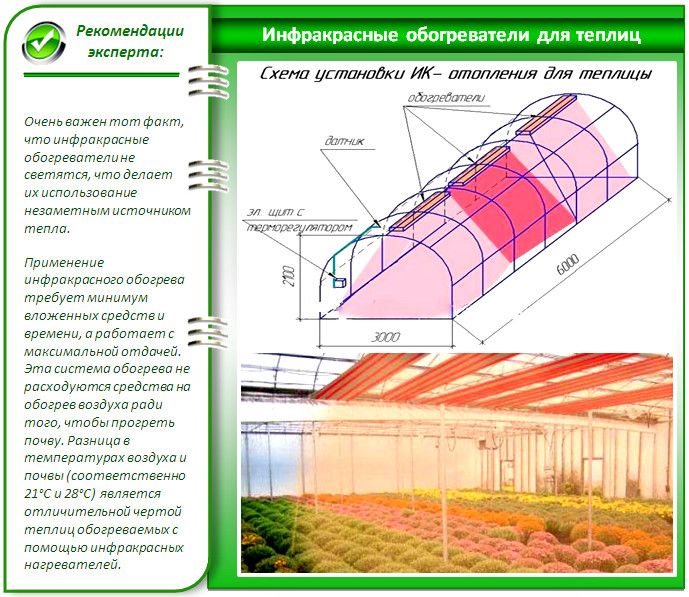
- The second is based on connecting water heating with mandatory manual control of the boiler operation.
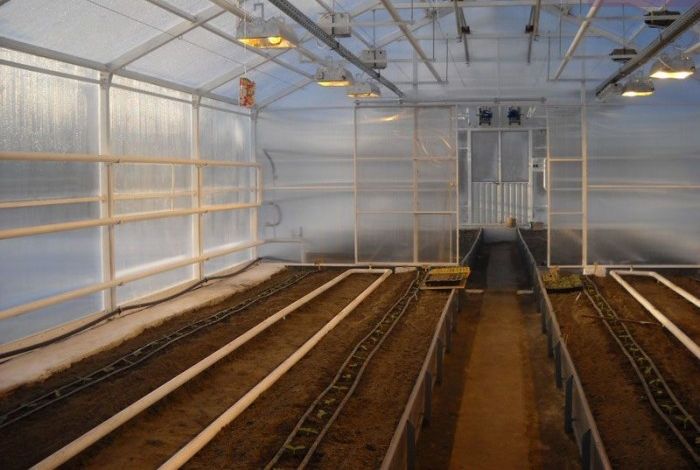
Air heating
For air heating, it's preferable to opt for electric heaters. It's recommended to secure them to the frame along with electrical circuits and sensors that trigger when the temperature drops.
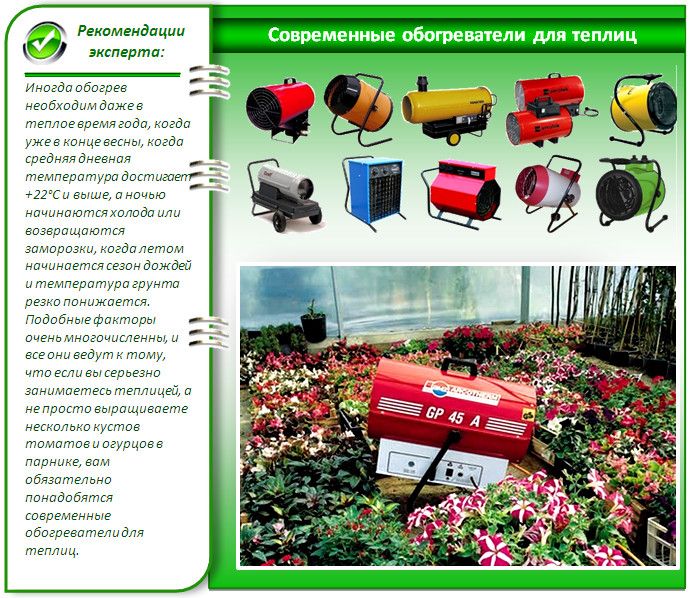
Soil heating
Soil heating can be done in three ways:
natural – due to sunlight;
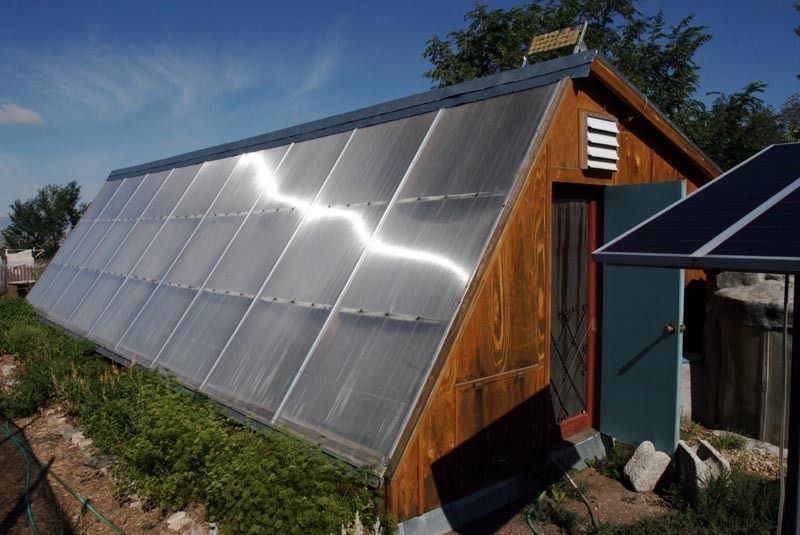
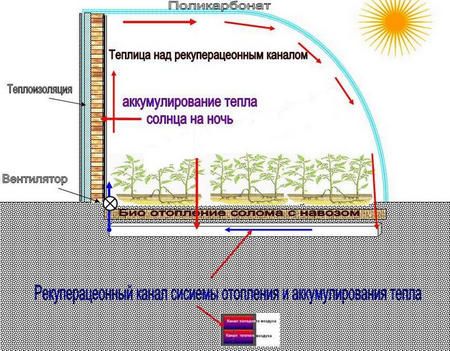
biological – due to the energy released during the decay of biomaterials; the disadvantage is the inability to control the temperature;
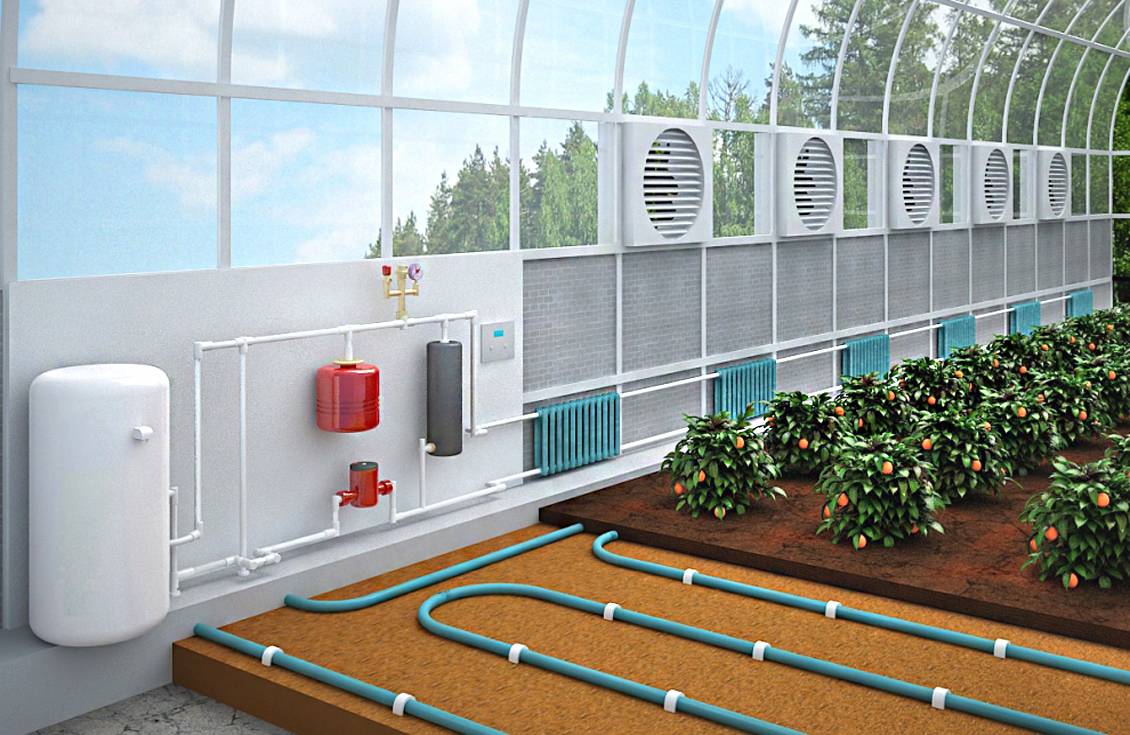
technical, including soil heating by means of:
- supply of warm water through underground pipes connected to the boiler;
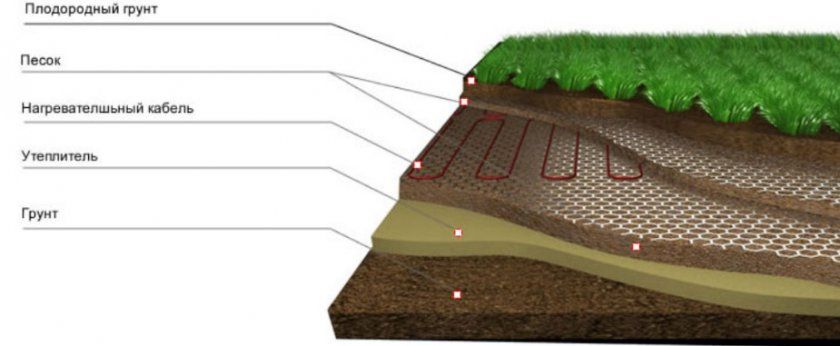
- installation of a "warm floor" system connected to the electrical network.
Stage 2. Automatic ventilation
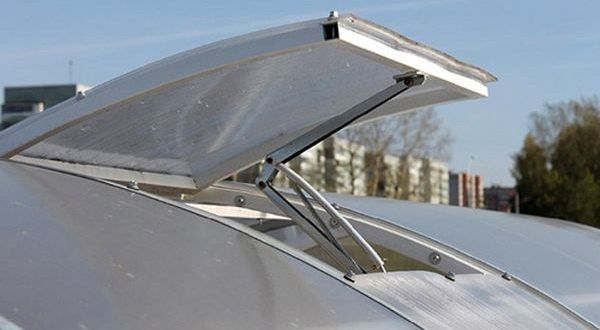
Sometimes it is sufficient to install a thermal drive inside or outside the greenhouse.
It is recommended to install vents at the highest possible height.
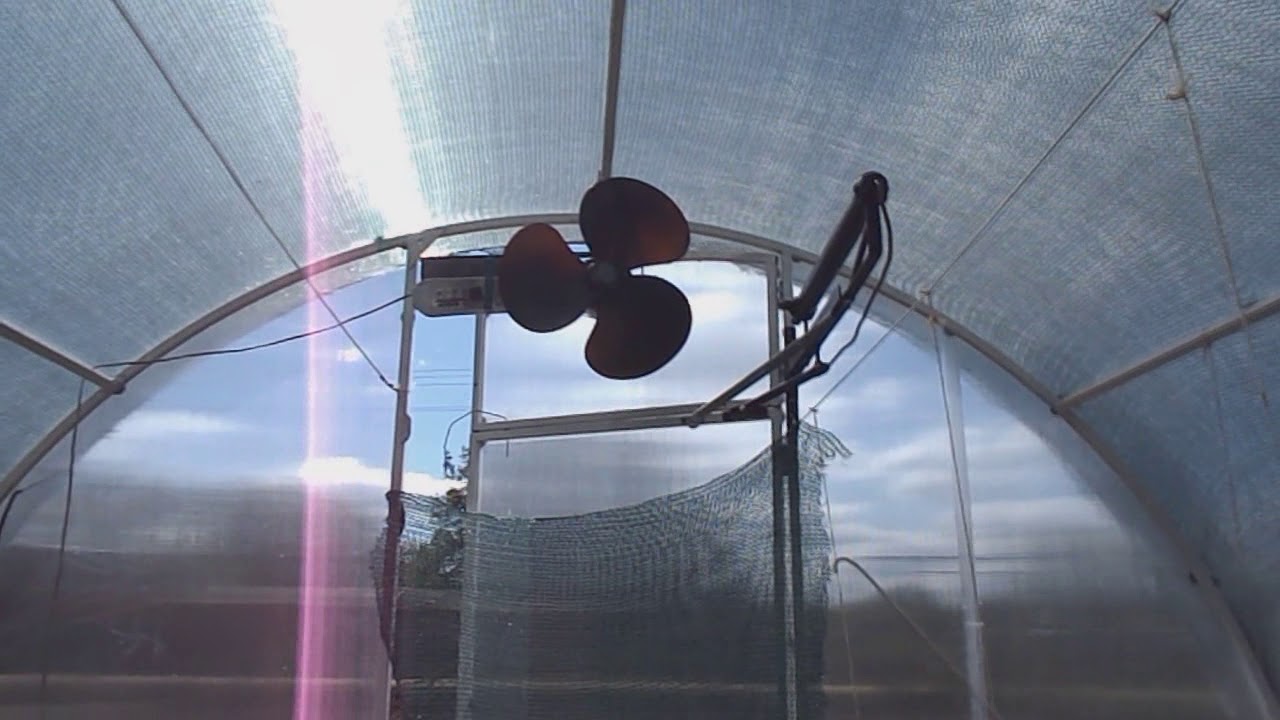
In some cases, a ventilation system is installed that starts fans when the air temperature changes.
Stage 3. Irrigation automation
Drip irrigation is achieved by installing a system consisting of rubber and plastic tubing, as well as drippers. This system heats up the water as it flows, which is important for the root system.
Read about Drip irrigation: how to do it yourself, review of ready-made systems.
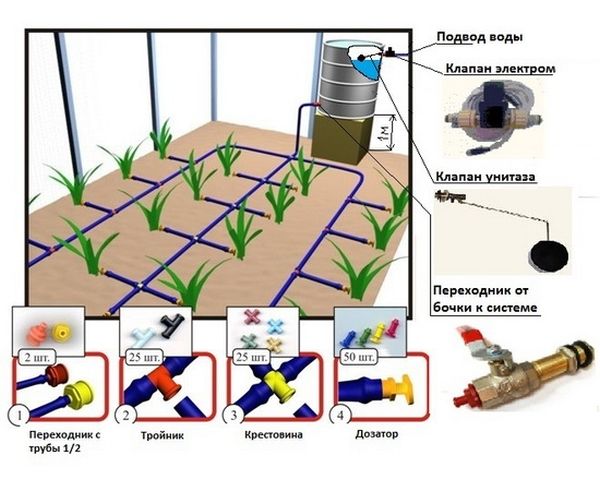
The key element of the system is the hydraulic automatic control unit. A tank serves as the reservoir, and water is supplied by gravity.
Lighting
The recommended daylight hours in a greenhouse should be 12-16 hours per day. It is recommended to adjust the operating hours of artificial lighting to correspond with the hours of darkness and daylight.
Light sensors and timers are used to automate the process.
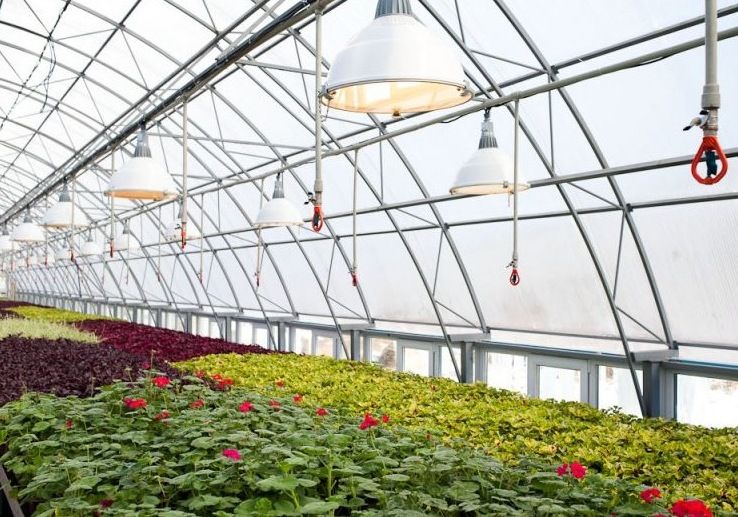
To provide artificial lighting, lamps are most often used:
- incandescent lamps - their disadvantage is infrared radiation, which can harm plants if placed too close;
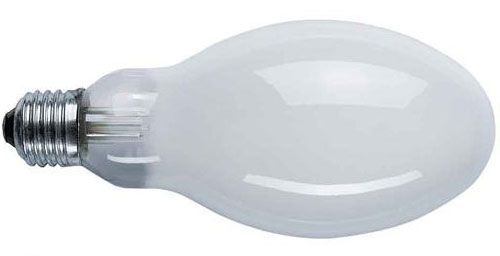
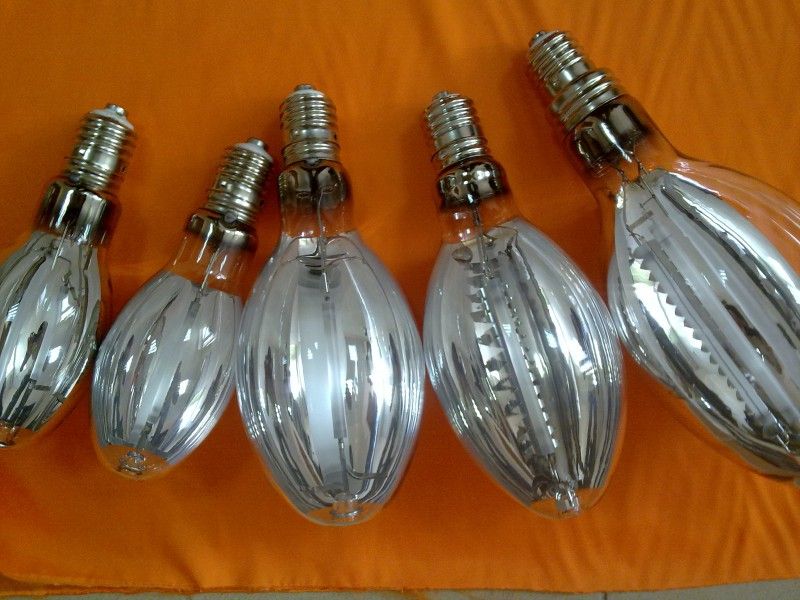
- sodium - their spectrum is similar to the spectrum of sunlight, but their short service life limits their use;
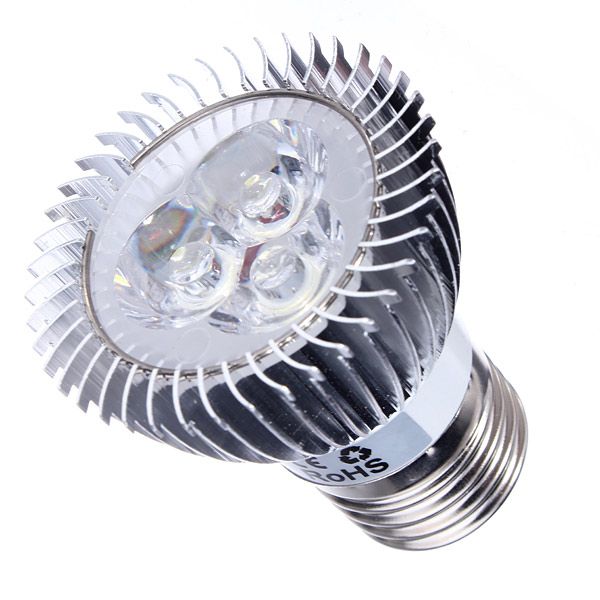
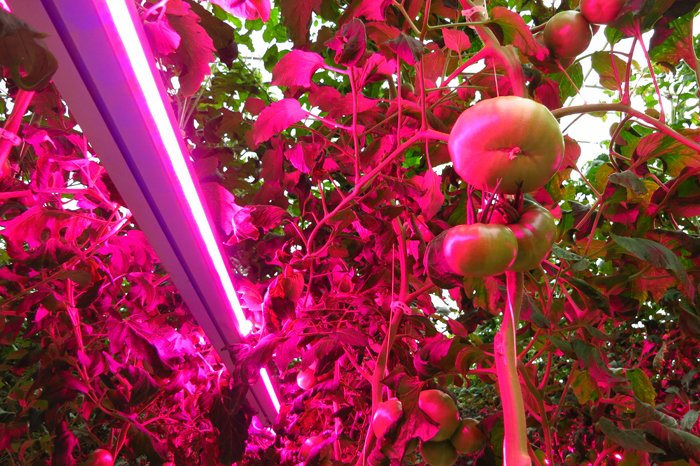
- LED – are characterized by a high level of safety, and the spectrum is close to natural light;
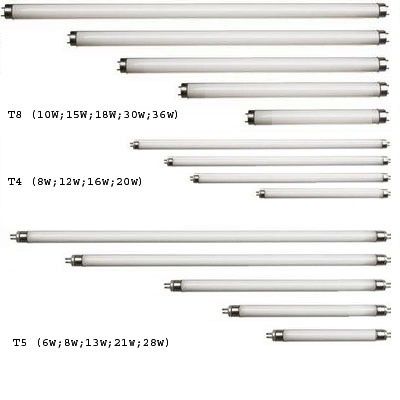
- Fluorescent – characterized by economy, high efficiency and long service life.
Depending on the purposes, infrared or ultraviolet sources can also be used.
Reviews of ready-made smart greenhouse projects + prices and photos
Examples of the most common models of finished projects are presented in the table below:
| Model name | Peculiarities | Price, RUB. | Photo. |
| Domestic | |||
| Smart greenhouse (4*2*2 m) | They come standard or custom-made. They are made of polycarbonate and equipped with temperature control and automatic irrigation systems. They have a service life of 15 years. | from 7200 | 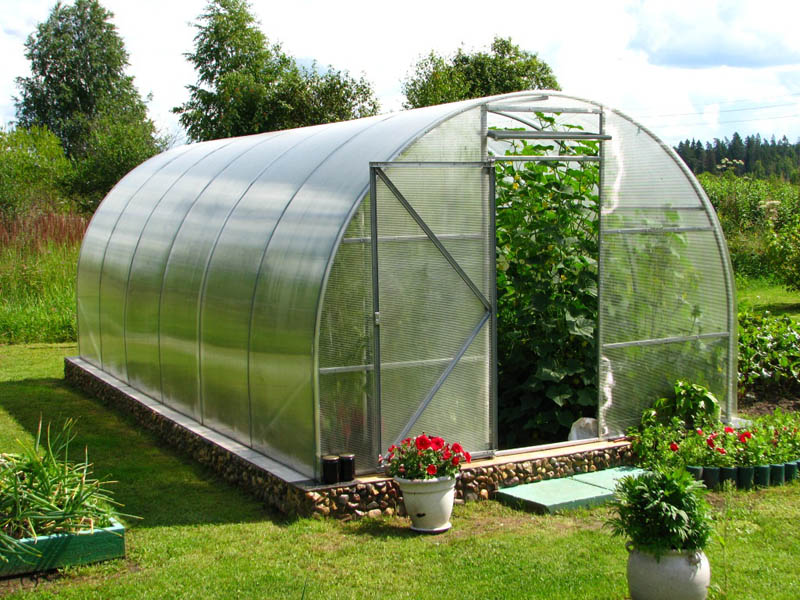 . . |
| Novator-4 (in Comfort, Classic, Premium, Elite trim levels); dimensions vary | This arched model features 4x4 cm pipes and a 0.66 m spacing between arches. It's made of polycarbonate and can withstand up to 160 kg of snow per square meter. | from 11,000 | 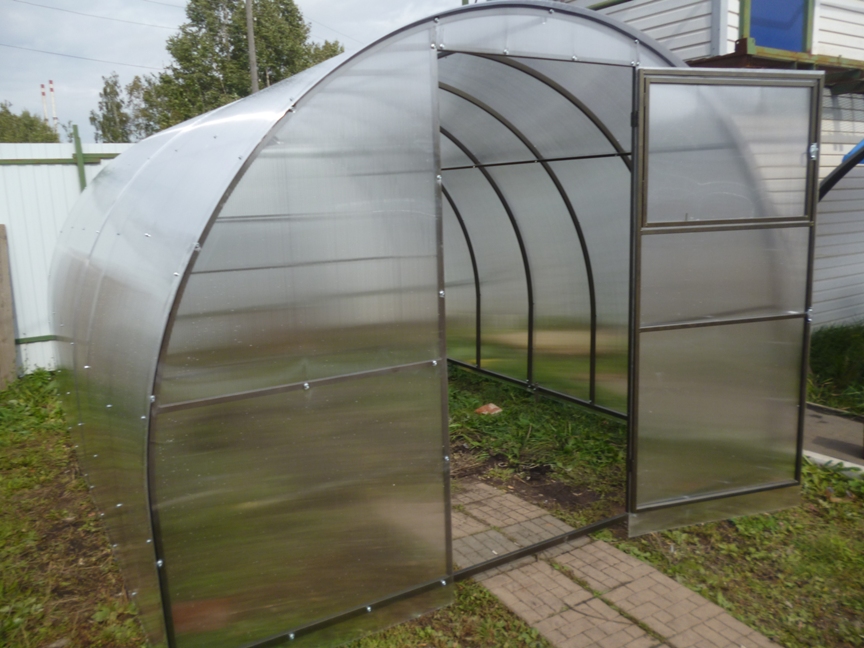 . . |
| LIFE ENERGY-4 (standard and optional) | Year-round use. It features single-glazed windows and automatic irrigation, ventilation, lighting, and heating systems. | 524600-1573900 | 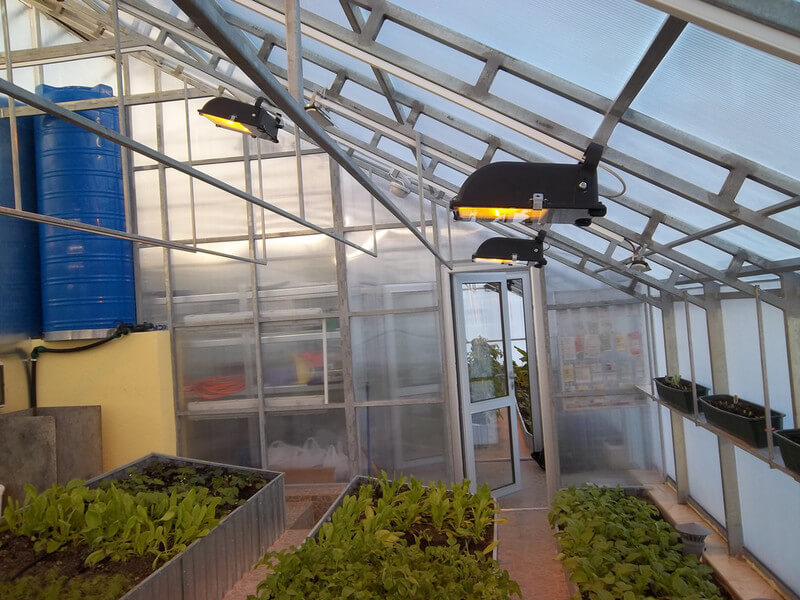 . . |
| LIFE ENERGY-5 | Year-round, 4 m wide. It features 2-6 self-closing ventilation hatches. It is equipped with automatic systems for irrigation, ventilation, lighting, and heating. | 626100-1848300 | 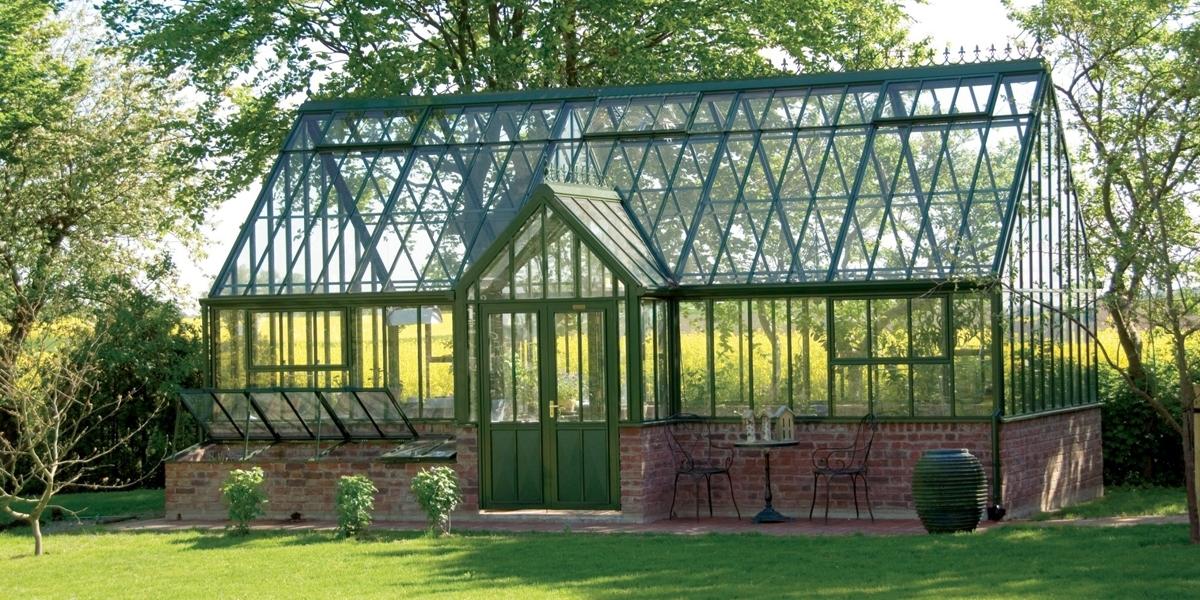 . . |
| YoTik (educational electronic construction kit) | The kit includes a construction-style enclosure, a YoTik v1.0 controller, an Arduino expansion board, a 20 cm LED strip, four relay modules, a power MOS transistor, an electric pump, a water supply tube, and sensors for light, temperature, humidity, and soil. | 15,000 | 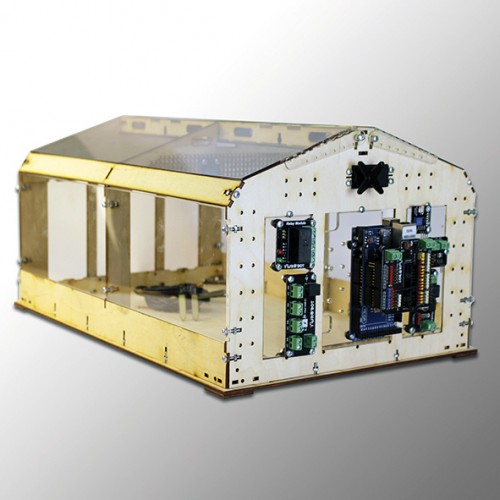 . . |
| Arduino Mega | The design allows for the creation of a greenhouse with automatic control of temperature, humidity, lighting, irrigation, and the creation of the desired microclimate. Remote control is also possible. | 15,000 | 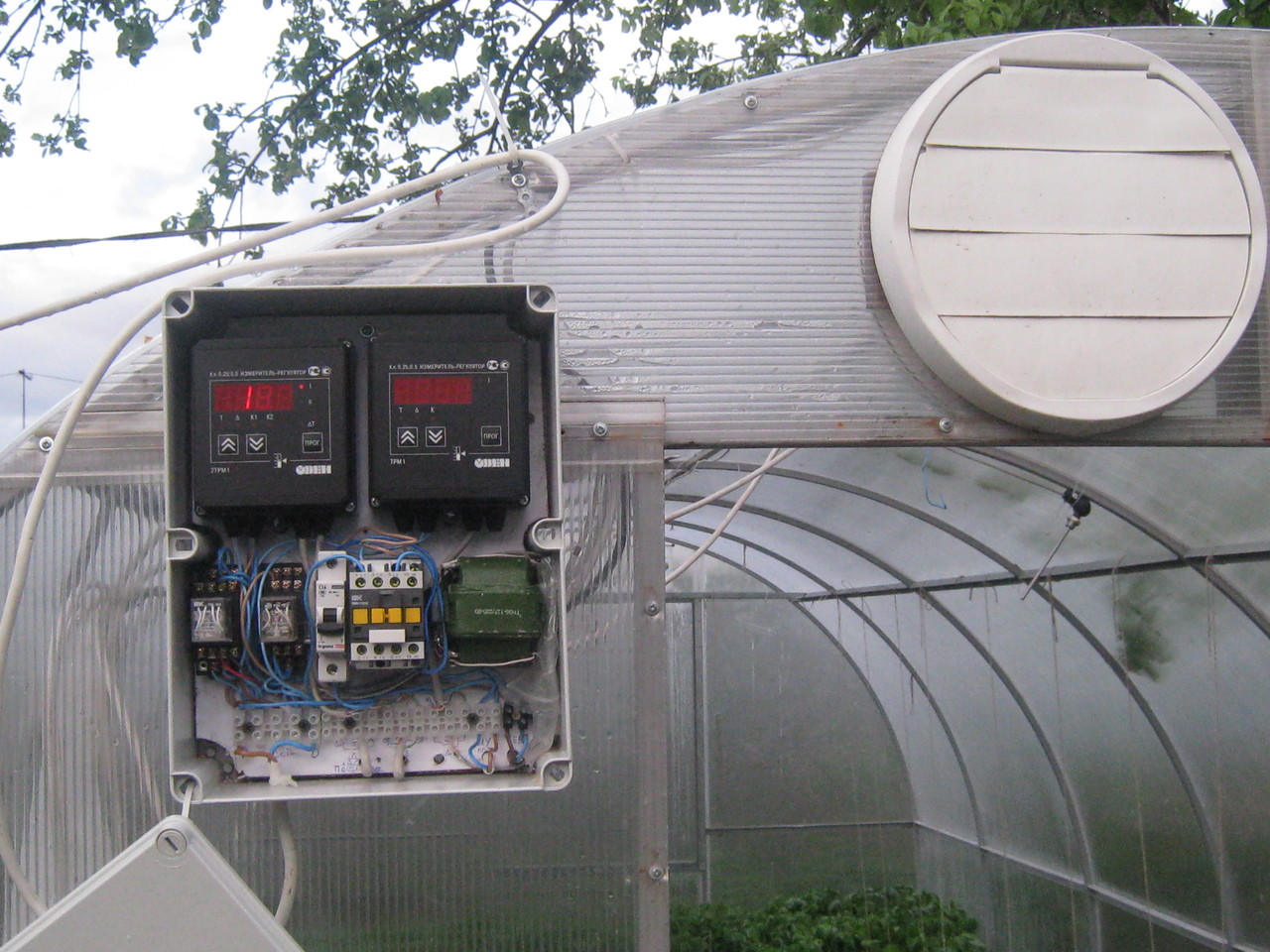 |
| Kurdyumov's "Smart Greenhouse" | Automated modes are provided: control over air temperature, soil mulching, drip irrigation, and ventilation. | 22700-77000 | 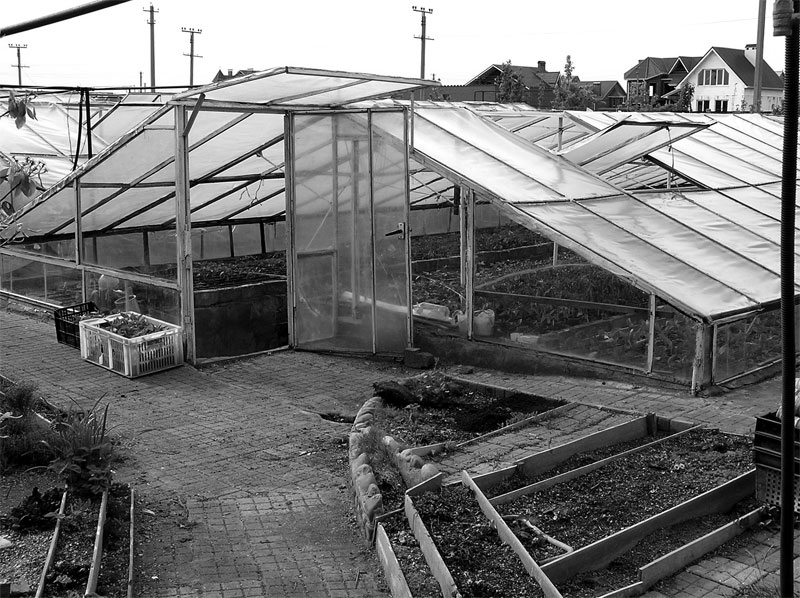 . . |
| Foreign production | |||
| WERDEBOX (made in Italy) | 600,000 | 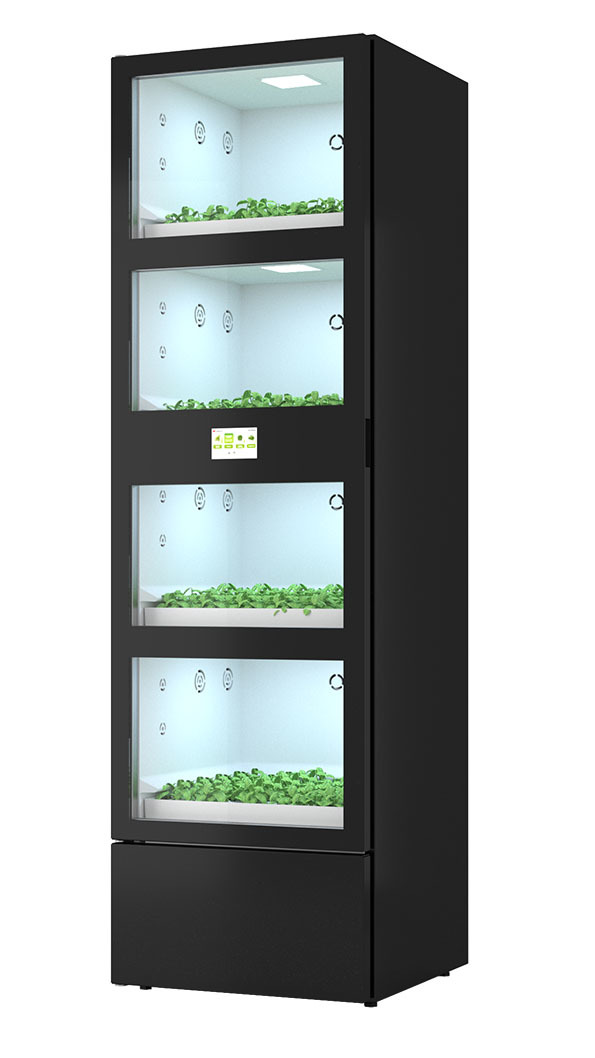 . . |
|