Raspberry Dawn is considered one of the most productive varieties of pink tomatoes.
This article outlines the main characteristics and describes the varietal cultivation features that will not require any special effort from gardeners.
Content
- 1 Table of characteristics of the Raspberry Dawn tomato variety
- 2 Photo gallery of the tomato variety Raspberry Dawn:
- 3 The origin of the Raspberry Dawn tomato variety
- 4 A detailed description of the Raspberry Dawn tomato variety
- 5 Advantages and disadvantages of the Raspberry Dawn tomato variety
- 6 Growing the Raspberry Dawn tomato variety
- 7 Resistance of the tomato variety Raspberry Dawn to diseases and pests
- 8 Harvesting and using Raspberry Dawn tomatoes
- 9 Comparison of the Raspberry Dawn tomato variety with other varieties in the table
- 10 Gardeners' reviews of the Raspberry Dawn tomato variety
Table of characteristics of the Raspberry Dawn tomato variety
| Characteristic | Description |
| Description | An indeterminate, mid-season tomato variety, suitable for growing in greenhouses and open ground. |
| Ripening period | 110-115 days |
| Fruit weight | 350-400 g |
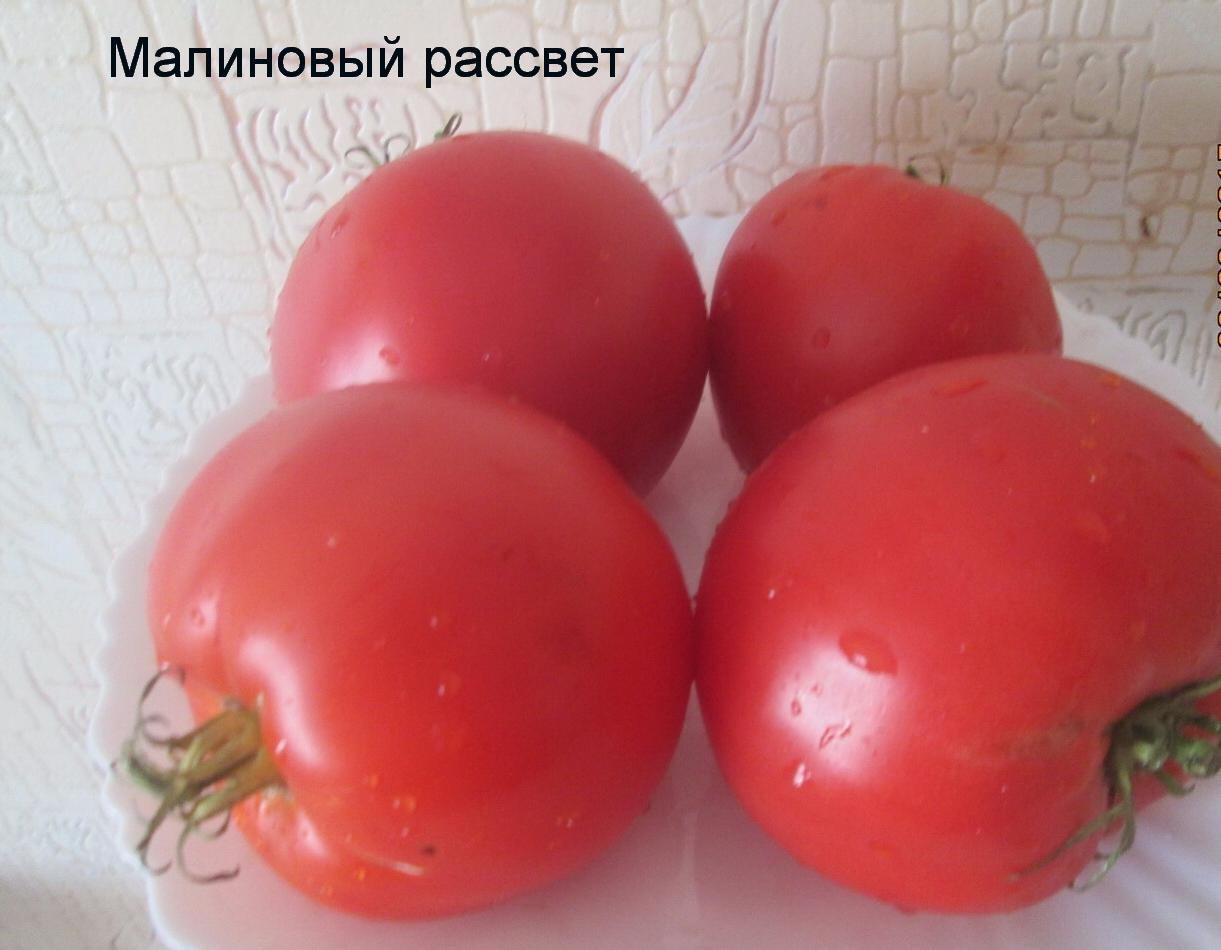
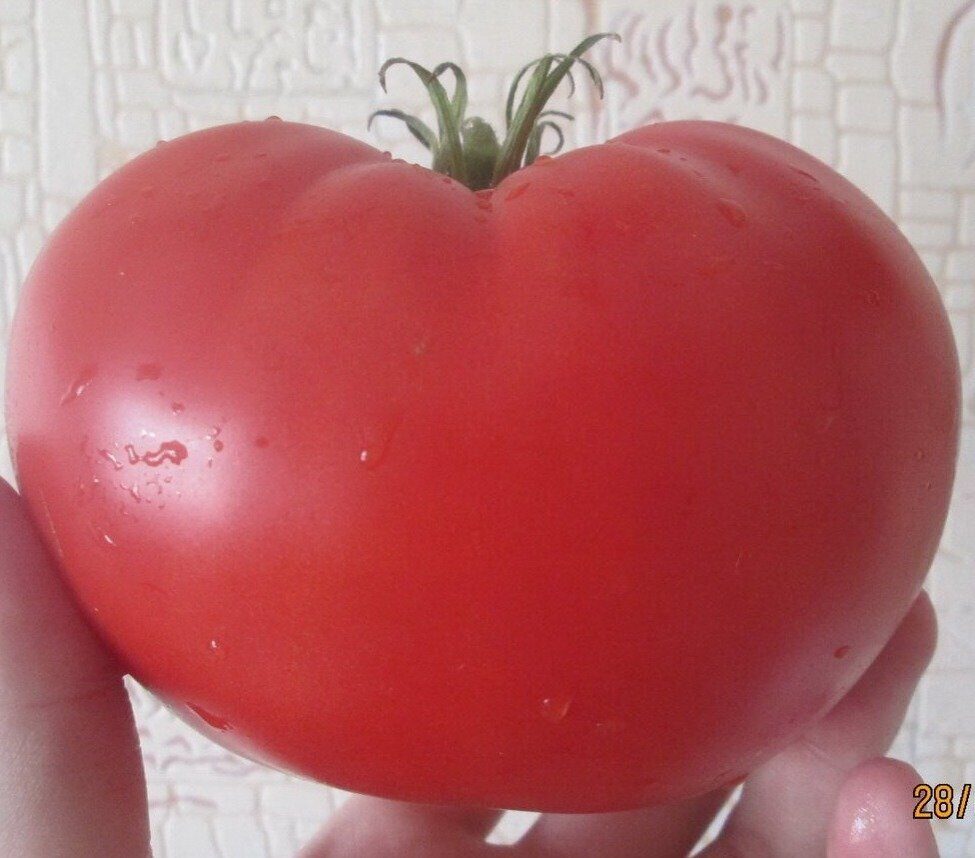
| Description of the fruit | Heart-shaped, smooth, minimal ribbing, raspberry color. |
| Productivity | Up to 790 c/ha |
| Usage | A salad variety that can be used in a variety of dishes and eaten fresh. Suitable for processing into sauces, juice, and pastes. |
| Preferred growing regions | It shows good yields in all regions of the country and grows successfully both in the South and in Siberia. |
| Disease resistance | It exhibits high resistance to fusarium wilt and tobacco mosaic. It is susceptible to late blight if care instructions are not followed. |
| Agricultural technology | Indeterminate, tall shoots must be tied up, side shoots removed and formed into two stems during growth. |
| 2015 | |
| Country of origin | Russia, LLC 'CENTER OGORODNIK', LLC 'AGROFIRM SEARCH' |
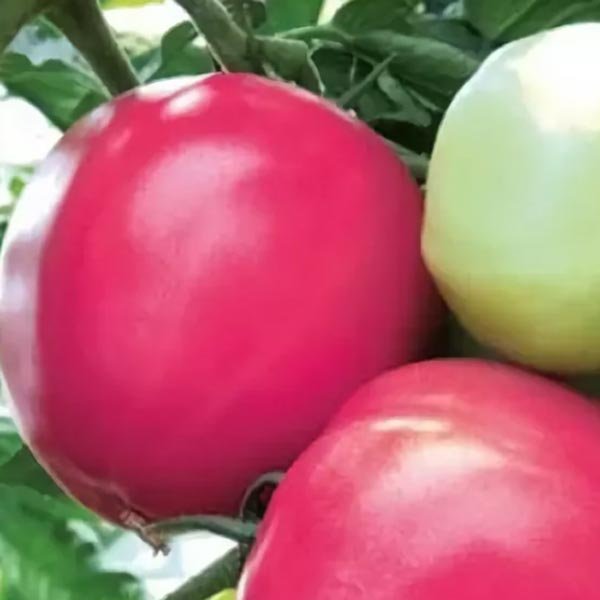
Photo gallery of the tomato variety Raspberry Dawn:
The origin of the Raspberry Dawn tomato variety
For over 10 years, breeders in our country have been developing pink tomatoes, which are gaining popularity due to their fleshy fruits, which contain a large amount of nutrients. Raspberry Raspberry was developed by specialists from the Poisk agricultural firm. In 2014, an application was submitted to include the variety in the State Register, which was approved a year later. The officially documented date of inclusion in the register is 2015.
A detailed description of the Raspberry Dawn tomato variety
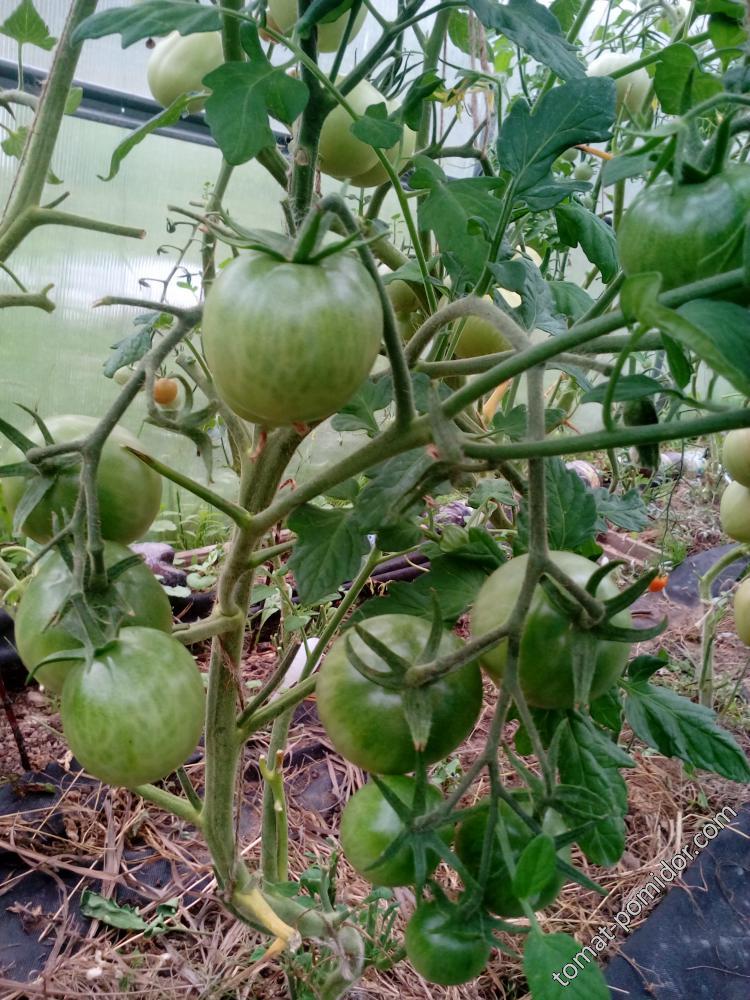
The main feature of this variety is its strong shoots and very large, fleshy fruits, which allow for an impressive harvest from the bush.
Bushes
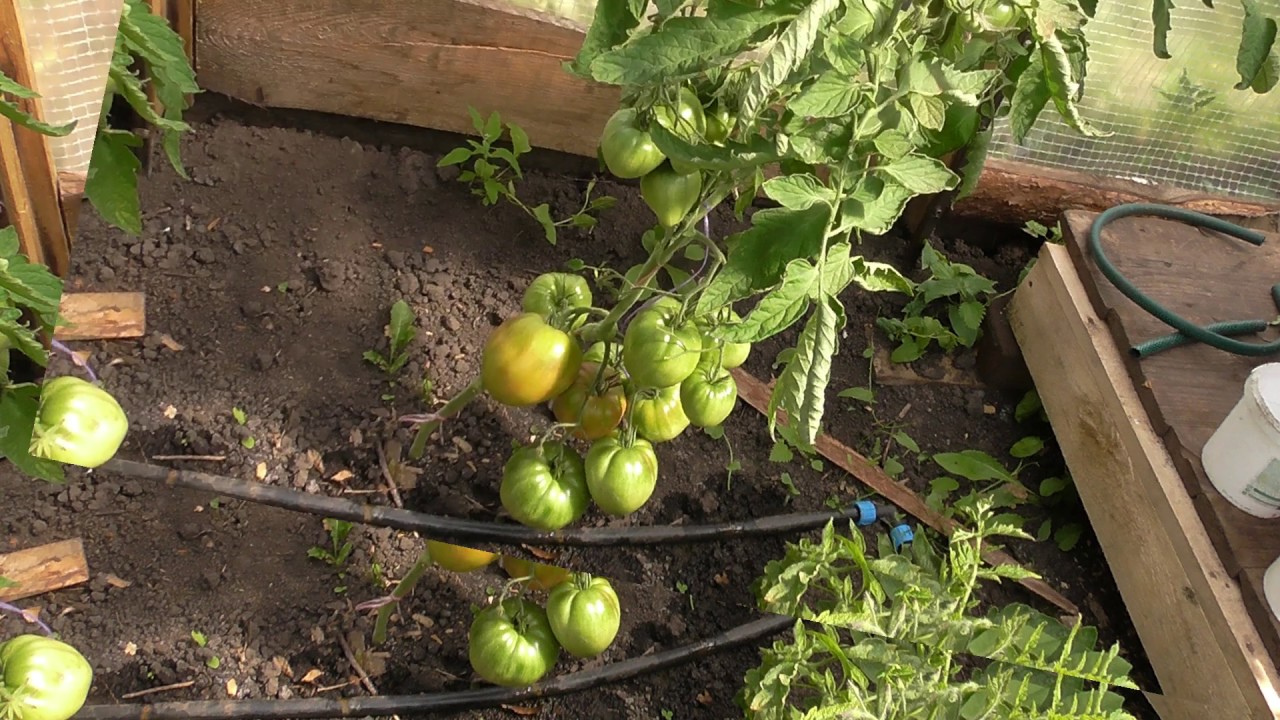
Indeterminate shoots can grow up to 160-200 cm in length. They are dense, strong, and sturdy. The bush will need to be tied to facilitate care and prevent branches from breaking under the weight of the harvest.
Tomatoes are grown with one or two stems. This will determine the planting density. Single-stemmed plants can have four stems per square meter, while dual-stemmed plants can have no more than three.
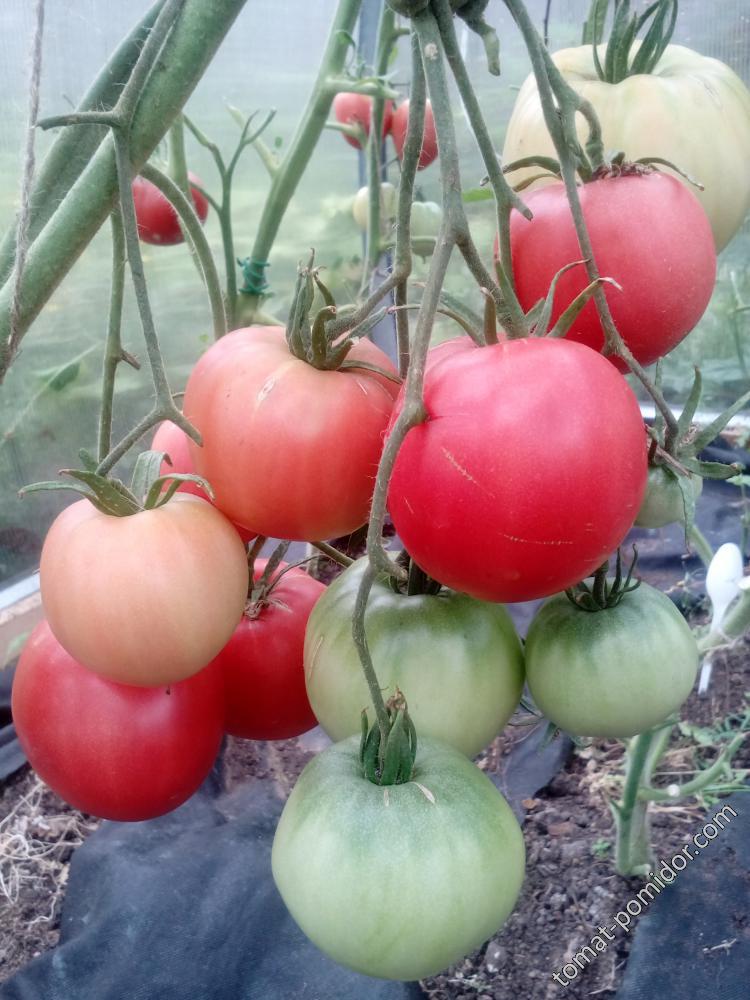
Each shoot produces at least six ovaries, each containing four or more large tomatoes. Some gardeners try to be on the safe side by tying up the ripening clusters.
The leaves are few and relatively small. If necessary, they are gradually removed from the bottom down to the first ovaries.
Fruit
The variety is characterized by an average ripening period; the fruits can be harvested 115-120 days after emergence.
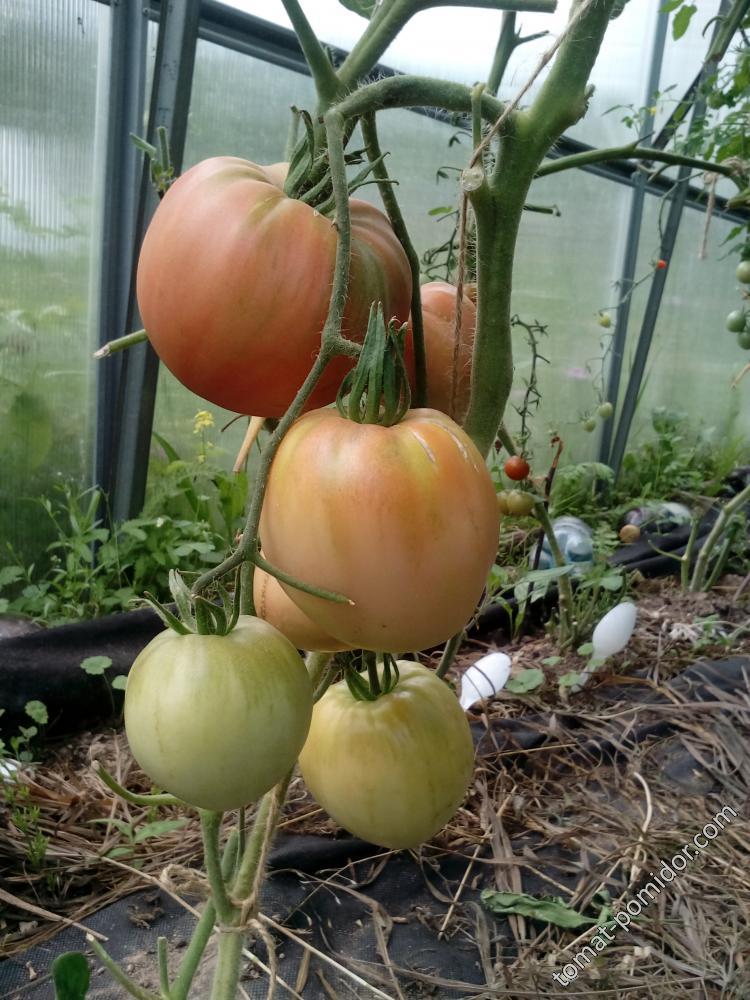
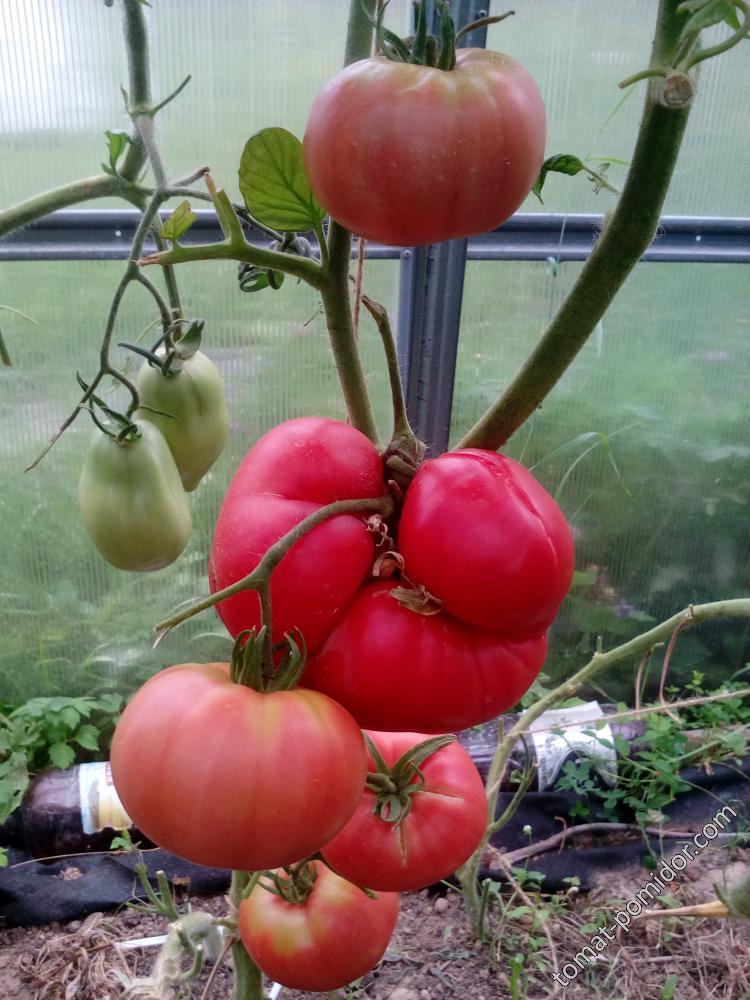
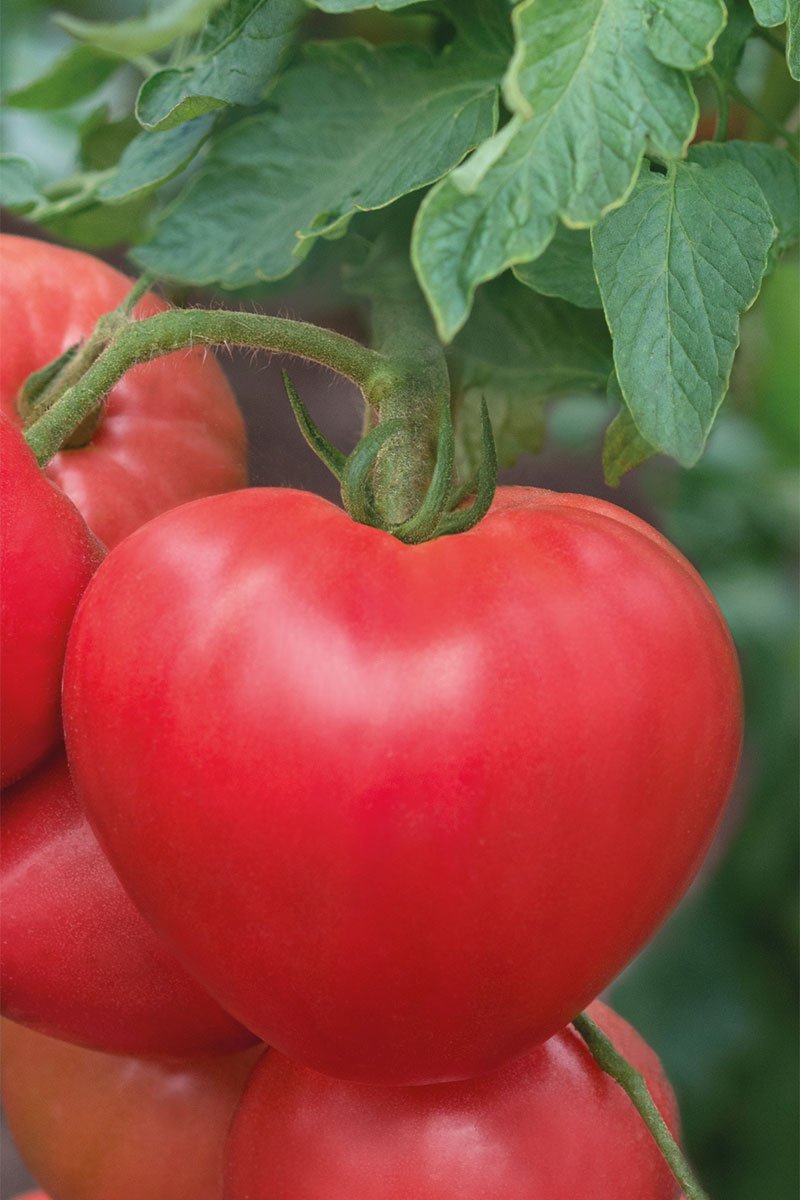
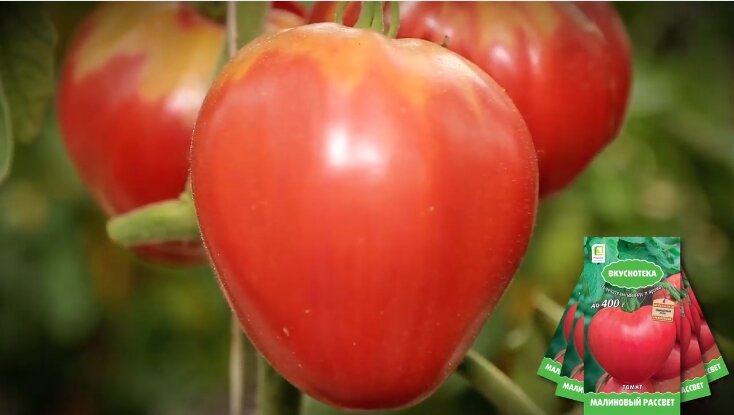
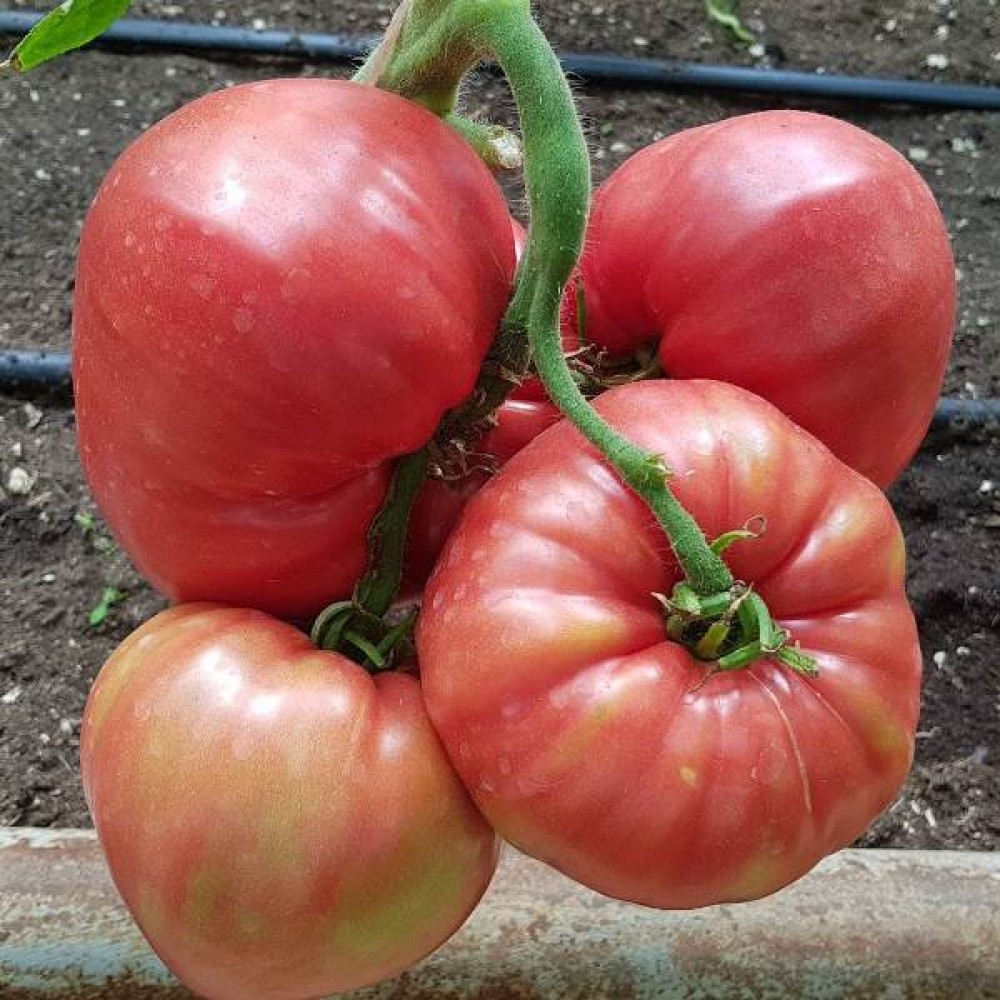
The tomatoes are very similar in shape to the Bull's Heart variety. They are large, weighing between 350 and 450 g.
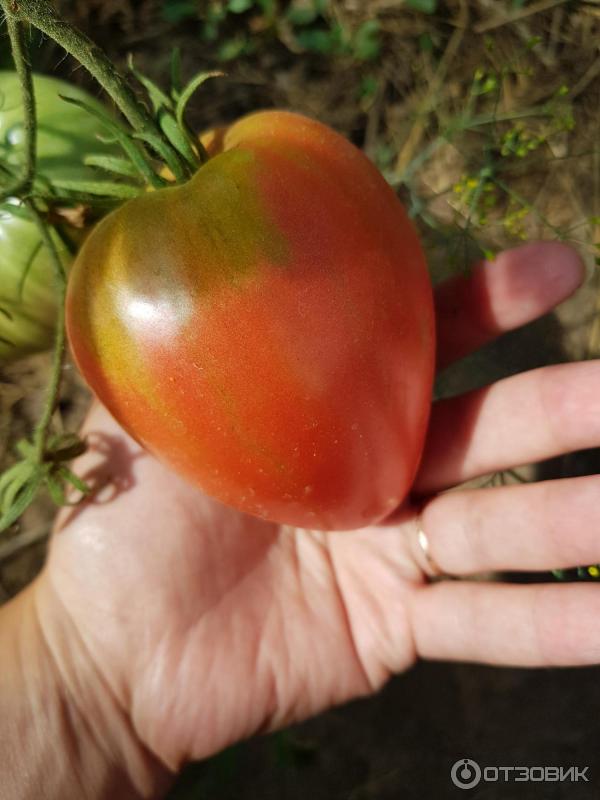
The shape is heart-shaped, smooth, and the ribbing is subtle. The skin is smooth, and the ripe fruit has a pinkish-raspberry color.
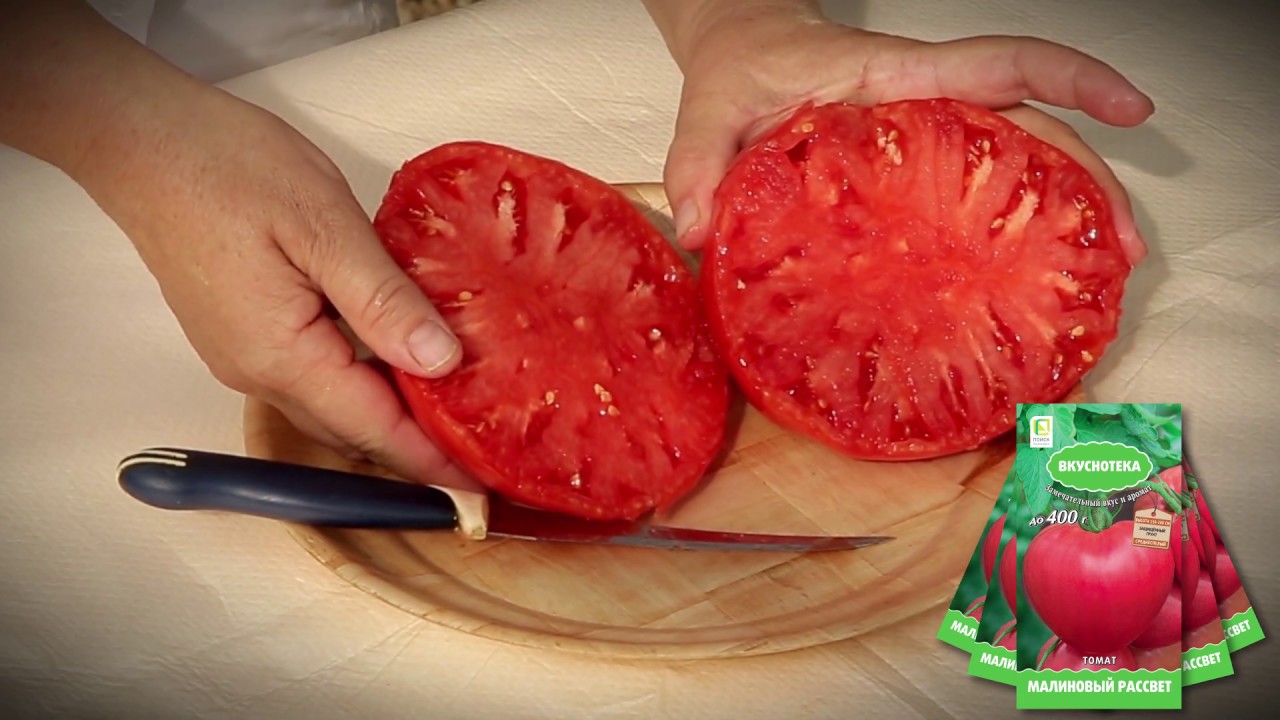
The flesh is juicy, aromatic, and sweet with a subtle tartness. Despite the tomatoes' thin skin, they transport well and rarely crack on the vine.
Productivity
The Raspberry Rassvet variety boasts excellent yields. The cultivar claims that a single bush yields approximately 5 kg of tomatoes. However, gardeners claim that this figure often reaches 7 kg, which is not surprising given the weight of the fruit. On average, up to 790 centners of tomatoes can be harvested from one hectare.
Ripening time
The tomato is characterized by medium ripening times.
Full crop ripening occurs 115-120 days after emergence. In regions with unstable climates, ripening does not always occur uniformly.
Advantages and disadvantages of the Raspberry Dawn tomato variety
The advantages and disadvantages of the Raspberry Dawn variety are presented in the table below.
| Advantages | Flaws |
|
|
Growing the Raspberry Dawn tomato variety
Growing and caring for Raspberry Dawn are virtually identical to other pink tomatoes. Following proper cultivation techniques will help you grow healthy plants that will reward you with an excellent harvest at the end of the season.
Sowing seeds and growing seedlings
In most regions, the Raspberry Dawn variety is grown in greenhouses; only in the south of the country do gardeners have the option of sowing seeds directly into open ground.
It's best to purchase planting material from an official manufacturer; otherwise, you risk receiving low-quality goods and ending up with a couple of diseased bushes instead of a bountiful harvest.
Typically, seeds are already disinfected at the factory, so there's no need to disinfect them further at home. To speed up sprouting, you can soak them according to the instructions in any suitable solution, such as Epin or Zircon.
If you plan to use seeds you've collected yourself, you'll need to soak them in a weak solution of potassium permanganate for 30 minutes to kill any potential pathogens.
Some gardeners prefer to germinate the seeds before planting. To do this, they place them in a damp cloth and leave them in a warm place for a couple of days.
Any general-purpose soil intended for seedlings is suitable for tomatoes. If you don't have one, you can make your own potting soil by mixing equal parts garden soil, sand, humus, and vermiculite. In this case, it's best to bake the resulting soil in the oven.
If the seed box has been in use for more than one season, it should be rinsed with a weak solution of potassium permanganate to disinfect it.
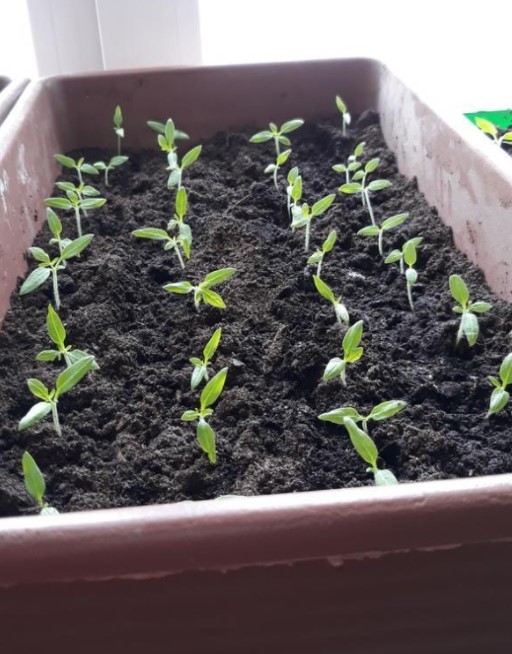
Next, fill the container halfway with soil, making furrows in the top. Place the seeds at a depth of 2 cm and space them at least 2 cm apart. Then add a layer of soil approximately 1 cm thick on top, and cover the container with plastic wrap. It's best to keep it in a warm place until the seedlings emerge. Once the first sprouts appear, gradually remove the covering. After approximately 55-65 days, you can begin planting tomatoes in a permanent bed.
The open box is moved to a well-lit location with a temperature of 20 to 22°C. Weak tomatoes are periodically removed, leaving only viable shoots. Water the plants weekly, being careful not to overwater them.
Picking into separate containers is carried out after the height of the stems reaches 10 cm.
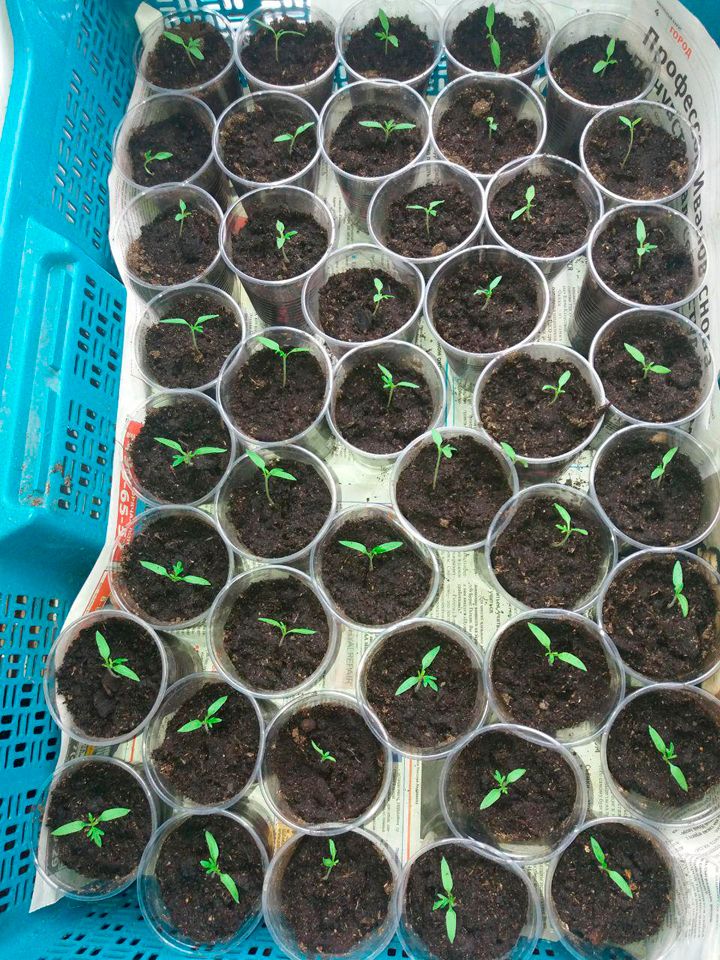
At this time, you can begin applying the first fertilizers. Seedlings respond well to an eggshell infusion. To do this, finely chop the eggshells and add 2-3 tablespoons to a liter of water. This fertilizer will steep for about a week; a rather unpleasant odor and cloudiness of the liquid indicate it's ready. Before watering, dilute the concentrate in a 1:3 ratio and apply it to the soil once a week after the main watering.
Planting in the ground
Tomatoes are planted in the garden in the second half of May to early June. The exact timing varies by region.
The soil is prepared in the fall by tilling it with fertilizer. In the spring, it is tilled again, and to increase fertility, it is recommended to add humus at a rate of 10 liters per square meter.
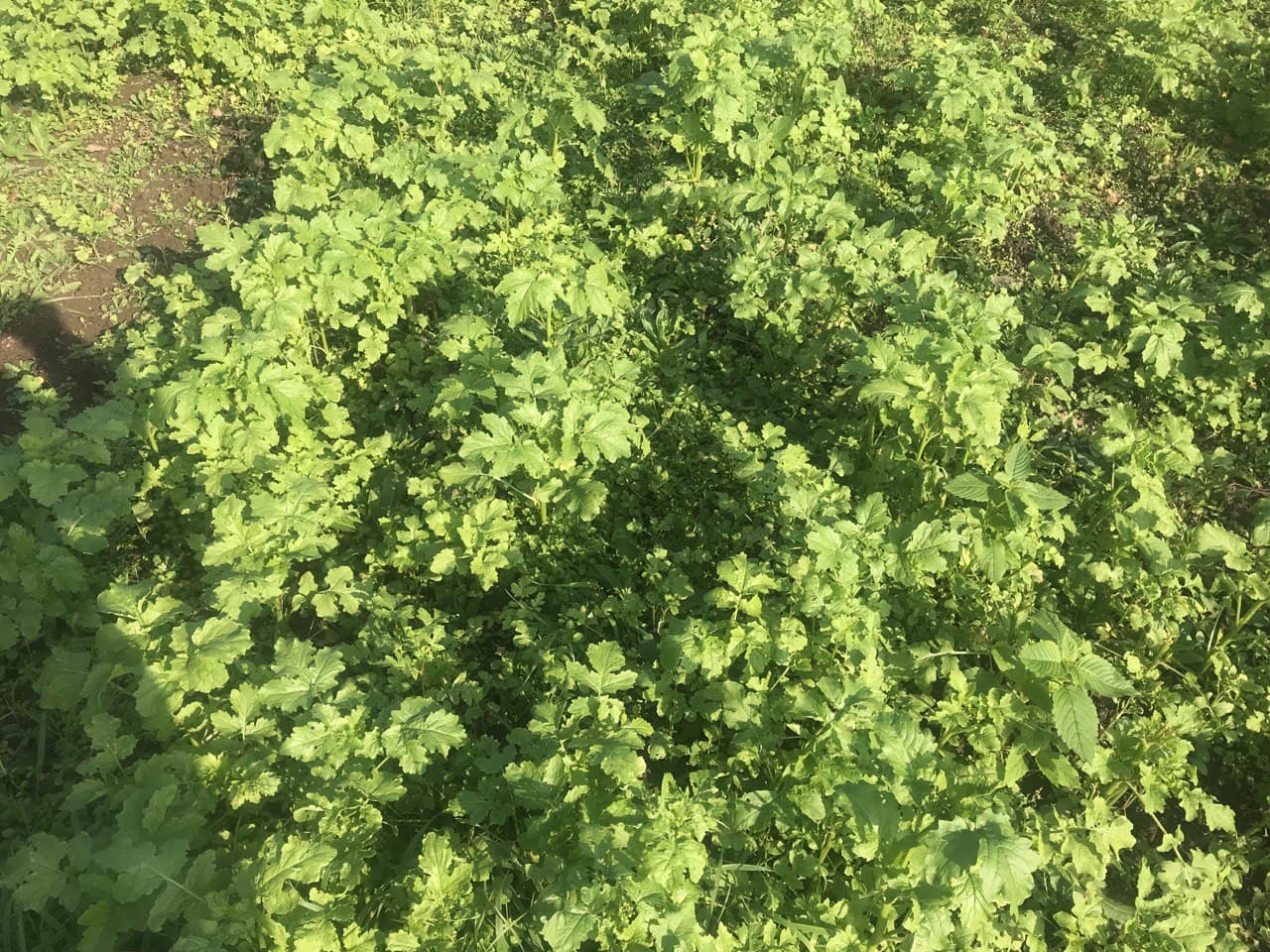
Some experienced gardeners sow green manure, such as mustard, in the greenhouse two weeks before starting work, which enriches the soil with nutrients.
It is better to plant tomatoes in the afternoon, closer to evening, so that solar activity is minimal.
The holes are prepared in advance; their depth is approximately 20 cm. No more than three plants can be grown per square meter if they are formed into two stems, and no more than four if the plant consists of two shoots. The recommended distance between rows is 70 cm, and between tomatoes, 50 cm.
After planting, the bed can be mulched to protect the roots, retain moisture in the soil and limit weed growth.
Care
The main difficulty in caring for the Raspberry Dawn is the need to shape and remove side shoots. It grows vigorously, but even it can't always support the weight of the heavy fruits, so the stem needs to be tied up. Lateral shoots are removed when they reach 5 cm.
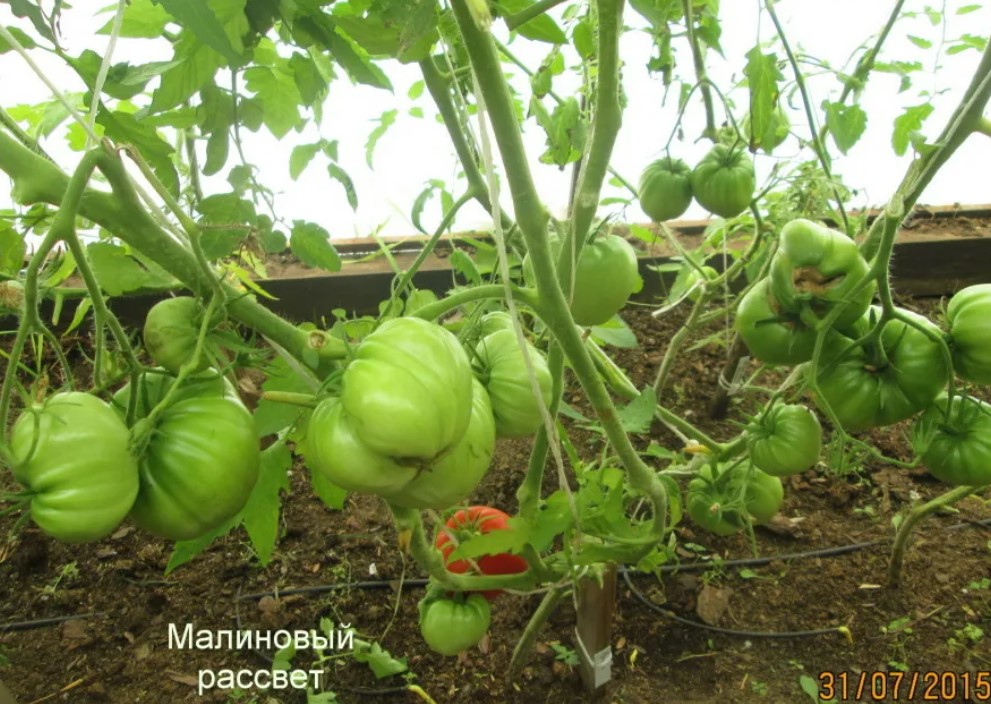
It is recommended to form plants with no more than two stems, so as not to thicken the plantings.
Water twice a week at a rate of 7 liters per plant. In cool weather, the volume and frequency of watering may be adjusted.
If you wait too long between waterings, the tomatoes will begin to crack on the vines. Water should be applied directly to the roots, avoiding contact with the leaves and stems.
Foliar feeding of tomatoes is recommended every two weeks. The first application can be made 10 days after planting. Kemira or Agricola fertilizers are ideal for this purpose.
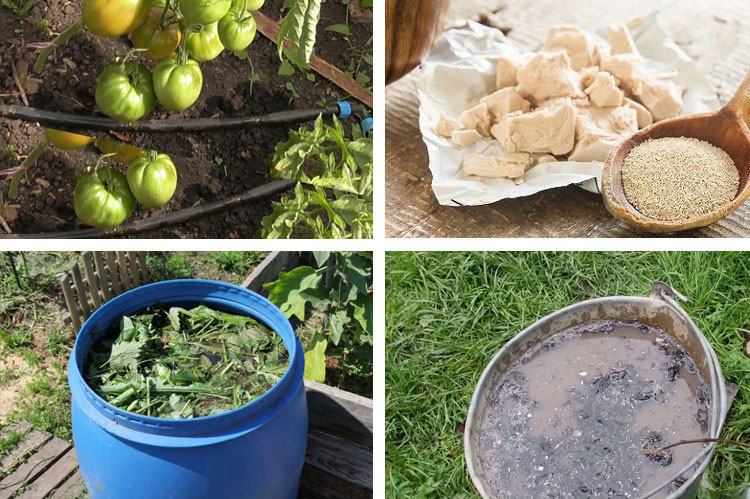
Some gardeners prepare fertilizers themselves, for example, from yeast or weeds.
200 g of yeast is diluted in a liter of water and left for 3 hours. Use at a concentration of 1:10.
Add a bucket of chopped weeds and 300 g of yeast to a barrel of water (50 liters). Let the fertilizer sit for 2 days.
Resistance of the tomato variety Raspberry Dawn to diseases and pests
The Raspberry Dawn variety has good resistance to many common diseases, but is resistant to late blight. To prevent this, it's important to follow watering guidelines, ventilate the greenhouse, monitor nitrogen application, and add potassium-phosphorus fertilizers to the soil.
If the infection does appear on the bushes, then spraying is carried out with Bordeaux mixture or preparations: Quadris, Agat, Ridomil, Strobi.
Epin, Aktara, Borneo, and Fitoverm will help combat aphids. Slugs will have to be collected by hand; to repel pests, you can spray the bushes with ammonia (1 tablespoon per 3 liters of water).
Harvesting and using Raspberry Dawn tomatoes
Harvesting begins 110 days after germination. With proper care, tomatoes will not crack or fall off. They have an average shelf life and won't keep for too long.
Raspberry Raspberry is not used for whole-fruit canning due to its very large fruit. It is considered a salad variety, eaten fresh, and added to various dishes.
But fleshy tomatoes are ideal for juice, adjika, ketchup and other sauces.
Comparison of the Raspberry Dawn tomato variety with other varieties in the table
Please note! How can you easily convert centners/ha to kg/sq.m? Simply divide by 100! For example, the Abakansky Pink tomato yields 400 centners of marketable fruit per hectare. This equals 4 kg per square meter. It's that simple! Also, keep in mind that typically no more than 3-4 plants are planted per square meter. This way, you can calculate the yield per bush. In the case of the Abakansky Pink, it's about 1 kg.
| Variety | Ripening period (number of days from full germination to ripening)
Yield of commercial fruits |
Brief description | Fetus |
| Crimson Dawn | 110-115 days
790 c/ha |
A mid-season indeterminate variety for open ground and greenhouses. Requires staking and shaping. Suitable for salads. | Heart-shaped, loose, ribbed, raspberry, 350-400 g. Good taste. |
| Raspberry Empire | 95-110 days
2000 c/ha |
An early-ripening indeterminate variety for greenhouses. Suitable for salads and pickling. | Heart-shaped, medium density, medium-ribbed, raspberry, 150-200 g. Excellent taste. |
| Mom's Raspberry Heart | 112-120 days
1200-1500 c/ha |
A mid-season indeterminate variety for greenhouses and open ground. Suitable for salads and canning. | Heart-shaped, ribbed, pink, 300-600 g (up to 1200 g). Excellent taste. |
| Raspberry ringing | 115-120 days
450 c/ha |
An early-ripening determinate variety for open ground and greenhouses. Requires staking and shaping. Suitable for salads. | Round, smooth, medium density, pink, 150 g. Excellent taste. |
| Raspberry Viscount | 95-105 days
500-600 c/ha |
A mid-season determinate variety for greenhouses. Suitable for salads. | Flat-round, large, slightly ribbed, medium density, raspberry, 220-260 g. Excellent taste. |
| Raspberry Giant | 105-110 days
590 c/ha |
An early-ripening determinate variety for open ground and plastic greenhouses. Requires staking and training. Suitable for salads. | Round, slightly ribbed, medium density, raspberry, 200-300 g. Excellent taste. |
| Raspberry wine | 105 days
1200-1400 c/ha (greenhouse and under film) |
An early-ripening determinate variety for open ground and greenhouses. Requires staking and shaping. Suitable for salads. | Round, large, smooth, medium density, raspberry, 350 g. Excellent taste. |
| Raspberry Farmer | 85-90 days
1000 c/ha |
An early-ripening determinate variety for greenhouses. Suitable for salads. | Round, dense, slightly ribbed, raspberry, 50-60 g. Good taste. |
| Raspberry Strongman | 112-116 days
880-900 c/ha |
A mid-season indeterminate variety for open ground and greenhouses. Suitable for canning. | Pear-shaped, large, smooth, medium density, raspberry, 150-190 g. Good taste. |
| Crimson Elephant | 110-120 days
650 c/ha |
An early-ripening determinate variety for greenhouses. Suitable for salads. | Round, slightly ribbed, medium-dense, pink, 150-200 g. Excellent taste. |
| Raspberry Fountain | 100-105 days
520-610 c/ha (greenhouse and under film) |
An early-ripening determinate variety for greenhouses. Suitable for salads. | Elliptical, medium density, slightly ribbed, raspberry, 20-27 g. Good taste. |
| Abakansky | 110-120 days
600 c/ha |
Mid-early, determinate, large-fruited, suitable for growing in open ground in regions with a temperate climate; in the middle zone it is grown under cover or in greenhouse conditions.Requires staking and shaping. Suitable for salads and processing into tomato products. | Heart-shaped, slightly ribbed, loose, pink in color, 150-200 g. Good taste. |
| Abakan pink | 120 days or more
400 c/ha |
A late-ripening determinate variety for open ground and greenhouses. Requires staking and training. Suitable for salads and processing into tomato products. | Flat-round, slightly ribbed, medium density and pink in color, 200-500 g. Good taste. |
| Abakan red
|
110-115 days
600 c/ha |
A mid-season variety for growing in cool climates, both indoors and outdoors. Requires staking and training. Suitable for salads and processing into tomato products. | Heart-shaped, with dense skin, red, 500-700 g. Pleasant, aromatic taste. |
| Mikado Sibiriko | 90-95 days
800 c/ha |
An early indeterminate variety from Siberian breeders. For salads, juice, and pasta. | Heart-shaped, ribbed, pinkish, 400-600 g. Excellent taste. |
| Dad | 90-105 days
200 c/ha |
An early-ripening indeterminate variety for open ground and greenhouses. Requires staking and shaping. Suitable for salads. | Heart-shaped, slightly ribbed, medium density, fleshy, raspberry, 200 g. Good taste. |
| Bull's heart (red) | 120-125 days
300-400 c/ha Important! There are other colors besides red, see the article (hover over the variety name to jump). |
A late-to-mid-late determinate variety for open ground and greenhouses. Requires staking and shaping. Suitable for salads. | Heart-shaped, smooth, fleshy, red, 108-225 g. Excellent taste. |
| Budenovka | 111 days
930 c/ha |
A mid-early indeterminate variety for greenhouses. Suitable for salads. | Heart-shaped, strongly ribbed, red, 150-350 g. Good taste. |
| Potato raspberry | 100-105 days
up to 1800 c/ha |
A mid-season, indeterminate, standard variety for open ground and greenhouses. Requires staking and training. Suitable for salads, canning, and processing into tomato products. | Flattened-round, raspberry, 700-800 g. Excellent taste, sugary, rich. |
| Ox heart | 111-115 days
630-690 c/ha |
A late-ripening indeterminate variety for open ground and greenhouses. Requires staking and shaping. Suitable for salads. Grows best in southern Russia. | Heart-shaped, medium-ribbed, pink-raspberry, 150-300 g. Good taste. |
| King of Siberia | 110-120 days
900-1115 c/ha |
A mid-season indeterminate variety for greenhouses. Requires shaping and support. Suitable for salads and canning. | Heart-shaped, slightly ribbed, orange, 400-800 g. Good to excellent taste. |
Gardeners' reviews of the Raspberry Dawn tomato variety
Consumers note the variety's high yield, with each bush yielding between 5 and 7 kg. Some gardeners note that they have to tie up not only the stems but also the clusters, as they can't support the weight of the tomatoes.
Good day to all readers of my review.
I previously wrote about two varieties from the "Vkusnoteka" series from the Poisk agrofirm. They were among the earliest ripening. Now it's time to write about Poisk's mid-season tomato variety, "Raspberry Dawn."
The seeds were packaged in a regular paper bag, with 10 seeds per package. All of them sprouted. The seedlings were strong and vigorous, withstood the transplant well, and were virtually disease-free.
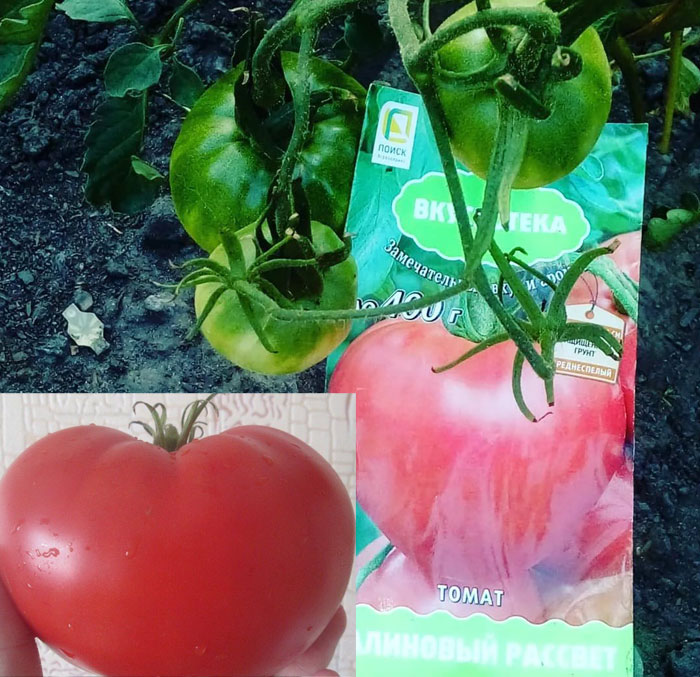
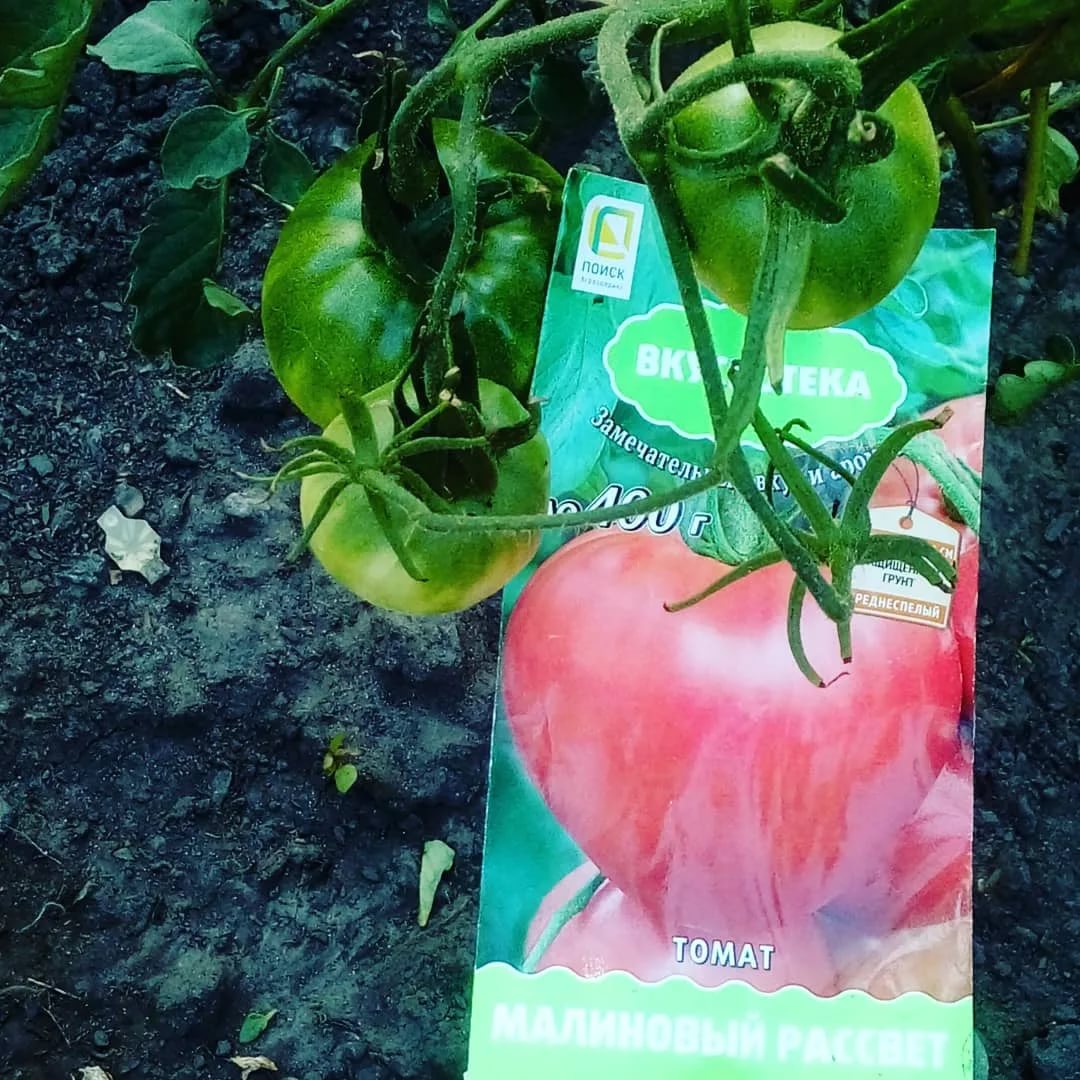
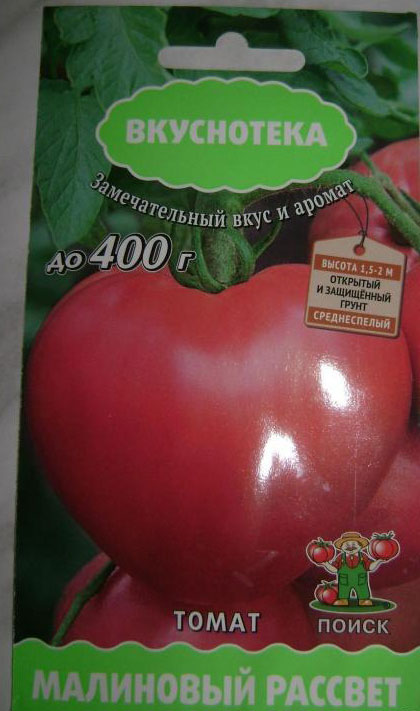
Appearance of the seed packet.
Information about the manufacturer.
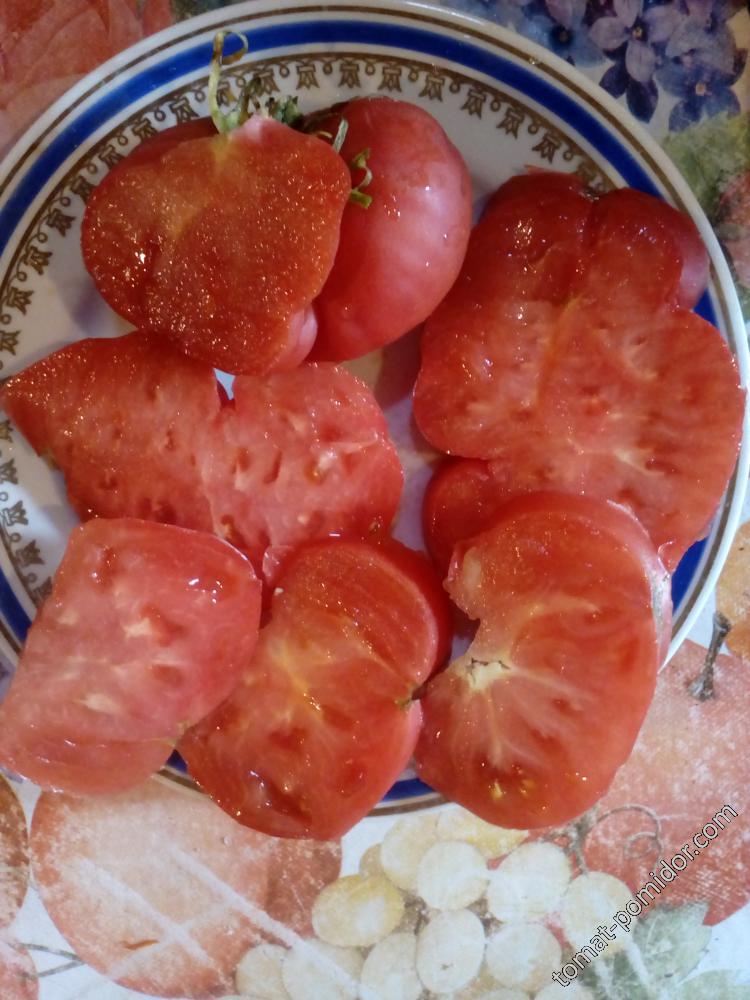
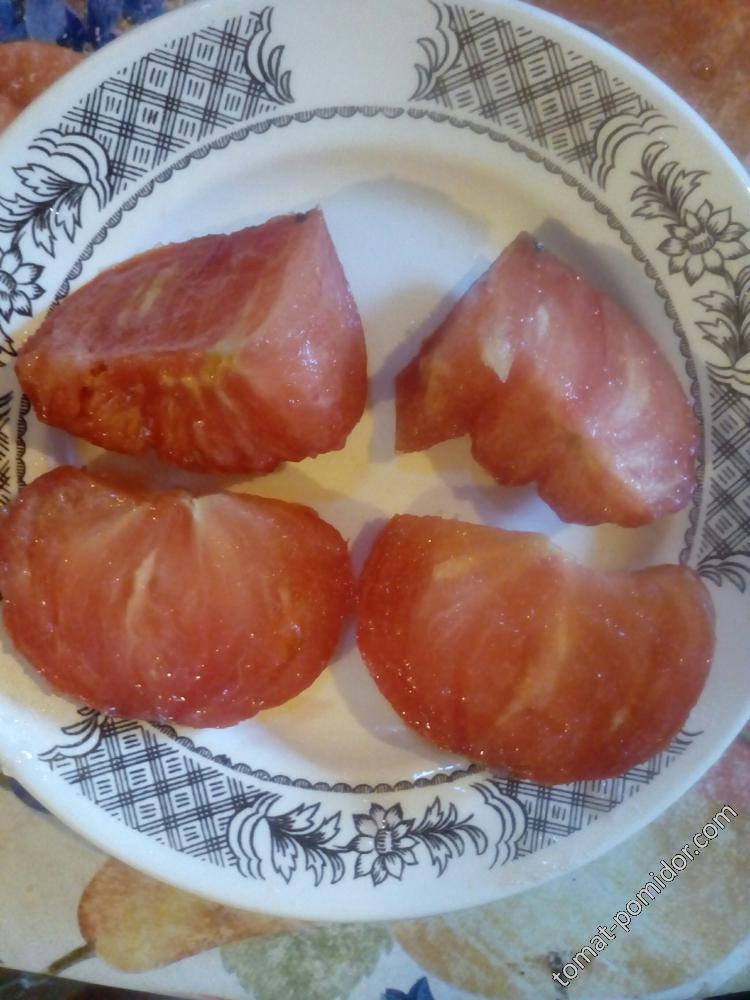
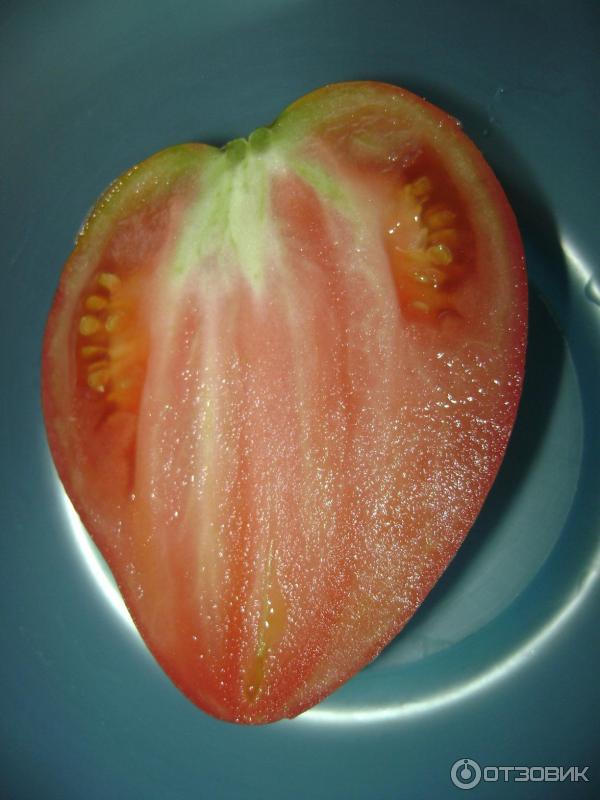
The tomatoes are large and heart-shaped. The flesh is crimson-red and ripens evenly inside and out.
The fruits are large; the photo shows them weighing only 282 grams, but that's one of the smaller specimens. There are also some weighing 380 grams, and the largest tomato was 430 grams (that's a whole bowl of salad). The manufacturer claims a weight of 350-400 grams, which is absolutely correct.
tomato from the inside.
The taste is excellent; the tomatoes are neither sour nor watery. The fruits do not crack.
The manufacturer recommends this variety for fresh consumption, and it's unlikely that anyone would pickle such "heroes."
Overall, I give the Poisk "Raspberry Dawn" tomato seeds an excellent rating. I highly recommend them, and I'll definitely buy some myself. I'll also consider the "Vkusnoteka" series from the Poisk agrofirm. Although they're more expensive than some others, the quality never ceases to impress.
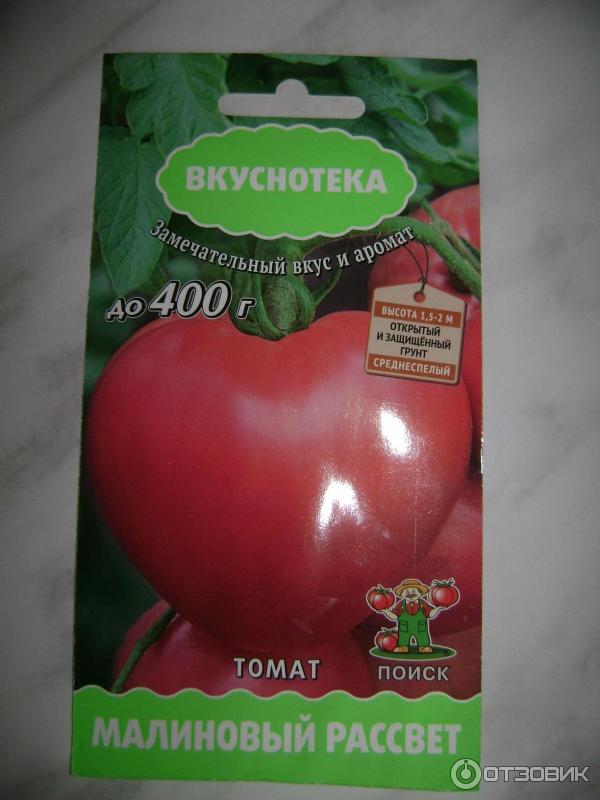
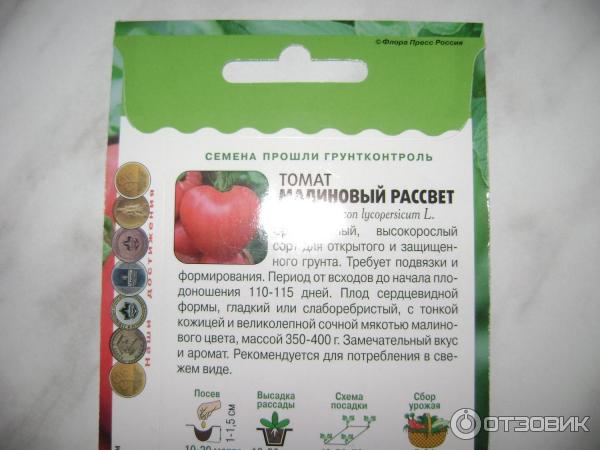
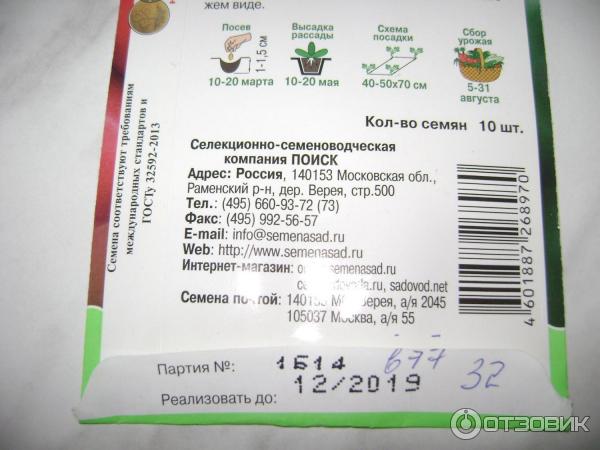
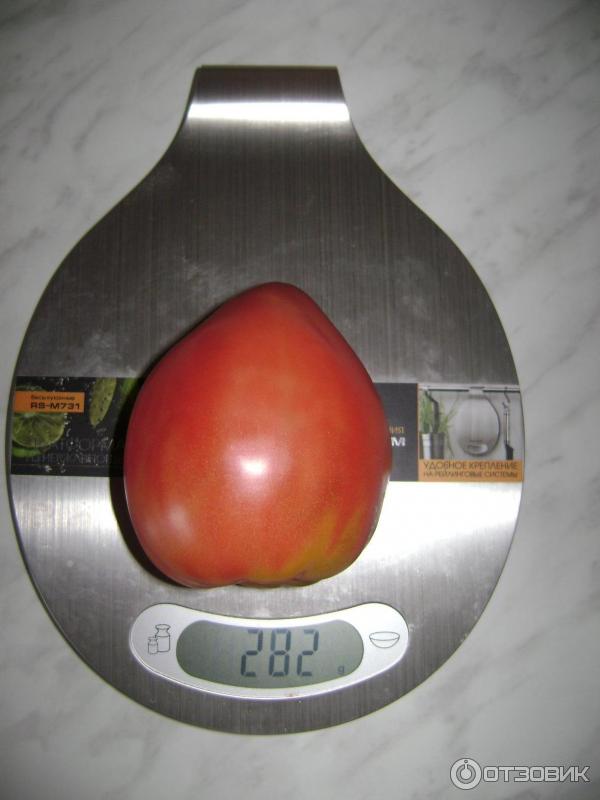
I bought a Raspberry Raspberry variety to try out in 2018. The seeds were from the Poisk company, Vkusnoteka series. I planted them, and the seedlings were good and took root well. The tomatoes grow large, fleshy, and sweet, with a flat, heart-shaped form. Some even confused them and assumed they were "Bull's Heart." The bush itself is about 1.5 meters tall. It was trained into two trunks.
They're delicious in salads. But they don't keep very well; after three days, dented stems start to appear. We store them in paper-lined boxes, though. They don't crack on the plant. They can, however, develop blossom-end rot. That's understandable; they're a cultivar, not a hybrid. I'll definitely be planting them next year.
Good afternoon
News for today:
1. All raspberry varieties ripen, except for Raspberry Greetings, Eldorado, Raspberry Sugar Cream, Raspberry Pear, Raspberry Nectarine and Raspberry Striped: these were the latest for me.2. The Raspberry Bull's Heart variety has joined (the sprout was given to me by Tatiana - thanks Tanechka :-*) from Sib.garden.
This variety is best grown on a single stem; it didn't work on three: the side shoots were very weak and their flower clusters were poorly developed, so I had to remove them. Many of the clusters were empty, and besides the beautiful lower cluster, only three tomatoes formed at the top.
3. I picked several tomatoes from the double flowers; somehow they ripened at the same time.
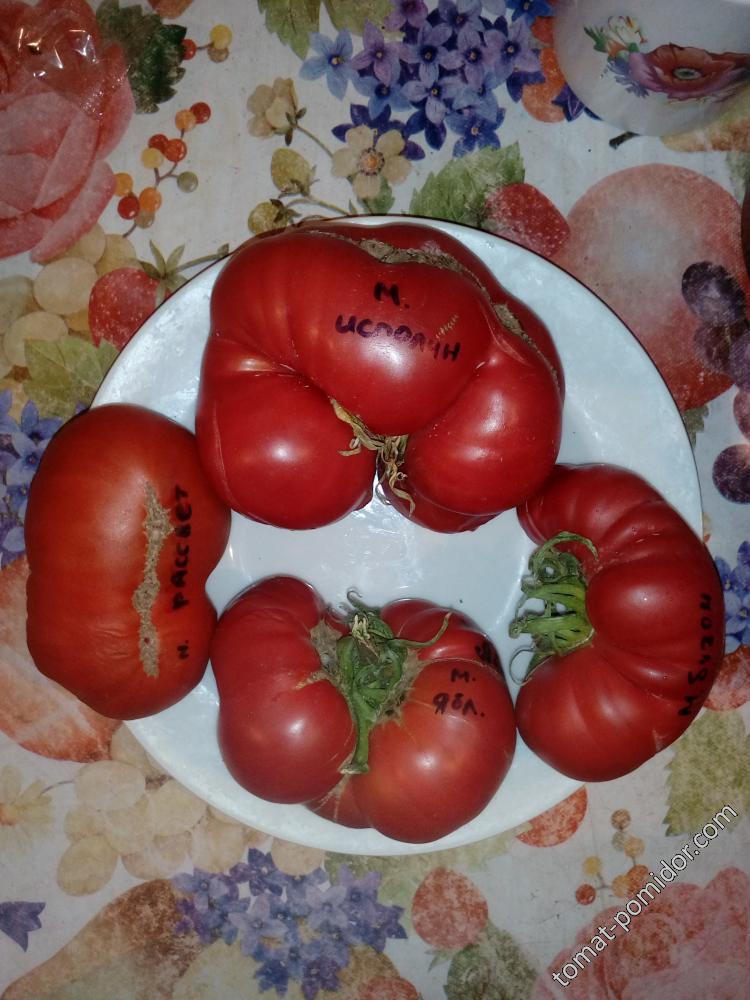
The largest Raspberry Giant, 400g. All are dark pink, except for the Raspberry Dawn, which is pinkish-red.
The Raspberry Giant bloomed beautifully on the bush, and I couldn’t resist taking a photo.
This is the same: Raspberry giant in slices: very tasty and meaty and juicy at the same time :niam:
The Raspberry Dawn turned out to be a dense tomato, not a single seed, little juice, red inside. It tasted slightly sweet. I realized I prefer juicier ones, like the Raspberry Giant.
3. Variety Nectarine Raspberry.
Description: An early-ripening variety with a period from germination to the beginning of fruiting of 90-95 days.
The plant is tall (indeterminate), reaching a height of 180 cm, so it needs to be supported.
A cluster contains up to 30 bright crimson fruits. The fruits are round, smooth, and weigh 15-20 g.
My first cluster ended in a leaf right away (like Kapturek's), but Kapturek took off and sent out side shoots everywhere and grew, while Nectarine never grew; the side shoots are all in clusters. Now it has five clusters with 5-6 leaves each, weighing 30-40 grams... It's turned into some kind of weird little tomato.
4. I haven't written anything about the raspberry gigantistika yet. It's a large-fruited variety. My first tomato weighed 400g. It started to ripen, but it turned out to be infected with gray mold from the inside.
had to throw it away….
Besides this tomato, there are now 4 more on the bush, but they haven’t turned out to be very productive…5. The Potato Raspberry variety was a surprise. It initially had two stems, each with two clusters and one at the bottom. Then it missed a lot, ran off four stems, and grew to the roof of the greenhouse (2.60 m), where it formed another cluster on each stem just under the ceiling. So, for me, it's moving into the category of very productive ones. :mail2: By the way, I used to plant a variety with this name; I had a completely different one. :dnt:
6. The Big Malina variety ripens very beautifully, reminiscent of a cluster of Christmas balls on a Christmas tree :-*