Raspberry Fountain is a relatively new variety of small-fruited tomato that is gaining popularity among gardeners. It can be grown both in a greenhouse and in the open ground.
More detailed characteristics and growing conditions are presented in the article below.
Content
- 1 Table of characteristics of the Raspberry Fountain tomato variety
- 2 Photo gallery of the Raspberry Fountain tomato variety
- 3 The origin of the Raspberry Fountain tomato variety
- 4 A detailed description of the Raspberry Fountain tomato variety
- 5 Advantages and disadvantages of the Raspberry Fountain tomato variety
- 6 Planting the Raspberry Fountain tomato variety
- 7 Caring for the Raspberry Fountain tomato variety, watering and fertilizing
- 8 Disease and pest resistance of the Raspberry Fountain tomato variety + control methods
- 9 Harvesting, using and storing the Raspberry Fountain tomato variety
- 10 Comparison of the Raspberry Fountain tomato variety with other varieties in the table
- 11 Real reviews from gardeners about the Raspberry Fountain F1 tomato variety
Table of characteristics of the Raspberry Fountain tomato variety
| Characteristic | Description |
| Description | An early-ripening, determinate F1 hybrid. Suitable for cultivation in open ground, greenhouses, and under plastic covers. |
| Ripening period | 100-105 days |
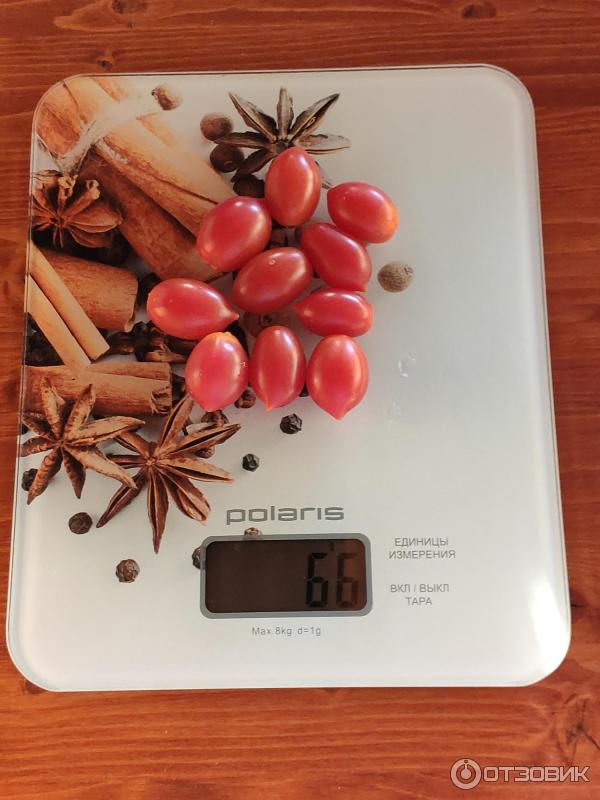
| Fruit weight | 20-27 g |
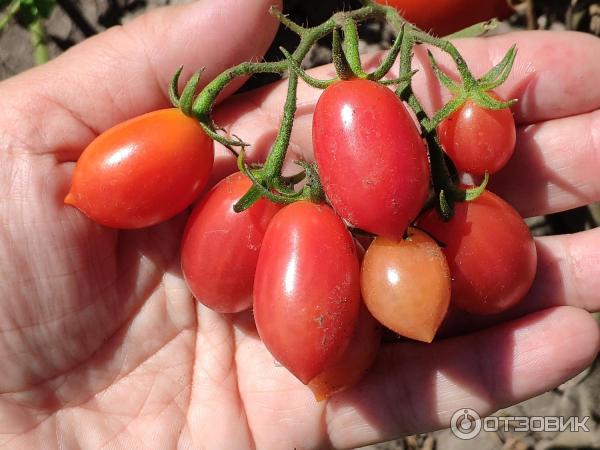
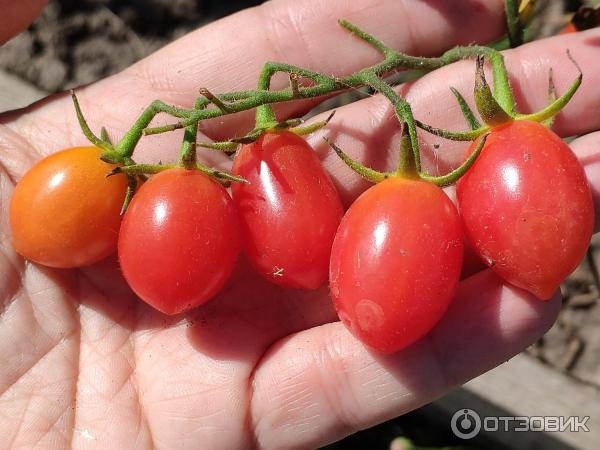
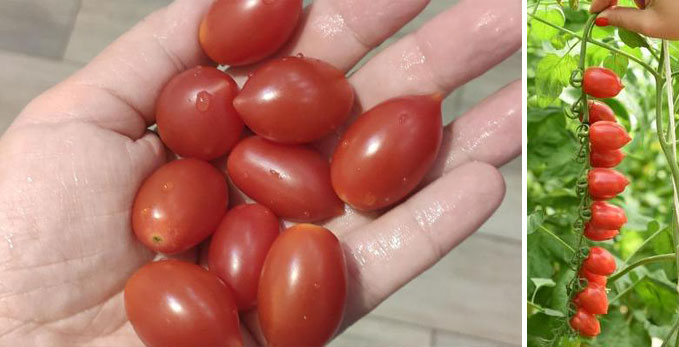
| Description of the fruit | The tomatoes are small. Elliptical in shape, medium in density, slightly ribbed, and raspberry-colored. |
| Taste | Good |
| Productivity | 520-610 c/ha |
| Usage | Widely used in canning, they are excellent for eating fresh and are an ideal addition to salads. |
| Preferred growing regions | It can be grown in any region; greenhouses even yield excellent yields in Siberia, the Far East, and the Urals. |
| Disease resistance | The immunity is strong, but if agricultural practices are not followed, they may be susceptible to late blight. |
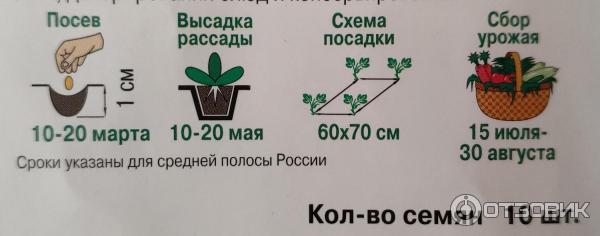
| Agricultural technology | Sowing begins in the first ten days of March, and tomatoes can be planted in the garden in mid-May. The bushes require shaping and tying. |
| 2020 | |
| Originator | Russia, Agrofirma Poisk LLC |
Photo gallery of the Raspberry Fountain tomato variety
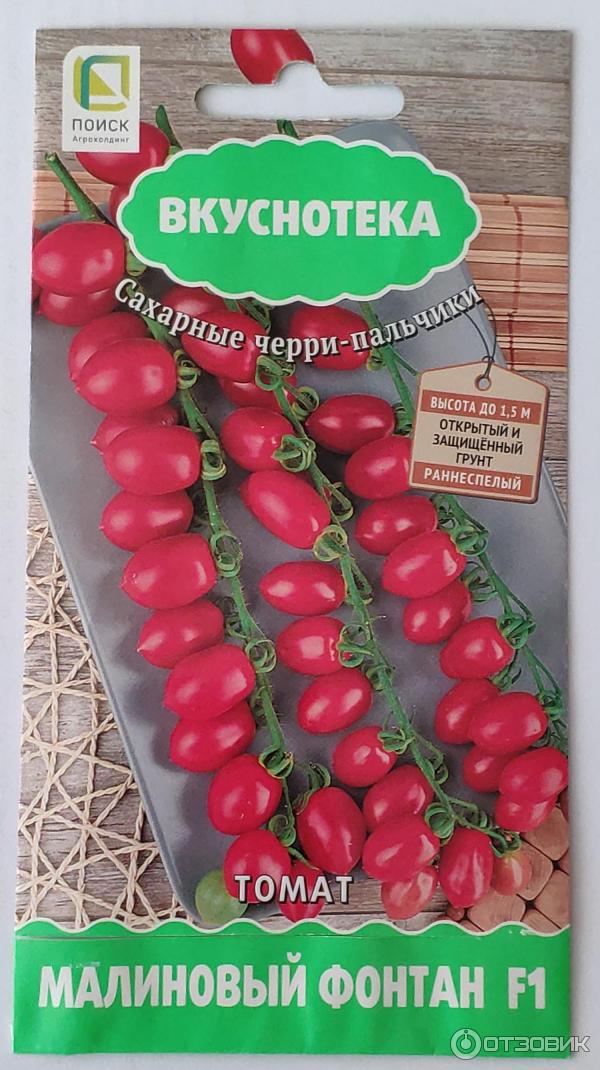
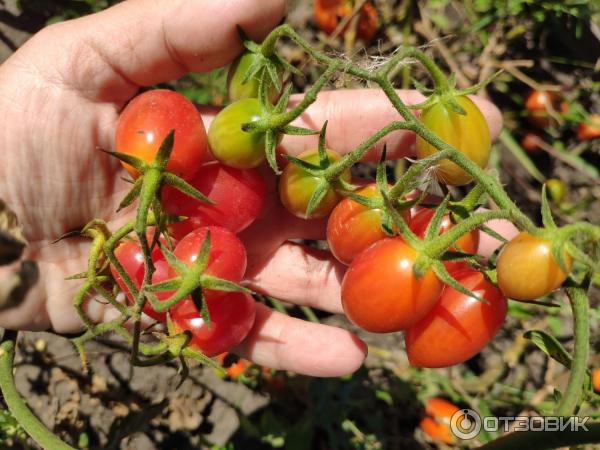
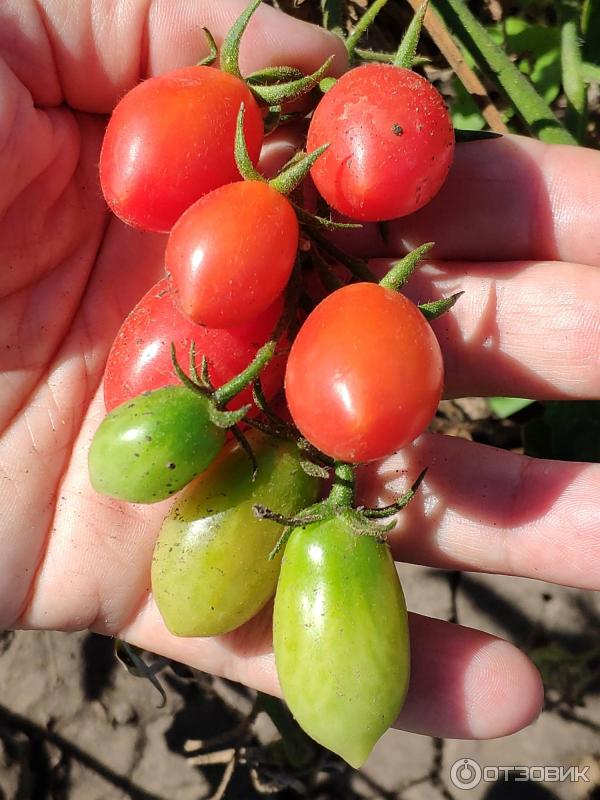
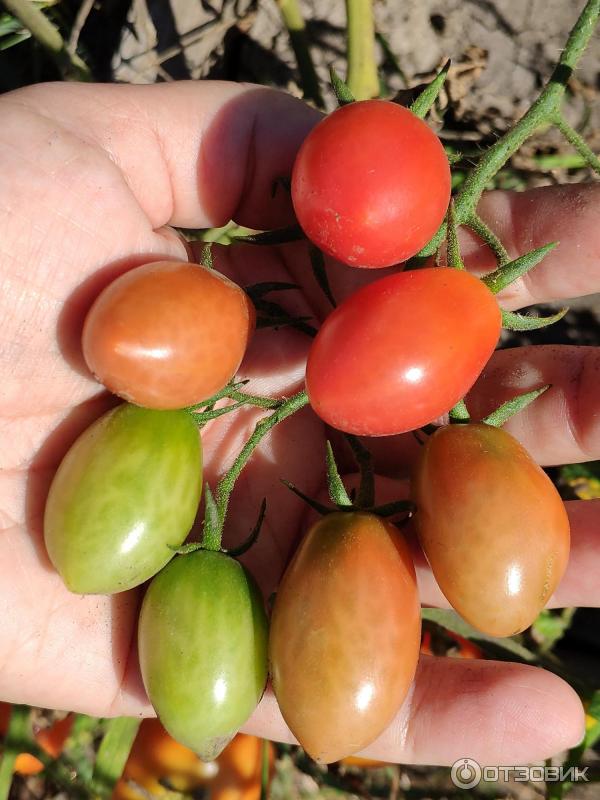
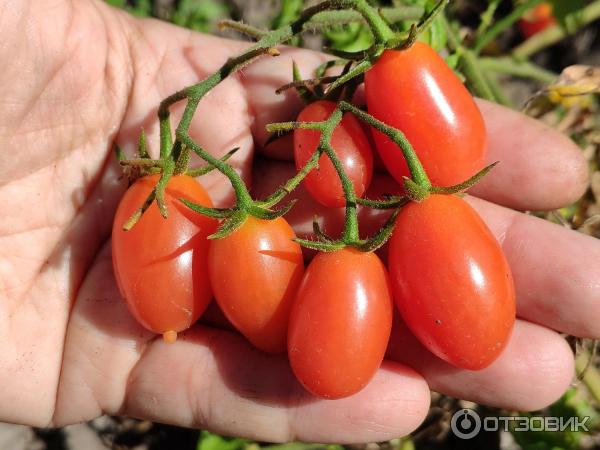
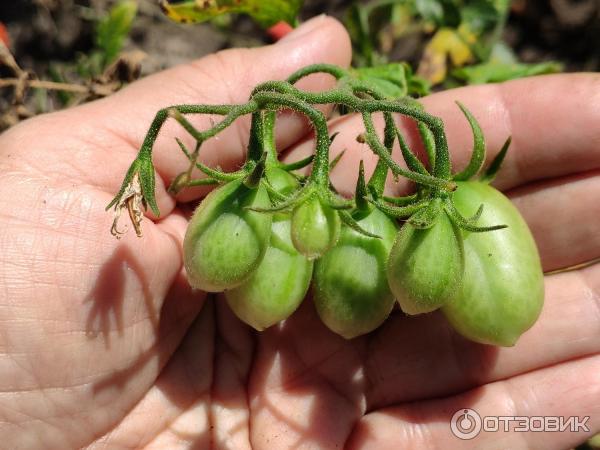
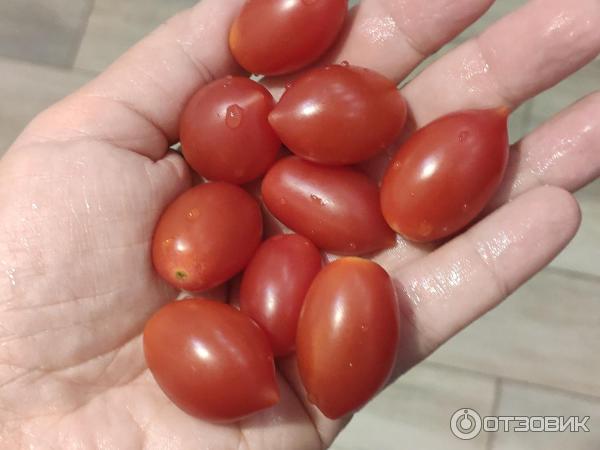
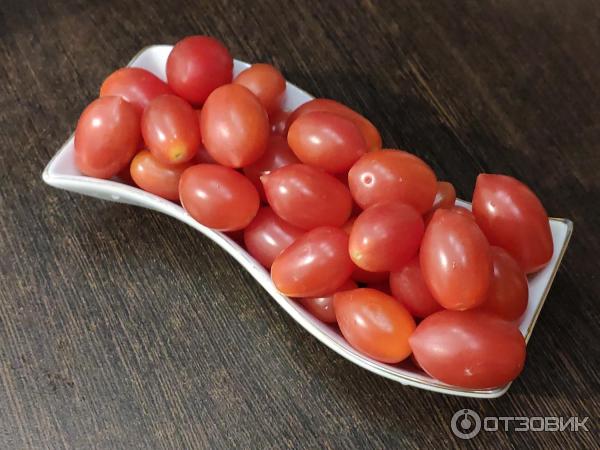
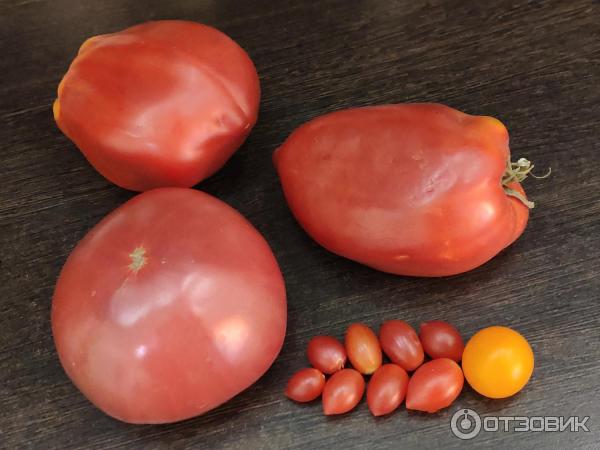
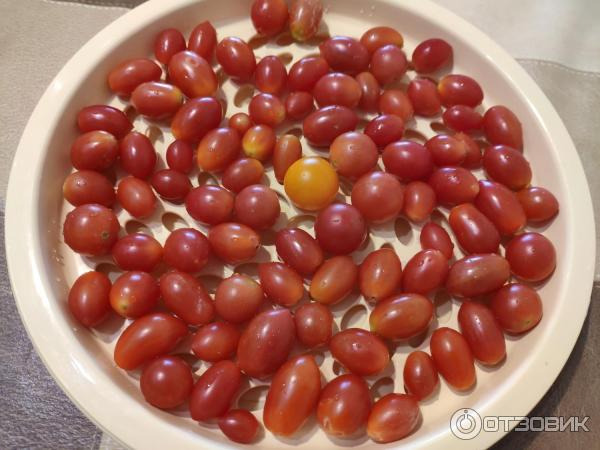
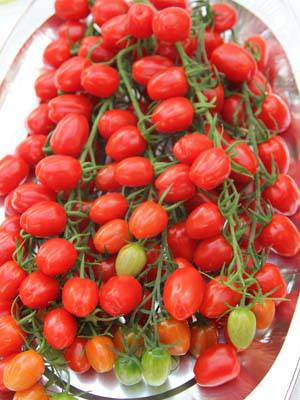
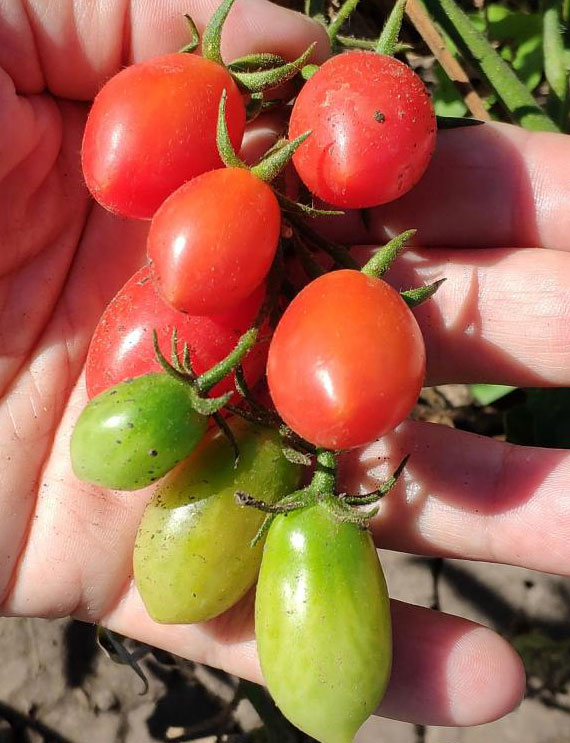
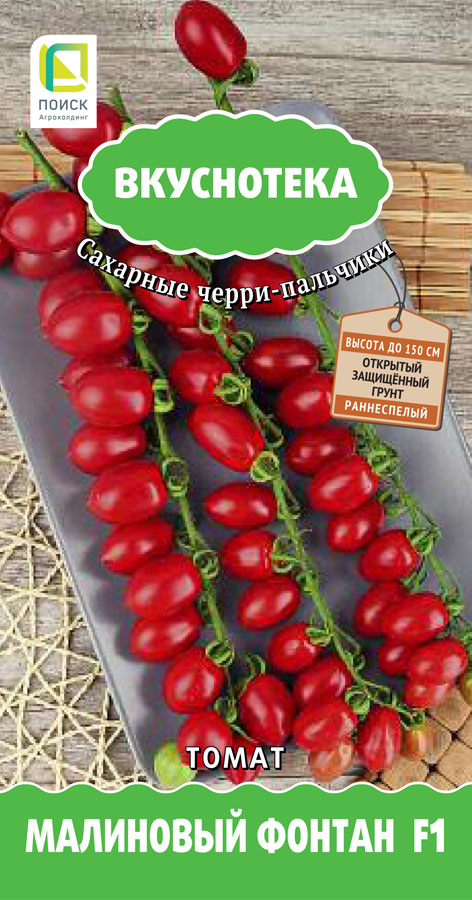
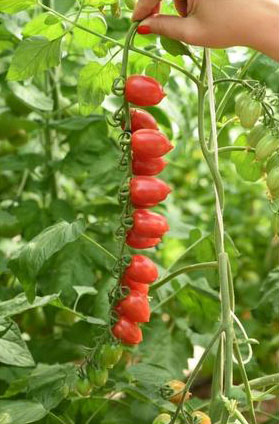
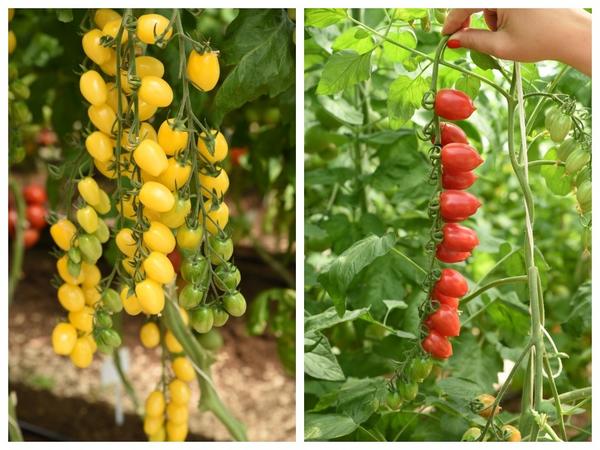
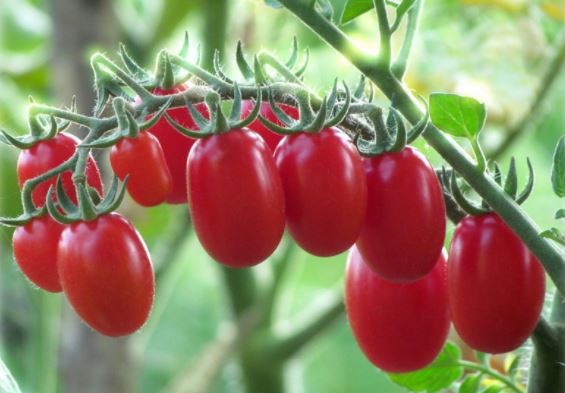
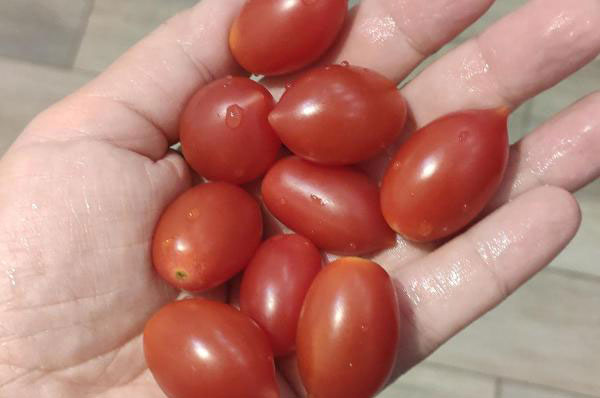
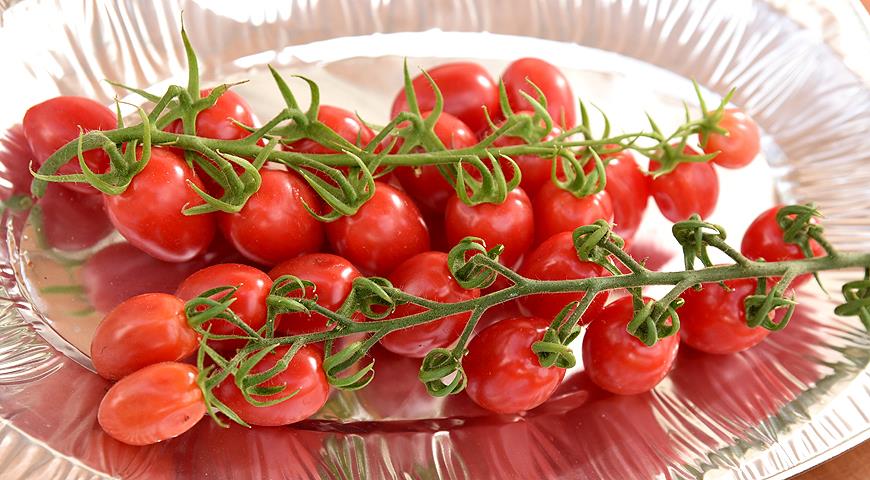
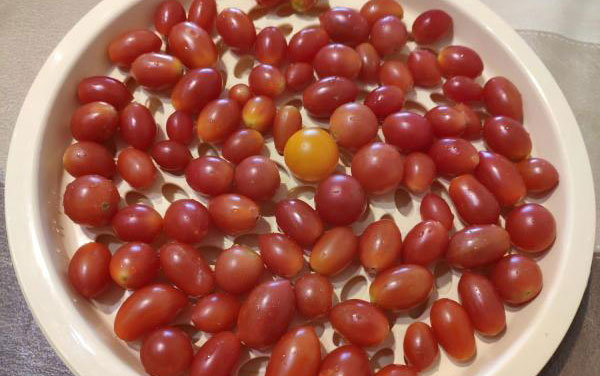
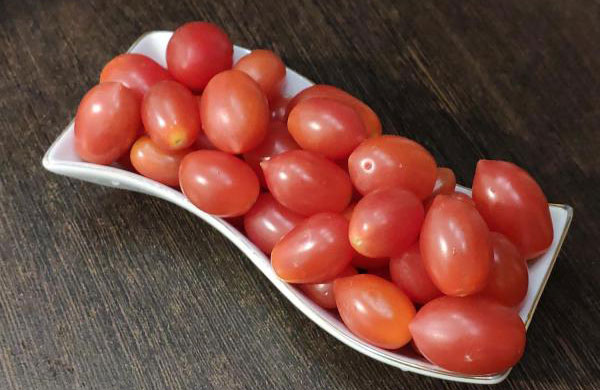
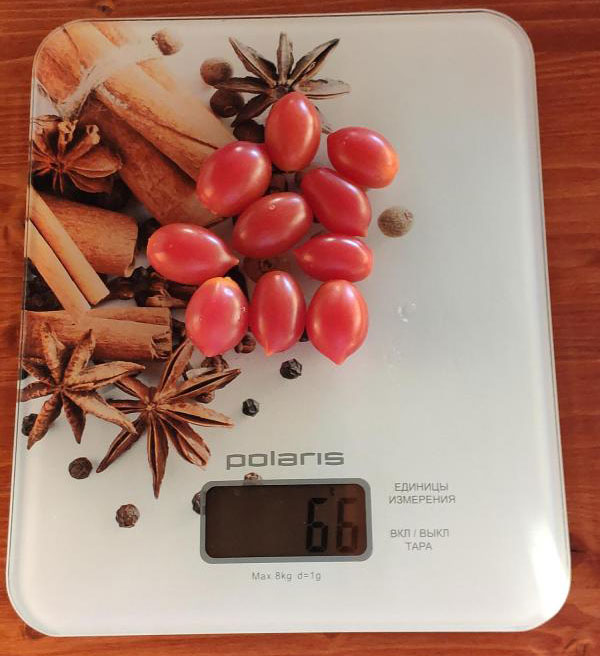
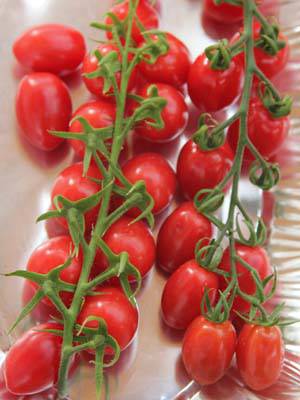
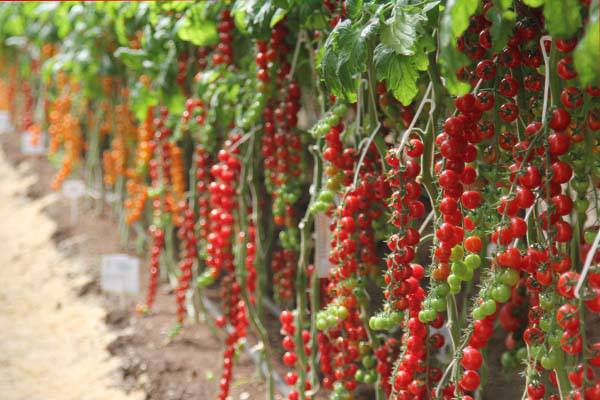
Below, we've compiled photos of the Raspberry Fountain (Vkusnoteka) tomato variety so you can see its characteristics and appearance for yourself:
The origin of the Raspberry Fountain tomato variety
The Raspberry Fountain tomato is an invention of Russian breeders from the Poisk agricultural firm. A patent for its recognition was filed in 2018, but the tomato itself was born even earlier. It was added to the register in 2020, so many gardeners have already come to appreciate these miniature, finger-shaped tomatoes.
A detailed description of the Raspberry Fountain tomato variety
Raspberry Fountain is a hybrid variety. Gardeners love it for its easy growing and delicious, sweet tomatoes.
Bushes
The bush is determinate. The height of the shoots depends on growing conditions. The stems are firm and strong, with few leaves.
The bushes require staking and shaping, which is usually done with 1-2 stems. Raspberry Fountain bears fruit until the end of the season, although by this time the tomatoes become smaller.
Fruit
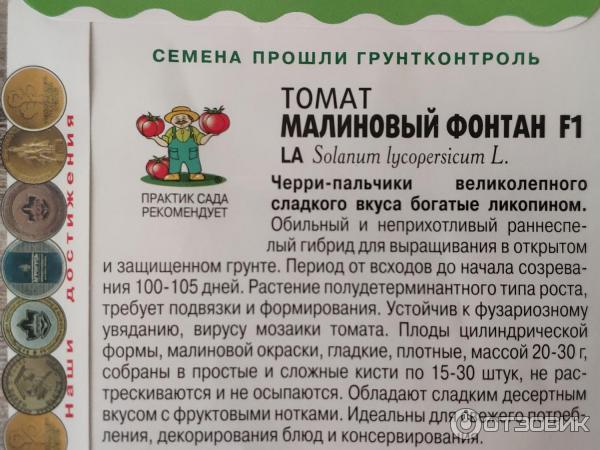
Tomatoes are small and bright red. They are commonly called "cherry" or "finger" tomatoes. They grow on compound or simple clusters, with each cluster bearing between 10 and 30 fruits. Each tomato weighs 20-27 g. Ripening occurs sequentially, so even from a single cluster, the fruits will be harvested unevenly.
The skin is thick and the stem is strong, which allows the tomatoes to hang on the bush for a long time without crumbling or cracking.
Miniature tomatoes contain almost twice as many nutrients as their larger-fruited counterparts. Just 5-7 tomatoes a day can meet the daily requirement for vitamins A, B, and C, as well as potassium and iron. Furthermore, the Raspberry Fountain harvest contains impressive amounts of serotonin, which lifts mood, and lycopene, which dissolves fat.
Productivity
The Raspberry Fountain variety has a high yield: with proper care, you can harvest 5.2 to 6.1 kg of ripe tomatoes per square meter.
Ripening time
Tomatoes are distinguished by their relatively early ripening period. Harvesting is possible 100 days after germination, but the ripening process itself is extended because the tomatoes ripen one after another on the vine, rather than simultaneously.
Advantages and disadvantages of the Raspberry Fountain tomato variety
The raspberry fountain has advantages and disadvantages, which are listed in the table below.
| Advantages | Flaws |
|
|
Planting the Raspberry Fountain tomato variety
Tomato Raspberry Fountain F1 It's quite unpretentious. Growing it isn't particularly difficult; planting and care follow the classic guidelines for pink tomatoes.
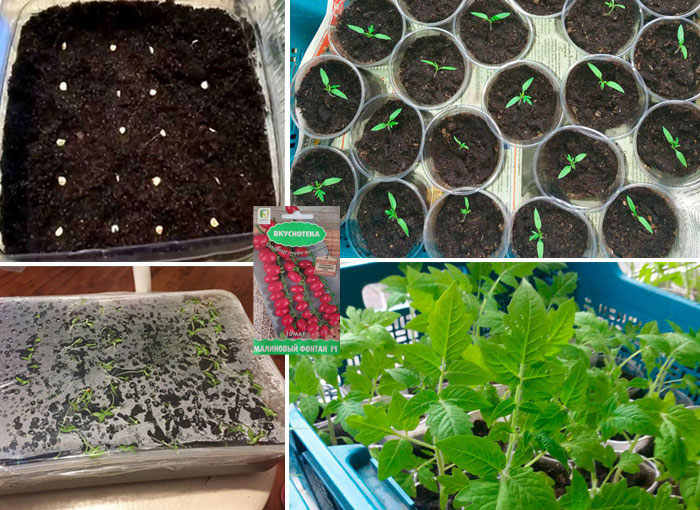
Sowing seeds and growing seedlings
Raspberry Fountain is a hybrid variety, so its seeds cannot be collected independently. They can only be purchased in stores, preferably from the cultivar's original producer.
Like all other hybrids, Raspberry Fountain doesn't require any pre-treatment of the planting material. All the key characteristics are already genetically determined and can only be perfected with proper care during the growth stage.
Sow the seeds in early March; within two months, the seedlings will be ready for planting. If the manufacturer indicated on the packaging that the seeds have been polished, processed, and disinfected, they should be placed in the soil dry to avoid damaging the protective film.
The soil must be breathable and nutritious, so it's essential to add equal parts peat and sand. To retain moisture and absorb excess moisture, it's recommended to add vermiculite to the soil mixture at a ratio of 1:10. When using soil from your own plot, it's crucial to disinfect it, for example, by baking it in an oven or soaking it in potassium permanganate.
Some gardeners prefer to plant tomatoes directly in individual cups, but most opt for wooden boxes or plastic containers. Before use, rinse them with a weak solution of potassium permanganate.
Next, the container is half-filled with soil, and furrows are made in the surface. Seeds are placed in these furrows, 10-15 cm deep, spaced 2-3 cm apart. After this, the soil is watered with a spray bottle, and the structure is covered with plastic wrap or glass.
Until seedlings emerge, the greenhouse should be kept in a very warm and well-lit location for approximately three weeks. For best results, it is recommended to use a special growing lamp. During this period, water the plants only when the soil is completely dry.
When most of the seedlings emerge above the soil surface, they can be transplanted into individual pots. However, they should be placed in a cooler location, with temperatures ranging from 20 to 22°C.
Planting Raspberry Fountain tomato seedlings in open ground or a greenhouse
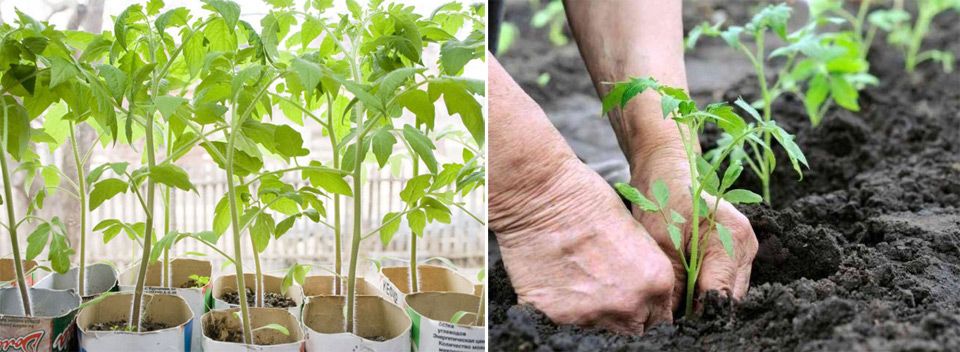
The exact date for planting tomatoes depends on the growing region. In the south, gardeners can begin work as early as April, while those in the northern regions won't be able to do so until late May or early June.
The soil is prepared in advance in the fall, when it is dug over with fertilizer. In the spring, it is recommended to dig it again and sow the beds with green manure, such as mustard, two weeks before planting. This will help enrich the soil with beneficial micronutrients.
The holes are spaced 50 cm apart, leaving a 70 cm gap between rows. The holes are approximately 25 cm deep and 5 cm larger in diameter than the pot. Tomatoes are planted with the root ball still attached to avoid damaging the delicate roots.
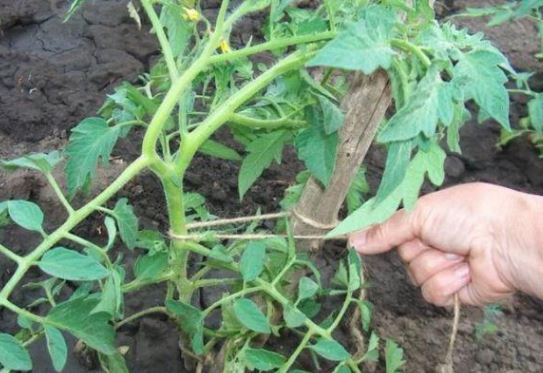
It is important to provide a support and tying system for the shoots; as they grow, the bush forms into 2 stems.
Caring for the Raspberry Fountain tomato variety, watering and fertilizing
The Raspberry Fountain variety is not particularly demanding in terms of care; humidity and support are important factors for it.
Gardeners should remember that the Raspberry Fountain cherry tomato, like other similar varieties, requires sufficient air humidity, which should be between 60 and 65%.
During active growth, the optimal air temperature should be between 20 and 25°C, but during fruit formation, it should be slightly warmer – between 24 and 26°C. It is crucial to periodically ventilate the greenhouse, as condensation inside can be detrimental to the plants.
Raspberry Fountain tomatoes ripen unevenly, but you shouldn't pick unripe fruits from the bunch, as their flavor will not be restored.
The variety does not tolerate drought, but overwatering should be avoided. Watering should be timely and moderate, otherwise there is a risk of various types of rot. If the interval between waterings is too long, the crop will begin to crack.
Fertilizing is recommended every 10-12 days, adding mineral and organic fertilizers to the soil (for example, a bucket of manure per 100 liters of water). The key is not to overdo it with nitrogen, otherwise not only will the vegetative mass begin to grow uncontrollably, but late blight will also become more active.
After planting tomatoes, the soil around the roots will settle over time, so it should be replenished periodically as needed. To prevent side shoots from draining the tomatoes, remove them (pseudo-son), leaving only 1.5-2 cm in their place.
Once most of the ovaries on the bush have formed, you can carefully pinch off the top of the main shoot and remove the flowering clusters. This will ensure rapid ripening of the harvest.
Disease and pest resistance of the Raspberry Fountain tomato variety + control methods
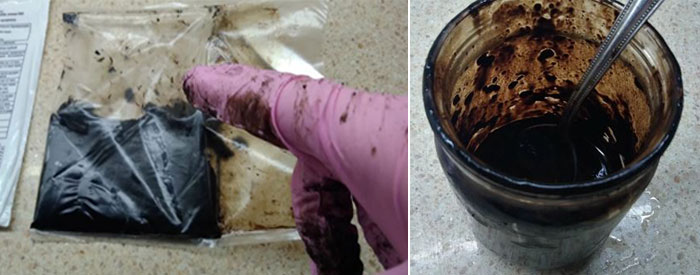
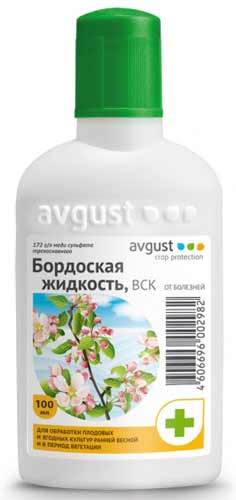
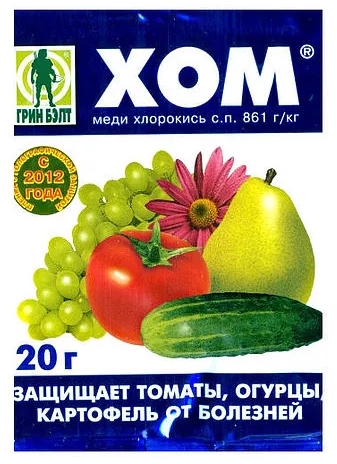
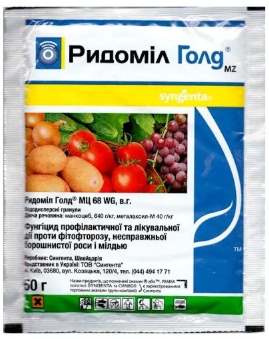
The Raspberry Fountain variety is characterized by strong immunity and is virtually immune to viruses and other diseases. However, if the watering regimen is not met and the recommended air humidity is not maintained, late blight may occur. To prevent the disease, spray with Fitosporin or Bordeaux mixture. If the disease becomes active and the affected area is large, more powerful treatments such as Hom or Ridomil Gold are used. If these treatments prove ineffective, the bush is dug up and burned.
Harvesting, using and storing the Raspberry Fountain tomato variety
Harvesting begins 100 days after germination. Tomatoes ripen unevenly, but it's recommended to pick them only when they're fully ripe. Otherwise, their flavor will be significantly inferior to that of ripe tomatoes.
The thick skin allows the harvest to remain fresh for some time. However, over time, its aroma and flavor become less pronounced.
If you want to preserve cherry tomatoes as long as possible, you need to place them in a dark place with a temperature of +15…+18 °C – this is the only way to ensure the quality does not suffer.
These tomatoes are very small, weighing between 20 and 27 grams, making them ideal for pickling and canning whole. They also make a stunning addition to any dish and a great addition to salads.
Comparison of the Raspberry Fountain tomato variety with other varieties in the table
Please note! How can you easily convert centners/ha to kg/sq.m? Simply divide by 100! For example, the Abakansky Pink tomato yields 400 centners of marketable fruit per hectare. This equals 4 kg per square meter. It's that simple! Also, keep in mind that typically no more than 3-4 plants are planted per square meter. This way, you can calculate the yield per bush. In the case of the Abakansky Pink, it's about 1 kg.
| Variety | Ripening period (number of days from full germination to ripening)
Yield of commercial fruits |
Brief description | Fetus |
| Raspberry Fountain | 100-105 days 520-610 c/ha (greenhouse and under film) |
An early-ripening determinate variety for greenhouses. Suitable for salads. | Elliptical, medium density, slightly ribbed, raspberry, 20-27 g. Good taste. |
| Moon fountain | 100-105 days
420-490 c/ha (greenhouse and under film) |
An early-ripening indeterminate variety for greenhouses. Suitable for salads. | Cylindrical, dense, slightly ribbed, creamy, 12-17 g. Good taste. |
| Orange Fountain | 100-105 days
500-550 c/ha (greenhouse and under film) |
An early-ripening indeterminate variety for greenhouses. Suitable for salads. | Cylindrical, medium density, slightly ribbed, orange, 11-18 g. Good taste. |
| Sweet fountain | 100-105 days
650 c/ha (greenhouse and under film) |
An early-ripening indeterminate variety for greenhouses. Suitable for salads. | Elliptical, medium density, smooth, red, 18-20 g. Good taste. |
| Raspberry Farmer | 85-90 days 1000 c/ha |
An early-ripening determinate variety for greenhouses. Suitable for salads. | Round, dense, slightly ribbed, cocktail, raspberry, 50-60 g. Good taste. |
| Crimson Flame | 90-95 days
620 c/ha |
An early-ripening determinate variety for greenhouses. Requires training into three stems. Suitable for salads. | Obovate, smooth, pink, 50 g. Taste is good to excellent. |
| Raspberry Liana | 85-90 days
700 c/ha |
An early (ultra-early) determinate standard variety for open ground and greenhouses. Suitable for salads, canning, and processing into tomato products. | Round, smooth, red, 65-90 g. Good taste. |
| Madeira | 85-90 days
440-700 c/ha |
An early-ripening indeterminate variety for greenhouses. Suitable for salads. | Round, smooth, red, 20-25 g. Good taste. |
| Little Red Riding Hood | 85-90 days 180 c/ha |
An early-ripening, determinate, standard variety for greenhouses. Suitable for salads. | Round, smooth, soft, red, 15-20 g. Excellent taste. |
| Sugar-coated cranberries | about 80 days
230-280 c/ha (greenhouse and under film) |
An early-ripening, determinate, standard variety for open ground and greenhouses. Suitable for salads and whole-fruit canning. | Round, dense, slightly ribbed, red, 15 g. Good taste. |
| Thumbelina | 90-95 days
470 c/ha (greenhouse and under film) |
An early-ripening indeterminate variety for open ground and greenhouses. Requires staking and training. Suitable for salads and whole-fruit canning. | Round, smooth, dense, red, 15-25 g. Excellent taste. |
| Pinocchio | 105-110 days
300-450 c/ha (1-1.5 kg from one plant). |
A mid-season, determinate, standard variety for indoor flowerpots and balconies. Suitable for salads. | Flat-round, smooth, small, red, 15-20 g. The taste is good and excellent. |
| Button | about 90 days
400-450 c/ha (greenhouse and under film) |
An early-ripening, determinate, standard variety for open ground and greenhouses. Suitable for salads, pickling, and whole-fruit canning. | Round, smooth, medium density, red, 10-15 g. Excellent taste. |
Real reviews from gardeners about the Raspberry Fountain F1 tomato variety
The Raspberry Fountain variety has many fans among gardeners. It's loved for its low maintenance and excellent yield. However, some consumers note that the number of fruits per cluster and their weight are exaggerated by the grower. In reality, these figures are more modest. For example, a single cluster produces no more than 8-10 tomatoes, weighing between 10 and 16 g.
Yesterday I talked about my favorite giant tomato, Pink, and today I want to share my impressions of sweet cherry fingers.
This tomato variety is called "Raspberry Fountain." The designation "F1" next to the variety name indicates that this tomato is a hybrid. This means there's no point in taking seeds from your own harvest, as they won't pass on their varietal characteristics.
Why did I buy Raspberry Fountain tomato seeds?
I was attracted by its characteristics:
+ early maturing hybrid,
+ great sweet taste,
+ cherry fingers with mind-blowing clusters (the image on the package indicates that there are approximately 15 to 20 fruits in one cluster, but the description says 30!).
The manufacturer places emphasis primarily on the taste and decorative properties of the variety.
Agricultural technology is not complicated, but tying and shaping are necessary.
The Poisk agricultural holding company is relatively new to the market and not yet well-established. It is located in the Ramensky district of the Moscow region.
My tomato "Raspberry Fountain" bears fruit harmoniously, but still not as abundantly as the manufacturer promised!
I have never grown anything as luxurious as the one depicted on the pack!
The average cluster on my bushes contains about 10-12 cherry fingers.
Tomatoes in bunches ripen not all at once, but sequentially.
Therefore, the first ripe cherry tomatoes have long since been picked.
The variety is indeed early ripening, I confirm!)
It is also true that the fruits do not crack or fall off.
As usual, by the end of summer the fruits begin to become smaller.
But the good news is that the plants haven't stopped growing and are still blooming and producing new tomatoes.
Although I was clearly misled about the size of the clusters (or rather, the number of fruits in them), the "Raspberry Fountain" tomato variety has some important advantages for me. The cherry tomatoes are small, neat, plump, and very sweet!
They taste like a treat, almost like candy.
I put such a vase in front of my daughter while she draws or reads at the table and the contents of the vase quietly “run out”.
My tomato weights were also noticeably lighter than the seed manufacturer promised. He added more weight for advertising, I guess.
But there must be different types of tomatoes "on the farm" - for eating fresh, for processing into sauces and ketchups, for canning whole, as a treat for children and for decorating dishes too! )
Don't expect miracles from this variety - you probably won't get bunches of flowers like those on the pack!)
But overall, I liked the "Raspberry Fountain" variety. The cherry tomatoes are truly VERY sweet, beautiful, and miniature, like toys.
This variety is early maturing and trouble-free. I didn't have to worry about staking and shaping it. It's not a variety I'm willing to invest in; I'm growing it purely for variety. I'll plant it, but one bush is plenty for me; I don't think it's worth taking up space with too many of them.
I'd give the 'Raspberry Fountain' variety a four.
Not bad, but it didn't make it onto my favorites list.