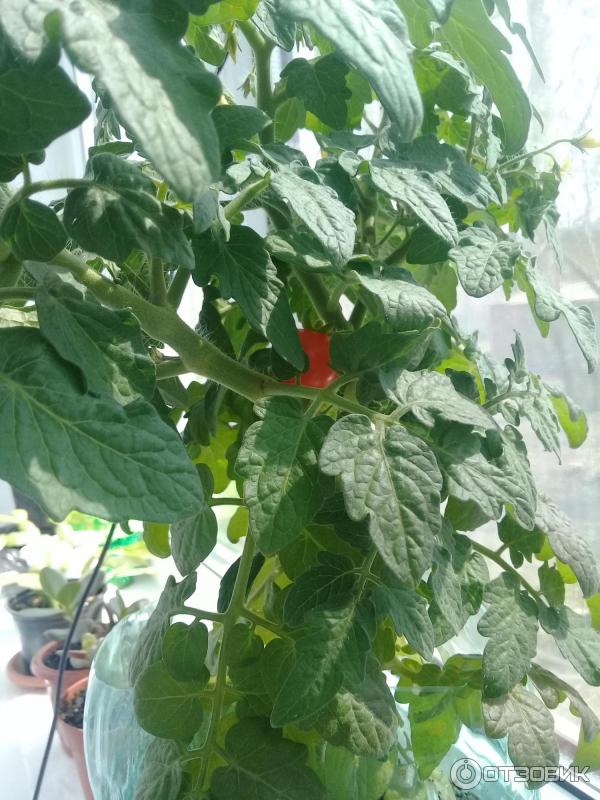
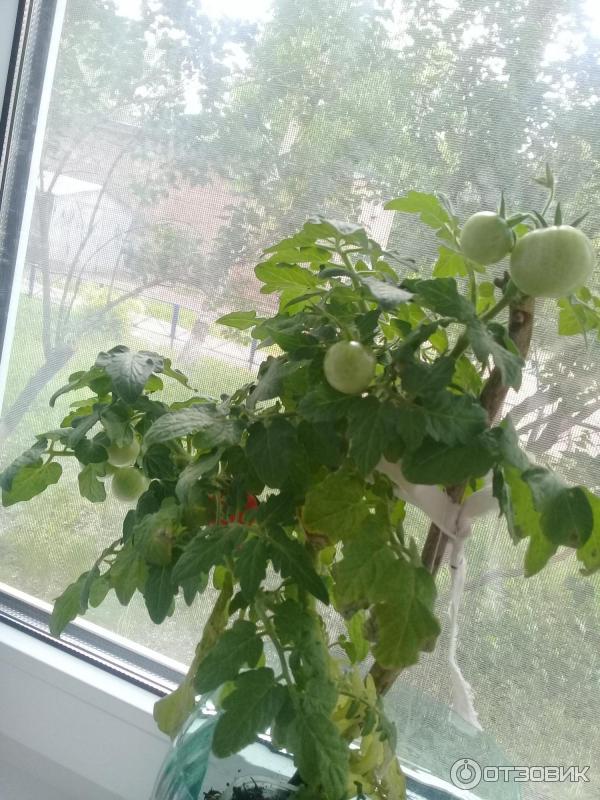
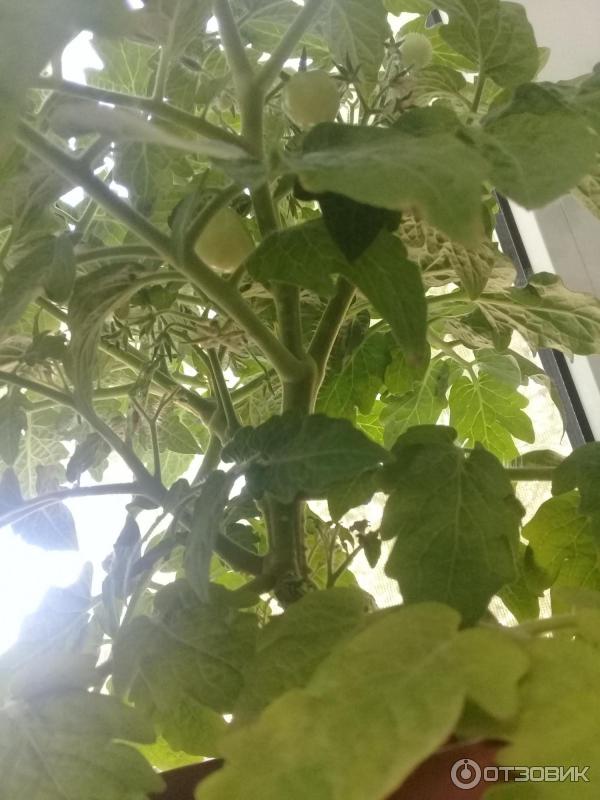
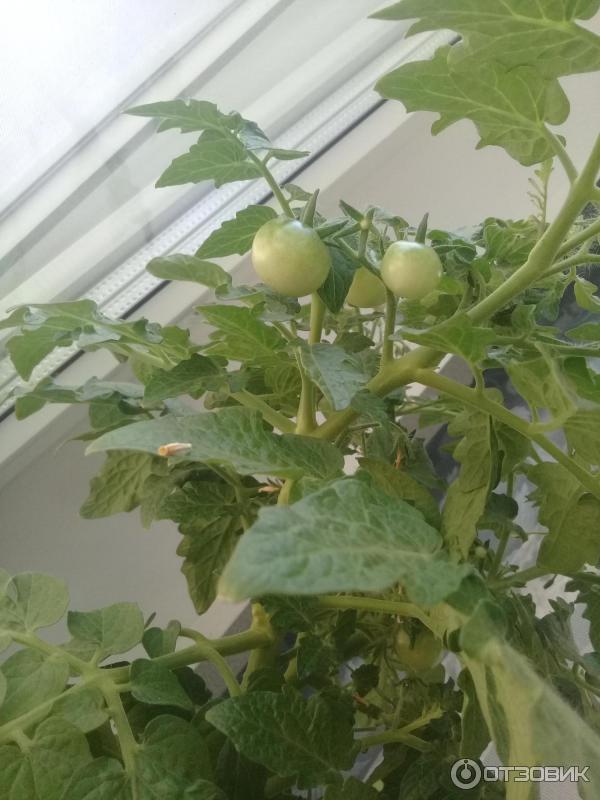
The Pinocchio variety is one of the most popular mid-season varieties. Its high ornamental value and undemanding growing conditions have made it widespread throughout the country. It is also known as cherry.
Content
- 1 Characteristics of the Pinocchio tomato variety in a table
- 2 Photo gallery of the Pinocchio tomato variety
- 3 Description of the Pinocchio variety
- 4 Characteristics of fruits
- 5 Advantages and disadvantages
- 6 Cultivation techniques for Pinocchio tomatoes
- 7 Planting seeds
- 8 Growing and care in open ground
- 9 Balcony care tips
- 10 Tomato Pinocchio on the windowsill
- 11 Diseases and pests
- 12 Top.tomathouse.com recommends: how to increase the yield of the Pinocchio tomato variety
- 13 Comparison of the Pinocchio tomato variety with other varieties in the table
- 14 Real reviews from gardeners about the Pinocchio tomato variety
Characteristics of the Pinocchio tomato variety in a table
| Characteristic | Description |
| Description |
Mid-season determinate standard variety for indoor flower pots and balconies. |
| Ripening period | 105-110 days. |
| Fetus | Flat-round, smooth, small, red. |
| Weight | 15-20 g. |
| Taste | Good and personal. |
| Productivity | 300-450 c/ha (1-1.5 kg per plant) |
| Application | Suitable for salads. |
| Marketability, Shelf life | Average. |
| Disease resistance | Good. |
| Agricultural technology | Avoid contact of leaves with water and avoid spraying. |
| Recommended regions for planting | Any. |
| 1997 | |
| Originator | AGROFIRM 'SEMKO'. IP ALEKSASHOVA MARINA VITALIEVNA |
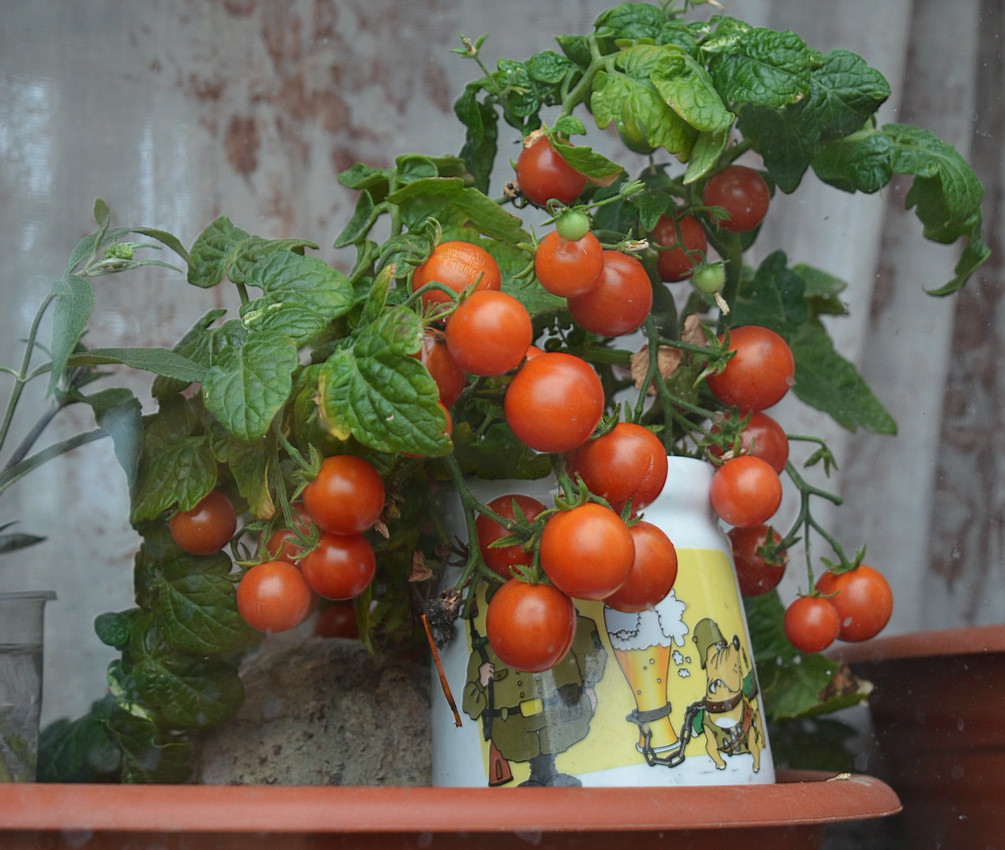
Photo gallery of the Pinocchio tomato variety
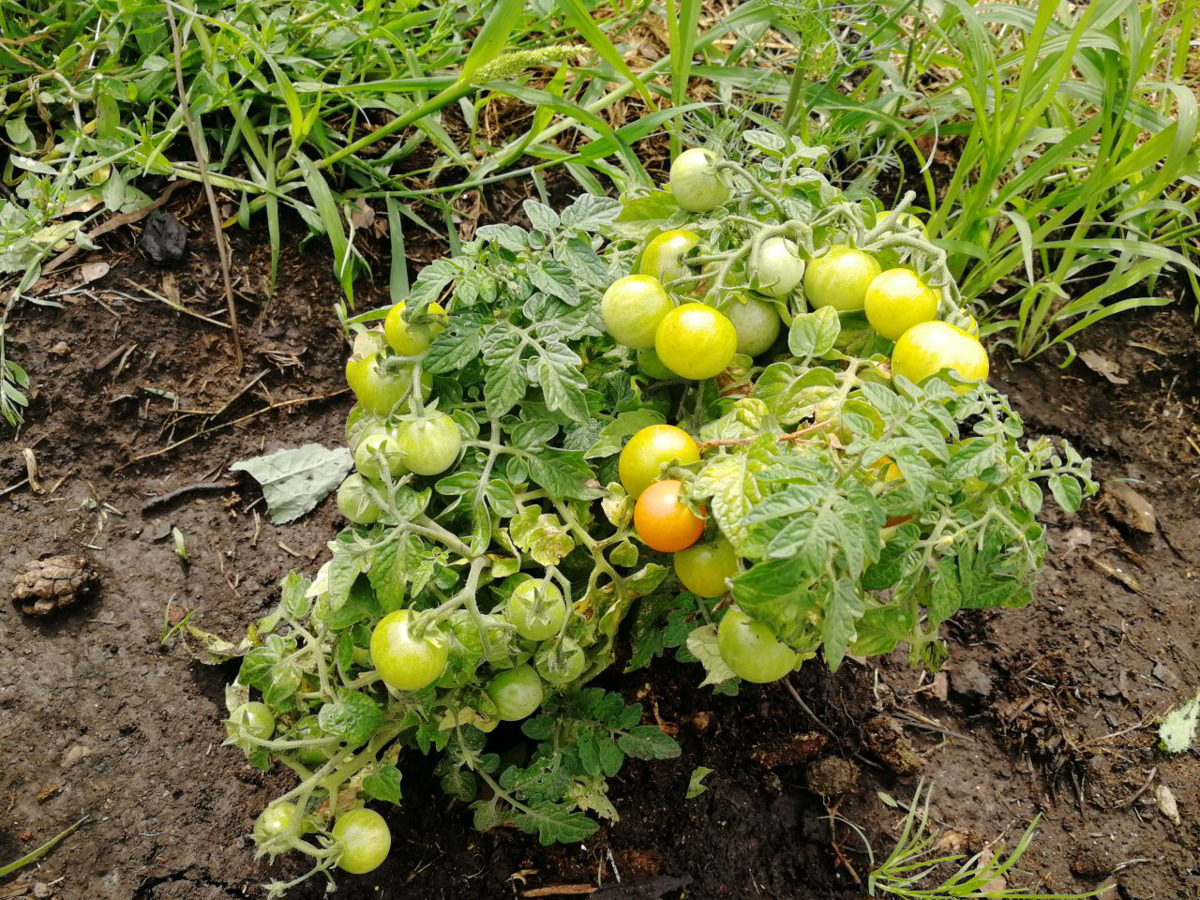
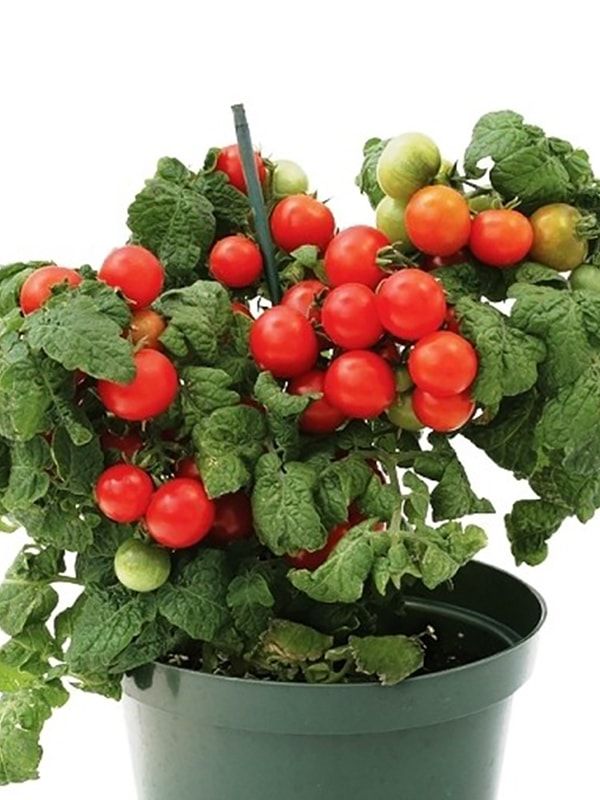
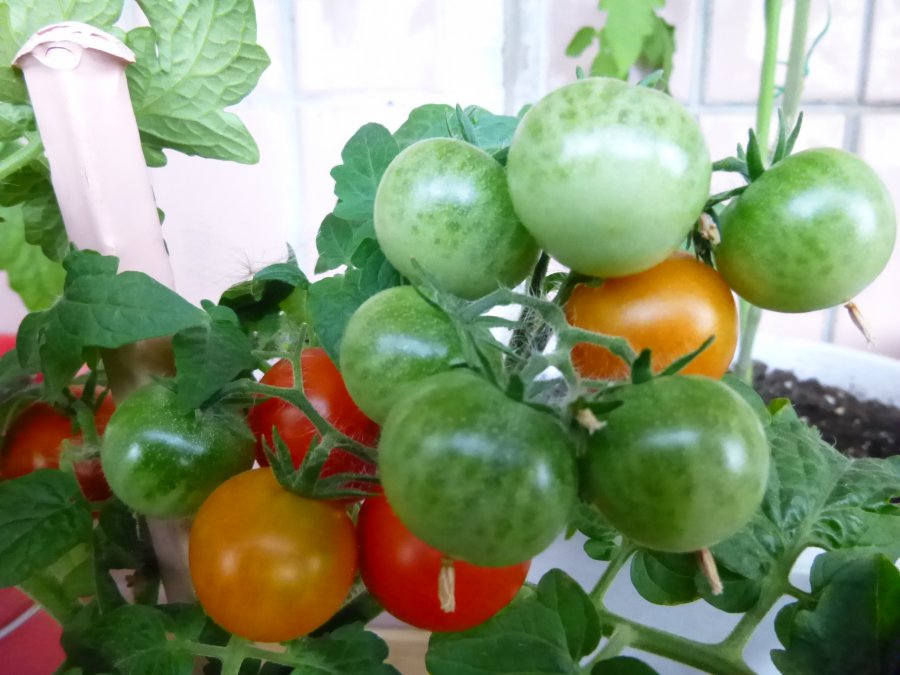
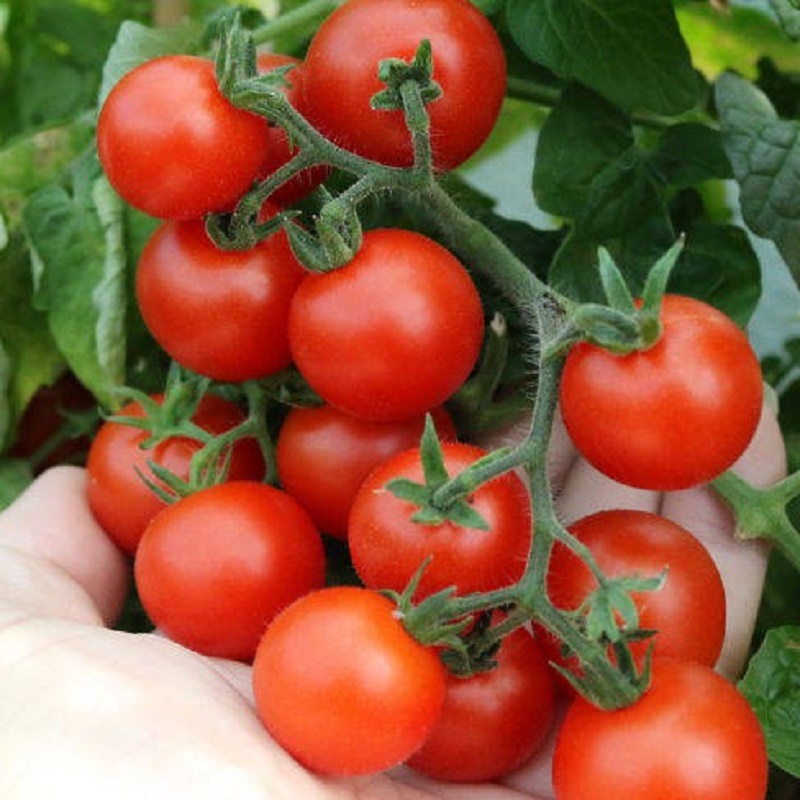
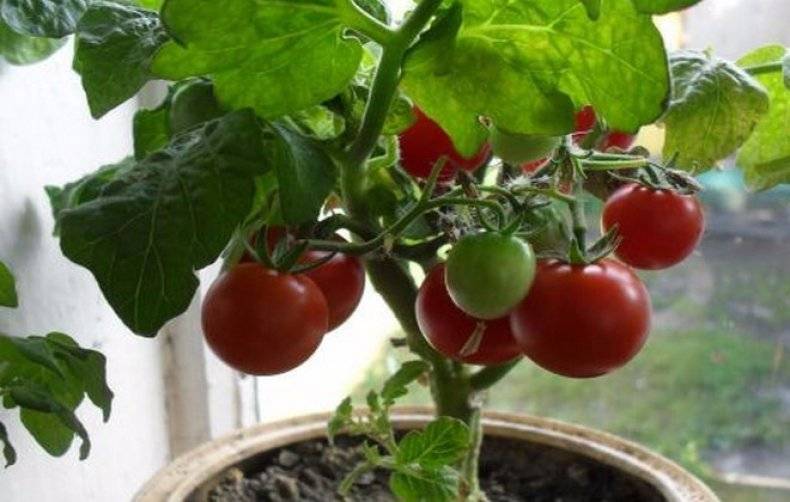
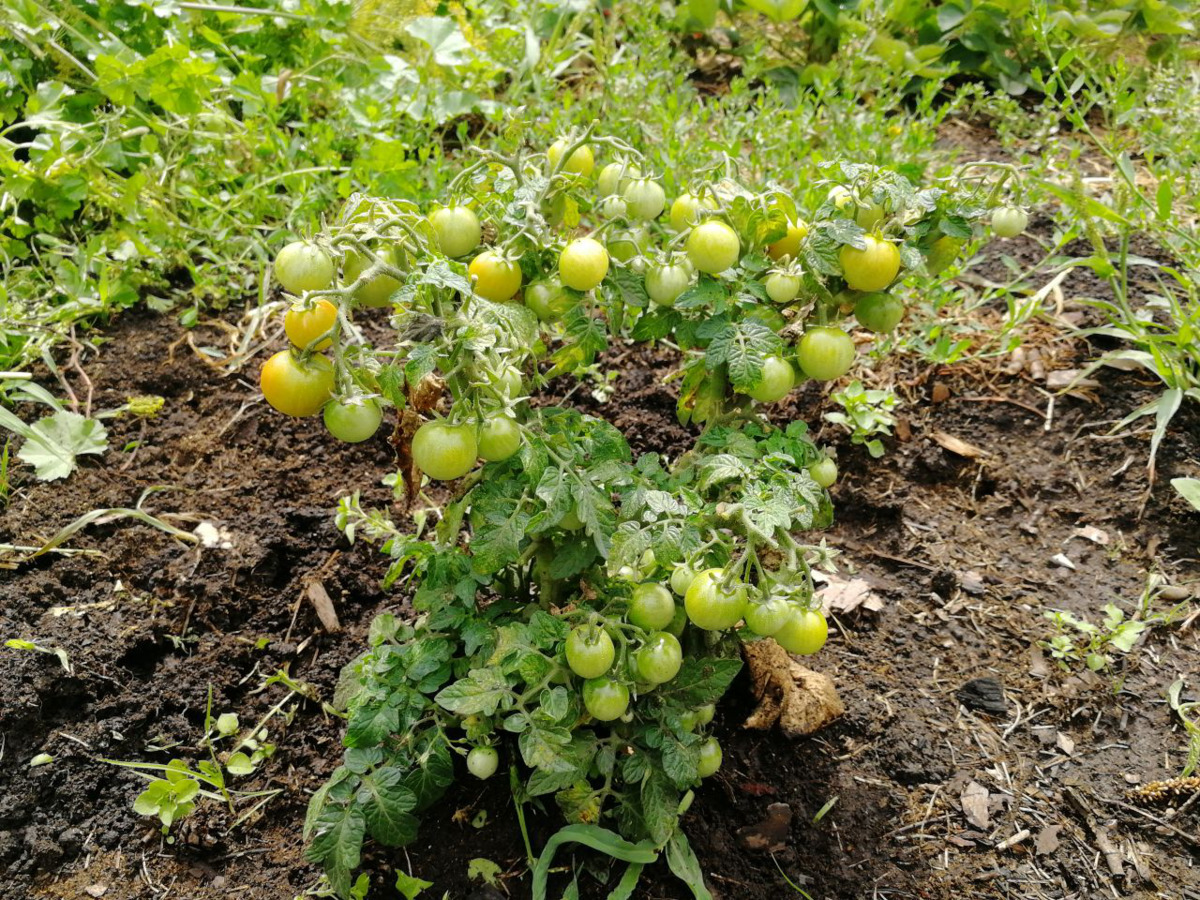
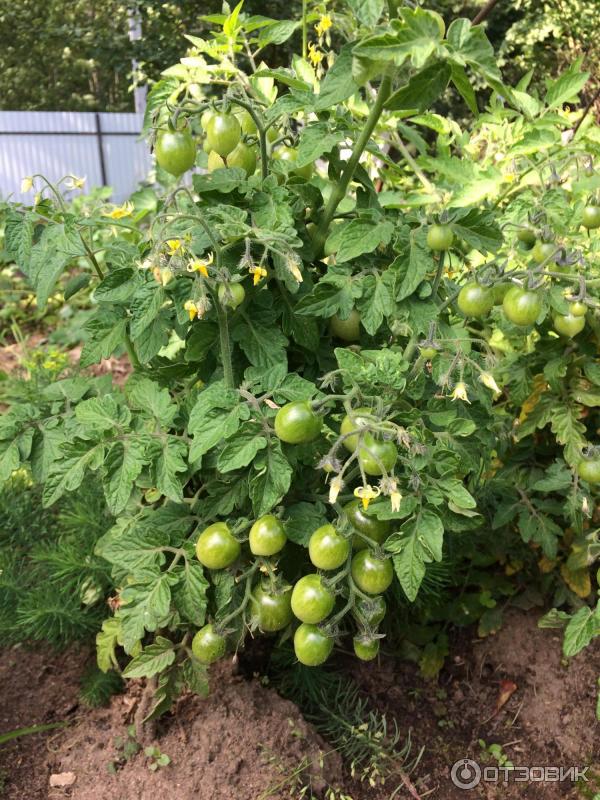
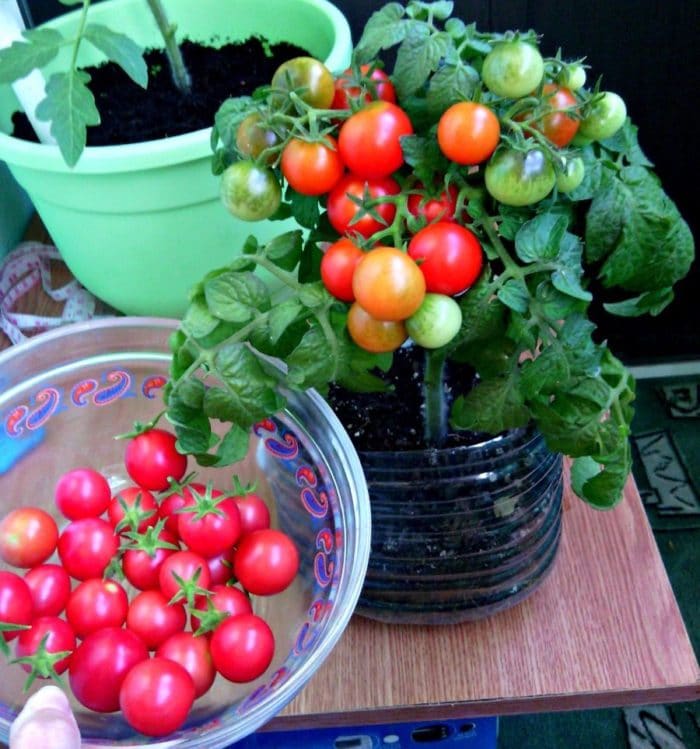
Description of the Pinocchio variety
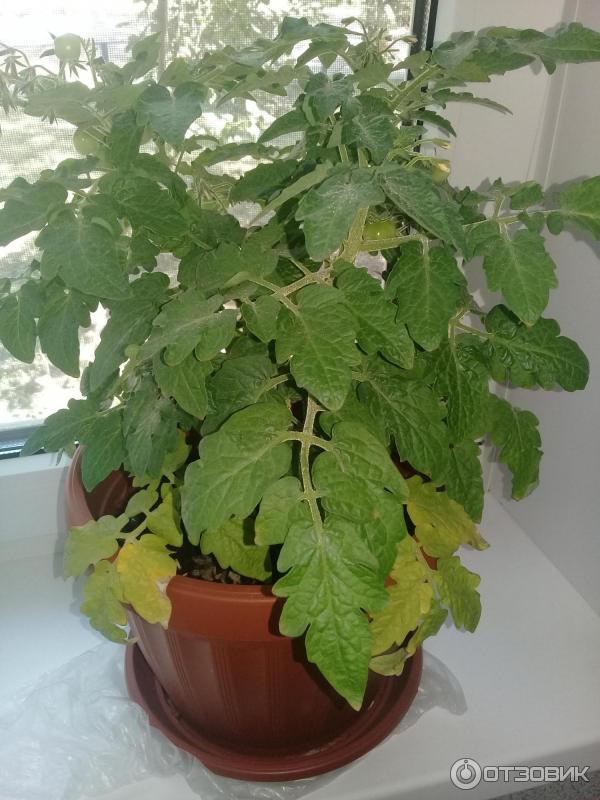
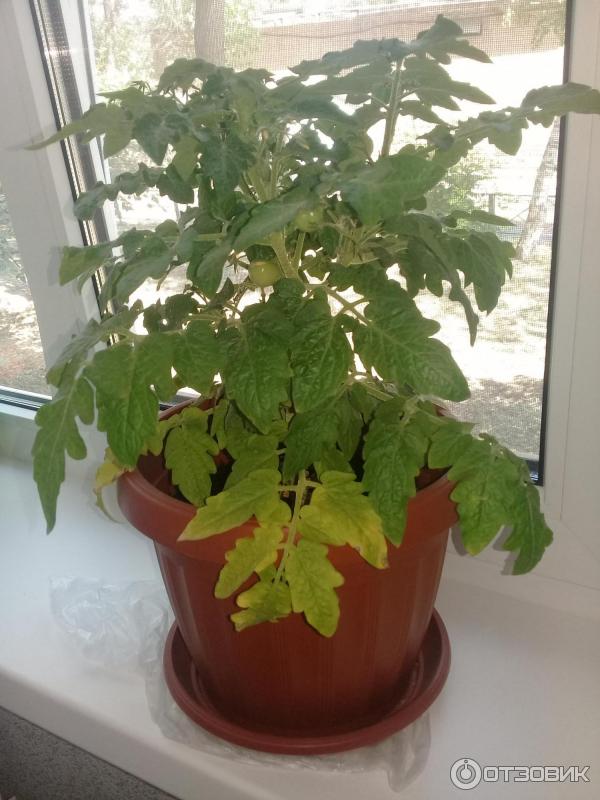
The bush is compact and small, only about 30 cm tall. It grows only during the growing season, which lasts no more than 90-100 days, after which it stops growing. The trunk is thick, fleshy, and strong, capable of supporting branches and fruit without additional support. The leaves are rough, narrow, and serrated. The outer side of the leaf blade is darker, while the underside is light green. The plant is resistant to diseases and infections. Small flowers appear 60 days after planting. Their main characteristic is their bisexuality, which means the tomato plant does not require pollinating insects and can be easily grown both outdoors and indoors or in greenhouses. The root system is poorly developed, so in poor soil conditions, the plant often topples under its own weight.
Characteristics of fruits
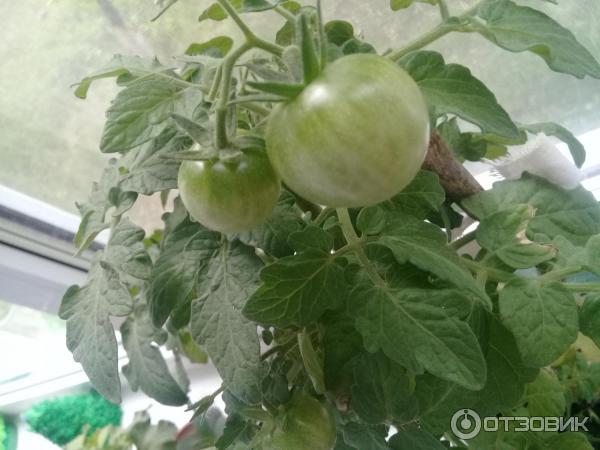
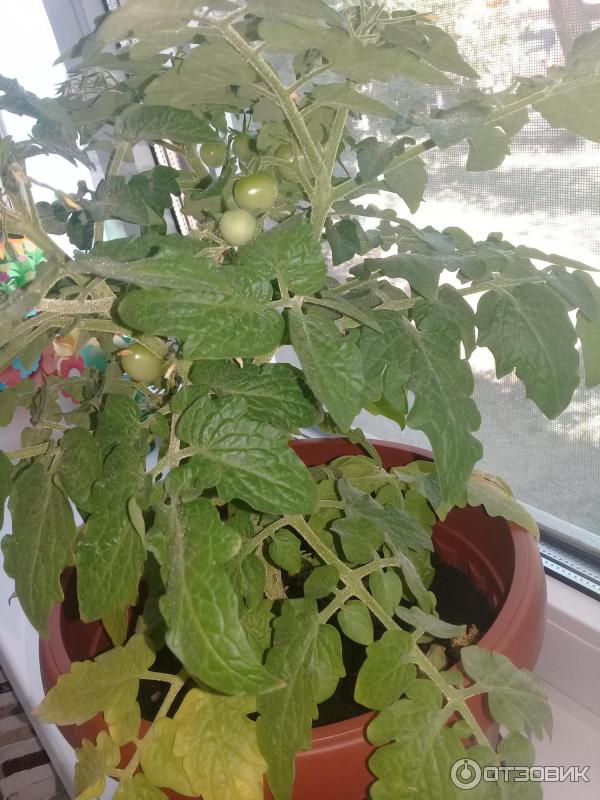
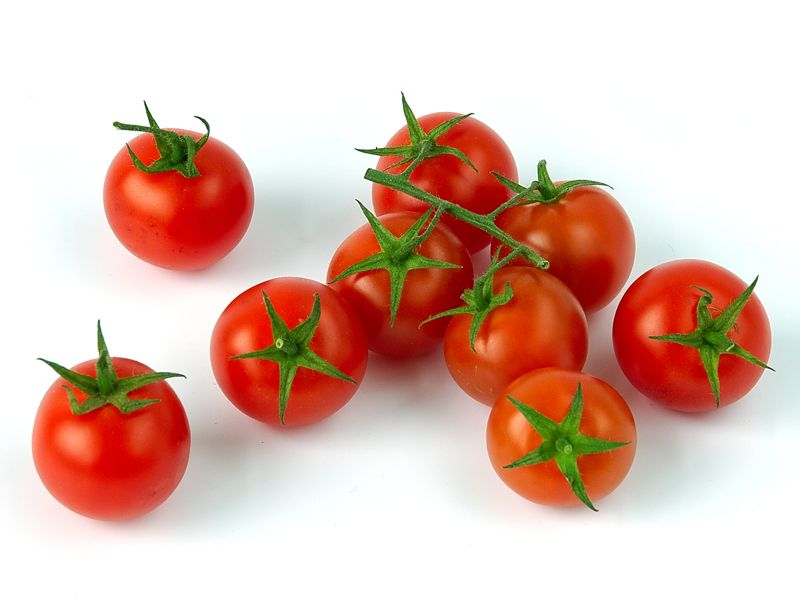
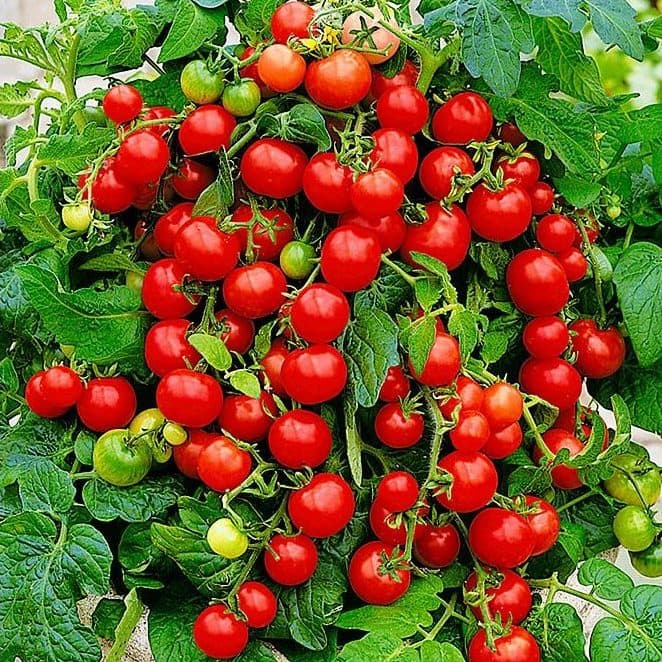
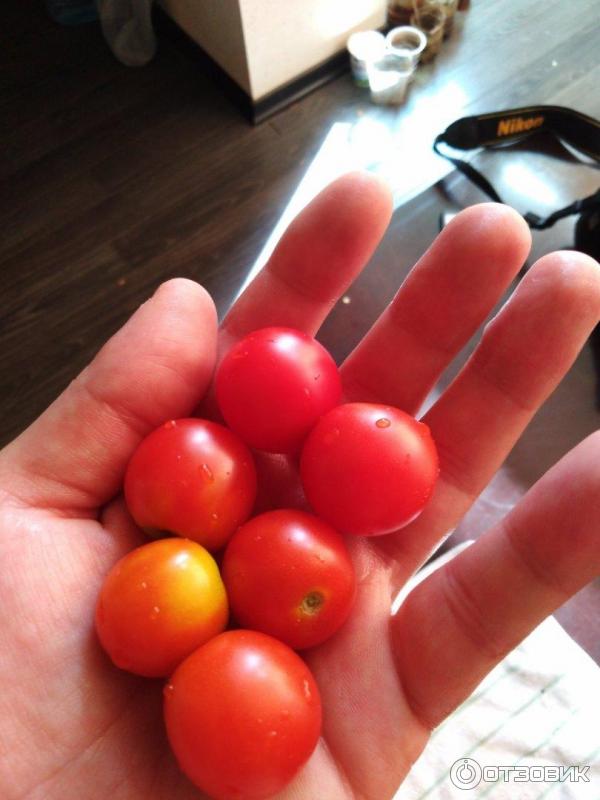
Round, slightly flattened. Small in diameter, with a maximum weight of 15-20 g. The skin is bright red, resistant to cracking, and withstands short-term transportation well. The ripe flesh has a characteristic sweet and sour taste and a rich aroma, is very juicy, watery, and fibrous. The fruits form and ripen fairly quickly, and are often used for pickling and eaten fresh. The average yield per bush is no more than 1.5 kg. Higher planting density can increase yield per unit area. During the fruiting period, the plant is particularly decorative.
Advantages and disadvantages
The Pinocchio variety has many positive characteristics:
- Thanks to its high adaptability and undemanding nature, tomato plants can thrive indoors, regardless of the season. Proper care, supplemental lighting with phytolamps, and room temperature are sufficient, and the plant will thrive, producing sweet fruits.
- Minimal work is required. It generally doesn't require staking, especially indoors, as it has fairly strong stems and branches. Furthermore, Pinocchio doesn't require any additional training; thanks to its compact size and miniature stature, the plant is superdeterminate, meaning it grows only to a certain size and then stops growing. The bush always looks neat and tidy. Pinocchio also doesn't require any side shoots.
- It has a highly decorative effect, which is particularly evident during flowering and fruiting. No other universal variety can boast such visual characteristics.
- It is highly resistant to damage and fungal diseases. Thanks to its natural characteristics, the bush is virtually immune to infection from neighboring plants. If infected, the bush quickly recovers.
- It has a short ripening period. Some experts classify it as early-ripening, but the Pinocchio registry lists it as a mid-season variety.
Cherry tomatoes have one drawback that concerns the subtleties of care: do not allow liquid to come into contact with the leaves.
This means avoiding overspraying and watering carefully. Water accumulates on the leaf blades, causing rotting and, ultimately, the death of the plant.
Cultivation techniques for Pinocchio tomatoes
Tomatoes of this variety are relatively easy to grow, but like any other plant, they require proper care. First, it's important to determine the timing of seed planting. This depends on the gardener's desired harvest date.
Tomatoes are needed by the end of December, and sowing should be done no later than October. If planted in early January, the fruits will ripen by March. Insufficient light, which occurs during the fall and winter, negatively impacts the health of the plant. To prevent this, use supplemental fluorescence, preferably phytolamps.
During the summer, tomatoes are best grown outdoors in spacious containers about 10-15 cm tall. If unexpected frosts or prolonged rainfall occur, simply bring the tomatoes indoors, closer to the light (on a windowsill).
You can use a universal tomato soil mix; it's easy to make yourself. To do this, mix humus, peat moss, sand, wood ash or shavings, coal dust, and regular garden soil.
As for mineral fertilizers, the Pinocchio variety, like all tomatoes, prefers potassium and nitrogen. It's not recommended to overuse organic fertilizers; urea and compost can be used in limited doses.
Watering should be regular, but not too frequent. It's enough to keep the soil from drying out and prevent water from stagnating.
Tomatoes do not tolerate low temperatures, dry air, and exposure to direct sunlight, so in summer, during particularly sunny weather, the bush must be shaded.
Planting seeds
To successfully plant the material without reducing germination rates or harming the plant, you should adhere to a certain order of work:
- You need to prepare a soil mixture containing peat and a pot for growing tomatoes, equipping it with special holes for drainage, lining the bottom with expanded clay, nut or onion peels.
- It is recommended to use plastic or peat cassettes as containers; disposable dishes are also suitable. They must be thoroughly disinfected with a fungicide solution.
- Next, you need to completely disinfect the soil by baking it in the oven and treating it with a potassium permanganate solution. After these procedures, the substrate should be left to stand for at least three weeks to allow the infusion to take effect and dry completely.
- Place the seeds in the soil no more than 1 cm deep and water gently. You can sprinkle a light layer of sand on top.
- Tomatoes should be provided with greenhouse conditions: cover with plastic wrap, place in a well-lit, warm place, ventilate and moisten the soil from time to time.
- Once several seedlings emerge, the cover can be removed. Once 2-4 healthy leaves have formed, it's time to begin transplanting and fertilizing.
Growing and care in open ground
The conditions on the site are somewhat different from indoor conditions, so the care features have their own subtleties:
- Tomatoes can be planted outdoors only after consistently warm weather sets in. It's important to ensure the soil temperature remains at least 15°C, otherwise the plants won't be able to properly absorb nutrients and will die.
- It's recommended to water the roots almost daily, except during periods of prolonged rainfall. Tomatoes need drainage to prevent stagnation.
- Fertilize once every two weeks: initially, fertilizers should contain superphosphate and potassium sulfate. Urea can be used as an organic fertilizer. When the bush is flowering or fruiting, use mineral solutions containing potassium, nitrogen, and phosphorus. Azofoska is an excellent complex fertilizer for the Pinocchio variety.
- Regular weeding is an important procedure. This can be combined with soil loosening.
Balcony care tips
Since tomatoes are grown indoors, the soil must be highly nutritious. This can be achieved by adding peat, sand, sawdust, a little pine needles, and humus to the substrate. Drainage is also essential. The container should be at least 5 liters in volume, otherwise the tomato roots will become crowded and the plant will not develop properly. Fertilizing is also crucial.
This procedure should be performed at least once every 10 days, using a complete mineral fertilizer for tomatoes. Liquid solutions prepared according to the instructions are especially effective. Don't forget to loosen the soil, which ensures direct oxygen access to the root system. Lighting may also be an issue; it should be diffused but abundant. In cloudy weather, this can be achieved with phytolamps, and on sunny days, the bushes should be shaded with newspaper or fabric.
Tomato Pinocchio on the windowsill
To ensure tomatoes thrive indoors, they need a specific temperature regime. Daytime temperatures should range from 22°C to 24°C, and nighttime temperatures should be around 18°C. These conditions are as close to natural as possible, so tomatoes will thrive and develop vigorously. Regular feeding with mineral fertilizers is also recommended. During flowering, use nitrogen-containing fertilizers, and during fruiting, use potassium or phosphorus fertilizers. Peat pellets and a wood ash solution, applied 2-3 times per month, are recommended as organic fertilizers.
For more information on other cherry tomato varieties and how to grow them indoors and elsewhere, read the following articles:
- Tomatoes on the balcony: step-by-step instructions on how to grow them;
- Cherry tomatoes at home;
- 5 delicious varieties of cherry tomatoes.
Diseases and pests
According to research by experts and observations by gardeners, the Pinocchio variety is resistant to virtually all types of tomato diseases. This is especially true for late blight: cases of infection are excluded when grown outdoors at low temperatures. Insect pests also rarely infest the bushes, although slugs have been observed. These can be controlled by thoroughly mulching the soil.
Top.tomathouse.com recommends: how to increase the yield of the Pinocchio tomato variety
To achieve a greater number of fruits from one bush, it is enough to organize the correct fertilizing regime:
- When developing leaves and shoots, tomatoes need nitrogen, so mineral solutions should be used.
- As soon as the fruits begin to form, you should switch to potassium fertilizers containing microelements.
- During the fruiting period, complex fertilizers should be applied every 10 days.
Comparison of the Pinocchio tomato variety with other varieties in the table
Please note! How can you easily convert centners/ha to kg/sq.m? Simply divide by 100! For example, the Abakansky Pink tomato yields 400 centners of marketable fruit per hectare. This equals 4 kg per square meter. It's that simple! Also, keep in mind that typically no more than 3-4 plants are planted per square meter. This way, you can calculate the yield per bush. In the case of the Abakansky Pink, it's about 1 kg.
| Variety | Ripening period (number of days from full germination to ripening)
Yield of commercial fruits |
Brief description | Fetus |
| Pinocchio | 105-110 days
300-450 c/ha (1-1.5 kg from one plant). |
A mid-season, determinate, standard variety for indoor flowerpots and balconies. Suitable for salads. | Flat-round, smooth, small, red, 15-20 g. The taste is good and excellent. |
| Balcony miracle | 85 days 600 c/ha |
A mid-season, determinate, low-growing variety for open ground and small containers on balconies. Suitable for salads. | Small, round, smooth or slightly ribbed, intensely red, 30-60 g. |
| Little Red Riding Hood | 85-90 days
180 c/ha |
An early-ripening, determinate, standard variety for greenhouses. Suitable for salads. | Round, smooth, soft, red, 15-20 g. Excellent taste. |
| Siberian early ripening | 98-108 days
289-543 c/ha (open ground), 20-43% of the total yield ripens in 15 days of fruiting, 630-950 c/ha (greenhouse and under film), in the first month of fruiting 240-580 c/ha. |
An early-ripening, determinate, low-growing variety for open ground and greenhouses. Suitable for salads. | Round and flat-round, slightly ribbed, medium-sized and large, red, 62-114 g. The taste is satisfactory. |
| Mystery | 95-100 days
750-1250 c/ha |
An early-ripening, determinate, low-growing variety for open ground. Requires staking and training. Suitable for salads, pickling, and canning. | Round, dense, smooth, fleshy, resistant to cracking, red, 80-100 g. The taste is good to excellent. |
| Black bunch | 80 days Up to 2400 c/ha |
An early-ripening determinate variety for open ground and greenhouses. Suitable for salads and canning. | Round, smooth, dark purple, 50-70 g. Excellent taste. |
| Abakan pink | 120 days or more
400 c/ha |
A late-ripening determinate variety for open ground and greenhouses. Requires staking and training. Suitable for salads and processing into tomato products. | Flat-round, slightly ribbed, medium density and pink in color, 200-500 g. Good taste. |
| Money lily | 104-106 days
200 c/ha |
A mid-early, determinate, standard variety for open ground and greenhouses. Suitable for salads and whole-fruit canning. | Ovoid, smooth, dense, red, 50 g. Excellent taste. |
| Red date palm | 120-130 days
1.5 kg per bush.
|
A mid-late semi-determinate variety for open ground and greenhouses. Requires staking and shaping into 3-4 stems. Suitable for salads, garnishing, and canning. | Elongated-oval, can be round, ovoid, conical, smooth, red, 8-20 g. Excellent sweet taste. |
| Lel | 101-122 days up to 200 c/ha |
A mid-early determinate variety for open ground. Suitable for salads, whole-fruit canning, and processing into tomato products. Heat- and cold-resistant. | Cylindrical, smooth, dense, red, 44-60 g. The taste is good and excellent. |
| Moon fountain | 100-105 days
420-490 c/ha (greenhouse and under film) |
An early-ripening indeterminate variety for greenhouses. Suitable for salads. | Cylindrical, dense, slightly ribbed, creamy, 12-17 g. Good taste. |
| Shuttle | 82-121 days
226-269 c/ha (Central region), 220-441 c/ha (Volga-Vyatka), 160-412 c/ha (West Siberian), maximum 792 c/ha (Omsk region). |
An early-ripening, determinate, low-growing standard variety for open ground. Suitable for salads, pickling, and whole-fruit canning. | Elongated-oval, smooth, top with a spout, red, 23-55 g. Good taste. |
| Lyana | 94-110 days (Central region), 115-123 days (East Siberian region)
267-320 c/ha (Central region), 456 c/ha (East Siberian region), maximum 713 c/ha (Republic of Khakassia). |
An early-ripening, determinate, non-standard variety for open ground and greenhouses. Suitable for salads and whole-fruit canning. | Round, smooth, red, 65-83 g. Excellent taste. |
| Raspberry Liana | 85-90 days 700 c/ha |
An early (ultra-early) determinate standard variety for open ground and greenhouses. Suitable for salads, canning, and processing into tomato products. | Round, smooth, raspberry-pink, 65-90 g. Good taste. |
| The Lazy Man's Miracle | 800-900 c/ha
85-95 days |
An early-ripening, determinate variety for open ground and greenhouses. Suitable for salads, processing into tomato products, and canning. | Oval, elongated, smooth, red, dense, 60-65 g. Excellent taste. |
| Madeira | 85-90 days
440-700 c/ha |
An early-ripening indeterminate variety for greenhouses. Suitable for salads. | Round, smooth, red, 20-25 g. Good taste. |
Real reviews from gardeners about the Pinocchio tomato variety
After seeing photos and videos of home gardens online, I wanted to grow something. It's so nice to have a green bush at home, and when it's adorned with small, brightly colored fruits, we can't help but smile at its beauty. And you can even eat it.
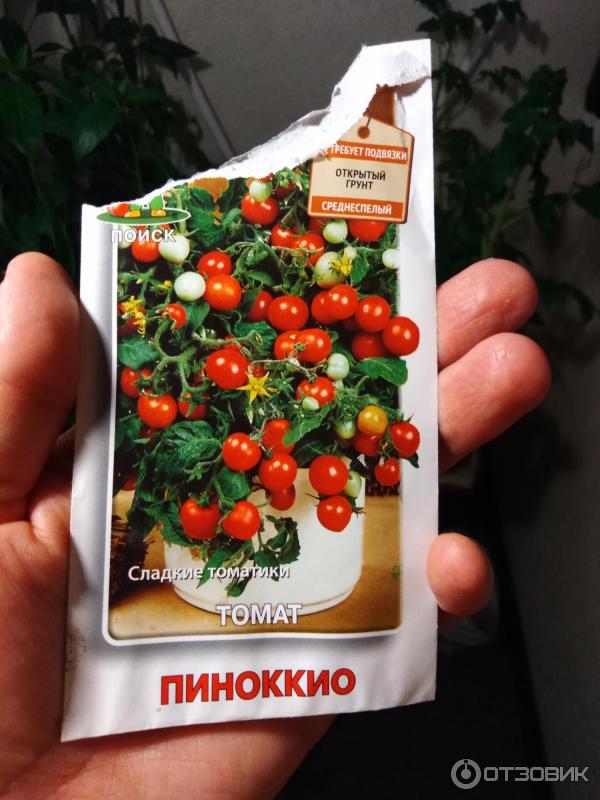
One day, I decided to buy seeds for various vegetable crops. Beforehand, I'd done some research online, for example, on tomato varieties. Since space in the house was limited by the balcony (the only light source in the room), I decided to choose standard tomato varieties, which are low-growing and don't require pinching or any other care. I chose the "Pinocchio" tomato. I really liked the photo on the package. And you know, the results didn't disappoint.
I planted tomatoes in various containers, from cut-off bottles to plastic sour cream cups (which, by the way, are very convenient and minimize the cost of purchasing planting cups). I took soil from a park where a mole had been active. The resulting mound was very loose, so I collected it in a cut-off 5-liter bottle and went home, eager to sow my recently purchased seeds. After filling the cup with soil, I made a hole about 2 cm deep with a sushi stick. I dropped a seed in, sprinkled some soil over it, and watered with room-temperature water. Since I'd heard that creating a greenhouse for better seed germination is essential, I wrapped the entire cup in cling film. Beads of condensation formed inside, indicating that the greenhouse was working. Literally five days later, the seeds in the cups began to sprout. But I removed the greenhouse only after the cotyledon leaves had reached the plastic. It was a shame to release them into a more aggressive environment while they were still small and fragile.
As for when to plant the seeds, I got around to it a bit late, at the end of June 2019. But I really wanted to, and my eyes were shining with excitement, to gain experience growing them indoors on my balcony.
At first, they grew slowly. No lighting was needed; the windows faced west, providing ample sun. But at some point, they simply took off and within a month had grown to 25-30 cm. Naturally, they were transplanted into 5-liter plastic water bottles. From there, they soon reached 40 cm and began to flower.
I didn't have to do any special pollination; the window was open and the wind seemed to do the job. The tomatoes didn't take long to appear.
And they grew more and more))
Fruit setting was going great!)
No pinching was required, the main thing was watering!As for fertilizers, I used the liquid concentrate "BIOHUMUS" about once a week.
Most likely due to their genetic size, they took relatively little time to mature. The sun and consistent watering did their job. They drank well, and their root system was very developed and robust, which was clearly visible through the clear plastic bottle.
As a result, I got a very beautiful, bright picture. I was pleased with myself)).
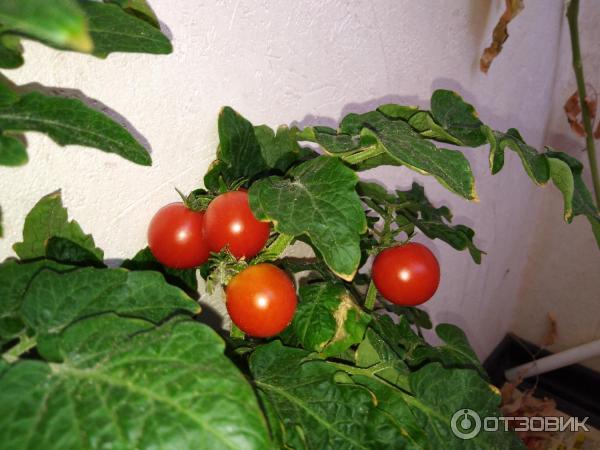
I picked the fruit from each bush several times. A salad for one person could be complemented with tomatoes I'd grown myself. It was a unique experience. The pleasant aroma, the ripeness of the fruit, not from the store. It was satisfying.
As for the taste, they weren't particularly sweet, but they had the taste of fresh home-grown tomatoes, and most importantly, the SMELL, it was a delightful aroma!))).
I recommend these seeds to all indoor plant lovers. I think they're perfect for decorating a dacha. They can be used not only decoratively but also, for example, in the famous Caesar salad, which often includes cherry tomatoes.
As for the "balcony garden," as I call it, I grew more than just these tomatoes, but that's a topic for another review.
To all those who love a good harvest! Thank you for reading my review and for finding it helpful.Optional Stella2000, back of packaging:
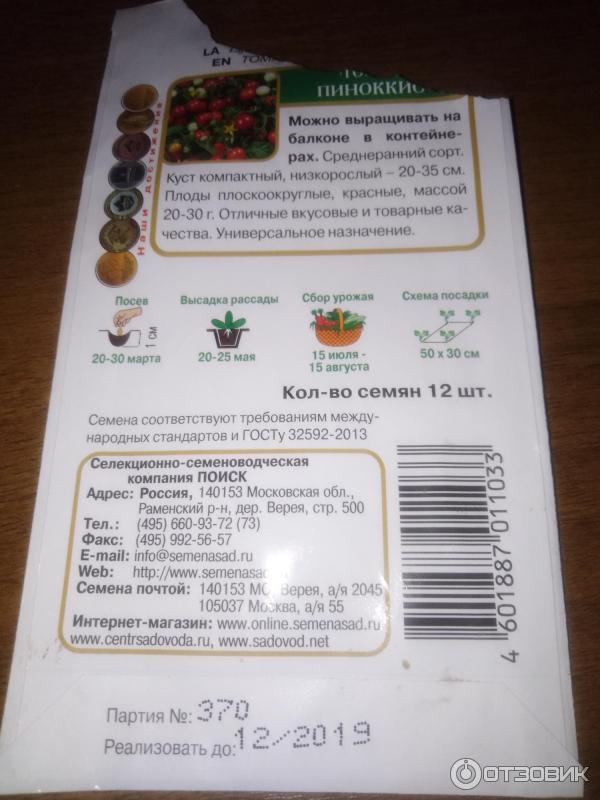
Hello everyone, dear friends and fans of Otzovik, as well as lovers of a garden on your windowsill.
I present to you the indoor tomato "Balcony Miracle. Pinocchio." I started growing and cultivating tomatoes around March last year. I saw an ad on Avito for tomatoes (at the time, I was absolutely obsessed with this "windowsill garden" thing; I considered everything from gherkins to basil and even strawberries, but I finally settled on tomatoes). So, in March, I can't remember the date, I bought my "friend" for 100 rubles. Three months later, it died. It couldn't handle the aphids. Poor thing. But later, after reading countless articles and forum posts, I realized they were annuals, and since I only had one, I somehow saved the seeds (good thing).
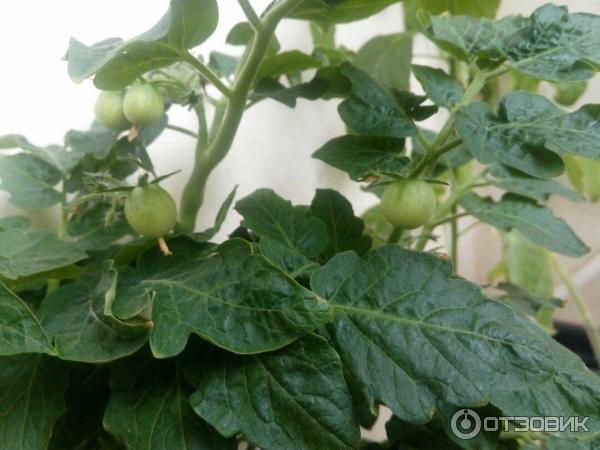
And, of course, a photo of last year's, so to speak, my very first producer. Oh, how much trouble I had with him...
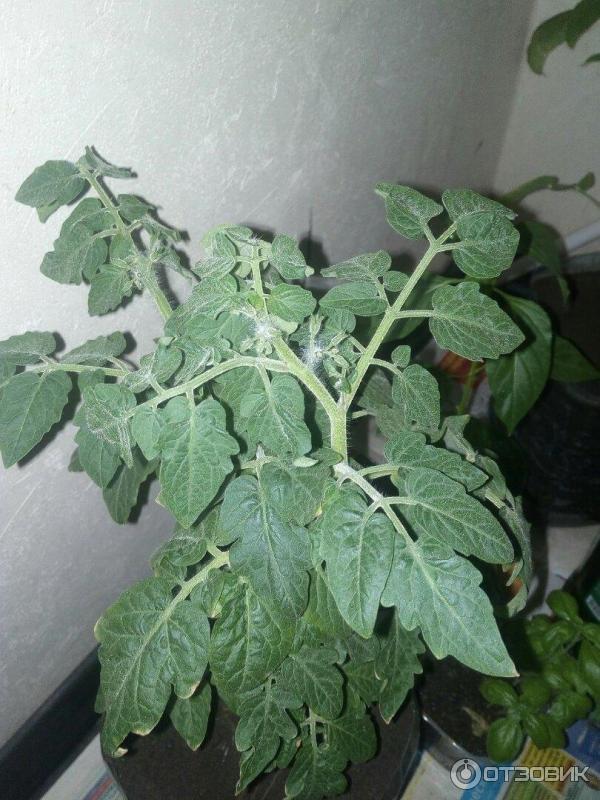
And so, on February 20th of this year (I planted these "Pinocchio" and tried "Balcony Miracle-1"), I got one Pinocchio bush, and the rest are Balcony Miracle-1. One bush hasn't grown (still has, even though it's already June), the second has grown very large (I even doubt it's "Balcony Miracle-1" since it grew a meter, although it shouldn't exceed 30 centimeters), and the third is doing well, ovaries are already forming and even tomatoes are hanging, the main thing is that they don't fall off or dry out.
And everything is fine with 'Pinocchio'; they're easy to care for, growing very small and fleshy. Incidentally, the bush itself looks neat and well-groomed (though I just water it and that's it). It doesn't need pruning or staking. The trunk is sturdy, the leaves are beautiful, soft and pleasant to the touch.
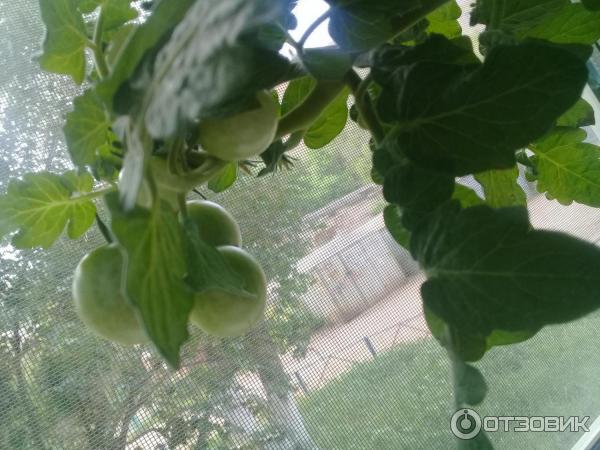
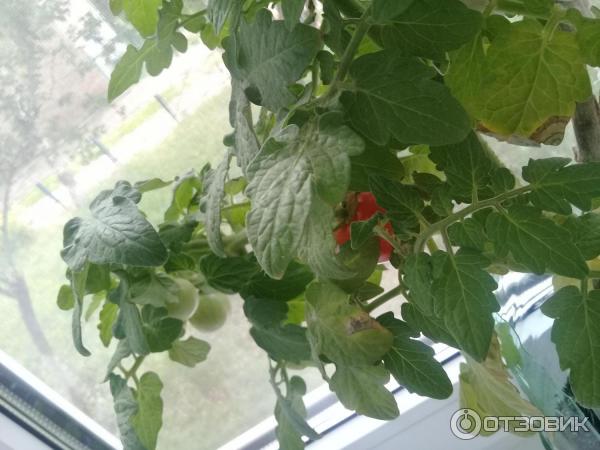
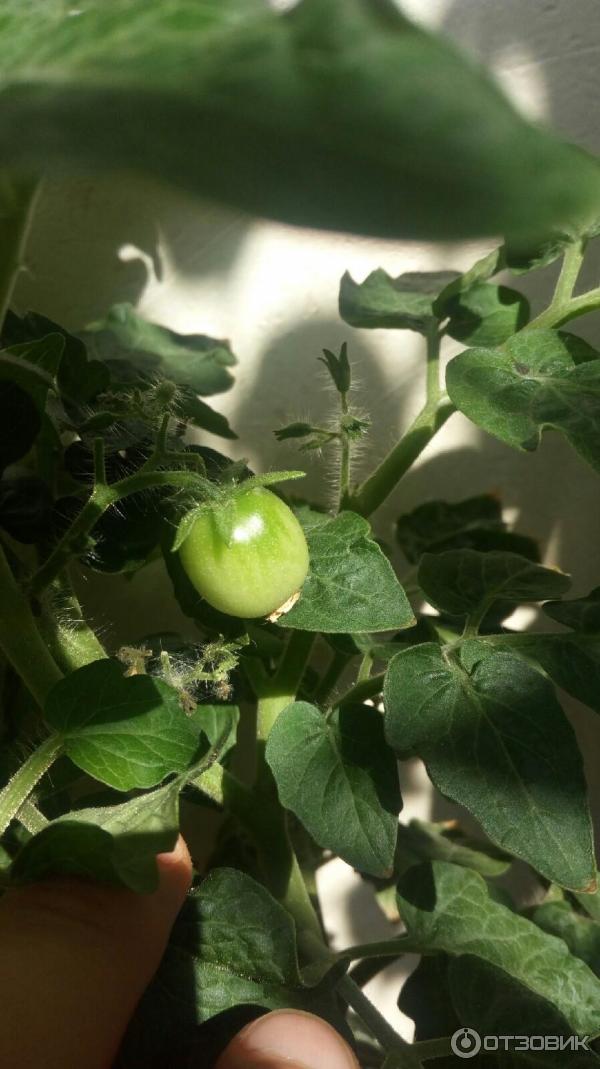
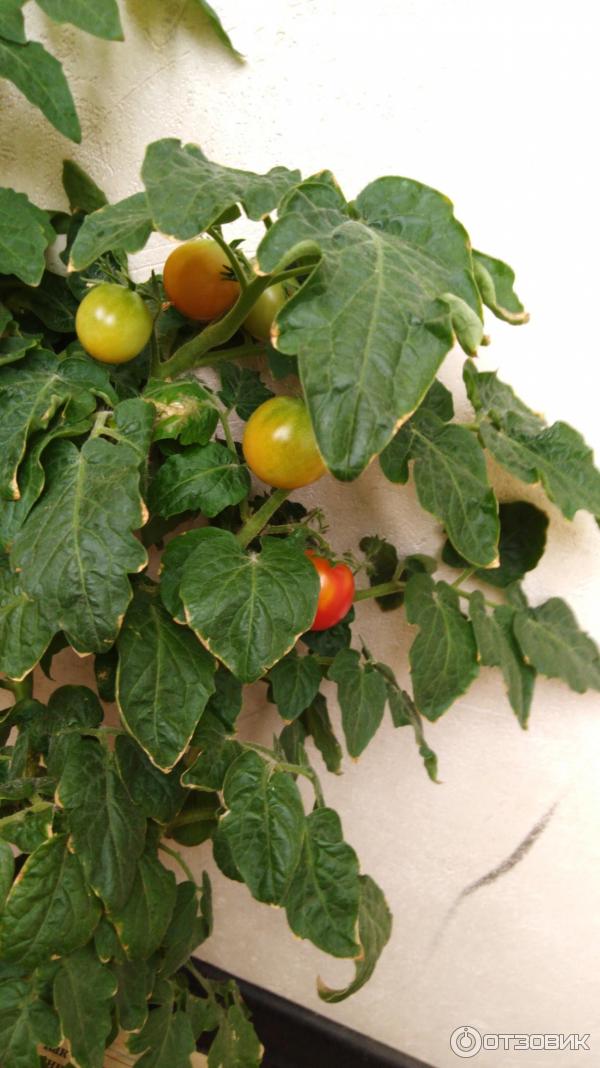
This tomato variety itself is early ripening; around May 15, the ovaries give way to small, barely protruding tubercles. These are now turning yellow, and will soon ripen.
And here is a photo, not the best quality of course, but what is, is))
I think I've helped you (or maybe not) in choosing and getting to know this exotic window plant. I'm so glad you took the time to read my thoughts and the review overall.
Thank you for your attention!!!