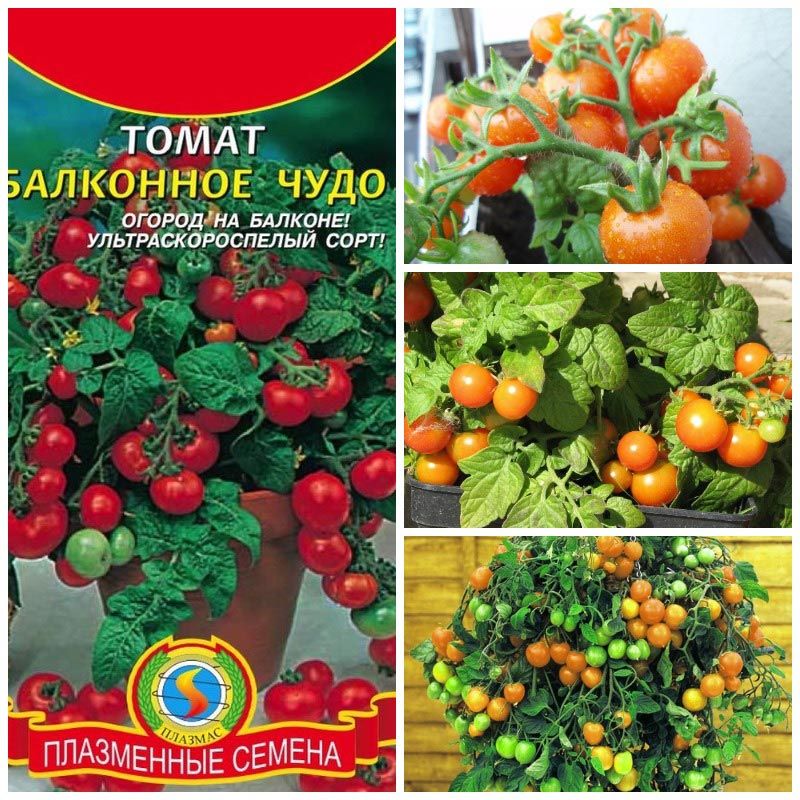
Balcony Miracle is a tomato variety suitable for both indoor and outdoor growing. They're easy to care for, and you can enjoy fresh vegetables even during the coldest winters. Their appearance will make a beautiful addition to any windowsill.
Content
- 1 Table of characteristics of the Balcony Miracle tomato variety
- 2 Photo gallery of the Balcony Miracle tomato variety
- 3 Description of the Balcony Miracle tomato variety
- 4 Advantages and disadvantages of Balcony Miracle tomatoes
- 5 Top.tomathouse.com recommends: tips for growing Balcony Miracle
- 6 Harvest: collection and storage
- 7 Potential problems when growing tomatoes at home
- 8 Comparison of the Balcony Miracle tomato variety with other varieties in the table
- 9 Real reviews from gardeners about the Balcony Miracle tomato variety
Table of characteristics of the Balcony Miracle tomato variety
| Characteristic | Description |
| Description |
A mid-season determinate variety that forms low-growing bushes. Suitable for growing outdoors, on balconies, and windowsills. |
| Ripening period | 85-90 days. |
| Fetus | Small, round, slightly ribbed, intensely red. |
| Weight | 20-30 g. |
| Taste | Good. |
| Productivity | 1.5-2 kg from 1 bush. |
| Application | Universal. |
| Marketability, Shelf life | Average. |
| Disease resistance | Good. |
| Agricultural technology | Standard. |
| Recommended regions for planting | Any. |
| 1997 | |
| Originator | SATIMEX QUEDLINBURG GMBH. |
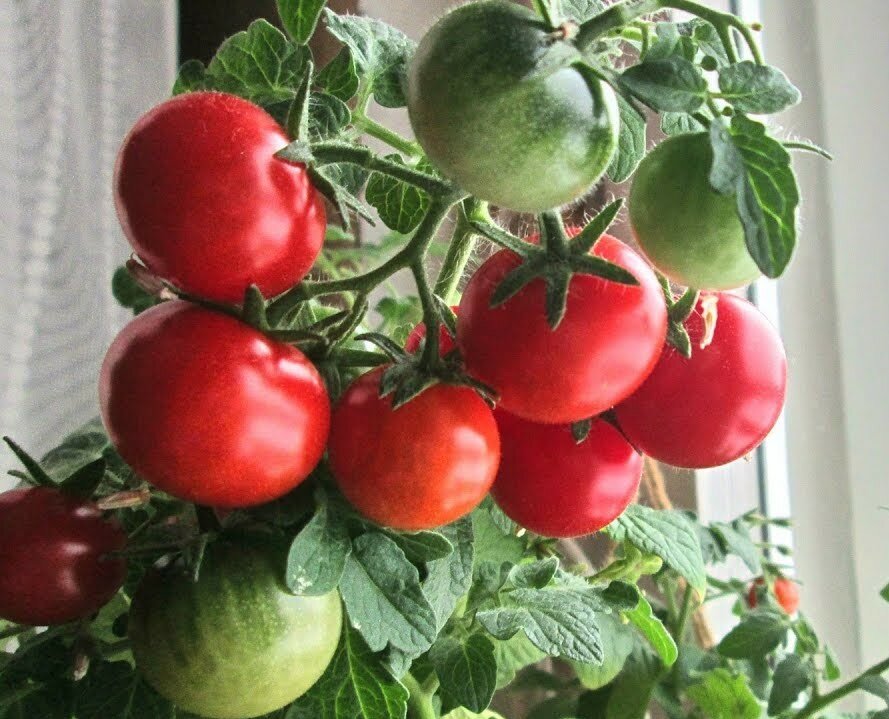
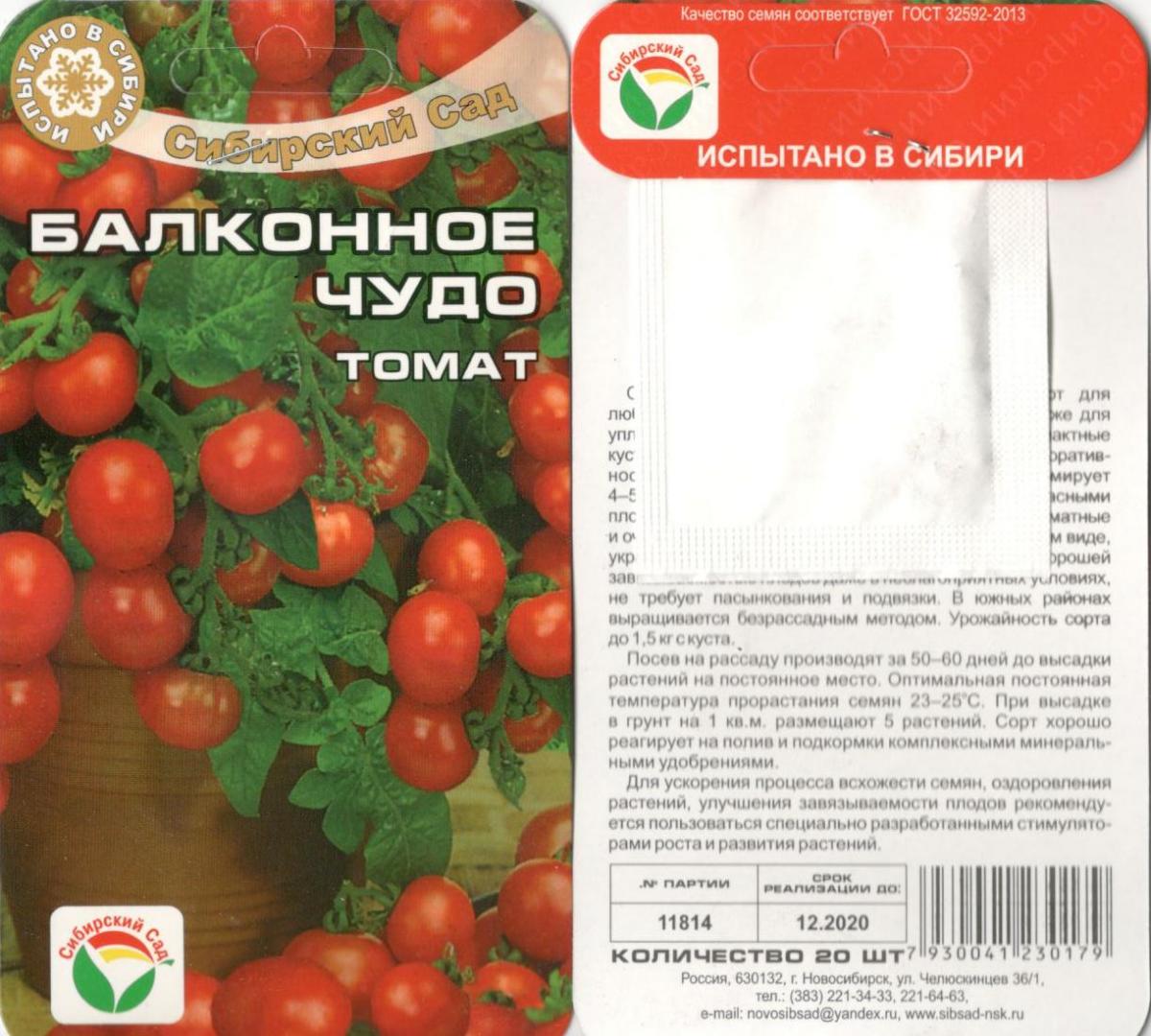
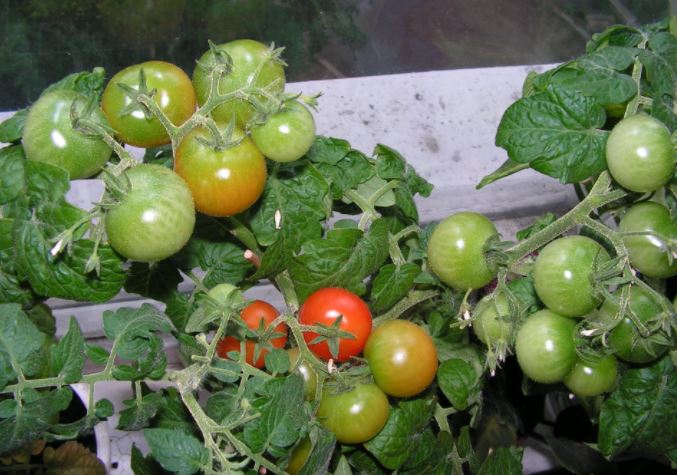
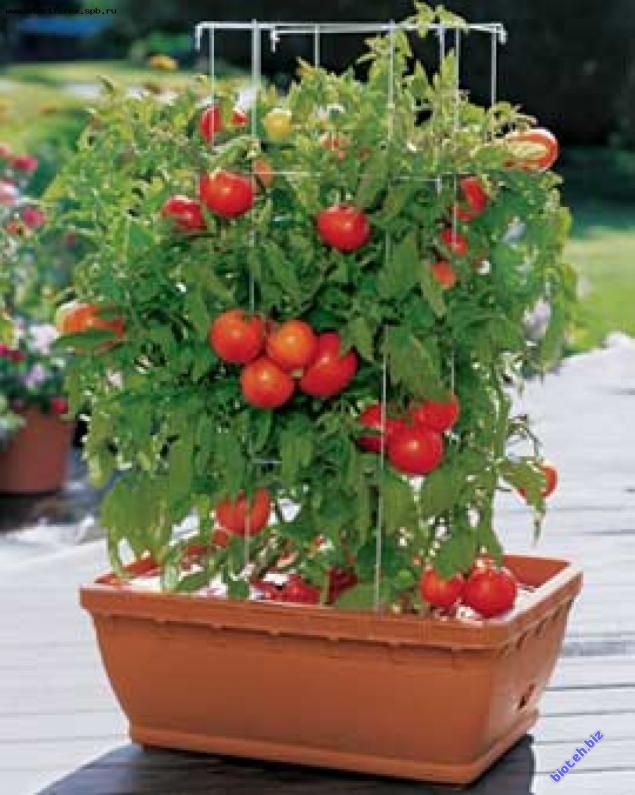
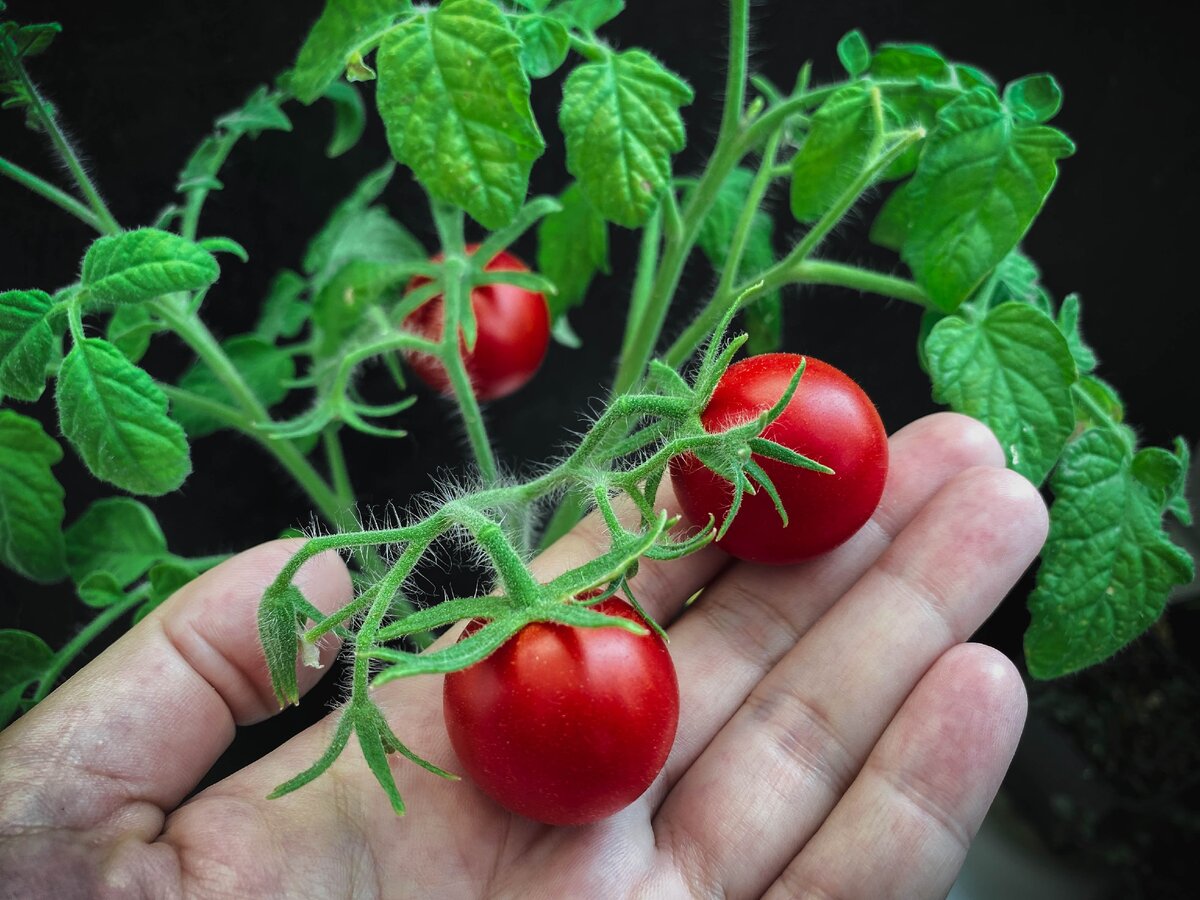
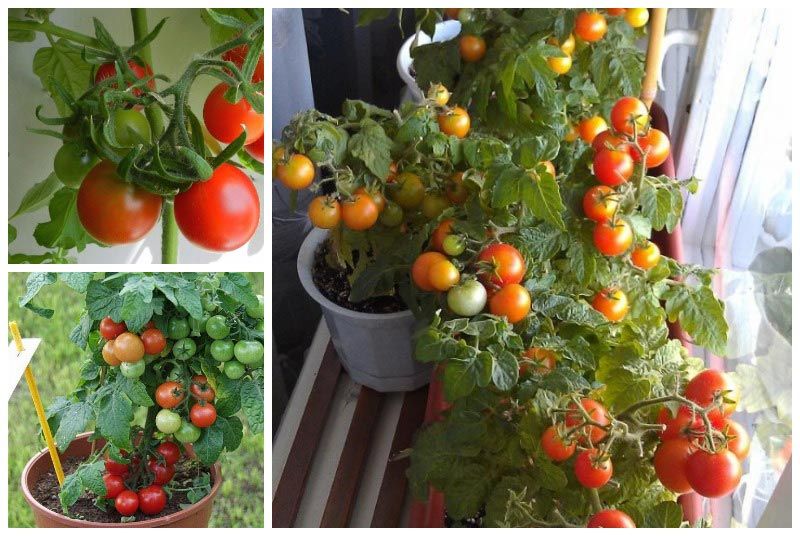
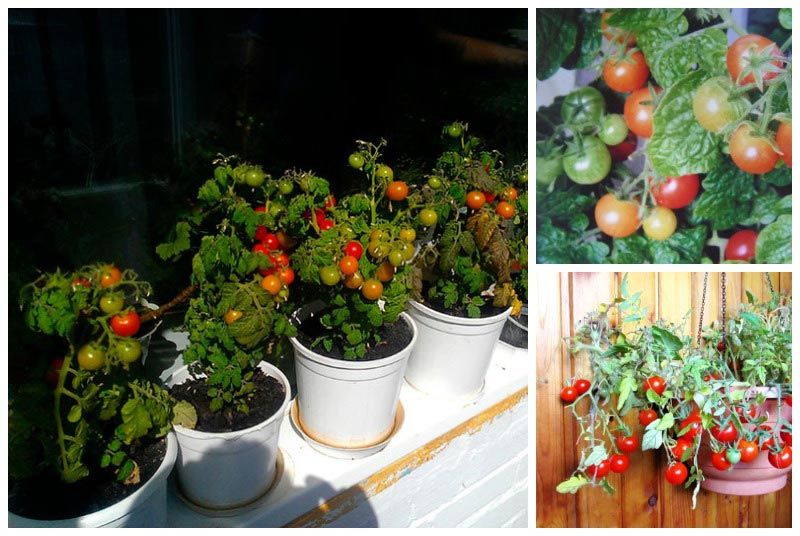
Photo gallery of the Balcony Miracle tomato variety
Description of the Balcony Miracle tomato variety
This tomato variety was developed by Russian breeders specifically for potted plants on balconies, loggias, or windowsills. The dwarf bush reaches a height of only 55-60 cm. Its standard form eliminates the need for staking or pinching. It is an early-ripening variety, with the first harvest occurring three months after planting. The fruits are medium-sized, weighing 50-60 grams and measuring 3-4 cm in diameter. They are bright scarlet in color and have a juicy flavor. A single plant yields up to 2 kg. After setting, they ripen within 2-3 weeks. These tomatoes are resistant to fungal diseases (late blight).
Advantages and disadvantages of Balcony Miracle tomatoes
The advantages of this variety include:
- growing at home;
- resistance to low light conditions;
- decorative appearance;
- rich, juicy taste;
- immunity to diseases.
Despite all its advantages, the Balcony Miracle has some minor drawbacks:
- dense skin;
- collecting unripe fruits to obtain the next batch;
- low yield.
Top.tomathouse.com recommends: tips for growing Balcony Miracle
Tomatoes are kept in warm, well-ventilated rooms with a dry climate and no drafts.
The optimal temperature range is +23…+25 °C; it is not recommended to drop it below +15…+17 °C.
For planting, use high-quality soil, which can be purchased at a store or made at home. To do this, mix humus-rich soil with aged compost (1:1). If planting in regular garden soil, disinfect it first to prevent disease. Plant the seeds deep in the soil, water them, and store them in a warm place. When the first seedlings appear, transplant them into individual 8-10 liter containers and place them in a well-lit, pre-prepared location.
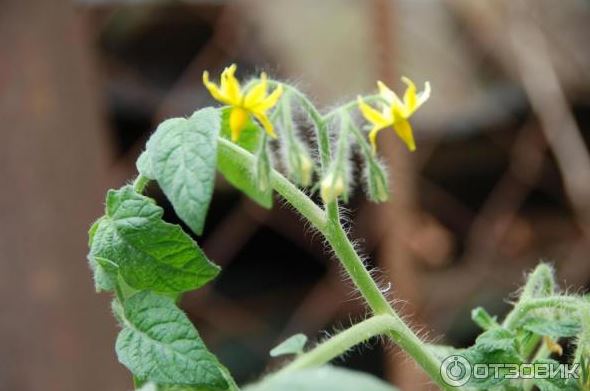
During flowering, small yellow flowers form on the bushes. If they fall off or are very small, the fruits will also be small and tasteless. In this case, check the room temperature and humidity, reduce watering, and allow the soil to dry for ten days. Pollination is done by hand.
Watering and fertilizing
For watering, use settled, room-temperature water. In winter, water once a week, sometimes less frequently. In summer, watering frequency depends on the climate in which the tomatoes are grown. Water only when the soil is dry; excess moisture can cause disease or rot. Avoid getting water on the leaves, which can promote fungal growth (late blight). Fertilize the soil with wood ash, sprinkling a small amount around the base of the bush.
To obtain juicy, ripe tomatoes, use various fertilizers, which can be purchased in the store (Epin, Cytovit) or prepared at home.
Mix superphosphate, urea, and potassium sulfate (5:1:1, the ratio indicated per liter). Apply in the summer when the bushes are blooming, buds are forming, and fruiting begins.
For growth, prepare a mixture of water (5 l) and dry yeast (10 g). Alternate the resulting solutions when watering.
Pollination
Pollination is accomplished in a variety of ways. In nature, it's facilitated by insects or wind. At home, a fan is used or the plant is placed in a ventilated area where air movement will stimulate pollen movement. Comfortable conditions are created:
- the temperature does not fall below +13 °C, does not rise above +30 °C;
- The humidity in the room is moderate.
Pollinated flowers are recognized by their petals curling back. If this method fails, manual pollination is used. Pollen ripens at night, so pollination is carried out early in the morning, no later than 10:00 a.m.
Garter
A dwarf bush with a sturdy trunk requires no staking. Staking is done to evenly distribute lateral shoots, provide support during fruiting, and provide ventilation within the foliage. Arched supports or metal trellises are used.
Harvest: collection and storage
The harvest begins as soon as the tomatoes have turned orange or gold. They ripen in a warm, dry room at temperatures between 11°C and 15°C for about a month until they are ready. To speed up the ripening process, a warmer atmosphere is created. If the temperature drops below 10°C, the tomatoes stop ripening.
The harvested crop can be stored for up to two months. To do this:
- select whole fruits that are free from damage;
- wipe them with a cotton cloth to remove dirt and soil (they cannot be washed);
- placed in a wooden box and covered with a lid loosely on top;
- Place in a dark, cool room with good ventilation.
From the remaining fruits you can make adjika, lecho, tomato paste, pickle, dry or wither them.
Potential problems when growing tomatoes at home
If seedlings or growth are not visible, feed tomatoes with a mineral fertilizer containing phosphorus. Add it to settled water and water. Use up to 1 liter of the infusion per plant.
The Balcony Miracle's foliage curls during the day and straightens out in the evening. This is necessary for the tomatoes to bloom, set fruit, and bear fruit.
If the leaves do not curl and the flowers fall off, this means that mistakes have been made in the care (it is cold in the room or there is high humidity, the influence of fertilizers, etc.).
In rare cases, tomatoes can become infected with late blight, which manifests as dark spots on the leaves. If this occurs, infected plants should be destroyed or isolated as soon as the disease begins to progress. Otherwise, there is a risk of infecting other plants.
Comparison of the Balcony Miracle tomato variety with other varieties in the table
Please note! How can you easily convert centners/ha to kg/sq.m? Simply divide by 100! For example, the Abakansky Pink tomato yields 400 centners of marketable fruit per hectare. This equals 4 kg per square meter. It's that simple! Also, keep in mind that typically no more than 3-4 plants are planted per square meter. This way, you can calculate the yield per bush. In the case of the Abakansky Pink, it's about 1 kg.
| Variety | Ripening period (number of days from full germination to ripening)
Yield of commercial fruits |
Brief description | Fetus |
| Balcony miracle | 85 days
600 c/ha |
A mid-season, determinate, low-growing variety for open ground and small containers on balconies. Suitable for salads. | Small, round, smooth or slightly ribbed, intensely red, 30-60 g. |
| Pinocchio | 105-110 days 300-450 c/ha (1-1.5 kg from one plant). |
A mid-season, determinate, standard variety for indoor flowerpots and balconies. Suitable for salads. | Flat-round, smooth, small, red, 15-20 g. The taste is good and excellent. |
| Siberian early ripening | 98-108 days
289-543 c/ha (open ground), 20-43% of the total yield ripens in 15 days of fruiting, 630-950 c/ha (greenhouse and under film), in the first month of fruiting 240-580 c/ha. |
An early-ripening, determinate, low-growing variety for open ground and greenhouses. Suitable for salads. | Round and flat-round, slightly ribbed, medium-sized and large, red, 62-114 g. The taste is satisfactory. |
| Mystery | 95-100 days
750-1250 c/ha |
An early-ripening, determinate, low-growing variety for open ground. Requires staking and training. Suitable for salads, pickling, and canning. | Round, dense, smooth, fleshy, resistant to cracking, red, 80-100 g. The taste is good to excellent. |
| Black bunch | 80 days
Up to 2400 c/ha |
An early-ripening determinate variety for open ground and greenhouses. Suitable for salads and canning. | Round, smooth, dark purple, 50-70 g. Excellent taste. |
| Little Red Riding Hood | 85-90 days 180 c/ha |
An early-ripening, determinate, standard variety for greenhouses. Suitable for salads. | Round, smooth, soft, red, 15-20 g. Excellent taste. |
| Abakan pink | 120 days or more
400 c/ha |
A late-ripening determinate variety for open ground and greenhouses. Requires staking and training. Suitable for salads and processing into tomato products. | Flat-round, slightly ribbed, medium density and pink in color, 200-500 g. Good taste. |
| Money lily | 104-106 days
200 c/ha |
A mid-early, determinate, standard variety for open ground and greenhouses. Suitable for salads and whole-fruit canning. | Ovoid, smooth, dense, red, 50 g. Excellent taste. |
| Blagovest | 101-105 days
1500-1600 c/ha |
An early-ripening determinate variety for greenhouses. Suitable for salads and canning. | Flat-round, slightly ribbed, glossy, red, 100-110 g. Excellent taste. |
| Lel | 101-122 days up to 200 c/ha |
A mid-early determinate variety for open ground. Suitable for salads, whole-fruit canning, and processing into tomato products. Heat- and cold-resistant. | Cylindrical, smooth, dense, red, 44-60 g. The taste is good and excellent. |
| Moon fountain | 100-105 days
420-490 c/ha (greenhouse and under film) |
An early-ripening indeterminate variety for greenhouses. Suitable for salads. | Cylindrical, dense, slightly ribbed, creamy, 12-17 g. Good taste. |
| Shuttle | 82-121 days
226-269 c/ha (Central region), 220-441 c/ha (Volga-Vyatka), 160-412 c/ha (West Siberian), maximum 792 c/ha (Omsk region). |
An early-ripening, determinate, low-growing standard variety for open ground. Suitable for salads, pickling, and whole-fruit canning. | Elongated-oval, smooth, top with a spout, red, 23-55 g. Good taste. |
| Lyana | 94-110 days (Central region), 115-123 days (East Siberian region)
267-320 c/ha (Central region), 456 c/ha (East Siberian region), maximum 713 c/ha (Republic of Khakassia). |
An early-ripening, determinate, non-standard variety for open ground and greenhouses. Suitable for salads and whole-fruit canning. | Round, smooth, red, 65-83 g. Excellent taste. |
| Raspberry Liana | 85-90 days 700 c/ha |
An early (ultra-early) determinate standard variety for open ground and greenhouses. Suitable for salads, canning, and processing into tomato products. | Round, smooth, raspberry-pink, 65-90 g. Good taste. |
| The Lazy Man's Miracle | 800-900 c/ha
85-95 days |
An early-ripening, determinate variety for open ground and greenhouses. Suitable for salads, processing into tomato products, and canning. | Oval, elongated, smooth, red, dense, 60-65 g. Excellent taste. |
| Madeira | 85-90 days
440-700 c/ha |
An early-ripening indeterminate variety for greenhouses. Suitable for salads. | Round, smooth, red, 20-25 g. Good taste. |
Real reviews from gardeners about the Balcony Miracle tomato variety
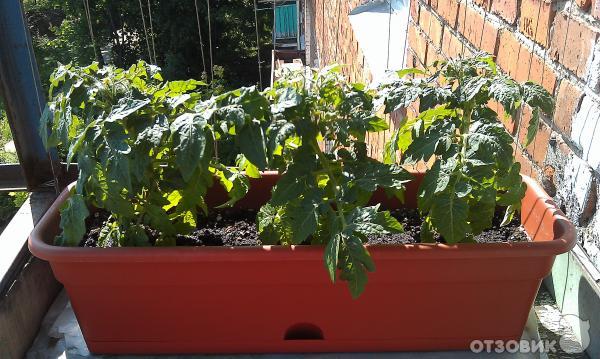
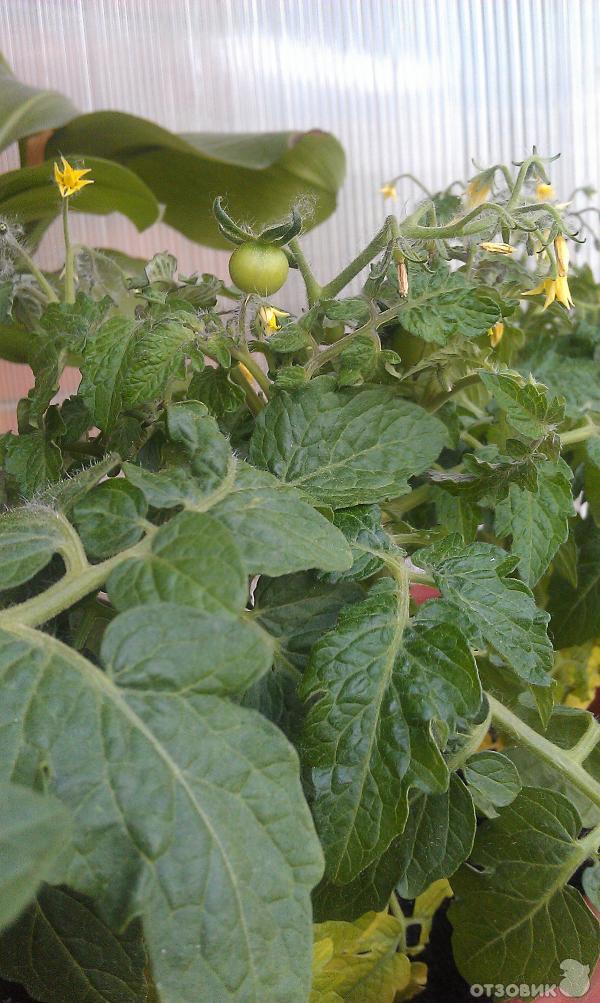
With the onset of summer, many city dwellers long to head to their garden plots, dig in the soil, plant flowers, and grow delicious and healthy fruits and vegetables. Unfortunately, few people have the luxury of a garden plot, but the desire to plant some greenery can still be realized. This year (2013), I decided to create a mini garden on my balcony (it's not enclosed). In March, I planted dwarf tomato seedlings of the "Balcony Miracle" and "Pinocchio" varieties to experiment with what would happen.
The seedlings took root very well and immediately gained strength. Naturally, during growth, I fed the seedlings two or three times with fertilizer (I wrote a review earlier about the Universal Fertilizer Fitop-Flora S: Fertilizer for indoor and garden plants).
In general, if you have a glassed-in balcony, you can start planting seedlings as early as April or directly into permanent pots. I only planted mine when the weather warmed up at night (around May 10th). Tomatoes should be planted in large pots; the larger the pot, the better the plant will develop, and the larger the fruit, resulting in a more abundant harvest.
In general, bushes of these dwarf varieties are planted to decorate balconies (in my case, for both utility and decoration). Of course, you can plant them in the ground on your property; they'll probably look just as beautiful.
Tomatoes need to be watered generously, but don't let the soil dry out between waterings; loosen the soil surface frequently. Pollination is essential (I just gently tap the tomato stems). If the balcony isn't glazed, I think pollination will occur naturally without human intervention, but indoors, pollination is essential.
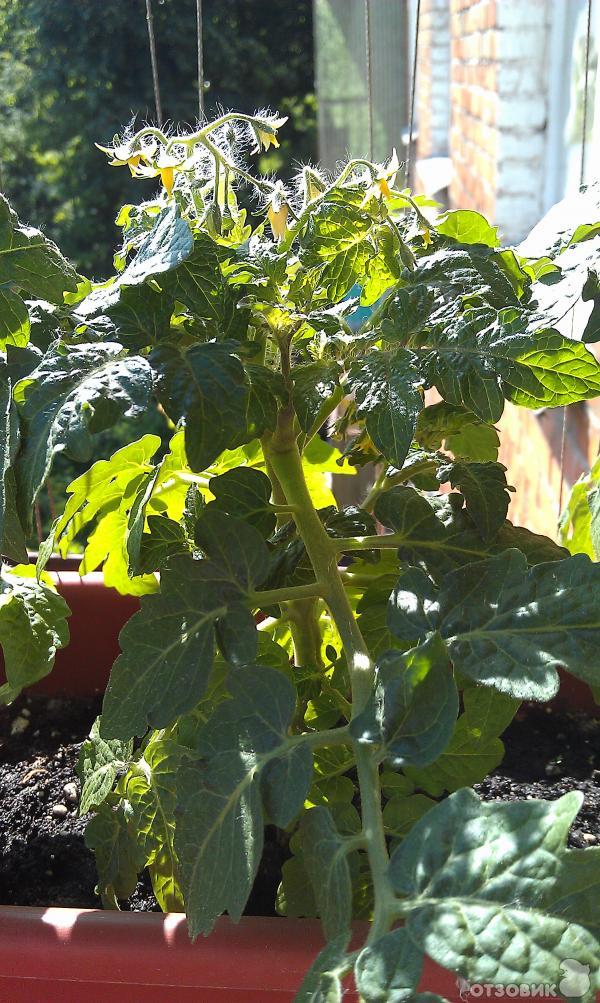
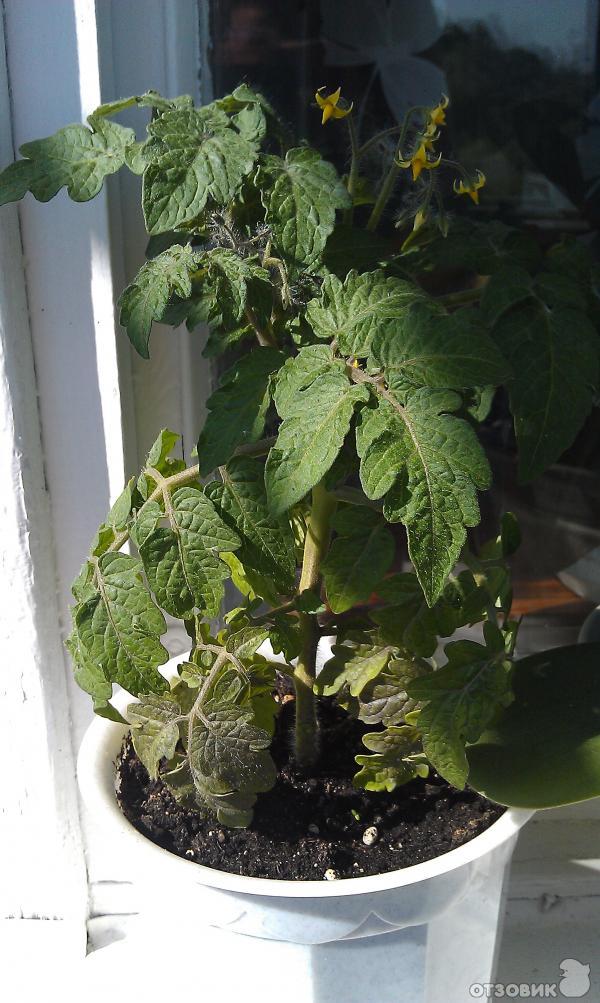
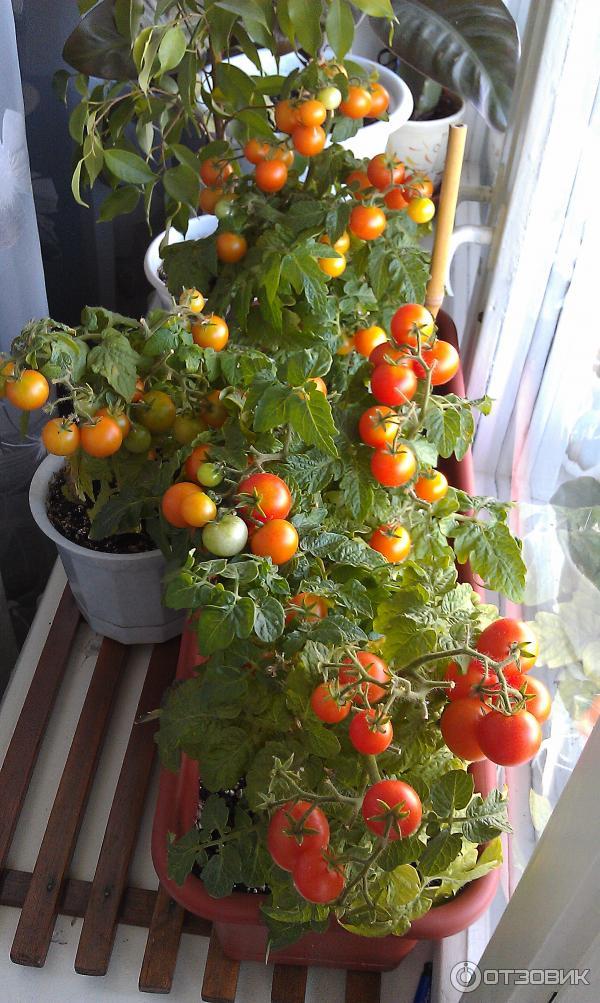
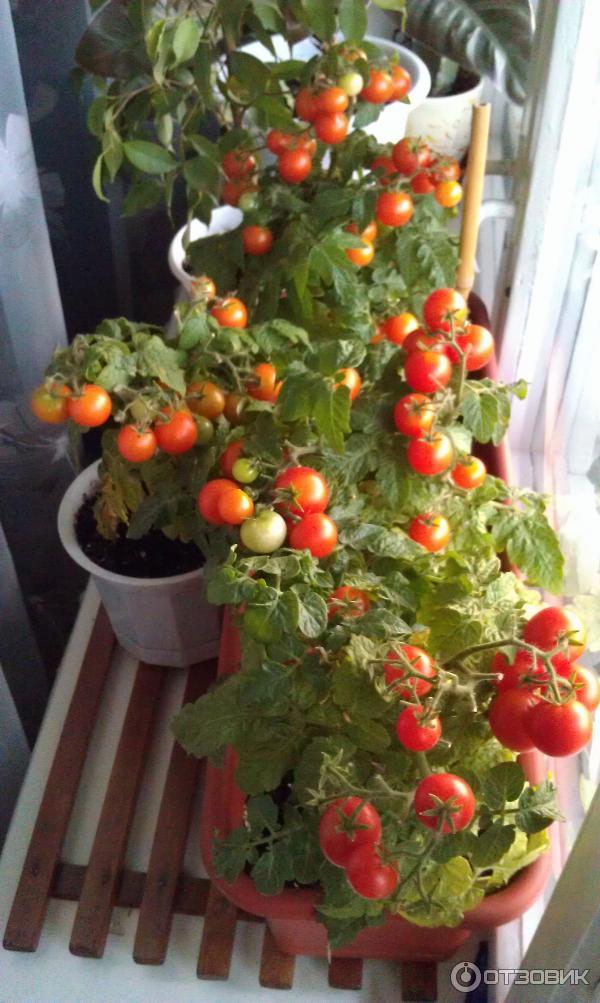
Now the plant is very large, abundant flowering began after just 2-3 weeks, during flowering I also fed the tomatoes.
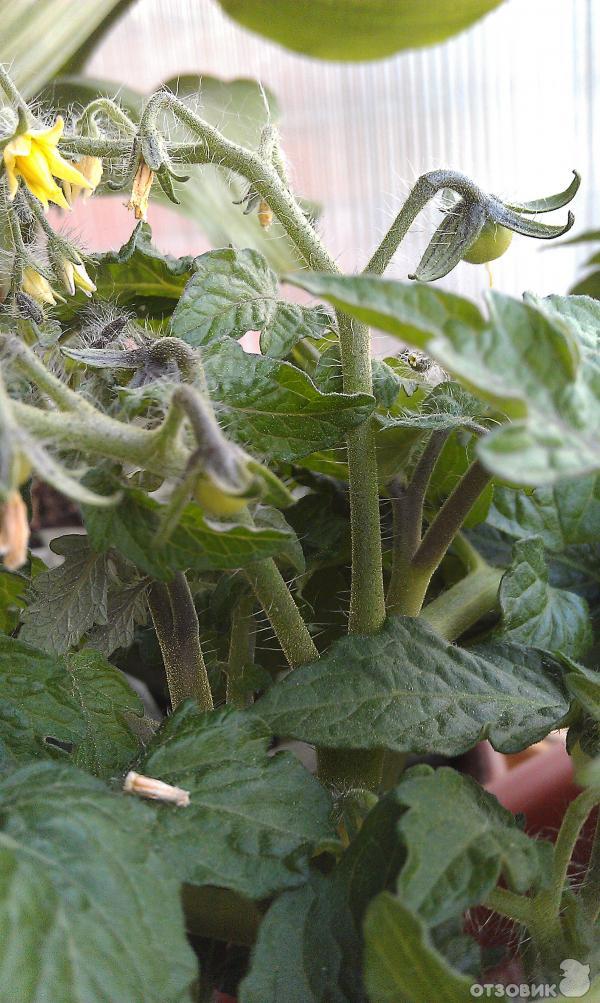
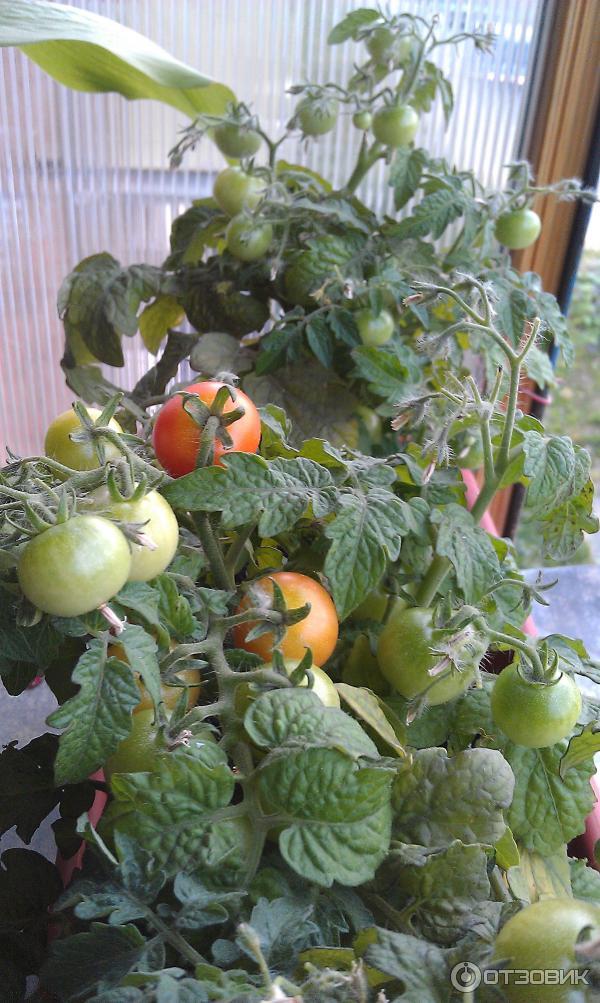
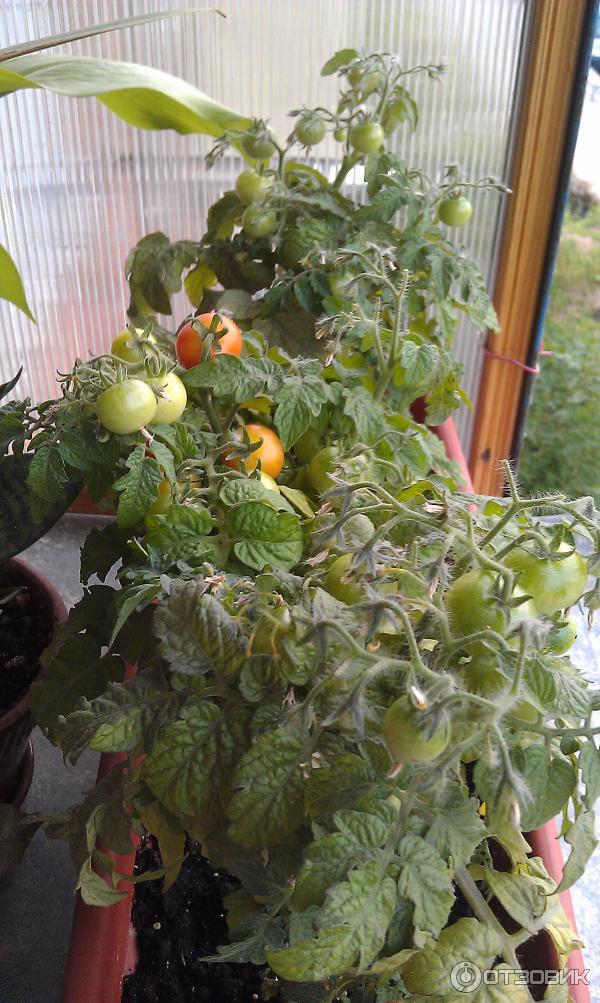
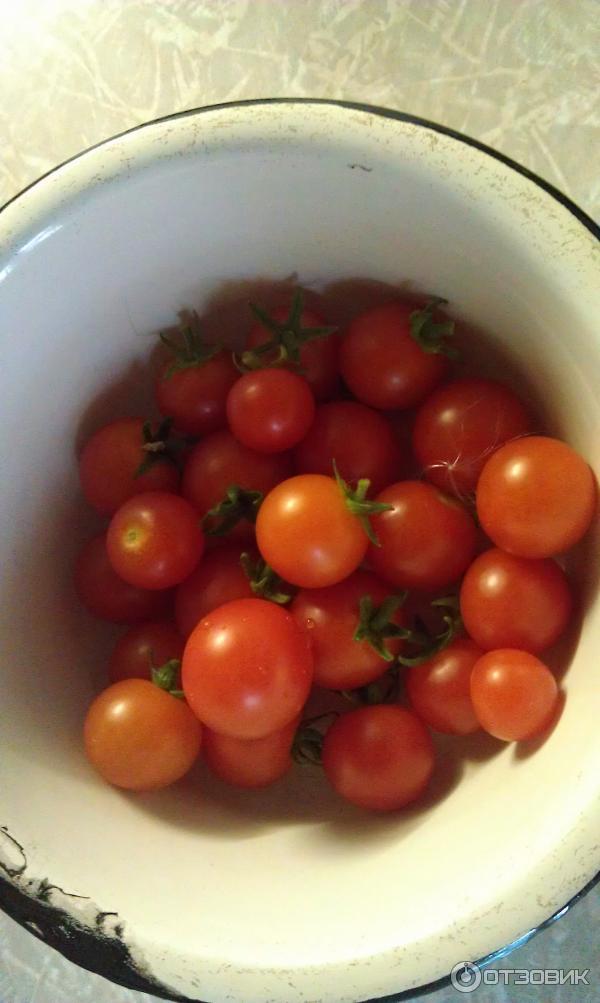
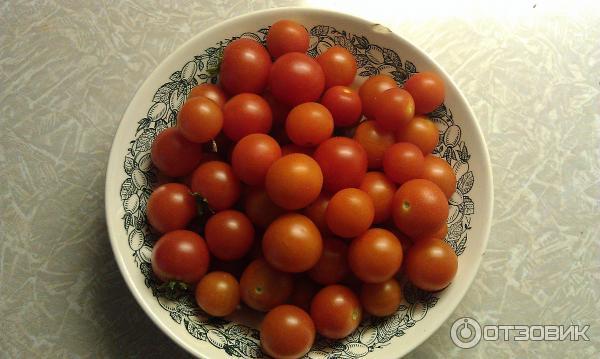
Now, just a month after planting the seedlings in boxes and pots, I have small tomatoes. They are actively growing, and I hope the harvest will be abundant and delicious. This tomato variety is early ripening and produces a large yield of up to two kilograms of small tomatoes per plant. They are bright red and delicious.
I'm very happy; I now have a beautiful balcony with plants that bloom beautifully. And they even produce delicious fruit. Now I have a mini garden with minimal effort.
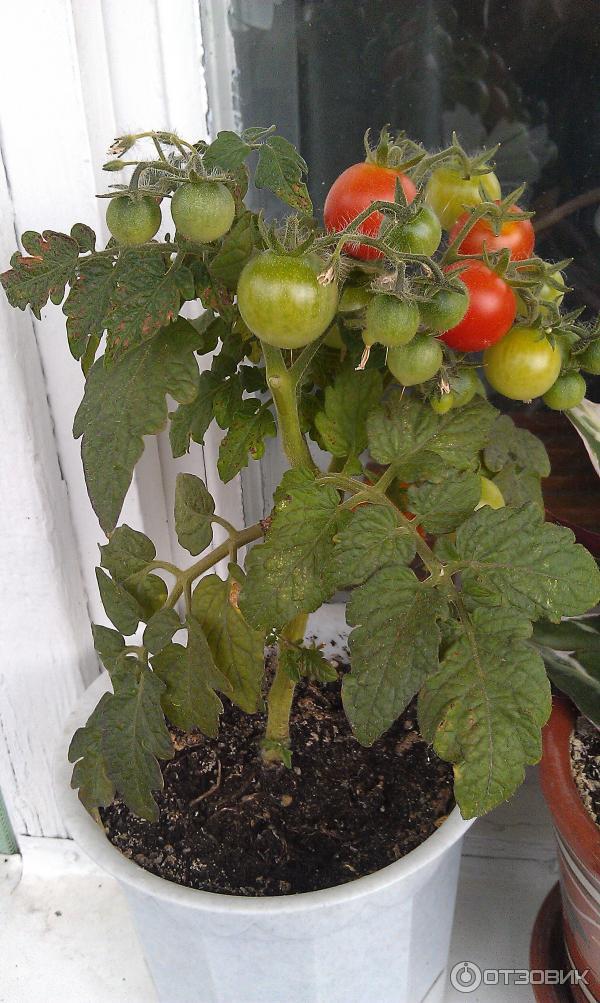
Close to harvest:
The harvest was excellent, delicious, aromatic tomatoes; I collected about 2-3 kilograms from four bushes.
User: koala2014, Russia, Moscow, 10/02/2017
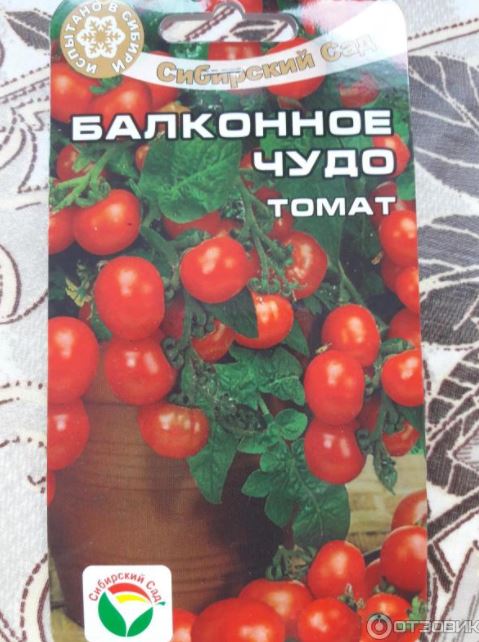
I bought the "Balcony Miracle" tomato, or rather the seeds, because I saw a cute photo of dwarf tomatoes on a friend's website. Ever since, I've been obsessed with searching for these seeds everywhere. Two months later, I found them and was thrilled to buy several packs. And the price was ridiculous—maybe 20 rubles. It's very well made:
Description:
Absolutely all the seeds sprouted. I planted them sometime in April. But I didn't replant them until early June, which was a bit late. I wasn't quite up to it. Now I realize I did it too late; I should have planted the seeds in March.
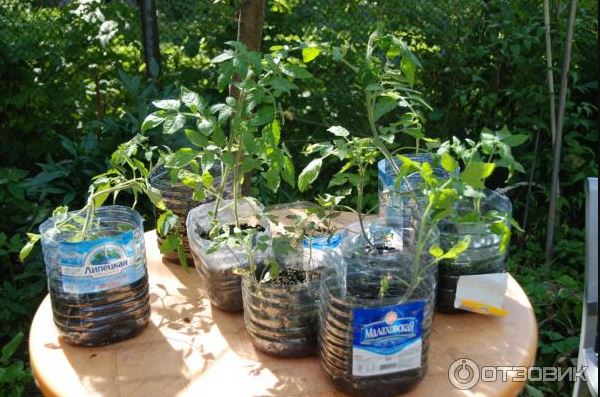
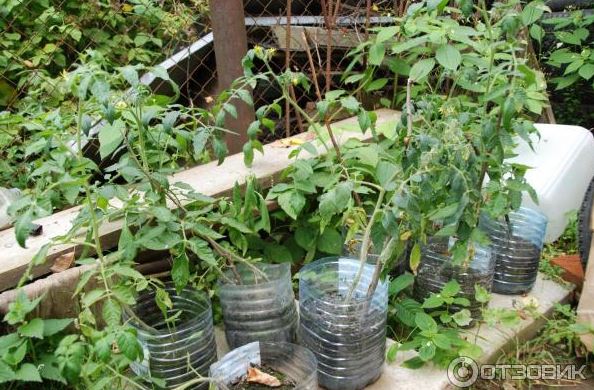
I transplanted 1-2 seeds into five-liter canisters. This was very convenient—they could be kept both on the windowsill and outside.
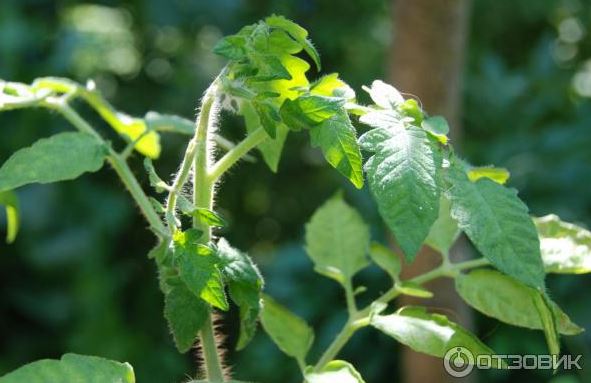
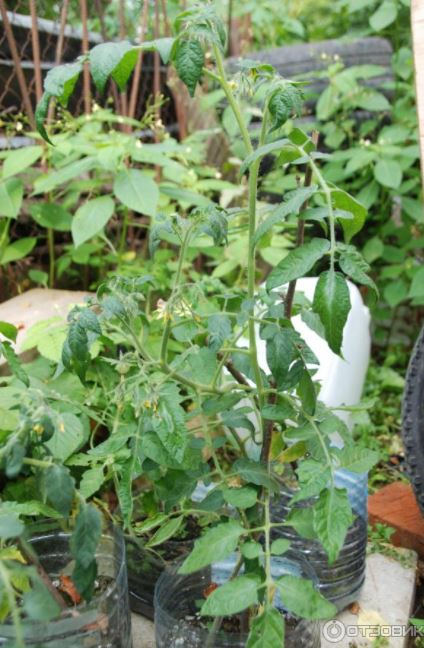
This is what they looked like by mid-to-late July:
When you touch the branches, they are fragrant, immediately evoking the taste of tomatoes)
In good weather I put them outside, and in rainy and cool weather I covered them with a special canopy - a greenhouse.
At the beginning of August the first flowers began to appear:
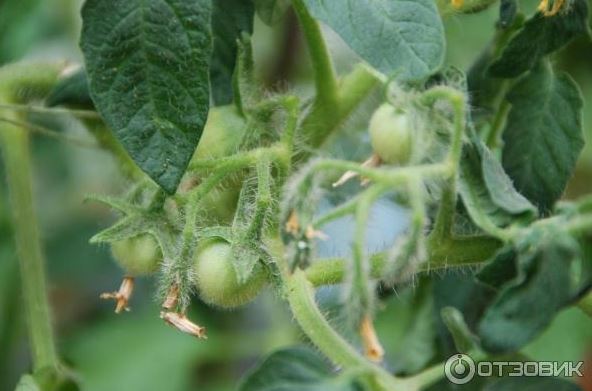
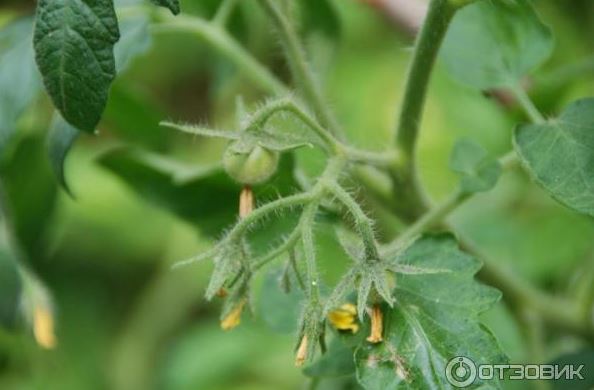
And then the first tomatoes:
It was approaching the end of August, and the tomatoes were still completely green, so I brought them back with me and placed them on the windowsill. But it was already chilly. Perhaps that contributed, but I didn't get the abundance of fruit you see in the picture. Here's what had already started—it turned into tomatoes, and new ones grew only from what was already there:
Harvest from 2 bushes:
The tomatoes themselves have thick skins, but are very tasty.
I'm not entirely happy with my results. I think the cold and the onset of autumn played a role. So I'll try again next spring.
So far, the results haven't impressed me—the tomatoes are indeed short, but not 25 cm long. I'd say taller—up to 50 cm, but they didn't grow any taller. And the yield isn't at all like the picture, with only 6-7 cherry tomatoes on each plant. I'm also aiming for 1.5 kg per plant.
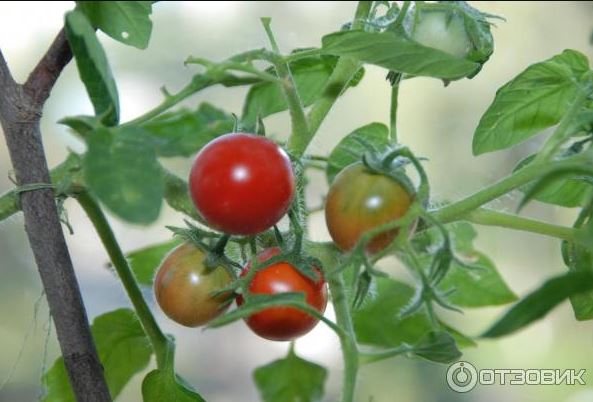
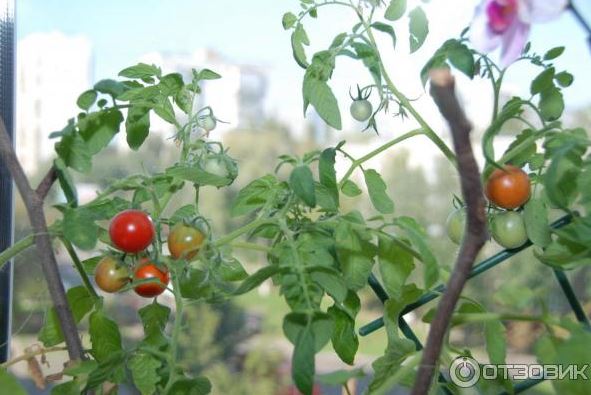
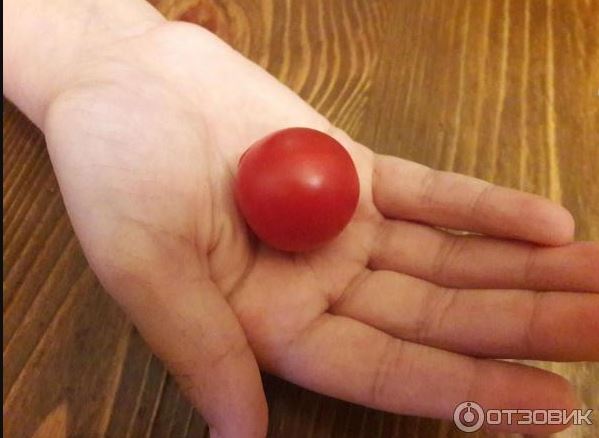
User: sv-elo4ka, Russia, Novosibirsk, June 9, 2020
Greetings, friends!
Today we're talking about tomatoes.
If you haven't heard yet, I have an experimental garden on my windowsill. I'm trying to grow everything. Well, I'm probably not going to try cabbage and carrots; they need proper beds. I'm thinking about mini watermelons, though.What was I talking about? Oh, tomatoes and experiments. Last summer, my windowsill tomatoes grew well. Except for attacks from aphids and spider mites. But I wrote about that in detail in my review of TerraMaster soil. So, inspired, I decided to plant tomatoes for the winter. What if a miracle happens and we'll be eating fresh, homegrown tomatoes for New Year's? So, no sooner said than done, and here in my hands is a packet of seeds with the apt name "Balcony Miracle." In my case, a windowsill miracle, apparently.
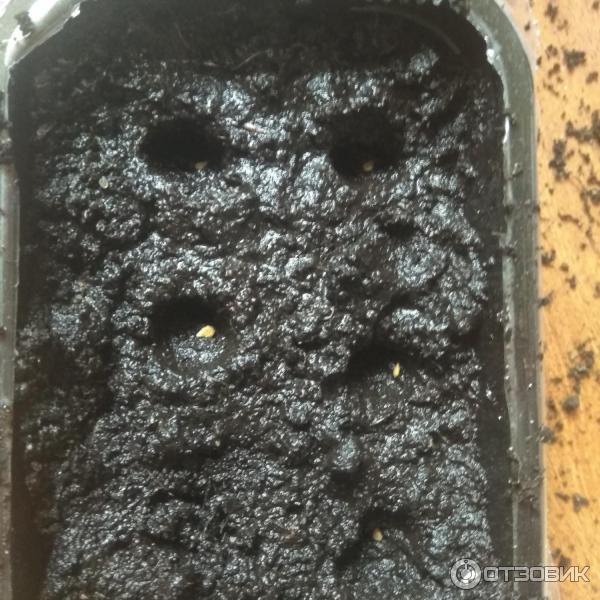
I planted them at the beginning of September.
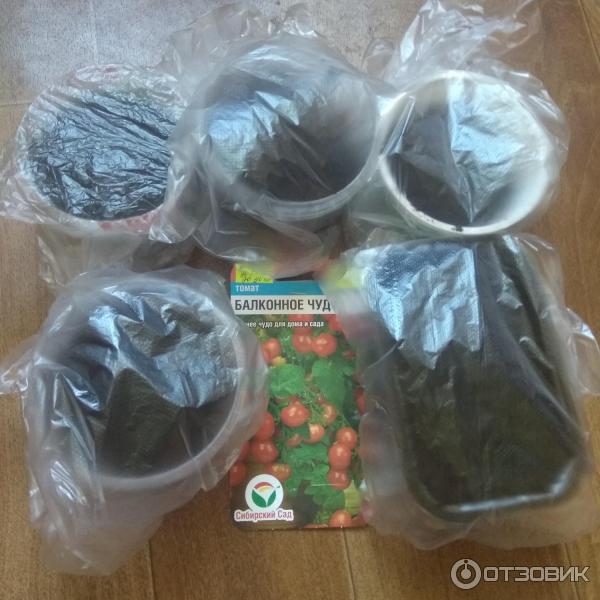
I wrapped the seeds in plastic bags so they'd think they were in a greenhouse. And I waited for a miracle.
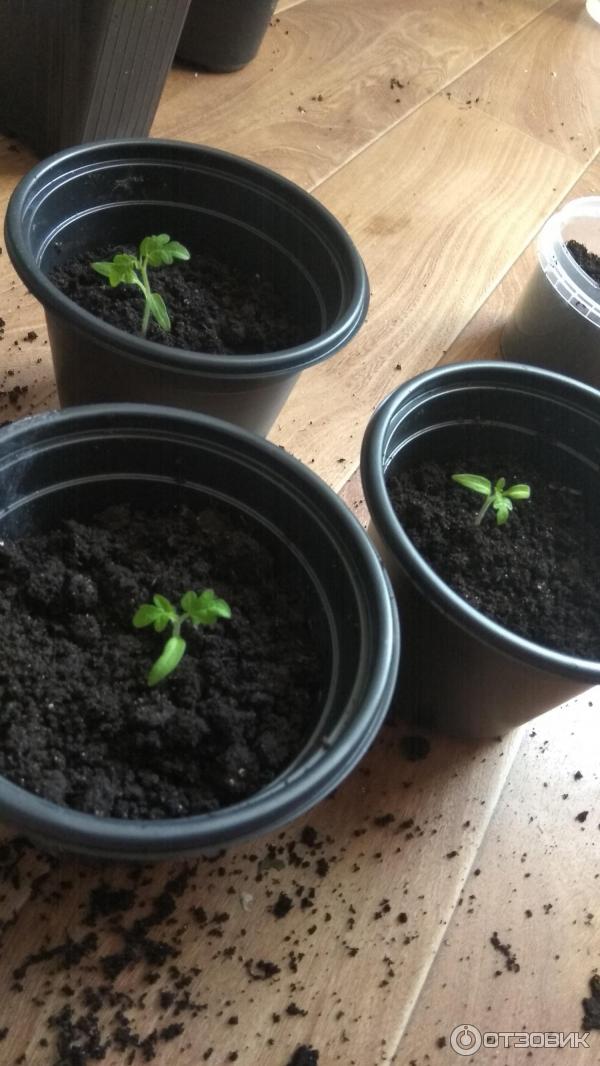
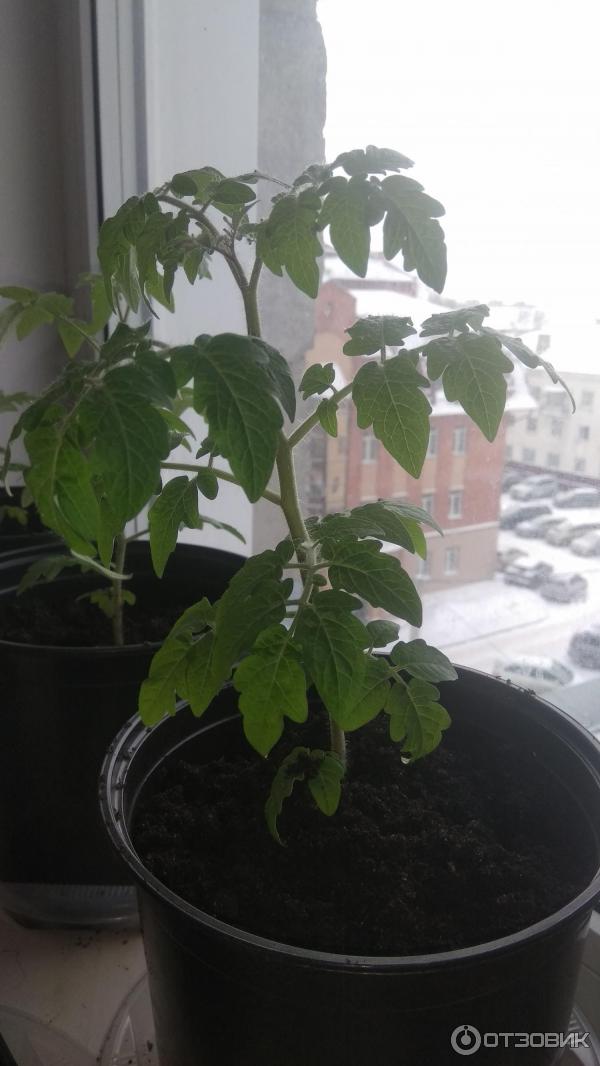
Here's a photo of the sprouted and already planted tomatoes, taken on September 16th. They're so tiny!
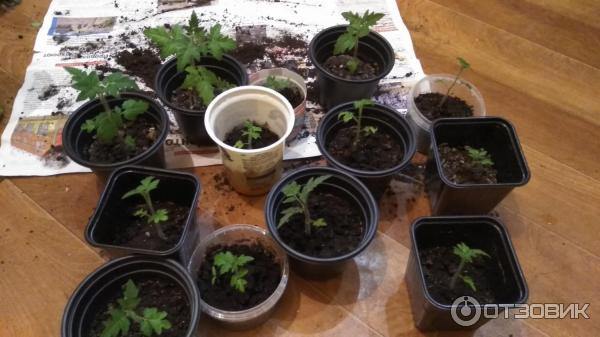
This photo was taken a month later, on October 19th. As you can see, there are quite a few bushes, although they're all of different heights. Ignore the creative chaos.
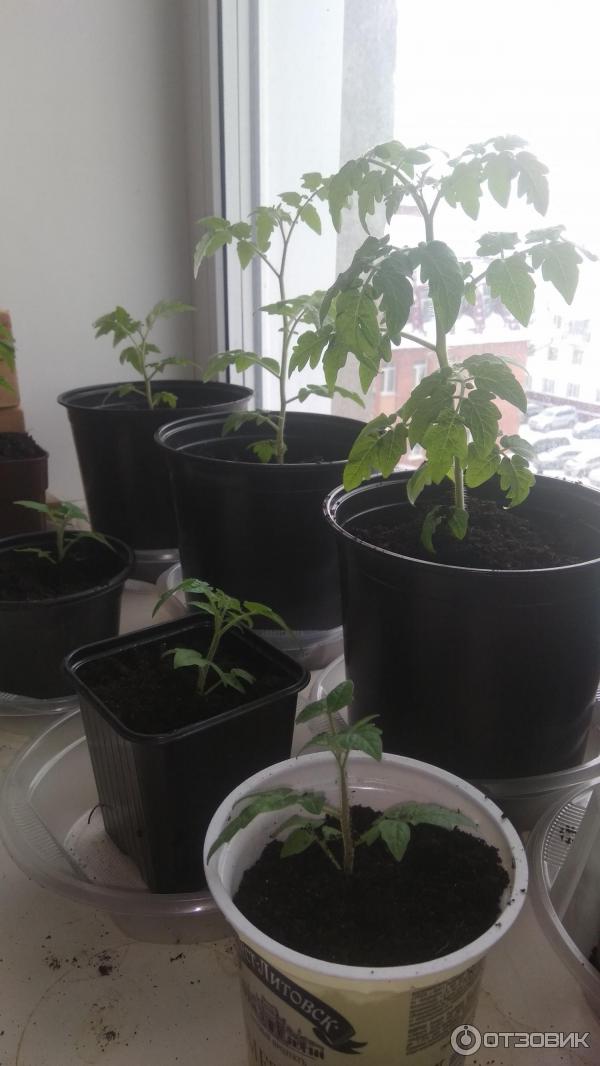
I transplant them into pots by eye and I'm not sure if I'm doing it right. That is, when I start to think the current pot is getting too small for the plant, I plant it in a larger pot. I don't plant it in a big pot right away, so the root system can develop properly. I have no idea if I'm doing it right. But the tomatoes don't argue with me.
The photo above clearly shows that the tomatoes grow at different heights. I have no idea why. I care for them all the same…
I didn't get any tomatoes for New Year's. I actually thought my plan had failed. By January, all the tomatoes had leveled out and died. They weren't drying out, but they weren't growing; they looked great and were a perfect substitute for houseplants. And that was it. No flowers, let alone fruit. A couple of times I considered throwing them out, and that was it. I guess it was only my reluctance to admit defeat that kept me watering them every morning, no longer hoping for anything.
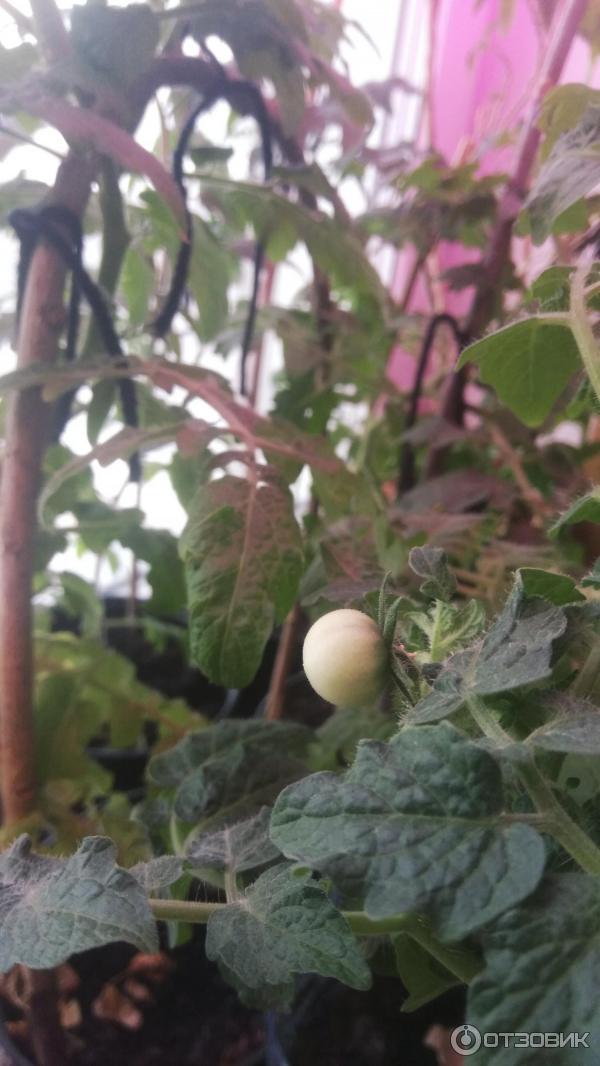
And then, on February 19th, I saw my first tomato! It was tiny, the size of a pea! But it was there!
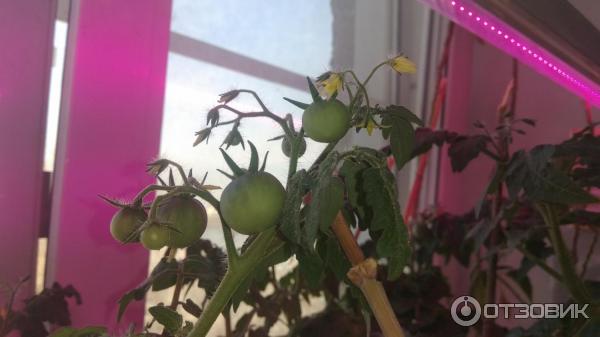
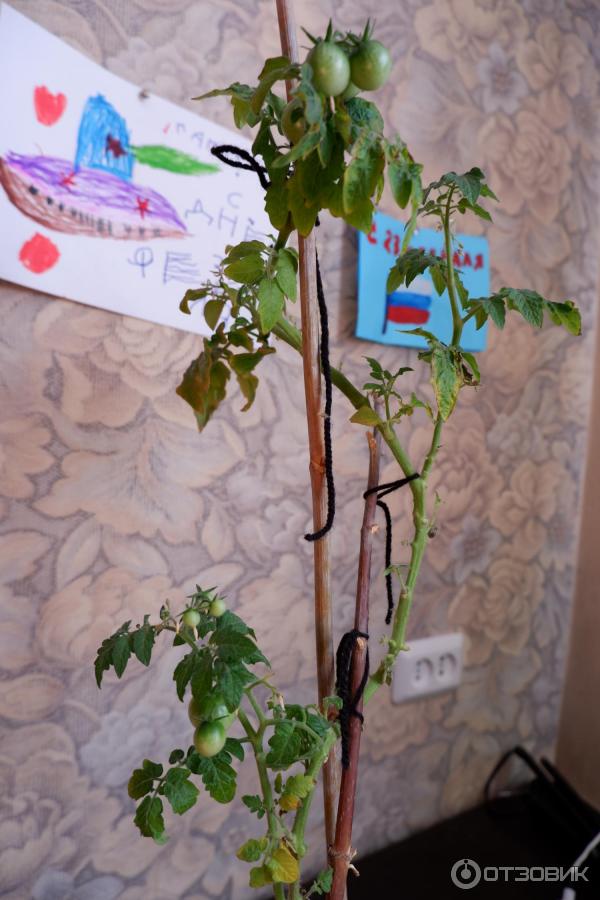
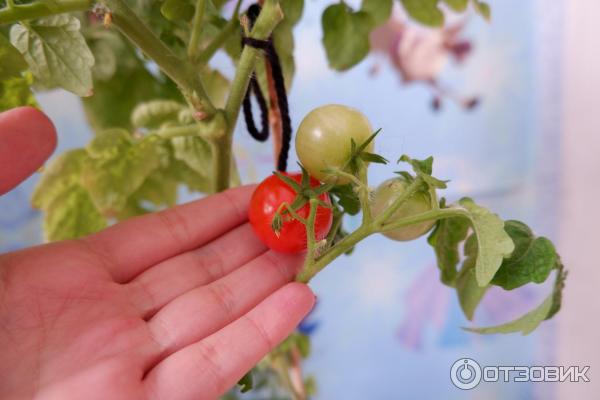
These are the kind of bunches that delighted me already in March) I had to quickly tie the branches to the rods so that they wouldn’t break under the weight of the bunches.
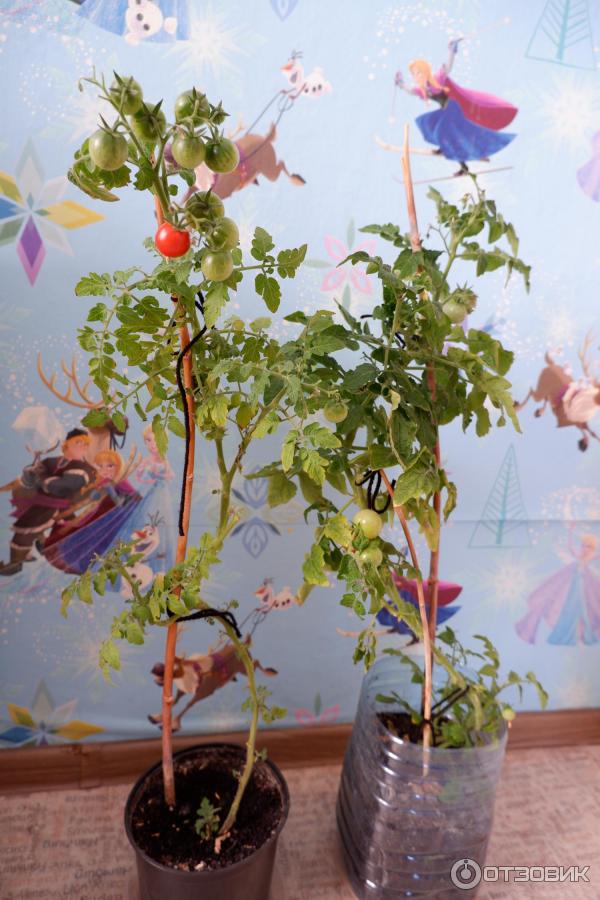
This is what my beauties look like now. I had a special photo shoot for them today.
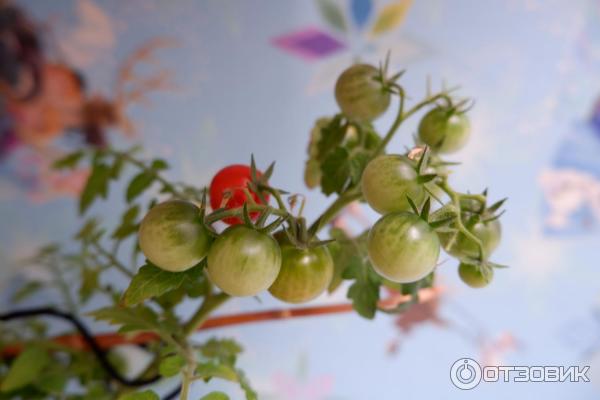
Look at these bunches. Like grapes. Only tomatoes.
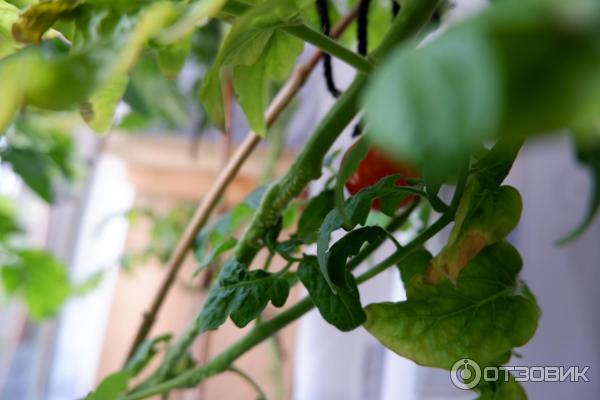
Some of my tomato plants have bald stems. I read on a tomato forum that all the branches down to the first fruiting shoots should be pruned. They'll probably produce more fruit then. Honestly, I haven't noticed any difference. But I don't keep track of the statistics.
And it's hard to keep track of the statistics when in the morning the little harvester drags a chair to the window in search of red tomatoes that she can pick and eat. And you have to search carefully; small tomatoes hide very well behind the leaves.
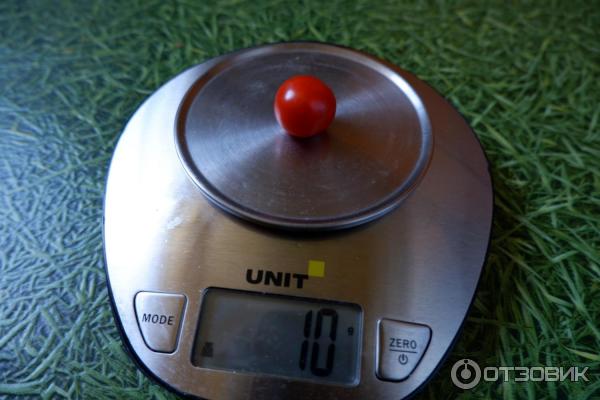
So, part of the harvest goes straight into my mouth; I can't even keep track of how many kilograms I harvested in total. It's only an estimate. Since March, 5-10 tomatoes have ripened every day. The maximum fruit weight was 10 grams. I have 10 bushes in total. Well, I probably harvested about 5 kilograms.
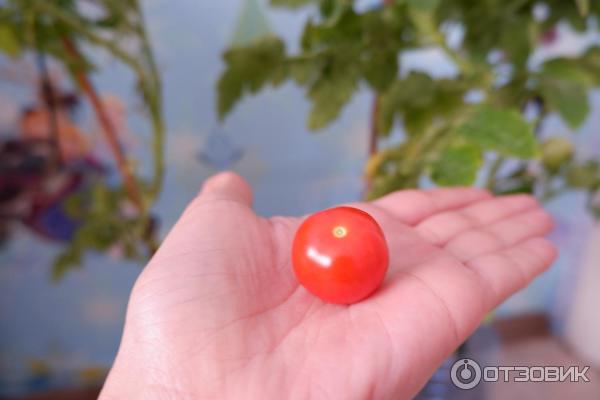
Here in the palm of my hand is this 10-gram baby.
It is 2-3 grams larger than the others.
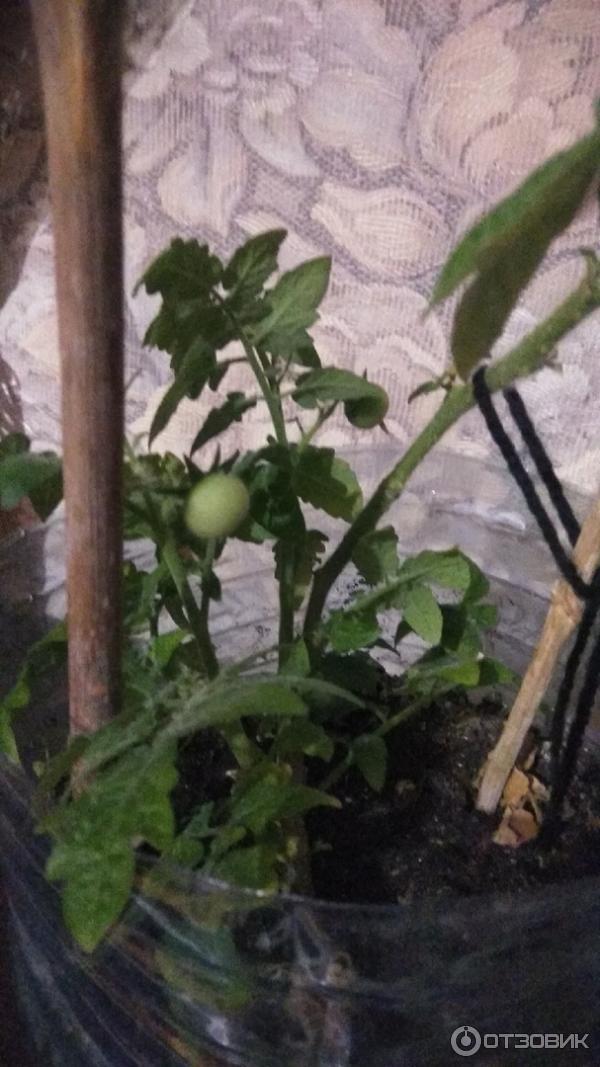
Over time, I stopped paying attention to the side shoots and other suckers that everyone advises to pluck, remove, etc. They just keep growing. And not only that, but they're also bearing fruit. See, this is a shoot right at the root. And there are already tomatoes.
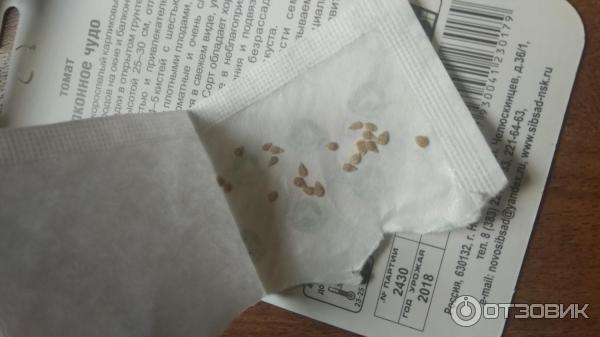
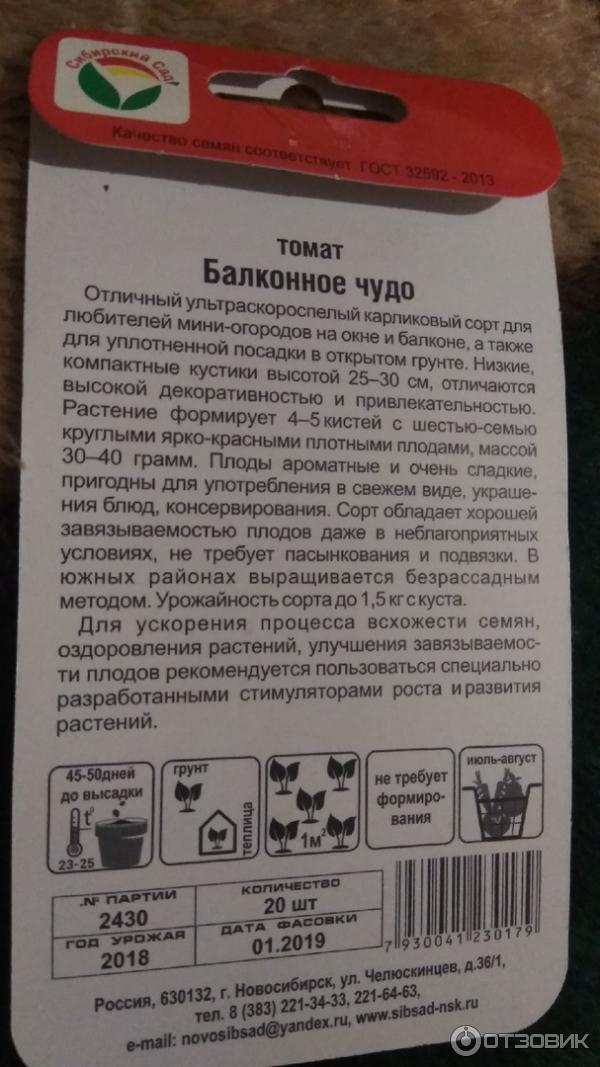
Finally, let's take a quick look at the seed characteristics. The packet contains 20 seeds. Fourteen plants grew from these seeds and are thriving. In my opinion, considering the less-than-ideal growing conditions, this is a very respectable result.
If you look at the packaging label, it says these are supposed to be low-growing bushes, 25-30 cm tall. Mine have grown twice as tall))) The bush is up to 60 cm long. How did this happen? Can anyone tell me?
Further on, it says there are 4-5 clusters. I have 2-3 clusters on each bush at a time. One turns red, we pluck it off, and another grows. I didn't count how many there were in total. The fruit weight is stated as 30-40 grams. I've never had more than 10 grams.
The fruits are fragrant and very sweet—I can confirm that! Delicious, damn!
They're growing like orphans for me. No sun, on the shady side, but under a grow light. And even through the winter! They've grown! As soon as the first buds appeared, I fertilized them twice with regular fertilizer for 50 rubles. The variety is self-pollinating, it manages on its own, without the need for bees.
They really didn't get enough sun in the winter. Or maybe they somehow understood, genetically, that it wasn't time to bear fruit. Or maybe they were freezing; it was a window, after all, not a greenhouse. And I'd open it periodically to ventilate it. Just imagine—you're a tomato plant and you love warmth, and they open the window on you, and it's -30°C outside. I'd be so offended and wouldn't bear fruit if I were them.
Overall, I'm happy with everything. The experiment was a success, and it's not over yet. The Balcony Miracle tomatoes are still delighting me with new flowers, which means there will be more tomato plants too. And remember, this has been going on since March! And it's already June. Maybe they'll continue to delight us with a harvest until fall.
Costs of growing homegrown tomatoes:
- Seeds 28 rubles.
- Several pots bought for about 20 rubles each, several simply cut five-liter bottles of water.
- Soil. 197 rub.
- Fertilizer - 50 rubles.
Total: no more than 500 rubles.
I saw some cherry tomatoes at Maria-Ra once, and they looked just like mine. 90 rubles for a 300-gram box. And although I don't grow my own tomatoes for profit or to save money, it still felt good.
I'll recommend the seeds. I don't have much to compare them to, but they turned out well. I just wish the fruits were bigger.
And I wish you more pleasant moments in life, friends!
User: moon9284, Russia, Irkutsk, 01.08.2019
I bought some to try and didn't regret it. The germination rate was excellent—90% of them sprouted. I planted them from August to March at 15-20 day intervals, so I had my own tomatoes all winter, not store-bought ones. They're small, like cherry tomatoes, and the bushes don't grow any bigger than 30 cm. A larger pot and light ensure the bushes are covered in fruit. In short, "Balcony Miracle" is the perfect choice for those who don't have a dacha but really want their own garden.