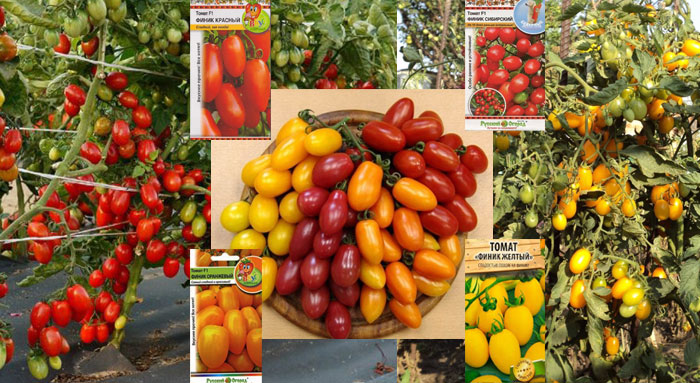
The Finik series includes five small tomato hybrids. They differ not only in fruit color but also in characteristics and growing nuances. Let's take a closer look at each variety.
Content
- 1 The history of the creation of the tomato varieties of the Finik series
- 2 General characteristics of the Finik series tomatoes
- 3 Red Date Palm F1
- 4 Characteristics of the tomato variety Red Date F1 in the table
- 5 Yellow date palm
- 5.1 Characteristics of the yellow date tomato variety in the table
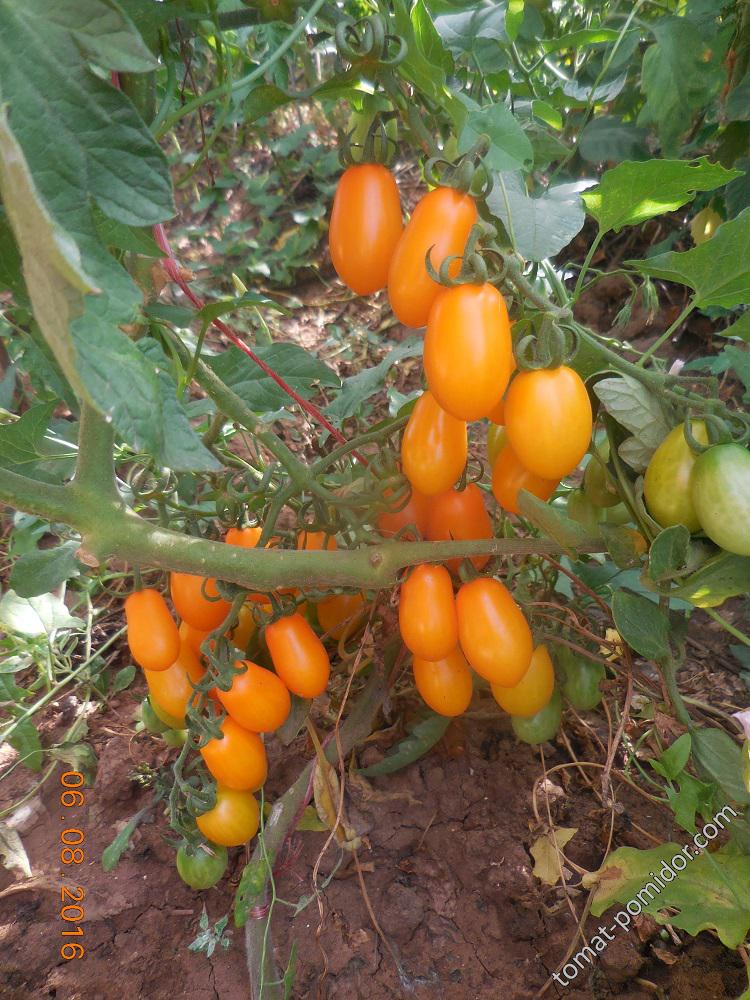
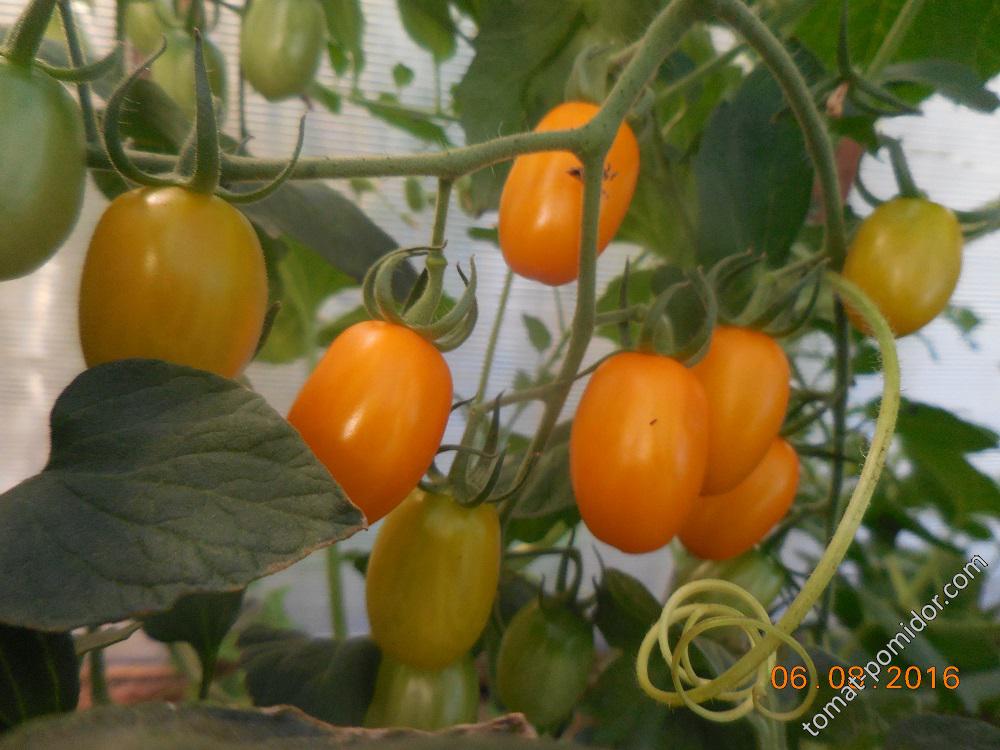
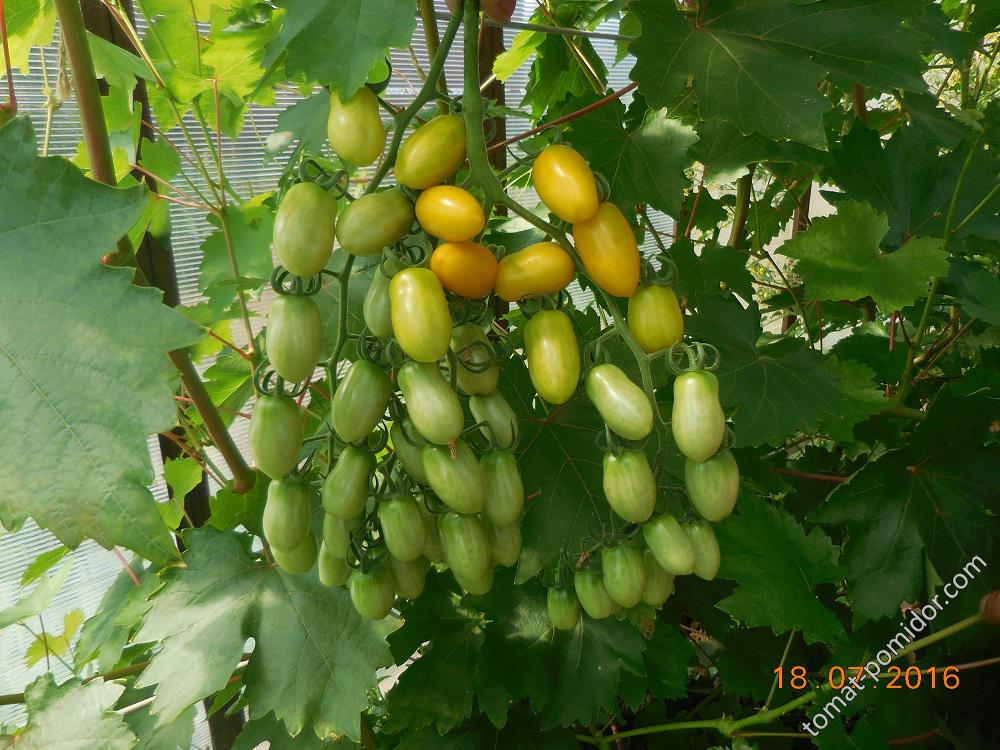
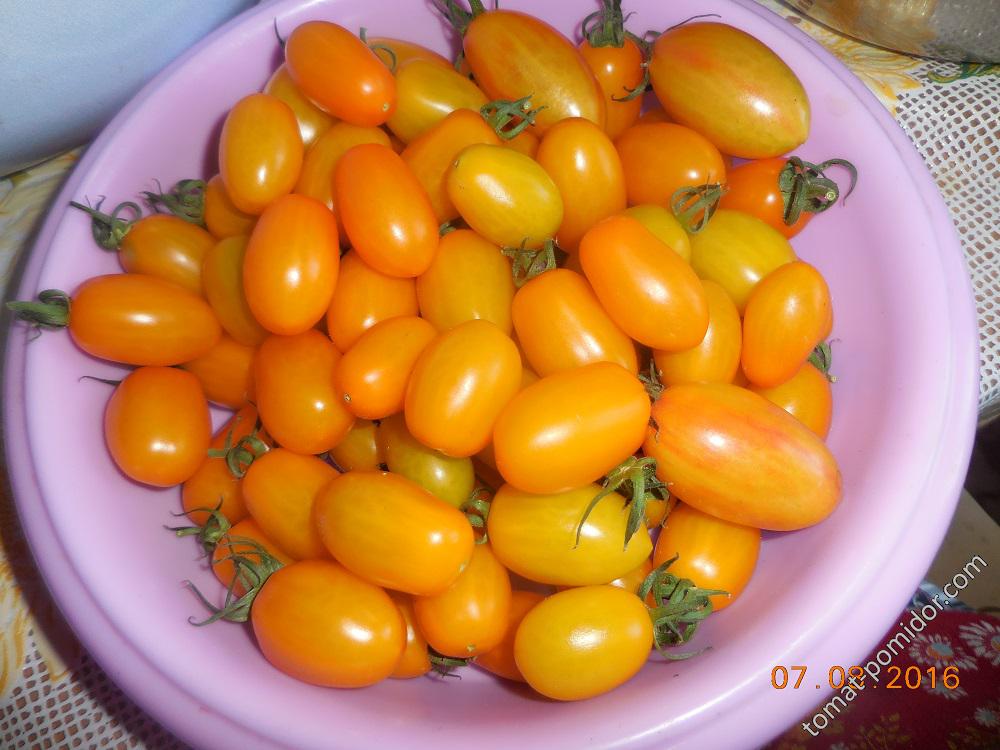
- 5.2 Photo gallery of tomato variety Date yellow
- 5.3 A detailed description of the tomato variety 'Yellow Date'
- 5.4 Advantages and disadvantages of the Yellow Date tomato variety
- 5.5 Features of cultivation of the tomato variety Yellow Date
- 5.6 Harvesting, using and storing tomatoes of the Yellow Date variety
- 6 Siberian Date Palm F1
- 6.1 Characteristics of the tomato variety Finik Siberian F1 in the table
- 6.2 Photo gallery of tomato variety Siberian date F1
- 6.3 A detailed description of the tomato variety Siberian Date F1
- 6.4 Pros and cons of the tomato variety Siberian Date F1
- 6.5 Features of cultivation of the tomato variety Siberian Date F1
- 6.6 Harvesting, using, and storing the tomato variety Siberian Date F1
- 7 Sweet date
- 7.1 Table of characteristics of the tomato variety Sweet Date
- 7.2 Photo gallery of tomato variety Sweet date
- 7.3 A detailed description of the tomato variety Sweet Date
- 7.4 Advantages and disadvantages of the Sweet Date tomato variety
- 7.5 Features of cultivation of the tomato variety Sweet Date
- 7.6 Harvesting, using and storing sweet Finik tomatoes
- 8 Date orange F1
- 8.1 Characteristics of the tomato variety Finik Orange F1 in the table
- 8.2 Photo gallery of tomato variety Date orange F1
- 8.3 Detailed description of the tomato variety Orange Date F1
- 8.4 Pros and cons of the tomato variety Orange Date F1
- 8.5 Features of growing the tomato variety Orange Date F1
- 8.6 Harvesting, using and storing tomatoes of the Orange Date F1 variety
- 9 Comparison of the Finik series of tomatoes with other cherry tomato varieties
- 10 Gardeners' reviews of the Finik series
The history of the creation of the tomato varieties of the Finik series
This series was created by crossing common tomatoes with cherry tomatoes. It is the work of Russian breeders and belongs to folk breeding. None of the varieties have yet been added to the registry.
General characteristics of the Finik series tomatoes
Each of them has its own characteristics, but they all have some common features:
- small fruit (up to 25 g);
- oval, ovoid or obovate shape;
- a large number of tomatoes on one bush;
- semideterminacy or indeterminacy.
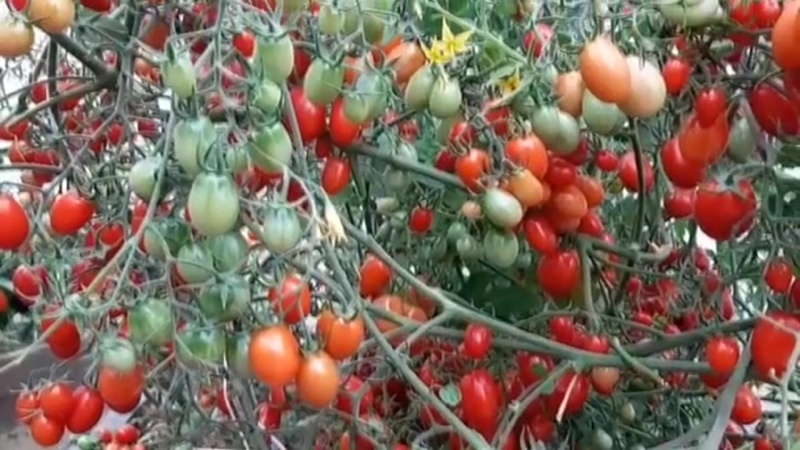
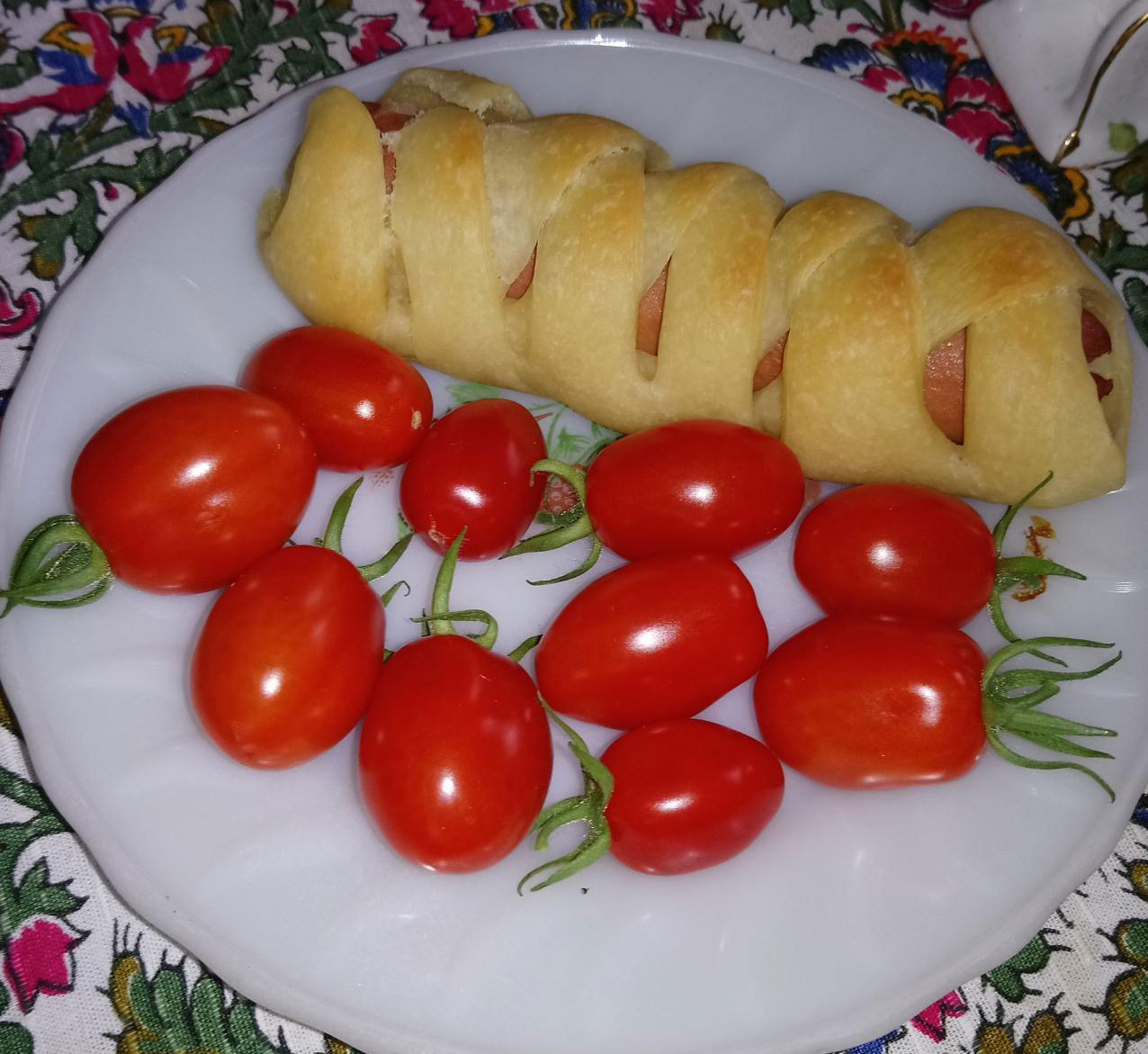
The tomatoes are quite striking. Small, multicolored, date-shaped fruits hang in clusters from leafless bushes.
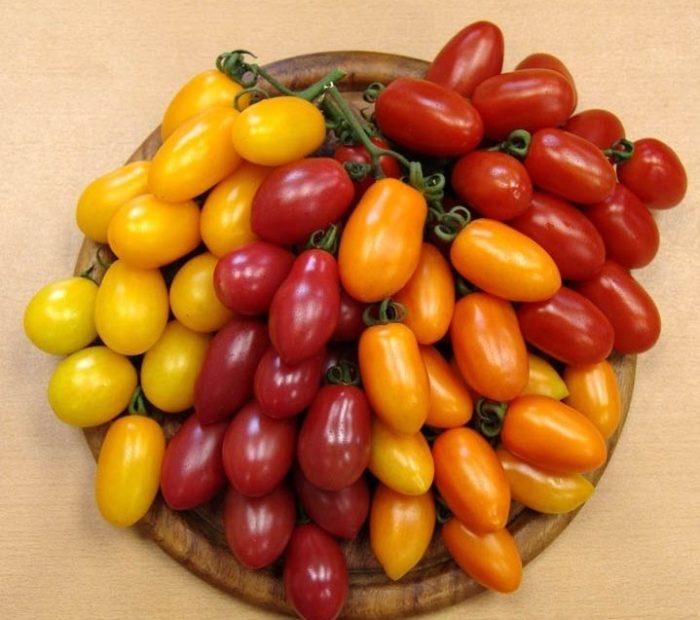
These varieties are most often used to decorate various dishes and festive tables. They also taste great in canned form, making them prized by many gardeners. The Finik series is popular not only in Russia but also in Europe. Tomatoes are a common table decoration.
Red Date Palm F1
Belongs to the 1st generation hybrids.
Characteristics of the tomato variety Red Date F1 in the table
| Characteristic | Description |
| Description | Mid-late semi-determinate variety for beds and greenhouses. |
| Ripening period | 120-130 days |
| Fruit weight | 8-20 g |
| Description of the fruit | Elongated oval, red. Can be round, ovoid, or conical. Sweetish. |
| Productivity | Up to 1.5 kg per bush. |
| Usage | Universal. |
| Marketability, shelf life | High. |
| Preferred growing regions | Southern, Central zone. |
| Disease resistance | Not prone to fungal and bacterial infections. |
| Agricultural technology | Tying and shaping. |
| Not included | |
| Originator | Agrofirm "Russian Garden". |
Photo gallery of tomato variety Red Date F1
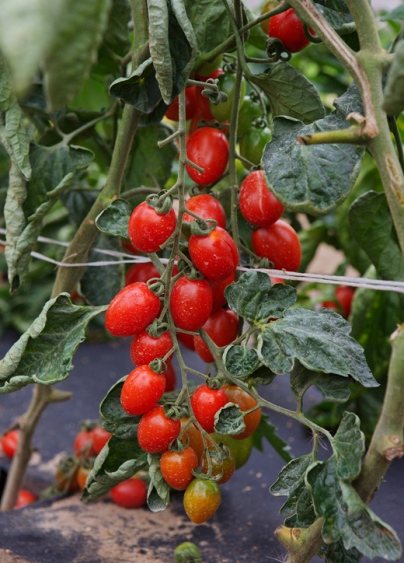
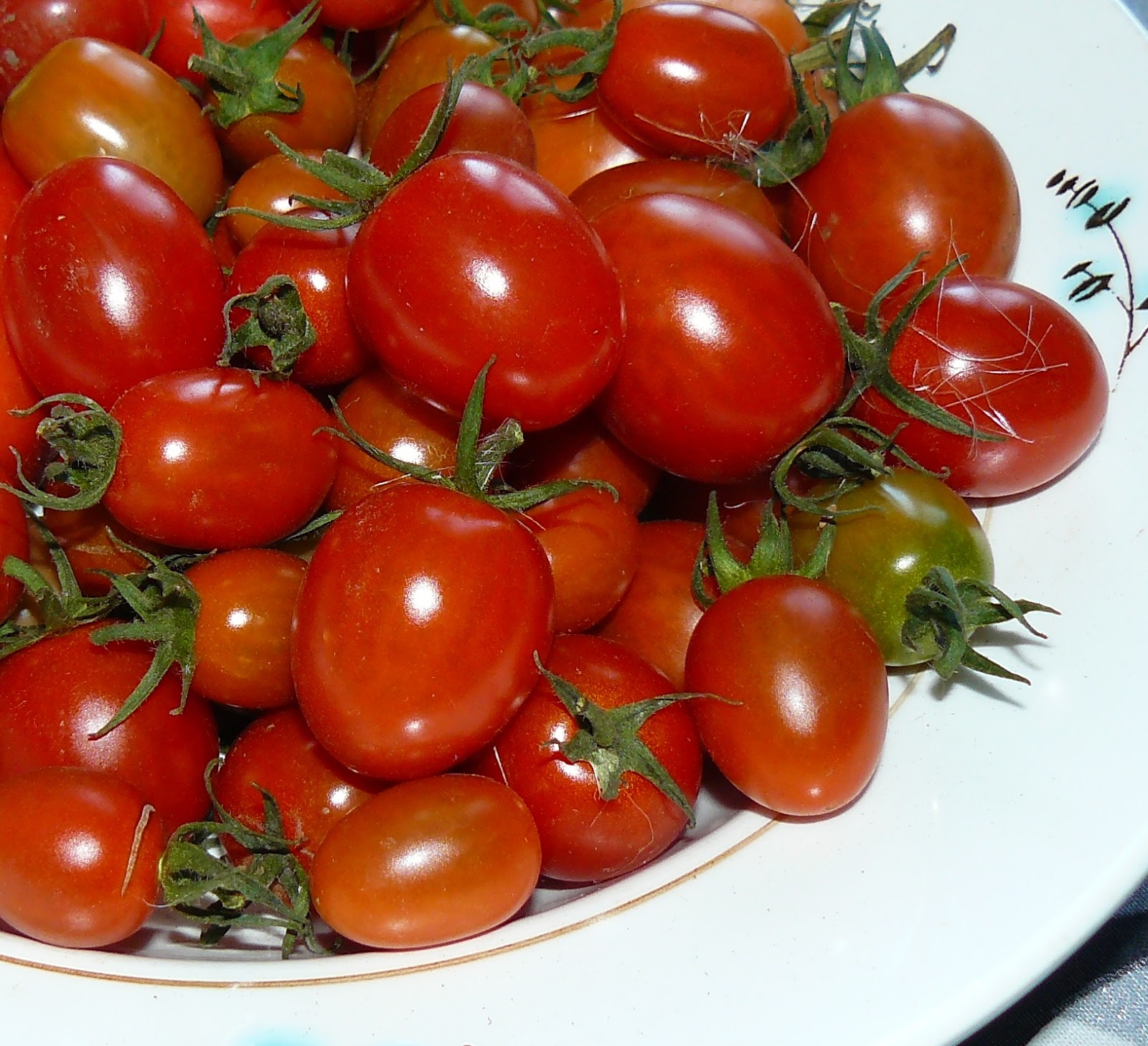
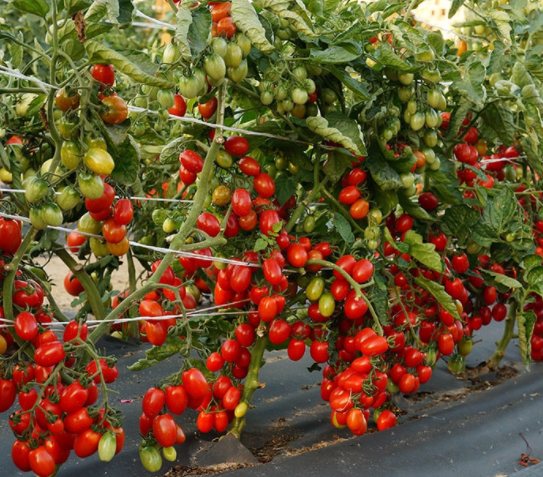
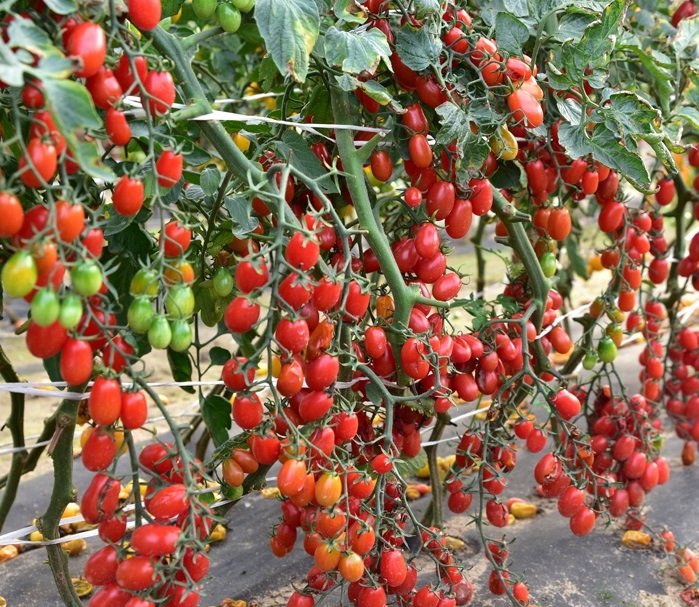
A detailed description of the tomato variety Red Date F1
Let's take a closer look at the characteristics:
The bushes are semi-determinate. Growth ceases late, after the 10th inflorescence has formed. By this time, they can reach 150-180 cm. The bushes are tall, but sparsely foliated.
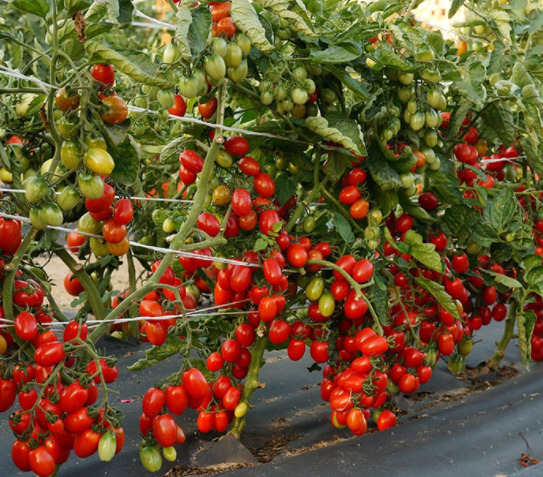
The bush can produce fruits of various shapes—oval, ovoid, obovoid, or round. However, this is not a disadvantage; sizing is easy.
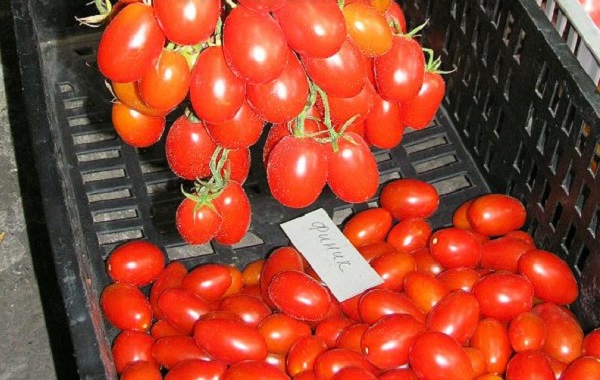
Tomatoes also vary in weight. They can weigh 8-20 grams. The higher they are located, the smaller they are. All the fruits are a uniform scarlet color. They contain two chambers with small, empty seeds. The skin is tender and thin, but fairly dense. This prevents the fruits from cracking.
Tomatoes are mid-season varieties. Therefore, in regions with short summers, the harvest must be harvested green or grown in a greenhouse.
For a small-fruited variety, it has a fairly high yield. Up to 1.5 kg of fruit can be harvested per bush.
Shows resistance to infectious diseases, including late blight.
Pros and cons of the tomato variety Date red F1
Advantages:
- productivity;
- resistance to infectious diseases;
- excellent taste;
- unusual shape of tomatoes;
- shelf life.
The downside is the late ripening period. The last bunches are picked while still green and left to ripen. They can be stored in a cool place for up to 1.5-2 months without losing their flavor or nutritional value.
Features of growing the tomato variety Finik Red F1
To obtain the stated yield, it is necessary to follow certain rules when growing and caring for the plant.
Sowing seeds and caring for seedlings
This variety ripens mid-late, so sowing begins in early spring. After planting, cover the seedling containers with glass or plastic and place them in a warm location. In early spring, daylight hours are short, so supplemental lighting will be required. Care is standard.
Planting in the ground
Maintain a distance of 35-40 cm between bushes. Otherwise, the transplanting process is no different from other varieties of the crop.
Care
It is necessary to adhere to the feeding schedule:
- 1st - 2-3 weeks after planting (nitrogen-containing mixtures);
- 2nd - after 15 days (organic);
- 3rd - after another couple of weeks (1 tbsp. ammonium nitrate + 1 tbsp. superphosphate);
- 4th and subsequent ones - every 2 weeks (organic).
Fertilization stops in August.
Harvesting, using and storing tomatoes of the Red Date F1 variety
The fruit can be picked in bunches. Fruits picked this way ripen evenly and are approximately the same ripeness by the time they're harvested.
The thick peel can withstand high temperatures, including boiling water. This makes them suitable for canning. They are also perfect for salads and table decoration as slices.
Yellow date palm
The neat fruits look attractive on the bushes and fresh on a plate.
Characteristics of the yellow date tomato variety in the table
| Characteristic | Description |
| Description | Late semi-determinate variety for growing under cover and in beds. |
| Ripening period | 130 days |
| Fruit weight | Up to 20 g |
| Description of the fruit | Oval, yellow. Sweet, but not cloying. |
| Productivity | Up to 1.8 kg per bush. |
| Usage | Universal. |
| Marketability, shelf life | High. |
| Preferred growing regions | Southern, Central zone. |
| Disease resistance | To late blight and bacterial infections. |
| Agricultural technology | Tying and shaping. |
| Not included | |
| Originator | Agrofirm "Russian Garden". |
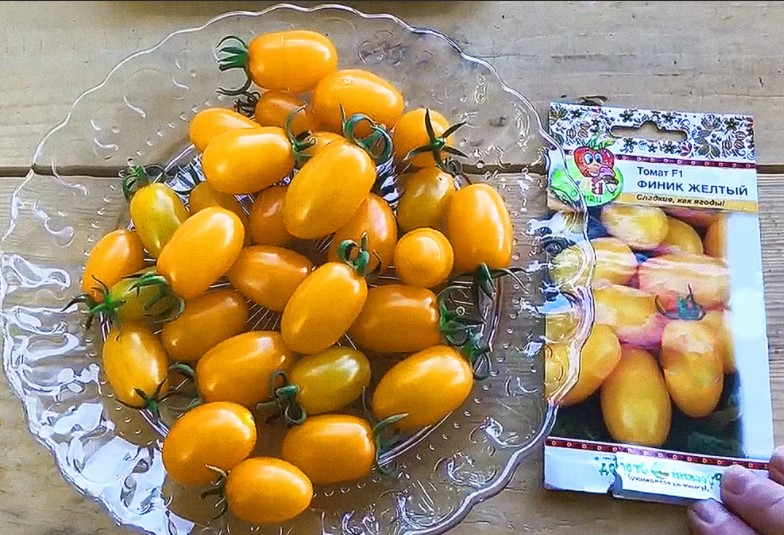
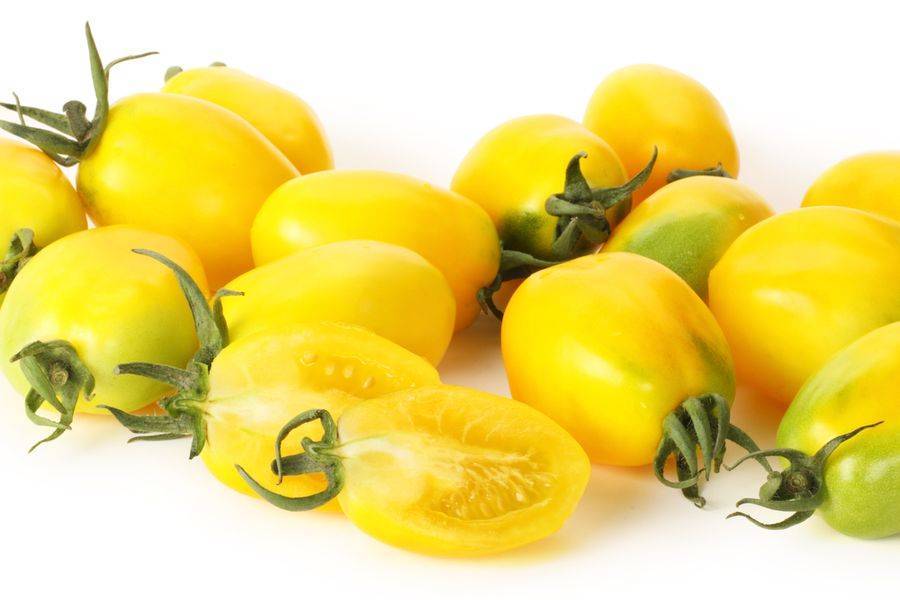
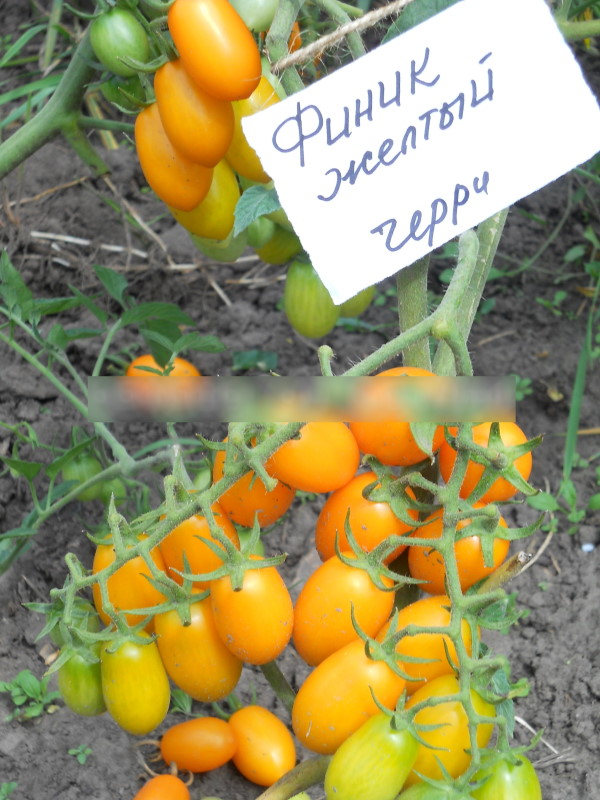
Photo gallery of tomato variety Date yellow
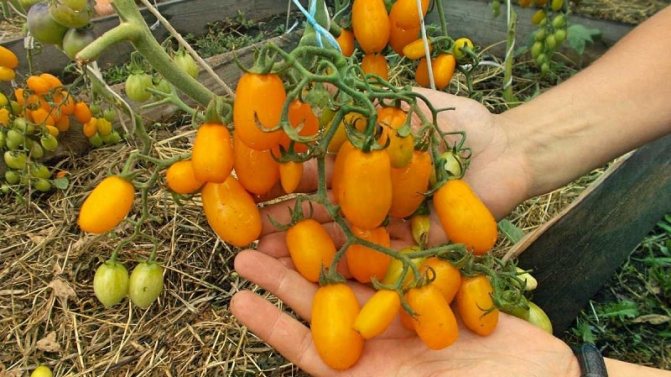
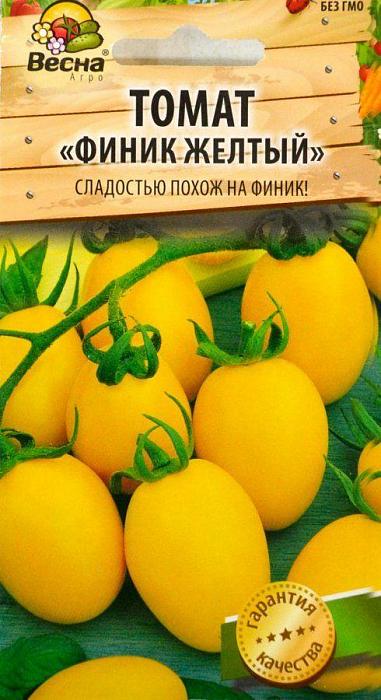
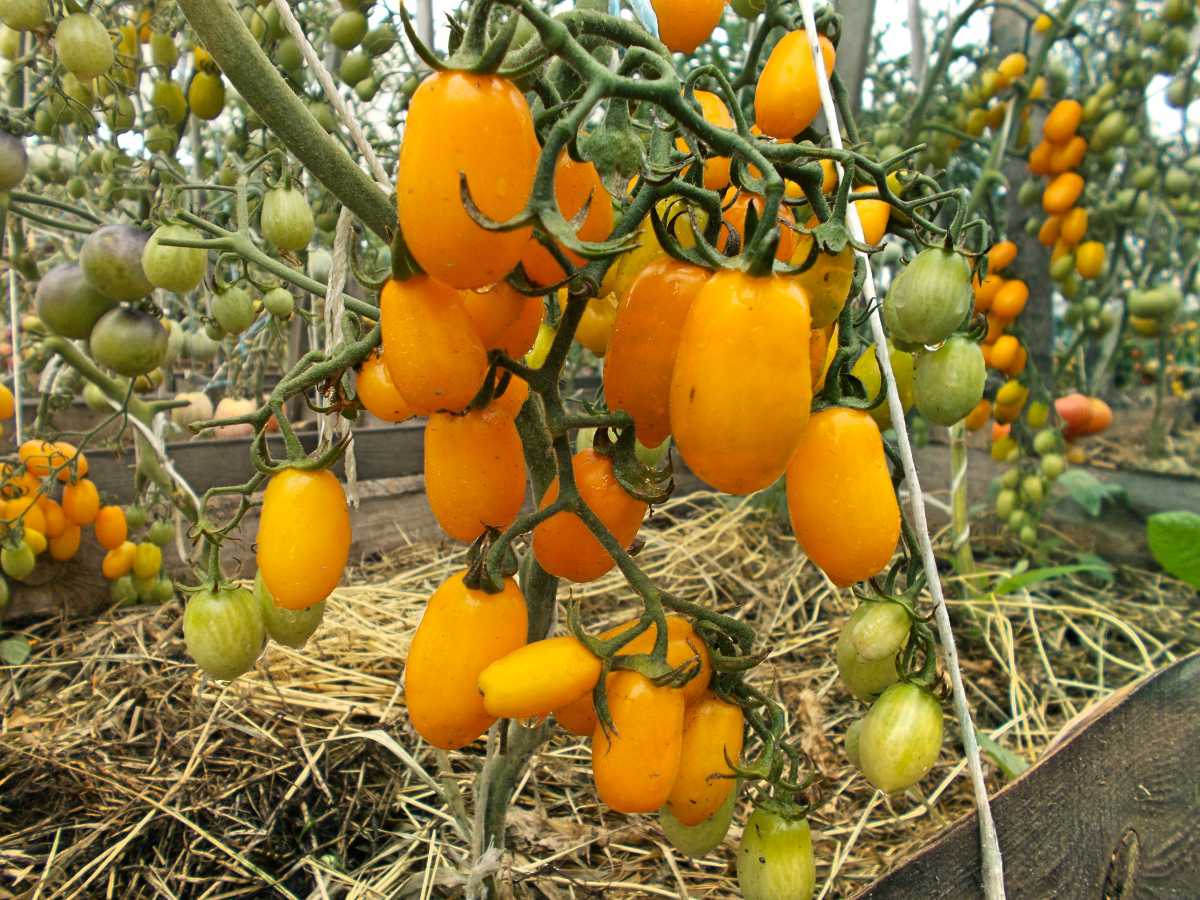
A detailed description of the tomato variety 'Yellow Date'
Let's look at the detailed characteristics:
This variety forms semi-determinate bushes that stop growing at 1.5 m. The leaves are small and light green. The bushes are not dense.
These oval-plum-shaped tomatoes are small, uniform in size and shape, and bright yellow. They weigh no more than 20 g. They are produced in simple clusters of 6-8 tomatoes. They have two seed chambers filled with pulp. They have a dessert-like flavor.
This variety has a late ripening period, 4.5 months after sprouting.
It has a fairly high yield for a small-fruited variety. 4-5 kg can be harvested per square meter.
It has good resistance to late blight and bacterial diseases. There are no reports from gardeners of this variety being affected by such infections.
Advantages and disadvantages of the Yellow Date tomato variety
Pros:
- gives a large harvest;
- has an unusual sweet taste;
- exhibits resistance to infectious diseases.
A relative disadvantage is the late timing of tomato harvesting.
Features of cultivation of the tomato variety Yellow Date
Grown from seedlings. Sowing and subsequent care are standard.
Planting in the ground is similar to that of the red date palm.
Tomatoes need to be tied up to reduce the strain on the stems. Otherwise, they will fall to the ground, and the fruit will rot. They also need to be trained into 2-3 stems.
Harvesting, using and storing tomatoes of the Yellow Date variety
It has a universal purpose. It is equally good fresh and canned.
Siberian Date Palm F1
This variety is loved by gardeners due to its early ripening time for the Finik collection.
Characteristics of the tomato variety Finik Siberian F1 in the table
| Characteristic | Description |
| Description | Determinate early-ripening variety for open ground and greenhouses. |
| Ripening period | about 100 days |
| Fruit weight | Up to 20 g |
| Description of the fruit | Plum-shaped, red. Excellent taste. |
| Productivity | Up to 1.5-2 kg per bush. |
| Usage | Universal. |
| Marketability, shelf life | Good. |
| Preferred growing regions | Any. |
| Disease resistance | To many diseases of nightshades. |
| Agricultural technology | Tying and shaping. |
| Not included | |
| Originator | Agrofirm "Russian Garden". |
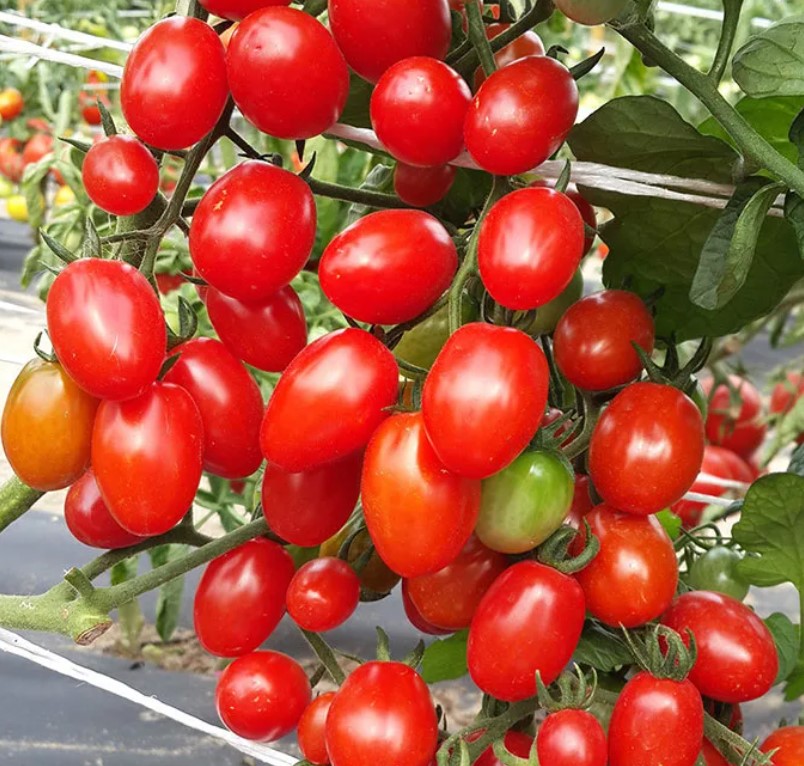
Photo gallery of tomato variety Siberian date F1
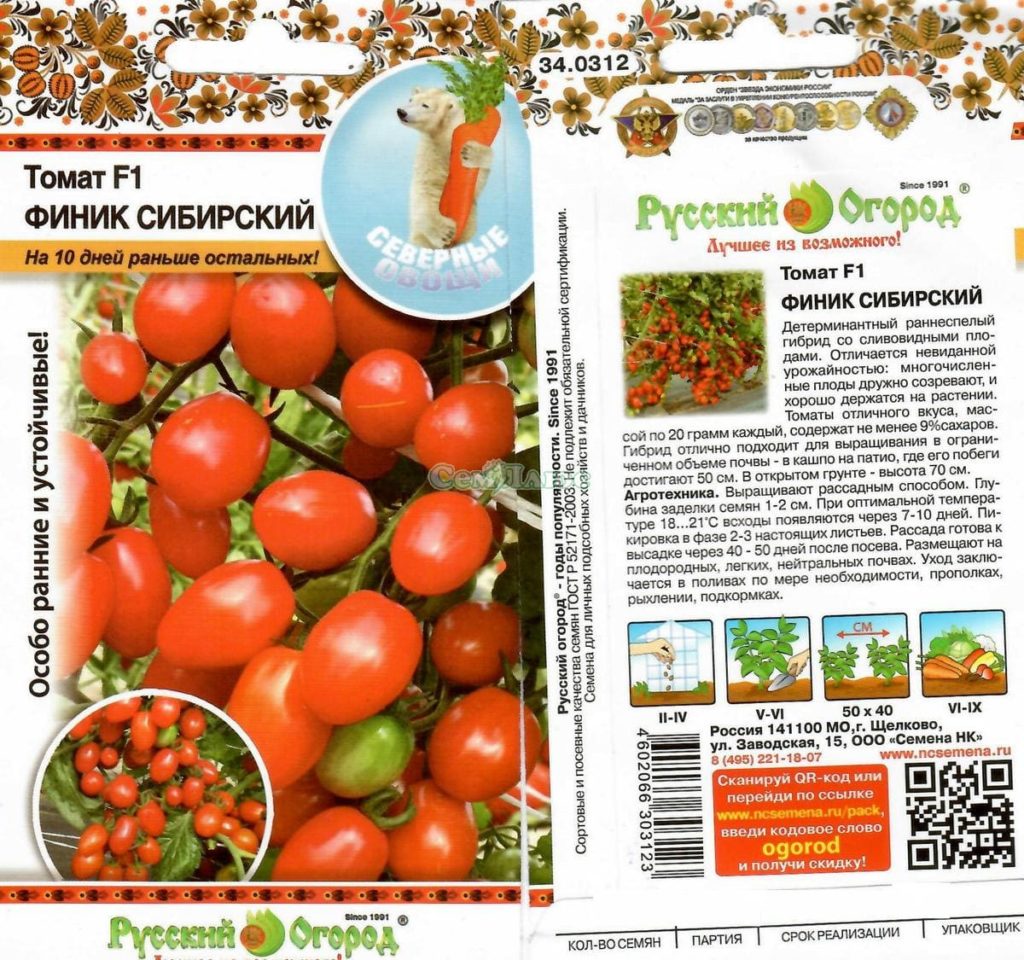
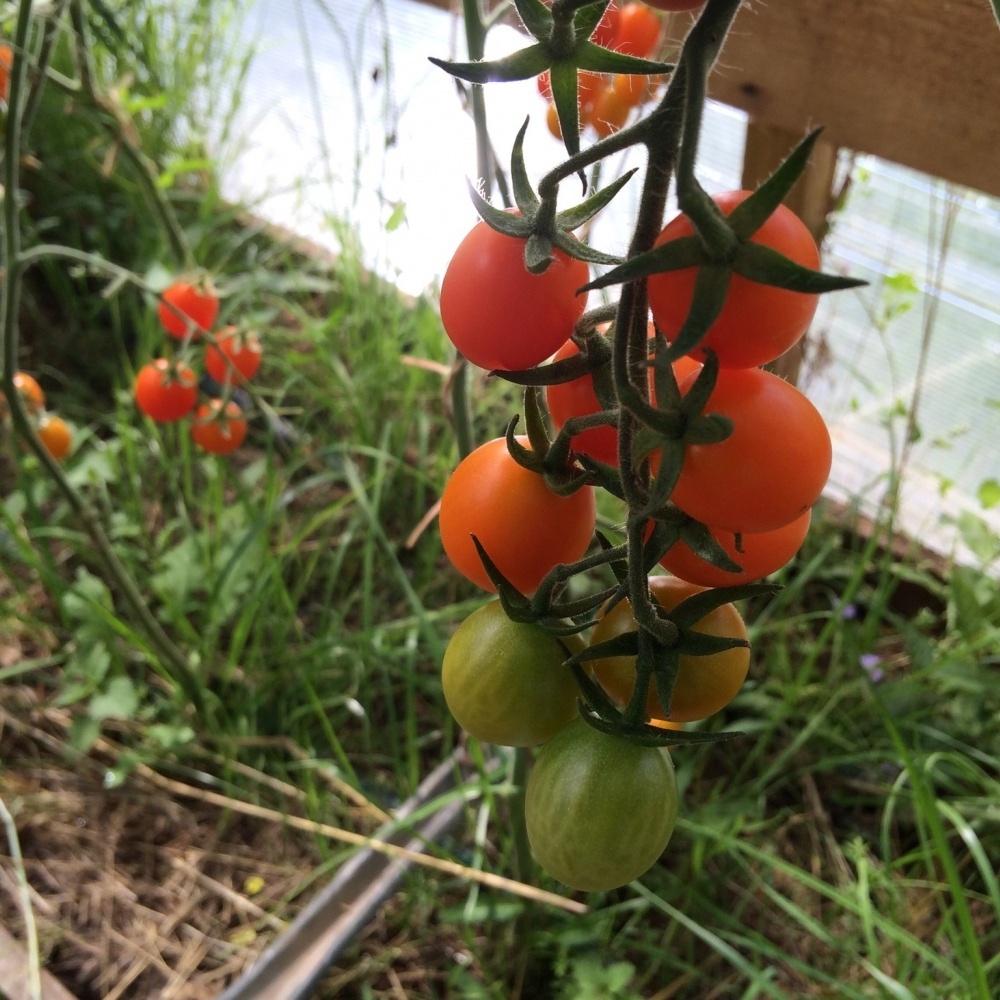
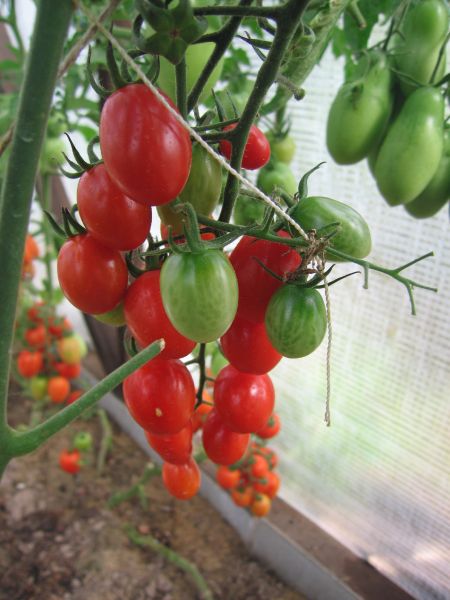
A detailed description of the tomato variety Siberian Date F1
Let's take a closer look at the characteristics:
Tomatoes form determinate bushes that can reach 0.6-0.7 m in open ground. In a greenhouse, they don't grow more than 50 cm. The stems are strong and resilient, making them suitable for supporting large quantities of fruit, which emerge quickly.
The fruit weighs up to 20 g and is plum-shaped. It is distinguished by its high sugar content and optimal balance of organic acids.
It ripens early, making it suitable for cultivation without seedlings. The harvest can be collected within 3-3.5 months after sprouting.
Up to 5 kg of tomatoes are harvested per square meter.
Pros and cons of the tomato variety Siberian Date F1
Advantages:
- early ripening;
- good yield;
- excellent taste;
- friendly ripening;
- good shelf life;
- universal application.
The only drawback is that the variety requires preventative treatment against diseases.
Features of cultivation of the tomato variety Siberian Date F1
This is an early variety; gardeners who know it do not grow seedlings, but sow them directly into tubs.
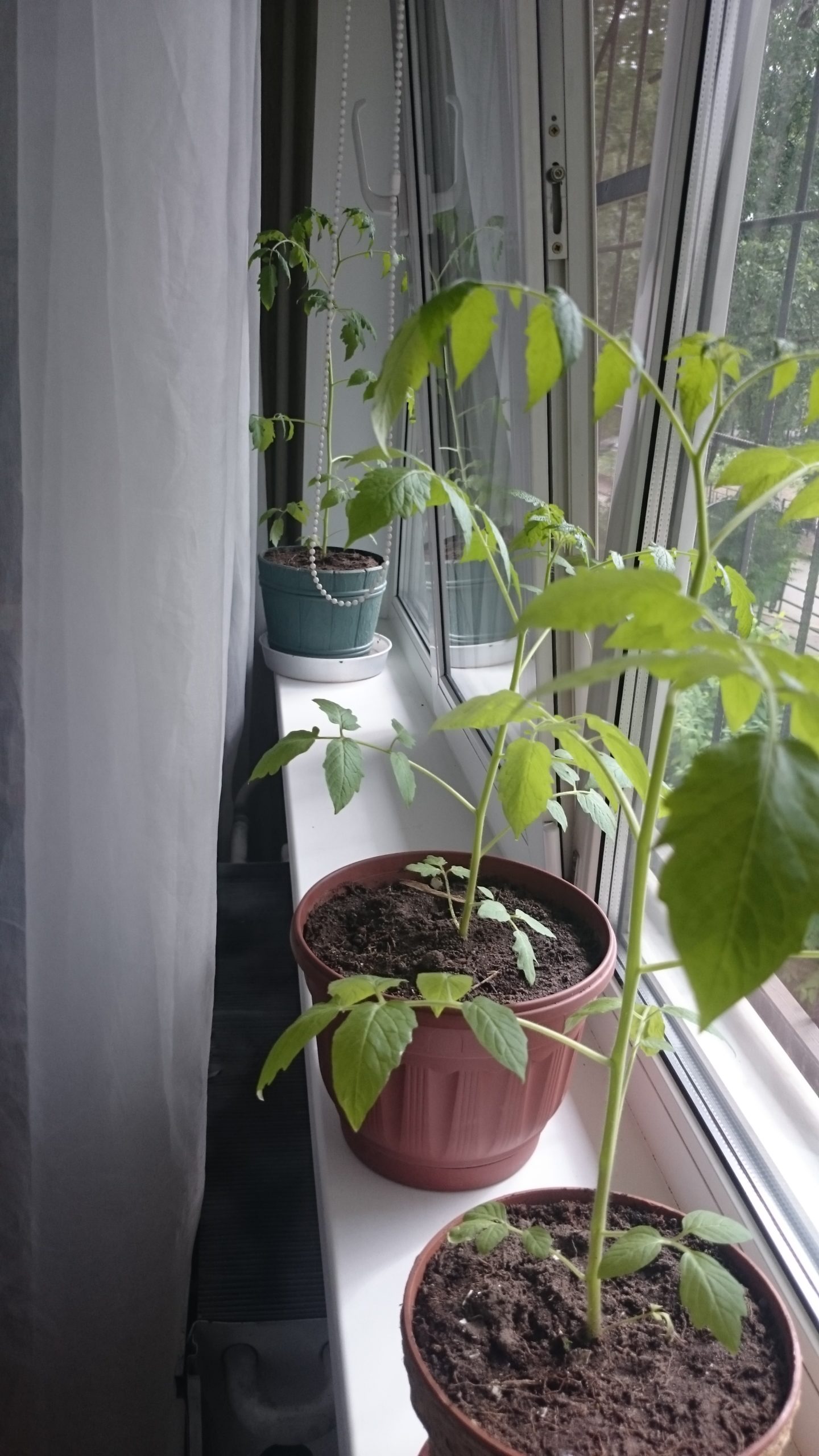
If the plants become very dense, at the two-leaf stage, thin out the seedlings. Don't discard any excess seedlings, but transplant them to outdoor beds; the rest remain in tubs. A distance of 25-30 cm is recommended between the bushes. Over time, they will merge and form a beautiful composition.
Care comes down to the following manipulations:
- application of fertilizers;
- watering;
- loosening the soil;
- mulching.
The variety is resistant to infections. However, preventative treatment should be carried out in any case.
Harvesting, using, and storing the tomato variety Siberian Date F1
The harvest can be done in bunches. To ensure longer shelf life, it's recommended to pick tomatoes with the stems attached. If you don't have time to harvest, you can postpone this task. The tomatoes will remain hanging on the vines and won't fall or crack until harvest.
They have a universal purpose. When preserved in a marinade, you can taste a pleasant sweetness. The tomatoes are firm and do not crack.
Sweet date
Gardeners who have been growing this variety for many years have come to the conclusion that its description matches the Cherry Lisa F1 tomatoes.
Table of characteristics of the tomato variety Sweet Date
| Characteristic | Description |
| Description | An early-ripening indeterminate variety for indoor cultivation. In the south, it can be grown without cover. |
| Ripening period | 95-115 days |
| Fruit weight | 8-10 g |
| Description of the fruit | Oval, smooth, orange. Excellent taste. |
| Productivity | Up to 3-4 kg per bush. |
| Usage | For salads and whole-fruit canning. |
| Marketability, shelf life | Excellent. |
| Preferred growing regions | With a warm and temperate climate. |
| Disease resistance | Resistant to many nightshade diseases. |
| Agricultural technology | Tying and shaping. |
| Not included | |
| Originator | Semko-Junior. |
Photo gallery of tomato variety Sweet date
A detailed description of the tomato variety Sweet Date
Let's take a closer look at the variety.
This tomato produces tall, indeterminate bushes. The leaves are small and dark emerald.
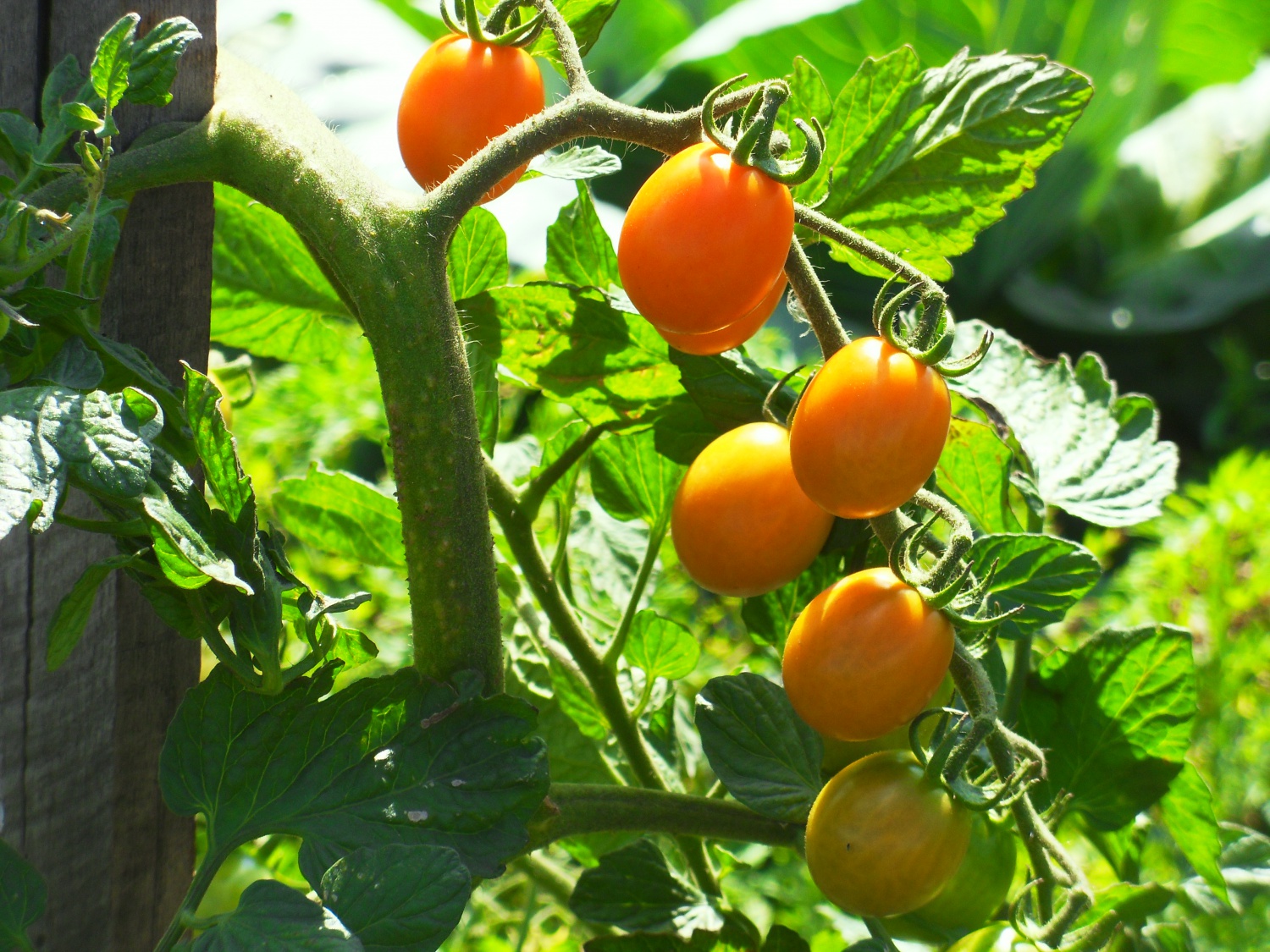
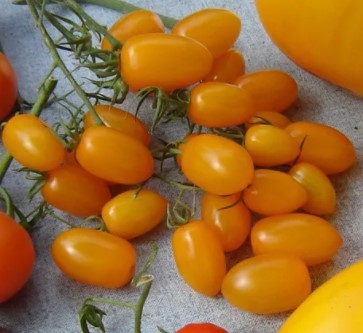
The fruit is cylindrical, bright orange, and smooth. The tomatoes are uniform in shape and size. They weigh 8-10 g. A single cluster produces up to 18-20 tomatoes.
There can be a significant delay between germination and harvest—95-115 days. Therefore, this variety is not recommended for growing in regions with cold summers.
Yield up to 12 kg per 1 sq. m.
Advantages and disadvantages of the Sweet Date tomato variety
Advantages:
- big harvest;
- excellent taste;
- attractive appearance;
- resistance to infections.
Resistant to:
- tobacco mosaic virus;
- Alternaria;
- blossom-end rot of fruits;
- bacteriosis.
It is affected by pests just like other tomatoes.
One of the disadvantages is the impossibility of growing it in regions with cold climates.
Features of cultivation of the tomato variety Sweet Date
Grown using seedlings. Seeds are sown and seedlings are grown using standard methods.
Planting in the ground is carried out at the age of 60-65 days in the standard manner.
This tall variety requires staking and shaping. Leave 3-4 shoots, as the small foliage and fruit will not interfere with neighboring shoots. Standard care procedures should be followed: fertilizing, watering, loosening the soil, and mulching.
Harvesting, using and storing sweet Finik tomatoes
Tomatoes store well and can be transported even over long distances. They are used in salads and as a garnish. They also make excellent preserves for the winter.
Date orange F1
Similar to Sweet Date, but differs in its later ripening period.
Characteristics of the tomato variety Finik Orange F1 in the table
| Characteristic | Description |
| Description | A mid-late indeterminate variety for greenhouses. In southern regions, it can be planted outdoors. |
| Ripening period | 120-130 days |
| Fruit weight | 15-20 g |
| Description of the fruit | Oval, bright orange. Excellent taste. |
| Productivity | Up to 1.8 kg per bush. |
| Usage | Universal. |
| Marketability, shelf life | Excellent. |
| Preferred growing regions | With a warm and temperate climate. |
| Disease resistance | To most diseases of nightshades (in the greenhouse). |
| Agricultural technology | Formation, garter. |
| Not included | |
| Originator | "Russian vegetable garden". |
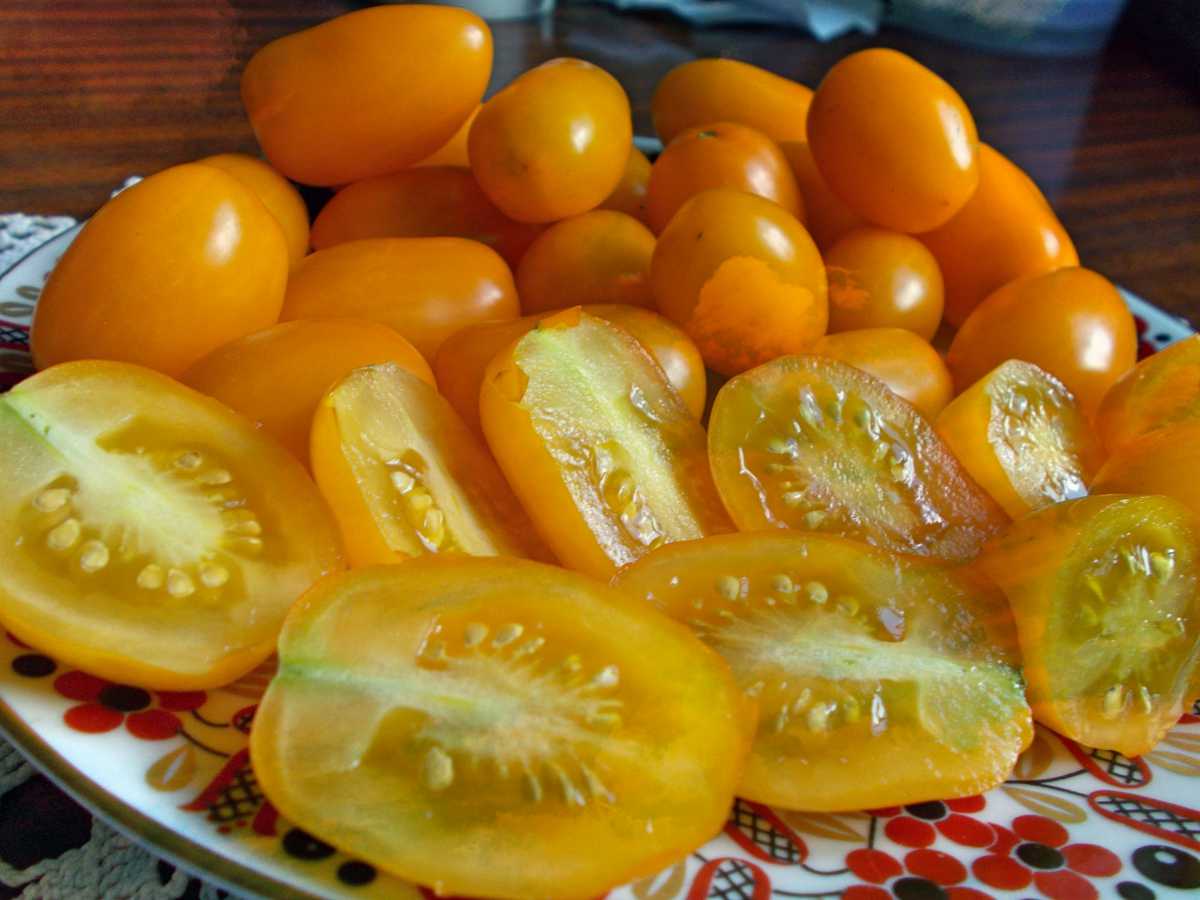
Photo gallery of tomato variety Date orange F1
Detailed description of the tomato variety Orange Date F1
Let's look at the features in more detail.
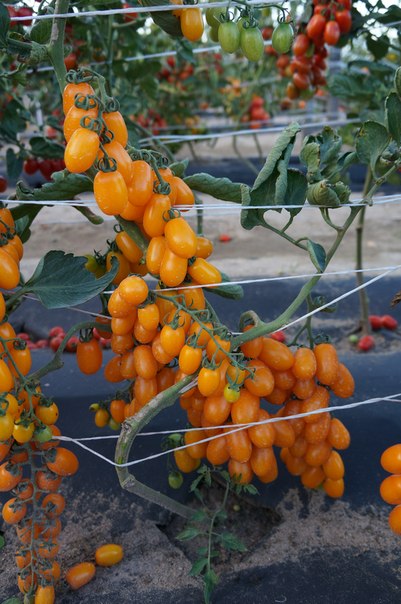
The tomato grows tall, indeterminate bushes. The fruits are collected in clusters, each containing up to 20 tomatoes.
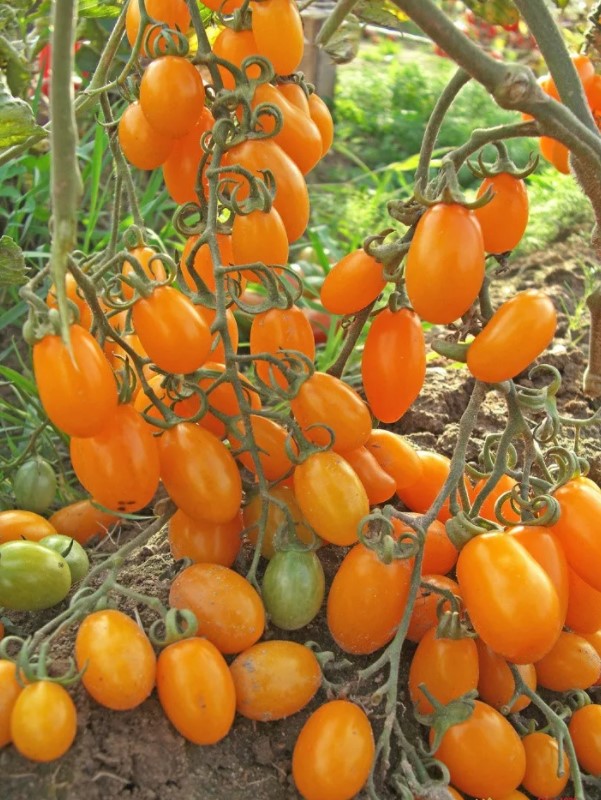
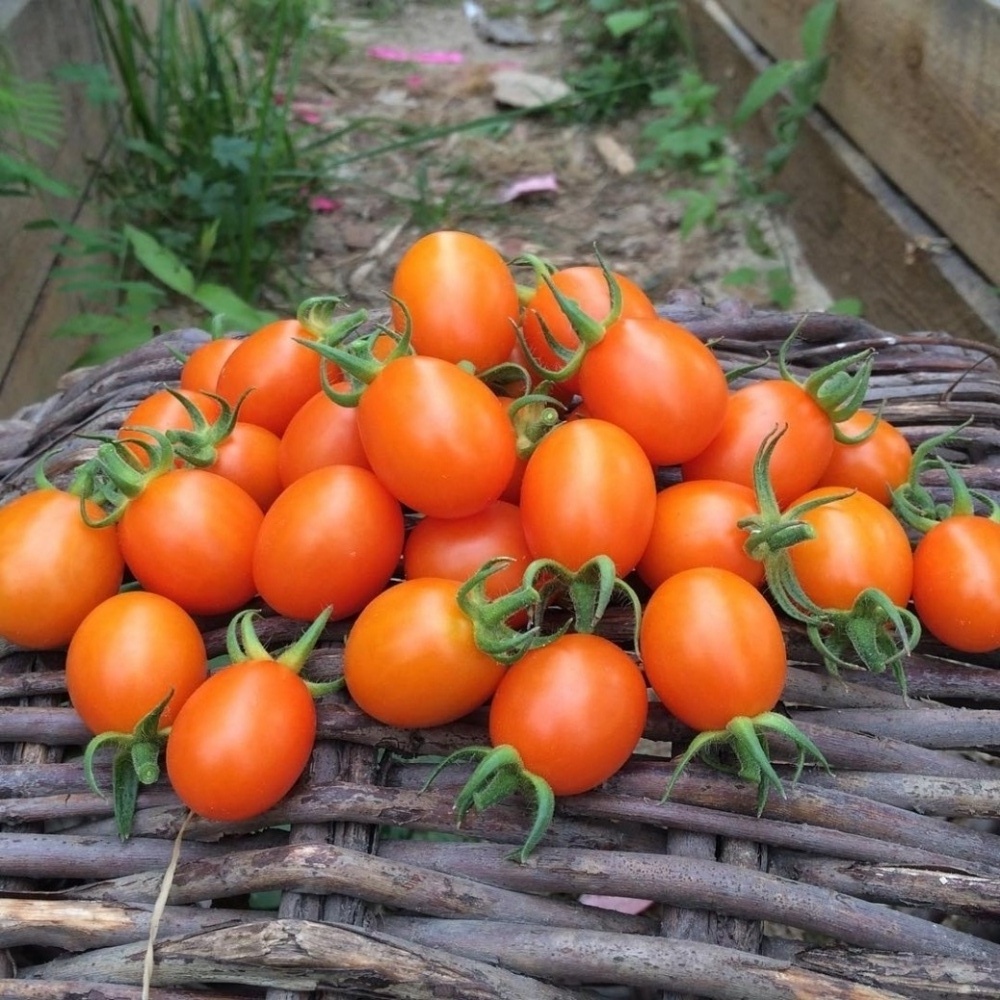
The fruit is oval and amber-orange in color. It has a perfect balance of organic acids and sugars, giving the tomatoes an excellent flavor. The core is completely free of voids. The seeds are small, and the skin is thin, but does not crack during transportation or exposure to high temperatures (such as during canning).
Has a late ripening period. Not suitable for planting in regions with short summers.
It has a good yield. Up to 6.5 kg are harvested per square meter.
Pros and cons of the tomato variety Orange Date F1
The advantages include:
- beautiful bright color;
- unusual taste;
- high fruiting;
- excellent keeping quality.
Disadvantages include late ripening and the need for garters and shaping.
Features of growing the tomato variety Orange Date F1
Sowing seeds, growing seedlings and planting in the ground are carried out in the standard way.
The bushes are tall and require support. The fruits and leaves on the bushes are small, so 3-4 stems can be used for training. At the very beginning of growth, side shoots form rapidly and need to be removed. As the bush grows, their number decreases.
The culture needs feeding:
- The first fertilizer is applied a couple of weeks after planting tomatoes in their permanent location. The plants require nitrogen. Ammonium nitrate or urea can be used.
- The second feeding is done two weeks later. Use organic matter and potassium sulfate, which promotes fruit set. Feeding stops in early August.
When planted in a greenhouse, they exhibit good resistance to infections. However, there is no data on their resistance in open ground. Therefore, it is best not to neglect preventative measures.
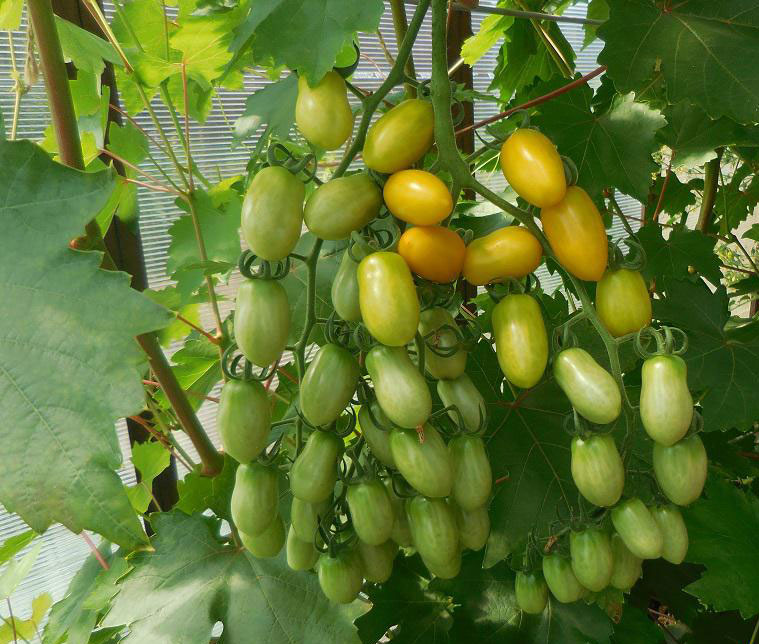
The use of modern fungicides will help prevent the development of infection:
- The first spraying is recommended to be done at the stage of ovary formation;
- subsequent ones every 2-3 weeks.
It is advisable to use 3-4 different drugs to prevent pathogens from developing resistance to them.
Harvesting, using and storing tomatoes of the Orange Date F1 variety
The fruits are picked in bunches. If they haven't ripened on the bush, they can be picked green and left to ripen in a dark place.
Tomatoes are versatile. Their thick skin prevents them from cracking when exposed to boiling water (during canning).
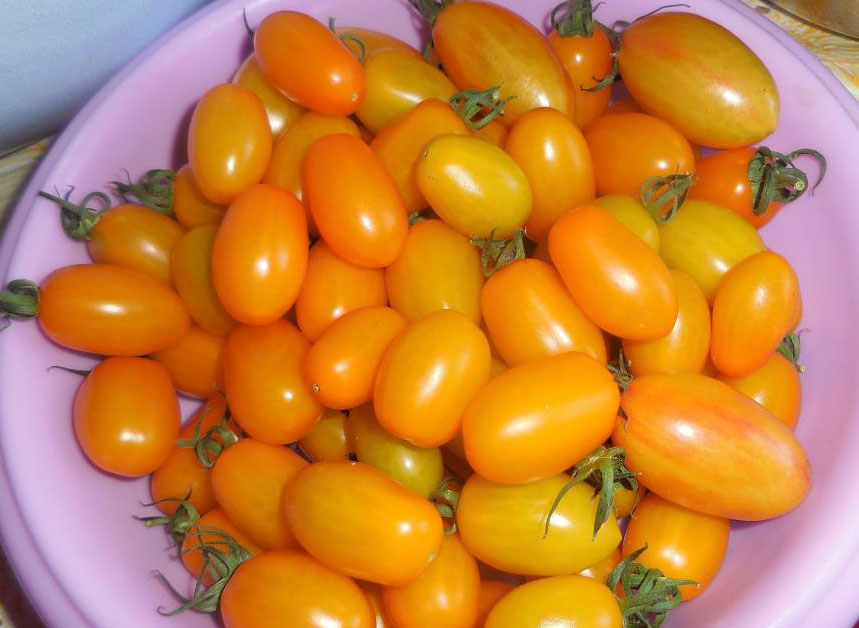
For more information on other cherry tomato varieties, see the articles on our website:
5 Delicious Varieties of Cherry Tomatoes
Comparison of the Finik series of tomatoes with other cherry tomato varieties
| Variety | Ripening period (number of days from full germination to ripening)
Yield of commercial fruits |
Brief description | Fetus |
| Red date palm | 120-130 days
1.5 kg per bush. |
A mid-late semi-determinate variety for open ground and greenhouses. Requires staking and shaping into 3-4 stems. Suitable for salads, garnishing, and canning. | Elongated-oval, can be round, ovoid, conical, smooth, red, 8-20 g. Excellent sweet taste. |
| Yellow date palm | 130 days
Up to 1.8 kg. |
A mid-late semi-determinate variety for open ground and greenhouses. Requires staking and shaping into 3-4 stems. Suitable for salads, garnishing, and canning. | Oval, smooth, yellow, 20 g. Excellent taste. |
| Siberian date palm | About 100 days
1.5-2 kg per bush. |
A determinate, early-ripening variety for open ground and greenhouses. Requires staking and shaping into 3-4 stems. Suitable for salads, garnishing, and canning. | Plum-shaped, red, up to 20 g. Excellent taste. |
| Sweet date | 120-130 days
3-4 kg per bush. |
An early-ripening indeterminate variety for greenhouse cultivation. In the south, it can be grown without cover. Requires staking and training into 3-4 stems. Suitable for salads, garnishing, and canning. | Oval, smooth, orange, 8-10 g. Excellent taste. |
| Orange date palm | 120-130 days
Up to 1.8 kg per bush. |
A mid-late indeterminate variety for greenhouses. In southern regions, it can be planted outdoors. Requires staking and training into 3-4 stems. Suitable for salads, garnishing, and canning. | Oval, bright orange, 15-20 g. Excellent taste. |
| Balcony miracle | 85 days
600 c/ha |
A mid-season, determinate, low-growing variety for open ground and small containers on balconies. Suitable for salads. | Small, round, smooth or slightly ribbed, intensely red, 30-60 g. |
| Ladybug | about 80 days
900 c/ha |
An ultra-early maturing determinate variety for open ground and greenhouses. Requires staking and training. Suitable for salads, whole-fruit canning, and pickling. | Round, smooth, dense, red, 10-12 g. Excellent taste. |
| Bonsai | 94-97 days
300 c/ha (up to 1 kg per plant) |
An early-ripening, determinate, standard variety for balconies, loggias, and indoor growing. Suitable for salads. | Round, smooth, red, 24-27 g. The taste is good and excellent. |
| It's so big | 85-100 days
350 c/ha |
An early-ripening determinate variety for open ground and greenhouses. Suitable for salads. | Round, medium density, slightly ribbed, red, 15-18 g. Good taste. |
| Black cherry | 112 days
350 c/ha |
An early-ripening indeterminate variety for greenhouses. Suitable for salads and canning. | Round, smooth, brown, 18 g. Excellent taste. |
| Yellow cherry | 95-96 days
300-400 c/ha (1 kg per plant) |
An early-ripening indeterminate variety for open ground. Requires staking, pinching, and side shoots above the third or fourth cluster. Suitable for salads and whole-clump canning. | Round, yellow, smooth, 15-20 g. The taste is good and excellent. |
| Red cherry | 95-102 days
300-400 c/ha (1 kg per plant) |
An early-ripening indeterminate variety for open ground and greenhouses. Requires staking, pinching, and side shoots above the third or fourth cluster. Suitable for salads and whole-clump canning. | Round, red, smooth, 15-20 g. The taste is good and excellent. |
| Dwarf | 91-116 days
162-559 c/ha, maximum 559 c/ha (Mari El Republic) |
An early-ripening, determinate, non-standard variety for open ground. Suitable for salads, canning, and pickling. | Round, red, smooth, 20-35 g. The taste is satisfactory and good. |
| Children's joy | 95-105 days
600 c/ha |
An early-ripening indeterminate variety for open ground and greenhouses. Requires staking and training. Suitable for salads and whole-fruit canning. | Round, smooth, very dense, red, 20-30 g. Excellent taste. |
| Thumbelina | 90-95 days
470 c/ha (greenhouse and under film) |
An early-ripening indeterminate variety for open ground and greenhouses. Requires staking and training. Suitable for salads and whole-fruit canning. | Round, smooth, dense, red, 15-25 g. Excellent taste. |
| Golden brush | 95-98 days
640 c/ha (greenhouse and under film) |
An early-ripening indeterminate variety for open ground and greenhouses. Suitable for salads. | Pear-shaped, small, slightly ribbed, medium density, red, 25-35 g. Excellent taste. |
| Sugar-coated cranberries | about 80 days
230-280 c/ha (greenhouse and under film) |
An early-ripening, determinate, standard variety for open ground and greenhouses. Suitable for salads and whole-fruit canning. | Round, dense, slightly ribbed, red, 15 g. Good taste. |
| Little Red Riding Hood | 85-90 days
180 c/ha |
An early-ripening, determinate, standard variety for greenhouses. Suitable for salads. | Round, smooth, soft, red, 15-20 g. Excellent taste. |
| Moon fountain | 100-105 days
420-490 c/ha (greenhouse and under film) |
An early-ripening indeterminate variety for greenhouses. Suitable for salads. | Cylindrical, dense, slightly ribbed, creamy, 12-17 g. Good taste. |
| Madeira | 85-90 days
440-700 c/ha |
An early-ripening indeterminate variety for greenhouses. Suitable for salads. | Round, smooth, red, 20-25 g. Good taste. |
| Raspberry Fountain | 100-105 days
520-610 c/ha (greenhouse and under film) |
An early-ripening determinate variety for greenhouses. Suitable for salads. | Elliptical, medium density, slightly ribbed, raspberry, 20-27 g. Good taste. |
| Pinocchio | 105-110 days
300-450 c/ha (1-1.5 kg from one plant). |
A mid-season, determinate, standard variety for indoor flowerpots and balconies. Suitable for salads. | Flat-round, smooth, small, red, 15-20 g. The taste is good and excellent. |
| Kiss of the Geranium | 90 days
Up to 1000 c/ha |
An early-ripening determinate variety for open ground and greenhouses. Suitable for salads, canning, pickling, and processing into tomato products. | Oblong with a drop-shaped appendage at the end, smooth, red, 15-35 g. The taste is good to excellent. |
| Button | about 90 days
400-450 c/ha (greenhouse and under film) |
An early-ripening, determinate, standard variety for open ground and greenhouses. Suitable for salads, pickling, and whole-fruit canning. | Round, smooth, medium density, red, 10-15 g. Excellent taste. |
| Rapunzel's golden braids | 89-94 days
1700 c/ha |
An early-ripening indeterminate variety for open ground and greenhouses (greenhouses only, according to the register). Requires staking and training into two stems. Suitable for salads, pickling, whole-fruit canning, drying, and curing. | Round, small, orange, 15-18 g. Excellent taste. |
| Sugar plum | 88-95 days
600-900 c/ha |
An early-ripening semi-determinate variety for open ground and greenhouses. Requires staking and training. Suitable for salads, canning, and processing into tomato products (juice). | Plum-shaped, smooth, red, 25-40 g. Excellent taste. |
| Sweet cherry | 75-83 days
900-1200 c/ha |
An ultra-early indeterminate variety for greenhouses. Suitable for salads, first and second courses, and canning. | Spherical, smooth, red, yellow or orange, 20-30 g. Excellent taste. |
| Sweet bunch | 90-100 days
The yield of commercial fruits under film shelters is 3.5 kg/sq.m. |
An early-ripening indeterminate variety for open ground and greenhouses. Requires staking and training. Suitable for salads and whole-fruit canning. | Round, smooth, dense, red, 20-30 g. Good taste. |
| Sweet baby | 80-85 days
The commercial yield of fruits was 3.4 kg/sq.m. |
An early-ripening indeterminate variety for open ground. Suitable for salads. | Round, small, smooth, soft, red, 8 g. Excellent taste. |
| Sweet Million | 95-100 days
Commercial yield 4.8-7.0 kg/sq.m. |
An early-ripening, indeterminate, medium-sized variety for greenhouses. Suitable for salads. | Round, smooth, red, 15-20 g. Excellent taste. |
| Sweet fountain | 100-105 days
650 c/ha (greenhouse and under film) |
An early-ripening indeterminate variety for greenhouses. Suitable for salads. | Elliptical, medium density, smooth, red, 18-20 g. Good taste. |
| Favorite | 114-118 days
The yield of commercial fruits is 16.3-17.9 kg/sq.m. |
A mid-early indeterminate variety for open ground and greenhouses. Requires staking and training. Suitable for salads and processing into tomato products. Marketability is 98-100%. | Round, red, 12-15 g. Excellent taste. |
| Cherry Blossom | 110 days
370-450 c/ha |
A mid-early indeterminate variety for open ground and greenhouses. Suitable for pickling, canning, and salads. | Round, glossy, red, 18-25 g. Good taste. |
Gardeners' reviews of the Finik series
Gardeners cite the Finik collection's advantages as the tomatoes' appetizing appearance and unique taste, while the disadvantages include the need for shaping and tying.
Reviews of the tomato variety Finik Red F1
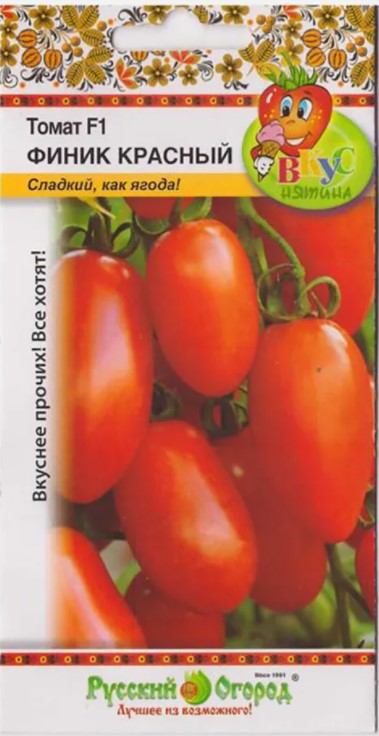
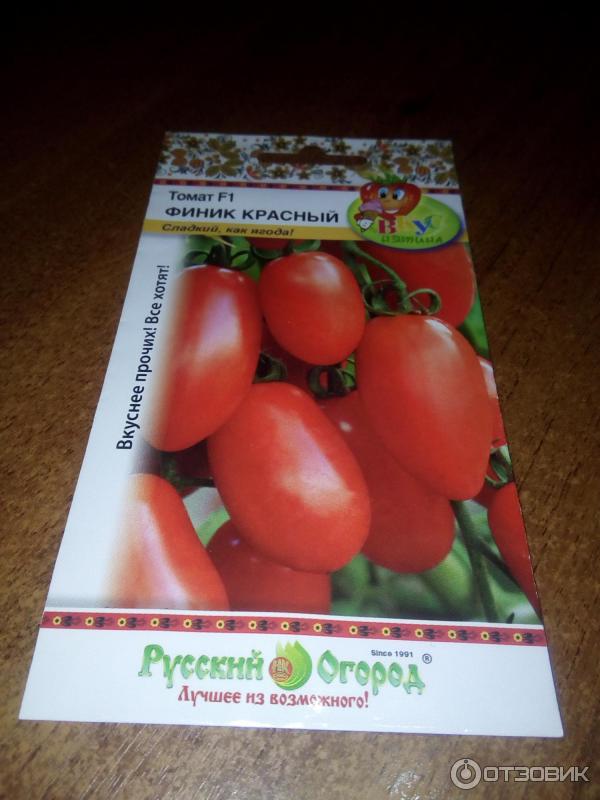
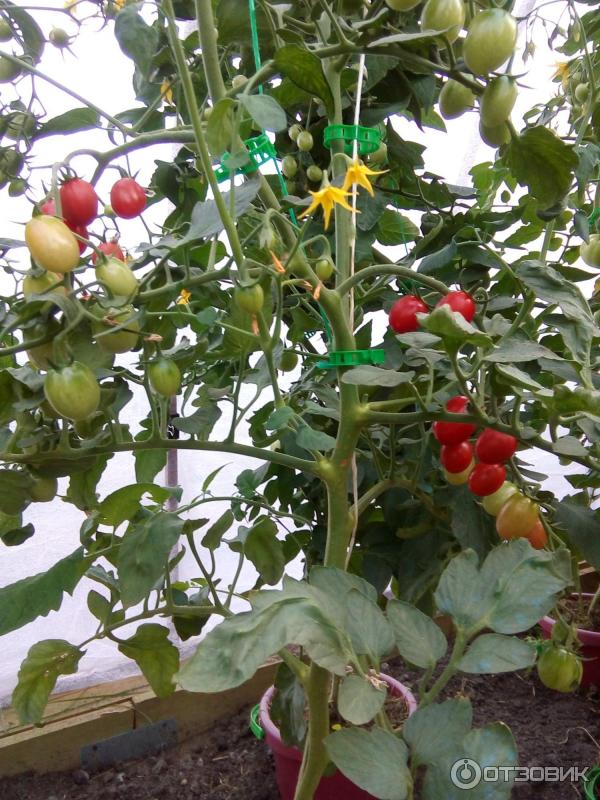
After seeing berry-sweet tomato seeds at the store, I decided to buy some and try growing a few plants. I bought the "Russky Ogorod" "Finik Krasny F1" tomato seeds because they're a greenhouse hybrid with a fruity flavor.
DESCRIPTION OF THE VARIETY
A semi-determinate, mid-season variety. The plant has few leaves and a single raceme. The height is 90–150 cm. The red, oval fruits resemble dates, slightly elongated in shape. Fruit weight is up to 20 cm.
The juicy softness and dense skin allow tomatoes not only to be eaten ripe, but also to be preserved without losing their appearance.
There are only 15 seeds in the packet.
SEED PREPARATION
I started preparing the seeds for planting at the end of February. I sampled seven seeds. First, I soaked them in Baikal EM1 for 30 minutes. Then, I germinated the seeds in a Matrasik. On the third or fourth day, only six of the seven seeds sprouted. I germinated the seeds at 22 degrees Celsius.
I planted the sprouted seeds in a snail-shaped container, which was housed in a mini-greenhouse with a transparent lid. I monitored the sprouts morning and evening to ensure they didn't become too tall.
GROWING SEEDLINGS
After all the seedlings had emerged on the second or third day, I removed the lid and placed the snail with the seedlings on the windowsill in the light. All six seeds sprouted. In the evening, I illuminated the seedlings with a fluorescent lamp, just like the other tomato plants.
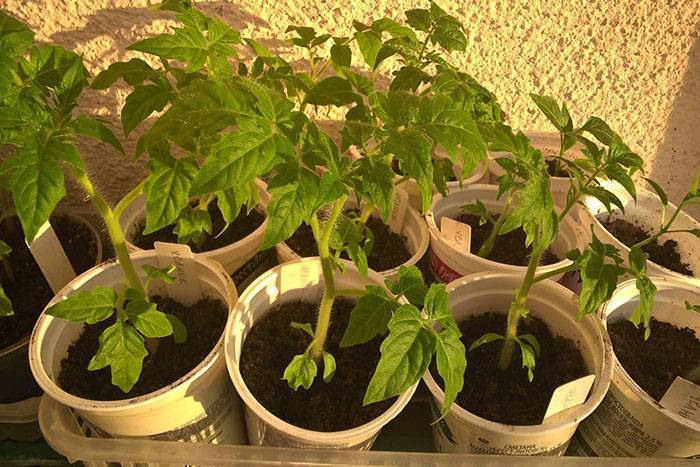
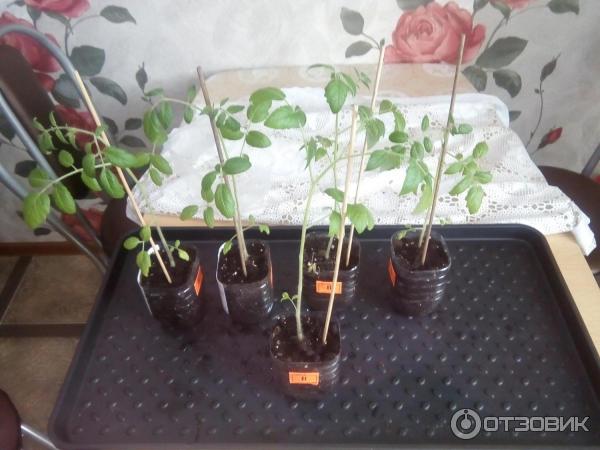
I transplanted the seedlings at the two- to three-true-leaf stage around March 20th into empty milk jugs. I only managed to transplant five of the six seedlings.
I watered the seedlings with a rubber syringe (bulb) as the soil dried out.
Not a single bush of the seedlings broke, and by the time they were moved to the greenhouse, all 5 bushes were in good condition.
PLANTING IN A GREENHOUSE
Before planting the seedlings in a permanent location, I harden them off.
I planted the seedlings in 9-liter buckets in early May, staggered, 40 cm apart from the buckets in the first row. Before planting, I dug holes in each bucket and watered them with warm water. After the water had soaked in, I placed the seedlings in the holes. I transplanted the seedlings in the evening. After transplanting, I firmed the holes in the buckets around the seedlings and watered them again with warm water. I planted three seedlings in the greenhouse, keeping the rest for future use. When transplanting, the seedlings are buried deep up to the cotyledon leaves. Do not water or feed the young plants until they are established in their permanent location.
Once the bushes have established themselves, they need to be tied to a trellis. I didn't need the two spare seedlings.
I trained the bushes into three stems due to their size. I secured them to the trellis using clips. This attachment is convenient and secure.
I watered the plants two to three times a week, depending on the weather. I sprayed the bushes only twice against late blight (with kefir, iodine, and laundry soap) and watered the roots with iodine once.
As the bushes grew, I picked off the leaves up to the first cluster, and then, as they began to turn red and the harvest began, I removed the leaves up to the second cluster around the 20th of July.
I didn't remove any more leaves, as the plant had very few leaves. I only removed side shoots when I saw them.
HARVESTING
I harvested the tomatoes as they ripened in early July, allowing the other tomatoes to ripen. With the tomatoes secured to a trellis, harvesting is easier and less complicated.
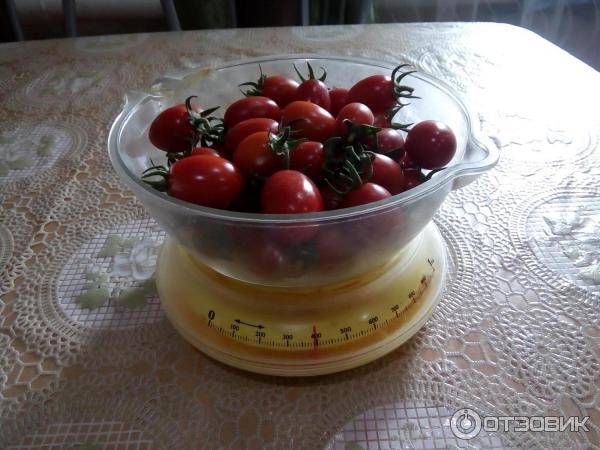
The largest tomatoes weighed 20 grams, while the smaller ones were only 8 grams. These tomatoes are primarily intended for fresh consumption, but we made several 650-gram jars for winter storage.
ADVANTAGES AND DISADVANTAGES
The advantage of this hybrid:
simple agricultural technology;
resistance to all tomato diseases;
excellent taste;
good shelf lifeDisadvantages of a hybrid:
mandatory garterThe tomato hybrid "Finik Red F1" is not for everyone, so I won't recommend it or not; you decide for yourself.
Reviews of the tomato variety Finik Yellow F1
A variety from Russky Ogorod, we've had it for a long time, every year. It's sweet, has a long shelf life thanks to its good stem separation and firm texture, and the flavor doesn't fade. I already wrote about how last year my granddaughter came running from the garage in tears in November, unable to find any more FINIKA tomatoes among the ripening tomatoes.
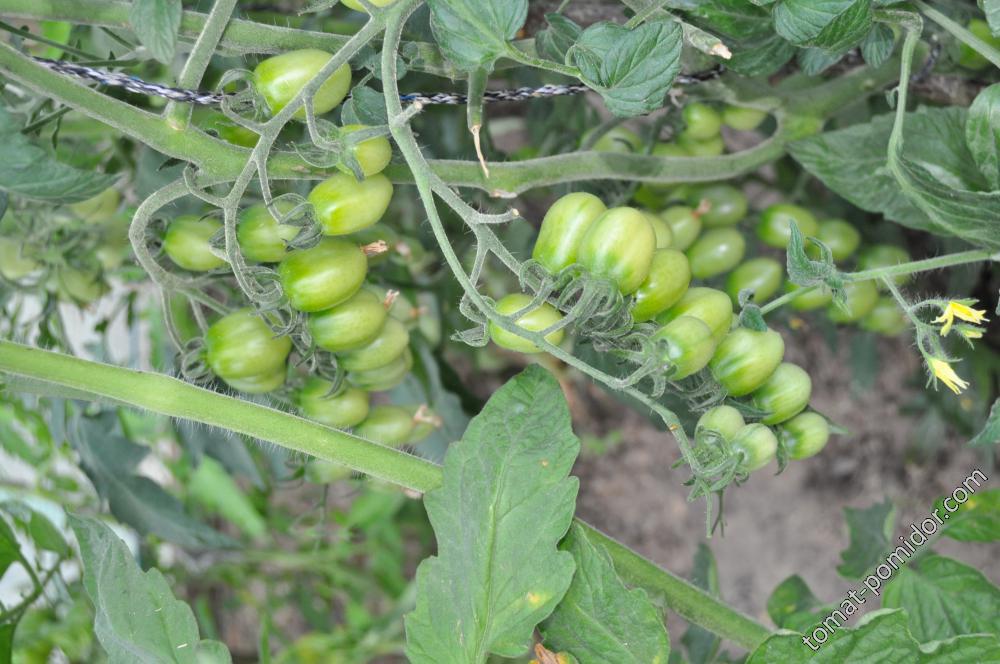
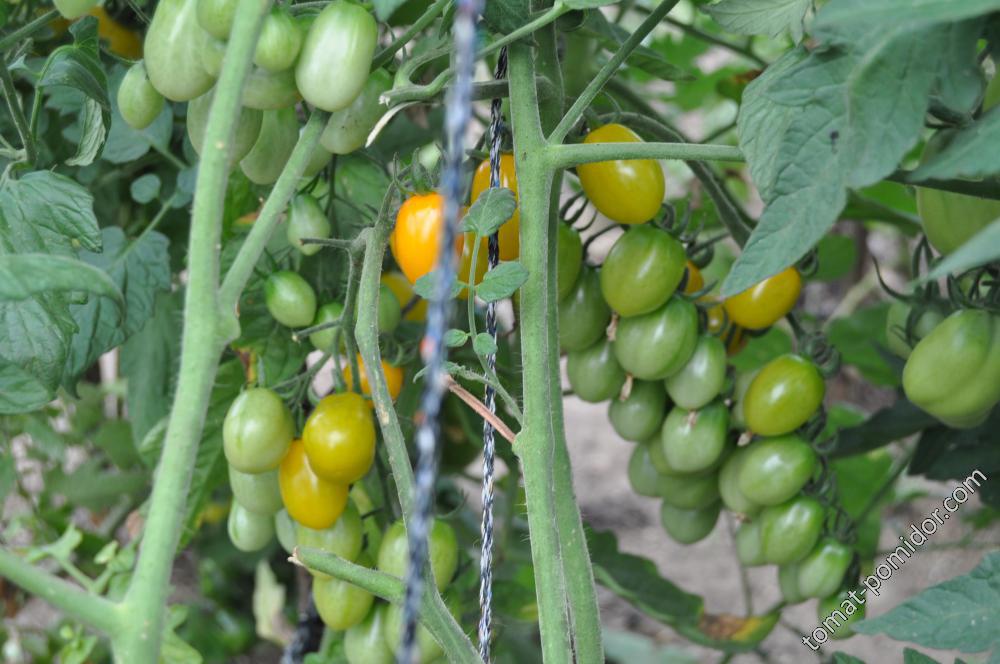
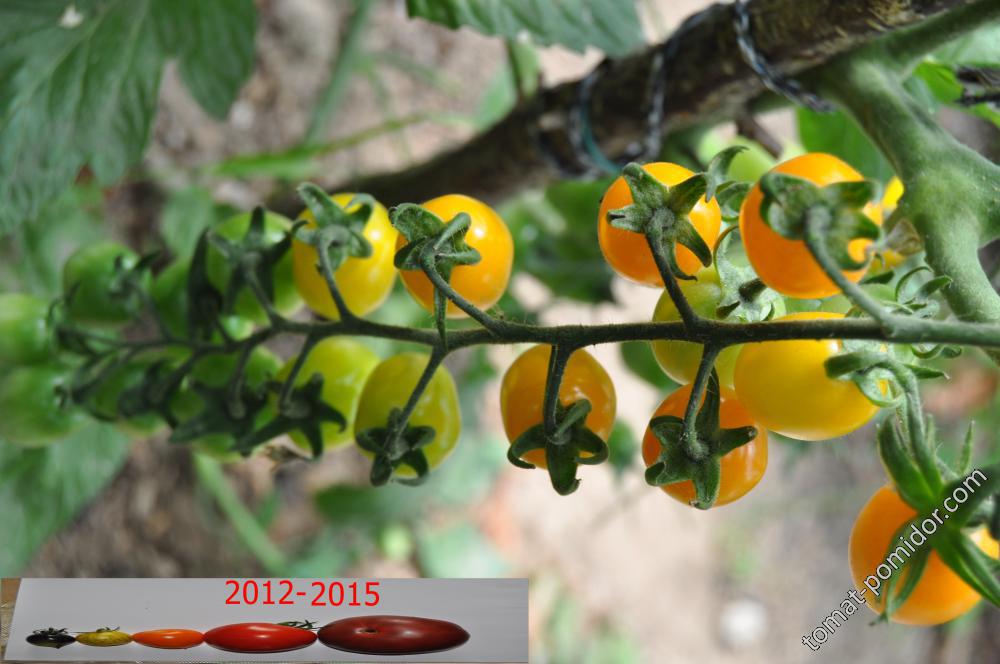
This year I planted a Yellow Date F1 from the Russian Garden. It grew in the open ground without any cover. I wasn't impressed... Yes, it was abundant, yes, it's beautiful, and easy to care for, but I can't say it's sweet. It's an ordinary tomato. The few that ripened fully on the vine were sweet, but not downright sweet. I'll can it in jars. Maybe it will do better in a greenhouse; I'll have to try that.
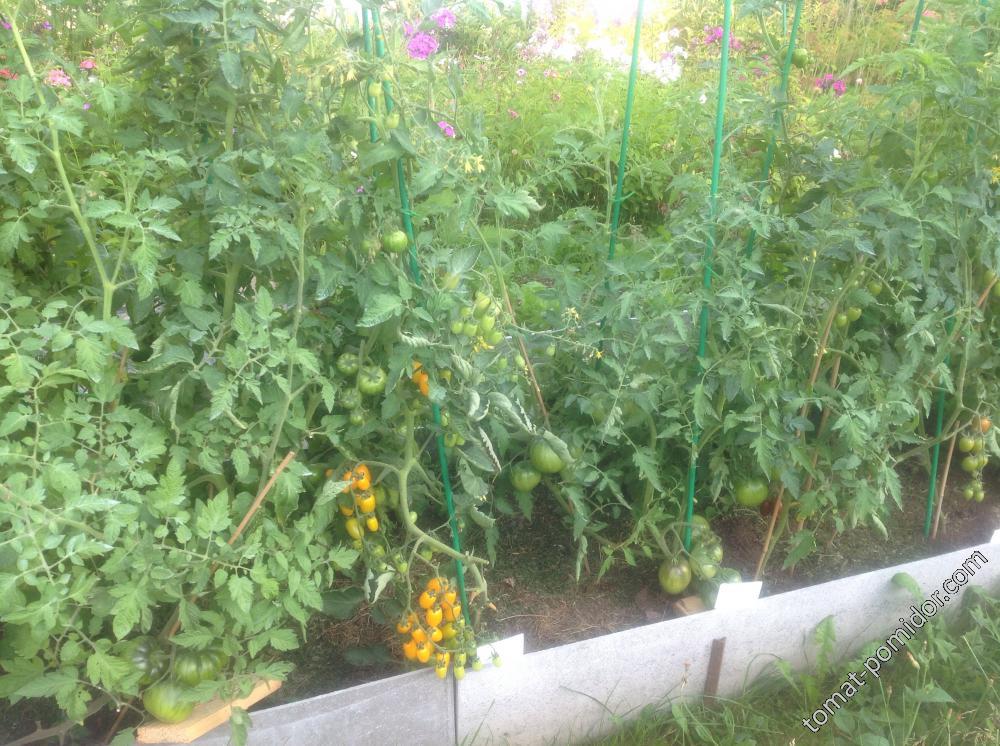
My yellow date palms were quite late, starting to ripen in August, even though I sowed them on February 22, 2016. I didn't have a large yield from them, but they were firm and lasted a long time indoors until October without spoiling. The skin was thick. Sweet, but not honey-like to my taste. They grew in a greenhouse; I'd already pulled out all the tomatoes, but they were still ripening. I harvested two-thirds of them while they were still green.
Reviews of the tomato variety Finik Siberian F1
Hello!
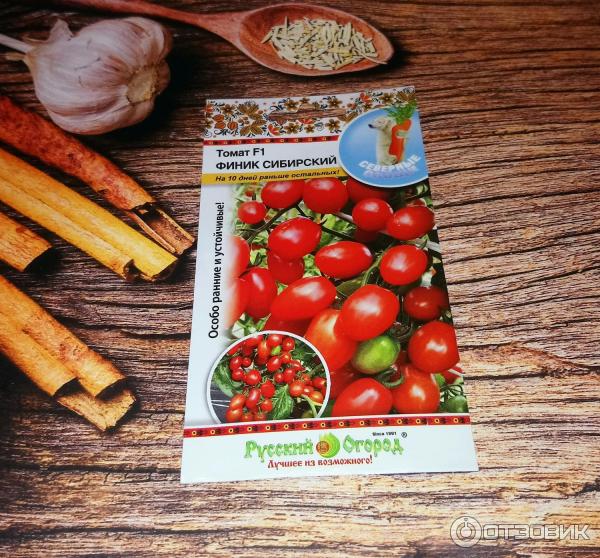
Today I will be reviewing the tomato seeds Russian Garden "Finik Sibiryskiy F1".
This year, thanks to the greenhouse, I was able to grow tomatoes, which I will gladly tell you about, as I planted several varieties and, surprisingly, the first experiment was a success; the harvest pleasantly surprised me.
The seed packaging is pretty standard.
I know the manufacturer, I’ve been buying seeds for several years now, but this is my first time buying tomatoes.
As recommended by the manufacturer, I pre-germinated the seeds and then planted them in a greenhouse.
The seeds are of high quality, with a 100% germination rate.
There are 5 seeds in the package, I bought 2 packages and 10 bushes sprouted.
I planted them at the end of March and in May I planted them in the ground as fairly large bushes.
Out of 10 bushes, all 10 took root without any problems or diseases.
However, despite the manufacturer’s promises, my bushes grew not 50–70 cm, but almost 1.5 meters.
But at the same time, they bear fruit abundantly, so the harvest is rich.
The tomatoes are shaped like dates: small, dense, but sweet and moderately firm.
I started picking tomatoes a couple of weeks ago, the variety is really early, I even started picking cherry tomatoes later.
The kids, and I too, really like this variety. There are a lot of fruits, they are small, firm and sweet, so I will be happy to plant these tomatoes next year.
I think it's worth summing up and reminding you of the advantages and disadvantages of tomato seeds under the Russian Garden brand "Siberian Date F1":
+ wide selection of seeds from the manufacturer;
+ seed quality;
+ 100% germination;
+ abundant harvest;
+ tomatoes are moderately dense and sweet.
My family and I liked the tomato seeds from the Russian Garden "Siberian Date F1", so I would be happy to buy them again.
Whether to buy seeds from the producer or not is entirely up to you.
Thank you for your attention and see you soon!


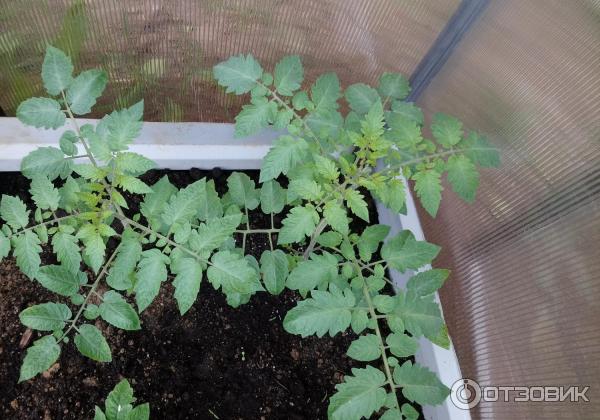
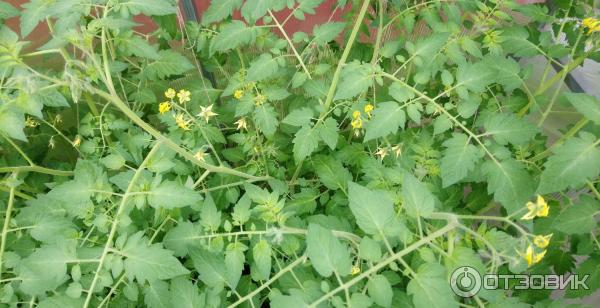
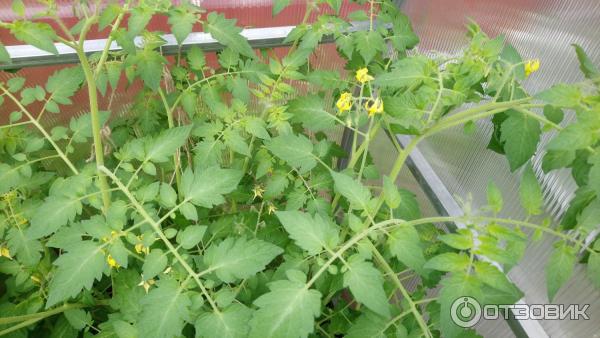
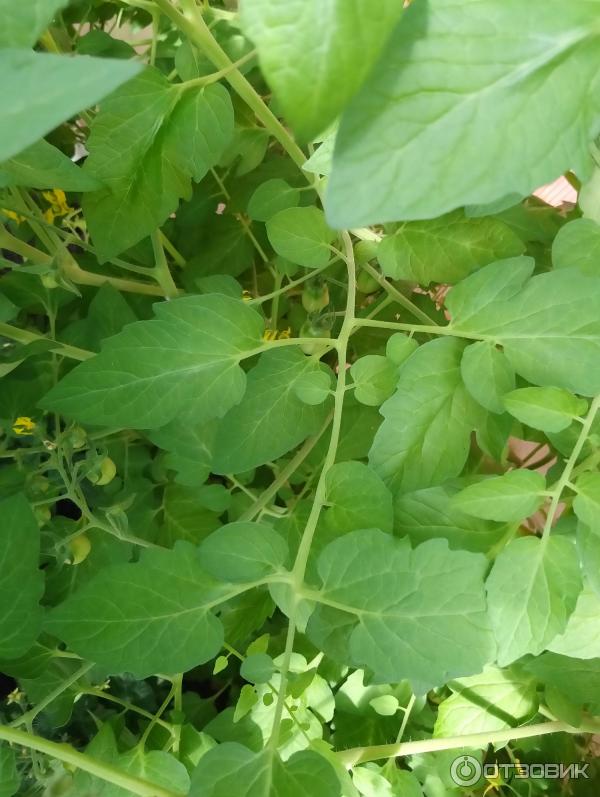
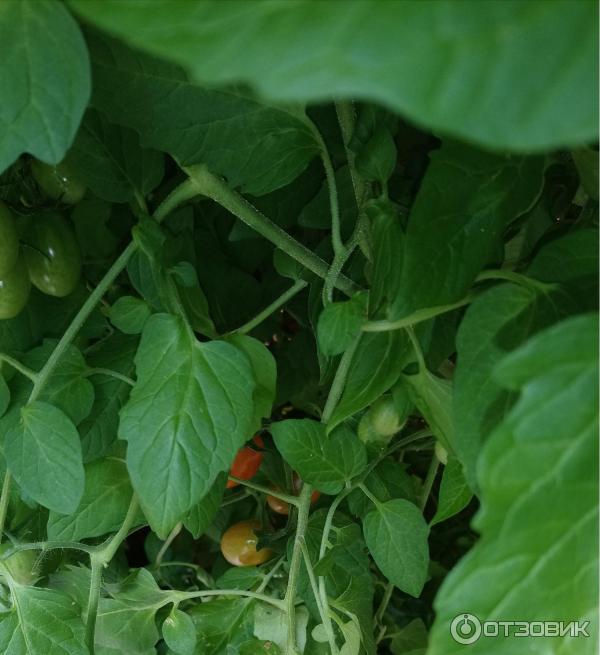
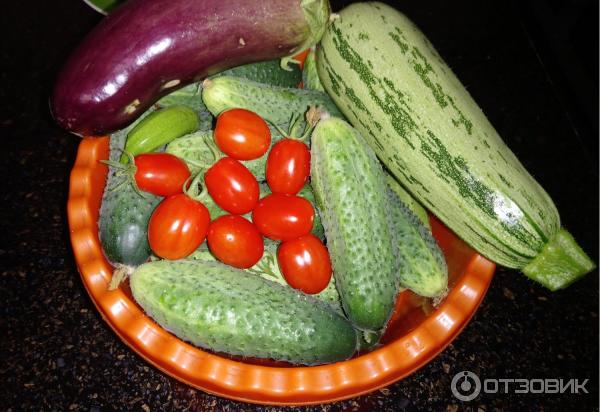
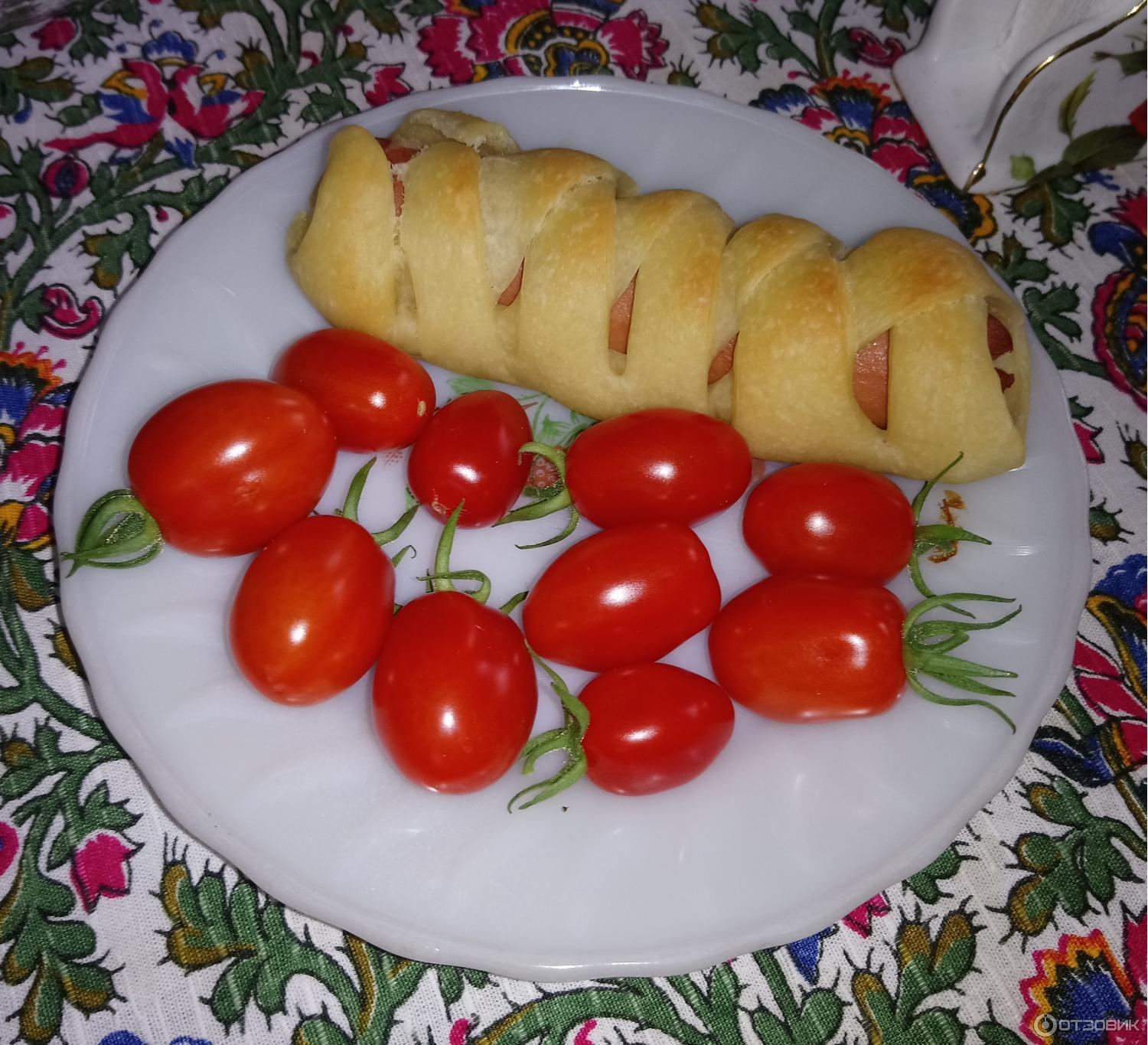
Good afternoon
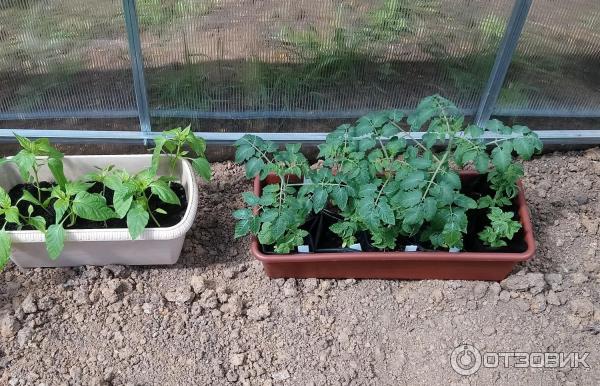
After 6 years of growing this variety, I decided to completely rewrite the review about it as of 2021.Seeds are sold in packs of Russian Garden, each pack contains 5 seeds (+/-) one piece.
The rest of the descriptive part is in other reviews, so here are only the important facts about this tomato.
1. This variety cannot be grown in a greenhouse. It will grow in a greenhouse, but the yield will be several times smaller than it should be.
2. Yield - about a bucket per bush
3. This variety requires no maintenance. None at all!!! To ensure a good harvest, don't disturb the tomato plant! To get a large crop, plant seedlings in March, plant the seedlings in May, and start harvesting them in August. No watering required! No staking required! This weed spreads out on its own, choking out all other weeds, turning into a giant single-stemmed tomato plant.
The bush develops a powerful root system. Roots come from all branches.
4. In general, you don't even need seedlings—just dig up a few tomatoes in the fall, and in the spring you'll see a bed full of tomato seedlings. The harvest will be smaller than with seedlings, though.
5. The variety is frost-resistant. As stated, it can withstand temperatures of -2-3 degrees Celsius without covering.
6. Resistant to late blight. During the peak of the blight season, only 10-20% of fruits are affected. (This is generally unnoticeable given the variety's productivity.)
7. Important: although it's labeled as a hybrid variety, it still grows from its own seeds. So if you don't want to pay 150 rubles for a pack of seeds, just scoop a few seeds from this year's tomato harvest.
8. The ideal location for planting tomatoes is a bright, open space, such as a potato field. Although they will also grow well in shade or a damp spot, they are more susceptible to late blight and fruit rot.
With the onset of cold weather, the bushes can already be pulled out, collecting the remains of the tomatoes.
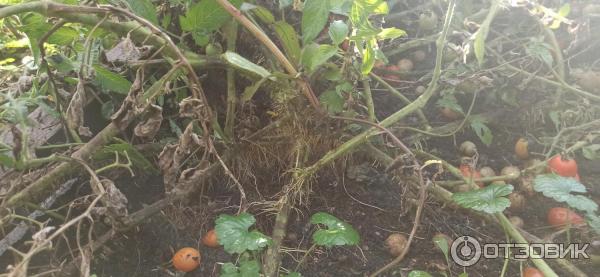
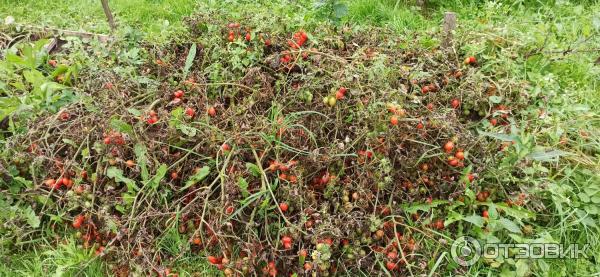
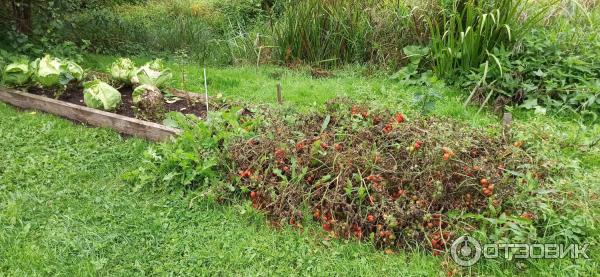
For example, the leftovers look like this (this is despite the fact that we've already harvested an incredible pile of tomatoes from here. There are three tomato plants growing in this spot). So before planting, think about what you'll do with that many tomatoes.
Now I'll try planting it in gravel for the winter)))

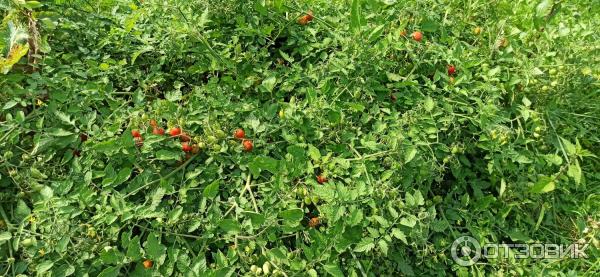
This year, I installed a polycarbonate greenhouse on my property. I try to plant super-early tomato and cucumber seedlings there. These varieties include the Siberian Finik tomato. This is a determinate plant and an early-ripening hybrid. The tomatoes have an elongated, plum-shaped form.
This plant is productive, producing numerous small fruits on its stems. Although they are not large, their abundance more than makes up for this shortcoming. Siberian Date tomatoes have thick skin and firm flesh, and they hang on the stem for a long time. The fruits are sweet and pleasant to the taste. The average weight of one tomato is about 20 grams. This plant is short, forming a compact bush. This tomato is decorative, so it can be grown in a pot or small container. This plant is also suitable for a balcony.Tomato seeds of this variety are quite expensive. A pack contains only 10 seeds, and they cost 70 rubles. I grow this plant from seedlings. I sow the seeds shallowly, 2 centimeters from the soil surface. The seedlings germinate quickly at a temperature of 21°C. The first sprouts emerge from the ground in a week or a week and a half. Tomatoes prefer loose, fertilized soil. I plant the seedlings in a greenhouse and care for them the same way as other plants.
Reviews of the Orange Date tomato variety
I planted an orange one. It grew in a greenhouse. It was very productive and sweet. It wasn't affected by disease (the large-fruited ones nearby were affected by late blight). It bore fruit for a long time. I harvested it in October.
This year, I'm growing an orange date in the greenhouse. It was one of the first to ripen. The flavor is bright, sweet and tart. I really liked it.
Orange Date from Russian Garden is the bomb! :hey:
Disease-resistant, productive (and this was in the open air this summer!!!), ideal for open ground. For comparison, I planted one bush in a greenhouse, but it wasn't the same. It produces a lot of ovaries in open ground. The fruits are firm, not sour, with a hint of sugar. Very tasty. Stores well. Honey Drop doesn't come close. A stunning variety, I recommend it to everyone.
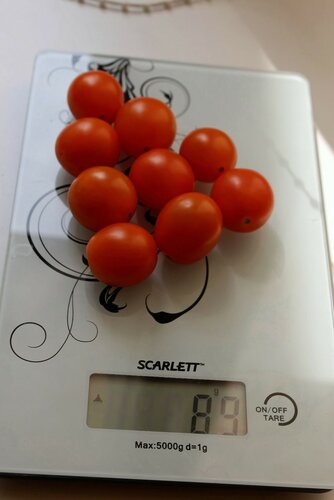
In this photo there is an orange date palm and a gypsy.
“It doesn’t look like a date at all… A lucky mix-up?”
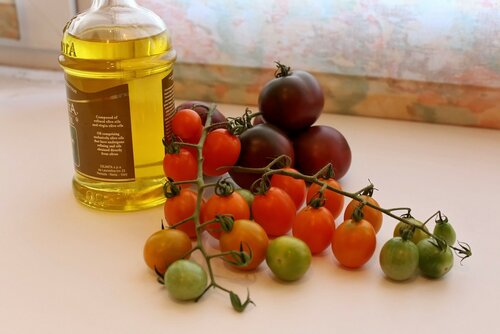
I'm not quite sure about dates this season. :dnt:
I planted two types of dates - Variegated and Orange (both from Sweet Potato Bushes)
The orange one turned out to be shaped like a date:
I really liked it—it was productive, had no diseases, and formed clusters well. I used it mainly in assorted pickles and for drying.