The Zolotaya Kist tomato is an early-ripening, small-fruited variety. It gets its name from the golden-colored fruits that grow in clusters on the bushes. In this article, we'll discuss the variety's characteristics and growing methods in more detail.
Content
- 1 Characteristics of the Golden Brush tomato variety in a table
- 2 The history of the Golden Brush tomato variety
- 3 A detailed description of the Golden Brush tomato variety
- 4 Advantages and disadvantages of the Golden Brush tomato variety (table)
- 5 Growing the Golden Brush tomato variety
- 6 Harvesting, using and storing the Golden Brush tomato variety
- 7 Comparison of the Golden Brush tomato variety with other varieties in the table
- 8 Gardeners' reviews of the Golden Brush tomato variety
Characteristics of the Golden Brush tomato variety in a table
|
Ripening period (number of days from full germination to ripening) |
95-98 days |
| Description | Indeterminate shoots up to 150 cm tall produce neat clusters of uniform, golden-colored fruit. Suitable for greenhouses and open ground. |
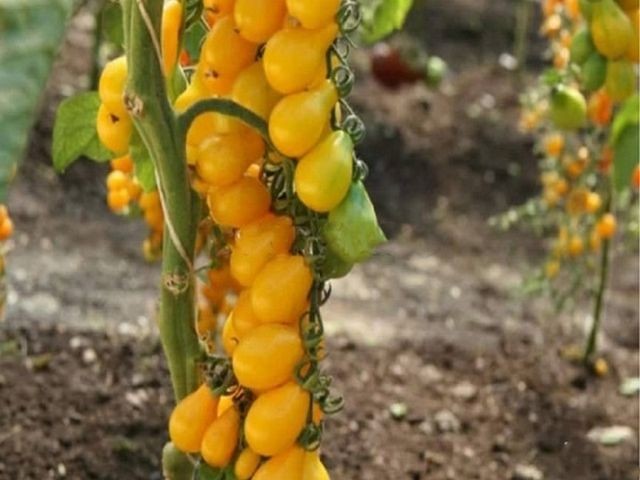
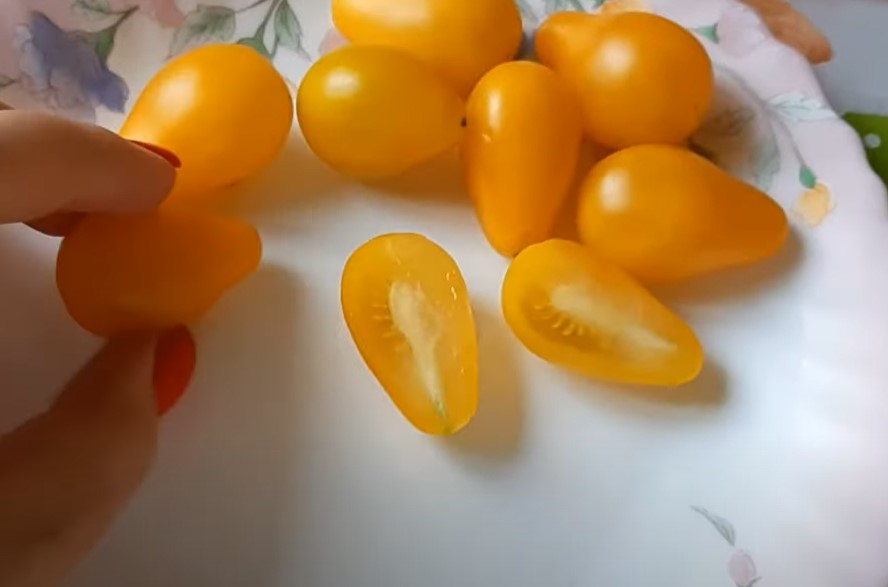
| Fetus | The fruit is pear-shaped, the surface is smooth and glossy, and the skin is dense. |
| Fruit weight | 25-35 years |
| Taste | Sweetish, pleasant |
| Usage | They can be used for fresh eating, canning, preparing main courses and salads. |
| Marketability | High |
| Shelf life | Good |
| Yield of commercial fruits | Up to 6.4 kg per square meter |
| Disease resistance | Excellent resistance to common tomato diseases. |
| Agricultural technology | As the bushes grow, they need to be tied up and shaped. |
| Growing regions | Northern, Northwestern, Central, Volga-Vyatka, Central Black Earth Region, North Caucasian, Middle Volga, Lower Volga, Ural, West Siberian, East Siberian, Far Eastern |
| 2015 | |
| Originator | LLC 'AGROFIRM 'SEDEK' |
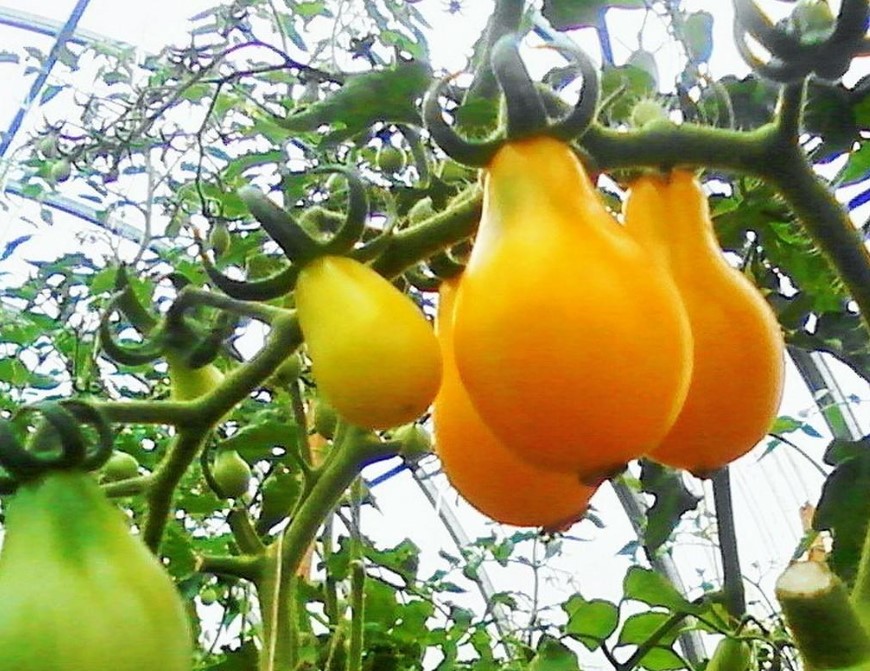
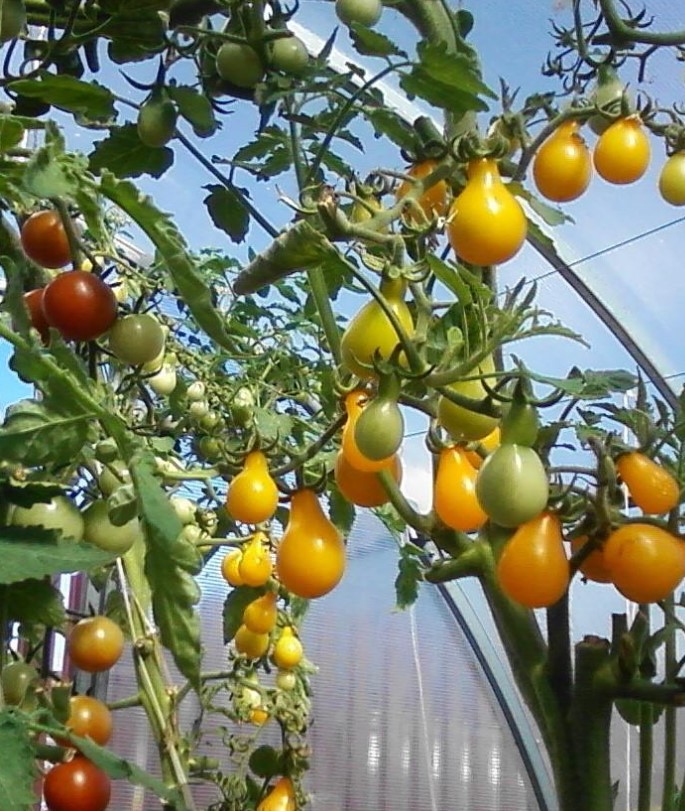
Photo gallery of the Golden Brush tomato variety
The history of the Golden Brush tomato variety
The Zolotaya Kist tomato was conceived by the breeders at the Sedek agrofirm as a cherry tomato variety. One of the breeders' primary goals was to ensure the fruit's excellent resistance to various weather conditions, which they successfully achieved. In 2015, the variety was added to the register and zoned for various regions of our country.
A detailed description of the Golden Brush tomato variety
The Golden Brush tomato is distinguished by the special arrangement of tomatoes, which grow in even clusters on the bushes.
Characteristics of the bush
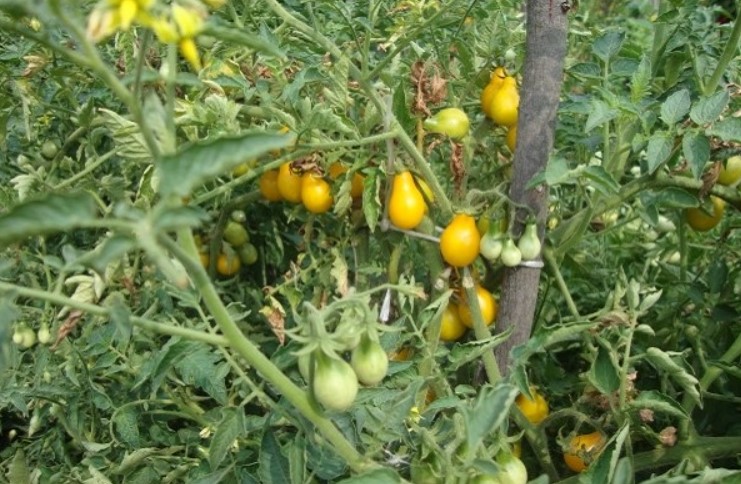
The plant is tall, with indeterminate shoots that can reach 150 cm in height. The leaves are medium-sized and light green. The inflorescences are simple.
Fruit characteristics
The fruits are characterized by their small, pear-shaped, clustered nature. They weigh between 20 and 35 grams, and their color ranges from greenish to yellow. The skin is glossy, smooth, and fairly dense. The tomato contains 4-6 seed chambers, and the flavor is pleasant and slightly sweet.
Ripening time and yield
The Golden Brush tomato is distinguished by its early ripening period. Ripe fruits can be harvested from the bush as early as 95 days after the first shoots emerge.
The yield is high, and the fruiting period is quite long. Up to 6.4 kg of ripe tomatoes can be harvested from one square meter.
Resistance of the Golden Brush tomato variety to diseases and pests
The Zolotaya Kist variety is known for its strong immunity. Experienced gardeners note that even in unfavorable weather, the bushes and fruits are extremely rarely affected by late blight. As a preventative measure, spray the plants with a solution of Fitosporin or Bordeaux mixture three times per season, at two-week intervals.
Advantages and disadvantages of the Golden Brush tomato variety (table)
The Golden Brush tomato variety has a number of advantages and disadvantages, which are listed in the table below.
| Advantages | Flaws |
|
|
Growing the Golden Brush tomato variety
The Golden Brush tomato variety is relatively easy to grow and care for, so it thrives in greenhouses even in regions with harsh climates. To obtain a bountiful harvest, simply follow standard tomato care guidelines.
Sowing seeds and growing seedlings
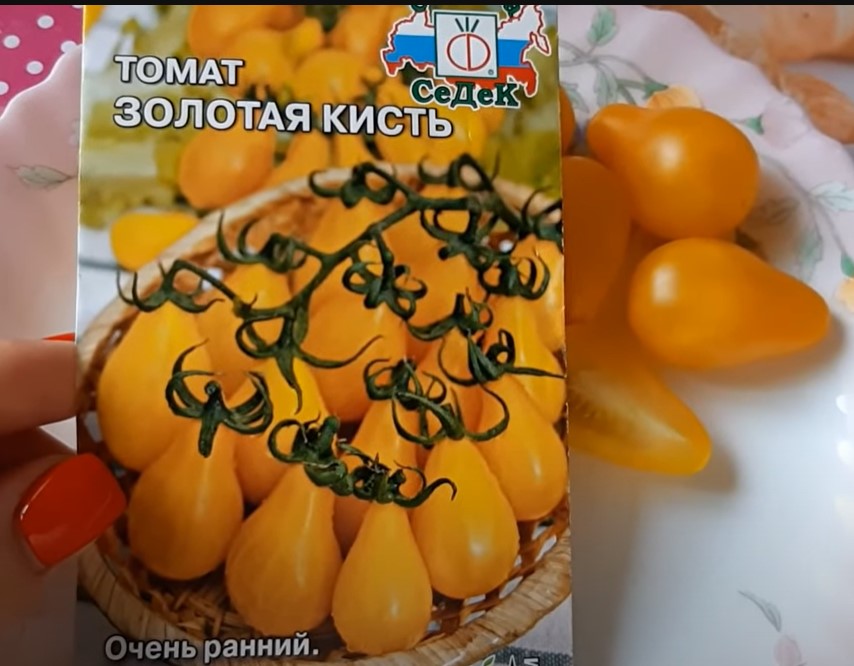
It's best to purchase Golden Brush tomato seeds from trusted producers to avoid low germination rates or even the wrong variety.
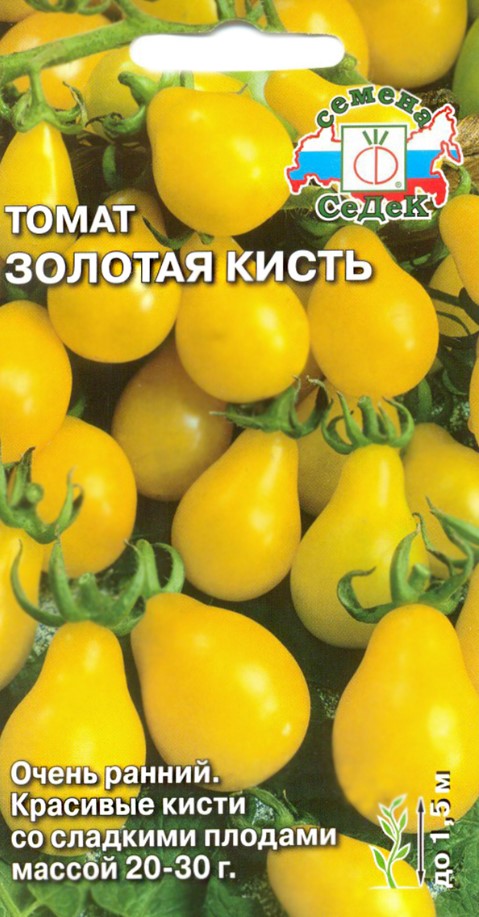
If desired, they can be disinfected by soaking them in a weak solution of potassium permanganate for 15 minutes, then drying and treating them with any growth stimulant.
To increase the number of seedlings, you can pre-germinate the seeds by placing them in a damp cloth for 24 hours. Typically, sprouts will begin to emerge by this time.
You can purchase planting soil at a specialty store or mix it yourself. To do this, use garden soil with equal parts peat, humus, and sand.
Various types of containers are used for sowing:
- Wooden boxes.
- Plastic containers.
- Cut-off milk cartons.
- Bottom from plastic bottles.
- Peat tablets.
- Peat cups.
The latter option is the most preferable, as the plants do not need to be replanted; they are transferred to the soil directly with the cup, which then decomposes into useful components.
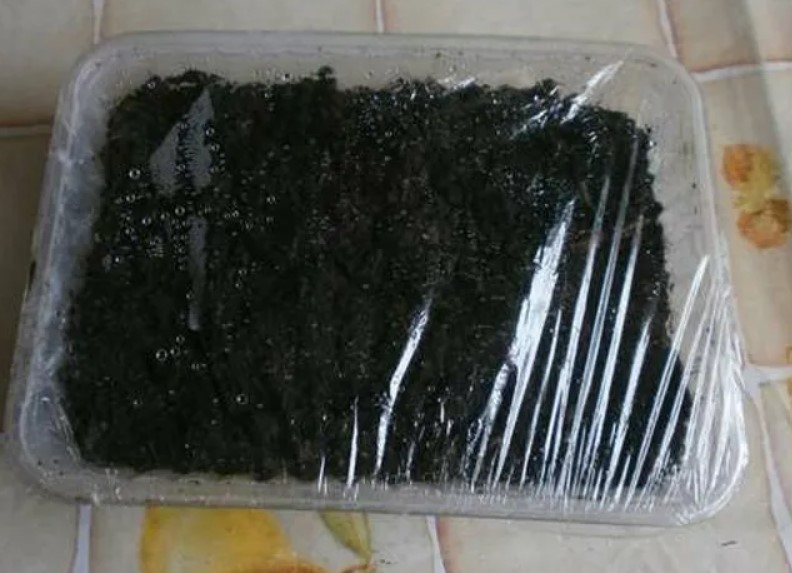
Fill the selected container 2/3 full with potting soil, then make furrows about 1 cm deep on the surface. Place the seeds in these furrows at intervals of 2-3 cm and cover with soil. Next, water the plantings, cover the container with plastic wrap or glass, and place it in a warm place.
The cover is periodically removed for ventilation to prevent condensation from accumulating underneath. As the soil dries, water the plants using a syringe or spray bottle.
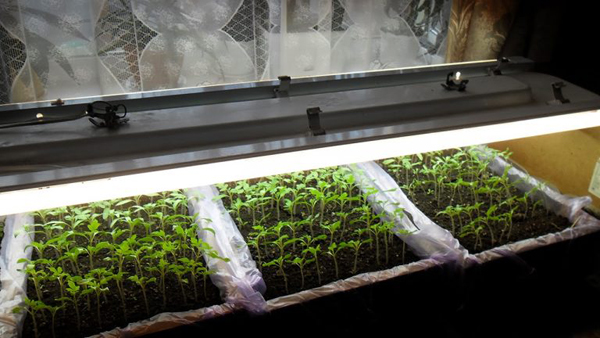
When the first shoots appear above the soil surface, the plastic film should be removed and the seedlings should be moved to a cooler location. At this stage, the plants require light; natural daylight is not sufficient. Therefore, it's important to provide additional lighting, such as a grow light, to prevent the shoots from becoming too tall.
Planting in the ground
Tomatoes are planted 50-60 days after the first shoots emerge. They can be transplanted into the ground once the soil has warmed to 12 degrees Celsius. If planting directly outdoors rather than in a greenhouse, ensure there is no risk of recurrent frost and, if necessary, cover the seedlings with plastic film.
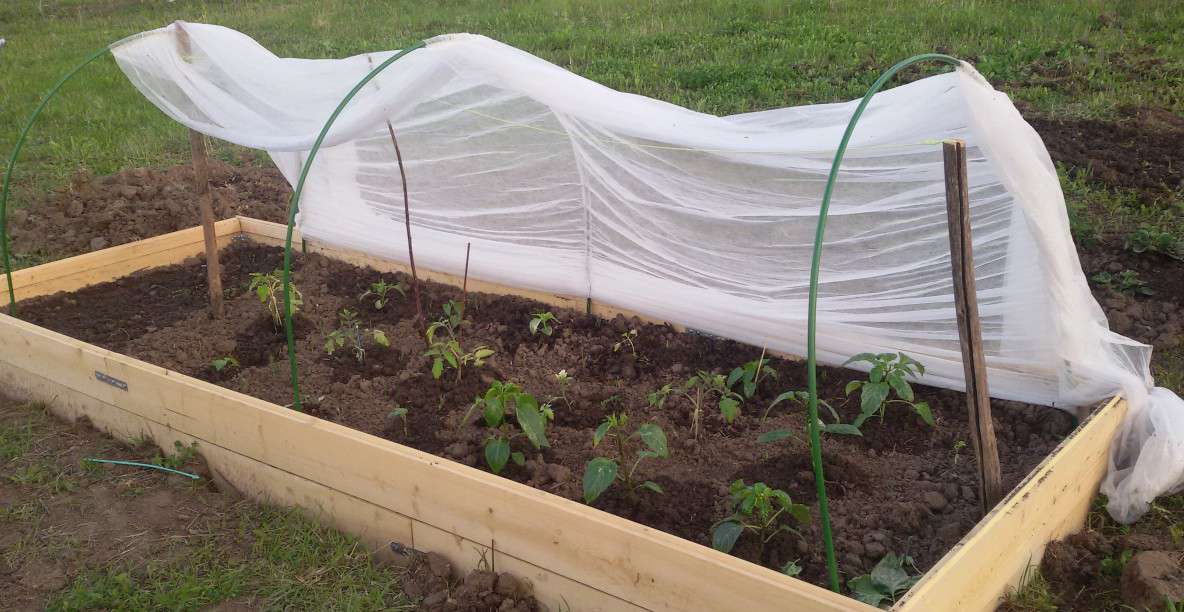
It's recommended to till the soil in the garden bed in the fall, adding manure and humus. In the spring, dig again, adding humus and superphosphates. Then, dig holes about 20 cm deep, spaced 50-60 cm apart. For ease of maintenance, leave a 70 cm gap between rows, as the Golden Brush tomato plants are quite spreading and tall.
A handful of ash can be placed in each hole, mixing it with the soil. Carefully remove the seedlings from the cup and place them in the hole along with the root ball, after which the roots are covered with soil. Next, water them carefully and mulch the surface with straw or sawdust.
Care
The Golden Brush tomato is considered easy to grow and doesn't require particularly meticulous care. First, ensure the plants are properly watered. Water approximately once a week until the tomato clusters begin to form. If the weather is too hot and the soil dries out quickly, you can increase the frequency of watering.
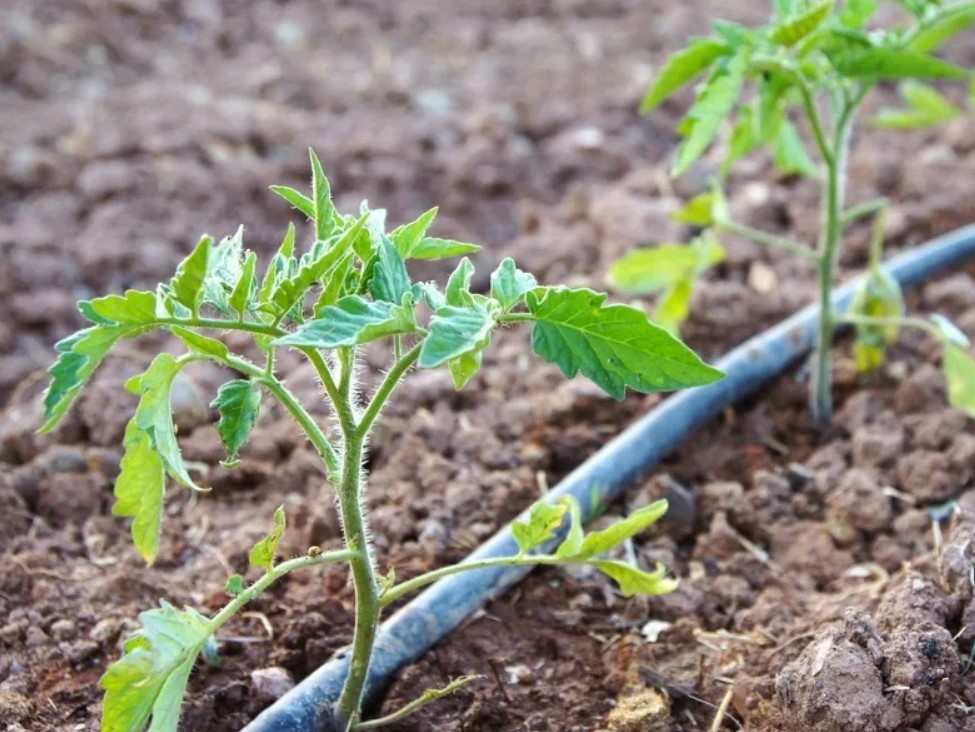
How to organize drip irrigation Read on our website.
It is recommended to feed tomatoes with complex fertilizers three times per season at intervals of 10-14 days.
It is important to periodically weed and loosen the soil to reduce the risk of insect pests and improve aeration within the soil.
Harvesting, using and storing the Golden Brush tomato variety
Golden Brush tomatoes can be harvested as early as 98 days after the first shoots emerge. Thanks to their thick skin, they withstand transportation well and can be stored for a long time in a cool place without losing quality.
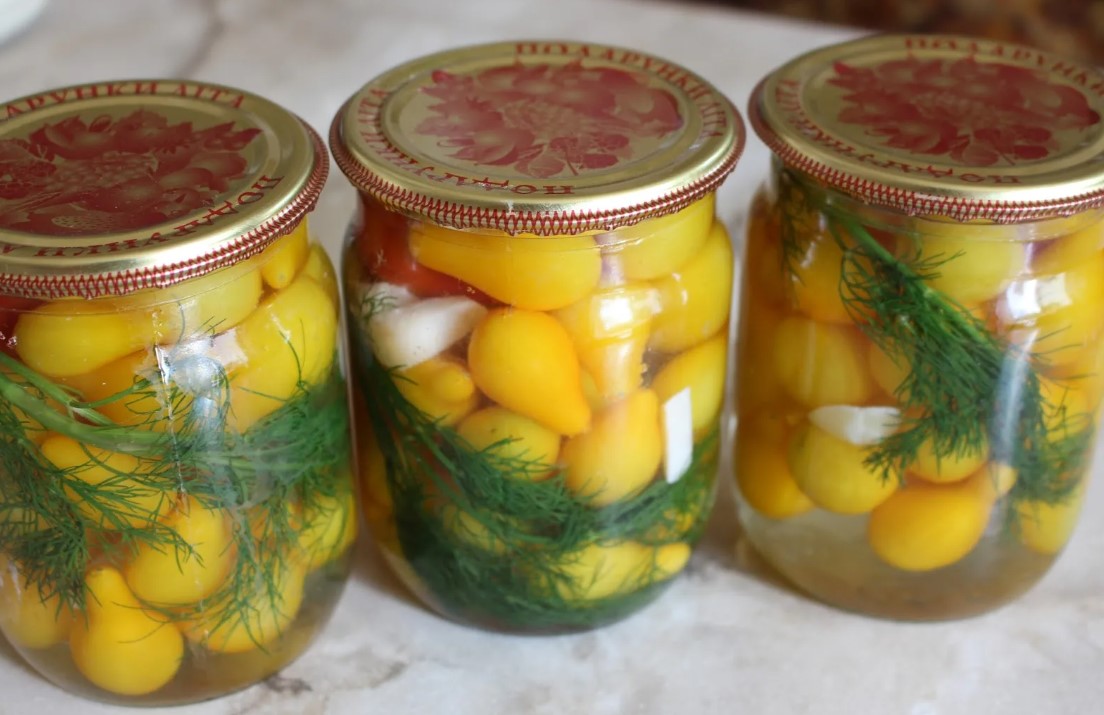
The fruits are used fresh, in salads, and as main dishes. Small tomatoes can be canned and pickled; they look beautiful paired with red tomatoes.
Comparison of the Golden Brush tomato variety with other varieties in the table
Please note! How can you easily convert centners/ha to kg/sq.m? Simply divide by 100! For example, the Abakansky Pink tomato yields 400 centners of marketable fruit per hectare. This equals 4 kg per square meter. It's that simple! Also, keep in mind that typically no more than 3-4 plants are planted per square meter. This way, you can calculate the yield per bush. In the case of the Abakansky Pink, it's about 1 kg.
| Variety | Ripening period (number of days from full germination to ripening)
Yield of commercial fruits |
Brief description | Fetus |
| Golden brush | 95-98 days
640 c/ha (greenhouse and under film) |
An early-ripening indeterminate variety for open ground and greenhouses. Suitable for salads. | Pear-shaped, small, slightly ribbed, medium density, red, 25-35 g. Excellent taste. |
| Honey drop | 100-105 days
880-950 c/ha (greenhouse and under film) |
A mid-early indeterminate variety for greenhouses. Suitable for salads. | Pear-shaped, medium density, without ribbing, yellow, 40-50 g. Good taste. |
| Sweet cherry | 75-83 days
900-1200 c/ha |
An ultra-early indeterminate variety for greenhouses. Suitable for salads, first and second courses, and canning. | Spherical, smooth, red, yellow or orange, 20-30 g. Excellent taste. |
| Siberian early ripening | 98-108 days 289-543 c/ha (open ground), 20-43% of the total yield ripens in 15 days of fruiting, 630-950 c/ha (greenhouse and under film), in the first month of fruiting 240-580 c/ha. |
An early-ripening, determinate, low-growing variety for open ground and greenhouses. Suitable for salads. | Round and flat-round, slightly ribbed, medium-sized and large, red, 62-114 g. The taste is satisfactory. |
| Nugget | 110-115 days
2400-3200 c/ha |
A mid-season determinate variety for open ground and greenhouses. Requires staking and training into two stems. Suitable for salads, processing into tomato products, drying, and canning. | Plum-shaped, smooth, yellow, 25-50 g. Good taste. |
| Yellow date palm | 130 days
Up to 1.8 kg. |
A mid-late semi-determinate variety for open ground and greenhouses. Requires staking and shaping into 3-4 stems. Suitable for salads, garnishing, and canning. | Oval, smooth, yellow, 20 g. Excellent taste. |
| Abakan pink | 120 days or more
400 c/ha |
A late-ripening determinate variety for open ground and greenhouses. Requires staking and training. Suitable for salads and processing into tomato products. | Flat-round, slightly ribbed, medium density and pink in color, 200-500 g. Good taste. |
| Moon fountain | 100-105 days 420-490 c/ha (greenhouse and under film) |
An early-ripening indeterminate variety for greenhouses. Suitable for salads. | Cylindrical, dense, slightly ribbed, creamy, 12-17 g. Good taste. |
| Shuttle | 82-121 days
226-269 c/ha (Central region), 220-441 c/ha (Volga-Vyatka), 160-412 c/ha (West Siberian), maximum 792 c/ha (Omsk region). |
An early-ripening, determinate, low-growing standard variety for open ground. Suitable for salads, pickling, and whole-fruit canning. | Elongated-oval, smooth, top with a spout, red, 23-55 g. Good taste. |
| Lyana | 94-110 days (Central region), 115-123 days (East Siberian region)
267-320 c/ha (Central region), 456 c/ha (East Siberian region), maximum 713 c/ha (Republic of Khakassia). |
An early-ripening, determinate, non-standard variety for open ground and greenhouses. Suitable for salads and whole-fruit canning. | Round, smooth, red, 65-83 g. Excellent taste. |
| Raspberry Liana | 85-90 days
700 c/ha |
An early (ultra-early) determinate standard variety for open ground and greenhouses. Suitable for salads, canning, and processing into tomato products. | Round, smooth, raspberry-pink, 65-90 g. Good taste. |
Gardeners' reviews of the Golden Brush tomato variety
A very easy-to-care-for variety, it didn't suffer from late blight once all season. The tomatoes are shaped like a small pear. They're very tasty, but some of them fell apart in the jar after pickling.
We've been planting these tomatoes at our dacha for two years now. This time, we used our own seeds, so there's no photo of the packaging. I love cherry tomatoes; they're beautiful and sweet. The yellow-fruited, pear-shaped "golden brush" tomatoes are among my favorites. They taste perfect to me. I eat them like berries. They're perhaps too sweet for a salad, and too delicate for pickling. So, of course, it's an acquired taste.
The fruits are small, pear-shaped, and yellow-orange. The skin is quite thin, and the fruits themselves are soft, especially after sitting for a while. The inside is tender and juicy. They are sweet and very tasty, with a distinct tomato flavor. I really like this variety. I recommend it to cherry tomato lovers.
The plant itself is quite tall, about 1.5 meters. It needs to be tied up. The fruits grow in clusters of about 10-15. We grew them in a greenhouse and had no problems. Excellent tomatoes, productive and delicious. I recommend them.
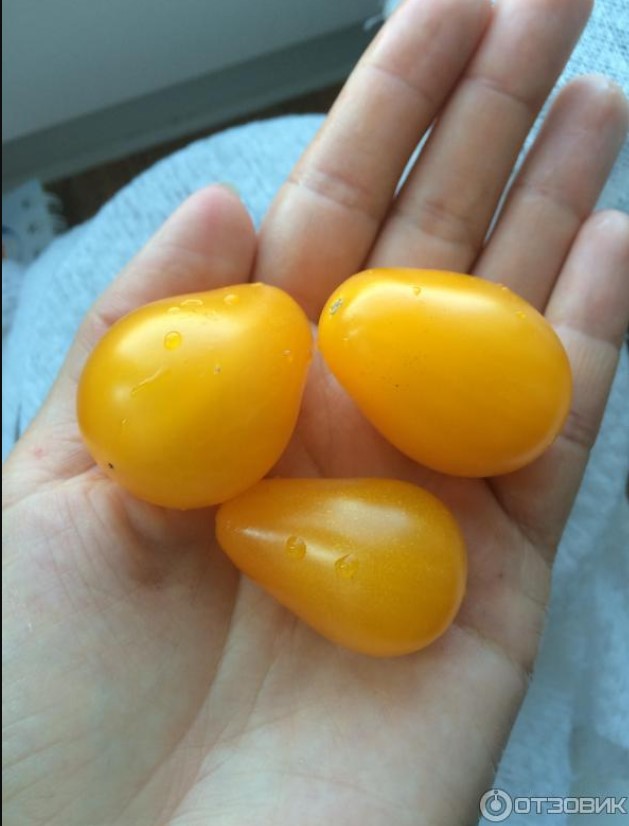
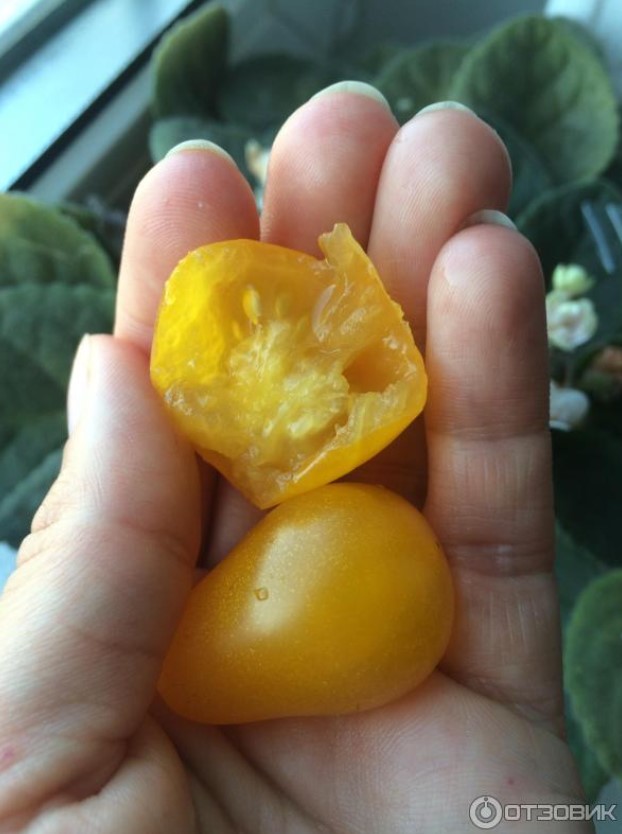
Yellow tomatoes are among my favorites; I'm constantly trying new varieties at my dacha. I also planted this SEDEK variety—cluster tomatoes, tall, 1.5-meter-tall bushes. They're not early ripening, and the fruits are small, with maybe 15-20 on a bunch. There are yellow tomatoes that taste better; their skins are thicker. These tomatoes can be canned, but yellow tomatoes have a significant drawback: they're softer and more crumbly, and the flesh often falls apart during canning, so I mainly plant them for eating. Among the yellow-fruited varieties, I have a favorite—KHURMA—which I've been growing faithfully for many years. I also plant a few smaller varieties for my granddaughter.