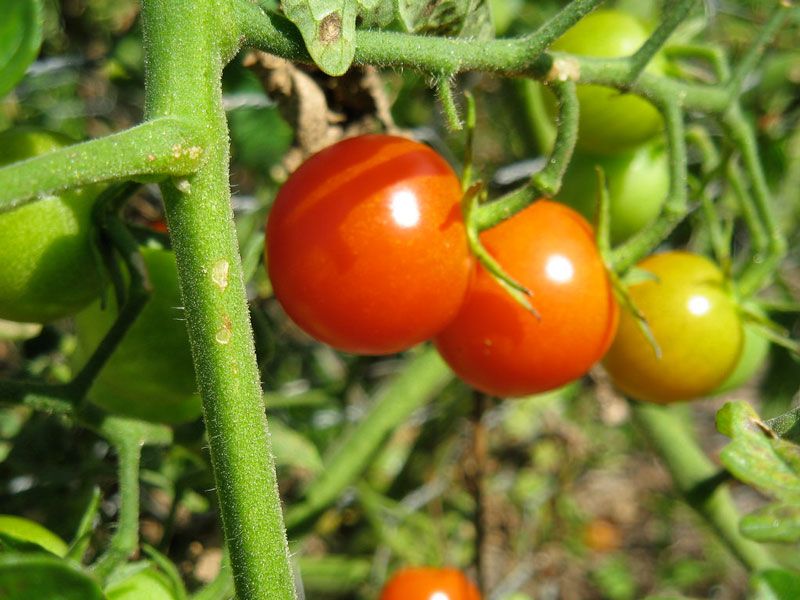
Not having a garden plot isn't a reason to give up the pleasure of planting, tending, and harvesting vegetables. They can be grown at home, without the tedious trip to the garden. For example, there are varieties of small-fruited tomatoes suitable for growing in an apartment or on a balcony.
Cherry tomatoes on the windowsill will produce delicious fruit and also decorate your home. They can be grown year-round, making them a perfect choice for gardeners who miss their garden beds in winter.
Content
Description of cherry tomatoes
Miniature tomatoes are commonly known as cherry tomatoes, which translates from English as "cherry." Today, there are over 100 varieties of small-fruited tomatoes, varying in size, shape, color, and flavor. Cherry tomatoes are very popular today: they are eaten fresh, used in salads, pickled, salted, and even dried. These fruits have a long shelf life without losing their quality, which distinguishes them from other varieties.
Cherry tomatoes contain approximately 1.5 times more nutrients than regular tomatoes. 100 grams of these small tomatoes contain the daily dose of vitamins A, C, and B, potassium, and iron.
What varieties of cherry tomatoes can be chosen for growing at home?
Cherry varieties bred for city apartments grow to 0.5-0.6 m (some reach 1-1.5 m). Taller, stronger bushes, which produce a richer harvest, are grown in open ground and greenhouses. A single indoor bush can yield approximately 1.5-2 kg of fruit per season.
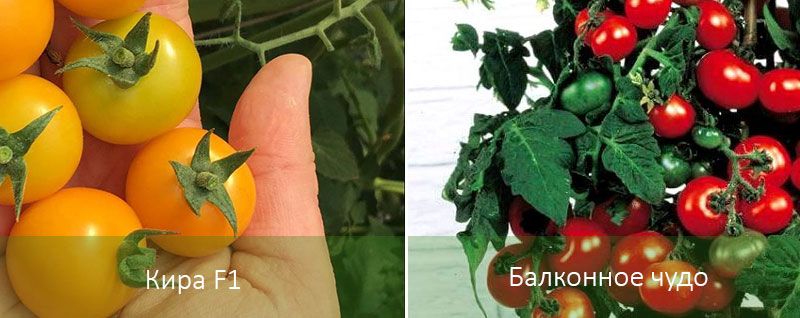
The following cherry tomato varieties are usually recommended for home growing:
- Lycopa F1;
- Maxik F1;
- Kira F1;
- Balcony miracle;
- Orange cap;
- Little Red Riding Hood;
- Yellow cap.
Let's look at them in more detail.
Lycopa F1
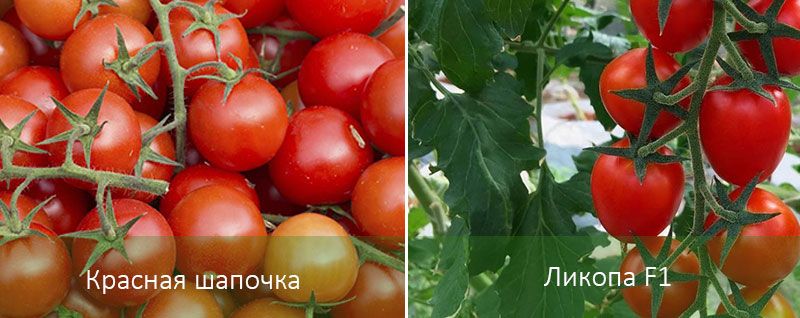
A cherry tomato variety whose bushes can reach 1.5-2 meters in height. The fruits are juicy, with firm skin, and the flesh has a pleasant, slightly sweet flavor with a hint of tartness. They resemble berries, each weighing between 10 and 40 grams. The flavor and nutritional value of this variety of tomato stems from its high lycopene content (hence its name). The fruits ripen within 90-95 days after germination.
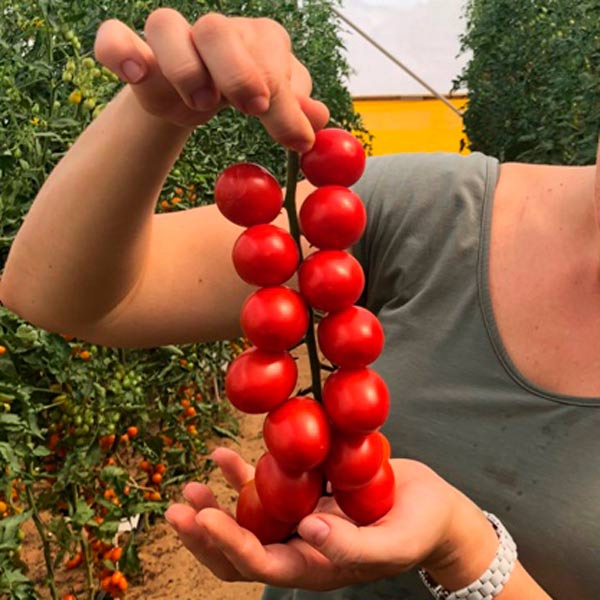
The Lycopa F1 variety is highly resistant to fungal and other diseases. It's perfect for both fresh consumption and winter preservation. The fruits can be stored for long periods without losing their flavor.
Maxik F1
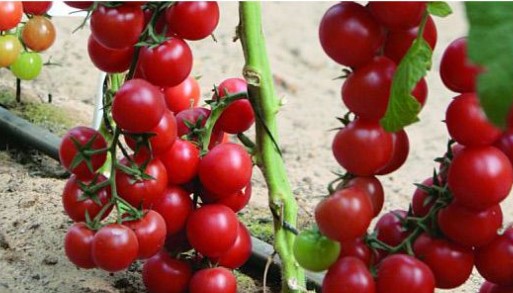
A cherry tomato variety recognized as one of the best for canning. It ripens within 90 days of germination. The fruits can be stored for a long time, maintaining their freshness and excellent appearance. The bushes of this variety are resistant to viral diseases, nematodes, and verticillium wilt.
Kira F1
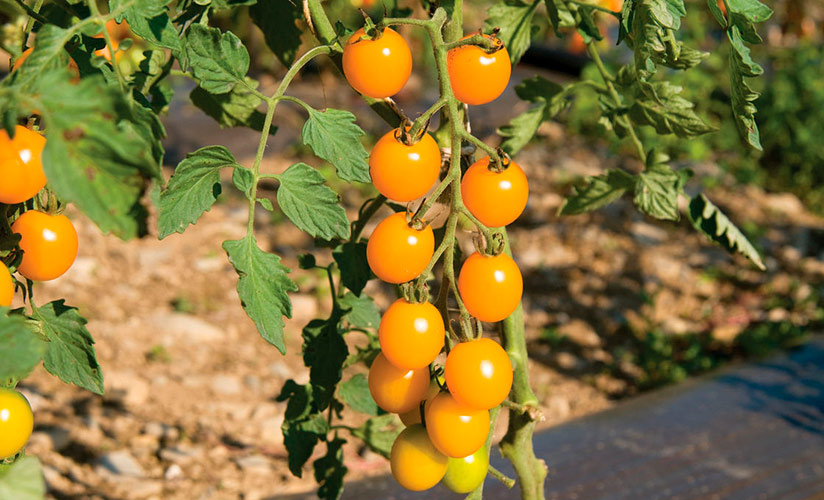
The bushes of this variety reach a height of 1.5-1.7 meters. Fruit ripening typically occurs 95-105 days after germination. Each cluster bears 18-20 round fruits, slightly flattened at the top. They are orange in color, dense, and do not crack during heat treatment or mechanical stress. This is an easy-to-grow and easy-to-care-for variety.
Varieties labeled F1 are hybrids. Their seeds cannot be collected for subsequent planting.
Balcony miracle
This is a determinate variety, with bushes reaching a height of 0.6 m. These tomatoes can be grown even in winter, yielding a harvest approximately three months after germination. The fruits are excellent for both fresh eating and canning.
You can read about this varietyBalcony Miracle Tomato: Description, Planting, Care, Comparison, Reviews.
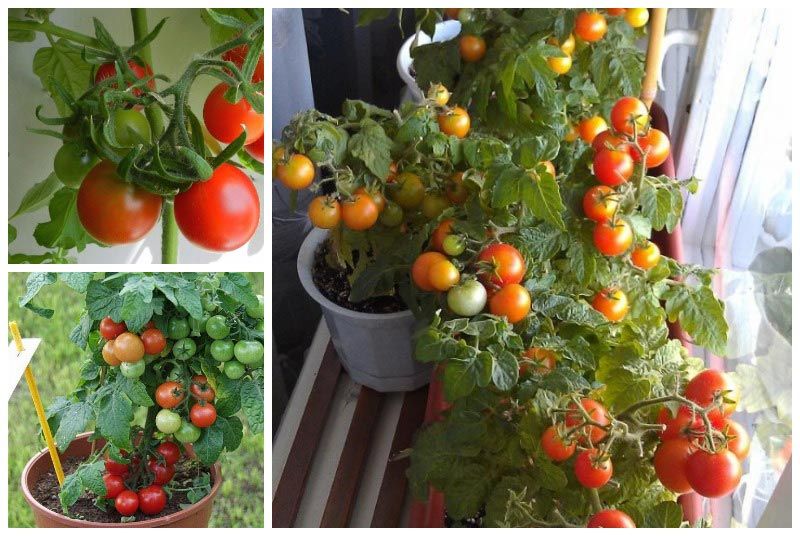
Cherry Riding Hood
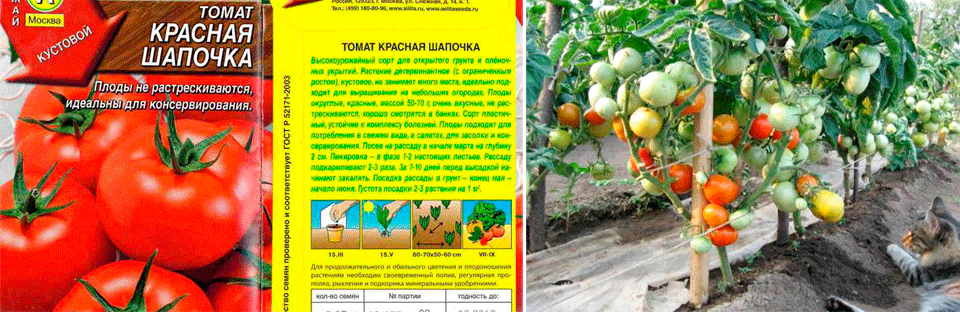
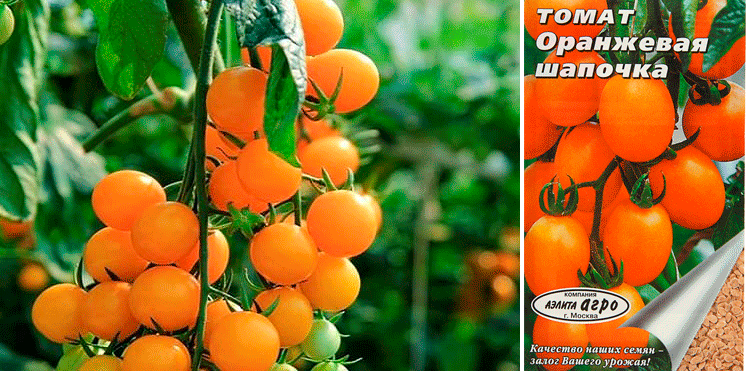
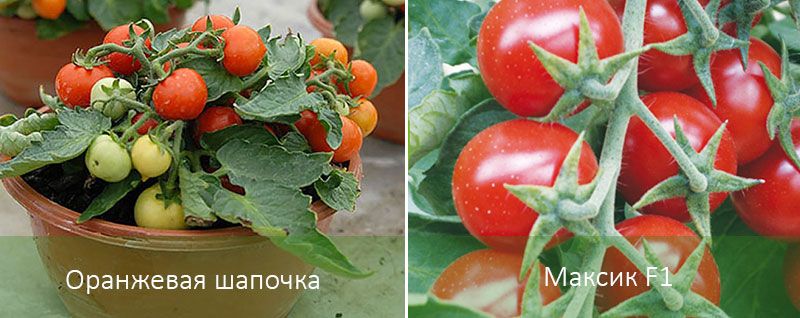
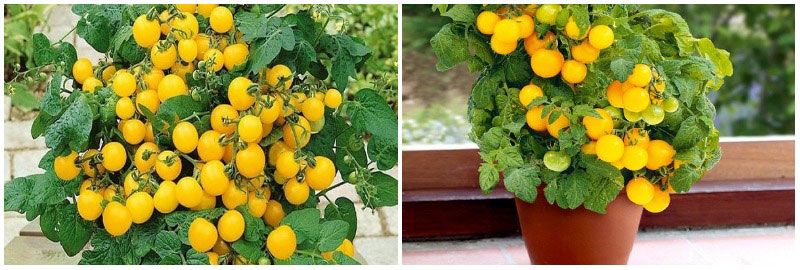
The Red, Yellow, and Orange Riding Hood varieties differ in fruit color, as their names suggest. All of these plants are very compact, growing to 0.5-0.6 m. They can be grown in relatively small pots or planters, on a windowsill or balcony. The period from germination to fruit ripening takes approximately 85-90 days. These plants are ornamental and can be used to decorate an apartment.
Photo gallery
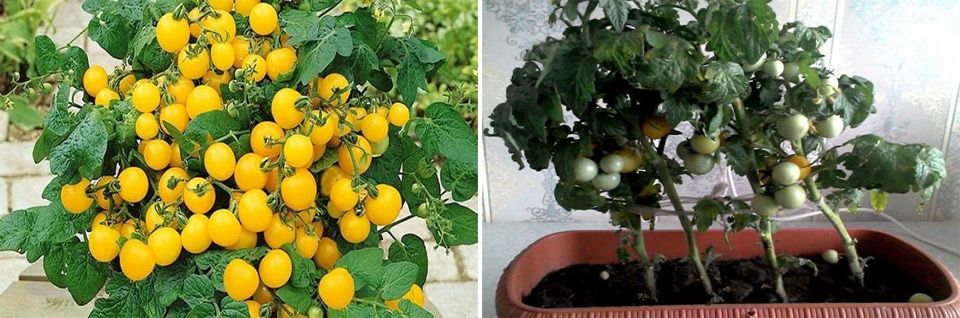
A cherry bush covered with berries, placed on the table right in a pot, looks very impressive.
Low-growing cherry tomato varieties such as Bonsai, Strawberry, Golden Bunch, and Rowan Beads have also been developed.
More about tomatoes grown at home Tomatoes on the balcony: step-by-step instructions on how to grow them.
Planting cherry tomatoes at home
If you're interested in growing cherry tomatoes at home, you need to prepare properly: choose the planting material and a location for your future indoor "garden." These plants require light, so place the pots in a well-lit area, near windows that receive sunlight for most of the day. You also need to prepare the supports the growing plants will need. You can use sticks made of any material: wood, plastic, or metal. Choose tall, sufficiently large pots, holding approximately 8-10 liters.
Cherry tomatoes are grown from seeds or by pinching out adult plants.
Typically, they are planted in late August or early September to get ripe vegetables for the festive New Year's table, or in late November or early December to harvest in vitamin-poor March.
Let's describe the process step by step:
- Preparation;
- soil and location selection;
- seeds for planting;
- planting seeds;
- picking out seedlings.
After purchasing the seeds, sort them and then soak them in a growth stimulating solution (available at a specialty store) for 12 hours. This will awaken them. Afterwards, rinse them thoroughly and wrap them in water-soaked gauze until they swell.
After this, the seeds are placed in pre-prepared soil, at a depth of approximately 1 cm from the surface. The most suitable soil for cherry tomatoes is a mixture of garden soil and river sand in a 1:3 ratio, with some peat and humus added.
Before planting, the soil should be disinfected by soaking it in a solution of copper sulfate.
After this, to improve plant growth and development, add mineral fertilizer or ash to the soil. Then water with settled water at room temperature or a weak solution of potassium permanganate.
Cover the containers with the planted seeds with plastic or a glass dome, creating greenhouse conditions. Once the sprouts emerge, don't keep the film or dome over the plants permanently. Periodically, open them to allow fresh air in and allow the plants to harden off.
When two leaves emerge from the soil, the roots should be pruned out by pinching them. This will help the root system strengthen and develop well. Then, water the plants with a weak solution of potassium permanganate and sprinkle the surface with a light layer of sand.
You can also grow seedlings in small containers, then transplant them into a larger pot once a few leaves appear. In such cases, sow two seeds per small pot (regular plastic cups will do). Once the seedlings emerge, evaluate them, and the stronger, more developed seedling is transplanted into the larger pot.
Many gardeners growing cherry tomatoes at home also use the pinching method. A small branch is removed from a mature plant and placed in a container of water. After about a week, fine roots will appear, after which the plant can be planted in prepared soil in a large pot.
Caring for a home-grown cherry tomato
Many cherry tomato varieties are generally easy to grow. However, they do require care, otherwise a good harvest will not be achieved. These plants require proper watering, stable humidity, and temperature. They also require a certain amount of light and warmth.
For cherry tomatoes to grow well and produce a bountiful harvest, they require good and continuous lighting.
In winter, sunlight is scarce in most of our country, so cherry tomato plants require supplemental lighting, with at least 16 hours of daylight. If the plants don't get enough light, photosynthesis will be slow, as indicated by pale green leaves. Such plants will fail to produce fruit, and a harvest will be impossible.
A certain temperature regime should also be maintained: around 20–25°C during the day and at least 18°C at night. Plant containers should be placed in a bright location, away from cold drafts. If tomatoes are grown on a balcony, in temperate climates they should be brought indoors at night, even in summer. Temperatures can drop below 18°C, which can seriously damage the plant.
Regularly remove yellowed or dried leaves from the bush. Most varieties also require periodic pruning. This is necessary to prevent the plant from becoming overgrown, wasting energy on foliage, and instead to produce more fruit. When the bush begins to set fruit, leave 4 or 5 clusters. At the same time, pinch off the top part, cutting off 3-5 cm.
Trimmed branches, called side shoots, can be used to grow new bushes. To do this, place them in a glass or jar of water, and after roots appear, plant them in a pot.
Watering
To ensure a healthy cherry tomato plant, it needs to be watered properly. Both under- and over-watering are harmful. Overwatering can cause the plant to rot at the roots. This can be avoided by adding a drainage layer to the pot before adding soil. Fine or medium expanded clay is best for this purpose.
To reduce watering while preventing the soil from drying out, experts recommend using a special hydrogel, which is also placed under the soil.
In the summer, cherry tomatoes need to be watered every two or three days if the weather is sunny and hot. If the summer is cool and cloudy, cherry tomatoes only need to be watered twice a week. Use well-settled water. Moisten the soil in the morning or evening, when the sun is not very strong.
The humidity in the room where cherry tomato plants are kept should be around 70%. Along with watering, give the plants a light shower by misting them with a spray bottle. It's also important to periodically ventilate the plants, but avoid exposure to cold air. A fan can be used for this purpose, blowing warm air around them.
Top dressing
To ensure a bountiful harvest, cherry tomato pots should be fertilized. Superphosphate, wood ash, and humus (not fresh) are the most suitable. During fruit set and ripening, fertilize approximately every two weeks, alternating between applications.
Nitrogen-containing fertilizers can also be used, but in limited quantities.
Cherry tomatoes need fertilizer, but don't overdo it. Fertilizer is essential for healthy plant growth and tasty, nutritious fruit. Excessive feeding will inevitably negatively impact these benefits and the tomatoes' organoleptic properties.
Some useful tips on caring for cherry tomatoes
Many cherry tomato varieties suitable for indoor planting are self-pollinating. For pollination to occur, several plants and adequate air movement around the pots are needed. A fan can be placed near the plants.
Experts also recommend assisting tomato plants with pollination using a small brush or cotton swab. Use the brush to collect pollen from the flowers of one plant and carefully transfer it to others. This should be done early in the morning, as the pollen matures at night. You can tell the flowers have been pollinated when the petals curl back slightly.
Like other houseplants, cherry tomatoes can become diseased or attacked by insects. A diseased plant will not produce a good harvest and will be unsightly.
The most common pests of these crops are spider mites and aphids.
If harmful insects are detected on the plant, it should be ventilated more frequently and sprayed with a spray bottle. A 1% Bordeaux mixture is suitable for preventative treatment. When fruit sets, experts recommend spraying the plants with a garlic infusion to prevent infestation.
To prepare it, you'll need 100 grams of garlic and half a liter of water. Chop the cloves, place them in a jar, cover with water, and let sit for 24 hours. Then strain the liquid through cheesecloth and dilute it with 5 liters of water. Add 20 grams of grated laundry soap to the solution and stir well to dissolve. Spray the plants with the resulting mixture once a month.
If preventative measures fail, treat the bushes with insecticides. Specialty stores offer insecticides specifically designed for cherry tomatoes. Broad-spectrum insecticides can also be used, following the dosage instructions on the packaging.
As the bush grows, it needs support. To do this, place a support in the pot and tie the stem to it. Trailing cherry tomato varieties can be supported by specially tied strings.
Experts recommend picking tomatoes from the bush after they're fully ripe. Tomatoes ripened on the vine are rich in nutrients and have a distinct, pleasant flavor and aroma. Typically, the fruits ripen evenly and can be harvested in whole bunches.
If tomatoes are to be stored for a long time, they can be picked when they are still in the milky stage of ripeness, or when they are still brown. That is, when they are not yet fully ripe. The same method can be used for harvesting tomatoes intended for home canning.
Experienced gardeners recommend planting cherry tomatoes in metal containers. This is believed to reduce the risk of fungal diseases.
Growing cherry tomatoes at home is quite easy if you follow all the care instructions. It's worth the time and effort to grow delicious and healthy tomatoes that will delight the whole family all year round.
Read the article to learn about other varieties of cherry tomatoes that can be grown outside of the home. 5 Delicious Varieties of Cherry Tomatoes.