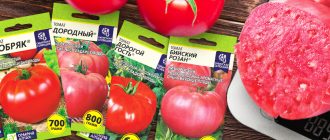
The names of the tomato varieties Favorit, Favorit 6 F1, and Favorita F1 are very similar. Therefore, novice gardeners often confuse them. However, these are three completely different varieties, differing in both appearance and taste. Favorit and the hybrid Favorit 6 are regular tomatoes, differing only in color and size. They have a sweet taste. Favorita F1 is a cherry tomato. It also has a sweet taste, but with a hint of tartness. Each variety has its own growing and care requirements. Let's take a closer look at each.
Content
- 1 Characteristics of the tomato varieties Favorite, Favorite 6 F1 and Favorite F1 in the table
- 2 Detailed description of the tomato variety Favorite
- 3 Detailed description of the tomato variety Favorite 6 F1
- 4 Features of growing the varieties Favorite and Favorite 6 F1
- 5 Detailed description of the tomato variety Favorita F1
- 5.1 Bush characteristics
- 5.2 Fruit characteristics
- 5.3 Ripening time and yield
- 5.4 Advantages and disadvantages of the tomato variety Favorita F1
- 5.5 Features of growing the tomato variety Favorita F1
- 5.6 Resistance of the tomato variety Favorita F1 to diseases and pests
- 5.7 Harvesting, use and storage of the tomato variety Favorita F1
- 6 Comparison of tomato varieties Favorite, Favorite 6 F1 and Favorite F1 with other varieties
- 7 Gardeners' reviews of the tomato varieties Favorit, Favorit 6 F1, and Favorit F1
Characteristics of the tomato varieties Favorite, Favorite 6 F1 and Favorite F1 in the table
| Characteristic | Favorite | Favorite 6 | Favorite |
| Description | Mid-early indeterminate variety for open ground and greenhouses. | Mid-season indeterminate variety, low-growing, for indoor cultivation. | Mid-season indeterminate variety for indoor cultivation. |
| Ripening period | 105-115 days. | 107-119 days. | 114-118 days. |
| Fruit weight | 250-400 g | 117-123 g (up to 168 g). | 12-15 years |
| Description of the fruit | Flat-round, pink, pink-raspberry, slightly ribbed. | Round, red, slightly ribbed. | Round, red. |
| Productivity | 15-24 kg/1 sq. m. | 18.7-19.7 kg/1 sq. m. | 16.3-17.9 kg/1 sq. m. |
| Usage | Salad, tomato products. | Universal | |
| Marketability, shelf life | Good. | 98-100%, good | |
| Disease resistance | To many diseases of nightshades. | Resistant to tobacco mosaic virus, cladosporiosis, fusarium. | Resistant to tobacco mosaic virus, cladosporiosis, fusarium, verticillium wilt and root-knot nematode. |
| Preferred growing regions | Southern, Central. | Central, North-West, Volga-Vyatka. | Central, North Caucasian. |
| Agricultural technology | The bushes need shaping and gartering. | The bushes need to be supported. | The bushes need shaping and gartering. |
| Not included. | 1999 | 2005 year. | |
| Originator | Ukraine | LLC 'AGROFIRM PARTNER' | MONSANTO HOLLAND BV |
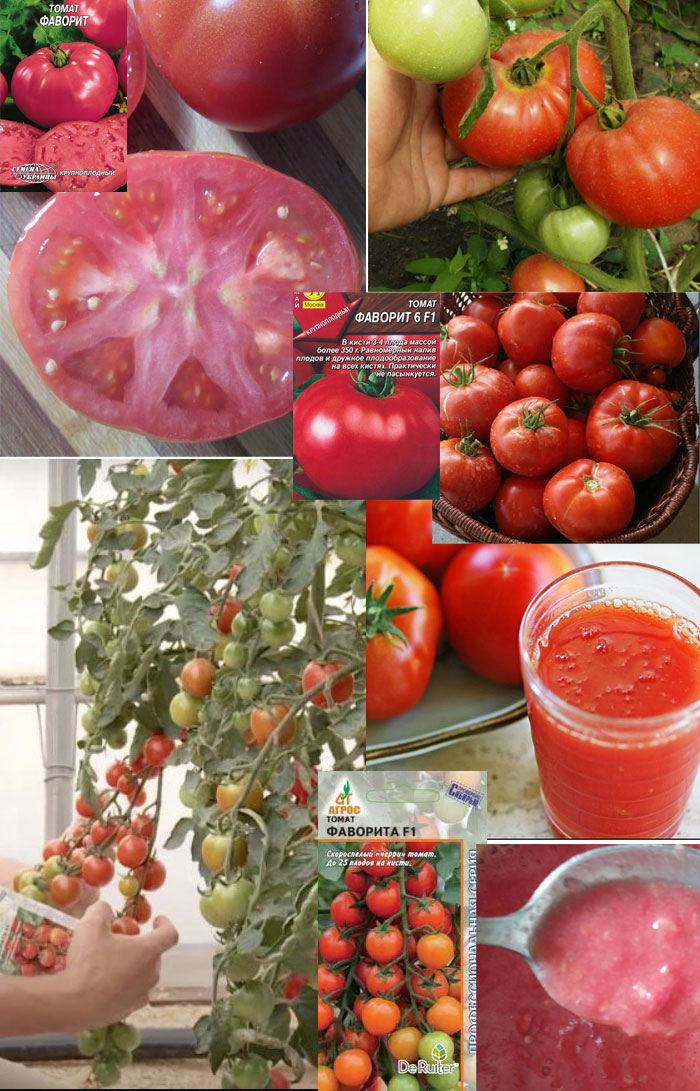
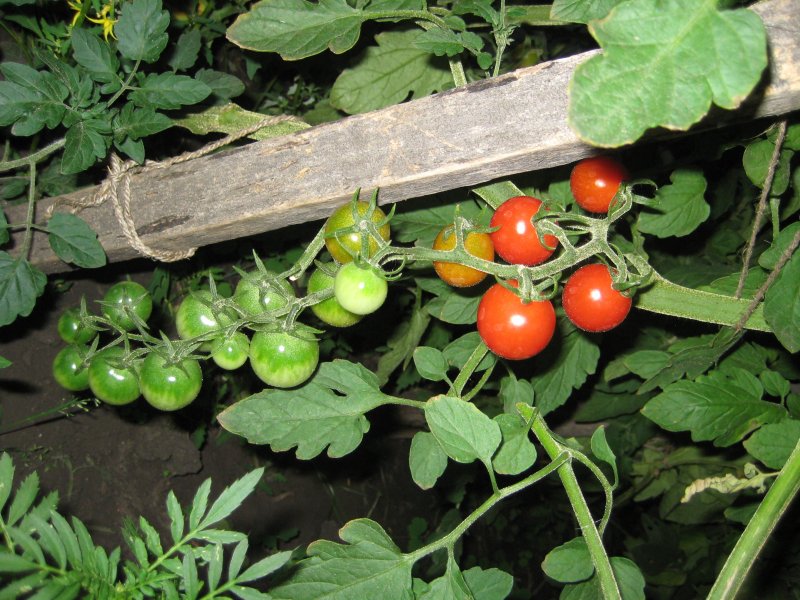
Photo gallery of the tomato variety Favorite
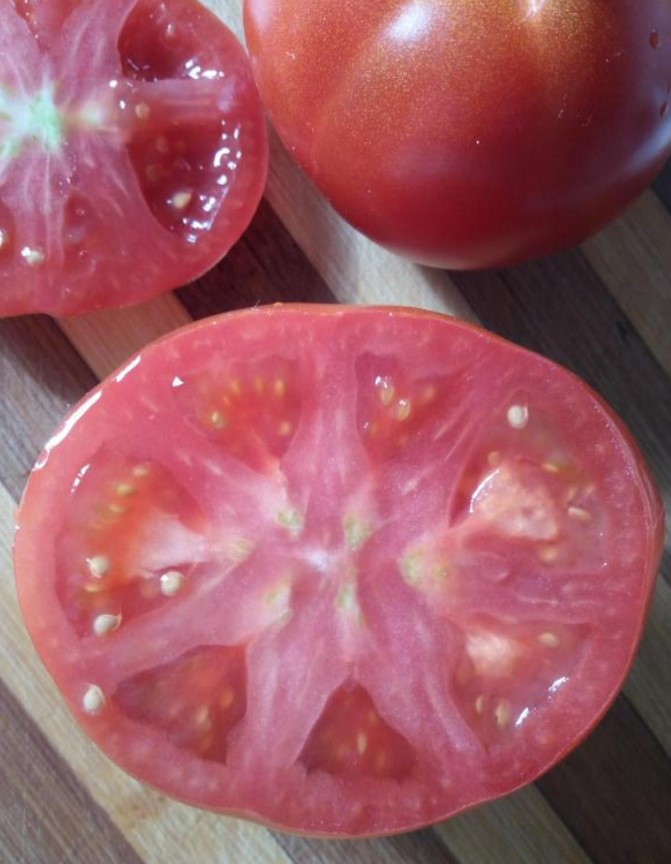
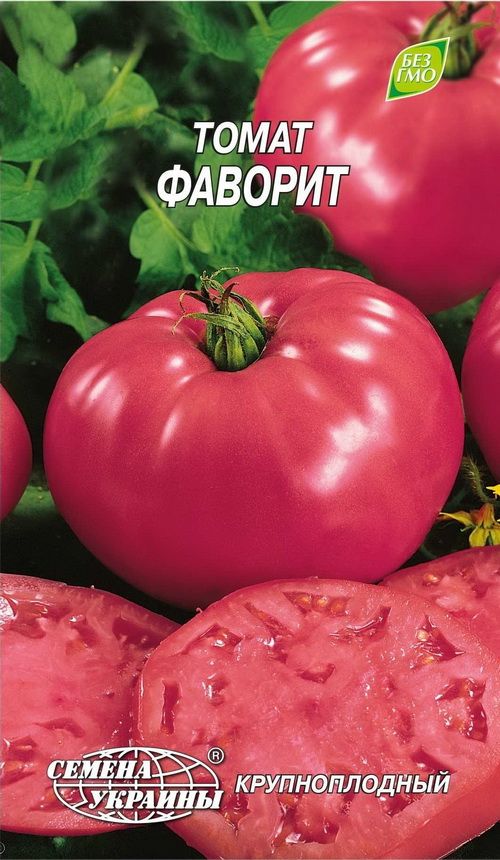
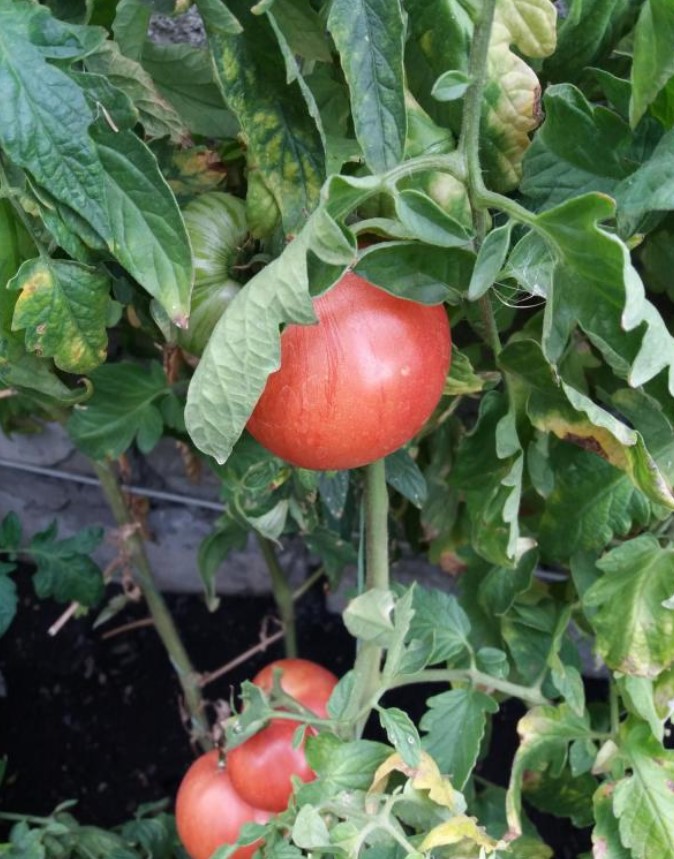
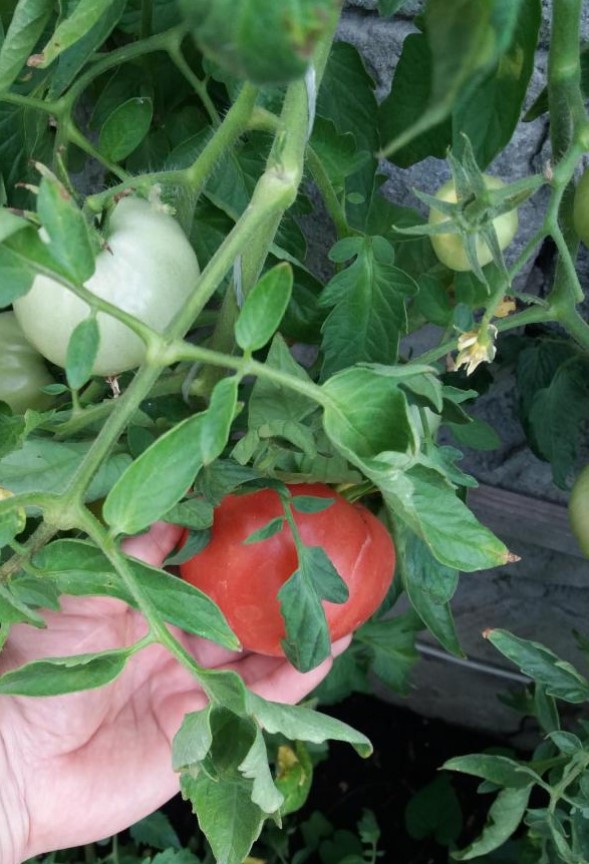
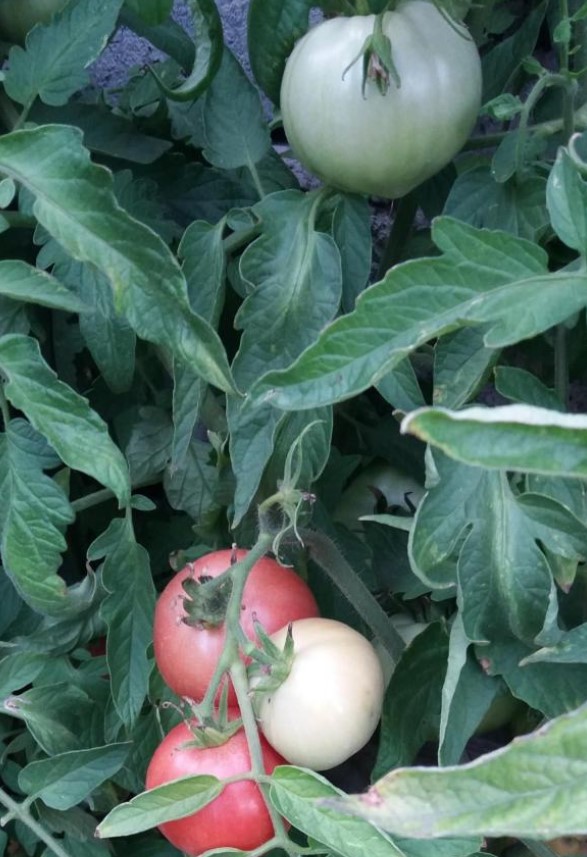
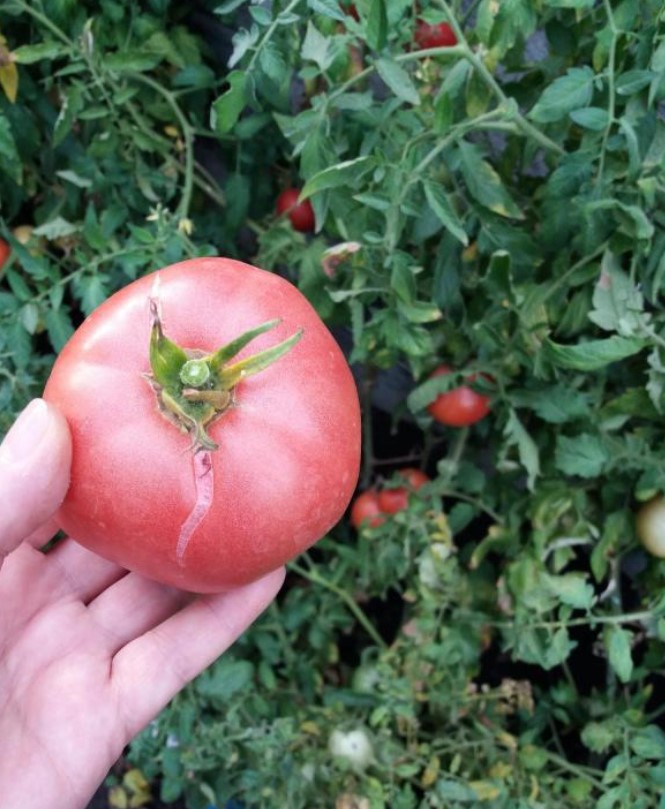
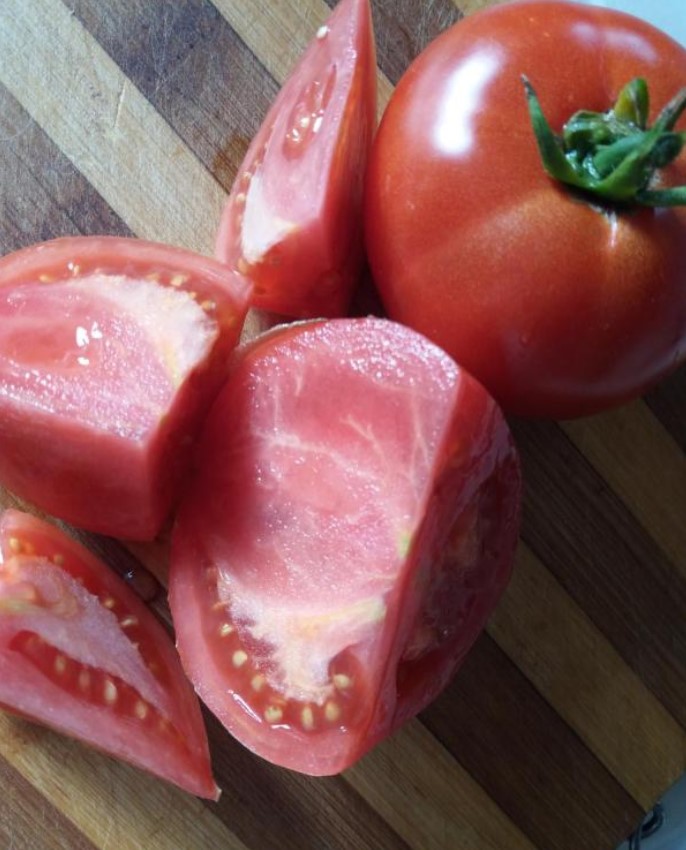
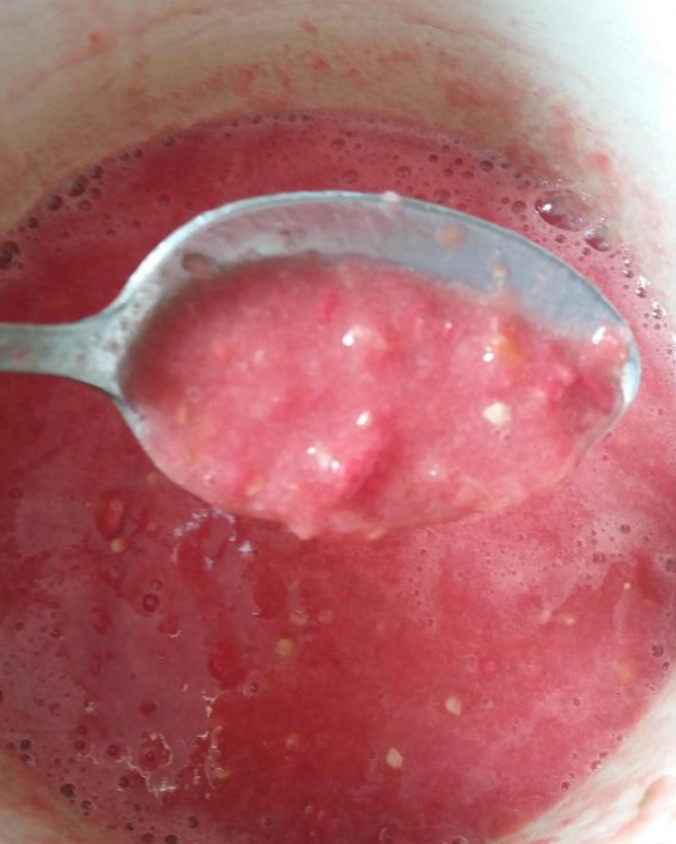
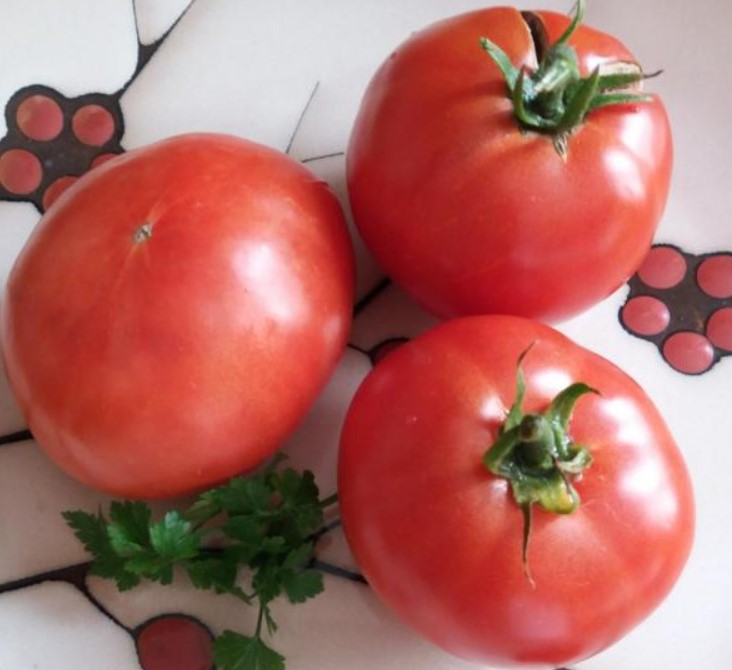
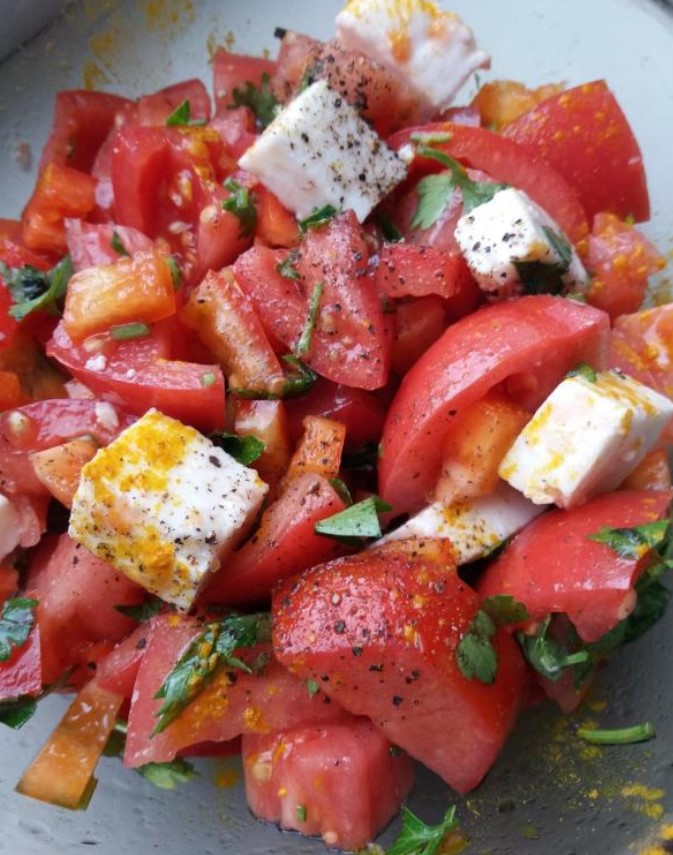
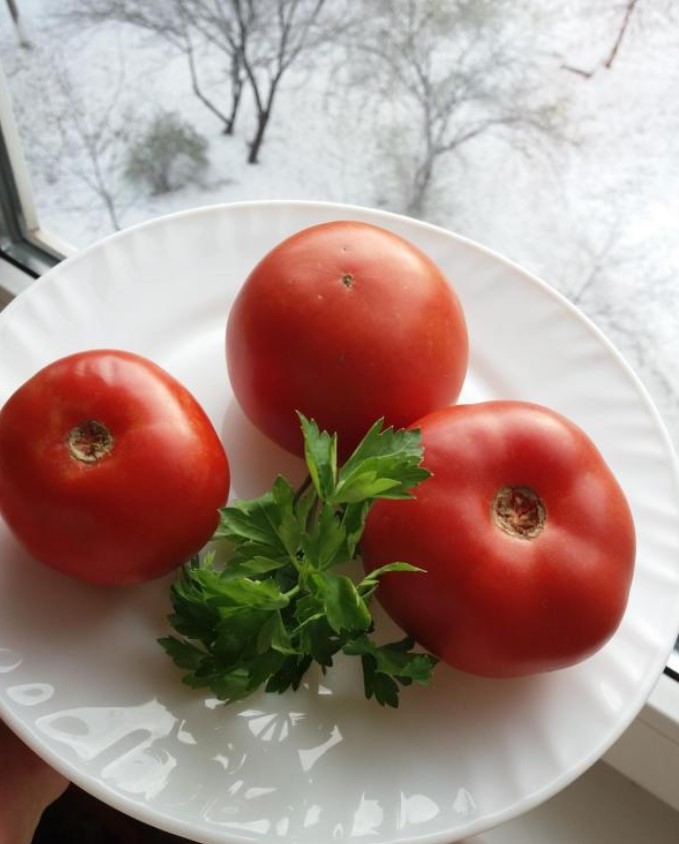
Photo gallery of the tomato variety Favorite 6 F1
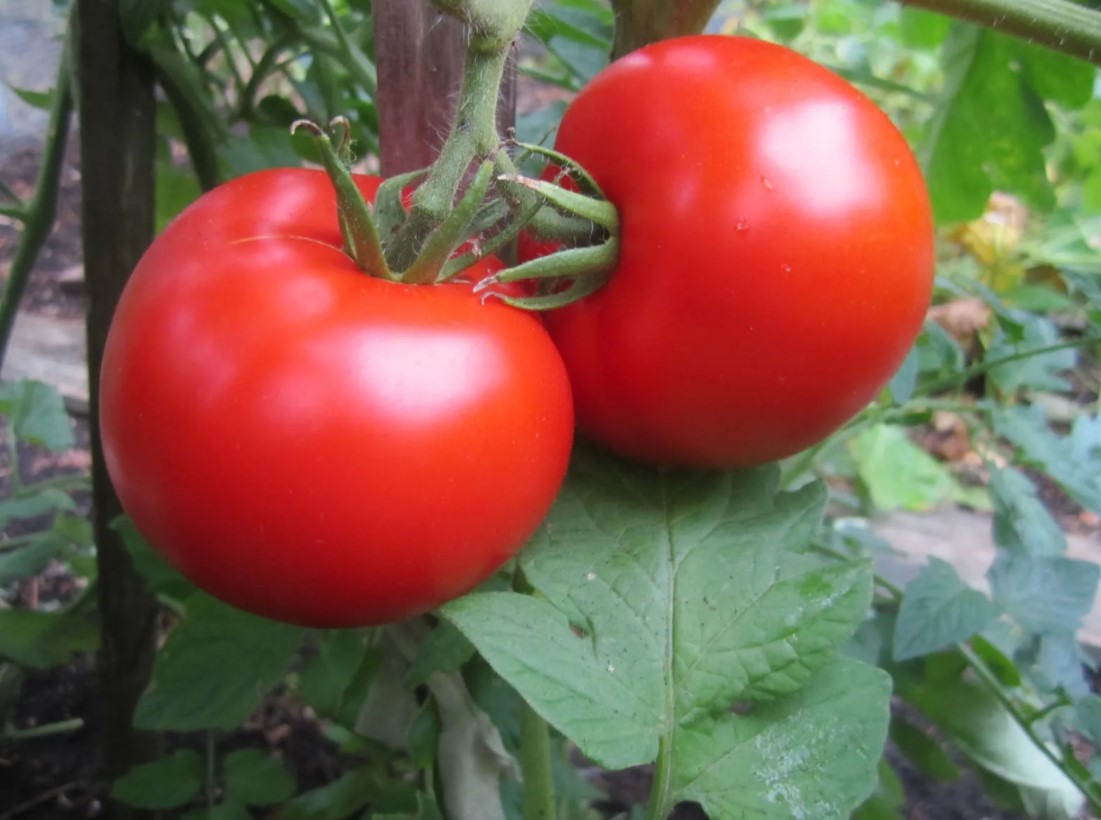
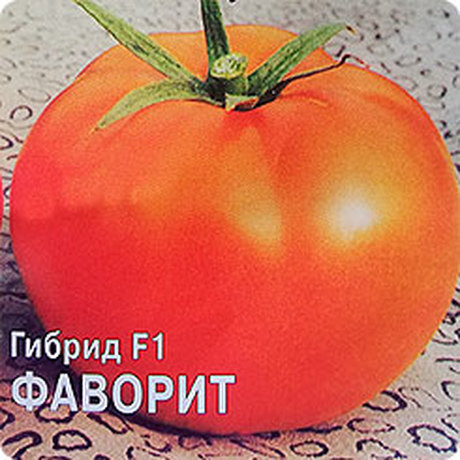
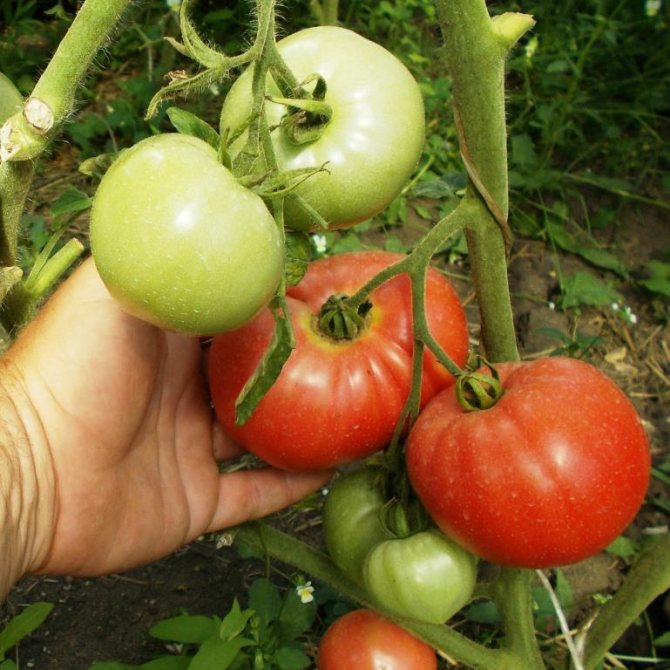
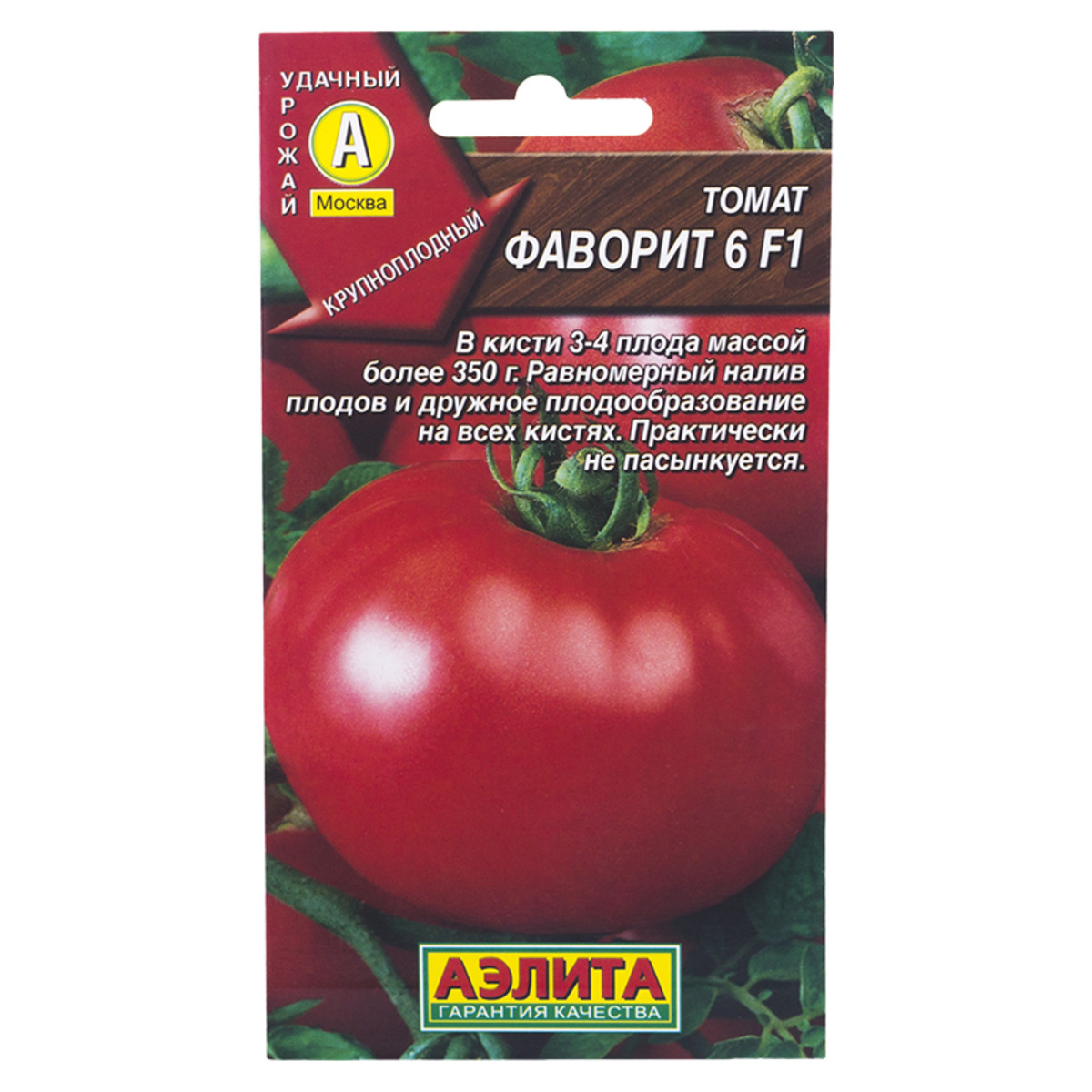
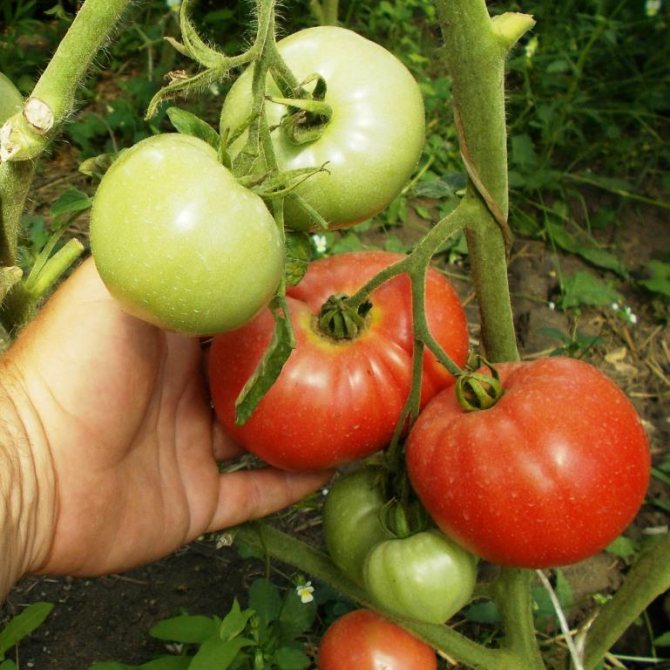
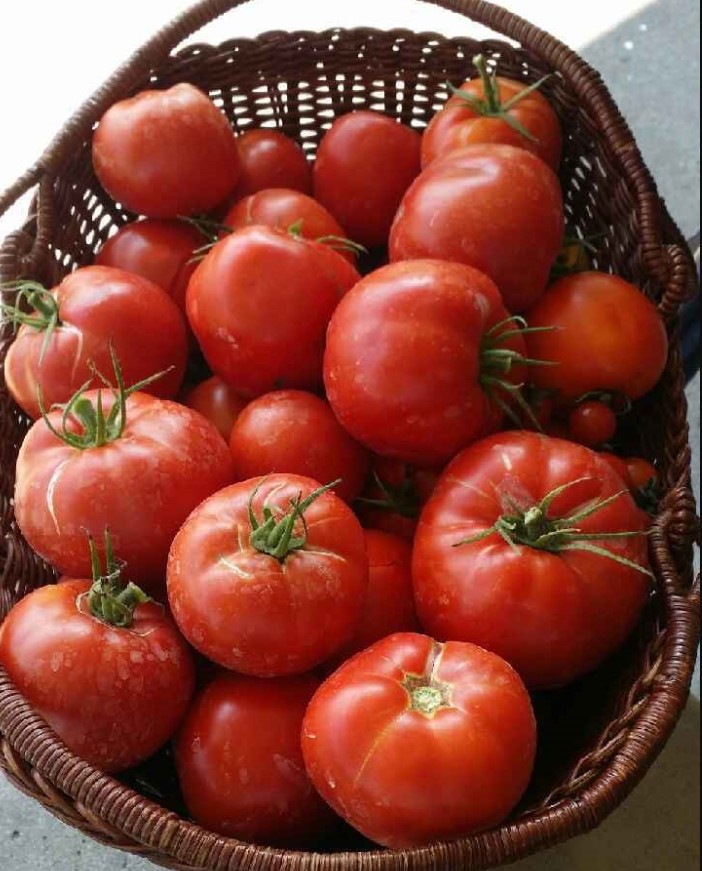
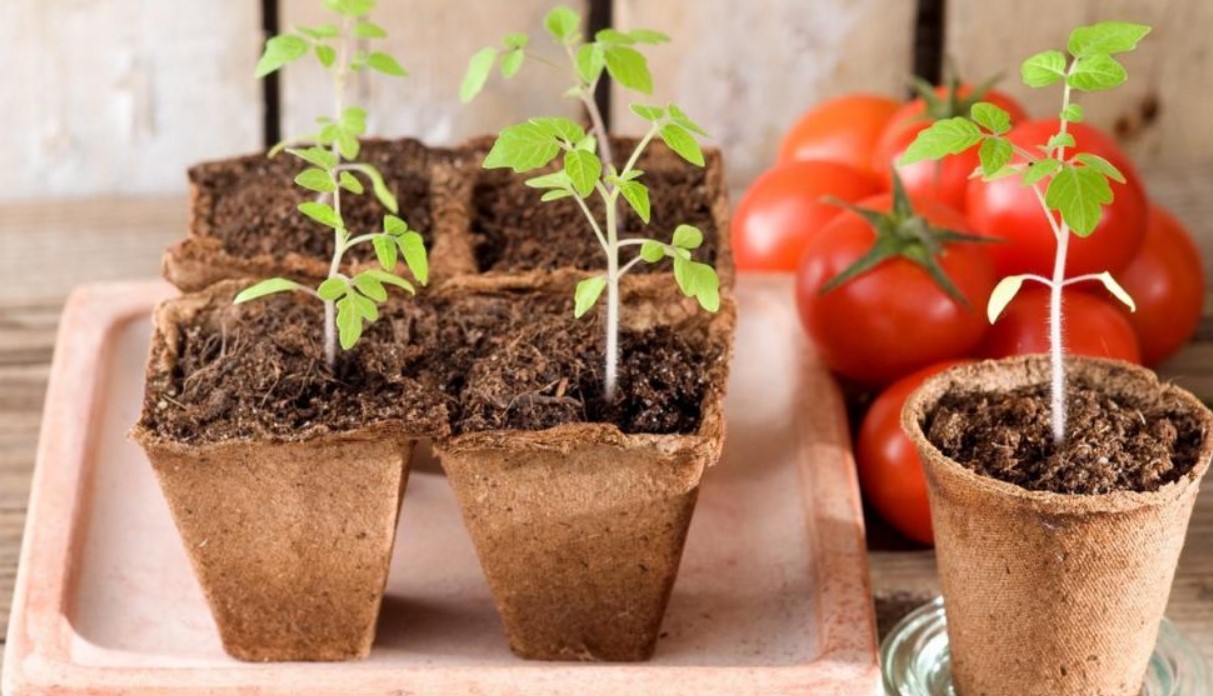
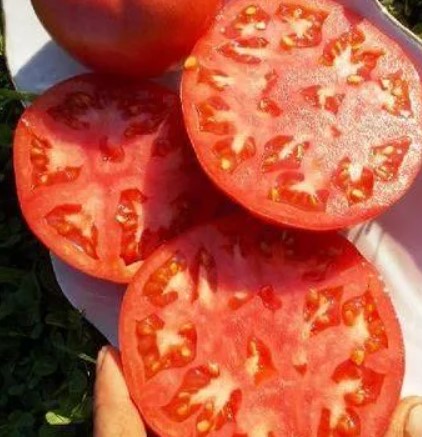
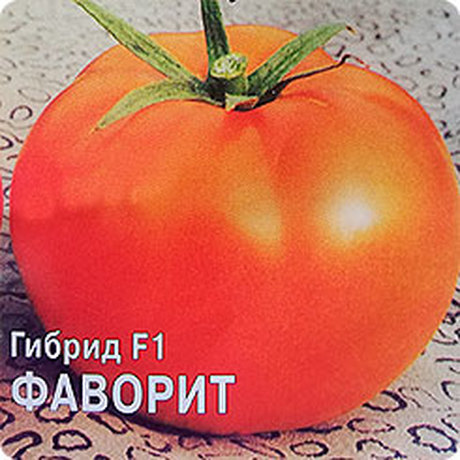
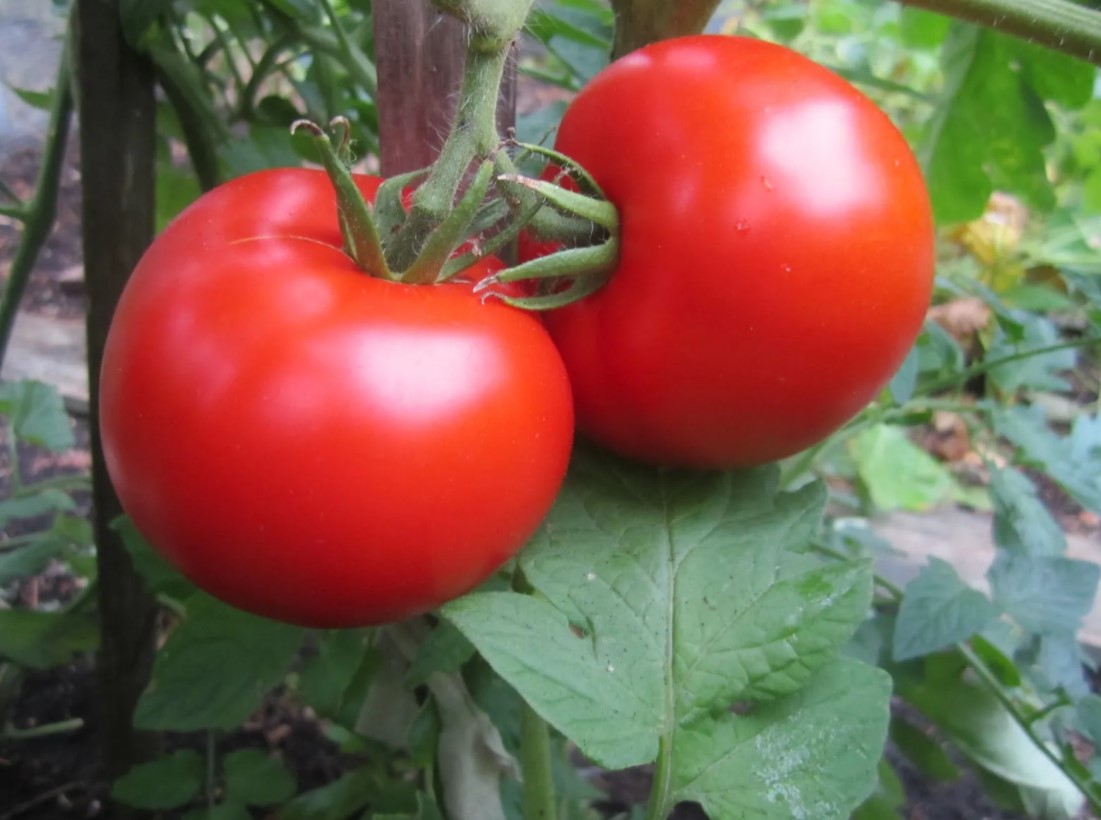
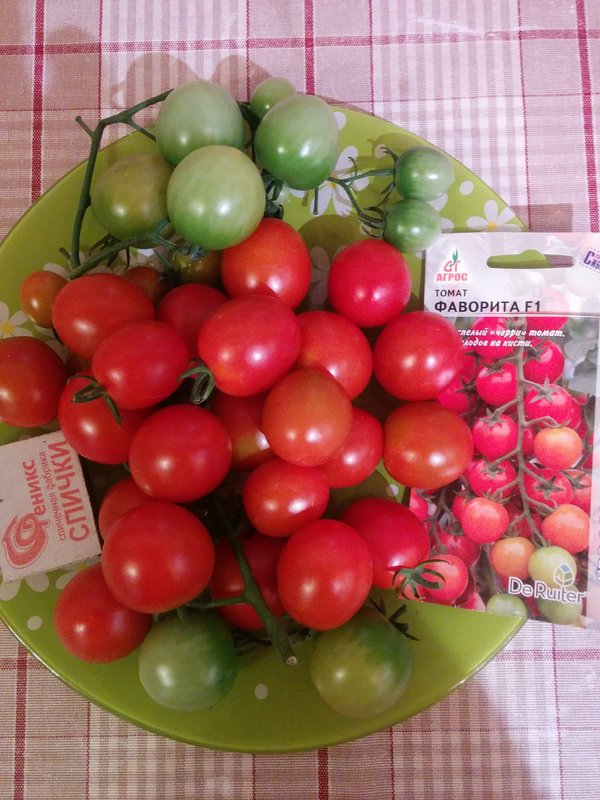
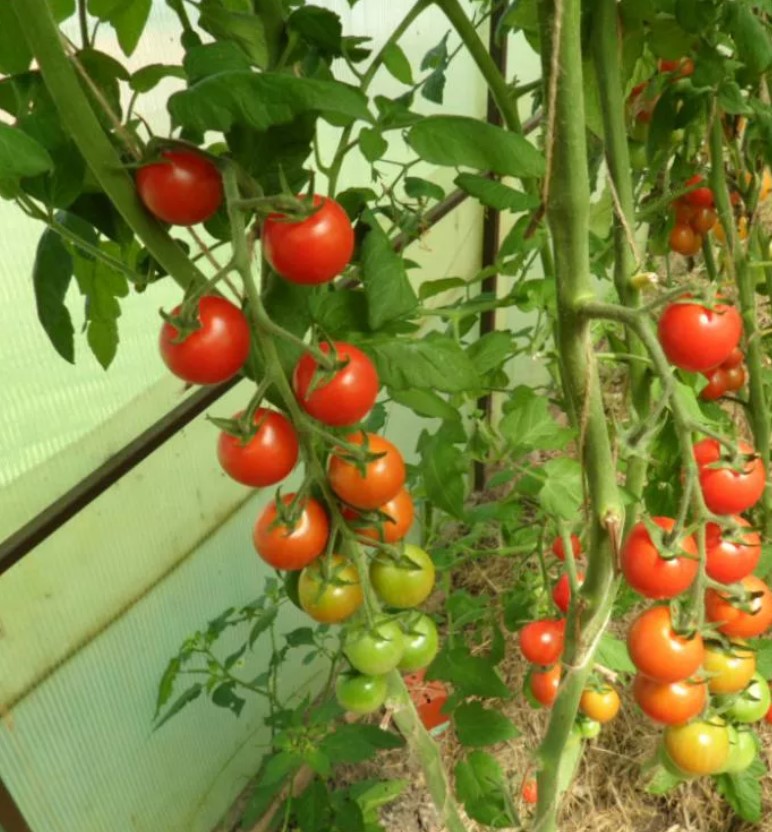
Photo gallery of the tomato variety Favorita F1
Detailed description of the tomato variety Favorite
Let's look at a detailed description of the Favorite variety.
Bush characteristics
The bushes are tall. The leaves are medium-sized, gray-green, and slightly corrugated. The inflorescences are compact, simple, and contain four fruits each.
Fruit characteristics
The fruits are large, reaching 400 grams in weight. They are round, slightly flattened, pink or pink-raspberry in color, later becoming redder, and smaller. They have a smooth, thin skin. The flesh is dense and fleshy, with multiple chambers.
Ripening time, yield
This is a mid-early variety. The first harvest appears approximately 3.5-4 months after germination.
The yield is high. With proper cultivation practices, a single plant can yield 5-8 kg of tomatoes. Planting three plants per square meter yields 15-24 kg of tomatoes.
Advantages and disadvantages of the Favorit variety
The Favorite variety has the following advantages:
- excellent taste;
- high yield;
- good germination.
Cons:
- need for garter and shaping.
Detailed description of the tomato variety Favorite 6 F1
Let's take a closer look at the Favorite 6 hybrid from Partner agricultural firm. It was zoned for extended-crop cultivation in zone 3.
Bush characteristics
The bushes are indeterminate but low-growing. The leaves are green and medium-sized. The inflorescences are simple, with 3-4 fruits each. The first ovary forms above the 7th leaf, with subsequent ovaries occurring every 3 leaves.
Fruit characteristics
The fruits are quite large, can reach 200 g, round, and red. There are four or more chambers. The skin is smooth and thin. The seeds are small and soft.
Ripening time, yield
This variety is mid-season. The first harvest appears in approximately four months. Yields reach 197 centners per hectare.
Advantages and disadvantages of the Favorite 6 variety
The Favorite variety has the following advantages:
- large-fruited;
- simultaneous ripening of fruits in a cluster;
- the ability to grow without shaping due to the weak development of lateral shoots.
One downside is that the bushes need to be supported, which will require additional maintenance time.
Features of growing the varieties Favorite and Favorite 6 F1
Since the varieties have similar characteristics, especially in terms of ripening time, we will consider their cultivation along with specific care requirements.
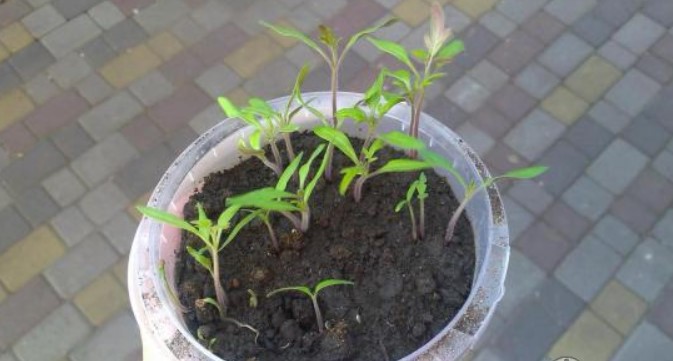
Sowing seeds and growing seedlings
Before planting, treat the seeds of the Favorite tomato variety with a light pink solution of potassium permanganate. This is necessary to kill any infections that may be present on their surface. Soak the seeds in the solution for no more than 30-60 minutes.
For the hybrid variety Favorite 6, such treatment is not necessary.
It's recommended to plant seeds in a specially prepared seedling soil. You can also make your own using black soil and a small amount of sand and peat. The former provides the plants with all the necessary nutrients. The peat acts as an additional fertilizer. The sand makes the soil lighter, which facilitates root development.
After sowing, gently mist the seedlings with a spray bottle and cover with glass or plastic wrap. Place in a dark place with a temperature of 25 to 28°C. Once sprouts appear, move the seedlings into the light, remove the cover, and protect the seedlings from direct sunlight.
Planting in the ground
Since the Favorite variety's seeds are zoned primarily for the southern regions, they can be grown outdoors in the south, but indoors is better in the central region. Favorite 6 can be planted outdoors and under plastic covers in the central region, but it performs best in greenhouses.
Tomatoes are planted outdoors at 60 days of age. If they are to be grown in greenhouses, this can be done earlier, at 6 weeks of age. The most important thing is that the soil is well-warmed to eliminate the risk of recurrent frosts.
The distance between bushes in one row is 40 cm. Between beds - 50 cm.

Care
Water as needed if there has been no rain for a long time. Avoid overwatering, as this will cause the fruit to crack.
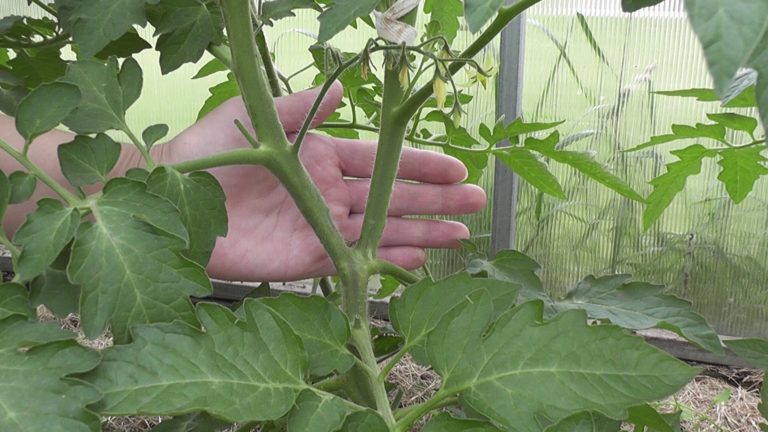
The Favorit and Favorit 6 varieties require staking, as up to six large tomatoes can form on a single cluster. The branches may break under this weight.
The first tomato plant needs to be trained, preferably into 1-2 stems. Side shoots should be removed to prevent them from sapping the plant's energy. This will encourage the plant to grow upward, maximizing sunlight, which will positively impact yield and flavor.
The second hybrid has weak shoot formation, so it is not necessary to shape it.
Resistance of tomato varieties Favorit and Favorit 6 F1 to diseases and pests
Both varieties are capable of effectively resisting several dangerous nightshade diseases. Favorite 6 is primarily resistant to cladosporiosis, tobacco mosaic, and fusarium.
To prevent late blight, treatment with Fitosporin is recommended.
Collection, use and storage of fruits of the Favorit and Favorit 6 F1 varieties
Juicy, delicious tomatoes are used in salads. Canning them whole is not possible due to their large size and thin skin. They are ideal for making juice and adjika.
The Favorite tomato variety allows you to use your own seeds. The Favorite 6 hybrid does not.
Detailed description of the tomato variety Favorita F1
Now let's look at a detailed description of the second grade - Favorite.
Bush characteristics
Forms tall bushes. The leaf blades are large, dull gray-green. The inflorescences are of an intermediate type. The first inflorescence occurs above the 9th leaf, and subsequent inflorescences occur after 3 leaflets.
Fruit characteristics
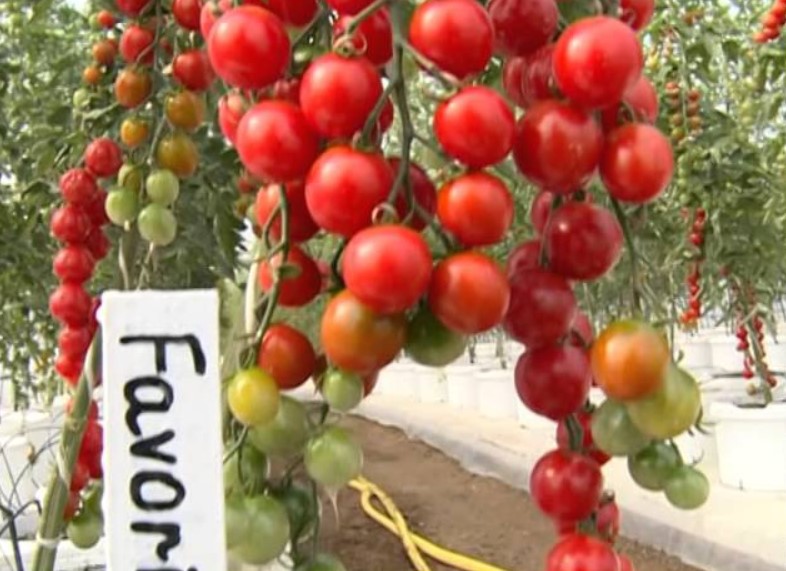
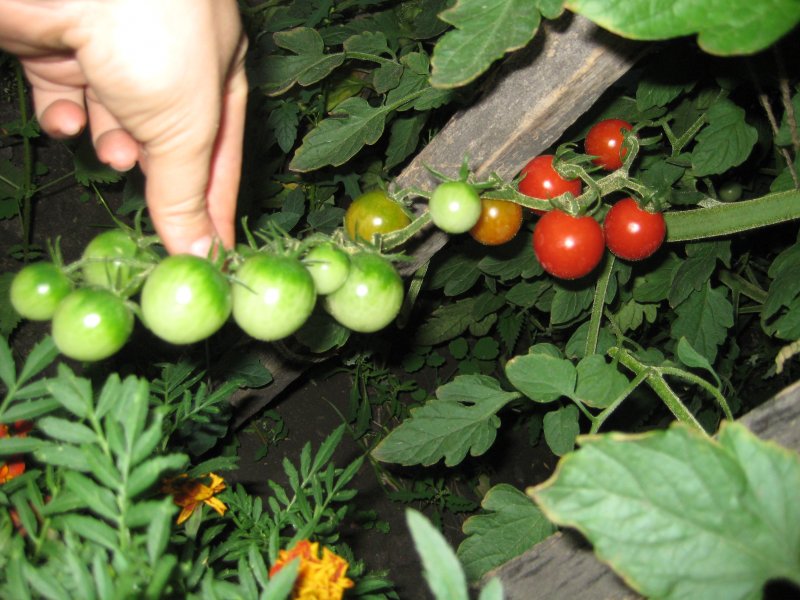
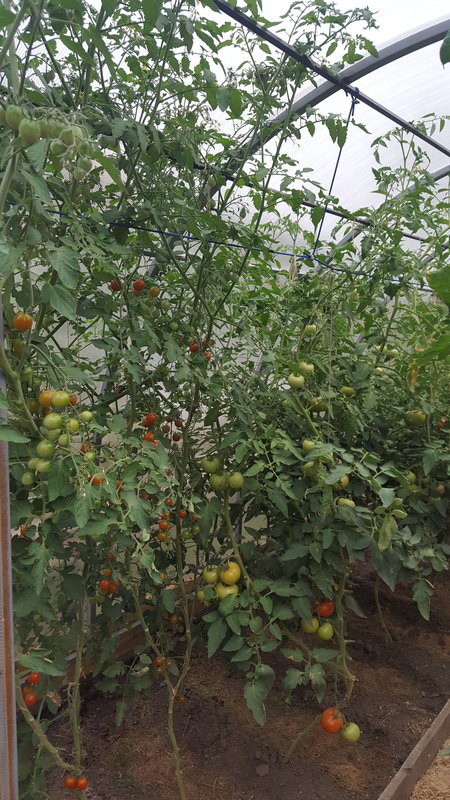
The fruits are round. When unripe, they are green with a dark emerald spot near the stalk. As they ripen, the tomatoes turn red. They have only two seed clusters. The tomatoes are small, weighing 12-14 g.
Ripening time and yield
Faforita is a mid-season variety. The first harvest can be collected 4-4.5 months after the first shoots appear.
Despite the small size of the fruits, the yield is quite high. One square meter can yield 6.3-17.9 kg of tomatoes. With proper cultivation practices, the yield will be maximized.
Advantages and disadvantages of the tomato variety Favorita F1
Advantages:
- Possibility: cultivation for commercial purposes, use of low-volume technology, grafting onto rootstocks;
- high resistance to diseases and pests;
Cons:
- the need for garter and shaping;
Cultivation only in greenhouses; in open ground the yield is reduced.
Please also note that to preserve varietal characteristics, you cannot use seeds collected from your own bushes.
Features of growing the tomato variety Favorita F1
This hybrid has some peculiarities when growing.
Sowing seeds and growing seedlings
The seeds do not require pre-treatment before sowing, as this is provided by the manufacturer. They are sown in seedling containers. Afterward, at the two true leaf stage, they are transplanted into peat pellets or pots.
Planting in the ground
Planting in a permanent location begins at 60 days of age. Up to 4 bushes can be planted per square meter.
Care
This variety requires staking. Synthetic cord is recommended for this purpose. It doesn't retain moisture, preventing stems from rotting upon contact.
Every two weeks, apply a complex mineral fertilizer. It must contain potassium. This will improve the tomatoes' resistance to infections and improve their flavor.
Otherwise, care for the variety will be standard.
Resistance of the tomato variety Favorita F1 to diseases and pests
This variety is resistant to diseases and pests. However, preventative treatment won't hurt. This can be done with the same products as other tomato varieties.
Harvesting, use and storage of the tomato variety Favorita F1
The fruits have a versatile use. They can be eaten fresh or used in salads. They make excellent preserves for the winter.
Comparison of tomato varieties Favorite, Favorite 6 F1 and Favorite F1 with other varieties
Please note! How can you easily convert centners/ha to kg/sq.m? Simply divide by 100! For example, the Abakansky Pink tomato yields 400 centners of marketable fruit per hectare. This equals 4 kg per square meter. It's that simple! Also, keep in mind that typically no more than 3-4 plants are planted per square meter. This way, you can calculate the yield per bush. In the case of the Abakansky Pink, it's about 1 kg.
| Variety | Ripening period (number of days from full germination to ripening)
Yield of commercial fruits |
Brief description | Fetus |
| Favorite | 110-115 days
1500-2400 c/ha |
A mid-early indeterminate variety for greenhouses. Requires staking and training into two stems. Suitable for salads and juices. | Flat-round, pink, pink-raspberry, slightly ribbed, 200-400 g. Excellent taste. |
| Favorite 6 | 107-119 days.
1870-1970 c/ha |
A mid-season, indeterminate, dwarf variety for indoor cultivation. Requires staking. Suitable for salads and tomato products. | Round, red, slightly ribbed, 117-123 g (up to 168 g). Good taste. |
| Favorite | 114-118 days
The yield of commercial fruits is 1630-1790 c/ha |
A mid-early indeterminate variety for open ground and greenhouses. Requires staking and training. Suitable for salads and processing into tomato products. Marketability is 98-100%. | Round, red, 12-15 g. Excellent taste. |
| Astrakhan | 115-122 days
516-724 c/ha, maximum 986 c/ha |
A mid-season, indeterminate, standard variety for open ground. Suitable for salads and processing into tomato products. | Round, red, smooth, 102-106 g. Good taste. |
| Big Dipper | 100-110 days
1150-1450 c/ha |
An early-ripening indeterminate variety for open ground and greenhouses. Requires staking and shaping. Suitable for salads. | Flat-round, slightly ribbed, medium density, pink, 210-260 g. Good taste. |
| Red cherry | 95-102 days
300-400 c/ha (1 kg per plant) |
An early-ripening indeterminate variety for open ground and greenhouses. Requires staking, pinching, and side shoots above the third or fourth cluster. Suitable for salads and whole-clump canning. | Round, red, smooth, 15-20 g. The taste is good and excellent. |
| Pride of Siberia | 85-100 days
up to 2000 c/ha |
A mid-late, indeterminate, standard variety for open ground and greenhouses. Suitable for salads and processing into tomato products. | Flat-round, large, red, 320 g. The taste is good and excellent. |
| Children's joy | 95-105 days
600 c/ha |
An early-ripening indeterminate variety for open ground and greenhouses. Requires staking and training. Suitable for salads and whole-fruit canning. | Round, smooth, very dense, red, 20-30 g. Excellent taste. |
| Dobrynya Nikitich | 110-115 days
1000 c/ha (greenhouse and under film) |
A mid-season indeterminate variety for open ground and greenhouses. Requires staking and shaping. Suitable for salads. | Flat-round, slightly ribbed, medium density, pink, 200 g. Excellent taste. |
| Potato raspberry | 100-105 days
up to 1800 c/ha |
A mid-season, indeterminate, standard variety for open ground and greenhouses. Requires staking and training. Suitable for salads, canning, and processing into tomato products. | Flattened-round, raspberry, 700-800 g. Excellent taste, sugary, rich. |
| Cosmonaut Volkov | 110 days
1500-2000 c/ha |
A mid-early indeterminate variety for greenhouses. Suitable for salads, appetizers, and processing into tomato products. | Flat-round, slightly ribbed, red, 300-500 g (up to 700 g). Excellent taste. |
| Major | 105-110 days
670 c/ha |
An early-ripening indeterminate variety for open ground and greenhouses. Requires staking and shaping. Suitable for salads. Tolerates temperature fluctuations well. | Round, smooth, dense, resistant to cracking, pink, 120 g. Excellent taste. |
| Mashenka | 112-116 days
2500-2800 c/ha |
A mid-season indeterminate variety for open ground and greenhouses. Suitable for salads and processing into tomato products. | Flat-round, smooth, red, 210-260 g. Excellent taste. |
| Mikado red | 115-120 days
700-900 c/ha |
A mid-early indeterminate tomato for open garden beds and plastic shelters. Suitable for salads. | Round, flattened, with pronounced ribbing, dark pink or burgundy, 270 g. Excellent taste. |
| Mikado red | 115-120 days
700-900 c/ha |
A mid-early indeterminate tomato for open garden beds and plastic shelters. Suitable for salads. | Round, flattened, with pronounced ribbing, dark pink or burgundy, 270 g. Excellent taste. |
| Minusinsk apple | 110-112 days
Up to 2500 c/ha |
A mid-season indeterminate variety for greenhouses. Requires staking and training into two stems. Suitable for salads and processing into tomato products. | Flat-round, ribbed, red, up to 500 g. Excellent taste. |
| Minusinsk apple | 110-112 days
Up to 2500 c/ha |
A mid-season indeterminate variety for greenhouses. Requires staking and training into two stems. Suitable for salads and processing into tomato products. | Flat-round, ribbed, red, up to 500 g. Excellent taste. |
| Siberian giant | 115-120 days
The commercial yield of fruits was 9.0-11.0 kg/sq.m. |
A mid-early indeterminate variety for greenhouses. Suitable for salads. | Flat-round, large, medium-ribbed, loose, red, 400-500 g. Excellent taste. |
| Siberian Shan'gi | 100-110 days
The yield of commercial fruits in open ground was 5.6 kg/sq.m. |
A mid-season determinate variety for open ground and greenhouses. Suitable for salads. | Flat-round, medium density, slightly ribbed, raspberry, 157 g. Excellent taste. |
Gardeners' reviews of the tomato varieties Favorit, Favorit 6 F1, and Favorit F1
Gardeners highlight the advantages of both varieties, including their excellent taste and high yield. However, they note the need for staking, which is time-consuming for those inexperienced.
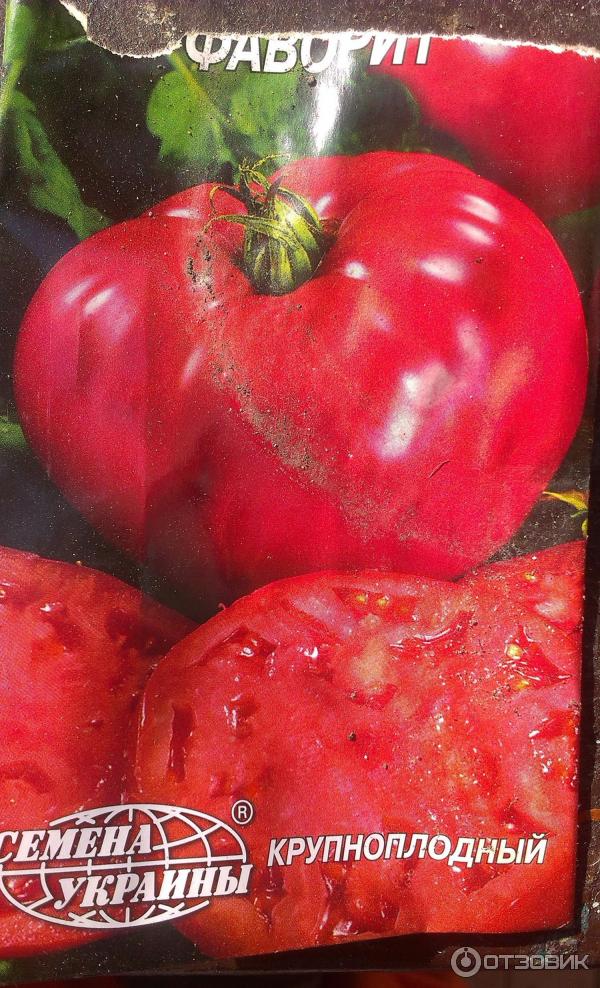
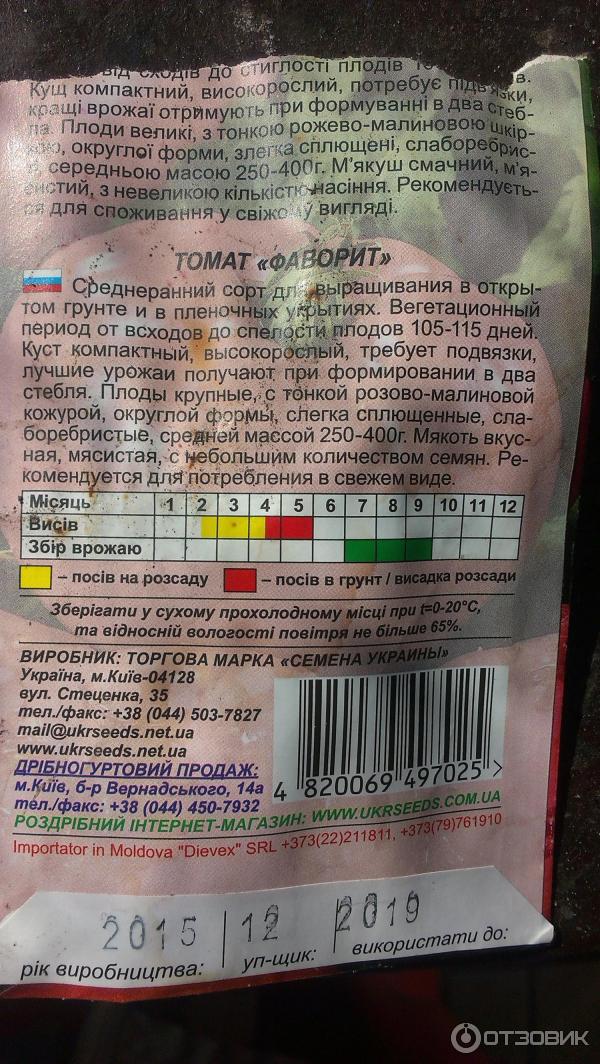
Greetings to all) Mom bought a lot of tomato seeds this year and now I want to write about the tomato "Favorite" from Semyon Ukraine.
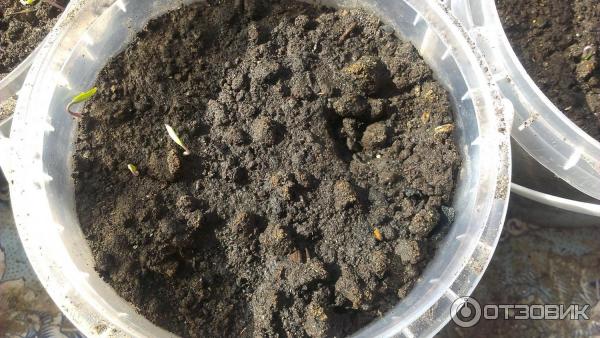
Mom planted the seeds early, probably at the end of April or the beginning of May.
But as indicated on the packaging, planting can be done from mid-February, for greenhouses.
Mid-early variety, for planting in open ground and under film.
The vegetation period from emergence to maturity is 105–115 days.
The bush is compact, tall, and requires garter.
Unfortunately, I don’t have a photo of the bush itself now, since my mother planted them far from the house and I don’t have the opportunity to go there.
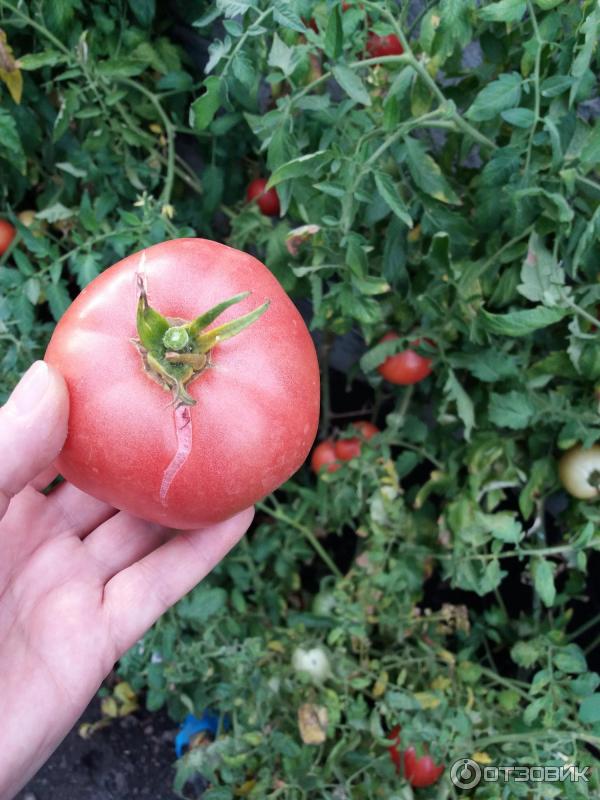
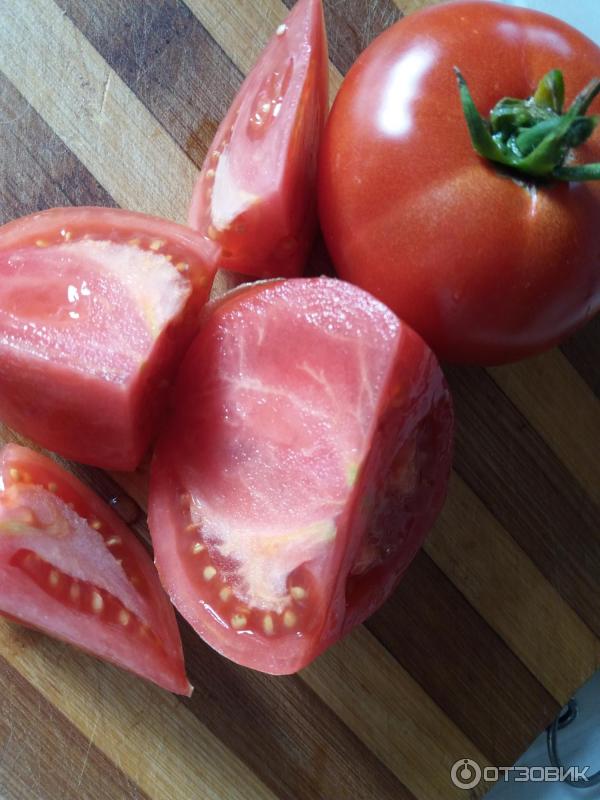
The fruits should be large with thin pinkish skin, round in shape, slightly flattened, slightly ribbed, and weighing an average of 250–400 grams.
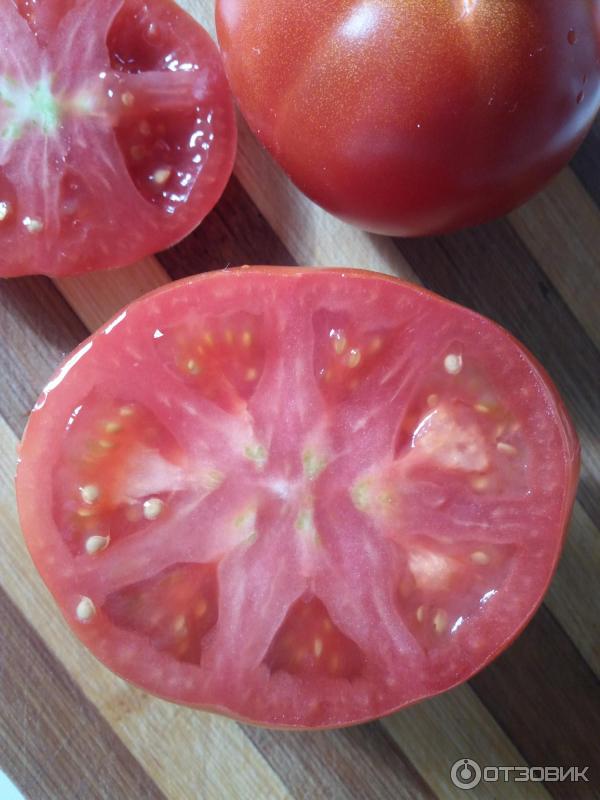
The pulp is tasty, fleshy, with a small number of seeds.
Store seeds in a dry place at a temperature not exceeding 20*C.
Shelf life is 4 years.
Our fruits aren't large, rather small. The heat must have taken its toll, but all the tomatoes we planted were small.
There are many fruits on the bush, the shape is interesting.
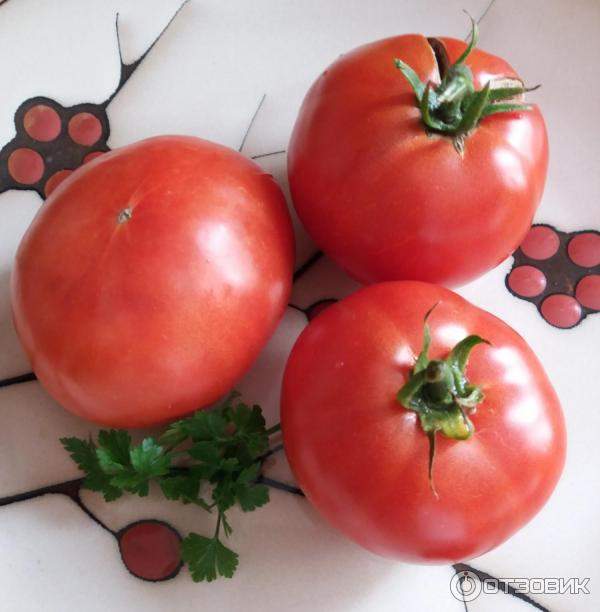
The skin is red and the stem is interestingly set deep.
Juicy, delicious, and perfect not only for salads but also for canning. Mom used them to preserve tomato juice and borscht dressing.
I also covered the salad.
I can’t say anything bad, so I recommend buying it.
Pros:
— price
— number of seeds
— they sprouted well
- a good harvest
- delicious tomatoes
- medium-grade
Cons:
- No
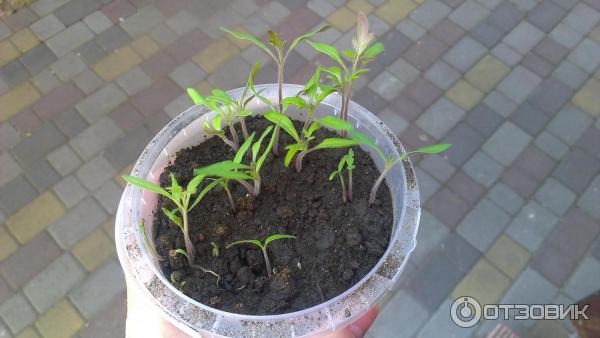
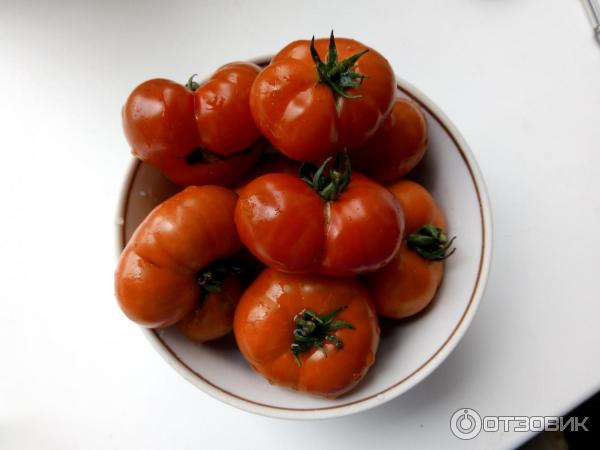
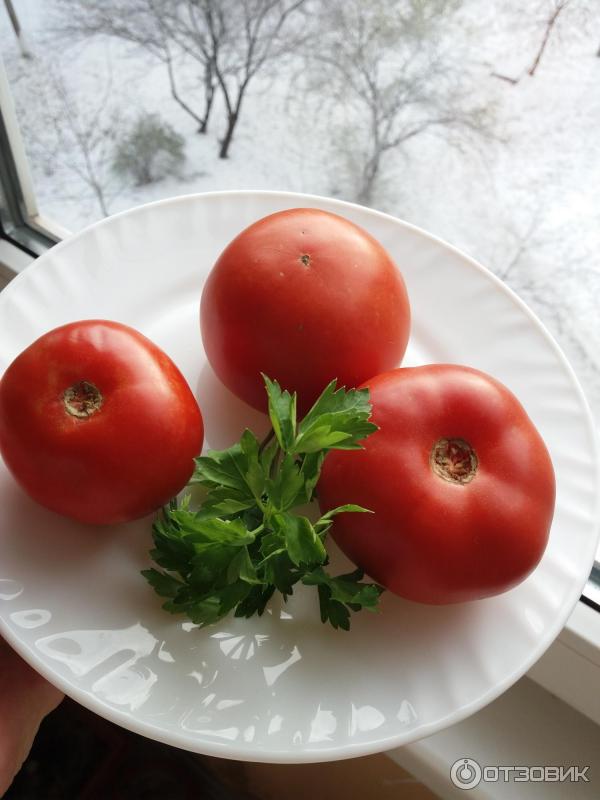
There is snow outside the window.
And I have Mr. Tomato.
His name is "Favorite".
And I like him.
Autumn this year was gentle and long.
These are some of the latest fruits. Not the largest, but still quite good.The first ones were admired for their weight, reaching up to four hundred grams or more.
Handsome guys.
Large, dense balls changed color from pink to red by the end of full ripening.
Tomato "Favorite" is in our garden for the first time.
According to the seed seller, the variety was one hundred percent worth the hassle of gartering, and that's exactly what it turned out to be.
Considering that we needed a tall tomato variety for planting along the wall, we will be buying more of the "Favorite" variety.
This variety is mid-season and is not one of the first to ripen.
And it successfully joins the queue at a time when the first wave of early tomatoes has already subsided.
Then it’s time to end “Favorite”.
Sweet, rich taste with a slight sourness.
It is not suitable for preserving whole, it is too large.
When transporting, delicacy is required - the skin is thin and delicate.
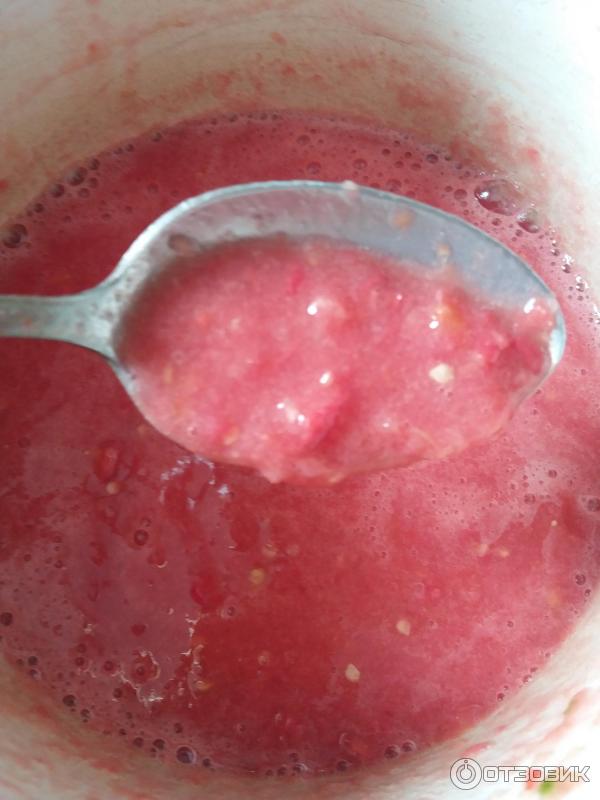
"Favorite" is ideal for preparing thick and rich fruit drinks, juices, and adjika.
For fresh salads too.
It holds its shape reliably when cut.
Dense, uniform, fleshy, multi-chambered tomato.
The seeds are small and not hard.
The white stem, which is often a disadvantage of large-fruited tomatoes, is absent from the 'Favorit' variety.
The lunula of the sepal is thin and not rigid.
The sensitivity of 'Favorit' to late blight is no higher than that of other varieties.
However, treatment with phytosporin is necessary and was carried out regularly.
It is not necessary to remove the side shoots of this variety.
And some of the density didn’t bother us; in the heat, the abundance of greenery was even welcome.
Today is December 19th.
I made a salad from fresh tomatoes of the "Favorite" variety.
Like a greeting from summer.
I'm glad.
They were picked from the garden bed about a month ago before the frost.
They finally turned red in the warmth.I recommend "Favorite".
Excellent taste characteristics and abundant harvest with seed germination of about 95%.
My husband grew them from seedlings and transplanted them into open ground.
He was the one who looked after them.
Well done.
"Favorite" too.
Pyateroshnik.
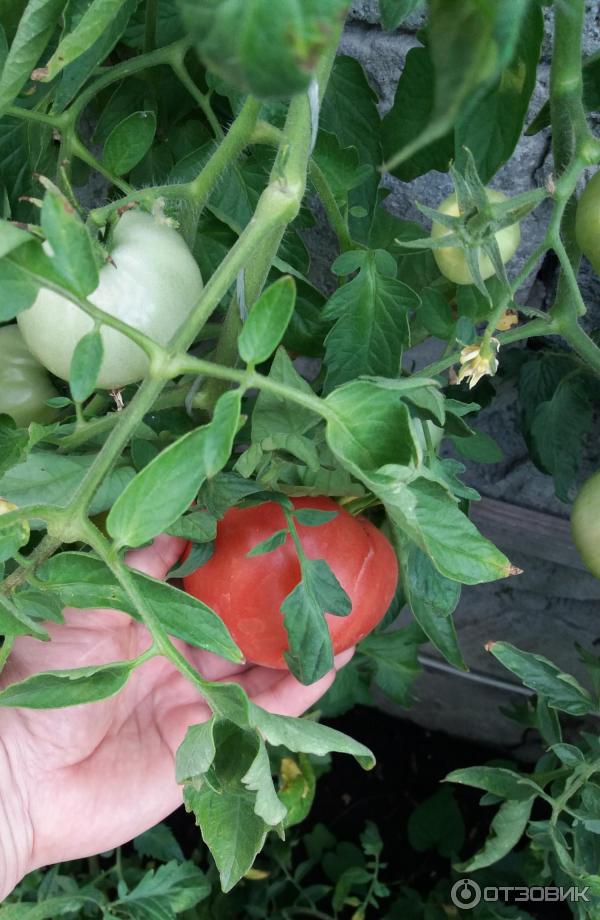
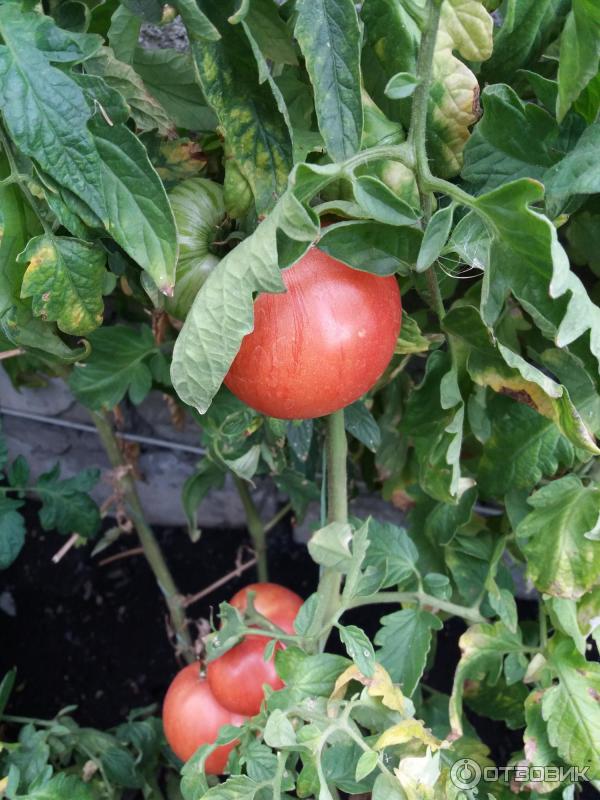
This year I went a bit overboard with experimentation: I usually plant two or three tried-and-true varieties and two or three new ones, plus a couple of hybrids. This year, I decided against planting hybrids because of their weak flavor, but I did try the low-growing varieties Snegiri and Zagadka, and the medium-sized Favorit and Vintage Vine. I sowed the yellow De Barao and Black Prince with seven-year-old seeds (they germinated very well). I was planning to plant mostly Morning Dew, but unfortunately, they got blackleg, so I had to replant. This variety isn't particularly early, so due to the delay at the start, it's only just starting to ripen. The bottom line: I'm no longer planting Snegiri—they produce a lot of tomatoes on the bush, but they're thick-skinned and completely tasteless, even dry. Riddle was a delight: the tomatoes are small, but plentiful and delicious. I'm keeping Favorit; it's also delicious, not red, but more of a dark pink, fleshy color. The yield could be higher, but that needs to be tested next year. Vintage Wine is very beautiful, with its red-yellow stripes, resembling a peach from a distance. The skin is a bit thick, the flavor is average, so I'll save a couple of bushes for exotica. I'll plant more Riddles; they grow beautifully at the "feet" of tall bushes. And I'll still bring back the hybrids: they're tasty, but they're good for ketchup and produce a lot of weight. Overall, this year's rush for variety has led to a miscalculation in the harvest. While last year we hauled baskets, this year we're hauling in 7-liter buckets. And it's already rained and gotten much colder.
I've corrected my impression of the Favorita F1 tomato above. It turned out to be sweet and delicious.
This is my second year planting Favorita. It's delicious, even a little spicy and sweet. And I'll keep planting it. It does tend to get side-sonned a lot, but the clusters reach all the way to the top. This year, one seed got into the cucumbers and sprouted by itself. I didn't pull it out, the bush has grown two meters tall, and all the tomatoes are hanging red. It's a good variety.
I'll do my bit.
Favorite tomato, I planted it for the first year, I really liked it
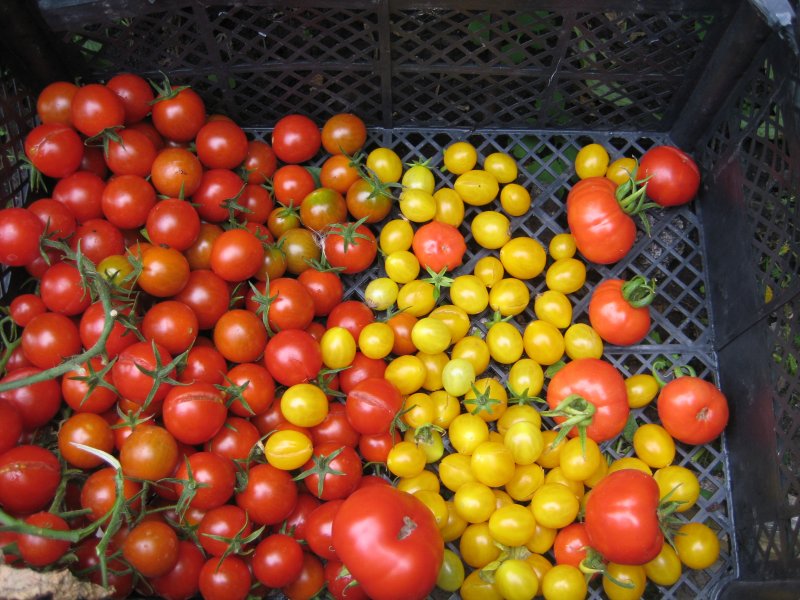
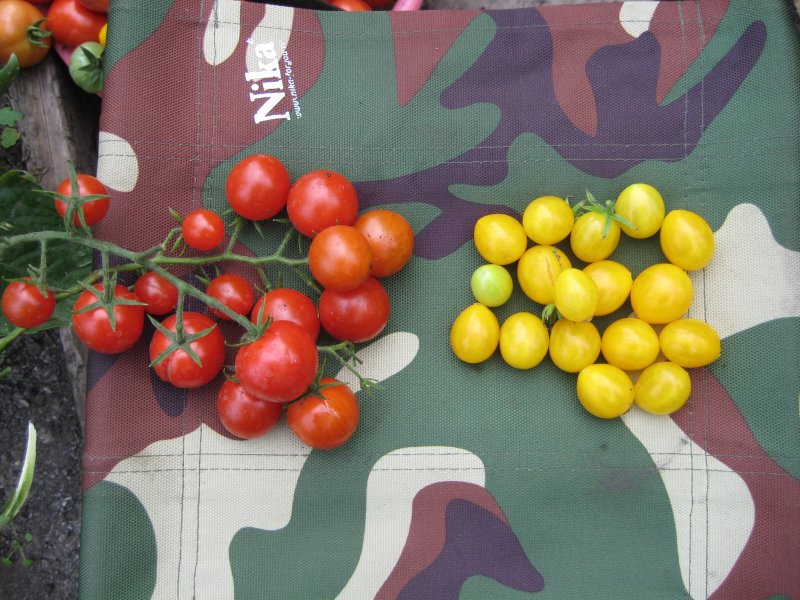
Compared to the Favorite tomato (Favorita on the left, yellow cherry on the right)
Good afternoon everyone!
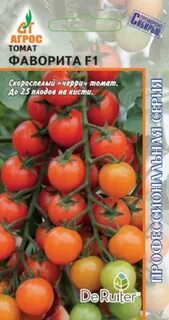
Last year I bought Favorita tomatoes at Agros.
I was more than just shocked by the price for five seeds...
That's why I bought it. I really wanted to know what this miracle was and what it tasted like.
It's a pity I couldn't find a summer photo.
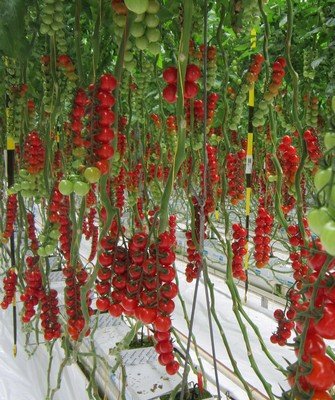
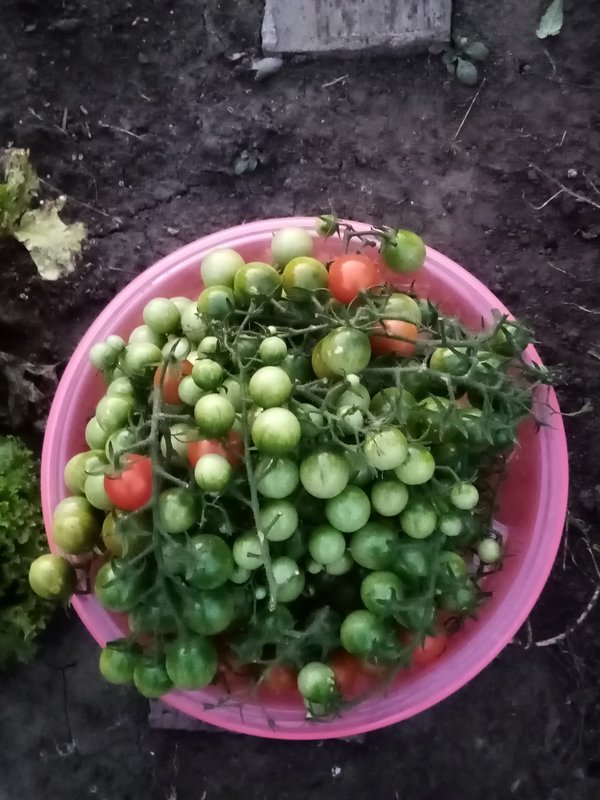
I grew three of them in a greenhouse (I saved two seeds for next year). They were grown on a single stem. The clusters contain 20-25 tomatoes, the size of walnuts, and are dense. But they are so sweet and delicious. I have several varieties of tomatoes in two greenhouses, but these were truly my favorites among all the others. They can also be canned, but for some reason that didn't work out for us. Everyone ate them fresh. Even children, who don't like tomatoes, ate them. Photo from September 23.
I have already ordered for myself, but if I don’t have the required quantity, I will order more.
Tomato Favorite 5 seeds 190 rubles
the price will be 190 rubles for 5 families.
*Price valid as of June 19. May change at the time of purchase. Need to collect quickly.This year Agros is already charging 285 rubles for 5 seeds.
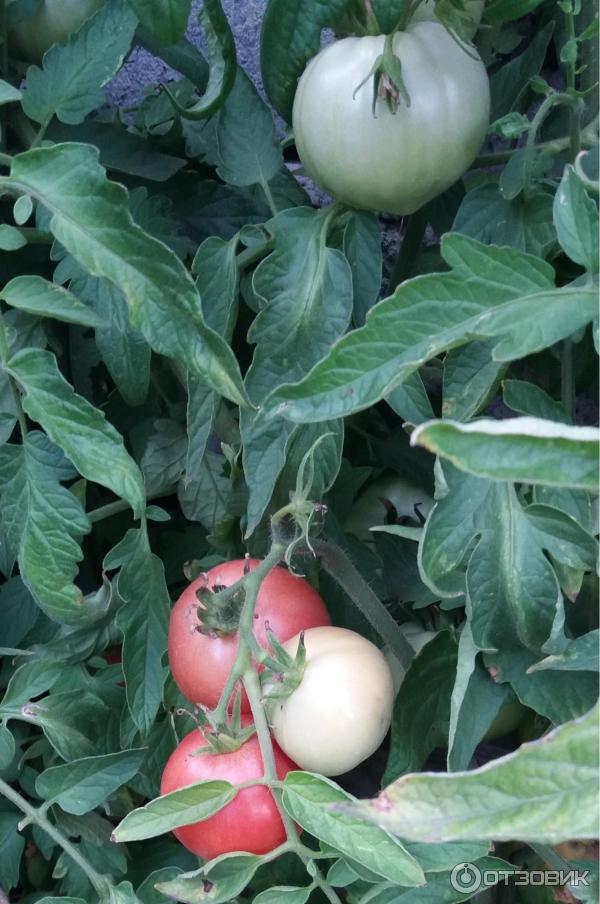
About the Favorite tomato: I don’t know what to do to make them ripen at the same time as in the photo.
But my mother-in-law has been planting it for many years in a row. She constantly buys other varieties.
Well, to compare, but every year we're convinced that nothing tastes better! The size and the taste, everything is just right!
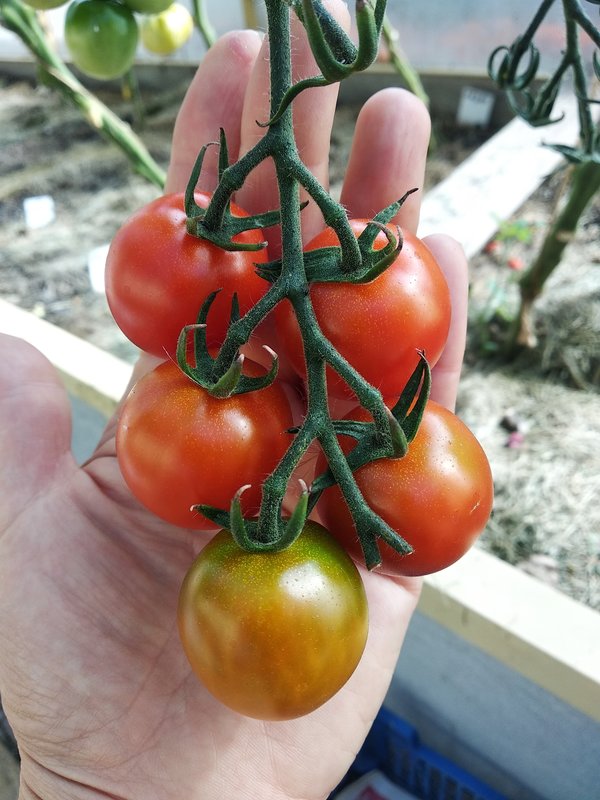
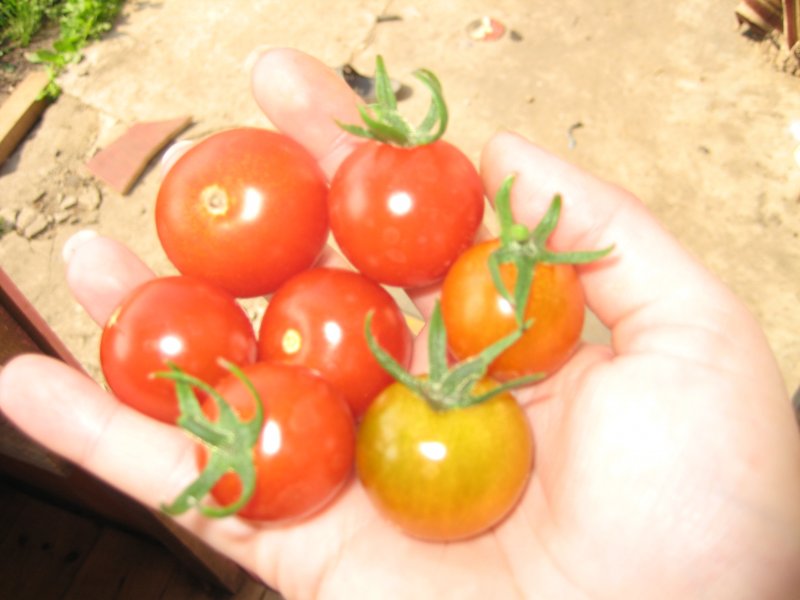
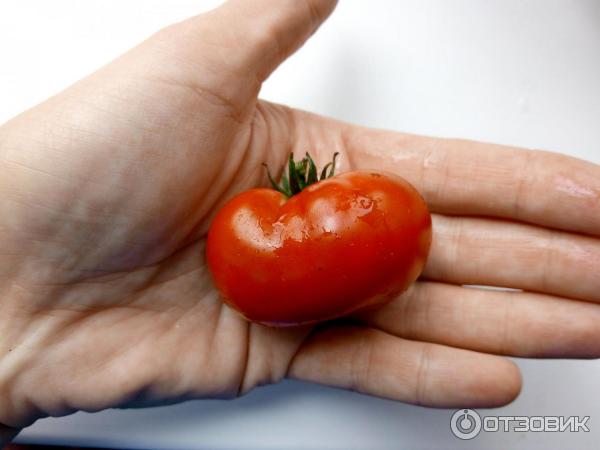
Favorite - on the hand for understanding the scale
Olya! I've been planting my favorite for over five years now, and no other cherry tomatoes can even compare. They're so sweet! They're incredibly productive. My grown-up guests fight over them :haha:
This year I sprayed them with boric acid and additives (Ivan Russkikh's recipe), and all my tomatoes started to grow! They're still growing.
In the photo, these are the two outermost tomatoes on the left, taller than the greenhouse. Photo taken on August 14th, and we started eating them at the end of June. This variety is the first to ripen.