The Mashenka variety was developed by Altai breeders. This tomato variety is ideal for growing in most regions, is cold-resistant, and rarely susceptible to disease. Its red, juicy fruits have an excellent flavor.
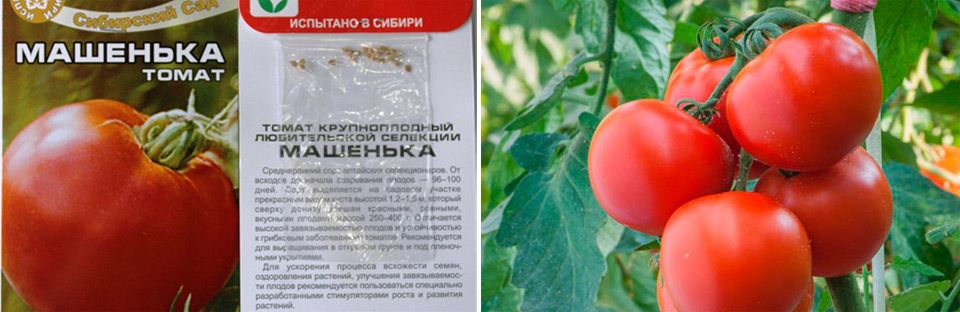
Although Mashenka tomatoes were bred relatively recently and have not yet been included in the state register, they are now one of the most popular varieties among gardeners across the country. In 2011, experts named this variety one of the best new varieties of Russian breeding for its excellent characteristics.
Characteristics of the Mashenka tomato variety in a table
| Parameter | Characteristics |
| Ripening time (number of days from full germination to ripening) | 112-116 days |
| Description | Mid-season indeterminate variety for open ground and greenhouses. |
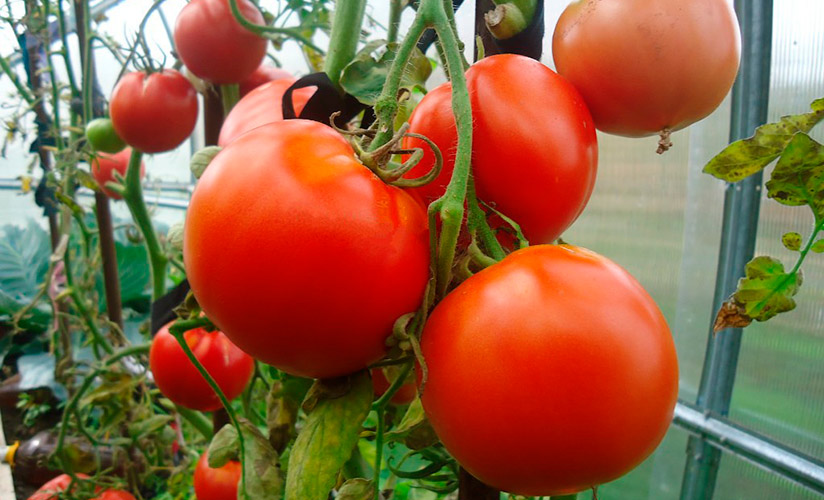
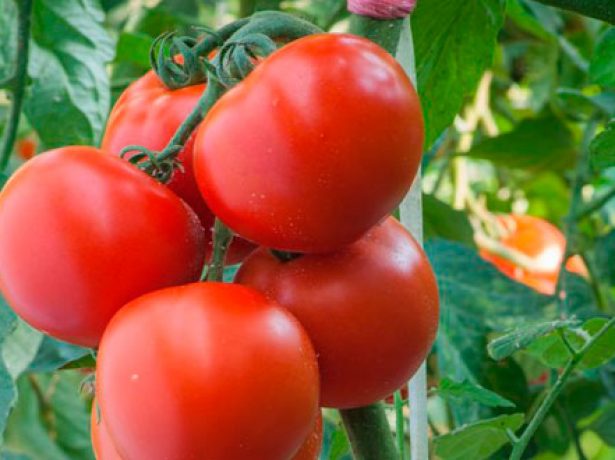
| Fetus | Flat-round, smooth, red. |
| Fruit weight | 210-260 g |
| Taste | Great. |
| Usage | Suitable for salads and for processing into tomato products (juices, pastes, sauces). Not suitable for canning due to cracking. |
| Marketability | High |
| Yield of commercial fruits | 2500-2800 c/ha |
| Shelf life | Bad |
| Disease resistance | Good |
| Agricultural technology | Standard |
| Growing regions | Any |
| Originator | Altai folk selection |
| Not included |
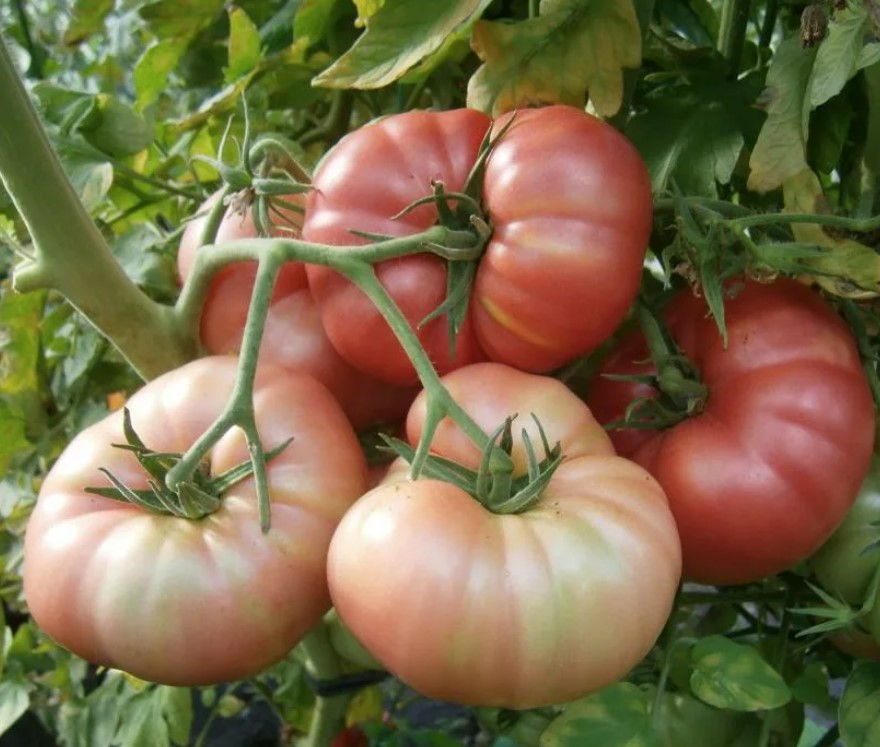
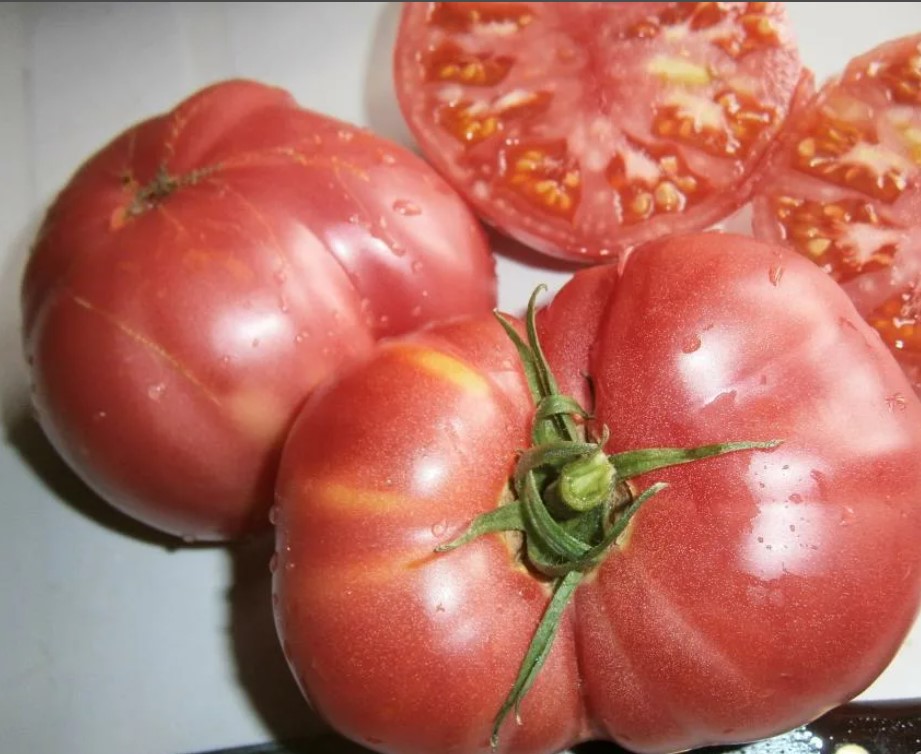
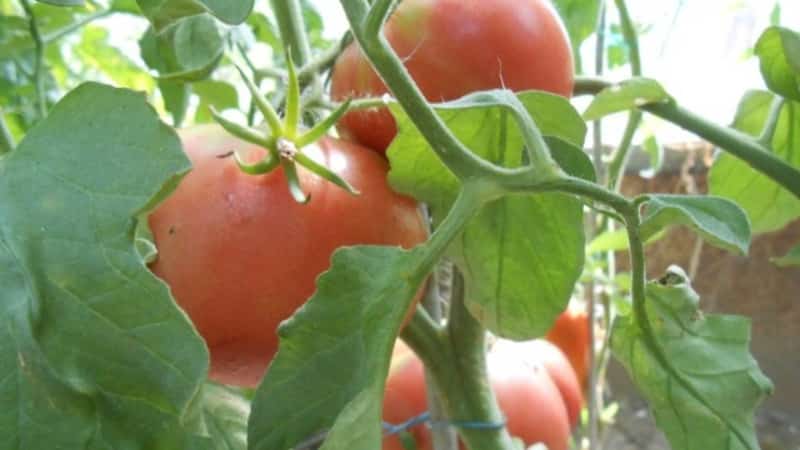
Photo gallery of the Mashenka tomato variety
Description of the Mashenka tomato variety
This variety is a versatile mid-season variety. The tomatoes ripen in 110-115 days from planting. The bushes can reach 2 meters in height. The plant is known for its abundant fruiting, with a single bush yielding up to 12 kg.
The leaves are dense and green. The first ovary is located above the tenth leaf. There are usually three leaves between the ovaries.
The fruits are round, red, with juicy, fleshy pulp. They ripen at the same time. They weigh 200-260 grams. Fruits have been known to weigh over 600 grams. They are distinguished by their large number of seeds. Each tomato has up to 6 seed chambers. The skin is thick.
The flavor is rich, sweet and sour. They are used for canning and salads. They have a short shelf life.
Advantages and disadvantages of the Mashenka tomato variety
Gardeners and farmers who grow this variety on their plots note the following advantages:
- Mashenka tomatoes grow well both in greenhouse conditions and in open ground;
- Up to 28 kg of excellent product are collected from one square meter per season;
- This variety is considered versatile, so the fruits are used for fresh consumption and juice production. The tomatoes are also suitable for canning;
- The plant is immune to most diseases and can withstand temperature changes;
- Tomatoes have a pleasant taste and good marketable appearance, so they are often grown for sale.
Among the disadvantages, the following properties of the variety are mentioned:
- Height of bushes;
- Short shelf life of ripe tomatoes;
- Need for careful care;
- When grown outdoors, yields decrease.
This type of tomato is suitable for beginning gardeners, but to obtain a rich harvest, it is necessary to fully comply with the growing rules, which are described below.
Mashenka Tomato Growing Technology
Mashenka tomatoes are grown in central Russia, the Krasnodar Krai, the Caucasus, the Middle and Southern Urals, and Siberia. In regions with cold winters and poor soil, greenhouse cultivation is preferred.
The best time to sow seeds for seedlings is from March to April (55-65 days before they are expected to be planted outdoors). In the south, it's a little earlier—late February or early March.
The seeds grow best in a substrate diluted with river sand.
The soil is pre-treated with a potassium permanganate solution or heated in the oven for 15 minutes. This disinfects the substrate and kills any potential fungi.
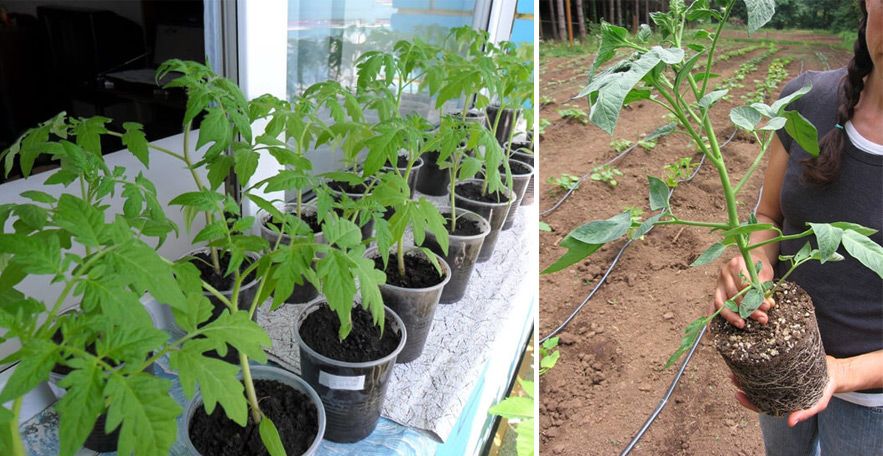
Seedlings thrive in containers made of any material. The container should have a hole in the bottom to prevent excess moisture from accumulating and causing root rot.
Before planting, seeds are soaked for 24 hours in a baking soda solution or aloe vera juice, then treated with growth stimulants. Gardeners in harsh climates also harden them by placing them in the refrigerator for 4 hours or by placing them outdoors.
Plant the seedlings in 1-cm-deep holes, spaced 3-4 cm apart. Place the containers in a warm location. Once the first shoots emerge, move the containers to a bright area of the house. The plants require bright light; additional lamps should be installed near the seedlings.
Seedlings require additional nutrition, so they are fertilized 2-3 times with special fertilizers. Some gardeners use homemade seedling fertilizer. To do this, pour a packet of yeast into warm water, add 2 tablespoons of sugar, and let the mixture steep for 2-3 hours. Then, prepare a solution at a ratio of 0.5 liters of solution per 10 liters of water and water the seedlings.
Two weeks before planting, harden off the tomato seedlings by placing the containers outside. The temperature outside must be warm enough, otherwise the seedlings may die.
Tomatoes yield the greatest yield when planted in sandy or loamy soil. Plants are transplanted into the soil in late spring or the first weeks of June. By this time, warm weather with no overnight frosts should have set in. Plants that are 30 cm tall and have 4-5 leaves at the time of planting are established in the soil.
The soil is pre-fertilized with a mixture of ash, compost, and 1 tablespoon of urea. The distance between bushes should be at least 35 cm. The seedlings require a fertilizer high in phosphorus and nitrogen.
Mature bushes require proper support. If the stem isn't tied to a support, it may break off due to the heavy fruit.
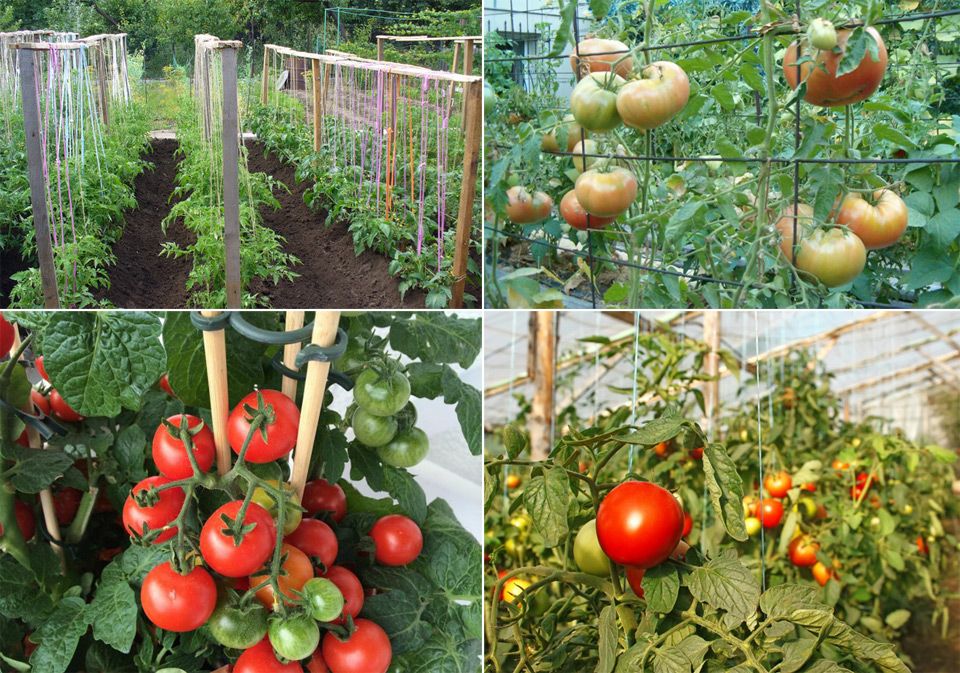
Throughout the growing season, tomatoes require regular watering, fertilizing, and weeding. Weed the beds no more than once every three weeks. Water the plants as the soil dries. Mulching helps maintain the soil's moisture. Straw, sawdust, and peat are good options. The mulch layer should not exceed 10 cm.
The plants are trimmed of side leaves weekly. Pinching out side shoots is an essential part of tomato care, without which the plant will not produce the expected harvest.
When 5-6 ovaries appear on the bush, the top is trimmed to stop further growth.
Diseases and pests of the Mashenka tomato variety
Mashenka tomatoes rarely get sick. They are more often plagued by pests such as butterflies, cutworms, and aphids. Insect control products such as Iskra M, Koragen, Aktara, and others are used.
To prevent pests, the bushes are treated monthly with a potassium permanganate solution (1 gram per liter of water). The stems and leaves are generously sprayed with this solution, and the soil is also treated with it.
In greenhouses, tomatoes are more susceptible to fungal diseases and damage from spider mites. Possible causes of these diseases include poor watering and inadequate care.
Top.tomathouse.com informs: harvesting and using Mashenka tomatoes
The time of harvesting depends on how you plan to use the tomatoes later:
Fully formed but still green fruits are harvested for long-term storage. These tomatoes ripen indoors;
Slightly reddish tomatoes are best for long-distance transportation;
Red and fully ripe tomatoes are harvested for use in salads and fresh.
Mashenka tomatoes are suitable for a variety of culinary uses, including sauces, pastes, ketchups, juices, and lecho. Because the fruits are large, they are pre-chopped before canning.
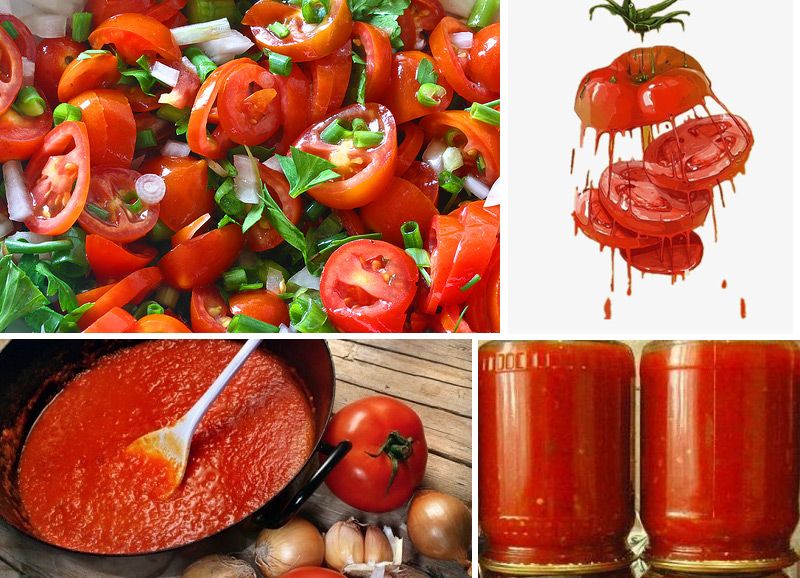
Another characteristic of this variety is its rich vitamin and mineral content. The fruits are most beneficial when used in salads within two weeks of harvest. The maximum shelf life of a ripe harvest is three weeks. After this period, the fruits begin to spoil and lose their flavor.
Comparison of the Mashenka tomato variety with other varieties in the table
Please note! How can you easily convert centners/ha to kg/sq.m? Simply divide by 100! For example, the Abakansky Pink tomato yields 400 centners of marketable fruit per hectare. This equals 4 kg per square meter. It's that simple! Also, keep in mind that typically no more than 3-4 plants are planted per square meter. This way, you can calculate the yield per bush. In the case of the Abakansky Pink, it's about 1 kg.
| Variety | Ripening period (number of days from full germination to ripening)
Yield of commercial fruits |
Brief description | Fetus |
| Mashenka | 112-116 days 2500-2800 c/ha |
A mid-season indeterminate variety for open ground and greenhouses. Suitable for salads and processing into tomato products. | Flat-round, smooth, red, 210-260 g. Excellent taste. |
| Alyosha Popovich | 125-130 days
600-640 c/ha |
A mid-season indeterminate variety for open ground and greenhouses. Requires staking and training. Suitable for salads. Easy to transport. Resistant to adverse growing conditions. | Round, slightly ribbed, medium density, red, 150-200 g. Good taste. |
| Altai masterpiece | 110-150 days
up to 1000 c/ha (under film) |
A mid-season indeterminate variety for open ground and greenhouses. Requires staking and shaping. Suitable for salads. | Flat-round, medium-ribbed, medium density, red, 300-400 g. Good taste. |
| Big Momma | 85-95 days (greenhouse), about 100 days (open ground)
700-900 c/ha |
A mid-early determinate variety for open ground and greenhouses (greenhouses only, according to the register). Suitable for salads, canning, pickling, and juice. | Round, large, slightly ribbed, medium density, red, 200-250 g. Excellent taste. |
| Big Dipper | 100-110 days 1150-1450 c/ha |
An early-ripening indeterminate variety for open ground and greenhouses. Requires staking and shaping. Suitable for salads. | Flat-round, slightly ribbed, medium density, pink, 210-260 g. Good taste. |
| Pride of Siberia | 85-100 days
up to 2000 c/ha |
A mid-late, indeterminate, standard variety for open ground and greenhouses. Suitable for salads and processing into tomato products. | Flat-round, large, red, 320 g. The taste is good and excellent. |
| Mystery | 95-100 days
750-1250 c/ha |
An early-ripening, determinate, low-growing variety for open ground. Requires staking and training. Suitable for salads, pickling, and canning. | Round, dense, smooth, fleshy, resistant to cracking, red, 80-100 g. The taste is good to excellent. |
| Cosmonaut Volkov | 110 days
1500-2000 c/ha |
A mid-early indeterminate variety for greenhouses. Suitable for salads, appetizers, and processing into tomato products. | Flat-round, slightly ribbed, red, 300-500 g (up to 700 g). Excellent taste. |
| Minusinsk barrel | 112-125 days 900-1200 c/ha |
Mid-season indeterminate variety for open ground and greenhouses. Requires staking and shaping into 1-2 stems. Suitable for salads, processing into tomato products, and canning. |
Flat-round, slightly ribbed, red, 250-500 g. Good to excellent taste. |
| Pot-bellied house | about 100 days
820-920 c/ha (greenhouse and under film) |
An early-ripening indeterminate variety for open ground and greenhouses. Requires staking and shaping. Suitable for salads. | Pear-shaped, ribbed, medium density, red, 200-260 g. Good taste. |
| Favorite | 114-118 days
Up to 1800 c/ha |
A late-ripening indeterminate variety for greenhouses. Requires staking and training into two stems. Suitable for salads and canning. | Flat-round, smooth, red, 140 g. Excellent taste. |
| Tarasenko's anniversary | 105-120 days
4200-5100 c/ha (14-17 kg per plant) |
A mid-season, tall, indeterminate variety for open ground and greenhouses. Requires staking and training. Suitable for salads and whole-fruit canning. | Round or flat-angled, slightly ribbed, fleshy, orange-red, 180-200 g (according to some sources 60-80 g). Good taste. |
| Abakan pink | 120 days or more 400 c/ha |
A late-ripening determinate variety for open ground and greenhouses. Requires staking and training. Suitable for salads and processing into tomato products. | Flat-round, slightly ribbed, medium density and pink in color, 200-500 g. Good taste. |
For reference, how to determine the ripening time of tomatoes:Based on ripening time, tomatoes are typically categorized as very early, early, mid-early, late, and very late. However, the registry provides a different classification: ultra-early, early, mid-early, mid-season, mid-late, and late. It's also worth noting that the days from full germination to ripening listed in the registry often diverge from the classification itself. For example, the Agata variety is listed as early ripening, but it also specifies that ripening occurs 98-113 days after full germination. Meanwhile, the Adelina variety, also classified as mid-season, ripens in fewer days, namely 82-109. Therefore, we can conclude that the variety type isn't particularly important, although we will include it. It's more important to look at the days from full germination to ripening. Also keep in mind that this number of days depends, among other things, on growing conditions and may differ.
Conditional terms: very early - 75-95 days, early - 95-115, mid-early - 110-120, late - 120-130, very late - 130-150 and more.
Real reviews from gardeners about the Mashenka tomato variety
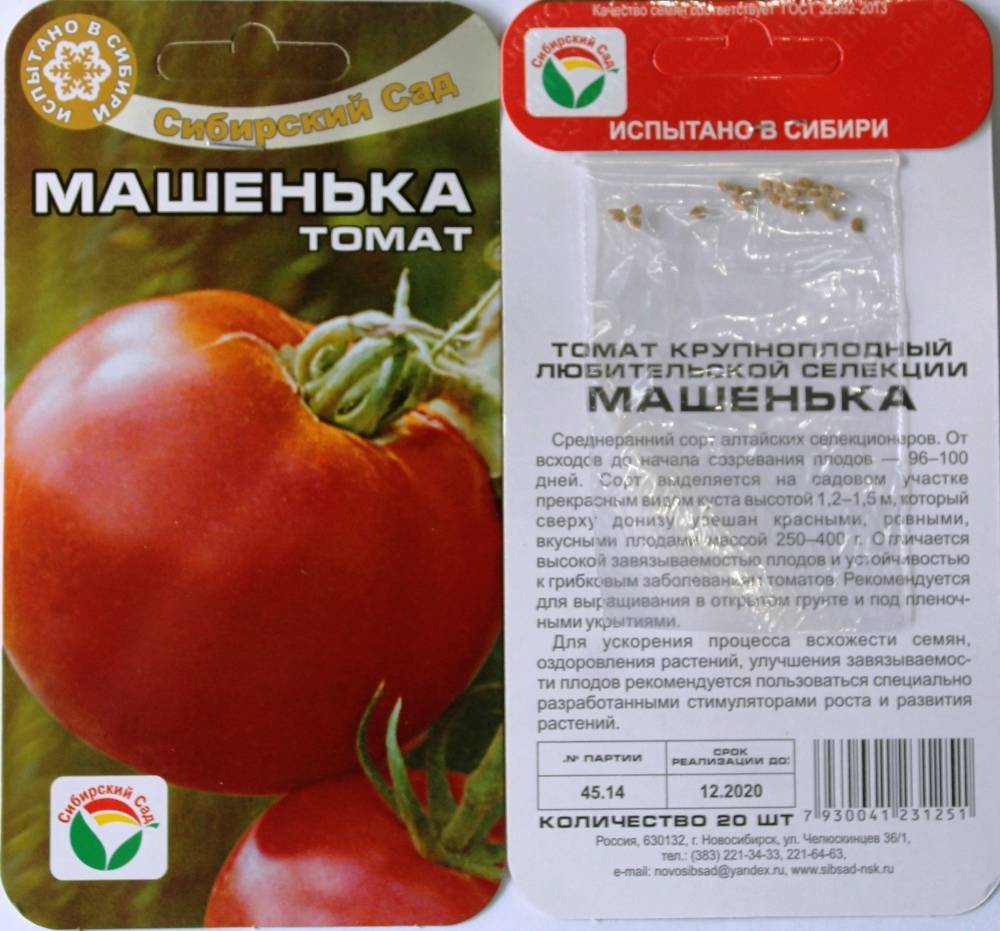
Description from the pack:
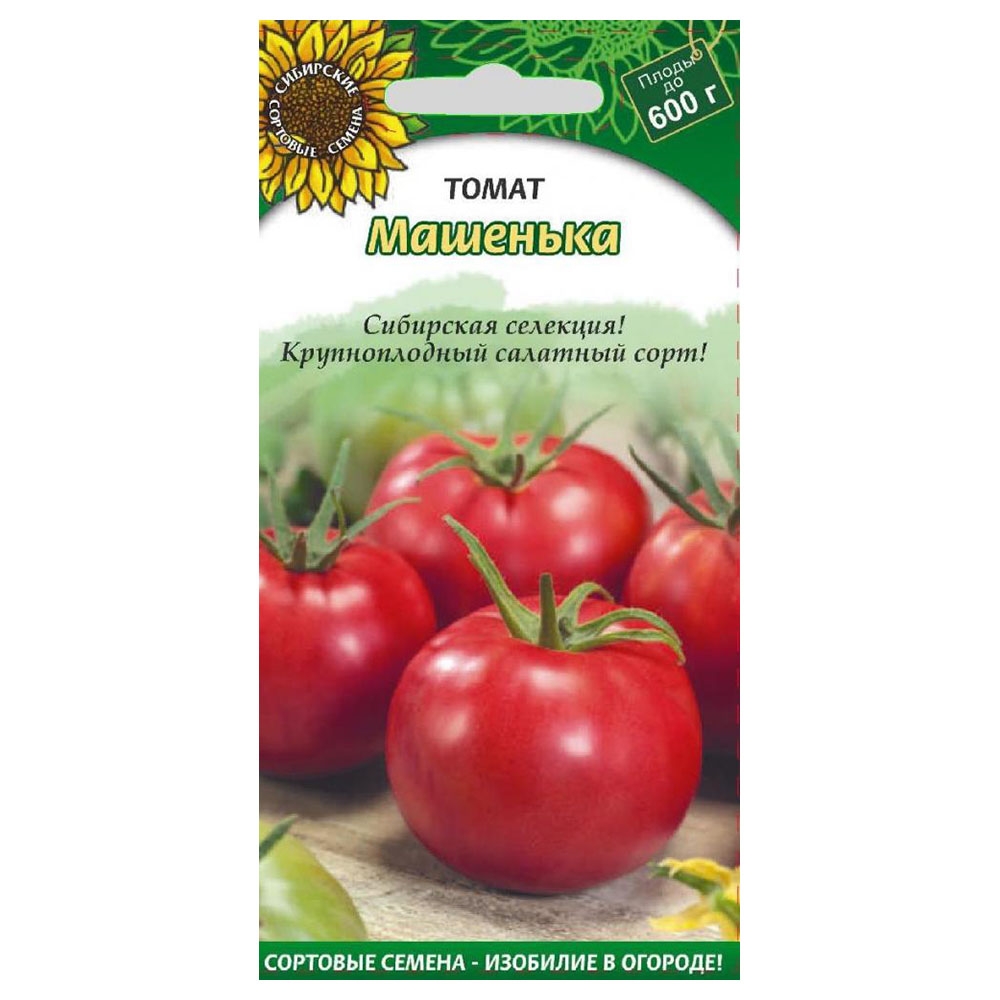
Mid-season, from germination to fruiting takes 110-115 days. The plant is tall. The fruits are deep red, beautifully spherical, large, weighing 200-250g, dense, fleshy, multi-chambered, and few-seeded. They have exceptional taste and commercial qualities. This variety is versatile. It is valued for its high yield, resistance to major diseases, and resistance to adverse weather conditions. It can be grown both outdoors and in protected areas. It is ideal for both home and commercial cultivation.
The tomato named "Mashenka" is available from various producers. Moreover, different companies offer completely different descriptions of this variety.
Unfortunately, Sveta did not indicate in her first message which seed producer provided the variety description.In 2014, I grew "Mashenka" from Biotekhnika and "Mashenka" from SibSad. They are completely different varieties.
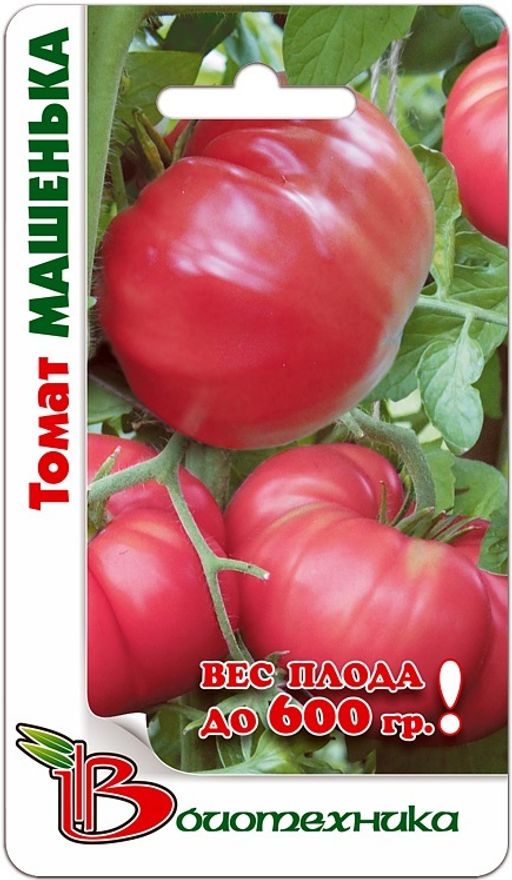
Mashenka from Biotekhnika.
Description from the manufacturer: A tomato bred for amateur cultivation. The plant is tall, medium-sized, and requires pinching. The fruit is large, round, weighing up to 600 g, pink, and fleshy. There are 4-5 fruits per cluster. The plant is usually trained into 1-2 stems, leaving 4-5 clusters. Exceptional taste.It grew in the open ground, just one bush. I only found a photo from June.
This variety left absolutely no impression, passed me by, and failed to impress with either its yield or taste. I didn't weigh it, didn't photograph it when ripe, and didn't collect any seeds.Tomato "Mashenka" from Sibsad.
Description (from the internet, I received the variety without packaging): Mid-early, up to 400 g, round, red, 1.2 m-1.5 m. A beautiful bush, hung from top to bottom with even, tasty fruits.The 2014 variety was also a failure. It had a poor harvest and didn't have much of a flavor. Unfortunately, there's no photo. I didn't collect any seeds.
Since I have a granddaughter, Mashenka, I am very interested in other reviews of these varieties (I still have the seeds).
My husband and I devoured a 350-gram tomato as a toast. We were overeating! But it was delicious! Greed is bad—but I want a bigger one.
By the way. It was Mashenka. I haven't read a single positive review about it online. Everyone disliked the taste. But to me, it was just like a tomato! Apparently, someone who's been growing tomatoes for a long time—well, that's putting it mildly—has gotten fed up. I liked it. I trust Alexander Ivanovich's taste from now on. My Dina didn't produce a particularly high yield, but it was very tasty!
And I also realized that I love pink tomatoes. Matte ones. Not red, round, shiny ones. And big ones. I have plenty of little things of my own.