The Minusinsk Barrel Tomato is a variety bred in Minusinsk, a city renowned for its tomato varieties. This variety produces medium-sized fruits, whose thick skin makes them ideal for whole-fruit barrel canning.
Content
- 1 Table with characteristics of the Minusinsky barrel tomato variety
- 2 Photo gallery of the Minusinsky Bochkovoy tomato variety
- 3 The origin of the Minusinsky Bochkovoy tomato variety
- 4 A detailed description of the Minusinsky barrel tomato variety
- 5 Advantages and disadvantages of the Minusinsky Bochkovoy tomato variety
- 6 Planting Features of the Minusinsky Barrel Tomato Variety
- 7 Care, watering and fertilizing of the Minusinsky barrel tomato variety
- 8 Resistance of the Minusinsky Bochkovoy tomato variety to diseases and pests
- 9 Collection, use and storage of the Minusinsky barrel tomato variety
- 10 Comparison of the Minusinsky Bochkovoy tomato variety with other varieties in the table
- 11 Real reviews from gardeners about the Minusinsky Bochkovoy tomato variety
Table with characteristics of the Minusinsky barrel tomato variety
| Characteristic | Description |
| Description | The variety is indeterminate, ripening period is average, suitable for growing in greenhouses and film shelters, as well as for open ground. |
| Ripening period | 112-125 days |
| Fruit weight | 200-500 g |
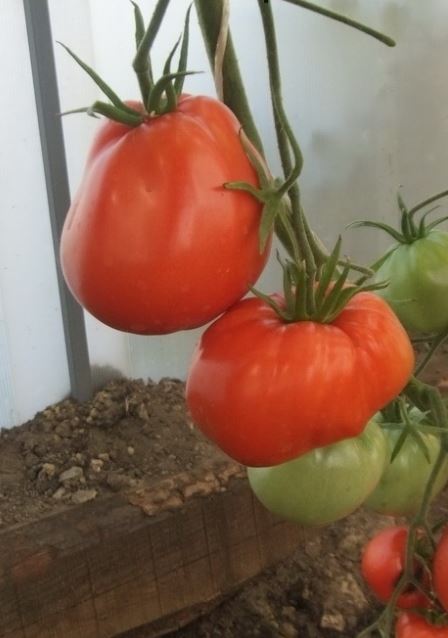
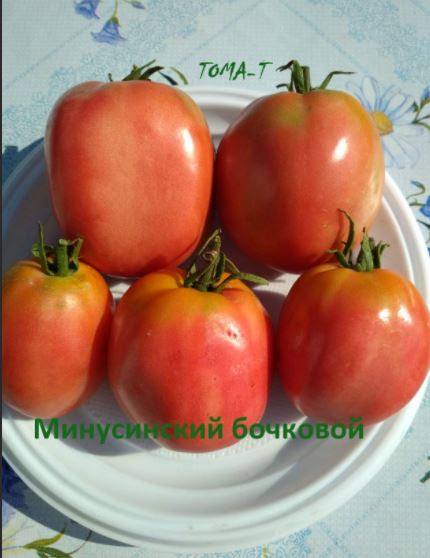
| Description of the fruit | Round, slightly flattened. Ribbing is not pronounced, and the tomato is red. |
| Productivity | 900-1200 c/ha |
| Usage | Small fruits can be used for whole-fruit canning. Tomatoes are also used for fresh eating, in salads and other dishes, and for processing into adjika, ketchup, and other sauces. |
| Preferred growing regions | It grows in different regions of the country, and only the cultivation method changes depending on weather conditions. |
| Disease resistance | It is resistant to viruses, cancer, and some fungal diseases, but under unfavorable conditions it can become infected with late blight. |
| Agricultural technology | Indeterminate shoots require mandatory tying, bushes are formed into 1-2 stems |
| Not included | |
| Country of origin | Russia, Minusinsk (Krasnoyarsk Krai), folk selection |
Photo gallery of the Minusinsky Bochkovoy tomato variety
The origin of the Minusinsky Bochkovoy tomato variety
The city of Minusinsk has historically been famous for its tomatoes. Thanks to the efforts of local breeders, many popular tomato varieties have emerged, including the Minusinsky Bochkovoy. Despite its widespread recognition, this variety has not yet been included in the register.
A detailed description of the Minusinsky barrel tomato variety
The Minusinsky barrel tomato does not have any outstanding characteristics, but it grows and bears fruit well even in less than favorable conditions, practically without any diseases.
Bushes
The shoots are indeterminate and can reach heights exceeding 2 meters. Not surprisingly, strong support and tying are essential for normal growth. The bushes don't have too many leaves, but they're also not so few that they need to be removed from the lower tiers.
The Minusinsk barrel tomato requires shaping. This is done with 1-2 shoots.
Fruit
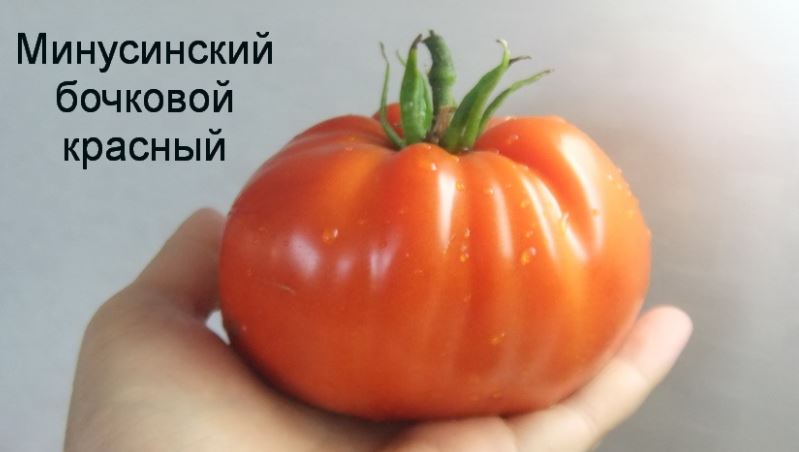
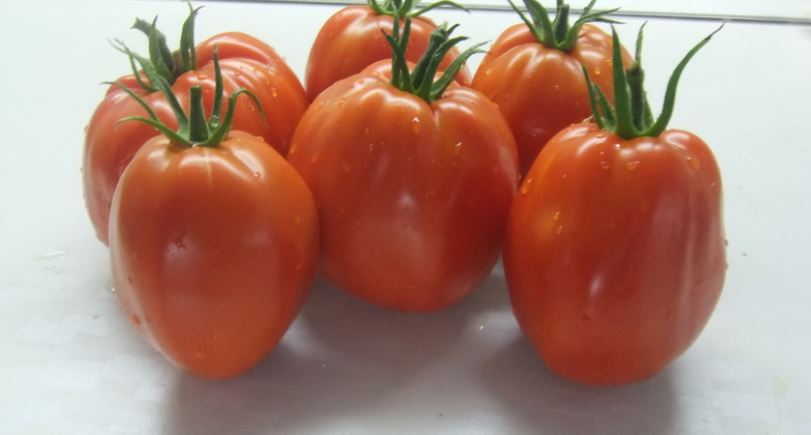
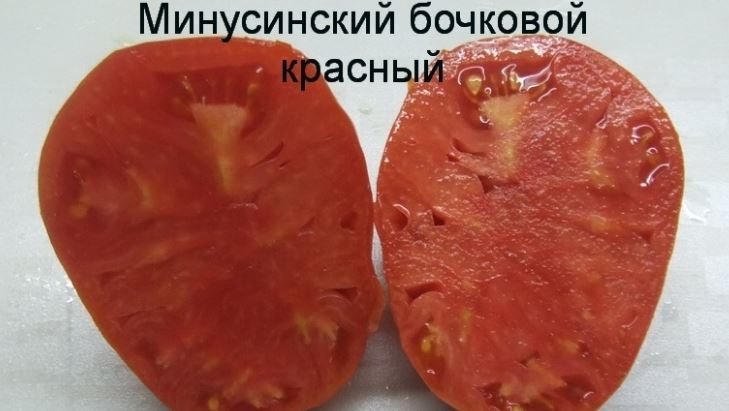
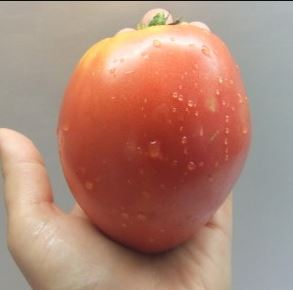
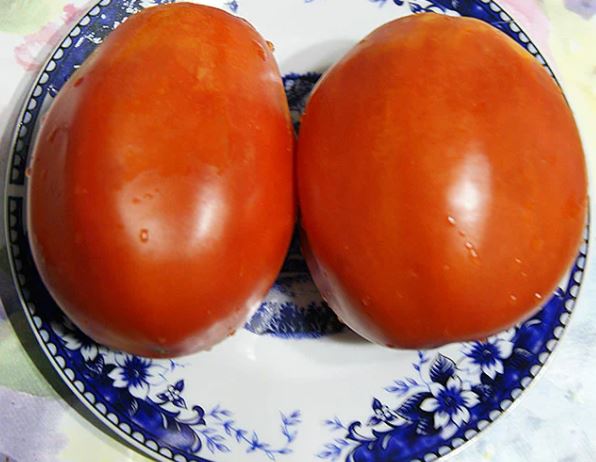
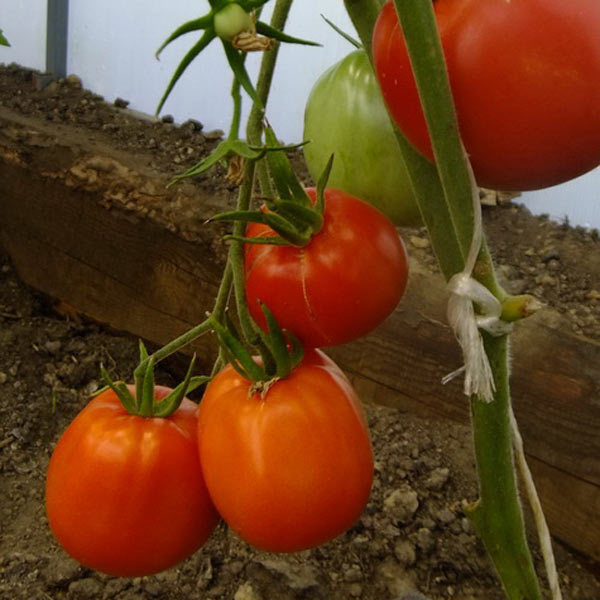
The fruits of the Minusinsky barrel variety are round, slightly flattened at the stem. Ribbing is moderate, and some tomatoes are completely absent. Fruit weight ranges from 200 to 500 g. The thick skin prevents the tomatoes from cracking on the vine and helps them maintain their shape, which is important for whole-fruit canning.
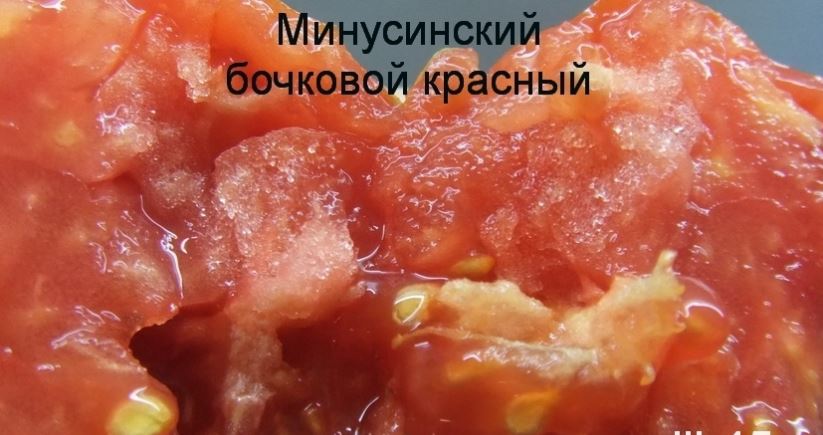
The flesh is juicy, slightly sweet, with a subtle tartness. The seeds are small. The tomatoes can be bright red, but there is also a pink variety, the Minusinsky Barrel variety.
Productivity
The Minusinsky Bochkovoy variety is considered high-yielding; under favorable growing conditions, it can yield up to 1,200 centners per hectare. On average, approximately 10 kg of tomatoes are harvested per square meter.
Ripening time
The ripening period for the Minusinsk Barrel tomato is quite extended, ranging from 110 to 125 days from the first shoots appearing. This will depend on the region and growing method.
Advantages and disadvantages of the Minusinsky Bochkovoy tomato variety
The table below lists the main advantages and disadvantages of the Minusinsky barrel tomato variety.
| Advantages | Flaws |
|
|
Planting Features of the Minusinsky Barrel Tomato Variety
The Minusinsky Barrel tomato doesn't require any special growing conditions. Simply prepare the seeds well, grow healthy seedlings, and properly maintain basic care to enjoy a bountiful harvest at the end of the season.
Sowing seeds and growing seedlings of the Minusinsky barrel tomato variety
The exact seeding date depends on the growing region, as the timing of tomato planting in the garden will vary. When growing the Minusinsky Bochkovy variety, allow approximately 60 days for seedling development.
Soil
Soil preparation is an important step. The easiest option is to purchase soil for tomatoes and peppers from a specialty store. However, some gardeners prefer to create their own soil mix from the garden soil they'll be using for growing tomatoes, sand, and humus. To control moisture levels, experienced gardeners recommend adding vermiculite to the mix at a rate of 10% of the total volume.
Homemade soil should be disinfected, for example, by watering it with a weak solution of potassium permanganate. If the acidity is too high, add a tablespoon of dolomite flour per 10 liters of soil to neutralize it.
Capacity
There are several options for planting containers (wooden boxes, peat pots, tablets, plastic containers), so you can choose according to your preference. It's worth remembering that if you use the same container every season, it should be disinfected with potassium permanganate.
Seeds
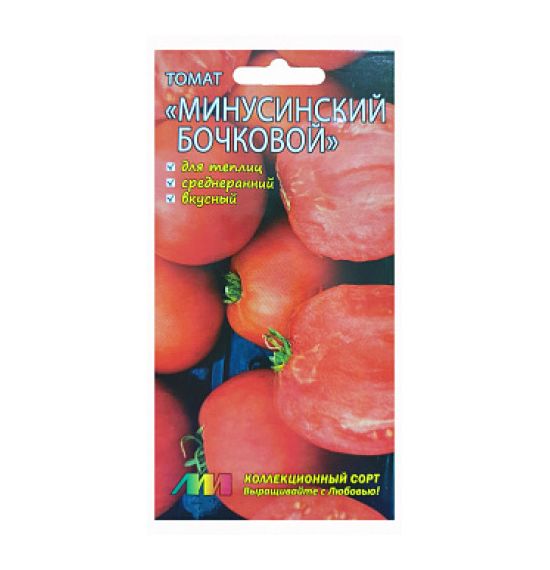
High-quality seeds are the key to successful growing. Choose your producer carefully, opting for reputable companies. Also, make sure the seeds are no more than two years old. If the packaging doesn't indicate whether the seeds were processed at the factory, you'll need to do it yourself. Soak all the seeds in a weak solution of potassium permanganate for 20 minutes, then dry them. To stimulate growth and strengthen the immune system, you can treat them with Fitosporin or Epin. Next, germinate the seeds, placing them in a damp cloth in a warm room for about two days. If necessary, moisten the cloth with water.
Sowing
Fill the selected container halfway with soil, then make furrows about 15 mm deep at 3 cm intervals. Sprouted seeds are placed in these furrows at 2 cm intervals, then covered with a 10 mm layer of soil and watered using a spray bottle. Cover the container with glass or plastic and place it in a well-lit area with a temperature of 24 to 26 °C. Water as needed, and remove any condensation promptly.
Once the sprouts emerge and grow slightly, remove the lid and place the container in a cooler location with a temperature of 22°C. For optimal seedling growth, supplemental lighting with a phytolamp is necessary.
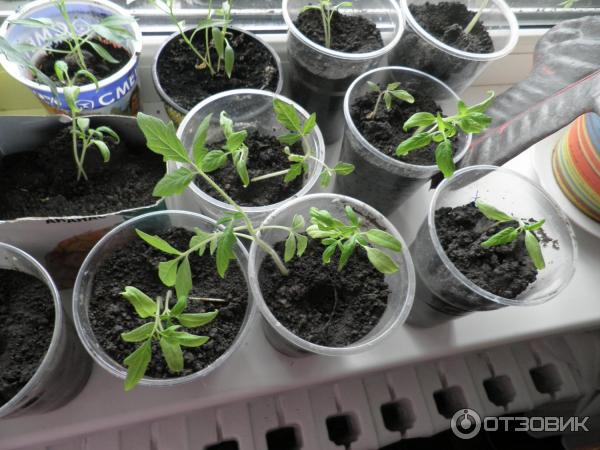
After three true leaves appear, the plants are transplanted into separate cups.
Planting the Minusinsky barrel tomato variety in the ground
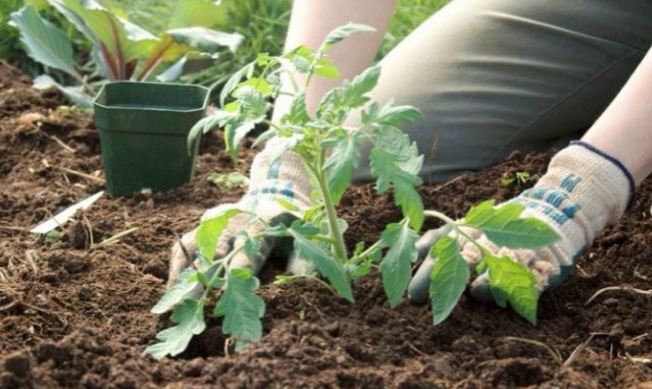
Seedlings are planted in the ground at 50-60 days old. The exact planting date depends on the region and growing method. Many gardeners begin transplanting seedlings into greenhouses as early as April, and tomato plants shouldn't be transplanted into open ground until mid-May. However, in southern regions, the process can begin earlier.
The main requirement is that the soil must warm up to 15°C, with no overnight frosts expected. In sunny weather, to speed up the heating of the bed, cover it with black plastic film.
The soil for tomato plants is tilled with fertilizer in the fall, and then re-tilled in the spring. If time and opportunity permit, it's very beneficial to plant green manure in the bed two weeks before planting – it will enrich the soil with beneficial micronutrients.
Next, prepare holes large enough to accommodate the seedlings, including the root ball. They don't need to be very deep; 25 cm is sufficient. The distance between plantings should be 60 cm, and 70 cm between rows is recommended. This way, no more than three plants can be planted per square meter.
It is better to transplant tomatoes in the afternoon to reduce the influence of solar activity.
Care, watering and fertilizing of the Minusinsky barrel tomato variety
The Minusinsky Bochkovoy variety requires staking. It's best to begin securing young shoots to the supports.
The bushes will need to be trained into 1-2 stems. Side-sonning is performed every 10 days.
Timely watering of tomatoes is crucial. During the active growth period, water the plants 1-2 times a week, with a watering rate of approximately 7 liters per plant. However, the watering should be adjusted based on weather conditions and soil conditions. If the soil is very dry, gradually add water, otherwise the fruits on the plants may crack from the sudden change in humidity.
The Minusinsk barrel variety responds well to fertilizing. This can be started 10 days after the seedlings have been transplanted to their permanent bed. For the initial fertilization, it's best to use mullein or bird droppings. Dissolve 500 ml of the substance in 10 liters of water. A second fertilization is recommended two weeks after the first. Add 3 g each of copper sulfate and manganese, and 1 tbsp of Fertika to the same solution. This mixture should not be used in concentrated form; it should be diluted at a rate of one liter per bucket of water.
You can water your tomatoes weekly with a nettle infusion. To do this, fill a barrel more than halfway with nettles, add water, and let it sit in the sun until fermentation begins. Next, dilute 1 liter of this concentrate in 10 liters of water.
Some gardeners prepare a nutrient solution of iodine (4 drops per bucket), watering it weekly at the rate of 2 liters per plant.
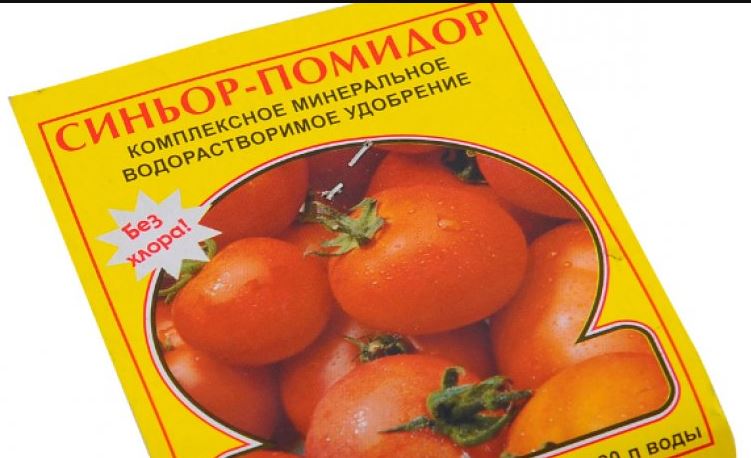
Good results are achieved by using complex fertilizers, for example, Signor Tomato.
Ash can be used for foliar feeding: dissolve a liter of ash in 10 liters of water. Let it sit for 24 hours, then strain. Next, add 20 drops of iodine and 10 grams of boric acid to the mixture and spray the tomatoes every 10 days. Experienced gardeners recommend paying special attention to the underside of the leaf when spraying – its surface is more absorbent, and the solution stays on it longer.
Important! All fertilizers should be added to the garden bed only after the main watering!
Resistance of the Minusinsky Bochkovoy tomato variety to diseases and pests
The Minusinsky Bochkovoy variety has a strong immune system, meaning it rarely develops diseases. This usually occurs due to improper care.
For example, overwatering and high humidity can lead to late blight. As a preventative measure, treating the plantings with Bordeaux mixture or Fitosporin is recommended. If the infestation is extensive, you can try to save the plantings by spraying them with Hom, Ridomil Gold, and other insecticides. This should be done no later than two weeks before harvest. If these treatments fail, the only option is to dig up and destroy the bushes.
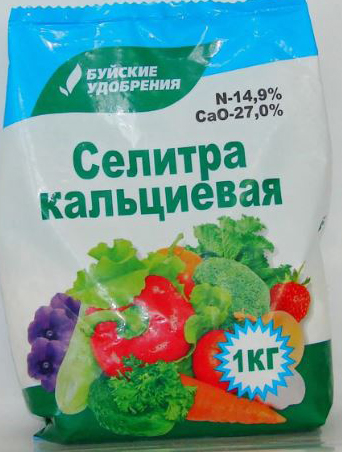
To prevent blossom-end rot, experienced gardeners recommend feeding tomatoes with calcium nitrate.
Collection, use and storage of the Minusinsky barrel tomato variety
Gardeners harvest their first crop within 110 days of germination, but in cooler regions and in open ground, the period can extend to 125 days. With the Minusinsk Barrel Tomato, there's no need to worry about cracking—the dense skin prevents this, unless there are long intervals between waterings.
Medium and small tomatoes are most often used for whole-fruit canning. Large tomatoes are used in various dishes, eaten fresh, and also processed into paste, adjika, ketchup, and other sauces.
Tomatoes can be stored in the refrigerator without loss of quality for about two weeks.
Comparison of the Minusinsky Bochkovoy tomato variety with other varieties in the table
Please note! How can you easily convert centners/ha to kg/sq.m? Simply divide by 100! For example, the Abakansky Pink tomato yields 400 centners of marketable fruit per hectare. This equals 4 kg per square meter. It's that simple! Also, keep in mind that typically no more than 3-4 plants are planted per square meter. This way, you can calculate the yield per bush. In the case of the Abakansky Pink, it's about 1 kg.
| Variety | Ripening period (number of days from full germination to ripening)
Yield of commercial fruits |
Brief description | Fetus |
| Minusinsk barrel | 112-125 days
900-1200 c/ha |
Mid-season indeterminate variety for open ground and greenhouses. Requires staking and shaping into 1-2 stems. Suitable for salads, processing into tomato products, and canning. |
Flat-round, slightly ribbed, red, 250-500 g. Good to excellent taste. |
| Minusinsk home | 110-120 days
Up to 1500 c/ha |
An early-ripening indeterminate variety for greenhouses. Requires staking and shaping into 1-2 stems. Suitable for processing into tomato products and canning. | Heart-shaped, slightly ribbed, raspberry, 350-500 g. Excellent taste. |
| Minusinsk apple | 110-112 days Up to 2500 c/ha |
A mid-season indeterminate variety for greenhouses. Requires staking and training into two stems. Suitable for salads and processing into tomato products. | Flat-round, ribbed, red, up to 500 g. Excellent taste. |
| Mikado Red | 115-120 days
700-900 c/ha |
A mid-early indeterminate tomato for open garden beds and plastic shelters. Suitable for salads. | Round, flattened, with pronounced ribbing, dark pink or burgundy, 270 g. Excellent taste. |
| Mikado Pink | 90-95 days
500-600 c/ha |
A mid-early indeterminate variety for greenhouses. Suitable for salads. | Flat-round, large, ribbed, medium density, pink, 300-360 g. Excellent taste. |
| Adelina | 82-109 days
242-447 c/ha, maximum 669 c/ha |
A mid-season determinate variety for open ground. Suitable for salads, whole-fruit canning, and processing into tomato products. Heat- and drought-resistant. | Egg-shaped, smooth, transportable red, 59-83 g. The taste is good to excellent. |
| Openwork | 105-110 days 610 c/ha |
An early-ripening, determinate variety for open ground and greenhouses. Requires staking and shaping. Suitable for salads. | Round, smooth, dense, fleshy, red, 220-250 g. Good taste. |
| Alsou | 105-110 days
700 c/ha |
An early-ripening, determinate variety for open ground and greenhouses. Requires staking and shaping. Suitable for salads. | Flat-round, slightly ribbed, medium density, red, 312 g. Good taste. |
| Grandma's secret | 100-115 days
1690 c/ha |
A mid-season indeterminate variety for open ground and greenhouses. Requires staking and shaping. Suitable for salads. | Flat-round, ribbed, dense, pink, 354 g. Excellent taste. |
| Pride of Siberia | 85-100 days
up to 2000 c/ha |
A mid-late, indeterminate, standard variety for open ground and greenhouses. Suitable for salads and processing into tomato products. | Flat-round, large, red, 320 g. The taste is good and excellent. |
| Palace | up to 100 days 1300-1400 c/ha (greenhouse and under film) |
An early-ripening indeterminate variety for open ground and greenhouses. Requires staking and shaping. Suitable for salads. | Flat-round, ribbed, medium density, red, 200-300 g. Excellent taste. |
| King of the Giants | 120 days
800-1400 c/ha depending on the region |
A mid-late indeterminate variety for open ground and greenhouses. Suitable for salads, appetizers, and processing into tomato products. | Flat-round, slightly ribbed near the stem, red, rarely yellow and pink, 400 g (up to 800 g). Good to excellent flavor. |
Real reviews from gardeners about the Minusinsky Bochkovoy tomato variety
The Minusinsky Bochkovoy variety has received many positive reviews from consumers. Those who have grown it in their gardens note its low maintenance, excellent yield, and resistance to diseases, particularly cladosporiosis.
I don't know why they're called barrel-shaped, they're not small... or they require a big barrel :-B
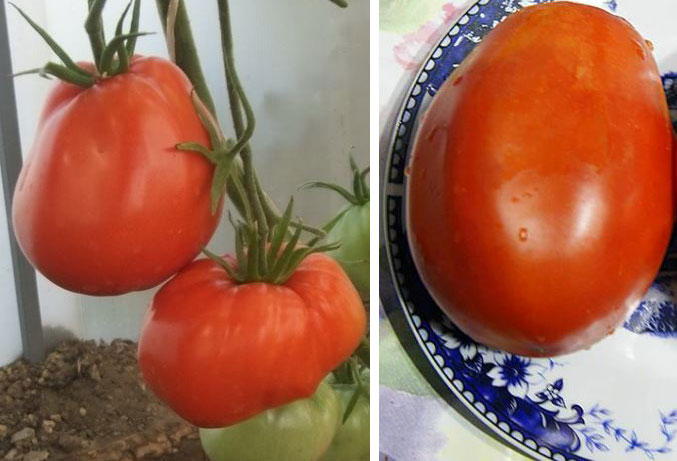
In the photo on the right is the Podsinsky miracle, on the left is the Minusinsky barrel:
Minusinsky barrel (not the largest specimen). It doesn't look very good in the photo... it's waiting to go to seed:
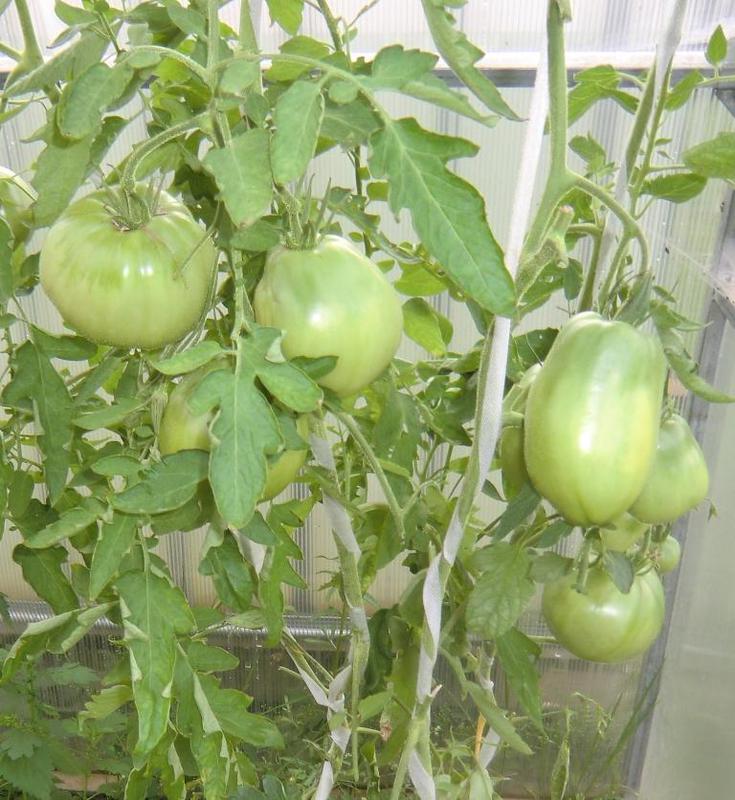
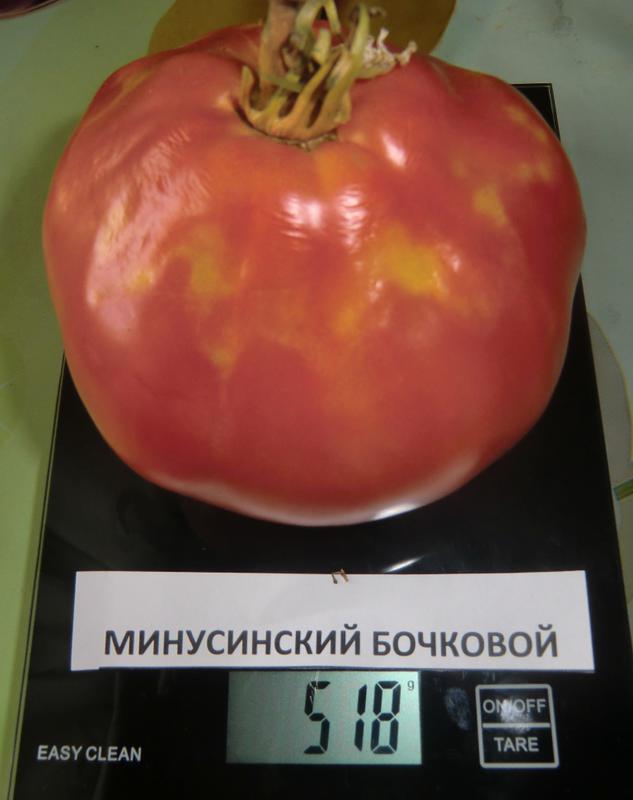
User Natalia, Yekaterinburg, September 4, 2018
This year I really liked the Bochkovoy Minusinsky variety - it’s productive, the fruits are large and sweet.
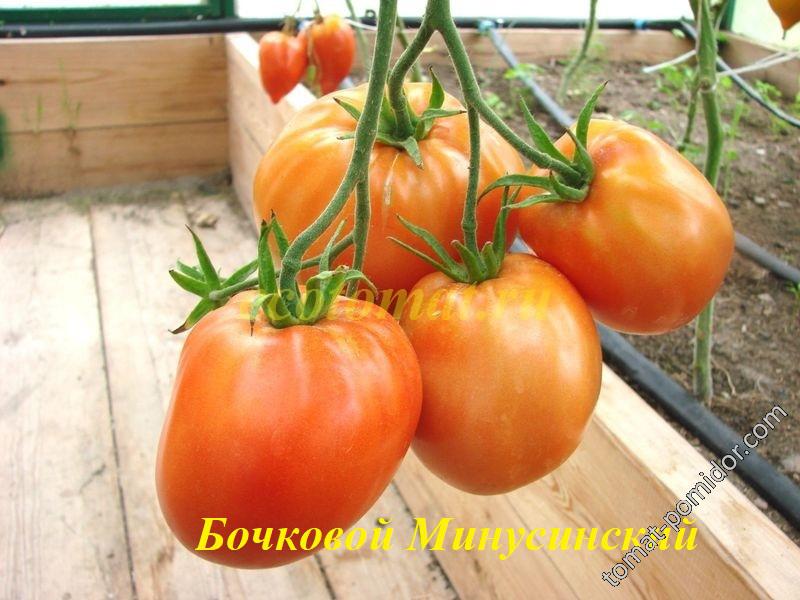
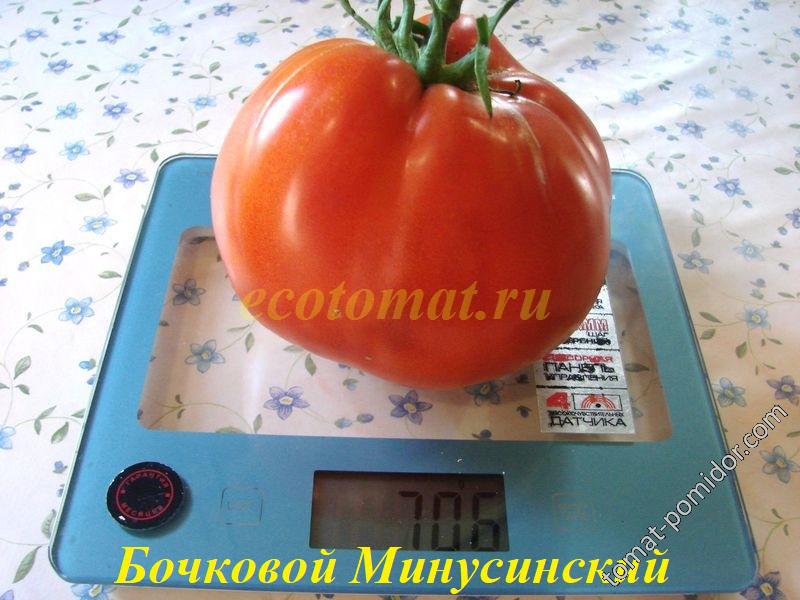
User Irina, Cherepovets
Minusinsk varieties—they're all very different. In type, color, and taste…
And most importantly, everyone grows differently. Some in the open air, others in a greenhouse.
But, as a rule, they are meaty and tasty.
I think their names are somewhat arbitrary. They're called roughly what the fruits look like.
Well, for example, in 2018 I grew three varieties of genuine Minusinsk grapes. A friend's mother lives there, near Minusinsk, and has always had a vegetable garden, so she sent me three varieties: Minusinsky Large, Minusinsky Glasses, and Minusinsky Miracle.
They grow there in the open air... and here, in the land of evergreen tomatoes, well, what kind of open air... But I planted them both in the greenhouse and in the open air.
Good, large tomatoes have grown.
Both in the greenhouse and outside.
But here's what I saw... They don't hold a perfect shape one to one... Each fruit is somehow different from its neighbor, sometimes more rounded, sometimes more elongated, sometimes slightly ribbed, sometimes completely smooth...
I planted this season Minusinsk barrel and the Minusinsk lion. Barrel — slightly elongated, Leo flat and ribbed. But Leo had practically no seeds…
So we have to try.
Well, everyone’s conditions are different... Climate, care... Everything is individual.
Minusinsk tomatoes. Seeds from Boris Sonin. 2016 tomato catalog.
1. "Apple". 1.5-1.7 m, up to 1 kg, the fruits are very sweet, red
colors. 5 pcs - 50 rubles.2. "Cups". 1.7-1.9 m, elongated shape with
Spout, sweet, there are more than 50 fruits on a bush, weight 150-300g. 5 pcs - 50 rubles.4. "Bull's heart" - 1.5-1.8 m, excellent taste,
Heart-shaped fruits, weight up to 500g and above! 5 pcs - 50 RUR.5. "Barrel" - 1.5-2 m, awesome variety,
The yield is off the charts, the first ovaries are 500-600g. In the next bunches there are 8-10 fruits! 5 pcs - 50 rubles.22. "Minusinsk giant" - giant, up to 1 kg, taste
Super! 5 pcs - 50 rub.31. "Minusinsky with a nose" is very beautiful and
Quite a productive variety, good taste, height up to 2 m. 5 pcs - 50 rubles.55. Minusinsky - a local Siberian variety,
High-yielding, large, red, weighing up to 1.5 kg. 5 pcs - 50 rubles.56. Minusinsk gobies - heart-shaped, weighing up to 600 grams, taste excellent! Bush height is 1.7 m. 5 pcs - 50 rubles.
57. Minusinsky large from Garkalova-
Sugary, sweet, large, weight - up to 1 kg. 5 pcs - 50 rubles.63. Pink Minusinsk - a variety with a potato leaf, pink
Colors, very good for preserves and in salads. Weight - up to 500 grams. 5 pcs - 50 rubles.64. Minusinsky from N.A. Medvedeva - productive in a brush up to 7
tomato77. Minusinsk fruitful - large, productive - up to 8 kg per bush, height 1.8-2.2 meters. 5 pcs - 50 rubles.
83. Minusinskie from Baluev - one of the largest varieties in
My collection, the fruits on all tiers are very large, raspberry-red. 5 pcs - 50 rubles.84. Ox heart Minusinskoe from Baluev - very large hearts, red color, bush height 1.5-1.7 m. 5 pcs - 50 rubles.
101. Lion - huge fruits, bush height 1.5-1.8 m, sweet, all meat.
5 pcs - 40 rub.104. Minusinsk peppers are very tasty, weighing up to 400g,
Bush height up to 2 meters, indeterminate, good for pickling. 5 pcs - 50 rubles.105. Minusinsk homemade - very large tomatoes
Bright red color, bush height 1.7 m, excellent taste. 5 pcs - 50 rubles.106. Minusinsk traditional - flat-rounded shape, large,
productive, height up to 1.8 m. 5 pcs - 50 rub.107. Minusinsk heart-shaped - like a bull's heart, very
Tasty, medium-sized, productive, fruit weight up to 600g. 5 pcs - 50 rubles.108. Minusinsky from Garkalova is one of the local varieties,
Tasty, productive, weight up to 600g, bush height 1.5-1.7 m. 5 pcs - 50 rubles.