The "Big Mama" variety is relatively new, but has already established itself as a popular choice. This tomato boasts large fruits and excellent flavor.
It was bred in 2015 by Gavrish LLC for cultivation in greenhouses.
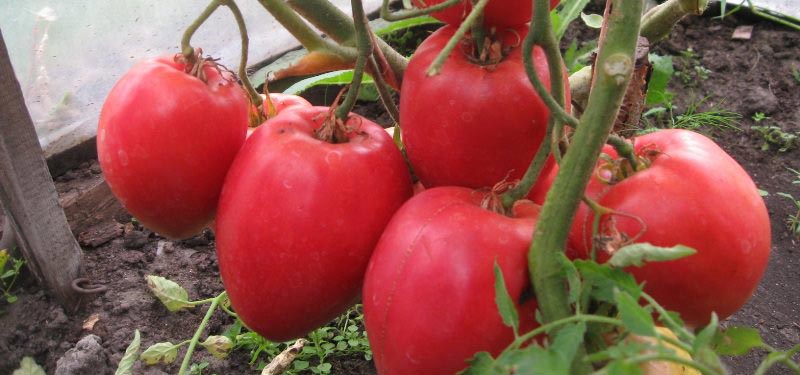
Table of characteristics of the Big Mommy tomato variety
| Characteristic | Description |
| Description | Mid-early determinate variety (about 60 cm) for open ground and greenhouses (according to the register, only for greenhouses). |
| Ripening period | 85-95 days (greenhouse), about 100 days (open ground) |
| Fruit weight | 200-250 g |
| Description of the fruit | Round, large, slightly ribbed, medium density, red. Excellent taste. |
| Productivity | 700-900 c/ha |
| Usage | Suitable for salads, canning, pickling, and juicing |
| Preferred growing regions | All regions. |
| Disease resistance | It has good resistance to fungal diseases and is highly resistant to late blight. |
| Agricultural technology | Despite the relatively compact shoots, the bush still requires staking. The tomato plant develops into 1-2 stems. |
| 2015 | |
| Originator | LLC 'BREEDING FIRM GAVRISH' |
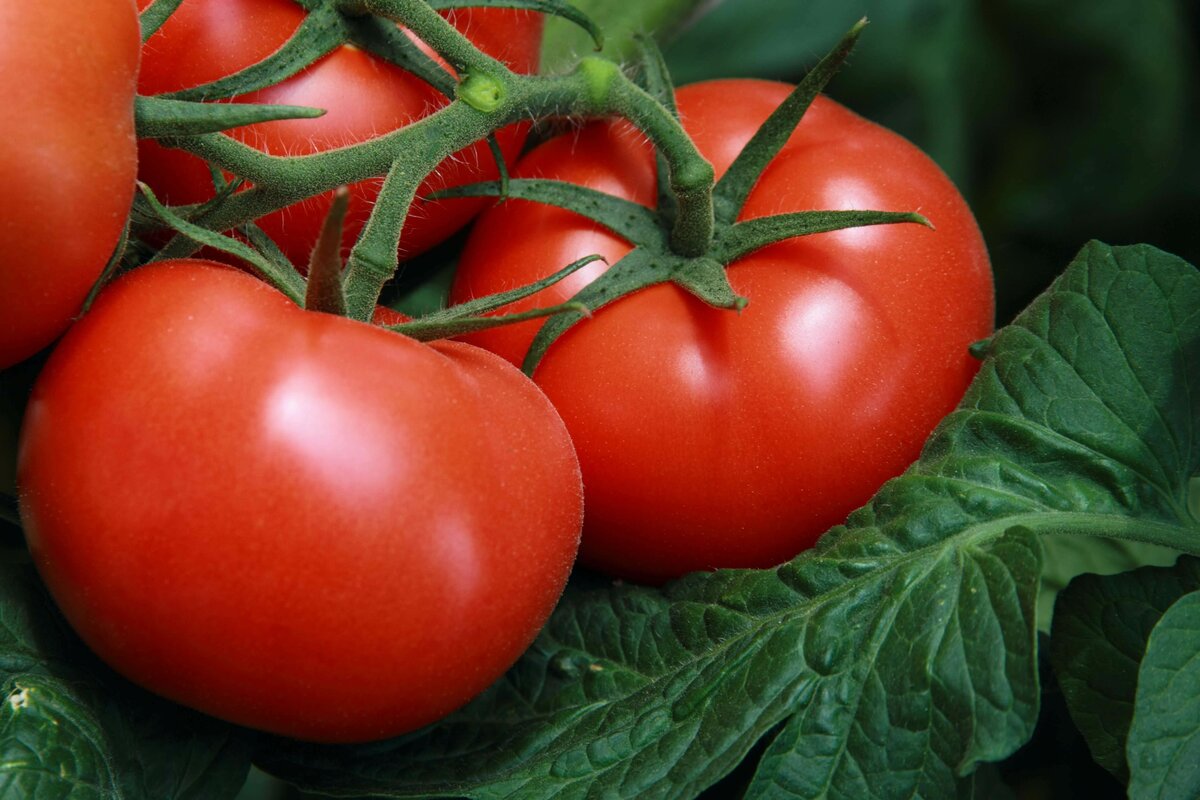
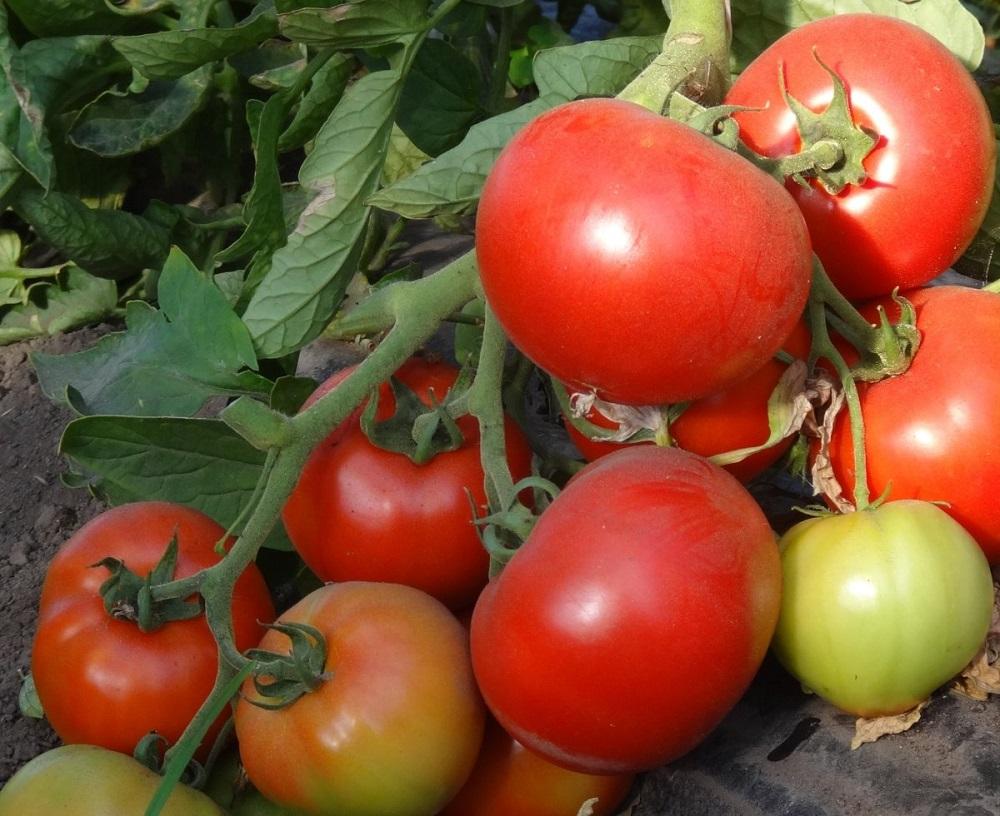
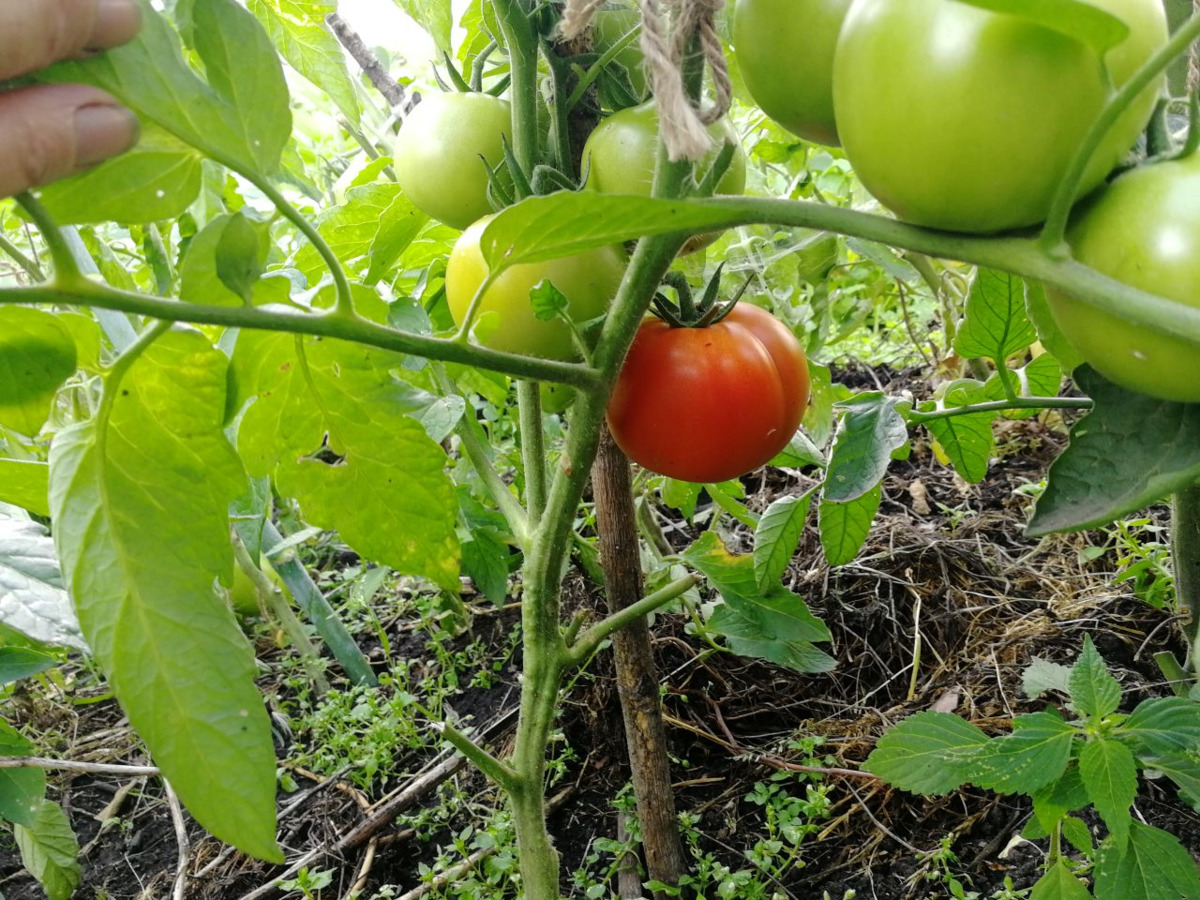
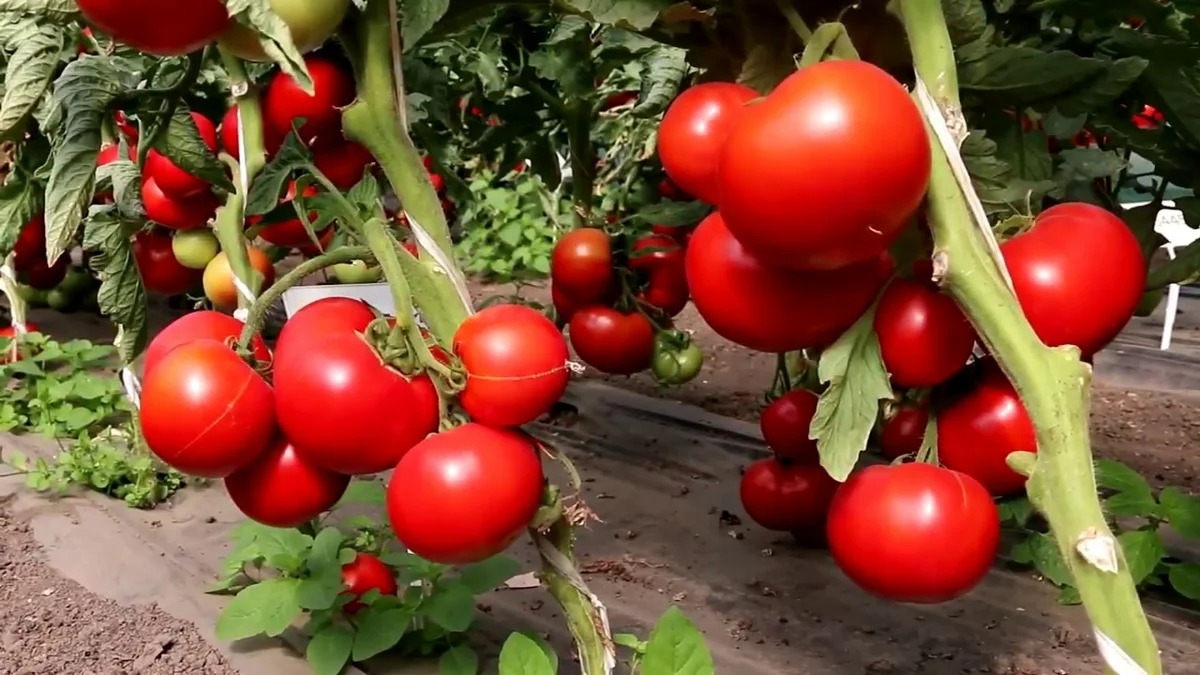
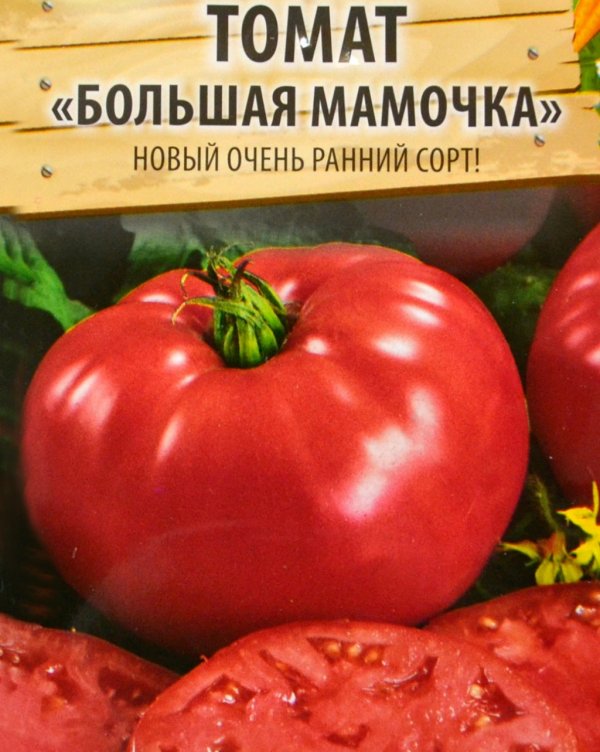
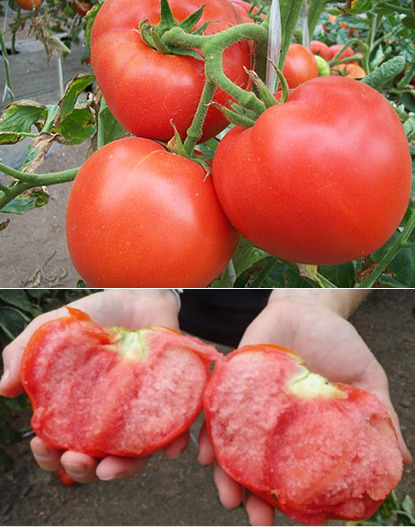
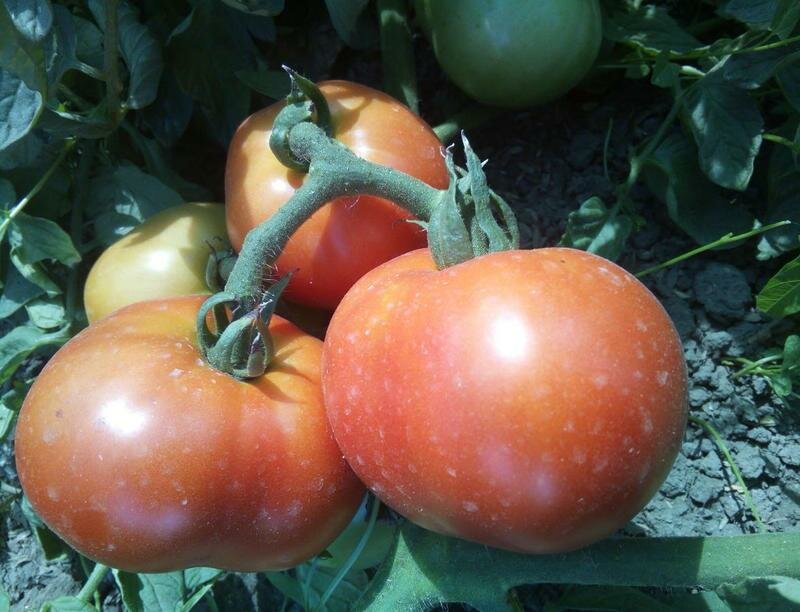
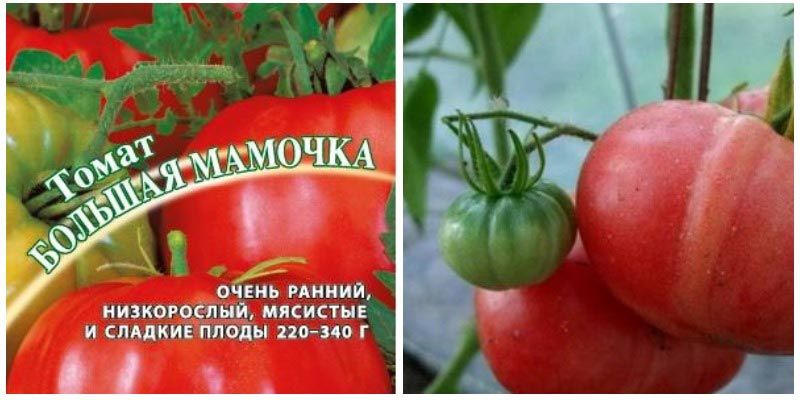
Photo gallery of the tomato variety Big Mom:
Description of the Big Mommy variety
The tomato is determinate and reaches a height of 60 cm. After this point, growth ceases, and the plant uses all its nutrients to produce fruit. The stem is strong. Branches are evenly spaced along the entire stem. They contain medium-sized, light green, rough leaves, shaped like potato leaves.
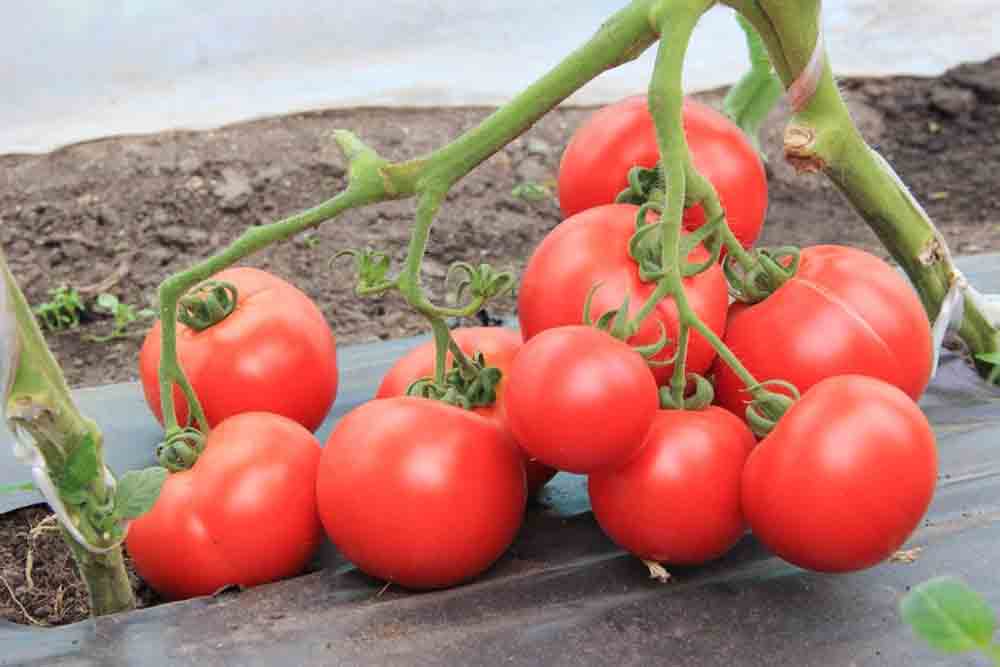
Up to six fruits emerge from a single flower. The peduncle is strong and holds the tomatoes well. The robust root system contributes to the variety's yield, which averages approximately 10 kg per square meter. It is an early-ripening variety.
It's designed for greenhouse cultivation, but in warmer regions it can also be transplanted into open ground. The plant requires warmth, adequate watering, and sunlight.
Main qualities of fruits
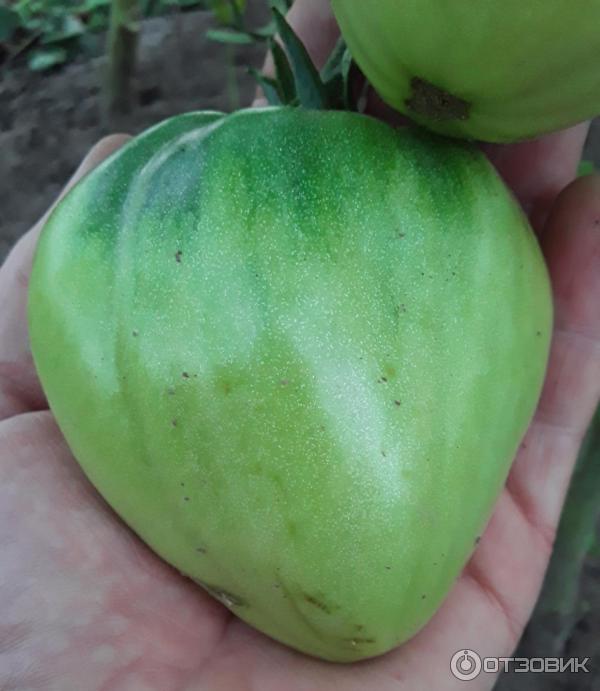
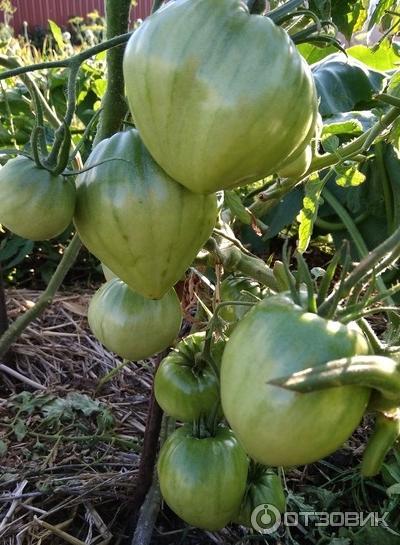
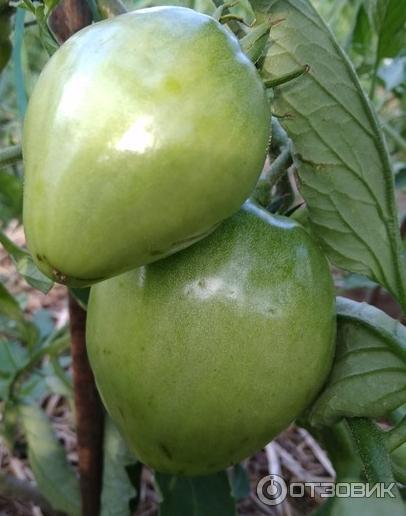
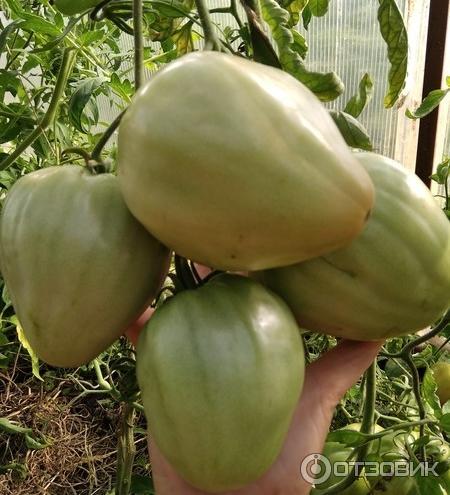
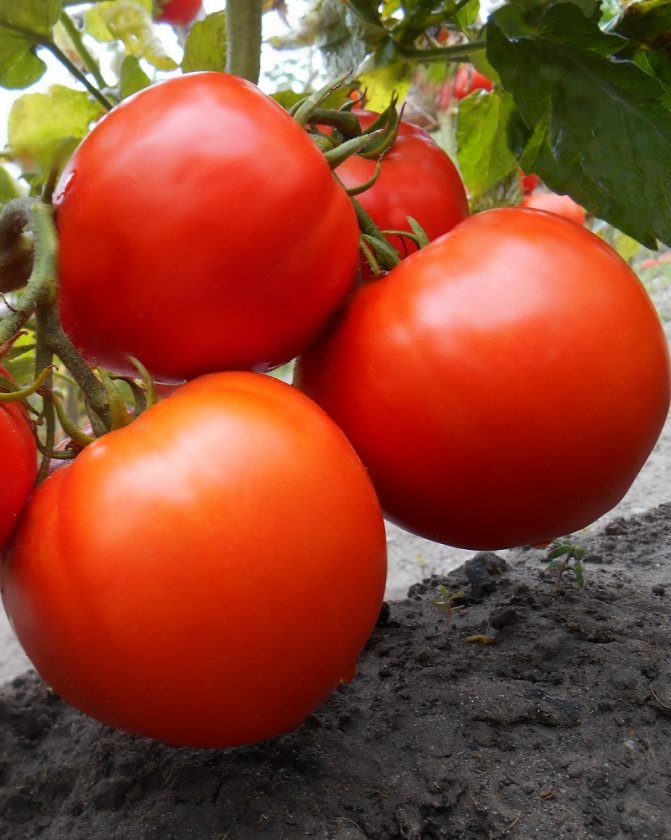
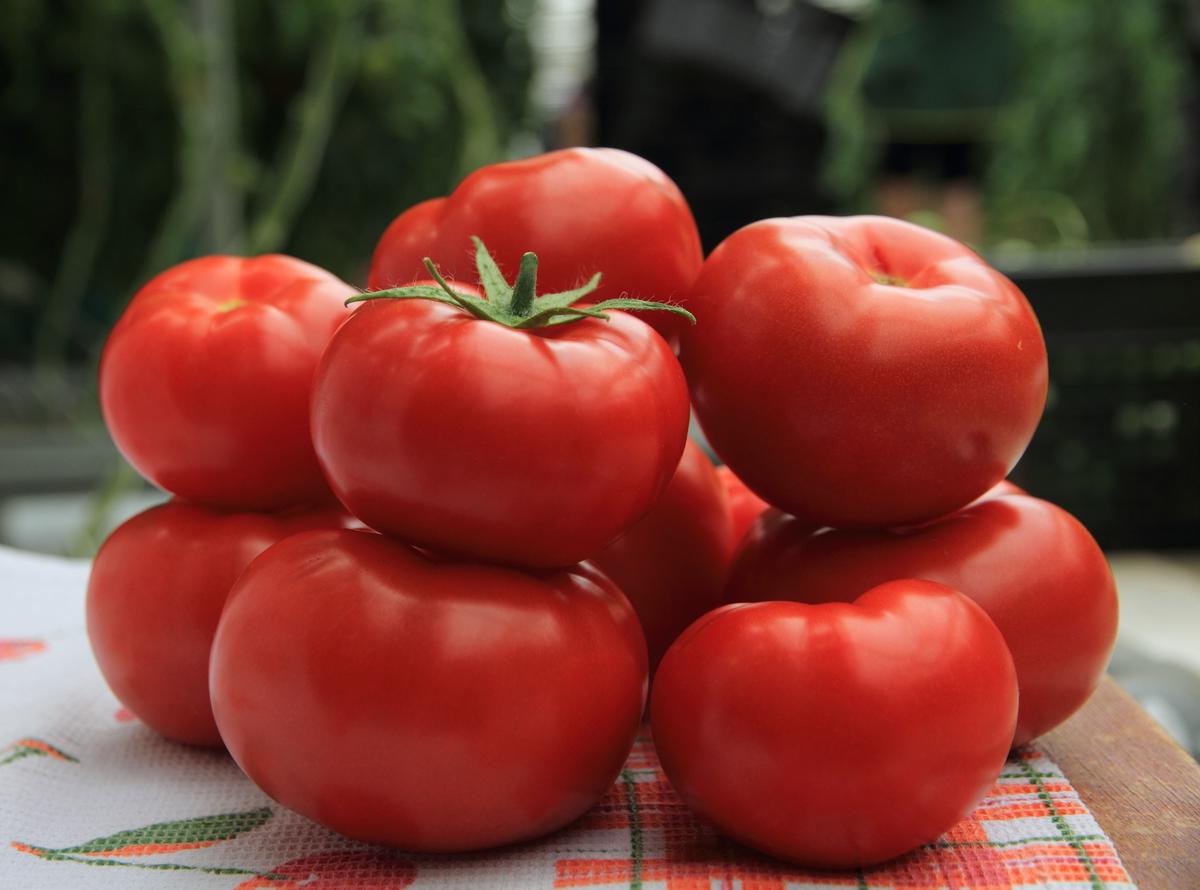
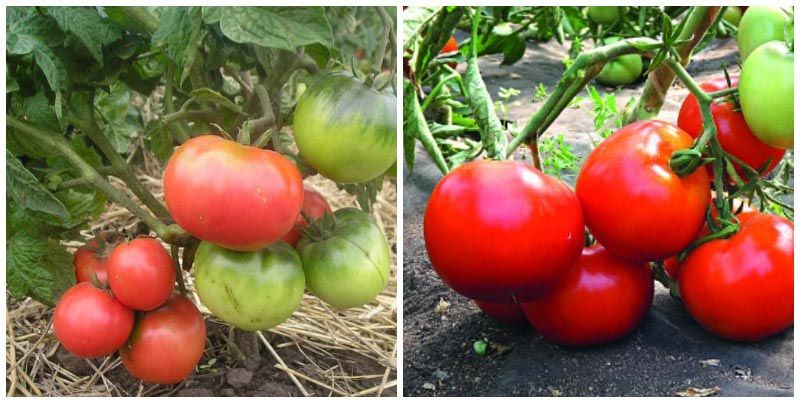
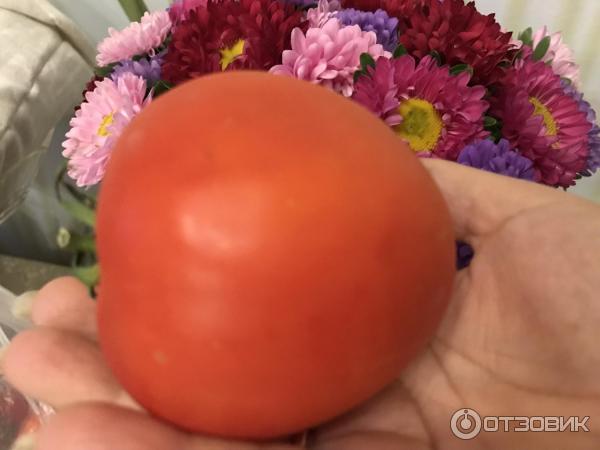
Each tomato weighs 200-300 g and is 6-8 cm in diameter. The fruits are round, bright red, and have thin, smooth skin. Sometimes, the fruits take on a heart-shaped form.
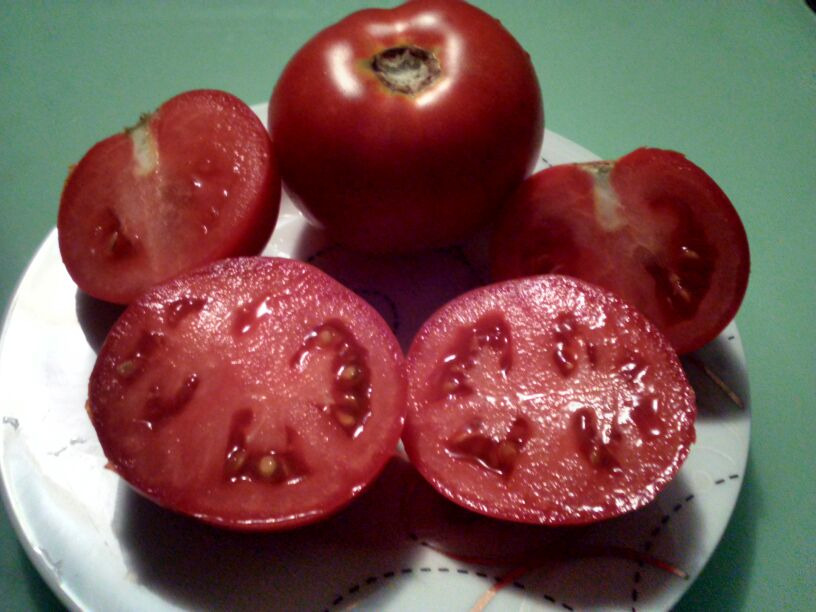
Ripe tomatoes are sweet with a slightly tart flavor. Each fruit contains 7-8 small seeds. The flesh is juicy and plump. This tomato variety is excellent for salads and sandwiches. Tomatoes contain the beneficial antioxidant lycopene.
Tomatoes should not crack. To prevent this, they need to be well watered while they ripen.
When grown in a garden, the fruits are slightly smaller than those grown in a greenhouse. However, the tomatoes grown in the former case have a sweeter flavor and fleshier flesh.
The variety is not susceptible to fungal diseases: blossom-end rot, fusarium, powdery mildew, late blight and viral mosaic.
Advantages and disadvantages
Advantages of the Big Mama tomato variety:
- high yield rate;
- large fruits;
- early ripening;
- resistant to fungal diseases;
- suitable for preparing salads;
- tolerates transportation.
There are no particular disadvantages.
Growing tomato seedlings
The yield of tomatoes largely depends on healthy seedlings, which are grown only using the seedling method.
Seeds are usually planted in early March. They are pre-treated with a potassium permanganate solution to prevent disease. After disinfection, they are wrapped in cotton cloth and lightly moistened. Place in a warm place and wait for the seeds to germinate.
For seedlings, use a ready-made universal soil. After filling the container, moisten it and make shallow furrows. Carefully arrange the sprouted tomato seeds in these furrows. Cover them with soil and place them in a warm, bright place. The optimal temperature for plant growth is 23 to 25°C. Once 2-3 leaves appear on the sprouts, transplant the seedlings.
Picking is necessary to ensure that the sprouts receive all the necessary nutrients, water, sunlight and oxygen without competing with each other.
Water the seedlings moderately in the morning on sunny days. Excessive moisture in the container will lead to excessive plant growth, and its fragile stems will bend and fall to the ground. An overly dry surface will negatively impact tomato yields.
Features of growing in soil
It is recommended to plant in open ground after 60-70 days, depending on when the harvest is required.
Plant in a greenhouse in May, as soon as the weather warms up. Place 4 or 5 seedlings per square meter.
Subsequently, mature plants are regularly watered with warm water and the soil is loosened. Tomatoes are less sensitive to moisture than cabbage and cucumbers. However, during the fruit ripening period, their need for moisture increases. After transplanting, flowering, and fruit set, it is recommended to maintain a moisture deficit, but do not allow the soil to dry out completely. High humidity will encourage the growth of extra shoots, which interfere with fruit development. Insufficient water reduces photosynthesis and impairs the absorption of organic fertilizers.
The bush is formed into 2-3 stems. As the plant grows, the lower leaves are removed to prevent the stems from bending and the clusters from breaking under the weight of the fruit. As the fruit grows, the clusters are tied up.
It's recommended to enrich Big Mama's soil with organic matter (manure, herbal infusion, etc.) three times per season or with specialized fertilizers. Foliar feeding with wood ash, dissolved boric acid, and other fertilizers will help improve yields.
Comparison of the Big Mom tomato variety with other varieties in the table
Please note! How can you easily convert centners/ha to kg/sq.m? Simply divide by 100! For example, the Abakansky Pink tomato yields 400 centners of marketable fruit per hectare. This equals 4 kg per square meter. It's that simple! Also, keep in mind that typically no more than 3-4 plants are planted per square meter. This way, you can calculate the yield per bush. In the case of the Abakansky Pink, it's about 1 kg.
| Variety | Ripening period (number of days from full germination to ripening)
Yield of commercial fruits |
Brief description | Fetus |
| Big Momma | 85-95 days (greenhouse), about 100 days (open ground) 700-900 c/ha |
A mid-early determinate variety for open ground and greenhouses (greenhouses only, according to the register). Suitable for salads, canning, pickling, and juice. | Round, large, slightly ribbed, medium density, red, 200-250 g. Excellent taste. |
| Siberian early ripening | 98-108 days
289-543 c/ha (open ground), 20-43% of the total yield ripens in 15 days of fruiting, 630-950 c/ha (greenhouse and under film), in the first month of fruiting 240-580 c/ha. |
An early-ripening, determinate, low-growing variety for open ground and greenhouses. Suitable for salads. | Round and flat-round, slightly ribbed, medium-sized and large, red, 62-114 g. The taste is satisfactory. |
| Siberian Shan'gi | 100-110 days
The yield of commercial fruits in open ground was 5.6 kg/sq.m. |
A mid-season determinate variety for open ground and greenhouses. Suitable for salads. | Flat-round, medium density, slightly ribbed, raspberry, 157 g. Excellent taste. |
| nobleman | 103-117 days
107-587 c/ha, maximum 780 c/ha (Omsk region) |
A mid-season determinate variety for open ground. Suitable for salads. 95% marketability. | Heart-shaped, medium-ribbed, raspberry, 131-250 g. Good to excellent taste. |
| Giant | 111-115 days 1000 c/ha (under film or in a greenhouse) |
A mid-season determinate variety for open ground and greenhouses. Requires staking and training. Suitable for salads and pickling. Resistant to temperature fluctuations. | Round, slightly ribbed, resistant to cracking, loose, red, 260 g. Excellent taste. |
| Summer resident | 95-115 days
251-347 c/ha, maximum 358 c/ha (Krasnodar region). |
An early-ripening determinate variety for open ground. Suitable for salads. Productivity: 74-100%. | Flat-round, red, 55-93 g. Good taste. |
| Debut | about 90 days
910 c/ha |
An early-ripening determinate variety for open ground and greenhouses. Suitable for salads. | Flat-round, slightly ribbed, medium density, red, 210-230 g. Good to excellent taste. |
| Demidov | 101-109 days
150-300 c/ha (Volga-Vyatka region), 214-418 c/ha (West Siberian region), maximum 471 c/ha (Mari El Republic). |
A mid-season, determinate, standard variety for open ground. Suitable for salads. Marketability: 98%. | Round, medium-ribbed, pink, 80-120 g. Good to excellent flavor. Fruit ripens well. Uneven watering can cause cracking, and dehydration can lead to blossom-end rot. |
| Abakan pink | 120 days or more 400 c/ha |
A late-ripening determinate variety for open ground and greenhouses. Requires staking and training. Suitable for salads and processing into tomato products. | Flat-round, slightly ribbed, medium density and pink in color, 200-500 g. Good taste. |
| Alsou | 105-110 days
700 c/ha |
An early-ripening, determinate variety for open ground and greenhouses. Requires staking and shaping. Suitable for salads. | Flat-round, slightly ribbed, medium density, red, 312 g. Good taste. |
| Blagovest | 101-105 days
1500-1600 c/ha |
An early-ripening determinate variety for greenhouses. Suitable for salads and canning. | Flat-round, slightly ribbed, glossy, red, 100-110 g. Excellent taste. |
| Debut | about 90 days
910 c/ha |
An early-ripening determinate variety for open ground and greenhouses. Suitable for salads. | Flat-round, slightly ribbed, medium density, red, 210-230 g. Good to excellent taste. |
| Sweet tooth | 105-110 days 600-700 c/ha |
An early-ripening determinate variety for open ground and greenhouses. Requires staking and shaping. Suitable for salads. Drought-resistant. Produces fruit well even in adverse weather conditions. | Round, smooth, with thin skin and delicate texture, raspberry, 100-120 g. Excellent taste. |
| Kostroma | 105-110 days
1350-1500 c/ha |
A mid-season determinate variety for greenhouses. Requires staking and training. Suitable for salads, whole-fruit canning, and processing into tomato products. | Flat-round, slightly ribbed, glossy, red or orange, 80-150 g. Good taste, sweet and sour. |
| Red Rooster | 85-95 days
400-600 c/ha |
A mid-early determinate variety for greenhouses. Suitable for salads. | Flat-round, large, slightly ribbed, medium density, red, 160-180 g. Good taste. |
| Oak tree | 95 days
600-800 c/ha |
An early-ripening determinate variety for open ground and greenhouses. Requires staking and training. Suitable for salads (imparting a tart flavor), canning, and processing into tomato products. | Round, slightly ribbed, bright red, 50-100 g. Good taste. |
Gardeners' reviews of the Big Mommy tomato variety
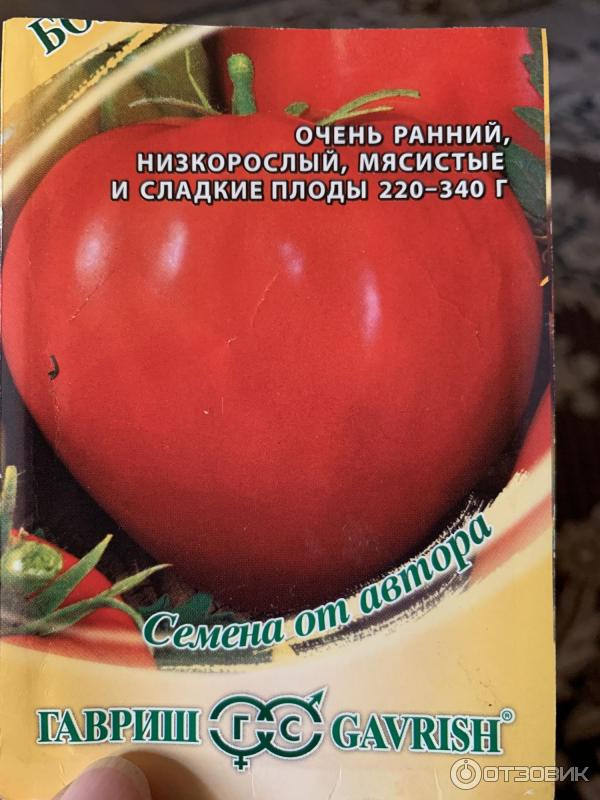
I urgently bought some Bolshaya Mamochka tomato seeds this spring after reading a review written by a user named Kapelka Dobra.
She has very large, bright red tomatoes that are ripe.
I wanted these too and managed to buy a packet of seeds of this variety by the beginning of March.
Seeds from Gavrish usually germinate well.
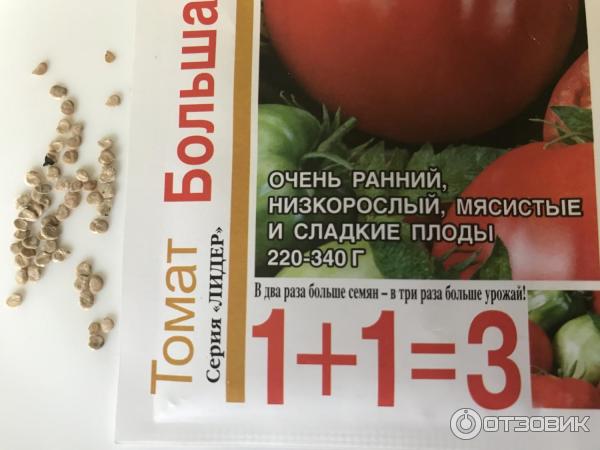
The truth is, I was a little puzzled by the size of the seeds.
They seemed very small.
But judging by the quantity in the bag, there are quite a lot of them.
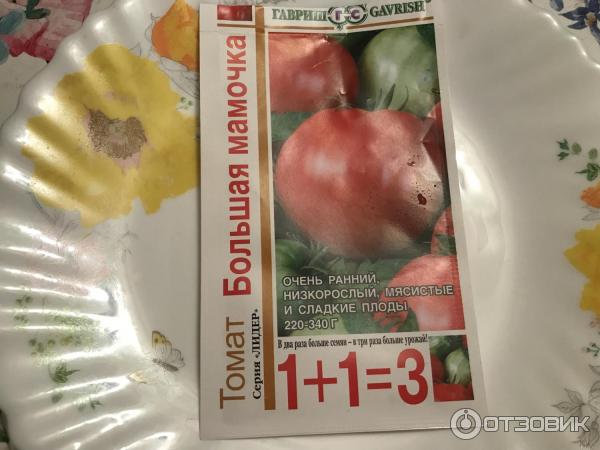
The photo shows half of the seeds, the other half, as you understand, was already sown in the spring.
Unfortunately, I didn’t think to collect my seeds from the largest tomato, because it’s possible, this variety is not a hybrid.
But it's too late. The largest tomatoes have already been eaten.
Therefore, next spring I will plant the remaining seeds again.
As you can see, I liked the variety.
But apparently because the seeds are not large or because of the weather conditions, my “mothers” turned out to be not very large.
Although we have no complaints about the weather in the Leningrad region this summer of 2021.
June and July were surprisingly hot. But August was very cold and rainy.
But the variety had already ripened by August.
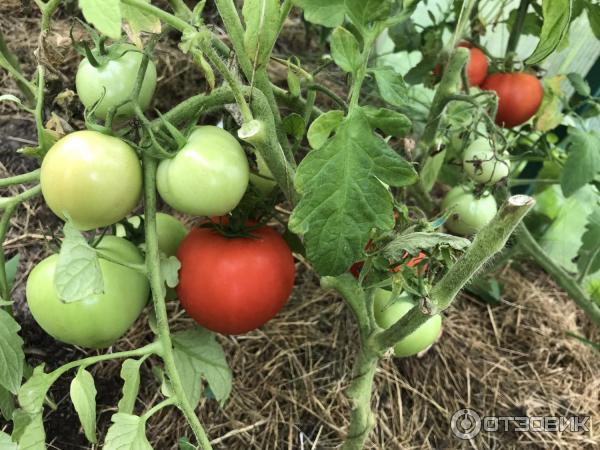
Really early.Almost all tomatoes of this variety managed to ripen on branches in the greenhouse.
It's a good thing they didn't ripen at the same time. We'd pick a couple by lunchtime, and the next day, more would ripen.
I expected the tomatoes to be larger, but these are good too.
There were also several large "mommies".
Not a very large tomato, but still a delight. The shape is slightly heart-shaped. The fruit is attractive and firm.
Most tomatoes are medium sized.
These are good for salads and canning.
The variety was virtually disease-free. Only at the end of August did gray mold begin to affect the trunks and the few remaining tomatoes.
And no wonder - the weather was disgusting.
The only way out is to remove all the stems and wash the unripe tomatoes with hot water and put them in a warm place to ripen.
It's okay, we're used to this in the north.
Some summers you have to pick green tomatoes altogether.
This variety is fine. It matches the description.
The only thing I expected was that the sizes were larger.
I sowed the seedlings not at the end of March, but at the beginning, in accordance with the lunar calendar. I planted them in the greenhouse at the end of May. All the seedlings took root. I didn't forget to put a tablet of Gliokladin under the roots for disease.
I sprayed it twice with serum diluted with warm water 1 to 5, adding half a teaspoon of boric acid per 5 liters and a couple of drops of iodine there.
In short, I tried. I pinched off the side shoots. There weren't many, but they were there.
Overall, I'm happy with the variety.
But I can’t give it an excellent rating because the seeds in the packet are very small.
Large tomatoes produce significantly larger seeds.
Again, unfortunately, I didn't pick the seeds from the largest tomato. I forgot. I was treating my guests to the largest ones.
Now I hope I don't forget next summer.
I recommend this variety with a good rating.

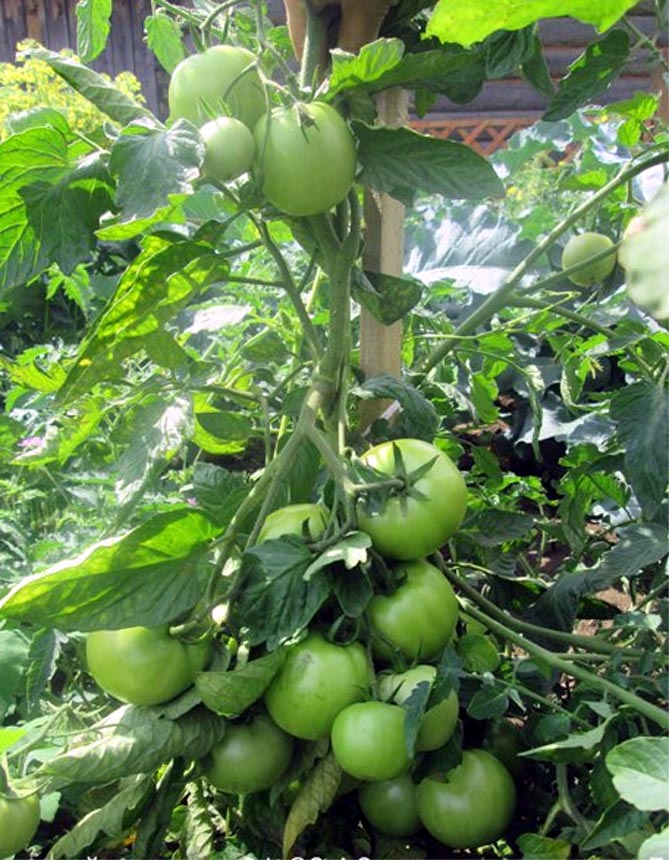
This is one of my mom's favorite varieties; she plants it every year and it's never let us down. The seeds don't germinate very well, they're a bit tough, so we buy several packets. We plant a lot because it's a very versatile tomato.
The yield is high in all weather conditions, setting fruit very well in both rainy and hot summers. Last year, the tomatoes were much larger; this year, they're smaller, but the entire bush is covered in tomatoes. It's impossible to show the full abundance in the photo because the tomatoes are hidden among the numerous foliage.
The bushes aren't very tall and require virtually no pinching. I wouldn't say they're very early, but rather mid-early.
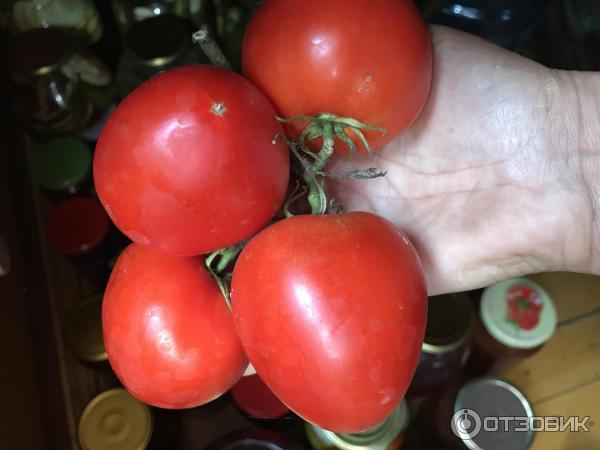
Tomatoes in a cluster vary in size and shape and are not particularly attractive, but we value them for their guaranteed harvest and excellent taste.
A ripe tomato is bright red.
They're attractive when cut. They taste sweet, delicious, and juicy. They have a lot of seeds. They're very versatile, good in salads and preserves. The juice they produce is sweet and rich.
Overall, it's a very good variety. It's never let us down, and we'll keep planting it. I highly recommend it.
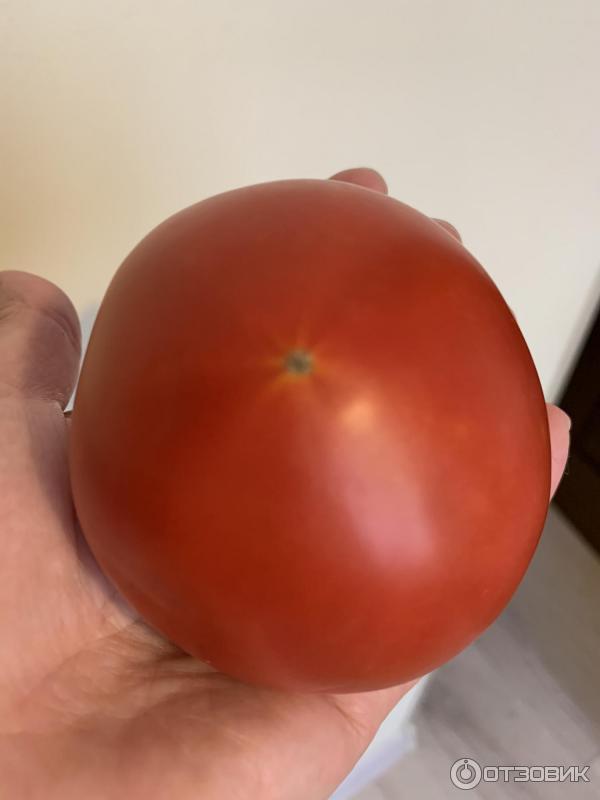
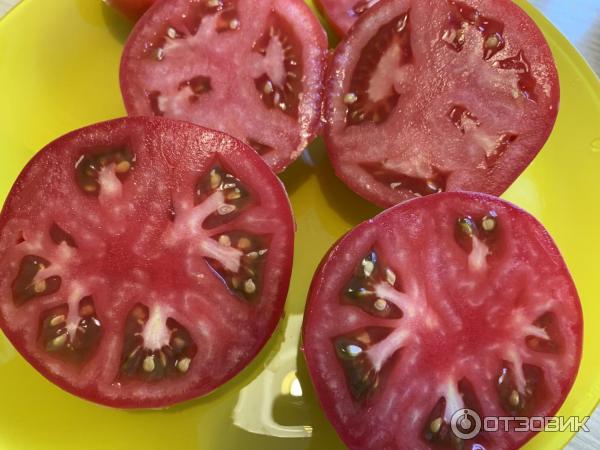
Hi all!
I would like to continue my review of my top tomatoes.
Today it's the turn of the red-skinned signor tomato.
Its name is very attractive - Big Momma.
This modern new variety was created by the Gavrish company without the use of GMOs.
Last spring, our garden market was flooded with seedlings of this variety, and they sold like hot cakes.Big Mama became so popular that at the height of the planting season, the price was raised to 130-150 rubles for 10 roots, when other varieties could be purchased for 50-60 rubles.
It was presented as an unpretentious, hardy variety, and even in the most unfavorable conditions it will not leave you without tomatoes."Excellent! Just what I needed!" I thought.
Our region is considered a high-risk agricultural zone, and the Bolshaya Mamochka variety is perfectly adapted to our climate and can be grown not only in a greenhouse but also in open ground.
This option suited me perfectly.Although you could buy seeds of this variety in a store, a packet at the time cost a little over 40 rubles. I don't remember the exact price.
But it was already too late to grow the seedlings myself, May was just around the corner, so I bought 10 roots from an old lady for 140 rubles.
WHAT I ENDED UP GROWING.
I decided to take a look and compare which mother plant would grow in open ground and in a greenhouse.
I planted 5 tomato roots in the greenhouse immediately in a permanent location at the beginning of May.
And the remaining 5 go to the garden bed under a temporary film cover.MOMMY in the greenhouse.
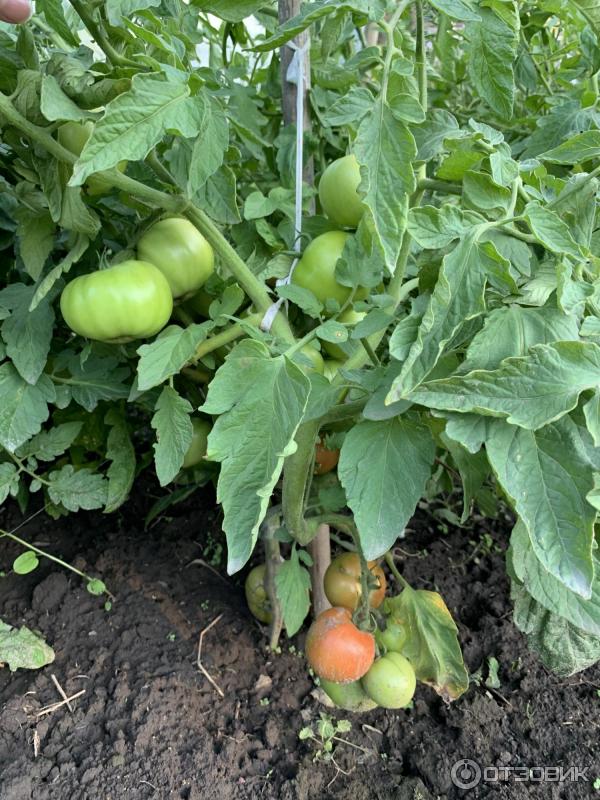
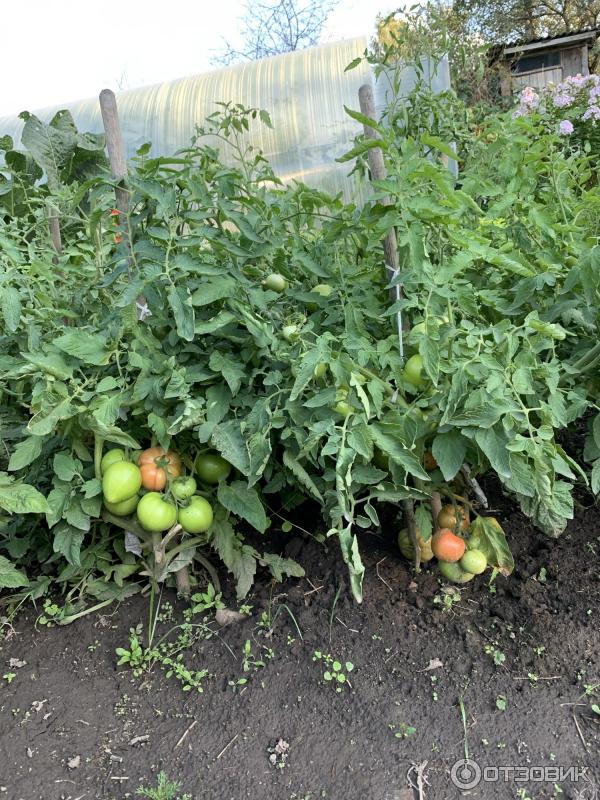
"BIG MOMMY" felt at home in the greenhouse. The greenhouse conditions suited her perfectly; she quickly took root and grew vigorously.
I didn't pinch her off, and my mommy started growing in width by leaps and bounds.
This really alarmed me, as the plants were planted close together. If they continued to grow at such a frantic pace, the mother plants would begin to fight for survival.
We had to start removing the stepsons urgently.
I left 3 stems on each bush.
My mommies grew to be maybe a little over a meter tall.
Of course, I didn’t measure them with a tape measure, but they were above the waist.MOMMY in open ground.
As I wrote above, I planted 5 plants in the ground under arches.
Even though I'd covered them with a temporary shelter, I could tell Big Mama was struggling. She wasn't getting enough warmth; all the seedlings I'd planted had turned blue and brown from the cold, and they sat there for two weeks without growing a bit.
Only a month after planting, the tops of young green leaves began to emerge from the tomatoes.
While in the greenhouse BIG MOMMA began to bloom in full swing.ABOUT THE FRUITS.
We started picking the first fruits in the greenhouse at the end of June.
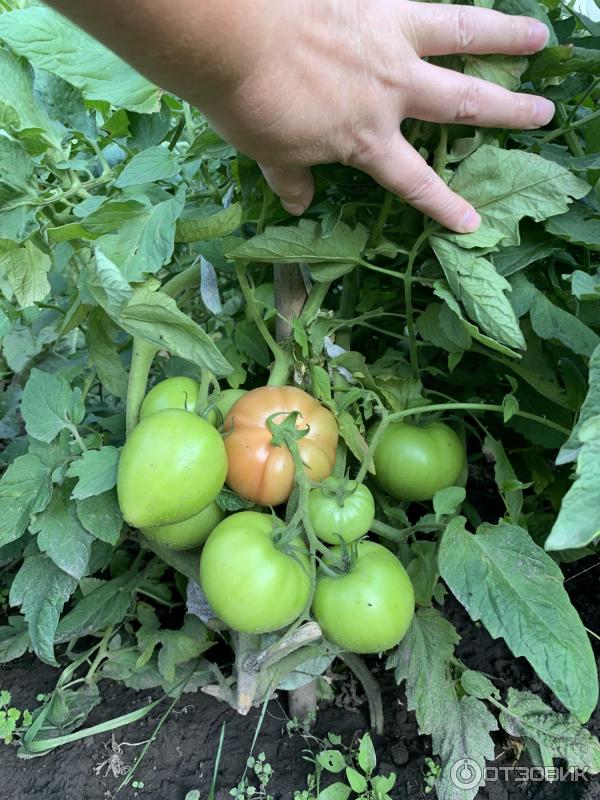
BIG MOMMY delighted us with some pretty decent-sized tomatoes; the first ones didn't fit in the palm of our hand.
The bush was laden with beautiful fruit. I didn't pick them until they turned brown, and I left some of the clusters to turn red.
The tomatoes were elongated and heart-shaped.
They taste great, sweet and not watery. Just what I expected.
I would classify BIG MOMMA as a salad variety. It's excellent for making tomato juice, ketchup, and sauce.
I like to pick it from the bush and eat it just like that, without salt or bread.AND WHAT WERE THINGS IN THE OPEN GROUND?
These ground BIG MOMMAS cannot be compared with greenhouse ones.
They barely acclimatized by mid-June. We completely removed the shelter, as the weather had already returned to normal by then.
The tomato tops only reached my knees and didn’t want to grow any more, even though I cared for them the same way as in the greenhouse, feeding, loosening the soil, and watering them.
It was already August, but the tomatoes weren't ripe yet. Some had just turned lighter and were ready to be picked. Without waiting for the vines to turn red, they picked them and set them aside to ripen.
The tomatoes differed not only in size, they did not grow large, but also in shape.
There was not the same uniformity as in greenhouses.
The taste of the reddened tomatoes was completely different. They lacked both sweetness and juiciness.RESULT.
As a result of my experiment, I realized that BIG MOMMA is not adapted to difficult climatic tests.
It is designed for greenhouse conditions.
There is no point in planting it in open ground, don’t even try.
As a greenhouse variety, I would recommend planting it, but not outdoors.
From me, “BIG MOMMA” deserves a solid 4, unfortunately, it doesn’t reach for more.
Thank you for your attention.