The Kostroma tomato was zoned for the Central Belt regions, but has also shown excellent results in the south and in Siberia.
Content
- 1 Table with characteristics of the Kostroma tomato variety
- 2 Photo gallery of the Kostroma tomato variety
- 3 The origin of the Kostroma F1 tomato variety
- 4 A detailed description of the Kostroma tomato variety
- 5 Advantages and disadvantages of the Kostroma F1 tomato variety
- 6 Growing the Kostroma tomato variety
- 7 Care, watering, and fertilizing of the Kostroma tomato variety
- 8 Resistance of the Kostroma tomato variety to diseases and pests
- 9 Harvesting, using, and storing the Kostroma tomato variety
- 10 Comparison of the Kostroma tomato variety with other varieties in the table
- 11 Gardeners' reviews of the Kostroma F1 tomato variety
Table with characteristics of the Kostroma tomato variety
| Characteristic | Description |
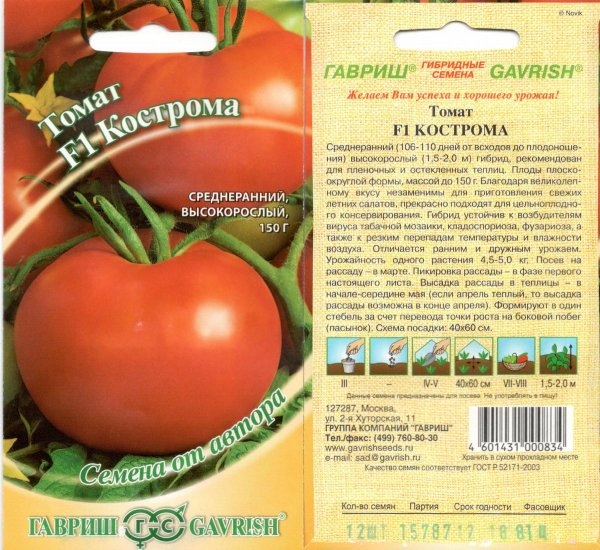
| Description | A determinate hybrid tomato variety with a medium ripening period, intended primarily for cultivation in protected soil. |
| Ripening period | 105-110 days |
| Fruit weight | 90-120 g |
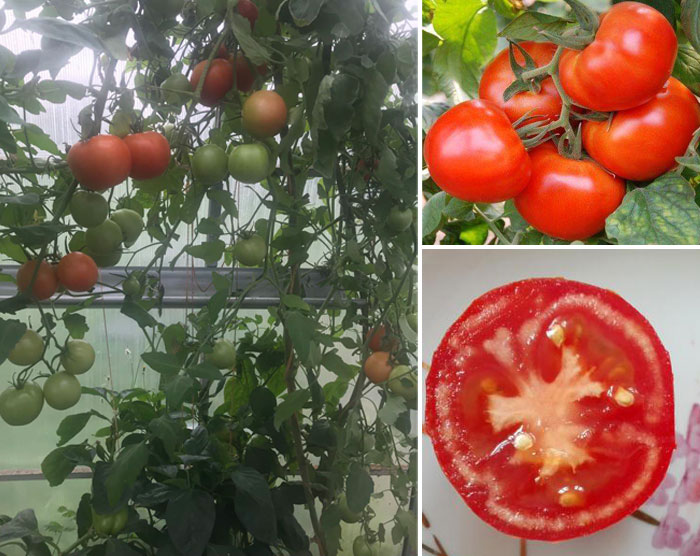
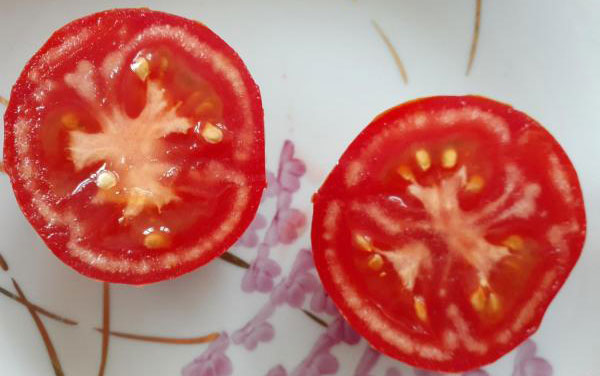
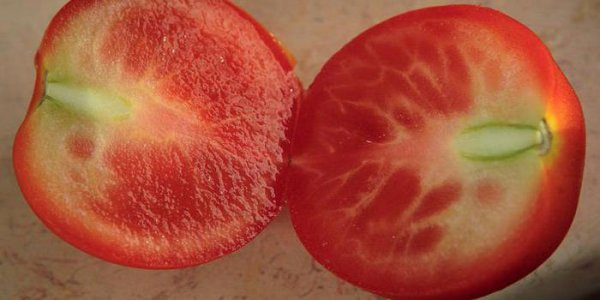
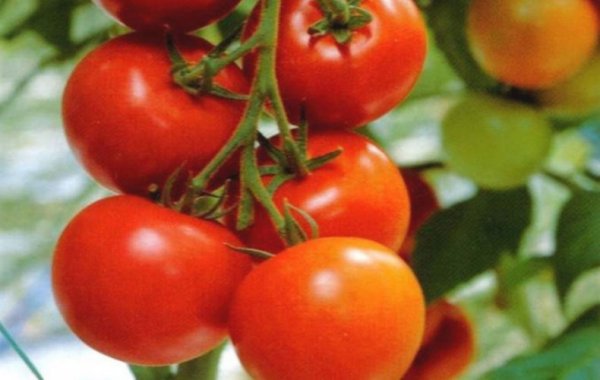
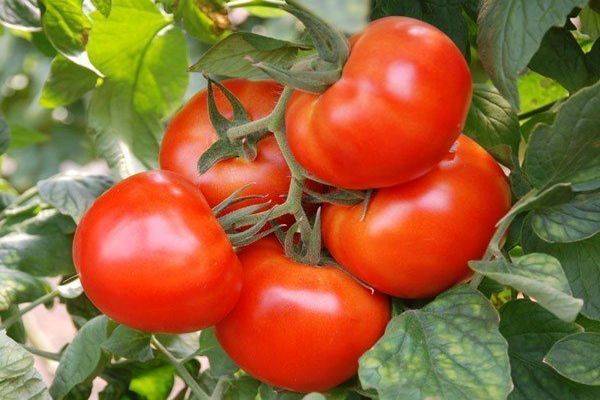
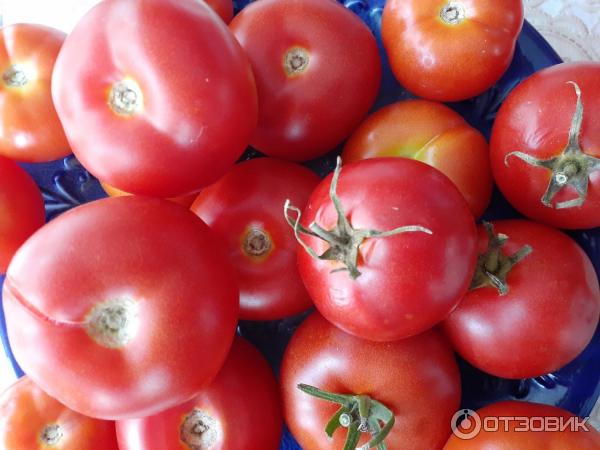
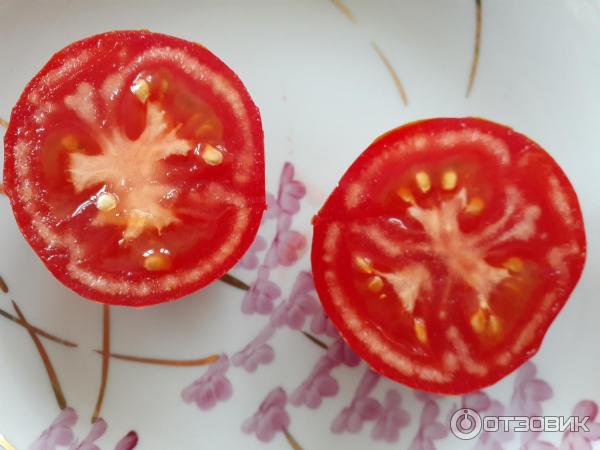
| Description of the fruit | The fruits are flat-round, slightly ribbed, bright red in color, with a dense skin and up to 3 seed chambers inside. |
| Productivity | Up to 22 kg in a greenhouse and up to 10 kg in open ground. |
| Usage | The variety is considered a dessert one, but the tomatoes can be used for canning and pickling. |
| Preferred growing regions | Intended for the Central regions of Russia; it grows well in greenhouses and in the Northern regions. |
| Disease resistance | The variety is considered resistant to all common tomato diseases and, due to its relatively early ripening period, is not susceptible to late blight. |
| Agricultural technology | The shoots need to be pinched, shaped and tied up. |
| 1996 | |
| Originator | LLC Breeding Company "Gavrish" |
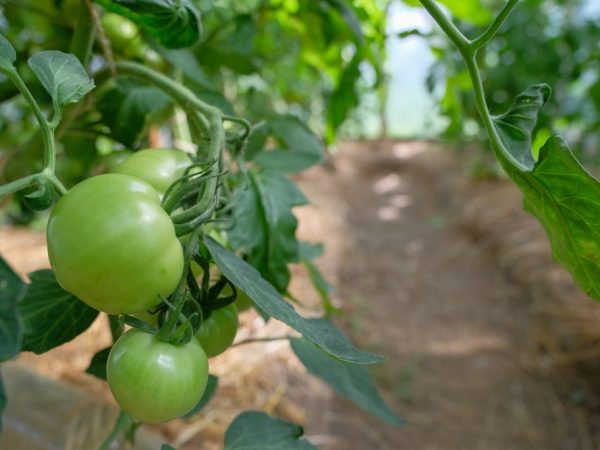
Photo gallery of the Kostroma tomato variety
The origin of the Kostroma F1 tomato variety
The Kostroma tomato was developed in the 1990s, and by 1996, the variety had already received an official registration certificate. Breeders aimed to develop a low-maintenance variety with minimal susceptibility to diseases and pests, and fruits that ripen evenly and have a long shelf life. This tomato demonstrated its greatest productivity in the Central region, hence its name, "Kostroma."
A detailed description of the Kostroma tomato variety
Kostroma is an unpretentious tomato with a medium ripening period and fruits for general use.
Bushes
Determinate shoots grow up to 2 meters and require pinching, which allows for the formation of numerous side shoots. Lateral shoots with side shoots form slowly, so pinching once a week is sufficient. Foliage is average; it is recommended to remove lower leaves promptly.
The bush is formed into 1-2 shoots.
The flowers are small, yellow; the first inflorescences begin to form above the 8th leaf and then continue in increments of two leaves. Each raceme can contain up to nine ovaries.
Fruit
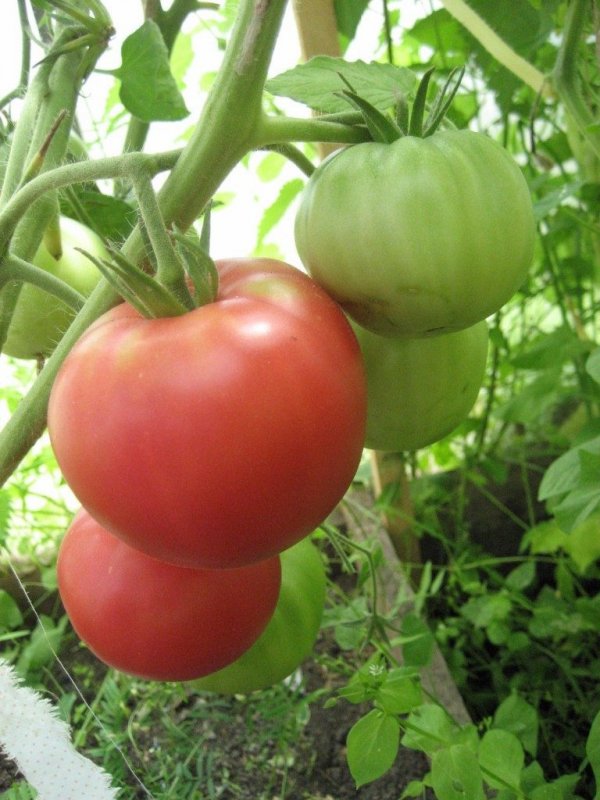
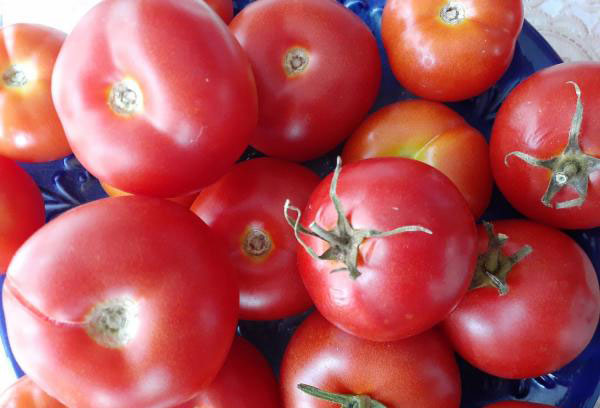
The fruits of the Kostroma tomato are flattened and round, with subtle ribbing. The skin is dense, smooth, and bright red. Tomatoes weigh between 80 and 120 grams, with the smallest fruits forming closer to the crown.
The pulp is dense, juicy, sweet and sour, it contains 2-3 seed chambers with small seeds.
Ripening occurs uniformly and lasts 2-3 weeks. Tomatoes don't crack on the vine, and their elastic skin allows them to be stored for a long time without deforming during transportation.
Productivity
The Kostroma variety's yield depends on the cultivation method. Greenhouses can yield up to 22 kg, while open-field cultivation yields 10 kg. The average yield per bush is 4.5 kg.
Ripening time
From the moment the first shoots emerge to harvest, it takes 105-110 days. In southern regions, this period may occur a few days earlier.
Advantages and disadvantages of the Kostroma F1 tomato variety
The Kostroma tomato variety has a number of advantages and disadvantages. These are listed in the table below.
| Advantages | Flaws |
|
|
Growing the Kostroma tomato variety
The Kostroma tomato doesn't require any special agricultural technology; it's easy to grow and requires gardeners to follow standard agricultural practices.
Sowing seeds and growing seedlings of the Kostroma tomato variety
The Kostroma variety is a first-generation hybrid, so you can't collect the seeds yourself; they must be purchased from an authorized producer. All seeds have already undergone the necessary pre-treatment at the factory, so there's no need to calibrate or soak them.
Seedlings can be grown in 40 days if the necessary agricultural practices are followed:
- The mixture should be loose and nutritious. It's recommended to purchase it from a specialty store, but you can also mix equal parts of garden soil, peat moss, humus, and sand yourself.
- For planting, select boxes at least 10 cm deep, with drainage in each to prevent moisture stagnation at the roots.
- The seeds are planted at a depth of 1.5 cm at a distance of 2 cm from each other, after which they are covered with soil.
- Watering is done using a spray bottle so that the stream of water does not drag the tomato seeds to the bottom.
- The container with the seedlings is covered with plastic film or glass. Once the first sprouts appear, the cover is removed.
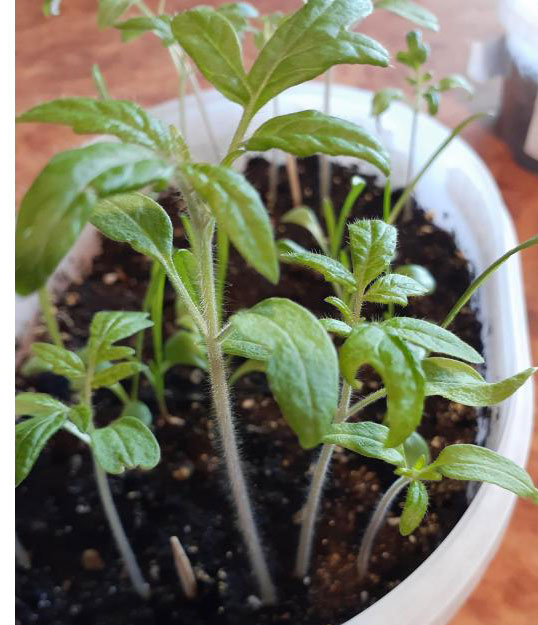
- Picking is carried out after the formation of 1-2 full-fledged leaves.
- At first, the seedlings should be kept in a room with a temperature of at least 22-24 degrees; after removing the film, they should be moved to a cooler room and provided with additional lighting using a special phytolamp.
- Hardening off tomatoes is important 10-14 days before planting them in the garden. To do this, begin by taking the seedlings outside or onto the veranda for a few hours, then increasing this time to 10 hours.
Planting the Kostroma tomato variety in the ground
The Kostroma tomato tolerates temperature fluctuations well, but it is recommended to plant it in soil warmed to 12-14 degrees Celsius. In greenhouses, some gardeners artificially stimulate the heating of the bed by covering it with black plastic.
In the Central Belt, planting time begins no earlier than the first ten days of May; in the south of the country, gardeners begin planting in mid-April, and in the north – at the end of May.
The soil in the garden bed is dug over in the fall, and in the spring, holes are made in it at intervals of 40 cm. It is recommended to leave a 50-60 cm gap between rows.
The seedlings are transferred to the hole along with a lump of earth, after which the hole is filled, watered and mulched – this will help retain moisture in the soil and reduce the number of weeds.
Care, watering, and fertilizing of the Kostroma tomato variety
The Kostroma tomato requires little care. The first watering after transplanting should be done 7-10 days later, then water once a week.
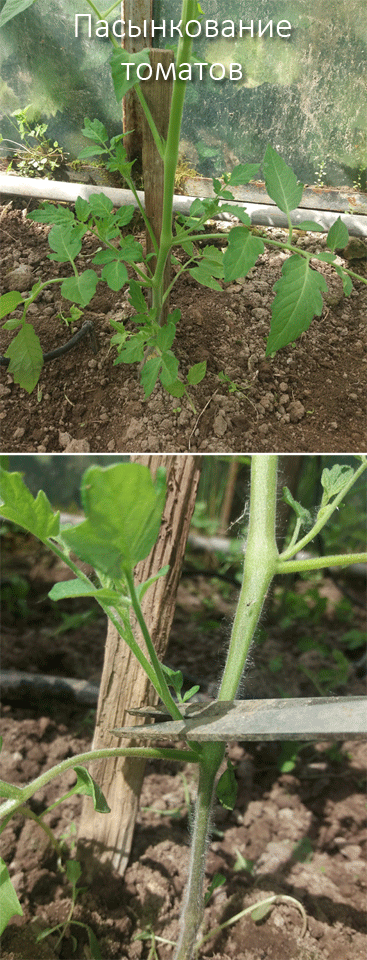
As the tomato plants grow, remove all excess shoots and side shoots, shaping the bush into 1-2 shoots. When the tomato plants reach 5 clusters, begin removing the leaves from the lower portions. No more than 5 leaves should be removed at a time. When the clusters reach 10, begin pinching the shoots. Experienced gardeners recommend providing support in advance, as the shoots grow up to 2 m in length.
Two weeks after planting, you can apply the first treatment to your tomatoes. For this, you can use a solution of Fitosporin or Bordeaux mixture. Specialized complex fertilizers are added to the soil. Organic farmers can use mullein or an infusion of weeds.
It's important to loosen the soil as needed, combined with weed removal. This increases soil aeration and reduces the risk of pest infestation.
Resistance of the Kostroma tomato variety to diseases and pests
Kostroma tomatoes are known for their strong immunity. Due to their ripening time, they are resistant to late blight. To prevent pests, treat the plants with Fitosporin, Topaz, Ordan, and other pesticides at two-week intervals, three times per season.
If the first signs of parasites appear on the plant, you can spray the plantings with Actellic, Karate, Biotlin and other preparations.
Any use of these products must be stopped 2 weeks before harvesting.
Harvesting, using, and storing the Kostroma tomato variety
The ripening period for Kostroma tomatoes is 110 days from germination. In open ground, it may take slightly longer.
Thanks to their thick skin, tomatoes can hang on the vine for a long time without cracking. They can also be stored in a cool place for a long time without losing their flavor and transported over long distances.
Initially, Kostroma tomatoes were considered a delicacy variety, used exclusively for cooking and salads. However, their excellent shape retention allows them to be preserved in various ways, including drying. Their juicy flesh is suitable for making sauces and pastes.
Comparison of the Kostroma tomato variety with other varieties in the table
Please note! How can you easily convert centners/ha to kg/sq.m? Simply divide by 100! For example, the Abakansky Pink tomato yields 400 centners of marketable fruit per hectare. This equals 4 kg per square meter. It's that simple! Also, keep in mind that typically no more than 3-4 plants are planted per square meter. This way, you can calculate the yield per bush. In the case of the Abakansky Pink, it's about 1 kg.
| Variety | Ripening period (number of days from full germination to ripening)
Yield of commercial fruits |
Brief description | Fetus |
| Kostroma | 105-110 days
1350-1500 c/ha |
A mid-season determinate variety for greenhouses. Requires staking and training. Suitable for salads, whole-fruit canning, and processing into tomato products. | Flat-round, slightly ribbed, glossy, red or orange, 80-150 g. Good taste, sweet and sour. |
| Silver spruce | 90-100 days
1500-1800 c/ha |
A mid-early determinate variety for open ground and greenhouses. Requires staking and training into 2-3 stems. Suitable for salads and canning. | Flat-round, slightly ribbed, with a little pubescence, red, 300 g. The taste is good and excellent. |
| Mikado Sibiriko | 90-95 days
800 c/ha |
An early indeterminate variety from Siberian breeders. For salads, juice, and pasta. | Heart-shaped, ribbed, pinkish, 400-600 g. Excellent taste. |
| Abakan pink | 120 days or more 400 c/ha |
A late-ripening determinate variety for open ground and greenhouses. Requires staking and training. Suitable for salads and processing into tomato products. | Flat-round, slightly ribbed, medium density and pink in color, 200-500 g. Good taste. |
| Agatha | 98-113 days
583-676 c/ha |
An early-ripening, determinate, non-standard variety for open ground and greenhouses. Suitable for salads. | Flat-round, smooth, red, 77-99 g.
Taste qualities 3.8-5 points. |
| Agatha Plus | 98-113 days
301-798 c/ha |
An early-to-mid-early determinate variety for open ground. Suitable for salads. | Round, smooth, medium density, red, 128-190 g. The taste is good and excellent. |
| Alyosha Popovich | 125-130 days
600-640 c/ha |
A mid-season indeterminate variety for open ground and greenhouses. Requires staking and training. Suitable for salads. Easy to transport. Resistant to adverse growing conditions. | Round, slightly ribbed, medium density, red, 150-200 g. Good taste. |
| Big Momma | 85-95 days (greenhouse), about 100 days (open ground)
700-900 c/ha |
A mid-early determinate variety for open ground and greenhouses (greenhouses only, according to the register). Suitable for salads, canning, pickling, and juice. | Round, large, slightly ribbed, medium density, red, 200-250 g. Excellent taste. |
| Big Dipper | 100-110 days
1150-1450 c/ha |
An early-ripening indeterminate variety for open ground and greenhouses. Requires staking and shaping. Suitable for salads. | Flat-round, slightly ribbed, medium density, pink, 210-260 g. Good taste. |
| The pride of the feast | 90-100 days 1200-1400 c/ha (in a greenhouse) |
An early-ripening indeterminate variety for open ground and greenhouses. Suitable for salads. | Flat-round, dense, strongly ribbed, red, 320-330 g. Excellent taste. |
| Siberian big guy | 90-100 days
900-1200 c/ha |
An early-ripening indeterminate variety for open ground and greenhouses. Suitable for salads, processing into tomato products, and preparing first and second courses. | Flat-round, slightly ribbed, red, 500 g. Good to excellent taste. |
| Siberian giant | 115-120 days
The commercial yield of fruits was 9.0-11.0 kg/sq.m. |
A mid-early indeterminate variety for greenhouses. Suitable for salads. | Flat-round, large, medium-ribbed, loose, red, 400-500 g. Excellent taste. |
| Siberian Shan'gi | 100-110 days
The yield of commercial fruits in open ground was 5.6 kg/sq.m. |
A mid-season determinate variety for open ground and greenhouses. Suitable for salads. | Flat-round, medium density, slightly ribbed, raspberry, 157 g. Excellent taste. |
| Siberian early ripening | 98-108 days 289-543 c/ha (open ground), 20-43% of the total yield ripens in 15 days of fruiting, 630-950 c/ha (greenhouse and under film), in the first month of fruiting 240-580 c/ha. |
An early-ripening, determinate, low-growing variety for open ground and greenhouses. Suitable for salads. | Round and flat-round, slightly ribbed, medium-sized and large, red, 62-114 g. The taste is satisfactory. |
| Siberian tiger | 110-120 days
Up to 1200 c/ha |
A mid-season indeterminate variety for open ground and greenhouses. Requires staking and training into 1-2 stems. Suitable for salads and processing into tomato products. | Flat-round, ribbed, dark pink with dark purple streaks, 150-250 g. Excellent taste. |
| Siberian kilogram | 116-120 days
600-1000 c/ha |
A mid-season indeterminate variety for greenhouses and open ground. Suitable for salads and processing into tomato products. | Round, slightly ribbed, red, 600-1500 g. Good to excellent taste. |
Gardeners' reviews of the Kostroma F1 tomato variety
Gardeners note that the Kostroma tomato variety produces excellent yields in both quality and quantity in a greenhouse. The tomatoes make a great addition to salads; they are juicy and delicious. If necessary, they can be refrigerated for up to 14 days.
Review from Top.tomathouse.com:
This was our first time growing this variety, and it met all our expectations. We planted it both in the greenhouse and outdoors. It performed admirably in both settings. Outdoors, it only failed to survive frosts down to -4 degrees Celsius. In the greenhouse, it produced fruit until November.
We collected the seeds, although they say it's an F1 variety and won't show the same results. We'll see what grows next year. We'll write back then.
Update: The collected seeds produced bushes and fruit better than the previous ones, apparently having adapted somewhat to our conditions. Now we collect our own seeds every year, and we're very happy!
Right now, all amateur gardeners are getting ready or have already started planting seedlings. When choosing a tomato variety for the coming season, I divide it into salad varieties and those for canning. Last year, in 2020, we specifically planted several tomato plants with small, round, and elongated fruits for canning: Siberian Early Ripe from Agronika, Kaspar, Ultra-Early Ripe from Siberian Garden, and, new to me, the Kostroma variety from the Gavrish group. The seeds were purchased and have been stored for several years now. But last year, Kostroma delighted me with its harvest, and I decided to share my positive impressions.
Last year, all three seeds I sown sprouted, but I only pricked out and planted two large branches.
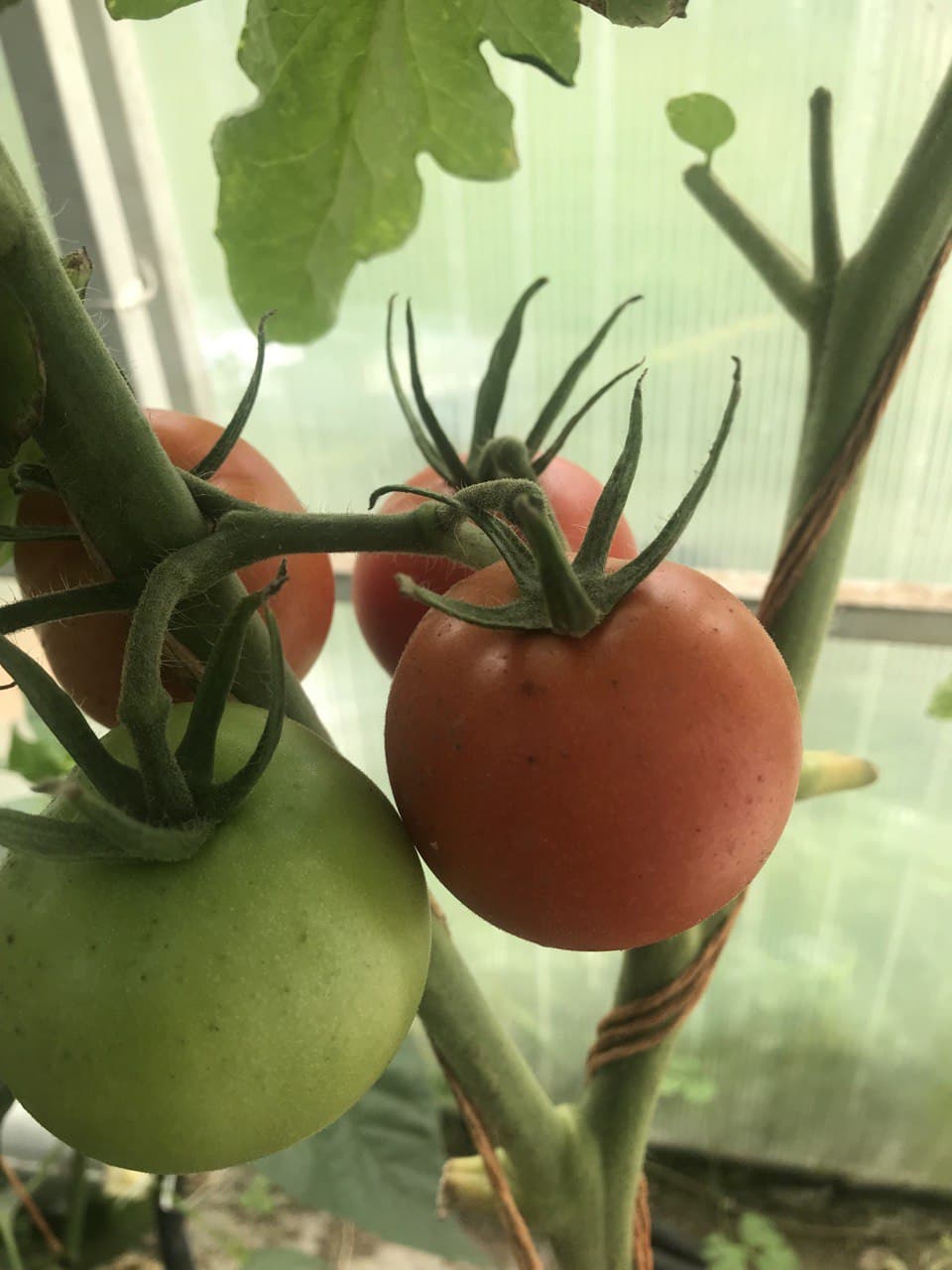
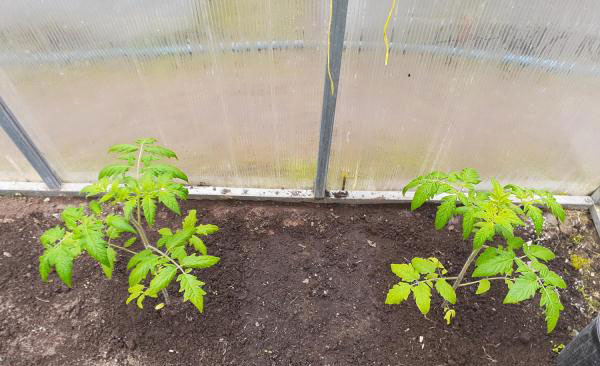
Before picking, photo taken on March 28, 2020, and by the end of April, the vigorous Kostroma seedlings were ready for transplanting into the greenhouse; they were planted on May 4, 2020.
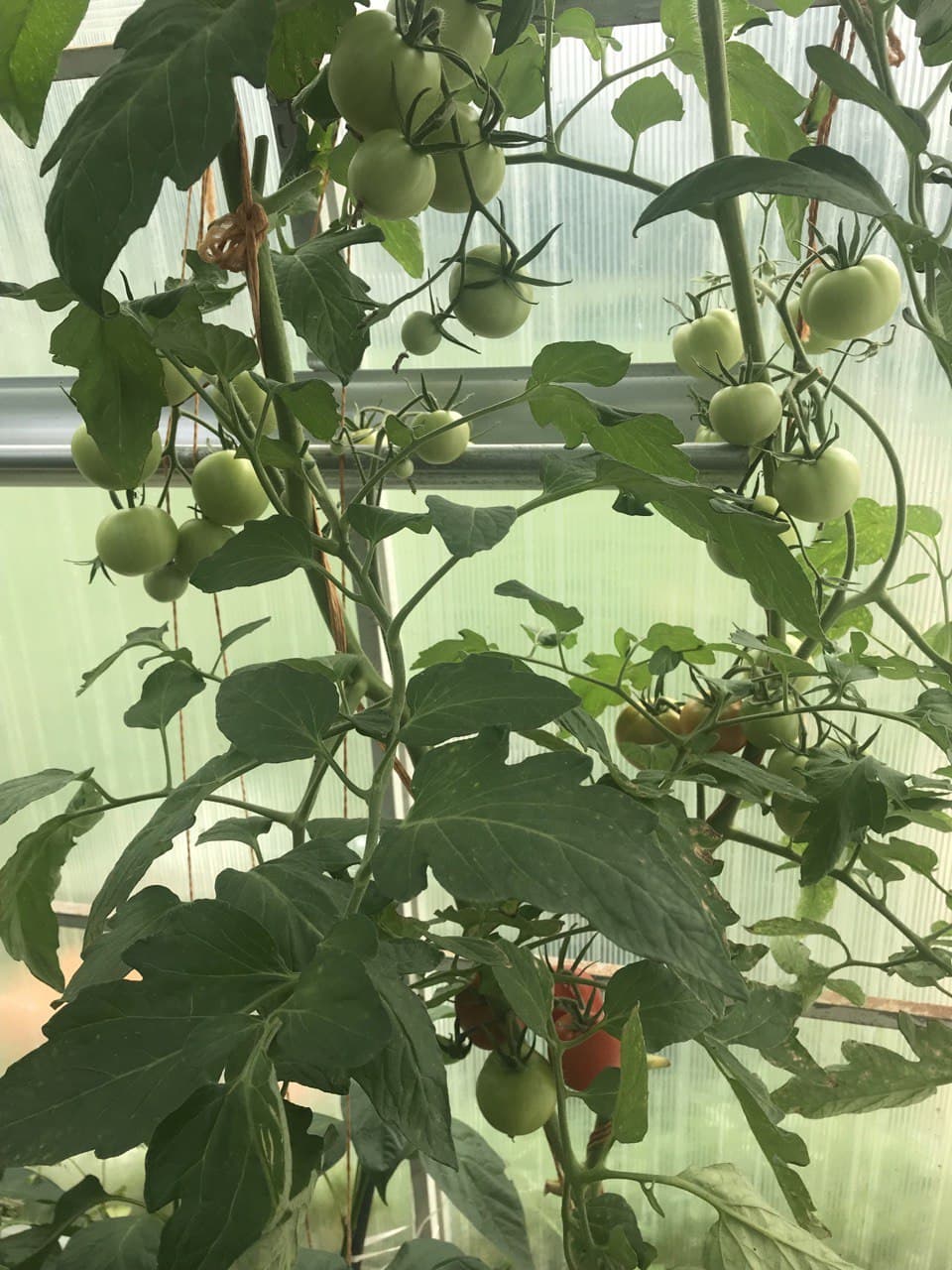
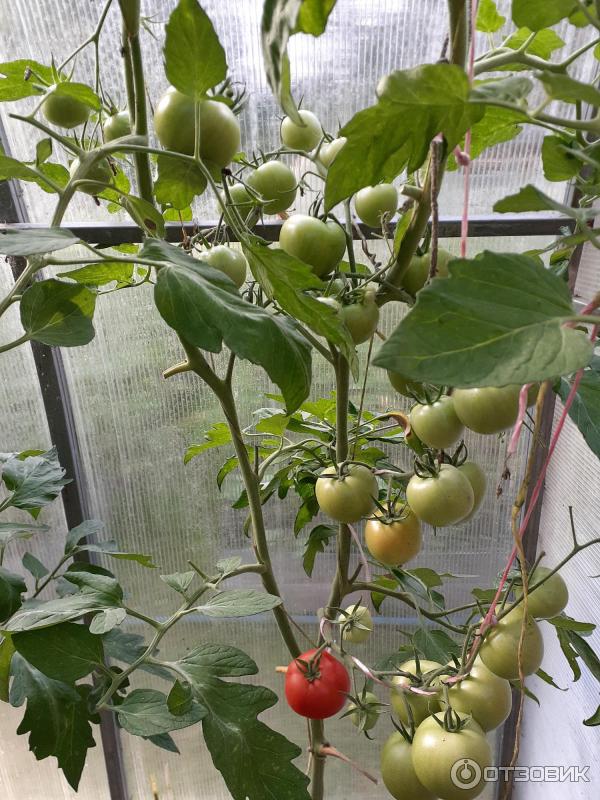
"Kostroma" is a tall variety; its branches have climbed up to the roof of our greenhouse, stretching over 2 meters.
I grew various tomatoes from seeds from the Gavrish agrofirm, and among the varieties for canning, we liked the Chukhloma tomatoes the most. They produce numerous fruits hanging in clusters on the branches, tasty, long, and a unique bright orange color. The Kostroma variety proved to be a worthy competitor to the Chukhloma in terms of yield.
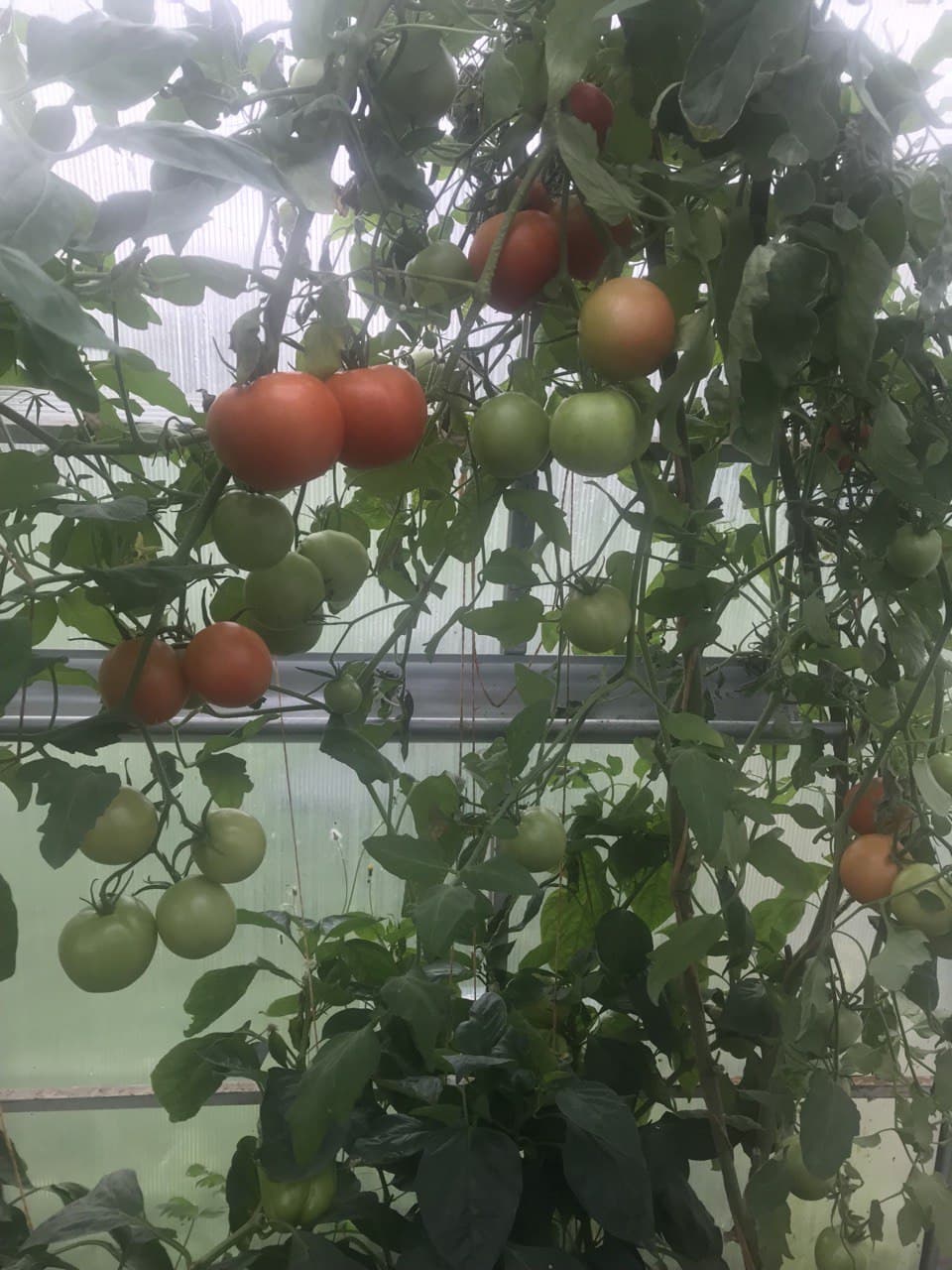
I left only two stems on each bush. Strong clusters with numerous ovaries formed. There are 6-7 clusters, and this is only the lower part in the photo. The branches are strong, and by the end of July, the number of ovaries in each cluster reached 8-10.
And almost all the flowers in the brushes were pollinated and 100% of the ovaries were formed, individual flowers wilted and fell off.
There were definitely some ovaries at the top. As a result, the yield was excellent.
The only thing was the ripening time was a bit off. They were almost a month late. The first tomato wasn't picked until July 30th.
Approximately 145 days have passed since the planting date (sowing tomato seeds for seedlings on March 6). The manufacturer promised much faster—110 days from germination to fruiting. Perhaps by fruiting they meant the moment the fruit sets. Or maybe our climate has a different effect. This variety is not mid-early for the Northwest region.
I also really want to praise its resistance to all diseases. The Kostroma variety proved to be one of the most resilient varieties in our greenhouse; the leaves remained green until the end of August, with minimal dark lesions.
The tomatoes have ripened to almost the same size, all are uniform in shape, and have a pleasant flavor. A bountiful harvest by the end of August:
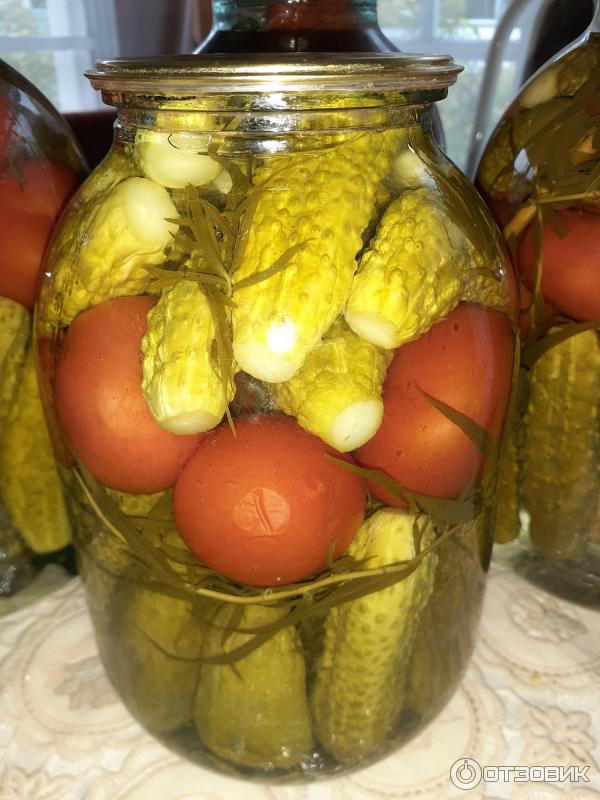
The largest and softest ones were eaten in salads, but were mainly used for canning.
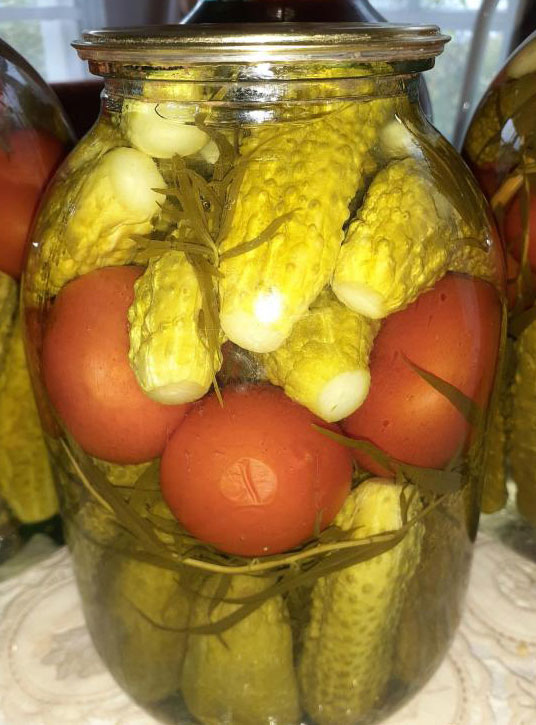
In jars, the red, round Kostroma cucumbers look striking and very appetizing against a backdrop of bright green cucumbers. Because the fruit is moderately watery and has a fairly dense outer shell, they don't fall apart during canning, retaining their shape and flavor perfectly.
There were only 12 seeds in the packet, and this year I sowed the last two. I'm hoping for a harvest as good as last year's.
Bottom Line: Excellent seed germination, seedling growth, and disease resistance when grown in a greenhouse. A natural result is a high yield. I agree with the seed author, Gavrish, and recommend growing the "Kostroma" tomato variety for summer salads and whole-fruit canning. It's a very convenient size for jars, and they look delicious.
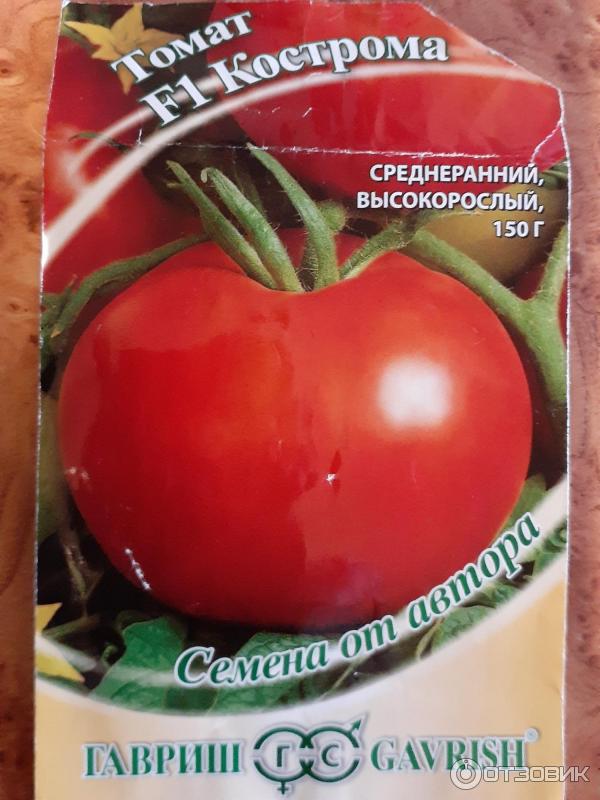
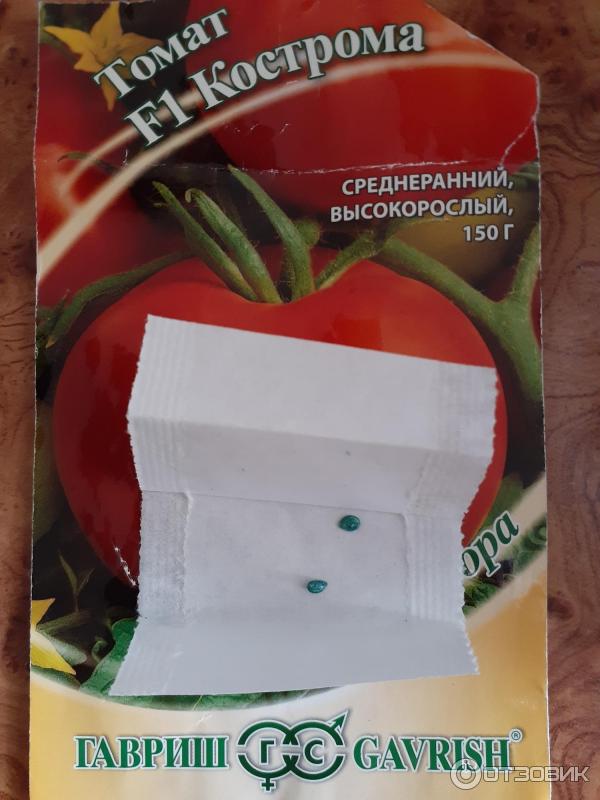
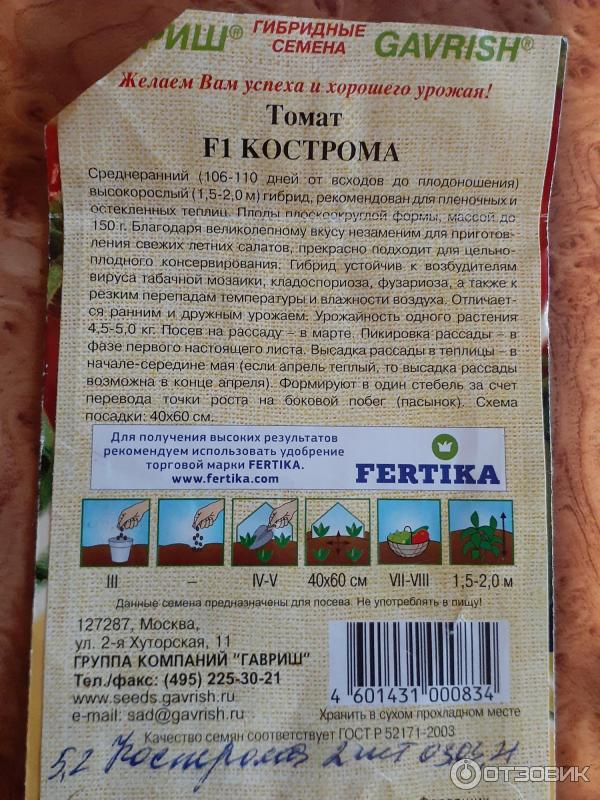
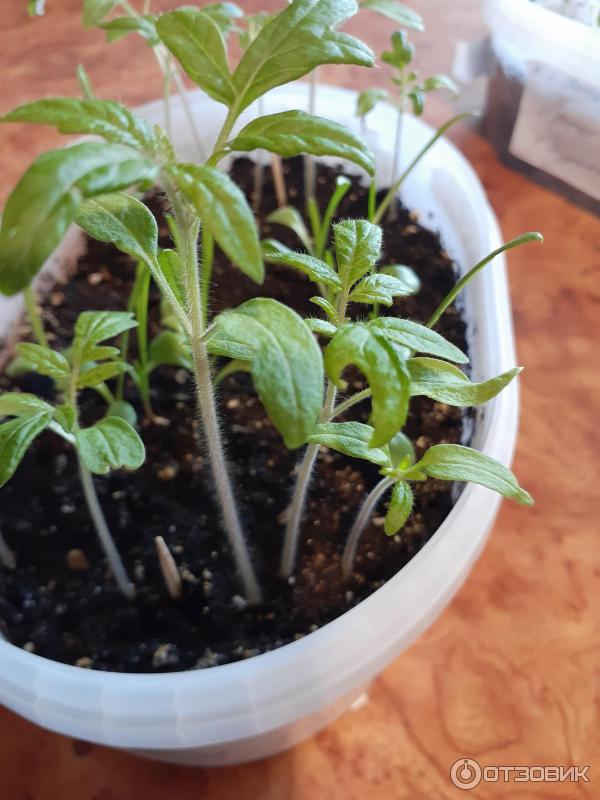
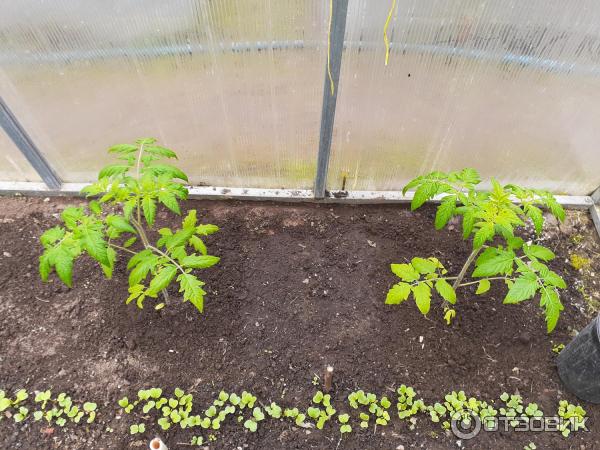
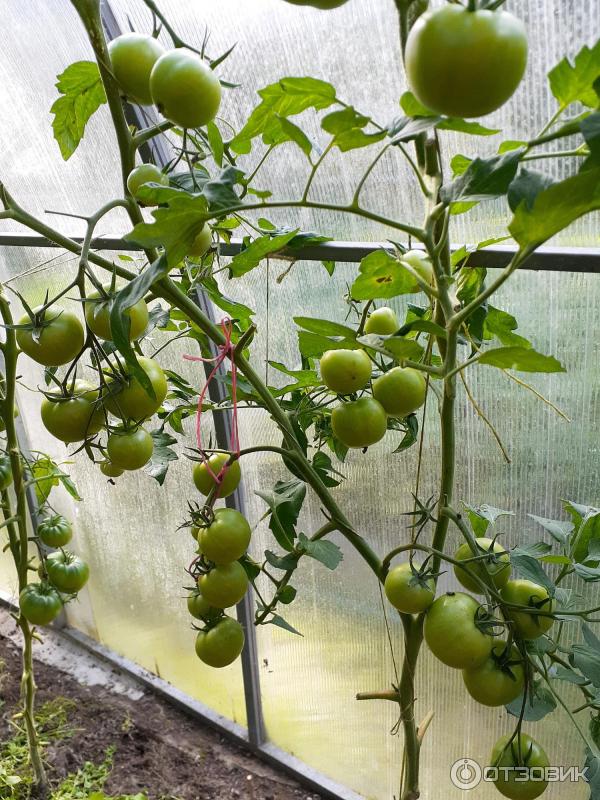
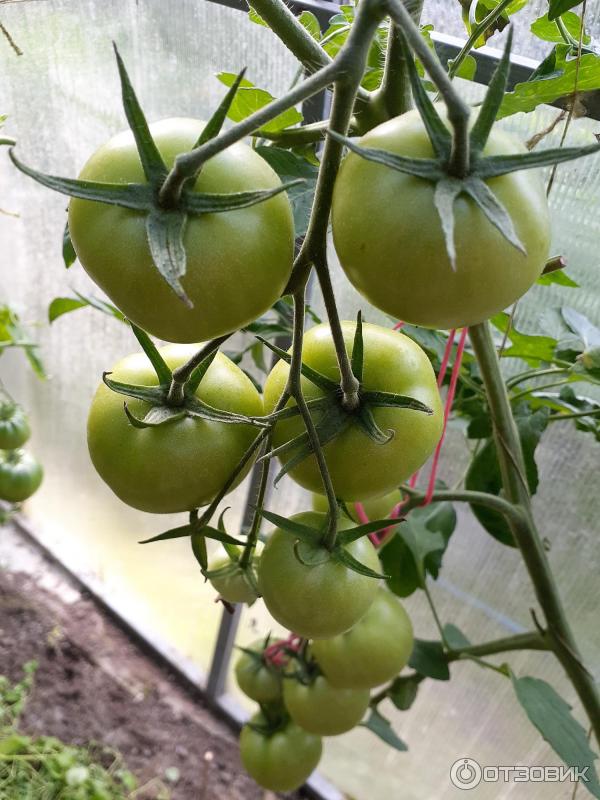
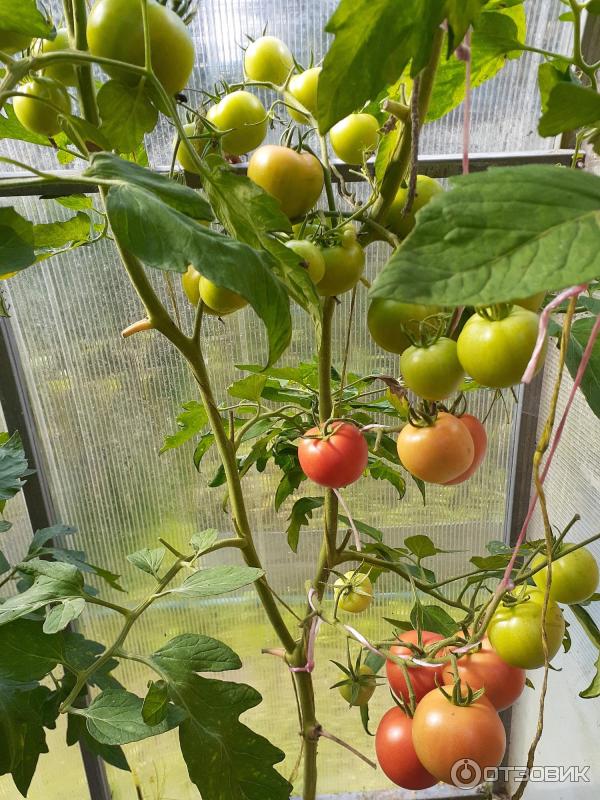
I always grow tomatoes from seeds using seedlings. Two years ago, I bought some original Kostroma F1 tomato seeds and sowed them in early February for seedlings. There were only 12 seeds in the packet, but they sprouted quickly and evenly.
Kostroma F1 tomatoes are mid-early ripening. I pick the first fruits from the bush 3.5 months after the first shoots appear. These tomatoes are medium-sized but require staking and training. My tomato vines have grown to 2 meters or more. I plant the finished seedlings in a greenhouse and under cover at the end of April. I train the plants into two stems by removing the lower side shoots.Kostroma F1 tomatoes are flat and round. The average fruit weight is about 100-150 grams. They are very sweet and delicious. When ripe, the fruits turn bright red. They have thick skin, juicy, sweet flesh, and grow quickly, producing a consistent crop.
This is a productive variety and always pleases me with a large harvest. I harvest at least 5 kilograms of tomatoes from a single plant. I love eating Kostroma F1 tomatoes fresh, making salads with them, making tomato juice, and canning them. This is a hybrid variety, so it's resistant to viral and fungal diseases.
ADVANTAGES:
Good taste, ripens quickly, easy to care for, lots of fruit, very fleshy and juicy inside
FLAWS:
Does not like excess moisture, if the abundance of rain can disappear.A good variety, quite a good size and flavor. Ripens quickly, holds a good amount of fruit in the jar. It produces many berries per branch, is easy to care for, and doesn't require excessive attention.