The Mikado Pink tomato was bred specifically for home gardens and summer cottages. It's one of the varieties that produces large fruits when properly cultivated. Let's take a closer look at the characteristics and growing nuances of this tomato variety.
Content
- 1 Tomato Mikado Pink main characteristics: in the table
- 2 The history of the Mikado Pink tomato variety
- 3 Varieties of the Mikado variety
- 4 A detailed description of the Mikado Pink tomato variety
- 5 Advantages and disadvantages of the Mikado Pink tomato variety
- 6 Features of sowing and planting the Mikado Pink tomato variety
- 7 Care for the Mikado Pink tomato variety in greenhouses and open ground
- 8 Disease and pest resistance and prevention of the Mikado Pink tomato variety
- 9 Harvesting, using and storing Mikado Pink tomatoes
- 10 Comparison of Mikado tomato varieties with other varieties in the table
- 11 Real reviews from gardeners about Mikado varieties
- 11.1 Real reviews from gardeners about the Mikado Pink tomato variety
- 11.2 Real reviews from gardeners about the Mikado Sibiriko tomato variety
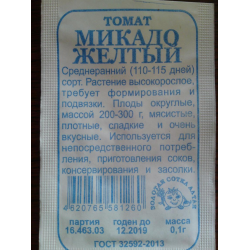
- 11.3 Real reviews from gardeners about the Mikado Yellow tomato variety
- 11.4 Real reviews of the Mikado Orange variety
- 11.5 Real reviews of the Black Mikado tomato variety
Tomato Mikado Pink main characteristics: in the table
| Characteristic | Description |
| Ripening time | 90-95 days. |
| Description of the plant | Mid-early indeterminate variety for greenhouses on private plots. |
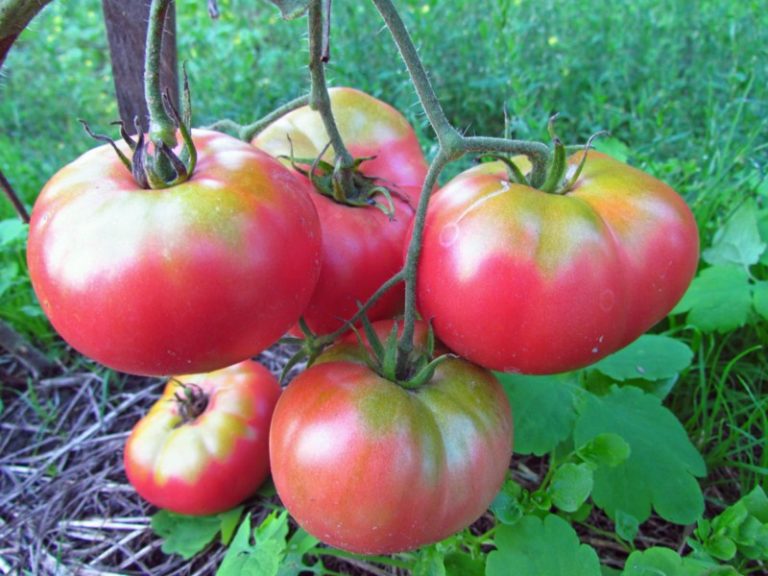
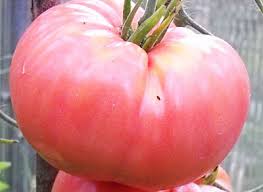
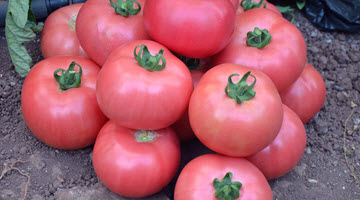
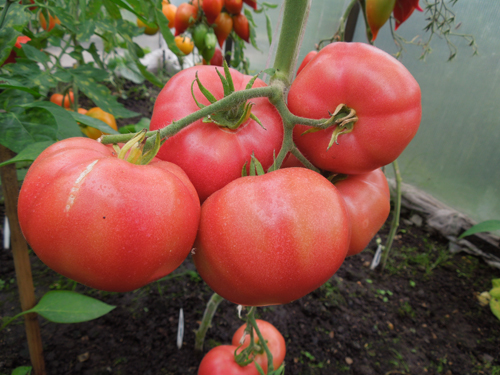
| Description of the fruit | Flat-round, flat, ribbed, pinkish. |
| Fruit weight | 300-360 g. |
| The taste of the fruit | Great |
| Usage | For salads. |
| Productivity | 5-6 kg/sq. m. |
| Resistance to infections | Most of the diseases that affect nightshades. |
| Agricultural technology | It requires mandatory pinching, otherwise the bushes will be very tall, up to 250 cm. |
| Growing regions | Northern, Northwestern, Central, Volga-Vyatka, Central Black Earth Region, North Caucasian, Middle Volga, Lower Volga, Ural, West Siberian, East Siberian, Far Eastern |
| 2015 | |
| Originator | LLC "BREEDING FIRM GAVRISH" |
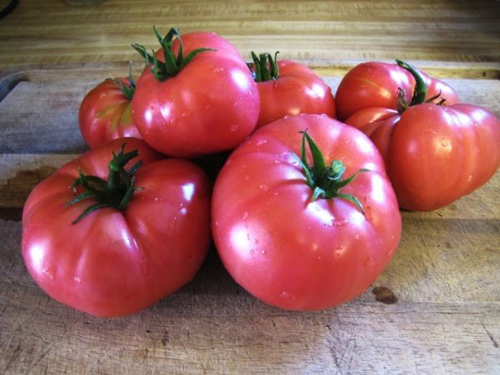
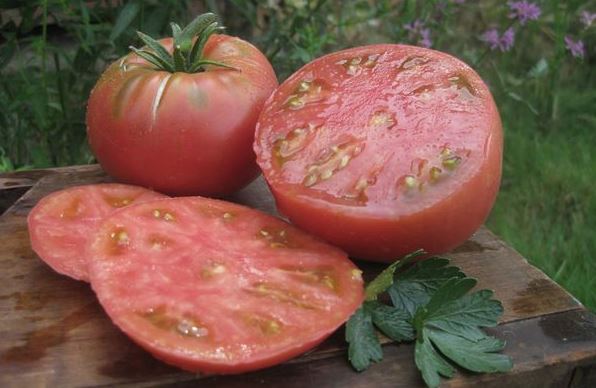
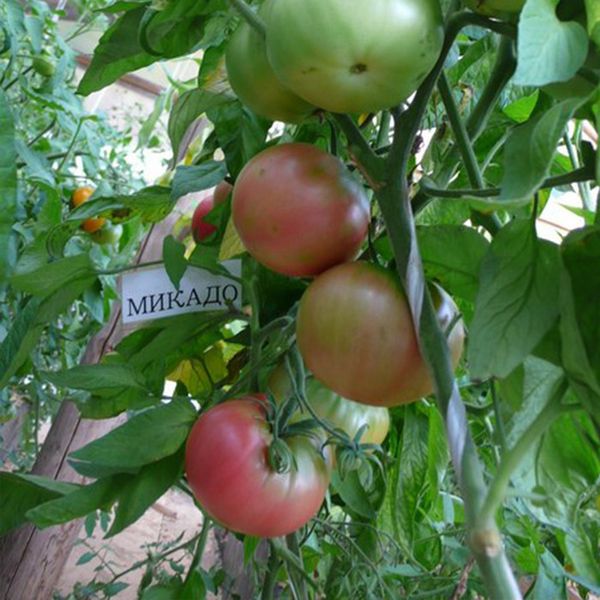
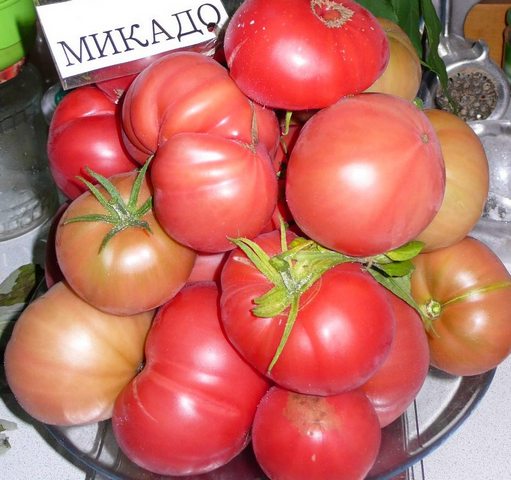
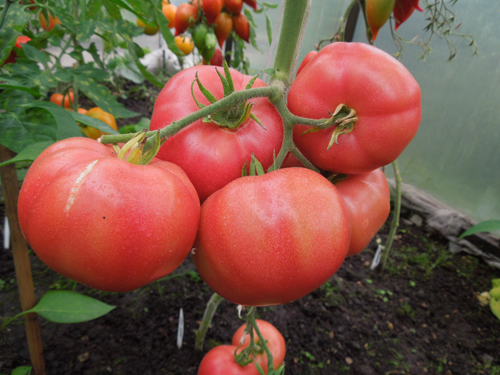
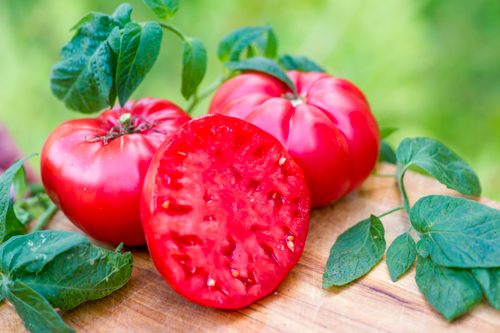
Photo gallery of the tomato variety Mikado Pink:
The history of the Mikado Pink tomato variety
The variety was introduced to gardeners back in 1890. At that time, it caused a real sensation, since such large tomatoes had not yet existed.
Mikado Pink tomatoes are considered the ancestor of the crop developed by Yaroslav Homola.
The first planting material was available from the Czech Seed Bank. That's where Homola obtained it for further cultivation.
Varieties of the Mikado variety
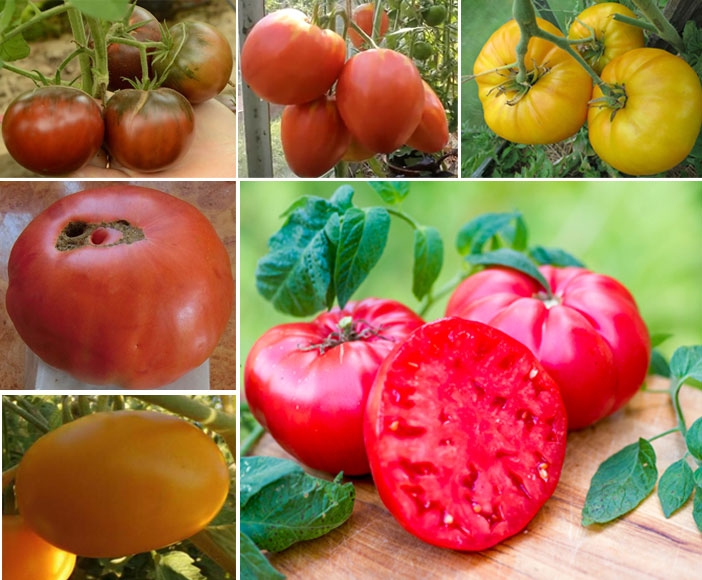
Mikado tomatoes are not only pink, there are also the following varieties:
- Black;
- Red;
- Yellow;
- Sibiriko;
- Orange.
You can see what they look like in the photo below.
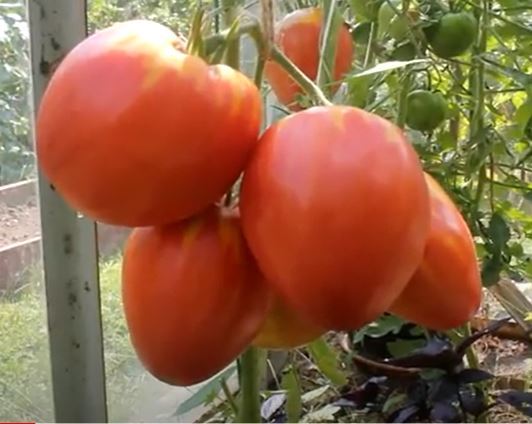
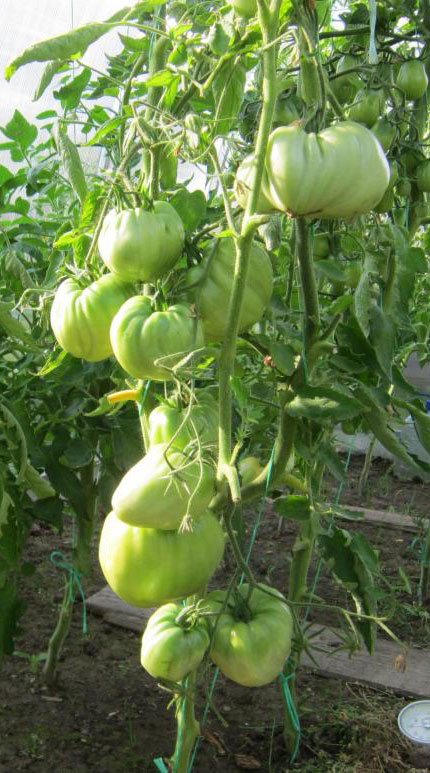
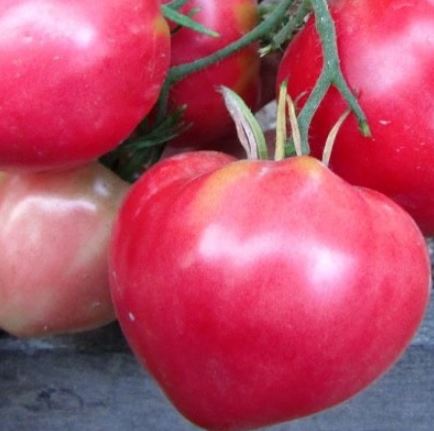
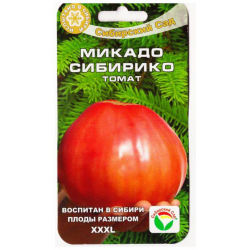
Mikado Sibiriko
This variety also produces light crimson fruits. In open ground, it reaches 1.8 m, but in a greenhouse, it can reach over 2 m. When side shoots are removed, extra shoots are removed. When forming two stems, a side shoot should be left under the first cluster. It differs from the main variety in the shape and size of the fruit; it is larger.
| Characteristic | Description |
| Ripening time | 90-95 days. |
| Description of the plant | An early indeterminate variety from Siberian breeders. |
| Description of the fruit | Heart-shaped, ribbed, pinkish. |
| Fruit weight | 400-600 g |
| The taste of the fruit | Great |
| Usage | For salads, juice, pasta. |
| Productivity | Up to 8 kg per bush. |
| Resistance to infections | Most tomato diseases. |
| Agricultural technology | The need for pinching and tying to a trellis. |
| Growing regions | Any, including Siberia. |
| Not included. |
Photo gallery of the Mikado Sibiriko tomato variety:
Mikado Black
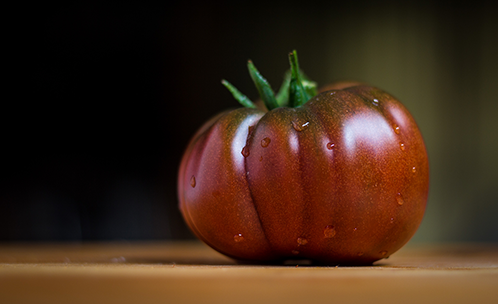
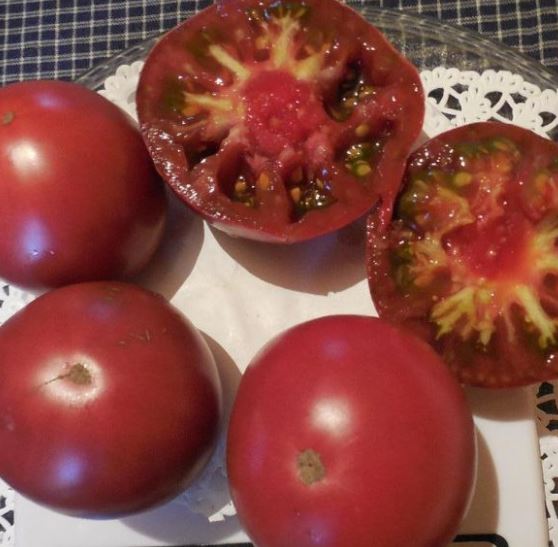
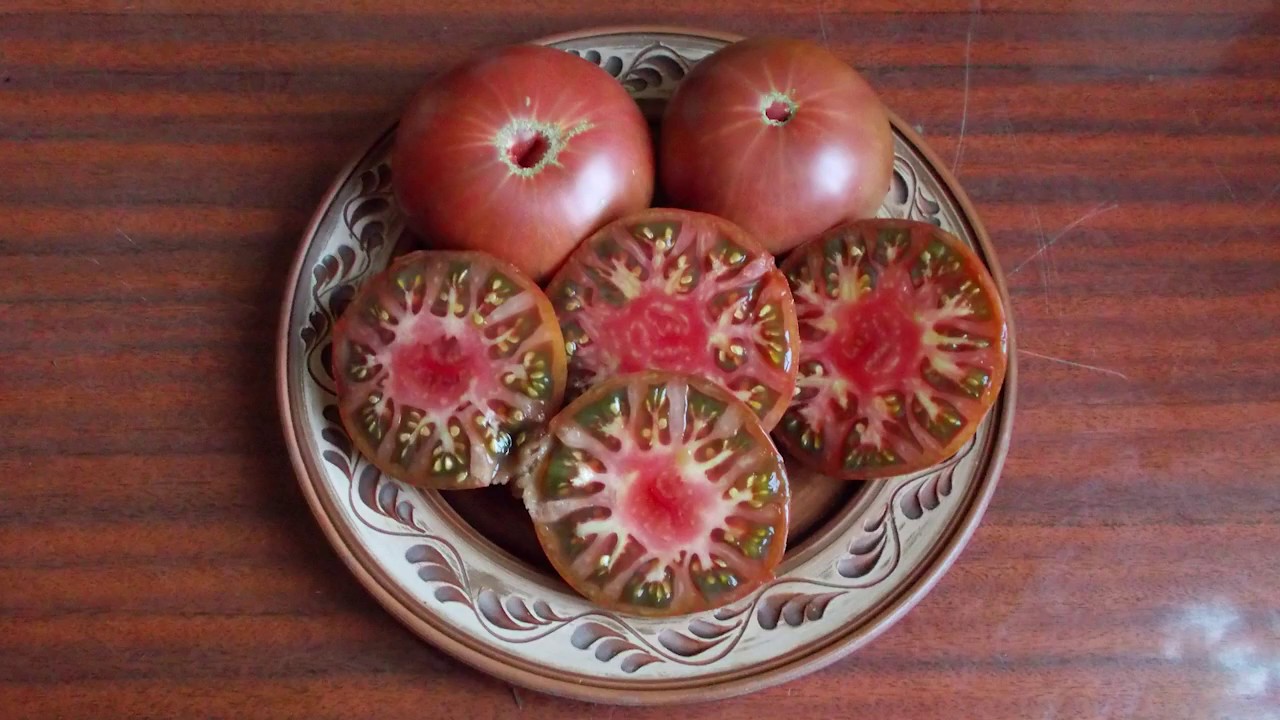
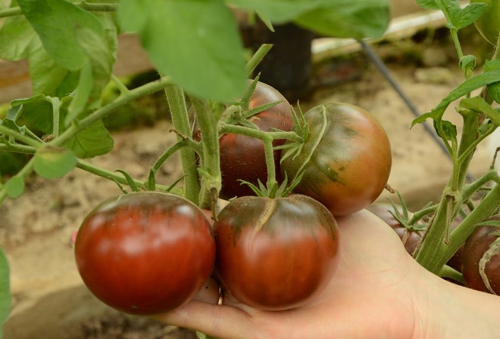
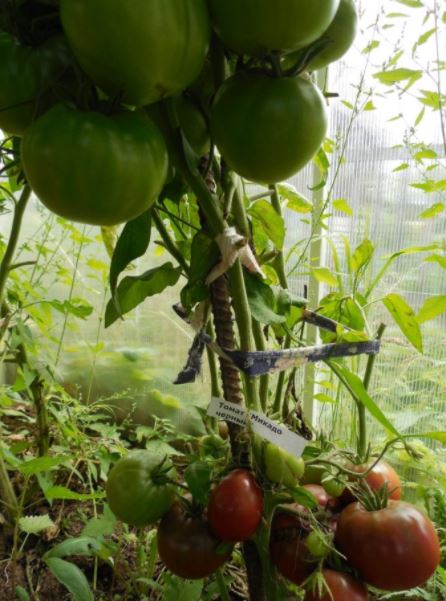
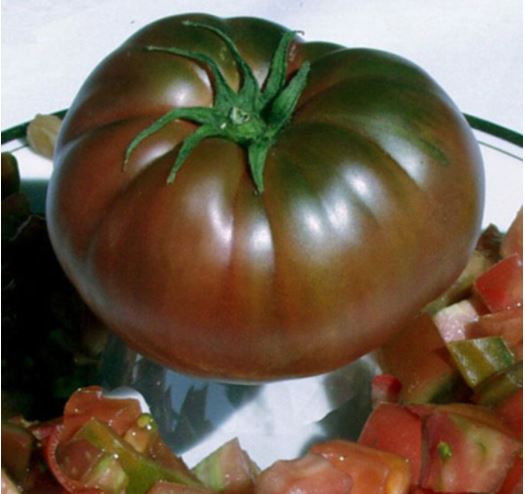
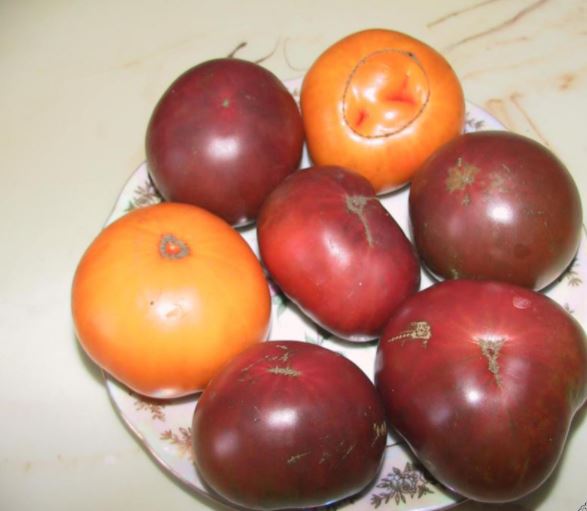
This subspecies is called black because its skin and flesh have a brown or dark crimson hue with a brownish tint.
In 2020 and 2021, two new varieties of Mikado Black were added to the State Register: Chocolate and Brown.
| Characteristic | Description |
| Ripening time | 100-115 days |
| Description of the plant | Mid-early standard indeterminate variety for open and protected ground. |
| Description of the fruit | Rounded, strongly flattened, ribbed. Chocolate - reddish brown; Brown - at the stage of technical maturity the color is similar to the name. |
| Fruit weight | 170-230 BC |
| The taste of the fruit | Good. |
| Usage | For fresh consumption, pickling and canning, making juice (but it turns out dark, some gardeners don’t like this). |
| Productivity | Up to 9 kg/1 sq. m. |
| Resistance to infections | Most tomato diseases. Only brown spot poses a particular threat. |
| Agricultural technology | Formation in 1-2 stems. |
| Growing regions | Warm regions. |
| 2020-2021 |
Photo gallery of the tomato variety Mikado Black (Chocolate, Brown):
Mikado the Red
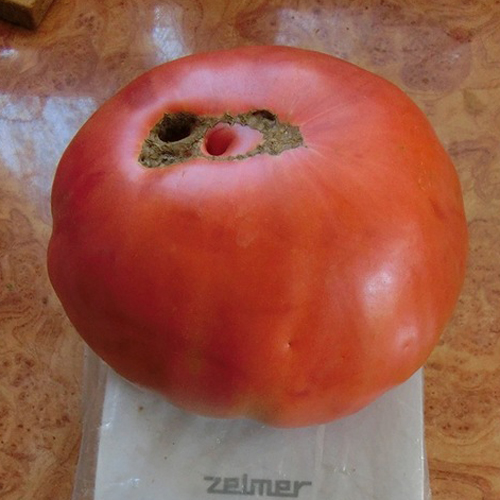
The fruit's color doesn't match its name. When ripe, they take on a dark pink or burgundy hue.
| Characteristic | Description |
| Ripening time | 115-120 days. |
| Description of the plant | Mid-early indeterminate tomato for open garden beds and film shelters. |
| Description of the fruit | Round, flattened, with pronounced ribbing, dark pink or burgundy. |
| Fruit weight | 270 g. |
| The taste of the fruit | Great |
| Usage | For salads. |
| Productivity | 7-9 kg/1 sq. m. |
| Resistance to infections | To most infections that affect nightshade crops. |
| Agricultural technology | Shaping and garter are required. |
| Growing regions | Any, except Siberia and the Far East. |
| Not included. |
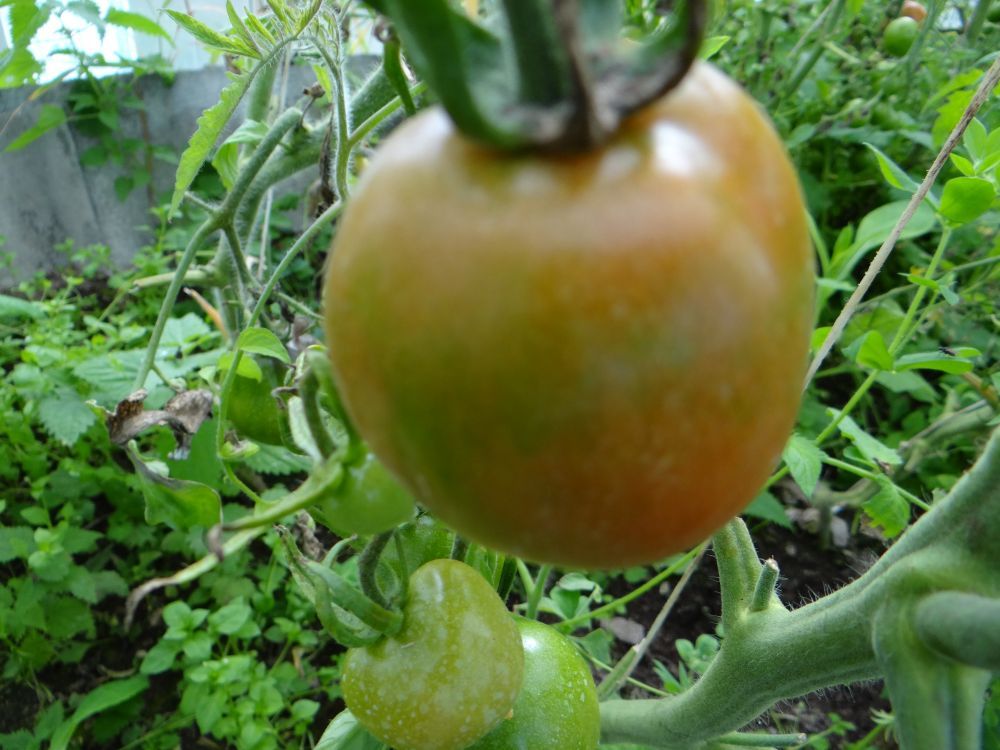
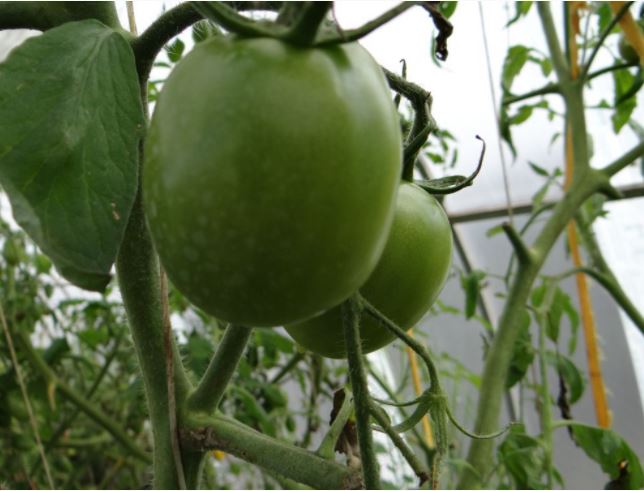
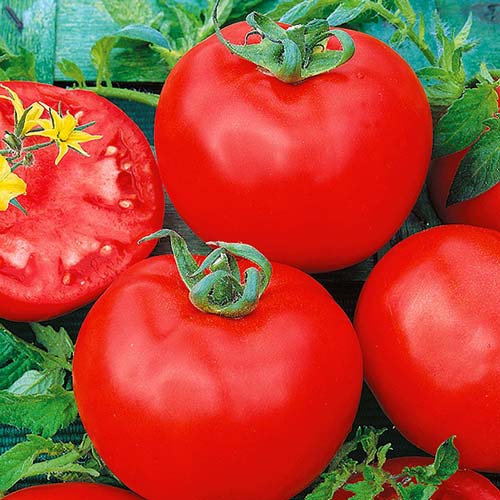
Photo gallery of the tomato variety Mikado Red:
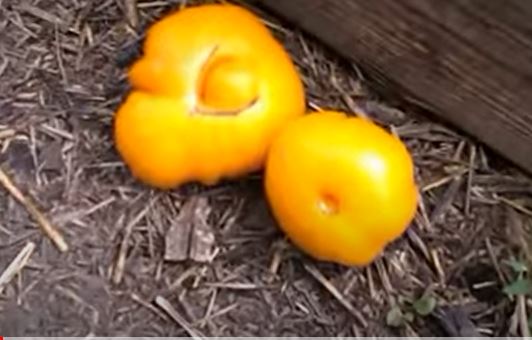
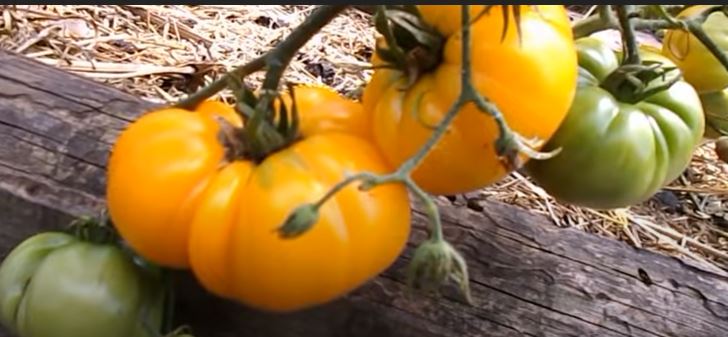
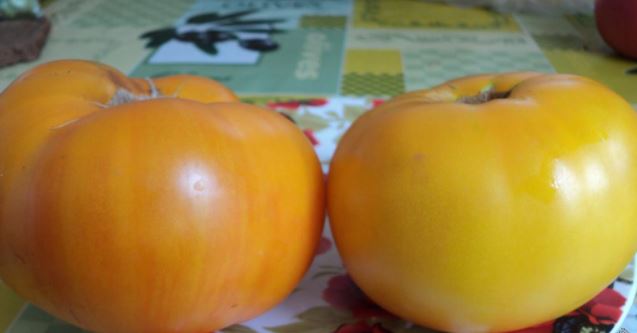
Mikado Yellow (Gold)
It is distinguished by its bright yellow color and tolerates temperature fluctuations well.
| Characteristic | Description |
| Ripening time | 111-120 days. |
| Description of the plant | Mid-early standard indeterminate variety for greenhouses. |
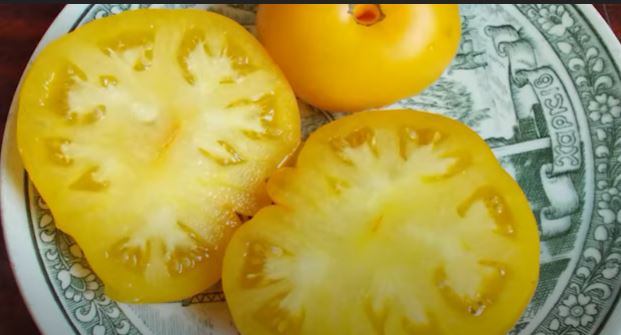
| Description of the fruit | Round, flattened, slightly ribbed, yellow. |
| Fruit weight | 500 g |
| The taste of the fruit | Good. |
| Usage | For salads and juice. |
| Productivity | 6-8 kg per bush. |
| Resistance to infections | Most of the damage to tomatoes. |
| Agricultural technology | The recommended planting pattern is 30 x 50 cm. Fertilize at least three times during the growing season. Avoid overwatering to prevent fruit cracking. |
| Growing regions | Warm regions. |
| Not included. |
Photo gallery of the tomato variety Mikado Yellow (Golden):
Mikado Orange
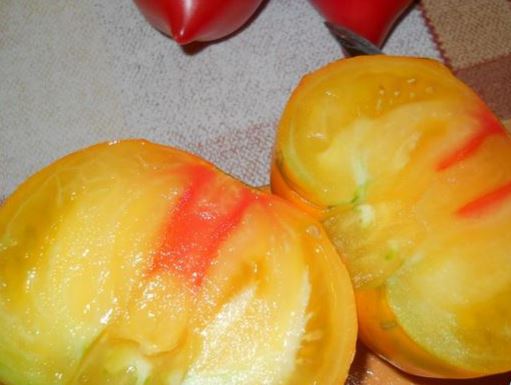
The originator is the breeding company "Aelita." This is a tomato variety, not a hybrid.
| Characteristic | Description |
| Ripening time | 85-100 days. |
| Description of the plant | An early indeterminate variety. Outdoor cultivation is acceptable in warmer regions. In central Russia, greenhouse planting is recommended. |
| Description of the fruit | Round, ribbed, orange. |
| Fruit weight | Up to 300 g. |
| The taste of the fruit | Great. |
| Usage | For salads. |
| Productivity | 6-7 kg/1 sq. m. |
| Resistance to infections | Average. |
| Agricultural technology | Standard for indeterminate varieties. |
| Growing regions | Any. |
| Not included. |
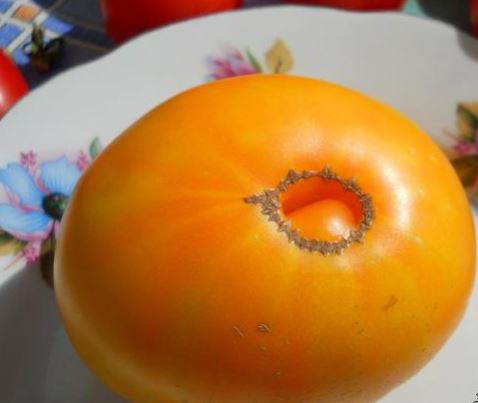
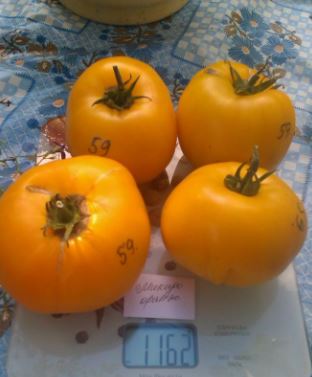
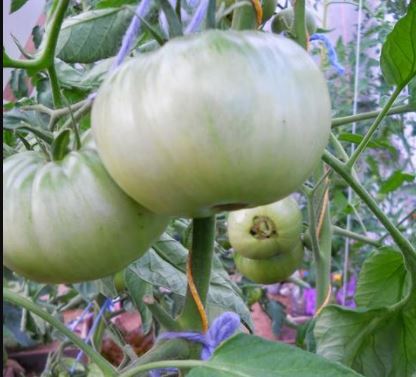
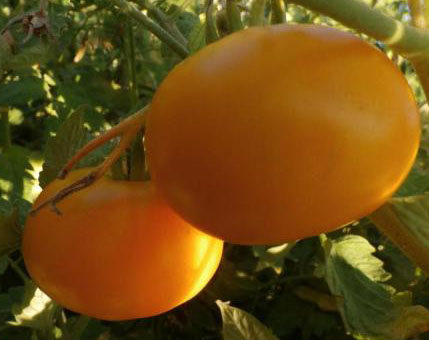
Photo gallery of the tomato variety Mikado Orange:
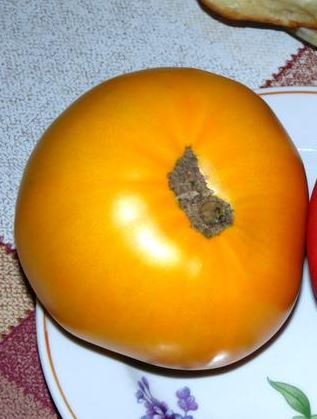
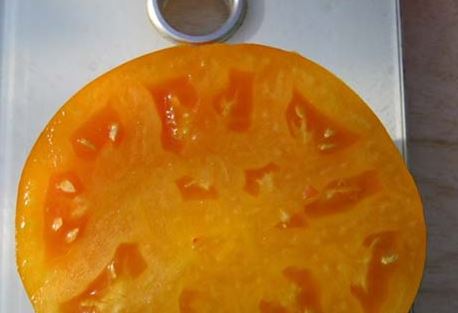
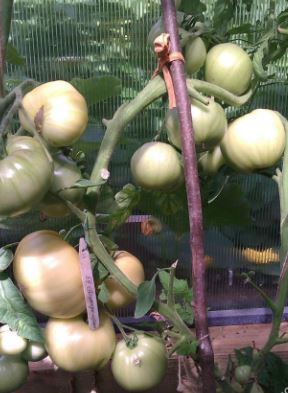
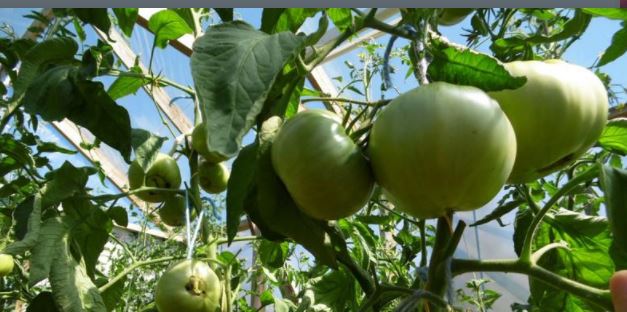
A detailed description of the Mikado Pink tomato variety
Let's take a look at the Mikado Pink tomato, a detailed description of the variety.
Bush characteristics
This variety forms bushes that can reach 2.5 m. To limit the growth of this indeterminate tomato, side shoots must be removed. The leaves are wide, short, and emerald in color.
Fruit characteristics
The fruits are large (300-360 g), flattened and round, with a ribbed surface. When unripe, they are light green with an emerald spot near the stalk. Upon reaching technical maturity, they turn pink. They are distinguished by a large number of nests, from six. Since the Mikado Pink tomato is a cultivar and not a hybrid, it can be propagated by seed.
The flesh is juicy and meaty. The skin is thin but firm enough to prevent the tomatoes from cracking during transportation and storage.
Ripening time and yield
Mikado Pink is a mid-early variety with a ripening time of only three months. It's best suited for private plots, as its yield is not high enough for commercial use. 5-6 kg of fruit can be harvested per square meter.
Advantages and disadvantages of the Mikado Pink tomato variety
Mikado Pink has the following advantages and disadvantages, which are listed in the table below:
| Advantages | Flaws |
|
|
It's also worth noting that this variety has a low yield. However, Mikado Pink is intended for cultivation in private farms, so its yield will be sufficient.
Features of sowing and planting the Mikado Pink tomato variety
Let's take a step-by-step look at growing Mikado tomatoes.
Sowing seeds and growing seedlings
Sowing takes place in the first ten days of March, depending on the weather. When choosing a time, keep in mind that approximately two months should pass between planting and transplanting.
This variety is very demanding when it comes to soil. A nutrient substrate can be purchased at a specialty store or prepared at home using:
- garden soil;
- humus and peat.
These components are mixed in equal quantities, and a little sand, a handful of wood ash, and 1 tbsp. of superphosphate are added.
If you prepare your own potting soil, it needs to be disinfected. You can do this by using a potassium permanganate solution or by heating the soil in an oven at around 200°C. After treatment, the substrate should be kept outdoors for two weeks.
For sowing seedlings, you can use various containers:
- plastic cups;
- peat tablets;
- cardboard containers;
- wooden boxes with wall height no more than 10 cm;
- plastic containers;
- peat pots.
Containers must have drainage holes to prevent water stagnation. When choosing containers, also consider whether they will fit comfortably on a windowsill.
Cardboard and peat containers are usually preferred because plants planted in them don't require transplanting. They don't need to be removed from the containers; they can be placed in their permanent location directly as is.
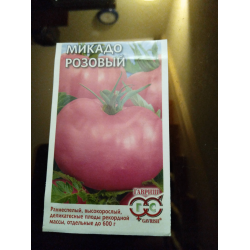
Seeds should only be purchased from reputable producers, such as Sedek, Aelita, and Gavrish.
Before sowing, seeds collected from your own plot need to be prepared:
- Select only good seed material. Discard any small, diseased, or damaged material.
- Place the seeds in a salt solution. Any that float to the surface are unsuitable for sowing. Only those that sink to the bottom should be collected and dried.
- Disinfect the seeds by placing them in a 1% potassium permanganate solution for 20 minutes.
- Treat the seeds with growth stimulants. If you don't have any, you can use aloe juice.
- Place the cloth on damp gauze in a room with a temperature of +20°C. Keep the cloth damp at all times. Refrigerate it daily for 12 hours to harden.
Once the seeds have sprouted, plant them in prepared containers at a depth of 1 cm. Sprinkle with peat moss and moisten with a spray bottle. No more than two seeds can be placed in a hole, with a distance of 3 cm between adjacent holes.
After planting, cover the seedlings with glass or plastic film to create a greenhouse effect. Once the first shoots emerge, remove the cover. Place the seedlings in a room with a temperature of 24°C. For the first two days, provide 24-hour lighting, then reduce the daylight hours to 16 hours.
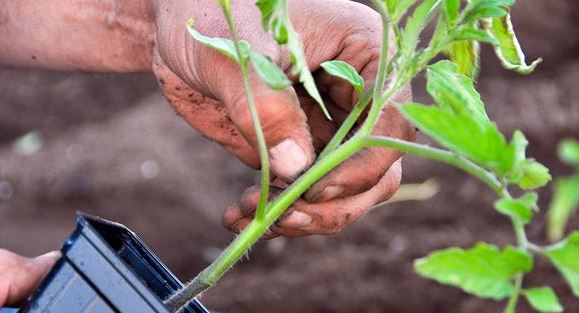
If transplanting is planned, it should be done at the two true leaf stage. The seedlings are transplanted into 1-liter containers, planted deep enough to reach the leaves. After transplanting, apply fertilizer with 1 tablespoon of wood ash diluted in 1 liter of water.
When growing seedlings, do not allow the top layer of soil to dry out. Also, make sure it is not too wet.
Planting in the ground
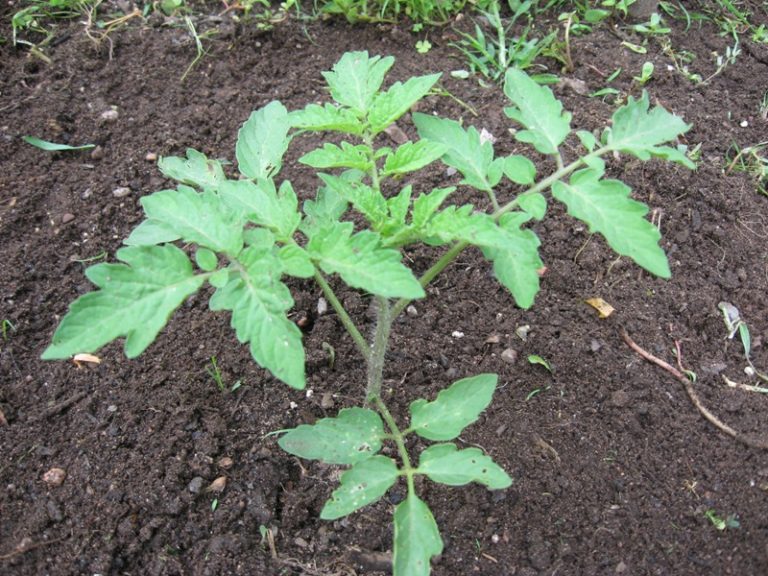
A week before planting outdoors, the seedlings need to be hardened off. To do this, open the windows indoors for a couple of hours during the first few days, avoiding drafts. Over the next few days, place the plants outdoors, gradually increasing the time. Two days before planting, leave the seedlings outdoors overnight.
Once the weather stabilizes and the risk of frost has passed, the plants can be transplanted to their permanent location. This usually occurs at 60 days of age.
This variety is very demanding in terms of light. Therefore, it is recommended to plant it in elevated areas protected from drafts.
Tomatoes can be grown in beds where the following were previously grown:
- beet;
- cucumbers;
- cabbage;
- carrot;
- onion;
- legumes.
Tomatoes should not be planted after:
- potatoes;
- tomatoes;
- eggplants;
- tobacco;
- pepper.
Three bushes can be planted per square meter. Before planting, disinfect the holes with a potassium permanganate solution and add 2 tablespoons of phosphorus-potassium fertilizer. The holes should be deep enough to cover the seedlings up to the cotyledons. Immediately after planting, water the bushes with warm, but not hot, water.
Care for the Mikado Pink tomato variety in greenhouses and open ground
Although the variety is intended for growing in greenhouses, many people also plant it in open ground.
In the beds and under cover, tomato care includes:
- regular watering;
- complete feeding;
- pinching out and shaping;
- garter;
- weeding and loosening.
Watering and fertilizing
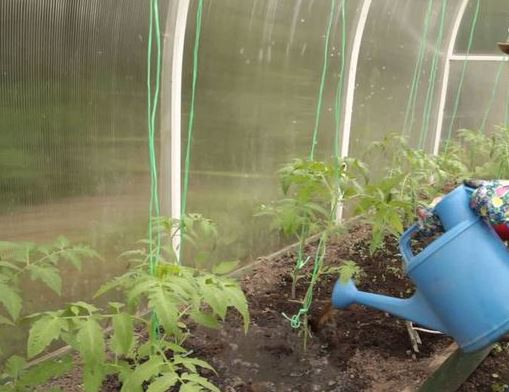
Allow a week between the first and second waterings. Water generously but sparingly, only when the top layer of soil begins to dry out. Make sure there's no waterlogging.
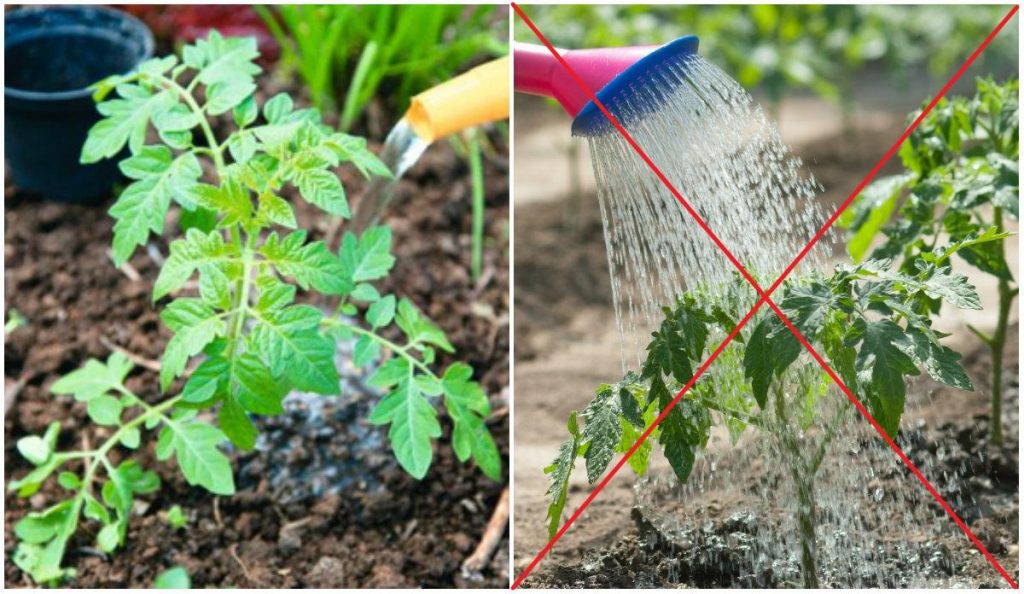
Please note! The water must be settled and warm; tap water should not be used. When watering, be careful not to let any drips fall on the above-ground parts of the plant; instead, water the roots. Drip irrigation is best.
The first fertilizer application is done a couple of weeks after planting. During this period, the bushes are actively growing foliage, so they need nitrogen. It's found in large quantities in organic matter. You can make your own fertilizer:
- mullein (dilute with water in a ratio of 1 to 10);
- bird droppings (1 to 20);
- herbal solution (weeds infused in water in any proportion);
- yeast (10 g per bucket of water).
The second feeding is applied after another 2 weeks. The fertilizer should contain:
- phosphorus;
- potassium;
- iodine.
The final feeding is applied when the green fruits have reached a large size. The fertilizer should contain:
- phosphorus;
- potassium;
- iodine;
- manganese;
- zinc;
- magnesium;
- pine forest.
Supports, garters, pinching out side shoots
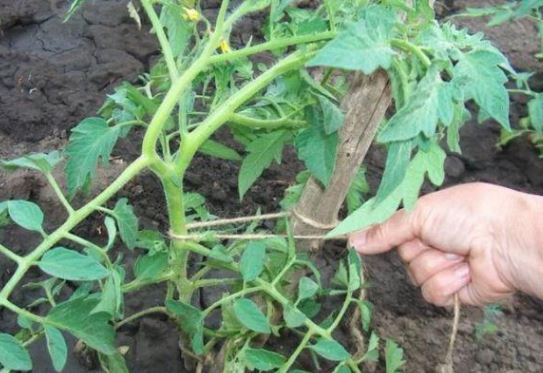
Since the variety is indeterminate, meaning the bushes can grow to very large sizes, it requires the installation of a support to tie up the rapidly developing plants.
Every 10 days, remove any side shoots growing from the leaf axils. When the bushes reach a height of about 70 cm, pinch off the tops of the main stems. This will limit their growth.
Lower foliage should be removed periodically, and other rows of foliage should be thinned regularly. This will ensure better sunlight penetration to the fruit. Clusters of overly large tomatoes need support, otherwise they will collapse under their own weight.
Weeding, loosening, mulching
Mikado is very sensitive to weeds and requires regular weeding. It's recommended to combine this with loosening the soil. It's best to do this after every watering. If this isn't possible, do it at least once every two weeks. Finally, it's recommended to hill up or mulch the bushes. This will help retain moisture in the soil longer and slow down weed growth.
Important! Loosening and weeding must be done with great care to avoid damaging the crop's roots.
Disease and pest resistance and prevention of the Mikado Pink tomato variety
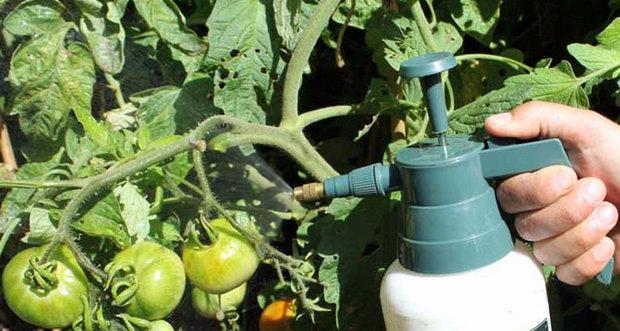
Mikado is resistant to most tomato diseases. However, to prevent them, you can spray it with a potassium permanganate solution, just to be on the safe side.
If the crop is grown in a greenhouse, it needs to be regularly ventilated. Poor air circulation is one of the main causes of infection.
Harvesting, using and storing Mikado Pink tomatoes
Pink tomatoes can be harvested as early as 90-95 days after germination. However, they can also be picked green if needed. They ripen well in a warm, bright location. Their tough skin means they won't be damaged during picking, transport, or storage.
Mikado Pink can be used in salads, appetizers, and garnishes. It is intended for fresh consumption. It is not suitable for canning, as it loses its flavor.
Comparison of Mikado tomato varieties with other varieties in the table
Please note! How can you easily convert centners/ha to kg/sq.m? Simply divide by 100! For example, the Abakansky Pink tomato yields 400 centners of marketable fruit per hectare. This equals 4 kg per square meter. It's that simple! Also, keep in mind that typically no more than 3-4 plants are planted per square meter. This way, you can calculate the yield per bush. In the case of the Abakansky Pink, it's about 1 kg.
| Variety | Ripening period (number of days from full germination to ripening)
Yield of commercial fruits |
Brief description | Fetus |
| Mikado Pink | 90-95 days
500-600 c/ha |
A mid-early indeterminate variety for greenhouses. Suitable for salads. | Flat-round, large, ribbed, medium density, pink, 300-360 g. Excellent taste. |
| Mikado brown | 85-100 days
870 c/ha (greenhouse and under film) |
A mid-season indeterminate variety for open ground and greenhouses. Requires staking and shaping. Suitable for salads. | Flat-round, medium density, medium-ribbed, brown, 150-220 g. Excellent taste. |
| Mikado chocolate | 90-110 days
600-800 c/ha |
A mid-season indeterminate variety for open ground and greenhouses. Requires staking and shaping. Suitable for salads. | Flat-round, large, brown, 170-240 g. Excellent taste. |
| Mikado Yellow (Gold) | 110-120 days
600-800 c/ha |
A mid-early standard indeterminate variety for greenhouses. Suitable for salads and juice. | Round, flattened, slightly ribbed, yellow, 500 g. Good taste. |
| Mikado Orange | 85-100 days
600-700 c/ha |
An early indeterminate variety. Outdoor cultivation is acceptable in warmer regions. In central Russia, greenhouse planting is recommended. Suitable for salads. | Round, ribbed, orange, up to 300 g. Excellent taste. |
| Mikado Sibiriko | 90-95 days
800 c/ha |
An early indeterminate variety from Siberian breeders. For salads, juice, and pasta. | Heart-shaped, ribbed, pinkish, 400-600 g. Excellent taste. |
| Mikado Red | 115-120 days
700-900 c/ha |
A mid-early indeterminate tomato for open garden beds and plastic shelters. Suitable for salads. | Round, flattened, with pronounced ribbing, dark pink or burgundy, 270 g. Excellent taste. |
| Abakan pink | 120 days or more
400 c/ha |
A late-ripening determinate variety for open ground and greenhouses. Requires staking and training. Suitable for salads and processing into tomato products. | Flat-round, slightly ribbed, medium density and pink in color, 200-500 g. Good taste. |
| Abakan red
|
110-115 days
600 c/ha |
A mid-season variety for growing in cool climates, both indoors and outdoors. Requires staking and training. Suitable for salads and processing into tomato products. | Heart-shaped, with dense skin, red, 500-700 g. Pleasant, aromatic taste. |
| Grandma's secret | 100-115 days
1690 c/ha |
A mid-season indeterminate variety for open ground and greenhouses. Requires staking and shaping. Suitable for salads. | Flat-round, ribbed, dense, pink, 354 g. Excellent taste. |
| Big Dipper | 100-110 days
1150-1450 c/ha |
An early-ripening indeterminate variety for open ground and greenhouses. Requires staking and shaping. Suitable for salads. | Flat-round, slightly ribbed, medium density, pink, 210-260 g. Good taste. |
| Voyage | 95-100 days
1400-1800 c/ha |
An early-ripening indeterminate variety for greenhouses. Suitable for salads. Transportable. | Round, smooth, dense, pink, 120-130 g. Good taste. |
| Demidov | 101-109 days
150-300 c/ha (Volga-Vyatka region), 214-418 c/ha (West Siberian region), maximum 471 c/ha (Mari El Republic). |
A mid-season, determinate, standard variety for open ground. Suitable for salads. Marketability: 98%. | Round, medium-ribbed, pink, 80-120 g. Good to excellent flavor. Fruit ripens well. Uneven watering can cause cracking, and dehydration can lead to blossom-end rot. |
| Kate | 80-85 days
326-550 c/ha |
An early-ripening determinate variety for open ground. Suitable for salads. Marketability: 84-90%. | Flat-round, smooth, crack-resistant, red, 80-92 g. Good to excellent taste. |
| Katya is pink | 80-85 days
1600-1800 c/ha |
An early-ripening determinate variety for open ground. Suitable for salads. Marketability: 84-90%. | Flat-round, medium density, smooth, pink, 120-130 g. Good taste. |
| King of the Giants | 120 days
800-1400 c/ha depending on the region |
A mid-late indeterminate variety for open ground and greenhouses. Suitable for salads, appetizers, and processing into tomato products. | Flat-round, slightly ribbed near the stem, red, rarely yellow and pink, 400 g (up to 800 g). Good to excellent flavor. |
| Miracle of the Earth | 100-110 days
1390 c/ha (greenhouse and under film) |
A mid-season determinate variety for open ground. Suitable for salads. Marketability is 98%, yield of ripe marketable fruits is 83% (Novosibirsk Region). Tolerant of adverse growing conditions. | Round, medium-ribbed, raspberry-colored, 380 g (up to 700 g). Good taste. |
Real reviews from gardeners about Mikado varieties
Reviews of Mikado are mostly positive; gardeners are pleased that the variety produces large and attractive fruits.
Real reviews from gardeners about the Mikado Pink tomato variety
Mikado Pink is a tomato variety that's very popular among gardeners. So, after reading rave reviews of this wonderful variety, I decided to try it on my 11 acres last blessed year.
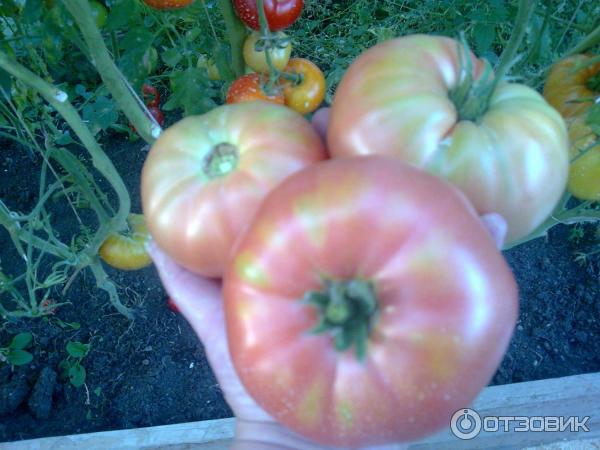
I'll say right away that I was pleased with the appearance of the fruits and their taste: large, pink, fleshy and sweet.
But there is no perfection in the world!
These tomato plants were among the first to be affected by cladosporiosis, so by mid-season they had charred leaves. Fortunately, the first two or three clusters had time to set and ripen.
Judging by the ovaries, this variety is truly very productive, which means I would recommend it to those who have new greenhouses that haven't yet been plagued by numerous tomato diseases.
Back to the topic of "seeds." I'm excited to tell you about another tomato variety, which is also very tasty!
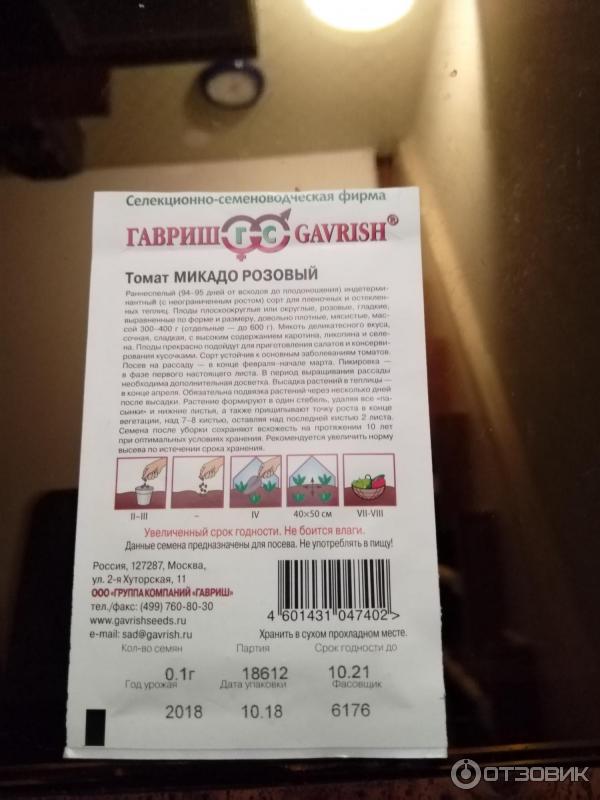
I use seeds of this variety from Agrofirm "Aelita".
If you haven't gotten a fake, the seeds will germinate perfectly! I haven't encountered any fakes yet.
Tomato variety "Mikada Pink" is a mid-early variety.
Looks very appetizing!
The plant itself is certainly tall. The fruits are flat-round, pink, and delicious, weighing 250-350 grams. They're quite large tomatoes!
The yield is quite high!
This variety is resistant to the main tomato diseases - this is a big "+" for the tomato!
Fresh tomato is incredibly delicious! It's also great for making various salads and winter appetizers. You can even make tomato juice!
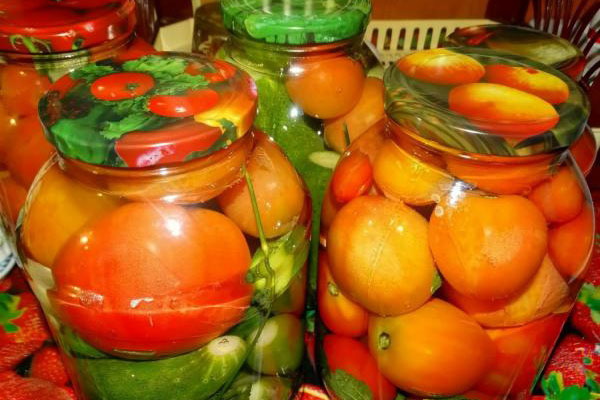
I cut it up and preserved it for the winter. Even though I cut it up, the tomato was still delicious!
I recommend the Mikada Pink tomato variety to everyone!
You'll be pleased with the taste! And the yield, too!
I've been growing Mikado Pink for three years now. Like every variety, it has its advantages and disadvantages. But first things first... The first thing I liked was the unrivaled taste of this tomato—sweet, juicy, and simply perfect for salads.
Mikado also makes delicious and sweet tomato juice, but it's not suitable for canning due to its rather large fruits, weighing between 300 and 700 grams. It's also good that it's not a hybrid. I bought a packet of seeds to try, and the following year I grew seedlings from my own seeds. I planted the seedlings both in a greenhouse and in the open ground, using supports, using a 50/60 pattern; they only need to be trained into a single stem!
I tried two varieties—the yield was lower, the fruit was smaller. The downsides are a tendency for the fruit to crack (even watering every 10 days through drip tape helps) and late blight (I pluck off all the leaves down to the first cluster).
The most delicious tomato I have ever grown.
A mid-season indeterminate variety. It's considered an early-ripening tomato with a ripening period of 90-95 days.
It's best to train them into a single trunk, but I've also tried two. A cluster produces 3-4 tomatoes, but they ripen at 400-600 grams. The largest fruit I've grown was 1,100 grams. A single bush can yield up to ten kilograms of delicious fruit. The fruit is fleshy when cut, almost seedless. The seeds are small. The flavor is excellent. Recommended for fresh use and for salads. I plant three plants in a polycarbonate greenhouse; this is enough to feed a family of four, and the excess is used to make ketchup. They are not suitable for pickling due to their thin skin. I've been planting them for three years now.
It is unpretentious even if you don’t water it and it doesn’t get sick.
The only thing I don't like about him is his height. He keeps growing and growing.
Real reviews from gardeners about the Mikado Sibiriko tomato variety
I've been growing tomatoes for a long time, but due to the lack of a greenhouse, I always chose low-growing varieties for open ground. But finally, two years ago, I installed a polycarbonate greenhouse. And so the search began for varieties with different characteristics. The bushes should be tall, with large fruits and high yields, and the tomatoes should be sweet, juicy, and fleshy. I chose several varieties from the Siberian Garden, including the Mikado Sibiriko. I first planted it in the greenhouse in 2016.
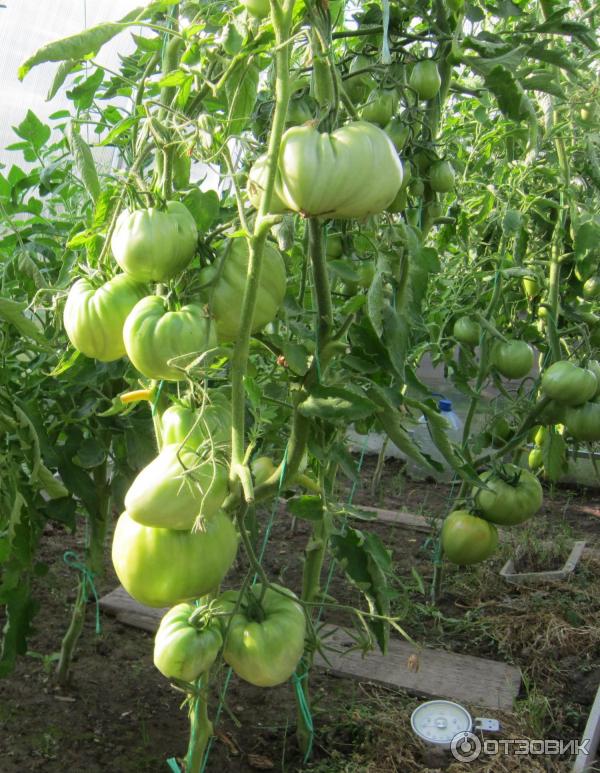
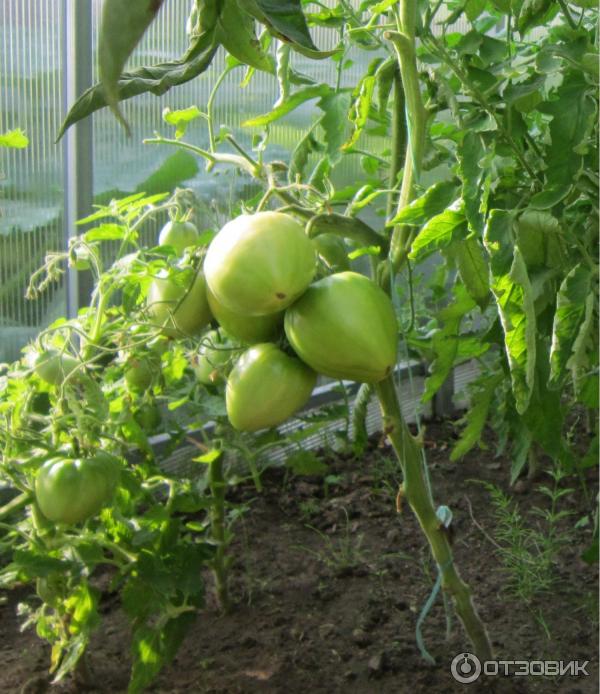
I grew the seedlings myself on an east-facing window, without additional lighting. I sowed all greenhouse varieties in early March. Seed germination was good, and there were no problems growing the seedlings. I planted them in the greenhouse on May 1st. Since I wanted to try as many varieties as possible, I mainly grew two bushes of each variety in the greenhouse. I trained the bush with two stems, as I do with all indeterminate (tall) varieties. The bush, like all heart-shaped varieties, was rather frail than vigorous, not spreading, compact, and about two meters tall. It didn't take up much space. It needs to be tied well, as ropes may not support the heavy weight of the clusters. Fruit can weigh 400 grams or more. The fruit is clustered throughout its entire height without gaps. The beautiful heart-shaped fruits are bright pink, not sour, rather bland, and very fleshy, with few seeds. Perfect for salads and juice, though I'd be sorry to waste it on the juice. It's too large for canning, unless you slice it.
The variety is very similar to the Batyanya variety from Siberian Garden, which I also planted in 2016. My review of the Batyanya tomato. The only difference was that the fruits were larger. Mikado Sibiriko, like Batyanya, was one of the early ones. Perhaps the hot summer played a role. Another advantage of Mikado Sibiriko is that it's a variety, not a hybrid, and you can take seeds from your own tomatoes for further cultivation and adapt the variety to your conditions.
Real reviews from gardeners about the Mikado Yellow tomato variety
Our neighbors, seasoned gardeners, brought us the seeds of this tomato. Honestly, I'd never eaten or even seen yellow tomatoes before. I'd seen and eaten black and red ones called "Black Prince." But yellow ones were new to us this year. Each package contains about 10-12 seeds, 20 grams. You need to buy several packages at once to get the most out of them.
They grow like regular red tomatoes. I've never had any problems with them. These tomatoes grow tall, and the fruits are flat and round, large and fleshy, dense, and very beautiful. The tall bushes are somewhat convenient. There are only a few seeds per tomato. Cutting up a salad with red and yellow tomatoes, cucumbers, bell peppers, and herbs is a real treat. However, yellow tomatoes, although juicy, aren't very tasty; red tomatoes are much tastier. It's no wonder people prefer them.
They're great for pickling, but mostly for aesthetics. I planted some this year as a trial, and next year I'll plant more and make adjika with them. They have a tart, juicy flavor, so they should be excellent.
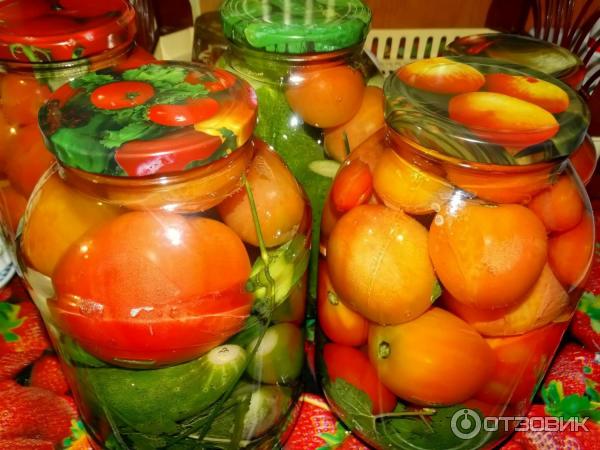
Try growing this interesting variety in your garden to put you in a good mood.
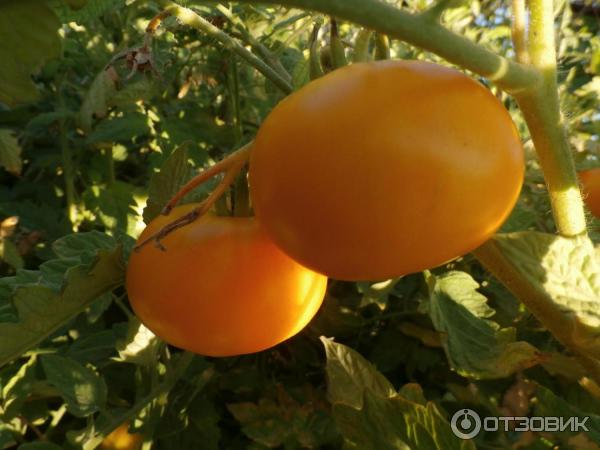
The Mikado Yellow tomato resembles a sun that has migrated to the plant's branches. This mid-season variety has a growing season of 135 days from germination to fruiting. The bushes are tall, growing from 150 to 250 centimeters. The tomatoes themselves are quite large, weighing from 300 to 500 grams (one even reached 600 grams). They are flat-round, fleshy, firm, and yellowish in color. The taste is excellent! The fruits have a long shelf life, which is important. These tomatoes are best used in salads; they are not suitable for canning.
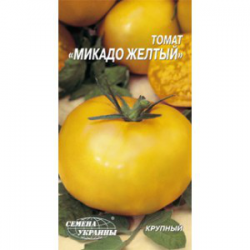
I'd like to tell you about a mid-late yellow tomato variety. I planted this variety already this season and really liked it. It has good flavor, firm flesh, and looks unique in a salad. We're all used to seeing red tomatoes, but I read somewhere that yellow tomatoes contain more vitamins than red ones. I recommend buying "Mikado Yellow" seeds from "Semena Ukraina"—you won't regret it. This variety is tall, growing 150-250 cm tall, and produces large, fleshy, firm, yellow fruits weighing 300-600 g. The fruits have a long shelf life; I still have a couple of them in my drawer among the red ones.
It's true that there are still some small ones left, but they are no different in quality.
One packet of seeds contains only 0.2 g, so you need to buy several packets. I like the germination rate.
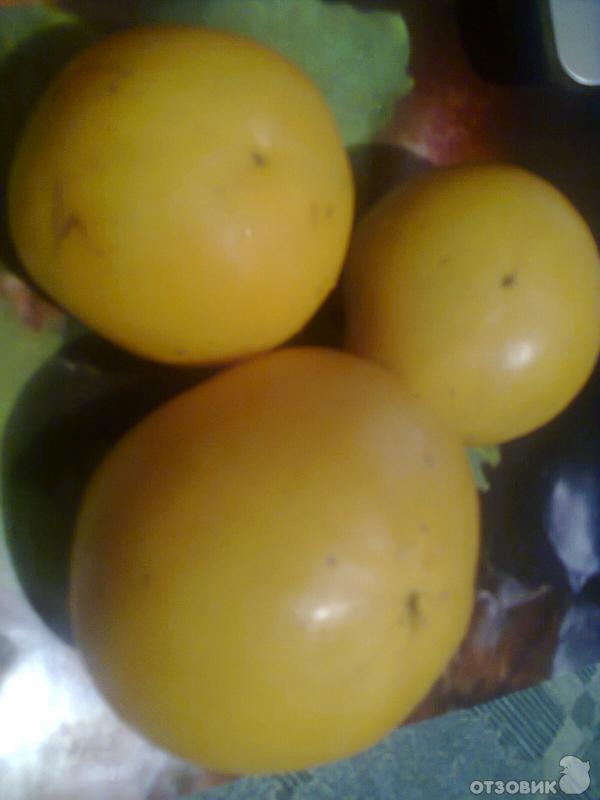
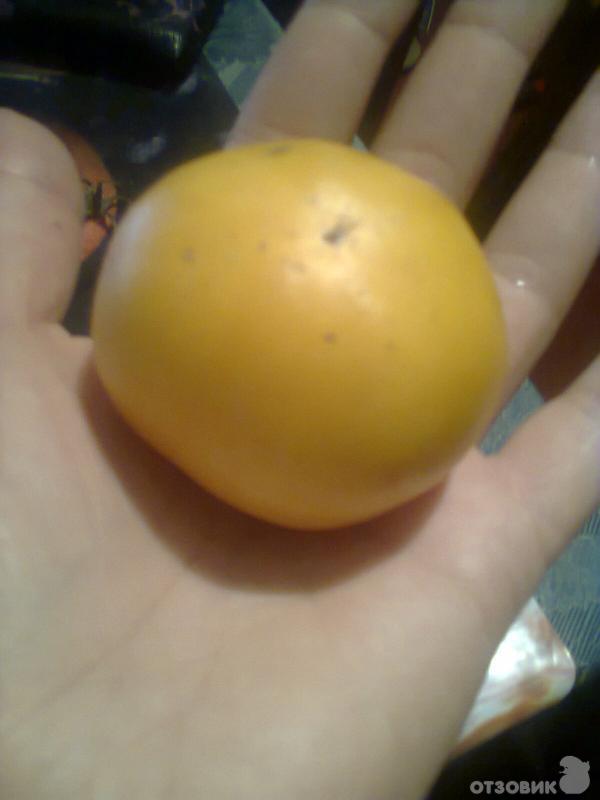
I love growing tomatoes of different colors. I especially love the yellow-fruited varieties because they're so sweet. You break open a ripe tomato, and the flesh is sugary and crumbly... Oh, delicious! But I'm getting sidetracked by memories, so I'll move on to the seeds.
I like the "Mikado Yellow" variety for its flavor, color, and yield. This year, I bought seeds from the "Golden Hundred of Altaya" producer and have already planted them. Germination was excellent, the seedlings were strong, producing two leaves each, and they tolerated transplanting well. The packet contains quite a lot of seeds, all neat and clean. I was very pleased with the quality and will continue to buy tomato seeds from this producer.
Growing the "Mikado Yellow" variety is easy. The plants are tall and require support. The yield is good, but the tomatoes aren't particularly large. However, one is enough for a salad. The color is beautiful, and these tomatoes are in high demand at the market, so I plant a lot. I recommend this variety to all amateur gardeners as it's tasty, productive, and disease-resistant. It ripens outdoors.
Real reviews of the Mikado Orange variety
Marinessa shared the seeds of this variety with me (on the old forum). The unusual name "Mikada" was coined by the company "Aelita," as far as I remember.
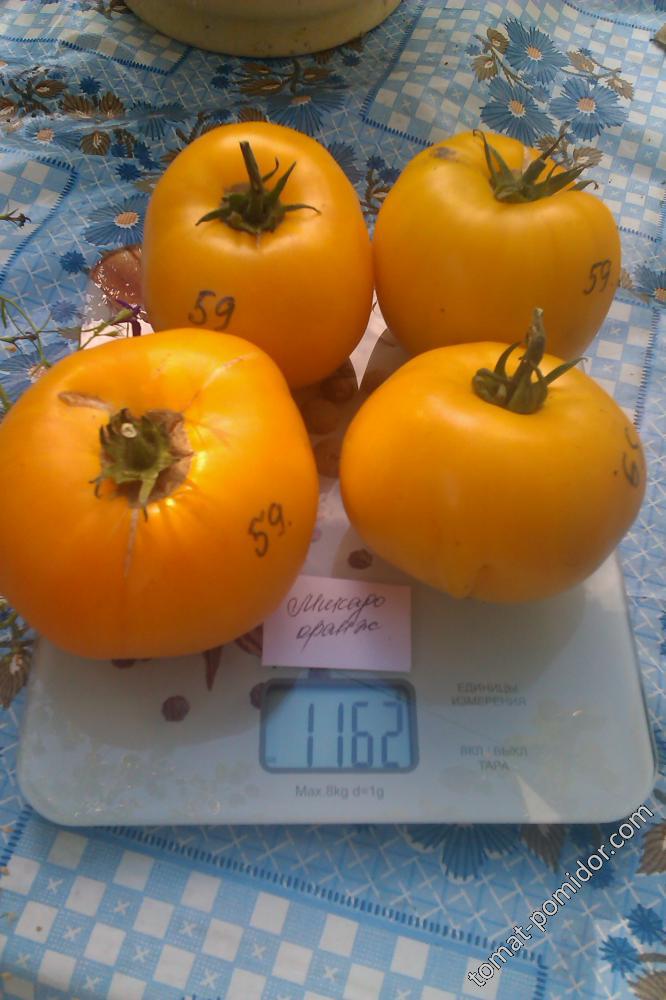
Grew in a greenhouse, leading to two stems. Potato-like foliage. Height is about two meters (after that, growth and fruiting cease, at least that's what happened to me). Ripening time is closer to early, constantly filling out the fruit, ripening, and growing new clusters. The flavor is mild, with a noticeable sweetness, but not bland. The fruits are fleshy, juicy, and aromatic, weighing 250-350 g, although larger ones are available, of course. The clusters are "sprawling"—not dense, loose, with many flowers. In my opinion, it's best to thin them out, leaving the first 3-4 ovaries.
Mikada Orange and Mikado Pink
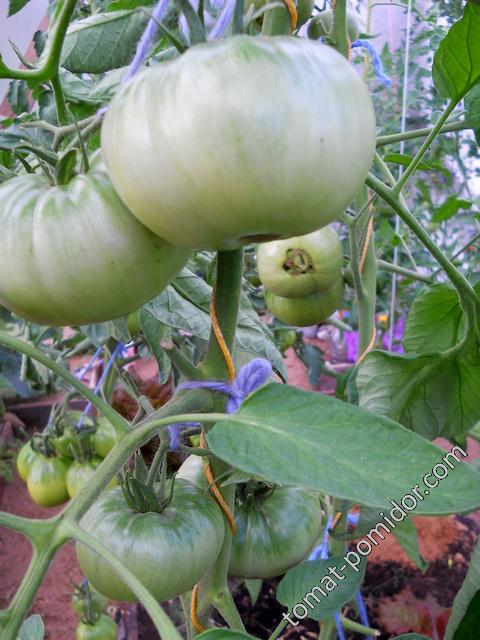
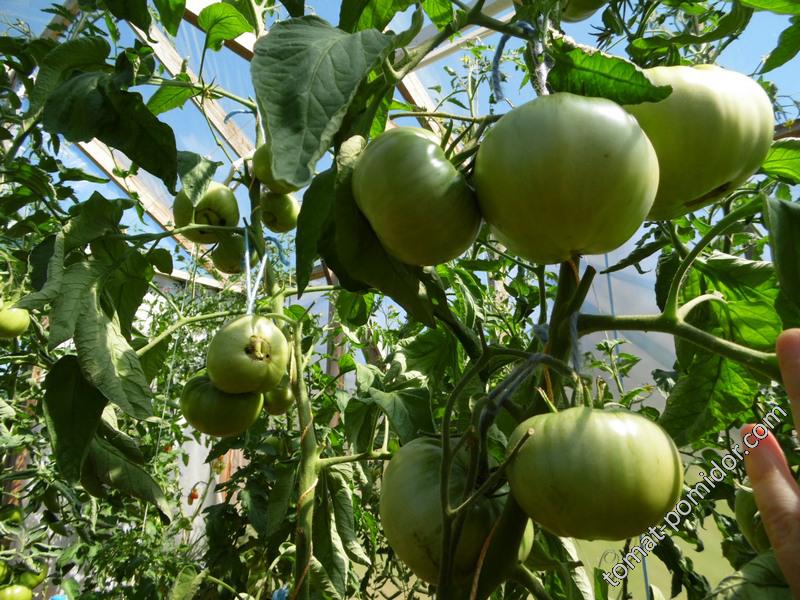
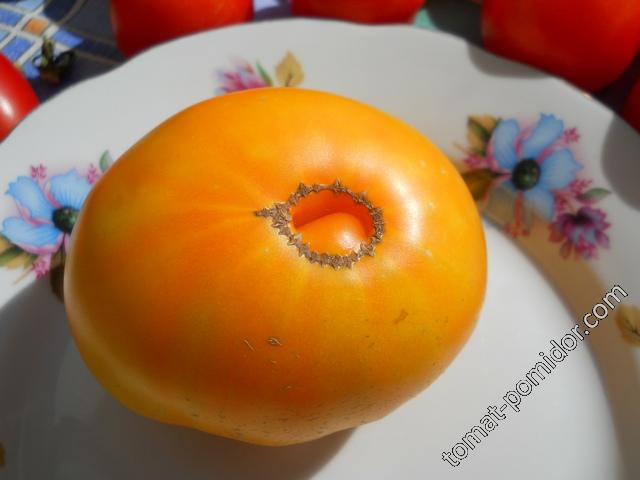
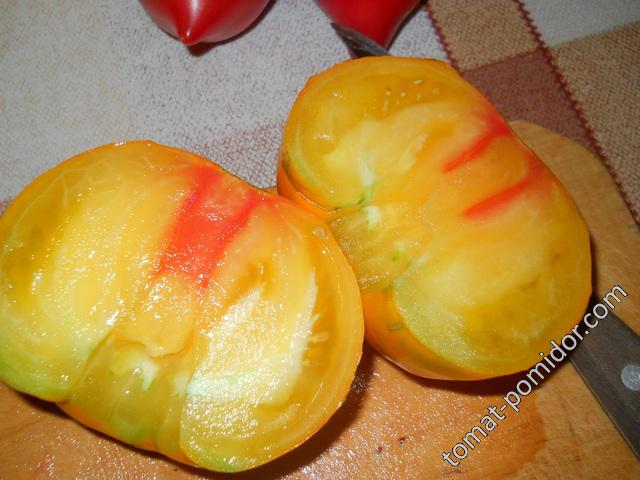
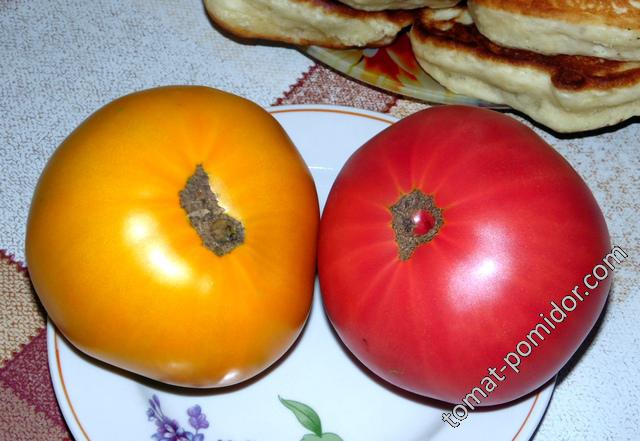
I couldn't pass by Mikad...
I really like this variety, the orange one was especially delicious, one of the most delicious this season.
I really like this variety, the orange one was especially delicious, one of the most delicious this season.Ninulya sent me the seeds. :thx:
The Black Mikado is there too.
For the 2015 season, I bought “Mikado White” from Dukhov.

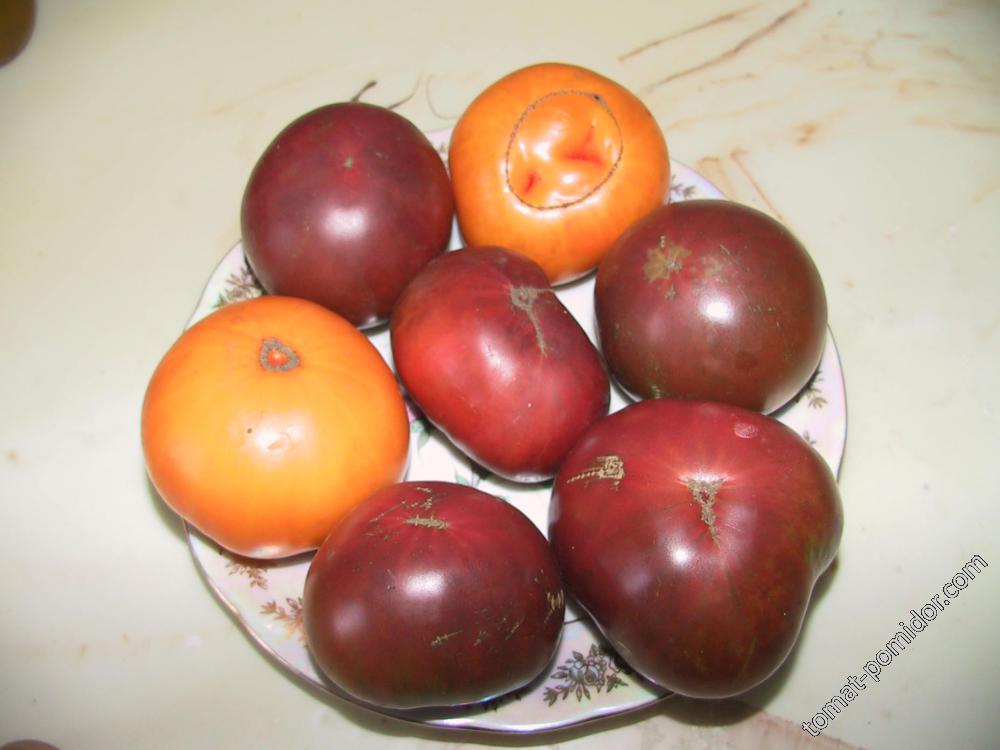
I have this variety from Gali-64 :thx:
fell in love with him. :yep:
beautiful, juicy, fleshy, fruitful. :yep: :niam:
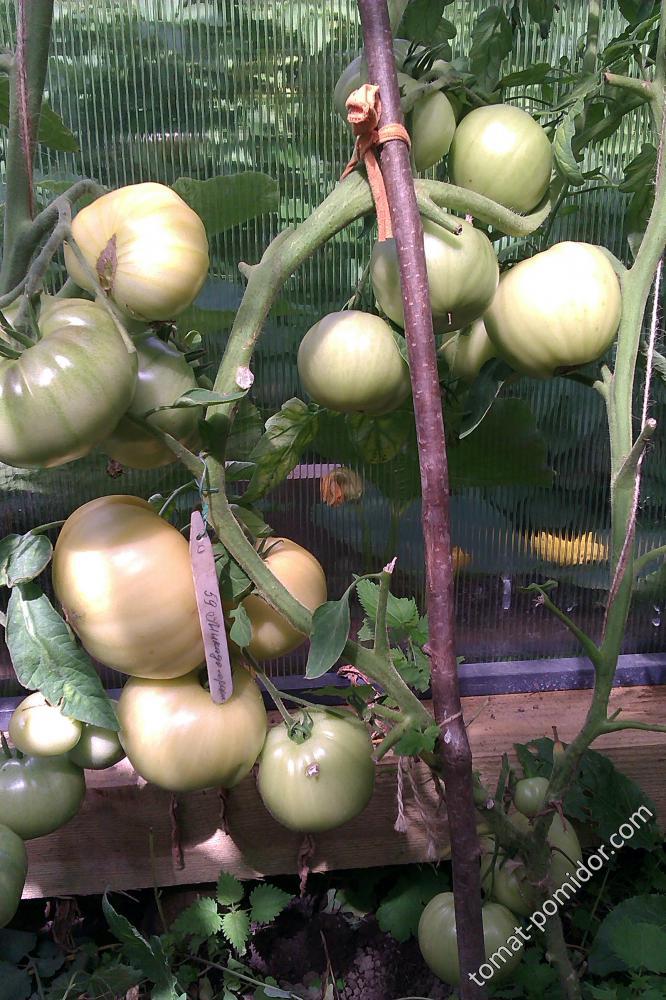
but there was no tie. :dnt: and the sheet is ordinary. about 1.2 m.
Real reviews of the Black Mikado tomato variety
Mikado Black - with a potato leaf - grew in the open air this year, produced good fruit, and produced large fruits, but was inferior in taste to the Dark Queen - it turned into ketchup.
I can’t say anything about other varieties - I have no experience growing them.
Mikado Ch. is a favorite. It's trouble-free—even here. It's not tall, and I grew it in three stems. This year, I didn't have a lot of room for it—I was trying a lot of new "black" varieties.
This Japanese vine is new this year. I pulled it out yesterday and it was covered in green tomatoes. I liked it. It's a salad vine. I also planted an African vine – they're like twins.
Mikado part

Watch the video about the Mikado Black tomato variety: