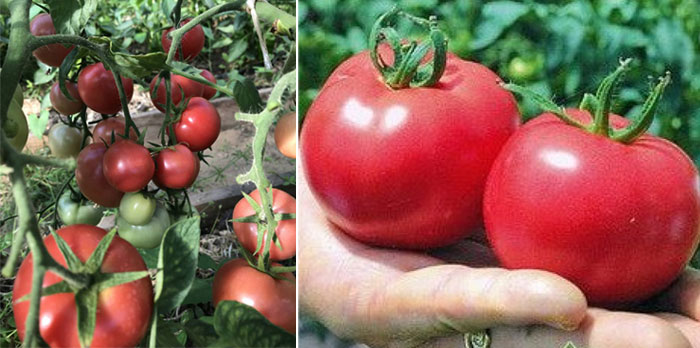
The Pink Katya tomato is suitable for growing outdoors and in greenhouses in private gardens. Its fruits are attractive in appearance and have excellent flavor. Furthermore, the variety is resistant to many diseases. Let's take a closer look at what it is and how to grow it properly.
Content
- 1 Characteristics of the Pink Katya F1 tomato variety in a table
- 2 Photo gallery of the tomato variety Pink Katya F1
- 3 The history of the Pink Katya F1 tomato variety
- 4 Detailed description of the tomato variety Pink Katya F1
- 5 Pros and cons of the Pink Katya F1 tomato variety
- 6 Planting Tips for the Pink Katya F1 Tomato Variety
- 7 Caring for the Pink Katya F1 tomato variety
- 8 Resistance, prevention and control of pests and diseases of the tomato variety Pink Katya F1
- 9 Storing the Pink Katya F1 tomato variety
- 10 Comparison of the Pink Katya F1 tomato variety with other varieties in the table
- 11 Real reviews from gardeners about the Pink Katya F1 tomato variety
Characteristics of the Pink Katya F1 tomato variety in a table
The table below presents the main characteristics of the variety.
| Characteristic | Description |
| Description | An early maturing determinate hybrid for open ground and greenhouses under garden and vegetable growing conditions. |
| Ripening period | 80-85 days. |
| Fruit weight | 120-130 g. |
| Description of the fruit | Flat-round, smooth, medium density, pink. |
| The taste of the fruit | Good. |
| Yield of commercial fruits | 800-1000 c/ha without shelter; 1600-1800 c/ha in a greenhouse. |
| Usage | For salads. |
| Marketability | 94%. |
| Shelf life | Good. The fruits ripen without losing flavor. |
| Preferred growing regions | All regions of the country. |
| Disease resistance | It has high resistance to powdery mildew, verticillium wilt, blossom end and root rot, and corky roots. |
| Agricultural technology | Tomato shoots need to be trained into 1-2 stems. Although this variety is considered determinate, the plant requires staking, pinching, and side shoots. It is suitable for greenhouses and open ground in warm climates. |
| 2017 | |
| Country of origin | Russia, SEMCO-JUNIOR LLC |
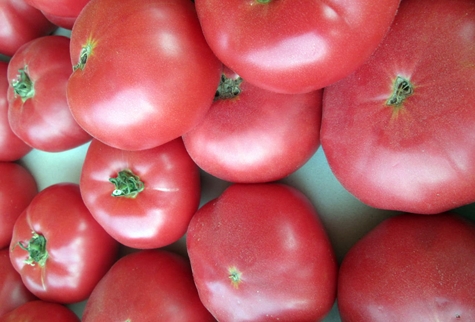
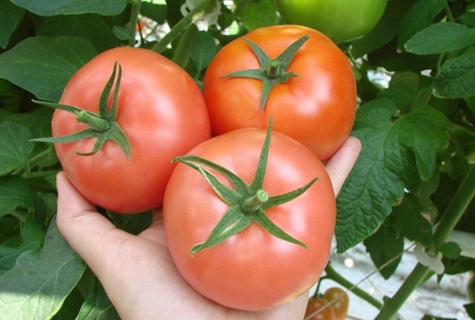
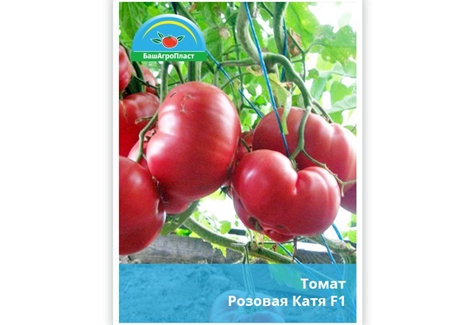
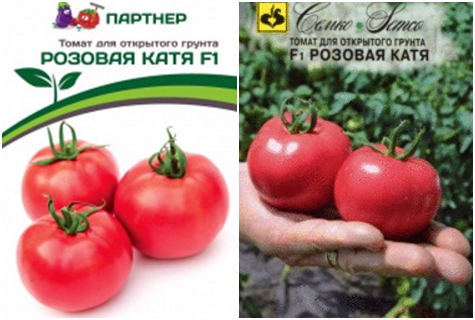
Photo gallery of the tomato variety Pink Katya F1
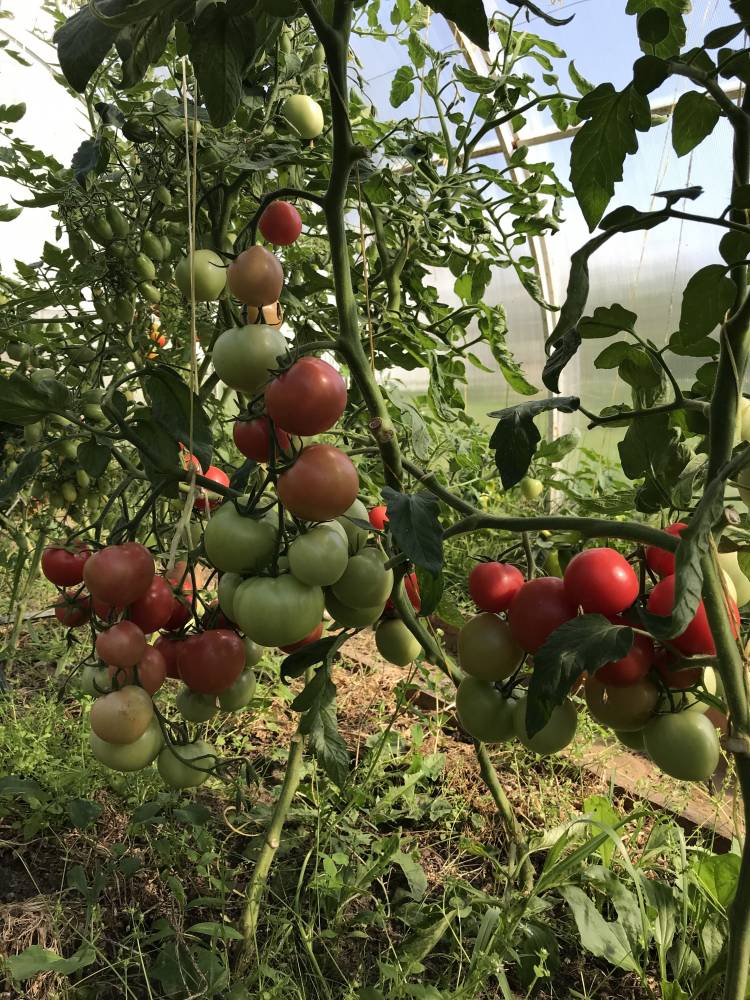
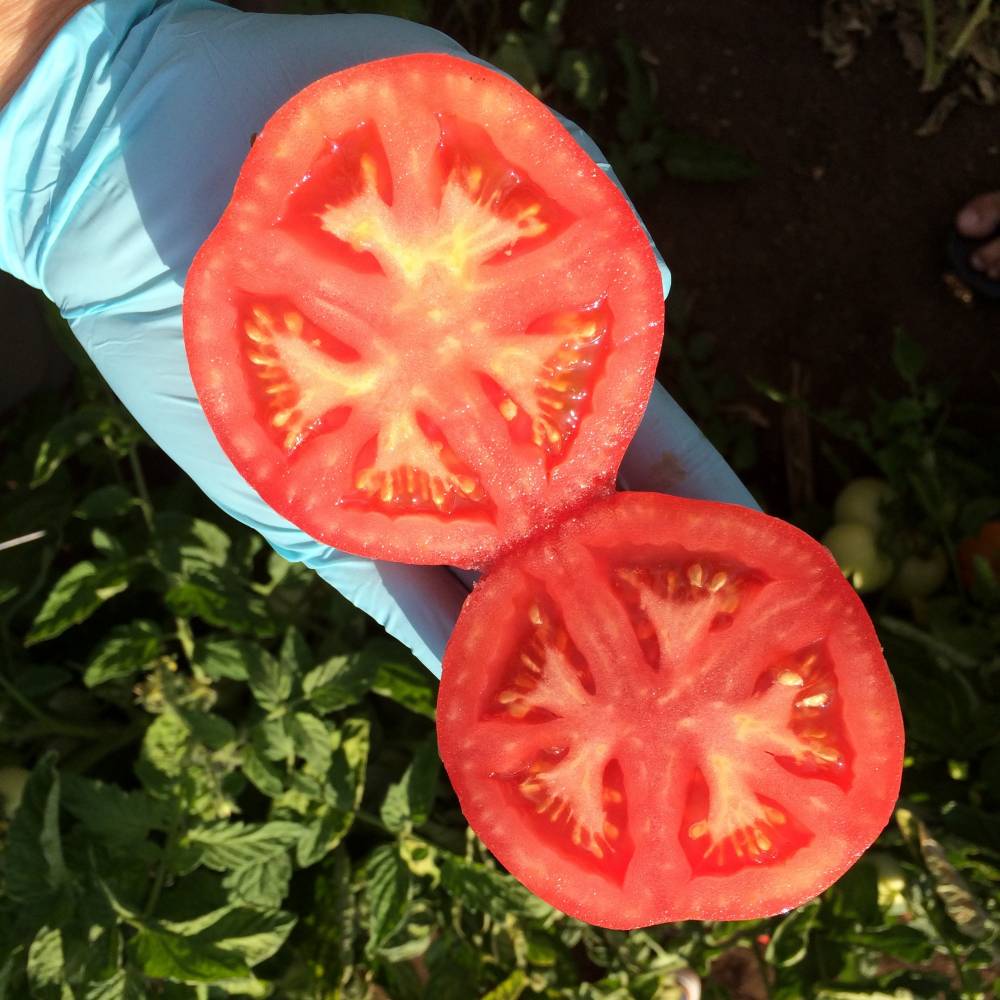
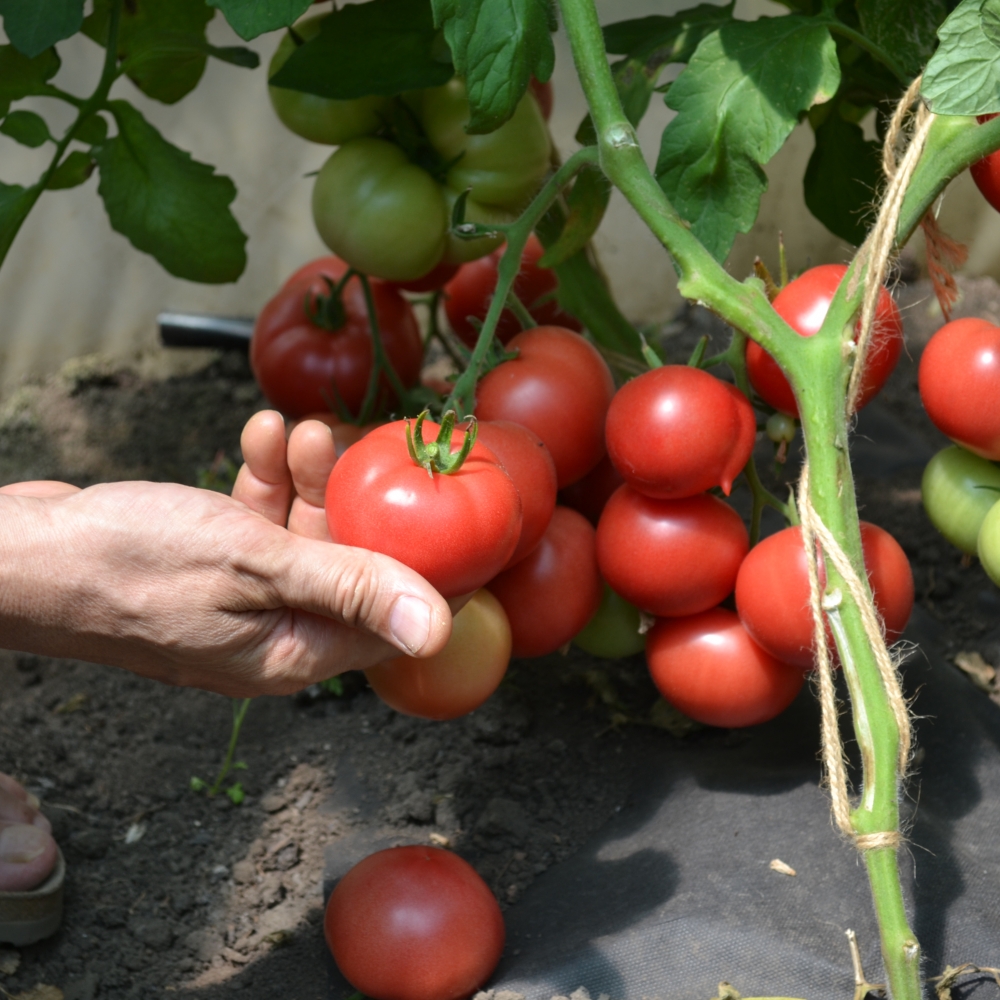
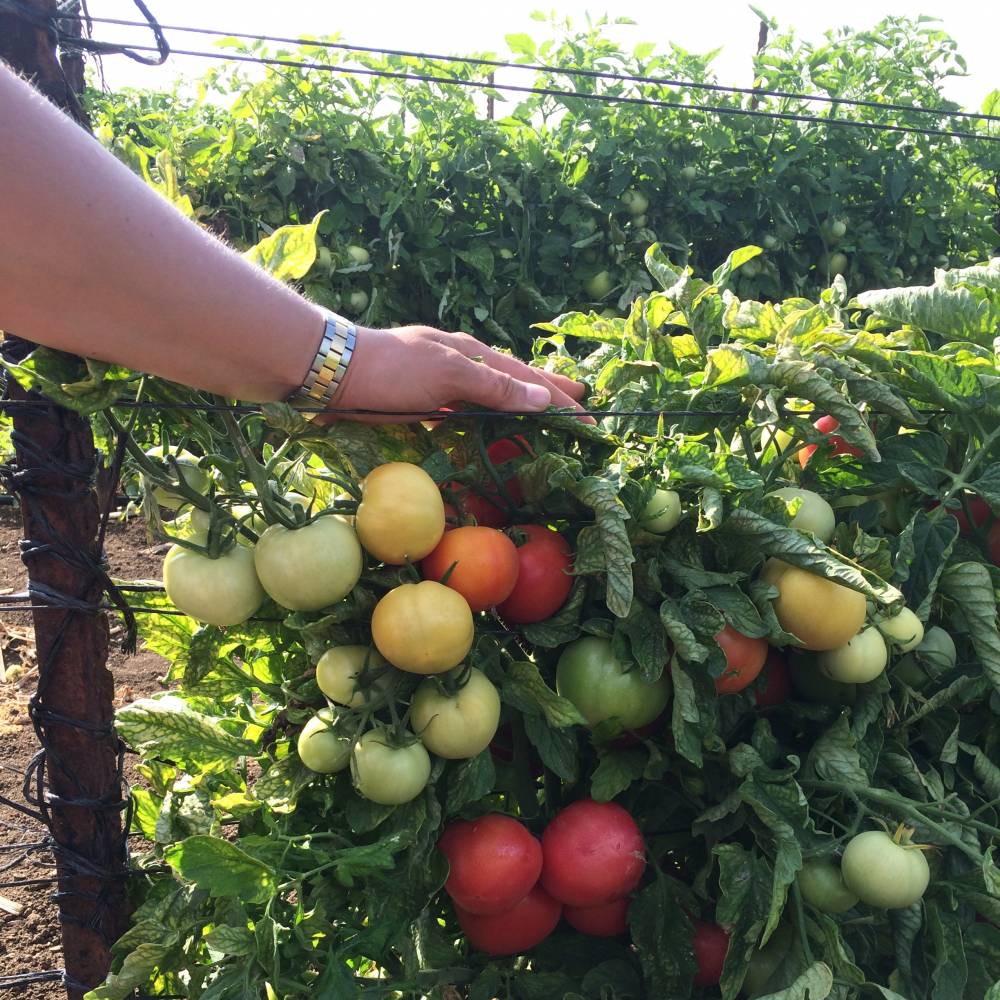
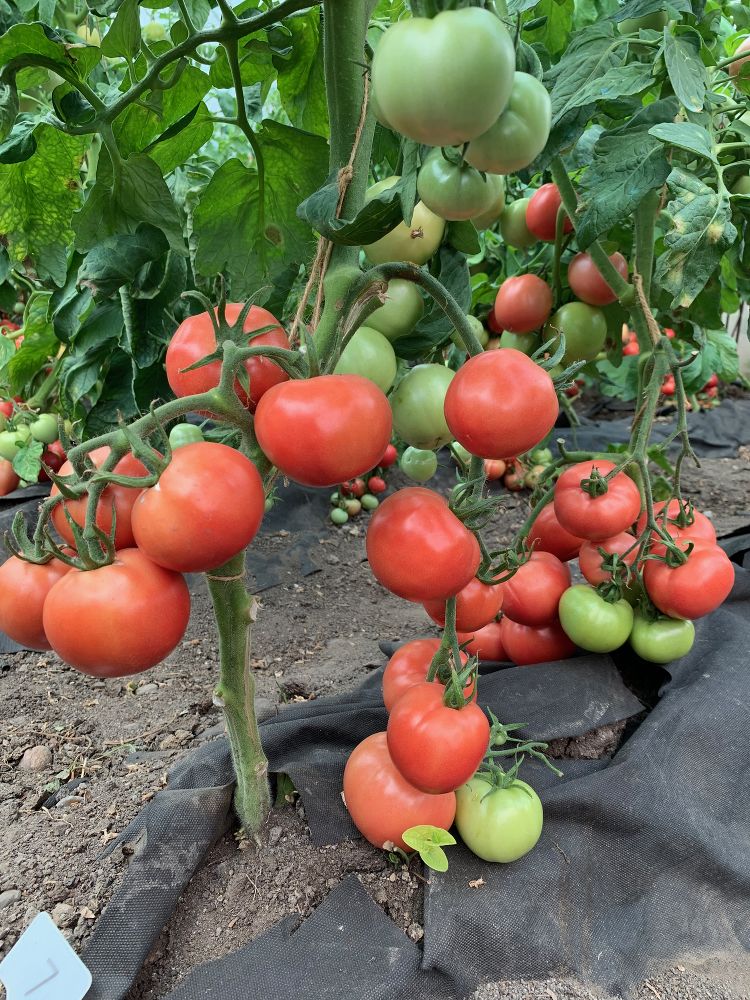
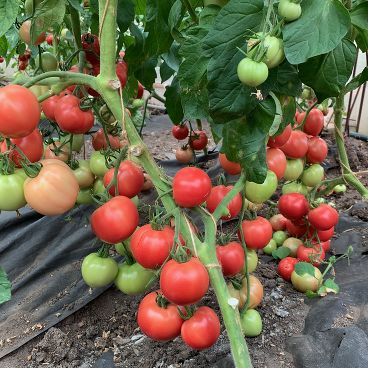
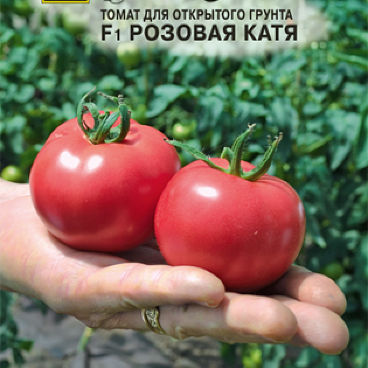
The history of the Pink Katya F1 tomato variety
This hybrid was developed relatively recently by domestic breeders. In 2017, it was added to the State Register as a variety suitable for cultivation in private household plots.
The application for registration was filed by the breeding firm OOO SEMKO-JUNIOR, which currently holds the patent. The hybrid was developed based on variety "Katya". It differs from its ancestor only in the color and taste of the fruit.
Detailed description of the tomato variety Pink Katya F1
Let's take a closer look at what this variety is.
Characteristics of bushes
Forms bushes reaching 0.6-0.7 m. Plants have medium foliage, small, emerald-colored leaf blades.
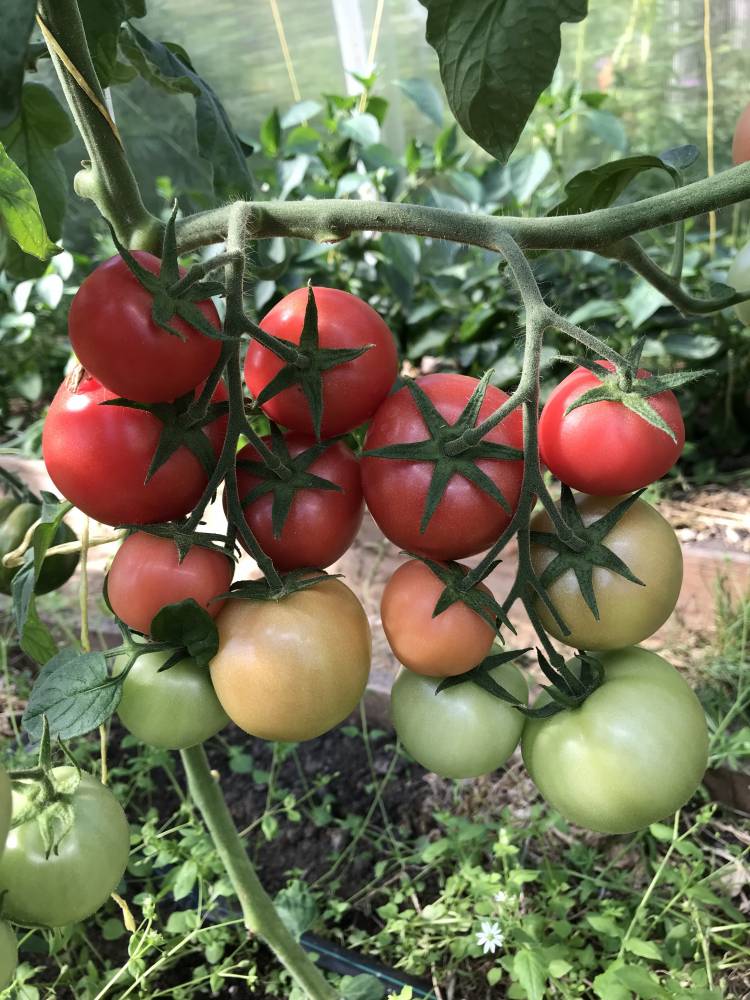
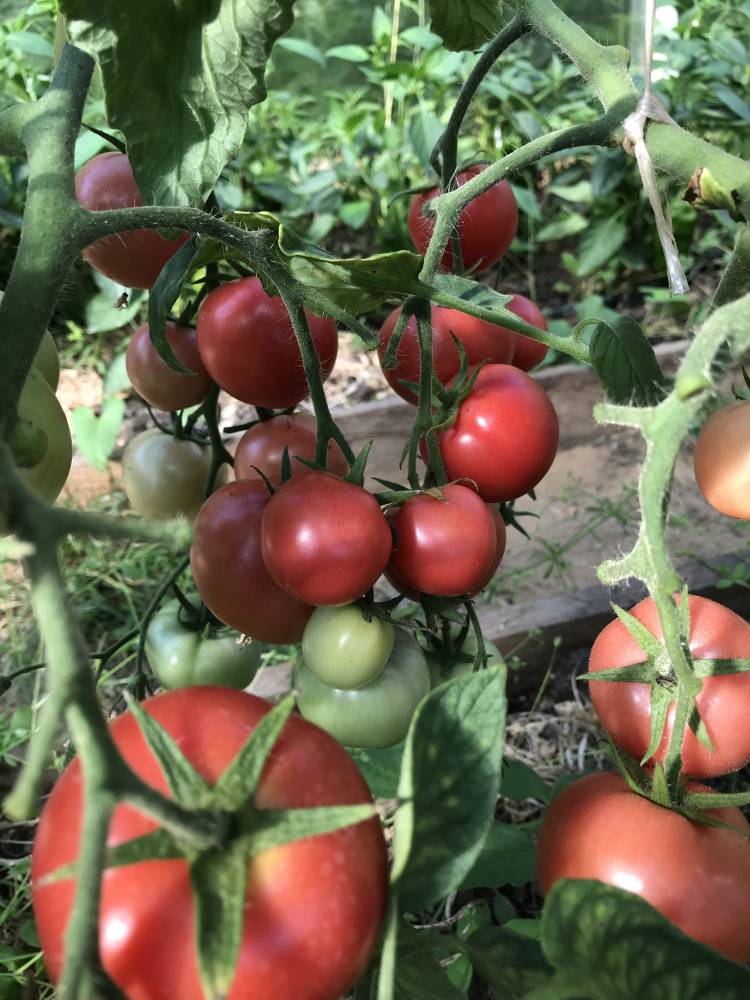
A single bush can produce 6-9 fruit clusters. The growing season begins with the fifth leaf.
Fruit characteristics
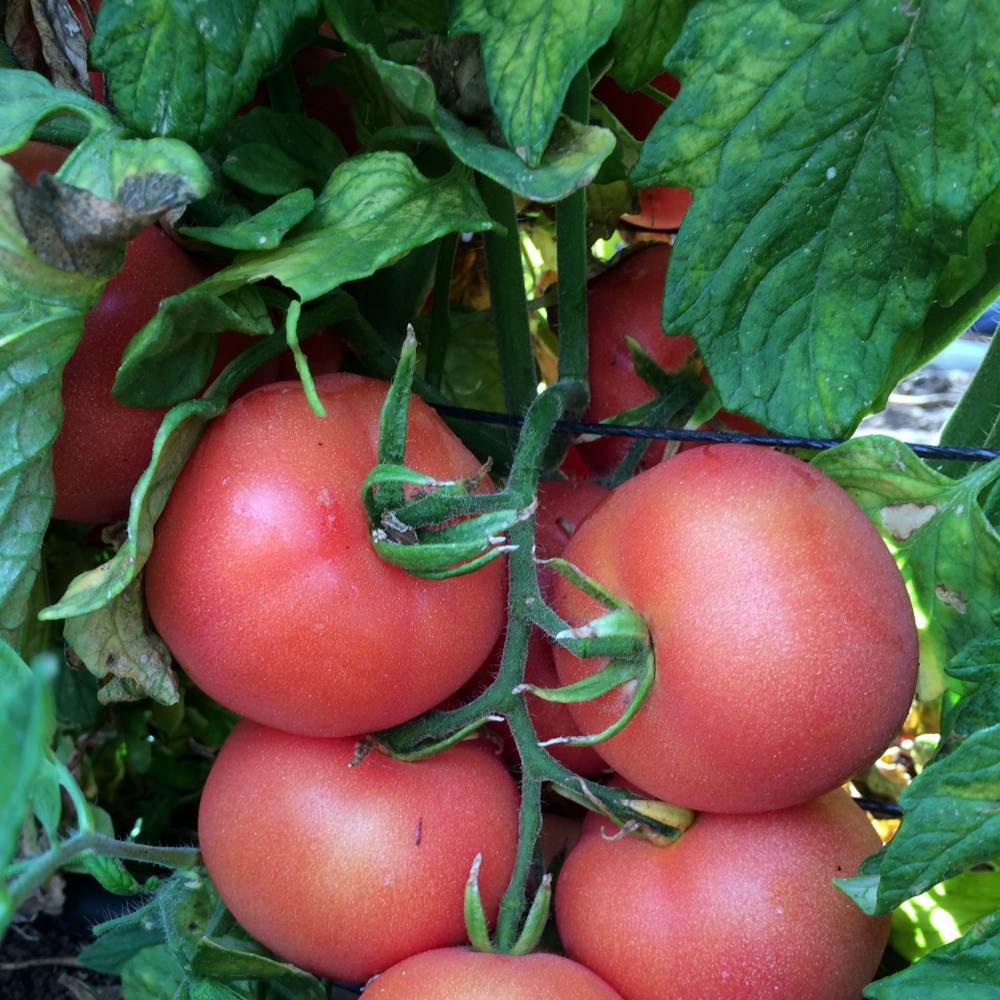
Round, with a slightly flattened surface near the stem. There is no green spot around the stem. The fruits are firm, dense, and resistant to cracking. Each weighs 120-130 g.
After technical ripening, they turn pinkish. They have 3-4 seed chambers. The flesh is dense and tasty. It has a distinct tomato flavor and aroma.
Ripening time and yield
Pink Katya is an early-ripening variety. It reaches technical maturity after 80-85 days.
It is characterized by fruiting regularly and consistently high yields throughout the growing season. When planted in open ground, it yields 8-10 kg per square meter. When grown under plastic, it yields 16-18 kg per square meter. Mass ripening allows for the production of tomatoes in waves, which is convenient for gardeners.
Uses of tomatoes
This variety was bred for salads and is also suitable for fresh consumption, such as sliced. It is widely used in various dishes and juices. Its thick skin makes it suitable for canning and preserving for the winter.
Pros and cons of the Pink Katya F1 tomato variety
The hybrid has the following advantages:
- adapts to any conditions;
- tolerates drought and prolonged rains;
- resistant to almost all crop diseases;
- has good taste;
- has a stable yield;
- is distinguished by its early ripening period;
- It is used not only for salads but also for other purposes, it can be called
- universal;
- ovaries are formed under any climatic conditions;
- the skin does not crack, the fruits are stored for a long time;
- the harvest can be transported over long distances while maintaining its commercial characteristics;
- Grows well both with and without cover.
One disadvantage is that the bushes need to be supported. Without it, the branches can break under the weight of the harvest. There's also a risk of phoma infection, but with preventative measures, this can be avoided.
Planting Tips for the Pink Katya F1 Tomato Variety
The hybrid is relatively undemanding in terms of growing conditions. However, to maximize yields, certain agronomic requirements must be met.
Sowing seeds and growing seedlings
It is recommended to grow using seedlings:
- In late March or early April, soak the seeds in potassium permanganate. This will prevent infections and insects.
- Lay out a drainage layer and add fertile soil mixture on top.
- Sow seeds to a depth of 20 mm, leaving a distance of 20-30 mm between adjacent seeds.
- Spray the seedlings with a spray bottle. Cover with plastic wrap or glass to create a comfortable microclimate. Place the container in a bright location with a temperature of 23°C.
- Once the seedlings emerge, remove the film or glass. Water the seedlings regularly, preventing the soil from drying out or becoming overwatered.
Please note: After 2-3 true leaves have formed, transplant the seedlings into separate peat pots.
Planting seedlings in the ground
This is done in late May or early June, when there is no longer any risk of frost. Choose a well-lit location, protected from strong winds and drafts.
For seedlings, prepare holes in advance. The distance between rows should be 70 cm. The distance between plants in a single bed should be 30 cm. Pour 1 liter of water into the holes and add compost and mineral fertilizer.
Peat pots significantly simplify and speed up the replanting process. They simply need to be placed in the holes. Mulch the plants. This will retain moisture, prevent drying out, and slow down weed growth.

Caring for the Pink Katya F1 tomato variety
Hybrid care is standard:
- Water the bushes twice a week. If you do this more often, the tomatoes will become watery.
- The first hilling should be done 10 days after planting in the ground, then 20 days later. This procedure, as well as loosening, weeding, and fertilizing, should be done after watering.
Formation is carried out in 1-2 stems. It is necessary to carry out periodic pinching out stepsons and pinching.
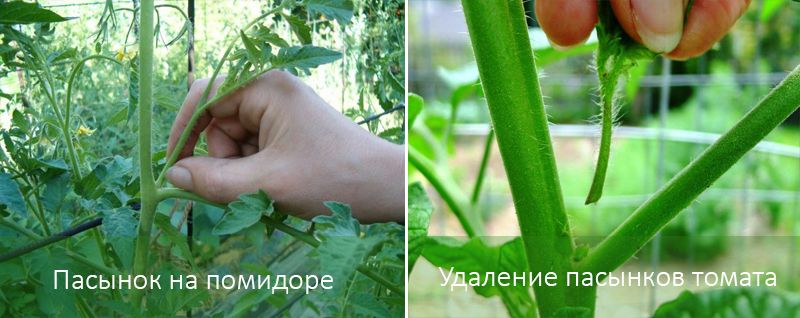
Fertilizer application is carried out according to the following scheme:
- Two weeks after replanting, add a solution of mullein and superphosphate. For every bucket of water, you'll need 2 kg of mullein and 25 g of superphosphate.
- A couple of weeks after the first feeding, add dry fertilizer.
Additionally, the bushes can be fed with not very concentrated organic matter throughout the growing season.
Resistance, prevention and control of pests and diseases of the tomato variety Pink Katya F1
Since Pink Katya is an early variety, using chemicals to control pests and leaf spot is not recommended. If infestations occur, biological insecticides can be used.
To prevent pests from appearing near the bushes, it is recommended to plant calendula, marigolds, and other insect-repellent plants. Regularly loosen and mulch the soil.
Storing the Pink Katya F1 tomato variety
It's recommended to store the harvest in a cellar or refrigerator. It will keep this way for 1-2 months. It can also be stored at room temperature, but the shelf life will be shorter.
Comparison of the Pink Katya F1 tomato variety with other varieties in the table
Please note! How can you easily convert centners/ha to kg/sq.m? Simply divide by 100! For example, the Abakansky Pink tomato yields 400 centners of marketable fruit per hectare. This equals 4 kg per square meter. It's that simple! Also, keep in mind that typically no more than 3-4 plants are planted per square meter. This way, you can calculate the yield per bush. In the case of the Abakansky Pink, it's about 1 kg.
| Variety | Ripening period (number of days from full germination to ripening)
Yield of commercial fruits |
Brief description | Fetus |
| Katya is pink | 80-85 days 1600-1800 c/ha |
An early-ripening determinate variety for open ground. Suitable for salads. Marketability: 84-90%. | Flat-round, medium density, smooth, pink, 120-130 g. Good taste. |
| Kate | 80-85 days
326-550 c/ha |
An early-ripening determinate variety for open ground. Suitable for salads. Marketability: 84-90%. | Flat-round, smooth, crack-resistant, red, 80-92 g. Good to excellent taste. |
| Abakan pink | 120 days or more
400 c/ha |
A late-ripening determinate variety for open ground and greenhouses. Requires staking and training. Suitable for salads and processing into tomato products. | Flat-round, slightly ribbed, medium density and pink in color, 200-500 g. Good taste. |
| Big Dipper | 100-110 days
1150-1450 c/ha |
An early-ripening indeterminate variety for open ground and greenhouses. Requires staking and shaping. Suitable for salads. | Flat-round, slightly ribbed, medium density, pink, 210-260 g. Good taste. |
| Pink bull | 110-118 days 392 c/ha |
A late-ripening determinate variety for open ground and greenhouses. Suitable for salads. Marketability: 90.3%. | Large, slightly ribbed, flat-round, pink with a dark spot near the stalk, 310 g. |
| Voyage | 95-100 days
1400-1800 c/ha |
An early-ripening indeterminate variety for greenhouses. Suitable for salads. Transportable. | Round, smooth, dense, pink, 120-130 g. Good taste. |
| Demidov | 101-109 days
150-300 c/ha (Volga-Vyatka region), 214-418 c/ha (West Siberian region), maximum 471 c/ha (Mari El Republic). |
A mid-season, determinate, standard variety for open ground. Suitable for salads. Marketability: 98%. | Round, medium-ribbed, pink, 80-120 g. Good to excellent flavor. Fruit ripens well. Uneven watering can cause cracking, and dehydration can lead to blossom-end rot. |
| The highlight | 80-90 days
830 c/ha |
An early-ripening determinate variety for open ground and greenhouses. Requires staking and training. Suitable for salads and whole-fruit canning. | Heart-shaped, smooth, dense, pink, 40-60 g. Excellent taste. |
| Chinese pink | about 110 days up to 1500 c/ha (open ground), up to 2000 c/ha (greenhouse) |
A mid-early semi-determinate variety for open ground and greenhouses. Requires staking and training. Suitable for salads and processing into tomato products. | Heart-shaped, fleshy, sweet, pink, 300-350 g. Excellent taste. |
| Masha the doll | 85-95 days
800 c/ha |
An early-ripening determinate variety for greenhouses. Suitable for salads. | Flat-round, slightly ribbed, pink, 200-260 g. Excellent taste. |
| Favorite holiday | 105-110 days
750 c/ha |
An early-ripening determinate variety for open ground. Suitable for salads. | Heart-shaped, slightly ribbed, medium density, pink, 350 g. Good taste. |
| Crimson Flame | 90-95 days
620 c/ha |
An early-ripening determinate variety for greenhouses. Requires training into three stems. Suitable for salads. | Obovate, smooth, pink, 50 g. Taste is good to excellent. |
| Raspberry Miracle | 90-95 days 1200-1500 c/ha |
Mid-early determinate variety for open ground and greenhouses. Suitable for salads and processing into tomato products. |
Round, smooth, pink, 350 g. Excellent taste. |
| Raspberry ringing | 115-120 days
450 c/ha |
An early-ripening determinate variety for open ground and greenhouses. Requires staking and shaping. Suitable for salads. | Round, smooth, medium density, pink, 150 g. Excellent taste. |
| Raspberry mousse | 90-95 days
1600-1700 c/ha (open ground), 2000-2200 c/ha (greenhouse and under film) |
An early-ripening determinate variety for open ground and greenhouses. Training into 3-4 stems is recommended. Suitable for salads and processing into tomato products. | Round, large, dense, pink, 200-300 g. Excellent taste. |
| Crimson Elephant | 110-120 days
650 c/ha |
An early-ripening determinate variety for greenhouses. Suitable for salads. | Round, slightly ribbed, medium-dense, pink, 150-200 g. Excellent taste. |
| Nastenka | 105-110 days 200 c/ha |
A mid-season, determinate, standard variety for open ground and greenhouses. Requires staking and training. Suitable for salads, pickling, and whole-fruit canning. | Heart-shaped, slightly ribbed, medium density, pink, 126 g. The taste is good to excellent. |
| Persianovsky | 100-110 days
1160 c/ha |
An early-ripening determinate variety for greenhouses. Requires staking and shaping. Suitable for salads. | Round, very large, smooth, medium density, pink, 250-300 g. Excellent taste. |
Real reviews from gardeners about the Pink Katya F1 tomato variety
Gardeners are very pleased with this variety; thanks to its many advantages, it has won their love, despite the fact that it was bred quite recently.
User Antanel, Russia, August 3, 2017
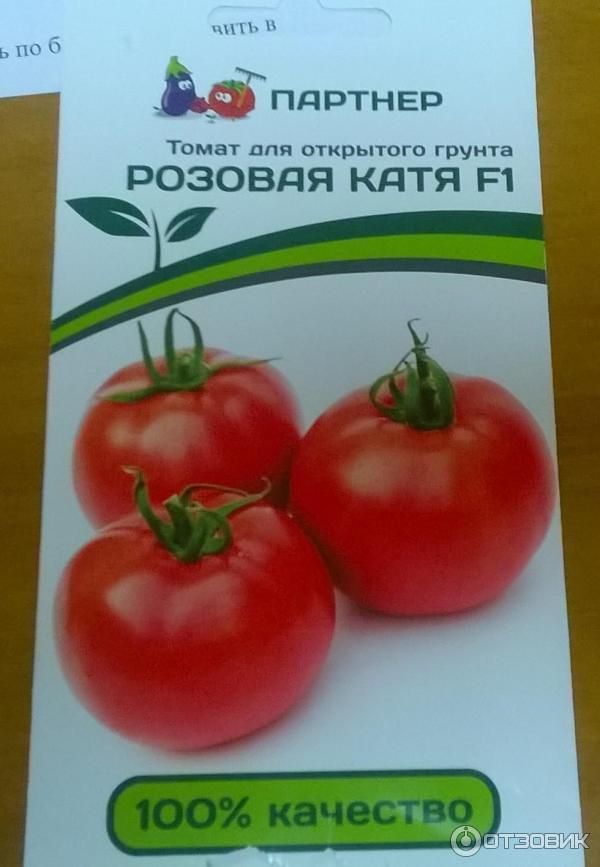
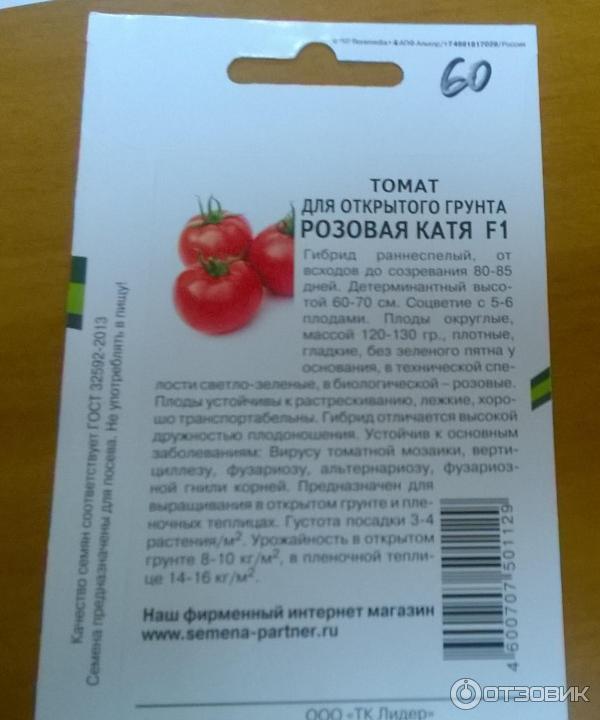
I bought Pink Katya tomato seeds at a local grocery store. A packet costs 60 rubles, and each packet contains 10 seeds.
Although the label says the tomato is for open ground, the back says it's also grown in greenhouses. Besides, in the Moscow region, it's impossible to get a good tomato harvest outdoors, and our soil is poor.This summer has been particularly cool and rainy, but Katya hasn't let the bad weather stop her—she's produced a stellar crop of tomatoes. Of all the tomatoes I've grown this year, this variety has performed the best.
I pick tomatoes when they're just starting to turn pink (or red-yellow), so the plant doesn't waste any more energy on them and can begin developing new fruit. It takes about a week for the harvested tomatoes to reach their full potential. This tomato was the first to ripen. Of course, I could have waited another day or two, but I didn't have the patience—I was so eager to try it.The tomatoes are medium-sized; they're all roughly the same size and don't grow very large. This is very convenient, as you can eat them as is and easily store them in a jar.
When you cut it, you can see it's slightly underripe. But it's still very tasty. It's a bit lacking in sweetness, but I think that's the fault of summer and the catastrophic lack of sun. Still, store-bought tomatoes can't compare to my own.
User elti1, Moscow, March 7, 2017
Dear ladies and gentlemen.
The following information was received from the Semko-Junior online store administration: Anyuta and Pink Katya are a week behind Katya. If, for example, you start them as seedlings on May 1st and plant them in the ground on June 10th, you'll get your first cluster by July 15th-20th. After that, it's just a matter of one week and one cluster. By the way, we get Katyas from all over the country, and it's pretty much the same everywhere: 75-80 days and the first cluster. Katya's seedlings should be 40-45 days old, no more, so they can form a cluster in 30-35 days.
If you are planting in a greenhouse in the Moscow region, then transplant into a hotbed on March 15-20 and May 10-15 (your seedlings are 50-55 days old).
User liza_veta, February 18, 2019 My experience growing Pink Katya F1 tomatoes shows that they are productive and tolerate temperature fluctuations well. The bushes are not very tall and can be grown under plastic. I harvest 7-10 kg per bush, and they bear fruit for a long time. The flavor is like that of early-ripening varieties: bland and ordinary. The fruits are juicy enough to be refreshing in summer salads. The fruits are medium-sized and round, perfectly shaped, easy to jar, and look good without cracking. They ripen evenly and yield a large harvest. They store well when fresh and don't wrinkle much during transportation. The skin, though thin, is firm. User Katerina, February 14, 2019 'Pink Katya' is a determinate hybrid, meaning its bushes are short (60 cm) and, thanks to its low maintenance, can even be grown on a balcony. This hybrid is recommended for all regions; the fruits will develop and redden even in cool summers, preventing the tomatoes from becoming too sweet. Ripening is gradual, and the bushes bear fruit more than once, so the fruit should be harvested as early as possible to allow the bushes to develop the next batch more quickly. The hybrid isn't completely disease-resistant, and is particularly susceptible to phoma blight. Care is low: water the bushes several times a week; frequent watering will make the tomatoes watery and tasteless. Hilling, loosening, and weeding should be done only after a generous watering, and fertilizing should be done according to the same schedule. I fertilized with a complex fertilizer: a mixture of mullein and superphosphate, and after a while, I added a dry fertilizer of potassium, ammonium nitrate, and superphosphate. I also added organic matter occasionally during flowering. The harvest is very generous, even on the balcony—the tomatoes hang in real clusters, causing the bushes to bend considerably. The tomatoes are small—just over 100 grams—and delicious and very delicate in flavor, with a hint of sweetness and a hint of tartness. The skin is a little tough, but that doesn't detract from the experience. User frolova_eva, 04.02.2019 The Pink Katya F1 tomato is easy to grow. I sow the seeds in March and transplant them into the ground in April, spacing them 45 x 70 cm. For large fruits, you need to leave 1-2 shoots, but the harvest is more abundant when left undisturbed—the fruits are smaller, but there are more of them. The plant doesn't have many leaves, and the bush is low, but the stems and clusters are large and need to be tied up. I trim the leaves under the clusters. I water the soil once or twice a week and mulch with straw. I carefully loosen the soil about four times a season; the roots need oxygen. I take the harvest to the city; the fruit doesn't bruise, split, or release juice during transit. They're suitable for all kinds of preserves, from juice and paste to salads and marinades. User Dimon, January 30, 2019 I loved the firm, crack-free, juicy fruits of the Pink Katya F1 tomato, with a classic green aroma. In the summer, we ate them all fresh, in salads or simply with salt. The care is very basic; the bushes aren't tall, but the stems are brittle, and when they bear fruit, they need to be carefully tied up. I'll be buying more of these seeds; the yield is decent, and the flavor is much better than store-bought ones. I grew them outdoors in the Krasnodar region. They don't need much water, have a strong root system, and tolerate heat well. They ripen evenly, and the ripe fruit is bright red and fleshy inside. They're vaccinated against diseases and haven't had any. User Irishka, January 21, 2019 I became interested in the new tomato hybrid Pink Katya F1 and planted it in a greenhouse last year. I live in the Moscow region, the soil is poor, and it was a rainy summer. Not the best conditions for a good harvest, but I was pleased with the variety. The tomatoes grew evenly, with clusters of up to eight, weighing 80-90 grams each. The branches must be tied up, otherwise they will break under the weight of the fruit. The bush itself is not tall, 60-70 cm. Watering should be careful, once or twice a week, followed by loosening and weeding. If there's a lot of rain, water even less often—overwatering can cause the tomatoes to taste watery and they can become diseased. This variety is hardy and easy to grow. It's best suited for fresh salads due to its juiciness, but the firm skin tolerates both pickling and marinating. I used part of the harvest for tomato paste and juice. The flavor is good—not as delicious as later varieties, but not sour and aromatic. The shape is beautiful, regular, and compact. My fears that the hybrid would yield a poor harvest due to bad weather were unfounded. It produces well in the greenhouse in any weather. It's an early-ripening variety, with 110 days from germination to first salad. New clusters ripen every week, making it perfect for weekend gardeners. User Milana Frolova, January 15, 2019 I always plant this variety, just in case, so to speak. There was a summer when all the tomatoes turned black, but 'Pink Katya' produced a steady harvest of strong, healthy tomatoes, free of any diseases. Thanks to this variety alone, we were able to enjoy our tomatoes all summer long and even preserve them for the winter. Since then, I've had two or three seedlings in the greenhouse and in the open ground. They don't need much space; they grow to 60-70 cm tall. However, they still need to be pinched off the top and trained into stems. I leave one side shoot under the first flower cluster, so my tomato plants develop into two stems. I regularly trim the side shoots with regular scissors—the most convenient tool. Tomato care is traditional. I tie up all my tomatoes, even the low-growing ones, especially those grown outdoors. I rarely fertilize them: this variety gets by with whatever I put in the hole when planting. When planting, I add half a bucket of compost and a spoonful of dry complex fertilizer. User tati_123, January 2, 2019 The hybrid bears fruit even in cloudy weather and low temperatures; the bushes are compact and produce fruit for a long time. It is resistant to major diseases, but can be susceptible to illness if not properly cared for. Personally, I like that the hybrid is easy to maintain, and yields don't suffer due to temperature. I usually pick the tomatoes as soon as they start to turn pink and leave them to ripen. It takes about a week, but the flavor still feels a little underripe, and they're not as sweet. But while they're ripening, the bushes are already preparing the next batch of fruit, which is convenient!
I plant the tomatoes deep, right up to the first leaves. The seedlings are low-growing and are taking root and growing well. There are many tomatoes on the trusses, up to nine of them—I use supports or tie the trusses. The tomatoes are even and smooth, as if hand-picked, weighing 130 grams each. The flavor is also good, especially in jars.