One of the best early-ripening tomato varieties, the Katya F1, was developed relatively recently and added to the Russian Register in 2007. It quickly became a favorite among gardeners thanks to its high quality, high yield, and low maintenance, allowing even inexperienced gardeners to achieve good results.
The Katya F1 tomato was created by breeders S.V. Balabanyuk and Yu.B. Alekseev by order of the Semko-Junior seed company.
The variety is best suited to the climatic conditions of the North Caucasus region, but is also successfully grown in other regions of the Russian Federation, and planting in greenhouses further expands its distribution area.
Content
- 1 Description of the Katya F1 tomato variety
- 2 Advantages and disadvantages of the Katya F1 tomato variety
- 3 Features of growing seedlings of the Katya F1 variety
- 4 Diseases and pests of the tomato variety Katya F1
- 5 Top.tomathouse.com recommends: harvesting and using the Katya F1 tomato
- 6 Comparison of the tomato variety Katya F1 with other varieties in the table
- 7 Real reviews from gardeners about the Katya F1 variety
Description of the Katya F1 tomato variety
Katya F1 is an early-ripening variety, considered one of the best. Fruit ripens in 80-85 days.
Important! Some sources list the Katya F1 tomato variety as ultra-early, maturing in 75-80 days. According to the registry, it is considered early maturing.
High-yielding, yielding up to 10 kg per square meter, and 1.5 times more in greenhouses. The plant is low-growing, reaching up to 70 cm in height, but requires staking, especially the fragile branches with heavy fruit clusters.
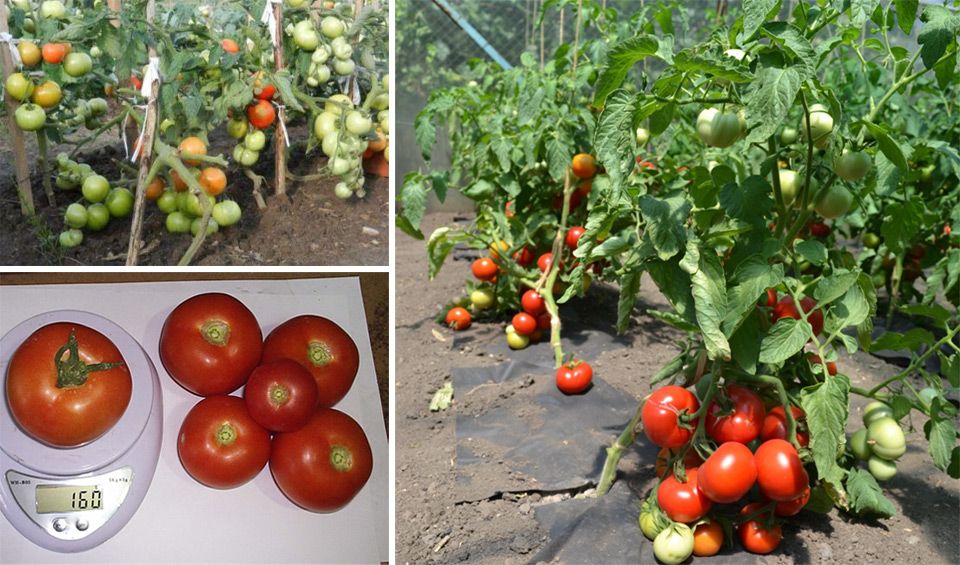
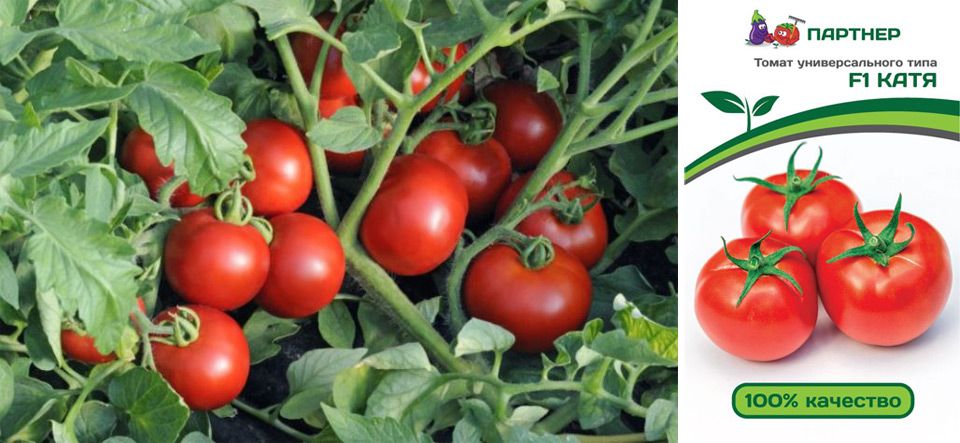
A cluster contains up to 8 flat-round, smooth, red tomatoes, averaging 90g in weight but sometimes reaching 130g. They have a good flavor. This variety is a salad variety, but is also excellent for canning, pickling, making tomato juice, and other preserves. They are most often eaten fresh because they ripen early, before canning.
The fruits all ripen almost simultaneously, so the main harvest is collected all at once. These tomatoes have a fairly long shelf life. It is recommended to pick slightly unripe tomatoes for storage and transport for sale; they ripen quickly, within a few days. After the main harvest, Katya tomatoes continue to bear fruit, but the number of ovaries produced is much smaller.
Tomato Katya Pink F1
Added to the Russian Register in 2017, it's still a new variety, but it's already gained many fans. In terms of varietal qualities, yield, cultivation techniques, and other characteristics, the Katya Pink F1 tomato is completely consistent with the main variety.
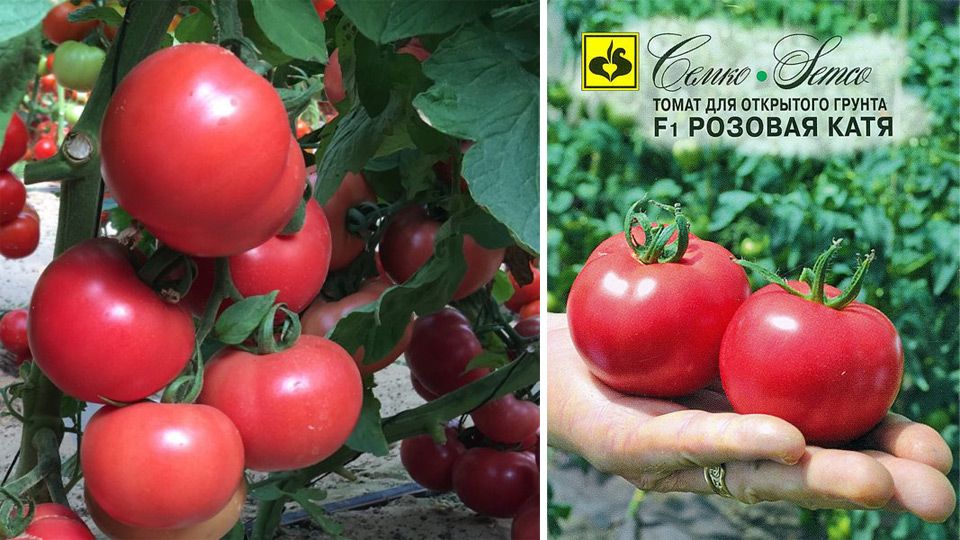
It differs only in the color and taste of the fruit.
Advantages and disadvantages of the Katya F1 tomato variety
Katya tomatoes are popular in private farms and are much loved by farmers for their high yield and their commercial appearance.
Advantages of Katya F1 tomatoes:
- ripen very early;
- excellent taste for a hybrid;
- versatility of application;
- high performance for commercial cultivation - shelf life, transportability;
- beautiful fruits, do not crack;
- high-yielding variety;
- unpretentiousness;
- resistance to most tomato diseases.
Flaws:
- brittle stems - they need to be tied up, especially the clusters with fruits;
- Damage caused by phomosis - this disease is easily prevented by following agricultural practices (regular loosening of the soil, moderate watering, frequent ventilation of greenhouses), and spraying the bushes with special agents.
Features of growing seedlings of the Katya F1 variety
Growing Katya F1 tomatoes doesn't require any special care. The cultivation techniques are the same as for most other tomato varieties. Since it's a hybrid, you'll need to buy new seeds every year, as those harvested from the fruit don't have the desired properties.
Timing of planting seeds
When to plant seeds is determined by the climatic conditions of a given region, taking into account that after sowing the seeds, the seedlings are grown for 2 months, then they are planted in the beds, and after a month the first harvest ripens.
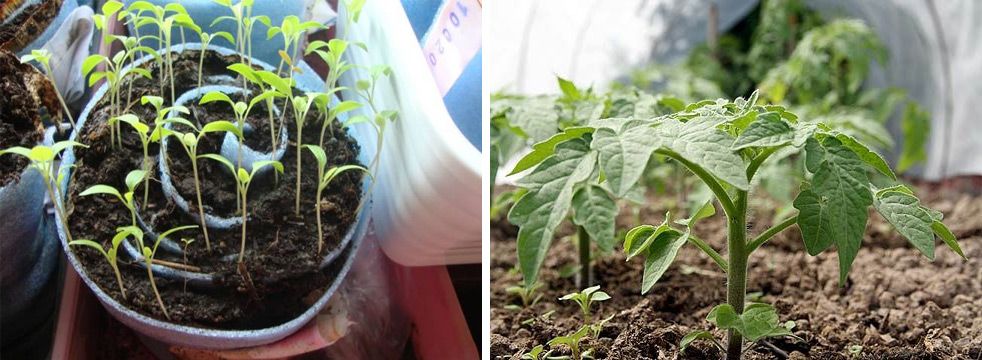
In warmer climates, seeds are sown in seedling boxes as early as late February. In colder climates, if a greenhouse is not available, the bushes are planted outdoors in early June. In this case, the seeds for seedlings are sown in late March.
There's another option. Seeds are planted in open ground (covered with plastic) in early May and kept under cover for a month. However, this method will only produce fruit in the second half of summer. This method also loses the variety's early maturing qualities.
Seed preparation
Store-bought seeds are already processed; they don't need to be disinfected, and their preparation then only involves the following steps:
- calibration - remove damaged and small seeds, check them for germination in a saline solution (those that do not float, but remain at the bottom of the container, are suitable for sowing);
- soaking - place the seeds on a wet cloth or foam rubber and cover with a damp napkin on top; it takes about 18 hours for them to swell; do not allow long roots to sprout, as they are brittle;
- Hardening - after soaking, seeds are placed in conditions with a lower temperature (for example, on the bottom shelf of the refrigerator) so that they can better adapt to unfavorable conditions, which increases the germination rate of seeds and the immunity of future plants.
Soil requirements
For growing seedlings, it is best to buy ready-made soil for tomatoes, which is perfectly balanced in terms of nutrient composition and acidity level.
Some gardeners prefer to prepare the soil themselves.
Composition of the soil mixture for seedlings:
- garden soil;
- compost;
- sand;
- peat;
- dolomite flour or wood ash to neutralize soil acidity;
- mineral fertilizers;
- You can add sphagnum moss to improve soil air permeability.
Planting diagram
The seeds are sown directly into individual pots or pre-planted into containers for subsequent transplanting into smaller pots:
- Place drainage at the bottom of the cups or containers, and add 5 cm of soil on top.
- In containers, each seed is placed 2-3 cm apart from each other.
- sprinkle with soil on top no more than 2 mm.
- Water with a spray bottle.
- Cover with film or glass and place in a warm, lighted place.
Caring for seedlings
To obtain full-fledged seedlings, provide them with high-quality care.
- The glass lid of the container is opened daily for ventilation, and after the sprouts emerge, it is removed.
- They maintain optimal temperature, lighting and humidity levels in the room.
- Fertilize periodically.
- Regular moderate watering is provided using a spray bottle.
- Pricking out is done after the first pair of true leaves appear. The seedlings are watered generously, then carefully removed from the container with a teaspoon and placed in a prepared pot.
- Once the plants have taken root and become strong, water them in the standard manner using a watering can. Avoid allowing water to come into contact with the leaves to prevent disease.
- Lighting is crucial; there should be at least 12 hours of daylight. If light is insufficient, grow lights are used.
Planting seedlings in open ground
For the Katya variety, select beds in loamy or sandy loam areas with permeable soil. If the soil is acidic, add lime or dolomite flour (300-600 g per square meter) every three years.
If your plot doesn't have suitable soil for a garden bed, you can prepare it. Add river sand (1 bucket per square meter) and compost to heavy clay soils. If you add sand and organic matter annually for at least 5 years, the soil will become loamy.
The time to plant Katya tomatoes outdoors depends on the region: in southern regions, it's early May, while in northern regions, it's early to mid-June. The soil should be well warmed and there's no risk of frost.
First, the seedlings need to be hardened off. To do this, when the weather is warm, they are brought out into the garden for a few hours during the day and placed in partial shade. This procedure significantly improves the plants' adaptation to their new location.
Holes are dug in the bed at a rate of 5-6 plants per square meter. They are pre-watered, and then the seedlings are planted. The stems are buried slightly deeper than they were in the containers. The plants are then watered and covered with soil.
Caring for tomatoes
Preparing seedlings is only the first step to a good harvest. Subsequently, it's essential to follow all the care guidelines for these plants. Proper cultivation techniques for this variety require several essential conditions.
Watering
This ultra-early variety requires moderate, regular watering. Each hole requires up to 1 liter of water, but don't allow it to stagnate. Avoid watering the leaves and fruit. The best time to plant is morning and evening.

Watering is most important during the period of seedling adaptation to a new location, in hot weather, when flowering begins.
Fertilizer
Tomatoes are fed for the first time 10-12 days after planting the seedlings. Use organic and mineral fertilizers. Add 1/10th of the volume of mullein and 20 g of superphosphate to 9 liters of water. This solution is enough for 10 plants. The next two feedings are done every two weeks using mineral fertilizers.
Pinching out side shoots
It's important to properly shape the bushes. This procedure removes excess shoots to ensure better fruit development.
It's best to remove side shoots in the morning. Use scissors or a knife for pruning, leaving one or two stems.
Loosening
This variety requires regular hilling, especially in areas with heavy soil. The first loosening is done 1.5 weeks after planting the seedlings, with subsequent loosenings occurring every two weeks. Before this procedure, the tomatoes are watered—hilling with moist soil improves root growth.
Diseases and pests of the tomato variety Katya F1
The Katya F1 tomato is resistant to many typical tomato diseases, except for brown rot, which can be prevented by spraying with copper oxychloride. Unfortunately, however, it is susceptible to pest attacks, like other garden plants.
Root system pests include mole crickets, cockchafer larvae, and wireworms. These can be controlled mechanically and with special poisonous granules added to the planting holes.
Above-ground parts are damaged by aphids, whiteflies, and cutworms. To control them, spray with solutions of special preparations (Aktara).
Top.tomathouse.com recommends: harvesting and using the Katya F1 tomato
Thanks to its high yield and low maintenance, the Katya tomato variety delights even inexperienced gardeners with an abundance of ripe, delicious tomatoes. Since most of the harvest ripens at the same time, it's best to plan for its preservation in advance.
For fresh salads, some tomatoes are left on the vine until fully ripe. To ensure a longer supply of fresh tomatoes, it's best to harvest some slightly unripe tomatoes—they will ripen and keep for quite a long time.
Katya F1 tomatoes have firm flesh and a peel that doesn't crack, making them ideal for canning. The tomatoes are harvested for canning when they're ripe, but firm and not overripe.
Comparison of the tomato variety Katya F1 with other varieties in the table
Please note! How can you easily convert centners/ha to kg/sq.m? Simply divide by 100! For example, the Abakansky Pink tomato yields 400 centners of marketable fruit per hectare. This equals 4 kg per square meter. It's that simple! Also, keep in mind that typically no more than 3-4 plants are planted per square meter. This way, you can calculate the yield per bush. In the case of the Abakansky Pink, it's about 1 kg.
| Variety | Ripening period (number of days from full germination to ripening)
Yield of commercial fruits |
Brief description | Fetus |
| Kate | 80-85 days 326-550 c/ha |
An early-ripening determinate variety for open ground. Suitable for salads. Marketability: 84-90%. | Flat-round, smooth, crack-resistant, red, 80-92 g. Good to excellent taste. |
| Katya is pink | 75-80 days
1600-1800 c/ha |
An early-ripening determinate variety for open ground. Suitable for salads. Marketability: 84-90%. | Flat-round, medium density, smooth, pink, 120-130 g. Good taste. |
| Katyusha | 80-90 days
159-533 c/ha (Central Black Earth region), 240-423 c/ha (Far Eastern region). |
A mid-season determinate variety for open ground. Suitable for salads. Marketability: 65-87%. Heat-resistant, drought-resistant, and tolerates waterlogging well. | Flat-round, smooth, red, 90-180 g (up to 335 g). Good to excellent taste. |
| Broody | 95-105 days
350 c/ha (greenhouse and under film) |
An early-ripening, determinate, standard variety for open ground and greenhouses. Suitable for salads. | Flat-round, slightly ribbed, medium density, red, 100 g. Excellent taste. |
| Kostroma | 105-110 days 1350-1500 c/ha |
A mid-season determinate variety for greenhouses. Requires staking and training. Suitable for salads, whole-fruit canning, and processing into tomato products. | Flat-round, slightly ribbed, glossy, red or orange, 80-150 g. Good taste, sweet and sour. |
| Far North | 100-110 days
190 c/ha |
An early-ripening, determinate, standard variety for open ground and greenhouses. Suitable for salads and whole-fruit canning. | Round, smooth to slightly ribbed, medium density, red, 60-80 g. Good taste. |
| Little Red Riding Hood | 85-90 days
180 c/ha |
An early-ripening, determinate, standard variety for greenhouses. Suitable for salads. | Round, smooth, soft, red, 15-20 g. Excellent taste. |
| A gardener's dream | 95-100 days
630 c/ha |
An ultra-early determinate variety for open ground and greenhouses. Requires staking and shaping. Suitable for salads. | Flat-round, smooth, medium density, red, 80 g. Good taste. |
| Raspberry Liana | 85-90 days 700 c/ha |
An early (ultra-early) determinate standard variety for open ground and greenhouses. Suitable for salads, canning, and processing into tomato products. | Round, smooth, red, 65-90 g. Good taste. |
| Matador | 105-110 days
500-600 c/ha |
An early-ripening, determinate variety for open ground. Suitable for salads and whole-fruit canning. | Cylindrical, smooth, dense, red, 100 g. Excellent taste. |
| Michurinsky | 90-95 days
800-1000 c/ha |
An early-ripening determinate variety for open ground and greenhouses. Suitable for salads, canning, and processing into tomato products (ketchup and sauce). | Round, smooth, red, 80-100 g. The taste is good and excellent. |
| Snowdrop | 80-90 days
600 c/ha |
An early-ripening, determinate variety for open ground. Requires staking and training. Suitable for salads and pickling. Drought-resistant. | Flat-round, slightly ribbed, red, 120-130 g. Good taste. |
For reference, how to determine the ripening time of tomatoes:
Based on ripening time, tomatoes are typically categorized as very early, early, mid-early, late, and very late. However, the registry provides a different classification: ultra-early, early, mid-early, mid-season, mid-late, and late. It's also worth noting that the days from full germination to ripening listed in the registry often diverge from the classification itself. For example, the Agata variety is listed as early ripening, but it also specifies that ripening occurs 98-113 days after full germination. Meanwhile, the Adelina variety, also classified as mid-season, ripens in fewer days, namely 82-109. Therefore, we can conclude that the variety type isn't particularly important, although we will include it. It's more important to look at the days from full germination to ripening. Also keep in mind that this number of days depends, among other things, on growing conditions and may differ.
Conditional terms: very early - 75-95 days, early - 95-115, mid-early - 110-120, late - 120-130, very late - 130-150 and more.
Real reviews from gardeners about the Katya F1 variety
I learned about tomato varieties like Katya and Pink Katya at the beginning of 2017. I planted these tomatoes last season and decided to definitely plant them this year.
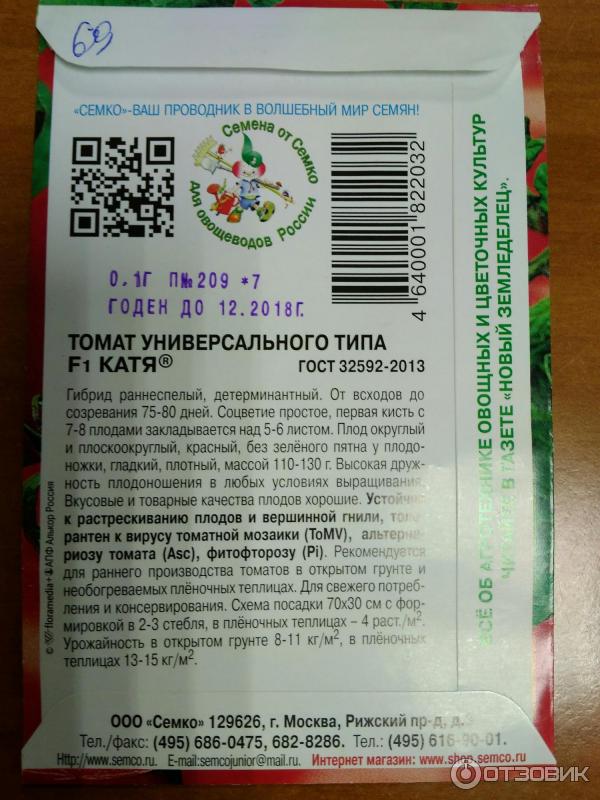
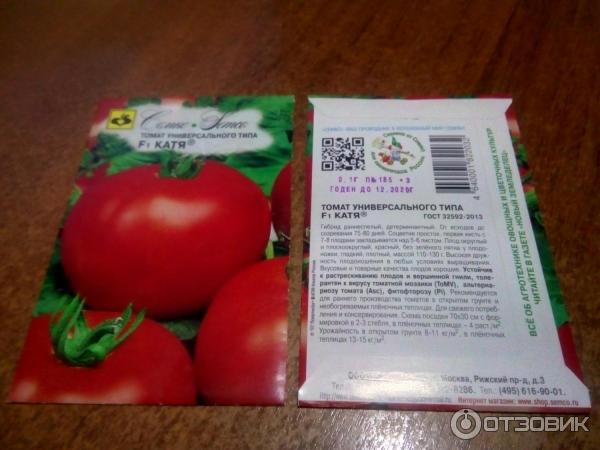
The seeds aren't cheap; the price varies across different retail outlets, but the average is 70 rubles per packet. However, each packet contains quite a lot of seeds, not just 5-7, as some manufacturers offer.
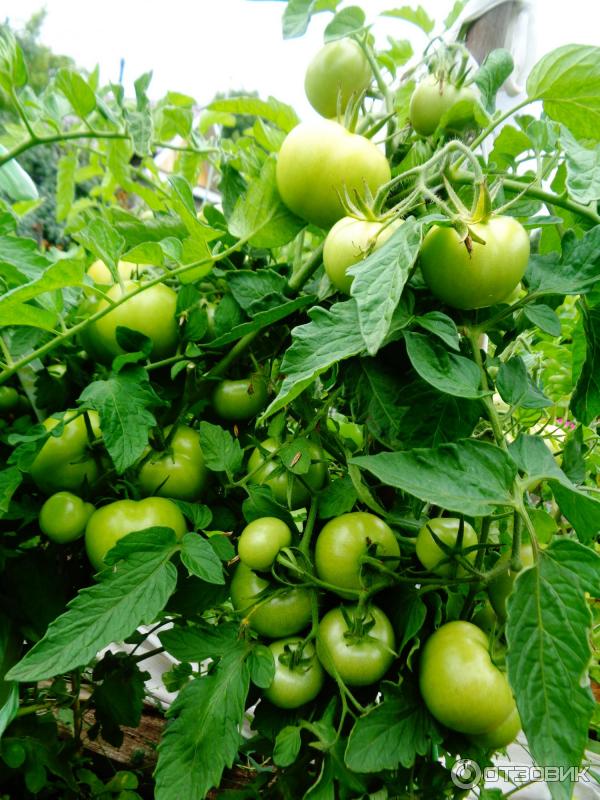
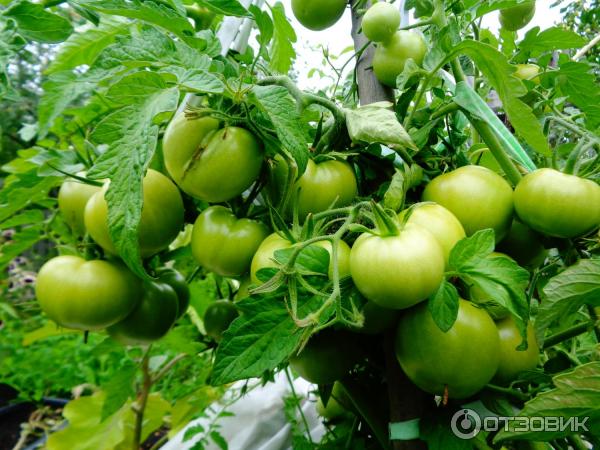
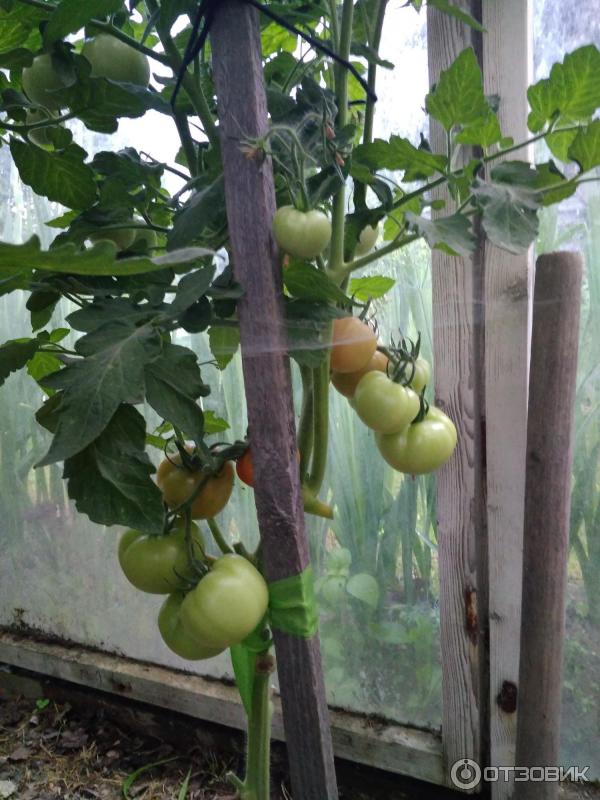
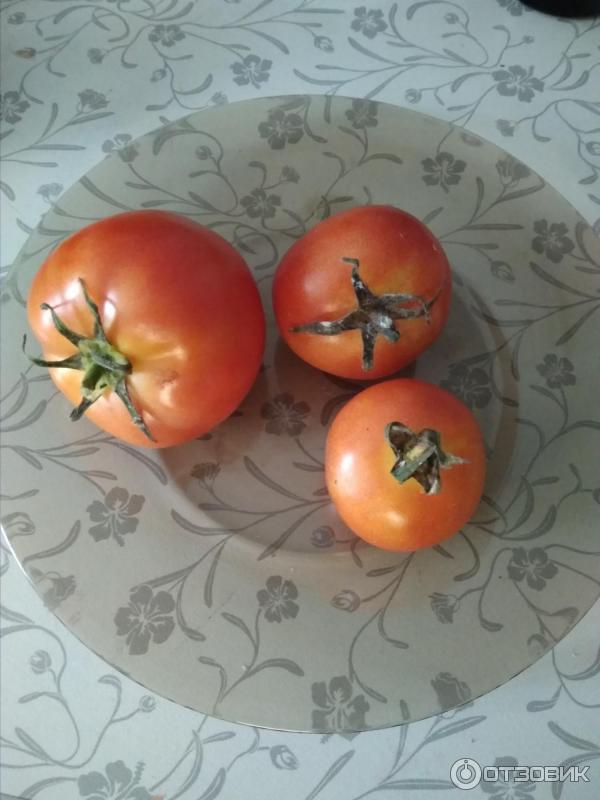
Here are my tomatoes in active fruiting mode. The grower didn't lie, with at least six tomatoes on each cluster. I pick the tomatoes when they start to ripen. If I pick them green, they won't be as juicy once they ripen, but will become dry. And there's no way to let them ripen fully, the weather isn't favorable. But of course, by mid-August, the entire crop is harvested, even the green ones, because there's a high risk of late blight.
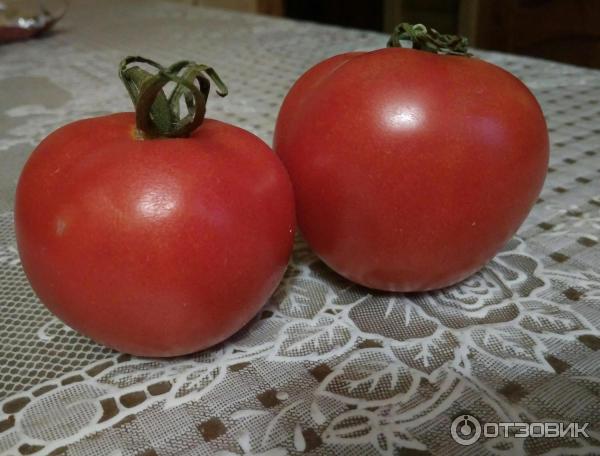
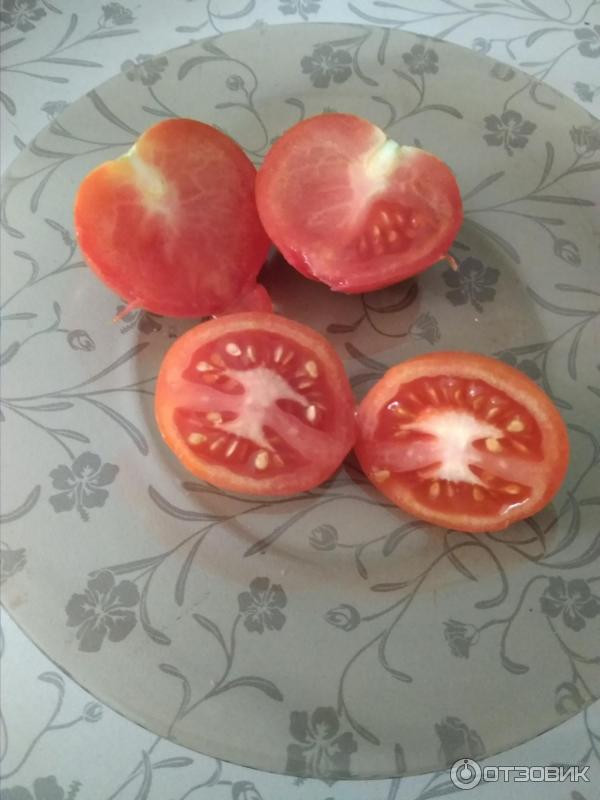
Here are some ripe tomatoes. They're quite firm, not mushy.
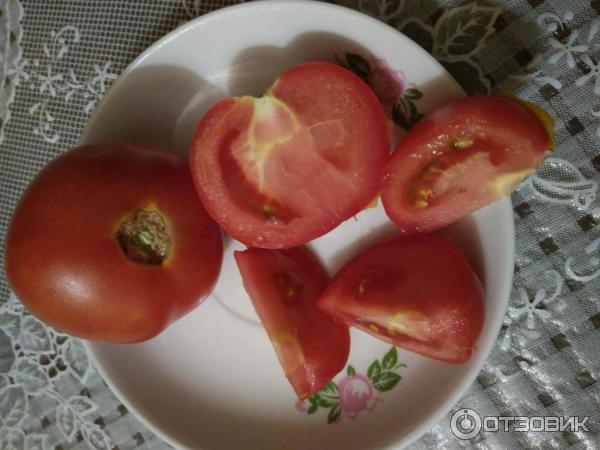
And this is on the cut.
The tomatoes are very tasty, sweet, and tender. The skin is not thick.
Since I plant tomato seedlings not only for myself but also for my mother and a co-worker, subsequent cultivation takes place in various conditions and soils. But under any circumstances, these tomatoes show the best results and a good harvest. Therefore, I think next year it will be worth prioritizing these varieties and filling at least 50% of the greenhouse with them.
This is not the first time we have planted “Katya” tomatoes, and there are several reasons for this.
The "Katya" seeds from the "Semko" company are of very good quality.
There are no complaints about germination and growth.
We grow them in a greenhouse, as we do other varieties. We plant the remaining seedlings outside, but it's extremely difficult to monitor their quality because weather conditions vary each time.
In height, the bushes are not tall.
But they require mandatory garters, since there are quite a lot of fruits and the branches cannot withstand the weight of the tomatoes.
Standard care: timely pinching of side shoots, proper watering and mandatory fertilizing.
The fruits of this variety are medium-sized and are easy to pickle.
The skin is quite thick and rough, but thanks to this, tomatoes can be stored longer than some others.
Since this is one of the earliest varieties, it is naturally the first to be eaten, but a little later, when other varieties ripen, they are already used for canning.
This is due to taste.
In my opinion, these aren't the most delicious or flavorful tomatoes; they're not at all sweet and have a slightly tart taste. But that's just my personal taste.Due to their early ripening and fairly high yield, these tomatoes have a place in our greenhouse; we plant at least a couple of bushes in a corner.
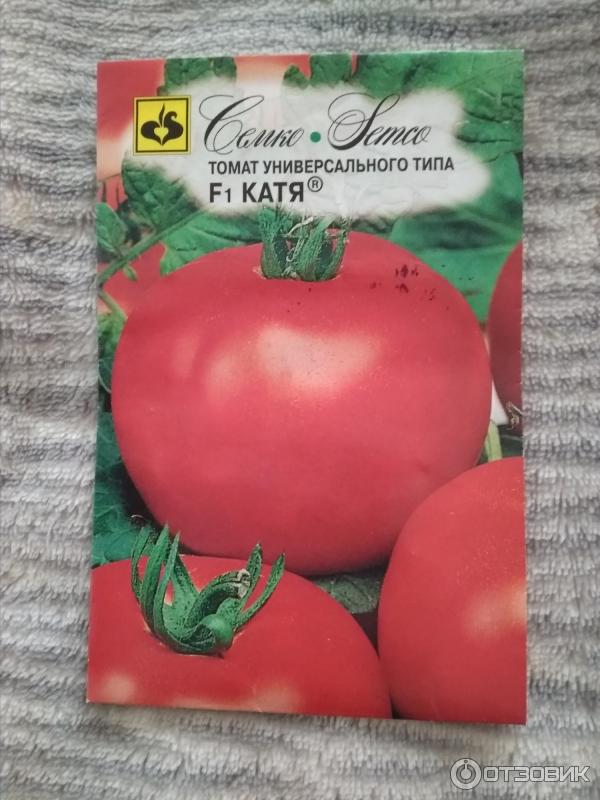
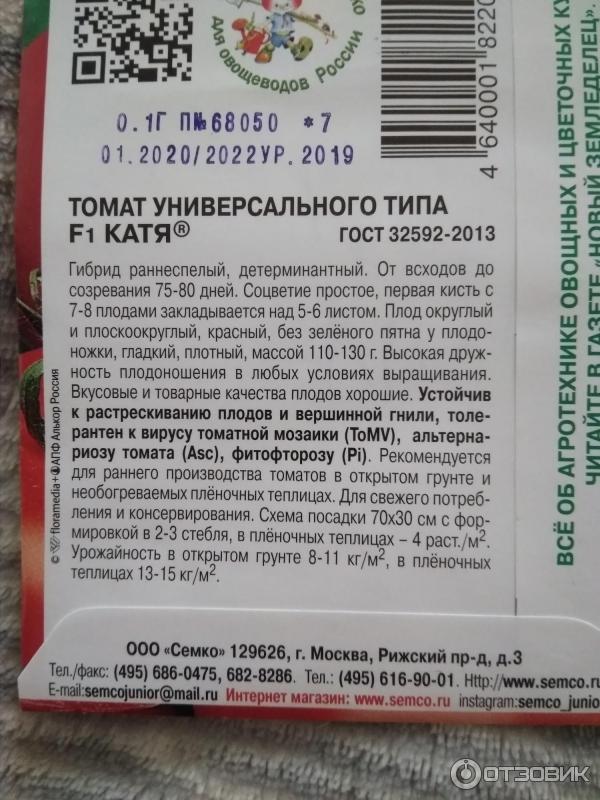
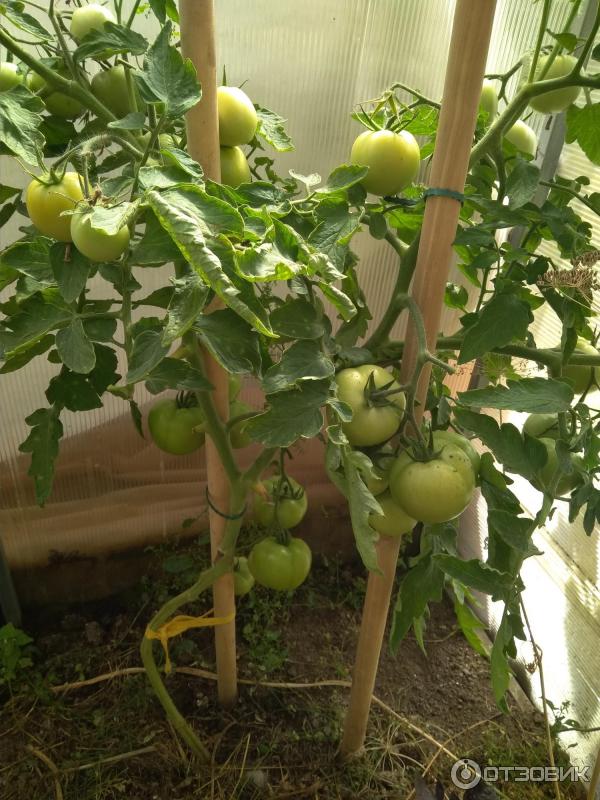
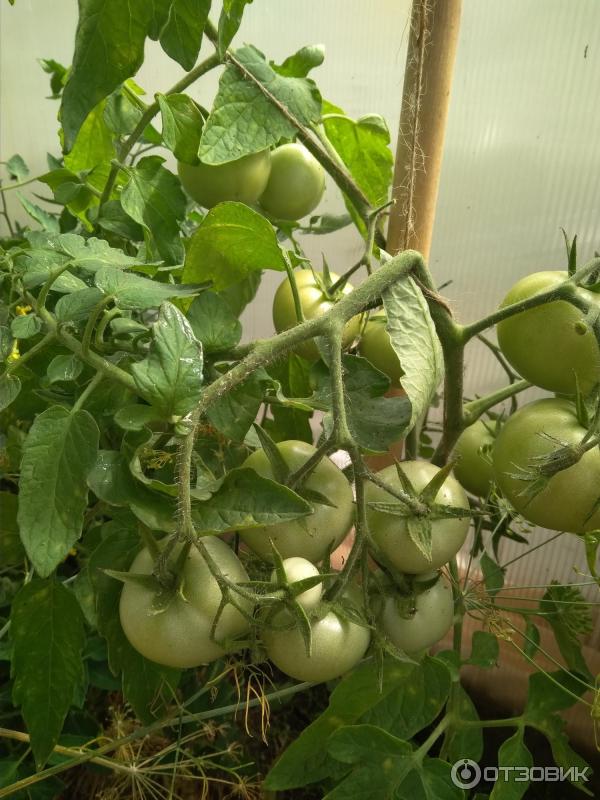
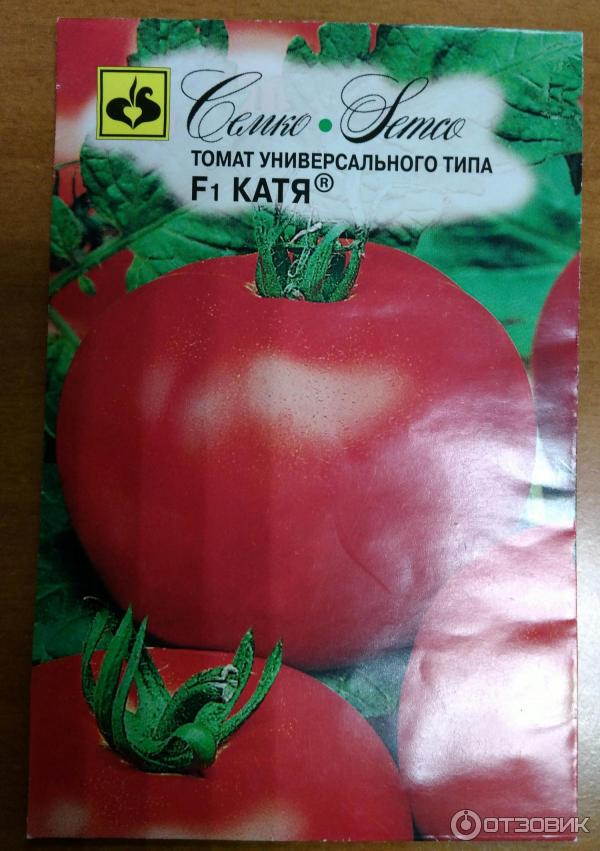
We've been growing the Semko "Katya F1" tomato for several years now. The seeds cost 70 rubles, but there were 30 seeds in the packet.
I sowed seeds for seedlings in early March. I planted 40 seeds, but only 36 sprouted. When I transplanted the seedlings, only 34 remained vigorous.
I planted the seedlings in the greenhouse in early May. Not a single bush was harmed during the transplanting process.
I planted the remaining six tomatoes in open ground. I tied them to poles and left them uncovered. I harvested them when they were half-ripe. I managed to collect two 13-liter buckets.
The tomatoes in the greenhouse were planted in two side beds in a staggered pattern. In early July, they began harvesting ripe tomatoes, and when there were many on the bush, the largest ones were picked when they were half-ripe.The harvest continued until September. In late August and early September, the entire crop had to be harvested, even the green ones, when the leaves were already in poor condition.
They have a sweet, delicate taste and medium skin.I recommend trying to plant a few bushes in a greenhouse; you will be pleased with the taste.
I liked this tomato as it's early-ripening and high-yielding. The fruits are uniform and not large, weighing about 120 grams. The vine produces a lot of tomatoes. The tomatoes are sweet. The first ones are used for salads, and then for canning.
The fruits are firm and do not crack. Germination rate is good.
Good for selling early market produce.
Sow for seedlings in March-April.
Seedlings are planted in the ground from May 25 to June 10.
Harvesting after July 15.
The variety is low-growing and does not require pinching.
It has proven itself well in the conditions of Primorsky Krai.
The price of Semko seeds personally surprises me. It's an order of magnitude higher than other producers. At our seed store, the packages were even kept at the checkout counter, under the cashier's watchful eye.
I fell in love with Katya seeds when I was looking for a tomato for an early harvest. The price, by the way, wasn't the highest, but reasonable for a hybrid—around 60 rubles per 0.1g.
I sowed tomato seedlings in early March. The shoots emerged uniformly, and overall, the seedlings were quite robust. I planted Katya, along with the rest of the tomatoes, in the greenhouse and then in the open ground at the end of April.
Despite unfavorable conditions last summer, the hybrid grew into a short, vigorous, spreading bush, tirelessly producing new tomatoes that began to turn red in July. These were the first early tomatoes I grew in my greenhouse.
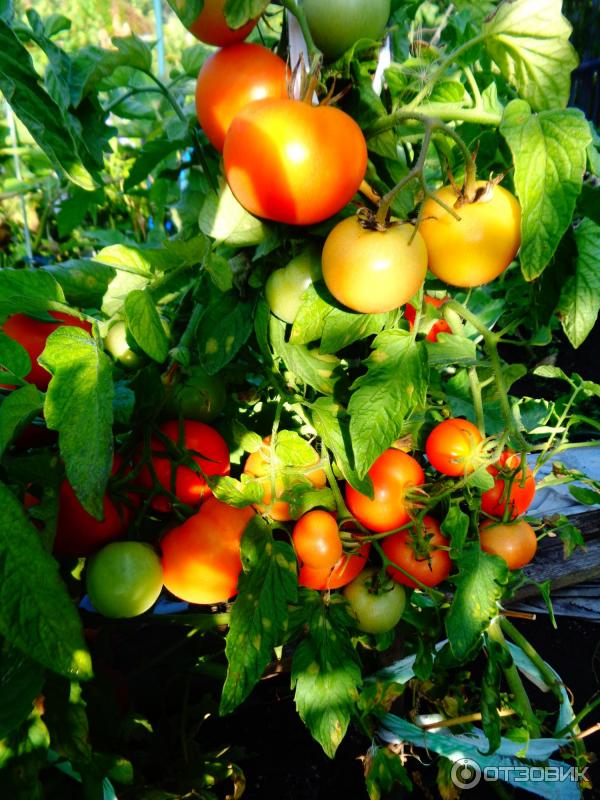
Here they just started to turn red:
Although the flavor was far from the aromatic varietal tomatoes, I forgave the GT-Breed for its early ripening and high yield. There was a hint of tartness. These tomatoes are definitely better and healthier than those sold in stores. However, when other varieties began to ripen, I no longer wanted the Katya tomato; I used it for juice and jars.
Some fruits turned out with a tail:
By the way, I came to the conclusion that if you are not greedy and remove excess ovaries, you can get the harvest even earlier.
Regarding diseases, Katya was affected by leaf spot (cladosporiosis) in the greenhouse (due to high humidity in the greenhouse). This hasn't happened in the open ground. However, resistance wasn't stated on the packaging.
Another advantage of tomatoes is their shelf life. The fruits can be stored for a long time without losing their appearance.
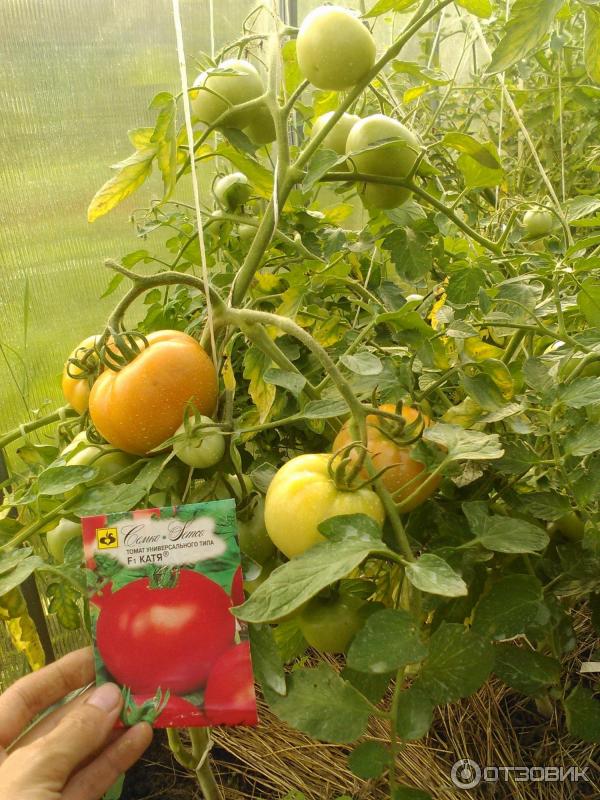
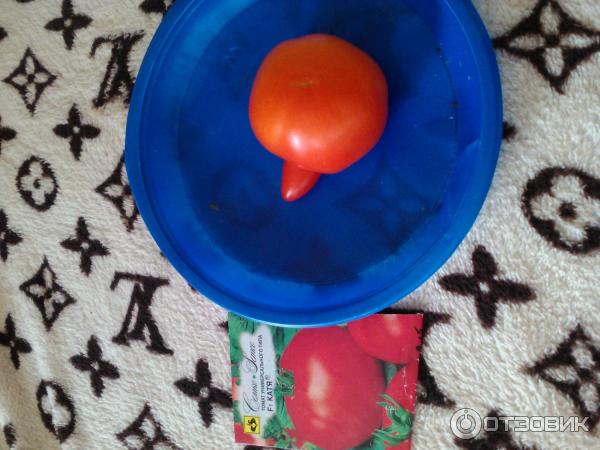
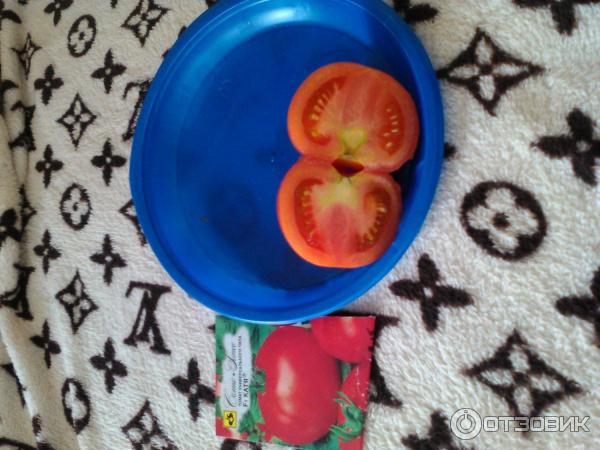
It is possible to grow a rich harvest with Semko seeds and the Katya tomato hybrid.
Determinate tomato, bush height 70-100 cm. Planted in open ground.
I tried to shape them, but it didn't work out very well. The bushes looked like stuffed Christmas trees covered in tomatoes.
Because of the weight of the fruits, it was very difficult to tie them to the stakes; they covered all the equipment.
The tomatoes weigh 100-200 grams, all uniform and perfectly rounded. A single plant yielded a bucket or more. They have a distinct tomato flavor, with a pleasant slight tartness. They're perfect for canning. Incidentally, they rarely crack. They're also great for juice, as they have plenty of pulp.
An early, disease-resistant tomato. A very successful hybrid.
I plant 5 bushes and harvest a lot of tomatoes, enough for all the canning.