Among the varieties bred for cultivation in Russia's northern regions, the Snowdrop tomato is one of the most versatile and popular among gardeners. Its name itself reflects its key characteristics: high frost resistance and undemanding nature. Growing Snowdrop tomatoes allows for high yields in areas where, due to harsh climate conditions, this crop was not cultivated until recently.
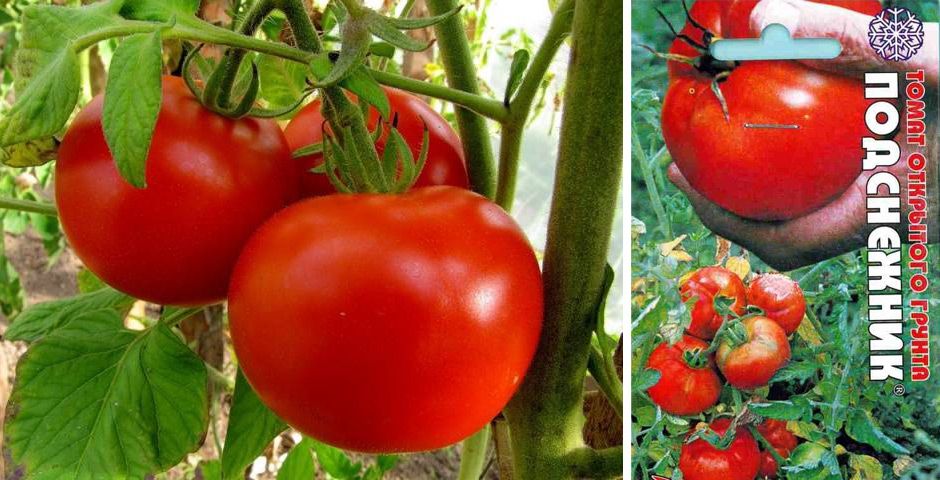
This variety was developed for northern regions by breeders in the Siberian region in 2000, and a year later it was registered. The seed producer is the Biotekhnika agricultural firm. It is recommended for cultivation in Siberia (heated greenhouses), the Urals (hotbeds), and the central part of the country (open ground). Unpretentious and resistant to frost and drought, this variety, developed for cold climates, is unsuitable for southern regions, as hot conditions are dangerous for it.
Content
- 1 Table with characteristics of the tomato variety Snowdrop
- 2 Photo gallery of the tomato variety Snowdrop
- 3 Fruits of the Snowdrop variety and their quality
- 4 Advantages and disadvantages of the Snowdrop tomato variety
- 5 Features of growing, planting and caring for the Snowdrop tomato variety
- 6 Problems arising when growing the Snowdrop variety and their elimination
- 7 Top.tomathouse.com reports: a comparative analysis of the Snowdrop tomato and some other early frost-resistant tomato varieties
- 8 Gardeners' reviews of the Snowdrop tomato variety
Table with characteristics of the tomato variety Snowdrop
| Characteristic | Description |
| Description | Early maturing determinate variety for open ground. |
| Ripening period | 80-90 days |
| Fruit weight | 120-130 g |
| Description of the fruit | The fruits are round, sometimes slightly flattened. The color is bright red, the skin is dense. The flavor is good. |
| Productivity | 600 c/ha |
| Usage | Suitable for salads and pickling. |
| Preferred growing regions | It grows in various regions, but is preferred in the northern and central zones. |
| Disease resistance | Tomatoes have strong immunity and are not susceptible to viruses, but can be susceptible to late blight. |
| Agricultural technology | The shoots, despite their relatively small size, need to be tied up and shaped, preferably growing in 2 stems. |
| 2002 | |
| Country of origin | Russia, St. Petersburg Regional Public Organization 'Union of Seed Producers 'Association of Biotechnology' |
Photo gallery of the tomato variety Snowdrop
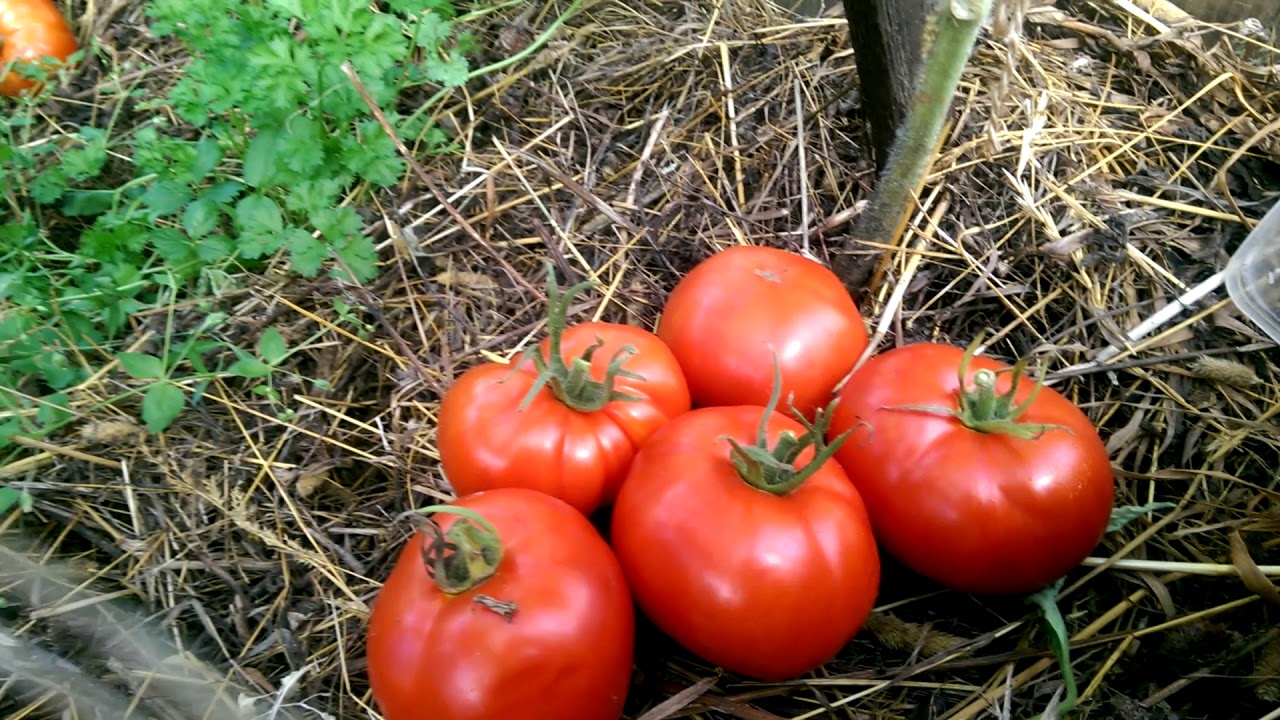
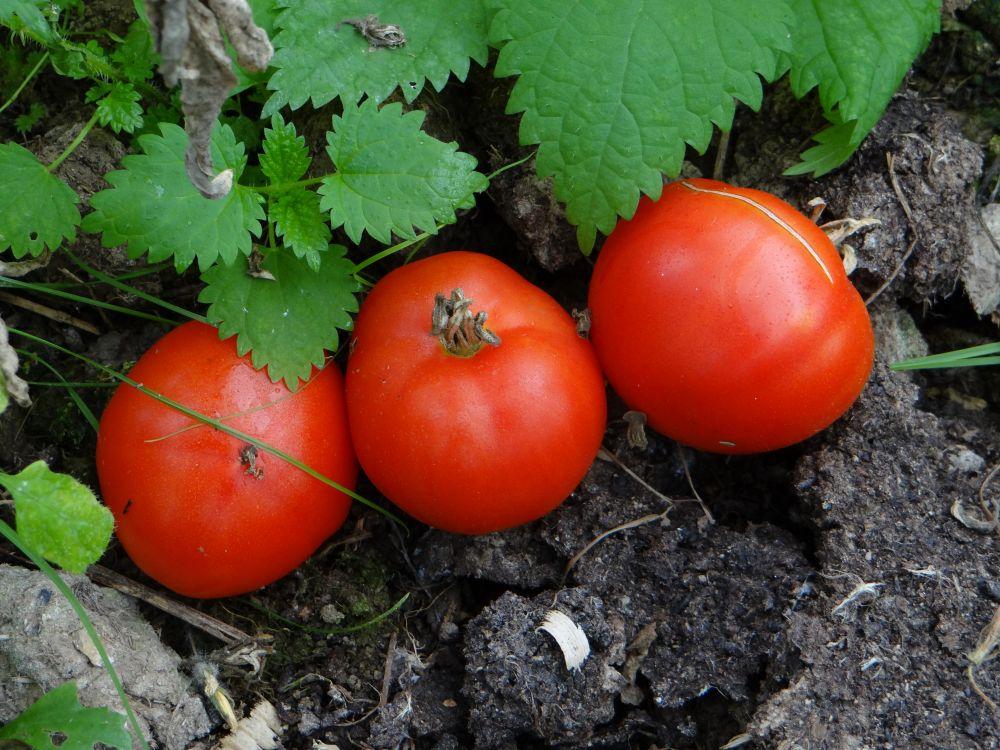
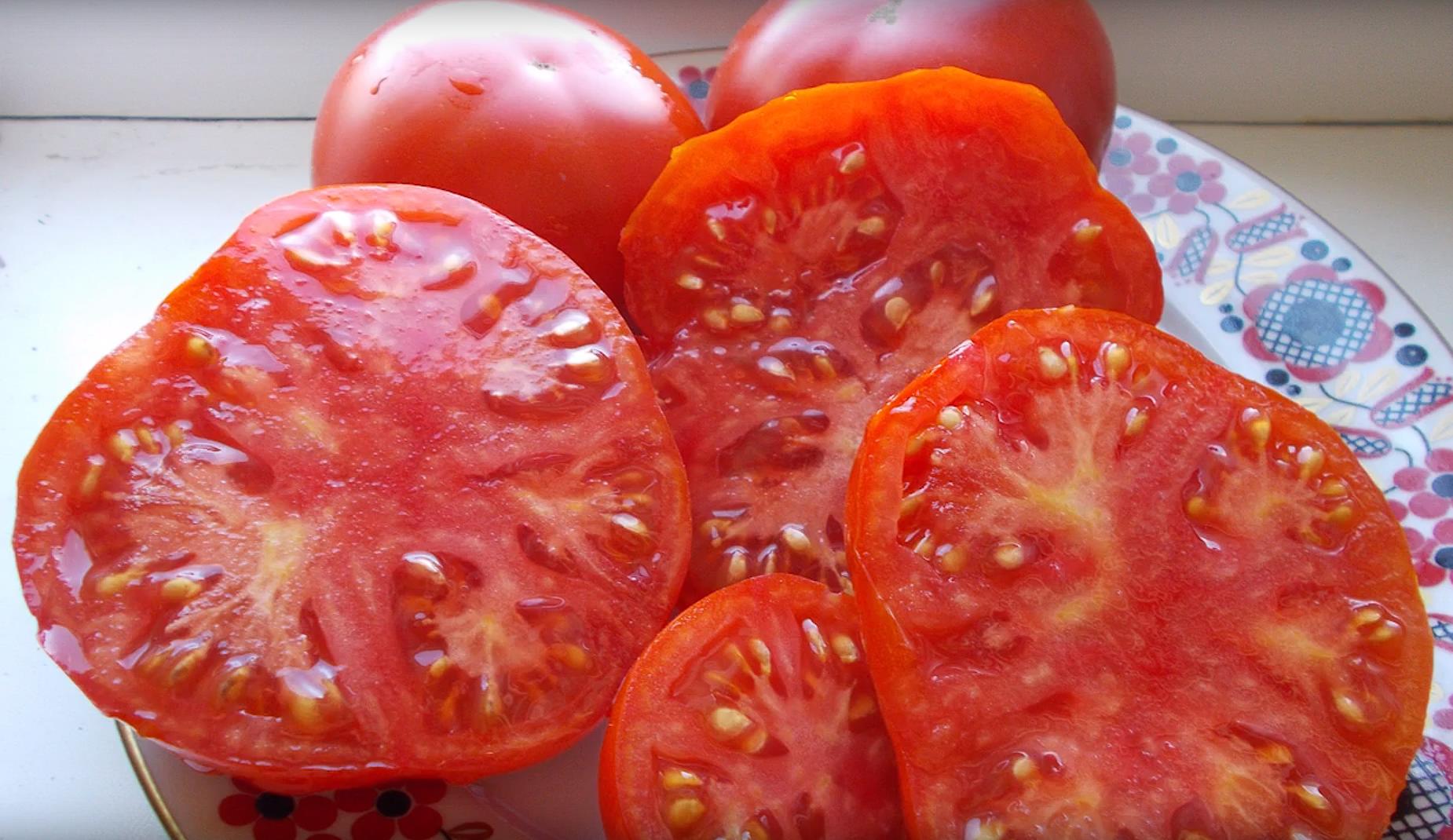
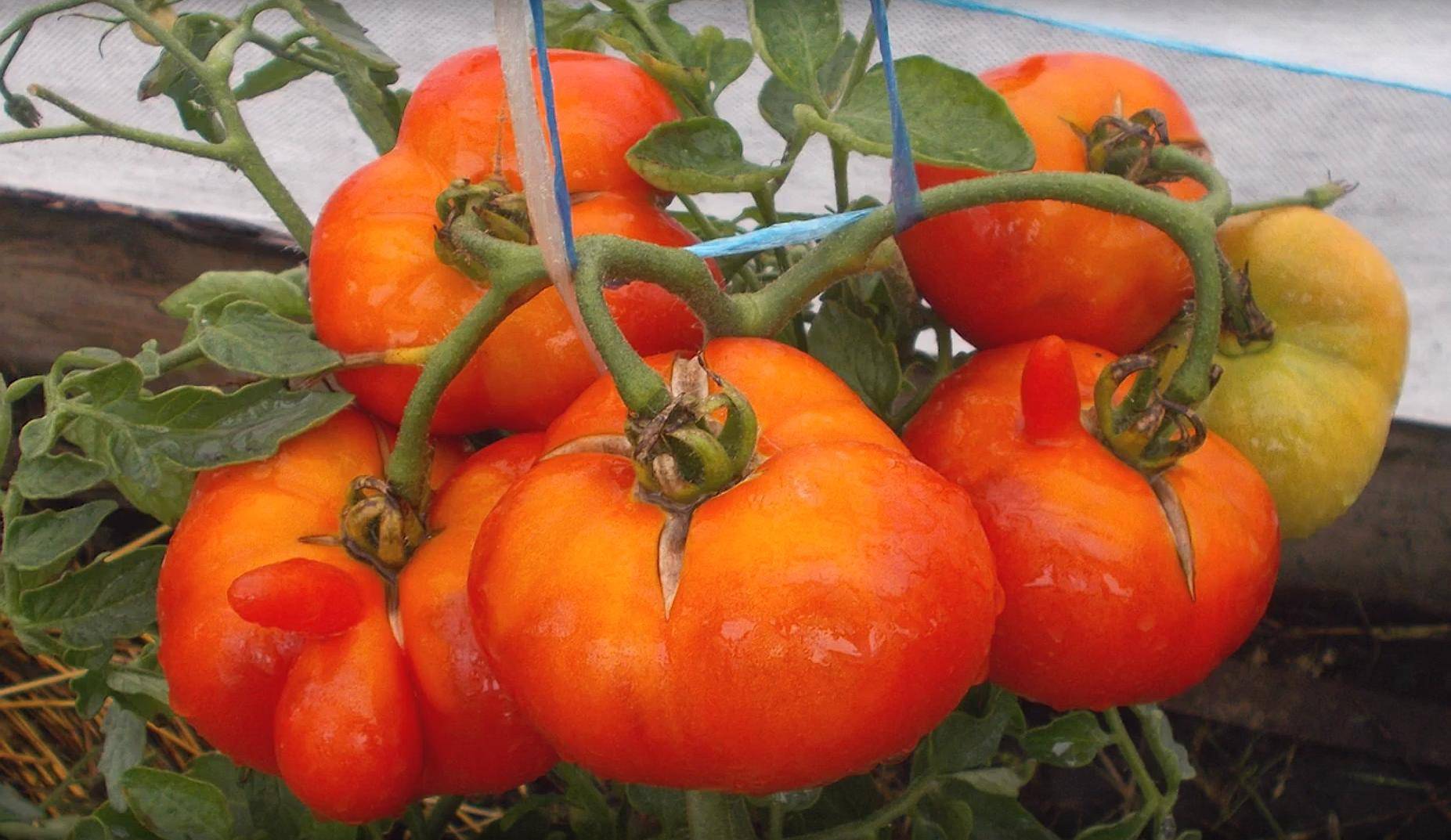
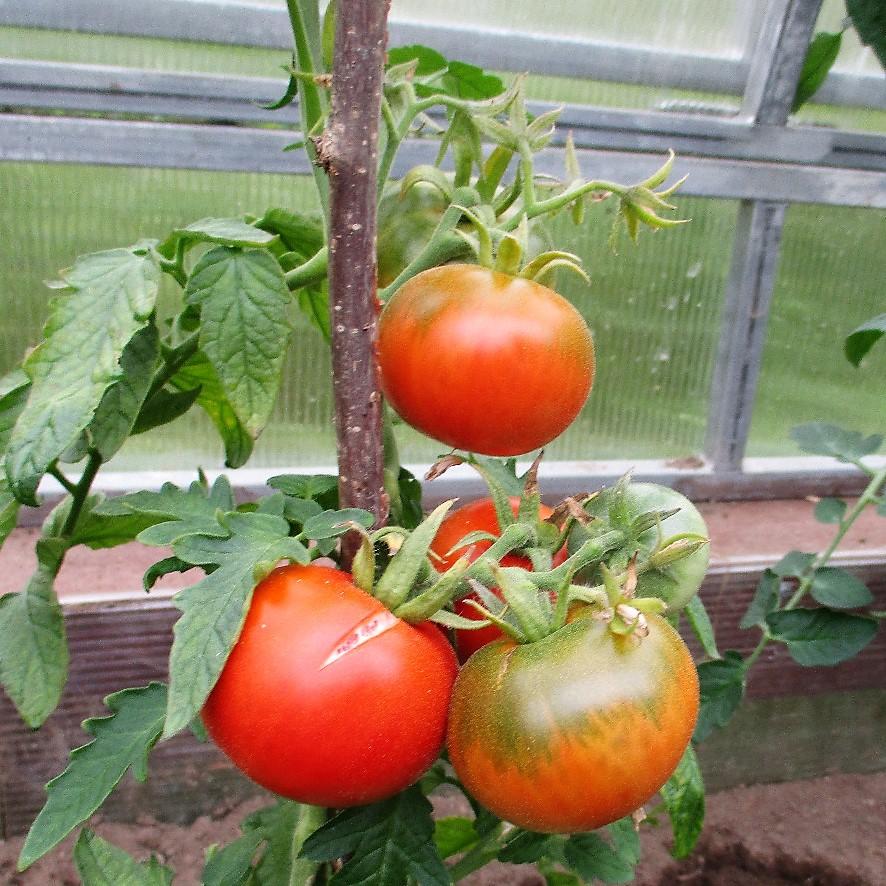
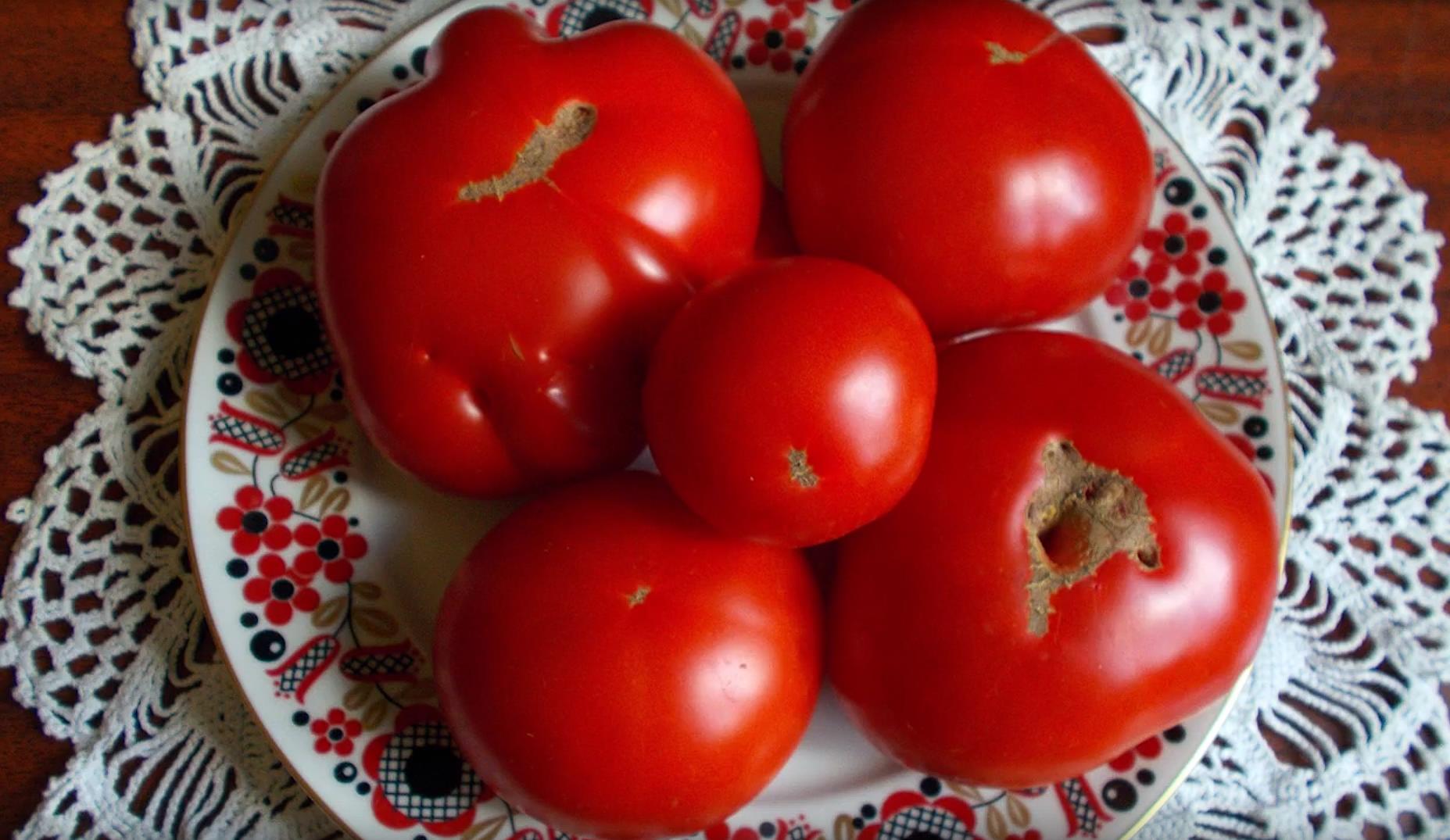
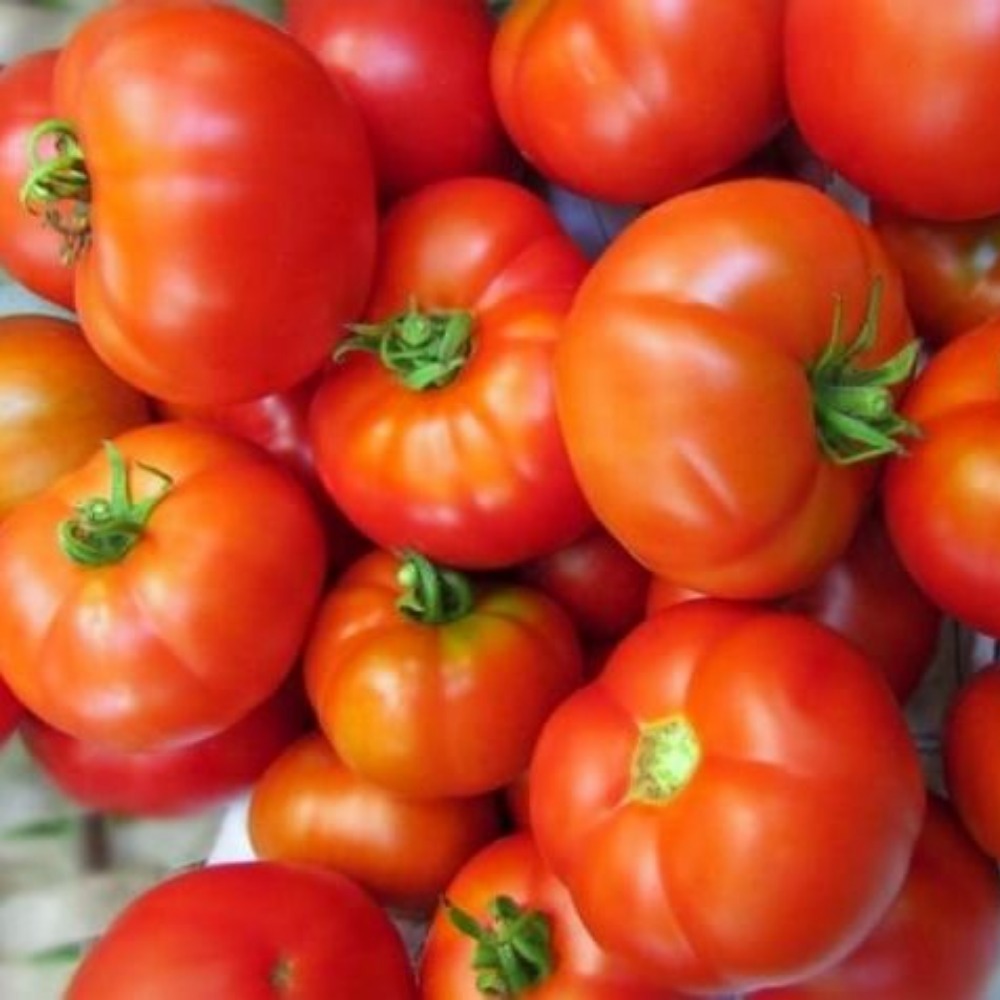
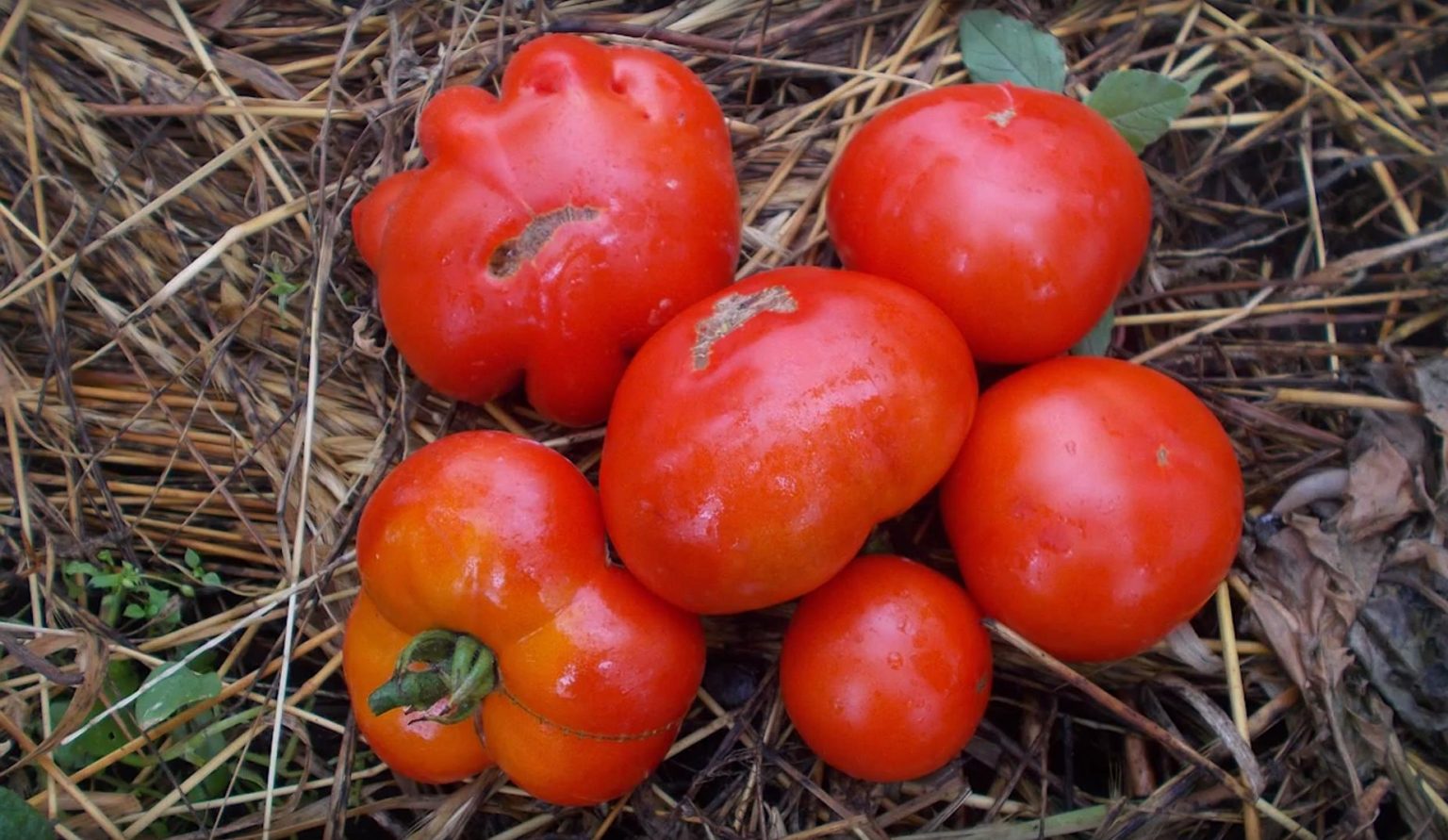
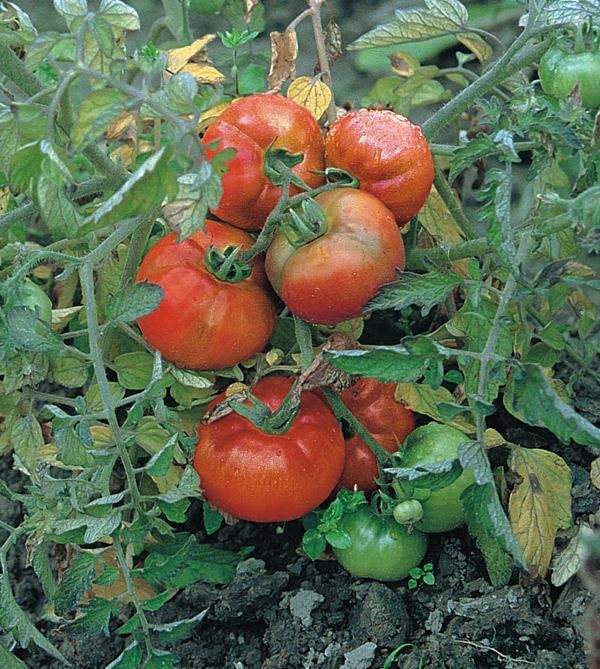
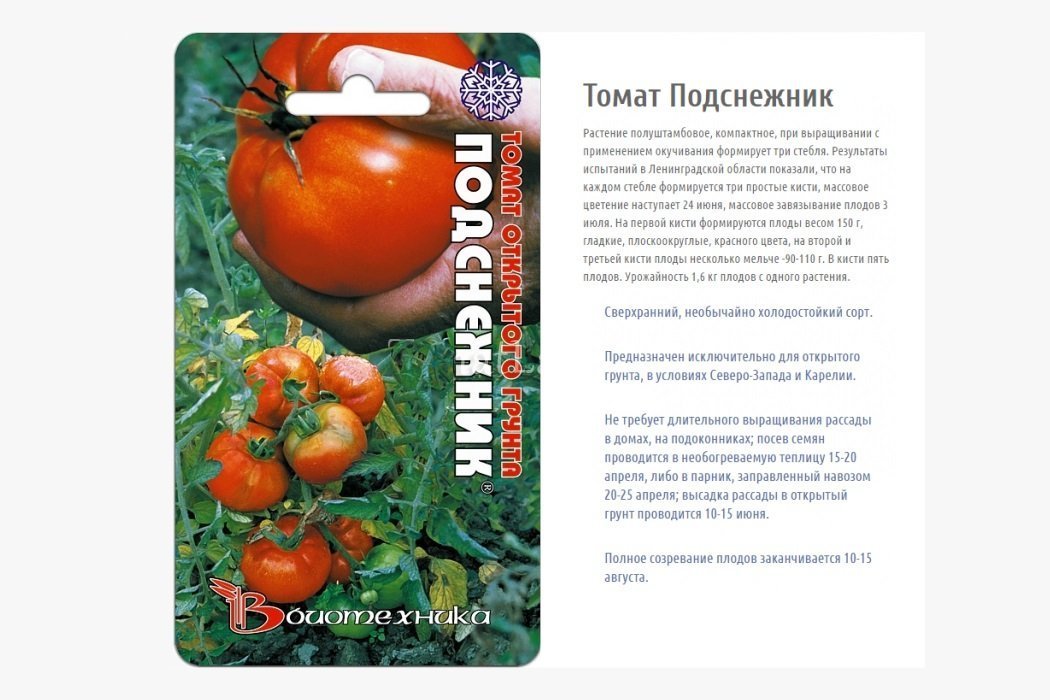
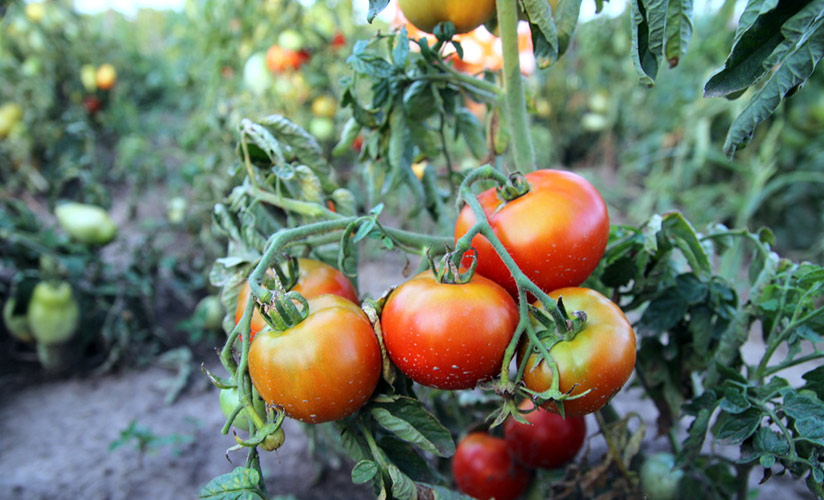
Fruits of the Snowdrop variety and their quality
This variety is early maturing, with tomatoes ripening 80-90 days after germination, which is crucial for northern regions with short summers. Snowdrop tomatoes are round, with juicy, fleshy flesh, smooth, crack-resistant skin, and a rich red color.
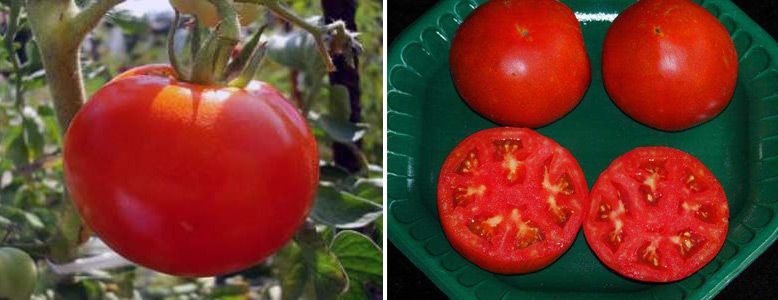
The clusters contain five tomatoes, weighing 90-150 g. The largest ones grow on the first lower branches; the higher the clusters, the smaller the tomatoes. They have a pleasant, sweet taste. They are suitable for fresh eating and canning. The harvested crop can be stored for a long time.
Advantages and disadvantages of the Snowdrop tomato variety
Gardeners who grow Snowdrop tomatoes note many advantages of this variety:
- The most important of these is its unpretentiousness, thanks to which it is possible to obtain stable harvests with practically minimal costs for plant care.
- It tolerates frosts while maintaining high yields. Therefore, in areas prone to recurrent cold spells, unlike other varieties, Snowdrop can be grown outdoors.
- Good drought tolerance allows for less time spent on watering. This variety is even harmed by excess moisture, which can lead to root rot and blight.
- With proper agricultural technology, it is resistant to diseases and pests.
- It doesn't require pinching. However, it does require shaping and staking. Typically, three branches grow, but they don't spread much, so they're left in place to maximize yield.
- They grow well even in poor soils. This feature distinguishes Snowdrop from other varieties, as most tomatoes are very demanding regarding soil composition.
- Can be grown in any conditions - open ground, hotbed, greenhouse.
- High yield: 45 fruits per bush, 6 kg or even more per square meter.
- A very pleasant sweet flavor, fleshy, juicy pulp. Versatile. Excellent for fresh salads and slicing, as well as pickling and canning.
- High-quality characteristics include beautiful fruits, long shelf life, and good preservation during transportation. Picked at the milky stage, they can be stored for about two months. If picked green, they can be stored for up to six months under special conditions. As needed, select the desired quantity for ripening and store in a warm, lighted place for a few days.
There are very few disadvantages:
- the biggest one is increased sensitivity to fertilizers, it does not tolerate both a lack of fertilizers and their excess;
- It is necessary to form the bush and garter it.
Features of growing, planting and caring for the Snowdrop tomato variety
Planting times and growing methods depend on the region and are adjusted to local conditions.
While in northern regions it can only be grown in greenhouses, in central Russia it can be planted in open ground. This variety is grown using seedlings and self-seeding in garden beds.
Growing from seedlings
In temperate climates, Snowdrop tomato seeds are planted in a hotbed or unheated greenhouse. Planting time is early April, or it can be adjusted based on local weather conditions.

It's not recommended to over-fertilize the soil with organic matter, as this will slow down plant growth and reduce fruit production. Seedlings are grown in the usual way for all tomatoes. They are planted outdoors in early June.
Growing from seeds
If you plant the seed directly in the permanent location where the tomatoes will grow, you can get strong, hardy bushes and a high yield.
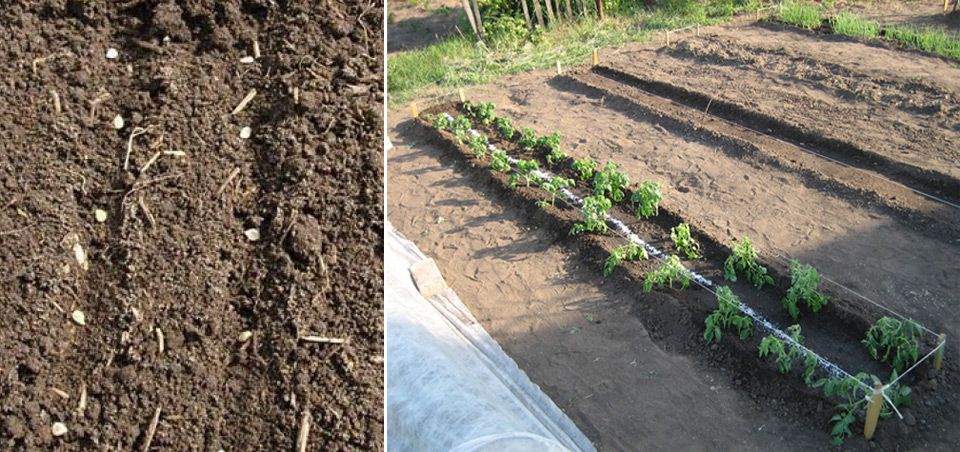
Advantages of planting Snowdrop tomatoes without seedlings:
- plants harden better;
- the bushes do not overgrow, which is why the fruits set better;
- such tomatoes adapt well to garden conditions;
- the roots go deeper into the ground, which allows the aboveground parts to develop better.
Description of the sequence of work:
- prepare a bed; experienced gardeners recommend making it 1m wide;
- make two longitudinal furrows, the depth of which should be about 20 cm;
- the bottom of the furrows is compacted and watered with a solution of potassium permanganate for disinfection;
- cover with film for a week to allow the soil to warm up;
- If the weather warms up early in the spring, you don’t need to soak the seeds; if the weather warms up late, you need to germinate them first;
- the seeds are mixed with sand and sown in furrows, lightly sprinkled with soil and covered with film;
- The first shoots appear in a week, when they grow up, the plants are thinned out, leaving the strongest ones, the distance between them should be 30-50 cm;
- As the bushes grow, the film is raised higher, periodically removed for ventilation and hardening of the plants, and at the beginning of June it is removed;
- Such tomatoes grow slowly at first, but then even outgrow those planted using seedlings.
Problems arising when growing the Snowdrop variety and their elimination
Even such an easy-to-grow variety can still encounter some difficulties due to improper agricultural practices. Timely interventions can help restore normal tomato growth and fruiting.
| Problem | Cause | Method of elimination |
| Falling leaves | Leaves curl and turn yellow at the edges, followed by falling off due to high humidity and lack of sunlight. | In this case, stop watering completely until the top layer of soil dries out, and then moderately moisten it as needed. To improve lighting in greenhouses, turn on fluorescent lamps, and clear the area around open beds of excess vegetation. |
| flower shedding | This problem occurs due to stress in plants caused by sudden temperature changes. | To prevent inflorescences from falling off, mulch the soil - at night the root system is protected from hypothermia, and during the day from moisture evaporation. |
| Fruit drop | It appears during the milky ripeness of tomatoes due to the defeat of the place where the fruit connects to the stalk by apical rot. | Rotting occurs due to overwatering; reducing it solves the problem. |
| Cracking tomato | They appear at the stalk and can spread throughout the skin. The cause is excessive watering during drought. | To avoid this problem, water the plants moderately, but more often, preventing the soil from drying out. |
Top.tomathouse.com reports: a comparative analysis of the Snowdrop tomato and some other early frost-resistant tomato varieties
| Variety | Fruit weight (g) | Yield (kg/m2) | Regions and growing conditions |
| Snowdrop | 90-150 | 6-10 | All except southern varieties (poorly tolerates hot climates, but is well adapted to even the harshest northern conditions). Suitable for greenhouses, hotbeds, and open ground. |
| Winter cherry | 30 | 9-10 | Northern, Central, North Caucasian. Tolerates adverse conditions well, developed for northern and temperate climate zones. Grows in greenhouses and open ground (even in northern regions). |
| Bullfinch | 25-30 | 3 | All regions. Maintains good yields even in low light or cold snaps. Suitable for both open ground and indoor conditions. |
| Leningrad chill | 60-90 | 3 | All regions. A cold-hardy, easy-to-grow variety, developed for open-ground cultivation in the Northwest region and Karelia under short summer conditions. |
| Far North | 60-80 | 2 | All regions. In open beds. In southern regions, it's preferred by those with little time to care for plants, as this variety is very easy to grow and requires minimal care. In northern latitudes, the fruits ripen during the short summer. |
| Wind rose | 140-160 | 6-7 | All regions. Suitable for open beds and under plastic covers. Suitable for areas with variable weather conditions. Resistant to short-term cold spells, high humidity, and other adverse conditions. |
Characteristics of the Snowdrop tomato variety and reviews from gardeners show that these plants have several advantages over other frost-resistant varieties.
Compared to some mid-season varieties intended for central and southern regions, they yield less. However, among those bred for northern regions, they are distinguished by their abundant fruiting, ability to grow even in poor soils, resistance to adverse conditions, and ease of care.
Gardeners' reviews of the Snowdrop tomato variety
Skrepochka said:
I want to grow tomatoes in the open air this year. Can anyone suggest the best varieties for our region?
Yamal, Taimyr, Snowdrop, Blush of Petersburg. I can't remember them off the top of my head. There are many, actually.
We didn't like the snowdrop: it's not ultra-clean and we didn't like the taste.
Many people praise Sanka here, but I haven't heard much about snowdrops and bullfinches. At one point, people said these two varieties were so early maturing that they could be grown by direct sowing. But I haven't heard of anyone trying that method.